Search results for: “ ”
-
Tom Daley’s Biggest Fan Responds to Hate Messages
Last week the internet went crazy as Tom Daley and Dustin Lance Black announced their engagemen
In the wake of their happy news, Tom Daley’s “biggest” fan, Carl James posted a heart-felt video to his YouTube account declaring his undying yet unrequited love for Tom, and his heartbreak over Tom’s recent engagement.Shortly after the video was picked up by various news outlets, the YouTube personality was inundated with views, and comments on the video, many of them extremely nasty.
This week, Carl has responded to the hate messages with his latest video. Towards the end of the video Carl addresses the issue of online bullying, and promotes the services of online anti-bullying site DitchTheLabel.org.While Carl James is not the first person to be attacked by online bullies, it is important for us all to remember that bullying in any context is not OK. It’s not ok at school, in the workplace, among friends, and certainly not online. Your words can have real effects on real people, and in some cases, online bullying has had fatal consequences.If you, or someone you know has been the target of online or offline bullying, head to DitchTheLabel.org to find ways to overcome and deal with bullies. -

INTERVIEW: Judy Shepard: There was more to Matthew Than The Way He Died
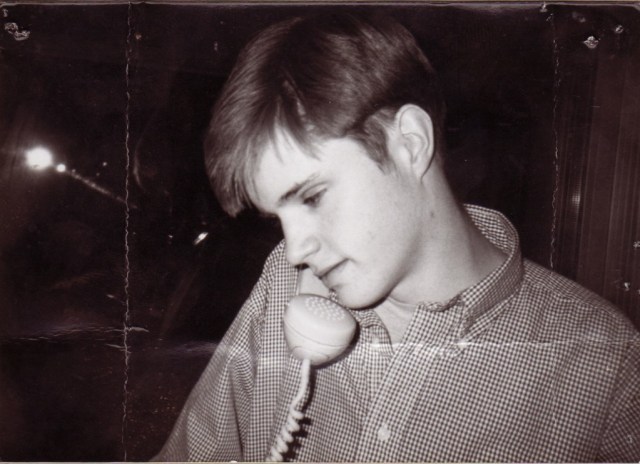
Judy Shepard is an extraordinary woman. In 1998 her eldest son Matthew a 21-year-old student at the University of Wyoming was tied to a fence outside of the town of Laramie, beaten mercilessly and left to die.
Matthew Shepard Foundation This particular pernicious hate-crime caught the public’s attention, and news of his death provoked outrage from Wyoming to The White House. It also caused an international sea of sympathy for Dennis and Judy his typical American parents who were thrust into the glare of the world’s media when all they wanted to do was grieve in private. At the subsequent trial when two local youths were found guilty of Matthew’s murder a stoic Dennis supported by his wife, pleaded that his son’s killers should not be given the death penalty.
This was just an inkling of what was to follow when the Shepard Family created The Matthew Shepard Foundation. The aim was to honour Matthew in a manner that was appropriate to his dreams, beliefs, and aspirations, and the Foundation seeks to “Replace Hate with Understanding, Compassion, & Acceptance” through its varied educational, outreach and advocacy programs and by continuing to tell Matthew’s story.
The Foundation transformed this introverted housewife into a powerhouse who trotted around the world promoting tolerance and diversity whilst helping to spearhead a major piece of Legislation to help eradicate hate-crime. Feted by politicians and celebrities alike, she has swapped her kitchen in Casper Wyoming for the stages in Universities and Conference Centers imploring anyone and everyone to help the Foundation bring about more change.
Where others would have withdrawn from life after having to deal with such tragedy, Judy and Dennis instead chose to turn their personal loss into a remarkable force of good that would help insure that other parents and other children would not have to face the same fate as they did with Matthew.
Last year Roger Walker-Dack interviewed Judy Shepard to talk about Matthew’s legacy and her hopes for the future.
RWD: So much has changed in the LGBT landscape since Matthew’s passing. Is it enough, or is there still more to do?
JS: There is a lot more to do. In the US we are making inroads legally and legislatively but there are still so many hearts and minds that need to change. We have achieved about 50% of where we need to be on same-sex marriage, but even on that we have a long way to go. Maybe when another younger generation grows up and is empowered to vote and be active in the community, then things will change much more rapidly than they do now. But certainly compared to other civil and equal rights issues we are on the right path especially as we now have the support of more leading politicians and people with influence than those who are lined up against us.
RWD: You were very involved with the passing of the Matthew Shepard Hate Crimes Act in the US Congress. What did you hope it would change and is it achieving it?
It’s important to know that it’s called the Prevention of Hate Crimes Act and although I disagreed with Senator Ted Kennedy and Senator Gordon Smith the Bill’s Sponsors on the exact title, I went along with it anyway. To me the most important thing that the Act was going to do was to send a message to the rest of the country that the gay community was indeed a select group of people where hate crimes were being concentrated.
We need a way to record it and a way to prosecute it if local authorities could not afford to do, or were unwilling to do it. So in that sense, it really is working.
There were people who were against it claiming that it was against God’s will, but I think its existence has done a lot to help create a different and better environment. It’s helped make more public awareness that the LGTBQ community were the victims of these crimes and needed to be protected.
Michele Josue’s superb new documentary Matt Shepard Is A Friend of Mine mentioned that there were 33 hate crimes that ended in fatalities the same year as Mathew was killed.
Let me clarify that. There were 33 REPORTED cases. Many of these hate crimes are never ever recorded simply because they are against gay people. To this day, we will never ever know a true count of the victims, but we are sadly convinced it is a lot more than any official statistics.
Matthew Shepard Foundation Have matters improved since the Act was passed?
One of the problems that our Foundation is tackling right now is that reporting of these crimes is voluntary. So not every community is eager to participate, and not every victim is willing to come forward especially in vast sections of our country where you can still be fired from your job for just being gay. For these victims, the fear of being ‘outed’ in their own community far outweighs the physical and verbal abuse they have suffered.
We know that it is vastly underreported. But the Act has nevertheless made a difference and in the way that we wanted it to. It expanded the parameters as what was defined as a ‘crime’ and it also made it easier in many parts of the country for people to be able to come forward and be treated with respect and dignity.
I was shocked when I read in the 2013 Stonewall Report into Hate Crimes in the UK that the bulk of the perpetrators are under 25 years of age. Does this surprise you?
Sadly no. It is a phenomena of this country too, and it seems like a sort a rite of passage in some ways to commit such an act of violence. The crime rate amongst young people in this country is more prevalent when they’re dealing with internal struggles of whom they want to be, and are having a need to prove themselves to others. We also find that some young gay people who are troubled about being victims also become extremely violent and anti-gay to detract attention away from themselves. I am greatly saddened by this situation, but not shocked at all.
How can we as parents and peers help young people come out as gay and not be afraid?
We have to create an environment in everybody’s community, schools etc that says we respect them no matter what as human beings. Gay or straight. We must tell them that we care most about the fact that they are all equal citizens.We must let them know that we will be there for them, for talking, for listening, for welcoming, and especially for not making them feel different from any of us. This is the very last thing that most young people want to be made to feel because to them ‘different’ can so often mean ‘wrong’. They want most of all to blend in, and we should be there to help them to do this. The message must be that this is how it is, and that it is really fine to be who you are. I know we all still have a long way to go to create such an environment, that’s for sure.
The matthewsplace.com website is a great resource centre for LGBTQ youth for LGBTQ youth, can you tell us more about that?
When we started the Foundation years ago I was searching the internet which was still fairly new then, and I found that there was nowhere to get any information to help gay youth deal with any of the issues they were confronting, nationwide or even in their own backyard. So I started to find out what community centres existed and in what cities, and particularly looked for ‘safe places’ for young people to go, and it all simply grew from there. We have now developed resources where we can continually track all the places to ensure that they still exist, and can really help, and are still ‘safe’.
This then all morphed into this something much larger when so many talented writers and kids with information started to just write in and leave comments on the site. We decided that they should all be encouraged and added to the website and given their own special place, and so we started the Blog. It has covered the whole gamut from asexuality to transitioning to health issues, how to help your friends come out, help for parents etc. Matthews Place is a fantastic site, which is helping so many young people who visit and participate.
However one of the problems we have run into is that some schools have actually blocked access to pro-gay websites even though they don’t block access to anti-gay websites. So to counter-balance this we spend a lot of time trying to ensure that all our information is available on public computers, which is no easy task.
We are US based but we get an awful lot of international visitors to our website as what we deal with is really a universal situation and a vast majority of our information can help young gay people wherever they are in the world.
Wyoming Location Where Gay University Of Wyoming Student Mathew Shepard’s Body
http://gty.im/1547028
Dennis and Judy Shepard address the media at a press conference to highlight the need to pass the Hate Crimes bill outside the Capitol building in Washington, DC November 8, 1999.
The stage play The Laramie Project by Moses Kaufman went into great detail on both Matthew’s attack and the way it affected the whole local town is continually being performed, does that upset you in any way?
No, it’s one of the few things that the Foundation officially endorses, and we actually do a lot of work helping companies mount their productions. This wonderful play has such a universal message that’ starts with hate but ends with acceptance. When you watch all those characters on that stage you realize it’s a microcosm of every community in the world. It covers all kinds of issues besides about being Gay, and it’s not just about what happened to Matt either. It’s about the aftermath. I love that they still do it, and I love the fact that it is one of the most performed plays in the US today.
What do you think that Matthew would be doing if he were here today?
I think he would be doing exactly what I am doing now in some form. Even when he was little he was always concerned about the other boys being bullied in the playground, and would come to their aid. He wanted to do something to help other people on a national level years ago, so in a way I am filling in for him.
After watching this new documentary I am even more convinced that your actions and work over these past 16 years are a reflection of Matthew’s spirit.
I am an introvert off the scale so for me to go on a public stage to speak on these issues, would have been the very last thing, I would have normally chosen to do but I feel Matt’s presence with me.
US President Barack Obama applauds the sisters of James Byrd, Jr., Betty Byrd Boatner (2nd R) and Louvon Harris (2nd L), and the parents of Matthew Shepard, Judy Shepard (C) and Dennis Shepard (L) after Obama spoke in honor of the enactment of the Matthew Shepard and James Byrd, Jr., Hate Crimes Prevention Act during a reception in the East Room of the White House in Washington, DC, October 28, 2009. In 1998, when he was a college student in Wyoming, Shepard was murdered because he was gay. Byrd, an African American man, was dragged behind a pickup truck to his death in Texas the same year.
Does it upset you to be continually expected to talk about Matthew?
No, his spirit is with me, and there was so much more to Matt than the way he died.
What are your hopes for the Matthew Shepard Foundation in the future?
In a perfect world , would hope there would be no need for it as everything should be the way it should be: normal and accepting. Where nobody really cares if you are gay, straight or whatever. However I’m not sure if that will ever really happen. I would like the Foundation to be a perpetuating presence: that it would always be there, but as an information provider not lobbying for legislation or fighting injustice or any of those things.
Asides from the Matthew Shepard Hate Crimes Act, what is the legacy that you would like to leave on behalf of all the Shepards?
I think the passing of the Employment Non-Discrimination Act (ENDA) is the most important thing that is still not done. Same-sex marriage will continually follow its natural course, as people accept that it is unconstitutional to ban it and it is just so wrong. Job discrimination is also wrong but it’s a much harder struggle trying to convince people that you should not fire someone for their sexual orientation or their gender identity. It seems to be something that people, especially the older generation in power just don’t want to talk about or deal with the issue
When I started all this work there was a ‘plan’. We would tackle hate crimes first then ENDA, then same-sex marriage last, but somehow marriage jumped the line and everyone forgot about ENDA. As a community, we focused all our efforts recently on marriage and none on job security at all, which I think is wrong. And I also find it rather ironic that the only jobs that are safe in this country now are in the Military.
Matthew had a happy experience when he came ‘out’ to you and Dennis, as you were both supportive. Can you share with us your thoughts, on the whole, coming out experience?
Every one feels so alone if no one is telling their story and that can lead to so many negative things like depression and enforced solitude. People should just be who they are and let everybody see this, including family and friends that support them. Its critical that everyone knows that this is not some one-off freak of nature thing but something that is perfectly natural.
If Matt had not trusted and believed in us to tell us, I would not have survived finding out in the hospital after the attack.
It would be great if we didn’t have to have the whole coming out process right? But we do and there is still so much negativity and mythology surrounding being gay. If only everybody understood that their doctor, their minister, or their teacher happens to be gay and it really makes no difference what so ever.
So I entreat everyone to take this step, take this leap of faith and I think they will find more support than they think.
You took your own great leap of faith after Matthew died starting The Foundation, which can never replace him but seems to bring you a sense of satisfaction and fulfilment…Doing this work and creating the Foundation with Dennis has been my survival. If I hadn’t taken this issue on, and tried to make a difference, I really don’t know what I would have done. I certainly never thought when we started it that 16 years later we would still be doing it. I thought it would be one or maybe two years and then Matt’s story would just fade into history. The more I find out, the more I am encouraged that things are changing and are getting better. Yes, it gives me a sense of joy that things are really happening and we can make a difference.
http://www.matthewshepard.org/
http://www.matthewsplace.com/
http://mattshepardisafriendofmine.com/by Roger Walker-Dack
This interview was taken from a previous issue of THEGAYUK Magazine. Please subscribe today and support us -
Ten Ways To Come Out As Gay, Lesbian, Bisexual or Trans
We asked readers and our writers for their top tips for coming out.
Everybody’s experience for coming out will be different, what works for one person might not work for someone else, but hopefully at least one of these tips will help you in the process of coming out.
1) Only come out if it is what you want to do. If you feel pressured into coming out, remember that it has to be your decision. It is a big decision to make in your life and the most important thing is that you feel comfortable with what you are doing.
2) Treat it like a bandaid and just tear it off. Quick and almost painless. Just tell them, quickly, confidently and get it over with.
3) Don’t approach the situation like you’re about to announce you’re terminally ill. Body language and the tone of your voice will play a massive role in how people react to what you’re saying.
4) Do it the way you most feel comfortable! I told my Dad by letter, but my friends mainly face to face…it just got easier the more I did it.
5) Speaking to a helpline, like Switchboard – first, if you’re not sure what to say. Talking with a counsellor or helpline can help you find the words you need to describe what you’re feeling.
6) If you’re not sure how to bring it up, casually talk about a celebrity’s recent coming out like Tamal Ray or Apple’s Tim Cook and gauge the reaction before going any further.
7) If you don’t get the reaction you expect, don’t be put off. You will get some negative reactions, but that is their problem not yours. The amount of positive reactions will far outweigh the negative ones.
8) It’s not an all or nothing deal. You don’t HAVE to tell everyone all at once. Start off with one person and let it grow organically from there.
9) Don’t apologise.
10) There is no right or wrong way to come out. It should be a tailor-made experience, as individual as you are.
-
Bette Midler Calls Out Justin Bieber’s Dad Over Penis Size Comment
The iconic singer Bette Midler has called out Justin Bieber’s Dad after he tweeted his pride over Bieb’s peen size.
Last week Justin Bieber made a huge splash after a pap’s long lens photo of him emerging from a hot hub naked. Millions of people made their own comments about the Canadian’s size and shape including the singer’s own father.
His father wrote,
@justinbieber what do you feed that thing. #proud daddy ☺️
— Jeremy Bieber (@JeremyBieber) October 9, 2015
However First Wives Club star Bette Midler, never one to not say it how it is, put in her two cents worth slamming the father for his behaviour towards his son.
She tweeted:
.@justinbieber dad tweeted he’s proud of his son’s penis size. I think the biggest dick in this situation is the dad who abandoned his son.
Justin Bieber was brought up by his mum and has openly spoken about the parental guidance he missed by not having his father around.
-
RESTAURANT REVIEW: Zaika of Kensington Restaurant Review
Who loves a good ruby? Indian cuisine isn’t something i have regularly, and perhaps it’s my childhood memories of my Granny’s (who grew up in Vizag, India) infamous egg curry. Apparently it was delicious but not to the palette of a 7 year old. ★★★★
Dining with me at Zaika of Kensington, my best friend, who grew up in Nepal and we immediately connect and get chatting to our waiter, Mustaq. Throughout, his service was perfection and in response to our enquiry on his favourites the restaurant had to offer, he demonstrated great knowledge of the menu and even some of the dishes backgrounds, and i love hearing interesting legacies of food and its history.
It’s history that you’re immediately hit with as soon you enter Zaika, in terms of the building’s architectural aspect. Grand high ceiling with dramatic mouldings, austere window frames, a perfect marriage of classical and contemporary. It is clear they want to give you the impression that this is not your usual curry house, and that continues into the food served too.
We dined at an odd eating time, so the restaurant seemed grandly desolate. We were happy with the echoes of our cackles for company but both agreed that Zaika would have a great vibe during a busy evening.
To start, Aloo Palak Tikki (£8.50), essentially little potato and spinach cakes that were cooked handsomely, crispy exterior and fluffy on the inside- plain in flavour but intentional as they come served on a bed of cold and creamy, spicy chickpeas. The whole dish was drizzled in a sweet yoghurt and adorned in pomegranate jewels. So very pretty and a clever configuration of flavours and textures.
Jhinga Dakshini (£9.50) – nugget-like and light gram flour battered tiger prawns, not the most impressive sized prawns which was a little disappointing, as like my men, i enjoy them a bit beefier. Again this appetiser’s flavour was on point, the paprika-y prawns served with a sweet, turmeric, pale yoghurt. The flavours in both appetisers were really well balanced and full of flavour without being overly seasoned or spiced as to dominate the palette before the main courses.Nihari Gosht (£23), lamb that is slow cooked over night, and upon offer was then deboned at our table and served to us. Lightly aromatic, lovely and creamy; the lamb was silky soft, and still retained all its wonderful natural flavours. Lamb is the meat of choice in Northern India’s Awadhi cuisine, which Zaika’s menu focuses on. Although there is plenty of choice in terms of meat, poultry and vegetarian.
I couldn’t not order a tikka masala for a main, it being one of Britain’s favourite dishes, so we tried the Paneer version (£14.50). Constantly impressed by Zaika’s flavour balance, this was more spicy for a tikka masala but a scattering of desiccated coconut subtly slurs underneath all that spice and cools the palette. The paneer was firm and almost sweet which worked really well.
No matter how well you feel you cook your rice at home, it always surprises me when you have rice from an Authentic Indian restaurant, and it’s always ridiculously superior, and Zaika’s Zaffrani Pulao (£3.75) was no exception.
A treat via Truffle Naan (£3.75) which was everything a naan should be; crispy and chewy. Delicate truffle notes and light. A winner for sponging up remaining sauce on your plate to the point my plate looked untouched.This was plenty of food for us both, but still wanting to explore their dessert menu and akin to the magnetism of a tikka masala, a good traditional Indian kulfi is always welcomed at the end of a big meal. Zaika’s Classic Kulfi; Mango & Pistachios (£6) is one not to be missed. Beautifully crafted and presented a top a strip of khaki coloured pistachio nut smudge, which I really wanted to just lick off the plate, it was so divine. The kulfi themselves were surprising in as much as they were not overly cold and even those with the most sensitive of teeth could even bite straight into. Wonderfully rich and creamy, a light mango morsel paired with a deep almost marzipan flavour in the pistachio pebble of kulfi. We asked for a small version of the dish and upon touchdown on the tastebuds, that decision was immediately regretted.
Suitably stuffed and smiles on our faces we waddled back to the tube (5 minute walk from the restaurant) and agreed that Zaika of Kensington went above and beyond the usual expectations of Indian cuisine and we would both happily come back. I feel the pricing of the dishes are on point for the quality and execution. The whole experience felt grand and glam, with office Christmas party season approaching, if you have a team of curry fans, Zaika of Kensington is the place for you.Make a booking here
-
EastEnders Introduces Its First Trans Character Played By Trans Actor
Riley Carter Millington, 21, will be joining the cast of EastEnders as Kyle, a transgender character.
Riley’s casting is the first time a UK television soap opera has ever had a transgender actor playing a transgender character in a continuing role.
Dominic Treadwell-Collins, Executive Producer,announced earlier this year that he was creating a transgender character and he was determined to have a transgender actor in the role. Following that announcement, a number of transgender actors put themselves forward for the role and, as well as working alongside groups within the transgender community, EastEnders undertook workshops to find an actor. As soon as they found Riley, the character of Kyle was developed and created.
EastEnders is Riley’s first television role. Riley’s first appearance as Kyle will be on screen this month (October 2015) but little will be known about his mysterious character for quite some time. Following this brief appearance, Riley will return permanently at the end of the year.
Speaking of joining EastEnders, Riley said “I am extremely excited to be joining EastEnders. I can honestly say that I have now fulfilled my two biggest dreams – to be living my life as a man and to be an actor. I cannot wait to really get stuck in with filming and I look forward to seeing what is in store for my character.”
Dominic Treadwell- Collins, Executive Producer adds “From Mark Fowler’s HIV to Colin and Barry’s first gay kiss, EastEnders has always led the way in changing audience’s perceptions about ‘difference’ – and ultimately making the world a better place. It has been my intention for a long time to cast a trans actor playing a trans role – and we have been so careful to ensure that we cast the right actor for the part. I’ve sat in many acting workshops over the years with our Casting Executive Julia Crampsie and her team – but never have we been so moved by the incredible life stories and wealth of talent that we experienced over our several weeks of workshops with transgender actors. The people we met showed us a strength and bravery that took our breath away – and to go through as much as they have while maintaining humour and a positive view on the world is testament to what special people we met.
In Riley, we have found not just a talented actor but also an inspirational young man whose warmth immediately comes through the screen. And this isn’t about tokenism. Alex Lamb and his story team have worked with Riley to create an EastEnders character who is fresh and relatable – but also comes with his own stock of secrets and is going to be thrown right into one of our biggest stories for the end of the year. I hope that the audience will take Riley and his character to their hearts as quickly as everyone here at EastEnders has done.”
-
COMMENT: Steve Strange The New Romantic Prince Charming
Steve Strange – fascinatrix, Bowie buddy, lead singer of Visage and Blitz Club doyen – was the pop-art Diaghilev of his generation, the New Romantic Prince Charming par excellence.
Often bizarrely overlooked for far lesser icons, he’s now deservedly receiving media acclaim, following his death this Febuary at the shockingly premature age of 55.So on Saturday, September 26th 2015, London’s iconic Café Royal celebrated Steve Strange’s life and influence in a stellar, high-profile tribute. Organised by his close friends Amanda Lloyd, Rosemary Turner and Steve Mahoney, the night dripped with mystique and live, mischievously quirky entertainment. Taking stylistic cues from Weimar-era Berlin as re-imagined in the movie Cabaret, Two Blondes and a Harp – Lowri-Ann Richards and harpist Glenda Clywd – burlesqued Kate Bush and cabaret itself. Additionally, singer Eve Ferret created prankish glamour and playwright Celine Hispiche delivered spicily arch poetry.Fittingly, scalpel-sharp style scrutineer Peter York – ex-Harper’s & Queen and eternally sleek – attended, the first columnist to comprehensively articulate Steve’s protean charisma. But what deviant magic first sparked Steve Strange’s muse before his rise from Blitz Kids glory?Was early 1970s England an erotic wasteland, dominated by missionary positions and gay caricatures? Not quite. Way before Rocky Horror’s brash sleaze-a-thon, T.Rex glam-rock godhead Marc Bolan quite deliberately, quite impishly, unleashed a pansexual, Pandora’s Box for the ages.‘You can bump and grind/if it’s good for your mind/But you won’t fool/The Children of the Revolution’, Marc poutingly, presciently sang. Incidentally, he also lit a jumping, jitterbug fuse in the collective libido, a slow-burning, sartorial blitzkrieg. Poet, singer-songwriter and effortless androgyne, Marc catalysed an entire generation of potential, but rudderless glamsters ripening unseen in the UK’s dance-halls and schools.
All canny, fey, fop-till-you-bop, Tin Pan Alley Tolkien, Marc mined and set free a stunningly queer, esoteric eroticism. Popularly, in Sun tabloid-speak, revolutions are harsh, brutal and militaristic, but Marc’s was sensuous and satin-wrapped with the holy fire of imagination. It also didn’t hurt that his casual, cocky aura of dandy magnificence fit him like an irresistible, phallic glove.Predictably, Marc’s flippant, delicious, polymorphous perversity went instantly viral. If far less threatening than Bowie’s instantly alienating, killingly cerebral, bisexual drag, Marc more persuasively smirked while Bowie stalked. Eternally post-gender in his Annello and Davide ballet shoes, a deeply naughty slumber-party pixie, Marc sparked delirious dress-up dreams much more seductive than icy Ziggy’s orgies.Still – shockingly – the cosy, pop-culture cuddles died overnight as working-class, teenage dreams – omnisexual or otherwise – withered in the face of sudden, mass unemployment. Savagely shackled to dead-end dole or marriage prospects, kids attacked smug glam-pomp an circumstance like screaming rats in traps. Ah, but Art – the perennial saviour of the incurably camp and dispossessed– was hiding viciously chic in the wings.Doesn’t it always? This time – hair hacked and blunt, quite mad Miss Haversham 1976 – it came screaming, puking and spitting on velvet, a conflicted, cluster-f**k contrarian, sheer Apocalypse on amphetamine. All brutal, penal-colony buzz-cut, and PVC split, spit and snot-encrusted, this was Art as razor-blade reactionary and thuggish, year-zero conservative.Was it christened or better still, baptised? Given a name, even, beyond the No-Wave disapproval it had vaguely garnered via New York’s Patti Smith and Ramones? Oh yes; the London press, quite dismissively, called it ‘Punk’, the vicious, midnight-alley murderer of mincing glam-rock. It didn’t last, of course – perhaps too smart, furious and intensely self-defeating to survive – but Punk’s seemingly dead-end, DIY detour actually crucially empowered maverick, embryonic pop-gods in waiting. Pop gods, in fact, like one very singular – and achingly visionary – Steve Strange.Born suffering with terminal, undiagnosed Peacock Syndrome – just like kindred spirit Quentin Crisp – Strange finally bloomed into manic, unrestrained dandyism and eccentricity. A psychological Cinderella state, Peacock Syndrome – a sense of unreciprocated magnificence – is brilliantly conceptualised in Velvet Goldmine, gay director Todd Haynes’s 1998, glam-rock epic.Screw fluffy baby wards and steaming after-birth; Haynes’s infant Oscar Wilde is delivered by fairy space-aliens, a UFO Oberon and Titania. Better still, Wilde’s legacy – a glowing, green brooch gifting unbridled imagination and a sense of uniqueness– passes to other, deserving souls as needed.But the imagery, of course, was the direct, dazzling incest-child of Marc Bolan and Bowie. In a reality more miraculous than any movie, Bolan ravished Shakespeare to make Midsummer Night’s Scream with band John’s Children, and Bowie’s detached, alien persona debuted in Space Oddity. Given such a succulent source on a plate, director Haynes joyfully joined his pop-god dots.
So – quite appropriately – Bolan and Bowie – Steve Strange’s subconscious, art-hothouse midwives – gorgeously poisoned his first taste of Sex Pistols punk. And the resulting effect? None other than the shockingly outré, uncontrollable orchids of New Romanticism, shooting up furiously in their bemused, involuntary creator’s head.The first fruit – quite fittingly for the scorched-birth revisionism of 1976’s punk-rock summer – was The Moors Murderers, Steve’s charmingly-named first band. But even with a press tinder-dry for tabloid outrage, the incendiary name and 45 single Free Hindley did nothing. Exasperated, Steve ditched collaborator Soo Catwoman to launch his unwitting, killer path to glory; his Bowie Night at Soho nightclub Billy’s.
It did the trick, and, more prosaically, turned the creative tricks. Soon, the artistic infection – Steve’s very own, superbly peculiar, post-modernist plague, certainly the honorary enfant terrible of Bolan’s revolution – quickly spread. Nascent exquisites like Boy George and Grayson Perry, still lacking media labels but given surrogate birth by Steve’s example, became individual blizzards of pocket decadence, sartorially assaulting shocked, UK high streets.
Encouraged, Steve further consolidated his confrontational success with his now-legendary, unforgettable (for those who went) Blitz Club in Covent Garden. Now proxy father to the Blitz’s myriad, stained-glass, splintered rainbow tribes, he attracted inevitable attention from Bowie, guesting in the iconic, ‘Ashes to Ashes’ video.Had Steve hit the Elvis Presley, ejector-seat button to instant fame and lasting notoriety? Yes and no; his inimitable hit, ‘Fade to Grey’ with his band Visage irrevocably stained the pop nostalgia industry. Even more than close rival whack-attack on conformity Pete Burns, Steve engineered an edgy, existential, street-Bible etiquette for surviving our crushingly mediocre modernity.
He needed to. Despite the Blitz Kids and New Romantics’ glorious, inner-London uprising, Maggie Thatcher – the Wicked Witch personified – was fast-tracking creative genocide by any means possible. No, she didn’t succeed, but Thatcher’s preferred, proto-fascist Britain was viciously anti-life, all true-blue, concentrated camps of xenophobic, nationwide intolerance.
Soho, however – spearheaded by Steve’s intoxicating lead – remained a feisty, life-affirming counterforce. Yes, arguably, blandness, in personal politics and society, triumphed long-term – hello, Cameron’s UK – but briefly, to paraphrase Marc Bolan, O God, Life was strange.
And it got stranger yet. Spandau Ballet, Ultravox, Japan, Duran Duran, Culture Club and uncountable others – the tip of a Blitz Kid iceberg – ravishingly seduced a limp, post-punk pop industry overnight. And quite brilliantly, the new bands used sexuality as an explicit style medium, a self-expression as explosive as art, words or image. A new Bible, in fact, a radiant Gospel of non-bigoted, guilt-free Glamour that instantly dumped bedrock intolerance.Who, after all, needed orthodox religion, that racist, misogynistic rant of half-starved bigots hallucinating reactionary Gods? Why not procreate in your own image through the sheer, self-pleasure of passionately sparking others? Sure, pop was in danger of eating itself, becoming a glorious, shame-free act of art-rock fellatio, but why not swallow inspirational spunk?
Okay, today, perhaps we’ve taken pop’s non-stop wankathon a tad too far – live acts, laughably, even sample themselves – but isn’t that perfect post-modernism? Like it or not, we’re living the pop context Bowie, Eno and Roxy Music merely predicted – music as permanent, but inconsequential, social wallpaper.
So best, perhaps, to kiss Steve Strange goodbye as an exquisite provocateuse eternally preserved in memorial aspic, a pop Jean Cocteau poised for brilliance. Why bother exhuming his moments lesser than Fade To Grey or Ashes To Ashes? Brilliantly plucking the zeitgeist baton from Bowie just before David’s decline, Steve arguably passed the beating heart of art-pop to Gaga, his spiritual heir.
And following Lady Gaga’s inevitable fall from cutting-edge grace? Who knows, but Steve Strange’s quintessential magic – making glory from forsaken glamour – bubbles all around us every minute, in every, artistically-driven life he ever touched. There’s really no better monument than that.Opinions expressed in this article may not reflect those of THEGAYUK, its management or editorial teams. If you’d like to comment or write a comment, opinion or blog piece, please click here.
-
BOOK REVIEW | Unbecoming by Jenny Downham
Seventeen-year-old Katie is in a state of turmoil.
-
Twitter Saw Justin Bieber Peen and Went Crazy
It had to happen the Bieber Peen has finally been spotted…
After years of close calls and staged naked photos, Justin Bieber’s penis has been exposed and Twitter went insane for it. Now we’re not going to show the pictures here… But by clicking here you’ll get to see plenty of Justin apendage.
The sneaky shots of the 21-year-old Canadian were taken by a super long range pap whilst holidaying with Jayde Pierce in Bora Bora – and the star has yet to comment on the pictures.