Tag: Fiat

All the latest breaking news on Fiat. Browse THEGAYUK’s complete collection of news, articles and commentary on Fiat.

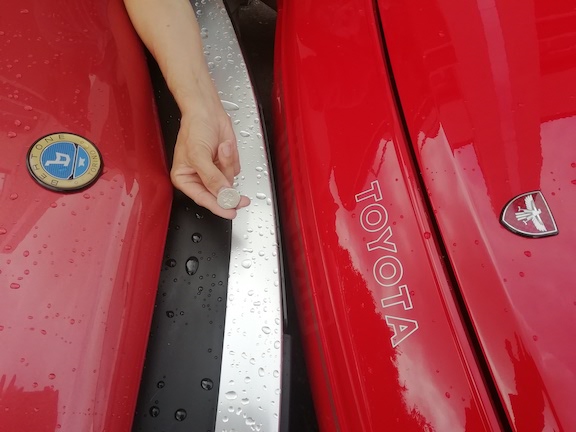
  • CLASSIC CARS | The Fiat X1/9 Vs. the MR2 MK1

    CLASSIC CARS | The Fiat X1/9 Vs. the MR2 MK1

    Two-seater Toss Off

    For as long as time has begun, from the ’70s to be exact, the Fiat X1/9 has always been compared to the TR7. And this is true of the classic press too. Wedge-shaped with pop-up headlights, that is where the similarities end. The X1/9 comes out well in these tests but I fear this is because there are many that disliked BL’s wedge or the agro that went with it. 

    The TR7 died in 1981. The X1/9 carried on, unchallenged until 1984 when suddenly you could hear the X1/9’s market share fall apart much like what happened to the car itself after its first winter. 

    Launched in 1972, the X1/9 saw very little development. The main changes came in 1979 with larger US federal style bumpers and a 1500cc engine from the Strada. There were some changes to paint schemes and specs but overall, very little changed.

    Suddenly, Japan enters stage left. It comes to the party with its MR2. A dinky looking 2 seater with a rev-happy 1600cc engine packed with 16 valves and twin cams. It was what the X1/9 had been calling out for. 

    Toyota’s new car was a runaway success. What it lacked in practicalities over the X1/9, it more than made up for it by keeping up with the new hot hatches on the block. There was even competition in-house from the Corolla GT-i 16. Basically the same engine dressed in a 3 door hatchback style. It was competent and reliable but didn’t set the pulse racing with its Corolla looks.

    The X1/9, having surpassed the128 3P and still going strong considering Fiat’s Strada Abarth offering, it had finally met its match. Back to back, in everyday situations, both cars are similar. The engine sits behind you and both are vocal. In those traffic light Grand Prix trials, it’s quite fun. On a run, it can be both tiring. Both cars come with low gearing though it feels like the MR2 has the lower set of ratios. Using the Fiat Strada engine and gearbox, the X1/9’s are just a little bit taller all round.

    Those lower ratios are no bad thing though. The MR2, with its 16 valve engine has 3 stages of power delivery like boiling an egg. 1-3000 it’s all gentle, warm, nothing really happens. 3-4000 and something is happening. There are bubbles at the bottom of the pan and it’s getting hot. 4000 and beyond and it’s boiling. Stomp on the throttle and you feel a shove from the 128bhp engine that will happily spin up to the red near 8000rpm.

    There is no such gauge to be had from the X1/9. It’s 85bhp is way off what the Toyota has. All is not lost though. Despite its twin choke carb fed single cam unit, it develops all of its 87Ib/ft of torque lower at 3200rpm. This makes the X1/9 a more flexible car than you would expect and feel the more rapid in the twisty bits. It’s far easier to keep the power on. 

    With maximum bhp’s coming up high on both engines, it’s where the torque is that counts. The X1/9 doesn’t have to have the engine singing loudly to get where it wants too quickly. In contrast, the MR2 needs to be spinning at 5000rpm to get its 105 Ib/ft. The downside to the 16valve engine is that it needs revs to get the power.

    You’d expect the handling to be similar for both cars too. Well no. They differ in quite a lot of ways and both are winners and losers. Where overall comfort comes into it, it is the X1/9 that wins. Its ride from the all-round MacPherson struts is soft and comfortable. This makes it the more civilised cruiser over long distances despite its cramped cockpit and close to the controls driving position.

    On the other hand, the cornering safety goes to the MR2. Approaching its limits, it will gently understeer and the steering wheel will communicate this back to the driver effectively. The X1/9 has no such virtue. Instead, you can be caught between a rock and a hard place. It’s near-neutral handling is great. The steering loads up and its adhesion with the road is lost. Be quick though because the steering is not as quick in the rack as it is in the MR2, nor is it as light. And this issue is down to 1 factor alone. The MR2 wears wider 185 section tyres with a lower sidewall. The Fiat’s 165 sections cannot compete with 185’s.

    So who did it better? Both have plus sides over the other. At its limit, the X1/9 will try and kill you. You can’t drive it without 100% concentration all the time. The MR2, on the other hand, will allow you to be foolish and reward you without going backwards into a ditch unless you are really stupid. 

    It’s like the Minogue sisters, you can’t, apparently, like them both. The MR2 is like Danni. It can be a little bit diva and a little bit pop in as much as it will satisfy you no matter what your mood. The X1/9 is Kylie. It’s full-on disco diva, 100% of the time. Just don’t show it her years with Deconstruction records. It gets messy, much like its handling can. 

    Which would I choose? I’ve had a liking for both since I was a child. I just happen to own the Fiat. Having now driven both in almost all driving situations, (the MR2 I did manage to get on the Silverstone racetrack) would I change my own X1/9 for the MR2? If I had the chance to use it more, I would. The MR2, despite its lack of luggage carrying ability, is the more useable car. It’s both fun and easy to live with. It doesn’t feel as delicate as the X1/9 and that also goes for all-round weather ability. 

    It’s just that my X1/9 tends to spend a lot of time looking at me from the garage, not broken I might add, and much like its handling on the limit, its looks are a killer!

    Many thanks to Toyota GB’s Graham Bothamley for the loan of the MR2 from their heritage fleet.
  • CAR REVIEW | Fiat Tipo S-Design

    CAR REVIEW | Fiat Tipo S-Design

    ★★★ |  S-Design Tipo In Need Of An Architect.

    What Do We Have

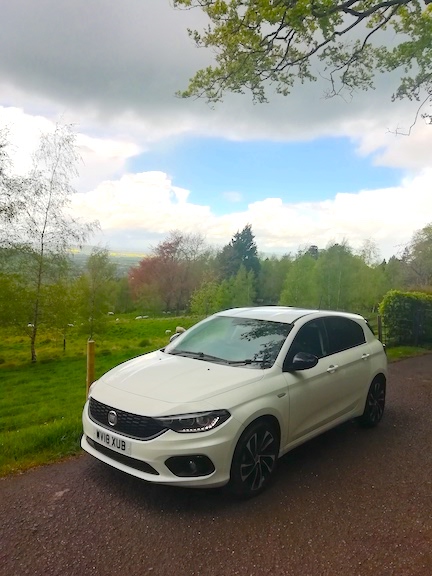
    A couple of years ago, we took delivery of the then-new Fiat Tipo. A new Fiat with a reused name. No hardship there because the original Tipo was a very good car.

    We liked the new Tipo when we last had it back in 2016 and I favoured the car well. Do I feel the same in 2019?

    Driving.

    Nothing has really changed here. We have the same 120bhp petrol turbo 1.4 engine. It was as good as I remembered it. Smooth and flexible with reasonable performance. Not quite the fire-breather you’d think 120bhp should be but it is good for a claimed 124 miles per hour.

    Handling was well balanced and it soaked up the worst of the country lanes around the Cotswolds.

    A comfortable driving position was easy to obtain and there were no annoyances. It felt as good as the rest in the segment.

    Inside.

    It’s not as good this time around. It’s amazing how dated it has started to look with its black plastic everywhere. I’m a little stuck as to where the S-Design sits. The Design moniker is used by a lot of manufacturers these days as something stylish over the other models or sporty. I was not seeing anything outstandingly relevant to this moniker. 

    Driver’s controls all come to hand easily. The 7” touch screen is simple to use and nicely balanced with easy registered finger controls. It comes with Apple Car Play and Android connectivity as standard.

    Living With It

    There are few vices to be had with the Tipo. It’s a simple and effective 5 door hatchback.

    While inside it has dated a little, the exterior is still as good today as it was when new. The fact there are several newer cars with similar rear ends, shows how relevant and modern its design still is.

    Verdict.

    Tipo is no longer the bargain it once was. At £19,125 it does seem quite a lot despite it having a list of standard key features. But these features seem almost standard fit on most cars these days.

    But here lies the problem. It’s effective and not much else. Effective hatchbacks are good but sometimes a model needs some sex appeal. It’s crying out for some true meaning to the letter S like sumptuous. 

    Love

    Build quality 

    Looks

    Ride refinement

    Loathe

    Co2 is on the high side

    Arm rest fouling handbrake

    High price

    The Lowdown

    Car –  Fiat Tipo S-Design

    Price – £19,125 (as tested)

    MPG – 35.3 mpg (combined)

    Power – 120bhp

    0-62mph –  9.9 seconds

    Top Speed –  124 mph

    Co2 – 164 (g/km)

  • CAR REVIEW | Fiat Doblo Maxi Cargo Sportivo

    CAR REVIEW | Fiat Doblo Maxi Cargo Sportivo

    ★★★★ | Fiat Doblo Maxi Cargo Sportivo, Sports Delivery

    What Do We Have

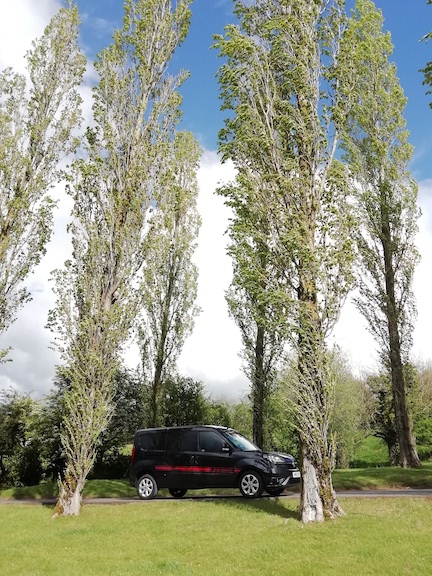
    Here we have Fiat’s Doblo Maxi Cargo Sportivo van. Maxi Cargo because it has been built on a lengthened chassis and Sportivo because it has some fancy go faster stripes along the side. 

    To me, it’s a sort of throwback to the ’70s when people made their vans look a little more sporty and less utilitarian.

    But does that ageing 70’s vibe resonate into today’s Doblo van?  A van, in its current form, that has been with us for the past 9 years. THEGAYUK took one out for a spin at a recent Fiat range review.

    Driving

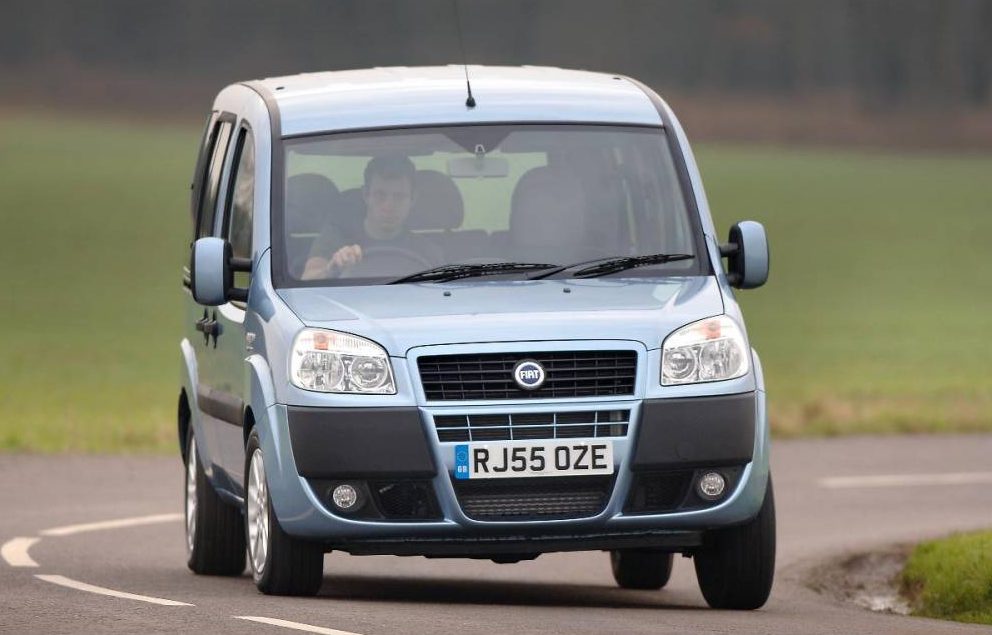
    Some time ago, I wrote a Good, Bad and Ugly on the 2005 – 2009 Fiat Doblo. I said the Doblo was a good van and some 10 years after that one ended production, the current one available is as good with just about the same amount of Fiat style as the last.

    As an unloaded van, you would be right to imagine that the handling was on the light side. That said, there was no excessive bouncing coming from over your shoulders.

    The engine, 120hp turbo diesel unit pumps out all its power around a useful 3750rpm. Max torque of 320nm is at a relatively high 1750rpm. In practice, this means that you have to keep the engine slightly in the noisy area to get the most from the performance. And you’ll want to do this because as vans go, the Doblo can be rather engaging to hustle around.

    Inside

    The cabin is the usual mix of cubby hole and storage bins all set into sturdy wipe-clean plastic. It seats 2 on what are rather comfortable seats offering good support. The passenger seat comes with a storage bin underneath.

    The driving position is still the same as the old model with ankle position not being the most comfortable. Thankfully, all minor and major controls are readily to hand and easy to use.

    Living with it

    Twin side sliding doors give access to the rear area and an added bonus is the fully wooden-clad cargo area which keeps it clean. Access through the rear of the van is the usually twin rear doors with a 40/60 split that open at both 90 degrees or 180 degrees. Convenience is also aided with remote central locking on all doors.

    The payload is on par with this size of van at just over the 1-ton mark.

    Verdict

    As small vans go, the Doblo Sportivo offering from Fiat could be purchased as your one and only car if, like me, you like vans.

    Equipment levels are generous and Fiat fit a host of safety and convenience features as standard. Colour coded bumpers might be stylish on your car, but can become somewhat of an eye-sore with a hard used commercial vehicle prone to being knocked around. Thankfully there are reverse sensors that can offer some protection for the rear bumper.

    What is nice to see is standard cruise control fitted though it doesn’t have adaptive cruise.  Along with electric front windows, it also comes with heated and folding door mirrors.

    Love

    Sporty looks

    Standard specification

    Driving engagement

    Loath

    Clutch pedal position

    Economy not as good as the competition

    Dull interior

    The Lowdown

    Car – Fiat Doblo Maxi Cargo Sportivo 1.6 Multijet-2

    Price – £20,640 (as tested)

    MPG – 54.3

    Power – 120hp

    0-60 – UA

    Top speed – 105mph

    Co2 – 135g/km

  • CAR REVIEW | Fiat’s 500X For The Bigger City

    CAR REVIEW | Fiat’s 500X For The Bigger City

    CAR REVIEW | FIAT 500x

    What Have We Got

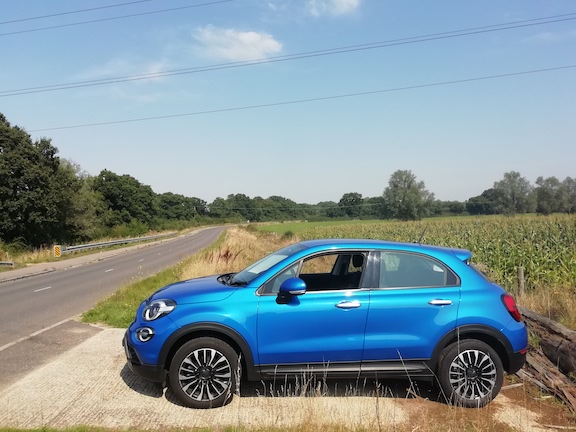
    Fiat’s big 500 crossover SUV has been with us now for over 5 years. 2019 saw some changes to the line-up along with some updates. The 4WD model is no longer offered and power comes from a choice of 3 and 4 cylinder petrol engines.

    THEGAYUK was given the 1-litre turbocharged 120hp Firefly engine in the Cross Look for a week. A more urban looking 500X with the chunky looking bits of an SUV.

    Driving

    The first thing to strike you about the new engine is its brio of power. On paper, it doesn’t appear spritely. In use, it really is. Keep it boiling at 3000rpm and you’ll find it useful. This way it is always ready for action the moment the pedal is pushed down. Anything less and it’s all a bit lethargic with a touch of lag.

    What helps making it go forward is the slick gear change. The clutch and gear action is a joy to slot around when you want to get a move on. And this is good. Recently we had the platform sharing Jeep Renegade in with a diesel engine. That didn’t encourage any form of enthusiasm. The Fiat set up high lights the joys of the chassis.

    What it can’t do however is mask the ride quality. In the city, it is simply too hard. And this translates into a choppy ride. You can’t have it all though. At speed, it becomes taught and agile. That said, however, at night on the motorway, you can see the headlight beams jiggling around.

    Inside

    For a relatively cheap SUV, prices from £18,500, it’s well put together. The front door cards are nicely contoured and there is storage for bottles and the like in both front and rear. The rears are a bit different in that they are made from hard sturdy plastic whereas the fronts have a soft touch feel to them as is the norm for this segment.

    It took me some time to find a suitable driving position.  You certainly can’t say there isn’t enough adjustment for the seats and steering wheel. There is a position for all body shapes. What hampered this was the front seats lack of both under-thigh and bottom support. They were a little flat.

    Living With It

    There are a few things that catch you out about the 500X. Firstly is its size. It feels much bigger from behind the wheel. You do tend to be over-cautious when fighting for space in the urban jungle. In actuality, it isn’t as big as you think. 

    This is also true of the boot. It’s not class leading and not totally useless but if you want your 500 to be a lot more useable than the 3 door city slicker from Fiat, this is for you.

    The verdict

    I wanted to like the 500X. There is much to enjoy about the new engine and the way it drives. It’s light and buzzy without feeling that you want more. Using the 6-speed manual gearbox is a joy and all the controls feel right. It is that ride that I find so disagreeable.

    You won’t drive it on every occasion with the spirit in which it can carry you. It’s illegal to travel at 70mph around town. So the rides sportier set up is somewhat pointless in this car.

    Speaking of 70mph, it would seem the traffic sign recognition sees everything as a 70mph challenge. 

    There were too many times it would show the national speed limit on the dashboard for it to be a one off. Perhaps this Fiat could do with a little bit of Abarth magic. It certainly feels like it wants to.

    Love

    Nippy 3 cylinder engine

    500 Looks

    Light controls

    Loathe

    Choppy Ride

    Slow to respond infotainment system.

    Seats

    The Lowdown

    Car –  Fiat 500x City Cross Firefly 

    Price – £22,100 (as tested)

    MPG – 48.7 mpg (combined)

    Power – 120hp @ 5750rpm

    0-62mph –   10.9 seconds

    Top Speed –  117 mph

    Co2 – 133 (g/km)

    (C) ALL PICTURES: Stuart Bird

  • The Good, The Bad and The Ugly. Fiat Cinquecento 1991 -1998

    The Good, The Bad and The Ugly. Fiat Cinquecento 1991 -1998

    The Good, The bad and the Ugly.

    (C) Jim Magill: Twitter: @thealso

    An irrelevant look at a certain car.

    Fiat Cinquecento 1991 – 1998

    Fiat has always been good at making small cars. Big cars, not so much so. Think of a large successful Fiat and you won’t. Think small and you have plenty to choose from.

    Fiats smallest offering was the 126. This wasn’t really to British tastes and it eventually died. Actually, it didn’t die. It soldiered on until the turn of the millennium but for us in Blighty, we got the new replacement. And the replacement was a step in the right direction for a bold new Europe hell-bent on the love of the city car.

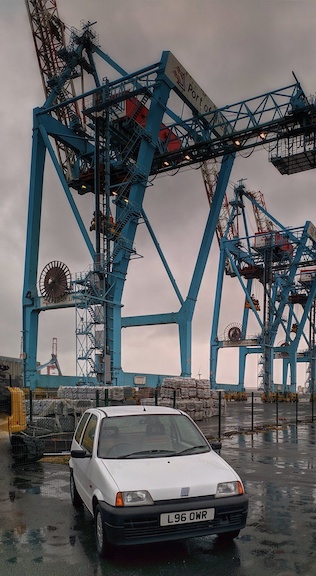
    Cinqueceto or Sinkeychento or BLOODY HELL, how stupid is this cars name to spell? Cinq for short, was a great little design. Short of overhangs and large on space, it was the embodiment of using as little steel as possible. Even in places like crumple zones. And essential places around the passenger carry space. What I’m trying to say is don’t crash one. 

    This lack of steel was good news for those who had been around Fiats for a long time. Until a few years ago back in 1988, Fiat had what can only be described as hydroscopic steel, in as much as the hard metallic surface would retain moisture. Now as we know, water and thin grade steel don’t mix, so using as little as possible was good. And Fiat also used some galvanising during construction too. 

    Fiat Cink was going to be a Fiat that was going to be around for a long time. Aided by its rather cute looks, it gained a legion of fans. And for the fans that wanted their Sink with a bit of a kick, they were rewarded with the Sinq Sporting. A hotter version fitted with a FIRE engine. Not one that went ‘nee-naw nee-naw’ but one that was a Fully Integrated Robotised Engine. It sounded grand. It was just built by robots. Depressing really when you think the heart of any Italian car is its engine, built by Italians with motoring in their blood. Anyway, Robert the Robot built the engines in the Sporting. 

    The Sporting was a bit shit. Unlike today’s Abarth models that are quite crazy, Sporting was not deserving of the sporting title. But I’m here to tell you about the more popular and run-of-the-mill Synk 900. A marvel of modern tranquillity this overhead valve engine wasn’t. A throwback to a bygone era it was having its origins date back to 1955. Don’t let the ageing mechanicals and modern body put you off. It’s not uncommon for older bits to be put into younger models. Look at Cher. She’s simply marvellous at 103. 

    And it was this ageing old cast iron lump with an alloy head in the Senk that made it a hoot to drive. There had been some changes to the 1955 original engine and it now came with injection and distributor-less ignition. Grabbing hold of those 40 horses was made all the more fun with added hydraulic tappets. It really could scream in an unburstable manner.

    And this crazy, drive it like a nun being chased by Lucifer on roller skates makes the Cenk all the more fun and a good car too because you just can’t really do anything wrong in it. Just don’t crash though. It’s not so good at that!

  • CAR REVIEW | Abarth 595 Competizione 1.4 T-Jet 180HP

    CAR REVIEW | Abarth 595 Competizione 1.4 T-Jet 180HP

    ★★★★☆ | Abarth 595 Competizione 1.4 T-Jet 180HP

    Bad Boy Abarth.

    What Have We Got?

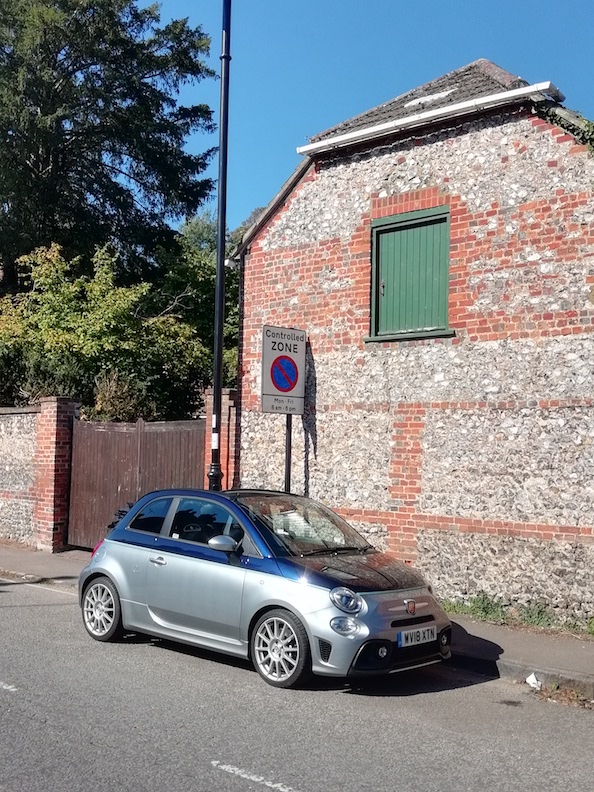
    We have here something we shouldn’t have. The Fiat 500 I had booked wasn’t ready, so Tom at FCA offered me the Abarth 595 Competizione. I pondered if I could find more words for another brutal 500 Abarth. We’ve had the 695 Biposto and the 595 Rivale and they don’t get any better than those two.

    It just so happens that I was able to find some words for this model. A model that left me in a bit of a predicament.
    Driving

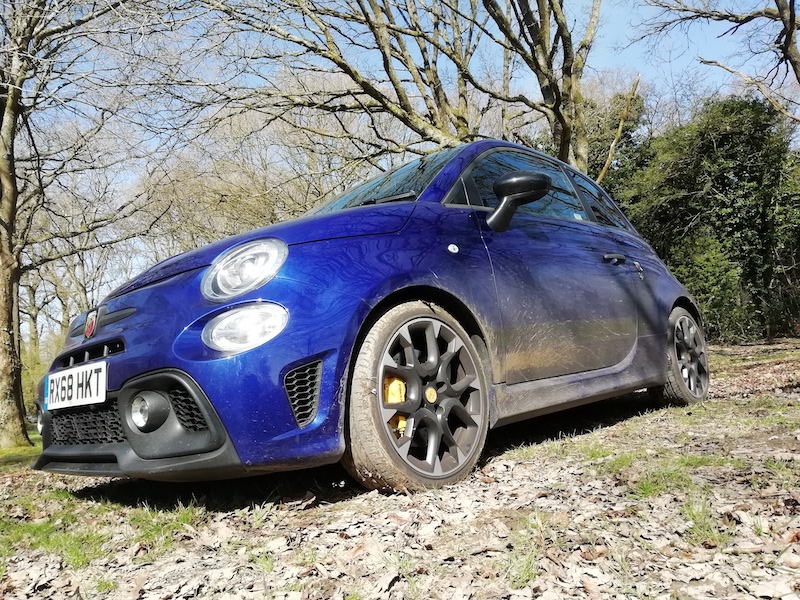
    From turning the key and switching it on, to arriving at your destination and switching it off, both you and the surrounding area will know of your departure and arrival. The exhaust note from the Monza quad tailpipes of this 1.4 180 hp turbo engine bark and growl their intention.

    And driving is what this car is all about. As for driving aids, you get reverses parking sensors. No frontal crash mitigation, no radar, no auto dip/full beam headlights, no cruise control. You are in total control. What you do is down to you. You literally are at one with the machine.

    Inside

    The interior of the Competizione is taken over by supportive cloth and suede covered Sabelt seats. You can tell they were not designed for the 595. The backrest adjuster is so close to the door that you have to open it to adjust.

    The suede on steering wheel and binnacle was a nice touch. Shame then about the rather drab grey plastic of the dashboard and door cards. You feel a bit of body colour would add to a stripped out racy interior.


    Living With It

    Let us forget about practicalities here. The rear seat is no more than a padded parcel shelf and the boot is OK for a car of this size. You do however get climate control and a rather good thumping Beats Hi-Fi.

    So let’s look at living with it as a driving machine. Here is where it excels. The ride is hard, leading to even harder, depending on the road surface. And this is a fun element because with the wide 205/40 tyres on 17” alloys, it tends to tramline quite a lot and this is exaggerated on hard acceleration where the steering wheel fights with torque steer. Hit the TTC button (Torque Transfer Control) and it will put the power to either front wheel with the most grip, and it makes it quite riotous.

    Add that to the power of the engine and the lightning speed it responds to inputs from the loud pedal, and you soon find yourself behind the wheel of a car that you can exploit its high levels of adhesion. It will understeer momentarily until the TTC kicks in and then you find you are flicking it around with gusto.

    The Verdict

    You have to LOVE this car a lot to want one. As an everyday proposition, I can’t really recommend it. It’s not a bad car, quite the contrary, it’s just that it is ‘on the go’ all the time, sport mode on or off. As a weekend toy, you won’t find much better.

    In many ways, the 595 Competizione is the bad boy of the Abarth range. The adrenaline-fuelled addiction borders on lustful cravings and coercion. It’ll lead you into a secluded carpark, shove its hands down your pants, make you do things you didn’t want to do and then leave you wanting more.

    We’re off for a cigarette now. I don’t smoke but I need to gather my senses. I’m flustered and wasted!

    Love

    Snap happy handling

    Speed

    Intoxicating at its limits

    Loathe

    Drab interior

    Ability to drink fuel

    Lousy self-control to drive it normally

    The Lowdown

    Car –Abarth 595 Competizione 1.4 T-Jet 180HP

    Price – £ 22,535 (as tested)

    MPG – 47.1 mpg (combined)

    Power – 180HP

    0-62mph – 6.8 seconds

    Top Speed – 140 mph

    Co2 – 139 (g/km)

  • The Good, The Bad and the Ugly: Fiat Doblo

    The Good, The Bad and the Ugly: Fiat Doblo

    The Good, The Bad and the Ugly.

    An Irrelevant look at a certain car.

    Fiat Doblo. 2005-2009

    What’s boxy, rather wild on the limit, has to be driven enthusiastically and comes from Italy?

    No, not an Abarth something or other, we are talking about the Fiat Doblo van. A van that, despite its looks, won the 2006 “International Van of the Year” Admittedly that award came some six years after its launch with a facelift and like the Doblo, it’s a grower, not a shower, so eventually it gets there. 

    Shame about the facelift really because the 2000-2005 model had quite a nice purpose built front to it. And model maker Norev thought so too and made a nice 1/24th scale model of it that until recently, you could buy from Home Bargains for just £2.99 Probably not one of Norev’s greatest achievements because their models often retail for around six times that price.

    And so to the real van, and what a van and how very Fiat with some of Fiat’s idiosyncrasies missing. Namely, the rubbery gearshift that afflicted Fiats for so long. The gear shift in the Doblo, mounted high up on the dashboard, was within a flick from the steering wheel and selected gears as good as any race-bred machine from sister company, down the road in Maranello.

    And things got better with the engine. The lively FIRE (Fully Integrated Robotised Engine) 1.4 petrol was an absolute peach. It developed 76hp and my word, it feels like it has more. It’s 5 star award is its eagerness to please like a dog that has just thrown up your dinner that it stole from the coffee table. 

    And then things get even better for Dobby the Doblo. The handling is quite remarkable and highly entertaining, boarding on crazy, dangerous and downright outrageously good fun. You see, the rear end has a solid axle, suspended with some of those old fashioned leaf springs. What it would appear had been forgotten by the development team, was to soften it for the passenger carrying variety of the Doblo. Instead, it retained the stiff setup from the van. It made it highly entertaining.

    The bad thing about the Doblo, though thankfully still keeping with Fiat tradition, was the driving position. It’s not so much a position but a torture, especially for your ankles. Thankfully, your feet don’t rest for too long so they are always moving around. That enthusiastic buzz getting the better of you. 

    It’s no sports car and yet it thinks it is. And with that facelift, it moves it from an ugly car to a good car.  

  • CAR REVIEW | Abarth 695C Rivale

    CAR REVIEW | Abarth 695C Rivale

     ★★★★☆ | Abarth 695C Rivale

    Carlo and Carlo Called, They’ve Made A Car For You.

    What Have We Got?

    Abarth has been giving us magical Fiat 500’s for over 10 years now and you wonder how, a car that is over a decade old, can still be relevant in the ever-changing A-segment city car section.

    The answer is to make it good in the first place. Once you’ve done that, the development and evolutions can be kept to a minimum.  

    The Rivale has come about by joining Carlos Abarth, he who took small Fiats and made them fast, and Carlos Riva, he who made special boats, together to make one special city car with an eye-watering price to match. 

    Driving

    Oh my word, where do you start. For a car with older underpinnings, it manages to do two things. Puts the power down and still be entertaining to drive. And it is.

    There is an abundance of torque steer and when it gets charging, it is a fighter. If it was there all the time, it would tire you out. Thankfully, in commuter mode, it is easy to live with. Put your foot down and… (screams)

    And you are fighting with the steering wheel while trying to keep it in a straight line and all this with the roof open and the engine barking and snarling.   

    Inside

    Abarth UK opted for the standard carbon fibre trim. I don’t like it. The mahogany option is a better option and more in keeping with Riva’s ethos of something special. It’s a big piece of wood.

    The rest is pretty much standard 500 except for the blue leather trim and the numbered plaque screwed into the trim by the handbrake. What that lacks in finesse for a special car costing over £25k, it makes up for by being quite endearing. 

    Sadly what hasn’t been altered is the infotainment system. For a car that is a decade old, this really is showing signs of age.

    Living With It

    Millions of 500s have been sold. As a city car, these are just perfect. The boot is small and in the C model, even smaller. You learn to live with the small box in the rear. Likewise, you live with the torque steer fight you have when you stomp your foot on the loud pedal.

    You put up with a lot in the 695 C Rivale and yet you never think you wished you’d bought something else. Very few cars these days are as engaging to drive as they are to look at on the drive and this still has it.

    The Verdict

    It is ridiculously expensive. There are other Fiat and Abarth models with no roof for considerably less and if I’m blunt almost as much fun. 

    Sometimes fun just isn’t enough. Sometimes fun is just a drive to the shops with Graham Norton on the radio. What we have here then is a howling mixture of fun ramped up to the max that really is barking mad and there just isn’t much in this segment that can match it for thrills and spills. 

    And with the roof open, everyone around you will hear you laughing (or screaming) before they see the car and you can’t really put a price on that.

    Love

    Sounds

    Open top

    Torque steer

    Loathe

    Carbon fibre dashboard

    Price

    Infotainment system

    The Lowdown

    Car –  Abarth 695C Rivale

    Price – £25,390 (as tested)

    MPG – 47.1mpg (combined)

    Power – 180HP @ 5000rpm

    0-62mph –  6.9 seconds

    Top Speed – 140 mph

    Co2 – 139 (g/km)

  • MOTORING | Happy Birthday Bambino

    A Little Gem Celebrates

    Who would have thought it, the Fiat 500 turned 60. The little city friend of the Italians that kick started Italy’s motoring for many has become a pensioner. OK, a little time lapsing magic has happened in that time of Dr Who proportions in Time And Relative Dimension In Space.

    From 1957 to 1975 you could purchase a new 500. It was replaced by the square Fiat 126 that just never quite did it. Like most second comings it is never as good as the first and thus the 500 was born an icon like the Citroen 2CV and Volkswagen Beetle. Both cars that have never been replaced with a car as affectionately loved the world over.

    Almost four million 500’s were built in those short 18 years and while many rusted away, many have been survived due to an ever increasing number of fans willing to take on the challenge of restoring or keeping on top of the problems you once got with an Italian car.

    The cheeky chap of Turin also sported a roofless version and even an estate called the Giardiniera. The magic of making this an estate was to lay the engine on its side. I often wonder if they had done this to the normal saloon, they could have created a hatchback version too.

    And so 32 years later we get the 500 with a hatchback when it was suddenly brought back to life with a design by Roberto Giolito that didn’t alter that much from his concept to reality.

    Sales of the 500 took off almost instantly and now you can’t see a street that hasn’t got a 500 on it. Admittedly it is miles away from the original. The engine now sits at the front but like the original, you can now get it with 2 cylinders. In keeping with the philosophy of the 500, Abarth has also been responsible for breathing angry fire onto the current 500 too.

    It’s not hard to see the appeal of the current 500. They are cute and retain the fun and essence of 500. It grew in age but not as much as the new Beetle or new Mini. In keeping it on a small platform Fiat was able to make it fall into the cheaper end of the car market where retro is still big bucks. With this in mind the options are now endless and 10 years on, new and inventive models are being created to keep 500 fresh. Look out for some swanky new models coming out soon.

    Like a lot of cars, at some point, you need to have owned an iconic car. We owned one from 2010 to 2015. A 1400cc 100bhp Pop auto. And in those 5 years, nothing went wrong. It really was a gem.

    So happy birthday Fiat 500 you cheeky little devil.

  • VINTAGE CAR REVIEW | Fiat X1/9

    A Champagne Lifestyle for Fiat Money

    VINTAGE CAR REVIEW | Fiat X1/9

    Picture the scene. America sometime in the in the mid 60s. Following many fatal crashes with people being decapitated or thrown out of their cars, the land of the free was talking about banning convertible cars. European companies that imported to the States went into meltdown.

    Open top cars are their money makers.

    The British are doomed.

    The Germans are still selling a lot of drop top Beetles but struggling to sell the expensive 914/4 and 914/6 targa tops.

    The Italians feel unsure.

    Step in Nuccio Bertone and his design house in Grugliasco, Italy. He walks into Fiat with a bold new design. At about the same time a new sports model was being designed in-house at Fiat to complement the soon to be released 128.

    In a backroom at Bertone, a designer named Marcello Gandini has penned a wedge designed 2 seater putting the Fiat 128 engine behind the driver. Nuccio is a persuasive man. His design house is legendary with designing some of the finest cars in the world. Fiat bosses like it. Bertone is to build it. A beautiful marriage is formed and a mid-engined sports car is within easy grasp of the everyday man and woman.

    To be honest the Bertone design isn’t all that new. Mid-engined cars had been around for a number of years for the rich and famous. Lamborghini, Ferrari and Maserati all offered those people the chance to get close to the ultimate road-going racing car layout. Here, however, was Nuccio with an idea to bring a whole new concept to the masses.

    On its launch in 1972, it was praised for its handling, looks and practicality. It also met the US criteria for open top cars. It was all win win win for Fiat. That strict criterion for open topped cars was soon scrapped. Oh well, what was done was done and without it, we might never have had the X1/9.

    The first cars were fitted with the little 1300cc engine. It liked lots of revving and it was a willing engine alas it lacked the ultimate punch that the looks suggested it should have had. The Fiat 128 coupe could outrun the heavier X1/9 by a few seconds and had a faster top speed too.

    This was addressed in 1978 with the fitment of the Fiat Strada 1500cc engine raising power to 85bhp and the killing off of the coupe. It doesn’t sound a great deal when in 1978 the Golf GTi had 110bhp but the magic of the X1/9 was so alive that the lowly performance figures somehow could match the Golf in many areas including top speed. Up against the new generation of hot hatches, the X1/9 had great handling up its sleeve that helped make up for the lower figures. In some ways, the X1/9 suffers from small man syndrome and gives its best shot in making up for shortfalls in outright figures.

    Even today the looks are the talk of the town. It’s sleek. It has vents in the rear. All panels opened up like a Lamborghini Countach. It has pop-up head lights. The driving position was quite neutral and the seats comfortable and supportive even over long distances. The roof was removable. It was pretty.

    Now there lay the problem. It looked pretty. It soon became known as a hairdressers car and quite unfairly so. Those cute looks and lack of power gave you a sense of security until you overstep the mark. The legendary handling is phenomenal if kept within both yours and the cars limits. The X1/9 will bite you and bite you hard if you take your mind off the road.

    Sports cars were never practical. Boots were small and only squishy bags could be accommodated for those going away for the weekend. Not so in the X1/9. The car possessed a neat trick in its design by having 2 boots. Even with the roof stored in the front, it was still more than enough for more than a weekend. And up until 1982 Fiat even gave 2 matching bags with every car sold. Today they are the ultimate X1/9 accessory to have if you can find them.

    It is an involving car to drive. You can exploit its handling and have fun. In the wet, it needs a lot more care and thought put into the moves. All this happens on skinny 165 section tyres and tyre pressures are essential.

    The example in the pictures is mine. Don’t for one moment think that l am biased and I’ll rave about it being perfect. It isn’t the perfect car by a long shot. It’s called ignition key roulette. It’s temperamental. Sometimes it’ll start on the first turn and sometimes it won’t. You just never know.

    The handling is fun. It has bitten me in the arse when it got a little messy. The cost was a new wheel. The steering is low geared and requires a lot of twirling of the wheel. A quick rack is available and at some point, I will fit one.

    Like all ageing Italians, it needs looking after. The biggest killer is rust. Once rust has set in it can set you onto the road to ruin. The shells have 3 bulkheads that are complex with double and triple skinned areas to increase rigidity in an open top car. Thankfully most body panels are available and there is a good Facebook page and members club out there to help.

    Running faults to date include an oil leak from the fuel pump, carburettor air leaks and coolant leak from ageing hoses. All easy fixes thanks to the mechanicals being basic Fiat 128/Strada and far simpler to repair than a Samsung printer. It’s a great little car for that occasion when the wind in the hair is needed but comes with one major flaw. Just be prepared to correct people when they call it a Triumph TR7!

  • CAR REVIEW | Abarth 695 Biposto Record

    ★★★★★ | Abarth 695 Biposto Record

    THEGAYUK were quite privileged to have tested the Abarth 695 Biposto Record. This was number 118 of 133 made for the globe. It’s quite a rare machine. Why 133? It’s to mark 133 records Abarth hold. Is this then the reconstruction of Abarth instead of it being badges stuck to a Punto side skirt? Hell yes!!!

    Externally it looks like my old 500. This model still uses the older style lights unlike the rest of the range but this is probably because it was launched in 2015. The boot opens the same way as mine. Speaking of the boot, there is tons of space available compared to the standard 500. The rear seats appear to be missing and have been replaced with a cargo net and 3 bar roll cage of titanium by Poggipolini.

    And then you notice other “items” missing that make you suddenly realise this isn’t just an overdressed 500 with 35 section tyres and red Brembo brakes screaming from behind lightened O.Z 18 inch anthracite wheels with a 1400cc turbo engine. Or underdressed if you like lots of bits like door armrests and a radio. You get little red fabric loops and yet, strangely enough, you also get electric windows. As for the missing radio, the hole you get does give good acoustics to your smartphone’s speaker. It’s not a 500. It’s a 695.

    All this visual and tactile assessment was gained just by moving it around the car park at work so on showroom appeal alone you might be thinking that you are not getting a lot for your £36,000. For a small car, the turning circle was also a bit below par. That then will be because of the limited slip differential.

    Before you even drive it you notice a growl from the Akrapovic titanium twin exhausts and this is before you press the sports button that stiffens the steering and makes throttle inputs more responsive. It feels like a small adjustment but when the crazy gets crazier it all comes together like surfing a tsunami.

    Abarth 695 Bisporto Record

    I drove it before I had a chance to look up the spec sheet. I had in fact asked for a much lesser Abarth so I wasn’t quite expecting a machine that was so visually striking in Modena yellow while being quite acceptable on the road. Its behaviour is impressive. The Sabelt bucket seats clad in carbon fibre felt perfect for both comfort and support on the road or on the track. Potholes aside, it handled the city commute with aplomb. It didn’t behave like a track day ready car or make you wish for softer springs. Even the clutch was as simple to operate like that in the lesser 1200cc 500

    Sadly it attracts two kinds of wrong attention. Firstly you get idiots in de-badged Corsas always wanting a traffic light grand-Prix which you let them win because the comparison is so unfair and then you get GTi drivers wanting to prove a point to you and the pint-sized rocket to which you greet with enthusiasm. Sometimes it can be over very quickly and in your favour too. The 0-60 time of 5.9 seconds catches them out from the car weighing only 997 kg. It really doesn’t weigh a lot.

    I’d like to say the 695 is all about raw power. As you can see though it isn’t. It’s quite useable. In normal mode, it’ll attack the asphalt cleanly and quickly. There is a little hesitation from the throttle response but this prevents you making errors in the bumper to bumper city traffic.

    Press the sports button then and my word does it change. Instantly and before the facia panel has changed its digital display to show G forces and gas inputs, you notice it’s growling snap from inputs and the gentle increase in steering weight. Press on and the turbo now vocalising its induction and the exhaust snaps and cackles. It sounds like a modern day supercar.

    Thankfully the limited slip differential does wonders at reducing torque steer and with 190 horses at full gallop at 5500rpm, you need it. Thankfully it doesn’t totally eliminate it so you still get that “feeling alive” craziness you should from a mighty power pack in a car this size. Press the TTC button (Torque Transfer Control) and it does wonders in keeping it in a straight line while also reducing some understeer when really pressed. And press it I did. Unlike the 208 GTi we’ve tested, lift off mid corner and there is no sudden oversteer. The stripped out insides make this an enjoyable road ferret.

    It goes some way to show what the 500 shell is capable of. That rear end is very light. In theory, I expected it to become a little unbalanced during weight transference around corners and under hard braking. Even when braking really hard which you can do quite easily, the ABS system is rapid in firing its pulses to stop you. There is no fuss from the pedal. No annoying ABS pulse feel. The 4 pot Brembos up front stop you. Sadly the hazard lights flash during hard braking. I was always putting on the hazards.

    The suspension is also amazing. Shox provide the vital parts fitted to the standard cars front wishbones and solid rear beam. That is when you realise the potential the normal car has give or take the other thousands of pounds worth of kit the Abarth has added to it. That £36k is money well spent.

    So what have we got here than in steel and precious metals? It’s a toy really. A bit of a play thing. At any price, the Bisporto assures exclusivity. It’s there for the person who wants to go fast, fuss free and not have trouble parking it in the city, unlike the Ferrari. It’s also there for a little track day fun. There is also carbon fibre. It’s real carbon fibre. This is the kind of car that looks good with it. And it’s economical too. I managed 29mpg during my test.

    Abarth 695 Bisporto Record3

    I wouldn’t have a Bisporto. Even if you can find the limited run Record model, It’s too much for me. I like my sports cars to be a little bit more cruiser than skateboard. It’s fast. It’s rapid. It demands respect from the moment you pull away because you can go very fast very quickly. Respect I give anyone who buys one. To hell with it, I’ll have 2, It’s fabulous.

    Likes

    The ridiculous asking price
    The amount of race names associated with it
    The Performance

    Loathes

    The sensitive hazard lights
    Idiots in Vauxhall Corsas
    Making GTi drivers unhappy. No, seriously I am… NOT

    The Lowdown
    Car – Abarth 695 Bisporto Record
    Price – £36,610
    MPG – 45.9 (combined)
    Power – 190bhp @ 5500rpm
    0-62mph – 5.9 seconds
    Top Speed – 143 mph
    Co2 – 145 (g/km)