Tag: Car Review

Our independent reviews on the best, smoothest, most economical and most reliable cars on the road and in the UK. From the world’s top manufacturers.

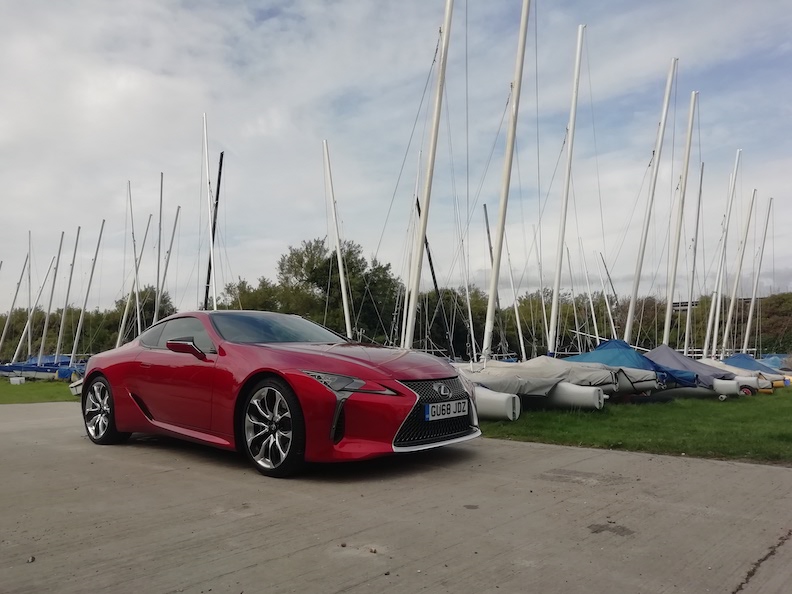
  • CAR REVIEW | Lexus LC500; big, striking and value for money

    CAR REVIEW | Lexus LC500; big, striking and value for money

    ★★★★ | Lexus LC500, Lexus Coast to Coast Cruiser

    The Car

    What’s limited to 168mph, does 0-60 in 4.7 seconds, feels like nothing from its sister company and available at a rather affordable OTR price of £87,885? I’m talking about the Lexus LC500.

    The LC500, a 2+2 coupe, is the flagship model from Lexus. From a company that celebrates its 30th year in 2019, it seems quite a nice way to join the party and be given the keys to this. Lexus, sort of, came from nowhere. A subsidiary company with humble groundings, they set out to take on the finest from Europe. There was talk that they couldn’t do it. There was laughter from the power houses in mainland Europe. The laughter stopped. Now they are back with another attempt at making a luxury grand tourer.

    When I say back I am of course referring to the original 2001-2010 SC300/400 model. A luxury 2+2 with a retractable roof. It had the luxury appointments fit for a Lexus but sadly failed as a grand tourer. Fit for the time, it wasn’t able to take on Europe. The SC was a Boulevard cruiser of American tastes.

    With parent company pioneers in the field of hybrid drive systems, it’s pretty much impossible to find anything on their press fleet that doesn’t have that set up so I was pleasantly surprised and somewhat excited to be pointed into the direction of the all petrol LC500. And what a petrol model it is too. A normally aspirated 5 litre V8 packing 458bhp through a 10 speed automatic gearbox to the rear wheels. This has 4 valves per cylinder, 4 high lifting cams, VVT-i and VVT-ie and a redline at 7300rpm. On paper alone, this has almost super car potential. 

    Add that power to the striking looks that turn as many heads as the super powers from Stuttgart, Ingolstadt and Sant’Agata Bolognese and you’re rubbing shoulders in some high class company. But does the LC500 really have what it takes to mix with this crowd or is it an outsider?

    Playing to the Crowd

    It’s a bit yes and a bit no. I’ll start with the negatives first because there are plenty of positives. The handling is a mix of comfort and grand tourer. With 21” alloys, it’s surprisingly good in the comfort area but as an all-out sports car it isn’t quite good enough and belies its super car looks.

    Its mix of settings from comfort to sport are deceptive and not clearly different. On the one hand, the LC500 and all its power will cosset you on the motorways or entertain you on the fast B roads. Just be careful down those narrower lanes because the LC is wide at almost 2 metres!

    That cosseting comfort comes from the quietness of the V8 up front. Depending on how you feel, it can either be quiet and subdued or vocal but never brash. And that vocalisation doesn’t really alter when you select the drive modes, eco, comfort, normal, sport and sport +.

    Try using it as an all-out gung-ho sports car and until you switch the traction off (it never truly turns off) it will satisfy. Pulling away with a howl from the V8 engine and some kick out from the rear. The limited slip differential curtailing wheel spin from the loosest wheel. But you won’t use it like this all the time, it just doesn’t engage in this kind of behaviour. And that’s down to the many good things Lexus has bestowed upon it in terms of luxury.

    The 10 speed auto box changes gears with frightening smoothness and yet you are never left wondering if the gear selected is the correct one. Easy to use paddles allow quick up and down changes and considering its 399 Ib/ft of torque under 5000rpm, using the paddles allows blasts of power to be released quickly. And thankfully they do come quickly because the gearbox (in most modes) tends to keep the engines relaxed at under 2000. 

    That’s not really a hardship when the power surge is lag free thanks mainly to being normally aspirated. Where the LC500 does excel is being just that little it fun and cheeky. The limited slip differential does its job well in reducing spin from the wheel with the least grip but that doesn’t stop it from spinning the wheels when the throttle is pressed hard. And all this for a car that indicated 18-28mpg. Not bad in my book for such a large engine.

    There Are Some Problems

    If there are niggles to be picked at they are purely aesthetically challenging ones and I’m not talking about the design. While the angular grill looks somewhat a bit too much on the long faced SUV range, on the LC it looks just fine. What throws your eyes are the gaudy textured chrome plastic surrounds on the rear lights. It really doesn’t need to be there. 

    Likewise, carbon fibre and faux carbon fibre used on the door kick plates doesn’t suit the car in its application here. Yes the roof is carbon fibre and I’m OK with that, but not on the inside. Thankfully once you shut the door, you no longer see it. 

    I like the infotainment system. It contains everything you’ll need and responds quickly. Thankfully it does because it’s all controlled via a finger pad in the centre console. Where it falters is even on the less sensitive setting, it’s just too sensitive and wrong things were selected. 

    Paying Attention

    I’m happy to say that the interior is well laid out and the controls ergonomically placed and nicely weighted. There is incredible attention to detail in the fit and finish inside. It’s actually above and beyond anything Lexus has made in the past. The skills and fastidiousness of the Takumi master craftsmen is evident in the cabin even down to the often difficult to cover sharp angles on the door cards. It’s not often apparent unless you go looking for it. Textures and stitch work are seamless.  

    Night time comfort is exceptional. Complimented by footwell illuminations and lighting effects near the clock on the dashboard, the white neons running through a sculptured curve in the doors heighten a sense of luxury for those up front. Those in the rear are less well catered for. The seats, while generous in the ample size of the seat squab, are somewhat hampered by headroom or rather the lack of it for anyone over 5 foot tall. You do feel that the rear seat might have been better removed and the ample 197 litre sized boot space increased.

    There is a lot to like about the LC500. It’s big, it’s striking, it’s expensive but affordable. As a GT it makes such beautiful sense. I’ll leave you with the words of Miki Matsaburu who sums up the car in one of her songs, it’s so creamy.

    Love

    Serenity of the cabin

    Comfortable ride 

    Striking looks

    Loathe

    Rear seat room

    Drive modes difficult to differentiate in normal driving conditions

    Infotainment control pad over sensitive

    The Lowdown

    Car –  Lexus LC500 Sport + Pack

    Price – £87,885 (as tested)

    MPG – From 24.4 mpg

    Power – 458bhp

    0-62mph –  4.7 seconds

    Top Speed –  168 mph

    Co2 – 265 (g/km)

    (C) All Pictures Stuart M Bird
  • CAR REVIEW | Vauxhall Astra Elite: “The engine is current darling of the motoring world”

    CAR REVIEW | Vauxhall Astra Elite: “The engine is current darling of the motoring world”

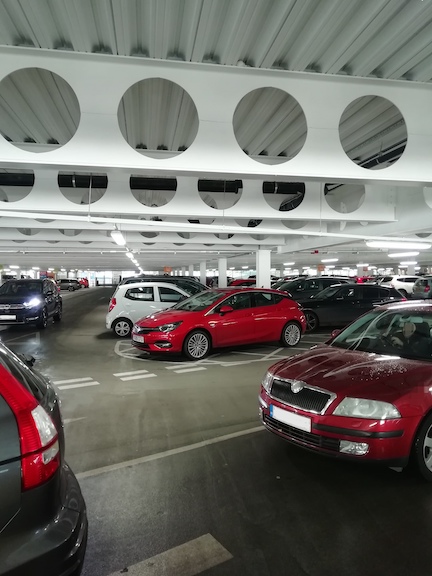
    Here we have the 7th generation Vauxhall Astra. It’s been with us since 2015 and as a result it is still very much a Vauxhall designed product under General Motors. In 2017, Vauxhall was bought by PSA Groupe.

    There are 8 models to choose from in the Astra range, priced from £18,905 to £26,295. The mid-range Elite starts at £23,95 before options. 

    From the outside, the Astra is a good looking 5 door hatchback. As you would expect, it is an improvement over the previous generations and is now less nondescript than ever. Of note is the size of the boot opening. Finally it has become a bit more square at the bottom. Doesn’t sound much, but as practical hatchbacks go, having a narrow bottom on your opening can hinder loading and unloading. 

    It’s around the back that you notice a design faux-pas. The stylish kick-up in the rear doors stretches into the 3/4 panel. Here sits a triangular piece of plastic. To be honest, I’m not a fan of this. It feels cheap and doesn’t serve any purpose whatsoever. 

    As well as a heated steering wheel, the Elite model also gives four heated leather seats and the leg room is comfortable all round, even for those sitting behind 6 foot tall drivers. There is even a touch of opulence with an attempt at illuminating the door cards. It’s a nice try and just needs a bit of work. Like many others, the rear doors are void of any such niceties though they do get largish rear door bins. 

    The hottest item in this Astra Elite is the engine. The small capacity turbo is the current darling of the motoring world. Powering through 3 cylinders with a turbo, the engine makes for an interesting topic of conversation. You don’t need to rev the engine to its redline to get the maximum 145PS of power from it for it to feel sprightly and useful. In the day to day running around you also won’t need to use 3 of its 6 gears either. 

    And here is the strange driving style this Astra has to offer. The engine is its shining star. It surges forward with quite a lot of likeable charisma. Gear changes are effortless and ignoring the change up indicator, makes for an engaging power unit. Power delivery certainly doesn’t feel like that from a little engine. The only giveaway is the thrum emitted by the 3 cylinders. 

    There is also enjoyment to be had with this when added to the chassis. The suspension set up is nothing out of the ordinary and it allows for enthusiastic driving. The chassis, while not being the most compliant in the ride department but not hard in an over sporty set up, whizzes along with aplomb. It’s quite sad then that when it gets to the twisty bits, the steering totally lets it down. 

    This steering is the Astra’s Achilles Heel. In the straight line, it feels wooden. Give it a few flicks and it won’t inspire much confidence and it’s this confidence that takes sometime to build on because the level of adhesion from the 225/45 17 Conti’s is exceptional. With just a bit more feel, it would make for an inspiring drivers car wrapped in a simple hatchback body. Something you can’t say about many of today’s popular SUV’s.

    And therein lies many of the Astra’s problems. It’s just a little too safe even down to the usual over paranoid parking sensors that seem to be inflicted on the Vauxhall owner. 

    As cars go, the Astra Elite, in the cold light of day, is one of the best allrounders. It’s like a friend. You know the friend, the one who can be a little curt in conversation. The one you go to when you want to be told the truth. No bullshit, no messing, just straight up honesty. There is no fooling around. Trouble is, you don’t always want to be with that friend.

    Love

    Engines lively behaviour

    Weight of the controls

    Chassis balance

    Loathe

    Wooden steering

    Dark interior 

    Rear 3/4 trim

    The Lowdown

    Car –  Vauxhall Astra Elite Nav 1.2 Turbo

    Price – £26,210 (as tested)

    MPG – 51.4/54.3 mpg (WLTP low/high combined)

    Power – 145ps

    0-62mph –  8.8 seconds

    Top Speed –  137mph

    Co2 – 99 (g/km)

    All pictures (c) Stuart M Bird

  • Quick Drive. Toyota Corolla Excel 5dr 2.0 Hybrid

    Quick Drive. Toyota Corolla Excel 5dr 2.0 Hybrid

    Rating: 4 out of 5.

    What Have We Got?

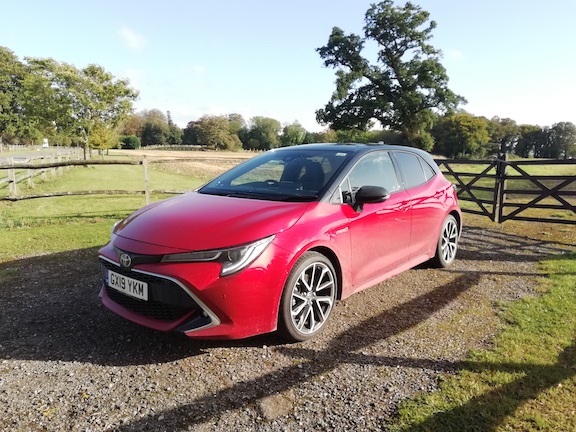
    Toyota and their never-ending array of hybrids brings back an old name with a modern twist. The Corolla is back. And back with a bang it would seem. We take one out for a drive around the lanes of Basingstoke.  

    Driving

    First thing that becomes apparent with the 2-litre petrol engine mated to the hybrid drive system in the Corolla is its normal driving ability. Only recently have I started to like the CVT gearbox system Toyota use. The Yaris showed a big improvement over the previous system. 

    Therefore I wasn’t sure what to expect in the Corolla. Not to get too complicated in describing it, I’ll say that for the most part, it felt like a normal automatic gearbox. It changed up and down like a normal auto box and this, in turn, made it rather nice to drive.

    And its “normal” behaviour could be had for much longer than any hybrid drive I’ve experienced from Toyota to-date. Only when you press on with the throttle to the floor does the CVT traits come through with the engine revving away upfront in a subdued vocal fashion. 

    This all goes in its favour too. The chassis is compliant and quiet and able to carry the Corolla around quickly. One thing that is missing is excessive body roll or body roll at all for that matter. It feels very planted to the road.

    Inside

    The cabin, nicely styled in a normal design from Toyota was pleasant to be in. Plastics where it mattered felt much better than previous models have shown. This it would seem was Toyota’s attempt to catch up with the market leaders from Europe and finally, they seem to have worked out what the Europeans want and where to place the quality materials. This is something Toyota haven’t always done well. 

    Living With It

    It would seem Toyota have a lot of high hopes for the return of the Corolla. In bringing it back, it looks like there is a new design language being adopted that is suited to European tastes. Its looks are both stylish and sophisticated. Despite its big grill and angled light units, it’s nice to see a softer-looking face to a car. 

    The hybrid drive systems are easy to use and altogether it feels a much better car.  It raises the theory of hybrid drive systems being good to actually being very good. It’s taken some time but finally, Toyota has made a better way.  

    The Verdict

    It comes at a price and this time Toyota are not messing around. For £29k, they have made a car that challenges some of your preconceived ideas of Japanese cars and turns them on their head. It’s still a Toyota so expect it to be more reliable than anything else out there, it’s just now it has a more familiar feel to it that you’ll greatly appreciate. The Corolla of the 70s had Europe worried.

    Once again, the Europeans are going to be on the run.

    The Japanese have done it again.    

    The Lowdown

    Car –  Toyota Corolla Excel 5dr 2.0 Hybrid

    Price – £29,075 (as tested)

    MPG – 50.43 – 60.62 mpg (WLTP combined)

    Power – 178bhp (total output)

    0-62mph –  7.9 seconds

    Top Speed –  112 mph

    Co2 – 89 (g/km)

    All pictures (C) Stuart M Bird 2019

  • Quick Drive. VW T-Cross Diesel reviewed

    Quick Drive. VW T-Cross Diesel reviewed

    What Have We Got?

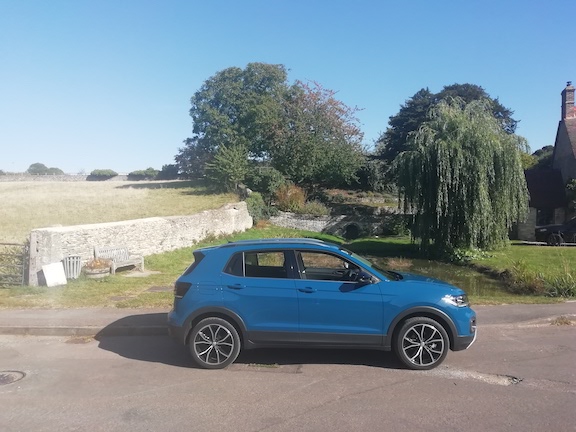
    In May, THEGAYUK was invited to the launch of the new VW T-Cross. A compact SUV corssover based on the Polo’s MQB platform. 

    We were surprised to learn that there was to be no diesel available for this model. So it was a surprise that just 5 months later, a diesel option had been added to the T-Cross.

    Has the addition of a diesel engine been worth the somewhat short wait and the extra £1675 asking price? We took one for a quick drive to find out.

    Driving

    VW have a great back catalogue with their diesel engines so I had high hopes for this T-Cross. Fitted with the 95PS 1.6 litre diesel engine, its lowdown grunt on paper looked appealing. It produces 250Nm of torque between a lowish 1500rpm to 2000rpm.

    Sadly, on the road, it just didn’t transpire in the way I had hoped for. Compared to the similar outputs of the 1 litre petrol, the diesel engine made the youthful looking T-Cross feel a little flat. It had lost its brio of enthusiasm and I couldn’t get over that disappointment.

    The chassis has great ability to carry itself well over various surfaces and the handling is more on the safe and predictable so but nonetheless, it is still worthy of piloting around with gusto. However, in having lost its jolly enthusiasm, there was little encouragement to enjoy the handling of the MQB platform in this guise.  

    Inside

    Inside, the T-Cross is the same as before. You wouldn’t expect any changes to be made this short in its production life and to be fair, there isn’t anything that needs changing. It is all useable stuff with rear sliding seat that alters the size of the boot or rear legroom.

    Depending on spec, the dashboard and fascia can be jazzed up with colour making it a rather pleasant place to be.

    The Verdict

    I’m a fan of the diesel engine. There is still a place in the market for the manufacturing of them. Not so in the T-Cross. It would seem unless outright miles to the gallon are your thing, then this will fit the bill. 

    According to the WLTP combined figures, it’ll manage 52.8. A whole 7 more than the petrol. For those 7 miles you get a great car with lacklustre performance and I can’t see the benefit of that. It’s a saving of around 2 pence per mile. If I’m to be seen as less of a villain for not liking this car, I will say that the DSG gearbox is better suited to the diesel engine than the bigger petrol option. 

    The Lowdown

    Car –  Volkswagen T-Cross 1.6 TDi 95PS DSG

    Price – £23,980 (as tested)

    MPG – 52.8mpg (WLTP combined)

    Power – 95PS

    0-62mph –  11.9seconds

    Top Speed –  112 mph

    Co2 – 140 (WLTP g/km)

  • CAR REVIEW | Alfa Stelvio Quadrifoglio 2.9 V6 Bi-Turbo Q4 

    CAR REVIEW | Alfa Stelvio Quadrifoglio 2.9 V6 Bi-Turbo Q4 

    Release The Beast

    This review is going to be a little bit different. If you want to know what the Alfa Romeo Stelvio is like, then I can direct you to the Alfa Romeo Stelvio 2.0 Turbo 280hp Q4 we had in late last year.

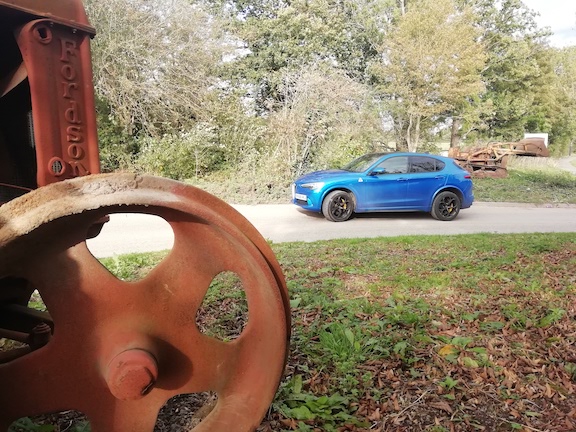
    So what have I got this time? From the outside, you don’t much to go on. It’s as big and as bold as before and you get an alloy wheel on each corner.

    What you notice about these alloys is that they cage the “Monster brake system” with their £595 optional bright yellow brake calipers all round. And you’ll learn to appreciate these bright appliances very quickly on your test drive.

    You also get a 4 leaf clover symbol on the front wings as is the historic tradition of Alfa Romeo and these in their big triangular shape let others know that this isn’t any Stelvio. This is the Quadrifoglio. This IS the beast.

    From the moment you start up, the 2.9 V6 Bi-Turbo exhaust ‘snarles’ at you and the neighbourhood. It lets you know it has been woken. It’s not fully awake because it has things to do first. And that is get warm. And there is a reason why it needs to get warm which is why it won’t let you select ‘RACE’ mode from cold.

    So while we wait for the magic to happen, let’s look around the cockpit. For a starting price of £69,510, it’s a bit of a disappointment. One thing Alfa Romeo just can’t get right at the moment is the interiors. Quality and build are good. The tactility of the touchy bits was nice and the controls fall to hand in a logical fashion. Why others don’t fit start-stop buttons on the steering wheel is a puzzler. It feels right.

    Sadly the infotainment screen is just too small to be of any use. The speed in which it responds to the central dial in the centre console works well, maps however are just too small to be taken quickly at a visual glance.

    Being the Quadrifoglio, there is an abundance of carbon fibre trim. Not to my liking but this is a sports model so I’lll accept it and the £3,250 Sparco carbonshell bucket seats. They are contoured and easily adjustable to suit most shapes.

    So here we are and the engine is still cold. So we set off and for a large car on wide 20” diameter alloys, the ride is surprisingly supple. The car is set in NORMAL mode. The SDC (Synaptic Dynamic Control) suspension set to its softest. Thankfully when DYNAMIC is selected, you can opt for the soft ride though you’ll be hard pressed to notice any difference over the ridges in the road.

    It behaves a bit more monstrous when in dynamic. Throttle responses are sharper,  gears changing further up the rev range. But still the Stelvio is pleasant to drive. Put your foot down, and I’ll grant you, the 600Nm of torque will shove you back a bit in your seat but it’s still nicely balanced and surefooted. 

    This is where is runs its Jekyll and Hyde. It’ll reward you with rapid progress and communicating steering. It will make you feel great while making you feel a little reserved and at the same time sing to you with a vocal exhaust note. Pushed too hard and the front will let go. When it does, you have to take responsibility for your actions because you will be pushing it hard. The level of adhesion is immense with a 50-50 weight distribution front and back and the Ackerman steering geometry set up isn’t for show.

    The wait is over and the engine is hot. Never has “Boiling” been so apt for an engine temperature because now you can select the DNA switch to RACE and then you are screaming like Umberto of Angera was when he slain the human eating serpent that roamed the streets of Milan.

    Suddenly you appreciate those yellow brakes on all 4 corners slowing down the fun as the visuals your brain took in catches up with the sound of the engine. And as you come to a stop, you can hear your screams catch up too. 3.8 seconds to 60 is quick and with the grip from all 4 wheels planting the power down, it does take some getting used to. Or not as is the case with myself. You can still hear my screams in various pockets of road as you drive around my village.

    The Stelvio Quadrifoglio isn’t just about 0-60 times and going fast in a straight line. When set in race mode, it also needs to be able to go around corners. This is where you really learn what the car is all about.

    All driver aids are switched off. There is no traction control, you are suddenly going head-to-head in a RuPaul lip-sync so don’t fuck it up! And here is the thing, you find that you can’t. You discover that all of those driver aids have actually held the Stelvio back. 

    Attack your favourite B road and roundabouts and you can have a lot of fun. The back end, quiet and sedated before, becomes angry and shouty like Mr Hyde. Blip the throttle and drop a cog or 2 in the 8 speed auto gear box and you are rewarded by a rear end that is easy to control as it steps out sideways. Doesn’t always step out enough but you find it rewarding all the same. And all this is set to an even more fruity musical tune from the exhausts. 

    Admittedly, in a wet, it will light up the rear axle with ferociousness and you start to respect the sheer power this Stelvio has to offer because it’s there, all the time, it never goes away. Never goes away that is until you run out of fuel. 

    The quoted 24.6 MPG might as well be 2.46. In race mode, it’s a thirsty beast. You can suddenly find yourself in the red side of the fuel gauge. You know what you’ve done, you failed the lip-sync.

    The Alfa Romeo’s Strelvio is a good car so the big question is, is it worth the £30,000 more for this engine, for this sheer amount of power and for lining the pockets of Opec? There are nine people in my family, I’ve put a kidney from each member up for sale. They don’t need two but what I need is a Stelvio Quadrifolglio. 

    Love

    Vocal exhaust note

    Comfort in all drive modes

    Exhilarating 

    Loathe

    Cheap cabin

    Infotainment screen size

    Fuel economy

    The Lowdown

    Car –  Alfa Stelvio Quadrifoglio 2.9 V6 Bi-Turbo Q4 

    Price – £77,955 (as tested)

    MPG – 24.6 mpg (WLTP combined)

    Power – 510 bhp

    0-62mph –  3.8 seconds

    Top Speed –  176 mph

    Co2 – 222 (g/km)

  • VIDEO | Subaru Forester 2.0i XE Premium Lineartronic reviewed

    VIDEO | Subaru Forester 2.0i XE Premium Lineartronic reviewed

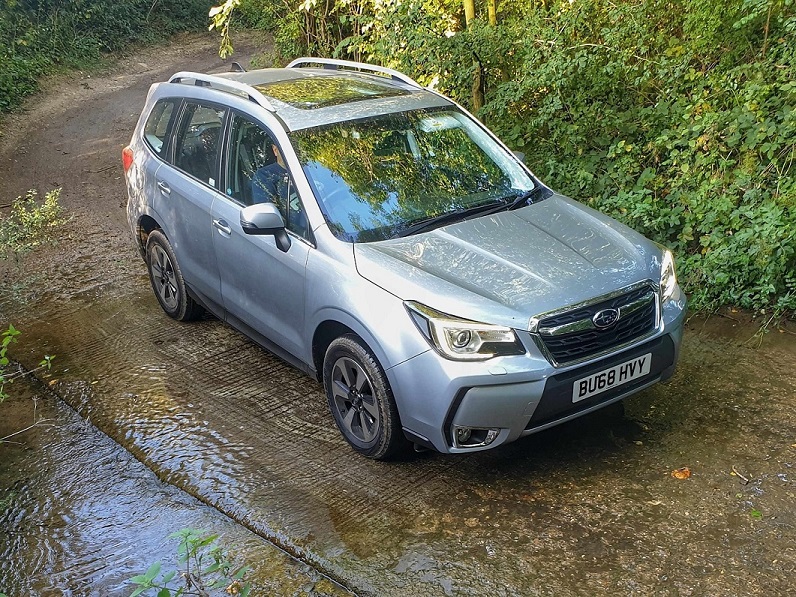
    Mark Turner takes us throught he Subaru Forester 2.0i XE Premium Lineartronic

  • CAR REVIEW | The ultimate gaymobile. The Queer As Folk Jeep

    CAR REVIEW | The ultimate gaymobile. The Queer As Folk Jeep

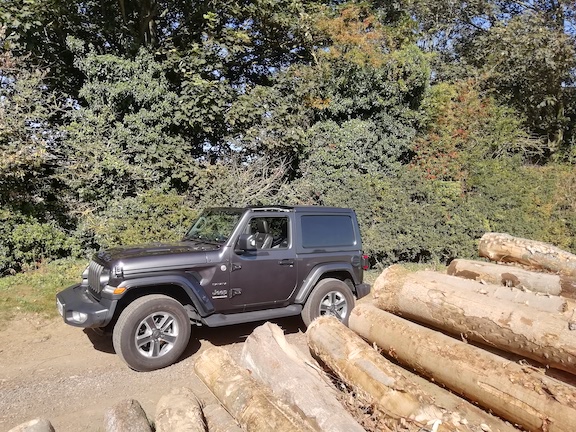
    Jeep Wrangler Sahara 2 door 2.2 Multijet-2 Nowt Queer About This.

    Bit of History.

    It has been 20 years since Queer As Folk, the groundbreaking Channel 4 show, hit our screens with a bang bigger than that from the pounding headache you’d get the next morning from sniffing all those poppers on the dance floor of The White Swan in the East End. 

    It was the first mainstream show that depicted gay life, cruising, pick-ups, recreational drug taking (with a tragic ending for one) and rimming. The first series opened up more than your eyes. The second series was a bit or a let down, so let’s remember the start and the stars that were made.

    What Have We Got?

    Apart from projecting Aidan Gillen, Craig Kelly and Charlie Hunnam into the hights of recognisable TV stars, there was also stared another star. A star that really did get bashed in the rear doors. I’m talking about the 1995 Jeep Wrangler. 

    Overnight, the short wheelbase Wrangler was thrown under the gay spot light and garnered a reputation as being a bit of a gays car. Wrong or right, who can tell. I couldn’t back then. I was 20 and didn’t really have much of a car history underneath me.

    So we at The Gay UK take on Jeeps smallest offering for a cruise around the streets of Surrey to find out if it’s any good as a daily city cruiser.

    Driving

    You must remember, as a tarmac driver, the Wrangler isn’t built for handling. Push it too fast into a corner and it will complain with tyre noise and understeer. On-road performance isn’t what you’d buy this kind of Jeep for. 

    Ride is a pleasant mix of body shake and exaggerated articulation. It takes a bit of getting used to before you become accustomed to its ways. It’s not unpleasant and surprisingly supple on most surfaces. 

    This suppleness and body isolation is thankfully there when on the motorway. At high legal speeds it’s very comfortable. Surprisingly more so than you’d thing and at speed, the wobble and float from the way the suspension works, doesn’t make it feel unwieldy or tiresome.

    Fitted with a 2.2 turbo diesel mated to an 8 speed automatic, it makes easy work of most situations with 450Nm of torque available at 2000rpm. On and off the road that figure means it has all its power almost ready whenever the throttle is pressed. 

    Off-road usability is second to none. That is what has made Jeep an off road force to be reckoned with. This Jeep will wade water up to 760mm and with a 37.4 degree approach angle, it is usefully greater than that of the rears, meaning you won’t find yourself bottoming as you come out of your sticky situation.  

    Inside

    For a utility vehicle, built to be exposed to the elements, both inside and out, you find the cabin appointed in luxurious feeling soft touch materials where it matters. You get electric front windows, air conditioning, heated leather seats and reversing camera to name the name luxuries. All great. 

    You also get tiny footwells up front and even less space in the rear for feet. The rear seat is a bit excessive because it’s not really that useful. 

    Living With It

    For me, with little use for a 4WD but loving the look, I’m willing to overlook its problems. You soon learn to ignore the wind noise when driving with the roofs off at motorway speeds.

    The boot is all but hopeless with just over 200 litres of space. Take the front roof panels off and you can kiss that space good-bye. And even with the rear seats folded, it is still no where near as useful as say a small hatchback like a Fiesta.

    What is a boon in this short wheel base, is parking. It’s short wheelbase makes it one of the easiest big car to park. And because it’s clad with a bench for a front bumper and the usual appendages you expect to find on a Jeep, parking dings won’t spoil your Jeeps good rugged looks.  

    The Verdict

    You shouldn’t like it. It’s heavily flawed in many areas and yet it’s excellent to cruise around in.  Which is surprising because the way it lurches around with a body that doesn’t feel connected to the chassis, it does make it remarkably comfortable. 

    The Wrangler is anything but queer. Give me a metallic brown one with a gold eagle on the bonnet and I’m sold. So that pretty much answers would I recommend one!

    Love

    Rugged good looks

    Ride quality better than you’d think

    Economy

    Loathe

    Zero boot space

    Zero rear leg room

    Zero front foot well space

    The Lowdown

    Car –  Jeep Wrangler Sahara 2 door 2.2 Multijet-2

    Price – £46,940 (as tested)

    MPG – 37.7 mpg (combined)

    Power – 200bhp

    0-62mph –  8.9 seconds

    Top Speed –  112 mph

    Co2 – 198 (g/km)

    PHOTOS: Ⓒ Stuart M Bird

  • CAR REVIEW | Volvo XC40 R-Design Pro Automatic AWDSwedish Seduction 

    CAR REVIEW | Volvo XC40 R-Design Pro Automatic AWDSwedish Seduction 

    REVIEWED: Volvo XC40 R-Design Pro Automatic AWD, Swedish Seduction

    What Have We Got?

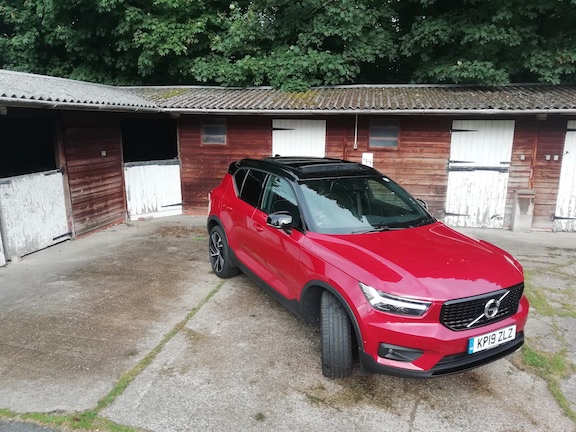
    Having recently tried Volvo’s smallest SUV offering with the competent XC40 Momentum Pro, we now jump seats and try their sporty XC40 R-Design fitted with the same 190hp T4 petrol engine.

    I’ve not been a fan of the R-Design spec Volvo’s, so does this R-Design “do it” for me?

    Driving

    First thing you notice about the XC40 R-Design is its ride. It’s notably firmer in its springing rates. Something you would expect from the sporty lineup. 

    Strangely I’m rather won over by it. For a high sided car, It felt composed and taught. And despite what I said about the Momentum and its perfect choice of gearing, the R-Design gives you wheel paddles that allow you to engage in a more enthusiastic driving experience.  The only problem with the sporty model is the throttle response to gentle pressings just didn’t feel as progressive or fluid. Here is where it encourages enthusiasm by having adopting its own driving style. 

    Adhesion, already impressive with FWD, is further boosted in this AWD system. It encourages you and rewards you with a drive that you should expect from a small SUV.

    Inside

    One thing that is worthy of note is the use of recycled bottles, turned into fluffy material and used in the door cards and transmission tunnel. It has a warmth and feels like a faithful dog pressing against your left leg. 

    R-Design also has such niceties as door illuminations making the car feel more affluent in the range than in some ways, it should feel. 

    The downside is that in the day, the R-Design is a touch too dark on the inside. What it gives you at night, it takes away in the day. 

    Living With It

    The XC40 R-Design is easy to engage with when you want to travel fast. It will reward you with its taught road behaviour and cosset you at night with its soothing ambience which feels a mile away from what it is.. 

    The Verdict

    I’ve not been kind to the R-Designs in the Volvo ranges and when driven back-to-back with other models I am still not sold. What then happened was I’ve been seduced by this R-Design. 

    Jumping from the Momentum Pro T4 in the range, you notice its driving manners immediately and this time, they really are noticeably different. But it’s not bad. I even contacted Volvo PR Barnaby Jones to tell him that I’ve changed. 

    Its sporty prowess is exaggerated by the use of a 4 wheel drive system. It gives added encouragement to really use the T4 petrols 190hp and though it does hit the economy, it’s the payoff you expect to pay in a sporty model. It’s just that, at almost £4000 more than the Momentum Pro, it has a lot to offer but does it justify that extra? I’ll let you decide when you go to Volvo to take a look.

    Love

    Minimal sharp edges within cabin trim

    Handling

    Supportive seats

    Loathe

    Price

    Dark interior 

    Lacking fluidity

    The Lowdown

    Car –  Volvo XC40 R-Design Pro Automatic AWD

    Price – £ 42,485 (as tested)

    MPG – 32.8 – 35.3 mpg (WLTP combined)

    Power – 190hp

    0-62mph –  8.2 seconds

    Top Speed –  130 mph

    Co2 – 163 (g/km)

  • CAR REVIEW | Volvo XC40 Momentum Pro T4

    CAR REVIEW | Volvo XC40 Momentum Pro T4

    ★★★★★ |  Volvo’s Momentum PROgress

    What Have We Got?

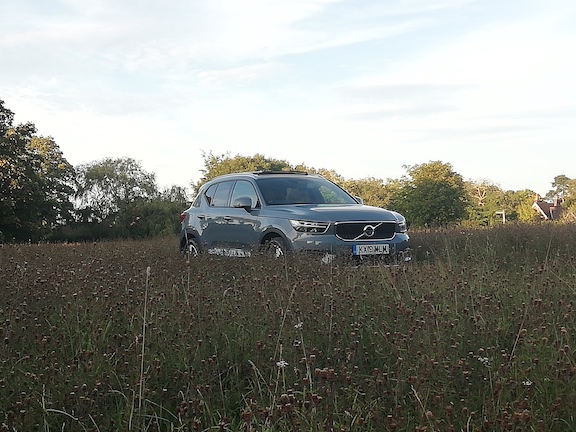
    Volvo continue to go full steam ahead with their SUV range and the smallest of their cars, the 40 series received the SUV treatment giving us the XC40 in 2017. It went on to win the coveted European Car of The Year award in 2018.

    A compact in visual presence SUV packed with well-fitting appointments and a premium feel. But with its £38k price tag, does the XC40 T4 petrol in Momentum Pro spec justify the premium price tag?  

    Driving

    Here is where the XC40 Momentum T4 excels. With this 190hp petrol engine, it has the ability to travel forward very quickly. Fitted to a softer sprung suspension set up, it can carry you and 4 passengers in floating comfort.

    The 2-litre turbo engine is fitted to full 8-speed automatic gearbox driving the front wheels travels with smooth elastic fluidity. There are no paddle shifts for this spec and it’s no hardship. There are very few occasions when you could choose a better gear ratio to be in.

    What can ruin the ambience of the Momentum Pro is the drive modes. Quite hit and miss in this model. Dynamic mode didn’t add anything to the already accomplished manners of the car. In some cases, it hindered a splendid driving experience.

    Handling veers onto the enthusiastic side quite readily with plenty of grip available. The ride tends to roll a bit but this is only to be expected from a high sided vehicle with a compliant ride. Adhesion to the tarmac immense and the steering alerts you to trouble ahead before it lose all grip. 

    Inside

    One thing that is worthy of note is the use of recycled bottles, turned into fluffy material and used on the door cards and transmission tunnel. In shorts, it has a warm feeling to it like a faithful dog pressing against your left leg. It’s actually rather pleasant. 

    The dashboard is laid out in typical Volvo logic and the 12.3” is easy to use, if somewhat clunky at times. However, all was not good with the driving experience. And that would be the plastic used on the centre console. It was somewhat rather cheap in feel. And considering the premium quality Volvo have gone, this felt so very wrong in an otherwise well thought out interior.    

    The rear doors have a kick up in them and while being a design feature, they do hinder some visibility over the shoulders and for those travelling in the rear.  

    Living With It

    The XC40 Momentum Pro is very easy to live with. Rear seat room, in particular, is generous and more so in shoulder width. The list of standard equipment is generous though there was no adaptive cruise fitted even though the radar button was fitted to the steering wheel.

    The Verdict

    The XC40 Momentum is a looker. It’s not as popular on the road and that might be because people aren’t looking to Volvo for this size of car. And that is a shame. It really does do a lot very well and very little to annoy. 

    If there is one thing that I can complain about, it is the T4’s fuel economy. It isn’t great. That said, it does power this little slice of Swedish luxury quite rapidly. I’ll complain about that even though I know you can get it with other petrol or diesel engines and there is also a hybrid of sorts model coming early next year. 

    So is this premium and worth that asking price? Forget flat-packed furniture with a cheap veneer added, this is a slice of rapid Swedish luxury, and I say it is worth it.

    Love

    Fit and finish

    8 speed automatic 

    Throttle response

    Loathe

    Disappointing fuel economy (according to the computer)

    Centre console plastic

    Dynamic drive mode 

    The Lowdown

    Car –  Volvo XC40 Momentum Pro T4

    Price – £ 38,210 (as tested)

    MPG – 33.6 -36.7 mpg (WLTP combined)

    Power – 190hp

    0-62mph –  8.1 seconds

    Top Speed –  130 mph

    Co2 – 154 (g/km)

  • CAR REVIEW | Fiat Tipo S-Design

    CAR REVIEW | Fiat Tipo S-Design

    ★★★ |  S-Design Tipo In Need Of An Architect.

    What Do We Have

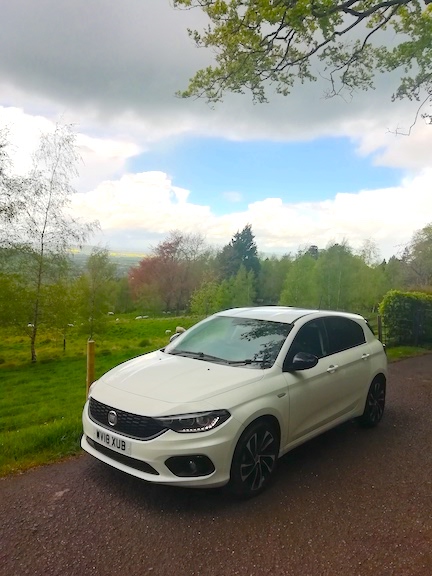
    A couple of years ago, we took delivery of the then-new Fiat Tipo. A new Fiat with a reused name. No hardship there because the original Tipo was a very good car.

    We liked the new Tipo when we last had it back in 2016 and I favoured the car well. Do I feel the same in 2019?

    Driving.

    Nothing has really changed here. We have the same 120bhp petrol turbo 1.4 engine. It was as good as I remembered it. Smooth and flexible with reasonable performance. Not quite the fire-breather you’d think 120bhp should be but it is good for a claimed 124 miles per hour.

    Handling was well balanced and it soaked up the worst of the country lanes around the Cotswolds.

    A comfortable driving position was easy to obtain and there were no annoyances. It felt as good as the rest in the segment.

    Inside.

    It’s not as good this time around. It’s amazing how dated it has started to look with its black plastic everywhere. I’m a little stuck as to where the S-Design sits. The Design moniker is used by a lot of manufacturers these days as something stylish over the other models or sporty. I was not seeing anything outstandingly relevant to this moniker. 

    Driver’s controls all come to hand easily. The 7” touch screen is simple to use and nicely balanced with easy registered finger controls. It comes with Apple Car Play and Android connectivity as standard.

    Living With It

    There are few vices to be had with the Tipo. It’s a simple and effective 5 door hatchback.

    While inside it has dated a little, the exterior is still as good today as it was when new. The fact there are several newer cars with similar rear ends, shows how relevant and modern its design still is.

    Verdict.

    Tipo is no longer the bargain it once was. At £19,125 it does seem quite a lot despite it having a list of standard key features. But these features seem almost standard fit on most cars these days.

    But here lies the problem. It’s effective and not much else. Effective hatchbacks are good but sometimes a model needs some sex appeal. It’s crying out for some true meaning to the letter S like sumptuous. 

    Love

    Build quality 

    Looks

    Ride refinement

    Loathe

    Co2 is on the high side

    Arm rest fouling handbrake

    High price

    The Lowdown

    Car –  Fiat Tipo S-Design

    Price – £19,125 (as tested)

    MPG – 35.3 mpg (combined)

    Power – 120bhp

    0-62mph –  9.9 seconds

    Top Speed –  124 mph

    Co2 – 164 (g/km)

  • CAR REVIEW | Fiat’s 500X For The Bigger City

    CAR REVIEW | Fiat’s 500X For The Bigger City

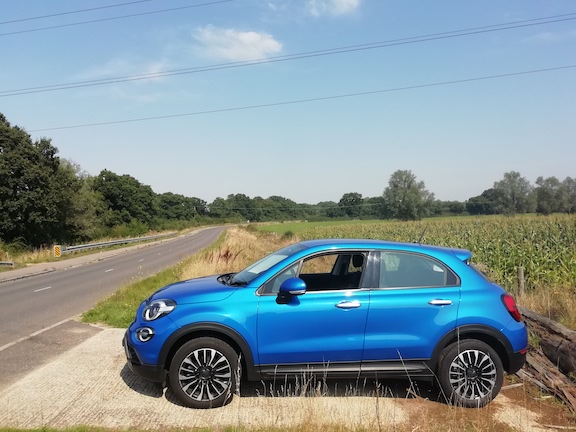
    CAR REVIEW | FIAT 500x

    What Have We Got

    Fiat’s big 500 crossover SUV has been with us now for over 5 years. 2019 saw some changes to the line-up along with some updates. The 4WD model is no longer offered and power comes from a choice of 3 and 4 cylinder petrol engines.

    THEGAYUK was given the 1-litre turbocharged 120hp Firefly engine in the Cross Look for a week. A more urban looking 500X with the chunky looking bits of an SUV.

    Driving

    The first thing to strike you about the new engine is its brio of power. On paper, it doesn’t appear spritely. In use, it really is. Keep it boiling at 3000rpm and you’ll find it useful. This way it is always ready for action the moment the pedal is pushed down. Anything less and it’s all a bit lethargic with a touch of lag.

    What helps making it go forward is the slick gear change. The clutch and gear action is a joy to slot around when you want to get a move on. And this is good. Recently we had the platform sharing Jeep Renegade in with a diesel engine. That didn’t encourage any form of enthusiasm. The Fiat set up high lights the joys of the chassis.

    What it can’t do however is mask the ride quality. In the city, it is simply too hard. And this translates into a choppy ride. You can’t have it all though. At speed, it becomes taught and agile. That said, however, at night on the motorway, you can see the headlight beams jiggling around.

    Inside

    For a relatively cheap SUV, prices from £18,500, it’s well put together. The front door cards are nicely contoured and there is storage for bottles and the like in both front and rear. The rears are a bit different in that they are made from hard sturdy plastic whereas the fronts have a soft touch feel to them as is the norm for this segment.

    It took me some time to find a suitable driving position.  You certainly can’t say there isn’t enough adjustment for the seats and steering wheel. There is a position for all body shapes. What hampered this was the front seats lack of both under-thigh and bottom support. They were a little flat.

    Living With It

    There are a few things that catch you out about the 500X. Firstly is its size. It feels much bigger from behind the wheel. You do tend to be over-cautious when fighting for space in the urban jungle. In actuality, it isn’t as big as you think. 

    This is also true of the boot. It’s not class leading and not totally useless but if you want your 500 to be a lot more useable than the 3 door city slicker from Fiat, this is for you.

    The verdict

    I wanted to like the 500X. There is much to enjoy about the new engine and the way it drives. It’s light and buzzy without feeling that you want more. Using the 6-speed manual gearbox is a joy and all the controls feel right. It is that ride that I find so disagreeable.

    You won’t drive it on every occasion with the spirit in which it can carry you. It’s illegal to travel at 70mph around town. So the rides sportier set up is somewhat pointless in this car.

    Speaking of 70mph, it would seem the traffic sign recognition sees everything as a 70mph challenge. 

    There were too many times it would show the national speed limit on the dashboard for it to be a one off. Perhaps this Fiat could do with a little bit of Abarth magic. It certainly feels like it wants to.

    Love

    Nippy 3 cylinder engine

    500 Looks

    Light controls

    Loathe

    Choppy Ride

    Slow to respond infotainment system.

    Seats

    The Lowdown

    Car –  Fiat 500x City Cross Firefly 

    Price – £22,100 (as tested)

    MPG – 48.7 mpg (combined)

    Power – 120hp @ 5750rpm

    0-62mph –   10.9 seconds

    Top Speed –  117 mph

    Co2 – 133 (g/km)

    (C) ALL PICTURES: Stuart Bird