
Tag: Chemsex

All the latest breaking news on Chemsex. Browse THEGAYUK’s complete collection of news, articles and commentary on Chemsex.

  • Gay guys open up about some of the social issues that our community is facing

    Gay guys open up about some of the social issues that our community is facing

    As a community, we’ve faced some immense challenges. Some, across our world, are still facing untold tragedies and discrimination. Sometimes, however, the worst issues can come from within.

    So when Reddit user dprince1988 asked “What gay social problems do you see which aren’t talked about enough”, the AskGayMen community did some soul searching and came up with a list.

    Here are some of the issues it raised.

    Suicide Rate

    The LGBT+ community has one the highest suicide rates of any minority demographic.

    The Trevor Project details how suicide is one of the biggest killers of young people, and that Lesbian, Gay and Bi youth are three times more likely to contemplate suicide over their heterosexual counterparts.

    One commentator added, “I should submit a picture of my arm. So many cuts that I can’t even differentiate between normal and scar tissue. When meeting new people I have to wear long sleeves or else they freak out”.

    Sober spaces

    The lack of sober social spaces was also raised. However, there are services such as meetup.com which are helping to facilitate social situations that don’t centre around drinking.

    Loneliness and isolation

    At the moment, thanks to COVID-19 many people are facing isolation, but for many in the LGBT+ community, loneliness is a real issue outside of lockdown.

    Rural Isolation

    Outside of large cities and towns can be a real issue for LGBT+ people. Sometimes hook up apps and chat rooms are a vital lifeline for LGBT+ people who don’t have a local scene.

    Domestic Violence

    In a recent article for THEGAYUK.com legal expert, PAULA RHONE-ADRIEN shared, “…sadly, in such a small minority of just 1.1 million, at least 1 in 4 victims of domestic abuse are lesbian and nearly 1 in 2 victims are gay. The figure rises to nearly 80% if you identify as transexual”.

    Bottom shaming

    On bottom shaming one user-added, “Bottom shaming is internalized homophobia and societal view of women (the feminine) being less-than.”

    Lack of LGBT sex education

    As schools don’t tend to offer gay sex education there is a lot of misunderstanding surrounding STIs, the purpose of PrEP and consent.

    Ageism

    One user added, “Gay men are notorious for being disgusted and belittling older guys… even older guys do it to each-other… there’s an old cliche called the “gay death” which means once you turn 30 you’re ugly, old, and undesirable.”

    Ableism

    One user added, “Pretty tragic given how much more likely queer populations are to suffer psychological or physical ailments.”

    Drugs and Chemsex

    PNP and HnH orgies are becoming more and more commonplace and normalised on dating apps.

    Racism

    User HereForHope wrote, “This 100%. Racial dynamics are never talked about introspectively. Be that homophobia in communities of color to the fact that it’s apparently totally fine to have racist shit like “no blacks no rice” in your dating profile”

    Erasing the T

    User Atlask wrote, “I don’t know if it fits what you are looking for but that whole lgb movement who focuses mostly on erasing the trans…”

    Aesthetics

    Not conforming to a few very specific aesthetics” Another used also noted that eating disorders were rife in the community, saying, “

    I know so many gay men with eating disorders. They either are or have been out-and-our anorexic/bulimic, exercise bulimic, or take hard drugs to stop themselves from eating.

    “Others are on steroids to build up muscle.

    “And they’re all still unhappy, even the ones that have great bodies”.

    Friendships without sex

    Gay friends without sexual interest

    Bi-erasure

    Bi Erasure is a form of erasure directed towards the bisexual community It can take many forms including when society sidelines bisexual stories for gay or lesbian stories.

    Bi Erasure is also the ignoring or rewriting of LGBT+ history where bisexual people of note are effectively erased from the LGBT+ movement.

    Hookup culture

    Which could lead to invalidating other communities such as asexuals.

    Political Persuasions

    What happens when you’re not a democrat? One user suggested, “Gays assumed to be liberals/democrats. I know a lot of conservative/ republican gays and they always get the “but you’re gay!” attitude and called Uncle Toms. Really I think this is the biggest prejudice against gays now in the US. Gays are capable of free thought, not mindless hive mentality”

    Use the comments below to let us know your thoughts.
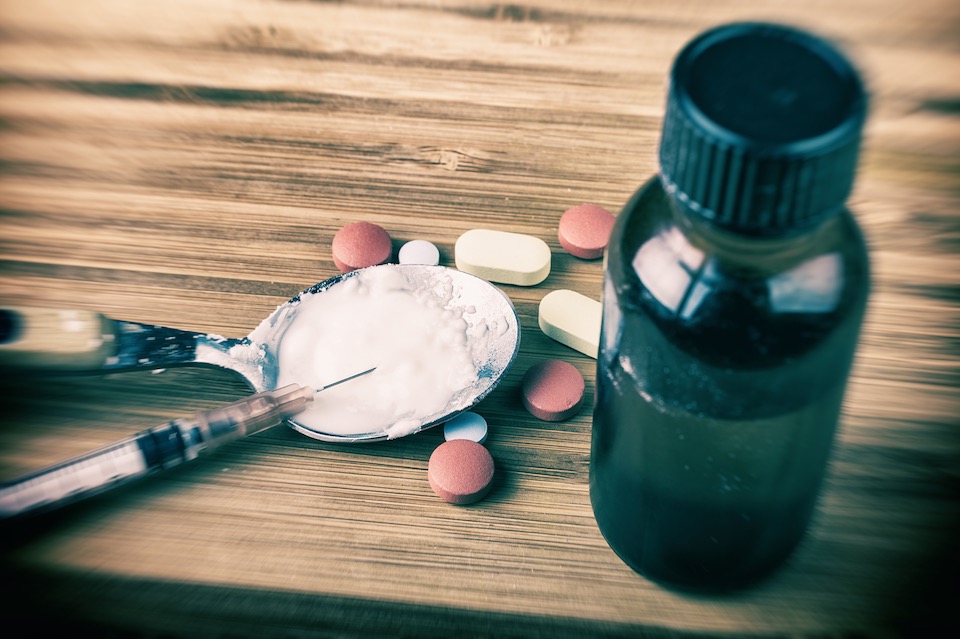
  • There have been 60 deaths linked to Chemsex in London alone

    There have been 60 deaths linked to Chemsex in London alone

    The Met police have reported that there have been over 60 deaths linked to the use of drugs during sex – including murder.

    Last week the Metropolitan Police in partnership with Her Majesty’s Prison and Probation Service (London) (HMPPS) conducted a conference at which they discussed the rise of Chemsex and the issues that it has caused, particularly for the gay and bi male community.

    Over the years London’s police force has managed to link over 60 deaths to drug use, including murder. The most high profile of these were the murders of Stephen Port’s victims.

    According to the police, there have been more than 60 fatal overdoses linked to Class A drugs such as Gamma Hydroxybutyrate (GHB) and Gamma-Butyrolactone (GBL) in London.

    Crisis of our Time

    The Met’s LGBT+ Advisory Group have described chemsex as the ‘crisis of our time’ for LGBT+ communities

    Detective Chief Superintendent Helen Lyons, the Met’s Lead Responsible Officer for Rape, said: “The Met recognises that crime in a chemsex context is not an isolated issue of sexual offending or substance misuse. Chemsex-related vulnerability and offending are considerably under-reported while levels of complexity are vast.”

    “Drug use is prompting extreme and criminal behaviour among those who might otherwise be law-abiding citizens”

    Stephen Morris, Chemsex and Crime Lead for HMPPS said, “The rise in chemsex-related crime is a real challenge because the things driving someone to offend are incredibly complex and very different to anything we have dealt with before”.

    “Drug use is prompting extreme and criminal behaviour among those who might otherwise be law-abiding citizens. That is why we are working with the police, mental health and drug misuse services to better understand this crime and provide support that steers offenders and potential offenders away from it.”

    “Lessons learnt from murder investigations, proactive drug supply operations, the case management of offenders within the chemsex scene will be complemented by inputs from public health leads and academic experts. This will enable the sharing of an emerging model of good practice, which will help provide awareness nationally. 

    Is Chemsex Illegal?

    Physical possession, supply or possession with the intent to supply is a criminal offence. However, you won’t be arrested for using drugs whilst having sex.

  • Is addiction really a problem in the gay community?

    Is addiction really a problem in the gay community?

    Leading Psychotherapist and Founder of Natural supplement brand Eudaemon Jane Barnfield Jukes reveals what you can do to step towards an addiction-free life.

    (C) BIGSTOCK

    The comedienne, Hannah Gadby in one of her sketches asks “Why is it that from birth men and women are assigned to opposing teams? Pink and blue.”

    The societal norms created around sexuality are simply not fit for purpose. If you don’t belong to either team, the path of discovery you find yourself on can be full of cracks and potholes. Tripping over these obstacles can result in feelings of deep insecurity, anxiety and conflict. People struggle with “not knowing.” Until society addresses and accepts the diversity inherent in the population, people will experience the suffering associated with “Who am I?” and “Where do I fit?” When caught in this struggle it can be quite tempting to turn to drugs and alcohol to help ease the strain.

    Over the years research has led to the creation of certain beliefs around substance misuse and addiction. Some believe that it plays a role in our “life script.” Others feel that is used as a crutch to numb the pain and anxiety they feel. More recently others state that it can be viewed as an attachment issue – we become attached to the substance as it can never leave and will always be there for us.

    Whatever the reasons they are certainly complex and are personal to each us.

    What we, as therapists, have noticed when working with members of the LGBT community is that aspects of this environment can present our clients with even more of a challenge on their road to recovery.

    Some say the LGBT community has a more hedonistic culture with less clearly defined boundaries. Less restraints may lead to more risk-taking behaviour in turn leading to shame and regret, often turning to substances to help alleviate the discord this conflict brings. Once addicted the prevalence of drugs and alcohol in the LGBT community can make kicking the habit very difficult. In addition, it can be hard to find the willpower to refrain from substance misuse as often the strongest attachments and bonds are with people who have the same exposure to this vibrant environment.

    Famous sociologist, Helen Fischer, suggests that some drugs mimic the same reaction in the brain as being in love – a strong attachment in and of itself. Some substances certainly take away our inhibitions and help us feel like we are more “ourselves.”

    A widely used term these days is self-medicating. A more positive view of this might be that people are merely searching, trying to help themselves find relief.

    (C) BIGSTOCK

    Here are some helpful tips to help you help yourself

    You might want to find an experienced therapist familiar with addiction issues who, in a non-judgemental environment, will help you work out what is going on with you, help you to take responsibility and encourage you to be honest with yourself. You may find your conscious mind may very much want to change your addictive behaviours, but your unconscious mind might have very different ideas. Psychologists call this the paradoxical injunction. Therapeutic intervention may help you place your conscious mind in the driver’s seat and enable you to take control.

    Set realistic goals for yourself defined by you and not society.

    Delegate to the page – keep a diary that way you can recognise triggers and helpful, as well as hindering, behaviours. You might find it helpful to keep and a detailed and honest drink diary.

    Try engaging in groups that refrain from substance misuse.

    Developing a bank of poems, mantras and mindfulness techniques that you can turn to in stressful times can be helpful.

    Find a substance abuse group.

    Engage in meaningful activities – make a difference.

    Most importantly when trying to abstain or cut down on substances should a slip or relapse occur be kind to yourself. Don’t engage in catastrophic thinking – we would encourage you to reframe it as a slip or bump in the road on your path to a healthier way of being.

    By Jane Barnfield Jukes from www.eudeamon.com and Daniel Avital, 
www.thepractice.co.uk

  • What was going on in gay men’s lives when they acquired HIV?

    A new study has revealed what was going on in the lives of gay and bisexual men who were infected with HIV.

    What was going on in gay men's lives when they acquired HIV
    FILE PHOTO

    The study carried out by Annabelle Gourlay of University College London, published in the BMJ Open revealed what was going on in the lives of some men when they acquired HIV.

    The researchers interviewed 21 gay men who had recently been diagnosed with HIV in London or Brighton. Most of the men thought that a combination of factors contributed to risk behaviours and HIV infection.

    Each year, more than half of HIV diagnoses in the UK are in gay and bisexual men. A new study paints a picture of the complex reasons, including chemsex, use of dating apps, childhood trauma and stressful life events, that are associated with gay men acquiring the virus. Because of the success of HIV medication in treating HIV and extending life expectancy, changing ideas about how serious it is to have HIV was also seen to be a factor.

    Childhood trauma

    Many respondents in the study described difficult experiences during childhood, including dysfunctional relationships with parents and bullying at school, which had long-lasting impacts on their mental health. A few men grew up in environments where gay men were highly stigmatised, which could result in low self-esteem. Some respondents linked such experiences with subsequent drug use. One man said,

    “I mean it probably was the perfect storm you know, they [drugs] got me at a time…mid-forties when I wasn’t that secure, there were a few issues, I was looking for fun…it was an escape and it seemed at the time that it was…enjoyable.”

    Drugs and apps

    The researchers interviewed 21 gay men who had recently been diagnosed with HIV in London or Brighton. Most of the men thought that a combination of factors contributed to risk behaviours and HIV infection. Another interviewee said:

    “The sex and the drugs and the apps all intertwined simultaneously and I can’t really say which one led to the other.”

    Matthew Hodson, Executive Director of NAM aidsmap commented, “All too often discussion of HIV within the gay communities is reduced to gay men being somehow ‘irresponsible’. The reality is that gay men’s lives are complex and the reasons that gay men may engage in sex that carries a risk of acquiring HIV are complex too. The homophobia which underpins the idea that gay men are irresponsible, in itself, seems to have played a role in many men not finding themselves able to avoid HIV infection.”

    Recent stressful events caused psychological distress for many participants. These included the death of family members, relationship break-ups, violent partners, loss of friendships and health problems. A number of men were exposed to multiple psycho-social risk factors and the combination could be devastating.

    Valuing your own life

    “I didn’t value my life… Because so much had happened and I’d been through so much in the past three, four, five years with…break ups and losing everything and emotional things and deaths and God knows what else, it almost becomes a bit “all my life has just been so crap anyway what’s the point, do I really care if I get it [HIV] anyway?”

    Dating apps provided convenient access to multiple sexual partners for many participants, regardless of age. They could also introduce men to chill outs and chemsex.

    HIV is managed by taking “a few pills a day”

     Some interviewees, especially middle-aged men, talked about the shifting perception of HIV in the gay community. Thanks to the availability of effective HIV treatment and good medical care, HIV was widely perceived to be a manageable condition.

    “Everyone knows somebody positive now and knows that they’re fit and healthy and they take a few pills a day…That’s a huge factor in why so few people use protection anymore…because it has become a treatable illness…I think it changed everyone’s risk calculations, because even if the worst did happen, it was no longer the worst.”

    Psychological issues and drug use were often mentioned in combination. For example, a man in his forties identified the important factors in his HIV infection as:

    “The drugs…but also depression because I didn’t care about taking risks…I gave up.”

    When thinking about why gay men have risky sexual behaviour, the researchers say that individual factors (like difficult childhood experiences) are important to take into account. At the same time, we also need to think about the wider community and society. For example, some interviewees felt that recreational drugs were too easy to come by or that risk taking was normalised in some parts of the gay scene.

    “Recently acquired HIV infection among (gay and bisexual men) reflects a complex web of factors operating at different levels,” says Annabelle Gourlay of University College London.

    Matthew Hodson of NAM aidsmap added, “There is a wide variety of factors involved in gay men being vulnerable to HIV infection. HIV prevention can be most effective when it identifies the individuals who are most likely to acquire HIV, the times when they are most vulnerable, and the strategies that will work for them. A ‘one size fits all’ approach to prevention is not sufficient to deal with such complex needs.”