Tag: Discrimination

All the latest breaking news on discrimination. Browse The THEGAYUK’s complete collection of features and commentary on discrimination against the LGBT+ community.

  • Drag Race’s Felicia Heal’s daughter, 10, has created an incredible and powerful new equality project

    Drag Race’s Felicia Heal’s daughter, 10, has created an incredible and powerful new equality project

    Drag Queen, Felicia Heals’ daughter, Dasha, who is just 10-years-old and her friends have created a beautiful and powerful project all about equality.

    The ten-year-old daughter of Felicia Heals, who made headlines in January after becoming Drag Race Thailand’s first ever bio drag queen hopeful, has created an incredibly powerful and emotional video project, inspired in part by Drag Race Thailand’s star Pangina Heals and the model Cindy Sirinya, to help fellow students at her school realise there is no need to bully or judge other students.


    Dasha managed to get Drag Race star Pagina Heals into her video and say the powerful lines ” I am equal”

    Speaking about the project, Felicia Heals said, “As some of you know my daughter has been working on a project about equality that was inspired by @panginaheals And @cindysirinya, I was and am in full support of her idea and this was the video she has created with her friends about equality. The thing she said at the end of the video made me think about our perception on people…

    “Thank you all of you for the support and giving her your time , so she can spread such a wonderful message out”

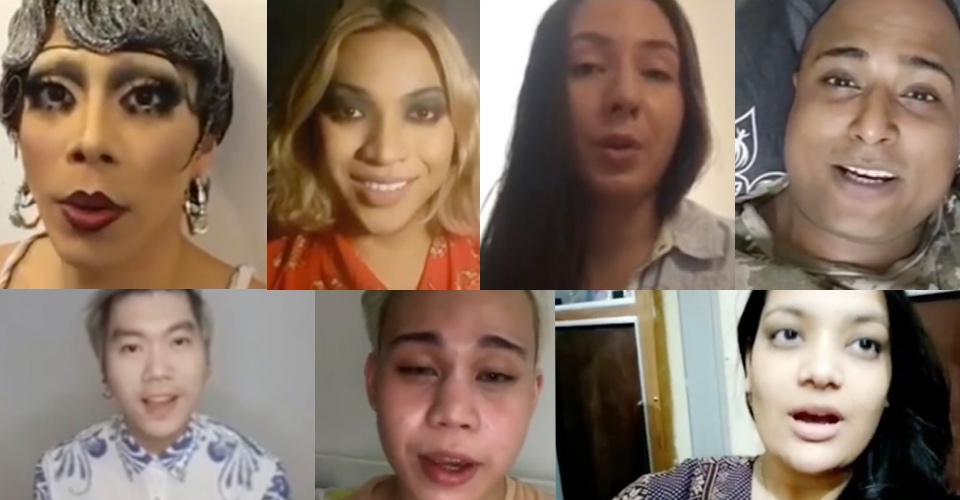
    The video starts by asking the viewer, “Have you ever judged a person by their gender? By their sexuality? Their skin colour? Or what they do? before allowing a number of people, who identify in many ways, including trans, non-binary and gay to introduce themselves before saying the line “I am equal”.

    Speaking to THEGAYUK, Dasha said, “I got inspiration from the global goals and from all the different but equal people I know.

    “I think that my project will inspire all types of people that can encourage people who are afraid of letting other people know about themselves and fight for their own rights and respect.

    “Also I wanted to open eyes to people in my school to see that no matter how different a person is we are all equal and there is no reason to bully and judge them for being who they are.

    “I am really happy to have different people to join my project no matter what is their gender, sexuality , religion and nationality. And thank you so much for the wishes, I hope it makes a difference for someone.

    “We can all learn alot from people with different backgrounds.
  • You won’t believe how many people now support gay love in the UK

    You won’t believe how many people now support gay love in the UK

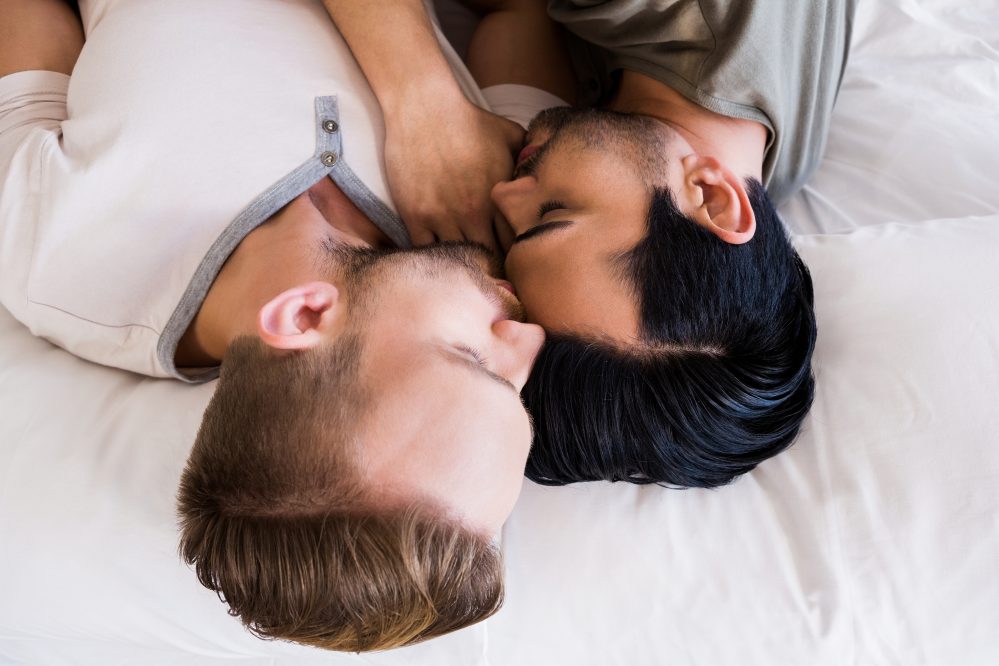
    In the last 30 years the public’s support of same-sex loving has rocketed, new stats today show that support for gay, lesbian and bisexual relationships are at their highest.

    Wavebreak-Media-Ltd-bigstock

    Nearly 70 percent of people in the UK now say that they support same-sex relationships compared with just 11 percent back in 1987. The figures are also a stark improvement on 2012’s figures of under 50 percent (47%).

    According to figures released, 68% of people thought that relationships between two people of the same sex were ‘not at all wrong’.

    The youngest generation was the most welcoming – 80% of people age 18-24 thought there was nothing wrong with same sex-relations, compared to 29% of those age 75 and older.

    Minister for Equalities, Baroness Susan Williams, said: “On Valentine’s Day everyone should be able to love who they love, and be free to show that love to the world.

    “I am encouraged to see that people are changing their attitudes to be more accepting and more tolerant, but as government we still have work to do to make sure our society is truly fair, and truly free.

    “That’s why we are working with charities, schools, GPs, and across government to make sure our Action Plan can bring about real, lasting change for LGBT people in the UK.”

    What has the LGBT action plan promised?

    The Government Equalities Office’s LGBT Action Plan, which was launched last July to make the lives of LGBT people better, includes a promise to test out innovative ways of tackling deep-seated prejudice in communities across the country.

    As part of the Plan, 12 UK organisations who work to improve the lives of LGBT+ people have been awarded a total of £2.6 million government funding. The cash will support LGBT people in education, healthcare and the community.

    Barnardo’s, Diversity Role Models, EqualiTeach, the National Children’s Bureau, Stonewall, and the Diana Award will split £1 million between them to continue their work in protecting children from anti-LGBT+ bullying. In addition, Advonet, the LGBT Foundation, London Friend, Mind in the City, Hackney and Waltham Forest, and the Royal College of General Practitioners have received £1 million to improve the lives of LGBT+ people in health and social care.

    Rise in Homophobic Crime at odds with the survey

    has there been a rise in hate crime against gay people
    geralt / Pixabay

    However, in 2018, crime figures showed that homophobic and transphobic hate crime was on the rise. In October we revealed, that twelve percent (11,638 crimes) of recorded hate crimes in England and Wales were directed at gay and bisexual people which was a 17 percent increase over the previous year. While, two percent of recorded hate crime (1651 crimes) were those against transgender people – up a staggering 32 percent.

    Overall recorded hate crimes were up, with nearly 100,000 crimes reported which was double the amount in just five years. The majority of hate crime (75%, 71,251 crimes) were racially motivated. Religious-based hate crime accounted for 9 percent (8336 crimes) of recorded crimes.


    YOUR SUPPORT MEANS EVERYTHING

    Help us deliver unique, usable and reliable journalism that supports the gay, bisexual and curious community of the United Kingdom. Can you help protect LGBT+ media? Publishers like us have come under severe threat by the likes of Google and Facebook. The problem is that advertisers are choosing to put their money with them, rather than with niche publishers like us. Our goal is to eliminate banner ads altogether on site and we can do that if you could pledge us a tiny amount each month.

    We’re asking our readers to pledge just £1 per month, more if you’re feeling swanky. You can stop payment at any time.

    It’s quick and easy to sign up and you’ll only have to do it once.

    Click to start the journey and support THEGAYUK!

  • This small biz in the US, really doesn’t want your $$$

    This small biz in the US, really doesn’t want your $$$

    So should we oblige them?

    mcmike / Pixabay

    Christian business owners Joanna Duka and Breanna Koski in the US are even going to court to fight for the right to ensure they are not forced to provide services to gay people getting married. The duo makes and sell wedding invitations and say that their Christian beliefs are so strong that they shouldn’t be forced to make products for LGBT+ people getting hitched. They also believe that their freedom of speech is being curtailed.

    They had their legal counsel, Kate Anderson from ADF Legal, speak to the rather silent media pool about their decision to take their case to the Arizona Supreme Court.

    It all boils down to the fact that Joanna and Breanna feel that making gay marriage invitations would go against their religious beliefs and should be able to do this without being punished. This is despite the fact that they’ve never been actually undertaken a job to make invitations for any same-sex couples before they brought the case.

    Duka and Koski’s business is called Brush & Nib Studios and is based out of Arizona, and Arizona state law forbids companies from discriminating against the LGBT+ community.

    H/t Towleroad


    YOUR SUPPORT MEANS EVERYTHING

    Help us deliver unique, usable and reliable journalism that supports the gay, bisexual and curious community of the United Kingdom. Can you help protect LGBT+ media? Publishers like us have come under severe threat by the likes of Google and Facebook. The problem is that advertisers are choosing to put their money with them, rather than with niche publishers like us. Our goal is to eliminate banner ads altogether on site and we can do that if you could pledge us a tiny amount each month.

    We’re asking our readers to pledge just £1 per month, more if you’re feeling swanky. You can stop payment at any time.

    It’s quick and easy to sign up and you’ll only have to do it once.

    Click to start the journey and support THEGAYUK!

  • Did you know that China has banned depictions of gay people on TV?

    Did you know that China has banned depictions of gay people on TV?

    The world’s most populated country has, since 2016, banned depictions of gay people on Chinese TV.

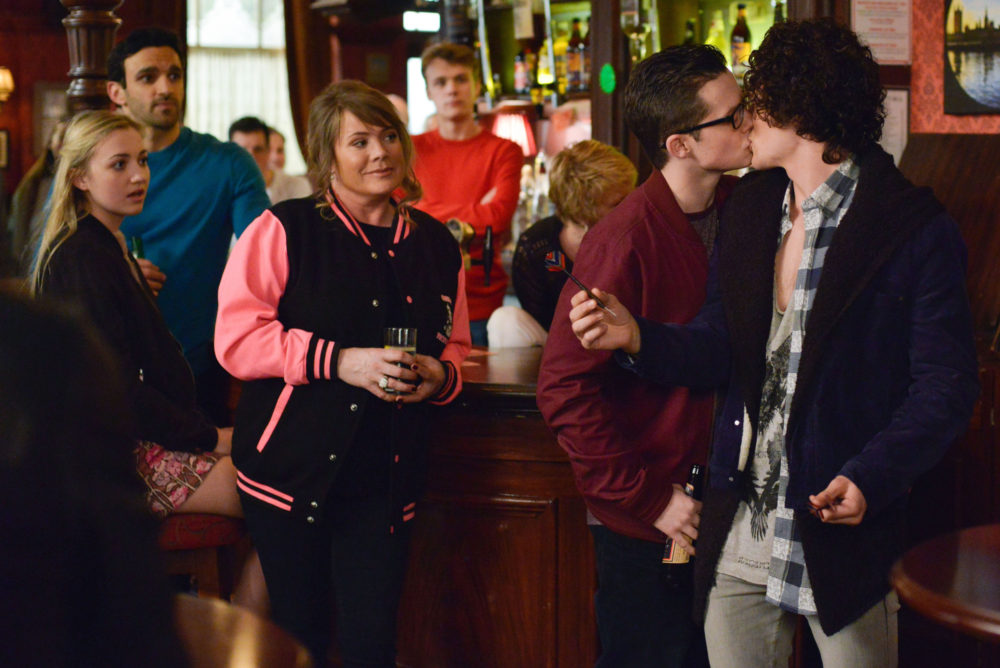
    Ben Mitchell And Paul Coker kiss
    Scenes like this kiss in EastEnders between two men would be banned in China. CREDIT: (C) BBC Kieron McCarron

    China has a raft of strict regulations on what its people can see, download and transmit. Even porn is forbidden in the country and its citizens have been offered money, lots of it, for turning in to the authorities those who are suspected of viewing or hosting the content.

    However, even darker and more problematic is that the depiction of gay people is forbidden and the language used in that enforcement is incredibly worrying. In fact the ruling saying that content that ‘exaggerates dark side of society’ is banned. This includes homosexuality, but also adultery, earrings on males and even, yes, cleavage.

    In fact, it was reported that an earring was blurred on a reality TV show because the contestant, Jing Boran, is male.

    “Vulgar and Immoral”

    Even the relationship and first gay kiss in Star Trek between Lt. Paul Stamets (Anthony Rapp) and Chief Medical Officer Hugh Culber (Wilson Cruz) would be banned in China.

    The Chinese government’s ban is part of a crackdown on “vulgar, immoral and unhealthy content” and was first reported in 2016 and is nothing more than a government-backed, systematic cleansing of gay people from society.

    The government outlines that TV shows shall not “show abnormal sexual relationships and behaviours, such as incest, same-sex relationships, sexual perversion, sexual assault, sexual abuse, sexual violence, and so on.”

    This ban, according to the Guardian includes smoking, drinking, adultery, sexually suggestive clothing, even reincarnation.

    This clampdown on content has increased since Xi Jinping, China’s president, came into power in 2012.

    This means that content readily available in many countries across the globe that incorporate same-sex relationships would be forbidden. In fact, streaming services such as Netflix, Amazon Prime and the BBC’s iPlayer are not available to view in China.

    At a time when relationships that stray away from the normative, like the same-sex relationship in Netflix’s Star Trek Discovery or even a same-sex kiss in EastEnders may never actually be seen in China.

    In April 2018, Sina Weibo, China’s largest social network said it would remove “homosexual” content from its platform. Sina Weibo said in a statement that it had begun a “clean-up campaign” to remove “illegal” content, including “manga and videos with pornographic implications, promoting violence or (related to) homosexuality”.

    Weibo reversed its ban, but only after a huge backlash against the platform.


    WHILE WE HAVE YOU…. YOUR SUPPORT MEANS EVERYTHING


    Help us deliver unique, usable and reliable journalism that supports the gay, bisexual and curious community of the United Kingdom. Can you help protect LGBT+ media? Publishers like us have come under severe threat by the likes of Google and Facebook. The problem is that advertisers are choosing to put their money with them, rather than with niche publishers like us. Our goal is to eliminate banner ads altogether on site and we can do that if you could pledge us a tiny amount each month.

    We’re asking our readers to pledge just £1 per month, more if you’re feeling swanky. You can stop payment at any time.

    It’s quick and easy to sign up and you’ll only have to do it once. Click to start the journey and support THEGAYUK!

  • This man wants to be trans-age

    A man in his late 60s has launched a legal battle to try and lower his age from 69 to 49.

    Emile Ratelband is arguing that if people can legally change their gender then he should be able to legally change his age.

    According to Sky News, the Dutch entrepreneur wants to change his date of birth after his doctors advised him that he has a body of a 45-year-old. He says he wants to change his birthday from 11th March 1949 to 11th March 1969.

    Ratelband is using the argument if transgender people can legally change their gender then he should be able to change his age.

    Ratelband told De Telegraaf: “You can change your name. You can change your gender. Why not your age? Nowhere are you so discriminated against as with your age.”

    He has also cited that he has been on the receiving end of discrimination, particularly when it comes to employment and his love life. He said, “When I’m 69, I am limited. If I’m 49, then I can buy a new house, drive a different car. I can take up more work.

    “When I’m on Tinder and it says I’m 69, I don’t get an answer. When I’m 49, with the face I have, I will be in a luxurious position.”

    The case is being heard in Arnhem, Gelderland, where it is expected to last for up to four weeks.

  • Forty percent of Brits over the age of FIFTY have experienced age discrimination

    Four in 10 over 50s have experienced age discrimination, according to a survey.

    (C) BIGSTOCK

    A study of 50,000 Brits aged over 50 found one in 10 have felt ‘isolated’ and left out of team bonding exercises, social events and meetings at work.

    And 62 per cent believe they have lost out on jobs due to their age.

    One in 10 have even faced negative remarks about how old they are from their colleagues or manager.

    Government to consider whether ageism could be considered as a hate crime.

    The study was conducted by SunLife as the Government announces a review of whether hate crime offences could include ageist attitudes and behaviour.

    It also found that as well as experiencing age discrimination themselves, almost a third have witnessed someone else being subjected to it.

    SunLife director of marketing Ian Atkinson said, “Age discrimination and ageist language continues to be a challenge for many people.

    “The average age in the UK is higher than it’s ever been and there are more people over 50 in the UK – around 24,440,415 – than ever too.

    “So, it’s disheartening to think that in 2018 so much ageism still abounds.

    “It’s also very odd to see how some people discriminate against a group they hope to one day join.”

    Fifteen per cent of those polled also claim to have experienced discrimination in the health sector by being refused referrals because of how they old they were.

    A further one in five believe they have experienced discrimination at the hands of their insurers, being landed with higher rates due to their age.

    And this figure increases to one in three, once people reach 75 years or older.

    Underrepresented in the media

    (C) ITV – Vicious from ITV was one of the very few television shows which featured a gay couple over the age of 50. It has since been cancelled by the TV company.

    The research also found a vast swathe of over 50s say they are under-represented in TV shows and films, with two-thirds believing there should be more older people on the box.

    Seventy-two per cent of those surveyed think the representation of their age group in the media is negative, and gets worse the older you get.

    And 59 per cent feel ignored by brands and advertisers.

    More than a third of respondents believe their demographic isn’t catered to properly by the fashion industry, 24 per cent feel ignored by tech brands and around one in six feel neglected by health and beauty firms.

    However, despite perceived ageism in the UK, 78 per cent ‘couldn’t care less’ what others think of them since turning 50.

    And after hitting the age milestone, around six in 10 say they enjoy life more and believe it gets better the older you get.

    WORDS: Richard Jenkins

  • LGBT+  people are hiding their personalities at work

    LGBT+ people are hiding their personalities at work

    Over 70 percent of LGBT+ people are hiding their true personality at work in fear that they’ll be discriminated against.

    Free-Photos / Pixabay

    New research shows that LGBT+ people are much more likely to “cover” their true identities in order to be accepted by their co-workers and bosses. Covering is where a person conceals their true identity traits such as sexuality or gender expression, through the way they speak, act or dress.

    According to a survey by totaljobs of 4,127 people across the country, the majority (52%) think people should change their personality for work. This is particularly the case for the LGBT+ community and it is evident from the moment that employees first meet their potential new employers. Indeed, two-thirds (64%) of LGBT+ people change their personality for interviews.

    In fact, many LGBT+ employees continue to cover their true selves once they have passed probation, with a third (31%) of this community continuing to do so compared to a quarter (25%) of the overall population. This act of covering can even remain beyond traditional working hours, with 5 out of 10 (50%) LGBT+ people saying they keep their guard up at work-related events and company socials.

    The research suggests that many UK workers could be doing more to create environments where LGBT+ workers feel they can be their true selves. While almost three-quarters (71%) of people agree that employees should stick up for LGBT+, women’s rights or disability groups, only half (49%) said they would actively do so in the workplace.

    There is a clear correlation between the inclusivity of a company and the number of LGBT+ people who cover. Indeed, 7 out of 10 (70%) LGBT+ employees cover their true selves while working at non-inclusive companies.

    Fitting in

    (C) RAWPIXEL.COM / BIGSTOCK

    Overall, there is a clear trend of gay, bisexual and transgender employees feeling they need to cover to meet the expectations of their work environment and their colleagues. A fifth (19%) of LGBT+ people cover because they want to fit into the company and their typical style wouldn’t allow that, compared to 1 in 7 (14%) of the overall population.

    Meanwhile, 1 in 6 (16%) cover because they don’t feel their typical style would make a good impression.

    Martin Talbot, Group Marketing Director, at totaljobs, said: “There is an assumption that employees should be comfortable expressing their true selves at work. However, this research has identified this is not the case and that a startling amount of people go as far as changing their personality and appearance.

    “It is important that companies encourage an environment where the LGBTQ+ community feels welcome. It is staggering that up to 70% of LGBTQ+ employees cover their true selves at work and it is unacceptable that they’re twice as likely as the rest of the population to be victims of discrimination. It is clear that employers need to do more to prioritise the well-being of their LGBTQ+ employees and the inclusivity of their organisations so they feel comfortable expressing their true selves.”


  • Discrimination Britain: 25 percent of us feel discriminated against at work

    More than a quarter of British workers say they have experienced discrimination in the workplace, research has revealed.

    people at work
    CREDIT: ©-monkeybusiness-Depositphotos

    The study found prejudice towards gender, race and age is still commonplace in UK businesses, but a youth-driven revolution could be underway to counter it.

    Generation Z (under 25s) are twice as likely to believe employers should do more to promote inclusion than Baby Boomers (over 55s).

    And they are twice as likely to question the status quo on equal opportunities too, according to the study, commissioned to mark National Inclusion Week.

    Half of Gen-Z believe their employer should do more to promote and instil inclusion in the workplace, compared with just a quarter of those over 55.

    Those at the start of their careers are also confident embracing these policies, with nearly three-quarters stating they feel comfortable taking up policies such as flexi-time, carer’s leave, religious leave or support for a disability offered by their employer.

    This compares to one in three workers nearing retirement age who are uncomfortable doing so.

    Debbie Klein, Group Chief Marketing and Corporate Affairs Officer at Sky, who are sponsoring National Inclusion Week for the first time, said, “There’s a new glass ceiling and it has remained unseen, but it seems Gen-Z have better eye-sight – they can see it, and they want to smash it.

    “Employers have a duty to ensure their workplace fosters total inclusion, so it’s positive to find the newest members of today’s workforce are challenging barriers and committed to holding employers accountable”.

    According to the report, one in five under 25s also claim being a woman negatively affects the chances of securing a job or promotion – double the amount of over 55s.

    Gen-Z identified multiple groups negatively impacted by an unequal workplace.

    One in five state being from a Black, Asian or Minority background reduces the chances of getting a job or promotion, compared to one in 10 workers over 55.

    Half of Gen-Z also believe the same for a disability, compared to a quarter of Boomers.

    Debbie Klein added, “These results are shocking. It is time to take a hammer to the glass ceiling.”

    “At Sky we believe great talent is as diverse as our customer base, which is why driving inclusion is at the heart of our business.

    “We want to encourage other business to see that the best employees are those who can bring all of themselves to work.

    ”National Inclusion Week is an opportunity for employers to focus on this issue.

    “It isn’t just about stopping discrimination – we also have to actively promote inclusion.”


    Words: Jack Peat

  • COMMENT | As LGBTs many of us were bullied as kids, so why do we continue to bully as adults on dating apps?

    COMMENT | As LGBTs many of us were bullied as kids, so why do we continue to bully as adults on dating apps?

    While growing up, I remember feeling like I did not belong.

    CREDIT: Ryazan / BIGSTOCK

    Somehow, I never seemed to meet the expectations that society had planned for me. And because I was different, I was constantly bullied. This happened from first grade to the end of High School (from 6 to 18 years old). The bullying I experienced was so traumatic at times, I’m still feeling the effects today. But I chose not to be a victim! I learned patience, perseverance, and dedication. Now I really know myself, and I know my voice. It is a voice of pain, but each pain has made me stronger, each betrayal more intelligent, and each experience wiser. I finally realised that being different makes me unique and that is my power!

    “I finally realised that being different makes me unique and that is my power!”

    It is true that a lot has changed since I was bullied, but I am afraid that it is still not enough. In recent years, a series of bullying-related suicides across the globe have drawn attention to the connection between bullying and suicide. Though many adults still see bullying as part of being a child, it is a serious problem that leads to many negative consequences, including suicide. And this needs to change! My hope is that by raising awareness to this issue one more kid will get help, so he won’t get discriminated or bullied.

    But more than addressing the discrimination from the outside world, I deem it necessary to also raise awareness to the increasing discrimination within the LGBT community. “No Asians, no black people, no femmes, no fatties, no oldies…”: This kind of language can easily be spotted on gay dating apps. Our community has been oppressed by the outside world for so many generations. Why do we insist on doing it to ourselves now?

    Are apps doing enough to respond to user discrimination?

    I cannot answer that, but I am hoping that by talking about these issues we can raise awareness and hopefully encourage people to be kind to each other. We already have the outside world against us.

    Miguel Martins (www.facebook.com/MyOwnFado)

    – Mister Senior Netherlands 2018 3rd Runner-Up

  • Anti-gay laws are ‘wrong’, British PM tells Commonwealth

    British Prime Minister Theresa May on Tuesday told former colonies anti-gay laws once imposed by her country “were wrong then, and they are wrong now”. The premier raised discriminatory legislation affecting same-sex couples, women and girls, in an address to Commonwealth leaders in London. (more…)

  • ‘I am gay’ protests as China bans ‘homosexual’ content on Weibo

    China’s Sina Weibo said it would remove “homosexual” content from the popular microblogging platform, prompting a storm of online protests Saturday under the hashtag “I am gay”. Weibo said in a statement Friday it had begun a “clean-up campaign” to remove “illegal” content, including “manga and videos with pornographic implications, promoting violence or (related to) homosexuality”.