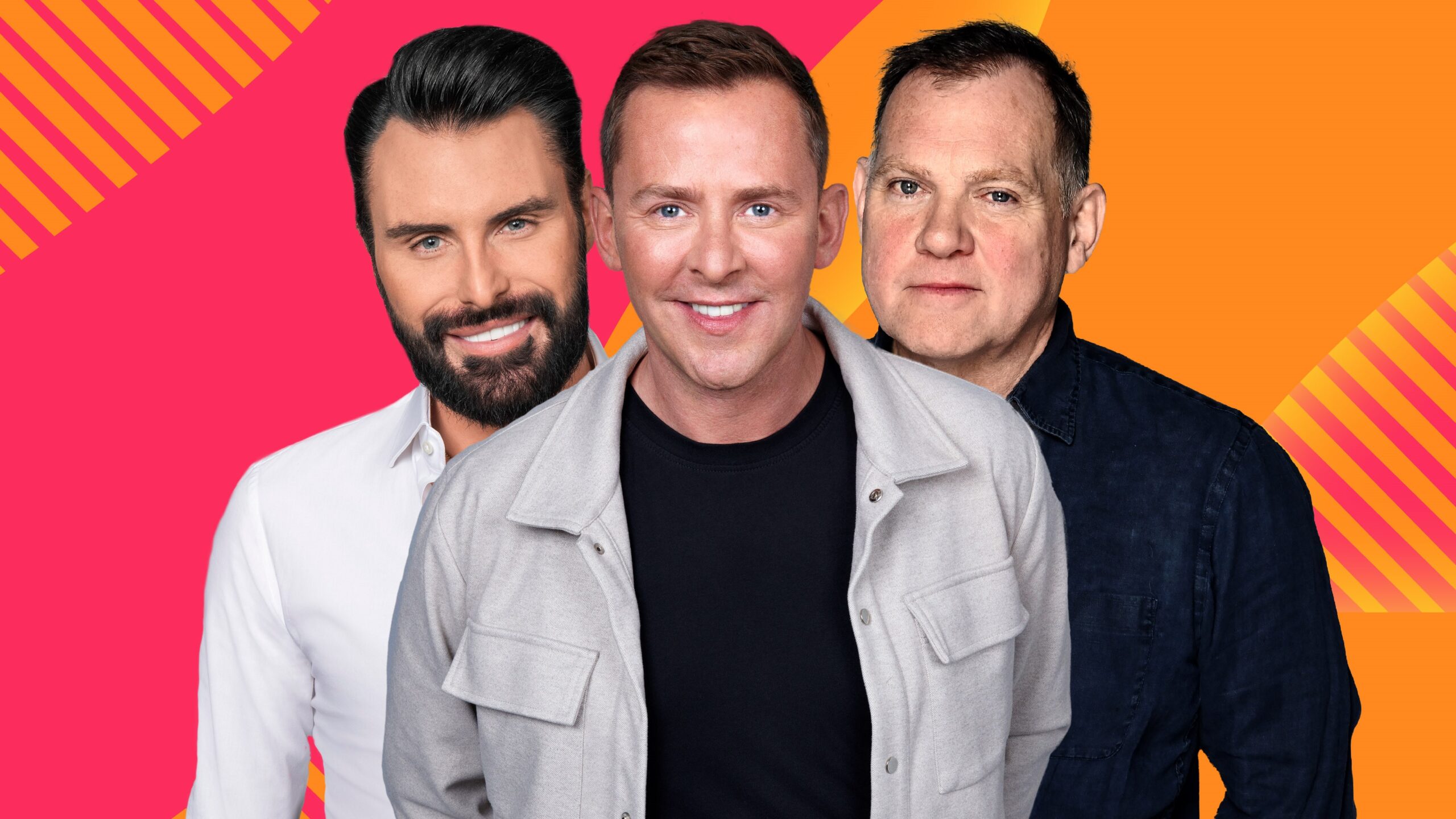
Scott Mills and Rylan are both hosting Eurovision Night on BBC Radio 2 while Paddy O’Connell broadcasts the semis.
BBC Radio 2 – the home of Eurovision 2023 on UK radio – today announces that Scott Mills and Rylan will be the station’s presenters for the Eurovision Song Contest 2023 Grand Final which will be broadcast live on Radio 2 on Saturday 13th May. And for the very first time, Radio 2 will also broadcast the Eurovision semi-finals, which will be presented by Paddy O’Connell.
Eurovision superfans and Radio 2 presenters, Scott and Rylan – who have been involved in Eurovision coverage for many years – will be bringing their insightful and colourful commentary to the Grand Final on the network, broadcasting live from the centre of the action at Liverpool Arena. The UK is hosting the 2023 event on behalf of the 2022 winners, Ukraine. It will be the culmination of a week in the city for Scott and Rylan, as they are also providing TV commentary for the Semi Finals – both of which, for the first time in the UK’s Eurovision Song Contest history, will be broadcast live on BBC One and BBC iPlayer. Meanwhile, Scott’s afternoon show (Tuesday to Friday, 2-4pm) on Radio 2 will be coming from Liverpool all week, with Richie Anderson hosting the show on Tuesday and Thursday as Scott prepares to host the semi-finals on TV.
For the first time, this year Radio 2 will also be broadcasting the two Eurovision Semi-finals, with Paddy O’Connell hosting the network’s live coverage from the Liverpool Arena. In the first semi-final on Tuesday 9th May (8-10pm), fifteen countries are taking part with ten qualifying for the Grand Final on Saturday night. And on Thursday 11th May, Paddy returns with live coverage from the second of the semi-finals, with sixteen countries taking part and ten qualifying for the Grand Final on Saturday night. These shows will also be simulcast on BBC Radio Merseyside.
Rylan says: “Eurovision is my favourite time of the year, I cannot wait! And I’m so excited and absolutely buzzing to be hosting the Eurovision Grand Final on Radio 2, the biggest and best music event in the world, with my partner-in-crime Scott Mills. We can’t wait to bring listeners closer to the action than ever before, with all the fun, excitement and backstage gossip from what promises to be an unforgettable night.”
Scott says: “I can’t begin to describe how excited I am to be presenting the Grand Final of the Eurovision Song Contest on Radio 2. I’ve had the great pleasure of being involved with Eurovision in various ways over the years, from commentating alongside Graham Norton to singing karaoke with the contestants, but presenting from the Grand Final in Liverpool is the ultimate childhood dream come true. Rylan and I will be going all out so please come and join the party live on Radio 2!”
Paddy says: “I’m walking on sunshine to join Radio 2 live in Liverpool hosting the Eurovision semi-finals. Sam Ryder broke the UK Eurovision spell last year and I hope it’s magic for Mae in 2023.”
Helen Thomas, Head of Radio 2, said: “The 2023 Eurovision Song Contest will be a very special event and who better to host Radio 2’s coverage of the Grand Final than our very own Scott and Rylan. And I’m delighted that for the first time, Radio 2 will be bringing our listeners all the drama and fun from the semi-finals, hosted by Paddy O’Connell. With years of Eurovision experience under his belt, Paddy is the perfect guide for fans and also those who may be discovering Eurovision for the first time.”
So what do we know about the singer Sam Ryder and his love life.
Is Sam Ryder Gay?
Obviously in this day and age, Sam’s sexuality shouldn’t and doesn’t really matter, but sometimes a boy just wants to know if his favourite singer bats for the same team – representation matters you know!
Well, Sam isn’t gay or bi that we know of.
Apparently he’s got a long term girl, called Lois Gaskin-Barber. Interestingly the used to own a juice bar cafe together. From 2017 to 2019, they operated the Lone Wolves Organic juice bar in Coggeshall in Essex. Lois now sells her own jewellery on her Instagram page Lone Wolves Creative.
So how old is Sam Ryder?
The Eurovision star was born on December 15, 1989, so his current age is 33 Years – and in case you were wondering Sam stands 5ft 10inches tall, which is 1.78m.
Is Sam signed to a label?
Yes, thanks to his legion of over 13million fans on TikTok – he caught the attention of mega label Parlophone (the original home to The Beatles) and inked a deal with them in 2021. His debut single, Space Man! reached number two in the UK charts after his performance on Eurovision. He is due to release a full album at the end of 2022, in October, just in time for that all lucrative Christmas market.
His second single, “Somebody”, scheduled for release on 19 August.
In 2014, Drag Queen Conchita Wurst won the Eurovision Song Contest with her epic hit, “Rise Like A Phoenix” which prompted a backlash from some in Russia – despite Conchita not representing Russia in the competition or being a Russian national.
Unlike other drag queens, Conchita Wurst’s look involves a full beard, which proved a little too controversial for some.
Numerous men in Russia started a hashtag on Twitter and other social networks called #ProveYoureNotConchita in which they displayed their freshly shave off beards in protest to Conchita’s win.
With Eurovision just around the corner, we thought we’ve delve into the whys, hows and whens of the world’s biggest music competition.
What is Eurovision about?
In Eurovision, more than 40 countries compete to win votes for the best song! When the competition first started in 1956, it was exclusive to European countries and only seven nations participated. Since then, the rules have relaxed – so much so that even Australia is in.
Today Eurovision is far from being just a song contest. It’s about music but it’s equally about putting on a show and creating a buzz. Among Eurovision winners is, for example, a group of monsters.
Eurovision is considered one of the world’s longest running and most-watched reality television franchises, attracting up to 600 million viewers every year. In the last two decades, it has consistently ranked among the most-watched live entertainment TV broadcasts worldwide, outside of sporting events. The Super Bowl is peanuts compared to Eurovision!
It’s hard to say why Eurovision is so popular. It has a strong fan base but most viewers are passionate about it only once a year, and some just love to hate it. William Lee Adams, a Eurovision blogger and YouTuber, describes Eurovision as a combination of “figure skating, beauty pageants, and singing competitions”. What’s not to love!
Who decides the winner of Eurovision?
The participating countries. For years, each country ranked other countries’ performances awarding them points from 1 to 12, excluding 9 and 11. Each country still awards the same number of points, but two sets of them; one from a national jury and the other from national televoting. So the top points can be anything between 12 and 24 points.
This all happens live, and if you have no idea how the voting works, then it’s like watching a lecture on nuclear physics. On top of that, the voting takes place when it’s way past bedtime (if you watch it in Russia anyway).
Yes; but they weren’t particularly well known when they did. ABBA won in 1974 with “Waterloo” and made their international breakthrough shortly after. Few people know that the group had released “Ring Ring” a year before – they were never chosen to represent Sweden in Eurovision with the song but they did top the charts across Europe and South Africa.
Céline Dion won Eurovision with “Ne partez pas sans moi”, representing Switzerland in 1988, although she is Canadian. Anyone can represent any country in Eurovision, and anyone can write the song, regardless of their nationality.
Which country has won Eurovision the most?
Ireland has won Eurovision seven times which is more than any other country, but looking at the distribution of ‘maximum points’ votes instead of wins, the UK’s entries have been the most successful in the song contest’s final history.
According to Casumo’s findings, however, things might be about to change. Sweden is a close second for both the number of wins and distribution of ‘maximum points’ votes. Given the Scandinavian country’s recent strong track record – 10 top 5 positions since 2000 – Ireland and the UK have no reason to be complacent.
Oh yes. This is why the European Broadcasting Union introduced national juries to balance the results from televoting in each country. Some people argue that the juries are just as corrupt as televoting, which is influenced not only by sympathies and shared cultural ties between countries, but also the movement of people from one country to another. There is, for example, a significant Greek population in Cyprus and Finnish population in Sweden.
Casumo found out which countries have given their ‘maximum points’ vote to the same country the most frequently over the years. Number one was Cyprus, who gave a ‘maximum points’ vote to Greece as many as 22 times (37% of the time the country has been eligible to vote Greece).
Currently, Duncan Laurence of the Netherlands is considered a frontrunner, but Russia’s Sergey Lazarev and Italy’s Mahmood follow close behind – all quite conventional pop tunes. One thing to keep an eye on is who each country gives their ‘maximum points’ vote to. The UK has backed the eventual competition winner by awarding them the ‘maximum points’ vote on 25 occasions. Latvia and Australia have backed the winner most regularly – in 50% of the finals they’ve been eligible to vote in.
Romania and Azerbaijan, however, have never guessed the winner correctly…
Who organises the event, and why is it in Israel this year?
The contest is organised by the national public broadcaster of the country that won the year before. Last year Israel’s Netta Barzilai won, so Israel is this year’s host nation. The European Broadcasting Union supports and supervises the work of the host broadcaster, so the contest looks pretty much the same every year: big, shiny and extravagant.
In the 1990s, Ireland hosted Eurovision four times in just five years. What the nation lost in organising costs, it certainly gained in visibility!
The 25 Things You Need To Know About The World’s Biggest Singing Contest.
1) After World War 2 it was decided that something was needed to bring Europe together again. The first of the 63 contests was in 1956 adapted from the San Remo Music festival which started five years earlier in ’51. The UK joined the contest in 1957.
2) Originally countries had two songs in each year’s contest.
3) It has regularly allowed in countries outside of Europe including Israel, Cyprus, Armenia even Morocco and most recently Australia. Also, countries only part in Europe such as Turkey, Russia, Georgia and Azerbaijan have been included. Tunisia withdrew and both Egypt and Libya have been invited but as yet have not taken part.
4) If Australia does ever win (It has come second) they will not host the following year as it will be co-hosted in Europe due to the cost to the other entrants.
5) The tradition of the previous year’s winning country hosting the next event has only been broken five times – every time due to the cost of running Eurovision. Four times the United Kingdom took on the extra host duties for Netherlands, France, Monaco and Luxembourg. The Dutch also took it on once for Israel.
6) Songs could be sung in any language up until 1977 when it was changed too only be in their native tongue. This is of course three years after Swedish entry Abba won singing in English. If the rules had been changed earlier they may not have won and therefore no “Dancing Queen”, No Theresa May Stage Dancing, No Musical, No Mamma Mia Movies, no Chess etc.
7) “Waterloo” was Abba’s third attempt at Eurovision the first two times they never made it past the Swedish heat most notably not getting picked for what has become there well-known tune ‘Ring Ring’ which did sell Internationally and bigger than the chosen song.
8) In 1974 Abba’s winning year the halftime show was carried out by the biggest selling singles artist of the Year ‘The Wombles’ there is no record as to what Europe thought of that. It was also the only year where all Top 4 songs made the UK charts -“Waterloo” at number one, Gigliotti Cinquetti’s “Go” (8), Mouth & MacNeils’ “I see A Star” (8) and the British entry “Long Live Love” by Olivia Newton-John just four years before she became “Hopelessly Devoted” To John Travolta and Grease. The national language thing was dropped again in ’99.
9) Countries can use singers of any nationality, of course, Both Olivia and Gina G are Australian, Cliff was born in India, Katrina & The Waves America and indeed British artists have tried to sing for other countries too such as DJ Daz Sampson.
10) The UK has, of course, won five times but they have come runner up a whopping 15 other times twice by just one point namely Scott Fitzgerald to Celine Dion and “Congratulations” by Cliff to some Spanish nonsense called “La La La”. Then it’s a massive jump down to 4 times runner up for each of Ireland, Germany and Spain. It is even tougher on little Malta who has come second twice and third twice but has never won.
11) Each act is allowed a maximum of six performers on stage and no live animals. The order is not done as many think by ballot but it is decided by the producers so as songs which sound similar are not next to each other. Songs are balloted either into part one or part two of the show that is the only element of chance
12) Miss Dion representing Switzerland stormed to the trophy but it was not her breakthrough as it was four years before she had her first international hit with “Where Does My Heart Beat Now” & a clear decade before Titanic.
13) Abba, of course, took over the world as the most successful act to come from Eurovision but “Waterloo” only made it to number 6 in the States and they only had 4 more Top 10 songs there all with years in between and massively outsold by other European stars such as Aha, Nena, the Singing Nun and Roxette.
14) The biggest selling Eurovision song ever is in fact Brotherhood Of Man’s “Save Your Kisses For Me” it was also the most popular ever with all juries. It charted in every territory (which Abba didn’t) and was the first to get a Platinum disc which “Waterloo” also did not achieve. The poorest selling winner was Marie N’s 2002 trophy grabber which charted absolutely nowhere.
15) The first 19 years of the contest was always won by soloists (with one Duo). In 1974 Abba became the first group to win and ushered in the ‘Group era’ followed immediately by Teach-In, Brotherhood Of Man and Bucks Fizz.
16) Famously in 1969, there was a 4-way draw with the lowest point win ever just 18. Lulu with “Boom Bang a Bang” was one of the quartet but it was the only one that became an International hit. The system was changed thereafter to take into account the number of 12 or 10 points etc but there has only been one other draw since decided this way in 1991 when France and Sweden tied. In 1969 it took 18 points to win but in 2017 it took an incredible 758 points to get the same trophy.
17) Twenty Four countries have never won so come on Ireland share it around a bit. Two of the Irish wins were by Johnny Logan for “What’s Another Year” & “Hold Me Now” but he did not stop there, winning again in ’92 as the writer of “Why Me”. Three people have won the contest twice only Johnny has a hat trick. San Marino’s highest position ever was 24th
18) In 2016 35 of the 41 entries were sung in English yet they still won’t vote for us. Of the last 20 wins, 16 have been in English and the all-time score to date across the 63 contests are 32 wins in English to 37 wins for every other European language put together.
19) Nicole was Germany’s biggest winner with “A Little Peace” in ’82. She wowed the audience at the reprise by singing every part of the song in a different European language it went on to sell very well right across the Continent.
20) The current system is 50% the public and 50% the juries which is very controversial; in 2016 Russia won the Juries over and Australia won the public but the win was given to the Ukraine – the public is always more responsive to politics than the juries. The UK entry in 2015 by Lucie Jones came 10th with the juries but an almost last with the public vote which was pure politics in action.
21) Cheryl Baker tried for Eurovision three times coming second in the UK heat to Brotherhood Of Man in ’76, two years later representing the UK as part of CoCo with Bad Old days and another two years on in 1980 as part of Bucks Fizz with the incredible “Making Your Mind Up”.
22) CoCo was the first UK act not to finish in the Top 10, unfortunately, they were not the last Hey Gemini? Since the Millennium we have only been in the Top 10 twice namely with former Liberty X star Jessica Garlick’s “Come Back” and the future Sugababe Jade Ewen with a song especially written by the two biggest selling non-performing songwriters in history Andrew Lloyd Weber & Diane Warren together and we still did not win.
23) The likes of Baccara, Jedward, Tatu etc have all been unsuccessful finalists and so have British number one superstars like Blue, Bonnie Tyler, The Shadows, Black Lace and Englebert. UK runners up have included Sonia, Michael Ball, Cliff & The Shadows (Not Together)
24) Two losing songs have topped the UK charts – Cliff’s “Congratulations” and Gina G’s “Ooh Aah Just a Little Bit”. Gina’s song became a massive International hit without winning Eurovision (because it’s damn good) it is the only losing song to make the Billboard top 20 in the States and it went on to win a Grammy Nomination.
25) Terry Wogan did his first Eurovision in 1971 as a radio commentator he then went on and back between TV and Radio coverage until he took the BBC commentary booth in Brotherhood of Man’s Year. He lasted until 2008 when he stepped down criticising the political voting (Cyprus always for Greece; Serbia for Croatia sort of thing) when the UK entry by Andy Abrams was rejected wholeheartedly by Europe on mass – Terry said we have a good song with a good singer it is now pointless us competing. Radio 2’s lovely Ken Bruce has done the radio commentary now consistently since 1988 for 32 straight years and long may he continue…he calls it his ‘Annual holiday’.
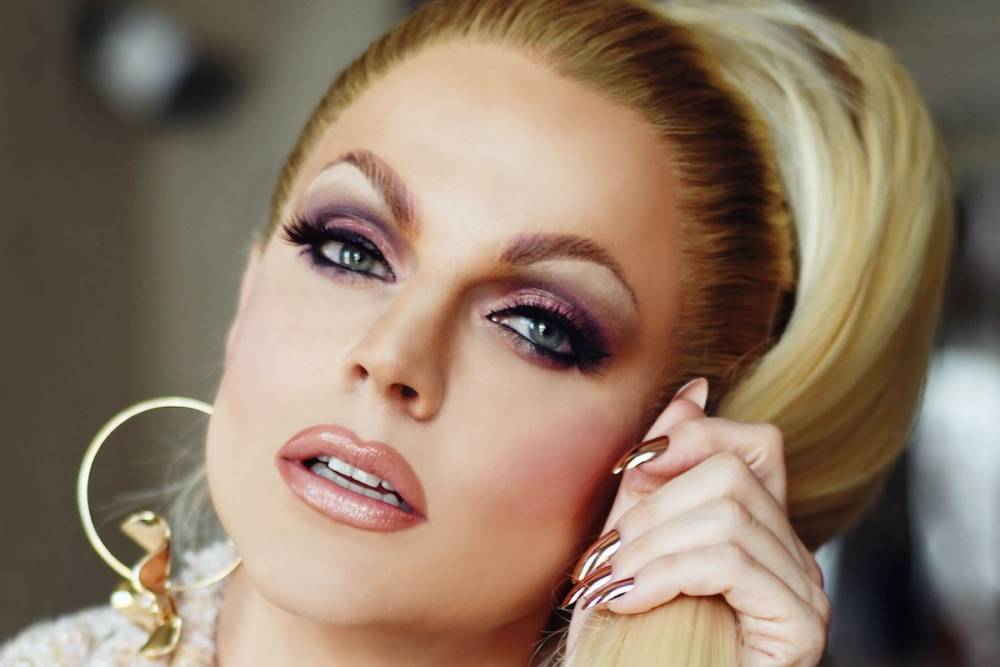
RuPaul’s Drag Race finalist and 2018 Celebrity Big BrotherchampionCourtney Act today premieres the music video for her brand new single Fight For Love, out now on iTunes and Spotify.
Courtney is bidding for this instantly memorable dance-pop smash to be Australia’s entry at the Eurovision Song Contest 2019. She will compete on Australia’s national selection TV show ‘Eurovision – Australia Decides’ on SBS on Saturday 9 February 2019.
Directed by Femme.TV, the high-impact, sultry music video from Courtney gives a taste into what can be expected from her live performance on ‘Australia Decides,’ featuring striking fast-paced choreography and a range of ultra-modern, high fashion looks.
Courtney Act said of Fight For Love, “A sweet 16 years after Australian Idol, I have the chance to show Australia how I have grown as an artist and performer and I am so excited! To compete to represent Oz in Eurovision is second only to being on that stage in Tel Aviv and singing my lungs out for my country. Fight For Love is a dancefloor banger all about coming together and fighting for the things we believe in. I think it’s so important to think about the basic human rights of others and to use our collective voices, minds and bodies to lift those people up and bring about change.”
A guy, who draped himself in an Australian flag guy managed to sneak up on stage during the 2017 Eurovision and bare his ass to around 200 million viewers. Which by our estimation makes him the world’s most famous ass (not Boris Johnson as previously thought – we kid we kid).
According to the Sun, the man behind the bum flash was Vitalii Sediuk, a Ukrainian prankster.
It’s not known if the man himself was Australian, but bravo that man.
Russia is out of Eurovision after the host nation, Ukraine said it would refuse entry to the Russian contestant.
Russia will not be taking part in Eurovision 2017 after the Ukraine banned its entry, Julia Samoylova from entering the country. According to the EBU two solutions were offered to Russia’s Eurovision broadcast partner, Channel One and both were vetoed. Russia first performed at the Eurovision in 1994. This will be the first time it has not taken part in the competition.
In a statement, the EBU said that Julia could take part via satellite or change their chosen artist to one that could legally travel to the Ukraine for the competition.
The EBU stated,
“Sadly both proposals have been rejected by Channel One and they have now announced they do not intend to broadcast the Eurovision Song Contest 2017. Unfortunately this means Russia will no longer be able to take part in this year’s competition. We very much wanted all 43 countries to be able to participate and did all we could to achieve this”.
Why Did The Ukraine Ban Russia’s Eurovision Entry?
Ukraine law forbids entering Crimea in order to perform. According to sources around 140 other Russian artists have been blacklisted by the SBU following the annexation of Crimea last year. Julia Samoylova is one of those artists as she had previously travelled to Crimea to perform.
Russia and Ukraine have been in dispute since the annexation of Crimea and the fighting in east Ukraine.
Frank Dieter Freiling, Chairman of the Eurovision Song Contest Reference Group, the event’s steering committee, said,
“We strongly condemn the Ukrainian authorities’ decision to impose a travel ban on Julia Samoylova as we believe it thoroughly undermines the integrity and non-political nature of the Eurovision Song Contest and its mission to bring all nations together in friendly competition. However, preparations continue apace for the Eurovision Song Contest in the host city Kyiv. Our top priority remains to produce a spectacular Eurovision Song Contest with our Member UA:PBC in May.”
This year’s Eurovision Song Contest host, Ukraine has just banned Russia’s act from the country.
Russia’s Eurovision entry, Julia Samoilova has been banned from appearing at the competition as it emerges that shehas performed in Crimea.
The former Russian X Factor singer had been due to perform her ballad “Flame Is Burning” at the competition in May, however, Ukraine’s security services, SBU, have determined that her visit to the territory would be “illegal”.
Ukraine law forbids entering Crimea in order to perform.
According to sources around 140 other Russian artists have been blacklisted by the SBU following the annexation of Crimea last year.
Russia and Ukraine have been in dispute since the annexation of Crimea and the fighting in east Ukraine.
The UK’s Foreign office updated its advice for travellers to the Ukraine for Eurovision saying that it advised against travelling to Donetsk oblast, Luhansk oblast to the east of the country and Crimea in the south. It also warned that the UK was not able to provide consular services to any part of Donetsk and Luhansk oblasts and Crimea.
It tells travellers,
“Russian forces and pro-Russian groups have established full operational control in Crimea. Following an illegal referendum on 16 March 2014, Russia illegally annexed Crimea on 21 March 2014 and tensions remain high”.
The EBU has released a statement about the decision to ban Julia Samoilova saying,
“We have to respect the local laws of the host country, however we are deeply disappointed in this decision as we feel it goes against both the spirit of the Contest, and the notion of inclusivity that lies at the heart of its values.
We will continue a dialogue with the Ukrainian authorities with the aim of ensuring that all artists can perform at the 62nd Eurovision Song Contest in Kyiv in May. “
THEGAYUK’s former cover star Danyl Johnson has been announced as a contender for the UK entry to Eurovision 2017.
Danyl Johnson, who fronted Issue 24 of THEGAYUK, is the running to become the UK’s entrant to the 2017 Eurovision Song Contest with his song, “Light Up The World”. It’s v v catchy!
Will he be successful in representing the UK in Kyiv?
You can vote for Danyl on the BBC show Eurovision: You Decide on the 27th January at 7:30PM.