Funding aimed at reducing homophobic bullying of LGBT+ students in England has been apparently pulled by the Government, as new research shows that just 27% of students think that their school is a safe space for classmates to be themselves.
A report by the BBC has discovered that funding for programmes targetting homophobic and transphobic bullying in English schools has ended, with no signs of renewal by the Conservative government.
The funding which added up to around £4 million, was specifically set aside to help with anti-LGBT+ bullying, but according to the government, the funding was always due to end in March 2020. The programme began back in 2014, under one of the most progressive Conservative governments when it came to LGBT+ rights, under the leadership of David Cameron.
According to the BBC, funding was “quietly” pulled in March, while the world’s attention was focused on the Coronavirus pandemic and schools began to close across the UK.
The funding has not been reinstated.
The Government Equalities Office said to the BBC “The anti-bullying grant fund, which provided 2,250 schools across the country with materials and training, was always due to end in March 2020.”
Majority of students do not believe that it’s safe to come out as LGBT+
New research by the Diversity Role Models (DRM), which received funding between January 2019 and March 2020 found that just 27% of students reported that they thought their school would be a safe environment for classmates to come out as gay, lesbian, bi or transgender.
DRM undertook a survey of nearly 12,000 students, parents and governors of secondary and primary schools.
It found that homophobic, biphobic and transphobic language was reported as common by 42% of year five and six primary school students and by 54% of secondary school students.
Seventy-one per cent of teachers say that they have witnessed homophobic bullying and was it was found to be much more common than bullying related to other characteristics such as religion.
Education works
The survey also showed that the levels of homophobic, biphobic and transphobic bullying decreased when schools educated their pupils about LGBT+ identities and relationships, however as it stands only 20 per cent of secondary school students report learning about LGBT+ identities.
Chief executive of Diversity Role Models, Adam McCann comments, “These findings show how dangerous any further delays to LGBT+ inclusive RSE will be for students. Our report shows a clear correlation between learning about LGBT+ identities and lower levels of homophobic, biphobic and transphobic language and bullying.”
“Staff, parents and carers and governors underestimate the level of discrimination in schools compared to students. It is no exaggeration to talk about the safety of these students. Action must be taken immediately to create safer, more inclusive learning environments. Bullying has an undisputed negative impact on attendance, attainment, life chances and mental health.”
THEGAYUK understands that as it stands there has been no renewal of any of the projects.
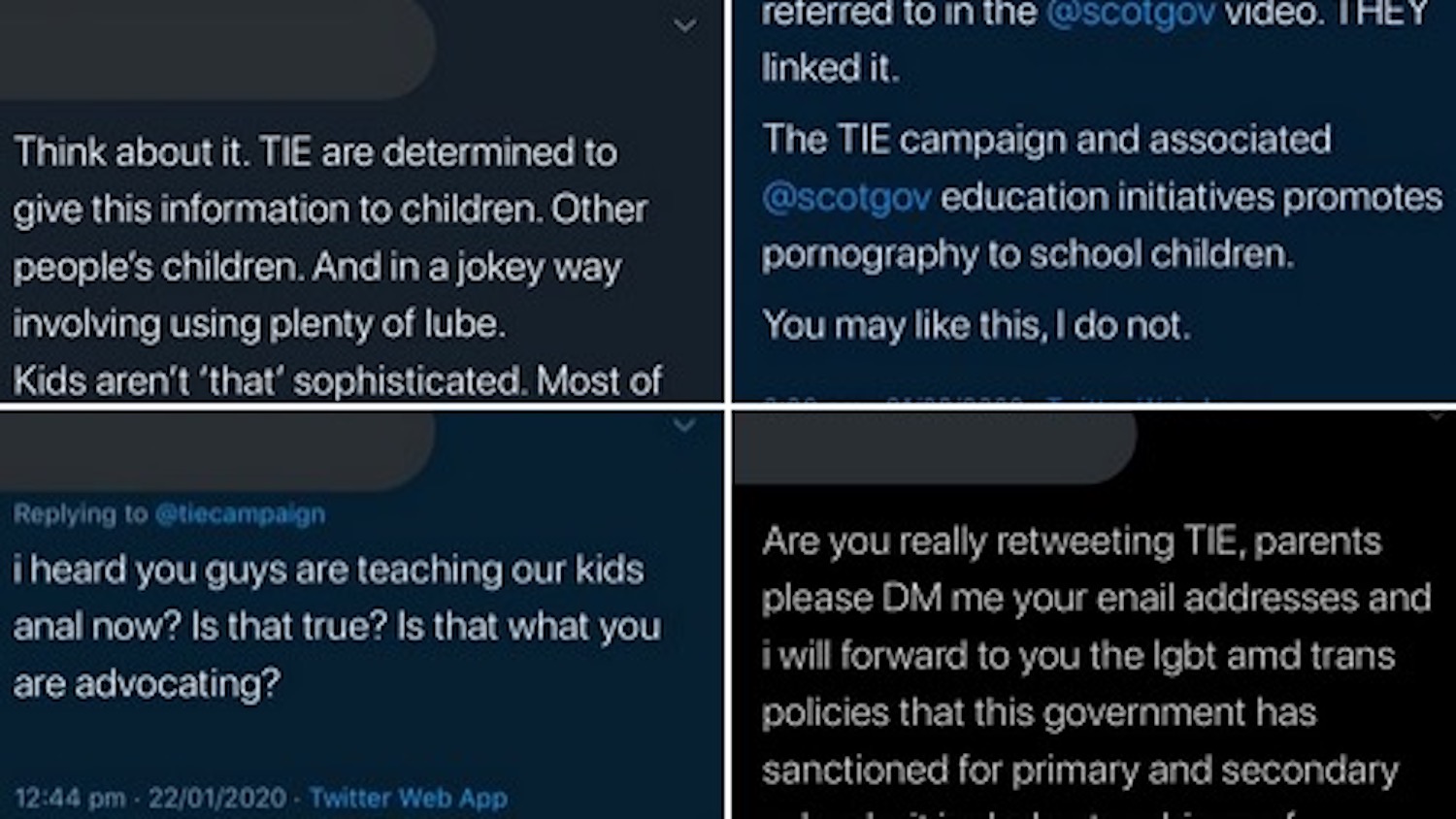
The Scottish Time For Inclusive Education (TIE) Charity has outlined some of the attacks its volunteers and founders have had to deal with.
In a horrifying thread on Twitter, the TIE campaign has revealed the extent of abuse it has received from bigots on social media platforms like Facebook and Twitter. The charity said it had also been a victim of a campaign of lies about its work “to damage its reputation”.
The charity, which is based in Scotland, says it has been receiving attacks via social media platforms for months because they are an LGBT charity working with schools, teachers and educations.
The charity’s primary goal is to tackle “prejudice-based bullying” and to provide schools and educators with sessions on gender stereotypes/equalities and resources which help educators include LGBT+ people in the curriculum.
However, for months, volunteers say they have been targetted with “hurtful and dangerous posts and messages from “individuals who appear to be opposed to LGBT themes being included within education” an attack the charity describes as unprecedented.
“Paedophiles, child abusers, groomers”
The posts include defamatory and homophobic rhetoric, which has made volunteers concerned for their safety.
Speaking about the threats, a statement from the charity said,
“For decades, the LGBT community has been subject to homophobic propaganda which paints us as a threat to children by claiming that we are paedophiles, child abusers, groomers. Until recently, we believed we had moved on from those dark days. Sadly this is not the case online.”
“They are trying to cause faux outrage & jeopardising our safety”
The co-founder’s own child was used in this smear campaign and pictures of the child were used across social media with the slogan “Say no to the indoctrination and sexualisation of our children”.
The charity says, “All of this is, obviously, untrue. We know a thing or two about LGBT history, so we understand that this is tactical homophobia: to throw as much mud as you can, & hope it tarnishes the org. They are trying to cause faux outrage & jeopardising our safety in the process….
“The truth is that some of these individuals are anti-LGBT. Others, however, have simply chosen to target us because we are trans-inclusive in our work. All of this started when proposals to reform the GRA (Gender Recognition Act) became a prominent topic of discussion on Twitter.”
Twitter is a particular problem
TIE also pointed out that Twitter was a particularly problematic platform for them stating,
“This platform, in particular, is a problem. LGBT people and charities are regularly called groomers, paedophiles, abusers. This is unacceptable and horrific. @TwitterSupport needs to do more about this.
I know, when popstars come to writing their second album it’s often referred to as the “difficult second album”. Who would’ve thought I’d have that problem when it came to be writing this little column for you all?
I suppose, I would like to start by saying – Thank you! I have received a lot of love on social media about it, and I think it’s done the job I wanted it to do by making people ask questions as to whether they are doing enough to help support their local communities. It’s important now, more than ever, that we continue to invest in our safe spaces and show them some appreciation. This lockdown and epidemic has been tough on everybody and we’re all bound to be anxious over what this new normal is going to be, and how we will have to adapt to a socially distant society. We all need to show a bit of love, support and understanding, and show we care.
The best thing to come out of having this column, is having a voice within the community – which, is a little strange to me, because for a long time when I moved to London, I didn’t feel like I really belonged to the community.
Deep down, I knew I was gay when I was in my early teenage years, but I didn’t have a role model or any form of support to help support me. I’d never been to a gay bar before I moved to London. To this day, I can remember my first proper night out on the Gay Scene in London. I’d been in London for a couple of weeks at that point, and I was so eager to experience all the very thing I had spent my summer researching. It wasn’t even a conventional night out with my university course mates. I met a bloke on Grindr one Saturday afternoon and he’d invited me to meet him for a few drinks in Soho and he offered to show me around. He was a nice enough guy, I didn’t fancy him, and there was nothing sexual about it. He was just a few years older than me, and it was really nice to meet someone who was happy to show me around and introduce me to the scene.
It was painfully obvious to me that night that I would have a problem really fitting in with the “scene”. I knew I was different to everybody else. I knew that my size was going to hold me back. Being a fat guy, it almost labels us automatically as being unattractive and unworthy of attention. I remember being on the dance floor in Heaven that Saturday night, both having an incredible night in a space that felt safe, and yet feeling completely alone.
There were so many six-packs and chiselled bodies and then there’s me, in an oversized top from Primark and comfortable jeans, trying to hide just enough of my body that I felt comfortable. So, even from the start of my journey of self-discovery it really felt like I was fighting an uphill battle with myself. I look back now and wish at the time I made that conscious decision to make that change when I was younger. Instead, I continued to eat my feelings and I made no attempt to lose weight.
It wasn’t until my mid-twenties when I started to feel that I was letting myself down and I had to make that change, because I felt I was missing out on important life milestones because I couldn’t find happiness in a relationship.
It’s clear to me now, that the problems I had stemmed back to my childhood. I was born in 1992, into a middle-class working family, in a very conservative, stuck in the past community. I was at school towards the end of when Section 28 was still in effect and I was heavily bullied as a kid – teachers couldn’t really stop that. Sure, they could reprimand someone for calling me fat, or specky four eyes. But if someone called me a faggot or a queer, which happened quite often, they couldn’t do anything. That really hurt me, and it still does today. They knew that it was wrong, but there weren’t in a position to really combat it.
The repercussions of Section 28 put young queer kids at risk for not having a sex education that was relevant to them. They didn’t have any understanding or advice as to what a healthy relationship was the for them.
Some developed worrying behaviour that could put them in danger, such as excessive alcohol and substance abuse as well as sex with much older men, which could sometimes result in a sexually transmitted disease or a positive HIV test result. Teachers now have a duty of care over young people to educate them, and some people still feel a bit angry to this day that they weren’t supported and let down during a crucial and pivotal part in their development and education.
I guess, I kind of fall into this remit. I was never taught about same-sex relationships in school. It was brushed under the carpet. We were never exposed to that as kids so – we really didn’t understand what these relationships looked like. Our only real understanding of it was from the limited access to queer representation on television.
We were reduced to watching programmes such as Queer as Folk, which were truly ground-breaking at the time to show such explicit material, under the cover of darkness with the volumes on the lowest possible settings on the TV sets. Representation has improved over recent years, with more and more openly gay people visible on television, and more openly gay character in the mainstream media, paving the way for education for younger generations. It’s put pressures on TV Shows and the Media to show them in a positive and healthy way, to help fight the comeback following section 28.
We have come a long way since then, but we’ve got a long way to go. LGBT+ characters in mainstream television are often thought as an afterthought by creators, with producers and directors ticking through diversity checklists to make sure there is representation. We exist and we are a part of normal society – represent us as who we are. We’re not all butch lesbians and raging bitchy queens.
June is Pride Month, and for the first time since the Stonewall riots we are unable to march and celebrate Pride in the way we’ve done in the past. Even in 2020, we see people questioning Pride Month. Sadly, I’ve seen a number of comments on social media from people asking we don’t have a Straight Pride. To me it’s a ludicrous argument.
When have white heterosexual people ever been discriminated against? When was it illegal to kiss their partner in public? When were they forced from their homes into refugee camps for being straight? When were they killed for being straight? Well, we all know how that turned out when they tried that in America. They don’t have Straight Pride – but they do, however, have International Clown Week – maybe they can attend that?
The British based charity, Stonewall, posted some statistics online in early 2020 stating which I found to be staggering and pretty upsetting. Stonewall posted statistics stating that; 26% of lesbian, gay or bisexual people alter their behaviour to hide their sexual orientation in order to avoid becoming the victim of a hate crime. 48% of trans people under the age of 26 said that they had attempted suicide, and 30% of those had done so. A staggering 59% said that they had considered doing so, and finally – a quarter of the world’s population believes that being LGBT should be a crime – and although we’ve come a long way in sixty years – shows that there is a long way still to go in our fight.
Relationships are something that should be taught in schools, and children have a right to understand that same-sex relationships are a perfectly normal thing. It should be taught that it’s normal to have two mummies or two daddies. Having an LGBT-inclusive education ensures that those with LGBT families see themselves reflected in what they learn. It also will encourage all young people to grow with inclusive and accepting attitudes. It will also teach them about what a safe and healthy relationships look like and how to have them. Better reflecting the world in which we live in, and subsequently covering important issues like consent and online safety.
Having this understanding from a younger age, can only help to stamp out homophobia. It’s not going to be a cure, but I hope it goes a long way.
There has been no evidence, that I have been able to find, to suggest that predators have used the provisions of the Equality Act 2010
To further our movement, we have to continue to call out bigotry, homophobia and hypocrisy when we see it. A Tory MP posted a message on social media to celebrate Pride Month – immediately, its hypocrisy was called out. If there is one thing in this world, I cannot stand is a double standard. You cannot show messages of support for our community, when your government is actively looking to roll back Trans rights by scrapping a review of the Gender Recognition Act. It just doesn’t work that way! Trans people have been using toilets, or trying on clothes in changing rooms, accessing domestic violence support, and getting on with their lives as for as long as single-sex spaces have existed.
There has been no evidence, that I have been able to find, to suggest that predators have used the provisions of the Equality Act 2010 to gain access to women’s spaces. If there was, then it would be shouted from the rooftops by anti-transgender lobbies.
Trans men are men, Trans women are women. The same government promised to ban Gay Conversion therapy two years ago – and yet we’re still waiting.
So, whilst I’ve got this voice, I am going to use it as a platform to help forward our movement in any way that I can. We’re also going to keep it light and entertaining. You’ll get to hear some of my crazy overseas stories, find out what makes me tick and what rubs me up the wrong way.
I want to give you an honest reflection of my life – share some of my experiences and tell you more about my disastrous attempts at finding love. I hope you enjoy the journey!
Scotland‘s schools will offer LGBT+ history as it becomes the first nation in the world to add the struggle for equality in the LGBT+ community on its curriculum.
The EdinburghLive website is reporting that from 2021, schools in Scotland will teach LGBT+ history in its schools and include subjects surrounding equality and identity.
Deputy First Minister and Education Secretary John Swinney said “Scotland is already considered one of the most progressive countries in Europe for LGBTI [lesbian, gay, bisexual, transgender and intersex] equality.
“I am delighted to announce we will be the first country in the world to have LGBTI inclusive education embedded within the curriculum.”
Across age groups and subjects
It is hoped that lessons will be taught to a wide variety of age groups and across various subjects. The lessons will tackle inequalities faced by LGBT+ people as well as homophobia, biphobia and transphobia.
Meanwhile, transphobic hate crimes in the same period had decreased by 23 per cent.
The rest of the UK?
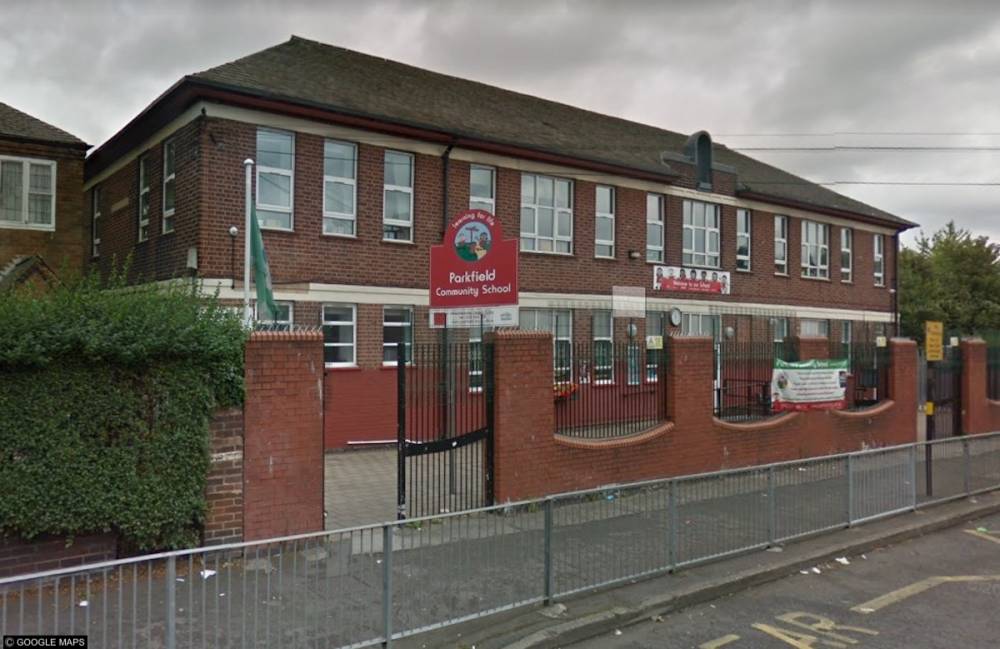
Parkfield Primary became a flashpoint for demonstrators from religious backgrounds against teaching LGBT+ equality.
In England, lessons taught under the “No outsiders” banner to Primary school-aged children, which included LGBT+ elements were met with a huge backlash in England last year.
The lessons led to mass protests outside the primary schools. Eventually, the protesters were banned from demonstrating outside schools. In November 2019, a judge ruled that parents, mainly from an Islamic background, but included members from other religious backgrounds, would not be able to protest outside a school in Birmingham.
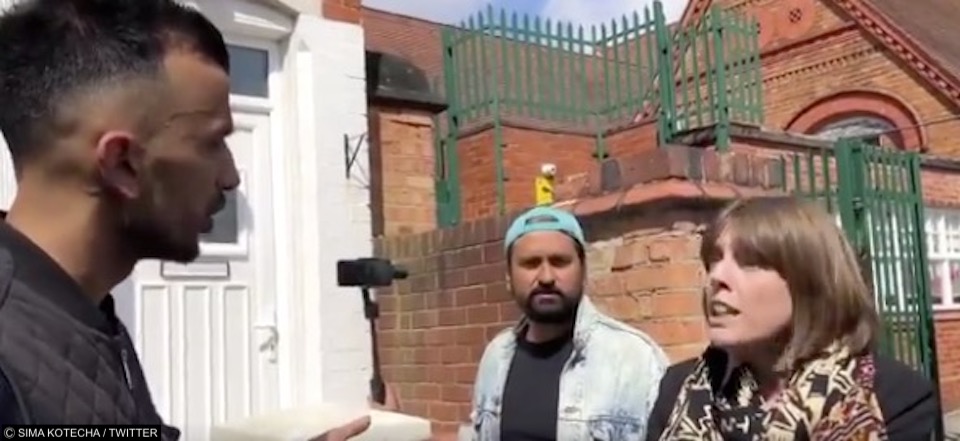
MP Jess Phillips managed to explains how the equality act protects Muslims and LGBT people – ‘you don’t get to pick and choose what equality you have’.
Jess Phillips talks with a protester Shakeel Afsar outside the Anderton School in Birmingham
The Labour MP for Birmingham Yardley Jess Phillips managed to explain her belief that the current equality act protects Muslims and LGBT+ people, saying that the current protests against teaching LGBT+ education, in programmes like the No Outsiders campaign, is “damaging the reputation of a peaceful and loving community”.
Speaking outside a school in Birmingham where mainly Muslim parents have been protesting, the MP said, “I don’t agree with these protests, I don’t agree that you get to pick and choose which equality you can and cannot have.
“Our equality laws protect us all. I want them to protect you. Actually I want to protect the Muslim community, which is getting a terrible… I want our Muslim community to be completely protected.
“The worse thing about it is it’s damaging the reputation of a peaceful and loving community that I have lived in my entire life.”
There are 21 MPs who voted against adding LGBT+ relationship education in schools.
MPs recently, overwhelmingly voted on new guidance that would mean that British schools would have to provide compulsory relationship and sex education that includes LGBT+ relationships for all children in state schools. It’s the first time the guidance has been updated since 2000.
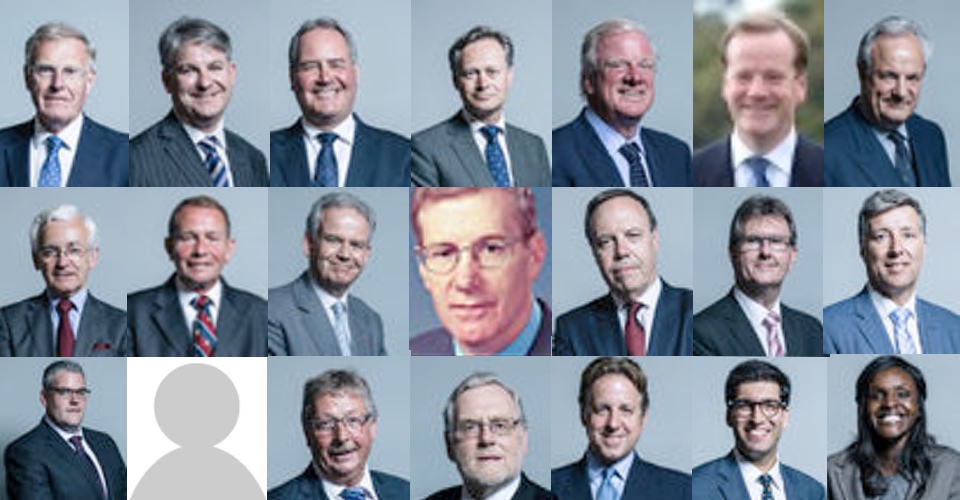
There were 21 MPs who voted against the measure. Of the 21 MPs, who voted against introducing LGBT+ relationship inclusivity 12 were Conservative, 7 were DUP, 1 Labour and 1 Independent.
The 12 Tory MPs are: Bob Blackman (Harrow East), Charlie Elphicke (Dover), Sir Christopher Chope (Christchurch), Sir Edward Leigh (Gainsborough), James Gray (North Wiltshire), Julian Lewis (New Forest East) Matthew Offord (Hendon), Marcus Fysh (Yeovil), Martin Vickers (Cleethorpes), Philip Davies (Shipley), Philip Hollobone (Kettering) and Ranil Jayawardena (North East Hampshire).
All 10 of these MPs also voted against gay marriage in 2013. Some, who have been in office long enough also voted in favour of Section 28 back in 1988, including, Chope and Leigh.
The 7 DUP MPs were Gavin Robinson (Belfast East), Gregory Campbell (East Londonderry), Sir Jeffrey Donaldson (Lagan Valley), Jim Shannon (Strangford), Nigel Dodds (Belfast North), Paul Girvan (South Antrim), and Sammy Wilson (East Antrim).
The Labour MP was John Spellar (Warley).
The independent MP was Fiona Onasanya, who was formerly a Labour MP but was expelled from the party after she served a prison sentence for perverting the course of justice, in January.
LGBT+ teachers who taught in schools during the late 1980s and 1990s remain scarred by the effects of Section 28 of the Local Government Act in England – a piece of legislation introduced in 1988 banning the “promotion” of homosexuality in schools – according to new research published in the journal Sex Education.
The legislation was introduced partly as a reaction to a 1986 children’s book called Jenny Lives with Eric and Martin, which depicted the life of a child with two gay fathers. Controversy about the availability of the book in some schools in London led to the passing of Section 28.
It was repealed in 2003, but during the time of its enforcement, many LGBT+ teachers felt it prohibited them from being open about their own sexual identity in the workplace.
Researchers found that 88% of post-2003 teachers were public about their sexuality to all school colleagues, compared to 20% of those from the Section 28 era.
Research by Anglia Ruskin University compared the current attitudes of teachers who taught during this era, and those who entered the profession after its repeal. Researchers found that 88% of post-2003 teachers were public about their sexuality to all school colleagues, compared to 20% of those from the Section 28 era. While 45% of post-2003 teachers were “out” to their pupils, the same was true of only a fifth of Section 28 teachers.
The study, compiled using questionnaires, also revealed just 20% of Section 28 teachers lived in their school’s catchment area compared to 43% of post-2003 colleagues. Comments by respondents spoke of guarding their privacy aggressively, and fiercely separating out home and workplace identities, with privacy closely associated with safety among LGBT+ individuals.
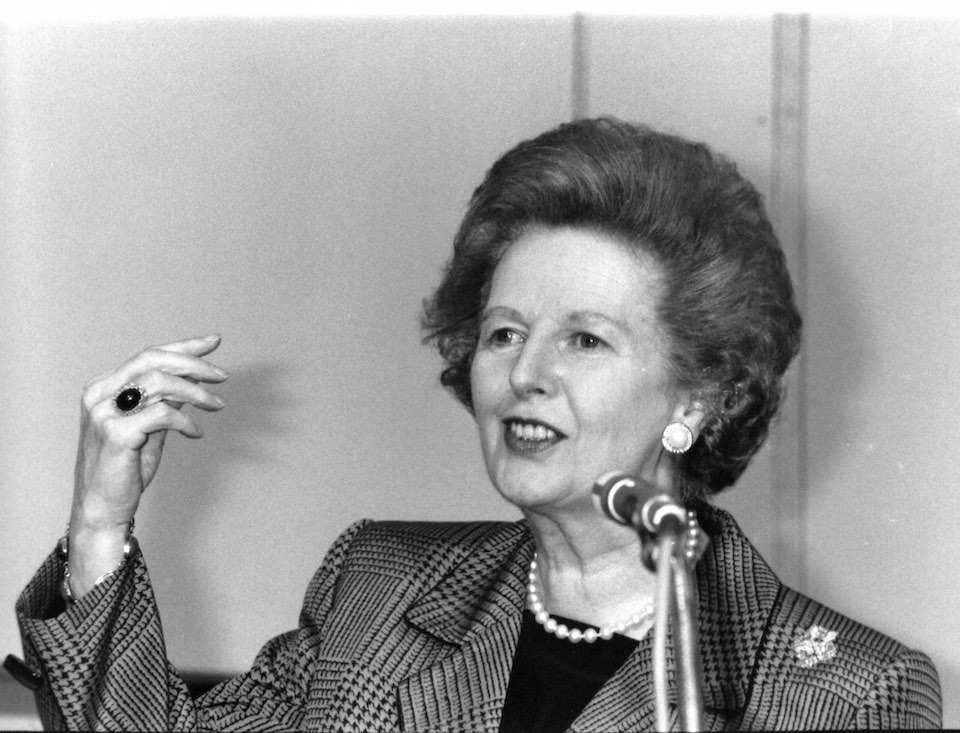
The Conservative government under Prime Minister Margaret Thatcher were responsible for enacting Section 28. (C) BIGSTOCK
There were also notable differences between the two groups in how they socialised with their school communities. 60% of Section 28 teachers never took their partner to school social events. However, only 12% of post-2003 teachers never took their partner along.
A total of 48% of Section 28 teachers had suffered from anxiety and depression linked to their sexuality and role as a teacher, while the figure for post-2003 teachers was 24%.
Dr Catherine Lee of Anglia Ruskin University, author of the study, said, “There has been significant progress in England in protecting LGBT+ teachers in the workplace since the repeal of Section 28. However, it is clear that a lot of teachers remain scarred by their experiences during this period.
“While this legislation was not the only difficult aspect of being an LGBT+ individual in the 1980s and 1990s, it has helped leave a legacy of caution, self-censorship and complex identity management that harmfully lingers some 15 years after the repeal.
“School leaders must reflect on the inclusiveness of their own institutions, and decide whether equality policies are actually lived on a day-to-day basis. LGBT+ teachers and pupils should be able to participate fully and without fear in their school communities.”
Parents from the school who are apparently 98 per cent Muslim have questioned the age appropriateness of the lessons and argue that they had not been consulted with over the lessons, which have been labelled as “toxic”.
Parents of children at the Parkfield Primary School in Birmingham have said that they will protest outside the school grounds every Thursday until the equality lessons, called No Outsiders, dealing with social issues, including LGBT+ relationships are cancelled permanently. In reality, the lessons focus on race, religion, gender identity, age and disabilities.
The school is due to provide just five of its No Outsiders lessons for its students over the course of the year.
A poster, which is advertising’s the protest outside the school is being shared on Facebook.
Ofsted has said there was no evidence the curriculum overly focused on LGBT issues and that it is taught in an age-appropriate way.
Parents at the Parkfield Primary school in Birmingham had criticised the school’s No Outsiders lessons as age-inappropriate over some of its focus on LGBT+ relationships and gender expressions, but a report today from Ofsted has now said that the lessons are not taught in an age-inappropriate manner and do not overtly focus on LGBT+ issues.
Headteacher David Williams described the report as “great news”, according to the BBC.
The inspection by Ofsted was arranged after parents said that they were concerned over the leadership at the school.
In his report, Ofsted’s senior inspector Peter Humphries said, “A very small, but vocal, minority of parents are not clear about the school’s vision, policies and practice.
“This group of parents feel that staff do not sufficiently listen to their concerns.
“Their view is that PSHE education and equalities curriculum focuses disproportionately on LGBT issues and that this work is not taught in an age-appropriate manner.
Protesting parents outside Parkfield Primary school in Birmingham have said that they protest every Thursday until the pro-LGBT+ equality lessons provided by the school are cancelled permanently.
Parents of children at the Parkfield Primary School in Birmingham have said that they will protest outside the school grounds every Thursday until equality lessons, called No Outsiders, dealing with LGBT+ issues are cancelled permanently.
The school is due to provide just five of its No Outsider lessons for its students over the course of the year.
A crowd of parents and their children gathered outside the school this morning from around 8:20 AM with at least three speakers present, including one from an American Christian organisation, who congratulated the parents on their protest. The protests have taken places for around four weeks.
There was also a large media presence and police presence at the demonstration.
The protest was filmed and streamed on Facebook live.
Parents at the school have suggested that the lessons are “not age appropriate” and that they infringe of their children’s belief as well as their own religious beliefs and suggesting that the lessons were a “safeguarding issue”.
Parents from Parkfield Community school are planning a protest outside the school on Thursday over LGBT+ equality classes.
Parkfield Community Primary school in Birmingham is to become a protest ground for parents who are against the school’s plans to hold No Outsiders classes – a campaign where the ethos is to promote LGBT+ equality, inclusivity and to question transphobia and homophobia in primary schools.
In an interview on Facebook live on the ArunRock community page, one community leader said that there was to be a mass protest outside the school on Thursday and told viewers to attend whether they were parents of children at the school or not.
On Friday last week, around 600 children were removed by their parents from the school in protest of the No Outsiders lesson.
The school have said that there are no plans to hold these lesson this term – as it focuses on religious studies for the rest of the term.
A statement from the group reads,
“The majority of parents at Parkfield are extremely unhappy with the fact that no consultation has taken place on the age appropriateness of the material used to teach their children.
“As a result of this most parents have signed a letter to the governors calling for the immediate abolition of the “No Outsiders” programme.
“As parents we have a right over our children & want to make sure we are consulted what is being taught.”