Tag: Sexual Health

The latest news from the world of sexual health. Everything you needed to know about gay sexual health. If you’ve got a question don’t forget to ask our experts.

  • 7 Of The World’s Most Weird And Wonderful Condoms

    7 Of The World’s Most Weird And Wonderful Condoms

    Passport, check. Tickets, check. Travel insurance, check. Condoms? If you’re travelling you may not want to jinx your chances of overseas escapades by packing condoms, and while I would sternly disapprove of that, there is something to be said of sampling some of the local delights.

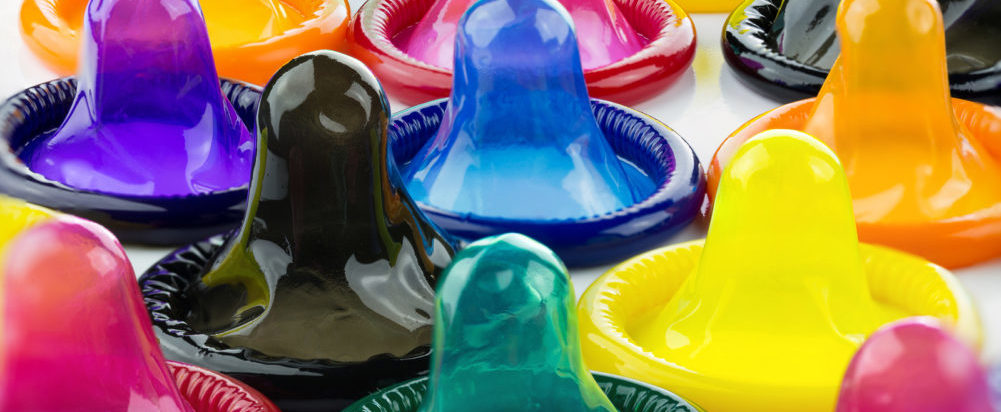
    If you’re not bashful about buying condoms in countries where you can’t speak the language, you may be in for a real treat when it comes to wrapping your Johnny in something a little more… continental. Here are some of the weird wonderful condoms that you can only get in other countries.

    1. TheyFit – custom fit condoms from Europe

    weird condoms
    TheyFit Custom-Fit Condoms

    All men are created equal. In character perhaps, but not in girth. Many men complain about condoms that don’t fit properly, either cutting off their circulation or slipping off mid-thrust. But just like in the story of Goldicocks, these condoms are juuuuust right.

    TheyFit currently make 66 different condom sizes – 10 different lengths, and 10 different nominal widths – in order to create the perfect fit, which feels better during sex. There’s even a downloadable Fit Kit on their website so that you can size yourself at home.

    2. The world’s thinnest condoms from Japan

    weird condoms

    Image source: Photo by condom-sizes.org

    Sagami Original create the world’s thinnest condoms

    To say these condoms are razor thin is actually doing them a disservice, as they’re far thinner than that. Sagami Originals boast a thickness of just .01mm. Putting that in some context, the average human hair is about .06mm thick. This featherweight rubber had supposedly been tested over 200,000 times in the before hitting the market, so while it may be so thin that you can’t even see it very well, you can be sure that they will be doing their job.

    3. The spray on condom from Germany

    Those kooky Germans would of course be the ones to create a spray on condom. Don’t get too excited though, because this product didn’t actually make it to market. Originally introduced in 2008, the spray-on condom was a hard plastic tube (giggedy) that would spray liquid latex onto the penis when it was inserted into it… the tube that is. A more perfectly snug fit couldn’t be possible, sounds good right? However, with no room left for the reservoir tip, and 3 excruciatingly awkward minutes for the latex to dry, the spray-on condom was never meant to be.

    4. Biodegradable condoms from France

    For the environmentally conscious lovers out there, The Original Condom originated in, where else, Condom, in France. In addition to being biodegradable, the manufacturing company shares a portion of its profits with HIV awareness prevention research and NGOs. These luxury condoms will make you feel like you’re giving back to the community every time you bone

    5. The condom with a 4-second applicator from South Africa

    Despite how porn makes it seem that condoms just magically appear on the end of a dick, it can often still be an awkward moment if you’re not 100% sure what you’re doing. So instead of getting kids to practice with bananas, South African innovators developed the 4Secs Condom Applicator. The applicator comes with a condom each and even has raised bumps to ensure you put it on easily in the dark. GENIUS!

    6. Condoms where the wrapper is the applicator, also from South Africa

    Determined to make condoms even easier to use, those little geniuses in South Africa created the Pronto Condom, which is unique in that the patented applicator is actually attached to the wrapper. You just crack the wrapper in half and begin to apply it to your penis, rolling it down as per usual.

    The Pronto Condom was developed to prevent that common Condom Wrapper Limp Dick syndrome that affects a lot of men right before sex. To maintain the passion and sufficient turgidity, the Pronto Condom takes about 3 seconds to put on.

    Just don’t get it confused with the flavour packet from your Super Noodles. That could cause problems.

    7. The musical condom from the Ukraine

    OK, this one may or may not exist, but just imagine if it did. In 2006, Hryhory Chausovsky was said to have invented a new type of condom that plays music during sex. There was a rumour posted on Oh Gizmo saying that “a miniature loudspeaker and motion sensor implanted in the condom’s upper cuff provides a range of musical tones during sex. Music volume depends on intensity of love-making and tone varies based on the sexual position.”

    This could all be rumours or the pipe-dreams of a mad man, but just think about humping to your own sexual theme music. What a world we live in.
  • Five things you should know when using PrEP

    As more and more countries work to make PrEP (Pre-Exposure Prophylactic) available for an affordable price, we thought it would be a good time to look at the pros and cons of people taking PrEP. But first, let’s cover the basics for those who don’t already know what PrEP is.

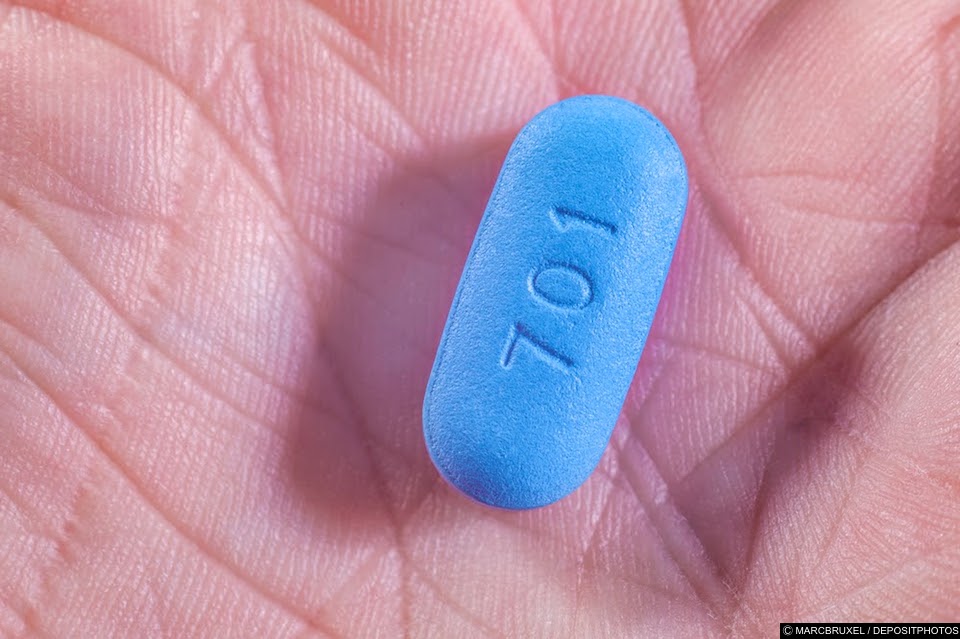
    PrEP is a drug that people who are HIV- can take in order to prevent HIV infection. It is important to note that PrEP is not a vaccine against HIV, meaning that if you stop taking the pills they stop protecting your body. It is also not a cure for HIV. People who already have HIV use similar medication in order to keep the virus in check, or at an ‘undetectable’ level.

    There is a lot of recent research into the effectiveness of PrEP, mostly because each country’s government that has looked into the drug has run its own tests. In some cases, this has been the cheapest way for people to obtain PrEP, as study participants obtain the drug and associated tests free of charge. Below we’ll look at five things you should know about when using PrEP.

    You should get tested for HIV and other medical conditions before starting PrEP.

    It is also important to note that the required testing that should take place before and during the administration of PrEP are important. Firstly one should be tested for HIV to make sure that you are HIV negative. Taking PrEP while HIV+ may cause mutations of the virus that become resistant to PrEP. Markus Feser who works with Hamburg-based HIV community action group Hein & Fiete remarks that it is also important to have a general check-up before beginning prep, as it is possible that taking PrEP for extended lengths of time can lower your bone density. Other side effects may also include headache, abdominal pain, decreased weight, nausea, and diarrhea. Less common side effects include lactic acidosis, liver dysfunction, and worsening of Hepatitis B infection. Recent studies have shown that there is no issue taking PrEP in conjunction with Hep B medication, however.

    PrEP might not be your best solution.

    You might hear things like ‘everyone should be on PrEP’ but this might not actually be the case. Most community action groups, and the doctors at 56 Dean Street, advocate a more measured approach to the uptake of PrEP. While PrEP is the latest defence against the rising number of HIV infections, it is not the only defence. There are of course people who prefer to use condoms as their prophylactic of choice, and decide not to use PrEP. For others who are not yet sexually active, or are only sexually active with one committed partner, there is no need to take PrEP. Likewise, if you are only having sex with someone who already has HIV but is undetectable, there may also be no need for you to take PrEP. If you fall into the category of people who have sex with multiple partners, has sex in high-risk situations (chem-sex, bareback, darkrooms etc.) then you may want to take PrEP regularly.

    You don’t have to take it every day.

    Purchasing PrEP is often an expensive prospect – which is why participating in a study is the way that many people can afford to be on the drug. But recent studies presented at the European AIDS Clinical Society 2017 Conference in Milan that show that taking PrEP on an as-needed basis, two to twenty-four hours before sexual activity and daily until two days after the last contact, known as the ‘event-based method’, or taking the pill 4 days a week: on Tuesday, Thursday, Saturday and Sunday; known as T’s and S’s are also effective ways to protect yourself against HIV infection. This new information, along with grey-market ways to obtain the drug, have made taking PrEP a more affordable prospect. In the UK up to a 3-month supply can be ordered online without a prescription from various websites, for those in Continental Europe, many of these same websites deliver directly to a few countries. If your country isn’t in the delivery lists, some will deliver to a middle-man delivery company who will then deliver onward to you. These orders will often incur import/VAT duties when arriving in the UK, and middle-man companies will charge a fee to forward the delivery. From my own experience, this makes the pills about 50€ per month, if taken every day. Obviously, this cost can be brought down if using intermittent methods.

    There are good reasons to take it.

    If you’re like me, you think that sex without condoms feels better. I usually don’t enjoy sex with a condom – if I’m the top – and quickly lose my erection while putting a condom on (though I have other pills to help with that now too). I often have sex in club darkrooms, when I’m heavily under the influence of various things, and not asking about my partner’s sexual history, and I often don’t carry condoms at all, though I use them if I’m asked to by my partner and he has them. In these situations though, knowing that I am on PrEP means that I don’t have to be concerned about what I have done, or what I might have done that I have forgotten about during the party. The official line from most doctors and activists is that PrEP should be used in conjunction with condoms, as a safety-net in case the condom breaks or something else goes wrong. In these cases, PrEP provides a way of knowing for sure that you’ll be safe from HIV infection when having high-risk sex.

    It doesn’t protect against other STIs.

    An important thing to remember about PrEP is that it is only a preventative against HIV. It doesn’t offer any protection against other transmittable STIs. For this reason, many people choose to use condoms to prevent against other STIs when having sex. Whether you take PrEP as a preventative against HIV or not, if you are having sex in high-risk situations, you should make sure that you are being tested regularly. Since the introduction of PrEP around the world, many areas have reported that HIV infections have fallen, including London, New York, and New South Wales. While HIV tests have remained steady, new HIV infections have dropped in places where PrEP is readily available. This is not only attributable to PrEP, as better HIV medications mean that those living with HIV are undetectable and so cannot pass on the virus to sexual partners. Here’s a side benefit: because PrEP users are encouraged to get STI tests regularly – every three months – rates of other STIs, particularly gonorrhoea, are also falling as people are having them treated more quickly. This may also be due to better health information people who aren’t on PrEP are also getting tested more frequently.

    When you’re deciding whether PrEP is right for you, there are plenty of places to find more information. London clinic 56 Dean Street have a helpful series of YouTube videos which outline some of the points made above.

    If you want to get PrEP, and you’re in London, you can visit 56 Dean Street clinic, 10 Hammersmith Broadway, or Homerton clinics. The NHS Impact trial has participating clinics all over the UK. Click the link to search for a clinic near you where you can take part. Participating in the trial is free for those who are selected to take part. 10,000 participants are required for the trial, with clinics already open, and others opening intake soon.

    For those unable to participate in the trial, or who are able to pay for PrEP themselves, check I Want Prep Now.co.uk to find out where to purchase it online. If you’re in the Republic of Ireland, a website has been set up to help you obtain PrEP online.

    If you’re in mainland Europe, Dynamix can also provide tested and proven PrEP, delivered to the UK and Europe. If you live in a country where you cannot get PrEP delivered directly, such as Germany, Dynamix will deliver to a middle-man delivery company such as Borderlinx who will pass the delivery on to you for a fee. This is the process I use, and Dynamix and Borderlinx have not contributed to THEGAYUK.com for this referral.

    Readers in Barcelona can now contact the first European community PrEP centre to get advice and support while considering or taking PrEP.

    As with any medical treatment, you should always consult with your doctor, and make sure you make the right choices for yourself.

  • How does your sexual health compare to other gay guys?

    Welcome to our sexual health comparison survey.

    In January our focus will be on the nation’s sexual health – particularly for gay and bisexual men. We’re doing a little research up front to see what our audience thinks and feels about their sexual health – you can view all the answers now – as you proceed – and compare how you fit in with the rest of the gay UK!

    Please answer all the questions that you’re comfortable doing…

    [poll id=”2″]

    [poll id=”3″]

    [poll id=”4″]

    [poll id=”5″]

    [poll id=”19″]

    [poll id=”20″]

    [poll id=”6″]

    [poll id=”7″]

    [poll id=”8″]

    [poll id=”9″]

    [poll id=”10″]

    [poll id=”11″]

    [poll id=”12″]

    [poll id=”13″]

    [poll id=”14″]

    [poll id=”15″]

    [poll id=”16″]

    [poll id=”17″]

    [poll id=”18″]

    [poll id=”21″]

    [poll id=”22″]

    [poll id=”23″]

    [poll id=”24″]

    [poll id=”25″]

    [poll id=”26″]

    [poll id=”27″]

    [poll id=”28″]

    [poll id=”29″]

  • DILEMMA | Should I tell future boyfriends that I’ve got herpes?

    DILEMMA | Should I tell future boyfriends that I’ve got herpes?

    This week a reader who has symptomless herpes asks whether he should tell new sexual partners that he has been diagnosed with herpes.

    “I was tested positive for herpes. I have not have any symptoms besides two blisters as a first outbreak and one more blister 5 months after that. The doctor said as long as I don’t have an outbreak I won’t pass it on to someone.

    “My confusion and embarrassment comes from: If I don’t have an outbreak (so I can’t pass it on theoretically), is it wrong not to let future sexual partners know? If not informing them would be wrong, why would this be the case?”

    Toby, 21, Swansea

    We asked three of our writing community their thoughts on whether you should share everything with a partner.

    Tom Diver, Author of  The Knee Jerk column

    Did you know you were interacting with someone who had herpes when you contracted it? As a matter of conscience would it be fair for you to pass it on and someone else also have to deal with this dilemma too?

    If the relationships engaged in are more than casual, the dynamic of this situation changes as the sexual component and minimum risk you pose is offset by everything else you have to offer.

    In any relationship honesty is a cornerstone. Therefore I would say you should tell someone who could be at risk, so they could make an informed decision.

    An aspect of it is about the respect you have for someone else and your own self-respect. It’s a conscience/morality question.

    When I was a young man I couldn’t think straight if I had sex on my mind. This may sound flippant but I promise you it’s not. If the problem is sexually driven; have a wank and then ask yourself again!


    Andrew Goyvaerts UEqualsU Advocate

    Disclosure is a common concern for people diagnosed with a communicable infection, he shouldn’t feel alone or too lost in that because a lot of these people are also looking for a way forward with some already having done so and willing to share their experiences.

    Joining a group, even if it is an online forum, that helps people diagnosed with herpes will let him see how people who have been diagnosed long-term handle this and other situations.


    Jake Hook Editor and Chief of THEGAYUK.com

    Never underestimate the power of the condom.

    Even if you don’t have visible signs, you might still be contagious.

    If you’re worried then make sure you’ve always got a fresh supply of condoms and don’t engage in unprotected sex – oral or anal.

    As for a long-term partner, then it’s up to you when to fess up, but you will have to at some point. That might be the first time you have an outbreak, but if that doesn’t come until years into your relationship, it could cause quite a bit of concern to your partner that you didn’t speak up about it earlier in your relationship and might cause serious concerns for them about trusting you.

    However, there’s a strong likelihood that he’ll probably have a form of the herpes virus too. A recent study, by WHO, found that globally over 66 per cent of people under 50 have it. There are two types of herpes simplex virus HSV – type 1 (oral – think cold sores) and type 2 genital herpes, both are contagious.

    Having an open a frank conversation about sexual health between you and your partner is a good thing to do, communication, as they say, is the key.

    The NHS suggests that you continue to use condoms, even after the symptoms have gone.

    Got an issue you’d like us to explore click here to visit the DILEMMAS page

  • Sex diseases in US surge to record high

    Sexually transmitted diseases surged to a record high in the United States last year, with more than two million cases of chlamydia, gonorrhea and syphilis nationwide, officials said Tuesday. This was “the highest number ever,” said the annual Sexually Transmitted Disease Surveillance Report released today by the US Centers for Disease Control and Prevention (CDC). Most… (more…)

  • ADVICE | My penis has started to curve is this normal?

    Has your penis started to bend or curve at a strange angle? Is intercourse getting painful?

    ADVICE | My penis has started to curve is this normal?

    A small percentage of men find that their penises will start to bend or curve,  Jackie Hall, Health at Hand operations manager at AXA PPP healthcare gives us some insight into the condition known as Peyronie’s disease.

    About 5 percent of men over the age of 50 will develop a condition of the penis called Peyronie’s disease. This is a benign but potentially emotionally upsetting condition in which scar tissue develops on the shaft of the penis sometimes resulting in a penile bend noticeable with erections.

    This can lead to sexual dysfunction with in some cases the affected man avoiding a sexual relationship altogether.

    A proportion of affected men will find erections and intercourse too painful although others will simply notice a lump on the shaft of the penis or a minor painless penile bend which does not cause too much trouble.

    Unfortunately there are no really effective cures for this condition, however, we recommend visiting a GP for a more detailed assessment.

  • SEXUAL HEALTH | Can I use urine to stop the spread of Chlamydia?

    This week a reader asks whether urine can stop an STI infection.

    Dear Team

    I was having a chat with a friend who told me that you could stop an STI like Chlamydia, by using your own urine. He suggested that after having sex, you try to pee but block the end of your penis with your foreskin or just block the hole and it will stop Chlamydia. 

    Is this true?

    Tom, Deeside

    Dear Tom,

    This is not true and please don’t try it. It’s a bit like the myth that says if you pee immediately after sex you’ll not catch or be infected with an STI – such as Chlamydia. It has not been medically proven to work.

    Not only will this not stop an infection, but you could cause real troubles for your penis (and cause irreparable damage) if you block the entrance to the urethra – the tube where the pee comes out of.  Think about what happens to a balloon if you overfill it… now think about the tube in your penis… Yep.

    The only thing that is going to stop the spread of any infection is a good safer sex plan!  As Pam Ann told us, “if it’s not on… it’s not on… Condoms and regular testing at your nearest sexual health clinic. Some clinics offer at home testing kits so make sure you get yourself booked in.

    Have you got a question you’d like to ask our experts?

  • 10 things you can do to make you last longer in bed

    Guys, if you find yourself unable to last long in bed – we’ve got ten tips that might help.

    You’re halfway through your performance with a totally hot guy you just met, when without warning your little Mister calls time. Yes, you’ve spaffed your load without warning. The little swimmers are taking a curtain call as you mutter “I’m so sorry, i.. i…” (I mean, what do you say as he’s riving in agony with man juice in his eye….. ‘It Burrrrrnnnns’)

    Here are our top tips to making sure you last longer in the sack.

    1) Homework.

    The best part of this lesson is that you get to do homework and as much of it as you like. A wank is a key element to why many men prematurely blow their loads. Why? Well if you train yourself to cum quite quickly when you’re alone, the chances are that you will do exactly the same when you’re with a partner. So next time your palm is dating your dick, work your way up to 15 minutes, 20 minutes and for those who have cocks of rock try 30 minutes. Try bringing yourself to the point of no return and then stop before you explode. Giving yourself a moment to relax and start again.

    Give yourself a moment to relax and start again.

    2) Round 2.

    Usually, the second time in a day may take longer to achieve climax. There are two ways. You choke the chicken before you go out for a shag, but if you’re hours in-between meeting your butt buddy, then you can always get down to it twice with the same bloke in one night – a 5-minute breather and climb onboard again! Plus you’ll look like a stud who can go multiple times in an evening. Win win.

    3) Less Stimulation.

    If you’re finding it all too much, just pause for a moment. Find a position where you are less stimulated. Why not call “All Change” and swap positions or roles even. Not only does this give you a moment, but also adds an element of workout to your session.

    It also acts as a communication device! Letting each other know you’re having a great time! The receiver on top will often help with a less stimulating f**k for your penis as he’ll have more control over the thrusts and strokes, allowing you to sit back and enjoy the view.

    NEXT >>

  • Gay men just aren’t using condoms… new research finds

    New research by GMFA has shown that the majority of gay men asked didn’t use condoms the last time they had sex.

    Gay men just aren't using condoms... new research finds

    A new report from GMFA has revealed that gay and bisexual men aren’t using condoms when they have sex. Sixty-five percent of those surveyed said that they didn’t use a condom the last time they had anal sex. Eight percent who had bareback sex were on PrEP.

    “The results of the survey has shown that sex is complicated and there is no one size fits all safer sex strategy,” says Ian Howley, Chief Executive of GMFA. “First we need to define what is risky sex in this day and age.”

    “Safer sex in 2017 is more complicated than it was twenty years ago when your only options were condoms or abstinence as a way to protect yourself from HIV and STIs. The advancement of treatment, the fact that gay men who are on HIV treatment and have an undetectable viral load so can’t pass on HIV, added to the increased number of gay men who are taking PrEP, means that gone are the days when sexual health education was just about telling people to use condoms. We now must do more to increase gay men’s knowledge about all the options open to them.”

    “Of course condoms still play an important role in preventing other STIs and should still be a major part of a safer sex strategy, however, it’s not a one size fits all approach anymore. We need to meet gay men where they are in their lives. We need to keep on pushing the message that there is more than one safer sex strategy. We need to increase people’s knowledge about PEP, PrEP and what HIV-undetectable actually means in the real world.”

    Just what is “risky sex” in 2017?

    PrEP and successful HIV treatment has changed the landscape of what it means to have ‘risky’ sex, particularly when it comes to HIV. FS surveyed 523 gay and bi men and asked them about the last time they had sex, what type of sex it was, when they were last tested and what risky sex means to them.

    They discovered,

    • 65% of respondents said that they didn’t use condoms the last time they had anal sex.
    • 32% of those respondents said it was bareback but they knew the other guy was HIV-negative
    • 14% of them said it was bareback but one or both were HIV-undetectable
    • 11% said it was bareback but didn’t think about or worry about the risk.
    • 8% said it was bareback but one or both were on PrEP.
    • 27% of total respondents consider themselves to have a risky sex life

    Ian Howley goes on to say,

    “We at GMFA recommend the following. If you are someone who is comfortable using condoms then keep on doing that. It’s the best strategy that helps prevent HIV and STIs. If you are someone who is HIV-negative and has condomless sex then we would recommend that you get yourself on PrEP. It won’t stop STIs but it’s been proven to stop people becoming HIV-positive. Also check out PEP. It can help if you’ve put yourself at risk.

    “If you are living with HIV and undetectable then keep on taking your medication. HIV-positive men who are undetectable cannot pass on the virus to anyone. If you are living with HIV and are not undetectable yet then we suggest you still use condoms with HIV-negative men, unless they are on PrEP. And all sexually active men, whether HIV-negative or HIV-positive should have regular check-ups at a GUM clinic. We recommend once every six months or more often if you are having condomless sex. Gay men need to learn about the option open to them. It’s the only way we can finally stop HIV transmissions.”

  • Do you know what a white glove bottom is?

    What is a white glove bottom and how do you know if you are one?

    What Is A White Glove Bottom?

    A white glove bottom is a guy who won’t bottom (be penetrated by another guy) unless he’s completely sure he’s completely clean if you get our drift. So basically he’s the type who will most probably douche or use an enema before penetration to ensure there’s no mess… ever.

    Not every man who bottoms is a “white glove bottom” – if you know your body and have a good diet it isn’t always necessary to be excessive with your cleaning.

    ALSO READ: 9 foods you shouldn’t eat if you’re planning to bottom tonight

    But if you’re worried about mess, use a condom. These things happen and it’s not the end of the world.


    OTHER QUESTIONS: HIV | WILLY WONDERS | HOLES | DOING IT | STIs | LUMPS & BUMPS | BACK TO SEX CLINIC HOME PAGE


    Got a problem you’d like advice on?

  • ADVICE | I had bareback sex, can I get PEP on the NHS?

    After having bareback sex, this reader asks what are the options available to getting PEP on the NHS.

    can I get PEP on the NHS?

    Dear TGUK,
    I recently hooked up with a guy I know to be promiscuous, we got drunk and he ended up f**king me bareback and I had some blood down there the next day. I’m desperate to get PrEP, as even though he says he’s HIV negative, how can I be sure? I don’t normally take risks, but this time I slipped up.
    Please help!
    Sam (name changed)


    Hi Sam,

    If you’re worried about your status you should visit a sexual health clinic right away or an A&E department, who also can prescribe the Post-exposure prophylaxis drugs (PEP). It is a course of drugs which lasts up to 28 days. It is effective at stopping the HIV virus up 72 hours after exposure.

    You will need to explain to the doctors why you think you need the treatment and they will assess the likelihood of your exposure to the virus.

    Bareback sex carries a high risk to HIV exposure, but also to a variety of other infections, which can all be very nasty and may not show symptoms. You say that the guy said that he was HIV negative, but when was the last time he was tested and was he telling the truth? You can never be sure, which is why it’s important for you to take responsibility for your own health. If he’s had unprotected sex with you and you say he’s known for being promiscuous the likelihood of him having unprotected sex with others is very high.

    Make sure you ask your doctor or sexual health professional about the side-effects of PEP.

    As for the blood you mentioned, the anus is filled with veins and delicate capillaries, which can get damaged during sex. You may want to check that you don’t have piles and if you do there are many over the counter remedies for these. If you’re worried or concerned see your GP.

    Remember unless you 100% trust someone wrap it up.

    Visiting a sex health clinic is an important part of life, taking responsibility for your health and for others you’re having sex with. Making regular visits every six months to once a year is suggested if you’re sexually active.

    Did you know you can order an at-home HIV test online? Click here to buy one

    ALSO READ: Why does my foreskin smell?

    ALSO READ: Do I wank too much?


    The advice given in this article is for guidance only and you should always seek your own independent, professional medical advice from your own GP if you are concerned about your health.  


    OTHER QUESTIONS: HIV | WILLY WONDERS | HOLES | DOING IT | STIs | LUMPS & BUMPS | BACK TO SEX CLINIC HOME PAGE


    Got a problem you’d like advice on?