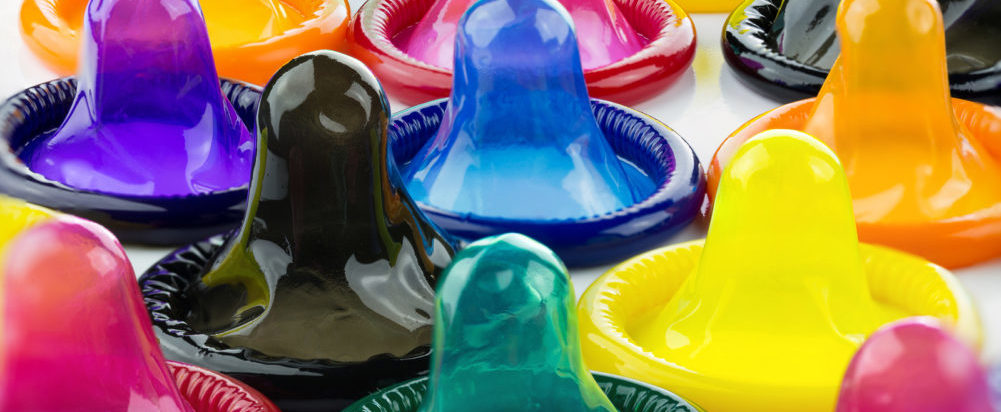
This week our specialists Jake Jenkins and Jenna Thomas from 56 Dean Street talk about condoms.
Bigstock
Dear TGUK & 56DS Everyone says that If you want a safer sex, you have to use condom. But can it prevent all diseases? Best Jimmie
Dear Jimmie
Having safer sex means having sex that has less risk of catching or passing on an STI.
Using a condom is the best way to do this, however, it doesn’t completely prevent you from catching an STI. Lots of things can affect how likely you are to catch an STI such as a condom slipping or breaking during sex and contact during foreplay such as rubbing, masturbating each other, and oral sex.
A few things that can help are ensuring a condom is used from start to finish during penetration, using latex condom-friendly lubricant (such as water or silicone-based), and regular screening for STIs.
Do not use Vaseline or oil-based lubricants. Don’t forget one of the best ways to protect yourself is to know your status. Book a sexual health check regularly to make sure you’re always in the know.
Even if you do everything right accidents can happen so it’s good to know about PEP, this is a course of medication you may be able to take if you have been at high risk of HIV. Or indeed check out your options surrounding PrEP.
A reader confided with us that he’s slept with hundreds of men – and wonders whether if that’s normal or whether he is a sex addict. Experts from 56 Dean Street take the question
Dear 56DS and TGUK
I’m in my mid 20s and I’m a bit of sex lover. I’ve probably been with over 700 guys in the last 2 years, which makes my friends laugh, but I think I’m a bit addicted to it.
Some of the sex has been whilst drunk or on drugs (never needles) and I can’t be certain that it’s always been protected sex.
I am around 80% the top in these shags. So I’ve been told that the likelihood is that I’m fine, but just wondering.
I’ve had a few STDs and had those cleared up but I’m feeling a little bit worried as I always do this time of year with WorldAIDS Day coming up…
I have been to the clinic, but not this year.
Hi there; Thanks for your question.
Being top may be less risky than being the bottom, but there is still a risk, and guys who only top still get HIV. This is because of HIV can also be found in mucosal secretions inside someone’s bum. Using condoms will protect you against HIV and most STIs regardless of how many partners you have. However, it’s possible that condoms break, or you can get STIs including HIV through oral sex, although getting HIV through oral sex is rare.
Some people say that taking drugs including alcohol makes them more relaxed and more likely to take risks. Sometimes when people get caught in the moment they may feel invincible and forget to do the things they normally would to protect their health. It’s really important that you keep control by using condoms and getting yourself checked regularly for sexually transmitted infections. This should be for all STIs not just HIV.
Taking PrEP can help stop new transmission of HIV, particularly useless if the user is having condomless sex. When use as prescribed it can be an effective barrier to the transmission of HIV. However it does not stop other STIs.
It might also be worth considering going onto PrEP. If you’ve not heard about PrEP, essentially it’s a anti-HIV drug, which when taken as prescribed can effectively prevent HIV spreading from partner to partner. PrEP stands for (Pre-Exposure Prophylactic. Campaigners believe PrEP can ultimately end new HIV transmissions. To find out more about it and see if you’re able to access PrEP make an appointment with your location sexual health clinic.
If you do have HIV finding out can save your life (if you have had it for many years) or add years to your life. HIV is now a manageable health condition and life expectancy may be almost the same if diagnosed early and you start treatment at the right time. It’s better to know as you can take control of your own health and protect your partners.
It sounds like you may want to visit our CODE clinic, a walk-in service. The team are super friendly, non-judgemental and there to help you. They can advise you on drug taking, help you to reduce or stop and explain more about risks of STIs. Also, they know a lot about the harder sex scene, if that happens to be your thing.
In terms of the number of partners, it’s really important that you are having a healthy, enjoyable sex life which is not harmful to your mental or physical health.
If you’re worried that you may have sex addiction then help is available. There is an online screening tool at www.sexhelp.com which is free. It will give you a score and explain what that means. There are also lots of resources on the www.sexaddictionhelp.co.uk and www.recoverynation.com websites. We provide support at 56 Dean Street and if you visited the clinic with an appointment with a health advisor we could refer you to this service.
Hope that helps;
Jenna and Jake.
This article was first published in 2012 and now includes extra information about PrEP.
A f*ck buddy of mine has just told me he has genital herpesbut says he’s never had it whilst we’ve had sex.
Can I still get herpes if he’s not got an outbreak?
Tim.
Dear Tim,
Genital Herpes is an infection caused by the herpes simplex virus (HSV), which can cause painful blisters in your genital area. It can be passed from person to person during sexual contact and is a long-term condition. The virus remains in your body and can become active at any time. HSV can affect any mucous membrane, any moist lining, such as your mouth – and can cause cold sores.
So, unless he has an active herpes infection, that is visible lesions then it is unlikely that you will be at risk of contracting herpes.
However, if he is infected he should be undergoing treatment. This lowers the risk of catching herpes even further but as the virus is transmitted by skin to skin contact I would recommend that you go and get checked at your local sexual health clinic.
Using condoms or a dental dam (if you’re rimming) are great ways to further lower the risk of herpes, or other STIs passing from one person to another.
The advice listed above is not intended to replace or take the place of that of your own doctor, GP or medical professional who knows your full medical history. If in any doubt make an appointment with your doctor as soon as possible.
So, you’ve reached second base! Lucky you. You’ve reached that much anticipated first kiss with that hottie from across the bar. You are thinking this is a good, SAFE start to intimacy and it’s certainly not as bad as having oral sex or sexual intercourse with essentially a stranger, right? I hate to break it to you but, while it is very rare, it is possible to contract an STI simply from kissing.
(C) BIGSTOCK
Fortunately, Dr Preethi Daniel from London Doctors Clinic is here to break down everything you need to know about oral STIs.
Oral STIs are most commonly shared through oral sex, and unprotected stimulation of the genitals or anus using the tongue or lips. This is because coming into contact with bodily fluids carries a significant risk of spreading STIs. However, a recent study, published in the British Journal of Medicine Sexually Transmitted Diseases, has found that kissing and specifically ‘deep kissing’ could also be to blame for the spread of STIs. The most common STIs which could be spread in this way include herpes, gonorrhoea, hepatitis B, syphilis, chlamydia, other hepatitis, warts and even HIV can be transmitted by kissing.
While it is not very common to contract an STI from a kiss, your likelihood increases if you have cuts or sores in and around your mouth. Symptoms can vary from person to person and what the condition is. If you experience itching, rashes or sores in/around your mouth, this will require medical attention, similarly, a vague sore throat after contact with multiple partners could also be indicative of an STI. Here are the most common oral STIs and their symptoms:
Many people will not experience any symptoms of oral chlamydia, however for those that do they may experience painless sores, lesions that are similar to cold sores, tonsillitis or redness with white spots. A less conspicuous symptom is a scratchy, dry throat.
Gonorrhoea:
http://gty.im/121841540
Much like with Chlamydia, many people who have oral gonorrhoea do not exhibit any symptoms, however if they are present you may experience a sore throat, a fever, redness or swollen lymph nodes in the neck
The symptoms of syphilis occur in stages which become progressively worse as they progress. The initial symptoms include painless sores or raised lesions which may appear grey or white.
The most common symptoms of oral herpes are cold sores which may occur on the lips, gums, tongue, inside of the cheeks, throat and roof of the mouth. These may also extend to the chin or neck. Some people may also experience swollen and bleeding gums or swollen lymph nodes.
HIV does not usually have symptoms in the early stages. Rarely, those with HIV in the mouth may experience a dry mouth, tooth decay, gum disease, cold sores or oral warts.
How can you get diagnosed?
If you experience any of the above symptoms you should visit your GP. Many clinics offer same day throat swabs which can check for the signs of gonorrhoea and chlamydia. Any sores or lesions will need closer inspection and discussion with your GP, risk factors and symptoms must be assessed before testing is conducted. As with anything the sooner you are tested the easier it is to treat, so visit your GP as soon as you notice any unusual or uncomfortable symptoms.
What are the treatment options?
Treatment options depend on what STI has been contracted. Some infections, such as chlamydia, gonorrhoea and syphilis can be treated effectively with antibiotics. Viruses, such as herpes cannot be cured but the symptoms can be easily managed with medication. If you have developed warts, they will need to be treated with cryotherapy to completely eradicate the warts. Hepatitis and HIV have no cures and will require specialist management which your doctor will need to advise upon.
Dr Preethi Daniel is the Clinical Director at the, private GP, London Doctors Clinic
Can condoms protect you from every sexually transmitted disease? A reader asks the experts at one of the UK’s busiest sexual health clinics, 56 Dean Street.
Dear TGUK
Everyone says that If you want safer sex, you have to use a condom. But can it prevent all diseases?
Best Jimmie
Having safer sex means having sex which has less risk of catching or passing on an STI.
Using a condom is the best way to do this, however, it doesn’t completely prevent you from catching an STI. Lots of things can affect how likely you are to catch an STI such as a condom slipping or breaking during sex and contact during foreplay such as rubbing, masturbating each other and oral sex. A few things that can help are ensuring a condom is used from start to finish during penetration, using latex condom friendly lubricant (such as water or silicone based) and regular screening for STIs.
Do not use Vaseline or oil-based lubricants. You can walk in for an HIV test and Hepatitis B vaccines any time at 56 Dean Street and can make an appointment for a full screen. However, if you are under the age of 20 you can walk into the clinic at any time for a full screen. There is also a dedicated service for young people which runs Monday, Wednesday and Friday evening, details of this can be found on the website.
Even if you do everything right accidents can happen so it’s good to know about PEP, this is a course of medication you may be able to take if you have been at high risk of HIV. You can also walk into the clinic to discuss PEP with a member of staff.
Have you got a dilemma you’d like our team of specialist to help you with? Click here.
I’m in my mid 20s and I’m a bit of sex lover. I’ve probably been with over 700 guys in the last 2 years, which makes my friends laugh, but I think I’m a bit addicted to it.
Some of the sex has been whilst drunk or on drugs (never needles) and I can’t be certain that it’s always been protected sex.
I am around 80% the top in these shags. So I’ve been told that the likelihood is that I’m fine, but just wondering.
I’ve had a few STDs and had those cleared up but I’m feeling a little bit worried as I always do this time of year with WorldAIDS Day coming up…
I have been to the clinic, but not this year.
Hi there;
Thanks for your question.
Being top may be less risky than being the bottom, but there is still a risk, and guys who only top still get HIV. This is because of HIV can also be found in mucosal secretions inside someone’s bum. Using condoms will protect you against HIV and most STIs regardless of how many partners you have. However, it’s possible that condoms break, or you can get STIs including HIV through oral sex, although getting HIV through oral sex is rare.
Some people say that taking drugs including alcohol makes them more relaxed and more likely to take risks. Sometimes when people get caught in the moment they may feel invincible and forget to do the things they normally would to protect their health. It’s really important that you keep control by using condoms and getting yourself checked regularly for sexually transmitted infections. This should be for all STIs not just HIV.
If you do have HIV finding out can save your life (if you have had it for many years) or add years to your life. HIV is now a manageable health condition and life expectancy may be almost the same if diagnosed early and you start treatment at the right time. It’s better to know as you can take control of your own health and protect your partners.
It sounds like you may want to visit our CODE clinic, a walk-in service between 5-7pm on Tuesdays for gay men who use drugs during sex. The team are super friendly, non-judgemental and there to help you. They can advise you on drug taking, help you to reduce or stop and explain more about risks of STIs. Also, they know a lot about the harder sex scene, if that happens to be your thing.
In terms of the number of partners, it’s really important that you are having a healthy, enjoyable sex life which is not harmful to your mental or physical health.
If you’re worried that you may have sex addiction then help is available. There is an online screening tool at www.sexhelp.com which is free. It will give you a score and explain what that means. There are also lots of resources on the www.sexaddictionhelp.co.uk and www.recoverynation.com websites. We provide support at 56 Dean Street and if you visited the clinic with an appointment with a health advisor we could refer you to this service.
Hope that helps;
Jenna and Jake.
The advice listed above is not intended to replace or take the place of that of your own doctor, GP or medical professional who knows your full medical history. If in any doubt make an appointment with your doctor as soon as possible.
This week a reader asks whether urine can stop an STI infection.
Dear Team
I was having a chat with a friend who told me that you could stop an STI like Chlamydia, by using your own urine. He suggested that after having sex, you try to pee but block the end of your penis with your foreskin or just block the hole and it will stop Chlamydia.
Is this true?
Tom, Deeside
Dear Tom,
This is not true and please don’t try it. It’s a bit like the myth that says if you pee immediately after sex you’ll not catch or be infected with an STI – such as Chlamydia. It has not been medically proven to work.
Not only will this not stop an infection, but you could cause real troubles for your penis (and cause irreparable damage) if you block the entrance to the urethra – the tube where the pee comes out of. Think about what happens to a balloon if you overfill it… now think about the tube in your penis… Yep.
The only thing that is going to stop the spread of any infection is a good safer sex plan! As Pam Ann told us, “if it’s not on… it’s not on… Condoms and regular testing at your nearest sexual health clinic. Some clinics offer at home testing kits so make sure you get yourself booked in.
Have you got a question you’d like to ask our experts?
After a nonconsensual sexual act, a reader is concerned that he might have an STI.
Doctor Nitin Shori, Medical Director of Pharmacy2U.co.uk, answers.
Dear Doctor,
A man recently put their mouth on my penis for a few seconds before I told them to get off. It was not exactly consensual. I have a boyfriend and I am very worried the guy could have passed on an STI to me. Are the chances of doing so very low seeing as it was only a second or two and it was receptive? Thanks
Thanks
First of all, it’s never OK for someone to engage in any sexual practice with you that you do not give your consent to. Forcing someone to engage in sexual activity without their consent is a crime – it’s sexual assault/rape.
If you have been a victim of a sexual attack and want to report it, call your local police or 999 if an emergency. You can also get support from organisations such as Victim Support or The Survivors Trust.
Sexually transmitted infections (STIs) can be passed on through oral sex. The STIs that are most commonly passed on through oral sex are gonorrhoea, genital herpes and syphilis. However, all STIs can be passed this way. Receiving oral sex is often safer than giving oral sex, as you are less likely to be exposed to genital fluids.
Many people do not get any signs or symptoms that they have been infected through oral sex, so if you are worried, it is always worth getting tested by your GP or local sexual health clinic. To protect yourself against infections during oral sex, use a condom or dental dam – a small square of very thin plastic or latex, which can be used to cover the genitals or anus.
Avoid oral sex if your partner has an STI, has blisters, cuts, rashes, sores or warts around the genitals, anus or mouth, has a throat infection or has any unhealed piercings in their mouth or genitals. Regular STI checks are a good idea, to ensure you have a healthy sex life.
Is your manhood smelling less than rosy? There might be a number of reasons for that hideous cheesy aroma that’s making all the lads faint…
CREDIT: Depositphotos
No one wants a smelly penis. So if you’re wondering why yours is smelling so bad, here are some reasons, as always if you’re really concerned about your health then book yourself an appointment with your doctor.
Just general sweat and dirt…
Are you cleaning down there enough? Guys who tend to do a lot of sport might be getting smelly in their private parts. Make sure after each workout or run that you wash your genitals using fresh, clean warm water. Your groin could be causing the smell rather than your penis. It’s a brilliant place for bacteria to multiply by their millions. It’s dark, damp and warm – the perfect environment.
Crotch rot
Yep, as nasty as that sounds – some sports fanatics will know about crotch rot, it’s caused by wearing dirty underwear or jocks for a prolonged period. Make sure after exercising that you wash your undies, in a hot wash to get rid of any bacteria. BTW it does have a proper name, it’s called Tinea cruris. It causes itching or burning in the groin area and near the anus. It can be caused by athlete’s foot and can be transferred through your clothing. So be careful when putting your trousers on!
Smegma
Smegma is a cheesy, white looking substance that you’re more likely to have if you’re uncut (have a foreskin), although cut guys produce it too. It’s a natural lubricant for the penis, but it does start to smell if you don’t wash it. It’s basically made up of dead skin cells, fatty oils and other debris from penis secretions. That cheesy smell? Well, that’s bacterial breakdown my friends. So give it a wash.
Balanitis
Poor hygiene will cause Balanitis, an inflammation of the head of the dick. The foreskin can also be infected. It can also be created by a thrush infection or other skin condition. See your doctor if this happens.
STIs
Gonorrhoea and Chlamydia can both cause your cock to smell. You might not even know you have either of these infections, but it’s wise to look out for these symptoms:
White discharge from your penis – when you’re not peeing or cumming
A painful, burning when you pee
Penis irritation and needing to pee frequently.
Go see your docs and do not delay.
You’re not washing it properly
If you give your penis the showerhead but not giving it a good old rub, you might not be getting all the smeg off. So as well as the shower head get your fingers over that helmet and give it a good rub!
No roll back…
If you can’t roll back your foreskin or your foreskin is really tight around the head of your penis there might be a build up of dirt and bacteria which you’re not able to wash away. You should probably try and get an appointment with your GP to discuss what you can do about it…
This week, a reader asks whether he’s at risk of sexual infection after a non-consensual oral sex act. He’s concerned that he might have a sexually transmitted infection.
Dear TGUK
A man recently put their mouth on my penis for a few seconds before I told them to get off. It was not exactly consensual. I have a boyfriend and I am very worried the guy could have passed on an STI to me.
Are the chances of doing so very low seeing as it was only a second or two and it was receptive? Thanks
However, you might be relieved to hear that catching an STI from this brief encounter is low-risk, especially for HIV. However, there are other infections you might want to look out for such as Chlamydia and Gonorrhoea, which can both be passed on by the giver and receiver of oral sex regardless of how long it went on for. Both of those infections can be symptomless, to begin with, so it’s important to get yourself checked out as soon as possible.
If you are worried you should make an appointment to go to a clinic, or just pop along to a walk-in clinic. There are some amazing services – and now, there are even sexual health tests that you can buy online.
According to the specialists at 56 Dean Street, one of the UK’s busiest sexual health clinics, Visiting a sex health clinic is an important part of life. you should try and make regular visits every six months to once a year if you’re sexually active.
So don’t delay in getting a test booked in. The sooner you do, the quicker you can put your mind at rest.
So a reader asked our sexual health experts about a stinging pain whenever he pees. What could it be?
If you’ve ever experienced a stinging sensation down below whenever you’ve peed, you’ll know it really isn’t a great feeling and it can be a worry too. So what could it be?
However, it isn’t all bad news, Nitin continues, “There are different types of STIs and some, if caught early, are easy to treat with antibiotics. Chlamydia is the most common STI in England and can be treated with antibiotics.
What are the infections that cause stinging whilst peeing?
So according to webmd.com stinging whilst you urinate could be caused by: genital herpes, chlamydia and gonorrhoea. But stinging could also be a symptom of other problems such as kidney stones, diabetes, having an enlarged prostate, or a Urinary Tract Infection UTI – which is caused by bacteria in the urinary tract.
Cystitis can also cause pain during urination although women are more likely to be affected by this than men. It’s caused by inflammation of the bladder caused by a bladder infection. Those infections are caused by certain bacteria – like those found in your poo.
What should I do if it burns when I pee?
The best thing to do is make an appointment where you can be tested for STIs. This can be done at a sexual health clinic, genitourinary medicine (GUM) clinic or GP surgery. Some people prefer the privacy of buying a