Tag: Vintage Car Review

We don’t just review brand new cars. Our motoring experts take a look at their favourite vintage and classic cars for review.

  • COMMENT | The Best Car I’ve Driven

    COMMENT | The Best Car I’ve Driven

    Motoring journalist, Neil Briscoe, on Twitter recently posted up that the best car he’d ever driven was a Mercedes pagoda. It got me thinking. I get to drive lots of new and old cars and those in the middle. But which is my favourite?

    This is difficult because my driving career spans 26 years and when I look back I could say the 1979 Mercedes 280SL but I was 18 when I drove one of those and compared to my second Citroën Visa, it was powerful and luxurious. Likewise I was also 18 when I first drove a VW Beetle and that’s enough to put you off motoring despite wanting one.

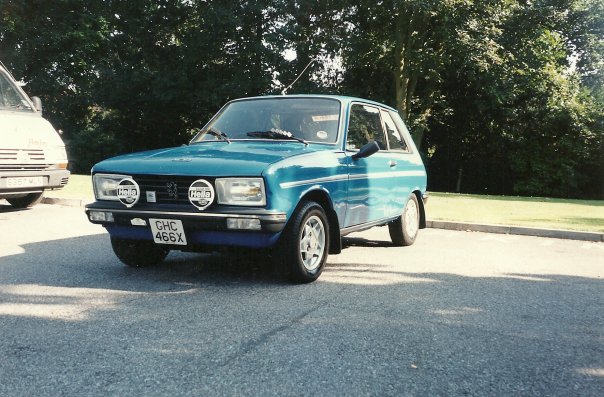
    No, it’s taken me some serious thinking, a little bit of drinking and a thumbing through photos and books to come up with my best car I have ever driven. It’s the Peugeot 104 ZS.

    I’ve had 2 of them. Both 1980 models, both blue and both ZS models. The first was quite the wreck but the second was much better. It wasn’t the best car in the world though. In refinement and luxury departments, it was overshadowed by the likes of the Ford Fiesta and Renault 5. It was rather crude and basic despite having electric windows and alloy wheels. It had rubber mats in the rear, piss poor ventilation and a tiny boot.

    What makes it the best car I’ve ever driven was one fundamental thing: I’d look at it and for unquestionable reasons, I’d dread the drive where I had to go. Yet it always entertained. It’s diminutive size and 1360cc engine with 72bhp was hardly left embarrassing itself in traffic of the day. I also had a comfy luxo barge, Peugeot 504 Ti automatic in the garage at the time too.

    On the motorway, it kept up and beyond despite only having a 4-speed gearbox, it was never tiresome or overly noisy. The 12 CD changer in the boot, 6×9 speakers in the rear side panels and 7” in the doors put pay to excess noise by drowning out the cacophony of mechanical screaming to Kylie Minogue and Duran Duran. 

    It was also one of the last cars I have owned where I’d just jump in it late at night and head for the roads in the dark. I’d be out for hours and hours, yellow Sev Marchal headlights cutting through the worst of the night. I did some stupid things in it and yet I lived to tell the tale. It never once got so out of hand that it ended up facing the other way. Something that could not be said for the Peugeot 205!

    The entertaining also stretched to its ability in the snow. Being a home carer at the time, I needed to get out and about in vile weather and that car was amazing in the snow. Small wheelbase with all the weight over the front wheels certainly helped. Its Achilles heel was its wipers. They were slow.

    So here we are, 2018 and the 1980 Peugeot 104 ZS has to be the best car I have ever driven though probably not owned. Oh crap, now I’m thinking about that one. Be right back…

  • CLASSIC CAR REVIEW | Saab 9-3

    CLASSIC CAR REVIEW | Saab 9-3

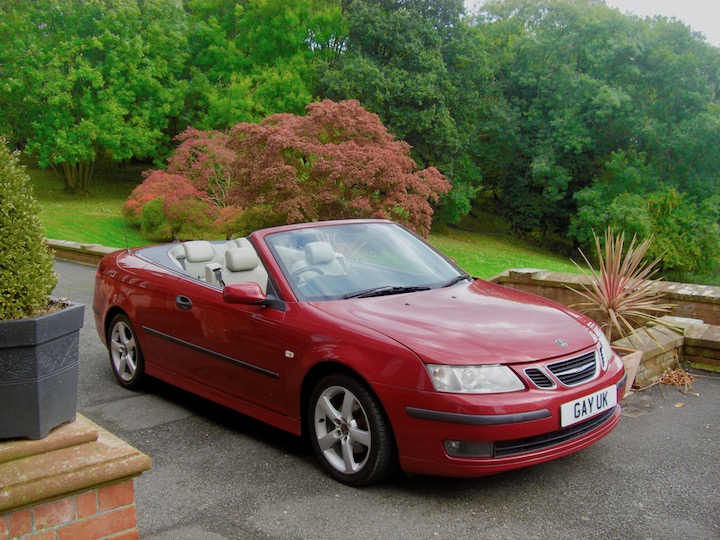
    Bravo, Sierra Alpha Alpha Bravo

    In 2012 architects the world over were weeping onto their 1:8 scale drawings and wiping the tears away from their eyes onto their black slim fit polo neck jumpers. It was announced that Saab were dead!

    Things were OK for Saab in the 70s. The Swedes craze for safety changed the way consumers looked at cars in terms of surviving a crash. The boffins at Saab threw their cars off cliffs, crushed them, hit them with hammers, shoved meatballs into the door locks and all other types of things that you and l wouldn’t subject our cars to.

    The Swedes are known for being safety conscious. The majority of the time it’s cold and dark there. They also spend a great length of time knees deep in snow so you wouldn’t expect them to become known as makers of a sought after and admired convertible car. Cut the roof off any car and there is always the risk of you falling out of it if the wheels end up pointing towards the sun. Not a very Saab safety thing at all.

    The Swedes gave way to some gay abandoning and in 1986 the 900 Convertible was born. The 900 is a serious classic now. In 1989 Saab sought the assistance of another manufacturer and unfortunately for them it was GM in America and Vauxhall Opel to those in Europe. GM took a brand known for innovation and quirky design features and presented the world with polished turds.

    Come the 90s and the 900 convertible had become iconic. You could say it single-handedly moved Saab up from the doldrums to Audi territory. All this changed in 1994 when the “new 900” convertible was launched. A well established and fine car was made to feel like you were driving something with a chassis made of only just dried paper-mâché. The rebranded 9-3 was no better.

    It wasn’t until 2003’s launch of the new second generation 9-3 that things started to get a bit better.

    Today the last of the icons represents great value for money. Because of the demise of Saab as a company, prices remain low, it will forever remain that way.

    I’m taking a 2005 9-3 1.8t Linear model for a test drive. This ‘new’ 9-3 was built for comfort and grace. Saab did a good job in disguising its Vauxhall Opel components. The 1.8 low-pressure turbo quietly produces 148bhp at 5500rpm. It has pace to keep up with the modern traffic but you’ll have to stir the gearstick around a bit. All but first gear are set to high in a bid to get maximum economy. In practice, this results in having to keep the revs up to no less than 1900rpm just so you can make good use of the torque the turbo engine produces. This coincides with 180Ib-ft of torque made within a short band from 2000 – 3500rpm. Less than 2000rpm and it feels lethargic. 0-60 time isn’t scintillating in the slightest, however the cruising speed is comfortably high. You could take to the flat-out Autobahns of Germany and make rapid progress.

    By today’s standards for an old car, it still remains silky smooth. Roof down motoring makes it a joyous car to pilot. Indeed if it’s night time, you can select ‘night panel’ on the dashboard. This turns off all the facia lights except the speedometer and even this will only then show a maximum speed of 90mph. l am told that if you go beyond that, the rest of the dial illuminates all the way round. Something l didn’t get to try. Despite the sales blurb and use of fighter jets in TV commercials in the 80s, this is the only lasting reminder that Saab had any connection with aircraft at all. It was a gimmick and not a very good one either.

    It no longer has that stab you in the back power of the original 900 turbo, After the launch of the “new 900” the turbo derivatives seemed to have been ‘blocked’ like strangers on Grindr with unfortunate profile pictures. In actual fact, Saab had no real sporty models at all after this.

    Thankfully the boffins at Trollhättan had managed to take the chassis and give it the stiffness required when you cut almost 2 meters of the roof off a car. The magic also results in a stiff scuttle area too. Drive any car with a removable roof and place your fingers within the door glass and windscreen frame and you’ll notice movement. This is called scuttle shake. The ‘new’ 900/9-3 suffered terribly from this. The ‘new’ 9-3 like we have here doesn’t suffer from it at all with only the merest hint of it over jiggly road surfaces. There is also a nice sense of draft free cabin. Opened up with the windows up or down you don’t suffer from the usual cold draft that engulfs your neck. In this Saab, there is no need to buy the mesh curtain that you see on many open-top cars.

    Owner Liz loves her roofless Saab. Partner Dave who never drives it with the roof down because it’s “so gay” has mentioned changing it. The reaction from her if he did would suggest he’d be able to sing soprano.

    Being that high, the lovey might want to remove the roof after all.

  • MOTORING | Happy Birthday Bambino

    A Little Gem Celebrates

    Who would have thought it, the Fiat 500 turned 60. The little city friend of the Italians that kick started Italy’s motoring for many has become a pensioner. OK, a little time lapsing magic has happened in that time of Dr Who proportions in Time And Relative Dimension In Space.

    From 1957 to 1975 you could purchase a new 500. It was replaced by the square Fiat 126 that just never quite did it. Like most second comings it is never as good as the first and thus the 500 was born an icon like the Citroen 2CV and Volkswagen Beetle. Both cars that have never been replaced with a car as affectionately loved the world over.

    Almost four million 500’s were built in those short 18 years and while many rusted away, many have been survived due to an ever increasing number of fans willing to take on the challenge of restoring or keeping on top of the problems you once got with an Italian car.

    The cheeky chap of Turin also sported a roofless version and even an estate called the Giardiniera. The magic of making this an estate was to lay the engine on its side. I often wonder if they had done this to the normal saloon, they could have created a hatchback version too.

    And so 32 years later we get the 500 with a hatchback when it was suddenly brought back to life with a design by Roberto Giolito that didn’t alter that much from his concept to reality.

    Sales of the 500 took off almost instantly and now you can’t see a street that hasn’t got a 500 on it. Admittedly it is miles away from the original. The engine now sits at the front but like the original, you can now get it with 2 cylinders. In keeping with the philosophy of the 500, Abarth has also been responsible for breathing angry fire onto the current 500 too.

    It’s not hard to see the appeal of the current 500. They are cute and retain the fun and essence of 500. It grew in age but not as much as the new Beetle or new Mini. In keeping it on a small platform Fiat was able to make it fall into the cheaper end of the car market where retro is still big bucks. With this in mind the options are now endless and 10 years on, new and inventive models are being created to keep 500 fresh. Look out for some swanky new models coming out soon.

    Like a lot of cars, at some point, you need to have owned an iconic car. We owned one from 2010 to 2015. A 1400cc 100bhp Pop auto. And in those 5 years, nothing went wrong. It really was a gem.

    So happy birthday Fiat 500 you cheeky little devil.

  • VINTAGE CAR REVIEW | Fiat X1/9

    A Champagne Lifestyle for Fiat Money

    VINTAGE CAR REVIEW | Fiat X1/9

    Picture the scene. America sometime in the in the mid 60s. Following many fatal crashes with people being decapitated or thrown out of their cars, the land of the free was talking about banning convertible cars. European companies that imported to the States went into meltdown.

    Open top cars are their money makers.

    The British are doomed.

    The Germans are still selling a lot of drop top Beetles but struggling to sell the expensive 914/4 and 914/6 targa tops.

    The Italians feel unsure.

    Step in Nuccio Bertone and his design house in Grugliasco, Italy. He walks into Fiat with a bold new design. At about the same time a new sports model was being designed in-house at Fiat to complement the soon to be released 128.

    In a backroom at Bertone, a designer named Marcello Gandini has penned a wedge designed 2 seater putting the Fiat 128 engine behind the driver. Nuccio is a persuasive man. His design house is legendary with designing some of the finest cars in the world. Fiat bosses like it. Bertone is to build it. A beautiful marriage is formed and a mid-engined sports car is within easy grasp of the everyday man and woman.

    To be honest the Bertone design isn’t all that new. Mid-engined cars had been around for a number of years for the rich and famous. Lamborghini, Ferrari and Maserati all offered those people the chance to get close to the ultimate road-going racing car layout. Here, however, was Nuccio with an idea to bring a whole new concept to the masses.

    On its launch in 1972, it was praised for its handling, looks and practicality. It also met the US criteria for open top cars. It was all win win win for Fiat. That strict criterion for open topped cars was soon scrapped. Oh well, what was done was done and without it, we might never have had the X1/9.

    The first cars were fitted with the little 1300cc engine. It liked lots of revving and it was a willing engine alas it lacked the ultimate punch that the looks suggested it should have had. The Fiat 128 coupe could outrun the heavier X1/9 by a few seconds and had a faster top speed too.

    This was addressed in 1978 with the fitment of the Fiat Strada 1500cc engine raising power to 85bhp and the killing off of the coupe. It doesn’t sound a great deal when in 1978 the Golf GTi had 110bhp but the magic of the X1/9 was so alive that the lowly performance figures somehow could match the Golf in many areas including top speed. Up against the new generation of hot hatches, the X1/9 had great handling up its sleeve that helped make up for the lower figures. In some ways, the X1/9 suffers from small man syndrome and gives its best shot in making up for shortfalls in outright figures.

    Even today the looks are the talk of the town. It’s sleek. It has vents in the rear. All panels opened up like a Lamborghini Countach. It has pop-up head lights. The driving position was quite neutral and the seats comfortable and supportive even over long distances. The roof was removable. It was pretty.

    Now there lay the problem. It looked pretty. It soon became known as a hairdressers car and quite unfairly so. Those cute looks and lack of power gave you a sense of security until you overstep the mark. The legendary handling is phenomenal if kept within both yours and the cars limits. The X1/9 will bite you and bite you hard if you take your mind off the road.

    Sports cars were never practical. Boots were small and only squishy bags could be accommodated for those going away for the weekend. Not so in the X1/9. The car possessed a neat trick in its design by having 2 boots. Even with the roof stored in the front, it was still more than enough for more than a weekend. And up until 1982 Fiat even gave 2 matching bags with every car sold. Today they are the ultimate X1/9 accessory to have if you can find them.

    It is an involving car to drive. You can exploit its handling and have fun. In the wet, it needs a lot more care and thought put into the moves. All this happens on skinny 165 section tyres and tyre pressures are essential.

    The example in the pictures is mine. Don’t for one moment think that l am biased and I’ll rave about it being perfect. It isn’t the perfect car by a long shot. It’s called ignition key roulette. It’s temperamental. Sometimes it’ll start on the first turn and sometimes it won’t. You just never know.

    The handling is fun. It has bitten me in the arse when it got a little messy. The cost was a new wheel. The steering is low geared and requires a lot of twirling of the wheel. A quick rack is available and at some point, I will fit one.

    Like all ageing Italians, it needs looking after. The biggest killer is rust. Once rust has set in it can set you onto the road to ruin. The shells have 3 bulkheads that are complex with double and triple skinned areas to increase rigidity in an open top car. Thankfully most body panels are available and there is a good Facebook page and members club out there to help.

    Running faults to date include an oil leak from the fuel pump, carburettor air leaks and coolant leak from ageing hoses. All easy fixes thanks to the mechanicals being basic Fiat 128/Strada and far simpler to repair than a Samsung printer. It’s a great little car for that occasion when the wind in the hair is needed but comes with one major flaw. Just be prepared to correct people when they call it a Triumph TR7!

  • CLASSIC CAR REVIEW | 1992 Alfa Romeo Spider

    Think Alfa Romeo Spider and you instantly think of a gawky Dustin Hoffman and a sexy siren that is Anne Bancroft. The Spider, like Ms Bancroft aged gracefully with very little input from science or cosmetics. Here we take a look at a 1992 Spider that is some 25 years into the production run.

    Alfa Romeo Spyder 1992 review
    CREDIT: Stu Bird

    Launched in 1966 the Pininfarina Duetto as it was then known was built on a very shortened Giulia chassis. While the Giulia exhibited some fine body architecture in its details, it was upright and square and built around a typical 3 box design saloon. It also spawned the very handsome Bertone penned GT coupe models and then came the pretty open top tourer.

    It won praise from the motoring press. For its time it was sophisticated in its underpinnings and no matter what the engine size was, it liked to be driven hard. From the humble 1300cc to the very latest 2 litres with injection, it had the much enthused about twin cam from Alfa Romeo. All the UK could offer at the time were leaky MGB’s and shoddy build quality.

    The Italians have always been good at getting sports cars just right the first time. And ‘the time’ is the essential downfall for them too. It was perfect. So perfect that Alfa Romeo decided to halt development almost immediately after it was launched and close the book on it.

    There were some changes made over its 26-year production run. The stylised boat tail of the early ones was sheared off and made square for the series 2. Then following US regulations where the Spider was an important big seller for Alfa Romeo, it was endowed with big impact bumpers and a rubber spoiler that was literally stapled on it for the series 3. The final model as seen here was developed again out of regulations and fitted with fuel injection and those building girder bumpers were smoothed out. The rear end was also treated to another new look and in some ways looked more like a modern take on the boat tail.

    The main criticism for the UK lover of Alfa Romeo was that the Spider was available only in left-hand drive. Again another classic “qualunque cosa” or ‘whatever’ from Milan. UK importers did, however, offer right-hand drive conversions on the series 4.

    All this didn’t matter. It was an open-topped Alfa Romeo. There is something very passionate about Alfa Romeo and until you have owned one you never fully get to understand them. While they are not quite so thrown together as they were back in the 60s and 70s, they exude an unrivalled following.

    CIMG2227

    Driving one today is a bit of a culture shock. This year sees the 50th year of the Spider. It’s hard to believe that it really is 50 years since it was exposed to the world. In this series 4 model, we are also granted power steering. Something I am told by owner Nigel that is essential. It certainly feels nicely weighted if a little indirect to gentle inputs. The Spider might have been a sports car five decades ago but like over cooked pasta it has gone a bit soggy on the edges when pushed to the limits.

    The driving position is very Italian. Read any old reviews on anything from Italy and you often would read about the long-armed, short-legged driving position you needed to adopt. It isn’t that bad. Again the passion for an Alfa Romeo by its owners is that they will put up with it just because it’s an Alfa Romeo. And don’t be put off by the gearstick that protrudes high up from the dashboard. It looks unnatural though in practice it works a treat.

    CIMG2226

    Treated as a weekend cruiser for pub excursions or showing off how wonderful your life is then the Spider makes sense. The 2 litre injected engine is eager though sadly because of the injection it loses the roar of the carburettors and the rasp in its exhaust note. It will keep up with modern traffic with a recorded maximum speed of 120mph. Not too shabby even by today’s standards.

    Roof off motoring is what the Spider is all about. With the roof up it really is a bit ugly like someone knocked up the roof in a shed so you’ll always want to lower it as often as possible. Roof lowered and it comes alive. The rush of air around you on a balmy early autumn day brings out the giddy grin in your face that makes you more excited than that day you got offered your first dance on a balcony in Sitges by a handsome man in a linen suit and exotic cologne. It’s refreshing.

    On the drive around town owner, Nigel did tell me off for changing up the gears too early. “Why are you in forth? Put it back into second and enjoy the sound” he said. Perhaps I was being a little mechanically sympathetic to someone else’s car but true to his word I did just that and lazy low down torque was replaced once again by the eagerness of the twin cam on tap and mechanical music.

    Owner Nigel has had the car for around 8 years. In that time it has seen a repaint and the wheels have been replaced by retro looking originals from the earlier Spiders. They look fantastic. Wife Helen was less impressed with the hit the bank balance took for them. Some mechanical dramas have been averted thanks to a fantastic network of support for old Alfa Romeos. He still has work that he wants to do it but at the moment she’s a keeper and Italian car nut Nigel wouldn’t be without it.

    I’d certainly have one. The pretty looks and Alfa Romeo engine are a pleasure to all the senses. Despite its visual faults, I’d have a series 3. I just happen to like a bit of tacked on ugliness and an underdog.

  • COMMENT | So what is the best car in the world?

    When asked “What is the greatest car ever produced?” there is only one country that can make such a car. It comes from a company that is not shy of failures. Maybe without these they wouldn’t have been so good when it came to the things that worked well?

    By Tony Harrison – originally posted to Flickr as Lancia Delta Integrale Evo 2 IMG_9403, CC BY-SA 2.0, https://commons.wikimedia.org/w/index.php?curid=4811977

    Without this companies motoring passion we would never have had some great ideas that just needed a little more investing. They were engineers. They are also one of the greatest shames of motoring of the twentieth century. I knew at a young age the nation was good at everything automotive. In primary school we had to pick a country and present it in assembly. l choose this country purely because of its cars and one manufacture in particular. It’s in Italy that we find the greatest car ever to have been produced.

    Embed from Getty Images

    The Lancia Delta is an utterly amazing car. The humble beginnings of the Delta are nothing special yet the illustrious history and development of the Delta should in reality make it a brand name like Mini, Beetle and 500. Launched in 1979, the Giugiaro designed body was crisp and clean. It had minimal fussing along the flanks that were a signature mark of Giugiaro’s Ital design studio. It was a sharp dressed car. A 5 door hatchback with sophisticated style.

    The Delta followed a typical tradition for Italian car manufacturers of the 70’s and 80’s. On its launch it was a very important car that people hoped would carry the Lancia brand into the future following the disastrous recall of the Beta from epic rust around the subframe. To help in the costs and using a proven platform from new owners Fiat, it was based on the Fiat Strada though it shared very little with it. Even the Fiat based engines had Lancia developments in them and it used MacPherson struts all round instead of the single rear leaf spring of the Strada. The Delta won the coveted prize of Car of the year 1980.

    Embed from Getty Images

    The risk of Fiat taking control of Lancia was that their ideas would be shaken out of the company and it would end up as badge engineering of Fiat products in a way Peugeot had done with Citroën. This was not to be. Those ideas were still in full flow at Lancia as we will see. Saab on the other hand did have some input into the development of the Delta’s heating system and between 1980-82 it was sold as the Saab-Lancia 600 in the Nordic countries. Already then the Delta is proving to be a little bit different.

    Those engineers at Abarth that were all part of the Fiat group were quick to make their mark on the Delta with the 1983 launch of the Delta HF (High Fidelity) with a turbo. It wasn’t until 1985 that the turbo name was mentioned with the launch of the short lived Delta HF Turbo i.e. 1983 saw strange changes made to the humbler GT i.e with the cylinder head being spun 180 degrees and the exhaust now being at the front of the engine to aid cooling whilst also lowering the gravity of the unit.

    We mustn’t forget Lancia’s rally program that was continuing while the Delta was being fettled. While the little hatchback was being made in several guises it was their 037 rally champion based on the Beta Montecarlo that was being watched on the international circuit. A car that was loosing rapidly despite its sheer speed ability to the all conquering Audi Quattro.

    1985 was a good year for the Delta. Lancia had comeback with a double bang to the world rally championship with their Delta S4. A mid engined turbo and super charged road warrior with 4 wheel drive and almost 500 bhp from its 1800cc engine. The Delta shared nothing with the hatchback except for the name. Unlike the WRC offerings from Austin Rover, Peugeot and Audi, the Delta S4 didn’t even look like the Delta except for a hatchback type style body.

    The Delta S4 was a beautiful brute in WRC. In its 12 races it won 5 of them. It could have gone on to do better if it was one little problem that it had. The Delta came with fatalities. In group B rallying it was a weapon of the road. A 4 wheeled killer claiming the lives of 29 year old Henri Toivonen and co-driver Sergio Cresto. Ironically a year to the day that Attilio Bettega died at the wheel of a Lancia 037. The writing was on the wall for Group B and the Delta S4.

    http://gty.im/638416708

    1987 started as a quiet year for Lancia. Numb from the latest fatalities they entered the Delta HF 4WD in the new standard Group A WRC. Lancia were the best equipped for rallying at the time. Over the 13 races that year the Delta won 9 of them. Not a bad start to a new chapter in world rally dominance. 1988 was even better with 10 out of 11 races being won with a Delta. However something hot was just around the corner for 1988. The Delta Integrale 8v saw Lancia engineers perform magic. The Delta HF 4WD had its fair share of problems and to combat these the Integrale sported bulging wheel arches allowing for bigger wheels and brakes to be used thus making the car even better on tarmac. As a road car it was only available in left hand drive form and would remain so until its demise.

    The Delta was once again an unstoppable force and dominated the WRC until it started to see challenges from Toyota and Mitsubishi. So the engineers upped their game and launched the Delta Integrale 16v. To mark the occasion it was painted red with Martini stripes. By the second to last rally, Lancia had every award and trophy going so decided to party into 1990 by not partaking the last race of 89. However 1989 was not without a fatality for Lancia. Though not connected with the Lancia Martini team, the Delta cost the lives of Lars-Erik Torph and Bertil-Rune Rehnfeldt when Alex Fiorio lost control of his Delta at 90mph and ended up down an embankment.

    Between 1990 and 92 the Delta continued to be a dominating force but the writing was on the wall despite half the rallies won by a Lancia and again Lancia collecting a lot of trophies for their bulging cabinets. 1993 saw the Delta, no longer in Martini colours, take not one victory. A sad end to a car that gave 46 rally wins to Lancia in a just a few years.

    The Delta Integrale continued as a left hand drive only road going car for another 6 years until its total demise in 1999. This was some 5 years after the original Delta hatchback had ended production. After 13 years in production, 1993 saw a new Delta being produced on the Fiat Tipo platform. You could be forgiven for thinking that you have never seen a new Delta before because in 1992 Lancia pulled out of the UK market. A day l remember well.

    And so in 1999 the Delta story ended. It restarted in again in 2008 to 2014 when Lancia resurrected the name for the trilogy. These were then effectively badged as Chrysler Delta’s in the UK and I’ve not really got a good word to say about them. They cannot be unseen once you have seen them.

    http://gty.im/638418868

    And so the Delta story finally ends. From a little car with a big job on its hands to an all conquering race winner, the humble Delta became the greatest car of all time. At one stage you could get a Delta with a 1300cc or 2000cc engine and fuelled by petrol or diesel. Power outputs ranged from 75bhp to 500bhp. From 1983 to 1990 you could also get it in a 4 door saloon style called the Prisma. It offered 5 seat comfort and hatchback practicalities while also offering super car performance. Name me another car that can match those credentials?

    There are many who still hold a passion for Lancia. Davide Cironi from Drive Experience on youtube who is one such man. Check out his homage to the Delta in over 16 minuets of pure glory below (also check out his other videos. The Lancia Theme 8.32 in particular).

    Fiat boss Gianni Agnelli commissioned a one off 2 door convertible Delta Integrale for himself. You could take it into a multi-storey carpark, load it up with flat pack furniture and annihilate almost anything at the traffic light grand prix. Now I’d like to see you try and do that with your Lamborghini Gallardo!

    The Lancia Delta. The best car in the world!

  • CLASSIC CAR | Alfasud 1.3

    All good things come from the ‘South’

    (C) STUART M BIRD

    Bruno Tonioli isn’t the only quick stepping rapid rumba dancer to come from Italy. In 1972 a motoring equivalent named the Alfasud was unleashed to the motoring world.

    I have more than a soft spot for the Alfasud. If I am ever asked what car would be top in my fantasy garage of 5, an Alfasud is there. My second car was an Alfasud Ti. It was a three-month love affair that financially ruined a then 17-year-old Stuart.

    Alfa Romeo needed a small car that would entice young people into the marque of Alfa Romeo. In 1967 a Viennese designer named Rudolf Hruska was entrusted with the task of turning the dream into reality. The premise was to design, develop and instigate the building process of a small car that would then hopefully get those new customers to buy other Alfa Romeos and so on.

    There were three main prototypes presented. The first before Rudolf had joined only made it to the drawing stage. The second called the Tipo 103 was deemed too expensive to produce. This was a front wheel drive with a 900cc 4 cylinder twin cam engine in a three-box four-door saloon style body. The third incarnation was the Alfasud as we know it today.

    (C) STUART M BIRD

    Thankfully for Rudolf Hruska, Alfa Romeo had some unused facilities in a southern region of Italy in Pomigliano d’Arco. This is where the Sud or South in Italian comes into the name. The Alfasud is also the reason why ‘Milano’ was removed from the Alfa Romeo badge because now their cars were not only built in Milan.

    The Alfasud was a major departure for the Milanese company. For a start, it was to be front wheel drive. Secondly, it was to use a totally new engine in design. In some ways, it did have twin cams but that isn’t totally true. The 4 cylinder boxer engine had one cam per two cylinders so was still classed as a single cam. I still like to think of it as a twin cam. Having worked previously for Porsche and Volkswagen it was no surprise that Rudolf would opt for a flat four designed engine. The layout allowed for a low centre of gravity and a low bonnet line. This really becomes evident when you drive one.

    The body design was entrusted to Giorgetto Giugiaro of Ital design. This forward-thinking designer designed some of the most iconic cars ever to grace the roads and some that he would rather forget about. In the presence of this man don’t ever mention the Morris Ital.

    In just five years the Pomigliano d’Arco factory was up and running giving much-needed employment to the southern inhabitants of Italy.

    Sadly it didn’t all go to plan and industrial problems with an inexperienced workforce meant the Alfasud never made it the success it could and should have been. Strikes and poor workmanship were two key areas of failure. But you’d not think about these when you think Alfasud. What comes to mind is rust. And rust they did, even in areas where you wouldn’t expect it to. These rusted within two years of building.

    Now forgetting that the Alfasud dissolved quicker than an Alka-seltzer, the car was a phenomenon.

    (C) STUART M BIRD

    Launched with a little single carburettor 1186cc engine, the 63bhp engine thrived like no other engine for revs. The raspy sound was intoxicating. And this intoxication quickly led to criticisms from the press for MORE power.

    The handling at the time was legendary and for about a decade after launch, it was still the car other manufacturers tried to emulate. Alfa Romeo was quick to silence the critics with spoilers, sports style wheels, quad headlights, a rev counter and 5-speed gearbox which were all added to a two-door body and the Ti was born.

    Then there were more problems. Supply and demand could not be met. This thwarted further development of the two-door shell being available in the lower spec models and the estate version ever making an impact outside of Italy. The much-needed hatchback-style body was delayed and finally arrived in 1981. However, the pretty ‘Sprint’ did make it, adding sporting sex appeal in a coupe style body with a hatchback boot.

    Still, people wanted, even MORE, power. The Alfasud would end its 12-year production run with a 1490cc engine, twin carburettors and 105bhp in the Ti Green Clover Leaf.

    The car used for this review belongs to Stefan. A lifelong fan of the Alfasud having had several over the years and a family who also had a love for the little Alfa Romeo. This is his 1982 series 3 1.3 SC with just 36,000 miles on the clock. Low mileage it might have but that hadn’t stopped the ravages of time taking hold. It has been subjected to a full body restoration prior to purchase. Since Stefan purchased the car he has nursed it through a full engine rebuild and sorting out the mechanical side of things while also removing the drama button from the dashboard. The car has had its problems. He says “Now not only does it look great, but runs just like the Alfasud should, smooth torquey flat four engine with that wonderful music to your ears raspy exhaust note.”

    Stefan entrusted me with the keys. It has been 24 years since I last drove an Alfasud. It all came back to me very quickly. The heater fan switch on the end of the column stalk is a stroke of genius. The narrow footwell not so. The peddles were still as close together as I remembered. The low-slung engine allows for a low bonnet line. Il had forgotten that. It’s quite startling at first.

    On the move, the steering was direct and nicely weighted. The assisted 4 disc brake system as powerful as ever. The inboard front discs allowing to eliminate unsprung weight during forceful braking. The ride and handling compromise still spot on in every way. The little 79bhp 1351cc engine was as fizzy as I remembered it with a rasp and pop from the exhaust that they became known for. It’s also smooth.

    I could enthuse about the Alfasud until you fall asleep and even when you do I can still prattle on about them. So I’ll finish with a thanks to Stefan for letting me have a play and reigniting a long lost love affair.


    With thanks to Gay classic car member Stefan for the loan of his car.

  • CLASSIC CAR REVIEW | Volvo 265 GLE

    Volvo 265 GLE  | Luxury Load Lugger

    When someone says “think Volvo” there are many things that you think of. If you are mechanically minded you might think of extreme safety. If you are a gentleman with a liking of old things, you think of cavernous boots and the ability to carry grandfather clocks.

    If you are gay you think of uber-posh socialite Margo Leadbetter and her much put-upon husband Jerry. You also think of Felicity Kendal too. Before you came out you had a bit of a thing for her doe-eyed good looks. Anyway, I digress about myself, we are talking Volvo, not vulva.

    The 1974 Volvo 200 series from front bumper to the bulkhead was all new. From front screen and beyond it was the same as the 100 series it replaced, give or take, a bit of trim here and there. The frontal area was treated to a sloping wedge as first seen in 1972 with the VESC (Volvo Experimental Safety Car) Other important changes related to the brakes that were discs all-round and rack and pinion steering with power assistance available on higher specification models.

    To differentiate the 260 model with its V6 engine over the 240 4-cylinder was the grill being enlarged and upright while the bonnet had a protruding ledge that sat over the grill. They also gave it square headlights and some chrome brightwork trim. You couldn’t say it made it look a million dollars compared to the lesser 240s but it added a visual difference to let those out there know that you had bought a flagship model from Sweden.

    What did try to look like a million dollars was when Volvo asked Italian coachbuilder Bertone to build the 262C coupe version. A two2 door low-roofed version built between 1977 to 1981. It wasn’t money well spent. The 200 didn’t have sex appeal and removing two doors and having an elephant sit on the roof did nothing to further its appeal.

    The Volvo 265 GLE estate was an expensive car. As is the example here, in 1978 it cost £7800. For that money, you did, however, get the PRV V6 from Peugeot, Renault, Volvo (hence the name) and leather luxury. It also came with air-conditioning, all-round electric windows, electric door mirrors and headlight wipers. In an estate, this was top-notch luxury.

    Estate car drivers in the 70s and through most of the 80s were treated as second-rate motorists. Very few offered luxury to the carryall estate.

    Ford offered luxury options on their estate versions. In comparison to price, the Ford Granada Ghia was available with a better V6 option and cheaper too. Datsun offered the generously appointed wooden clad 280C for less. If you were not after such luxury but instead favoured sheer carrying capacity and technical advancements, then you could have the Citroën CX Safari.

    It’s not that the Volvo 200 series was without its technical advancements. It’s just that they were all pretty much hidden under the skin. Unlike the bumpers that were there to remove your skin should you walk into them. Big bumpers were a thing of Volvo styling. Mostly born out of American legislation for 5mph impact bumpers, Volvo fitted them to everything they imported into Europe too. Toymaker Matchbox even got in on the act and fitted an impact bumper to there Superking Volvo 245 model.

    This big bold bumper took on a form of styling cue that Volvo then used when redesigning the 100 series to the 200 and the square bumper resulted in keeping the square styling. And this went onto became the new design language used by Volvo until they learnt that they could blend them into the bodywork.

    The legendary bumpers that were sometimes fitted with reflective stripes across them were not the only visual things you could see. A Swedish trick was that the side lights illuminated all the time. Better to be seen with a 5-watt bulb glowing then none at all. Swedish regulations also stated that a headlight wash system was available too.

    Under the skin, the engineering department of Volvo was busy bringing collapsible steering columns and crumple zones into the main arena of car design and brochure print. Volvo was sold as a safe car. The 200 series also had door bars.

    This was in 1974. It took the rest of the world over 20 years to catch up.

    Indeed Volvo had a bit of an obsession with crashing their cars. In their home country, word was that if a Volvo was involved in an accident they would study the crashed car, makes notes and use it to further their enviable reputation for safety.

    Owner Graeme has owned this example for two years. In that time he hasn’t had to do anything to 64,000 mile “Burt” except give it a good wash and wax and regular servicing. The car is totally original and comes with dealer fit options like tow bar and front fog lamps.

    Riding in the 265 you are immersed in the then luxury of the 1970s. The leather has really stood the test of time. The general fit and feel of the car is as good as it was back in 1978. The doors shut with a hefty thud. Much to the annoyance of your neighbours, you can’t shut them quietly or they won’t shut at all. Not that you would care about waking them up.

    The 265 was a car for the affluent man.

    It all worked well. That V6 engine, however, did not. Fitted to the hopeless Borg-Warner automatic 3-speed box it makes a terrible mess of an engine that won praise in the Peugeot 604 and Renault 30.

    Sadly according to the DVLA, there are only 7 265GLE estates left on the UK roads. It might look as soft around the edges as a fresh stack of post-it notes but this car revolutionised car safety and if you’ve ever been in an accident, chances are it was this car genetics that saved your life.


    Thanks to Andrew Wood for the use of the Matchbox toy picture.

    GCCG member Graeme for use of his Volvo.
  • COMMENT | Vintage Cars… Will it end?

    I’m worried. I’m worried about the classic car market and you lot, the readers. More so the younger ones.

    Being one of THEGAYUK’s motoring correspondents you’d expect me to have something new or flash or a bit of both. I don’t. The newest car in my fleet of 4 is a 1993 Fiat Tempra. A car I loved the moment I saw the advert back in 1991. The oldest I own is a 40-year-old VW camper.

    In 1988 I was a spotty teenager who just happened to borrow his sister’s Just Seventeen magazine to get his feel of Marti Pellow and the rest of the Wets. In that year Fiat launched the Tipo. I liked the Tipo. It won Car of The Year 1988. THEGAYUK will be reviewing the new Tipo in the new year so I look forward to that.

    Two years later Fiat launched the booted version called the Tempra and I don’t know if it was the visual of the car’s lines that struck me or Miriam Stockley’s haunting voice in the advert but l remember it stopping me dead in my tracks.

    l said to my still teenage self that one-dayI would have one. The Tempra isn’t anything special or exotic. It’s a four door, five seat Italian saloon that sat below the Lancia and Alfa Romeo derivatives who had luxuries like turbos and V6’s.

    The recent NEC classic car show was different this year too. There was more of a shift towards 80’s and 90’s car. The classic car market is quite resilient if you allow the odd old duffer to be slightly knocked sideways in their protests that newer cars being allowed to display actually shouldn’t be. Trouble is, 80’s and 90’s cars are rapidly disappearing from our roads.

    Now here lays the problem. I am struggling to see what the young car enthusiast will aspire to in the rapid-fire world of bright and shiny things. In 2016 we all want the latest gadget, the most up to date software, shiniest shoes. This goes for everything these days. Perfectly functioning TVs are being tossed aside because the one in the shops has a curved screen and the 3-year-old unit at home doesn’t. Second place runners are not what we want. We want the best.


    The Gay Classic Car Club is a wealthy rich place to find the exotic and the mundane. Members cars range from various Bentleys worth the same as the total sum donated to Children In Need to the modest like an Austin Montego. Now don’t get me started on Montego’s because I can get a little excited about them.

    Old cars that I grew up with were simple. A key was turned, the engine turned over, fuel mixed with air in a carburettor, a spark was made and it resulted in propulsion. The cars fell to pieces due to steel reacting with air and water. You kept it going for as long as possible.

    I contact manufacturers and ask for various cars to review though not one has made me think about its life as a 20-year-old classic. Due to the throwaway society we have become, I struggle to see many actually last that long. Working with cars I see a lot of people throw a car away these days. A recent 2004 VW Touran was in for diagnosis. It had a faulty NoX sensor. The part alone was £450 from VW. Along with some other bits needed for its MOT and a service, the bill rose to £700. The car was thrown away. I spent £700 on having the Tempra welded up. Thing is, there are still hundreds of Tourans out there. The number of Tempras on the road is 110. Thankfully, due to advances made in car manufacture and dismantling, many of the parts can be stripped and recycled.

    So I sit here, at my desk, looking up Marti Pellow in the 80s and ponder what you and I might see at classic car shows in 20 years time. The new Mini, Beetle and 500 will probably still be in abundance but what about the ordinary humdrum car that wouldn’t raise the pulse even if its ignition system was rigged up as some kind of defibrillator and attached to your nipples? Or like my Tempra?

    I’ve looked out of my window to the street below in the neighbourhood. I can’t see the Nissan Duke becoming a classic. The Focus, of which there are several, are getting close to the age of being almost semi-classic. It’s still a good car to drive and being that it sold in the zillions, there are plenty still out there. Hardly a rare sight on the road.

    There is a 2004 Mazda 6.  Twelve-years-old and full of reliability. It’s a bit grey porridge if I’m honest. It’ll never go wrong and because the Japanese don’t rust like they used to, it’ll go on forever. It just won’t be desirable to cherish. Or will it?

    I’m sure there are many non-exotic cars that will make it into the echelons of the classic car underworld so in the mean time some of the GCCG members have sent me pictures of their old cars while l still struggle to think what will make it.

    PHOTO CREDITS: Chris Ianford (Rover); Graeme Aiken (Rolls); Mike Howart (Cornice); Phillip Trueman (Maxi); Rob Par (Cherry); Stephen Golder (Montego) Stuart M Bird (Tempra)


    Opinions expressed in this article may not reflect those of THEGAYUK, it’s management or editorial teams. If you’d like to comment or write a comment, opinion or blog piece, please click here.

  • CLASSIC CAR REVIEW | Volvo 66GL

    Volvo 66GL  | Elastic Fantastic

    What a strange little creature the Volvo 66 is. It’s not really a Volvo at all. Underneath its square styling lives the Daf 66 and deeper into that is the Daf 55.

    Daf’s car division was taken over by Volvo in 1975 and almost immediately they rebadged the Daf 66 to become the Volvo 66. Being safety conscious Volvo they added their stamp to the Daf by fitting big energy absorbing rubber bumpers to coincide with the newly launched 200 series from 1974. Also added was a revised brake system and inertia reel seat belts both front and rear. A first for a small car.

    From a country that legalised the smoking of the herb, you can be assured that Daf would not make a conventional car. The interior is quite well thought out in terms of space. The mechanism of the front seat backrest tilts inwards to make getting into the back easier. It’s as if time was taken to think about it. A bit like being stoned and really focusing on something. Thankfully they wrote it all down. And then in the fit of giggles and munchies, someone suggested a transmission made entirely of rubber bands. This was back in 1958 and the Variomatic was born.

    The 1970’s were a dark time for the motor industry. The first oil crisis of 1973 caused chaos to those manufacturers who only made big engined vehicles. And there were many who didn’t have small engined cars in their line-up. There was also the problem with the wants and need for the two car family. If there was no small car available, they would look elsewhere. Chances are they would also change the big car to match.

    The cost of developing a new car in the cash-strapped 70s was great. Platform sharing wasn’t quite as rampant as it is today. Volvo already had a 30 percent stake in Daf and in 1975 increased that share to 75% taking over the little Dutch manufacture almost completely. A bonus for Volvo was that Daf was a year away from launching their new 900 project. This would become known as the Volvo 343.

    Daf themselves were not unknown for sharing development costs by using 1300cc Renault engines in their 55 and bigger 66 models. Using Renault engines was not going to be a problem for Volvo either because they had already worked with the French manufacturer to develop a V6 engine with Renault and Peugeot.

    The launch of the Volvo 66 sadly saw the demise of the sporty looking coupe body. If ever there was a company that needed added sexiness it was Volvo. The P1800 coupe that the Saint drove had gone in 1973 with no replacement. There was no sporty derivative of any Volvo.

    Sporty it never was, but, a development within the rear suspension set up saw the development of a De Dion rear axle that was mainly found on Alfa Romeo’s of the time. This did give some improvements, not that you would notice it. The performance was still as lacklustre as the models before it.

    Graeme has owned Daffy for two years. Despite it not being a total basket case, in 2013 when it was discovered, it was destined for the big scrap yard in the sky. Thanks to Daf owners club editor Richard Butler it was saved and made mechanically sound so it could propel itself once more. In Graeme’s ownership, it has received an extensive restoration to the body. Panels are not readily available so new metal was cut in carefully were needed. The company doing the work really did a great job. Graeme told me that several members of the body shop team hadn’t even seen one let alone knew what a Daf was. A sure sign that we are all getting older or an honour for them to be allowed to touch such a rarity from the normal exotica they worked on.

    This 1975 example also has some historical value. On further investigating the car’s history, it is safe to say this was one of the very first 66s to be badged a Volvo and sent to the UK and the only one still in use today! Registered in November 1975 it is missing little touches like the V’s on the hubcaps and the rear seat belts were not Volvo labelled.

    The famous continuously variable transmission or CVT drivetrain was used by Volvo up until 1996 in their 440 series though not quite in the same format as in the 66. Quite ironically that this much-maligned system would eventually be used by many manufacturers and even today it is seen as the best alternative by some companies like Toyota and Lexus on certain models.

    It is more technical than just 2 rubber bands flapping about underneath. It’s easy to mock the system for its simplistic look. However, if you delve in a little deeper it also relies on vacuums and diaphragms. l am told the belts rarely give problems but the vacuum and diaphragms do. An air leak in the system can cause all sorts of problems. Set up correctly it is easy to see why it appealed to the city driver. A simple gear lever protrudes from the floor. It goes forward or backwards. That is how you know which way it is going.

    In motion, it is surprisingly cute. The engine note not really changing but revving more and more. Come off the throttle and it feels like it is winding itself down. It’s not quiet and there was some vibration felt. l was told the system needed a little more fettling.

    It’s a fun little car and the owners of these of whom l know several, all seem to be as eccentric as those who own Reliant Robins. They carry the heart of the car on their sleeves with a real passion. As a result, there is an abundance of support out there for them.

    And before you ask yes it can go as fast backwards as it does forward.


    GCCG member Graeme for the use of his Volvo. http://www.gccg.org.uk

  • CLASSIC CAR REVIEW | Skoda Felicia Fun

    Oh Felicia, Where The F***K Are We?

    You wouldn’t necessary associate the word “fun” with Skoda. Well, certainly not in the 1980s. Despite a good record in rallying and great advertising, Skoda was stuck in the lower echelons of the new car world. Even in 1989 with the release of the front wheel drive Favorite it didn’t help much. Step in Volkswagen who by 1994 had the first new Skoda models under their guidance ready to emerge named after a drag queen from a movie out the same year (this isn’t actually true).

    In 1998 Skoda needed some much-needed sex appeal added to the brand to entice the young and what better way than with a pick-up truck. That’s right a pick-up truck. Not just any old pick-up, though. Painted in bright yellow with darker yellow extremity add-ons, the Felicia Fun was born. To accentuate the pick-up vibe, it even had an integral bull bar moulded into the front bumper and a rear handle bar type non-effective rear spoiler. Even the alloy wheels were yellow. Now who hasn’t cried out that well-known quote from Pricilla Queen Of The Desert when they saw a Felicia? Despite it being based on a rugged pick-up the Fun is about as butch as Judge Rinder and just as crazy as his first dance on Strictly Come Dancing. You can’t help but fall for its cheeky charisma.

    To add to the “fun” Skoda went above and beyond with the yellow trim inside too. You got a leather covered steering wheel, gear stick and gaiter, padded door inserts and a splatterings design on the seats. Remember this was all in a bright yellow leather material. And then if that wasn’t enough you also got four yellow dials on the fascia too. It’s all rather brash and crude while at the same time being immensely enjoyable. Dare l say it, a fun place to be in.

    This still wasn’t enough. Skoda wanted to give the youngsters even more but what could they give? While a yellow truckman top was available, a yellow piss stained mattress in the back was not. What you got instead with your two-seater pick-up with wood slatted rear cargo area was a pull out rear bulkhead that would further reveal two more seats. At the time this was amazing, and it has never been replicated since. The Fun really was a one of a kind.

    The brochure that accompanied the Fun was about as sexy as you could get without fornication actually happening in print. Two dudes in Hawaiian shirts enticing two pretty young gals. And then there was innuendo. “Open up for extra fun” was one slogan. “Two + two = fun” or a foursome in my mind. It was all fun fun fun and there was the sun too. Something the UK sort of lacks on most occasions. So keep it realistic and think grey skies and Billericay.

    Like the crowned frog decal on the B-pillar that no one knows what it is supposed to mean, no one knew where the f**k Skoda were going with the Fun. At the rate it sold it outstripped demand of the 300 units originally sent to the UK. A further 300 were needed to meet the demands of the young. Rumour has it there were 601 in total imported to the UK. According to statistics, there are around 267 cars still on the road and 154 on SORN. Not bad for a commercial pick-up that has a tendency to rust violently anywhere around the rear bed area and sills.

    Mechanically it is basic Skoda Felicia with a fuel injected 1600cc engine. In practice, it felt quite spirited and the drive surprisingly rattle free. Being one of Volkswagens engines it also means it has a pretty good reliability record.

    Owner Matthew has owned Nessa for almost four years after seeing an advert on that well-known auction website and clicking the ‘buy it now’ tag. A trip to a farm in Wales revealed that the Fun was anything but. Instead, it was being used as a proper pick-up truck that wasn’t what it was designed for. The rear bed might have been full of wood but it wasn’t the wood that raises the pulse rate dressed in a Hawaiian shirt.

    The drive home was eventful with a failed Lambda sensor and nearing home the back end decided that supporting itself was no longer an option and gave up. After being turned away by several garages which couldn’t see the potential to weld it up, Matthew finally found someone who in essence rebuilt the rear end. Sometimes having to fabricate parts no longer available.

    Having returned it to the road and continuing the rolling restoration, Matthew continues, “It was always sure to turn heads! However, you do need to like yellow. It was a car I had fallen in love with as a young lad on my way to school, passing one every day thinking it was the coolest car I had seen. Knowing that Skoda’s weren’t cool I kept quiet. Now I get to drive my own and it still makes me smile every time I go out in her.”

    By the end of my time with Felicia Fun l was sold on the whole idea. It makes so much sense. A two seat pick-up workhorse most of the time that could take four. And no one need get wet in the rain with a truckman top. Having tested several pick-ups lately, l thought there wasn’t much left for truck development in passenger carry overload lugging. I’ll tell you were Skoda are with this and that’s ahead of the game. Sadly no one does this kind of thing.


    Thanks to Matthew for the time with the Fun.
    Gay Classic Car Club for allowing me to ask for cars to try from its members.

    Gay Classic Car Group