Author: Daniel Browne

  • COMMENT | Bullying: My Experience

    Bullying is a bit of a sore subject for me. At the age of 29 I sometimes still find myself haunted by past experiences. I have been on numerous medications, had therapy, and even a stint in a rehab facility in an attempt to ‘get over’ the bullying I endured in my youth. It’s been a long and rocky road, and I still haven’t reached the end.

    My experience of bullying began when I was at primary school. I was five years old when a boy in my street started to pick on me. I was quite a weedy child so guess I was an easy target. The bullying began as name calling but as the years went by it became more physical.

    I was hit, kicked, and spat at. My mother would try to talk to his about what was happening but only came up against shouting and swearing. The bullying took a turn for the worse when I was ten years old. One day the boy picked up a pair of hedge scissors and tried to cut my head off. I almost laugh when I recall that because it seems ridiculous, but I was terrified at the time. He may not have succeeded in cutting my head off, but he could have easily caused serious injury had I not ran away.

    On another occasion, the same boy, along with a group of his friends, managed to pin me up against a fence in a corn field and tie me to it. They then urinated on me and tried to set fire to me. Luckily my sister came along at just the right time and distracted the gang. They chased after her and I managed to free myself. By the age of ten, I was experiencing serious mental trauma. By then the bullying wasn’t just occurring at home.

    From around the age of eight, the bullying had also begun at school. What started as general name calling became racist bullying when the other kids realised that my Dad is white and my Mum is black (or half-caste as some people call it). I was called a mongrel and the other kids would say that I don’t know if I am black or white. Just before leaving primary school the bullying changed focus again. Some of the kids in my class had noticed that all of my friends were girls and that I did not hang around with the boys. A word started to get thrown at me; a word that I had not really heard before. That word was ‘gay’.

    Moving up to secondary school should have been an exciting time. However, I was dreading it. I was aware that most of the kids from my primary school were going to the same school. I was scared that the bullying would continue. That fear became a reality when rumours began to spread that I was gay. This was based purely on the fact I hung around with girls and none of the boys. Of course their assumption that I am homosexual turned out to be correct, but for five years I was persecuted for it. Taunts during classes and at break times were frequent. The mental abuse became a daily occurrence. I was called all of the usual homophobic slurs and sometimes I would be physically attacked. Appealing to the teachers never achieved anything and I was often told to be quiet and stop making a drama. As time went on I became more introverted and eventually fell into a depression. At the age of fifteen that depression deteriorated into bulimia.

    Controlling my food intake and having the power to make myself sick afterwards seemed to be the only thing that I had control over at that time. The situation became worse, the bullying more intense, and the self-harm continued. At sixteen I had my first experience of antidepressant medication and mental health services after a friend realised my mental stability was crumbling and took me to see my GP. Something else also happened when I was sixteen; something surprising. The bullying came to an end.

    The day came when I could no longer handle the bullying. It was a case of fight or flight, the flight being to end my life. In a moment of pure anger I chose to fight. Someone who had previously been relatively nice to me started calling me homophobic names so I decided to confront him. When I did that, the boy kicked me and called me a f**king poof. That was the moment that I lost it. I punched the boy and knocked him off his chair. I ended up getting suspended as a consequence of my actions. When called into a meeting with my head of year I explained that I was being homophobically bullied. The year head brushed it off and said he was “not interested in that kind of thing”. I was then suspended. The boy who kicked me and was homophobic received no punishment.

    Upon returning to school after my suspension I noticed that people were leaving me alone. The name calling and violence suddenly stopped. At break time a group of lads came up to me, but instead of being abused I had my hand shook and they said that I’m “actually not that bad”. I thought it was completely bizarre that it took me being violent and sticking up for myself for the bullying to stop, but at the same time wished I had done it years previously.

    I wasn’t bullied at school again after that. I was left to it and my educational experience became easier. The damage had been done though. For years after I was haunted by the experiences and used mental health services extensively. Now as a mental health professional I am turning my experiences into something positive. With Push Projects, the LGBTQ youth support charity I founded in 2011, I provide a source of support to young people that didn’t exist when I was younger. I have also since returned to my old secondary school to discuss my experiences and work with them on anti-homophobic bullying strategies. I’m absolutely on a crusade and want to save all LGBTQ youth from persecution, but even if just one person is helped then I’ve done what I set out to do.


    Opinions expressed in this article may not reflect those of THEGAYUK, its management or editorial teams. If you’d like to comment or write a comment, opinion or blog piece, please click here.
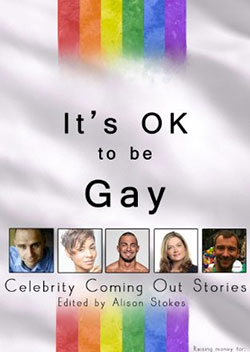
  • BOOK REVIEW: It’s Okay To Be Gay, Edited by Alison Stokes

    BOOK REVIEW: It’s Okay To Be Gay, Edited by Alison Stokes

    It’s OK to be Gay is a brilliant new book featuring the coming out tales of a number of high profile personalities. Edited by Alison Stokes, It’s OK to be Gay has been created to raise money for the charity Diversity Role Models.

    It’s OK to be Gay contains the coming out stories of a diverse range of LGB people. It may have been too easy for the book to comprise of the usual gay celebrities telling the same tales we have heard many times before. What It’s OK to be Gay does is feature a number of prominent LGB people who discuss their sexuality, their coming out, and how it has shaped their lives. It’s an interesting read and I found myself relating to many of the situations the contributors had faced and the emotions they had experienced.

    The balance of It’s OK to be Gay is just right; the tone is frank and matter of a fact, but not in a way that is shocking or headline grabbing. It’s a collection of real accounts that many readers will relate to. There is something for everyone.

    The one story that stuck out for me was that of the great Phyllis Opoku-Gyimah, co-founder and director of UK Black Pride. Many of the stories show that coming out can be a positive experience, but this particular story shows that it is not always plain sailing. There are some of us who experience negative reactions when coming out and Phyllis’ story is a stark reminder of that. It covers not only being a lesbian, but also black and from a religious household. However, it’s not a story that focuses on the doom and gloom, and Phyllis’ journey demonstrates that each negative experience can be turned into something wonderfully positive.

    Another story that drew my particular attention was the inclusion of the singer Diana King. A long-time admirer of Diana having been brought up on her music in my own mixed race, multi-cultural household, it was interesting for It’s OK to be Gay to feature a coming out story from someone who lives in a country where being gay is not widely accepted. In Jamaica it is a real risk that LGB people can be beaten or even killed due to their sexuality. I feel it is of the utmost importance that a book of this kind covers cultural difficulties that some LGB people can face, and it achieves that with flying colours.

    As a whole package, It’s OK to be Gay covers all bases. The inspiring people who have contributed their stories come from all walks of life, which instantly makes this book endearing. Perhaps it’s true to say that several of the stories are quite similar, but it does prove that although our coming out experiences are as individual as the people we are, there will more often than not be those similarities. The majority of us experience the same worries and apprehensions when faced with coming out.

    I thoroughly recommend getting your hands on It’s OK to be Gay. It’s a delightful and well put together book. I believe it will serve to help and inspire younger LGB people as well as reminding the rest of us that it can and does get better.

    It’s OK to be Gay is available on Amazon.

  • OPINION | Becoming body confident

    My name is Daniel Browne and I am a fat bastard. I say this not to shock or to gain sympathy from people telling me that I am not fat and should not put myself down. I say it because I have come to the realisation that this is how I am and I now accept it.

    For years I loathed myself and the way I looked. I spent a large amount of time on diets and following weight loss plans with little results. Then one day something changed in my mind. I began to realise that the self-loathing did not come from within; it was external pressure that had caused it.

    Flicking through various fag rags I was faced with page after page of so-called hot men with all their muscles and smooth bodies on show. I felt inferior. In the media we are fed gorgeous men. We are also told how to dress, what we should be eating, which exercises we should do, and it goes on and on. I used to lap it all up and dream of becoming an Adonis if only I could stick to what the media was telling me. Now I think it’s a load of rubbish.

    I’m not alone in disliking the way I looked. Research carried out by The Gay UK has shown that 58% of gay men are not happy with their bodies. I believe the media has to take some of the blame for this. We are fed images of men with fantastic bodies, but it’s not the norm. The majority of people do not look like that.

    Then there’s the scene… The gay scene has its pros and cons, but a massive down point to it is the focus on youth and having the perfect body. It’s grotesque and I believe it is causing harm to gay people. On the gay scene, I have faced abuse for being overweight and someone once told me that the only way I will lose weight is if I become bulimic. Also on one occasion, I was turned down by a guy for being “fat”. That same guy came on to me a couple of years later when I had lost three stone. That time I turned him down for being a “twat”.

    I felt great for having done that but inside I was still suffering and continued to hate myself.
    I was slim and had one of those fantastic bodies until the age of 19. At that point, I fell into a deep depression and one day went to bed for six months. The weight piled on and I went from being fit to morbidly obese in a short space of time. Since then I have struggled to lose the excess weight. I could write a whole list of reasons why I have not managed to restore my body to its former glory, but the truth is that I was unhappy and had no motivation.

    Over time I have seen various therapists and then trained to become one myself. It was during the training that my mind-set began to change. During those three years I learnt so much about myself and human behaviour, and learnt that many of the issues I had were about what other people thought. I entertained people’s opinions and took them as the truth. I guess if you are told you’re fat and ugly enough times you start to believe it.

    Ten years after falling into depression and putting on a considerable amount of weight, I am still fat, albeit now a couple of stone lighter. However, more importantly I am a much happier person. I know that my body isn’t perfect and I should probably do something about that. Maybe I will, maybe I won’t. But if I do it will be on my own terms and not because someone says I should look a certain way. And that is how to live life; on your own terms.


    Opinions expressed in this article may not reflect those of THEGAYUK, it’s management or editorial teams. If you’d like to comment or write a comment, opinion or blog piece, please click here.

  • 5 Reasons Why Madonna’s Justify My Love Video Is a Masterpiece

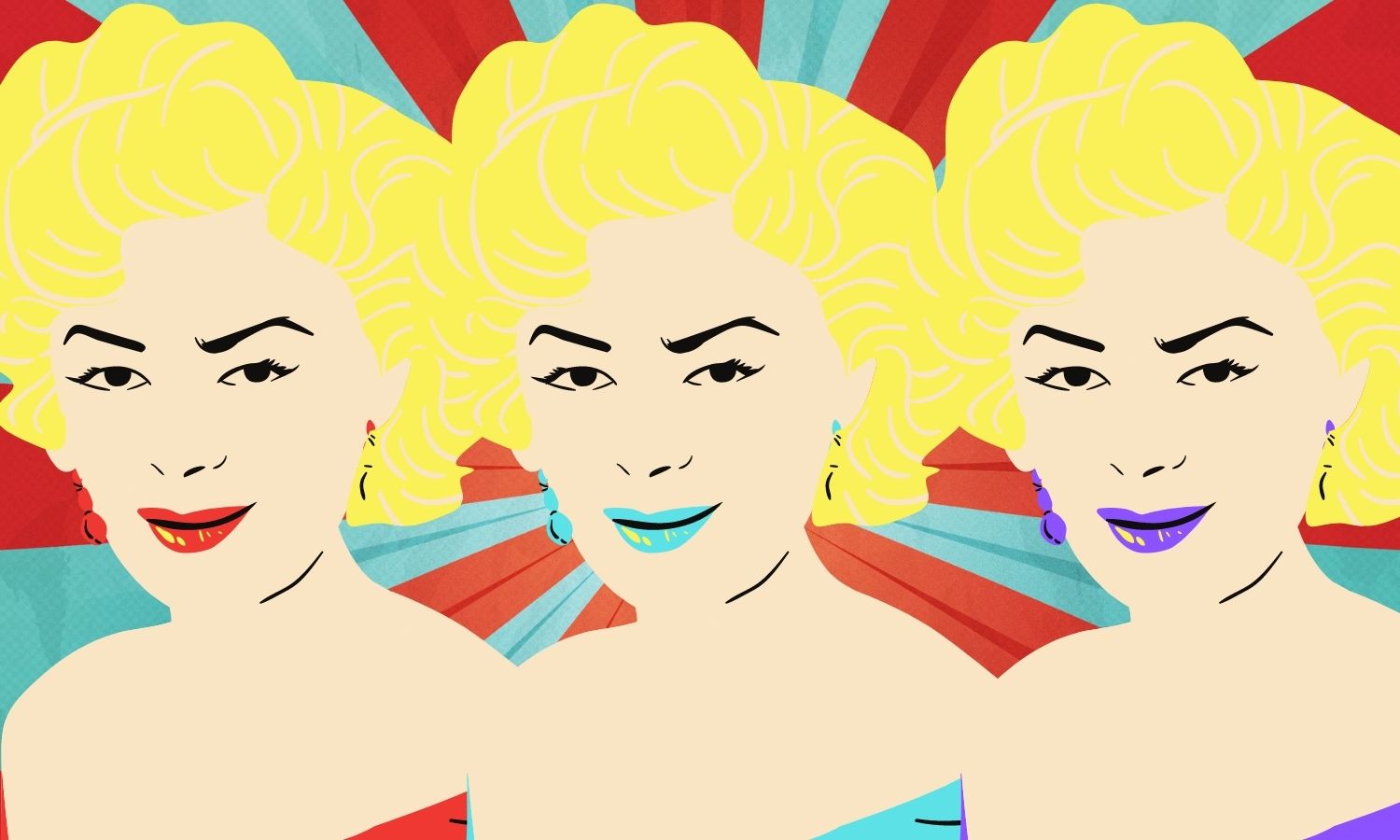
    5 Reasons Why Madonna’s Justify My Love Video Is a Masterpiece

    Madonna is often knocked these days. Whether it’s for having younger boyfriends (good for her, I say), adopting African children, or dressing ‘inappropriately’, Madonna is frequently ridiculed.

    Even when making a statement such as dressing up as a boy scout in opposition to the Scouts in America not allowing gay people to join, Madonna was slated and told to dress her age. The whole point of what she was doing was missed. It’s frustrating, but I doubt Madonna cares. I have always admired her for doing things on her own terms and having a don’t give a f**k attitude.

    Over the years I have accumulated many favourite Madonna moments. Whether it’s snogging with Britney, supporting gay people and Pussy Riot when in Russia, putting on a triumphant performance in Evita (she should have won an Oscar for that), or refusing to grow old gracefully, I adore the woman. But my absolute favourite Madonna moment is her video for “Justify My Love”. It is a masterpiece. I’ll tell you why.

    1. Sex

    Human sexuality and the act of sex fascinate me, so it’s great to see various facets of that in the video. Sex is a natural human behaviour and I enjoy seeing it portrayed in artistic glory. It’s not done in a trashy, sluttish way the likes of Rihanna would put in their music videos. It’s shot in an artistic way. It’s filmed in black and white, features the art of tease, and plays with varying genders and sexualities. It does not feature women bouncing their bottoms and boobs about like so many music videos do in these modern times. Those young girls who are in the charts today can learn a lot from Madonna and should explore her back catalogue of excellence.

    2. Gender Bending

    Men dressed as women and ladies dressed as fellas. I like it. I like it a lot. Especially as it’s not done in a way that exploits cross-dressing and makes those who partake in it look like freaks. Again it is a natural part of being a human. Self-expression should be treasured and that extends to people having the right to dress in any way they choose. It’s a positive portrayal of something that still largely remains behind closed doors.

    3. Gay and lesbian romping

    In the early 1990s. In a music video. I cannot think of another music video from a mainstream artist that features such a thing. Madonna was a trailblazer. I can only commend her for that.

    4. Poor is the man whose pleasures depend on the permission of another .

    That’s right. Unless of course, someone wants to be submissive and allow another person to dominate them. Which is ok of course. Human sexuality can be so fluid and rarely stays within the confines of what is perceived to be the norm. We all have our kinks and things that do it for us. I simply love that quote from the song and how the whole sub/dom topic is covered in the video. It’s a breath of fresh air.

    5. The dancer covered in black paint.

    He is a bizarre addition to proceedings but at the same time is utterly fabulous. He has me captivated as he winds his body into all sorts of shapes. I can only dream of moving like that.

    So there we have it; five reasons why Madonna’s Justify My Love video is a masterpiece. It’s five minutes of artistic brilliance. I cannot think of a video before or since that covers such a topic in a positive and empowering way. The act of sex in its various forms, cross-dressing and fluid sexuality tend to kept behind closed doors. I feel we are quite prudish in this country at times. Personally, I am quite open and talk about sex with great ease. There’s is nothing that fazes me. Perhaps my past working in sexual health has made me more open. Or perhaps I’m just filth. Either way, I applaud Madonna and thank her for the gift of “Justify My Love”.

  • OPINION: Are Lesbians More Accepted Than Gay Men

    This is a question that I think I already know the answer to; of course lesbians are more accepted. But why? What is it about lesbian women that make them more accepted by society than gay men?

    I believe there to be a number of reasons why lesbians appear to be more accepted than gay men. Some reasons are more ridiculous than others. I’ll begin at the bottom of the barrel.

    1. Lesbians are hot. Is that so, Mr Straight Man? Of course it is ridiculous that so many straight men don’t mind lesbianism because they think the women are hot. If they stopped for a moment and removed their brain from their pants they would realise that not all lesbians are like the women one sees lezzing off in a porno. Once on a night out the ten women I was with began to kiss each other. People applauded and cheered them on. Yet when I kissed another man that excitement turned to outrage and somebody threatened to beat me up. People should not be objectified and that includes lesbian women. They’re not some super hot breed of human, you know. They are normal just like the rest of us.

    2. Lesbianism is seen as being fun and playful in pop culture. Remember when Britney and Madonna snogged? A few eyebrows were raised but most people thought it was fun. Then there’s Katy Perry singing about kissing a girl and liking it. See it’s cool to be a lesbian. And now masses of school and college girls come out as lesbian so they can be cool too. It’s so en vogue. Can you think of an instance where a famous male has done the same kind of thing? I can’t recall a single moment of man on man action akin to the Britney & Madonna smooch or a song like Katy Perry’s that is sung by a man and is about kissing another guy. This is another example of double standards in humanity.

    3. Society is used to seeing women being affectionate towards each other. This is quite an important point because it is true that women can hold hands, hug, kiss or dance with each other and people don’t necessarily think they are lesbians. Yet when two men do the same things they are labelled as gay and there is instantly a stigma attached to that. Recently I was at a pub and decided to dance with a male friend while someone was wailing Adele on the karaoke. People thought that because I was slow dancing with another man that he must have been my boyfriend. Nobody thought that my two female friends were lesbians though, even though they actually are.

    4. Women can wear men’s clothing but when a man wears women’s clothes they are viewed negatively. When a woman wears a top meant for men it’s ok because they are just a bit of a tomboy. Even if they are out as lesbian it still doesn’t matter because society is so used to seeing females wearing clothing meant for the opposite gender. But if I was to put on a dress and walk along my local high street I would be ridiculed and stared at. This is yet more double standards and one that really bothers me. I don’t know why clothes have to be gender specific in the first place. So from this perspective it is easier to be a lesbian than a gay man too.

    5. People think about the sexual acts. For this point I refer to the great Queer as Folk, in which I remember one of the characters saying that young Nathan being found out to be homosexual wasn’t about being gay; it was about cock and the fact he likes it. Expanding on this I think that attitude would also include the act of anal sex. A lot of people find it disgusting or against nature (although many heterosexual people secretly indulge in it). Although the thought of lesbian sex or men fornicating with women makes me feel a bit queer, I don’t think it’s disgusting at all. Sex is a natural act in most of its forms and it is frustrating that because someone may take it up the bum they are not as accepted as two women who do other, more socially acceptable things in the bedroom. With so many men not actually engaging in anal sex, it is quite an ignorant attitude to have.

    There we have it; five reasons why I believe lesbian women are more accepted than gay men. Maybe some lesbians would feel differently about this and think that it is easier for men to come out as gay than it is for them to come out, but from my perspective it is more difficult for gay men. I am aware that some parts of the points I made above could be seen as making light of a topic, but I do think that each point has a serious contribution to how lesbian women and gay men are perceived in this society.

    Ultimately the coming out experience can be difficult for anyone, regardless of whether they are lesbian, gay, bisexual or transgender. Perhaps to say coming out and being accepted is easier for one group compared to another is a bit of a generalisation, but it’s a generalisation that I believe exists. The most important thing in life is self-acceptance though. If you can master that then the rest is a breeze.

    Do you think gay men have it easier?


  • OPINION | Is there a need to come out?

    Coming out as gay can be an apprehensive time of life. I’m sure most of you will be aware of that feeling of dread that becomes all-consuming when considering revealing your sexuality.

    What if people don’t accept it and your family disown you? What if you end up with no friends? Such questions spark a panic within, but then we take the plunge anyway with something along the lines of “Mum, Dad, I’m gay”. Should we have to come out though?

    My coming out was in a far less civilised manner than quietly announcing to my parents that I am gay. During an argument, my Dad asked me if I’m a queer. I shouted, “yes I f***ing am actually”. Drama ensued, but I won’t go into that right now for this is about the need to come out.

    The first time I began to debate this topic with myself was when I had not long come out. I spent weeks telling everyone I knew that I was gay and began to thrive on people’s reactions. But then one day one of my friends said “and…” when I excitedly told her I am gay. She could not care less. I was offended at the time as this was the first instance I had come across someone who didn’t react with excitement or horror to my big news. How dare she not be bothered, I thought. However, as it began to sink in I slowly realised that I actually appreciated her response. Being gay was not an issue to this person. She only cared about the person within; the heart and soul. I guess that is why I was her friend.

    From that moment I held back on telling people about my sexuality. I didn’t begin to hide it, but I would only talk about it if it was part of a conversation that involved discussing personal stuff. I considered the fact that I had not changed as a person and therefore it shouldn’t matter. Why should I be defined by my sexuality?

    That is how I carried on living my life until recently I began to change my opinion again. I have received a lot of press coverage recently due to organising my county’s first ever Pride event. I didn’t consider it at first, but the media coverage has been effectively outing me to the public. It made me feel slightly uncomfortable until I realised that it is probably a good thing for people to see a positive visible representation of a gay man in the paper or hear that on the radio, which brings me to answering the question; is there a need to come out?

    While not a profound need to reveal one’s sexuality, I do feel it is important to be visible. I am all for people having the right to keep their sexuality to themselves. That should be respected. But I do think it is important for people to open about their sexuality. It is only with increased visibility and openness that society and the world around us becomes a more tolerant place.

    If we didn’t have so many out people, would we be living in a generally tolerant society? I’m not sure that we would. With people remaining in the closet there would be no visibility. How can a society progress when it comes to something that can’t be seen? Of course, I’m looking at the bigger picture, but I see it as vital to always consider the bigger picture. To bring it down to a basic level and look at whether there is a need to come out to friends and family, then I think there is… for now.

    We still live in a world where everyone is assumed to be straight unless informed otherwise. Personally, I feel there is a need to come out if you are to have an open relationship with those close to you. How can there be a fruitful family relationship or friendship if a significant part of your being is kept a secret?

    Ultimately I believe in individual choice and people having the freedom to come out or not come out on their own terms. Surely the world would be a better place if everyone was out, though.


    Opinions expressed in this article may not reflect those of THEGAYUK, it’s management or editorial teams. If you’d like to comment or write a comment, opinion or blog piece, please click here.

  • OPINION | Outrage and Fear: The Return of ‘Section 28’

    By now most of us will be aware of the news that some schools in the UK have Section 28 style policies regarding sex education. While it’s not a complete return to the dark days of the actual Section 28, it is a worrying discovery and one that concerns me enormously.

    I was at school from 1989 until 2002. That was the period in which Section 28 was in force, eventually being repealed in 2003. While the law banned the promotion of homosexuality, it actually did more than that and had damaging consequences for gay youth. I was one of them.

    I went to a Catholic school so there was no sex education of any kind, but there was very much a culture of homophobic bullying. Whether someone was gay or simply perceived to be, their life would be made hell and the teachers would turn a blind eye to it. I was one of those kids perceived to be gay.

    I came out to friends when I was 15, but I was never out to anyone at school. In primary school I was racially bullied for having a dark skinned Mum and a white Dad, but as we all moved on to secondary school and it was more noticeable that my only friends were girls, the bullying soon became homophobic.

    Daily taunts about my perceived sexuality became the norm. The teachers could see and hear what was happening but never once intervened. In particular I remember a school trip to Devon. During the week long trip it was absolute hell. I had to share a room with several boys in my class and put up with their name calling. On the bus home it all came to a head.

    The other lads began singing homophobic songs at me. The song ‘YMCA’ was changed to ‘why is he gay’, and the dance track ‘Til I Come’ by ATB (gives you an indication of how long ago it was) was changed to ‘Til I Bum’. It seems quite silly and I laugh about it now, but at the time it hurt and did a lot of psychological damage. The teachers on the bus could hear what was going on. I asked them to tell the other boys to leave me alone. The teachers ignored me. I had to put up with the taunting for four hours and had no escape.

    Another occasion was when I had an altercation with a boy in my year. It was Monday morning and I had spent the weekend with my then friend. Alone on a Saturday night, we became intimate. On return to school on Monday morning I was greeted with hostility from him. I was called a “f**king poof” and he kicked me. My response was to punch him, so that is what I did. I’m not proud of how I responded, but I couldn’t take the bullying any more.

    The teacher had been out of the class when the incident occurred but soon found out about it. I was summoned to the Head of Year’s office to be reprimanded. I explained what had happened (not the intimacy leading up to what happened, but the fact I was called a homophobic name and kicked first). The Head of Year told me that he did not want to hear about that and then suspended me for being violent. I appealed to him but it fell on deaf ears. I was ordered to leave school immediately.

    At that point I was devastated. I had already begun harming myself because I could not take the homophobic bullying and that situation tipped me over the edge. From my perspective the teachers were letting it happen. They knew exactly what was being said and done, yet did nothing to stop it. It was the same for other gay kids at my school. They were also taunted and bullied in front of teachers, but got away with it.

    I’ve opened up about my experiences because I want to show what damage Section 28 style regulations can do to gay youth. They have the potential to cause lasting psychological problems and that it why I am so outraged. But not only am I outraged; I am also fearful. I worry about today’s gay youth having to go through the same experiences that I and other gay people went through during the period of Section 28. It wasn’t just about sex education; it shaped the whole culture of the school. History cannot be allowed to repeat itself.

    I currently run an LGBTQ youth support charity. One of the things I am trying to do is engage in dialogue with local schools to find out exactly what they do to challenge homophobia and work with them on improving that. Most schools now have anti-bullying policies that include challenging homophobia, but the cynic in me sees those policies as being a facade rather than something that is actually implemented. Engaging with local schools has proven to be incredibly difficult, with most not responding to my letters or returning my telephone calls. However, the one school that did get back to me was the school that I went to.

    I had been particularly strong in my letter to them, detailing my experiences and wanting to know what they were doing now to challenge homophobia. It appeared to do the trick and I was invited into the school to speak to the Head Teacher.

    I took along one of my volunteers who also went to the same school. That person is a trans male coming towards the end of the transition process. Together we spoke about our experiences and outlined what we feel the school must do to prevent today’s youth going through the same experience. The school welcomed the suggestions and have promised to work with me on some anti-homophobia/transphobia initiatives. Whether it happens is another thing, but it has been a positive step. The school seem to genuinely want to improve the way they deal with homophobia and now have a ‘respect’ day where sexuality and gender identity is discussed just as openly as race, religion and disability.

    In another positive twist, I bumped into one of my former teachers at an awards ceremony last year and received an apology from her for not intervening when I was being bullied. She specifically blamed Section 28 and said that her “hands were tied”. I accepted the apology as I believed it to be sincere. And yes I did cry a little bit.

    It appears clear what needs to be done regarding these Section 28 style policies. There needs to be intervention from the local education authorities and Ofsted to get clarification of exactly what the policies mean. Also as a society we need to be vocal and say that this is not something we will stand for; that we will not allow another generation of gay youth to be persecuted.

    But to end on a positive note, I am aware of one school in Warwickshire that has an openly trans pupil who is now living as a female and is allowed to use the female changing rooms and toilets. That pupil has not been bullied and is one of the most popular and loved people at the school. The teachers have worked with the pupil’s family on helping that person live openly as a female and begin the process of transitioning. So although we only tend to hear the horror stories and negatives, let’s also keep in mind that in general things really are getting better.

    Opinions expressed in this article may not reflect those of THEGAYUK, it’s management or editorial teams. If you’d like to comment or write a comment, opinion or blog piece, please click here.

  • OPINION | Big Boy, Flash That Flesh

    I am currently living next to a building site. A pub has been demolished and in its place will be some affordable family homes. How wonderful.

    Part of me mourns the loss of the pub, but another part of me welcomes the gaggle of hot builders that have begun to frequent the site. As the weather has been rather nice recently, the hot builders have been working topless. Obviously, I approve of such behaviour. Then on a hot, sunny afternoon one of the builders made a huge error. He took his top off and revealed his flabby physique to the world!


    As I casually stood in my kitchen with a friend looking out of the window at the talent on display, my friend became disgusted when the larger guy took his top off. I also noticed the other builders winding him up about having his man boobs on display. Personally, I applauded him.

    I have found that in general we are fine with people showing a bit of skin during summer unless they are overweight. I have heard some quite nasty comments about larger people who have dared to wear shorts or take their top off. My opinion is quite the opposite. Why should people have to hide their bodies because they don’t adhere to maintaining an aesthetically pleasing physique?

    The answer is that they shouldn’t.

    Whilst I am all for people having a type that they find attractive, I don’t believe that anybody has the right to criticise or judge someone for being overweight and taking off some items of clothing.

    But then it’s not just about being overweight either. What if somebody who is quite hirsute too decides to take their top off? I’ve witnessed people pretend to vomit when a big hairy guy has taken their top off. Does it really matter? If someone has the confidence to take their top off in public, I say more power to them. I haven’t got that confidence. But then that stems from the kinds of reactions I have just covered.

    Recently I went to Ibiza and for the first time in my life I took off my top and got into the hotel pool. Nobody cared that a big hairy guy had jumped into the water. They just carried on about their business. Perhaps they were just used to tourists like me getting it all out.

    Back in Blighty I have started to go swimming at a local health club. This is after not going swimming in a public pool for ten years due to negative reactions and criticism of my body. It has been a big step for me to take and I was apprehensive about getting undressed in the changing rooms and walking around in just my swimming shorts. With a bit of support and encouragement from my partner I have managed it.

    I am beginning to gain some of the confidence that has become lost over the years. I shouldn’t have to hide away because my body does not appeal to some people. If I was to go topless it would be for me rather than other people, and that is the way to look at it.

    So, big guys, hairy guys and big hairy guys, be proud of what you have. Flash the flesh if you want to and truffle shuffle in the face of anyone who doesn’t like it. You have the power.


    Opinions expressed in this article may not reflect those of THEGAYUK, its management or editorial teams. If you’d like to comment or write a comment, opinion or blog piece, please click here.

  • OPINION | Has pride lost its way?

    Pride events have been happening in the UK since the 70s, with new ones currently popping up every year. But have they lost their original meaning? Are they now just about getting drunk and partying?

    I think so.

    For me Pride events are essential. They provide an opportunity for the LGBT community to be visible and show the world that they exist in many forms. However I do feel that over the years the original meaning of Pride has been lost. When the first Prides started taking place all those years ago it was a human rights and political movement aimed at showing we exist and want the same rights and freedoms as everyone else. Cut to 2013 and it seems to be a big party and the activism slant appears to now be a small part of the wider occasion, certainly from the Pride events that I have been to. They are now huge commercial events and people only seem interested in what performers there will be and which club to go to in the evening. It really saddens me because I believe there is so much more to Pride.

    This year I went to Birmingham Pride with the LGBTQ youth support charity that I run. We marched in the Pride parade with placards referencing comments made by MP’s in the marriage equality debate. It was slightly tongue in cheek but the meaning was clear. It was about politics and the rights of LGBT people. It was a protest. It was also probably the best Pride experience I have had. I felt like I was spreading an important message and doing my bit for our rights and freedoms. Admittedly I did then party a bit and watched the Cheeky Girls (to my slight embarrassment I am a huge fan), but the day wasn’t all about the party.

    With all of those things in mind, I began setting about organising my county’s first ever Pride event, Warwickshire Pride. There’s a growing buzz around it and many people are asking who will be performing (Chica Latina from Britain’s Got Talent if you must know), but the emphasis of this Pride is on celebrating diversity and highlighting what Pride events were originally about. The strap line for Warwickshire Pride is ‘celebrating diversity in the community’ and that’s what it’s all about; bringing people from different communities together and demonstrating the struggle that LGBT people have had whilst also showing the massive progress there has been. Yes, there will be performers and entertainment through the day. Yes there will be a huge after-party when the sun sets. But Warwickshire Pride will primarily be a peaceful protest with a message.

    Warwickshire lags behind many parts of the country, with much homophobia and opposition to the progression of our rights (I’ve personally been beaten, abused and barred from a pub for being gay), so perhaps that is a reason why I feel the need for this Pride to have a big element of activism as part of it, but I truly feel that it is an element that Prides up and down the country would benefit from introducing more of.

    Pride started off as a protest. It still should be.


    Opinions expressed in this article may not reflect those of THEGAYUK, its management or editorial teams. If you’d like to comment or write a comment, opinion or blog piece, please click here.

  • OPINION | When Pride Was About Pulling

    Gay Pride events, what wonderful things they are. These days I like to get fully involved in the true meaning of pride and have an active role in community aspects of it.

    I am even organising my county’s first ever Pride (www.warwickshirepride.co.uk). But there was a time in the not too distant past when going to Pride was all about pulling.

    One year when I was particularly ‘mad fer it’, I went to Birmingham Pride with the intention of getting extremely drunk and copping off with as many guys as I could. How disappointed I was when it didn’t work out quite like that. What was even more disappointing was seeing each person I was at Pride with getting off with someone or at least having somebody show an interest. Even my heterosexual step-mother got hit on by a lesbian, but I had absolutely no interest in me at all. I know, how can that be possible?

    I spent the afternoon at the famous Nightingale Club in Birmingham with my friends and step-mother. It was a typically rain drenched Pride day so we had decided to take shelter and get drunk. I went to the toilet with my step-mother to get dried off. At this point a guy armed with a bag full of hairdressing equipment said he would style my step-mothers hair (as you do in a unisex toilet at Gay Pride – anything goes, I guess). Upon leaving the toilet my step-mother had been transformed from a drowned rat into a glamourpuss courtesy of the dude carrying a hairdressing kit around Pride all day. As she strutted towards the bar, heads were turning and one particular woman walked up to her and said “alright darling”. My step-mother thought it was hilarious. I was horrified. Why was she getting hit on and I wasn’t?

    I eventually saw the funny side of it and continued with my plan to pull. Once my step-mother had gone home and I was more able to misbehave, I began picking out the guys that I wanted to get jiggy with. Alas, more disappointment awaited. Nobody reciprocated the not so innocent feelings I had. Worse still, a girl I was with pulled a woman and my male mate pulled a man dressed as Queen Elizabeth 1st, which was quite bizarre actually.

    Eventually, I resigned myself to the fact I wasn’t even going to get a Pride snog. So I got very drunk and shook what my mama gave me in the club that night. But the next morning something unexpected happened.

    I was sharing a hotel room with my friend who had previously decided he was into guys that dress as Queen Elizabeth 1st, and somehow found myself in a tryst with him. It was nice. It was familiar. It wasn’t what I had intended, but sometimes these things just happen.

    So although I did pull, I don’t really count it as it wasn’t with somebody I didn’t know. I went home feeling incredibly disappointed that I had failed in my task. My strike rate had been very high, but perhaps I just tried too hard that weekend.

    Looking back, I am not too impressed with the way I conducted myself and now realise there is so much more to life than getting off with guys, and indeed more to Pride than pulling. However, on the other hand, I am glad I was like that because it has provided me with plenty of entertaining stories to tell my mates down the pub, and also some that I can share here.

    However you view Pride and whatever you get up to while you are there, the only thing I must insist on is that you have pride in yourself and enjoy it. If you see it as an opportunity to pull, then go for it and be safe. If you see it as a time to protest and focus on the issues that LGBT people face, then I salute you and again say go for it. Pride can be whatever you want it to be.


    Opinions expressed in this article may not reflect those of THEGAYUK, its management or editorial teams. If you’d like to comment or write a comment, opinion or blog piece, please click here.

  • MADONNA | A vintage gay icon who continues to reign supreme

    Madonna gets a lot of flack these days. Whether it’s for flashing the flesh ‘at her age’ or dressing up as a Boy Scout, there are plenty of people who knock her. But referring back to the day that Madonna dressed up as a Boy Scout, many mainstream media outlets chose to ignore the reason why she did it, instead choosing to use it as an opportunity to have a dig at her.

    The incident I am referring to is when Madonna recently attended the GLAAD awards in a Boy Scout uniform to protest against gay people not being allowed to join the Scouts. It was a fantastic display of support and solidarity from someone who has long been a vocal supporter of gay rights.

    In another moment of brilliance last year, Madonna also protested against Russia’s anti-gay laws, whilst also protesting about the incarceration of Pussy Riot. This led to a member of the Russian government calling Madonna an ex-whore and the great lady even received a court summons. What is great about that occasion and the dressing as a Boy Scout incident is that Madonna is very aware of what she is doing and knows that her doing something like that will bring focus on the issue.

    In recent years Madonna has also criticised discrimination of gay people in Romania whilst on tour there, released a statement condemning the jailing of two gay men in Malawi who had celebrated their union with a ceremony, and urged people to support same-sex marriage in New York.

    Turning back the clock and remembering what makes Madonna a vintage gay icon, one thing that stands out for me is the video for her 1990 hit Justify My Love. At the time the song was released, to critical acclaim, the accompanying video caused controversy and was banned by MTV, the reason being its sexual nature. The video features androgynous characters, bisexual romping, lesbian action and all sorts of other sexual delights. Nobody else was doing that kind of thing at the time, and I can’t think of anyone who has things like that in their music videos in the present day either. In terms of LGB visibility it was fantastic. It showed the world that we exist as sexual beings.

    Looking at some of Madonna’s other songs, Deeper and Deeper from the Erotica album is about a gay person who is struggling to come to terms with their sexuality, Vogue is about the underground dance move that came from the gay bars and discos of New York, and another track on the Erotica album, In This Life, is about Madonna’s gay friends who died of AIDS.

    Even before the release of those songs, Madonna was one of the first major stars to get behind AIDS causes. From the artist Keith Haring to the photographer Herb Ritts, many of Madonna’s friends were gay men and many of them were dying from AIDS. Madonna supported those people and causes when it was still taboo and nobody else would.

    Ending the journey at the beginning of Madonna’s passage to becoming a gay icon, it was her ballet teacher Christopher Flynn who first introduced her to the gay bars of Detroit. Christopher Flynn also encouraged Madonna to move to New York to pursue a career as a dancer. Once in New York, Madonna began to make friends with gay people, drag queens and rent boys. The rest is history.

    For me, Madonna is the ultimate gay icon. She may be a very obvious one, but the facts are there for all to see. Madonna may be knocked by many for showing her bum or a bit of boob, or for adopting African babies or having boyfriends who are young enough to be her son, but one thing that Madonna cannot be knocked for is her contribution to gay rights and culture. We have a lot to thank Madonna for and for me she is the ultimate ally for friends of Dorothy; a vintage gay icon who continues to reign supreme.


    Opinions expressed in this article may not reflect those of THEGAYUK, its management or editorial teams. If you’d like to comment or write a comment, opinion or blog piece, please click here.