Author: Stuart M Bird

  • CAR REVIEW | Fiat Tipo S-Design

    CAR REVIEW | Fiat Tipo S-Design

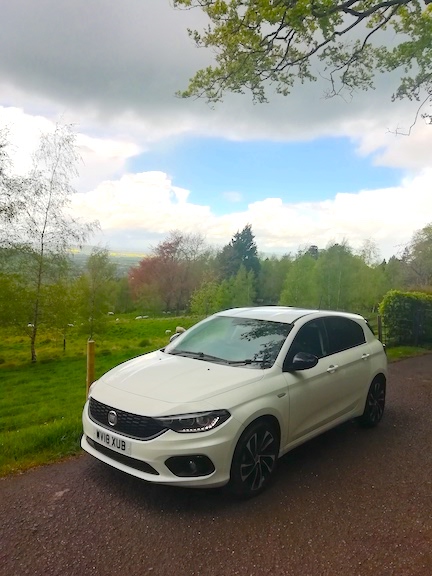
    ★★★ |  S-Design Tipo In Need Of An Architect.

    What Do We Have

    A couple of years ago, we took delivery of the then-new Fiat Tipo. A new Fiat with a reused name. No hardship there because the original Tipo was a very good car.

    We liked the new Tipo when we last had it back in 2016 and I favoured the car well. Do I feel the same in 2019?

    Driving.

    Nothing has really changed here. We have the same 120bhp petrol turbo 1.4 engine. It was as good as I remembered it. Smooth and flexible with reasonable performance. Not quite the fire-breather you’d think 120bhp should be but it is good for a claimed 124 miles per hour.

    Handling was well balanced and it soaked up the worst of the country lanes around the Cotswolds.

    A comfortable driving position was easy to obtain and there were no annoyances. It felt as good as the rest in the segment.

    Inside.

    It’s not as good this time around. It’s amazing how dated it has started to look with its black plastic everywhere. I’m a little stuck as to where the S-Design sits. The Design moniker is used by a lot of manufacturers these days as something stylish over the other models or sporty. I was not seeing anything outstandingly relevant to this moniker. 

    Driver’s controls all come to hand easily. The 7” touch screen is simple to use and nicely balanced with easy registered finger controls. It comes with Apple Car Play and Android connectivity as standard.

    Living With It

    There are few vices to be had with the Tipo. It’s a simple and effective 5 door hatchback.

    While inside it has dated a little, the exterior is still as good today as it was when new. The fact there are several newer cars with similar rear ends, shows how relevant and modern its design still is.

    Verdict.

    Tipo is no longer the bargain it once was. At £19,125 it does seem quite a lot despite it having a list of standard key features. But these features seem almost standard fit on most cars these days.

    But here lies the problem. It’s effective and not much else. Effective hatchbacks are good but sometimes a model needs some sex appeal. It’s crying out for some true meaning to the letter S like sumptuous. 

    Love

    Build quality 

    Looks

    Ride refinement

    Loathe

    Co2 is on the high side

    Arm rest fouling handbrake

    High price

    The Lowdown

    Car –  Fiat Tipo S-Design

    Price – £19,125 (as tested)

    MPG – 35.3 mpg (combined)

    Power – 120bhp

    0-62mph –  9.9 seconds

    Top Speed –  124 mph

    Co2 – 164 (g/km)
  • CAR REVIEW | Fiat Doblo Maxi Cargo Sportivo

    CAR REVIEW | Fiat Doblo Maxi Cargo Sportivo

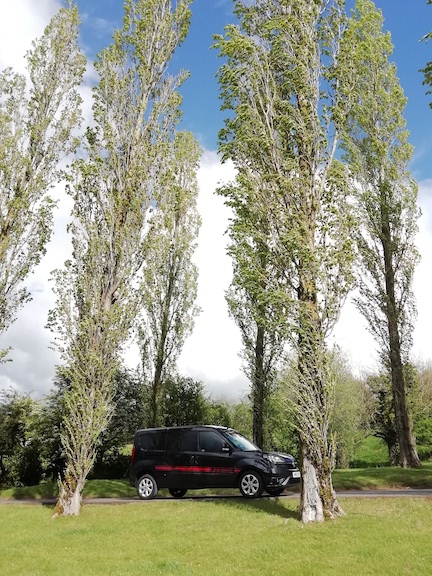
    ★★★★ | Fiat Doblo Maxi Cargo Sportivo, Sports Delivery

    What Do We Have

    Here we have Fiat’s Doblo Maxi Cargo Sportivo van. Maxi Cargo because it has been built on a lengthened chassis and Sportivo because it has some fancy go faster stripes along the side. 

    To me, it’s a sort of throwback to the ’70s when people made their vans look a little more sporty and less utilitarian.

    But does that ageing 70’s vibe resonate into today’s Doblo van?  A van, in its current form, that has been with us for the past 9 years. THEGAYUK took one out for a spin at a recent Fiat range review.

    Driving

    Some time ago, I wrote a Good, Bad and Ugly on the 2005 – 2009 Fiat Doblo. I said the Doblo was a good van and some 10 years after that one ended production, the current one available is as good with just about the same amount of Fiat style as the last.

    As an unloaded van, you would be right to imagine that the handling was on the light side. That said, there was no excessive bouncing coming from over your shoulders.

    The engine, 120hp turbo diesel unit pumps out all its power around a useful 3750rpm. Max torque of 320nm is at a relatively high 1750rpm. In practice, this means that you have to keep the engine slightly in the noisy area to get the most from the performance. And you’ll want to do this because as vans go, the Doblo can be rather engaging to hustle around.

    Inside

    The cabin is the usual mix of cubby hole and storage bins all set into sturdy wipe-clean plastic. It seats 2 on what are rather comfortable seats offering good support. The passenger seat comes with a storage bin underneath.

    The driving position is still the same as the old model with ankle position not being the most comfortable. Thankfully, all minor and major controls are readily to hand and easy to use.

    Living with it

    Twin side sliding doors give access to the rear area and an added bonus is the fully wooden-clad cargo area which keeps it clean. Access through the rear of the van is the usually twin rear doors with a 40/60 split that open at both 90 degrees or 180 degrees. Convenience is also aided with remote central locking on all doors.

    The payload is on par with this size of van at just over the 1-ton mark.

    Verdict

    As small vans go, the Doblo Sportivo offering from Fiat could be purchased as your one and only car if, like me, you like vans.

    Equipment levels are generous and Fiat fit a host of safety and convenience features as standard. Colour coded bumpers might be stylish on your car, but can become somewhat of an eye-sore with a hard used commercial vehicle prone to being knocked around. Thankfully there are reverse sensors that can offer some protection for the rear bumper.

    What is nice to see is standard cruise control fitted though it doesn’t have adaptive cruise.  Along with electric front windows, it also comes with heated and folding door mirrors.

    Love

    Sporty looks

    Standard specification

    Driving engagement

    Loath

    Clutch pedal position

    Economy not as good as the competition

    Dull interior

    The Lowdown

    Car – Fiat Doblo Maxi Cargo Sportivo 1.6 Multijet-2

    Price – £20,640 (as tested)

    MPG – 54.3

    Power – 120hp

    0-60 – UA

    Top speed – 105mph

    Co2 – 135g/km

  • CAR REVIEW | Fiat’s 500X For The Bigger City

    CAR REVIEW | Fiat’s 500X For The Bigger City

    CAR REVIEW | FIAT 500x

    What Have We Got

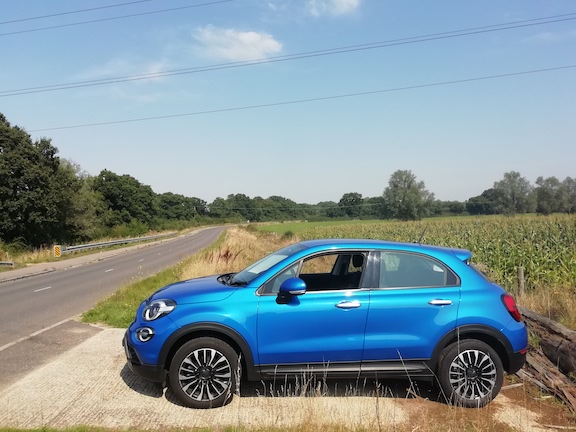
    Fiat’s big 500 crossover SUV has been with us now for over 5 years. 2019 saw some changes to the line-up along with some updates. The 4WD model is no longer offered and power comes from a choice of 3 and 4 cylinder petrol engines.

    THEGAYUK was given the 1-litre turbocharged 120hp Firefly engine in the Cross Look for a week. A more urban looking 500X with the chunky looking bits of an SUV.

    Driving

    The first thing to strike you about the new engine is its brio of power. On paper, it doesn’t appear spritely. In use, it really is. Keep it boiling at 3000rpm and you’ll find it useful. This way it is always ready for action the moment the pedal is pushed down. Anything less and it’s all a bit lethargic with a touch of lag.

    What helps making it go forward is the slick gear change. The clutch and gear action is a joy to slot around when you want to get a move on. And this is good. Recently we had the platform sharing Jeep Renegade in with a diesel engine. That didn’t encourage any form of enthusiasm. The Fiat set up high lights the joys of the chassis.

    What it can’t do however is mask the ride quality. In the city, it is simply too hard. And this translates into a choppy ride. You can’t have it all though. At speed, it becomes taught and agile. That said, however, at night on the motorway, you can see the headlight beams jiggling around.

    Inside

    For a relatively cheap SUV, prices from £18,500, it’s well put together. The front door cards are nicely contoured and there is storage for bottles and the like in both front and rear. The rears are a bit different in that they are made from hard sturdy plastic whereas the fronts have a soft touch feel to them as is the norm for this segment.

    It took me some time to find a suitable driving position.  You certainly can’t say there isn’t enough adjustment for the seats and steering wheel. There is a position for all body shapes. What hampered this was the front seats lack of both under-thigh and bottom support. They were a little flat.

    Living With It

    There are a few things that catch you out about the 500X. Firstly is its size. It feels much bigger from behind the wheel. You do tend to be over-cautious when fighting for space in the urban jungle. In actuality, it isn’t as big as you think. 

    This is also true of the boot. It’s not class leading and not totally useless but if you want your 500 to be a lot more useable than the 3 door city slicker from Fiat, this is for you.

    The verdict

    I wanted to like the 500X. There is much to enjoy about the new engine and the way it drives. It’s light and buzzy without feeling that you want more. Using the 6-speed manual gearbox is a joy and all the controls feel right. It is that ride that I find so disagreeable.

    You won’t drive it on every occasion with the spirit in which it can carry you. It’s illegal to travel at 70mph around town. So the rides sportier set up is somewhat pointless in this car.

    Speaking of 70mph, it would seem the traffic sign recognition sees everything as a 70mph challenge. 

    There were too many times it would show the national speed limit on the dashboard for it to be a one off. Perhaps this Fiat could do with a little bit of Abarth magic. It certainly feels like it wants to.

    Love

    Nippy 3 cylinder engine

    500 Looks

    Light controls

    Loathe

    Choppy Ride

    Slow to respond infotainment system.

    Seats

    The Lowdown

    Car –  Fiat 500x City Cross Firefly 

    Price – £22,100 (as tested)

    MPG – 48.7 mpg (combined)

    Power – 120hp @ 5750rpm

    0-62mph –   10.9 seconds

    Top Speed –  117 mph

    Co2 – 133 (g/km)

    (C) ALL PICTURES: Stuart Bird

  • The Good, The Bad and The Ugly: Rover 200

    The Good, The Bad and The Ugly: Rover 200

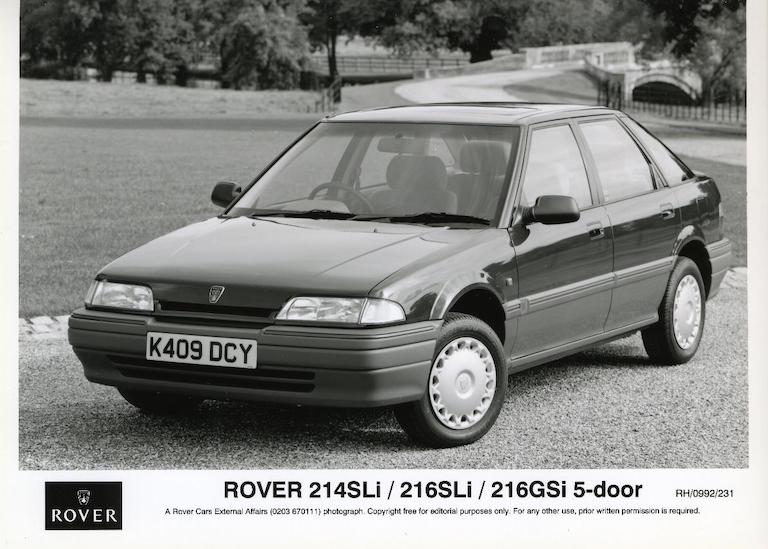
    GBU Rover 200 R8

    1989 – 1995

    Back in the 1980s, I remember being confused about the Triumph Acclaim. It replaced the Dolomite that I really liked and in the line up was no sporty Sprint. I didn’t understand the Acclaim.

    Via the pages of CAR magazine, I soon discovered it was a Honda and I didn’t like Honda taking over our British car industry. To a 6-year-old Stuart, British Leyland was ours. I must also add that I wasn’t aware back then of Red Robbo and the strife and struggle British Leyland were in at the time. 

    The Japanese stepped in and gave us their Honda Ballade. And what a turn around this car was. Imagine if you like, model makers Tamiya and Airfix making you model kit of the same car. The Airfix would be badly moulded with instructions devoid of any real detail. You couldn’t go wrong with the Tamiya kit. It was meticulous in its moulding and it was difficult to assemble it incorrectly. That was pretty much what Honda brought to BL at Cowley. Beautifully precision made parts. 

    Fast forward to 1989 and we end up with the Rover 200 (R8) and the K series engine in particular and yes dear reader, you know where this is going, so pop on the kettle, get that water HOT. 

    This then was an actual Rover that people wanted to buy. And that they did in their droves. Half of the sales went to UK buyers and we couldn’t get enough of the redesigned Honda Concerto. We designed a 3 door hatchback, coupe and estate. These were not available on the Concerto. This was our Rover and we, the British were once again proud.

    The 3 R’s were all there. Reliability, Ride and Refinements were high on the agenda. The fit was like nothing before from Austin or Rover or whoever they were at the time. To be honest, in the years between the Acclaim and this R8 Rover, it felt like they had gone through more reinventions than Madonna or Madge X or like a Virgin up the duff, preaching about it to song and dance.

    Now there was a snag. It just so happens that certain models with a certain engine weren’t as reliable as others in the range. Call it a historic flash back to the past. You see, BL had a tendency to make cars with engines that were known for head troubles.

    Those with a Rover 214 or 216 were pretty much at the mercy of one day coming to their car and finding the bores full of water, which to be frank was the better option. The other was to have the car turn into a boiling kettle on the way to Cornwall for the yearly summer holiday. Stuck at the roadside turning into a game of wishing well all those with a K series fitted in their car as they went by.  

    The Rover 200. A Good car turned Bad by its heart. 

  • Shakespeares Sister. The Singles Party 1988- 2019

    ★★★★★ | Shakespeares Sister. The Singles Party 1988- 2019

    Shakespeares Sister blasted onto the scene back in 1988. I’m a lover of the 80’s and yet this passed me by. The whole of the Sacred Heart album was off my radar.

    When l did notice Shakespeares Sisters on TOTP, it was with their third single, ‘You’re History’. I was puzzled. Was that Siobhan Fahey from Bananarama? I knew she had left and was replaced by Jacquie O’Sullivan but until now, I had no idea where she had gone.

    Fahey was always a little left field in the Rama. You hear stories about the 3 girls getting up to no good, and yet Fahey always looked one step ahead.

    I knew nothing about the other woman with the mesmerising soprano shrill of a voice screeching out “YOU’RE HISTORY” from that song. This was all pre-internet days so I had to wait for the latest Smash Hits magazine to find out. She was an American, born in Michigan and went under the name of Marcella Detroit.

    Here then are 2 women from widely differing areas of music, coming together and making music like no other music out there. Fahey’s deep tones (sometimes with menace in them) blending in with the soprano pitch beautifully of Detroit’s.

    It wasn’t until their second album, Hormonally Yours in 1992 that l really took notice albeit not from their biggest hit ‘Stay’ but from ‘I Don’t Care’. I rushed out and bought the new album and Sacred Heart from 1988.

    Suddenly I’m crazy about the Sisters. The tunes, the stories within the music take you all over the place. Little did a 17 year old Stuart know that there was rot building within the Sisters and suddenly the party was over. No third album.

    Actually there was a third album released, titled #3 in 2004. Some 12 years after the Sisters split. I have it (I like back catalogues of artists I like even if I’m not keen on an album) and it’s nothing like what we had heard before. Without Detroit’s voice, Shakespeares Sister is missing the edge.

    And then comes 2009’s Song’s from the Red Room. There is a good vibe about this album that took almost 7 years to release with 3 songs released since 2002 – 2005 and the final to promote the album, the surprisingly genius “It’s a Trip” in 2010. Reviews for this album were mostly favourable.

    But just when the Sisters were at their height, it stopped and nothing since was as successful for Fahey. Detroit did release the excellent though moderately successful ‘Jewel’ in 1994.

    And so to 2019 when I spotted the Sisters talking on breakfast TV. Their vicious split, a thing of the past. Fahey, it would seem had put the demons (whatever they really where) behind her and both she and Detroit had started working together. I was excited.

    And so to the ‘Singles Party’ album. It is a bit of a greatest hits album. There are 18 songs on CD1 from all the albums Shakespeares Sister released and 2 new songs. CD2 is full of 14 remixes.

    It’s ‘All the Queens Horses’ where we find the Sisters kissing and making up and the accompanying video is typical with a hint of irony and malice thrown in. It’s not quite the same kind of music that should have followed from 1992’s seminal album ‘Hormonally Yours’ but it’s a start and to be honest, the Sisters have 27 years of catching up to do.

    The CD does include a booklet with an interview about how they reconciled their differences but you are left wanting a bit more dirt. However, I’m just glad they are back together. Long Live the Queens.

    Available now.

  • The Good, The Bad and The Ugly:  Nissan Micra K11 1992 – 2002

    The Good, The Bad and The Ugly: Nissan Micra K11 1992 – 2002

    The Good, The Bad and The Ugly Nissan Micra K11 1992 – 2002

    NISSAN UK

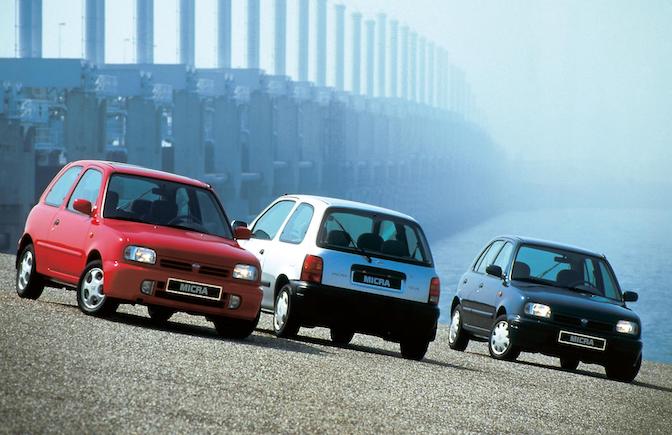
    This second-generation Micra, for those in the UK at least, was a bit of a dullard. Thankfully the ’90s saw the rise of the grey import. Japanese spec’d cars with a host of goodies that were devoid from our options list. Thanks for nothing Nissan UK!

    What came over was the camp as tits Figaro with an equally gay name. There was also the utilitarian styled Pao but these were based on Micra K10. So nothing really great was to come of the K11.

    Or was it? Thankfully we have the Mitsuoka Viewt. A half-arsed attempt at making a Micra look like Morse’s Mk2 Jaguar. It was both awful and eye-catching at the same time. Sort of what BMC did to the Mini in making it the Riley Elf and Wolseley Hornet but less successfully.

    The 1.3 engine gave the Micra K11 a bit of a useful shove. The same could not be said for the 1 litre. It was typical in its behaviour of Nissan’s other NA engines of the time. Drive it like it’s a Sunday, don’t rev it. It didn’t make a rats arse of a difference if you did and if you did, it sounded as exciting as sticking your head under the water in a bath and farting.

    The K11 Micra with 338 points, won “Car of the Year 1993”, beating its competitor, the Cinquecento by 34 points. Renault’s flop, the Safrane came third.

    1993 was a quiet year for the motor industry.

    It was a car that was devoid of emotion and that appealed to the new motoring masses made up of learner drivers. Driving schools couldn’t get enough of them and chances are, if you were born in the ’70s, you came of age learning to drive one.

    In 1992 a school friend got one and her mother took great delight in telling me that “Sarah has a new  Micra-dot” I had an old 1986 Citroen, it cost me nothing so fuck off Jenny! To be honest, I couldn’t have thought of anything worse than having a Micra back then. Even now, I shudder at the thought.

    Micra K11 isn’t good, bad or ugly. It’s a nothing car. Now, in 2019, if it goes wrong, you thrown it away. Trouble is, they NEVER went wrong. Buy one and use it as a chicken shed. At least it’ll have a purposeful use.

  • The Good, The Bad and The Ugly: Nissan Micra K12 2002 – 2010

    The Good, The Bad and The Ugly: Nissan Micra K12 2002 – 2010

    An irrelevant look at a certain car: Nissan Micra K12 2002 – 2010

    PHOTO: NISSAN UK

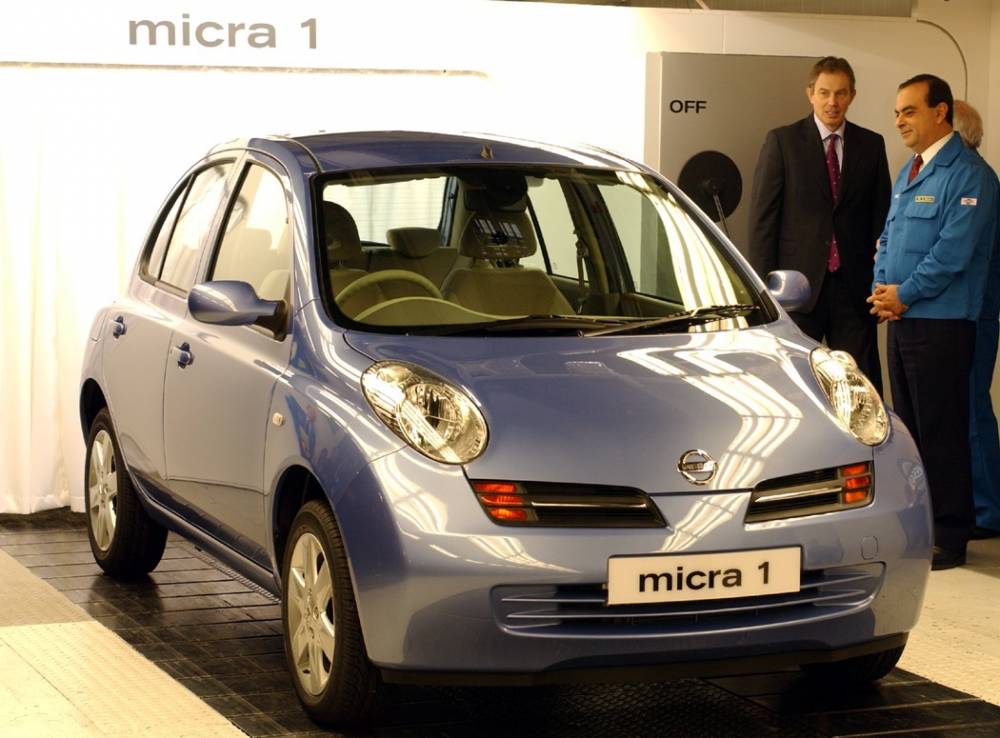
    If someone said “Nissan Micra” to you, you’d visualise a queue of traffic. At the front would be a little Micra either being driven by a learner or old lady. In this third guise, Nissan stuck to its guns and refused to invest in dynamics.

    It continued to make the Micra easy to drive. It also made it easy to repair with big plastic bumpers and with those came bodging. Big plastic bumpers covering the majority of the front, made repairs to a smacked in the face Micra easy to disguise. And good job too. Judging by the number of folded in bumpers, parking accidents were quite rife. And why? Because the Micra had grown in size. In doing so, easy to judge extremities of the little hatchback had become lost.

    This was a bad period for Nissan and even worse for the Micra. Quality was lost. I mean, the Micra was never a quality product in the touchy-feely kind of way. You’d never shut the door with your eyes shut and think “sounds like a Golf”.

    Given time, that absurd notion of that idea would completely evaporate anyway when the central locking unit became vocal. VW’s would have just stopped working. Nissan’s just shouted about it in an audible growl of plastic and electrics.

    PHOTO: NISSAN UK

    FYI, You could get some Nissan Micra merchandise. Just thought I’d let you know. To be honest, I’m trying to find some more words for this GBU.

    In the driving of the Micra, I’m trying to think of a descriptive word to save on word count. Foul is pretty good but then so too is mind-numbingly dull. It was a car that was wasted on good tyres. Forget the standard-fit Continentals, fit remoulds! The vague steering could make even the stickiest racing slicks feel lifeless. Imagine a date with a cast member of Love Island that involved trying to make conversation.

    The previous mach of Micra: PHOTO: NISSAN UK

    Inside it was just as bad. The light Nissan standard grey plastics made way for European blacks. Even the white heater control buttons couldn’t lift the spirits of the coffin. Sorry, cabin.

    I’ve never seen a dead person drive a Micra yet, even though some have looked pretty close. You see, unlike Micra K10 and K11, this new model was avoided by the young.

    You’d never look at a Micra and think what a fun funky car it was. Even the CC with its metal folding top couldn’t lift you desire like a Ford StreetKa did. You just wouldn’t look back at it, the K12 is that ugly.

  • MOTORING | The Good, The Bad and The Ugly:  Seat Marbella 1986 – 1998

    MOTORING | The Good, The Bad and The Ugly: Seat Marbella 1986 – 1998

    The Good, The Bad and The Ugly

    SEAT UK

    An irrelevant look at a certain car.

    Seat Marbella 1986 – 1998

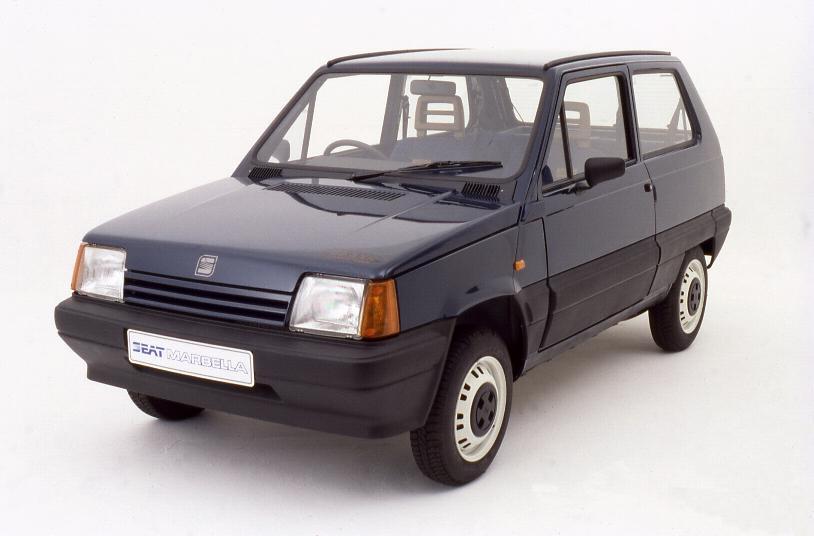
    A holiday in Spain. The guaranteed hot summer breezes off the Alboran seas. Where am I? Marbella. And I’ve painted a rather lovely picture of that seaside resort. The car company, Seat, have a history of naming cars after places in Spain. Their new Tarraco was named after Tarragona. It adds sex and style to the car. That memo might have been lost on the Marbella.

    Seat rhymes with Fiat and Fiat owned a large percentage in the Spanish motoring subsidiary. Well, it did until sometime in the ’90s when it decided to let it go. Seat needed to soldier on and make good what they could.

    So a quick flick with the pencils and over a lunch of paella and a glug of sangria, the Seat Panda evolved into the Seat Marbella. And that was the little car’s problem. It was a Panda. Ok, that isn’t a problem. The Panda of 1980’s design was right on the target. A sophistication package of space utilisation and genius packaging. One of Giorgetto Giugiaro’s finest to this day.

    Problem was, Fiat had the good grace to continue the development of the Panda. It gave it new engines, fancy quality interiors and an Omega rear axle from the Lancia Y10. This, in turn, made the Panda a bit more happier over the bumpy bits.

    Seat’s answer was to give their Panda Marbella some plastic cladding along the sides and a sloping front in the hope that you wouldn’t notice the old-style cart springs at the rear. They hung so low that you had to be quite stupid not to see them.

    And for Marbella, it didn’t really get any better. It still soldered on with the OHV 903cc petrol engine from Fiat’s back catalogue of 1955. Blistering it was not. With a 0-60 time of 19.3 seconds, the Citroen 2CV6 could give it a run for its money. And the 2CV6 was cheaper too. The “nothing available” list of options you could get on your Marbella made the 2CV6 vulgar in its luxurious appointments.

    Surely Seat gave you value for money? Not really. For your 4858, you got a top of the range GLX complete with wheel embellishers and a heated rear screen. For 200 more, you could get the much improved Panda. And Panda also had better resale values too.

    While it had a cute cuddliness about it, it was a bad car. It rode bad, drove bad and sounded bad. You see, while Fiat’s marketing board went into over-drive with a new limited edition every month, Seat and their overpriced and out of date box gave you unpretentious motoring that wasn’t as badly built as it could have been.

    As long as you have access to another car to use, there is something endearingly beautiful about the Marbella. It was closer to the original concept than Fiat’s MK2 Panda and that’s why the no-frills Marbella was the good choice.

  • CAR REVIEW | Volvo V60 Cross Country

    CAR REVIEW | Volvo V60 Cross Country

    ★★★★ | Volvo V60 Cross Country, Volvo’s Luxury Woodland Cruiser

    What have we got?

    Hot on the trail of the newly launched Volvo V60 range, Volvo launch their new “life style” version for those who need a bit more from their estate. When we say more, we mean an added ability to go off the beaten track and into places unknown.

    But has Volvo just jacked up the V60 by 60mm, clad it with some plastic and given it a 4 wheel drive system to make this Cross Country a viable off-roader? THEGAYUK went to find out.

    Driving

    One thing that impresses with the Cross Country is its ability to ride remarkably well on the road. The trouble with raising cars is it tends to at the detriment to the on-road handling dynamics. It’s no R-Design in driving style but then it was never supposed to be. On the road, it had a reasonably good blend of comfort. That increase in height allowing perhaps just a little more suspension travel to compensate. 

    The 187bhp D4 diesel engine spreads the torque power well to the driven wheels through an 8-speed automatic box. Over 25mph, the system automatically selects the front-wheel drive.

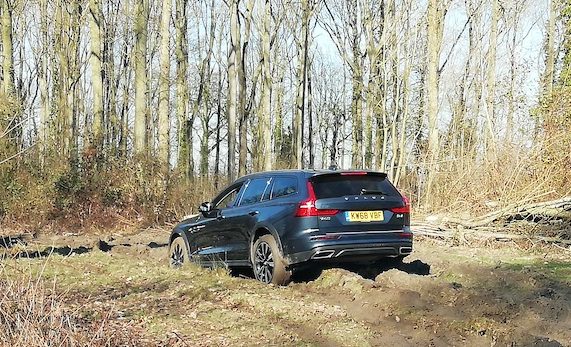
    The XC60’s off-road capabilities are more impressive. Considering these were fitted with on-road tyres, they had the ability to climb a reasonably wet hill with surprising vigour. Hill descent also showed up no nasty surprises either. Locking wheels were attended to by a system with rapid-fire adjustments.

    It has to be said that road tyres will give limited adhesion in the most arduous conditions but Volvo dealers are able to upgrade you to a more suitable off-road rubber should you wish. 

    Inside

    The inside of the V60 Cross Country is identical to the standard V60. In this guise, we had blond leather (probably not the best in a mud plugger), silver trim and quality materials. All adding to the premium feel that Volvo has headed into. It is a class-leading layout that feels a bit like home.


    Living With It

    As with the standard V60’s, there is very little to dislike about it in Cross Country guise. It does all that you would expect a Volvo V60 to do. The boot is the largest in its class and the cabin is nicely made. It just happens to be able to do something else.

    However, it does have its limitations. You need to be aware of the surrounding environment. Doing something stupid, and we mean REALLY STUPID in the V60 Cross Country, will get you stuck in the mud. Read that as: pilot it straight into a muddy bog and it comes to a stop!

    That said, my co-pilot and I almost did get it stuck fast. In typical ‘Gun-Ho’ style we floored it out of what caught out the car in front.  

    Get it stuck and it will result in a long possible overnight stay in the car while you wait for a man in a Land Rover to come and get you. Be sensible and realistic and you’ll be surprised at where this car can take you off the beaten track. Thankfully the cabin on the V60 is spacious and comfortable and the rear load area long enough to accommodate two sleeping bodies.

    Verdict

    This won’t be the big seller of the V60 range. Volvo even predicts it won’t be especially when there are the 3 popular XC ranges within the Volvo family.

    So has this been worthy of all the development hassle? Yes, it has. It uses XC60 architecture so development has already been carried out and proven. What this is then is a car that still shows Volvo have the ability to make an elegant estate design for those who don’t want a large SUV but need to get away from it all.

    It just seems a shame, that such a beautifully designed estate car will be used to get muddy. Then again, you can’t have your cake and eat it.

    Love

    The design

    Ride and handling

    Cabin space

    Loathe

    Infotainment can be fiddly

    Starting and drive mode buttons look gaudy

    Predicted depreciation highest in the range

    The Lowdown

    Car –  Volvo V60 Cross Country

    Price – £38,300 (starting from)

    MPG – 45mpg (combined)

    Power – 190bhp D4 diesel

    0-62mph –  7. 6 seconds

    Top Speed – 130 mph

    Co2 – 143 (g/km)

  • FORD PUMA | The Cat’s Second Life

    FORD PUMA | The Cat’s Second Life

    Ford sparked outrage earlier this year when they announced their new SUV for the ever-competitive B segment market. They called it The Puma. 

    Many took to Twitter to voice their concerns and outrage for the car that had been in production for just 4 years. Judging by their profile pictures, the mass were still adolescents, never going to buy this car or more importantly, had not really known what the original Puma was or what its concept to production was all about.

    Ford have, it would seem, stuck closely to that original premise of the original Puma. It was an adaption of the small Fiesta platform. It’s just this time, it happens to be in an SUV shape and style that is fashionable. Back in 1997, the coupe was fashionable. 

    I’ll grant you, that the SUV is a bit “Christ not another” but this is what you, the motoring public apparently want. Small volume coupes are long in the tooth now and when developed, need cooperation between several groups. Let’s not mention Toyota and BMW. Fiat and Mazda. And yet, several years ago, joint cooperations were acceptable. Citroen and Maseratti for instance. 

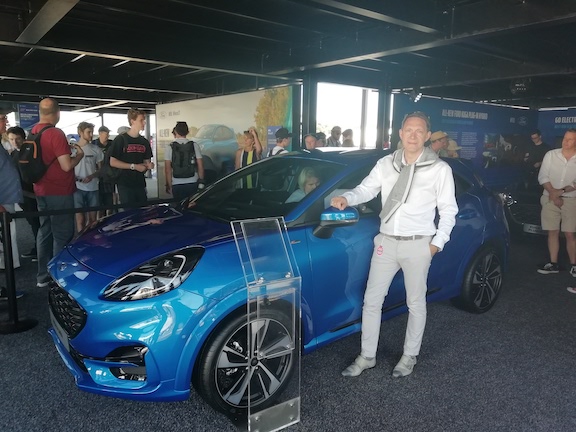
    And so, Puma is another SUV. From an exclusive unveiling at this years Goodwood festival of Speed, I can tell you that it is all rather stacking in its favour. I’ll admit, I’m not over keen on the SUV segment, but Ford design chief, Anko Leemants was on hand to show us around the design language he used within his team to get to where Puma is today.

    You could sit there, sceptical in mind when designers spout of familiar words to describe a design but Anko put it into perspective quite well. One of the key factors was its look being “optimistic” and it certainly has a young puppy dog expression about its face. It lacks the over used aggressive look that so many have used over the past decade.

    In our times of change where we need to step back, consider the future and encourage kindness and love, set to the current backdrop of aggression and fierceness, this new look is greatly appreciated. There aren’t many cars out there at the moment that encourage you to look back and smile. 

    The rear pillars have a welcomed return to normality of softness instead up angry kick-ups. The front screen pillars are broken at the bottom to promote a sense of float in their design. 

    The main premise it would appear is that the Puma has been designed to be “The Most Beautiful Car You Can Ever Own” Now I did stand back a bit too that claim. You can’t say the Puma doesn’t have a nice look about it, but the trouble with an SUV is that they are never going to be beautiful. Ignoring if I may, beauty is within the eye of the beholder, in this instance, my eyes, but the new SUV from Ford isn’t sleek and/or beautiful. Purposeful and cute, yes it is and that suits it well for the new crop of B segment players coming along.  

    Another designer used word of the unveiling was that the Puma should be an Icon. Trouble is, as, with madonna and her latest offering, icons can have a tendency to fall from grace. Let’s hope the Puma doesn’t before its official launch in February 2020. On visual spec, it is rather eye-catching. Even the boot shuts are nicely painted. Let’s see how this all translates next year when it is available for road tests.   

  • TGUK Enters The Lions Enclosure for Peugeot Festival 2019

    TGUK Enters The Lions Enclosure for Peugeot Festival 2019

    Chris Hughes from Peugeot Sport Club UK invited The Gay UK along to their 2019 Peugeot Festival at Prescott Hill in the picturesque village of Gotherington, Cheltenham.

    Sunday’s weather, the Saturday was the hottest it had been all year, was thankfully, milder in comparison. .And, all the better for it. As someone who can be both mechanically sympathetic and murderous to precious metals, the last thing you want is to thrash your vehicle up the hill climb in excessive heat. And that Saturday heat would have done the peak power no good. Being so dry, it makes the fuel-air mix less dense. Not the best for the big bangs that were needed.

    We meet Chris, albeit very briefly, running through the paddock. Phone going off in one hand and clutching a hangover in the other. Despite this brief encounter, it was finally good to put a person to a twitter follower and I thanked him for the invite.

    There was an abundance of Sochaux’s finest here. Considering the clubs core audience, there were some classic gems to be found dotted around the site too.

    Worthy of note was the display of 309s and all in rather good condition. You could say they were commonplace today. Remember the 309? No, not many do. It was the remnants of Peugeots take over of Talbot and despite its unusual place in the 05 line up of the ’80s, the oddly numbered 309 (something we haven’t got to yet) was surprisingly able and good. Sadly many have disappeared so this ensemble was a real treat.

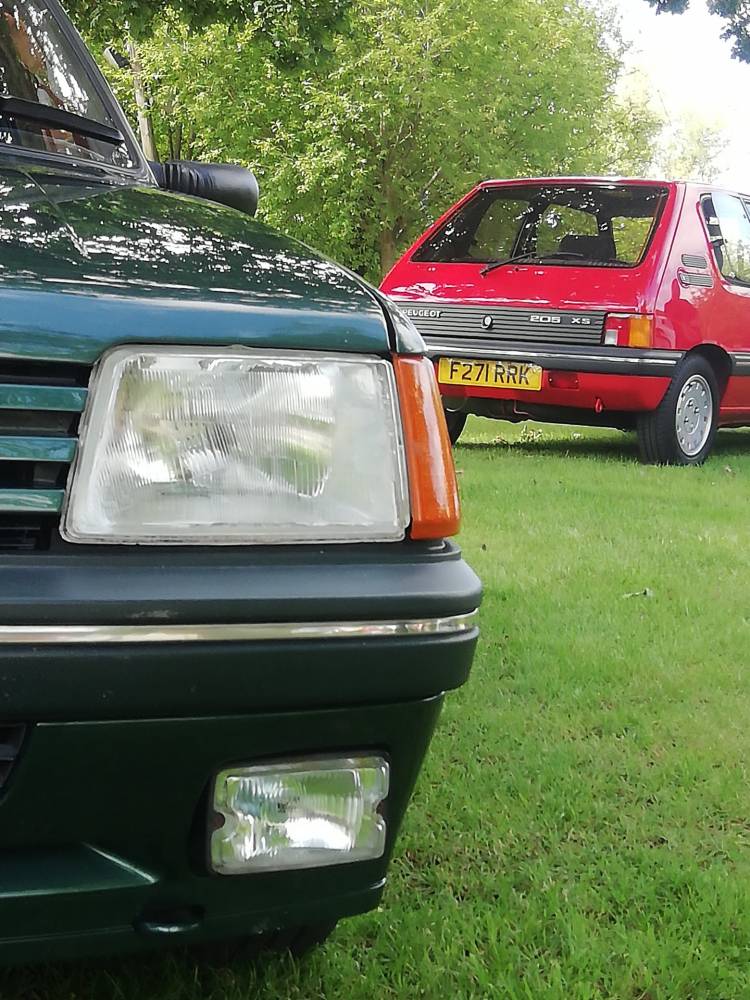
    As you would expect, the 205 almost out numbered everything there and while most were GTi’s, there was a handful of the Peugeot savour that the person on the street could afford. Likewise the 106 Rallye was present in a plethora of both MK1’s and MK2’s. 

    Perhaps being the smallest of the Peugeots, like the kids of the club, they were causing havoc with the marshals as they lined up to tackle the hill climb, all going out in coordinated colours. perhaps lost on the paddock organiser, but nicely done in my eyes.

    While a lot of the GTi’s tackled the hill climbs, that didn’t mean the older of the Peugeot’s couldn’t. The 504 Pick Up and 404 rally Safari were seen buoyantly tackling the hill. It must be said that they were not as quick as the GTi’s but grand in the visual pleasure they gave to those who had been around Peugeot’s for a long time.

    Dotted around the site were the rare older cars and then some gems. Like the Mad Max pursuit interceptor inspired 406 saloons. Totally over the top but nicely detailed with the odd little Mad Max touch here and there. 

    Thankfully no explosive devices were located on the vehicles to protect the fuel, just warnings. These almost became my stars of the show but were knocked off the top by a long way, as it happens (sorry chaps, 2 nice chaps too, just don’t ask them if the cars are from ‘Back to the Future’!)  

    There, under a tree was a blue 1983 305 GR estate. Incredibly rare and in this crossover phase model with the later front and early tailgate. The owner was an enthusiastic chap and more than willing to show the car off and rightly so, it was gorgeous. So I couldn’t resist a jump inside and my word, I’d forgotten how soft and sumptuous the French used to make their seats! 

    So, worthy for your 2020 calendar? Hell yes. The event centres around action and there is something there for every Peugeot enthusiast and fan. And if you get the chance, do the hill. I have driven my old 504 up the hill, and it is a worthy experience.