Author: Stuart M Bird

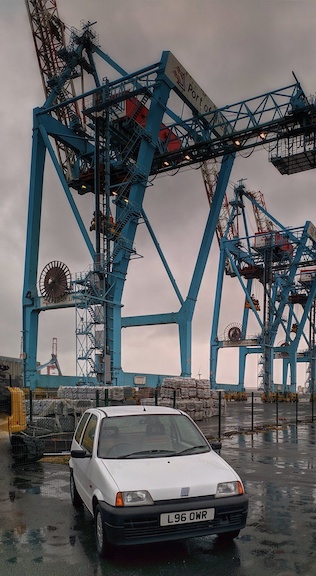
  • The Good, The Bad and The Ugly. Fiat Cinquecento 1991 -1998

    The Good, The Bad and The Ugly. Fiat Cinquecento 1991 -1998

    The Good, The bad and the Ugly.

    (C) Jim Magill: Twitter: @thealso

    An irrelevant look at a certain car.

    Fiat Cinquecento 1991 – 1998

    Fiat has always been good at making small cars. Big cars, not so much so. Think of a large successful Fiat and you won’t. Think small and you have plenty to choose from.

    Fiats smallest offering was the 126. This wasn’t really to British tastes and it eventually died. Actually, it didn’t die. It soldiered on until the turn of the millennium but for us in Blighty, we got the new replacement. And the replacement was a step in the right direction for a bold new Europe hell-bent on the love of the city car.

    Cinqueceto or Sinkeychento or BLOODY HELL, how stupid is this cars name to spell? Cinq for short, was a great little design. Short of overhangs and large on space, it was the embodiment of using as little steel as possible. Even in places like crumple zones. And essential places around the passenger carry space. What I’m trying to say is don’t crash one. 

    This lack of steel was good news for those who had been around Fiats for a long time. Until a few years ago back in 1988, Fiat had what can only be described as hydroscopic steel, in as much as the hard metallic surface would retain moisture. Now as we know, water and thin grade steel don’t mix, so using as little as possible was good. And Fiat also used some galvanising during construction too. 

    Fiat Cink was going to be a Fiat that was going to be around for a long time. Aided by its rather cute looks, it gained a legion of fans. And for the fans that wanted their Sink with a bit of a kick, they were rewarded with the Sinq Sporting. A hotter version fitted with a FIRE engine. Not one that went ‘nee-naw nee-naw’ but one that was a Fully Integrated Robotised Engine. It sounded grand. It was just built by robots. Depressing really when you think the heart of any Italian car is its engine, built by Italians with motoring in their blood. Anyway, Robert the Robot built the engines in the Sporting. 

    The Sporting was a bit shit. Unlike today’s Abarth models that are quite crazy, Sporting was not deserving of the sporting title. But I’m here to tell you about the more popular and run-of-the-mill Synk 900. A marvel of modern tranquillity this overhead valve engine wasn’t. A throwback to a bygone era it was having its origins date back to 1955. Don’t let the ageing mechanicals and modern body put you off. It’s not uncommon for older bits to be put into younger models. Look at Cher. She’s simply marvellous at 103. 

    And it was this ageing old cast iron lump with an alloy head in the Senk that made it a hoot to drive. There had been some changes to the 1955 original engine and it now came with injection and distributor-less ignition. Grabbing hold of those 40 horses was made all the more fun with added hydraulic tappets. It really could scream in an unburstable manner.

    And this crazy, drive it like a nun being chased by Lucifer on roller skates makes the Cenk all the more fun and a good car too because you just can’t really do anything wrong in it. Just don’t crash though. It’s not so good at that!
  • CAR REVIEW | Honda Jazz 1.5 i-VTEC Sport Navi

    CAR REVIEW | Honda Jazz 1.5 i-VTEC Sport Navi

    ★★★★☆ | Honda Jazz 1.5 i-VTEC Sport Navi

    What Have We Got?

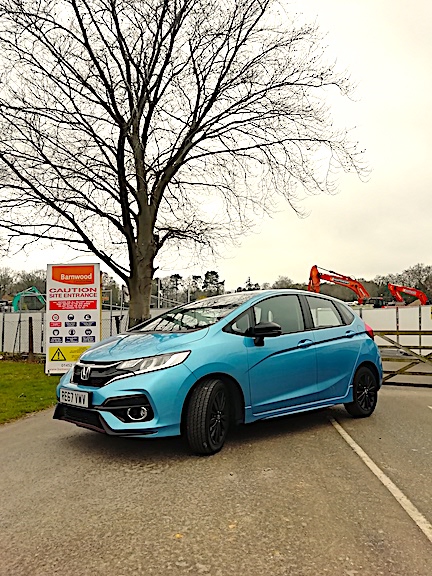
    Honda’s Jazz has been a major seller for Honda globally. They are everywhere and here in its third generation, it gets better. Honda thankfully kept with the boxy estate car looks for the Jazz. It sets it out a little different in the small hatch crowd and yet it isn’t too off-the-wall different to alienate. 

    However, this new 1.5 i-VTEC Sport might just alienate the clientele of the Jazz. Does this sport-less badged Jazz ‘Sport’ have what it takes to wear the badge it is missing?

    Driving

    The best thing about the Sport is its gravelly voiced normally aspirated engine. The new 1.5 i-VTEC is a hoot and likes revs. This engine has 2 behaviours spread over 3 bands of power. Up to 3000rpm, it potters around. Responds to inputs. All good. 3000-4000rpm and it feels a little punchier. Still not enough to startle you. 4000-7000 redline and it screams along. 

    0-60 sprint feels quicker than its claimed 8.7 seconds and 3rd gear is good for over 70mph. 

    It’s no Jazz Type-R though. Its handling is way too safe. That said, you can exploit it quite nicely, and it will entertain once it has gone past its limits. Its limits are due to the compliant ride. It’s a good mix of firm and soft. It never crashes over ruts but is too soft and susceptible to a bit of a twitch at the rear to be an all-out GTi.

    Inside

    Heater controls in this model are simple twisting dials. Very simple and very easy to use. It all falls to hand well and the controls are weighted for ease of use. There is a downside and that’s cheap plastic. The door cards flex when the windows reach to the top.  

    You can’t deny that Honda are geniuses with space utilisation. The magic seat in the rear is versatile you wonder why it hasn’t been adopted by others? Flip the squabs and you get a deep narrow void to carry a small upright piano for a Mrs Mills sing-a-long. Fold it all flat and it’s a spacious 1314 litre carrying estate. There is more space in here than most larger SUV’s.

    Living With It

    The key to the Jazz’s success is easy to live with. Its mini estate car looks and versatility is endless. Its size is perfect.  

    The power from the 1.5 engine is startling. Considering its 7000rpm redline and its maximum torque at 4600rpm, the engine pulls itself along with little fuss from much lower down the rev range. It’s also a Honda Jazz so no one will try and burn you off at the traffic light grand prix. With its stealth looks, you can burn them off instead!


    The Verdict

    The Jazz Sport goes some way to shake off the image it has gained as transport for an elderly audience though I can’t help thinking that a few more sporting visuals would tip it into a different demographic.

    The A-Team’s Hannibal Smith was “on the jazz” when the going got good and I’m inclined to think you will too when behind the wheel of this Jazz Sport.

    Love

    Flexible engine

    Space utilisation 

    Short precise gear stick action 

    Loathe

    Cheap feeling cabin

    Lack of sports visuals

    Infotainment graphics look dated

    The Lowdown

    Car –  Honda Jazz 1.5 i-VTEC Sport Navi

    Price – £18,265 (as tested)

    MPG – 47.9mpg (combined)

    Power – 130PS @ 6600rpm

    0-62mph –  8.7 seconds

    Top Speed –  118 mph

    Co2 – 134(g/km)

  • The Good, The Bad and the Ugly. Seat Ibiza 2002 – 2008

    The Good, The Bad and the Ugly. Seat Ibiza 2002 – 2008

    The Good, The Bad and the Ugly : The Seat Ibiza Mk3. Type 6L. 2002-2008

    An irrelevant look at a certain car.

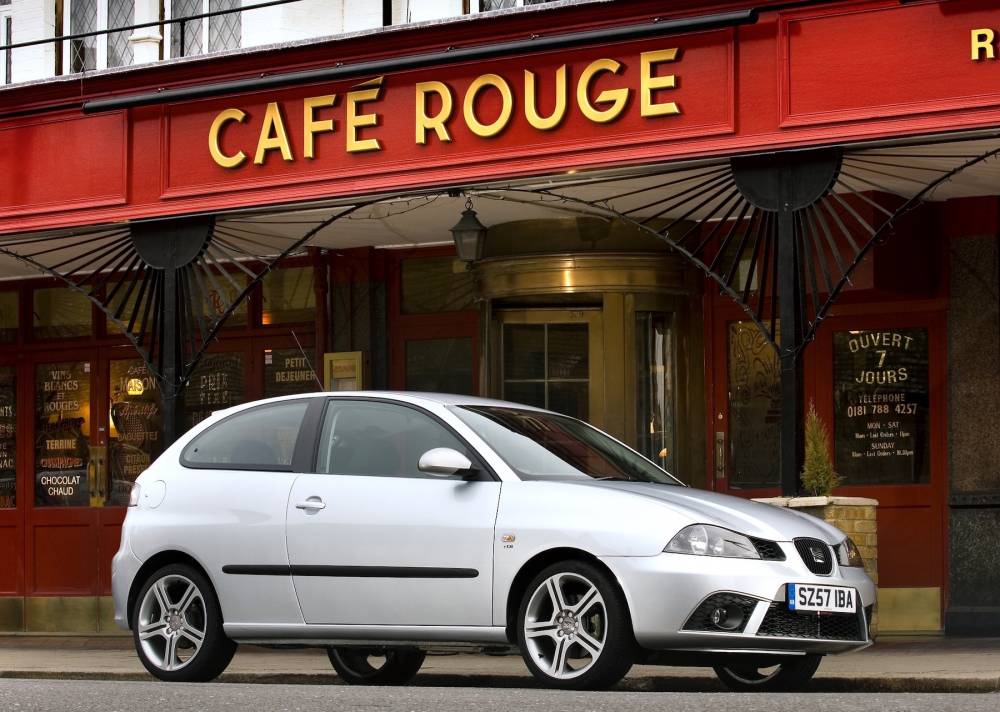
    This Ibiza was a bit of a revelation from Seat. Finally, they had a car on the British shores that you actually wanted.

    This was VW’s second attempt with the Ibiza. Compared to the rest of the family from VAG, It had a design flair all of its own. Ibiza 1 was sharp. That was designed by Ital. Ibiza 2 looked like a ripe butternut squash. And due to its shape, meant you couldn’t, sadly, lose it up your rectum!

    Ibiza 3 looked as aggressive as a Spanish taxi driver drove. I would have said a Matador but have you seen the embroidery work in their costumes? Quite exquisite and so delicate. Anyway, gone were those fat dumpy looks, the Polo dashboard and the general dead feel of the car. Look at it from underneath and you’d think this was a VW Polo. Or a Skoda Fabia. From the top, it was all Spanish, all Seat and all very Mediterranean.

    And that Mediterranean feel could also be felt through the ventilation system. Any car without a sunroof was incredibly hopeless in its ability to draw in fresh air. Aircon helped but what you really wanted was something that allowed the rush of air to pass through the cabin.

    Opening a window wasn’t always an option. Closed windows give better miles per gallon and the thing could fly. You see, if you were wise and a bit ‘tight’ with the pennies, you’d have opted for the 1.4 3 cylinder diesel engine.

    That’s right, a 3 cylinder diesel. Now VAG doesn’t have a good record with ageing 3 cylinders. The 3 pot petrol engines are crap. Remember the Polo? RUN! In diesel, it was great. 79 bhp felt like 179 and but that 195Ib ft of torque was most useful. These were diesels that didn’t sound too diesely and sipped the fuel like an introvert drinking a Babycham at a swingers party.

    It was that magic 195Ib ft of torque that made the Ibiza 3 fun. They came with big alloys and low profile tyres so handling was always fun. It was all slick and it all worked in the way VW, sorry, Seat made them work. The 5-speed gearbox snicked in and out of the ratios with reassurance. And come night time, the dashboard was ALL red and ALL sporty and ALL racy and, well not blue like a VW.

    Parked the right way, Ibiza 3 is a good car to look at with its big S as a nose. Park it so you can see those rear lights and your eyes are insulted by these ugly 4 pots in a baguette style slither of plastic like those from the dodgems of a 70’s Torremolinos funfair ride.

    Thankfully, in 1.4 diesel form, it’s pretty quick so those behind you don’t have to endure that visual fright and for that one thing alone, I am saying the Ibiza 3 is a good car.

    BUT ONLY IN DIESEL! with a sunroof. And aircon.

  • CAR REVIEW | Jeep Renegade Limited 1.6 120hp TD

    CAR REVIEW | Jeep Renegade Limited 1.6 120hp TD

    ★★★☆☆ | Jeep Renegade Limited 1.6 120hp TD

    What Have We Got?

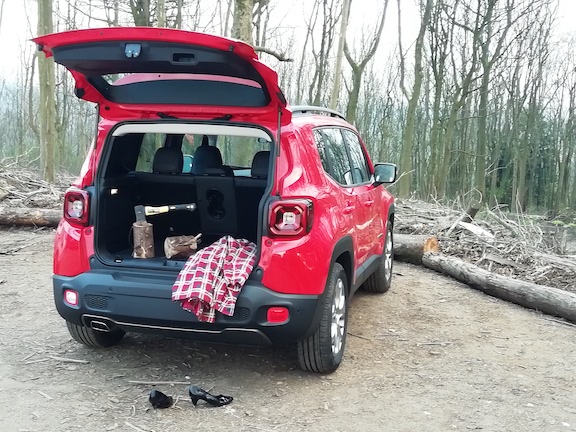
    I’m a lumberjack… and I’m OK, I cut down trees, I skip and jump”. We have the Jeep Renegade and these make me smile. There have been a few revisions carried out recently, most notably being the bumpers and change in headlights that add new aggression to the chunky monkey. New engines have also been added and for this, we have the 1.6 120hp turbo diesel. We tested the top of the range 4WD Trial hawk model in 2017 and it made my top 3 list. Does the new 2WD Limited model cut it? 


    Driving

    The first thing that strikes you with this 1.6-litre turbo diesel engine is the throttle lag when pulling away. It might have become the industry ‘norm’ for this type of engine to respond this way, but it doesn’t make it right. It isn’t a problem once you are moving in traffic. Pulling into traffic is when you really feel it. You then have to adapt your driving style. In that, I mean rev the engine to around 1600 rpm and then when you can, let out the clutch and pull away. 

    That’s a lot of effort and ruins an otherwise enjoyable vehicle. The ride is soft if a little floaty and road noise is quite subdued. The engine is vocal when really pushed and doesn’t encourage all-out performance. 


    Inside

    There haven’t been any major changes inside. The Jeep face and logos are still there in places around the windows and interior trim. It’s still put together well with no rattles. One thing that is noticeable was the appalling paint finish within the boot shut to an almost unacceptable finish. 

    As before with the inside, it is rather spacious and wide for what is a small SUV though still dark. The seats are comfortable and wide and the view out is good. Big screen pillars don’t obscure your forward view because they are so far forward. What isn’t, is the centre armrest. It’s too far back to be of any use to anyone.

    Living With It

    Throttle lag aside, it’s still a nice SUV that manages to break to visual mould in the crowded SUV market. It doesn’t bring anything new to the market or do anything different but what it does is do is make others think that you are in a car more capable of going anywhere when in actual fact, it’s 2WD so it won’t. Like wearing ladies high heels in secret, those outside won’t need to know this.

    The Verdict

    I still like the Jeep Renegade. There is just something about it that makes you pat it as a member of the family. Just when “retro” seems done, the Jeep still manages to invigorate this genre with it with cuddly looks.

    It’s got a full personality all of its own x2, like being a 2×2 instead of a 4×4. It’s now Dr Jekyll and Mr Hyde in its cuddly looks and annoying engine. The throttle lag is my biggest gripe. If it was my money, I’d buy it with a petrol engine.  

    Love

    Looks

    Comfort

    Space

    Loathe

    Throttle lag

    Infotainment screen too low

    Alarm/door opening beep

    The Lowdown

    Car –  Jeep Renegade Limited 1.6 120hp TD

    Price – £29,350 (as tested)

    MPG – 57.6mpg (combined)

    Power – 120HP

    0-62mph –  10.2 seconds

    Top Speed – 110 mph

    Co2 – 129 (g/km)

  • CAR REVIEW | Abarth 595 Competizione 1.4 T-Jet 180HP

    CAR REVIEW | Abarth 595 Competizione 1.4 T-Jet 180HP

    ★★★★☆ | Abarth 595 Competizione 1.4 T-Jet 180HP

    Bad Boy Abarth.

    What Have We Got?

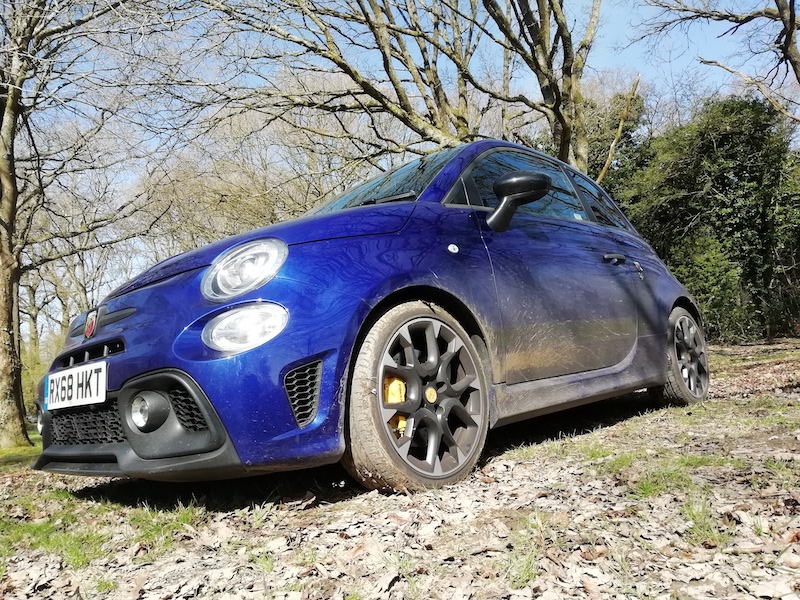
    We have here something we shouldn’t have. The Fiat 500 I had booked wasn’t ready, so Tom at FCA offered me the Abarth 595 Competizione. I pondered if I could find more words for another brutal 500 Abarth. We’ve had the 695 Biposto and the 595 Rivale and they don’t get any better than those two.

    It just so happens that I was able to find some words for this model. A model that left me in a bit of a predicament.
    Driving

    From turning the key and switching it on, to arriving at your destination and switching it off, both you and the surrounding area will know of your departure and arrival. The exhaust note from the Monza quad tailpipes of this 1.4 180 hp turbo engine bark and growl their intention.

    And driving is what this car is all about. As for driving aids, you get reverses parking sensors. No frontal crash mitigation, no radar, no auto dip/full beam headlights, no cruise control. You are in total control. What you do is down to you. You literally are at one with the machine.

    Inside

    The interior of the Competizione is taken over by supportive cloth and suede covered Sabelt seats. You can tell they were not designed for the 595. The backrest adjuster is so close to the door that you have to open it to adjust.

    The suede on steering wheel and binnacle was a nice touch. Shame then about the rather drab grey plastic of the dashboard and door cards. You feel a bit of body colour would add to a stripped out racy interior.


    Living With It

    Let us forget about practicalities here. The rear seat is no more than a padded parcel shelf and the boot is OK for a car of this size. You do however get climate control and a rather good thumping Beats Hi-Fi.

    So let’s look at living with it as a driving machine. Here is where it excels. The ride is hard, leading to even harder, depending on the road surface. And this is a fun element because with the wide 205/40 tyres on 17” alloys, it tends to tramline quite a lot and this is exaggerated on hard acceleration where the steering wheel fights with torque steer. Hit the TTC button (Torque Transfer Control) and it will put the power to either front wheel with the most grip, and it makes it quite riotous.

    Add that to the power of the engine and the lightning speed it responds to inputs from the loud pedal, and you soon find yourself behind the wheel of a car that you can exploit its high levels of adhesion. It will understeer momentarily until the TTC kicks in and then you find you are flicking it around with gusto.

    The Verdict

    You have to LOVE this car a lot to want one. As an everyday proposition, I can’t really recommend it. It’s not a bad car, quite the contrary, it’s just that it is ‘on the go’ all the time, sport mode on or off. As a weekend toy, you won’t find much better.

    In many ways, the 595 Competizione is the bad boy of the Abarth range. The adrenaline-fuelled addiction borders on lustful cravings and coercion. It’ll lead you into a secluded carpark, shove its hands down your pants, make you do things you didn’t want to do and then leave you wanting more.

    We’re off for a cigarette now. I don’t smoke but I need to gather my senses. I’m flustered and wasted!

    Love

    Snap happy handling

    Speed

    Intoxicating at its limits

    Loathe

    Drab interior

    Ability to drink fuel

    Lousy self-control to drive it normally

    The Lowdown

    Car –Abarth 595 Competizione 1.4 T-Jet 180HP

    Price – £ 22,535 (as tested)

    MPG – 47.1 mpg (combined)

    Power – 180HP

    0-62mph – 6.8 seconds

    Top Speed – 140 mph

    Co2 – 139 (g/km)

  • CAR REVIEW | Jaguar F-Type Flying the Flag of a 70 year Tradition

    CAR REVIEW | Jaguar F-Type Flying the Flag of a 70 year Tradition

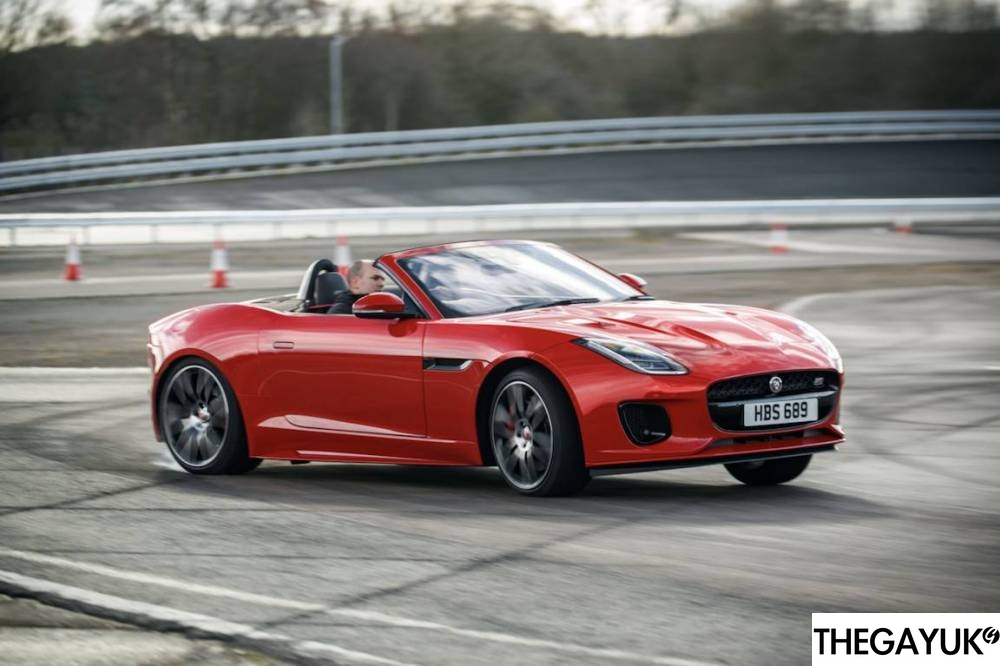
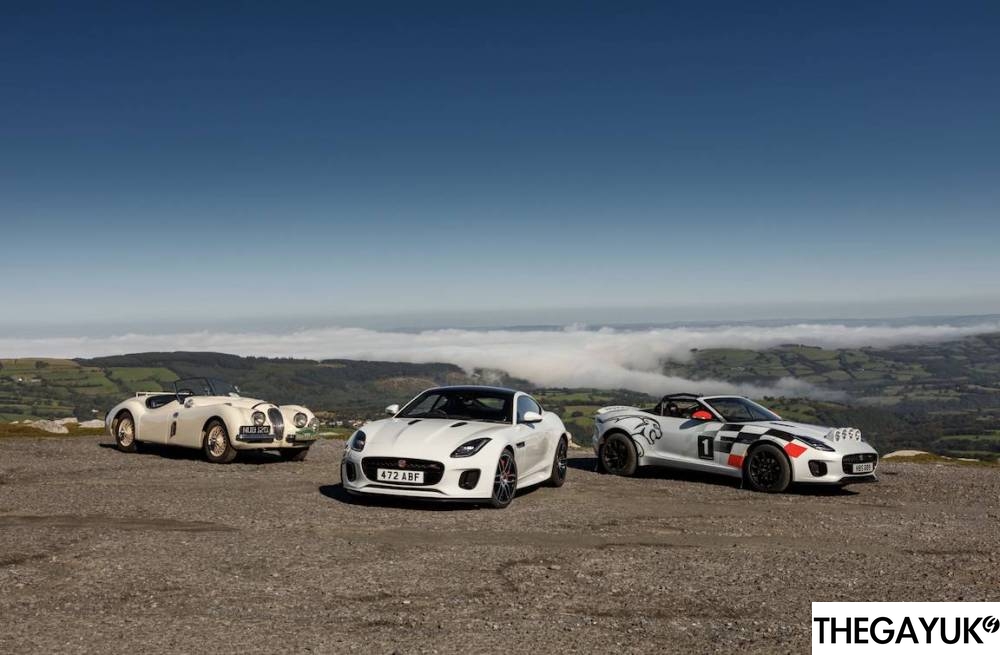
    Jaguar has a rich a varied history when it comes to sports cars and this year, they are celebrating 70 years of their sporting cars with the launch late in 2018 of the F-Type Chequered Flag editions, there are 3 engines 300PS 4 cylinder, 340PS V6 and the 380PS V6 that comes with RWD or AWD transmissions. All set-ups are covered in either the coupe or convertible body variants.

    All models come with a host of extras over the standard R-Dynamic that they are based on. 3 colours available, Caldera red, Fuji white or Carpathian grey metallic.  

    Ian Callum, Director of Design said: In creating the Chequered Flag, we’ve focused on details which enhance F-Type’s presence and the promise of performance and in doing so, made a fitting celebration of 70 years of beautiful, fast, Jaguar sports cars.

    Highlights include a luxurious Windsor Leather interior featuring sports seats with embossed headrests, a dark brushed aluminium centre console trim finisher and in recognition of Jaguar’s motorsport successes, a steering wheel with discrete Chequered Flag logo and red leather band to mark the 12 o’clock position. Coupe models also come with a black contrasting roof.

    Driving styles, it has to be said that the lower powered of the 3, to me at least, is the better to drive. For what it lacks in grunt measured in torque at 44Ib.ft less than the 339Ib.ft of the more powerful V6 with all-wheel drive, it makes for a more responsive car when it comes to the handling. 

    On the limit, the AWD V6 weighing 125 kg more, feels the more heavy, especially at the front. The front, where you want grip and feedback from the steering. The AWD model has a tendency to plough on with some understeer if you behave stupidly or apply the power at the wrong time. There is a fine balancing act to it. It’s rewarding when you get it right. The grip of the AWD system making for quick exits out of the corners. And the growl from the V6 is intoxicating.

    The 4 cylinder RWD model, lighter and less powerful, is more fun to throw around. You can have some fun playing with weight bias more towards the rear on this car. It doesn’t require much thought when putting the power down but it will still bite if you overindulge your skills.

    I’ve said it again and I’ll say it now, out of the 2 bodies, the convertible wins for me. In this Chequered Flag edition, it is now a bargain £5,000 more. Not so long ago it was £10k. 

    So the big question is, is the Chequered Flag edition worth the extra £6k more than the equivalent R-Dynamic models? It’s all in the little details that add up and any special edition comes with an extra premium price. It’s just that, yes, I do like it, I just wish it shouted about it a bit louder like the rally model.

    Now THAT does shout out! 

    The Lowdown

    Car –  Jaguar F-Type Chequered Flag edition. Coupe or Convertible 300PS 4 cylinder

    Price – From £62,335 (Coupe) £67,185 (Convertible)

    MPG – 31 mpg – (combined)

    Power – 300PS

    0-62mph – 5.7 seconds

    Top Speed –  155 mph

    Co2 – (g/km) 179

    Car –  Jaguar F-Type Chequered Flag edition. Coupe or Convertible 340PS V6

    Price – From £66,615 (Coupe) £71,465 (Convertible)

    MPG – 28.3 (combined)

    Power – 340PS 

    0-62mph – 5.1 seconds

    Top Speed –  161 mph

    Co2 – 224 (g/km)

    Car –  Jaguar F-Type Chequered Flag edition. Coupe or Convertible 380PS V6

    Price – From £72,715 (Coupe) £77,565 (Convertible)

    MPG – 26.6 mpg(combined)

    Power – 380PS 

    0-62mph – 4.8 seconds

    Top Speed –  171 mph

    Co2 – (g/km) 223

  • What’s it like to drive the Jaguar F Type Rally Racer

    What’s it like to drive the Jaguar F Type Rally Racer

    Along with Jaguar’s new F-Type ‘Chequered Flag’ limited edition run, Jaguar has also been busy turning 2 of their F-Types into rally cars and THEGAYUK were fortunate enough to be invited to have a play with the road going cars and trying this special build rally car.

    (C) JAGUAR UK

    The F-Type isn’t really a suitable rally car, and why have Jaguar done this? 

    Firstly it’s all about putting some fun into the celebration of 70 years of sports cars at Jaguar that all started in 1948 with the XK120. The XK120 spawned a number of victorious wins and being an open-top racer, it answers the second question. And that is, why the hell not! It’s a nice homage to the open top winners. 

    (C) JAGUAR UK

    So what has been done to the road going sportster to make it a rally car? A number of things had been changed or altered and all in accordance with FIA approval. Instead of the usual 19” alloys, 16” rims with a more rugged 205/55 16 gravel tyre are fitted. 2” suspension lift with 60N/mm Eibach springs and three-way adjustable competition dampers.

    Usual things have been added like a 5mm aluminium belly pan, hydraulic handbrake and the removal of luxury items. No side windows, no roof, no fancy door trims. Instead, the inside it plain, basic and filled with an FIA approved roll cage and full 6 point harness. Weight wise, the removal of such items has been matched by the race-spec items added so it’s pretty much the same as a road going car.  

    (C) JAGUAR UK

    So what is it like to drive?

    As you can imagine, it’s an open car so you are very much at one with your surroundings in as much as mud gets kicked around and that mud gets you and the interior. There is most certainly no need to wear your Sunday best for this Jaguar. Just climbing in leaves you covered in mud.

    Engine and transmission are the same 300PS at 5500rpm delivering 295Ib.ft of torque from 1500rpm 2 litre Ingenium power unit mated to the standard automatic gearbox. The only difference is the final drive has been adjusted for a better 0-60 time and putting down the power to the limited slip differential at the back. You never get to top speed, but top speed isn’t what this F-Type is about. 

    No, indeed it is not. It is about swinging it around the dirt and going sideways. Thankfully we were not driving solo. Instead, we had 2 rally experts with us. Finland’s 9 times winning rally driver, Minna Sillankorva as co-pilot, offering advice (she taught me the perfect handbrake turn) and the UK’s own Jade Paveley in the pits.

    This was the first rallying I have ever tried and to be honest, it isn’t as easy at it looks. I also wasn’t going hell for leather but instead, as Jaguar had said, I had fun in celebrating this 70th year with Jaguar. 

  • CAR REVIEW | Audi’s A1 Sportback S line

    CAR REVIEW | Audi’s A1 Sportback S line

    ★★★ | Audi’s A1 Sportback S line

    What Have We Got?

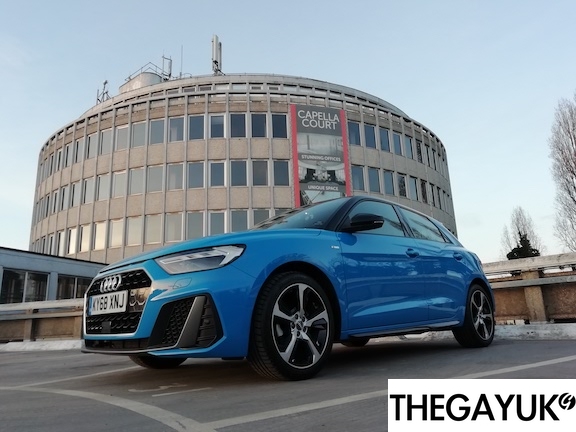
    Here we have Audi’s A1 Sportback S line. This model sits around the middle of the 6 car line up. It’s suitably dressed to impress but did it impress us at THEGAYUK?

    Driving

    With looks to kill, you’d expect the A1 S line to be fun and entertaining to drive. Thankfully it doesn’t fail to deliver in this department despite its diminutive turbocharged petrol power unit of 999cc. Power figures suggest mediocre outputs of performance. The good news is that the 116PS at over 5000rpm and torque of 147.5 lb-ft is far better than adequate. Developed low down, it will hustle along quite briskly. Yet, despite its revvy nature, it won’t allow redlining in any gear. Changes are done by 6200rpm.

    Those changes are carried out by a much improved DSG gearbox. Now it is able to deliver crawling take up without snatching as smoothly as it does changing up at speed.

    Steering is communicative to a degree, there’s also some muted feedback, though a little more would be better and the brakes, standard silver, no bright shouting red Brembo callipers, pull the A1 up briskly.

    Inside

    It’s a mixture of good and bad. The dashboard is logical and the facia panel is adaptable for maps, big dials or info. It works well and it’s surrounded by blue neons that carry on into the doors. It’s just a shame then that this isn’t carried on around the vents on the passengers’ side and the rear doors are totally void of any fancy architecture, except for a light by the door handle.

    Seats are also a mixture of good and bad. While they hug you in place during spirited driving, the seat base is very firm and despite several manual controls for the adjustments, lumber adjuster is both awkward to implement and even worse to gauge the amount such is the position of the handle.  

    Living With It

    It’s a practical car. It has 4 doors and a wide opening hatch at the rear. It’s not the most spacious in its class but it will do all that is asked of it.

    You won’t lose face when it comes to the carpark beauty pageant. The A1 has good looks on its side and if the badge is important, you have Audi prestige. And it does what it does well. The ride is more than acceptable and thankfully it is entertaining and the handling is fun. 

    There is just one snag.

    The Verdict

    There is a lot to like about the A1. Showroom and kerbside appeal will impress you and those who admire it from the outside. The nice touches that you expect from Audi are there in some places too but not everywhere. The silver trim across the facia is cheap to look at and cheaper to feel.

    And I get that Audi is a premium brand. With the A1 starting at £17,700, it’s just that I find this S line model with all the options this car has, hard to swallow at £70 shy of £30k. That’s a lot of money for a small car. 

    Love

    Facia neon illuminations

    Peppy 1 litre engine

    Gearbox

    Loathe

    Price

    Boring rear door trim

    Firm seat base and awkward lumber lever

    The Lowdown

    Car –  Audi A1 Sportback 30 TFSI 115PS S Line S Tronic

    Price – £ 29,930 (as tested)

    MPG – 47 mpg (combined)

    Power – 116PS

    0-62mph –  9.4 seconds

    Top Speed –  126 mph

    Co2 – 108 (g/km)

  • Taking A Toy Boy To Silverstone With Toyota GB

    Taking A Toy Boy To Silverstone With Toyota GB

    Toy Boy Toyota

    ‘He’s my toy boy, toy boy. I’m out with my toy boy, toy boy. And when I get to take him home, I know he’s gonna love me right’

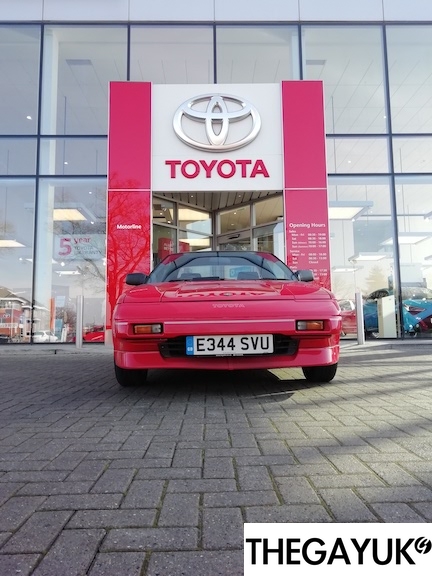
    Now don’t worry, I’ve not lost the plot. I was fortunate one week in February to be given the keys to Toyota GB’s Mk1 MR2. It came with Toyota’s state of the art cassette player and I found a mixtape with Sinitta’s hit ‘Toy Boy’ and if ever there was a song that suited a car, it was this.

    It all started after I contacted Graham from Toyota press about a future article I was planning to write about the MR2 Vs Fiat X1/9. He suggested I come over, collect the car and take it to an event Toyota GB had organised at Silverstone with the Vintage Sports-Car Club (VSCC) called the Parallel Pomeroy Trophy. It dates back 70 years and was devised to find the best GT car. For Toyota, it consisted of 4 tests. I couldn’t really say no now could I.

    All that was needed was to collect the car and pay the £30 entry fee that was going towards Toyota’s chosen charity for the past couple of years, Guide Dogs for the Blind. Toyota has been sponsoring the training of 4 dogs and lifetime costs of one. That’s around £55,000. https://www.guidedogs.org.uk

    The MR2 was collected and a look around some of the heritage fleet Toyota keep was shown. The MR2 was a lovely little car and had undergone an extensive restoration that also came with some words of advise about being sympathetic to the newly built engine. So no pressure there then considering the weekend Toyota had planned!

    Tests centred around a slalom handling course, flat out short distance and a series of forward-backward-forward etc strip where you had to stop within the boundaries of some pre-set cones. Penalties were issued if you messed it up. Suffice to say, I did. Twice! Annoyingly. 

    In total, there were 38 Toyota’s ranging from a 1971 Corolla coupe to the 2018 Yaris GRNM with everything in-between included 4 generations of Prius and a Hilux. All this was made even more serious when we were issued with number decals to apply to our cars. All road going cars (the rules stated that ALL entrants must be road legal) were instantly turned into race cars. Applying numbers to a car just makes them racy. The MR2 had sharp looks, an engine making borborygmi noises behind you and sporting potential to start with. The immaculate 1973 Crown estate however didn’t. 

    That said, it didn’t stop Eddie Bellringer beating me and the MR2. His times showed commitment at EVERY level. If I’m honest, I got beaten by practically everything out there including Steve Cropley from Autocar magazine in an Mk1 Prius. That said, Alan Bradley from the Motoring Podcast, in his Yaris GRMN, also got beaten by the Crown Estate.

    This was the first Parallel Pomeroy event PR and social media manager, Scott Brownlee and his team had organised and it went very well, even down to the weather. There was however only two Toyota PR team members taking it for the team. Product and technical, Mr Richard Seymour in an iQ and PR student, Mary Nicholls in a Prius. She also beat me in a Prius.  

    Well, let’s not leave you in suspense. Richard in the iQ won. The smallest car with the smallest engine with the impossibility of positioning a car with a cone within the wheelbase won the event. Which went to show that Richard of product and technical either knew his stuff and the iQ or it was a fix? Either way, it’s a long way to fall when you are at the top, I’m wondering what Toyota could put him in next time.

    An MR2 perhaps?

    As for me, it was a blast and a really good day was had by all those who attended. So it is with great thanks to the Toyota GB team for letting me have the MR2 for a few days prior to the event. 

  • CAR REVIEW | Range Rover Velar R Dynamic HSE D300

    CAR REVIEW | Range Rover Velar R Dynamic HSE D300

    ★★★★☆ | Range Rover Velar R Dynamic HSE D300

    What Have We Got?

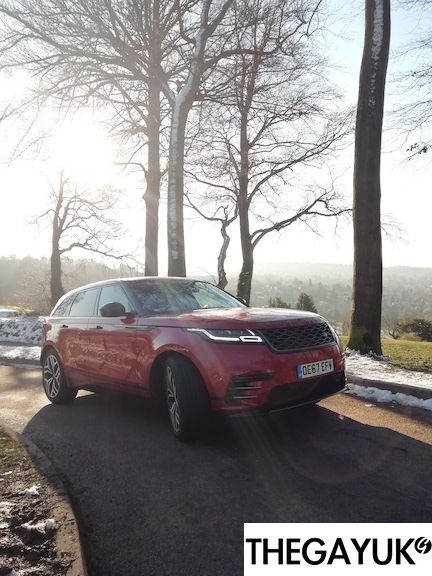
    We have a puzzler this week. This is Range Rover’s mid-sized concept-cum-cross over that fits between the Evoque and Range Rover Sport. The puzzler is that the Velar is quite large in the visuals and dimensions. 


    Driving

    It’s a silky blend of driving styles. The 3-litre V6 diesel pushes out 300hp at 4000rpm. 700nm of torque is from 1500rpm. From a standing start, it will thunder the slippery shaped Velar to 60 in 6.1 seconds. To be honest, it feels quicker and there is grunt available from whatever speed. 

    Sport mode, comfort or economy, throttle response is quick. There is no hunting for a gear or waiting for the ECU to decide what to do with the EGR valve etc. Quick rapid progress is one of the key features of the Velar. 

    The Velar shares a platform with the Jaguar F-Pace and yet feels better planted, better poised on the road and all the more fun. The AWD system puts the power down more evenly around the vehicle. 


    Inside

    The layout is all familiar with the Range Rover Sport we reviewed in 2017. Touch screens for the controls split on to 2 screens. There are 2 buttons. The stop-start, hidden by the facia panel and another on the centre console that hides a cup holder. This button does not work with the fluidity of the rest of the Velar’s interior.

    Other than that, it is well thought out. The seats have so many bits that move, that it is impossible to get uncomfortable and there is space for everyone, even the tallest of both drivers or passengers or both.  

    Living With It

    Sheer size doesn’t translate to bulk on the move. The Velar is reasonably agile on its air ride and easy to navigate around country lanes. Thankfully this model came with the 360-degree angle camera pack and I can’t recommend it enough, especially when parking in tight spots like supermarkets or your own driveway where someone has decided to park their car like it’s the largest car in the world.

    The Verdict

    I was unsure of the Velar at first. I couldn’t make up my mind if I liked them or not. Its sleek looks lack the blunt Range Rover bulk but this doesn’t distract from it. You could call it a ‘designed’ Range Rover Sport. It certainly doesn’t feel any cheaper than the top model. But that isn’t necessarily a good thing. 

    Its road manners are rather exemplary and it lacks the wobble of the Range Rover Sport. This alone makes the Velar more big estate car than SUV or cross over but this is what it is, a cross over and it does it all very well. Dare I say it, I liked the Sport and all that it stood for, I like the Velar more. It’s just, the Velar, this Velar, is expensive. Range Rover Sport price expensive.  

    Love

    Smoothness of engine

    Fit and finish

    Ride

    Loathe

    Price

    Cup holder cover

    Plastics around dashboard 

    The Lowdown

    Car –  Range Rover Velar R Dynamic HSE D300

    Price – £73,330 (as tested)

    MPG – 44.1mpg (combined)

    Power – 300hp

    0-62mph –  6.1 seconds

    Top Speed –  150 mph

    Co2 – 167 (g/km)

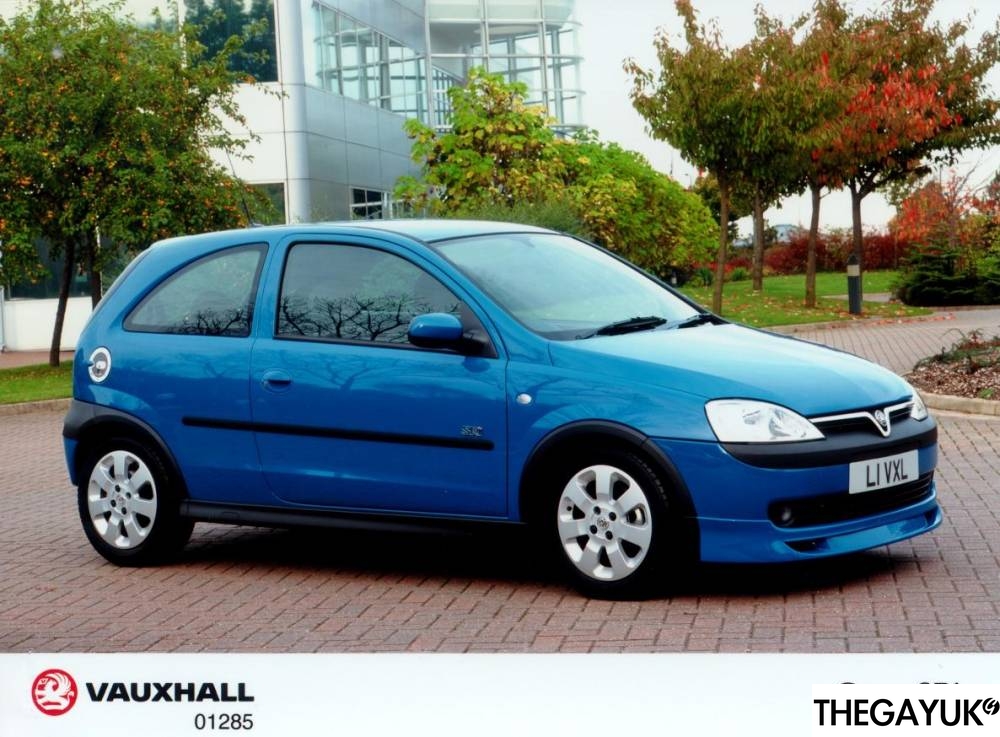
  • The Good, the Bad and The Ugly. Corsa C 2000 – 2006

    The Good, the Bad and The Ugly. Corsa C 2000 – 2006

    The Vauxhall Corsa C 2000 – 2006

    An irrelevant look at a certain car.


    You’ll be glad to have read that this Corsa was only available for six years. In the big scheme of motoring giants, six years is a pretty short notice and they only change the car that quickly if it just so happened to be crap.

    Well, dear reader, your luck is in. They were. There wasn’t much to recommend about the Corsa C and yet, in the UK at least, it was a big seller. From 2002 to 2005 it was always in the top 3 on the sales charts but that doesn’t mean anything. Celine Dion’s Titanic song spent way too long in the charts and that was shit. Thankfully our Cher kept it from being the top-selling single of 98. 

    Speaking of the great white hope of the ocean, one thing Corsa C did well was taking in water. These little Titanic’s of GM were exceptionally good at this, they let water in both at the front by the fuse box (water and electrics are such a good mix) and around the rear lights. Take that Titanic and your single gash!

    This did dampen Corsa C drivers’ spirits. Sorry, I couldn’t resist. Left unchecked, the water would pile in and the mould pile up and out. I’ve seen many Corsa C’s with all the penicillin you can eat on the seats! It’s like infection control on wheels. MRSA, dead in a Corsa C. C-Diff? Don’t make me laugh. Doesn’t stand a chance. You might get Legionnaires disease from all that stagnant water, but only one to six out of 20 die from that, so the odds are pretty good on survival. And remember, Corsa C is packed with antibiotics.

    To understand if your Corsa C has a water problem, you need to drive it with vigour. Here was the problem. It wasn’t very nice to drive. The interiors were pretty much all grey in colour and that sort of summed up Corsa C. 

    Engines were standard units of GM-type (I’m sort of losing the will to type now) but the three-cylinder did have a nice trick up its sleeve. It vibrated through the bloated body causing motion sickness to the point where you either stopped or chundered into the pool of sogginess in the footwell, adding something new to the cesspit that is also called the passengers’ footwell.  

    I suppose if I have to give Corsa C one selling point, it would be the boot opening. It was large and practical for a hatchback-cum-driveway skip. What followed with Corsa D was worse.

    But I’m talking Corsa C and it’s a bad car. Catch the bus.

    Liked this check out:

    Toyota Yaris 1999 – 2005: Good, Bad or Ugly?

    VW Polo 2002-2009: Good, Bad or Ugly?