Get your Sinitta and 5 Star albums of feel-good music at the ready because if you haven’t already binged watched Russell T Davies new Channel 4 drama, It’s A Sin, then brace yourselves for grim viewing.
Having seen the advert teasers and the first show on Friday 22nd January that doesn’t leave you in a good place after the show, then I can tell you that it only gets worse.
The ’80s were not great times for the gay community and Russell manages to pick up the fear so well and quickly too. The accomplished writings of Russell are there from the start and the show bounces with an occasional break in the fourth wall with the view.
Thankfully these are very brief but important and hammer out almost a whole programs worth of what was going on in around 3 minutes as to some peoples perceptions of HIV and AIDS and what was to come played out. Our main character Ritchie Tozer (Olly Alexander) does I have to say grate on you in this part but then again this is 1981 and with some 40 passing years and hindsight it all becomes relative.
There is no sugar coating what the AIDS crisis was from the start of the show and the experiences so many had in the real world in the ’80s, characters dropped like flies. In Friday’s episode, the lovable Henry (Neil Patrick Harris) who you instantly warmed too is killed off by the virus in the bleakest of ways. His boyfriend “goes home” and the crying starts. Russell is a dab hand at writing tear jerkers. I don’t think there are many out there who can say they didn’t cry watching Dr Who where the Dr and Rose were parted. Well, tissues at the ready because worse is to come.
And it does. Admittedly there are some funny bits and if you pay attention to the finer details you’ll howl laughing at the disgust the Tozer gave when the infamous AIDS TV advert aired. Instead, they click it over to Michael Barrymore’s Strike It Lucky. “Oh I like him,” says Valerie (Keeley Hawes). And Keeley really does shine throughout to the point where you are screaming at her. The meek and mild mother of two suddenly becomes emboldened when she discovers the grim news. And then goes on to be a total bitch.
But one mustn’t single out the actors because everyone plays a vital part in this gripping drama of six friends and their peripheral groups in dark times. But it is Jill (Lydia West) who has the hardest of times throughout the 5 episodes. The only female within the group and the one watching all of those around her fall to a virus or living in fear of it.
The last episode ends with all 6 friends together in a flashback of happier times. And it’s this ending that sets you off. It combines the feel-good with what was and might have been.
So grab your best friends, the ’80s feel-good CDs and a box of tissues. It’s hard viewing. Just don’t watch this on your own.
What has literally lasted 40 years, started with a Swahili song, made with different collaborators and producers, gone on to make 11 albums to date, have an entry in the Guinness Book of Records, looks to have no signs of slowing down and in my eyes at least, the envy of many groups?
Bananarama that is what. 2020 has been a funny year and to help while away the time, Sara Dallin and Keren Woodward sat down to write their story and what a story.
It’s a blanket and PJ book for a cold day. Written in a style that reads as though the girls are with you for a cozy chat about the past and present, it starts before they even knew they would be famous or forge an enviable back catalogue of music and memories. To top this there is also a friendship that makes you the reader both happy and wishful that you too can have one as close as this. Some of it captured in 47 pages of pictures.
Coming from a time before the internet gave you “access all areas” of a celebrities life, it was quite shocking to read that Keren was pregnant during the True Confessions album. I can’t proclaim to be a super fan, to be honest, personal details of celebrities I admire the most don’t really both me, so this was a surprise to me. And the revelations kept coming.
Along the way we had snippets of time where the girls would mingle and hang out with the likes of the late George Michael and Keith Flint. All stories affectionately told. It’s a glimpse into the life they have as pop royalty.
The warts-n-all come with Keren confessing about her struggle with mental health. She has been been surrounded by it since childhood with her own mother suffering badly from it at a time when there were no self-help books or support groups.
They talk about their struggles from bedsit living to the glamour of getting a council flat where they held a brief conversation with Robert DeNiro before agreeing to meet him. And the struggles of not really being taken seriously.It’s easy to dismiss girl groups in the male dominated industry and this topic is mentioned throughout the book. And you can be forgiven for thinking that they just turned up and sang songs. Delve in deeper and you discover they are more than pretty musical things. Bananarama write most of their songs.
What is apparent is the almost absence of mentioning Siobhan Fahey and Jacquie O’Sullivan. Not really a criticism because when you strip back the banana skin, Bananarama has been a 2 piece girl group for 30 years. Hard to really compute that they were only a 3 piece for 1 decade. It’s in this book that for me as a reader, my mind is blown away. You simply forget they are a 2 piece.
So is this a book about the end? Not a chance. At 58 and 59 respectively, the Banana’s give zero hints that they will be hanging up the microphones soon and personally I’m glad about that. I’m quite sure they really have something more to say. Book 2? I suspect so. In the meantime, you need to read this one first.
Audi’s legendary Quattro model is 40 years old this year. Just let that sink in for a bit because I am sure that if you are as old as I am and now on the wrong side of 45, you will remember the various adverts narrated by Geoffrey Palmer and have vivid memories of various Audi models in snow-covered roads doing the impossible.
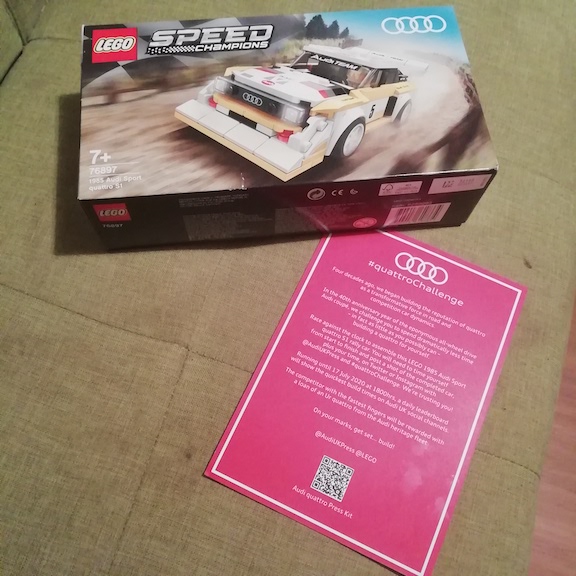
THEGAYUK was invited to take part in the Audi Quattro Lego challenge. An opportunity for motoring journalists to really show how quick their motoring sections fingers were at building the Lego Speedline Quattro kit. The fastest build won the Audi UR from Audi’s heritage fleet for a week. A prize worth winning.
THEGAYUK or more importantly, I, did not do so well. I didn’t even make it into the top 10. I almost made it there with a 36 minutes but then I’d noticed I’d fitted the doors wrongly, hadn’t applied the window decal and more annoyingly I’d failed to make the rear spoiler properly.
The rear spoiler being my Achilles heel and almost resulting in the Audi having a kitchen sink drama with it being thrown across the dining room towards the sink. Building Lego against the clock is stressful and I’ve done CPR!
Once I’d corrected my errors our time failed to make it into the top 10 leader board but that was OK because what I had here was a fine Lego car to play with instead and it is a fine piece of kit from Lego. The most pleasurable piece of this build was none of it was designed specifically for the Audi. It’s all parts available from Lego and found in various Lego kits. Unlike some of their bigger models that use pre-moulded parts for a car like the Fiat 500, this was simply Lego and more enjoyable for it. More so because put together, the Lego Audi Quattro made a for a fine example.
(C) STUART M BIRD
The build starts with the construction of the chassis and builds up quickly from there. Attention to detail is quite fun with the gear lever and handbrake handle items added inside. Outside there are the usual attributes associated with Group B rally cars with bulges and wings.
Lego does a range of cars for almost every motoring enthusiast. Their kits are well worth looking at.
Like the 205 before it, though not a direct replacement for which it turned into being was like the 205 before it, much needed. Desperately needed to be frank. Peugeot had shot themselves in the foot by not having a suitable 205 replacement ready.
I was there to see the launch at the NEC. A kind Peugeot PR allowed me to climb over the fence and tickle the 206 Escapade models faux-suede bumper coverings. A car that was launched to the world the same time as Ford unveiled their outrageous Focus. Competition was fierce.
The 206 was as far removed from the new design language used by Ford for the Focus as could be possible and by Peugeot themselves. This was a new age for the dancing lion of Sochaux-Montbeliard. Penned by Pininfarina, the 206 was a very attractive car then and now. Unlike monstrosity that Peugeot designed in-house called the 307. The rear quarter of the 206 was also reminiscent of that from the 205. A great car that saved Peugeot from the depths of hell.
Speaking of that rear pillar treatment, its language made it onto the 5 door model too which was not the case with the 5 door 205. However, what Peugeot did on the 206 SW was unforgivable. They fitted really cheap feeling door handles hidden in the door frame to give it coupe-like lines in a box body. The SW was no shooting break like a Scimitar GTE famously owned by Princess Ann or TGUK’s previous motoring editor Alan Taylor-Jones (Tell him on Twitter about Ann’s connection with the GTE at @alantaylorjones. He loves to hear it) That cock-up still haunts me today on what might have been an otherwise perfect car in all its guises.
But we can forget the 206 SW because there were 2 models that were the main talking points for the 206. The stylish CC with its folding metal roof. Stylish that is if you ignored the convoluted boot top and bugger bars on top of it. What that was all about no one actually knew or could tell you about. Even the pressmen couldn’t tell you.
Another amazing thing about the 206 was it was just a little bit nice on the inside. Ignore the over grooved grainy plastics and the cabin was quite fresh looking. The electric window switches didn’t quite come to hand and you needed to look for them but nothings perfect.
In all its model guises had something to suit everyone.
Handling was high on the agenda and no matter what 206 you bought, it could always prove fun no matter what engine you chose from the long list of available engines to suit. From a light 1.1 petrol to a torque packed turbo diesel, the 206 in all its model guises had something to suit everyone. Everyone that is except the hot hatch driver. The 206 GTi was vaguely luke warm and even the GTi 180 with its big 17” alloys and bucket style seats was still somewhat off the pace by the pack leaders from VW and Ford.
But all this was forgotten when it came to the world rally championship and the rally weapon that was the 206 WRC. This was a super-compact car that stormed its way up the rally charts like the 205 before it. To add to the excitement for us Brits was the late Richard Burns (1971 – 2003 ) who would regularly bring home the points for Peugeot. The 206 WRC had big boots to fill and it filled them well. What it didn’t fill were the bumpers. On the road car, they looked good. On the rally car, they were enlarged to accommodate rally things so Peugeot decided to make a road-going rally special that you could buy. It was a standard 206 with the rally car bumpers. It looked a little Jimmy Hill as a result and it did not look like the rally car even with the optional rally pack of decals.
The Peugeot 206 falls into two camps on the GBU. If like me and you can’t look at the SW and CC without wincing well there are things you can do. For the SW, burn those door handles with a blow torch and the CC, strap a wicker basket to the boot like an old MGB.
The Peugeot 206 HATCHBACK. A good car that still looks good today. Trouble is because it’s had so many reinventions like Madonna around the world that no one at Peugeot actually knows if it’s still being made or not. You might still be able to buy them new for all Peugeot know!
TGUK have reviewed Audi’s smallest offerings with its City Carver and Sportback and both cars we liked. But this little upmarket Inglostadt offering doesn’t really bring anything new to the small car market. There was a time when Audi decided to reinvent the car.
This was a time when the city car was given a big shakeup by the Germans with Mercedes and its A class that would fall over like a drunken sailor and Audi with its A2 made from the metal stuff that is more commonly used to make Coke cans. Both cars taking Avant-Garde styling to a new maximum.
Originally presented in 1997 and launched in 1999, the A2 was so far out there that you could be mistaken for driving a concept car from the design studio. For a small car, the aluminium shell was unheard in a market of cheap city cars where the Audi would do its battle. Along with the reinvention of the car, Audi had also tried to reinvent the small car price tag with it.
The shape was somewhat unusual too, being tall and slim with an unusual roofline. This was more than wacky flicks or a slip of the designer’s pen because the whole shape gave a CD figure of up to 0.29. Exceptionally low which the driving position wasn’t. The A2 was a talking point in the wine bars along with the bonnet that didn’t open.
There wasn’t really a bonnet to open you see. Instead, you had a service hatch in the grill where you could top up the screen wash and engine oil. So when the car overheated you were left wondering how because it’s air-cooled right? Wrong.
To get to the engine that you weren’t supposed to unless you were an Audi dealer, was to release some clips and remove the bonnet panel away from the car, leave it on the floor where you’d eventually trip over it. A novel idea if somewhat of a ballache. I still don’t quite understand what was wrong with a normal bonnet?
This was all new and revolutionary. The ’90s were a time to be alive for car design. Along with Audi and Mercedes, a few others had a go at reinventing the wheels and some outside Germany achieved the impossible. But Audi went for the small cars. They needed something to break to mould in a market dominated by the humdrum of Fiesta’s and Corsa’s that were so commonplace. To do this Audi did what they did best. They made it really expensive. So expensive that you could almost buy 2 new base Rover 100’s for the price of 1 Audi.
Audi, however, didn’t care. This was a car designed for a new era in city motoring. They gave us a boxy car with round corners that gave it exceptional aerodynamics clothed in an all aluminium frame so it weighed absolutely nothing and wouldn’t rust. Not that Audi was known for making rot boxes but aluminium used to construct a car was seen as an unseen luxury that you got on the Audi A8 super barge or the Jaguar saloons now found languishing with fridge freezers on the drives of shady houses.
On paper alone, it looked great. A totally new concept of construction and luxury with refinement only being there when parked on the driveway. For some reason, Audi had managed to make the A04 platform ride quite terribly. Germanic spring rates that would work well on an Audi A4 Quattro with all the prowess of a monster car did little to help the A2. The A2 did not need such ride attributes and yet it was fitted with them. The motoring press said it was a hoot to drive and it was but…
Not such a problem if going fast was your favourite past time but it wasn’t. You couldn’t nip down the shops at 70mph. Instead, you kept it slow and to the legal limits and were rewarded for your pain by great fuel economy of over 100mpg in the A2 TDI.
The Audi A2. The car that failed to reinvented the city car because it was too far ahead of its time. And that’s why it’s in the good section of The Gay UK’s GBU. Audi used its 4 rings of confidence to shake things us and make things different.
Just don’t mention the amount of cash Audi lost on each A2 sold!
A Sunbeam Rapier popped up on Twitter recently and it got me thinking about automotive exotica.
Today, exotica is an over used word and set for the expensive machines from Ferrari, Lamborghini and the like. Cars that the everyday man, woman, beast, boy or girl can only dream about or buy on a PCP deal.
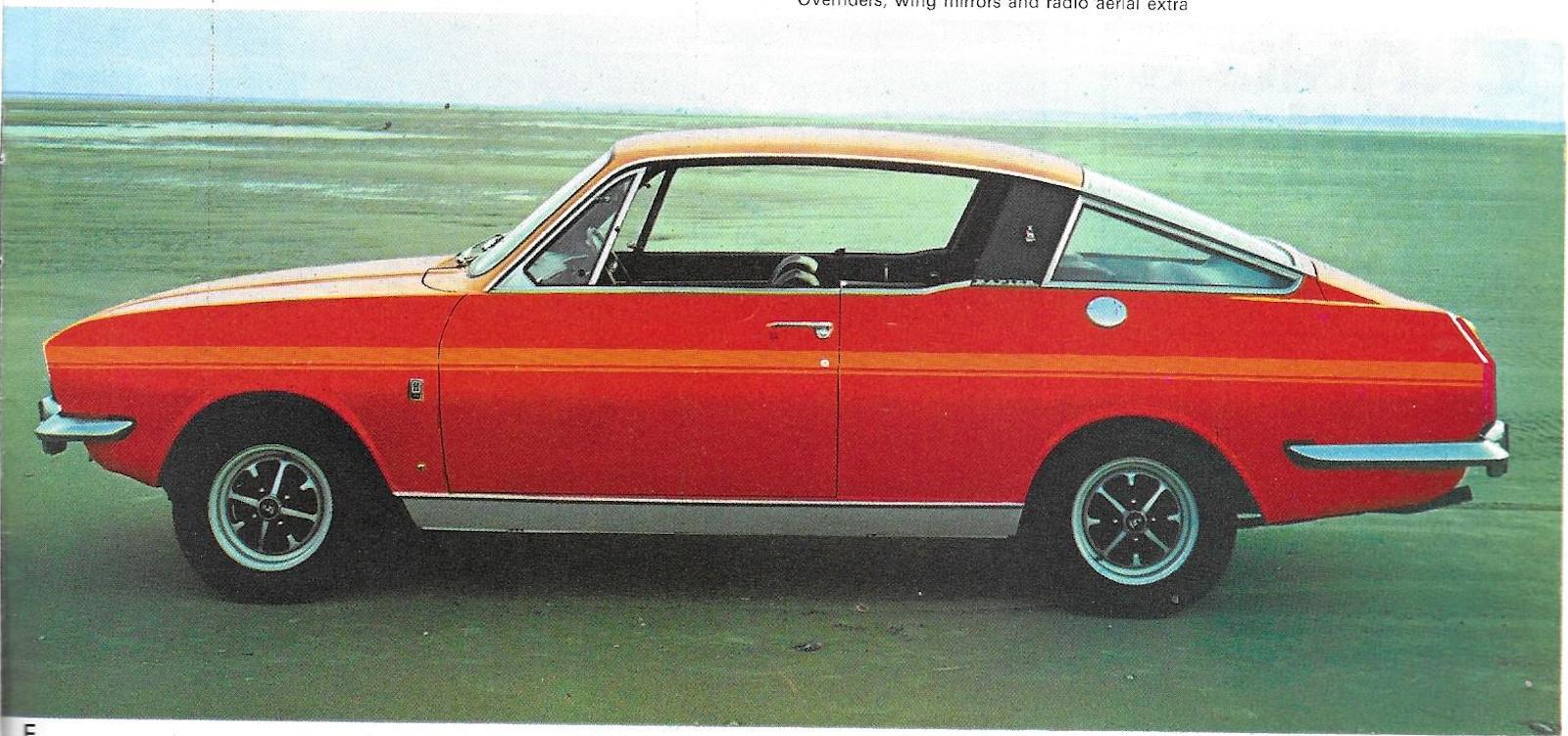
In the early 1980s, there was a 70’s blue Sunbeam Rapier fastback parked down the road from the family home. Long, flowing and sleek with pillar-less doors and glass that vanished into the body, cut at the back with a thick black pillar and finished with a fixed window. Long because, at the time and still unusual today, it was built on the 98” estate chassis of the Hillman Hunter. It had 4 lights on the front and shiny wheel embellishers. That was always guaranteed to give the image of sporty styling.
Parked alongside our 1979 Datsun Sunny saloon, it looked so exotic. Like a million dollars of exotica with a hint of American muscle thrown into the mix. By the time I started to notice the Rapiers, they were obsolete from the car showrooms. The Sunbeam brand having been renamed Chrysler in 76 and the whole company becoming part of Peugeot in 1979.
That didn’t matter though because what we had here to a 5-year-old was eye candy. And a wanton lust for this sex machine even though I didn’t know what any of those words meant back then. I was desperate for my father to buy the family something exciting. In 1982, he bought a Nissan Sunny 1.3 DX. Nissan sold a coupe version of the Sunny. He could have bought that. I was devastated. The car in the showroom was the 1.5 GL model. It had door bins in the door handles. I had plans for what to put in mine. The DX didn’t have them! I lived a poor life as a child.
And so the posters on my bedroom wall changed with each passing fancy. Sadly there were no Sunbeam Rapier posters available so I had to make do with a Ferrari Testarossa and then the Coca-Cola Beetle. Affordable exotica was being overtaken with 80’s excesses and greed. Soon, boys up and down the country were actually wanting cars that actually went fast as well as looking fast.
It seemed Ford’s Capri was struggling at this time too. Its sleek practical 3 door shape being outsold by just about every hatchback with a spoiler on the back. Exotic lines, once the darling of the man who looked set to go places fast, no longer cut it with the affordable price tag in 1986. Affordable exotica appeared to be old fashioned. A bit naff and hairy chested. Suddenly exotica HAD to be expensive and HAD to be fast.
And there is nothing wrong with that as such. It’s just that with these changes of desire, there also comes an ability to be able to handle them. Something, many it would seem are so desperately lacking. You can’t open social media these days without someone filming a jerk in a hyper car having lost control 300 yards up the street. You never got that with the driver of a Sunbeam Rapier Fastback back in the day. It would have taken them 12.8 seconds to get to 60 and the top speed was only 103mph anyway.
To me, it’s always about style and never about going fast. In today’s clogged up roads, there are very few times in the daylight hours that you will actually find what was once termed “the open road” and be able to exercise your chosen 4 wheeled steed. Arriving is always favourable anyway so getting to your destination is a bonus.
And through the years, these affordable cars with exotic looks have slowly vanished from our daily grind on the rush hour commute. Take a look around you and the car in front will be an SUV. In front of that another SUV sub compact lifted car and in front of that another one.
What has happened is there are no affordable poster cars for today’s youth to dream about. There is nothing really exciting this side of a big BMW price tag. And even they are now making SUV’s with a misjudged use of the word ‘Coupe’ in them. It would seem sleek isn’t sexy anymore.
Today, we live out our fantasies on Twitter, Instagram and snap-chat. Some as influencers in vehicles that clearly are not their own while bragging about what coat they wore while a few have actually invested in them. And then there is that investment. Pictures flooding social media, garages packed with expensive cars. Cars that do very little except gather dust.
It is all getting a bit samey these days. And here we go back to my original question. Despite being told that the young aren’t really into cars anymore, are there any affordable exotic cars that the young dream of owning? What are they actually going to be able to aspire too? At £271,146, a Lamborghini Aventador isn’t going to be achievable for many and I’m quite sure it isn’t going to be a Sports Utility Vehicle they want either.
Look at it another way, a modest 2 bedroom house where I live is valued at £350,000 and it doesn’t even come with a garage. You’ll not want to park your car with a similar price tag on the street now, will you?
Many thanks to Andy from Twitter @addict_car for the Sumbeam Rapier pictures
We are told that gardening is good for our wellbeing but more importantly, our mental health. Several community gardens have popped up over the past few years with this in mind and thanks to Gardeners World, it has highlighted the important impact of these and in someways championed them. They have become popular. BBC’s Gardeners World has also been mentioning the importance of gardening on our mental health almost weekly over the 2019 season.
On the 21st June 2019, I was watching Gardeners World with Joe Swift interviewing musician Will Young at his Cornwall home. Will was particularly open and candid about how his garden had helped alleviate his suffering from his anxiety disorder and how gardening grounds him with its sensory pleasures and the patience and nurturing it requires to help nurture himself. He went on to say that gardening and nature are brilliant healers. Will deliberately puts some form of gardening into his daily routine and he was more excited about his dahlia coming back than his first number 1. And quite a feat because dahlias can be fussy flowers demanding care and attention.
Is there is a link to health and wellbeing within the garden? If you’ve never been keen on gardening, find it boring, slow-paced, a bit shit, a thing your grandmother did, then you probably won’t understand the importance or get it. I’ll speak candidly about myself here and say that from a personal point of view, since having a garden I feel much more at ease with myself and the world around me. Now, this could also be because I started gardening when I turned 40 with a house move. Prior to this, I was in a flat, we had grounds but it was just grass. I never really found time to switch off when at home. I was always on the go. So it was quite a shock what happened when I got my own plot of dirt.
Now I’m not sure what happened but there has always been a nagging voice in my head called anxiety. I’ve only suffered from one serious panic attack and I can tell you, it wasn’t pleasant. I was shopping at the time and suddenly out of nowhere, I HAD to get out. I wasn’t in danger and I didn’t feel violated. I just needed to get away from the people. It took me ages to work out why my supermarket club card didn’t work for some time afterwards. I’d dumped the trolley and the scanner and legged it!
That has been my most extreme. I’ve had moments when I’ve had to return home to check the front door or most recently, the cooker. Going to my GP to discuss these symptoms and my keen interest at just going to bed and not waking up again resulted in a relatively long talk, a blood test and the offer of NHS counselling. I’ve been here before and it took over 6 months to get an appointment. That was back in 1992 and the waiting list is now much longer.
One question I was asked was “What stops you from ending it?”
Quite a finite question and to be honest, I’ve got too much to live for. And one of those things is my garden. I enjoy watching things grow. Nurturing a plant to give its fullest in its season, cutting it back and then watching it all start again in spring is quite joyous.
Evidence has shown that just 2 hours a week in the garden or a green space is good for you. Two hours. That’s not a lot of time. I can do more than that in a day on social media. Broken down, it is just 15 minutes a day. Now I can tell you, as a new gardener with a garden the size of 4 cars in length and 3 cars wide, I can spend more than 15 minutes a day in there even when there isn’t much to do.
The joy of gardening comes from experimenting and never being afraid to mix plants up, move them around or be aggressive with them. My loosestrife is an absolute bully and needs to be kept in check otherwise it’ll take over four other plants near it. And pulling out the wayward growth might be extreme and not in-keeping with well being, but in doing so I am looking after the others around it like my banana plant and daisies. 2019 saw the daisies shine with me taking control.
And this goes someway with your mental health. Taking control of a situation, no matter how insignificant it might be at the time, can have massive benefits in its outcome. Likewise, tackling the ongoing battle you have when you grow lilies with lily beetles. I wasn’t going to let them decimate my flowers and so I went to battle. I have since dug up the bulbs and moved them to pots. Again it is that going headstrong into the problem, coming up with a solution and controlling it as best you can.
But never fear to try something in the garden. It doesn’t always work. I’ve lost several plants over the years and two plants needed to be moved three times before I found their spot. Now the hypericum thrives and the bees love its bright yellow flowers. How ironic then that Hypericum (St John’s Worts) is used to support a healthy nervous system and yet here it is growing in my garden and giving me visual pleasure in all that it now does.
On January 2nd 2018, we lost motoring journalist John Slavin to suicide. He was struck by a train. He was just 30 years old. John had succumbed to his own inner demons and mental health issues. Long-standing battles with depression had started in puberty and there were many crisis episodes where John had felt suicidal. Never wanting to burden others, John had developed skills to hide his depression from those around him. I sadly never got to meet John but I remember the day well thanks to Twitter and it has stayed with me. I can’t explain it other than I could feel empathy for him and his family. It also wakes you up a bit too about your own mortality and your own health of mind, body and soul.
John loved sunflowers and following his death, motoring Journalists and friends of John, Simon Harris and Adam Binnie started up a sunflower challenge game called the John Slavin Sunflower challenge with money raised going to the CALM charity. CALM Campaign Against Living Miserably. Offers support and information to people when they need it. They exist to prevent suicide which takes 18 lives everyday and is the single biggest killer of men under 45 in the UK.
Since I started to write this piece we have now been under lock and key by the Coronavirus outbreak. As a keyworker, I have the ability to legitimately leave my home and go to work but for those who don’t, not being able to do those things we took for granted can be harrowing for most but more so if you feel isolated and alone. And that’s when having someone to talk to on the other end of a device or phone is important.
Now here is the fun part. I’m told by John’s mother, Sylvia, that he wasn’t much of a gardener and preferred to grow decaying motorbikes in the soil but he did enjoy growing things especially edible produce. And that’s all that is needed. A little bit of enjoyment from seeing something grow from seeds. Gardening is all about growing and nurturing. And there is a reward at the end. Like nurturing yourself, you can be rewarded with great blooms, misshapen peppers that you won’t find in the shops but taste 50 times better because you grew them yourself. And sunflowers are the perfect way to get quite a lot from not much so why not try.
And the growing doesn’t stop there. For John, he is remembered with growing sunflowers and sunflowers are one of the easiest things to grow. They also grow really tall from one seed so they give you so much. What’s more, sunflower seed sowing starts in April and can be done indoors from a window sill. And despite the lockdown, you can still buy sunflower seeds online so there really is no stopping you.
As for me, I’ve sort of cheated. From last year’s growth I’ve had random sunflowers start popping up around the garden. You’ll be amazed just were the seeds end up but that hasn’t stopped me starting from ground zero again.
So far the John Slavin Sunflower Challenge has raised £3,453. Come and join in the fun and the remembrance of John for 2020 here at Adam’s Just Giving page. Proceeds going to www.thecalmzone.net.
Share the link on your social media and get others on board. It’s easy to do.
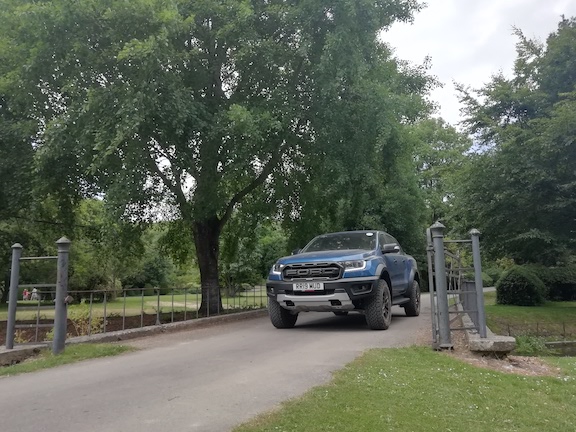
Ford take their Ranger workhorse pick-up and turn the volume to 11 making it into a BIG plaything.
Compared to the standard workday Ranger, the Ranger Raptor really is BIG. The reinforced chassis and body shell make it both imposing and rugged but does that make it massive and unyielding?
One thing to remember is that this is a European Raptor. It’s not the US Raptor which means it is suited to our roads and our unknown roads because it will travel well off-road.
Off-road, its ability to cushion the ruts was astounding. The increases in height and track width playing a great part here. It all became a bit of a disappointment. Shocked by this admission, the man from Ford was intrigued by my statement and keen to find out why. The suspension soaks up the worst of the rough and smooths it like a cheesecake topping spread on a rough crumbly biscuit base.
That capable suspension being made of linkages, coilover springs and Fox suspension systems in place of trusty but non-compliant leaf springs. It all comes together to make for a better than happy medium.
On-road this translates into a comfortable ride with very little road noise from the 30 plus inch wheel and purpose-built tyres with a 20 per cent strengthened sidewall. That said, push the mighty truck into a corner and you soon get complaints from the tyres.
As is typical with a pick-up, the load bed area isn’t integrated with the main shell. This can have a detrimental effect with inertia shaking the rear end, more so when on the road than off-road. Like the main body, the bed is well bolted to the chassis.
What doesn’t work is the engine and the 10-speed automatic gearbox. While the 10 speed is good at keeping the engine on the power band, in standard mode, it keeps it around 2500rpm. The changes are smooth and in some ways it behaves like a typical torque converter system with a bit of slush from the box. It belies the power outputs of the engine.
The engine, being a 2-litre turbo diesel, develops 213PS from a low 1500rpm and the 500Nm of torque is good in almost any situation. Mated to a 10-speed automatic gearbox, it has a ratio for every situation you are ever likely to encounter.
On the road, it doesn’t quite work out as well as you’d think on paper. Power delivery is smooth but it doesn’t feel as quick as the stated 10 seconds quoted. Overtaking needs to be planned. It doesn’t quite fit in with the promise of power that you’d expect.
I do love a truck so performance of the 0-60 variety isn’t my thing. It’s no Ford F-150 Lightening. What I would be looking at when buying this at almost £50k as tested is its ability to go off-road but also be comfortable on-road and thankfully it does both. So it’s nice to see the inside logical, convenient and comfortable with the fit and finish perhaps a little too good for a workhorse.
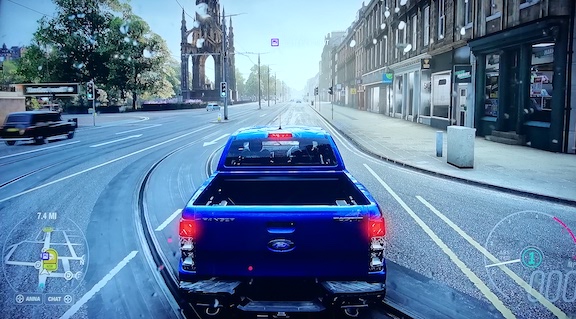
Cheap it might not be but then most playthings aren’t these days and that’s sort of what you have here and it’s fabulous. Speaking of playthings, on its launch, computer game Forza launched the Ranger Raptor to the game. Former TGUK motoring journalist, Alan Taylor-Jones proved to be quite the whizz kid. I wasn’t. Thankfully for me, Ford doesn’t test us on computers simulators first before setting us free. If they did I might be writing this from the other side of the cabin on the comfortable passenger’s seat!
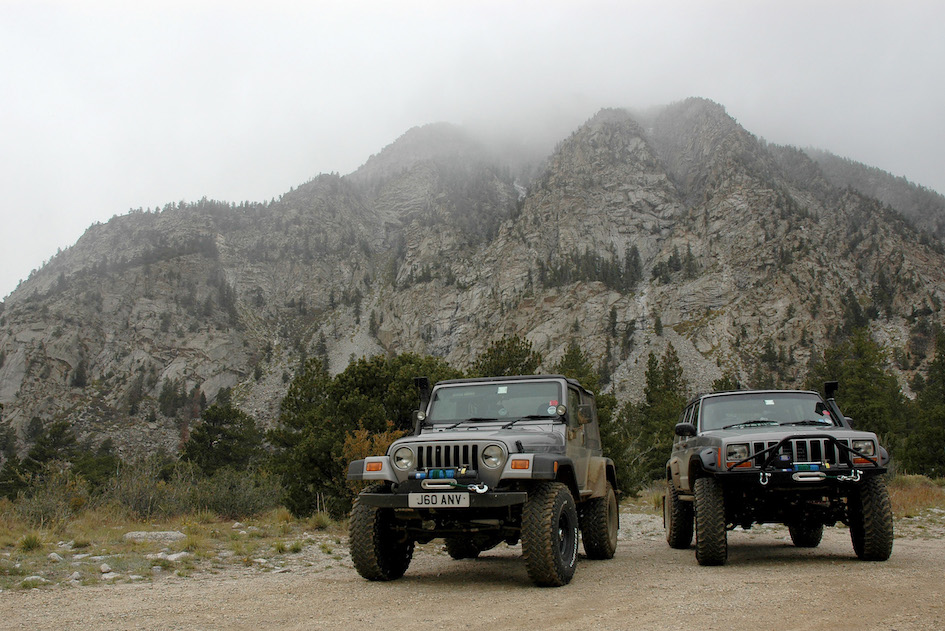
Have you ever wanted to take to the interstates of America in a vehicle of your choosing and explore the land of the free? That is exactly what author Alex and good friend Vince did with a few twists and turns more worthy of most tricky off-roading courses for any 4×4 out there.
With the idea set into their minds in somewhere in 1998 where our intrepid travellers met as office workers, it wasn’t until much later that the idea started to become a reality when it was discovered Vince needed to be in Utah for a wedding. A plan to travel coast to coast across America in 2 Jeeps taking in as many national parks as they could was hatched.
The twist, to import 2 UK righthand drive Jeeps to the starting line in Connecticut. The turn was to turn their UK road-ready Jeeps into weapons for the broken tracks they would encounter in the USA. The reasons for this was in the economies of scale it simply proved to be far more economical to have the Jeeps modified in the US by a company that had access to the many Jeep parts needed. And for the love of the mechanical appliance, there is something quite emotive about taking your own vehicle on holiday.
So Alex (and Vince) starts the tale with a fraught check-in at Heathrow and cutting it to the wire with an unforgiving schedule that doesn’t stop over the next 17 of the 18 chapters, 222 pages and 5572 miles across 15 states of America.
Interspersed within the book are the joyless searches for various motels, the fact that Vince can’t handle his alcohol, the vast array of pancakes eaten and a nice touch of historical relevance to the places visited. It’s these little historical touches that help mark this out to be not another ‘man drives across America’ book. The chapters themselves are relatively short being around a dozen or so pages each and this is broken down into the journey, little snippets of fun in the narrative that carry the reader from one State to another.
With all States having their own peculiar ways not just in rules of the road but the local constabulary, the unfathomable way fuel is distributed and some of the crazy laws of the local eating establishments. It makes for an easy and interesting read like Alex is with you telling you the story first hand in a pub garden.
“Two Jeeps” makes for a lovely travel companion too. It also goes some way into doing the route leg-work if this is something you planned on doing yourselves. You can access this from the website www.twojeeps.com. Fear not however because nothing about the book or the journey is given away on it.
Within the chapters come the reason why they went through all they did to get here. To drive through the various national parks with their breathtaking views in vehicles capable of a lot more. The main focus for this comes halfway through the book but it is here were the short travelog of stories could be somewhat elaborated into a more in-depth talk about the surrounding land and the perilous passes endured. That is my only criticism of “Two Jeeps”.
The ending is coming close for them and you the reader at chapter 15. In Hollywood fashion, they must depart Moab as a storm of unknown magnitude is brewing that could be seen in the distance and there are still over 700 miles to travel.
So did they make it out past the storm and into LAX on time to depart for Blighty? The Cherokee had given trouble motoring along the way while the Wrangler had been free of problems. It would be telling to give away the outcome over the last 3 chapters but it is here that the reading intensifies to the books ends. So I suggest you buy the book and find out for yourself.
Available in paperback, ebook and audiobook from most notable online book retailers, including Amazon. More information on the website www.twojeeps.com
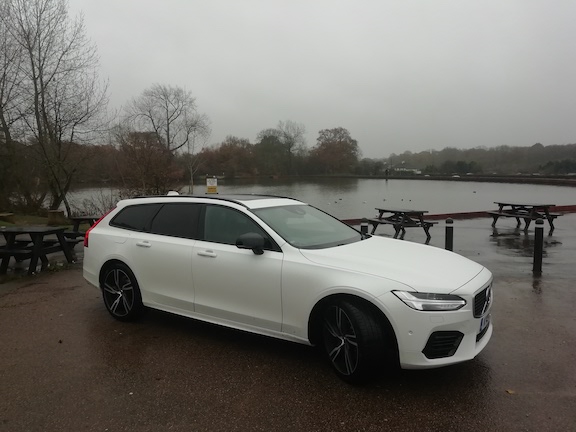
Volvo V90 T8 Twin Engine AWD R-Design Plus | The Versatile Rapid Tourer
Everyone is going hybrid these days and Volvo are no exception to this. The Swedes have been looking at ways of propulsion and with the help of sister company, Polestar, there is pretty much a T8 twin-engined model in every sector Volvo have entered. We look at the V for versatile V90 estate with the T8 setup.
Let’s get my issue out of the way first. This model is Volvo’s largest of the ground-hugging saloon and estate cars and comes in R-Design. For a Luxo-barge, I had my reservations of the R-Design. It’s not a bad model in the range, but does this ‘sporty’ model get ruined by being made to feel dynamic for reasons that we Brits like it and more importantly, will I like it?
The V90 comes with just 5 power sources across the range and the T8, with its 87hp electric motors powering the rear wheels is the most powerful out of them all. It’s available across the range except in the Cross-Country models. Those use a full 4WD system for obvious reasons.
The petrol unit powering the T8 is a 303hp petrol 4 cylinder. Combined with motor assistance on the rear wheels it will project the Volvo estate from 0-60 in just 5.0 seconds. In practice, it feels a touch more lethargic than that though this can perhaps be attributed to the beautiful way the car can glide away from a standstill without much noise at all. The electric motors go some way to eliminate the throttle lag of the petrol engine. It’s still a little hesitant but just enough to be worthy of a mention.
And 5.3 seconds 0-60mph isn’t to be scoffed at. Until recently it was the time set by the superstars like Lamborghini. Imagine the fun of being able to blow away a Countach with your 1,526-litre load-lugger with more space than a double bed in the rear. Admittedly you wouldn’t. You’d want to hear the sound of that Lamborghini V12 pull away.
And here is the key to the V90 T8. Serenity. So perhaps it might come as a surprise that even in R-Design, the UK’s market leader in the range with dynamic feel, has this ability in almost any drive mode you select to isolate you from the harshness of what a 15mm lowered suspension set up could bring. From a spec sheet at least, it all seems superficial except for the said lowered sports suspension and 18-inch alloy rims.
Inside is typical Scandinavian elegance. Ergonomic cockpit set up for driving pleasure and ease of use. The infotainment system allows for multiple changes and adaptions to suit you the driver and not the R&D departments preferences. And this allows you to set the car up to become more of how you want it and it’s A) surprising how specific we all are when given the chance and B) why more don’t offer this. This is your car after all. There ends up being very little to annoy and dare I say it, as a motoring journalist, not much to say any more about the insides of Volvo’s.
Driving is a pleasure and getting the best from the twin-engined set up is ease itself. The use of “twin-engine” is perhaps a little misleading when there is in-fact only one engine up front and two small electric motors at the back. By this calculation alone it should then perhaps be called a tri-engine. Anyway, I digress because the art of the system is beautiful.
Now 21 miles on the battery might not seem much distance at all but it’s more than you think. A drive home from visiting my father in Bognor saw me empty the battery packs by the time I arrived in Storrington. That was 22.1 miles of non-sympathetic motoring. The V90 T8 had the ability to carry itself quite rapidly at legal speeds on battery power down the A27. Not necessarily designed for rapid motoring over a distance like this, the batteries side of things did very well. And it’s this ability to have full use of the electric motors that makes it such an easy system to use. I do however struggle with its lack of ability to charge the batteries adequately when on the move unless you select it too. It’s sort of self-charging but by-passes the ability to use the hybrid system.
That said, I did calculate my fuel economy with the XC90 T8 being most favourable. With my daily commute now being just under 10 miles each way with the return drive home mostly being downhill (I’m not making that up), I could go for years without actually using petrol. But that really is exceptional usage.
The Volvo V90 T8 is quite the Q-car then in terms of looks over function over ability. It carries stuff, lots of stuff. Cossets occupants in tranquillity and yet is as far removed from what you’d expect a Volvo estate to behave like. Forget the mind-blowing 850 T5R from the 90’s and their wake up call to the world as to what Volvo could do. That’s power dressed and old news. The V90 T8 is the future. For the moment at least.
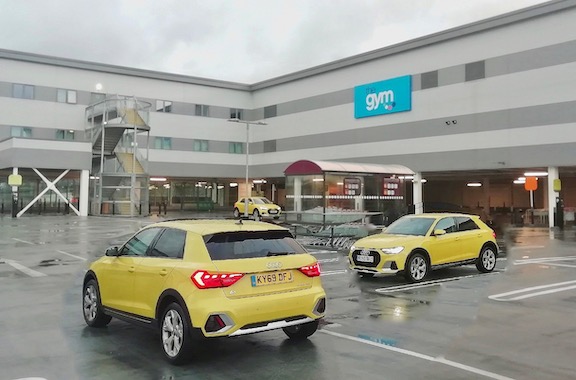
Audi has just revamped their little A1 for the city giving it the “Citycarver” moniker. It sits high up in the A1 range and therefore towers above the Sportback model in the range in more ways than one.
What we have here is an Audi A1 that has been lifted a huge 50mm. That’s 2 inches in old money. It’s also dressed up with some black wheel arch extensions like those from Audi’s Q range but this is no SUV.
It’s still Audi’s little hatchback car.
For a start, the raise in rode height should, in theory, make for a lofty wallowing ride when compared to the Sportback that we at THEGAYUK liked very much. In some degree, it does but not in a notably loose way that you would expect. It’s rather less Germanic in comfort terms and it seems to be a trend I’m noticing from the ‘normal’ cars from Ingolstadt. The ride remains faithful to the A1 Sportback in being entertaining on A and B roads while also being just that much softer while retaining a semblance of body control.
This floaty Audi was fitted with the engaging 999cc TFSI 3 cylinder petrol unit mated to a sort of hydraulic dry clutch gearbox. In essence, it’s an automatic with 3 drive modes. Auto, wheel paddles or selected on the gearstick in S mode. All three work well though on the stick shift it always feels wrong when knocking back goes up the gearbox. Many do it the other way around and that feels more natural. This gearbox has come in for some harsh criticisms for its lack of go-go-go when you floor it from a stand-still and I’m happy to report that the hesitation now almost link to this system was well muted. It felt better suited to the city fight for space when pulling out of a side road quickly.
It doesn’t try to be hot hatch despite its identical credentials of the other A1 in the range and it makes for the better car. However, it doesn’t all go its own way. For a start, as a car named for the city, it lacks protection. The city can be a brutal thing. Remember all the trouble Carrie and the girls had trying to navigate their way around Manhattan? It’s like that for the A1 Citycarver. It looks great but those looks won’t last long. The absence of door rubbing strips is noticeable. There isn’t even an option for them. It goes a little way in the fitment of black wheel arch extensions but these are hardly the things to preserve the flanks of the doors in a carpark.
And then there is the interior. It’s just a bit business like inside. You can’t fault the ergonomics and driver comfort but the colours are more suited to a boardroom meeting with a packet of rich tea as the only available snack. Perhaps it was the £575 optional python yellow metallic paint that exaggerated this. The colour was bold and memorable and made a statement wherever it was parked. But the grey inside with the below par for Audi, silver trim across the dashboard just doesn’t cut it, well certainly not in a car that costs just under £23 grand before options.
It redeems itself inside with Audi’s 10.25 inch digitally adaptable facia display and 8.8-inch infotainment screen. This is thankfully angled towards the driver. The interface is easy to navigate around and responds to fingering inputs quickly. Annoyingly the lane keep assist system will always reset after you switch off. Its aggressive tugging can be quickly turned off from the end of the wiper stalk.
Despite my criticisms, it is a rather nice package let down perhaps by Audi being at the business end of the global company it comes from.
A smattering of bright colour dotted around wouldn’t go amiss inside. That said, it’s the engaging enthusiasm the chassis affords you when you get out of the city. Kick-off those high heels and slip into those comfy trainers and your A1 becomes a Carver, cutting up the badly maintained back roads of England with aplomb and this time you’re allowed to keep the ESP off all the time!
It’s just that I wouldn’t want to take it back into the big city without those door rubbing strips. They might be unfashionable but it’s cruel out there!