Author: News Desk

  • Coronation Street actor comes out as gay

    Coronation Street actor Rob Mallard has opened up publicly about his sexuality, revealing that he is gay.

    Is Rob Mallard gay?

    Rob Mallard has spoken out about his sexuality for the first time in a revealing interview with Gay Times. He said that he didn’t want to hide who he is, despite being out to his family and friends since he was 17.

    Speaking to GT the actor said that he never planned to keep his sexuality secret, but was fearful that if fans of the show knew that he was gay, they might have trouble believing in his character.

    He said,

    “I never planned to keep it quiet that I was gay. The only concern I had at first was if I’m with a female character, will an audience who knows I’m gay in real life believe it? But that was just my own fears because I do believe they will.”

    The actor revealed that he came out to his family at the age of 17 and he says they immediately accepted him and showed their support.

    The actor plays the son of Ken Barlow in ITV’s long-running soap. He joined the soap last year.

    Coronation Street airs Monday, Wednesday and Friday nights

  • Alan Turing Law is ‘hugely historic” and “deeply emotional”

    The Alan Turing law has been welcomed by John Leech, the pardon architect and campaign leader.

    More than 75,000 people criminally convicted of homosexuality have today been pardoned under the “Sexual Offences (Pardons Etc.) Bill 2016-17”, known informally as the “Alan Turing Law”.

    The decision has been warmly welcomed by the architect of Alan Turing’s pardon, former Liberal Democrat MP John Leech, who said,

    “For years I have campaigned and fought for this moment.

    “This is a hugely historic, proud and deeply emotional day, but it is certainly not before time.”

    Mr Leech submitted several motions to parliament and campaigned hard to secure Alan Turing’s historic pardon, stating that it was “utterly disgusting and ultimately just embarrassing” that the conviction was upheld as long as it was.

    He added today,

    “I hope this will provide relief to all those that suffered with this awful and unjust burden for so long.

    “It’s an enormous step forward for LGBTQ+ history.”

    Alan Turing was a pioneering English computer scientist and mathematician whose groundbreaking work is thought to have brought WWII to an end four years early.

    However, at a trial in 1952, Turing admitted to “acts of gross indecency” before being sentenced to chemical castration. His conviction meant he lost his security clearance and was forced to stop work at Bletchley Park.

    Aged just 41, he was found dead from cyanide poisoning in 1954 with a half-eaten apple by his side. An inquiry concluded that it was suicide.

    In 2013, Alan Turing was given a posthumous royal pardon and an official apology by former Prime Minister Gordon Brown, following a high profile campaign led by the former Manchester MP John Leech.

    Today, it is under Alan Turing’s name and legacy that the injustice of so many is finally brought to an end.

    Following the success of his campaign, Mr Leech turned to securing the pardon for the 75,895 other gay, lesbian, bisexual and transgender people who were unfairly convicted for similar offences.

    It was in Manchester, in 1952, that Turing was arrested for having sex with another man, whilst much of his ground-breaking scientific work was conducted at the University of Manchester. Today, mathematics students at the university attend lectures in the building proudly bearing his name.

    Mr Leech added,

    “I believe Alan Turing would be truly overwhelmed to see tens of thousands of people rightfully vindicated in honour of his name.”

    It is predicted that Turing’s work saved the lives of an estimated 14 to 21 million.

    Mr Leech said Turing’s persecution “by the state for being gay was a scandal that shouldn’t have ever been allowed to stand”.

    The first motion Mr Leech submitted called for a recognition of the “vital contribution made by Alan Turing to Britain’s war effort” and “regrets that following his years of national service he received a criminal conviction for having a sexual relationship with another man”.

    It added that there were 75,895 other gay, lesbian, bisexual and transgender people who were unfairly convicted for similar offences and called on the Government to ensure that they too received pardons.

    The former Liberal Democrat MP of ten years, John Leech, wrote to the SNP MP John Nicolson, who sponsored the Sexual Offences bill, to thank him for “seeing the campaign through to its very end”, adding that it was a “deeply emotional day for him and his team” who have fought for this moment for years.

  • How posh are you? 5 top tips on Etiquette

    Life… it’s all about good manners, being polite to the person who just pushed in front of you in the queue, and knowing how to greet the Queen properly when you do meet her.

    guide to etiquette
    CREDIT: Rawpixel.com-bigstock

    With that in mind, William Hanson, the UK’s leading consultant in etiquette and protocol and author of the newly published Bluffer’s Guide To Etiquette, has offered his top five tips on how to be more posh in 2017:

    1. Never say ‘Pleased to meet you’. You may think you’re being terribly nice saying this upon greeting a stranger, but those in the know will have mentally clocked that you are not saying ‘How do you do?’ If you don’t know who they are, can you be sure you really are pleased to meet them?

    2. Revise your handshake. The last time someone told you how to shake hands you were probably very young. Get a loved one to review your handshake honestly. Try to avoid being a wet fish or a bone crusher. People judge others on the quality of their handshake.

    ALSO READ: Etiquette tips for the dating app

    3. Abandon Pancake Day. For houses of quality, it’s called Shrove Tuesday. Serve crêpes in the evening. Oh, and it’s St Valentine’s Day, also.

    4. Avoid attending Facebook parties. If you are invited anywhere by Facebook then don’t go. It won’t be worth it and you’ll probably be served beer in the bottle or be given wine that hasn’t been decanted.

    5. Pudding v dessert. The final course of a dinner (and arguably the best one) is the pudding. Note, it is called the pudding. NOT ‘dessert’! If you call your lemon posset with spun sugar basket a dessert when dining with the hoity toity, then you might as well prepare for a future dining at a Toby Carvery – where you can help yourself to the dessert buffet for the rest of eternity.


    The Bluffer’s Guide to Etiquette is available for Kindle and iPad at Amazon.co.uk and the iBookstore (RRP £4.99)

    This article was first published in 2014.

  • Thousands of gay and bisexual men posthumously pardoned from old sexual offences

    Thousands of gay and bisexual men posthumously pardoned from old sexual offences

    Thousands of gay and bisexual men have been posthumously pardoned by the UK’s government.

    gay men posthumously pardoned over historic sexual offences

    Thousands of men who were charged with offences of now abolished sex offences will be posthumously pardoned by the government. The pardon effects those men who have since died and does not include those who are still living.

    It is believed that only men who have died with have their charges pardoned.

    The law is dubbed the Turing Bill, after scientist Alan Turing. Alan Turing was convicted in 1952 of “gross indecency” with a 19-year-old man. He was chemically castrated. He died two years later from cyanide poisoning in an apparent suicide. He was pardoned in 2013 with a posthumous royal pardon.

    Speaking about the historic pardons, Justice Minister Sam Gyimah called it a ‘truly momentous day’. The MP was heavily criticised last year after he filibustered a proposal forwarded by SNP MP John Nicolson, who suggested that the Turing Bill should “‘prioritise the living’. Sam Gyimah claimed that it would be very difficult to distinguish between those who had been convicted of offences that are still illegal and those that have now been abolished, such as homosexuality.

    Homosexuality was decriminalised in the UK in stages, with the law change in England and Wales in 1967, in Scotland in 1982 and in Northern Ireland in 1982.

    Those similarly convicted but still alive will also receive pardons if they have successfully applied for a disregard, or in future successfully apply for a disregard under the Protection of Freedoms Act.

    This is a breaking news story. Please click refresh to get the latest update.

  • Motorists are being baffled by clashing speed limits

    Motorists have been left baffled after council workers painted two conflicting speed restrictions on the same road.

    CREDIT: SWNS
    • New restrictions are limiting speed limits to 20 mph across Edinburgh.

    • Around 80 per cent of Edinburgh’s road will have a limit of 20 mph.

    • Motorists caught speeding could be fined £100 and three penalty points.

    A controversial city-wide 20mph limit is set to be introduced across Edinburgh this year and some streets are already being painted with the new restriction.

    But on one road in Edinburgh, this has led to confusion with one side of the road saying the limit is 20mph and the other saying it is 30mph.

    Motorists have expressed their confusion on social media with one calling the situation “hilarious”.

    But council bosses have sought to reassure bemused drivers with the new limit set to come into force across much of the city a month from today on February 28.

    Similar signs have been spotted at the Leith Walk end of London Road.

    Accompanying the painted warnings will be traditional speed limit signs at the side of the road.

    The painted notifications of speed limits are part of a pioneering scheme to introduce 20mph limits across 80 per cent of Edinburgh’s roads.

    The initiative was rolled out in the city centre and rural west of Edinburgh last August to a groundswell of initial opposition – with a 2700 signature petition to get the decision reversed.

    CREDIT: SWNS

    AA spokesman Ian Crowder welcomed 20mph zones but only where “appropriate” – such as roads with schools.

    He said,

    “Most collisions occur in these types of streets and there’s a significant difference between hitting someone at 20mph, when there’s a good chance they’ll survive, and 30mph where there’s a good chance they’ll be killed.”

    But blanket 20mph zones across cities could be “counter-productive”, warns the motoring association.

    Mr Crowder added,

    “I would caution against putting 20mph limits across every street without good reason.
    “Drivers can become irritated by it. The majority of people respect 30mph limits but 20mph is quite slow and people can start to ignore them.”

    But subsequent city-wide consultations reported positive feedback – amid some remaining concerns around increased congestion, road safety and longer journey times.

    The scheme is the first of its kind in Scotland and is expected to be fully rolled-out by next January with £100 fines and three penalty points for drivers caught speeding.

    Key arterial routes are among the few that will retain 30 and 40mph limits.

    Bosses at Lothian Buses have previously warned the new limits could lead to higher fares and poorer services.

    A council spokesman explained the signs with the 30mph limit were for vehicles exiting onto the nearby Portobello Road while the 20mph is for those driving onto the residential street of Craigentinny Crescent.

    He said,

    “The 30mph road marking signifies the speed limit on Portobello Road on to which drivers exit.
    “This will be reinforced by an adjacent road sign signalling the end of the 20mph zone, which will be erected before the 20mph limit comes into force in this area on February 28.
    “The 20mph road marking refers to the 20mph speed limit on Craigentinny Crescent.”

  • You won’t believe the cost to find that someone special

    So, dating is expensive, right? Do you have any clue how much it costs to find that special person nowadays?

    CREDIT: Yastremska-bigstock

    According to a new poll, it takes Americans over five years of dating before they decided to tie-the-knot. Over the course of those years, the average person spends $20,276 (£16,320) on dating.

    The new survey of 1,000 married people across the country conducted by art event planners Paint Nite also found that Americans spend, on average, nearly five and a half years out on the dating scene before getting hitched – shelling out an average of $43.50 per date.

    The most common dating activity is going to dinner, which 88 percent of 1,000 Americans named as one of their top picks, followed by going to the movies (63 percent), lunch (39 percent), taking a walk (38 percent) and making a meal and spending time at home (38 percent).

    As for the ideal date, dinner and movies topped the list once again, followed by taking a walk, travelling and sightseeing. Three out of four people would rather enjoy a sedentary date such as dinner and movies over active/interactive or outdoor dates – with only 10 percent saying they like to play sports while out with their other half or a new love prospect.

    When it comes to landing dates, a quarter have picked up a prospect in a bar or a nightclub, one in five have used online dating sites, and 35 percent have been set up by friends and colleagues.

    Sixty-five percent of respondents think the best way to greet a date is with a simple hi or hello, while almost two in five advocate a hug and 30 percent recommend a handshake.

    “Making a great impression on a first date, whether that means covering the bill, a warm greeting or simply picking an interesting activity, can make all the difference in the early days of a relationship,’ explains Courtney Osgood of Paint Nite, a company that arranges art-themed nights at pubs and wine bars. ‘Mixing it up, and trying something new can also keep the spark alive between a seasoned couple.”

    As for who should shell out on the first date, more than half think that the man should cover the bill, while just one percent of respondents thought the woman should pay the tab. Twenty-three percent of respondents said it should actually be the person who asked for the date who should pay.

    More than 40 percent of respondents say that they decide who will pay before the date even happens, while 24 percent say they figure things out when the bill comes.
    One in five men admits to pulling the pretending-to-stretch trick on a date, while 22 percent of both men and women admit to touching an arm or a knee of their date to make a move.

    Top keys to the best first impression on a date
    1.    Good manners
    2.    An attractive appearance
    3.    A smile
    4.    Great personality
    5.    A sense of humour

    Top date turn-offs
    1.    Bad manners/Offensive/Rude
    2.    Bad breath
    3.    Too negative
    4.    Burping out loud/other bodily noises
    5.    Unattractive physical appearance
    6.    Inappropriate/tight clothing
    7.    Talks too much
    8.    Indecisiveness
    9.    Too much make-up
    10.    Lack of confidence

  • RECIPE | Vegan Thai Coconut Soup

    RECIPE | Vegan Thai Coconut Soup

    Health food blogger Sophie Gordon brings us this warming recipe to brighten up the dreariest of January days, using creamy coconut yogurt as the star of the dairy, gluten and soya free dish.

    vegan soup ideas
    CREDIT: Independent Media News

    Ingredients.

    1 medium sized butternut squash BUY
    3 carrots BUY
    1 leek BUY
    2 small garlic cloves BUY
    Small knob of ginger – grated finely BUY
    1 tsp dried lemon grass  BUY
    2 tsp ground coriander BUY
    2 tsp ground cumin BUY
    2 tsp ground turmeric BUY
    1 tsp cayenne pepper BUY
    Handful of fresh coriander BUY
    Chilli flakes BUY
    2L vegetable stock (roughly) BUY
    350g The Coconut Collaborative yogurt BUY
    ¼ – ½ lime – juiced BUY
    Salt and pepper to taste


    Method.

    1. Pre heat your oven to around 190°c. Slice your butternut squash in half (length ways), de-seed and then place flat onto a baking sheet; insides down. Put into the oven and roast for around 35-40 minutes.

    2. Put your rice on as rice takes a little longer to cook; follow packet instructions for correct water to rice ratio.

    3. Chop up your leeks and carrots. Sauté in some water with the garlic and ginger until a little softer. Add the ground coriander, cumin, turmeric, cayenne pepper, lemon grass and chilli. Continue to fry, adding a little more water if it starts to dry up.

    4. Once this is fragrant and the carrots and leeks soft, add in your vegetable stock. Bring to the boil then allow to simmer for around 10 minutes; season with salt and pepper to taste.

    5. Once your squash is done, remove from the oven and let it cool for a few moments. Scoop out the insides. They should be very soft so will easily come away from the skin.

    6. Put into the pot with the stock and mix. Bring back to the boil and then add a squeeze of lime and the fresh coriander, season to taste.

    7. Using a hand held blender, blitz your soup until thick and creamy. Add the coconut yoghurt and stir well.

    8. To serve, ladle a good serving of the soup into a bowl, adding rice if desired. Top with some fresh coriander and any other seasonings.

    *You could also add another dollop of coconut yoghurt on at the end to make it extra creamy

  • American Boy Scouts to allow trans kids

    Trans children will now be permitted to join the Boy Scouts of America.

    Boy Scouts of America
    CREDIT: ©-smontgom65-Depositphotos

    Transgender children who identify as male will now be able to join the Boy Scouts of America, thanks to a policy change, which does not require the child to have male registered on their birth certificates. The organisation, founded in 1910 only allowed children that had “male” written on their birth certificates to join the organisation. The new policy has an immediate start after the group found that the approach of determining the eligibility of entry via a person’s gender was “sufficient”.

    In a statement The Boy Scouts of America said,

    “For more than 100 years, the Boy Scouts of America, along with schools, youth sports and other youth organizations, have ultimately deferred to the information on an individual’s birth certificate to determine eligibility for our single-gender programs.

    “However, that approach is no longer sufficient as communities and state laws are interpreting gender identity differently, and these laws vary widely from state to state.”

    Children in the UK are not subject to a gender policy and are welcome to join the organisation regardless of their identity.


  • Witnesses suggest that Big Brother stars’ attack was not homophobic

    Witnesses suggest that Big Brother stars’ attack was not homophobic

    Witnesses to the Big Brother stars’ “homophobic attack” have claimed it was not homophobically motivated.

    Channel 5

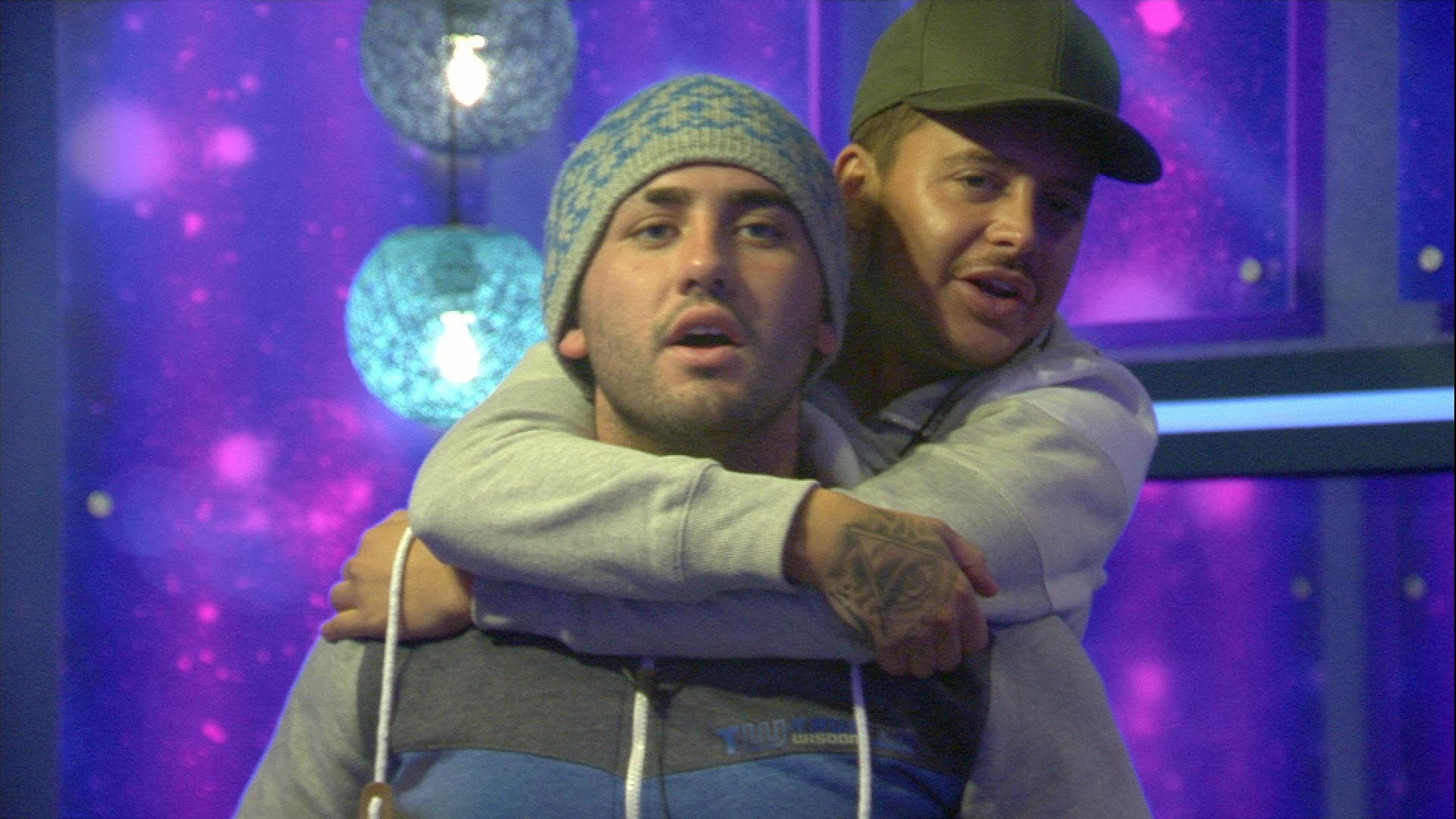
    Ryan was left with facial injuries after the alleged assault, which took place in Dublin’s city centre. Ryan has shared pictures of his injuries on social media.

    • Claims that the assault was homophobic refuted.

    • An anonymous man says a racist taunt was hurled at Hughie Maughan and all men involved were gay.

    • Ryan showed off his facial injuries on social media.

    Earlier this week, Big Brother stars Ryan Ruckledge and Hughie Maughan said they had been involved in a homophobic attack leaving Ryan with facial injuries and Hughie having to fend off four alleged attackers. The attack came after Ryan and Hughie, who are engaged to be married, were refused entry to a club in Dublin’s city centre.

    https://www.instagram.com/p/BP2T7fYhXe7/?taken-by=ryanruckledge


    Witnesses are now suggesting that the attack was not homophobically motivated and that the row that broke out with a group of gay men who had exited the club moments before Ryan and Hughie were refused entry.

    CREDIT: Channel 5

    HAPPIER TIMES: The loved pair, who are due to get married, met each other in the Big Brother house in the summer of 2016.

    The Irish Sun reports that one witness who wished to stay anonymous said, “This attack was not homophobic because everyone involved in the fight was gay.”

    The source did say that there was racist taunt hurled at Hughie, who was called a “‘pikey tinker”.

    THEGAYUK approached Ryan to find out whether the incident was reported to the police.

    Read the full story at The Irish Sun

  • ANSWERS | What does LGBT stand for?

    If you’ve seen the letters LGBT and wonder what they mean we’ve got the answer for you.

    What does LGBT stand for?

    LGBT is the standard initialism for the Lesbian, Gay, Bisexual and Transgender community, there are often other letters added to it, including Q (Queer or Questioning) and I (Intersex). It was first grouped in this way during the 1990s.

    Sometimes the letters are rearranged to have the G first, Gay, Lesbian, Bisexual and Transgender. Some places, mainly in the USA, this initialism is more widely used. However, since the ’90s LGBT has become the standardised way of referring to the community after some activists decided that the “gay community” did not accurately reflect everybody who was in it. Q which stands for Questioning or Queer was added in 1996, although is not always used.

    ALSO READ: What does the F in LGBTQIF stand for?

    There has been much debate on whether more letters should be added, such as Q and I and A (Asexual). Some have suggested that trans and intersex should be grouped together under their own banner as they are gender-related and not sexuality related as LGB are. Although you can get LGB trans and intersex people. Q (Queer) is also problematic for some, as it doesn’t describe a sexuality more an ideology.

    The word is also offensive to many in the community.

    ALSO READ: What does the I in LGBTQI stand for?

    Sexuality has often been defined as homosexual (same-sex attraction), bisexual (both-sex attraction), heterosexual (opposite-sex attraction) and Asexual (no sexual attraction).

    Some people in the community find the term clunky and unworkable and a new initialism has been suggested GSM which stands for Gender and Sexual Minorities or GSD Gender and Sexual Diversity.

    In THEGAYUK editorially we use LGBT+ as described in our style guide to encompass a spectrum of other sexualities and gender identities.

    Do you think you can add more to this article? Please add your expansion in the comment section below.

  • Court rules Jewish trans parent cannot see her children

    Court rules Jewish trans parent cannot see her children

    A British court has ruled that the children of a Jewish transgender woman may not see their parent due to the likelihood that they will be “marginalised or excluded by the ultra-Orthodox community”.

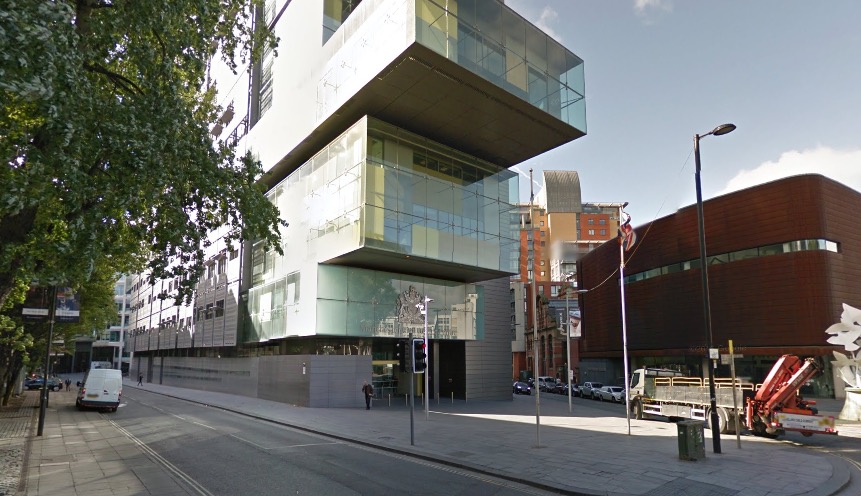
    Manchester Court
    CREDIT: Google Maps 2016

    The Independent reports that a transgender parent has had access to her children denied by a family court in Manchester. The ruling, the first of its kind, found that the children and the biological mother could be “marginalised or excluded by the ultra-Orthodox community”. The family is part of the ultra-orthodox Jewish Charedis.

    The trans parent, who is living as a woman is only allowed “indirect” contact to her children four times a year. The ruling comes despite Orthodox Jewish rabbis suggesting that Judaism should not punish transgender people in this way.

    Justice Jackson concluded that there was a “risk” that the mother and her children could be rejected by their community, if they had direct, “face to face contact with their father”. He express regret before his ruling saying, that the “father’s” application for contact would be refushed.

    He said,

    “I therefore conclude with real regret, knowing the pain that it must cause, that the father’s application for direct contact must be refused.”

    The Independent has the full story