Category: Comment

  • COLUMN | Why a transgender woman wants to be MP

    Why the time is right for me to stand for parliament.

    Sophie Cook and labour supporters

    In the 1980s at the height of the Cold War, I was stationed in West Germany with an RAF Tornado squadron.

    Suffering from Post Traumatic Stress having saved the life of a colleague following an explosion, I was filled with an acute sense of injustice at the way the world operated.

    This was Thatcher’s Britain, the miner’s strike, rioting on the streets, section 28 and a war in Northern Ireland.

    I would lose myself in political books trying to discover a more caring model of society, one in which people were treated with respect no matter who they were.

    I already knew that I was transgender, even if I didn’t have a name for it at that point. I know that there was something about my identity that just didn’t feel right.

    The mental anguish of my gender dysphoria coupled with the post-traumatic stress led to depression, and then self-harming and suicide attempts.

    As I became more aware of what my trans identity meant I realised that any political ambitions that I might have had, were out of the question, with politicians being outed for their sexuality what chance did a bisexual transgender person have.

    Even when I came out in 2015 I was still terrified that by being true to myself that I would lose everything, my career in football, my family and most of all, my children.

    By being true to myself I’ve lost a lot, my entire family turned their backs on me at the very moment that I needed them most, but my children have been amazing and I regularly see my two youngest kids.

    When I came out I faced a choice, to either hide or to stand up and try to make a difference.

    I began speaking about my journey and very soon found myself speaking at venues like Wembley Stadium and the TUC.

    My story moved people, not because it was unusual but because it included universal messages of fear, loss and redemption.

    I was offered a job in television and I saw this as an opportunity to continue the work that I’d done years before with my newspaper, to educate and inspire people to change the world around them.

    In 2016 I was approached to stand for local political office but was barred from this opportunity unless I gave up the TV work and so, reluctantly, I had to decline.

    And then Theresa May called a snap general election, the plans that I’d had to potentially stand in 2020 were thrown into overdrive and I declared an interest in becoming a candidate.

    The country needs a change, years of austerity have left whole communities desperate and lost.

    I’ve been out on the streets of Brighton, speaking to voters and they feel isolated and unrepresented by the Tory government.

    The reception to me, as a trans woman, has been positive with many declaring that it’s time for greater diversity in parliament.

    The time is right, the time is now and we must all work together to achieve a more caring, more diverse society where everyone can live free from fear and where no one suffers from prejudice regardless of their gender, sexuality, gender identity, race, religion, disability or wealth.

    And that is why I am standing to be a Labour Party candidate.


    Opinions expressed in this article may not reflect those of THEGAYUK, its management or editorial teams. If you’d like to comment or write a comment, opinion or blog piece, please click here.

  • OPINION | Religion Can Have A Place In Politics

    “Tim Farron is a homophobe”. At least, that’s what has been blowing up Twitter the past few days.

    This is due, more recently, to him again dodging a question about homosexuality from Cathy Newman on Channel 4 News and whether or not Mr Farron believed it was a sin. His response was about as reassuring as your one night stand telling you it’s “probably not chlamydia”. He paused, grimaced and managed simply to say that he wouldn’t make theological pronouncements. Cathy Newman was asking him because, after asking the same question in 2015, he responded: “in Christianity, we’re all sinners”. Bravo. This doubling-down on avoiding the question led to a big debate about the importance of one’s religion when you’re running for office.

    But what’s the precedent on this? Well, Prime Ministers have always discussed their faith. Britain, by tradition, is a Christian country so it was always a political point to be scored. Tony Blair was famously religious and even admitted, during an interview with Michael Parkinson, that he prayed to God over the Iraq War. Yet, Blair is considered a Gay Icon and even won an award from Gay Times. Blair, as Prime Minister, ushered in a raft of LGBT-positive legislation such as civil partnerships, the right to adopt, the equal age of consent, the repeal of section 28, ending the LGBT Armed Forces ban as well as stringent hate crime laws and the Gender Recognition Act. Never once did the public consider his religious beliefs to be in the way of his progressive ideals.

    So let’s look at Tim Farron again. What is different between his awkward response to the gay question to that of Corbyn’s homosexuality-as-a-choice gaffe? Farron did an interview with GQ in 2015 where he asserted his viewpoint, despite his religion “I’m not a religious leader; I’m a political leader. I think that everybody is utterly equal. People should be free to love who they want and marry who they want. But I don’t go making theological pronouncements.”

    These days, we are all so quick to judge but it’s understandable. Heinous crimes have been committed throughout history against LGBT people on the basis of religion. We’ve seen in America the debate about same-sex marriage and how it’s not ‘what God intended’. Homosexuality as a sin is something that seems to be the only thing most religions agree on. Therefore, I feel like LGBT people almost have a Pavlovian reaction to religion – where we hear the word God, we assume hate will follow. But that isn’t fair. We have to accept that, sometimes, our politicians are allowed to change their minds.

    Look at Hillary Clinton who in 2000 commented that “marriage has got historic, religious and moral content that goes back to the beginning of time, and I think a marriage is as a marriage has always been, between a man and a woman.” Sure, she continued by saying that same-sex partnerships should enjoy the same rights but it still wasn’t out-and-out support that we saw from her during her 2008 Democratic nomination campaign and subsequent 2016 Presidential campaign. Tim Farron’s record is admittedly sketchy. He voted in favour of same-sex marriage but in 2007 voted against the Equality Act and in 2013 abstained from a third reading of the same-sex marriage bill. Also in 2007, he gave an interview to the Salvation Army’s War Cry magazine about abortion stating he felt, “abortion is wrong. Society has to climb down from the position that says there is nothing morally objectionable about abortion before a certain time. If abortion is wrong, it is wrong at any time.” However, he then said that, “the standards that define my personal morality as a Christian are not the standards of public morality”.

    This again raises an interesting question of how genuine someone’s belief in something needs to be. Tim Farron might be anti-abortion or even anti-LGBT rights but his party supports choice and supports LGBT equality. Should we trust somebody who only believes in something politically and not personally? Does it matter? Essentially, it all comes down to trust. Tim Farron’s personal beliefs right now have not dictated his political beliefs but, if he were Prime Minister, would that change? He would have to make big decisions where he would likely turn to his religion and to God, as Tony Blair did, for the right answer. Tony Blair always made it clear that he believed in equality. Tim Farron seemingly believes it’s the right thing to believe politically. There’s a difference.

    Well, it’s always going to be tough for LGBT people to believe a religious candidate is a candidate that would represent them. Yet, at the same time, it would be equally discriminatory for us to judge people solely on their religion.

    But what about religious politicians in general? Well, it’s always going to be tough for LGBT people to believe a religious candidate is a candidate that would represent them. Yet, at the same time, it would be equally discriminatory for us to judge people solely on their religion. Religion in the modern day is becoming flexible. The Pope himself has stated that ‘God is not afraid of new things’ and continues to try to modernise the Church’s views on homosexuality and divorce (despite hesitation of the Synod). We cannot put all religious people in a box but at the same time, we’re right to be vigilant. Decades of persecution on religious grounds has taught us to be hesitant when it comes to politics and religion.

    Tim Farron’s gaffe is no worse than Corbyn’s, personally, but the difference is that Corbyn has a strong track record of voting for equal rights. I strongly believe we must judge our politicians on how they vote more than what they say. I understand, it’s not nice to hear a politician to even hint that homosexuality is a sin, especially when you think about the effect it has on younger LGBT people. But the lip service politicians give for votes (where being ambiguous means they can play both sides) is different completely to how they ultimately vote in Parliament. When it comes to politics, actions always speak louder than words and it is vital that everybody research candidates and their voting stances because, ultimately, the biggest God any MP prays to is their electorate.

    If you want to see how your MP has voted on a wide range of issues, check out www.theyworkforyou.com.


    Opinions expressed in this article may not reflect those of THEGAYUK, its management or editorial teams. If you’d like to comment or write a comment, opinion or blog piece, please click here.

  • COMMENT | Does the gay community have an issue with ageism?

    COMMENT | Does the gay community have an issue with ageism?

    We’ll have a gay old timer…

    stevepb / Pixabay

    So here is some background to the idea for these articles… I’m over 50 and no longer feel part of a community like I used to in my 20s or 30s. On the rare occasion, I venture into the Manchester Gay Village or Soho in London, it doesn’t feel right as if I don’t belong anymore as if there’s nothing in those communities for me.

    Next time you’re out and about, take a look around at the bars and clubs on offer, who are they aimed at? Check out their clientele – you have my permission to do that and please, take your time. That cute blonde? Under 30. That red head? Under 40. Where are the LGBTQ people in their 50s or 60s and over?

    Where do we go if you simply want a drink, a dance or a hook-up?  It used to be so easy – find a bar, flirt… job done! After around 40, suddenly, you’re a “daddy” like it or not. There seems to be little else on offer.

    I know, I know, I’m generalising but you get my drift. The majority of venues cater for a younger client group and simply mirror something I’ve been feeling for a while about our inclusive LGBTQ community.

    We’re ageist, like it or not, we are.  I think it could be tracked back to a wider, societal issue.

    We don’t embrace older people and tend to forget that we all age, even the ones who use pig placenta nightly or plump and primp for days. We all age and at some point, we reach that point where we don’t fit into our younger lives, we change but does the community we were once an active part of change with us?  Is it them or us that needs to alter our perceptions and attitudes?

    So, my aim is to write about some of those issues we face as we age, from a gay point of view. Really serious issues like; Can you wear super skinny jeans after 50? Velcro shoes – friend or foe?

    Sorry, couldn’t resist! I mean things like where do you find love after 50?  The complete head f**k of dressing too young and what does age appropriate mean?  The whole thing can be a minefield but we’re here to help or irritate… or both.

    I’ve gotten together a group of t’interweb friends to help by giving the benefit of their advice and experience and who are also willing for me to pester them for straw polls and ideas of what bothers them.

    Watch this space for my first piece, based around finding love after a certain age…

    Opinions expressed in this article may not reflect those of THEGAYUK, its management or editorial teams. If you’d like to comment or write a comment, opinion or blog piece, please click here.

  • Dear Unloved Me … What Advice Would You Give The Pre-First-Love You?

    If you could go back before you fell in love for the first time, what would you tell yourself?

    Dear Unloved Me,

    This is a difficult one to cover. Ideally, I want to reveal what I wish I’d known before I fell in love for the very first time. I guess if that love had have lasted this wouldn’t be difficult to write at all. We’ve all heard it before; it’s better to have loved and lost than to never have loved at all. You might not believe this yet, but it is true – well kind of, at least.

    You’re going to learn a lot from that first love, kiddo. First of all, you’re going to realise quite suddenly how quickly you can fall, and it’s a hard fall. (The landing isn’t what we’re concentrating on here – that’s a letter all of its own, unfortunately.) But the fall, oh the fall, it’s terrifying and exciting all at once. Prepare yourself to feel an entire rollercoaster of emotions on an almost daily basis.

    This love itself isn’t going to start in the traditional fairy tale manner you’re expecting, so there will be little warning before it hits you like a wall. Really, my only advice for you while you’re at this stage, is to enjoy it. Go with the flow and roll with the punches. It’s the first time so it’s not going to be the smoothest for you, but that’s okay because you’re learning.

    Another thing you’ll learn over time is that the amount of love you give out isn’t always the same as the amount you receive back. It’s not got its own patented return system, sadly. This is made all the worse due to the amount of time you considered yourself unworthy of love. It was a ridiculous belief – of course – but it still plagued you for a solid twenty years of your life, so you’re going to have to expect some repercussions from that. You’re going to lose it a little bit, terrified that if you don’t convince someone you love them just enough they’ll turn and leave with no warning.

    Because of this, you’re also going to lose a little self-worth. Far too quickly your own happiness will rely on the actions of another. Here’s some advice on that matter – and I mean this with the most sincerity – stop. You can’t place all of your chips on one bet – well you can, but it’s a foolish decision with so many variables. What I mean is that it’s not fair on you, and it’s not fair to him to expect him alone to make you happy. You can’t fall for someone and live as though they’re the only thing in the world – or even the only thing in your world – that really matters. Don’t lose yourself for someone else, because that isn’t love at all. Love would never require you to do such a thing – it makes you more of a person, not less.

    You’ve spent a solid chunk of your life watching romantic comedies that have convinced you that a mid-story struggle is to be expected. This is the part where you have to prove your love with a ten-minute monologue, a bare-knuckle fight, or perhaps a church hall dance off. In your own version of events, this is going to be a prolonged up and down of emotions, a hell of a lot of radio silence, and a handful of broken promises. It’s not romantic. It’s not sweet. It’s not fair. Erase these movie scenes from your mind, and ignore every Taylor Swift lyric that works to convince you that anything worthwhile is worth a fight. While my advice for the first stage of this love was to go with the flow, this is where you really need to wake up and pay attention.

    This love is going to royally throw you in the deep end. As I mentioned, you’ll fall fast and hard, and hopefully, that will never be a part of how you love that changes. It’s the middle and the end of this love that you really have to learn from. Giving someone your everything doesn’t guarantee that you’ll receive this back. You don’t have to fight to feel worthy of someone’s love. And perhaps most importantly, a love should never destroy you more than it can rebuild you.

    Don’t lose yourself in love – not in this one, or any other – so much that you’ll struggle to find yourself again. It’s an interesting one that’s coming up, so enjoy the ride for as long as you can, but make sure you know when to get off.

    Kind Regards,

    The Loved, Unloved, and Loved Again You


    Opinions expressed in this article may not reflect those of THEGAYUK, its management or editorial teams. If you’d like to comment or write a comment, opinion or blog piece, please click here.
  • Return to the school that nearly killed me

    It’s a dull, damp Monday morning and I am walking along a road that leads to the school I went to as a youth. My heart begins to pound and I feel nauseous as I get closer. I know I’m returning to school as an adult, but my past experiences there still haunt me. A moment of doubt passes through my mind as I enter the gate, but it’s too late to turn back. Then I remember I’m there to make a difference, and walk through the door.

    CREDIT: © tomwang Depositphotos

    The reason I was returning to my school was in response to a request for assistance from them. They wanted to discuss homophobic bullying at the school and asked if I could spend some time supporting a young girl being bullied for being a lesbian. It was a significant life event for me as going back to school marked a huge turnaround. As a student, I had been severely bullied due to my sexuality and it went completely unchallenged for the whole time I was there. All these years later I was going back to ensure that history did not repeat itself.

    During my time at school I was called names, hit, kicked, beaten, dragged around the floor by my hair, had drinks poured over me, got mugged of my wallet, and had my bike tyres slashed. The homophobic bullying was a daily occurrence from the age of eleven until I was sixteen. Teachers could see and hear what was happening, but never did anything to challenge it. I was not supported at any point during my time at school.

    One day I stuck up for myself and punched a boy who had kicked me and called me a poof. However, I ended up being suspended for it. I tried to explain that I had been kicked and called a poof, but my head of year didn’t want to hear about it. The boy got away with what he did and I was excluded for several days.

    Those experiences lived with me for some time and as I walked towards the school twelve years after leaving, realised that they still live with me. The emotional scars have never completely healed.

    I recently bumped into an old teacher of mine at an event and had a discussion with her about the experiences I had. I’d met up with the same teacher a couple of years previously and had a similar conversation, but I thought it was important to bring it up again. I needed her to understand what I had been through and what young LGBTQ people are still going through today. My view is that all teachers need to have the facts hammered home if there is to be change.

    Alongside my day job, I run the LGBTQ youth support charity Push Projects (and Warwickshire Pride). The reason I founded it is because I don’t want young people to go through the things I did as a kid. That’s my sole motivation. There were times I wanted to kill myself because the bullying was so bad. The school did nothing to support me and I felt completely alone. I felt like the school was killing me. Young people are still feeling the same way as I did all those years ago, and some of them actually go ahead and commit suicide. I felt I needed to do something about that, so I set about providing a support service for LGBTQ youth modelled on what I felt would have benefitted me as a young person.

    The outcome of the experience is that I’ll hopefully be working regularly with the school and supporting their LGBTQ students. Although I felt sick as I approached, I left feeling proud that the school I went to was now doing all they can to ensure that LGBTQ students are adequately supported and that the bullies are dealt with through a mix of education and consequences for their actions.

    Of course, I feel proud of myself too; not in a self-congratulatory way, but because I’ve managed to turn something so horrific into something that’s incredibly positive. There were times I was almost defeated.

    There’s a long way to go before homophobic bullying in schools is wiped out, but progress is being made. The work of organisations such as Stonewall, Push Projects and other LGBT organisations, alongside the wonderful achievements of individuals such as Shaun Dellenty, are ensuring that the next generation of LGBTQ youth don’t have it as bad as us oldies did.


    Opinions expressed in this article may not reflect those of THEGAYUK, its management or editorial teams. If you’d like to comment or write a comment, opinion or blog piece, please click here.

  • COMMENT | My Coming Out Reactions

    COMMENT | My Coming Out Reactions

    I’m out to everybody. These days I rarely need to come out and say that I’m gay, but it wasn’t always like that. Over the years I’ve come out to family, friends, work colleagues and even my GP. There have been mixed reactions from people when I’ve told them that I’m gay, but most have been positive. In this article, I’ll share some of the most memorable with you.

    keeping company, social gathering,
    CREDIT: bigstock / Rawpixel.com

    Family
    Coming out to my mum was one of the best things I ever did. I knew she would be supportive, as one of her best friend’s is gay. She acted as a proxy, telling other members of the family and family friends that I was gay so I didn’t have to. Some years later she did tell me that she was worried that I would have a more difficult life as a gay man as ‘people can be so cruel.’

    The funniest reaction from a family member was when my mum told my Granddad. He told her that I ‘just haven’t met the right girl yet.’ This wasn’t homophobic, just a lack of understanding and naivety of the gay world. This naivety is wonderful and one of the many reasons I love him immensely. He used to work on the tills at what has been dubbed The Gay Sainsbury’s in Manchester. He never realised (and still hasn’t!) that all the gay couples are actually together.

    When I came out to my older Brother, a sporty lads lad, he said: ‘You’re still my brother. And I still love you.’ This acceptance from him meant the world to me and it still does.

    Friends
    My friends and I don’t really remember me coming out. That means that it wasn’t really a big deal. It was said, accepted and then we moved on. But there’s always that one friend isn’t there? When I came out to him, he said: ‘Me too.’ We’re still friends today and our same sexuality helped to build the bonds of a lifelong friendship.

    Work Colleagues
    I’ve had many work colleagues over the years, all in different settings and the vast majority coming out has been done by answering the questions: ‘So how was your weekend? What did you get up to?’

    However I did have one Born Again Christian work colleague who said: “I accept that this is how you feel, but it’s not part of god’s plan. It says so in the bible.” This was a face palm moment and I rarely spoke to him after that.

    At one workplace a closeted lesbian work colleague saw the overwhelmingly positive reaction to me as an out gay man and this gave her the courage to talk about her life and her partner openly. Prior to me arriving she had avoided conversations about anything personal, but after seeing how our work colleagues reacted to my talk of gay pride and my relationships she became more open at work and seemed happier for it.

    GP
    I had gone to see my family GP, an older Asian man, about something and decided to disclose my sexuality to him. I think I was at the stage in coming out where you want to tell the world that you’re gay. He said: ‘it’s unnatural.’ And then resumed talking about what I had gone to see him about. This hurt. Said by a supposed non-judgemental professional. Whenever I hear someone say ‘unnatural’ it takes me right back to that consultation room and makes me feel really uncomfortable.

    My coming out reactions have been in the vast majority positive. I have been accepted for who I am. But that’s not always the case. Gay people coming out face the fear of rejection, actual rejection and in some cases abuse or violence. If someone can’t accept you for who you are and recognise that your sexuality is an important part of who you are, you have to ask yourself a serious question: do you really want this person to be a part of your life? I know what my answer would be.


    Opinions expressed in this article may not reflect those of THEGAYUK, its management or editorial teams. If you’d like to comment or write a comment, opinion or blog piece, please click here.
  • COMMENT | Are gay guys the worst fat shamers?

    Fat Shaming and Fursecution

    CREDIT: ©-livrakv-Depositphotos

    If there’s one thing that really gets my knickers in a twist, it’s people not being able to accept each other for who they are.

    Gay people still face so much prejudice and discrimination in the world, but there’s an issue that I view as being even more damaging; gays hating on other gays for not fitting an ‘acceptable’ aesthetic.

    Over the years I have noticed a lot of fat shaming and fursecution within the gay community, as I’m sure many of you have. I have even been a victim of it on more than one occasion. Whether you’re online and see profiles stating that potential guys must be slim and hairless or seeing fat shaming on the scene, I believe it to be an endemic problem.

    Personally, I’m a relatively big guy and particularly hirsute. There was a time I hated the way I looked and wished I could be slim and smooth. Then I came to realise that I wanted to be like that to please others rather than to please myself. When it comes down to it, if I really hated the way I look I’d do something about it. I like my covering of fur and having a bit of meat on my bones. My partner likes it too, so that’s all that matters.

    In the past, I have come up against abuse and discrimination from other gay men, mainly on the scene and on apps such as Grindr. One guy told me that I looked disgusting and that the only way I was going to lose weight was if I became bulimic. Another guy on Grindr told me I was a “fat f**king twat” who had no chance. It bothered me at first, but actually, it says more about them than it does about me.

    In magazines, we are fed images of so-called hot guys and they are nearly always slim, smooth men, with toned bodies. Although I sometimes like seeing those images, I believe that the constant feed of these nearly naked men is damaging to people’s self-esteem and potentially feeds the fat shamers and fursecutors.

    It’s not just in the gay world that this problem exists. If I venture into my local town on a Saturday night there will be lots of people mocking others for being overweight or wearing an outfit that’s perhaps a bit tight and unflattering. It’s the same in the summertime when someone chubby takes their top off or wears skimpy clothing. Personally, I think it’s great if people feel confident enough to remove their top or wear an outfit they like, regardless of how it fits. If the way someone looks offends you, look the other way. Or perhaps address the reason why you are offended.

    Scrolling through my Facebook news feed also shows up incidences of fat shaming and fursecution. Whether it’s a larger lady with little clothing on or a man covered in body hair, it is further perpetuating the thought that being overweight or hairy is unsexy and acceptable to be the subject of ridicule.

    I don’t believe that bullying or the shaming of anyone is ever ok, and it concerns me that so many people focus on what others look like instead of concentrating on the bigger issues there are facing us as a community.

    As for what the solution for eradicating this form of bullying is, I don’t have the answer. Perhaps there needs to be body image classes at school or maybe people just need to take a long, hard look at themselves to realise that fat shaming and fursecution need to stop. Either way, we should be supporting and celebrating each other, not continuing with this internal prejudice and discrimination.


    Opinions expressed in this article may not reflect those of THEGAYUK, its management or editorial teams. If you’d like to comment or write a comment, opinion or blog piece, please click here.

  • COMMENT | Are you out in the workplace?

    Deciding whether to be out in the workplace can be a difficult choice to make. There are pros and cons, as there are with everything in life, but the following question must be asked: Is there a need to come out in the workplace?

    people at work
    CREDIT: ©-monkeybusiness-Depositphotos

    During my 30 years of life so far I have had many jobs; from working in hairdressers to mental health care, via retail and DJing. In some of those jobs I have been out as a gay man, but in other roles, I took the decision to not disclose my sexuality. In one job I was asked by my manager to keep my sexuality a secret.

    Working in a hairdresser’s you’d think that I would feel able to come out as gay. However, I didn’t. I was fifteen years old at the time and my manager was a very camp gay man. I felt intimidated by his overt sexuality and I didn’t identify with the campness that went hand in hand with his sexuality. So I felt unable to come out.

    My next job was in retail and my manager was a Drag Queen. At sixteen years old I was still learning about myself and what it is to be gay. Again I didn’t identify with my manager as he was incredibly camp and I was not. I began thinking that all gay men must be like that and considered changing my behaviour to match. I couldn’t bring myself to be like that, so carried on as I was.

    The Drag Queen manager eventually moved on and as other managers came through the door my confidence was building. At eighteen I met my first long term boyfriend and it was at that point I felt able to be out in the workplace for the first time, despite it having no relevance to my job. I just wanted to feel able to be open about who I was, in the same way, that my heterosexual colleagues were when talking about their partners and lives. I didn’t make a big thing of coming out; one day I just casually mentioned that I had a boyfriend. It was accepted by everyone and I had no problems in my time working there.

    My next job was in mental health care. One day my colleagues were talking about their partners. They were all heterosexual. I decided to join in the discussion and talk about my partner. I figured they would all be ok with it and felt comfortable discussing that aspect of my life. Again it wasn’t a coming out as such; it was casually dropped into conversation. Everyone was fine with it, but one day I was called into my manager’s office to discuss something.

    My manager spoke to me about my sexuality and asked that I keep it a secret. The reason given was, that the people being supported may have heard what I was saying and that it was not acceptable for them to hear that a member of staff was gay.

    I asked my manager if she was uncomfortable with my sexuality and also questioned why it’s ok for staff to talk about their heterosexual partners but not alright for a homosexual person to talk about their partner.

    My manager spoke to me about my sexuality and asked that I keep it a secret. The reason given was, that the people being supported may have heard what I was saying and that it was not acceptable for them to hear that a member of staff was gay… Not long after that, I was made redundant.

    My manager didn’t have an answer and stated that she had made her decision; that I was not to reveal my sexuality to anyone at any point. Not long after that, I was made redundant.

    Since then I have been out in all my places of work. Today I am self-employed so there isn’t anyone to be out too. What I have learnt over the years is that it’s not necessary to be out as gay in the workplace, but it’s great if you’re able to. Not everyone will like it, but that’s life; there will always be someone who is not happy with something. We now have laws that protect us, so it should be ok (legally speaking) to come out in the workplace. However, if I was to offer any advice it would be to do it on your own terms. If you feel able to come out in the workplace and you want to, that’s ok. But it’s also ok if you don’t want to be out in the workplace.

    There is no right or wrong answer to the question ‘is there a need to come out in the workplace?’

    First published in Nov, 2014


    Opinions expressed in this article may not reflect those of THEGAYUK, its management or editorial teams. If you’d like to comment or write a comment, opinion or blog piece, please click here.

  • COMMENT | A Question For The Future Generations Of Gay People

    COMMENT | A Question For The Future Generations Of Gay People

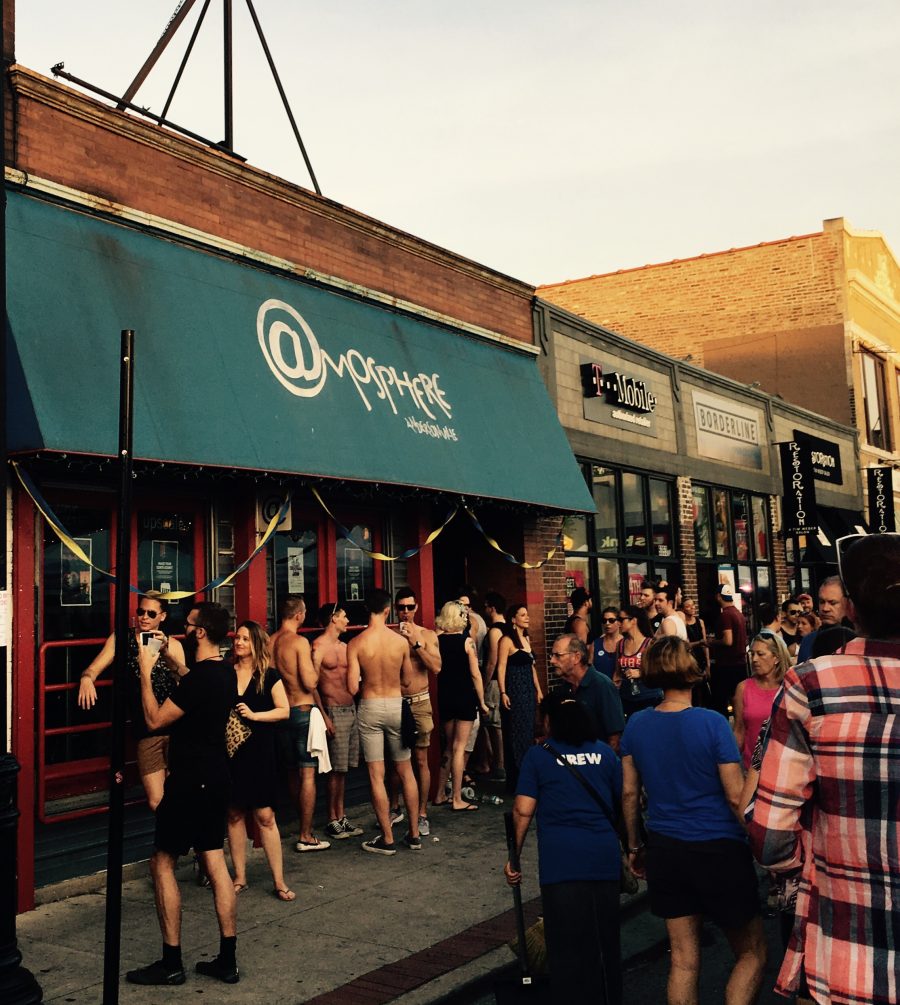
    I was out in town drinking with my friends the other weekend (as you do when you’re semi-young and live in London) and several pints/wine glasses/shots in we got to talking about the gay scene.

    We discussed various different bars, club nights and clientele, and we laughed about our favourite nights and spat bile over our worst ones. We also conversed about the future of the gay scene in Soho. Now, this might strike you as an odd discussion for a group of half cut guys on a Friday night, but it was a strong topic of interest for us. Why is that?

    Well, the primary reason that I’ve been able to discern for this repeated discussion is a semi-unconscious, underlying concern between all of us that the Soho gay scene, as we know it, is dying. Ok, so this might be an extreme reaction, but the gay scene in London is forever changing, and it was back in the 1980s that Soho came into its own as a gay destination, so change is to be expected after nearly 40 years. However, this article is not about the future of Soho, but about a question that came to me as part of the aforementioned discussion.

    This question is fairly divisive, but I feel it’s something that should be discussed in our modern society. I know from previous experience that people don’t necessarily react well to this question, so it’s potentially a brave move to discuss it, but that’s what this website is all about, right? Good. Therefore, without further ado, the topic of today is as follows:

    ‘Do we still need gay bars, clubs and villages/scenes in modern society?’

    Ducks under table and hides from the angry shouting and flying projectiles

    Now I know that there are some very ardent supporters of the gay scene who will happily scream and shout about the importance of the gay scene, but there is also a growing collective of people who question whether our self-enforced isolation is sensible in this day and age. They are challenging the old stereotype and querying whether we are damaging our cause by hiding away from the people that we need to support us in our fight for rights. Therefore, this article has been devised as an opportunity to give a voice to both parties, and, for once, I’ll leave you to make up your own mind on the situation:

    1. Safe Spaces:
    The primary claim regarding the need for gay bars is the fact that they offer a safe space for anyone who wants to express themselves in an alternative way that might be frowned upon by wider society. This has been an essential requirement of gay bars since time began, and there is still, to an extent, a need for this safeguard in this day and age. Gay people still require the freedom to express themselves however they like, and this needs to be protected for future generations. Now primarily this is done by bouncers ensuring that people or groups of people, who would inhibit this right are kept out of gay venues. However, there appears to be an increasing danger that gay bars are taking this too far.

    A large number of people that I’ve spoken to believe that there is an increase in the number of gay bars and clubs introducing reverse discrimination against potential visitors in the name of ‘protecting’ their status as gay venues. Now I’m fully aware that this isn’t a London thing, as frequently shown by complaints coming out of Canal Street, and this issue could potentially serve to damage our reputation amongst the heterosexual community. I’ve witnessed first-hand gay friends being rejected from Heaven as they ‘weren’t a regular’ (which they were) or the bouncers didn’t like the fact that they were in a suit, and it’s been exactly the same with groups of girls, and single straight men. In addition, this behaviour isn’t just limited to clubs, and has been witnessed at gay bars and pubs throughout the UK.

    Yes, we need to protect the fact that gay bars are a safe space for anyone that falls under the all-encompassing rainbow banner, but it is being increasingly argued that we must accept that if we want to be accepted by wider society then we must be accepting of it as well. As one friend put it, “Supporting an admission policy which serves to perpetuate the divide between the LGBT community and their heterosexual friends is bad for the cause and bad for our image”. If we want to be seen as inclusive, is the need for safe spaces still important in this day and age?

    2. Meeting boys:
    A second claim regarding the need for gay bars is the fact that they offer people a chance to meet like-minded people in a safe environment. Back in the 80s and 90s, this was the case – there weren’t hundreds of different dating websites, location-based apps and networking services to choose from, and the gay scene was one of the only places to meet people. To a lesser extent, the same is true today. For those who don’t live in bustling metropolises, gay bars offer the chance to meet people that you might not find on Grindr or walking down the street. In these cases, there’s something to be said for the continued involvement of small town gay bars and their ability to introduce people to each other. However, some argue though that once you hit the big cities, this isn’t the case.

    You’ve no doubt heard it said a thousand times that everyone is always ‘busy’ in London, but it might not necessarily be how you think. In this day and age, gay men are seemingly tied to their smartphones thanks to the plethora of dating apps available to them. No matter where they are, they can find someone, somewhere, who is looking for the same thing as them.

    ‘Great, so what’s the problem’ I hear you cry. Well, that’s just it – what this means is that there is always an underlying sense of looking for the next Mr Right, meaning that people have become less open to meeting strangers in bars, primarily as it’s potentially far more awkward and embarrassing than saying ‘hey’ and being ignored on Grindr. Unfortunately, this has meant that it seems increasingly less likely that people will meet outside of the apps, creating thousands of missed opportunities and venues where people only talk to their friends. Surely this means that one of the main requirements of a gay bar is now defunct? After all, why do people need to go to a specifically gay bar to ignore other gay people?

    3. Representation:
    Following on from the argument in point one, another friend noted out that although we are at the strongest level of representation and acknowledgement within society that we have ever been asa group, this has not been without the support of heterosexuals. The majority have supported our fight for rights, recognition and equality for many years, so it seems strange that as a group, we are now looking to isolate ourselves from them now we have, in a sense, “got what we wanted from them”.

    Surely if we are looking for inclusion, we must be willing to include them in our own social activities? If not, how can we expect them to support us, as and when we need them again? Should we be looking to dismiss the idea of specifically ‘queer’ bars and look to create a range of ‘whatever’ bars, whereby the idea is to be yourself and have fun, no matter who or what you are? Perhaps this is something that future generations of gay people should be considering in the future…

    4. Is it because I’m gay:
    Another argument that was made was the fact that it’s usually very rare to discuss whether or not society “needs” a niche bar or venue, except for when it’s for a minority population like LGBT people. He, therefore, argues that this proves to an extent that gay bars are still necessary, as in any other situation, the bar wouldn’t be judged on whether it’s necessary, but on whether or not it makes money as a venue – a fairly valid argument in the financially focused society that we live in.

    These are only a few of the arguments that surround the future of gay bars and scenes in current society, but it gives you a taste of the views being expressed on an increasingly regular basis. As I said at the beginning of this article, I’m not making a conclusion for you about this. This is a topic that is extremely divisive, and there is no way to appease everyone. What I will say though is that as a group, we are now at the strongest level of representation and acceptance that we have been able to achieve to date. We are now in a position to be able to fight for people’s rights in other countries, and we should take this opportunity with both hands. What concerns me is that as a group, we run the risk of moving in one of two directions through our separation.

    The first is that we will steadily lose the support of people by staying isolated, whilst the other is that we will preserve a unique group and location for people to join when they’re ready. I am uncertain which direction this will go, and I am also uncertain that either option is the best for our group as a whole. I guess only time will tell…

    This article was originally posted in Novemeber 2014

    Opinions expressed in this article may not reflect those of THEGAYUK, its management or editorial teams. If you’d like to comment or write a comment, opinion or blog piece, please click here.

  • COMMENT | HIV: It’s time to embrace undetectable means untransmittable

    The year was 1981, sexual liberation was in full swing with destinations like Key West being a bimonthly pilgrimage for many gay men who, no doubt drank, joked and dare I say frolicked among the sand dunes of Higgs Beach.

    What does UEqualsU mean?

    It was an era that can merely be reminisced of, impossible to recapture. Anybody reading the LA Times on June 5th could easily be excused for their oversight in failing to notice one small paragraph telling the public of a new “gay cancer” that had been documented among some doctors mainly in the New York and San Francisco areas.

    Over the years, many more articles were published about what we now know as HIV & AIDS. The most recent of them, hailing milestones such as PrEP, a preventative treatment for the condition that society wished for decades ago. There have been amazing advancements in treatment, meaning people living with HIV who have undetectable viral loads, who are consistent with their medication, are unable to pass on the virus but, the fight is in no way over.

    To begin we must break down the stigma surrounding PrEP and the naïve insinuation that if someone is using PrEP, they are having an orgy every night of the week, or failing to protect themselves in other ways such as using a condom.

    We also need more organisations, government departments and influential voices to get behind the undetectable equals untransmittable campaign, it is a scientific fact backed up by The Swiss Statement (2008) as well as the PARTNER study.

    Of course, some people are reluctant to embrace science on this occasion and question the viability of the UequalsU message, however, they do so while failing to question science from the 80s and 90s which led to such heightened fear of HIV and by effect those of us living with it.

    Put aside people living with HIV who desperately deserve this message to be endorsed, society deserves it too. For more than 30 years grown men and women have lived in fear of this invisible killer. Generations of children have been raised with a background of AIDS fear, leading in some cases to a severe negative impact on their sex life.

    I clearly remember the day being diagnosed, November 27th, 2013. Sitting in that chair I knew death was not coming for me just yet and my biggest obstacle in life from that day forward would be the opinion and perception of others, not necessarily, family or friends, I knew they would be willing to stand by me and if not then they would have been the wrong friends to have chosen.

    It was society’s opinion and perception I knew would be the obstacle and one I would have to change. After several weeks of wondering what I should do, I set a goal which was to reach an undetectable viral load, this happened in September of 2014, a day that will remain among the most special of my life. I knew the very thing that had prevented me from doing anything more than kiss a guy for the previous 9 months, was no longer an issue.

    People say the day a cure for HIV is found will be like a battle or war ending. My battle ended that day when I became undetectable and untransmittable but my war is still going because nearly ten years after the Swiss Statement was released too few organisations who accept public funding in the name of representing me and people like me have promoted this statement of fact.

    On a recent trip to Key West I paid a visit to Higgs Beach where once all that laughter and fun took place, there now lays a memorial as a tribute to those who died from AIDS. This seemingly endless list of names, to me, was a testament to my commitment to promoting the UequalsU message.

    So I make this a call to action, by asking the 100,000 of us living with HIV in the UK to embrace the fact that being undetectable means we are untransmittable and ask you to lobby your local organisation, politician or influence maker to embrace it with us, they have nothing to lose in doing so and don’t forget to

    #UequalsU.


    Opinions expressed in this article may not reflect those of THEGAYUK, it’s management or editorial teams. If you’d like to comment or write a comment, opinion or blog piece, please click here.
  • OPINION | Trans people: It’s time to come out of the shadows

    Over the past few years, transgender visibility has improved greatly with a number of trans people becoming very public through the media and I was even featured on Match of the Day‘s Premier League football show recently.

    So why do we still need a Transgender Day of Visibility?

    Unfortunately, that visibility has also brought an increase in abuse and bigotry, following my appearances on the BBC the online trolling I received escalated to the point where I received death threats via Twitter.

    The fight for freedom from bigotry isn’t over yet and it won’t be until every trans person can walk down the street, use the toilet of their choosing and express their identity free of fear.

    For so many trans people our overriding aim is to ‘pass’ or to achieve invisibility, to go about our lives as if our transness never existed, we want other people to accept us in our chosen gender without question or judgement.

    But is this actually doing us all a disservice?

    My self-confidence and self-acceptance greatly improved when I let go of the concept of passing. The fear of being ‘read’ and the fear of people discovering that I wasn’t a ‘real’ woman.

    It’s now more important to me to be perceived as a woman, even if logically people see a slight anomaly. It’s important to me to be authentic to myself.

    That doesn’t mean that I don’t want to be the most beautiful, feminine version of me possible and I do love it when people call me Miss, but I’m not scared of people realising that I’m trans, in fact, I’m very open and forthright about it.

    In the same way that gay rights and acceptance improved greatly after they stopped hiding in the shadows and stood up to express their pride is it now time for us to proclaim that we are trans and proud of it.

    Gender dysphoria can be a terrible thing that takes a huge emotional, mental and social toll on people, do those of us that have reached the stage of feeling comfortable with ourselves and our condition owe it to those that are still struggling to show that there is a light at the end of the tunnel?

    Do we owe it to ourselves (and our younger, more scared selves) to stand up and fight for our rights to be recognised as valid members of society?

    Transphobia seems to be the form of social hatred and bullying that is still, if not accepted, ignored by society. Whilst racism and homophobia are abhorred by all but the very narrow-minded few trans people still get the sniggers, tranny jokes and, as happened to me last week, outright abuse.

    We go through hell to finally be our authentic selves and we should be proud of the fact that, even if we haven’t quite won the battle yet, we’re on the road to liberation.

    Why, just at your moment of self-realisation would you come out of one closet only to lock yourself in another, yet again in fear of being outed.

    So perhaps it’s today that we put on our best face, most amazing outfit and strut, proud as hell down our local High Street.

    I’m here, I’m trans and I love who I am, and no one’s petty minded bigotry is going to take that away from me!

    P.s. It’s just been confirmed that there will be an event today at 2pm at New Steine in Brighton including speeches (I’m one of the speakers) and music, all welcome.

    Opinions expressed in this article may not reflect those of THEGAYUK, its management or editorial teams. If you’d like to comment or write a comment, opinion or blog piece, please click here.