Category: The Political Debate

  • COMMENT | What is ‘queer theory’ and why are people using it to become problematic?

    COMMENT | What is ‘queer theory’ and why are people using it to become problematic?

    Until a rather problematic article by Conservative Women writer, Caroline Ffiske appeared online recently, I must admit that I wasn’t very educated on the idea of “Queer Theory”. But apparently, it’s something that we all should familiarise ourselves with because we need to protect our children from it.

    Here we go again. Another homophobic article wrote by a privileged white person who really doesn’t have a fucking clue what they’re talking about.

    So, what exactly is “Queer Theory”. Well, according to Ffiske is it based on the 1960’s neo-Marxist idea that our sexual acts and sexual identities are ‘socially constructed’. Apparently, the focus of ‘queer theory’ is all about the personal and the private and what people deem as normal can be challenged as so form of social construct and that basically what goes on in the bedroom should stay in the bedroom and not be brought out into the light of day. The article then goes on to suggest that sex should remain as an “extraordinarily intimate act which touches our soul and goes to the heart of our human experience”. Clearly, she’s never had a one-night stand. Ffiske also goes on to imply that we are normalising and encouraging sex among teenagers.

    Let’s be very clear about this. Teenagers are going to have sex. They are going to have straight sex, gay-sex, threesomes, oral sex, anal sex because that’s what teenagers do. It’s not about normalising it; it’s a fact of life. I remember being a horny teenager and wanting to bone everything that was on two legs. Well, within reason. But isn’t your teenage years and your early adult years all about – experimenting? It’s about finding what you like and what you look for in a sexual partner. Your teenage years are about discovering who you are as a person. For some, that is quite straightforward, but for others, it’s a struggle. You grow into yourself as a person and sometimes that doesn’t fit with social stereotypes. Surely, we should be encouraging this exploration. We should encourage conversations for teenagers because that’s how we learn and break down social stigmas and prejudice.

    Laying the blame for sexual exploration at the door of the gays

    What Ffiske is actually doing, and probably doesn’t realise it, is laying the blame for encouraging sexual exploration at the door of the gays. Whilst it might be true that gay men can be very promiscuous and have multiple sexual partners during their life, it’s not fair to blame it on them. Historically, the queer theory was born out of a movement of living your life as the way you fit and how you want to. It’s about how you want to identify and isn’t having the choice to do that is the best thing for us to have in society. If you want to identify as a man or a woman or be trans, you’ve got that choice, because you have been struggling with the thoughts inside your head as a kid. It’s not been pushed on you, and the media don’t push it on anyone. It’s about education and allowing conversations to happen. Just because you don’t fit into a box, it doesn’t mean you are a freak and should be banished to an island. You should be allowed to live your own life as you want to. Bollocks to anyone else.

    Ffiske talks about sex, and specifically anal sex as being degrading. She says that “young women feel that they do want to take their virginity seriously and that their psychological well-being is at stake if they are encouraged not to do so”. Let’s look at this in the broader sense. The first time for anyone is going to be something that you remember because let’s be honest – it’s never the best. It’s often clumsy, clunky and extremely uncomfortable, but it’s a part of life. I’m not saying that people don’t take that decision lightly to become sexually active, but it’s not always as black and white as that. Teenagers are hormonal, they are going to have curiosities about sex. Isn’t it more dangerous not to educate them about it? Let’s look at teenage pregnancy in the states, for example, a study in 2019 by the American Journey of Public Health showed that in states where sex education is more abstinence-based, the education actually contributed to an increase in teenage pregnancies.

     Surely if we are not having more open conversations about safe, consensual sex then we’re doing the younger generation a disservice.

    The problem isn’t about over sexualising teenagers. The problem is really that people think they have a right to dictate and decide what’s best of other people when they have really not got a clue about what they might be going through. The ones that that feel threatened by queer theory are those that have absolutely no idea about what being different or being queer is all about. It’s not a walk in the park. It’s often a long dark road with bumps and kinks in it. Discovering where you fit into society. How you are accepted by society and what prejudices you’re gonna encounter.

    I want to side-step for just a second because I think this is important. It’s not just queer equality that is under threat from the right-wing. But equality as a whole is under threat when there are MPs in parliament like Ben Bradley who is calling on more rights for white straight men because he thinks that they are underrepresented. In a speech in the House of Commons this week; Bradley stood up, and with a very straight face, went on to moan that there is a minister for women but not men, complained about more women than men in higher education, and mourned the death of “banter”. He said that; “men are often talked about, all too often, as a problem that must be rectified”. Oh, Ben. Going on to then condemn the Equality Act as being “willfully and regularly misapplied across gender, race, and every other characteristic”. Asserting the importance of “holding the door open for a lady”, expecting a man to “provide for his family”, and “wanting to be a man’s man” who goes “down to the football at the weekend” and has “some banter with the lads”. Bradley then complained; “that banter is now bullying”.

    There is nothing that riles me more than a straight white man complaining that they aren’t represented.

    He’s clearly never experienced prejudice for being a straight white man. Bradley also went to say that he wants “straight equally protected as gay”. Can someone enlighten me, in how many countries you can be executed or imprisoned for being straight? Or how many victims there are of anti-straight hate crimes in the UK? Not surprisingly, the government have also ended funding aimed at reducing homophobic bullying of LGBT+ students in schools in England, just as new research by the Diversity Role Models (DRM) shows that just 27% of students think that their school is a safe space for classmates to be themselves. Leading LGBT+ charity Stonewall has started a new hashtag initiative allowing members of the community to tell people about their experiences at school. Have a read through some of the stories using hashtag #LGBTatSchool.  

    Back to queer theory though, Fiske’s article finishes with a quote from Oscar Wilde saying, “we are all in the gutter, but some of us are looking at the stars”. She thinks that Queer Theory is pulling us all into the gutter and diminishing rather than dignifying. Well, if we’re in the gutter, then the gutter to me is pretty fabulous. Come join us here – because we are living our best lives. But more importantly, take some time to educate yourself. It’s all very well to sit and say that you should do this, or you shouldn’t do that, but that’s not for us to decide – it’s up to the young person

    I’ve said this so many times now, but I just keep coming back to it. Education is the power to change. Educate our young people that there are different types of families. Educate our kids on the importance of safe sex. Encourage conversations between youngsters. Let them make the decisions that they want to make, but make sure they are given the facts. Not what you think is right. And if you feel threatened by queer theory, don’t just blast it as not the normal thing. Take some time to research about that being queer in 2020 is like and what queer relationships genuinely look like. You never know; you might learn something. It’s not about being a snowflake or being ‘woke’ but it’s about teaching our young people that equality a right – not a privilege.
  • COMMENT | Are you really an ally?; “It’s become clear that passive acceptance of the LGBT+ community is very different from being an active ally who fights to support LGBT+ inclusion”

    COMMENT | Are you really an ally?; “It’s become clear that passive acceptance of the LGBT+ community is very different from being an active ally who fights to support LGBT+ inclusion”

    I think I’ve been rather lucky in my 28 years on this planet, that I have surrounded myself by decent people and I’ve been lucky to know a lot of people that consider themselves to be “allies” of the gay LGBTQ+ community. It isn’t a bad thing by any means – I spend 90 per cent of my time around straight people. I work in a very straight environment and the lockdown has meant that I haven’t spent much time on the scene.

    The term “Ally” gets banded about quite a lot in modern society. It’s a term that can be used to describe many different kinds of relationships. Whether these are business relationships. Countries are geopolitical allies. Even enemies can become allies in the face of a common goal. Today; it’s used to describe somebody who supports a group that they are not a part of.

    The gay community has had several significant allies over the decades since the Stonewall Riots. From celebrities to politicians. From Karen next door to your third cousin who you’ve not seen since you were a child; but it’s become clear that passive acceptance of the LGBT+ community is very different to being an active ally who fights to support LGBT+ inclusion.

    However, in 2020, it seems that our allies in government are becoming few and far between and that is a worrying thing. There are two things that I cannot abide in this world. Hypocrites and Members of the Conservative Party. Unfortunately, these things seem to go together. Allow me to get political for just a few minutes if you will.

    Case in point; Matt Hancock. Early this week, our Health Secretary, who has done a shambolic job at protecting this country from the COVID pandemic, was asked by Kay Burley about whether Tony Abbott, ex-Australian Prime Minister and the man who was tipped for the top job at negotiating post-Brexit trade deals and his views about women, the LGBTQ+ community and the elderly was an appropriate person to represent us on the world stage. During this extremely awkward exchange, Hancock seemingly excused Abbot’s comments because he is an “expert on trade”. Oh, dear.

    Hancock argued at first that he didn’t think that Abbot was a homophobe or a misogynist by saying, “I don’t believe that is true, I haven’t seen any of his (comments)”. Burley, as sharp as ever, fired back “I just told you what he said, I’m sure you don’t support some of his comments, he’s a homophobe and a misogynist”. Hancock’s response was “He’s also an expert in trade”. I mean – come on. You claim to by an ally to the gay community. You wear an NHS Pride Pin on your lapel, and you are still defending someone because “he’s an expert on trade”. The two things don’t go together. It’s like saying that Harold Shipman was a serial killer, but he was an excellent doctor. By not condemning Abbot for his views, then he is endorsing them. He’s also saying that women and the LGBTQ+ community are less valued than trade negotiations.

    Hancock isn’t the only hypocrite in government. Our supposed Prime Minister and I use the word supposed because it’s clear that Dominic Cummings is running the country, after all; why didn’t Cummings get fired for breaking lockdown rules to travel 240 miles to test his eyesight at Barnard Castle? I’m being pedantic, but it’s a fair point to make. We are sacrificed so much for 3 months. We put our lives on hold, but he was given a free pass because it was; “The right thing to do”.

    Then there’s Boris. Oh Boris. Boris Johnson has a long record of controversial comments about women, gay people and ethnic minorities. He is the man who has refused to apologise for calling gay men “tank-topped bum boys”, compared Muslim women to “letterboxes” and labelling black Africans “Picanninnines” with “watermelon smiles”. All quotes from Boris himself. He’s said that they were satirical or taken out of context – but should this be an excuse? – no, because he has chosen to use that language.

    We’ve got Liz Truss, Minister for Women and Equalities, trying to roll back rights for Trans people by making things harder to transition, and protecting safe spaces for women. Cabinet members like Pritti Patel, who actively voted against gay marriage. These people may say that they are our “Allies”, but they are far from it – and it is a scary place to be for the LGBTQ+ community. Remember, that we are not even 20 years out of Section 28, and there is every chance that something like that could be brought back. Oh, and that ban on conversion therapy – we’re still waiting. If you are curious as to how your MP voted on social issues, there is a great website which shows you exactly who vote for what. It’s there in black and white. Either they vote against, or even worse – “we’re not present”. It’s a kick in the teeth.

    Those of us that call out hypocrisy or call out social injustice are often demonised as “woke”. The work “woke” actually means that you are aware of social issues and calling them out; but the right wing has demonised the word and, like the term “Politically Correct”, it now means the complete opposite.  Criticising woke culture is actually just another way of the right playing the victim card, rather than actually acknowledging the bigger picture and attempting to make a change.  The funny thing is though, when those that complain and attack us, when they are challenged on why they feel that way, they don’t actually have a cohesive argument. They rely on a feeling or something that isn’t tangible. To me, it’s not about left or right, being woke or whatever. It’s about common decency to each other.

    Somebody I follow on Twitter posted the following statement and it sums up our government perfectly; “The test of being an #LGBTQI ally isn’t whether you’ll add rainbow colours to your logo in June. The test is, will you stand up for us when we are attacked? Will you distance yourself from those who demean us? Will, you still be our ally when it’s no longer convenient” – and that says it all. The Government clearly do not care about the LGBT community, and we are at a greater risk of having our rights revoked, this means we have to fight and shout louder that we are here, and we deserve to have the same rights as straight people.

    The test of being an #LGBTQI ally isn’t whether you’ll add rainbow colours to your logo in June. The test is, will you stand up for us when we are attacked? Will you distance yourself from those who demean us? Will, you still be our ally when it’s no longer convenient”

    MATTHEW HODSON

    Views like Abbott’s, and those who wish to demean and defame the LGBTQ+ community should be challenged, because we do not deserve to be second class citizens to others. It’s easy to say that you support the LGBTQ+ community because you like to go to gay bars, or you love watching RuPauls Drag Race. But when the chips are down, will you there to support us in our time of need?

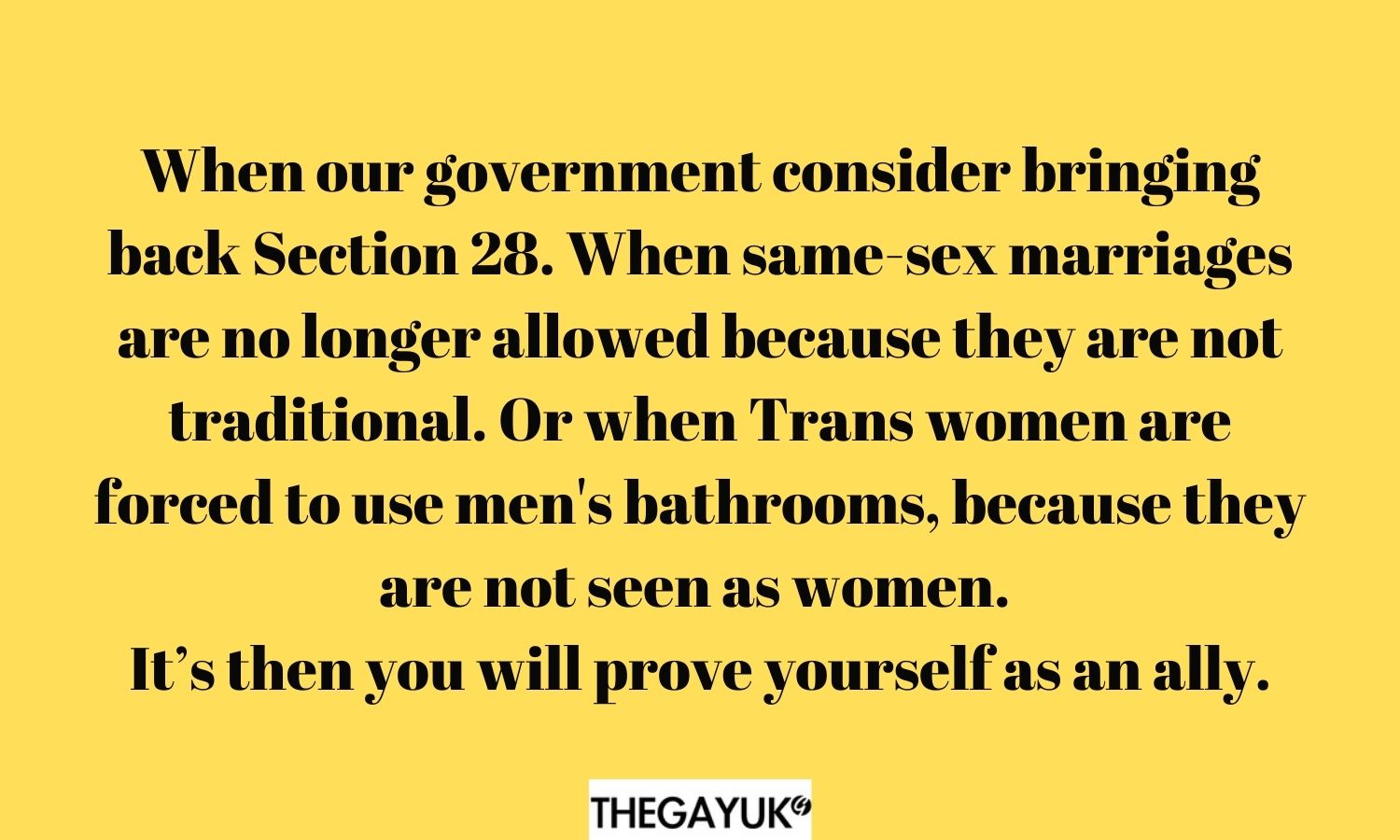
    When our government consider bringing back Section 28. When same-sex marriages are no longer allowed because they are not traditional. Or when Trans women are forced to use men’s bathrooms, because they are not seen as women. It’s then you will prove yourself as an ally.

    We may need you soon as you think. When the UK finally transitions out of the EU on New Year’s Eve, the UK will no longer be bound to EU laws such as the European Charter that bans discrimination on the grounds of sexual orientation.

    Our true allies are those who are challenging them and continue to challenge because, in the end, that’s how we educate future generations. It’s not that we’re some left-wing, woke-community. We just want what we deserve; acceptance and equality.

  • COMMENT | We need to talk about Chechnya

    COMMENT | We need to talk about Chechnya

    Two terrified boys are forced out of a parked car by members of a gang who taunt them with the question: “Were you kissing?”. A young lesbian is dragged from a car on a road in the middle of the night, a paving stone is dropped on her head. A captured man is heard screaming for them to stop as he is raped. These are just some of the disgusting “trophy videos” which have come out of the Russian province of Chechnya over the last few years made by people who hunt down and terrorise members of the LGBT community.

    We need to talk about Chechnya.  

    These harrowing videos were broadcast recently on BBC Four as part of the documentary “Welcome to Chechnya: The Gay Purge”.

    The first reports of a supposed Gay-Purge in Chechnya surfaced in April 2017, when a Russian opposition newspaper ran a story which reported that since February of that year, over 100 men had been detained, tortured and at least three had died, having been arrested by the Chechnyan Police. The plight of the LGBT people of Chechnya has long been a cause for concern among human rights organisations. Chechnya is a traditionally conservative Islamic society where homophobia is rife, and homosexuality is a taboo subject. It has become more increasingly conservative under the leadership of President Akhmad Kadyrov and his son, the current leader, Ramzan Kadyrov. As the leader of the Chechnyan republic, Russian President Vladimir Putin has empowered local leaders to impose their identification of Muslim values, which Kadyrov has done – to the extreme. It was reported that Kadyrov wanted the LGBT community to be eliminated by May 26th, 2017.

    It’s been reported the police have used entrapment schemes to lure their victims into their traps. Luring them on a date using popular dating apps; beaten and humiliated. They then produce a recording and use this to blackmail money in return for silence. Those arrested have been put through a horrific ordeal. Witnesses have described them as being beaten, tortured by electricity, mocked, insulted and even raped – all to make them reveal the names and locations of other gay people that they know.

    In August 2017, Russian Pop-Singer Zelim Bakaev travelled to Grozny in Chechnya to attend his sister’s wedding. He was reportedly arrested by the Special Rapid Deployment. It’s been widely reported that Bakaev was gay, and this was the reason for his arrest. A video was released in September 2017 supposedly with Bakaev reporting that he was in Germany, but it was apparent that this had been staged. In October 2017, it was reported that Bakaev had died as the result of torture by the Chechnyan police.

    Zelim Bakaev has now been missing for two years and ten months.

    Rescue missions are undertaken by brave activists to get people out of Russia. The Rainbow Railroad is one of the main international organisations that have helped people escape. Working with the Russian LGBT Network to find safe houses and fund their evacuation.

    Homosexuality has always been an issue in Russia. It has been criminalised and decriminalised many times during the state’s history. In 2013, Russia introduced it’s very own Section 28, officially banning propaganda for non-traditional sexual relationships. This law has been openly discriminatory towards the LGBT community and has been seen as one of the reasons why the Kremlin has not been quick enough to respond about the persecution of people in Chechnya. Moscow has openly said they have no reliable information about any problems in the area. A flat-out denial, and a flat-out lie. They hadn’t seen the images that had surfaced on social media.  

    International condemnation was not instant. It took until March 2019 for several countries at the 40thsession of the Human Rights Council, issued a joint statement calling for a “swift, thorough and impartial investigation to the alleged persecution” and accountability for those people. This statement was signed by the United Kingdom, but unsurprisingly not by the United States, who refused to sign on to the statement. From Trump’s administration, would we expect anything less?

    Many celebrities and LGBT activists such as Troye Sivan and Ellen DeGeneres also voiced their condemnation. Germany, Lithuania, The Netherlands and Canada have already offered Asylum to over 150 people. I cannot find any record for the United Kingdom. 

    We need to talk more about Chechnya.

    I’ve said before that the fight for equality still goes on and unfortunately the persecution of our community still goes on. They are being persecuted for being themselves. It’s hard for people living in more liberal societies to get their head around some of the things that are going on in Chechnya. However, thanks to Nationalism and religious fundamentalism, members of our community are continuing to be made scapegoats. As one of the attackers in one of the videos which have surfaced tells the poor scared kid; “All our problems are because of people like you”.

    Not since Hitler, have we seen such top-down oppression and attempt to eradicate a community.

    In a more liberal society, like the UK, many of us haven’t faced persecution like this. For most of us, we live a more privileged life where we can love who we want and be who we want. In Chechnya, openly loving who you want to love can get you killed. Not since Hitler, have we seen such top-down oppression and attempt to eradicate a community.

    We cannot sit back and let this happen, we must stand together with our fellow brothers and sisters. In parts of Europe, politics and society is moving further towards the right, and that is dangerous for our community. We are seen as non-traditionalists – a problem that needs a solution. We are seeing open oppression not only in other parts of Russia, but we are also seeing it in Poland. Certain areas of Poland have declared themselves as LGBT Ideology-Free Zone which effectively signals exclusion for members of the community. It’s not enough for us to sit back and say that “this is what Russia has always been like, we can’t change that”. We may not be able to, but we have a voice as a community to help our leaders see that this is also not right and fight for the cause on the world stage. By doing this we are in effect becoming complicit with those that are targeting us. We need to talk about it more. If we rest on our laurels and fail to respond to the call for action, then we risk rolling back the rights that we have worked so hard to get, and in doing that, we are letting those down who want their freedom. If you do anything this weekend, spend five minutes researching what is going on – because once you do, you will not be able to forget it so easily. ?️‍?

  • It’s time for companies to stop offering holiday prizes to countries where being LGBT+ can land you in prison

    It’s time for companies to stop offering holiday prizes to countries where being LGBT+ can land you in prison

    I’m a fan of holidays and I’m also a fan of prizes, so a prize that’s also a holiday it’s pretty much up there with buttery crumpets and that new car smell for me, but I have to plead with the marketing departments at large corporations not to offer trips to countries where being LGBT+ could wind you all banged up.

    This afternoon a Caffe Nero marketing email landed in my inbox advertising a competition where the prize was a holibob to Cairo. How nice I thought until I wonder what are the legal ramifications of a visit to Egypt for a card-carrying gay like myself.

    Not good. it turns out.

    A little digging from the marketing department would have them discover homosexuality has been “defacto illegal” in Egypt since the year 2000. Yes, in Egypt under its “morality laws” people found guilty of breaking such a law could face “up to 17 years with or without hard labour and fines”

    Not to pick on Nero’s but they really should know better, after all, they do use the rainbow flag, during pride season in some of their stores.

    But they aren’t the only company to offer competitions where the prize could land LGBT+ people in trouble.

    You wouldn’t think that in 2020 it’d be acceptable to offer a prize that actively discriminated against LGBT+ people, but when you see a prize that’s a holiday to any country which outlaws homosexuality, and there are a lot of them – that’s effectively what they are doing, especially to gay and bi men who don’t want to end up in court facing punishments ranging from fines, lashes or even death.

    Even high profile game shows can get it wrong, in May 2019, Channel 5’s Blind Date sent two bisexual men on a romantic trip to St. Lucia, where it is illegal for males to have sex with other males.

    If we want change, we are going have to call on companies and allies to do their part.

    If we want a world that is tolerant of LGBT+ people we have to start showing that being anti-LGBT isn’t good for business, travel or politically and that includes using them in your marketing campaigns.

  • Teachers ‘scarred’ by legacy of 1988’s Section 28

    Teachers ‘scarred’ by legacy of 1988’s Section 28

    Legislation repealed in 2003 continues to affect the professional life of LGBT+ teachers

    Wokandapix / Pixabay

    LGBT+ teachers who taught in schools during the late 1980s and 1990s remain scarred by the effects of Section 28 of the Local Government Act in England – a piece of legislation introduced in 1988 banning the “promotion” of homosexuality in schools – according to new research published in the journal Sex Education.

    The legislation was introduced partly as a reaction to a 1986 children’s book called Jenny Lives with Eric and Martin, which depicted the life of a child with two gay fathers. Controversy about the availability of the book in some schools in London led to the passing of Section 28.

    It was repealed in 2003, but during the time of its enforcement, many LGBT+ teachers felt it prohibited them from being open about their own sexual identity in the workplace.

    Researchers found that 88% of post-2003 teachers were public about their sexuality to all school colleagues, compared to 20% of those from the Section 28 era.

    Research by Anglia Ruskin University compared the current attitudes of teachers who taught during this era, and those who entered the profession after its repeal. Researchers found that 88% of post-2003 teachers were public about their sexuality to all school colleagues, compared to 20% of those from the Section 28 era. While 45% of post-2003 teachers were “out” to their pupils, the same was true of only a fifth of Section 28 teachers.

    The study, compiled using questionnaires, also revealed just 20% of Section 28 teachers lived in their school’s catchment area compared to 43% of post-2003 colleagues. Comments by respondents spoke of guarding their privacy aggressively, and fiercely separating out home and workplace identities, with privacy closely associated with safety among LGBT+ individuals.

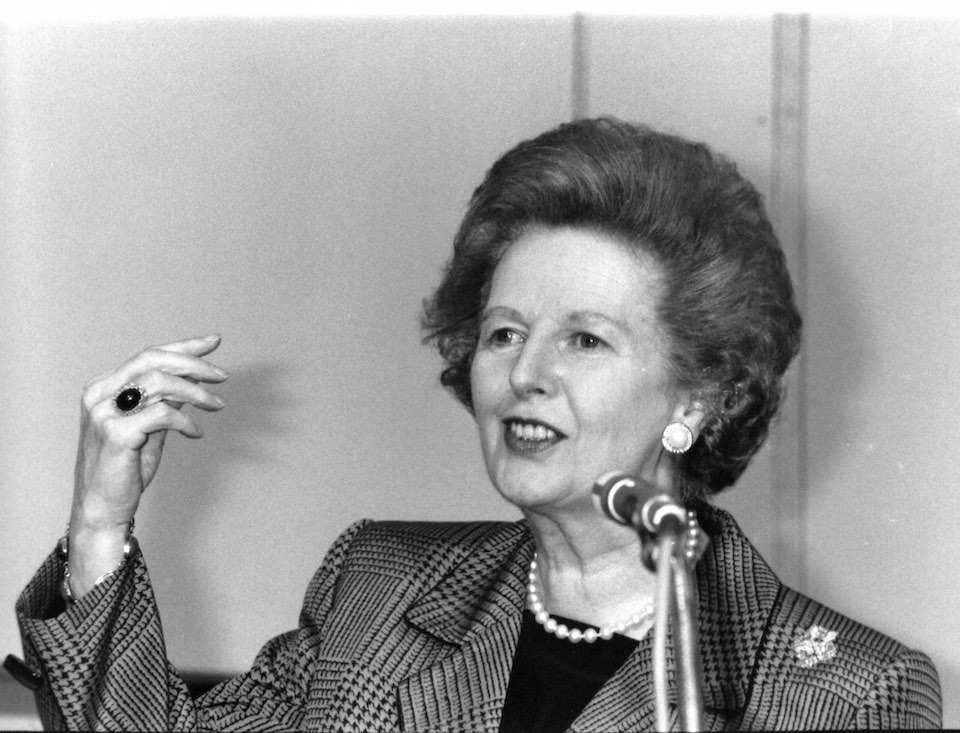
    The Conservative government under Prime Minister Margaret Thatcher were responsible for enacting Section 28. (C) BIGSTOCK

    There were also notable differences between the two groups in how they socialised with their school communities. 60% of Section 28 teachers never took their partner to school social events. However, only 12% of post-2003 teachers never took their partner along.

    A total of 48% of Section 28 teachers had suffered from anxiety and depression linked to their sexuality and role as a teacher, while the figure for post-2003 teachers was 24%.


    Dr Catherine Lee of Anglia Ruskin University, author of the study, said, “There has been significant progress in England in protecting LGBT+ teachers in the workplace since the repeal of Section 28. However, it is clear that a lot of teachers remain scarred by their experiences during this period.

    “While this legislation was not the only difficult aspect of being an LGBT+ individual in the 1980s and 1990s, it has helped leave a legacy of caution, self-censorship and complex identity management that harmfully lingers some 15 years after the repeal.

    “School leaders must reflect on the inclusiveness of their own institutions, and decide whether equality policies are actually lived on a day-to-day basis. LGBT+ teachers and pupils should be able to participate fully and without fear in their school communities.”

  • COMMENT | Trump’s Transgender military ban: How reducing minorities limits team success

    The recent decision of the US Supreme Court to continue the Trump administration’s ban on transgender people serving in the military is an unnecessary limitation on organisational effectiveness.

    CREDIT: © StockCube

    What is the goal of the military (at least in democracies)? Overwhelmingly our clients in the defence sector tell us it is operational effectiveness. The question then, aside from any personal prejudice for or against trans people, is, “does their inclusion in the organisation contribute to operational effectiveness?”.

    Much to the chagrin of many detractors, the evidence suggests that it does.

    Take any organisational ecosystem and analyse its productive potential. We know that a lack of diversity can lead to higher risk, lower resilience and lower productivity. Similarly, extremely high levels of diversity, if not led well, can lead to lack of trust, poor morale and team bonding.

    However, the military (in general) is extremely good at leadership. In fact, I would go as far as to say that in my 15 years working with the UK military, it has gone from one of the worst sectors on LGBT+ inclusion to one of the better ones. Look at the Stonewall Workplace Equality Index to see.

    Jerry Patterson, a retired marine, argues that Trans people should be banned because a 2015 survey by the National Coalition of Transgender Equality found that “…40 percent of trans-identified respondents had attempted suicide during their lifetime — nearly nine times the attempted suicide rate in the US population.”

    However, like all of us in general, not all trans people want to serve in the military. Good recruitment policies look at individual talent and contribution, not general prejudices.

    Contrast Jerry’s view with that of the British Royal Air Force. The RAF Museum has celebrated the contributions of three trans service personnel, Roberta Cowell, Caroline Page and Ayla Holdom, three transgender women who are either currently serving or have previously served in the Royal Air Force at different periods of time over the past 100 years.

    Indeed when Trump announced his ban, UK military leaders across the services were unanimous in their condemnation of an unnecessary and politically charged policy of discrimination that would harm the hard-won cohesiveness of the military.

    “When you are a family at sea for 6 months you have to work as a cohesive unit”

    When I first started working with the Royal Navy after the lifting of the LGBT ban in 2000, Naval captains were brutally honest with me. They knew they had always had gay personnel in their midst but they were persecuted – bad for them and the overall team morale. They made a conscious decision to include. When you are a family at sea for 6 months you have to work as a cohesive unit. Including difference makes you stronger, not weaker.

    And at the end of the day, we need to ask ourselves an even more fundamental question: why does the military exist if not to defend the values we hold dear? Inclusion is one of them.

    Stephen Frost is the founder of Frost Included, a consultancy dedicated to helping people understand diversity and inclusion. His new book Building an Inclusive Organisation, published by Kogan Page, is out February 2019. For more information go to www.frostincluded.com or find Stephen on Twitter @FrostIncluded


    YOUR SUPPORT MEANS EVERYTHING

    Help us deliver unique, usable and reliable journalism that supports the gay, bisexual and curious community of the United Kingdom. Can you help protect LGBT+ media? Publishers like us have come under severe threat by the likes of Google and Facebook. The problem is that advertisers are choosing to put their money with them, rather than with niche publishers like us. Our goal is to eliminate banner ads altogether on site and we can do that if you could pledge us a tiny amount each month.

    We’re asking our readers to pledge just £1 per month, more if you’re feeling swanky. You can stop payment at any time.

    It’s quick and easy to sign up and you’ll only have to do it once.

    Click to start the journey and support THEGAYUK!

  • COMMENT | Romanian government uses anti gay political spin

    COMMENT | Romanian government uses anti gay political spin

    In Romania over the last weekend, there was a vote on changing the wording of the constitution of the nation where marriage is defined as between two spouses to between one man and one woman.

    Elionas / Pixabay

    The staunch conservative government had elicited the support and involvement of the Romanian Orthodox church and mounted a campaign against gay marriage. Further taking the unusual step of extending the vote from 1 to 2 days to try and get the required number of votes

    Romania is a country that does not recognise gay marriage or civil unions. So whilst the alteration to the constitution would have blocked future changes in LGBT+ civil rights it would have made no difference now. So what was all of the fuss about?

    My friends in Romania, gay and straight tell me the public perception is this has all been a “smokescreen” to divert attention from what is really going on in the government. One of its most powerful politicians, Liviu Dragnea, has been convicted for his part in a fake jobs scam and sentenced to three and a half years in prison. His appeal against sentence was held up for another month at the start of this week.

    Early indications from pre-voting day polls suggested up to 90% of people would cast their vote. A vote for No would have counted as part of the percentage of the overall number of voters. This is important as 30% of the voting population were required to take part to validate the referendum. In response to this the No campaign had promoted an abstention from voting as a way to defeat the vote by reducing the number of people taking part and forcing the Yes campaign to provide all of the 30% of voters required.

    The referendum was not validated as only 20.4% of voters turned out. A massive result for passive resistance!

    What does this mean for the future of LGBT+ rights in Romania? Is there a softening towards a more accepted view, or were the populous just fed up of being duped by the government?

  • Is the Gender Recognition Law ready for change?

    Is the Gender Recognition Law ready for change?

    Two solicitors, Craig Longhurst and Alex Watson from the leading law firm Fieldfisher write about the government’s plans to revisit the relevance of the Gender Recognition Act 2004 and some of the issues facing the transgender community today.

    vjohns1580 / Pixabay

    When it brought the Gender Recognition Act 2004 (GRA) into force on 4 April 2005, the UK became the first country in the world to allow a person to legally alter their gender without having had any surgical treatment.

    However, since coming into force, only 4,910 have been issued the Gender Recognition Certificate – which is required for a trans person’s new legal gender to be recognised. Given these figures and the concerning suicide and self-harm rates amongst the trans community, the issues are now being revisited by Government.

    The Government’s Equality Office is currently consulting on the legal gender recognition process and its effectiveness. The consultation (which commenced on 3 July 2018 and will close on 19 October 2018) is focussing on the possibility of removing an applicant’s need for a medical diagnosis of gender dysphoria before being able to apply for gender recognition.

    In acknowledgement of the complicated and contested nature of some terminology used in discussing matters, the consultation states that:

    “Throughout this consultation we have tried to use terminology that is generally accepted. No offence or omission is intended.”

    That also applies to this article and shall adopt the same definition of ‘Transgender/ Trans’ as adopted in the consultation:

    “Transgender / Trans: Umbrella terms used to describe individuals who have a gender identity that is different to the sex recorded at birth. Non-binary people may or may not consider themselves to be trans. This consultation document primarily uses ‘trans’.”

    The Law

    As it stands, for a person to legally change their gender, the applicant must be over 18 years old and must usually* meet the following “assessment based” requirements of the GRA:

    1. A medical diagnosis of gender dysphoria and a report from a medical professional detailing any medical treatment;
    2. Proof of having lived for at least two years in their acquired gender through, for example, bank statements, payslips and a passport (which can be changed without legally changing gender);
    3. A statutory declaration that they intend to live in the acquired gender until death;
    4. If married, the consent of their spouse;
    5. Payment of a fee of £140 (or proof of low income for reduction/removal of the fee); and
    6. Submission of this documentation to a Gender Recognition Panel, which the applicant does not meet in person.

    * N.B. there is a slightly different process for married/ civil partnered trans people who have socially and medically transitioned for at least 6 years prior to 10 December 2014 and for overseas trans people, which is outside the scope of this note.

    If a person is adjudged by the Gender Recognition Panel to have met the requirements, they will be issued with a Gender Recognition Certificate – which alters their birth certificate and (subject to a number of limitations) changes their birth gender to their newly-recognised gender. That person then assumes the legal rights of that gender, including: age of retirement, pension and marital rights.

    However, if a person is adjudged by the Gender Recognition Panel to have not met the requirements, his/ her birth gender shall continue to be that person’s legal gender and he/ she shall not have the right to appeal the decision, unless on a point of law. It is hard to see how it can be considered fair that an independent panel is able make such fundamental decisions regarding a person’s life without having actually met them and for an applicant to have no recourse if the application is unsuccessful.

    The view from the trans community

    The results of a recent LGBT Government Survey revealed that many trans people want legal recognition but feel that the current process is too bureaucratic, expensive and intrusive. Further, the Government feels that most trans people feel that the “assessment based” requirements detailed above are overly intrusive, humiliating and administratively burdensome and are denying people access to the legal recognition they are entitled to. More specifically arguments have been raised that:

    1. the requirement of the provision of a diagnostic psychiatric report perpetuates the false assumption that being trans is a mental illness – which both the Government and the World Health Organisation recognises is not the case (the latter has declassified ‘Gender Incongruence’ [i.e. dysphoria] as a ‘Mental and Behavioural Disorder’ in its International classification of Diseases);
    2. the trans person has to collect a range of personal documentation, including information about their medical history, finances and identity which they send to people who they do not meet who then make a decision about their gender identity; and
    3. The fee of £140 and associated costs are expensive and there is no right of appeal against the decision unless on a point of law.

    The Consultation

    Given the above, the Government’s consultation is focussing on many aspects of the GRA, including:

    1. The requirement for the trans person to provide two medical reports, one evidencing a diagnosis of gender dysphoria and the other outlining details of any treatment received;
    2. The requirement for the trans person to provide a range of documentation that proves they have lived in their acquired gender for at least two years;
      The requirement for the trans person to submit a statutory declaration of their intention to live in their acquired gender until death;
    3. The requirement for married applicants to obtain the consent of their spouse or end their marriage;
    4. The cost to the trans person of using the GRA process; and
    5. How the Act protects the privacy of individuals who have applied for a GRC.

    Comment

    Whilst we continue to await the results of the consultation, it is positive to see focus being placed revisiting legislation adopted 13 years ago with limited relevance to present day society’s approach to LGBT+ issues and it appears likely that legislative changes will make it easier for trans people to exercise rights to exist in the gender that they identify with.

    The consultation on the Reform of the Gender Recognition Act 2004 is open until 11pm on 19 October 2018 and can be located at https://www.gov.uk/government/consultations/reform-of-the-gender-recognition-act-2004

    Craig Longhurst and Alex Watson are from the leading law firm Fieldfisher

  • COMMENT | Banning “Gay Cure” therapy could drive it underground, so what can Government do to stop it?

    COMMENT | Banning “Gay Cure” therapy could drive it underground, so what can Government do to stop it?

    Making Prevention better than The Cure

    (C) BIGSTOCK

    The UK government’s LGBT Action Plan sounds like the blueprint for some upcoming wargame, rather than a 32-page, 75-commitment based document aimed at pulling down barriers for the LGBT community in both their public and private lives. Yet one promise causing the most interest appears to commitment to finally ban the so-called ‘gay conversion therapy’:

    “We will bring forward proposals to end the practice of conversion therapy in the UK. These activities are wrong, and we are not willing to let them continue. Led by the Government Equalities Office, we will fully consider all legislative and non-legislative options to prohibit promoting, offering or conducting conversion therapy. Our intent is protect people who are vulnerable to harm or violence, whether that occurs in a medical, commercial or faith-based context. We are not trying to prevent LGBT people from seeking legitimate medical support or spiritual support from their faith leader in the exploration of their sexual orientation or gender identity”.

    It is rarely the child who finds the problem with their own sexuality once they understand and accept it, rather it is those around them; those who would otherwise provide support. LGBT charities still exist to tackle those occasions when parents are unaccepting – if you want to appreciate the real scope, just take a glance at the homelessness statistics and the functions of the Albert Kennedy Trust. The government’s promise on introducing both legislative and non-legislative options to prohibit “promoting, offering or conducting conversion therapy” is an important and substantive change in tenor that should not be underestimated.

    The conversion therapy makes the fundamental assumption that sexual orientation is a psychological disorder that can be ‘cured’. Previously, while there was no general acceptance of it, the UK government’s position was that the regulation and code of ethics for any regulated practitioner would prevent LGBT individuals being offered or undergoing this treatment. The government would not legislate for the sake of it and nor would they criminalise the conduct.

    There is not harmony or unified thinking about this across either Europe or the rest of the world. Some countries, like Brazil and Argentina, and a few US states have banned it but great swathes still take no real affirmative action.

    How can the Government ‘Ban’ Conversion Therapies?

    The government has many tools in its war cupboard when approaching these. The big guns of the arsenal could be the criminalisation of the therapy itself, but it can just drive the practice further underground and some would argue that it is a practice which people ‘choose’ to undertake. Criminalising the promotion of it is another route, or introducing hefty fines for those practitioners caught conducting or condoning it. How would you regulate it though? Those who are professionals are already regulated by their professional body and who have already taken steps to prevent it.

    Some, including myself, have argued previously about how the government was simply burying their heads in the sand on this point and was failing vulnerable children who are not being taken to regulated professionals, but camps involving the most inhumane physical and psychological torment.

    Whichever way the government shapes this, a root and branch approach is going to be needed to get this from the core and strip it back to a fundamental understanding in all sections of society. Gender identity and sexual orientation already have incredibly high levels of suicide and depression amongst young adults and children. It is important that they see this change and the support that it brings them when society will step in and say, “This is not just wrong, it is abhorrent. This will not be tolerated in any form anymore.”

    For the most determined parent, could they still just take their children abroad? How can we protect and prevent this too without a wider consensus in foreign countries as well? I would hope the UK government has a plan to deter this from happening, but what safeguards can they put in place? Here we would hope to see non-legislative change, promoting better understand and LGBT education in schools, building relations with different parts of society and adding these forms of harm to child protection officers in schools and local authorities. The Church of England acknowledged this in 2017. Will other community leaders openly do so too?

    The LGBT Action Plan is a tome of information, statistics and ambitious promises. It highlights many other facts, such as disclosure of their sexual orientation at work and the high level of discrimination in the workplace that still remains. While we have legislation in this area already, the absence of real and substantive legislation or debate in the area of gay conversion therapy is astounding. Whether the government of the day decides to criminalise the practice, or place deterrents in some other form, this will be hailed by the LGBT community as a step towards not just equality but basic, human dignity.

    The more cynical side of my mind remains with a question though: will the government be able to create a robust enough system of ‘prevention’ which is better than the ‘cure’?

    Andrew Spearman is an award-winning lawyer and Director of A City Law Firm

  • The Grindr Killer: “What went wrong here was that the net which should have caught him was full of holes. He was able to slither out and kill again, time after time”

    The Grindr Killer: “What went wrong here was that the net which should have caught him was full of holes. He was able to slither out and kill again, time after time”

    Beyond ‘The Grindr Killer’: What the Stephen Port case tells us about gender, sexuality and hierarchies of victimization in the Twenty-First Century

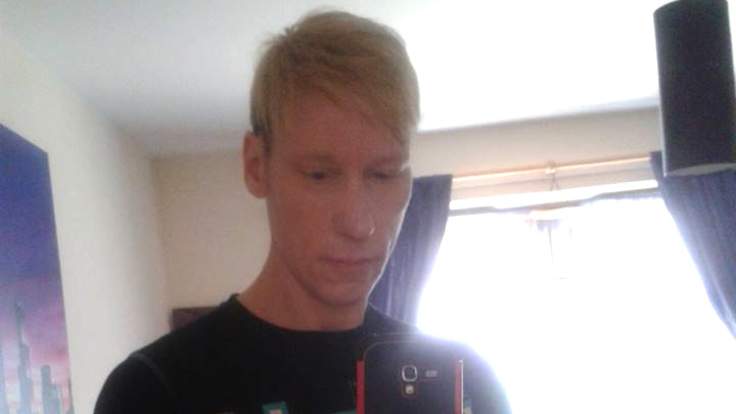
    Stephen Port

    Professor Elizabeth Yardley, criminologist at Birmingham City University

    In November 2016, 41-year-old Stephen Port was convicted of the murders of Anthony Walgate, Gabriel Kovari, Daniel Whitworth and Jack Taylor. He is one of only 50 people in England and Wales to receive a whole life sentence, meaning that he will never be released from custody and will die in prison.

    Port was named ‘The Grindr Killer’ by the tabloid press because he accessed many of his victims through the Grindr dating app. Much of the media coverage of the story and the subsequent popular interest in the case focused upon this new way that killers and sexual predators could access their victims. Indeed, I have researched the use of social media by killers for several years now, exploring how homicide perpetrators use Facebook[i] and exploring the meaning of homicide confessions posted on social networking sites[ii]. However, focusing upon these elements can sometimes distract us from some of the bigger and more pressing issues – issues that are not new and are intricately woven into our social fabric. Exploring contemporary attitudes to gender and sexuality and confronting the stubborn persistence of homophobia in our culture are all crucial to understanding what enabled Port to cause as much harm as he did.

    Having met his victims on Grindr or dating sites, Port drugged and sexually assaulted them. He used a substance called GHB (gamma-hydroxybutyrate) or the similar GBL (gamma-butrateactone). Port’s callous disregard for the lives of his victims is shocking. He did not care whether they lived or died.

    After killing 23-year-old fashion student Anthony Walgate on 17th June 2014, Port left his body on the path outside his flat, putting a small bottle of GHB in Anthony’s pocket. He lied to the police and said Anthony had taken the GHB himself and he’d moved his body outside because he was scared they would think he had killed him. Port received a short prison sentence for perverting the course of justice.

    Just over two months later, Gabriel Kovari – who worked in a London shop – was murdered by Port. Kovari was Port’s flatmate of only two days. On 25th August, Port administered a fatal dose of GHB and assaulted Gabriel. Port told friends that Gabriel had just walked out one day and he didn’t know where he had gone. On 28th August, Gabriel’s body was found propped up against a wall of the churchyard in the ruins of Barking Abbey, close to Port’s home. Gabriel had a bottle of GHB in his pocket. His phone was missing. A dog walker discovered his body.

    A few weeks later, 23-year-old chef Daniel Whitworth was Port’s next victim. Port and Daniel had agreed to meet on 18thSeptember. Having killed Daniel, the following day, Port deleted his account on the dating site and carried his body to the grounds of Barking Abbey, leaving him close to where Gabriel had been left. Daniel was found by the same dog walker who discovered Gabriel. Again, a bottle of GHB was found in Daniel’s pocket and his phone was nowhere to be seen. With Daniel’s body was a note that stated he had taken his own life because he felt guilty for killing Gabriel Kovari. Port was trying to blame an earlier murder on his latest victim.

    Stephen Port
    CREDIT: met police

    At the time, local media reported that police were not looking for suspects in the deaths of Gabriel and Daniel, describing their deaths as unusual and confusing but not suspicious. Nor were they linking Anthony’s death to them.

    Just under a year later, 25-year-old forklift truck driver Jack Taylor would become Port’s fourth and final murder victim. Port killed Jack after meeting him on 13th September 2015. The following day, Port deleted his account and took Jack’s body over to the same churchyard where he had left Gabriel and Daniel. In Jack’s pocket, Port left a bottle of GHB, a tourniquet and some medical wipes.

    “What went wrong here was that the net which should have caught him was full of holes. He was able to slither out and kill again, time after time”

    It was not until October that the Metropolitan Police’s homicide and major crime command took over the case and arrested Port in relation to all four deaths. The Met also referred the case to the Independent Police Complaints Commission (now the Independent Office for Police Conduct) because of what they termed ‘potential vulnerabilities’ in how police responded to the four deaths. This investigation is still ongoing.

    How did Port get away with murder for as long as he did? I would argue that this had very little to do with his ability to avoid getting caught – indeed he came onto the criminal justice system’s radar very soon after killing Anthony Walgate. What went wrong here was that the net which should have caught him was full of holes. He was able to slither out and kill again, time after time.

    The police response

    Port could have been stopped earlier in his killing cycle and unfortunately, this has a ring of the familiar about it. Dennis Nilsen, convicted of killing six men between 1978 and 1983 but suspected of killing at least twelve, also came within the police’s grasp. Douglas Stewart walked away with his life after an encounter with Nilsen in 1980. Nilsen had tried to strangle Douglas, who went to the police, showing them the red marks on his neck. Nilsen knew exactly what to say when challenged by officers, denying Douglas’s claims and saying the two had had a ‘lover’s tiff’. At the mention of homosexuality, the police lost interest. Nilsen would go on to murder several other young men. A similar but fatal incident occurred in the USA when one of serial killer Jeffrey Dahmer’s victims escaped – only to be returned to Dahmer’s apartment. By the police. The following is a transcript excerpt from Milwaukee Police Communications[iii]:

    Police Officer: Intoxicated Asian naked male. (Laughter) Was returned to his sober boyfriend. (More laughter)

    Dispatcher: 10-4 64 and 65.

    Police Officer: 10-4. It will be a minute. My partner is going to get deloused at the station. (Laughter).

    Port is one of several serial killers to have targeted gay men. Dennis Nilsen. Peter Moore. Colin Ireland. Jeffrey Dahmer. The man charged with the murders of several men in Toronto’s Gay Village[iv].

    “These killers all benefited from the fact that their victims belonged to a stigmatised social group”.

    These killers all benefited from the fact that their victims belonged to a stigmatised social group. This stigma permeated – and continues to flow through – a range of social institutions not limited to the criminal justice system. These victims belonged to a social group who didn’t matter as much as others. There was less sympathy for them. They were less worthy, less deserving of a thorough and rigorous investigation. The gay men targeted by serial killers are often additionally vulnerable because they have left home, are in need of a roof over their heads and have lost contact with their families and friends. Many of Dennis Nilsen’s victims fitted this profile and several remain unidentified to this day. They were once someone’s son, someone’s friend. Port’s victims were different, they had not runaway, they had jobs, families and friends. People noticed their absence and reported them missing. The gay rights activist Peter Tatchell has drawn attention to the importance of social class as well as sexuality in this case.

    If four young middle-class men had been murdered in Chelsea, police would have probably made a public appeal much sooner and mounted a far more comprehensive investigation. In contrast, the murder of low-income gay men in working-class Barking was treated very differently. Whether conscious or unconscious, police officers stand accused of class and sexuality bias[v].

    Criminologists have a concept for this – it’s called hierarchies of victimization[vi] – where people are not treated equally when they become the victims of crime based on assumptions made about them because of their socio-demographic characteristics like gender, sexuality, social class, age and ethnicity.

    Unfortunately, in the cases noted above, the criminal justice system provides us with several examples of homophobia at its worst. It’s a sad fact that over 50 years after homosexuality was decriminalised in England and Wales that we are still seeing gay men let down by the very institutions that should be there to protect us all. They are still not receiving the justice they deserve. And that is just not good enough.

    [i] Yardley, E. and Wilson, D. (2015). Making Sense of ‘Facebook Murder’? Social Networking Sites and Contemporary Homicide. The Howard Journal of Criminal Justice, 54(2), 109-134.
    [ii] Yardley, E. (2017). Social Media Homicide Confessions: Stories of killers and their victims. Bristol: Policy Press.
    [iii] Milwaukee Police Communications transcript, 2.00AM., May 27, 1991. Cited in Egger, S. A. (1998). The Killers Among Us: An examination of serial murder and its investigation. Upper Saddle River, NJ: Prentice Hall, pp 256-7.
    [iv] Bruce McArthur has been charged with many of these homicides.
    [v] https://www.theguardian.com/commentisfree/2016/nov/24/stephen-port-murder-inquiry-homophobia
    [vi] Greer C (2007) News media, victims and crime. In: Davies P, Francis P and Greer C (eds) Victims, Crime and Society. London: Sage, pp. 20-49.

  • Why I Care for The Royal Wedding

    Why I Care for The Royal Wedding

    On Saturday, our Prince Harry becomes a married man, to actress Meghan Markle. Columnist Jack Strange writes why he’s raising a glass to the new married couple..

    Tumisu / Pixabay

    If you didn’t know about this, then that’s understandable, seeing as it hasn’t been mentioned anywhere.

    Oh wait, it’s been just about everything. The past week, in the build-up to the wedding, we’ve seen interviews with camera crews setting up outside Windsor, and we’ve also watched a real-life soap unfold regarding Meghan’s dad, who sadly won’t be at the wedding because of a heart problem.

    Today, it was announced that Prince Charles will walk Meghan down the aisle.

    It’s all very excessive to be talking about when you consider it’s only two people getting married, but of course, these aren’t your typical people.

    They’re our monarchy; a royal family that have been in the public eye their whole lives. We’ve followed Harry since he was born, seeing him lose his mother tragically at such a young age, and seeing those pictures that leaked from Vegas.

    Harry is undoubtedly our most down to earth royal. He’s a younger generation that has fought in the army, fighting for our country, and working endlessly to meet different people in different countries to enrich things such as the Commonwealth.

    Meghan Markle, on the other hand, is a young woman that has lived her life in the limelight and happened to meet Harry because of a blind date. Undoubtedly, Meghan is feeling the pressures of this new limelight that has been put upon her. She can no longer act, and she even had to delete social media. Now, Meghan has to fit the role of a royal. Regal, helpful, a Good Samaritan.

    But what we have with Meghan and Harry is something unusual. We have an American marrying into a family that have been traditionally British, albeit with German ancestors. It’s unusual, too, for Meghan to have had a public career before this. During the 2016 election, Meghan spoke out against Trump, an opinion that she will probably have to put aside now that she is such a public figure. What could have once been seen as problematic to the diplomacy of royalty has now been modernised.

    Let us also not forget that The Royal Family bring the British economy a good source of income. Abolishing them, or dismissing them would be foolish. This wedding between Harry and Meghan alone will boost our economy by £1billion.

    That £1billion comes from things such as tourism, PR, money spent in restaurants and on merchandise.

    The whole world is watching the United Kingdom right now, and broadcast around the globe.

    We should also see this as a testimony to our history. We are alive to witness history. Sure, it ‘may just be a wedding’, but it’s a wedding between two people that have the influence to change how we live, and how the world functions.

    As humanitarians, both Harry and Meghan have a responsibility to uphold. Not only are we seeing two people in love tie the knot, but we’re celebrating something good.

    We have bigger problems to face, sure, but for one day we should focus on the good. We should enjoy an enrichment of culture.

    I, for one, wish the new couple a happy wedding day!