Category: Worth A Read

  • REMEMBERING THE AIDS CRISIS: Memories of 1980’s UK

    REMEMBERING THE AIDS CRISIS: Memories of 1980’s UK

    I remember only too well when AIDS first impacted on my world and came into the public eye.

    In 1981 I was 19 and there was talk in the gay clubs and pubs where I lived of a disease originating in monkeys that was killing Americans. I remember there was a lone American visiting for professional reasons and he was considered as guilty by association, just because of his accent. I look back with shame now on how people were afraid to approach him and how the treatment he received was similar to that in the dark ages a leper might have expected, minus the bell to ring and the calling out of the phrase “unclean”.

    Over the next couple of years, probably longer, as it took time for information and knowledge to disseminate. The names of those who had contracted the condition made it appeared to be an illness that blighted the pretty boys and those who had the biggest cocks.

    Of course, that is not true. It’s just where I lived there was a small gay circle and once infected those who were sexually promiscuous and practised unsafe sex were the first to be hit and through them as HIV spread rapidly.

    There was too little information and it was too late, that was part of the problem. The other problem was a NIMBY (Not In My Back Yard) mentality. People thought it wouldn’t happen where they lived or to them as it was affecting other parts of the globe. In the 1980s the world was getting smaller and people travelled for work, holiday and to play in the gay hot-spots.

    For me, it was the indiscriminate nature of the illness. There were personal losses of people I knew.

    In the media, the death of Rock Hudson seemed to have an impact. In the USA I recall a movement quilting and marking the lives of the victims they knew in this way. There were powerful images of the time where over vast areas these quilts were laid out with loved ones present.

    There was a TV program about a man called Terry Madeley. In interviews in 1987, he was the first in the UK to speak openly about his fight with AIDS. A year later a program about his fight for death with dignity was aired on 1st December 1988 World AIDS day. It was titled Remember Terry and 29 years ago today, I still do. He had died in the previous October and I recall an image broadcast at the funeral in a crematorium of a hand through the curtain wearing a diamante glove waving goodbye. He appeared to have such strength of character and good humour for those snippets to stay with me.

    To be in 2017 when there is a more positive outlook  – I can’t help pausing to consider and remember all of those who do not have the opportunity to share today.

    This article was first published in 2017 and has been updated with links.

  • DOMESTIC VIOLENCE | Am I A Survivor Yet?

    Well, what if ‘she’ wasn’t a she at all? For too long, the male victims of domestic violence have been just as ridiculed and silenced as women.

    I was nineteen years old, and the only care I had in this world was whether I could afford to go out drinking three nights that week or just the one. I had a lovely little life, a full-time job in a shop, money coming in, and good friends until I went on a night out in Manchester. It’s so melodramatic to say, but it’s true – that night changed my entire life. That night, I met a guy, who I will call He/Him. He was cheeky and confident and broad, and I fancied the pants off him. I ended up back in his bedroom with a group of his mates, all chilling and listening to music until I ended up dropping off to sleep. Nothing happened, and in the morning he took me back to my friend’s house. I left Manchester later that day, and we vowed that we would keep in touch.

    We visited each other once, maybe twice, before I decided I was going to spend the weekend with him in Manchester. There was a party at his place that weekend, and we were all dropping ecstasy like it was going out of style. In fact, a few years later it did go out of style, giving way to an assemblage of other drugs. The next morning I woke up next to him without any memory of the night before, how I’d gotten into bed, or how I was undressed. I should have known there and then. He told me, without an ounce of indignity, that we’d had sex while I was talking to two women who lived in the bedroom wall.

    I laughed.

    Laughed.

    I was nineteen. I can’t recollect what my thoughts on this were at the time, but apparently I saw nothing wrong in this. Now, over a decade later, I know what word I would use to describe this event.

    I don’t know what possessed me. I was having a good time, and I felt freer than I’d ever felt in my life, and I remember saying to him, “I don’t want to go home”, he said “Well, don’t.”

    I didn’t.

    I called my parents and informed them I wasn’t going to come home, and that I’d come back to collect my things. I had absolutely no thought in my mind of what this would do to my Mum and Dad, left in Liverpool wondering what their young son was up to in another city.

    The relationship continued to be fun, and I took more and more ecstasy, replacing alcohol almost completely on nights out. I hadn’t noticed the subtle ways in which he’d already begun to control me: “you don’t need to work, I can look after you”, “don’t wear that, wear this”, “what if you did your hair like this instead”. I got a job anyway as a supervisor in a now-defunct clothing store in Stretford Arndale. The job didn’t last long because of what happened next.

    We were out on a Sunday afternoon in a pub near the house. His friends were there, laughing and joking, and he said something sexual about me. I was mortified, because it was in front of everyone, and they all thought it was normal. I don’t remember what he said, but I remember feeling not just embarrassed, but defenceless. I excused myself and went outside to call my Mum. I explained to her that I wasn’t enjoying Manchester any more and that I wanted to come home.

    After I finished the call, I turned around and there he was – the angriest face on a man that I think I’ve ever seen. I didn’t know what he had to be angry about, and I was about to go back inside when he started shouting. I didn’t know what else to do so I ran off toward the house. I wasn’t used to confrontations. He chased after me, caught me on the main road, bashed my head five times into the metal poles of a fence, and stood over me shouting more abuse.

    Crying, I somehow managed to get to my feet and start running again. I thought I was being clever by taking some back roads toward the house, but these only led back onto the main road where he was waiting. He pushed me to the ground, I remember my jeans ripping, my front teeth scraping the floor, and him shouting “What? What are you looking at?” to two by-passers. They didn’t stop to help. The next part is a haze. I think one of his friends caught up and dragged him off toward the house. I followed some time after. I got to the mirror in the bathroom and saw blood all over my face and head. His friend told me to “wipe it off, he can’t see the blood on you”. I told him he was going to have to look at what he’d done.

    Then, he did something very clever. He came downstairs, took one look at me, started crying, took a knife from the kitchen and went out. Well, that was it. How could I leave a man, clearly emotional, on the streets with a knife, scared that he’d hurt himself. Needless to say, after hours of looking, I found him back at home. Unharmed.


    The next day he apologised. He apologised the next day after each occasion, even after the time he put me in the hospital with suspected broken ribs. They weren’t broken, and I was released with a few pamphlets on domestic violence. I threw them in the bin on the way to the police station to give a false statement to the kindest man I’d met. He told me there was no need to lie, there was no need to do anything but tell the truth and be happy again. I told him it was just two lads fighting, and in the morning he was released.


    Domestic violence isn’t just physical, we all know that; it’s the deliberate emotional and psychological demolition of a person.

    I was one of those people. I was smacked about and strangled and kicked, and had knives to my throat, but I was also told I couldn’t have dinner if I questioned his love for me, that I’d need to “think of what it would do to the relationship” if I learned to drive, or got a job again, the threats that his slightly-dodgy brother would do something to me, my friends or my family if I left.

    There was one last comment, the final straw that broke the proverbial camel’s back, one tiny little comment that made me think ‘you are never going to change.’

    He was talking to his friends in the living room about his ex-boyfriend, who once had sucked water up the hoover that he’d spilt, probably in a rush to do it before getting a smack for being clumsy. And he said, I can hear it now clear as a bell: “He got a hiding for that, I can tell you.”

    It clicked. I wasn’t the only one. I wasn’t the first, and I wasn’t going to be the last. But right then I decided that I wasn’t going to be the one right now.

    Now, I’d left multiple times with the help of friends. But a good friend of mine at the time came all the way from Liverpool to collect me and take me back. I packed my small amount of belongings and I left. You might think this is the end of the story, but it’s not.

    For months, I used to call and text and really long to go back to what I knew. I was beyond any level of damage that I, or my friends, knew how to handle. I’d go out every night drinking and not want to go home, I’d meet men and want them to hurt me. I felt nothing until I felt pain.

    Over ten years later, I sit writing this as a man looking back on a boy he used to know. I feared for that boy’s safety, and more than that, his life.

    He didn’t ask to be a victim of domestic violence, but he chose to survive it. He grew up, and he learned his own worth. True, the wind still blows the dirt and dust and uncovers some ancient archaeological history of that period in his life, but in the main he’s healthy and happy. Those who’ve lived through violent relationships are survivors only in the sense that they are no longer in that situation. You can’t, however, survive a memory that is always with you. You live alongside it. It’s your ghost.

    Over a year ago… I was in an ex’s bedroom, and we had an argument. He turned nasty, and his voice and face completely changed, I thought: “this is it. This is it all over again.” He didn’t hit me, and instead, he looked concerned. It took me a while to realise I was freezing cold and shaking all over. Now, before this, I’d always thought of myself as stronger than ever. But this was a reminder that I am not healed.

    In the years since then I’ve heard ridiculous questions, “why didn’t you just leave? Why didn’t you hit him back? You’re a man too, so it’s not really domestic abuse, is it?”

    Well… you try leaving someone who has made you feel like they’re the only person you can depend on. You lift up your hands and make them into a fist against someone you know you’re physically no match for, and you feel like you love. You try having your food taken off you, being beaten for having a smart mouth, and being told you can only do certain things and speak to certain people. Trust me, it really is domestic abuse. It’s no less of a crime, no less of a heart-breaking, world-shattering situation to have been in just because I’m a man too.

    All of the black eyes and cuts and bruised bones he gave me during those twelve months are healed, but the psychological and emotional scars are too deep to heal completely. I’m always questioning: am I a survivor yet or not? ?️‍?

    @sean_watkin

    For help or advice call Mankind on 01823 334244 or Men’s Advice Line on 0808 8010327

    This article was taken from Issue 20 – download our magazine app now and never miss a future issue and was very published on our website in May 2016. It has been updated with new and relative links.

  • This is what it’s like to go on a nudist beach, when you’re a nevernude!

    This is what it’s like to go on a nudist beach, when you’re a nevernude!

    It has to be said. I’m a never-nude.

    CREDIT: Jake Hook / THEGAYUK

    While my boyfriend takes almost every possible moment to whip his clothes off, I’m happy to keep it AbFab Saffy. He says I’m the only person he knows who dresses up to go to bed.

    So the idea of a nudist beach outing isn’t a natural fit for me, my Irish Roman Catholic never-naked family upbringing means that nudity to me is best kept in the dark. But as I’ve always said, “don’t say no, till you give it go”. So on a trip to Australia, I relented to my nagging boyfriend, who had heard there was a gay nude beach somewhere on the shores of Sydney.

    We were 9,445 miles away. No one I know would be there, and at 26 years old I was in my prime.

    Early one morning, we took a ferry to the Taronga Zoo and walked for what seemed like hours. With every step, my protestations got louder and more pronounced. “Did we really need to do this”, “There’s a perfectly nice, findable beach in Manly”, “What’s so special about getting naked anyway?”

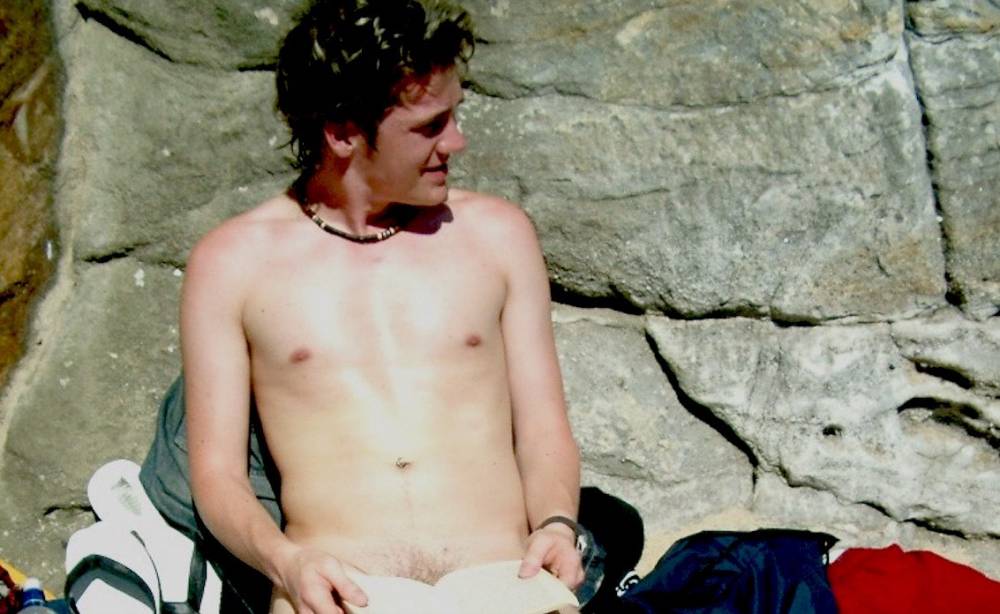
    Finally, we found it. Opening up in front of us was a naked haven. It was less of a beach and more of a cove of smooth rocks, facing towards the sea. A bit like a penguin exhibit at a zoo. Numerous, well-placed, seemingly naturally occurring outcroppings of smoothish rocks, perfect for spreading out a towel and basking beneath the Aussie sun. It looked perfect. It looked secluded. At each end, there was a high wall of rocks and thick bush add to the seclusion. Perfect.

    My boyfriend’s little eyes lit up like it was Christmas, Easter, Valentines, New Year’s and Wirral Appreciation Day (he’s from Wirral) all in one. He started removing items of clothes as we picked our way across the rocks to find somewhere to settle.

    I started casually glancing around, more to make sure I had a good footing on the rocks, rather than goggling the naked men on show. There were penises everywhere.

    Some were casually flopping over the owner’s knees, some were neatly nestled in a well-groomed nest of pubic hair. All attached to perfectly bronzed and toned bodies.

    We had found a spot to make camp, my boyfriend literally ran off towards the ocean.

    I was left to undress and sink lower into my own self-loathing.

    I could feel expectant eyes around me. I was, still dressed, very much so. So I began to peel off an item of clothing one item at a time. It was like a very slow, very bizarre Victorian striptease. First flip-flop, second flip-flop and so on until it was just my underwear and nakedness. I was eking out every moment of clothed protection.

    I rooted around in my rucksack for my book. It was chunky. In what can only be described as pure magic, I whipped off my undies and firmly placed the book in front of the crown jewels in one swift, deft move. I was naked save for the book.

    Finally, with my undies still on, I rooted around in my rucksack for my book. It was chunky. In what can only be described as pure magic, I whipped off my undies and firmly placed the book in front of the crown jewels in one swift, deft move. I was naked save for the book. I looked around to see if there had been any signs of approval from the expectant eyes, but they had long bored of my antics and were distracting themselves in other ways.

    I pretended to thumb through my book. My boyfriend called for me to come down to the ocean.

    Could I?

    Could I walk to the ocean… exposed? Between where I was sitting and the shore there must have been about ten meters of rocks.

    Sod it. Do it. What’s the worst that could happen?

    Beneath my book, I gave my little Mr a tug. It’s the tugging that all men give themselves when you need a little something more. You know, in the right circumstances, you add a couple of inches to a flaccid knob.

    Finally, appeased by the length, I remove my book, stand up. I blind everyone. My pale never-nude body is so bright I’m sure it can be seen from space.

    I feel eyes on me. “Turn it around Jake, turn it around”, I coo to myself. In my mind, Sade’s “Smooth Operator” is playing, as I slink towards the shoreline. Not wanting to rush, I make sure each step is sure and solid. My boyfriend is seven meters away from me. He’s waving at me, encouraging me to come to the water’s edge. He’s waist-deep in the water and he’s been playing catch with some others that are in the sea. It looks fun. I want to join them.

    I continue to walk towards the sea. Why did we settle so far back from the shore? I’m five metres away now.

    Four meters… and then, I hear voices. These aren’t the subdued mumbles of the cove’s current inhabitants. No, I can hear children’s laughter and a general hubbub. I can hear a tannoy announcement. I can hear the churning of water from a propeller. From the left side of the cove, a tourist boat’s bow begins to appear.

    I’m three meters from the water now. More and more of the boat begins to show. It’s big. Actually, it’s massive. And there are lots of people on it. All of them with cameras pointed in the direction of the beach. The boat seems so close I’m sure I can hear the individual shutters of a hundred cameras firing.

    Forgetting ‘Smooth Operator’ and my careful footing, I make a dash for the water. Gazelle like, I spring over the last few rocks and dive.

    Into 3 inches of water.

    My pasty ass isn’t even covered with water.

    The tourist boat continues its slow-paced chugging, its slow speed is mocking me. The cameras are still clicking. Eventually, it disappears around the cove.

    My boyfriend is almost drowning with laughter.

    The expectant eyes, attached to waspy mouths are saying something… I think I can hear “oh look, a floating pomme”.

    I die.

  • Up and At Em: Death in the Sex of Joe Orton

    Up and At Em: Death in the Sex of Joe Orton

    Up and At Em: Death in the Sex of Joe Orton

    By Leon Horton

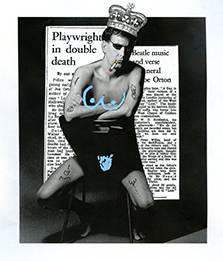
    London, 9 August 1967. At the height of his short-lived fame, Joe Orton – anarchic playwright and cause célèbre of the English theatre – is found murdered at 25 Noel Road, Islington, his brains bashed in by his long-term lover and one-time collaborator Kenneth Halliwell. Divided in life by Orton’s hard-won success as a writer, the two are forever united in death when Halliwell savagely bludgeons Orton with a hammer then takes a fatal dose of sedatives.

    In the hip chic of late 60s London, Orton, it seemed, had everything a “with it” gay writer could possibly want: a West End smash with his second play Loot, winner of the Evening Standard Award for the Best Play of 1966, holidays in Morocco where the drugs were cheap and the boys even cheaper. After years in obscurity, everyone wanted a piece of him. And on the day of his gruesome death, he was due to meet director Richard Lester to discuss his film script commissioned for The Beatles: Up Against It.

    Halliwell, conversely, had nothing to show for the wilderness years spent mentoring his protégé – and his valium-suppressed jealousy ran deep. Holed up in their tiny squalid bedsit, sustaining their meagre existence on Halliwell’s dwindling inheritance, the two aspiring writers had written several unpublished novels together, were for a time allied in their lives and literary endeavours by dreams of a success that eluded them.
    But even failure couldn’t last.

    Embed from Getty Images

    With Orton’s meteoric rise to fame (after a life- and career-defining spell in prison for defacing library books), it was he who now controlled the purse strings, he who was lauded in the Observer as “the Oscar Wilde of Welfare State gentility”, he alone who was invited to all the right parties. Halliwell, who had given up writing, whose literary ambitions Orton had absorbed and then eclipsed, was reduced to a mere footnote – a dedication in the programme of Orton’s first full-length stage play Entertaining Mr Sloane.

    But if it was Orton’s success as a writer that brought down the hammer, it was his blatant and unabashed sexual promiscuity that put the nail in his coffin. For Halliwell was not merely envious of Orton’s literary achievements; he was the cuckolded lover, the long-suffering wife caught at the crossroads where many partners of the famous disembark. Overlooked, underappreciated, first wives are often left at the kerb, muttering threats of revenge. Paranoid that Orton would leave him, not without justification, Halliwell desperately tried to legitimise his own position as fundamental and indispensable to Orton’s success to anyone within earshot. It was an invitation to a killing.

    Orton and his plays are often regarded (or dismissed) as a product of the swinging 60s, as little more than an adjunct of pop counter-culture and the sexual revolution, and while he certainly earned his place in that pantheon, there’s more to it than that. His battles were won and lost in those Beatle-heady days, certainly, but they weren’t fought there.

    Embed from Getty Images

    They were fought in his impoverished Leicester childhood in the 1940s, against a domineering mother and a weak father. They were fought at the Royal Academy of Dramatic Art (RADA) over his ambition and ultimate failure to make it as an actor in the 1950s. Ultimately, they were fought against a prejudiced and repressed society – brought into sharp focus by his and Halliwell’s harsh treatment at the hands of the authorities when they were caught defacing library books in 1962. “The old whore society really lifted up her skirts and the stench was pretty foul,” Orton said of his six months in prison. Privately, he contended that their stiff sentence was “because we were queers.”

    Perversely, prison gave Orton a taste of freedom. For the first time in 11 years, he was separated from Halliwell, began writing on his own and duly delivered a radio play, The Ruffian on the Stair, to the BBC. Halliwell was humiliated by and repentant of his incarceration – a symbolic reminder of the wider failures in his life – whereas Orton found a new voice and detachment to his anger. Having reached rock bottom, he was no longer stymied by society’s values, and he savoured his newfound role as a literary outlaw and bona fide criminal. Halliwell, on the other hand, would attempt to slit his wrists within a year of release.

    With his star in the ascendency, Orton faced the perennial problem of the outsider artist: how to stick two subversive fingers up and at `em, the mainstream, without being absorbed by it. Orton no more needed social or sexual acceptance than a bone needs a dog, and sex was his solution. Comedy, vengeful and violent, was Orton’s genre, but sex as both weapon and shield was his modus operandi. “Sex is the only way to infuriate them,” he noted in his diary in 1967, as he rewrote his last play What the Butler Saw. “Much more fucking and they’ll be screaming hysterics in next to no time.” Even by the liberal standards of modern theatre, Orton’s dramatic use of sex as a means of control – with homosexuality, transvestism, incest and nymphomania vying for pole position – was seen by many as a deliberate affront to good taste.

    Embed from Getty Images

    In life as in his work, Orton’s approach to sex was defiantly Dionysian and held up a mirror to the hypocrisies of polite society. “You must do whatever you like as long as you enjoy it and don’t hurt anybody else,” he once told his friend, actor and stalwart of the Carry On films Kenneth Williams. Williams, an outrageously camp and acerbic performer in public, was a privately repressed man who felt guilty about his sexuality – a hangover from a bygone age that Orton totally rejected. “Get yourself fucked if you want to,” Orton told him. “Get yourself anything you like. Reject all the values of society. And enjoy sex. When you’re dead, you’ll regret not having fun with your genital organs.”

    Orton practised what he preached and delighted in regaling friends and colleagues, if only to note their reactions, with lurid tales of his sexual adventures. Williams himself recorded a particular occasion in his own diary, 30 April 1967, when strolling through Hyde Park with Orton and Halliwell, Orton casually recounted picking up a stranger near a public toilet:

    “We’d been eyeing each other warily – and this fellow asked, ‘You got a place we can go?’” Joe said (in front of Halliwell), “I told him that I lived with someone, and it wasn’t convenient. The man replied, ‘I often get picked up by queers round here… They’re not all effeminate either, some of them are really manly and you’d never dream they were queer. Not from the look of them. But I can always tell `cos they’ve all got LPs of Judy Garland. That’s the big give away.’” I told Joe, “It’s marvellous the way you remember dialogue as well as the accents! You really capture the flavour of the personality you’re describing.” Joe said, “Yes, I’ve started a diary.” I said, “Pepys put all his references to sexual matters in code so that no one would know.” Joe said, “I don’t care who knows.”

    Whether he cared or not, Orton’s diary (titled Diary of a Somebody) chronicles the last eight months of his life, his increasing literary success, and his disintegrating relationship with Halliwell, against the backdrop of the swinging sixties. Started in December 1966 but not published until 1986, the diary knowingly (knowingly in the sense that Orton knew it would one day be published) details his sexual peccadilloes in such a curiously dispassionate and often dismal manner that on 23 December 1966 he is able to write:

    “On the way home I met an ugly Scotsman who said he liked being fucked. He took me somewhere in his car and I fucked him up against a wall. The sleeve of my rainmac is covered in whitewash. It won’t come off. I hate Christmas.”

    Then, six days later, on the way to his mother’s funeral:

    “I arrived in Leicester at 4.30. I had a bit of quick sex in a derelict house with a labourer I picked up… He took his pants down. He wouldn’t let me fuck him. I put it between his legs. He sucked my cock after I’d come. He didn’t come himself. It was pissing with rain when we left the house. Mud all over the place.”

    That Orton adopts such a gloomy tone over these chance encounters has little to do with the death of his mother, as you might expect, when you consider his somewhat more upbeat entry on the 30 December 1966, the very day of her funeral.

    “After I left Leonie [his sister], I picked up an Irishman… He had a white body. Not in good condition. Going to fat. Very good sex, though, surprisingly. The bed had springs which creaked. First time I’ve experienced that. He sucked my cock. Afterwards I fucked him. It was difficult to get in. He had a very tight arse. A Catholic upbringing, I expect. He wanted to fuck me when I’d finished. It seemed unfair to refuse after I’d fucked him. So I let him.”

    And so his sexual trawling continues throughout the diary, writ large, ad infinitum: from a bacchanal orgy in an underground toilet, where “the little pissoir under the bridge had become the scene of a frenzied homosexual saturnalia. No more than two feet away the citizens of Holloway moved about their ordinary business” – to sunnier climaxes in Tangiers, Morocco, where even Halliwell could relax in the heat of hashish and Arab rent boys who “do it for sweets”. Morocco, at that time, was an infamous destination for predatory homosexuals with a sweet tooth, and Orton and Halliwell were no exception, indulging in a daily regime of sybaritic proportions. But all the while, both were painfully aware that no matter how bright the Moroccan sun shone, the damp, squalid isolation of 25 Noel Road, Islington was only a postcard’s throw away.

    Embed from Getty Images

    If Orton was being irresponsible in his sex life, he took no responsibility whatsoever over Halliwell’s declining mental state. After years of bickering, of violent arguments and threats to commit suicide, Orton was inured to Halliwell’s pain, but with his new sense of worth, he could not empathize with it. Halliwell was seeing a psychiatrist, taking increasing doses of sedatives and, numb to the world, shrinking away from everything but Orton himself. Their tiny flat, the walls of which Halliwell had covered in collages, making it seem even more claustrophobic, was his theatre and fortress. For Orton, the place was tainted, and he talked often to friends about the possibility of leaving.

    But he never did.

    On the 5 May 1967, Orton wrote in his diary:

    “When I got back home Kenneth H was in such a rage that he’d written in large letters on the wall ‘JOE ORTON IS A SPINELESS TWAT’. He sulked for a while and then came around. He’d been to the doctors and got 400 valium tablets. Later we took two each and had an amazing sexual session. I’d decided to fuck him. But it didn’t work out. ‘I’m not sure what the block is,’ I said. ‘I can fuck other people perfectly well. But up to now, I can’t fuck you. This is something quite strange.’”

    Three months later both would be dead. The writing was on the wall.

    At 41, Halliwell was no stranger to death. It had clung to him since childhood. In 1937, when he was just eleven-years-old, his mother was stung in the mouth by a wasp and died in front of him. Twelve years later, he came down to breakfast to find his father with his head in the oven, dead from asphyxiation. With a cold, hard logic reminiscent of one of Orton’s characters, Halliwell claimed to have made a cup of tea and had a shave before informing the neighbours, but his parents’ deaths haunted him for the rest of his life. At RADA in 1953, he told a fellow student “I’ll end up like my father and commit suicide.”

    Two weeks before their deaths, Orton and Halliwell discussed the nature of their relationship, and relationships in general, with Kenneth Williams, who records visiting the couple in his diary, Just Williams, on 23 July 1967:

    “We fell to discussing relationships. ‘Sharing of any kind means an invasion of privacy,’ I said. Joe talked about his horror of involvement. ‘I need to be utterly free.’ I quoted Camus’ line, ‘All freedom is a threat to someone,’ whereupon K.H. declared ‘Love is involvement, you can’t live without love.’ ‘There are many definitions of love,’ said Joe, ‘it depends on your point of view. You can love your work and be entirely committed to the pursuit of perfection.’ ‘Sexual promiscuity,’ he said, now provided him with material for his writing; ‘I need to be a fly on the wall’. But Kenneth Halliwell disagreed: ‘It’s alright letting off steam on holiday but a home life should have the stability of a loyal relationship.’ ‘You sound like a heterosexual,’ Joe countered, but Halliwell stuck to his guns and said that promiscuity led to wasted aims: ‘You can only live properly if it’s for a person or for God.’

    For Orton, both man and writer, there could be no comic revenge against an unjust and cruel “God” without anarchy, and his sordid sexual adventures were a logical extension of this. Anonymous encounters with strangers fuelled his appetite for self-destruction as a creative act and confirmed his conviction that only in pursuit of the forbidden could he unshackle himself from the suffocating environs of conventional living.

    It has been dramatised on stage, screen and in books, but no one really knows what happened that night, August 9, 1967 – how the final scene played out between these stage-struck lovers. As a denouement, the tableau that faced the police when they forced their way into the claustrophobic bedsitter fits the billing. They found Orton in bed, his blood and brains splattered up the heavily collaged wall that had become Halliwell’s sole creative outlet. They found Halliwell – Orton’s blood on his hands, chest and head – naked on the linoleum floor. Next to his body was an empty can of grapefruit juice that helped speed twenty-two Nembutals into his system, killing him within minutes. They found a note on top of a red-grained binder that was Orton’s diary. It read:

    If you read his diary all will

    be explained.

    KH

    P.S. Especially the latter part.

     It is fifty years since Orton’s untimely and melodramatic death, and it is fair to say that his plays no longer carry the shock and awe they once did. Yet Orton, like his writing, remains enigmatic and elusive – brilliant but difficult, elegant but easy to misunderstand. The press dubbed him an enfant terrible, and Orton willingly played the part. But in living his life at the extreme, when it came to exceeding to the bitter demands of a life in the limelight, Orton inadvertently became a character in his own macabre drama.

    He would have seen the funny side.

  • So what IS a “White Gay”

    So what IS a “White Gay”

    On the surface, the term “White Gay” may not strike a chord of recognition. But it’s an issue that is becoming insidious and problematic within some areas the community.

    StockSnap / Pixabay

    I’m hoping that after the explanation, people do continue reading because this is an issue that needs to be discussed and understood. So what does “White Gay” actually mean?

    It’s the notion that within the community there is a simmering underbelly of racial/societal ignorance. Now I dislike the term white privilege because as soon as that phrase is mentioned, there is an instant backlash against anyone trying to point out, that society IS in general easier for someone who is white, tall and thin. It’s not an individual thing, obviously, there are tall, fit, white people out there who have a hard time. This is a generalised observation of how society views these white people and people of colour.

    As a white person myself, I will never truly understand actual racism and I don’t pretend to know what any person of colour goes through on a daily basis. Jane Elliott conducted many experiments around racism, most famously The Blue-eyed/Brown-eyed experiment. She went about separating blue-eyed people away in a different group and treating them with contempt, while openly praising and helping the brown-eyed group. Reactions were mixed, and some people thought her experiments were nasty and pointless and only fueled the idea of racism. But she made very valid points regarding the fact that after the workshop, no matter how bad the white blue eyed people were treated, it would stop, people of colour don’t get that kind of break.

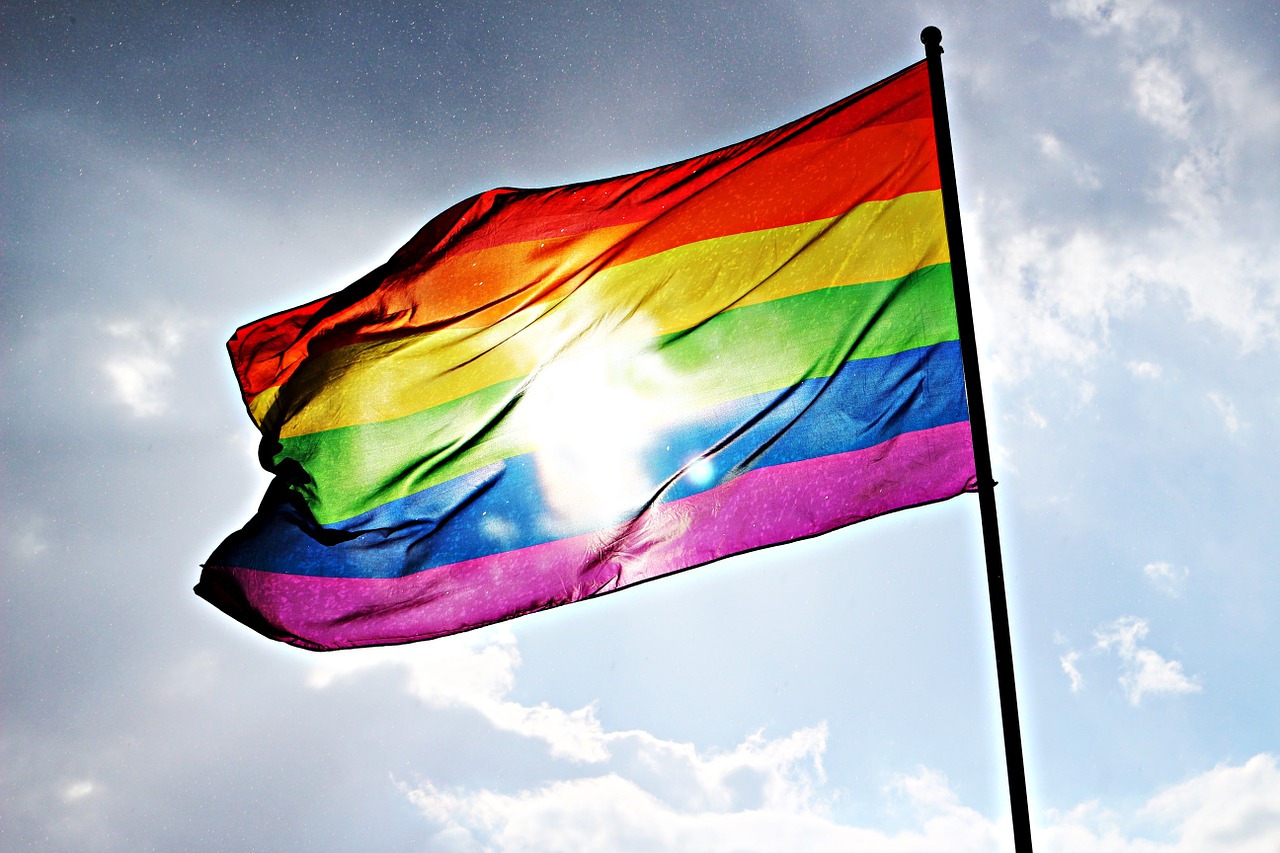
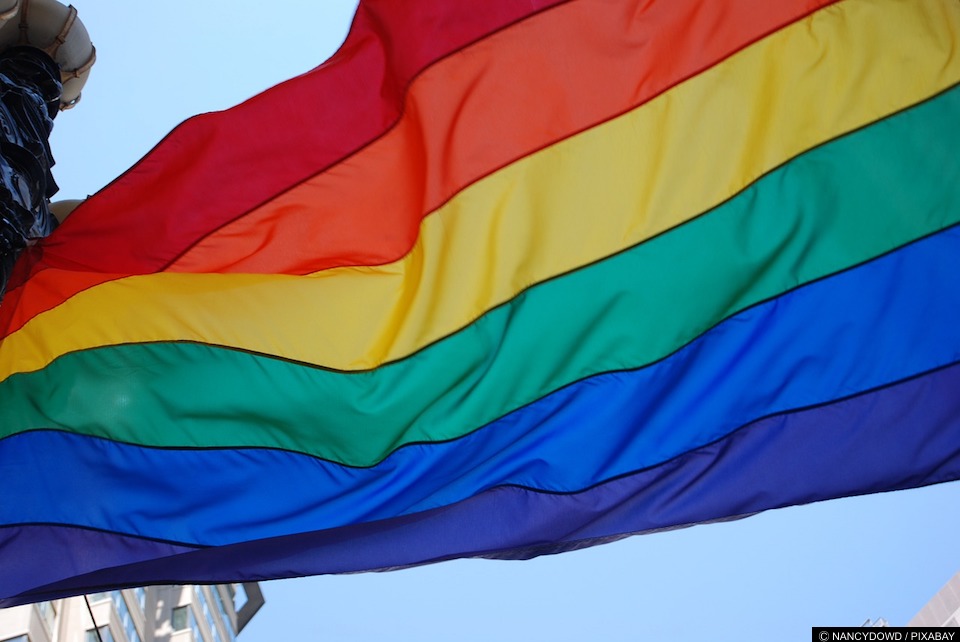
    But I digress, how does this reflect on the LGBTQ+ community, surely we are all one harmonious group of rainbow love. Sadly this just isn’t the case. Recently there has been a contentious issue regarding adding a black and brown stripe to the rainbow flag to represent people of colour in the community. On the one side, there are people who feel these stripes should be added because those people the new stripes represent do feel marginalized within an already marginalized group. And on the other side are the people who feel the flag was never about race, the stripes represent different emotions, and feelings of the community and further segregating groups only feeds the fire of alienation.

    The issue of the stripes also came into sharp focus in the community when drag queen Peggy Wessex shared a poster designed for her depicting the black and brown stripes being vomited up by a unicorn with the rainbow colours in the background and the tagline “taste THE rainbow.

    There was of course defenders of Peggy saying she was a comedian and that banning comic things was just political correctness gone mad.

    Is it racism, or is it simply ignorance of race? There is a huge difference between the two.

    Now don’t get me wrong, I’m all for nothing is sacred in comedy, but when it comes to taboo subjects, it all depends on how you construct the joke. This was poorly thought out and just wasn’t funny. It was deliberately designed to provoke a reaction. Peggy didn’t design the poster, but she endorsed it by sharing it and making comments such as “how it should be”.

    Speaking to a friend of mine about the flag, he voiced worries of being seen as racist if he didn’t have the flag with the black and brown stripes on.

    But he made an interesting point, as a white man, the stripes aren’t for him to decide upon, so the flag isn’t for him to wave.

    Another point he made was that a lot of the arguments seemed to be between white people, he saw few people of colour voicing an opinion. Is this a symptom of trying to look “woke” and tolerant instead of actually just being nice to people as a normal behaviour? Does an overcompensation actually do more harm than good?

    I can see both sides of the argument, the flag never represented race, but people of colour can feel like they aren’t fully a part of the community and want a valid representation of their identity.

    rihaij / Pixabay

    Is it racism, or is it simply ignorance of race? There is a huge difference between the two. Ignorance of race is unpleasant, rude and stupid, Racism is dangerous, unlawful and pervasive. And it can start off small, with the idea of preference.

    We’ve all heard people say “but it’s just my preference” about who they are attracted to and having a preference is fine no one is telling you to be attracted to someone you’re not, but one has to ask themselves, is it truly a preference, or is it ignorance of race? Outright dismissing or fetishizing someone based solely on race IS racism and it can be incredibly damaging. And some people are disturbingly open about it, putting on their dating profile their “preferences” usually in an incredibly disparaging way.

    White Gay term doesn’t just cover race

    But the White Gay term doesn’t just cover race, it covers a multitude of things, based on weight, height, amount of hair, gender identity & disability among other things. An easy dismissal of someone based on how they look. Small snide comments such as “You’d look good if you lost a few pounds”.

    A look at someone in disgust, whispers and pointing/laughing. These things can really affect a person and while obviously as a society the first thing we see is appearance and an initial attraction is based on looks, that only goes so far. You can find an incredibly hot guy and he’ll turn out to be narcissistic, selfish and shallow. Personality can easily outshine any perceived flaws.

    Differences should be acknowledged, and talked about in a positive way. A lot can be learned from other people’s experiences or heritage.

    I have sadly heard stories of certain gay clubs (which shall remain nameless) actually refuse entry to someone based on how they look. No wonder there is self-segregation within the community. But self-segregation is just as damaging as outside segregation. Only sticking with your own group highlights the differences instead of everyone coming together and being supportive of each other. Differences should be acknowledged and talked about in a positive way. A lot can be learned from other people’s experiences or heritage.

    The point of this piece isn’t to call anyone racist or shallow because not everyone is, it’s to bring light to an issue that is there and does have ramifications towards people.

    I’m also very aware that any discussion from my point of view can be instantly shut down with the phrase “You’re a cisgendered white male, you’ll never understand” And no I won’t fully understand or appreciate everyone’s experiences, but that doesn’t mean that I can’t have a meaningful debate and discussion where we can learn from each other without any valid points being dismissed.

    I live by two simple mantras, treat everyone how you’d like to be treated yourself, and learn something new every day, no matter how small. The more we learn, even from people we disagree with, the more we grow.

    People are so quick to argue or take offence instead of actually talking, and figuring out why a reaction is had. Will this solve the issue? Far from it, but I’m hoping it at least opens up an important discussion.

  • COLUMN | When music leads you down memory lane (and the boys we used to lust over)

    COLUMN | When music leads you down memory lane (and the boys we used to lust over)

    It Really Was Just “Wishful Thinking”

     from a great song

    Music is a funny thing. It does evoke such memories and for the majority of the time in my life, they are good ones. Even if the outcome hasn’t been as I had wished for, I can still see the goodness in it. Misinterpreting, however, is easily done when it seems to offer an escape or fits a situation even if that wasn’t what the artists intended. One song in particular just does it for me.

    “China Chris” ‘Wishful Thinking’ came on the radio the other day. I loved that song. Even though the song was released in 1984, I loved it even more back in 1994. I’d bought a CD titled Electric Dreams and at the time it was the only album l played. It also went well with a 1980 Citroën GS Club estate l had at the times.

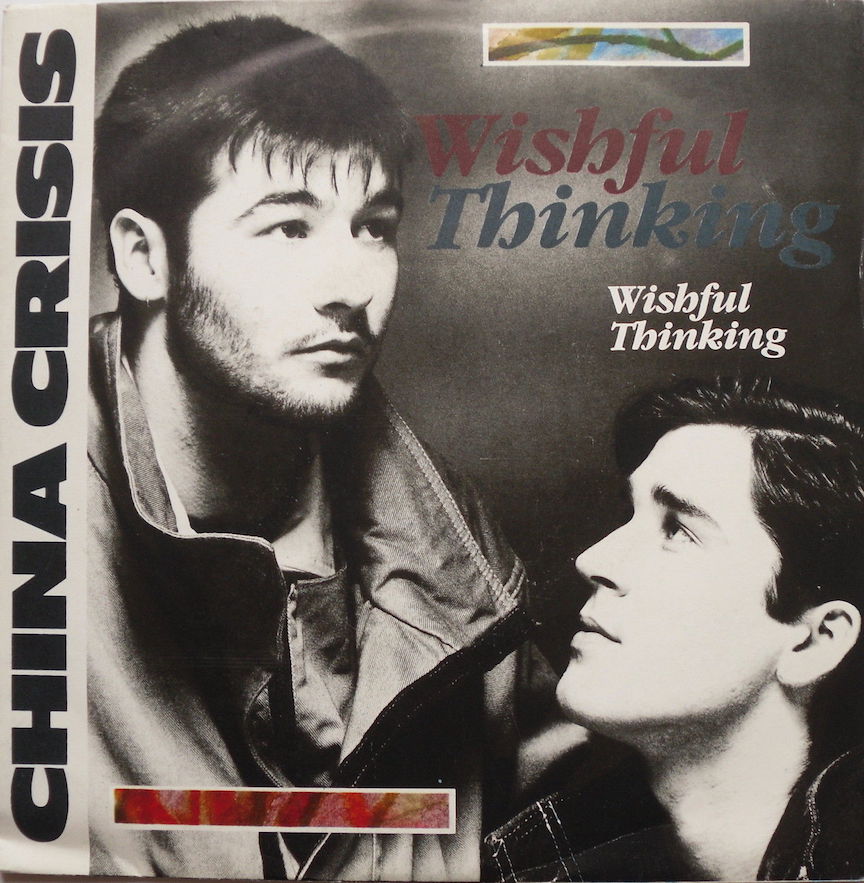
    Anyway back to the song in hand by China Crisis. Apparently, it’s not a gay song and yet when you look at the song cover sleeve you can see why I thought it was. Lead singer Eddie Lundon was fit. Bandmate Gary Daly was looking up at him sort of in my eyes wishfully thinking what I was.

    Listen to the song and you can quite easily see why, as a confused 19-year-old youth with a longing for the man from Securicor deliveries, that I made it about him.

    “It’s time we should talk about is

    There’s no secret kept in here

    I see the likeness in his smile and the way he stands

    Makes it all worthwhile”

    Just those last two lines from that chorus did it. I would stand at the window of the awful soft furnishing shop I worked in and look out for him whenever the blue Securicor Ford Transit van would pull up down the high street.

    My word, l was in lust with him. I’ll spare his name though don’t think for one second I haven’t looked him up on Facebook. I’m not very good at stalking and I failed miserably. I’ve either not quite got the last name right or he simply isn’t there. Just getting his name was a feat of success that I remember it well. I can’t tell you how I kicked myself with joy when l did. I even kept the piece of paper with his name in and I still have it to this day.

    Life was simpler for a 19-year-old Stuart with no mortgage to pay.

    I can’t quite admit that l would find fault in fabrics and curtains just so they would be returned and that he’d have to come in to collect but I did. Lust is a silly thing. Makes you do silly things. Didn’t resort to stalking though, as I say I’m not very good at it. I didn’t have time either. To be honest, where do people find time to stalk people?

    Back to Mr Securicor, he was just perfect. Or so I thought. One day he came in and told me he was leaving to become a supervisor. He broke my heart. He left me, stranded in the shop I hated and never to be seen again and he wasn’t. I never saw him again. Except for today when that song came on the radio and again after that when l played it on loop for about 15 times not sobbing uncontrollably into the sleeve of my jumper. If I can’t be an excessive stalker, then at least let me stalk with a song and happy thoughts.

    Our returns reduced quite dramatically after that and where is he now? Haven’t a clue. It was a silly lustful crush and “Wishful Thinking”… only just.

  • In the age of #MeToo, is it right to be lusting over topless men on Instagram?

    In the age of #MeToo, is it right to be lusting over topless men on Instagram?

    As a twenty-three-year-old twink, you might think life in gay culture is bliss. But the rise of popularity on Instagram has given rise to topless men with muscle, unabashedly showing off their abs, pecks and gorgeous tans.

    Adam Rickitt body
    CREDIT: Adam Rickitt / Instagram

    I’m a young man that likes what he likes, and unfortunately, I’m a sucker for a handsome man with a six-pack. I follow a lot of men on my feed, and whilst I know they’re unattainable, it’s still fun to look.

    But in the wake of the #MeToo movement, bringing awareness to sexual assault and harassment to women, I begin to wonder if objectifying these men is going to become problematic. Aren’t we just as bad for lusting over images of topless men? Of course, the main difference here on Instagram is these men are living their best lives, and they’re uploading photos for the endless stream of attention they receive from their thousands of followers, or so we’re led to believe.

    The constant stream of cocktails on the sandy beaches of a faraway country, of sunglasses and shorts whilst I, watch a snow storm, ignites not jealousy, but instead a sense of longing. According to a recent survey, Instagram was rated the top social media app that is bad for one’s mental health. Is it any wonder that a discovery like that has been found?

    We so desperately want to quit our mundane, often dead-end jobs, for a life that seems so much better. So desperate are we that we forget that social media shows us only the good. Who uploads a photograph of them with a massive spot, dribble down their chin and from a bad angle?

    Instead, we plump for Valencia filters, with airbrushed skin and cleverly crafted digital tans. The social media culture we live in has given us the best of the best, forever making us feel like we have to keep up. When we can’t, we sink lower, finding the ebb of sadness.

    Goodness, we’ve got a bit sad here, haven’t we? For a first article, you’d think I’d show you my best side! But then I’d be playing up to the picture-perfect lifestyle you see plastered all over Instagram.

    For men, it’s hard to discuss body confidence issues. It’s not talked about often, and so we tend not to mention it. I’m one to say I have body confidence issues, and I’m sure there would be others out there that say I have no right to be self-conscious about the way I look. But I do, and it’s common for people of all shapes and sizes to have those issues.

    A common problem for men is the fear that their size is just not good enough. Straight men know their girlfriends or potential partners will discuss a ‘perfect size’, and in the gay community, we also discuss men’s sizes. The myth of the penis size is a strange one. On one hand, many people simply don’t mind. On the other, it’s preference. Body confident Instagram men show off everything, and leave very little to the imagination. With strict Instagram guidelines on nudity, the toned gods have found ways around this, showing blurs and imprints in the tightest fabrics you could ever see. It’s very unlikely to see anything other than a hand full in images like this.

    It’s easy to believe that the hot men we see on Instagram don’t think like this. We imagine them earning money for every post, spending a second in the gym and getting a killer body, and spending hour after hour taking in culture, relaxing by pools, and drinking refreshing drinks. It’s easy because that is all we see of these complete strangers.

    We don’t know their lifestyle, not really. We see what they want us to see. It’s hard to remember that when we’re sat in a dilapidated house, wondering how we’re going to afford rent at the end of the month.

    If you ever feel like you are comparing yourself to others, it’s time to find that unfollow button, and click unfollow. Take some time away from the glossy too busy to model men, and instead focus on what’s around you.

  • So what’s it like going on a nude beach for the first time?

    It has to be said. I’m a never nude.

    CREDIT: Jake Hook / THEGAYUK

    While my boyfriend takes almost every possible moment to whip his clothes off, I’m happy to keep it AbFab Saffy. He says I’m the only person he knows who dresses up to go to bed.

    So the idea of a nudist beach outing isn’t a natural fit for me, my Irish Roman Catholic never-naked family upbringing means that nudity to me is best kept in the dark. But as I’ve always said, “don’t say no, till you give it go”. So on a trip to Australia, I relented to my nagging boyfriend, who had heard there was a gay nude beach somewhere on the shores of Sydney.

    We were 9,445 miles away. No one I know would be there, and at 26 years-old I was in my prime.

    Early one morning, we took a ferry to the Toronga Zoo and walked for what seemed like hours. With every step, my protestations got louder and more pronounced. “Did we really need to do this”, “There’s a perfectly nice, findable beach in Manly”, “What’s so special about getting naked anyway?”

    Finally, we found it. Opening up in front of us was a naked haven. It was less of a beach and more of a cove of smooth rocks, facing towards the sea. A bit like a penguin exhibit at a zoo. Numerous, well-placed, seemingly naturally occurring outcroppings of smoothish rocks, perfect for spreading out a towel and basking beneath the Aussie sun. It looked perfect. It looked secluded. At each end, there was a high wall of rocks and thick bush add to the seclusion. Perfect.

    My boyfriend’s little eyes lit up like it was Christmas, Easter, Valentines, New Year’s and Wirral Appreciation Day (he’s from Wirral) all in one. He started removing items of clothes as we picked our way across the rocks to find somewhere to settle.

    I started casually glancing around, more to make sure I had a good footing on the rocks, rather than goggling the naked men on show. There were penises everywhere.

    Some were casually flopping over the owner’s knees, some were neatly nestled in a well-groomed nest of pubic hair. All attached to perfectly bronzed and toned bodies.

    We had found a spot to make camp, my boyfriend literally ran off towards the ocean.

    I was left to undress and sink lower into my own self-loathing.

    I could feel expectant eyes around me. I was, still dressed, very much so. So I began to peel off an item of clothing one item at a time. It was like a very slow, very bizarre Victorian striptease. First flip-flop, second flip-flop and so on until it was just my underwear and nakedness. I was eking out every moment of clothed protection.

    Finally, with my undies still on, I rooted around in my rucksack for my book. It was chunky. In what can only be described as pure magic, I whipped off my undies and firmly placed the book in front of the crown jewels in one swift, deft move. I was naked save for the book. I looked around to see if there had been any signs of approval from the expectant eyes, but they had long bored of my antics and were distracting themselves in other ways.

    I pretended to thumb through my book. My boyfriend called for me to come down to the ocean.

    Could I?

    Could I walk to the ocean… exposed? Between where I was sitting and the shore there must have been about ten meters of rocks.

    Sod it. Do it. What’s the worst that could happen?

    Beneath my book, I gave my little Mr a tug. It’s the tugging that all men give themselves when you need a little something more. You know, in the right circumstances, you add a couple of inches to a flaccid knob.

    Finally, appeased by the length, I remove my book stand up. I blind everyone. My pale never nude body is so bright I’m sure it can be seen from space.

    I feel eyes on me. “Turn it around Jake, turn it around”, I coo to myself. In my mind, Sade’s “Smooth Operator” is playing, as I slink towards the shoreline. Not wanting to rush, I make sure each step is sure and solid. My boyfriend is seven meters away from me. He’s waving at me, encouraging me to come to the water’s edge. He’s waist deep in the water and he’s been playing catch with some others that are in the sea. It looks fun. I want to join them.

    I continue to walk towards the sea. Why did we settle so far back from the shore? I’m five metres away now.

    Four meters… and then, I hear voices. These aren’t the subdued mumbles of the cove’s current inhabitants. No, I can hear children’s laughter and a general hubbub. I can hear a tannoy announcement. I can hear the churning of water from a propeller. From the left side of the cove, a tourist boat’s bow begins to appear.

    I’m three meters from the water now. More and more of the boat begins to show. It’s big. Actually, it’s massive. And there are lots of people on it. All of them with cameras pointed in the direction of the beach. The boat seems so close I’m sure I can hear the individual shutters of a hundred cameras firing.

    Forgetting Sade and my careful footing, I make a dash for the water. Gazzele like, I spring over the last few rocks and dive.

    Into 3 inches of water.

    My pasty ass isn’t even covered with water.

    The tourist boat continues its slow-paced chugging, its slow speed is mocking me. The cameras are still clicking. Eventually, it disappears around the cove. My boyfriend is almost drowning with laughter. The expectant eyes, attached to waspy mouths are saying something… I think I can hear “oh look, a floating pomme”.

    I die.

  • COMMENT | The problem with snowflakes they “reach for Twitter and moan incessantly about the outrage they feel”

    Quick my little snowflakes, reach for your twitter and moan incessantly about the outrage you feel. Or should that be “you think you feel” because as I seem to witness on a daily occurrence, there is a lot of young people moaning with outrage and I’m not sure why?

    geralt / Pixabay

    Wikipedia has the definition sorted for you. “Snowflake as a slang term involves the derogatory usage of the word snowflake to make reference to people. Its meaning has varied, but may include a person who has an inflated sense of their own uniqueness, has an unwarranted sense of entitlement, or is easily offended and unable to deal with opposing opinions”

    I’m not in total agreement with this however. I don’t really think it is derogatory. Obviously, this has been added by a snowflake who was outraged in the first place by what followed afterwards. Let’s look at the main reason for why l am writing this.

    via GIPHY

    I recently became incensed when I read about young people really not understanding the American sitcom Friends from 1994 to 2004 and complaining that it was transphobic, homophobic, fattist, sexist, generally insensitive, no doubt full of animal cruelty because of the song ‘smelly cat’ and Ross once kept a monkey, nudistphobic (no such word but there was a neighbour across the buildings who would walk around naked) clothistphobic etc etc. Looking back and the list could go on forever. And if they think that’s bad then I’d hate to imagine what they would make of US hit comedy The Golden Girls!

    The Twitterati took to social media to vent their outrage. Outrage that quite frankly isn’t there. You see we golden oldies enjoyed it for what it was. Six friends joking about the past, the present and the future. And that is what we have. Friends are often cruel to me for choices made in the past. I am often cruel back. Those friends are there for me in times of need. I am there for them. We laugh, we enjoy we get along and work things out. It seems the snowflakes of today can’t do that.

    You see we never had this social media thing. If we were outraged then we would write to the BBC’s Points of View show. And if we couldn’t be bothered to do that we simply let it go because we simply were not outraged enough to be outraged by trivial stuff and couldn’t be arsed to keep picking at it like a scab.

    I’m not saying people who are at my grand age of the 4th decade are not snowflakes themselves, it’s just that my generation can tell them to sit down, shut up and breathe. Or to use the write acronym STFU! Indeed only recently I told that to a good friend who got caught up in someone else’s drama and made it their own for no reason.

    It is almost like we are now conditioned to be outraged at almost everything. Humans have become more and more angry for no other reason than the fact that we are told to be. Don’t believe me? Grab a coffee at your local cafe, sit outside and take a look at those going past you. I guarantee you that most of them are looking for the next thing to be outraged about. So outraged they vent it on social media and let their followers of varying numbers be aware that they are outraged hoping that it then escalates to others feeling the same. There isn’t much I see about people being happy on social media.

    It seems we are not allowed to be happy these days. And this is where the conditioning comes in. The press has made you angry and outraged. Soap operas that we watch or listen to (I am an avid fan of Radio 4’s The Archers are full of outrage.

    It’s rare to find a storyline that is a happy one.

    There is lots of talk about square eyes and all of us looking at screens. These screens are full of information. Information literally at your finger-tips. You can access this all at the same time as drinking your morning coffee and taking a poo at the same time. It’s always around us.

    I now make a point of leaving my phone outside the toilet. The risk of dropping it has come close several times. I don’t want information when I am dropping off last night’s dinner. For me, toilet time is a time to reflect. It’s a skill that has been forgotten. It’s my “me time”. It’s a time for to cut the crap from my body and let me think.

    Don’t get me wrong, there is plenty to be outraged about like the recent shooting in an America school. That is a real problem. It’s just that the young generation, of which I do not envy one bit, don’t really have anything to moan about or at least shouldn’t be moaning but instead be living and enjoying the moment because before you know it, you’ll have real things to moan about.

    I am only scratching the surface of this current crisis the snowflake suffers on an hourly basis. I don’t actually think I have answered the question I was set by my editor. There is a whole book on the subject and I am sure someone is writing it now. So I’ll sign off with the words of Michael Palin from Monty Python’s The Meaning of Life “Try to be nice to people, avoid eating fat, read a good book every now and then, get some walking in and try to live together in peace and harmony with people of all creeds and nations.”


    Opinions expressed in this article may not reflect those of THEGAYUK, its management or editorial teams. If you’d like to comment or write a comment, opinion or blog piece, please click here.

  • COMMENT | Just because you can’t see disability, doesn’t mean it’s not there

    The writing is on the toilet door.

    On a recent visit to a supermarket, I was caught short and had to avail myself of their facilities. I chose what was previously known as the ‘disabled toilet’. There was a double whammy of relief as on approach there was a sign on the door which read “Not every disability is visible, Accessible Toilet.”

    Now I can walk in and leave a toilet without the guilt I previously had when people would say either under their breath or with an accusatory tone, “What’s his disability; he can walk alright?”

    These are no longer disabled toilets, which in itself is grammatically incorrect as the toilet does not have a disability as implied but its user. They are accessible toilets and show a man, woman and wheelchair user.

    I have diverticulitis, ulcerative colitis, and an enlarged prostate.

    In the past I have stood at a urinal desperate to urinate and not a drop would pass; waiting, lingering and straining to the point of arousing the suspicion of other users as to my purpose. Not a pleasant experience, humiliating, embarrassing, and making me potentially vulnerable to abuse.

    “The other conditions are unpredictable and an urgency to use the bowel can be unpleasant in a public place. This can be an uncivilised theatrical event of some duration, accompanied with my crying out in pain”

    The other conditions are unpredictable, and an urgency to use the bowel can be unpleasant in a public place. This can be an uncivilised theatrical event of some duration, accompanied with my crying out in pain, voluminous flatulent sound effects and a pebble dashing with force, not dissimilar to the noise of emptying a coal bucket into a fireplace.

    Dignity has long since been lost, and I have over the years adopted an approach of making fun of myself. In a motorway service station (and you know how busy they are) all fell silent at the sound of ‘parking my breakfast.’ I heard myself saying “You’re only supposed to blow the bloody doors off!”, and rapturous laughter followed.

    Now I can suffer and recover some composure in privacy before re-emerging, and the handrail is bloody useful when getting back up these days, damned arthritis!

  • OPINION | It may not be an obligation to learn LGBT history, but you really should

    OPINION | It may not be an obligation to learn LGBT history, but you really should

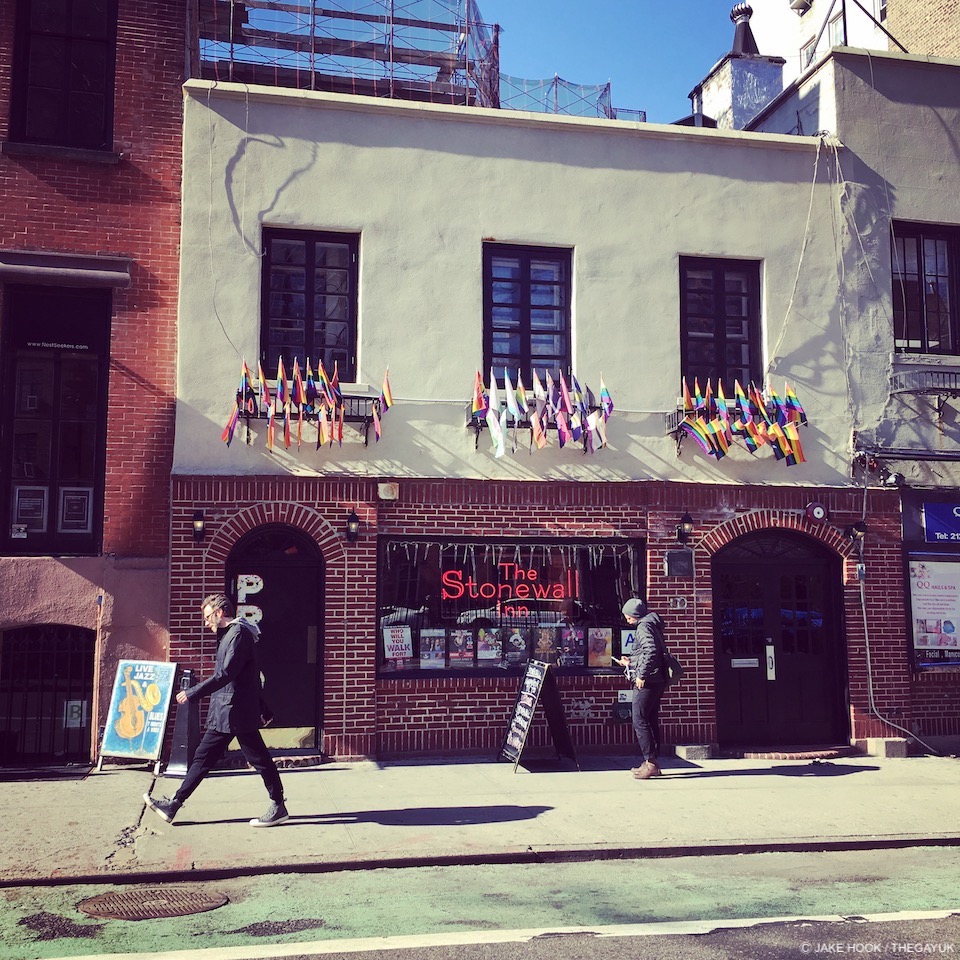
    Next year sees the 50th anniversary of The Stonewall Riots, which I’ve written about before here, yet still, there are some people out there who feel that the younger generation doesn’t need to care about the violent history of struggling for gay rights because they are too busy having a good time.

    “What they fail to understand is that they can have that “good time” because of countless LGBT+ men and women who have lived through hell and to this day still fight to protect the rights of the community.”

    Having a fluff piece opinion that completely misses the point of what Pride stands for is utterly disgraceful. And it saddens me that people who are only a few years younger than me have absolutely no clue about why that is. I have a huge amount of respect for the generations that gave me the rights I have today, and I also understand exactly why they would get angry at a group of gays who don’t show that level of respect or a willingness to learn about their own community’s history.

    They aren’t asking anyone to know every tiny little detail about gay history, but a basic knowledge of the big events certainly wouldn’t go amiss. Just to afford these brave men and women from all walks of life an iota of dignity and a thank you. An unsettling thing that I have been witness to, is when an older generation LGBT+ person is in a bar or club, and the younger gays either laugh at them, ignore them or worse, insult them and say they shouldn’t be there and even call them gross. We’re not asking you to hook up with them, we’re asking you to acknowledge them.

    Embed from Getty Images

    You don’t even need to make a song and dance about it, just be willing to talk to them if they talk to you. You never know, you could make a new friend. One has to remember that it was only in 1967 that homosexual acts were decriminalised in the UK. There are people alive today that lived through the fear that they could be arrested, simply for being who they are and to see younger people completely ignore that fact because they are too busy having fun must really hurt them.

    Men and women in the UK were some of the earliest to form well organised groups such as the Homosexual Law Reform Society, (founded in 1958) which surprisingly was started by many non-homosexual members, such as Sir Stephen Spender and MP Kenneth Younger and the Campaign for Homosexual Equality, an offshoot of the HLRS founded in Manchester in 1964 by more prominently homosexual people like Allan Horsfall and Colin Harvey. It was a direct result of these groups that the 1967 Sexual Offences Act was passed in the UK.

    I don’t pretend to fully understand what it was like because I didn’t live through it, but I have empathy for anyone that did and I’m always willing to be told something new. It helps me grow as a person. And you can be damn sure that next year I will be finding any events that honour and remember the events and people of Stonewall, and I’ll be there waving my rainbow flag with pride and with respect.

    “I’m not for one second saying we shouldn’t have fun, of course, we should.

    Enjoy life, go to the clubs, wear a pair of heels and a dress, sing bad karaoke, have a regrettable hookup at a Pride event, but please stop and think about why these things can be done, and learn from the past.”

    But I digress, why has this irked me so much? It seems like the social media generation has this shocking sense of entitlement, everything is very much “Me, Me, Me and Kylie Jenner” There’s such a disconnect from people, that real and horrifying events are forgotten because they weren’t a Twitter moment. But this stuff happened, and it’s time that they understood who people like Marsha P Johnson, Gilbert Baker and anyone else from that era are.

    I’m not here to belittle the people who subscribe to the social media way of thinking, it is kinda the way of the world now, but I feel that having such a selfish attitude, not only hurts them, it hurts a whole community. Now I’m not for one second saying we shouldn’t have fun, of course, we should. Enjoy life, go to the clubs, wear a pair of heels and a dress, sing bad karaoke, have a regrettable hookup at a Pride event, but please stop and think about why these things can be done, and learn from the past. There’s already this underlying feeling of separation within the community if we don’t look or act a certain way.

    We are ALL a part of this beautiful Rainbow Community, let’s treat everyone who is a part of it, or who is an ally, as a friend and learn from each other’s experiences. It’s not a crime to not know something, but it’s a wise choice to educate oneself by talking, being open and learning. It could be something that really opens your eyes to a world that you didn’t know about.

    Seek out the people who can enrich you, learn their story and tell them yours.

    Opinions expressed in this article may not reflect those of THEGAYUK, its management or editorial teams. If you’d like to comment or write a comment, opinion or blog piece, please click here.