Category: Entertainment

  • 10 Amazing Novels about coming out

    10 Amazing Novels about coming out

    Having always been a fan of reading, I navigated my way through my teenage years by devouring as much gay fiction as I could. It made me feel affirmed and like I belonged. It’s always good to know it’s not just you.

    Here are my top ten “coming out” novels:

    Maurice

    Maurice by E.M. Forster: This is one of the original classic gay novels. Written around the time of War World I, it’s never going to be smooth sailing when Maurice discovers that he’s gay in a world where homosexuality is illegal and considered a perversion. It’s a beautiful story, though, with some gripping moments.

    A Boy’s Own Story

    A Boy’s Own Story by Edmund White: This literary masterpiece from 1986 outlines the coming of age of a young gay man in a tender and well-written account. The writing is lyrical and moving with an evocative and fascinating story.

    Running With Scissors

    Running with Scissors by Augusten Burroughs: This is a coming-out story with a difference. Burroughs’ childhood was far from usual. He grew up with an alcoholic father and a mentally ill mother, ended up being adopted by his mother’s psychiatrist and his eccentric family and had a relationship with a 33-year man whilst in his early teens. Memoirs don’t get much more compelling, brutal or funnier than this one, thanks to Burroughs’ comical take on his life

    Sucking Sherbet Lemons

    Sucking Sherbet Lemons: by Michael Carson: Young Martin Benson is a teenage boy who’s gradually coming to terms with being gay in a predominately Irish Catholic community in the late 1950s and early 1960s. It’s a humorous and touching book about a boy’s dilemma between the joys of discovering gay sex and the guilt instilled in him by a religion that labels him as sinful. It is also the first of a trilogy which goes on to follow Benson as he navigates his way through life.

    Fifty Ways Of Saying Fabulous

    Fifty Ways of Saying Fabulous: by Graeme Aitken: Billy is a young boy living on a farm in New Zealand. He’s not quite cut out for farm life and spends his time imagining he’s Judy from “Lost in Space”, fumbling with a friend and lusting after the 19-year-old farmhand. It’s a very funny and entertaining read.

    Someday This Pain Will Be Useful To YOu

    Someday This Pain Will Be Useful to You by Peter Cameron: James is a misfit and in discord with his surroundings and fractured family. Caught in limbo between leaving school and starting university he feels adrift. His psychiatrist is driving him more insane and his crush on a co-worker is getting more than he can manage. This is an above-average account of the pain and confusion that sometimes accompanies being a teenager.

    Mysterious Skin

    Mysterious Skin by Scott Heim: This is a dark and at times disturbing read. It’s a coming-of-age novel but with a twist. Brian is a guileless innocent and forges an unlikely friendship with a savvy cynic and part-time male prostitute, Neil. The novel is fast-paced and at times shocking as the two move towards a conclusion which causes Brian and Neil to re-evaluate their shared past. Mysterious Skin has also been made into a movie which TheGayUK has reviewed

    A Home At The End Of The World

    A Home at the End of the World by Michael Cunningham: Pulitzer Prize winner Cunningham has created a moving account of the extraordinary situation in which Bobby, Claire and Jonathan, three friends and lovers find themselves in. The book explores how people manage to find a place for themselves and is an accomplished piece of work.

    How I Paid For College

    How I Paid for College by Marc Acito: This camp tale is reminiscent of a 1980s teen movie but with a musical theatre-loving cast of misfits and a gay main character. It’s a light and funny book with lots of tongue-in-cheek moments and an amusing storyline.

    Terre Haute

    Terre Haute by Will Aitken: Jared is the son of a wealthy family growing up in Indiana who happens to fancy boys. He’s sly, manipulative and cunning and has a predatory nature. When he enters into a relationship with an older man he quickly gains the upper hand. This is a moody, erotic tale which is really compelling to read but also makes the reader wince a little. Jared is definitely an anti-hero with a difference.

    Happy reading people.

    This article was first published in September 2012.

  • Brokeback Mountain on stage is a thing now, and we’re here for that

    Brokeback Mountain on stage is a thing now, and we’re here for that

    One of our favourite gay / bisexual movies has been turned into a stage play with music and we’re rejoicing, but it seems it’s not the famed Ang Lee version.

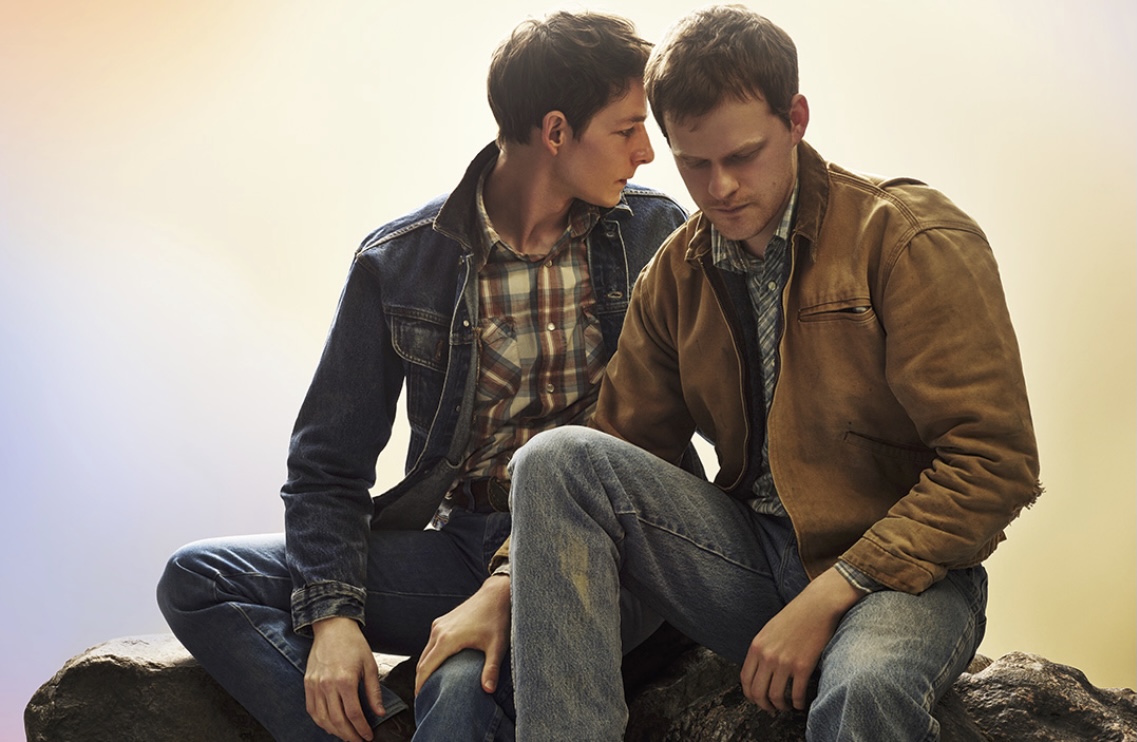
    Mike Faist, who was nominated for a BAFTA, and Lucas Hedges, who was nominated for an Oscar, are set to star in a London stage adaptation of Annie Proulx’s bestselling novel, Brokeback Mountain. The play, which will incorporate music, is scheduled to run at the Sohoplace Theatre in the West End for 12 weeks, beginning on May 10.

    Nica Burns, the theatre’s owner and producer, emphasized that the play is based on Proulx’s original short story, which was published in The New Yorker in 1997, and not on the critically acclaimed 2005 film directed by Ang Lee and starring Heath Ledger and Jake Gyllenhaal.

    Mike Faist, who received a BAFTA nomination for his performance in West Side Story, has been cast as Jack Twist in the London stage adaptation of Brokeback Mountain. Lucas Hedges, who earned an Oscar nomination for Manchester By The Sea in 2016, will play Ennis Del Mar.

    The story, which follows two cowboys who fall in love in the vast expanses of Wyoming, resonated with readers and viewers alike. Ashley Robinson, a writer from Brooklyn, approached Annie Proulx about securing the stage rights, which were ultimately granted.

    Jonathan Butterell, who brought the stage and screen adaptations of Everybody’s Talking About Jamie, will direct the play, with Dan Gillespie Sells serving as a close collaborator and music writer. Eddi Reader, a singer-songwriter, will perform on stage with a country and western band featuring a pedal steel guitarist.

  • Should only gay actors play gay characters?

    Should only gay actors play gay characters?

    There is ongoing debate and discussion within the entertainment industry and LGBTQ+ community about whether only gay actors should play gay characters. While some people argue that only actors who identify as LGBTQ+ should be cast in LGBTQ+ roles, others believe that an actor’s sexual orientation should not be a determining factor in casting decisions.

    Ultimately, the decision about who to cast in a particular role is up to the director and producers of a project. However, it’s important to consider the impact that casting decisions can have on representation and visibility for LGBTQ+ people in the entertainment industry. If LGBTQ+ actors are consistently passed over for LGBTQ+ roles, it can perpetuate the idea that LGBTQ+ people are not capable of playing a wide range of characters or that their experiences are not valuable.

    Which straight actors have played gay parts?

    There are many straight actors who have played LGBTQ+ characters in films, television shows, and theatre productions. Here are some examples:

    1. Tom Hanks – “Philadelphia” (1993)
    2. Heath Ledger – “Brokeback Mountain” (2005)
    3. Jake Gyllenhaal – “Brokeback Mountain” (2005)
    4. Sean Penn – “Milk” (2008)
    5. Colin Firth – “A Single Man” (2009)
    6. James Franco – “Howl” (2010)
    7. Eddie Redmayne – “The Danish Girl” (2015)
    8. Andrew Garfield – “Angels in America” (2017)
    9. Timothee Chalamet – “Call Me By Your Name” (2017)
    10. Lucas Hedges – “Boy Erased” (2018)

    It is worth noting that the casting of straight actors to play gay characters has been a topic of debate in recent years, with some arguing that it is important to provide more opportunities for LGBTQ actors to tell their own stories.

    Have your say…

    Ultimately, the goal should be to create more opportunities for LGBTQ+ actors to play a diverse range of characters, including LGBTQ+ characters, while also ensuring that LGBTQ+ representation is portrayed in a respectful and accurate way.

  • Here are 10 books that feature aromantic characters or stories

    Here are 10 books that feature aromantic characters or stories

    As it’s Aromantic Awareness week we thought we’d check out some books that feature aromantic storylines or characters. It turns out there is quite a number. We’ve found 5 well-rated audio and kindle books for you to read/listen to.

    “The Lady’s Guide to Petticoats and Piracy” by Mackenzi Lee: This is a young adult historical fiction novel that features a protagonist who is aromantic and asexual.

    “Every Heart a Doorway” by Seanan McGuire: This is a fantasy novel that features several characters who are aromantic, asexual, or both.

    “The Life and Death of Sophie Stark” by Anna North: This is a literary novel that features a protagonist who is asexual and aromantic.

    “The Cybernetic Tea Shop” by Meredith Katz: This is a science fiction novella that features a protagonist who is asexual and aromantic.

    “Clariel” by Garth Nix: This is a young adult fantasy novel that features a protagonist who is aromantic.

    “Aromanticism” by Sarah Schulman: This is a non-fiction book that explores the social, cultural, and historical factors that have contributed to the erasure of aromanticism as a valid identity.

    “Not Your Villain” by C.B. Lee: This is a young adult superhero novel that features a protagonist who is aromantic and transgender.

    “The Black Tides of Heaven” by J.Y. Yang: This is a novella that features a protagonist who is genderqueer, asexual, and aromantic.

    “Mask of Shadows” by Linsey Miller: This is a young adult fantasy novel that features a protagonist who is genderfluid, asexual, and aromantic.

    “Loveless” by Alice Oseman: This is a young adult novel that features a protagonist who is asexual and aromantic.

    “The Ace of Spades” by Faridah Àbíké-Íyímídé: This is a young adult thriller that features a protagonist who is asexual and aromantic.

    These are just a few examples, and there are likely many more books that feature aromantic characters or explore themes related to aromanticism. It’s important to note that while representation in media is important, each individual’s experience of aromanticism is unique, and not all aromantic individuals may identify with the way that aromanticism is portrayed in fiction.

  • What is the LGBT+ Film “Pride” all about?

    What is the LGBT+ Film “Pride” all about?

    What is “Pride” all about?

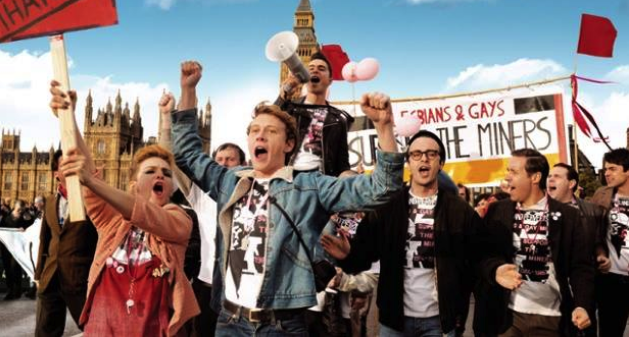
    The film follows a group of LGBTQ+ activists who come together to support a Welsh mining community during the UK miners’ strike in 1984.

    The group, which calls itself “Lesbians and Gays Support the Miners” (LGSM), initially struggles to find a group of miners who are willing to accept their support. However, they eventually make contact with a small mining village in Wales and begin fundraising to support the miners and their families.

    As the relationship between LGSM and the miners develops, both groups begin to understand and appreciate each other’s struggles. The film explores issues of class, identity, and the power of solidarity, as LGSM and the miners work together to fight for their rights.

    “Pride” was critically acclaimed upon its release, and was praised for its mix of humor and drama, as well as its positive portrayal of LGBTQ+ characters. The film was also seen as a tribute to the real-life activists who inspired it, and to the power of grassroots activism to effect change.

    Did the film “Pride” get good reviews?

    Yes, “Pride” received very positive reviews from critics upon its release in 2014. The film has a 93% approval rating on Rotten Tomatoes, based on 169 reviews, with an average rating of 8.0/10. The site’s critical consensus describes the film as “earnest, well-acted, and overall inspirational,” and notes that it “avoids easy clichés and formula.”

    Many reviewers praised the film’s mix of humor and drama, as well as its strong ensemble cast. The performances of actors such as Bill Nighy, Imelda Staunton, and Andrew Scott were particularly singled out for praise.

    “Pride” was also praised for its positive portrayal of LGBTQ+ characters, and for its exploration of issues of class, identity, and the power of solidarity. Many critics saw the film as a tribute to the real-life activists who inspired it, and as a reminder of the importance of grassroots activism in effecting change.

    Overall, “Pride” was widely regarded as a well-crafted and inspiring film that blended comedy and drama, and celebrated the power of community and activism.

    Is the film “Pride” based on a true story?

    “Pride” is based on a true story. The film depicts the real-life events of the summer of 1984, when a group of lesbian and gay activists formed the group Lesbians and Gays Support the Miners (LGSM) and began raising money to support the striking miners and their families.

    The LGSM group consisted of around 20 activists from London, who decided to support the striking miners after recognizing that both groups were fighting for their rights and for a fairer society. The group raised thousands of pounds for the miners, and their efforts were warmly received by some of the mining communities they supported.

    The film’s portrayal of the LGSM’s involvement in the miners’ strike is largely accurate, although some elements have been fictionalized for dramatic effect. The film’s characters are also composites of several real-life activists, rather than being based on specific individuals.

    Overall, while “Pride” takes some artistic license with the story, it is based on a real and inspiring episode in British history that saw two marginalized groups coming together in solidarity to fight for their rights.

    How much did the film Pride make?

    The film Pride was hugely successful at the box office in 2014.
    The film Pride was hugely successful at the box office in 2014.

    According to Box Office Mojo, the film “Pride” grossed approximately $16.4 million worldwide during its theatrical release in 2014.

    While this may not seem like a huge amount compared to some Hollywood blockbusters, “Pride” was actually a considerable success for an independent British film. It was made on a relatively modest budget of around £3.3 million, and its strong critical reception and positive word-of-mouth helped to generate a loyal fanbase.

    “Pride” was also well-received at various film festivals, winning the Queer Palm award at the Cannes Film Festival and the People’s Choice Award at the Toronto International Film Festival.

    Beyond its box office success, “Pride” has also had a lasting cultural impact. The film has been praised for its positive portrayal of LGBTQ+ characters, and for its celebration of the power of solidarity and grassroots activism. It has also helped to raise awareness of the real-life events that inspired it, and has been credited with helping to cement the legacy of the LGSM group and their efforts to support the striking miners.

  • Here’s how to find every gay movie on Netflix

    Here’s how to find every gay movie on Netflix

    There’s so much on Netflix that it can take an age just find something to watch. But what if you just wanted to watch something a bit gay?

    Trouble is, Netflix can feel like a bit of an iceberg, only a fraction of the available content is easy to find right there on the front page. The rest, the hidden 90 per cent, can feel like a taunting and neverending task of endless searching.

    Strangely enough using Netflix.com can be easier to find the content you’re looking for, rather than Fire TV or the dreaded Apple TV.

    Weirdly depending on what device you’re using, searching Netflix for that next great find can either be simple, potluck or, more often than not, hours of wasted time. We’ve used a number of devices ranging from the simplest (iPad) to the mediocre (Fire TV) to the downright unstable (Apple TV gen 2).

    For the record, using Netflix’s website to find content is always much easier. So you might want to log in there first using your laptop or iPad find something that looks good then go back to your browsing device and use the search to manually type in the title.

    However, there’s a super easy way to find what you’re looking for because everything on Netflix is given a genre code. Makes sense right? You’ll want to link all the Horrors together – and separately away from, say, Kids’ content.

    Luckily Netflix has tagged all of its content quite well. Even better, we’re happy to report that gay content has been divided into sub-genres to help you get the exact kind of content you’re in the mood for.

    Whether you’re looking for a great LGBT documentary, like The Death and Life of Marsha P. Johnson or a gay love movie, like Alex Strangelove Netflix does have you covered.

    Netflix has also added some blockbusters to its mix too, currently, you can find, Bohemian Rhapsody, Brokeback Mountain, Call Me By Your Name and Pride.

    So what are these secret links? Well, all gay films can be found on genre link 5977, while TV shows can be found on link 65263. If you were looking for a foreign language LGBT+ film you’d be able to find the full list of content on link 8243.

    Here are all the links to get you to exactly what you’re looking for

    Netflix Gay Content Genre Codes

    Gay & Lesbian Movies (5977)

    Gay & Lesbian Comedies (7120)

    Gay & Lesbian Dramas (500)

    Romantic Gay & Lesbian Movies (3329)

    Foreign Gay & Lesbian Movies (8243)

    Gay & Lesbian Documentaries (4720)

    Gay & Lesbian TV Shows (65263)

    There you have it… an easy-to-use way to find gay content on Netflix.

  • Lost LGBT Scene | The Backstreet

    We’re creating an online memory board for some of London’s lost venues. Since the turn of the century, London’s gay scene has lost over 100 venues.

    We’d love for you to help us grow this historical archive of London’s lost gay scene. If you’ve got photos or memories of any of the venues you’d like to share please use the comment section below and we’ll add them right here.

    The Backstreet

    The club’s dress code is among the strictest of its kind anywhere, earning it a dedicated following among rubber and leather men worldwide.
    – Strict leather/rubber dress code
    – Less than a minute’s walk from the tube
    – Free membership for under-25s
    – Private smokers’ area

    Where: Wentworth Mews, Mile End, E3 4UA

    Approx open date: 1895

    Approx closed date: July 2022

    BACK TO MAIN LIST


    YOUR SUPPORT MEANS EVERYTHING

    Help us deliver unique, usable and reliable journalism that supports the gay, bisexual and curious community of the United Kingdom. Can you help protect LGBT+ media? Publishers like us have come under severe threat by the likes of Google and Facebook. The problem is that advertisers are choosing to put their money with them, rather than with niche publishers like us. Our goal is to eliminate banner ads altogether on site and we can do that if you could pledge us a tiny amount each month.

    We’re asking our readers to pledge just £1 per month, more if you’re feeling swanky. You can stop payment at any time.

    It’s quick and easy to sign up and you’ll only have to do it once.

    Click to start the journey and support THEGAYUK!

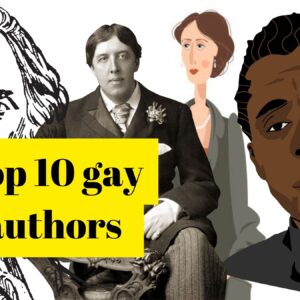
  • The 10 Best Gay Authors according to fans

    The 10 Best Gay Authors according to fans

    10. Marcel Proust

    Marcel Proust vers 1895.jpg
    By <a href=”https://en.wikipedia.org/wiki/en:Otto_Wegener” class=”extiw” title=”w:en:Otto Wegener”><span title=”Swedish photographer”>Otto Wegener</span></a> – <a href=”//commons.wikimedia.org/wiki/File:Marcel_Proust_1900.jpg” class=”mw-redirect” title=”File:Marcel Proust 1900.jpg”>Marcel_Proust_1900.jpg</a>, Public Domain, Link

    Proust wrote In Search Of Lost Time, Swann In Love and Le Temps Retrouve. He was a French novelist, and essayist and was considered to be one of the most influential authors of the 20th Century. He was born in July 1871 and passed away in November 1922 at the relatively young age of 51.

    Although biographers of Proust have often spoken about his sexuality, the writer himself never actually came out – even having a public sword fight with fellow writer Jean Lorrain after Lorrain questioned Proust’s relationship with Lucien Daudet (thought to be Proust’s lover). Both Lorrain and Proust survived the duel.

    A few years before his death in 1918 Proust was one of the men identified by police in a raid on a male brothel run by Albert Le Cuziat.

    9. Virginia Woolf

    Photograph of Virginia Woolf in 1902; photograph by George Charles Beresford
    By See file page for creator info., Public Domain, Link

    Woolf was an English writer who is considered one of the most important modernist voices of the 20th Century. She was a pioneering novelist whose books include, To The Lighthouse, A Room Of One’s Own and Mrs Dalloway. London born Woolf was 59 when she died in 1941. She was troubled with mental health issues throughout her life. She was hospitalised numerous times during her life and attempted to take her own life at least twice before drowning herself in the River Ouse at Lewes.

    8. Emily Dickinson

    Photograph of Emily Dickinson, seated, at the age of 16
    By Unknown author – <a rel=”nofollow” class=”external free” href=”https://s3.amazonaws.com/amherst-wsg/ED-dag-case-720dpi_big.jpg”>https://s3.amazonaws.com/amherst-wsg/ED-dag-case-720dpi_big.jpg</a>, Public Domain, Link

    Emily Dickinson was an American poet who lived between 1830 and 1886. During her time she wrote,  The complete poems, Acts of Light: The World of Emily Dickinson, New poems of Emily Dickinson, and The letters, Letters of Emily Dickinson. She apparently wrote over 1800 poems during her lifetime.

    According to Wikipedia, “Evidence suggests that Dickinson lived much of her life in isolation. Considered an eccentric by locals, she developed a penchant for white clothing and was known for her reluctance to greet guests or, later in life, to even leave her bedroom. Dickinson never married, and most friendships between her and others depended entirely upon correspondence.”

    7. William S. Burroughs

    Burroughs in the 1980s
    By Chuck Patch – Cropped version of <a href=”//commons.wikimedia.org/wiki/File:Burroughs1983.jpg” title=”File:Burroughs1983.jpg”>Image:Burroughs1983.jpg</a>, which originally posted to <a rel=”nofollow” class=”external text” href=”https://www.flickr.com/photos/65484951@N00/91976954″>Flickr</a>, CC BY-SA 2.0, Link

    Burroughs was an American writer and visual artist. He was born in St Louis Missouri in 1914. He died in August 1997. His works include Cities of the Red Night and Nova Police. Burroughs had a controversial life having killed his second wife Joan Vollmer with a pistol. At first he claimed it was an accident after an attempted “William Tell” stunt. Later he told investigators that he dropped the gun and it fired a shot that killed his wife.

    Burroughs also suffered from drug addiction during his life and was once expelled from his school for taking chloral hydrate with a fellow student.

    6. James Baldwin

    Baldwin in 1969
    By <a href=”//commons.wikimedia.org/wiki/User:Allan_warren” title=”User:Allan warren”>Allan warren</a> – <span class=”int-own-work” lang=”en”>Own work</span>, CC BY-SA 3.0, Link

    Baldwin’s most famous works include Go Tell It on the Mountain, Another Country, and Notes of a Native Son. He was a famed playwright, novelist and black rights activist. According to Wikipedia, Baldwin’s works had themes of masculinity, sexuality, race, and class intertwine to create intricate narratives that run parallel with some of the major political movements toward social change in mid-twentieth-century America, such as the civil rights movement and the gay liberation movement. On December 1, 1987, Baldwin died from stomach cancer in Saint-Paul-de-Vence, France. He was buried at the Ferncliff Cemetery in Hartsdale, near New York City. He was 63 when he died.

    5. Walt Whitman

    Whitman in 1887
    By <a href=”https://en.wikipedia.org/wiki/George_C._Cox” class=”extiw” title=”en:George C. Cox”>George C. Cox</a> (1851–1903, photo) <a href=”//commons.wikimedia.org/wiki/User:Adam_Cuerden” title=”User:Adam Cuerden”>Adam Cuerden</a> (1979-, restoration) – This image is available from the United States <a href=”//commons.wikimedia.org/wiki/Library_of_Congress” title=”Library of Congress”>Library of Congress</a>’s <a rel=”nofollow” class=”external text” href=”//www.loc.gov/rr/print/”>Prints and Photographs division</a> under the digital ID <a rel=”nofollow” class=”external text” href=”http://hdl.loc.gov/loc.pnp/ppmsca.07549″>ppmsca.07549</a>. This tag does not indicate the copyright status of the attached work. A normal copyright tag is still required. See <a href=”//commons.wikimedia.org/wiki/Commons:Licensing” title=”Commons:Licensing”>Commons:Licensing</a> for more information., Public Domain, Link

    Whitman was born in 1819 and his famous works include Leaves of Grass, Drum Tap and Song of Myself. He passed away in 1892. His work was controversial in its time, particularly his poetry collection Leaves of Grass, which was described as obscene for its overt sensuality. Whitman’s own life came under scrutiny for his presumed homosexuality. His poetry often focused on both loss and healing. Two of his most well-known poems, “O Captain! My Captain!” and “When Lilacs Last in the Dooryard Bloom’d”, were written after the death of Abraham Lincoln.

    He was also a bit of a naturist and liked to be naked!

    In Manly Health and Training, using the pseudonym Mose Velsor, he advised men to swim naked. In A Sun-bathed Nakedness, he wrote,

    Never before did I get so close to Nature; never before did she come so close to me … Nature was naked, and I was also … Sweet, sane, still Nakedness in Nature! – ah if poor, sick, prurient humanity in cities might really know you once more! Is not nakedness indecent? No, not inherently. It is your thought, your sophistication, your fear, your respectability, that is indecent. There come moods when these clothes of ours are not only too irksome to wear, but are themselves indecent.

    Tennessee Williams

    Tennessee Williams NYWTS.jpg
    By Orlando Fernandez, World Telegram staff photographer – Library of Congress. New York World-Telegram &amp; Sun Collection. <a rel=”nofollow” class=”external free” href=”http://hdl.loc.gov/loc.pnp/cph.3c28957″>http://hdl.loc.gov/loc.pnp/cph.3c28957</a>, Public Domain, Link

    Best known for his works, Sweet Bird of Youth, The Rose Tattoo and Camino Real Williams lived from 1911 to 1983. Willaims was a playwright and considered among the three foremost playwrights of 20th-century American drama. After years of obscurity, at age 33 he became suddenly famous with the success of The Glass Menagerie (1944) in New York City. It was the first of a string of successes, including A Streetcar Named Desire (1947) Cat on a Hot Tin Roof (1955), Sweet Bird of Youth (1959), and The Night of the Iguana (1961).

    3. Arthur Rimbaud

    Rimbaud at 17 by Étienne Carjat [1]
    By <a href=”https://en.wikipedia.org/wiki/en:%C3%89tienne_Carjat” class=”extiw” title=”w:en:Étienne Carjat”><span title=”French artist (1828-1906)”>Étienne Carjat</span></a> – Close-up from <a rel=”nofollow” class=”external text” href=”https://www.flickr.com/photos/10381539@N03/3379297668″>Arthur Rimbaud [1872] – foto de Étienne Carjat</a>, Public Domain, Link

    Rimbaud was a French poet who lived between 1854 and 1891.

    Arthur Rimbaud was born in Marseille, France in 1854. He died from cancer just after his 37th birthday. Rimbaud was described as a restless soul who travelled on three continents before he died.

    In 1951 many years after his death the French Postal Service issued stamps featuring Rimbaud and his lover Paul Verlaine.

    Rimbaud met Verlaine in the summer of 1870 when he was 16. A friend of Verlaine was less than impressed and described him as, “a tall, gawky young man, very thin, with the look of a rather fierce street Arab”, however, Verlaine was so taken with the younger wayward man, he deserted his wife and child and ran away to London. It didn’t go well for the two. Their relationship ended in Brussels and during an argument, Verlaine shot Rimbaud in the arm. Rimbaud, however, did not press charges.

    2. E.M. Forster

    Portrait of Forster by Dora Carrington, c. 1924–1925
    By Dora Carrington (1893–1932) – <a rel=”nofollow” class=”external free” href=”http://www.todayinliterature.com/biography/e.m.forster.asp”>http://www.todayinliterature.com/biography/e.m.forster.asp</a>,, Public Domain, Link

    Forster was an Engish novelist, short story writer, essayist and librettist who lived between 1879 and 1970. His famous works include A Room with a View, A Passage to India and Howards End.

    According to Wikipedia, Forster was open about his homosexuality to close friends, but not to the public. He never married but had a number of male lovers during his adult life. He developed long-term relations with Bob Buckingham (1904–1975), a married policeman.

    1. Oscar Wilde

    Photograph by Napoleon Sarony, c. 1882
    By <a href=”https://en.wikipedia.org/wiki/en:Napoleon_Sarony” class=”extiw” title=”w:en:Napoleon Sarony”><span title=”American artist”>Martin van Meytes</span></a> – Library of Congress, Public Domain, Link

    Wilde was an Irish poet and playwright. After writing in different forms throughout the 1880s, he became one of the most popular playwrights in London in the early 1890s. He is best remembered for his epigrams and plays, his novel The Picture of Dorian Gray, and the circumstances of his criminal conviction for gross indecency for consensual homosexual acts in “one of the first celebrity trials”, imprisonment, and early death from meningitis at age 46. Oscar Wilde was born at 21 Westland Row, Dublin (now home of the Oscar Wilde Centre, Trinity College), the second of three children born to an Anglo-Irish couple: Jane, née Elgee and Sir William Wilde.
  • Lost LGBT Scene | The Spiral Staircase

    We’re creating an online memory board for some of London’s lost venues. Since the turn of the century, London’s gay scene has lost over 100 venues.

    We’d love for you to help us grow this historical archive of London’s lost gay scene. If you’ve got photos or memories of any of the venues you’d like to share please use the comment section below and we’ll add them right here.

    The Spiral Staircase

    A description from Dan who worked there in the 90s.

    On the corner of Shoreditch High Street and Rivington Street at 138-139 Shoreditch High Street.

    Was part of the 90’s ‘gayditch’ scene along with the Joiners Arms, George and Dragon et al.

    Slightly ‘upmarket’ wine bar atmosphere to the ground floor, with a spiral staircase taking you to the basement level which was often given over to Karaoke.

    Usual DJ nights & cabaret.

    Worked there in 97-98. Not sure when it closed.

    Approx open date: Can you help with this info? Comment to update the listing.

    Approx closed date: Can you help with this info? Comment to update the listing.

    BACK TO MAIN LIST


    YOUR SUPPORT MEANS EVERYTHING

    Help us deliver unique, usable and reliable journalism that supports the gay, bisexual and curious community of the United Kingdom. Can you help protect LGBT+ media? Publishers like us have come under severe threat by the likes of Google and Facebook. The problem is that advertisers are choosing to put their money with them, rather than with niche publishers like us. Our goal is to eliminate banner ads altogether on site and we can do that if you could pledge us a tiny amount each month.

    We’re asking our readers to pledge just £1 per month, more if you’re feeling swanky. You can stop payment at any time.

    It’s quick and easy to sign up and you’ll only have to do it once.

    Click to start the journey and support THEGAYUK!

  • Lost LGBT Scene | The Cellar Bar

    We’re creating an online memory board for some of London’s lost venues. Since the turn of the century, London’s gay scene has lost over 100 venues.

    We’d love for you to help us grow this historical archive of London’s lost gay scene. If you’ve got photos or memories of any of the venues you’d like to share please use the comment section below and we’ll add them right here.

    The Cellar Bar

    A description from Brian about the venue which was attached to Heaven nightclub.

    It was a leather bar attached to Heaven. You could stroll around and at a certain point in the evening the door was opened into Heaven so if you felt like dancing in your leather you could.

    Where: Craven Passage, Charing Cross

    Approx open date: 1979

    Approx closed date: 1986

    BACK TO MAIN LIST


    YOUR SUPPORT MEANS EVERYTHING

    Help us deliver unique, usable and reliable journalism that supports the gay, bisexual and curious community of the United Kingdom. Can you help protect LGBT+ media? Publishers like us have come under severe threat by the likes of Google and Facebook. The problem is that advertisers are choosing to put their money with them, rather than with niche publishers like us. Our goal is to eliminate banner ads altogether on site and we can do that if you could pledge us a tiny amount each month.

    We’re asking our readers to pledge just £1 per month, more if you’re feeling swanky. You can stop payment at any time.

    It’s quick and easy to sign up and you’ll only have to do it once.

    Click to start the journey and support THEGAYUK!

  • TV REVIEW |“It’s A Sin” – Boys Go Home To Die “It’s A Sin”

    Rating: 5 out of 5.

    (No spoilers included in this review)

    Get your Sinitta and 5 Star albums of feel-good music at the ready because if you haven’t already binged watched Russell T Davies new Channel 4 drama, It’s A Sin, then brace yourselves for grim viewing. 

    Having seen the advert teasers and the first show on Friday 22nd January that doesn’t leave you in a good place after the show, then I can tell you that it only gets worse.

    The ’80s were not great times for the gay community and Russell manages to pick up the fear so well and quickly too. The accomplished writings of Russell are there from the start and the show bounces with an occasional break in the fourth wall with the view. 

    Thankfully these are very brief but important and hammer out almost a whole programs worth of what was going on in around 3 minutes as to some peoples perceptions of HIV and AIDS and what was to come played out. Our main character Ritchie Tozer (Olly Alexander) does I have to say grate on you in this part but then again this is 1981 and with some 40 passing years and hindsight it all becomes relative.

    There is no sugar coating what the AIDS crisis was from the start of the show and the experiences so many had in the real world in the ’80s, characters dropped like flies. In Friday’s episode, the lovable Henry (Neil Patrick Harris) who you instantly warmed too is killed off by the virus in the bleakest of ways. His boyfriend “goes home” and the crying starts. Russell is a dab hand at writing tear jerkers. I don’t think there are many out there who can say they didn’t cry watching Dr Who where the Dr and Rose were parted. Well, tissues at the ready because worse is to come.

    And it does. Admittedly there are some funny bits and if you pay attention to the finer details you’ll howl laughing at the disgust the Tozer gave when the infamous AIDS TV advert aired. Instead, they click it over to Michael Barrymore’s Strike It Lucky. “Oh I like him,” says Valerie (Keeley Hawes). And Keeley really does shine throughout to the point where you are screaming at her. The meek and mild mother of two suddenly becomes emboldened when she discovers the grim news. And then goes on to be a total bitch.

    But one mustn’t single out the actors because everyone plays a vital part in this gripping drama of six friends and their peripheral groups in dark times. But it is Jill (Lydia West) who has the hardest of times throughout the 5 episodes. The only female within the group and the one watching all of those around her fall to a virus or living in fear of it. 

    The last episode ends with all 6 friends together in a flashback of happier times. And it’s this ending that sets you off. It combines the feel-good with what was and might have been.    

    So grab your best friends, the ’80s feel-good CDs and a box of tissues. It’s hard viewing. Just don’t watch this on your own.