Category: Wellness

  • Gay and bisexual men make up 90 per cent of syphilis cases in London

    Gay and bisexual men make up 90 per cent of syphilis cases in London

    Startling statistic show that gay and bisexual men are taking huge risks with their health as they make up 90 per cent of syphilis cases in London.

    (C) BIGSTOCK

    A new report released by Public Health England (PHE) shows that the rate of syphilis diagnoses is three times higher among Londoners than anywhere else in England. In 2015 nearly 3,000 cases were diagnosed in the capital, accounting for 56% of all cases in England (5,042).

    Syphilis, like other Sexually Transmitted Infections (STIs), is transmitted through sexual activity including oral sex. Most cases of syphilis are treatable with antibiotics and it is preventable through safe sex practices which include using condoms, regularly being tested and avoiding overlapping sexual relationships.

    With cases of syphilis continuing to increase in recent years (since 2010 cases among Londoners have soared by 163%) PHE is raising awareness of syphilis and reminding Londoners to practice safe sex, which prevents infection.

    Syphilis has been diagnosed in all 33 London local authorities and in 2015 most saw an increase in numbers. Cases of syphilis have been reported among heterosexuals and gay and bisexual men. However gay and bisexual men are disproportionately affected by the infection. Despite representing around 2% of the London population, in 2015 gay and bisexual men made up 90% of all syphilis cases. This group has seen an 18% increase in cases from 2014 to 2015 alone.

    This continued rise in syphilis cases in the capital suggests that too many Londoners are putting themselves at risk through unsafe sex.

    Although most cases of syphilis are treatable with antibiotics, people can be infected and not show any symptoms for years; treatment is more effective the earlier syphilis is diagnosed and so more awareness is needed around the infection.

    Syphilis progresses through three main stages. Primary syphilis infection will often present about three to four weeks after someone has been infected with the bacteria and individuals may develop a painless ulcer or rash (lasting for three to six weeks) on the genitals, rectum or inside the mouth, which people can fail to notice straight away. The infection then develops into the secondary stage causing fever, headaches and night sweats (among others). If left untreated it can progress into latent and late-stage syphilis. This stage of the STI is characterised by more serious and damaging health complications including cardiovascular problems and central nervous disease; it can even be fatal.

    Dr Yvonne Doyle, regional director for PHE London, said:

    “Worsening sexual health remains one of the biggest public health concerns facing London and it is worrying to see such alarming rises in syphilis year-on-year. Most cases of syphilis are treatable with antibiotics and it is preventable if you practice safe sex.

    “We are seeing large increases in cases of syphilis among men who have sex with men and they now represent 90% of syphilis cases in London. Although diagnoses among heterosexuals in the capital are more stable they too continue to be higher than we would like given the effective preventative measures in place.

    “In London we have excellent open access sexual health services providing free STI testing and treatment, notification for the sexual partners of those diagnosed with an STI and free provision of contraception. With these services available across the capital there is no reason for people to be taking unnecessary risks with their sexual health.

    “I hope today’s report will further raise awareness of sexually transmitted infections including syphilis and drive home the messages about the importance of practising safe sex, which includes using condoms, regularly being tested and avoiding overlapping sexual relationships. All of these will reduce the risk of STIs.

    “Improving the sexual health of Londoners is a priority area for PHE London and we will continue to work with partners across the healthcare system to reduce the burden of poor sexual health in the capital.”

    Dr Patrick French, a sexual health specialist and genitourinary medicine consultant at Central and North West London NHS Foundation Trust, said,

    “When I started working in sexual health in London we might have diagnosed four or five people with syphilis in a year; we can now see that number of people with syphilis in a day or two.

    “Syphilis has established itself as a major problem in London among men who have sex with men, but there is now a considerably smaller but worrying rise among heterosexuals.

    “The increase we are seeing in syphilis and other sexually transmitted infections is a marker of a more general problem within sexual health and tackling this must be a priority across London. More awareness is needed around STIs, how they can be prevented and why it is important to have a check-up if you think you are at risk. Anyone having sex with new or casual partners should always use condoms and have regular sexual health checks.”


    PHE recommendations for safe sex

        • Anyone who suspects they may have syphilis should get screened at their local sexual health clinic as soon as possible.
        • Consistent and correct condom use, reducing the number of sexual partners and the avoidance of overlapping sexual relationships all reduce the risk of acquiring Sexually Transmitted Infections.
    • For people in the highest risk groups, getting screened regularly will lead to early diagnosis and treatment, which is vital as some STIs can be symptomless.


    PHE recommendations for safe sex among gay and bisexual men.

    • Have an HIV and STI screen at least annually and every three months if you are having unprotected sex with casual or new sexual partners.
    • Always use a condom correctly and consistently, and until all partners have had a sexual health screen.
    • Reduce the number of sexual partners and avoid overlapping sexual relationships.
    • Unprotected sex with partners believed to be of the same HIV status (serosorting) is unsafe. For the HIV positive person, there is a high risk of acquiring other STIs and hepatitis. For the HIV negative person, there is a high risk of acquiring HIV infection as well as acquiring STIs and hepatitis.
  • Nearly 40 per cent of gay men are having unprotected sex

    As STI infections soar in gay and bisexual men across the UK, a poll released by GMFA shows that a staggering 39 per cent of gay and bisexual men are having unprotected sex.

    FS155-cover


    Nearly 40 per cent of gay and bisexual men are having unprotected anal sex the majority of the time. A poll by GMFA has revealed that condom usage has “slipped back” since the early days of HIV and the height of the AIDS epidemic.

    Of the 40 per cent that have unprotected sex 49 per cent of them identified their relationship status as single, dating or in an open relationship.

    Despite the lack of protection nearly half of those surveyed also stated that they do in fact worry about STI infections and becoming infected with HIV.

    Matthew Hodson [outgoing CEO] of GMFA said,

    “Condom use has slipped back a little since the early days of HIV, partly because HIV is no longer a death sentence, and partly because we’re not seeing the same investment in sexual health that we saw a decade ago. With resources deployed to promote condoms and sexual health, encourage testing, challenge stigma, ensure that all gay men are well educated about HIV prevention and PrEP provided, we could end HIV within a generation.”

    The latest issue of GMFA’s FS examines the current state of sexual health of gay and bi men in the UK. According to the editor, Issue 155 takes an honest look at how much unprotected sex they are actually having, and asks the question: do we need to rethink HIV prevention?

    Ian Howley, [incoming Interim CEO] of GMFA believes that relationship status has to be taken into account,

    “We know that the majority of gay and bisexual men use condoms some of the time. There is an idea out there that everyone doesn’t use condoms, and for a lot of people who responded to this survey this is the case. But many of these men are in long term relationships, or are married/civil partnered or said they were in a monogamous relationship. When you look at these stats, it’s only a small percentage of gay men, who are having lots of unprotected anal sex, who are at a high level of risk.”


  • Legal Breakthrough for PrEP in England

    Historic win for NAT as the High Court overturns NHS England refusal to consider PrEP

    PrEP

    NAT (National AIDS Trust) is delighted by the judgment passed down in the High Court today that NHS England acted unlawfully in withdrawing PrEP, a game-changing drug preventing transmission of HIV, from its decision-making process.

    When, after 18 months of preparation, NHS England suddenly abandoned its work on PrEP, NAT considered it had no option but to challenge this through judicial review.  Today the court heard that NHS England’s interpretation of the law was incorrect.

    PrEP is urgently needed and has been shown to be cost-effective. NAT has always believed that there is no legal impediment to PrEP being commissioned by NHS England and the court agrees.
    Deborah Gold, Chief Executive of NAT, said,

    “This is fantastic news. It is vindication for the many people who were let down when NHS England absolved itself of responsibility for PrEP.  The judgment has confirmed our view – that it is perfectly lawful for NHS England to commission PrEP.  Now NHS England must do just that.

    Over 4,000 people are getting HIV every year in the UK – we desperately need further prevention options to add to condom use.  PrEP works.  It saves money and it will make an enormous difference to the lives of men and women across the country who are at risk of acquiring HIV.  The delay to commissioning PrEP is both unethical and expensive.”

    In his judgement Mr Justice Green wrote,

    ‘No one doubts that preventative medicine makes powerful sense. But one governmental body says it has no power to provide the service and the local authorities say that they have no money.  The Clamant is caught between the two and the potential victims of this disagreement are those who will contract HIV/AIDs but who would not were the preventative policy to be fully implemented.’


    He goes on to conclude that in all the possible scenarios that were explored in the judicial review, NHS England does have the power to commission PrEP.

    It is enormously disappointing that NHS England has decided to appeal this judgment, especially given the wide ranging and well-reasoned arguments it contains. The appeal will further delay clarity in this area, and mean that any potential commissioning of PrEP will not take place for months.

    Following this decision, there will now be a 30-day public consultation on PrEP, which should start almost immediately, and an NHS England committee will consider the case for commissioning it, but final announcements and actual commissioning will be contingent on the outcome of the appeal.

  • Prince Harry awareness campaign boosts HIV self tests

    Prince Harry awareness campaign boosts HIV self tests

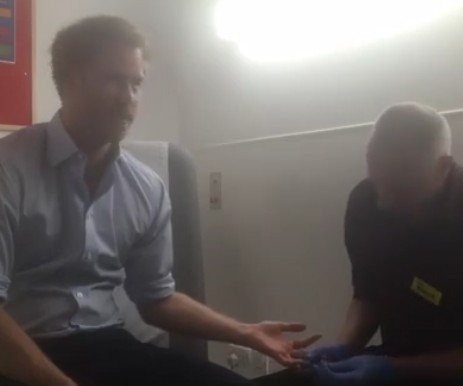
    Prince Harry’s HIV awareness campaign has led to a spike in ordering at-home HIV self tests.

    CREDIT: Facebook Live


    Prince Harry‘s campaign to create awareness on the importance of HIV testing has led to a dramatic increase in at-home HIV self test kits ordered from one of the UK’s leading HIV charities, Terrence Higgins Trust (THT).

    The Prince made global news when he took a HIV test live on Facebook’s Live Platform.

    THT launched an innovative pilot offering people the chance to find out their HIV status privately – in their own space, in their own time, on their terms – by taking a HIV self test and getting their results in just 15 minutes.

    Over 4750 BioSure kits were sent out by THT before the pilot ended.


    Making HIV Tests Accessible

    Dr Michael Brady, Medical Director for Terrence Higgins Trust, said,

    “We know that one in six people living with HIV do not know that they have it. Testing puts you in control and, thanks to treatment, will stop you from getting seriously ill, enable you to live a normal lifespan and prevent you from passing the virus on to anyone else.

    “That’s why it’s so important that we continue looking for new ways to make HIV testing more accessible to those most at risk, and why it’s fantastic to see the very tangible and immediate impact of Prince Harry’s support for HIV testing.”


    Orders for the kits came in from across the UK, including Guernsey,  Northern Ireland and the Isle of Man, with the average age of those ordering coming in at 31-years-old.


    BioSure Self HIV Test


    ALSO READ: At home HIV test reviewed by our Editor


    Sharing Results.

    Half of those who ordered kits from the pilot scheme shared their results with THT, twenty-six of those who order the kits told the charity that they had a positive result. Each of these respondents got a personal call from Terrence Higgins Trust to discuss their result, provide support and ensure that they know how to access HIV care.

    Chris, who ordered a kit said,

    “The HIV home tests came within a few days and I had my results no longer than 30 minutes after opening the package. The instructions were clear and understandable, with the online step-by-step video explaining even further. Nothing at all could be misunderstood.”

    The tests, which are normally £29.95 to buy from BioSure, were provided free of charge during the pilot and funded by Terrence Higgins Trust, but people receiving a test were given the option of making a voluntary donation to fund a test for someone else.

    The scheme was made possible thanks to funding from the Terrence Higgins Trust Lighthouse Fund and BioSure.

    You can now order self testing kits from Amazon.

  • Prince Harry takes HIV test live on social media

    Prince Harry takes HIV test live on social media

    Prince Harry has made history by becoming the first member of the Royal family to take a HIV test on Facebook live.

    Credit: Masha Maltsava, Milk Studios / Via Flickr

    Prince Harry has become the first Royal to publicly take a HIV test live on Facebook, using the platform’s “live” service.

    The popular Prince visited London’s Guys and St. Thomas’ hospital to have the pin-prick HIV test, which reveals a person’s HIV status within minutes.

    The video has already clocked up 41,000 views.

    Leading HIV charity Terrence Higgins Trust praised the Prince’s openness and awareness campaign.

    Ian Green, Chief Executive of Terrence Higgins Trust, said,

    “Prince Harry’s decision to take an HIV test, live on social media, is a groundbreaking moment in the fight against HIV.

    “Not only does it show His Royal Highness’s genuine and personal commitment to tackling the HIV epidemic, it will amplify a message to millions all over the world: testing for HIV is easy, quick and nothing to be feared.

    “We have a real opportunity to end HIV transmissions in the UK, but it starts with each person knowing their HIV status. Too many people are either put off testing by the stigma that still surrounds HIV, or simply do not think HIV is an issue anymore. Today, Prince Harry has got people talking about HIV again and has normalised HIV testing to a global audience. In doing so, he could inspire a generation to take control of their sexual health.

    “Thanks to treatment, testing for HIV could stop you from getting seriously ill, enable you to live a normal lifespan and prevent you from passing the virus on to anyone else. That’s why it’s so invaluable to have Prince Harry’s support  as we aim to bust stigma and end the HIV epidemic.”

  • DILEMMA | My straight, married builder boss just came on to me

    This week a forum user asks what he should do about his seemingly straight, married builder boss, who winked at him in a meeting…

    © Aisyaqilumar / Depositphotos
    © Aisyaqilumar / Depositphotos

    I work in the trade and it usually means working along side may other trade guys on different sites. The last site I was on there was a site manager, older mature butch muscly bloke (late 40s), ex army/marine, I know he’s married and has kids.

    During a meeting between 4 other work mates, I kept catching him looking at me. Then about half way through the meeting while other guys were discussing things, he looks at me, WINKS(!), and then smiles! It took me by surprise.

    The big question is: WTF do I do? I don’t want to confront him and give away I’m gay, and find out he’s not. Maybe the wink meant something else? If so, then what!? Or is a wink some secret “gay trade code” that I’m completely unaware of?

    Yea I fancy him. Even though he’s married I would not say no. I’d love to have a go with him but just not sure how to test the water without giving too much away?

    by Kitsocks


    ALSO READ: Ray the famous gay builder gets married

    ALSO READ: Dilemma: My straight mate keeps coming on to me


    Dear Kitsocks,

    This is an interesting dilemma. First things first though: why do you think being an ex army/marine type would prohibit someone from being gay? There are many ways to be gay and you’d be surprised how many super masculine power jocks are part of the rainbow nation.

    What I am wondering is: do you really want to take on the responsibility of loving a married gay man? There will be many problems and dramas you will have to deal with and it could become painful in the future. Make sure you think about the pros and cons before doing anything.

    If you are certain about wanting this man, let’s look at the evidence you’ve given us.

    That wink definitely meant something, no-one winks at another person without a deeper intention behind it. Of course it could also mean he recognised you were bored of the meeting too, or sharing joke. But that too could mean he was reaching out for something deeper. But if it’s friendship or love you will have to find out for yourself.

    From what I gather you are not out at work and want to keep it that way. This means you have to get him alone outside of work. As he is married and very outwardly macho he might have build a few fences around his sexuality so don’t immediately bombard him with the “do you fancy me” question. Try becoming friends first, see how he acts around you. Make some small talk, see what you have in common. Go to the gym together, go for a few drinks and then, after a few dates, drop some small hints.
    If he picks up on them: bingo! If he ignores them, at-least you have a new friend.

    A warning: if you don’t like taking it slow and want to get there fast, always ask the question in a public place maybe with a friend present in the vicinity just to be on the safe side.

    Always with love,

    Dannii


    The advice above has been given by our community of writers who have drawn from experiences in their own lives and is should not be considered as professional advice.

    Have you got a dilemma you’d like us to answer? Click here to visit our dilemmas page.

  • Are we heading for a sexual health crisis? 10 per cent increase in STIs for gay and bisexual men

    Figures published by Public Health England (PHE) today show that once again that Britain’s gay and bi men’s sexual health is heading into a crisis.

    © sakkmesterke | Depositphotos
    © sakkmesterke | Depositphotos


    Figures released by PHE today show that in total there were 434,456 sexually transmitted infections reported in England in 2015. Well over 10 per cent of those (54, 275) were from gay and bisexual men. The greatest impact age group for those presenting sexual transmitted infections is within the 25 and under age bracket.

    The increase of 54,275 gay and bisexual men reporting sexual transmitted infections represents a 10 per cent increase on 2014’s statistics.

    Overall there was a small decrease, around three per cent, in reports for the entire population, but gay and bisexual men bucked that trend.

    Dr Gwenda Hughes, head of STI surveillance at PHE said,

    “The new statistics show STI rates are still very high among gay men and young adults.

    “We need to do more to raise awareness about STIs and how they can be prevented, especially the effectiveness of using condoms. We recommend that anyone having sex with a new or casual partner uses condoms and tests regularly for HIV and STIs. It is also vital to ensure there is easy access to STI testing and treatment services that meet the needs of local populations.”

    NHS England came under intense criticism earlier this year when it “washed its hands” on providing PrEP for the gay and bisexual community.  It announced it was removing the anti-HIV drug known as PrEP from the the official commissioning process.

    The PHE have reiterated their advice for sexually active men, suggesting,

    Consistent and correct use of condoms can significantly reduce risk of infection and regular testing for HIV and STIs is essential for good sexual health.

    Anyone under 25 who is sexually active should be screened for chlamydia annually, and on change of sexual partner. Gay and bisexual men should test annually for HIV and STIs and every 3 months if having condomless sex with new or casual partners.

    THEGAYUK runs an online Q&A sexual health service for free – ask your questions anonymously here.

  • How do you deal with the pain of bereavement?

    The loss of life after the Orlando tragedies is almost impossible to comprehend. As we, the LGBT community feel intuitively connected to those in our community, no matter where we are the attack felt close to home. It felt as if members of our own family were targeted at that club and it will probably be a very long time before we have emotionally recovered from the damage.

    How to deal with death

    If it feels that way for us. Imagine how it must feel for those that knew the victims: their partners, their parents, their friends and family. How will they cope? If someone close to you was among the victims, how will you cope?

    As Maria V. Snyder says in Storm Glass;

    “Everyone grieves in different ways. For some, it could take longer or shorter. I do know it never disappears. An ember still smoulders inside me. Most days, I don’t notice it, but, out of the blue, it’ll flare to life.”

    Sudden loss and bereavement can leave you feeling numb, overcome with grieve or confused. The loss of someone close to you hits hard and deep. There is the shock, the disbelieve, having to comfort and be strong for others, guilt, denial and often much, much later the true outpouring of pain and hurt.

    The fact that the true response only comes weeks and sometimes months after the event makes it harder to cope with. You thought you had been dealing well, your friends and family thought you had moved on, you had returned to work. And suddenly there you are, in tears every night, feeling worse than the day you heard the news. Reality hit you: he or she is truly gone.

    A lot people try to ignore this reaction: it is silly, you can’t suddenly feel like this after all this time.

    They feel too embarrassed to tell those closest to them, often thinking: “it’s been such a long time, they may think I’m attention seeking.”

    Then there are many that just cannot stop grieving. This is often wrongly judged as “wallowing”, but it is not. The hole left behind by the loved one is so big that they simply don’t know how to cope. There are people out there that get knocked for six with just their favourite TV show ending – it was part of their lives – so imagine if it is a person you saw and loved every day for many years.
    Like the delayed griever, they might too try to repress their emotions, thinking it is the right thing to do. No, it is the wrong thing to do.

    Repressing the pain can lead to physical manifestations of the pain often in the form of depression.
    So please do seek someone to talk to, a person you truly trust. Go online to find like-minded people. Or seek counselling, there is no shame in this!! A therapist has the skills to deal with your problems and you don’t need to worry about them not wanting to listen to you: it’s their job!!

    A good way to accompany counselling or to try and deal with the pain, in general, is to practise Mindfulness. This might surprise you because isn’t Mindfulness about “being in the moment, and isn’t “the moment” exactly what we are trying to avoid? Well, “the moment” is a big part of it, but what is far more important is getting the mind to be still, so you are no longer a prisoner of your thoughts. Training your mind to be quiet is a good aid to tide you over when you feel grief and despair washing over you.

    Sameet Kumar, Ph.D., author of Grieving Mindfully and The Mindful Path Through Worry and Rumination says:

    “Grief can often feel like chronic stress, and research shows that 20-30 minutes of twice daily mindfulness practice can alter how your brain processes stress after about eight weeks. Mindfulness practice during grief can help your mind and body find precious moments of peace during this difficult time. Regular mindfulness practice can also help you sleep better and is a crucial foundation for developing healthier habits during your grief journey.”

    There are many courses out there so you can pick any that would serve you best. Taking a course would also help get you out of the house into a new situation where you can meet new people, so it is always a win. If you don’t feel like going out, there are dozens of online classes available too, many of them free.

    While counselling and mindfulness might work to help you on your way, you still have to take it one day at the time. For every good day there can be four bad ones.

    But if you cherish these good days and every fun moment you experience you can remind yourself on the bad days that: you are allowed to have fun and don’t have to feel guilty. When you start believing this you can slowly move on.

    Never force yourself to move on if you don’t feel ready, though: you are allowed bad days too. You don’t have to get up if you don’t want to, there is no fault in that. In many ways it is healthy to not force yourself out of a depression. It has been said that the best way to look at depression is to treat it like a flu inside the brain. But don’t forget: a flu doesn’t last four weeks and even people with the flu have to do their shopping and take a shower.

    By this I mean: don’t start to neglect yourself, it will only drag you down more. Always take a shower and try to eat something, even on the bad days.

    Use the good days to make plans with someone you like. In fact, make a deal with someone you like that says that: if you have been in bed or at the house and depressed for more than 3 days, they have to take you out for a walk, a lunch, the zoo etc and you are not allowed to complain.

    Once you are outside the mind usually clears and a new happy moment to treasure during the bad times will follow.

    Remember: no matter how bad you may feel now, there is always hope.

  • NHS “Washed Its Hands” On Providing PrEP For Gay And Bisexual Community

    NHS England has come under intense criticism after it announced it was removing the anti-HIV drug known as PrEP from the official commissioning process.

    CREDIT: tashatuvango-bigstock

     CREDIT: tashatuvango-bigstock

    NHS England is facing a backlash from sexual health groups and HIV charities after it confirmed its decision to remove PrEP from the official NHS commissioning process, meaning that the anti-HIV drug will be inaccessible to people at risk of HIV.

    Both the National AIDS Trust (NAT) and the Terrence Higgins Trust (THT) blasted the decision. With the NAT saying it was considering further legal action against NHS England.

    PrEP is an HIV prevention drug, proven to be effective in stopping HIV transmission in almost every case if taken properly. The decision by NHS England not even to consider commissioning PrEP came after 18 months of hard work from an NHS working group (comprising clinicians and experts from across the HIV sector) which demonstrated the need, efficacy and cost-effectiveness of PrEP.

    Deborah Gold, Chief Executive, NAT, said,

    “NHS England is sitting on something that could be the beginning of the end for the HIV epidemic – if only it were made available.  The refusal to commission it for all those at significant risk is astonishing.   Seventeen people are being diagnosed with HIV every day. Weare extremely disappointed and we will now be looking at our options, including further legal action.”

    Terrence Higgins Trust called the decision “shameful” and said that NHS England had “washed its hands” of one of the most stunning breakthroughs in HIV prevention which disproportionately affects the gay and bisexual community in the UK.

    Ian Green, Chief Executive of Terrence Higgins Trust, said,

    “Today is a shameful day for HIV prevention. This country used to lead the way in the fight against the HIV epidemic, but today, our national health service has washed its hands of one of the most stunning breakthroughs we’ve seen; a pill which, if taken correctly, is almost 100% effective in preventing HIV.  A pill which is already available in America, Canada, France, Kenya and soon to be Australia.

    “How did it come to this? It defies belief that, after 18 months of false hope, delays and u-turns in the battle to see PrEP made available on the NHS to people at high risk of HIV, today we are in a worse position than when we started.

    “It is a mess, and the people who will feel the effects are the 2,500 men who have sex with men who will be needlessly infected with HIV each year in the UK. This figure has not changed in a decade. Who will claim responsibility for the life-long impact this will have on people’s lives?

    “It’s not right that people who know themselves to be at high risk of HIV have to buy PrEP themselves from the internet at considerable personal expense. Many high risk people are living in poverty and they simply cannot afford to protect themselves against HIV. Currently, only those who can afford it are able to access this life-changing treatment, further widening the inequality gap by those most affected by HIV.

    “The battle for PrEP must continue until the day that people at highest risk have access to this groundbreaking pill that will protect them from HIV.”

  • Zero To Hero? Buzzfeed PhotoShops Men To Perfection

    Zero To Hero? Buzzfeed PhotoShops Men To Perfection

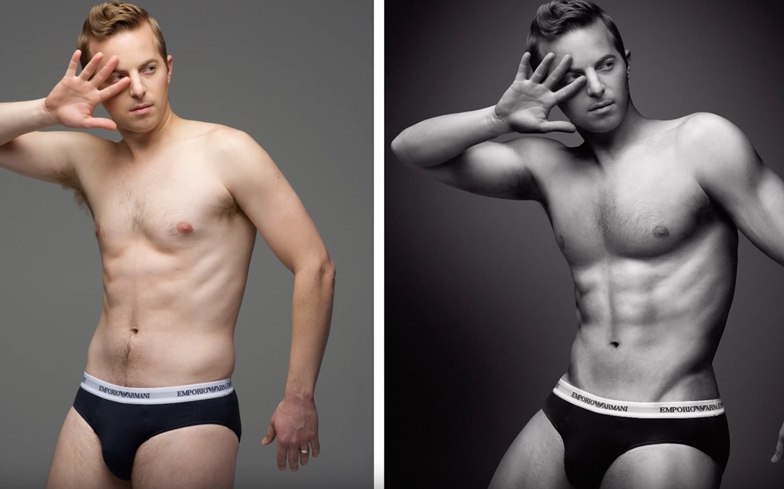
    In an experiment to show how impossible male perfection in advertising can be to achieve, Buzzfeed have Photoshopped four guys (TryGuys) into perfect 10s.

    You know how it feels. You open up a glossy and there right in front of you is male perfection. Toned, tanned and tantalizingly ten packed… Most of the time, all is not what it seems. Many advertisers, creative directors and magazines use the magic of Photoshop to touch up and tone up – even the most perfect specimen.

    Buzzfeed have documented what it takes to get to the perfect 10 – all you need is a pricey photographer, a hot shot makeup artist, expertly placed lighting and a Hogwarts rated Photoshop genius.

    Taking four examples of unachievable perfection, a Justin Bieber Calvin Klein campaign, a picture of Cristiano Ronaldo, a Men’s Health shoot and the Magic Mike poster – a small but determined team made all the TryGuys “perfect.”

    Watch below as Buzzfeed turns four guys into ‘gods amongst men’

  • Prime Minister Wants NHS To Make Decision On PrEP This Month

    Prime Minister David Cameron has told the House of Commons that he wants NHS England to make a decision on funding Pre Exposure Prophylaxis PrEP Drugs on the National Health Service.

    PrEP and pills

    During his Prime Minister’s Questions (PMQs) today, David Cameron told the House Of Commons that he wanted a decision from NHS England this month on whether they would fund PrEP, a game changing anti-HIV drug, that has had incredible results in stopping new HIV infections.

    The PM said that he recognised the growing rate of HIV in the UK and that he was pressing for a decision about the service’s ability to offer the PrEP drugs to those most at risk of contracting HIV.

    During his PMQs MP Mike Freer asked,

    “HIV infection rates are on the rise. NHS England has refused to fund Pre Exposure Prophylaxis (PrEP) drugs. Will he meet with me and leading charities to review?”

    Responding, David Cameron said,

    “NHS England is reconsidering this, I want them to make a decision this month. I recognise the growing rate of HIV in this country. I’ll make sure he gets the meetings he needs.”

    NHS England said that it would continue to pay for PEP, a treatment that can prevent HIV infection after the virus has entered a person’s body, but has fallen short from offering PrEP.

    Ian Green, CEO at Terrence Higgins Trust, welcomed the statement saying,

    “We welcome David Cameron committing NHS England to making a long overdue decision on HIV prevention game changer, PrEP, this month. Thank you to Mike Freer for continuing to champion this life changing HIV prevention tool.

    “We urgently need NHS England to make PrEP available for those most at risk. Every day this is delayed, seven men who have sex with men are infected with HIV.”