Places for London’s PrEP trial to be boosted by 60 per cent.
(C) marcbruxel Depositphotos
Today (Friday 12 April) London Councils has announced that an agreement has been reached to increase places on the PrEP trial by over 4,000 places.
The news comes as over two-thirds of sites in London are now closed to gay and bisexual men. The boost still leaves the capital lagging behind many other parts of England which have agreed to double places on the trial.
Debbie Laycock, Head of Policy at Terrence Higgins Trust, said, “Finally the stalemate on PrEP has been broken and some leadership is being shown. This is a welcome step in the right direction that will provide some relief to those in the capital who have been denied access to the trial. We welcome the acknowledgement by London Councils that PrEP must be available to everyone at high risk of HIV exposure and as such withholding access is simply not an option.
“However this increase is still far short of the doubling of places we were promised by the Health Secretary Matt Hancock over 70 days ago and it won’t be long before we’re once again seeing gay and bisexual men being unable to access PrEP in the capital.
“‘London continues to outstrip every other part of the UK in the number of new HIV diagnoses each year so it’s critical a sustainable solution for PrEP is found. Today’s news is progress but this remains a job only half complete as places must be doubled to address the high demand seen for PrEP. We need urgent leadership on this from NHS England, the Department for Health & Social Care and councils across the capital because no one at risk of HIV should be turned away.”
It can be hard to know what to do to if a friend or family member is struggling with their mental health. Here are six tips to help you, help them.
Free-Photos / Pixabay
Send a text
Free-Photos / Pixabay
It might be a small gesture but sending someone a text to let them know you’re thinking of them can really help. Don’t expect a text back, but just reaching out can let somebody know that you’re thinking about them and that you love them.
Depending on your friend’s circumstances, it might be a good idea to deliver a simple care package. Someone who is dealing with bereavement or who has lost their job might forget about the practical things in life, like toothpaste or washing up liquid or even milk. Getting a few things together and dropping them around might be a great way to start a conversation. Be sensitive to your friend, however. Pride can be hurt so don’t go over the top.
If you pop over, or just happen to have them on the phone it’s always useful to ask the right question. Chloe Ward is a Technician at Smart TMS, the UK’s leading mental health clinic specialising in Transcranial Magnetic Stimulation, tell us, “Are you okay?” is a great opener, adding, “Simple but effective. It may be that no one has asked that simple question for a while and if you follow this up with ‘is there anything I can do to help?’, they may feel safe enough to begin the conversation”
Don’t try and fix them
This can be really tough because you might feel like you’ve got the answer, but it’s always best to let people work out their own answers that will work with their circumstances. Also, how often do people really take advice? Especially when it isn’t asked for… never. So ask your friend what they think could help them out and explore their ideas with them. It can be tough but try not to judge, just listen.
Just listen
Free-Photos / Pixabay
If your friend starts to talk, let them speak. Don’t interrupt in the first few minutes. If you’re confused about the timeline or the people involved, circle back round to it in your repeat back.
Let your friend know that they can call the Samaritans or Switchboard LGBT+ Helpline. It might seem like an obvious idea, but sometimes we need to hear an idea to act on it.
Speaking to a stranger or someone on the end of a phone, who isn’t connected to them in any way can be a way in which your friend might feel more comfortable sharing their problems with. Samaritan’s phone number is: 116 123 or Switchboard is: 0330 330 0630.
From the moment we wake up to the moment we fall asleep, we are increasingly becoming mentally and physically engaged to the outside world.
CREDIT: Romina Introini
We are in the midst of the social-media age and sometimes it really is hard to just switch off from it all, take a step back and really focus on our mental and physical wellbeing. Very clearly, this isn’t good.
Now I could go the obvious route on saying just switch off your damn phone for an hour before bed and don’t look at it first thing in the morning but for some of us, that really isn’t an option. By all means, I recommend it if you can do it but when your job directly involves using your phone on an hourly basis, it’s not such an easy feat.
Recently though, I was invited to attend an interesting talk on Witch-Influencers and New Wellness Trends by the lovely team at The GLAMOUR Beauty Festival 2019. Now I’m not usually someone who gets caught up in the allure of spells and charms to sort out all of life’s worries and problems but a lot of what was said really struck a chord with me, on the concept of self-preservation.
CREDIT: Romina Introini
The entire talk, that was hosted by Angela Scanlon and featured Emma Lucy Knowles and Giselle La Pompe-Moore as guests, was entirely focused on the notion of self-empowerment and giving yourself a positive mindset for achieving your goals and in doing so, taking time for yourself to reflect and recenter your thoughts and emotions daily.
Now, this is something I can definitely get on-board with!
The guest speakers went on to outline their own practices of using various charms and objects such as crystals, that they use on a daily basis to centre their thoughts and achieve their goals. For me personally, the totem aspect of their rituals is something that I find relatable. No, I don’t have crystals over my writing desk at home but I do have keepsakes. These are objects that hold meaning for myself and I associate them with certain memories or emotions. Albeit you could argue there is a difference, I personally don’t think there is.
I’ll give you an example. When my uncle Dennis passed away, he left me a number of watches. One of them is a solid gold Swiss watch that honestly, I’m petrified of losing every time I wear it. Now long story short, my uncle is someone that was very inspirational to me. He travelled the world, went on great adventures and stressed the importance of education to me, in understanding the world and its myriad of cultures. This inspiration has made me an avid traveller and was one of the primary factors in me pursuing my degree and subsequent career, as a writer.
So this watch now symbolises to me my uncle and all that he stood for. This association has made this watch a totem for me of self-preservation and self-belief. As now when I wear it, I genuinely feel that I can achieve anything and he is stood right there with me. It’s even in front of me now, as I’m writing this feature.
So to me, my watch sounds very similar to a crystal with empowering properties. Wouldn’t you agree?
I think we all have these keepsake items in our lives, no matter what they may be and these are our symbols of support, love, empowerment and everything in between. They are our crystals, spell jars and tarot cards and like our Witch-Influencer friends Emma and Giselle, I think it’s important we take time to appreciate these objects.
Let them refocus us and remind us of who we are and what we want in life. This appreciation is how we can switch off from the social-media age, how we can survive it and most importantly, how we can thrive in it!
Finally, I just wanted to say thank you again to The GLAMOUR Beauty Festival 2019 in association with Boots at the Saatchi Gallery in London, for inviting me along to this talk and helping me find my own way of switching off.
If you’re interested in attending the festival. Look out for news on their next event in Manchester later this year, on their social media.
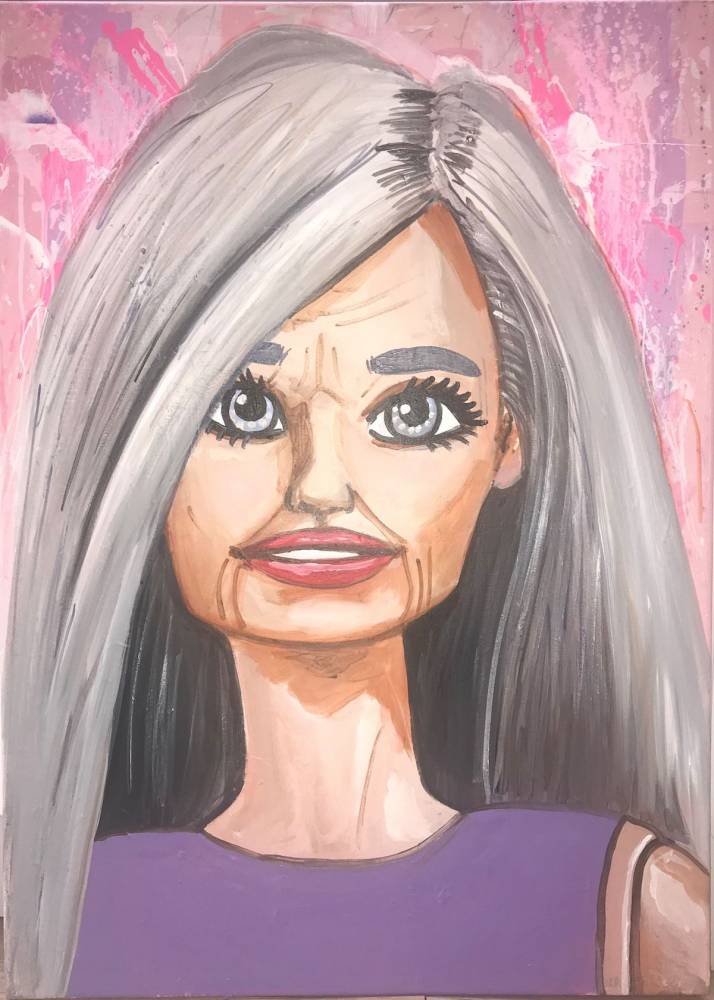
It’s Barbie Bi**h!: With Barbie’s 60th birthday approaching on the 9th of March. London based artist and illustrator Phaedra Peer has captured what Barbie would like today if she was a real woman.
(C) Phaedra Peer
Phaedra has created this painting as a way of dispelling the myths of celebrity and model perfection. She highlights with this piece the fake and unrealistic representation of perfection within our society. A representation that has become more prevalent with the rise of social media platforms such as Instagram. Let’s face it who hasn’t used Face Tune to iron out last night’s mistakes in Heaven…
We all now seem obsessed with the concept of being “perfect” but this concept isn’t realistic. “Perfection” is unattainable and that isn’t a bad thing. Phaedra emphasises that we should celebrate natural beauty and diversity, not just the blonde, tanned and blue-eyed doll.
Now you may be thinking what has Barbie got to do with the predominantly male readership of THEGAYUK?
“…increasingly men are being put under the same pressure of being “perfect”, as our female counterparts. Whether you’re gay, straight, bi or anything in between, this pressure applies.
Well to put it bluntly for every Barbie, there is a Ken and increasingly men are being put under the same pressure of being “perfect”, as our female counterparts. Whether you’re gay, straight, bi or anything in between, this pressure applies. If I scroll down my Instagram feed now, I will be swamped with pictures of fitness models and influencers with Adonis-like bodies and flawless skin.
Now the fact is, these people don’t look like this in real life. By no means am I bashing fitness models or influences and I’m not saying they are not attractive people. What I am saying though, is that the perception of these people given through social media is highly edited. Working in this industry, I know that these photos are edited and the images are composed in a specific way, with specific lighting. This is all done to create the desired effect for the shot and portray a specific and often unrealistic representation of reality.
So, what should we take away from this representation of Barbie?
We should remember that beauty comes in all shapes and forms. That there is no such thing as “perfection” and we should all really aspire to be people not because of their looks but for their actions.
When it comes to attracting someone, 43 percent of us say that we notice somebody’s face first, so we may want to take care of our teeth as a third of us admit we forget to brush our teeth!
One in three Brits regularly forget to brush their teeth, it has emerged.
Researchers who polled 2,000 adults found many have a lackadaisical approach to dental hygiene and aren’t ‘doing enough’ to keep their teeth and mouths healthy.
Further to this, one in 10 have used chewing gum instead of toothpaste to keep their teeth ‘clean’.
Eighty per cent are currently suffering with or have suffered with oral health problems – including sensitivity (33 per cent), cavities (32 per cent) and bleeding gums (31 per cent).
But it’s not just taking care of teeth where we many of those polled are falling short.
Commissioned by Colgate Total, which its makers claim fights bacteria on teeth, tongue, cheeks and gums, the research found 43 per cent have no idea how to maintain a healthy mouth.
Looking for a new tooth brush? Amazon are currently selling an Oral B Pro 2 for £32.29 down from £79.99, view the deal here.
Davina McCall, Colgate Total ambassador, said: “I’ve learnt today that you shouldn’t rinse your mouth out after brushing – you should keep all that fluoride in your mouth and let it settle – spit don’t rinse.
“Whole mouth health is so important, we don’t think about it enough – it’s just as important as other areas of health and fitness.
“It’s such an obvious thing that we are forgetting, but our teeth are only 20 per cent of our mouth – we shouldn’t neglect the other 80 per cent including the cheeks, tongue and gums.”
The research also found mouth health is well down the pecking order of priorities when it comes to a healthy lifestyle – behind our diet, weight and mental health.
In fact, just nine per cent consider mouth health to be important – despite oral health problems being among the most common chronic diseases across the globe.
Six in 10 admit they don’t take sufficient care of their mouths and should make it more of a priority than they do.
Experts say the majority of oral health problems can be prevented or reduced through daily oral care.
Despite this 57 per cent don’t think gingivitis can be prevented with a stringent oral care routine.
Similarly, the Colgate Total research carried out through OnePoll found two-thirds don’t believe such a routine can stop tooth decay.
Dr Milad Shadrooh, better known as ‘the singing dentist’, said, “When most people think about oral health they just think about their teeth.
“The tongue, cheeks and gums harbour bacteria, needing a similar level of protection as teeth to help achieve whole mouth health.
“As a dentist, I actively work with my patients to help them appreciate the importance of whole mouth health.”
“Through education, we can show how easily people can prevent problems before they start by equipping them with the right information and products to look after their mouth health at home.”
Dr Patricia Verduin, chief technology officer, Colgate-Palmolive Company, added, “Overall wellness is important to everyone, and total self-care means caring for the whole mouth, too.
“We rely on our mouth to eat, drink, speak and laugh, but often neglect areas beyond teeth.”
For gay and bisexual men, prostate cancer, in particular, can be even more challenging than for their straight counterparts. “Gay & Bisexual Men Living with Prostate Cancer (from Diagnosis to Recovery)” is a new book that addresses bias against and the unique needs of gay and bisexual men diagnosed with prostate cancer.
FILE PHOTO (C) BIGSTOCK
by B. R. Simon Rosser and William West
Edited by Jane M. Ussher, Janette Perz B.R., and Simon Rosser “Gay & Bisexual Men Living with Prostate Cancer” was written not only for the medical community treating gay and bi men with prostate cancer but also as a supportive resource for gay and bi men diagnosed with prostate cancer. It is the most current and comprehensive book on the subject published to date, incorporating the tremendous new developments in cancer treatment from the past ten years.
Here, Dr Simon Rosser and Dr Bill West, coauthors of several chapters in “Gay & Bisexual Men Living with Prostate Cancer,” answer 12 questions and offer advice to gay and bi men facing prostate cancer. Simon and Bill are married, out and living with prostate cancer.
1. How common is prostate cancer in our community? Prostate cancer is the #1 invasive cancer for men and the most common cancer in the gay male community. One in seven gay men will be diagnosed in their lifetimes. Since gay male couples have two prostates, they have twice the risk than heterosexual couples or a one-in-three chance.
2. What are the symptoms of prostate cancer? Prostate cancer typically develops without symptoms which is why it needs to be detected through a blood test (the Prostate Specific Antigen or PSA test) and by a doctor feeling for any abnormalities during a digital rectal (or finger up the butt) exam. Two common prostate problems should not be confused with prostate cancer. As we age, our prostates typically get larger which can lead to problems urinating. This is called benign prostatic hyperplasia or BPH. Prostatitis refers to when the prostate gets infected or inflamed.
3. So, what causes prostate cancer? Older men, men with a family history of prostate cancer, and black men are at greater risk of diagnosis and/or worse outcomes. Our research indicates that HIV positive men and bisexual-identified men have worse outcomes than HIV negative men and gay-identified men, respectively. Gay “lifestyle” factors – such as being gay versus straight, lots of sex or no sex, amount and rigour of receptive anal sex, smoking, drug and alcohol use, a history of sexually transmitted diseases and long-distance cycling – have not been associated with greater risk or worse outcomes.
4. So, why is prostate cancer in gay men an issue? Different prostate cancer treatments have different effects on our sexual functioning. About 20 per cent of patients treated with radiation experience radiated bowel, which makes receptive anal sex painful to impossible. Conversely, almost all men treated with surgery (and many with radiation as well) will have erection difficulties, after treatment, making insertive sex very challenging. Treatment can also affect penis size, ability to ejaculate, the experience of orgasm, pleasure in receptive sex, and urinary problems during sex or at orgasm. This makes it important to discuss gay sex with your specialist as part of choosing which treatment will have the least side effects for you.
5. If I want to be checked for prostate cancer, what should I know? The typical test for prostate cancer involves both a blood test and a digital rectal exam. Because massage of the prostate may hypothetically affect the blood results, we recommend you refrain from receptive anal sex or other anal stimulation for 48 hours before the blood is drawn and make sure the blood is drawn before the digital exam.
6. Does being diagnosed mean you have to be treated? No. Many men with low-risk prostate cancer never need treatment. Instead, they go on active surveillance. This simply involves having a blood test every three months to monitor the amount of prostate-specific antigen in their blood. This may also involve additional biopsies to track if the cancer is changing.
7. Is prostate cancer contagious? No, if your boyfriend, husband or a male sex partner has prostate cancer, you cannot get it from him. Prostate cancer is not sexually transmitted.
8. What’s it like to be diagnosed with prostate cancer? Fortunately, prostate cancer has an excellent (over 99%) survival rate provided it is treated early. We are a male couple where both of us have been diagnosed. Here’s what to expect. The initial diagnosis can be scary and requires a biopsy which can be uncomfortable. Don’t panic. Most prostate cancer is slow growing so in many cases you can go at your own pace. Gay men are more likely to feel isolated or go through treatment alone, so it’s important to reach out for support. Prepare a list of questions before each consultation and ask them at your next visit. Bring your man (if partnered) or a friend (if single) to the consultation, both for support and to listen to what the specialist says. Deciding if you need treatment and what treatment is best for you are critical milestones, where many patients seek a second (or third) opinion.
9. How does it affect being gay? Because it’s cancer and because it affects our sexual functioning, many gay prostate cancer patients report feeling less than other gay men. There’s a stigma to having prostate cancer which can affect our sexual self-esteem, sense of attractiveness and potency. And because it affects erections, some men may become more at risk for HIV if their erections are not strong enough for condoms or if they decide to bottom more instead.
10. What’s gay sex like after treatment? Everyone is different. In our experience, good sex is definitely possible after treatment but it is challenging. It takes time and patience (up to two years post-treatment), commitment to sex as a priority, good communication between partners, lots of sexual rehabilitation exercises, and flexibility. The biggest loss we had to deal with was spontaneity – erections don’t just happen, and we have to plan sex if it is to be successful. We found erectile drugs and vacuum pumps to be a help as well.
11. What should I think about in choosing a specialist? Know that many urologists and oncologists see themselves as technologists focused on survival. Not all are good at talking to patients or discussing sex. While survival is obviously important, quality of life is as well. Most gay and bisexual men are sexually active and want to remain so after treatment. So, it’s critical to find a specialist you can be open with, and have your questions answered. When making an appointment, ask for a specialist who is comfortable discussing the sexual effects of treatment. And if they seem uncomfortable or unknowledgeable about sex between men, seek a second or third opinion until you find someone you can trust.
12. If I’m gay, bisexual or a man who has sex with men living with prostate cancer, where can I get help?
For more information: See our just-published book, J. M. Ussher, J. Perz, B. R. S. Rosser, Gay and Bisexual Men Living with Prostate Cancer: From Diagnosis to Recovery (Harrington Part Press, New York 2018).
For support services: www.Malecare.org is the largest provider of online support worldwide and has groups specifically for gay and bisexual prostate cancer patients.
To get involved in research: At the University of Minnesota, we are conducting the first, large, NIH-funded study testing online rehabilitation designed by and for gay and bisexual prostate cancer patients living in the US.
See: www.restorestudy.umn.edu or email: Restorestudy@umn.edu.
Dr Simon Rosser is a gay men’s health researcher and Dr Bill West a health communication specialist at the University of Minnesota. They specialize in prostate cancer in gay and bisexual men.
They co-authored several chapters in J. M. Ussher, J. Perz, B. R. S. Rosser, Gay and Bisexual Men Living with Prostate Cancer: From Diagnosis to Recovery (Harrington Park Press, NY, 2018).
They are married and out as a gay couple living with prostate cancer.
Topics covered over social media in 2019 cover a variety of subjects, the one surrouding healthy eating can cause a Twitter storm if not handled in the right way warns industry experts, which came with the warning “For brands venturing into this topic, it is essential to consider planning in advance and staying away from political and divisive subjects”.
The latest immediate future report, using data analysed from Brandwatch, looks at the rising ‘healthy eating’ and ‘healthy food’ conversations on social media in the UK. Whilst most posts are positive, there is a significant number of passionately angry and disgruntled ones. The backlash spikes around those organisations pushing the healthy eating agenda such as brands, government and celebrity chefs.
Anger drives social sharing.
Katy Howell, CEO at immediate future, says, “Shares, accounting for almost 40% of social posts, are driven by two core behaviours: anger (and some pretty spicy language), at the affordability and cost of eating healthy food; and the making of healthy foods, from recipes and planning, to food origins.”
Social data analysed using social intelligence tool, Brandwatch, shows that 39% of posts around cost, mention the issue of affordability of healthy food options and 30% declare eating well is expensive. And it’s the 42% men on social, talking healthy eating, that tend to rant the most!
Rising year on year healthy eating is predicted to continue an upward trend on social. The conversations don’t just spike in January, they run through the year as UK consumers are increasingly conscious of, and educated about, what they eat. For relevant brands this is an opportunity to raise awareness and engage with consumers in a shopping category that is burgeoning.
Katy continues, “Joining the healthy food trends is perfect for food, fitness and weight-loss brands. However, companies must plan. Awareness of the topics that both spark debate and anger should form part of your brand’s approach. Transparency and authenticity are key if you don’t want to be battling negativity on social.”
The report, reviews a year’s worth of social data, looking at posts that mention healthy eating and healthy foods and it’s available for free at http://po.st/eatwell
If you’re looking for ideas to reduce your dependence on technology,Sloan Sheridan-Williams is a celebrity life coach, international speaker and author of “Slap Fear” shares her 10 life hacks…
It’s likely that you’re reading this piece on your phone, but are you happy with how much time you spend on the device? When technology is starting to rule your life, why not take a step back and take note of Sloan’s top 10 hints at regaining control of your life.
First step is to put your phone down, Sloan told us, “Spending time online with friends should be a last resort not your first port of call. If you want to shift your focus from unhelpful social media habits to meeting friends in the real world but don’t know where to start, here are my top ten suggestions to get out from behind your handheld device and re-connect with the people that matter.
According to charity Prostate Cancer UK the current PSA test, a blood test that measures the amount of prostate-specific antigens in the blood, can be inaccurate, which is concerning when nearly 12,000 men (and trans women who have a prostate) a year die from prostate cancer.
It can, according to the charity, give false readings and miss some cancer signs.
But Professor Paula Mendes’ research has identified over 50 forms of PSA, all with the same protein but with different sugars attached to it.
Importantly, different types of sugars are linked to different problems with the prostate, including cancer.
“The current test for prostate cancer scans the body for all types of PSAs, but we now know that only four of these forms of PSA are linked to prostate cancer,” she explains.
However nanoparticles can detect the right type of PSA.
According to Prostate Cancer UK, Mendes’ plan is to take advantage of this, and create a test where the type of PSA, rather than the amount, is detected. It uses tiny, coloured nanoparticles, which contain a ‘pocket’ that specifically binds the PSA sugars associated with prostate cancer, like a lock and key. The more such sugars it detects, the higher a man’s chance of having aggressive prostate cancer that needs urgent treatment.
“At the end of two years, we want to demonstrate that our technology can detect high- or low-risk prostate cancer with high accuracy,” says Professor Mendes.
She then hopes to run a larger clinical trial and ultimately make the test part of a future screening programme for prostate cancer.
YOUR SUPPORT MEANS EVERYTHING
Help us deliver unique, usable and reliable journalism that supports the gay, bisexual and curious community of the United Kingdom. Can you help protect LGBT+ media? Publishers like us have come under severe threat by the likes of Google and Facebook. The problem is that advertisers are choosing to put their money with them, rather than with niche publishers like us. Our goal is to eliminate banner ads altogether on site and we can do that if you could pledge us a tiny amount each month.
We’re asking our readers to pledge just £1 per month, more if you’re feeling swanky. You can stop payment at any time.
It’s quick and easy to sign up and you’ll only have to do it once.
Bullying takes many forms: Name-calling, making negative comments on your work, making someone feel worthless, physical abuse are just some examples.
So we’ve put some tips together to help anyone out there who might be being bullied. It doesn’t matter if you’re being bullied at school, college, university, work or home.
Remember if you are being bullied remember it’s not your fault.
Write Everything Down
Free-Photos / Pixabay
Keep a log of every incident; write down the date, time, location, what happened, what they said and any witnesses that were around.
Tell Someone
Tell someone in authority and ask them what they intend to do about it. Tell them any fears you have about reprisals from the bully.
Someone you trust, like a family member or a friend can also be useful. It means that you’re not dealing with the problem on your own; a problem shared is a problem halved.
Don’t try to deal with it and your feelings about it all on your own. Get some support. Consider counselling for some additional support around your feelings.
Know Your Rights
All educational settings have anti-bullying policies. Some employers have these as well. Even if your employer doesn’t they will have Equality & Diversity Policies as well as other relevant policies. Read them.
There will also be procedures for investigating and dealing with bullying – so have a look at these as well.
Know your rights. Nobody has a right to bully another. Make authority figures aware that you know you’re rights.
Don’t Let It Get To You
Try to not let the things the bully says or does get to you. Bullies bully for a variety of reasons, but it’s always about their issues, not yours.
Don’t let the bully see that they are getting to you. To do this, try to give them no reaction or smile. You know that phrase: Smile – it confuses people.
Walk With Confidence
Use your body language to make you look larger. Stand with your legs apart, your back straight and your chest pushed out slightly. Have your arms slightly away from your body and loose by your sides. Head up as you walk looking straight ahead. This does take a bit of practice but try practising in front of a full-length mirror. Believe it or not, this is how most bullies walk.
When we see someone walk like this, especially a bully, we do the opposite with our body language. We make ourselves as small as possible including hunching our back, pulling our arms in close and looking down at the ground. Try to remember to keep this confident body language, even when you see the bully.
The only time to avoid using body language to make you look larger is in the event of a physical assault. In that case, have your side to the perpetrator, as this will give them less of a target. In the event of a physical assault, get yourself out of the situation as soon as you can and to a place of safety.
Remember nobody has the right to be violent towards you; likewise, you don’t have the right to be violent towards anyone else. All physical assaults should be reported to the Police.
If the bully is sending you messages, texts, images and videos, keep them all. Don’t respond to any messages and make good use of privacy settings. Block/Ignore the bully and report them to the social media provider. If the messages get particularly abusive report them to the Police (this is why you need to keep all the messages as evidence).
Take Sensible Steps To Keep Yourself Safe
Keep yourself safe by carrying a mobile phone, personal attack alarm and being aware of your surroundings. Never walk home on your own and always try to stay with someone when travelling around the setting where you come into contact with the bully.
Involve The Police
Any violence or physical assault should be reported to the Police.
If the bullying is homophobic or racist in nature you can report it to the Police as a hate crime. Hate crime also covers bullying that is related to disability religion, ethnicity or transgender identify. Find out more about hate crimes on the True Vision website.
Come up with Good Coping Strategies
We all have different coping strategies. Some good ones are: taking up sports or martial arts (these are particularly empowering and you learn to defend yourself as well), talking to people, expressing how you feel creatively (e.g. writing, music, drawing, making movies, etc.). All of these activities also raise your confidence and self-esteem – something that bullies try to damage or destroy.
Avoid Drugs & Alcohol as a Coping Strategy
(C) BIGSTOCK
There is research that links drugs and alcohol misuse to bullying as a coping strategy. Avoid using drugs or alcohol to cope with the bullying. It might make you forget or feel happier in the very short term (for the night), but the next day the bullying often seems a much bigger problem.
Know that It Gets Better
Bullying is a massive issue. Many people get bullied. Remember that the situation you’re in now won’t last forever. There will be a time that the bullying will stop.
Avoid Becoming The Bully
There’s some research that shows that some people who have been bullied, later become bullies. Don’t let it happen, you’re better than that! Remember how it felt to be bullied. If you’re in a position to safely stand up to a bully that’s bullying someone else – do.
Guys all over are getting their lips filled … but there are eight things you need to be aware of before getting your pillows plumped.
Worryingly, anyone can buy hyaluronic acid gel and inject it into someone’s lips.
This is because there are no laws in the UK that regulate people who carry out non-surgical cosmetic procedures, such as lip fillers. The Professional Standards Authority runs a Government-backed programme called Accredited Registers which lists trusty professionals that treat their patients safely.
2. Professionals should askquestions like the patients’ age, full medical history and discuss all risks before agreeing on an injection.
3. Nobody should pressure a patient into having lip fillers done there and then. Patients need time before making a decision.
4. Ask for copies of before and after photographs. It’s a good idea to have photos of the patients smiling and frowning, too.
5. Patients should note down which hyaluronic acid product is being used for their lip fillers as well as the clinician’s name.
6. Patients should ask to see the product before. Ask the person giving the lip fillers to show them the hyaluronic acid in its unopened packaging, before injection.
7. There should be no problems in booking a follow-up and asking about the treatment or any complications if they occur.
8. Never agree to have lip fillers done at homes, at ‘parties’ or exhibitions, or in places that aren’t clean & clinical.