Category: Wellness

  • TOM TRIES IT | Allergy Testing

    TOM TRIES IT | Allergy Testing

    In this edition of Tom Tries It, our grooming expert Thomas Swallow goes beyond the realms of male grooming and delves into the world of at-home allergy testing. Read on to find out if they are worth all the social media hype…

    Carry on reading below, to hear about Tom’s experience doing an at home allergy test. Missed the other instalments of this series? Click here to find out about Tom’s previous adventures, where he decodes the enigma of male grooming.

    Firstly, I just wanted to thank the team at Lifelab Testing for making this article possible and sending over the allergy testing kit for me try. If you do decide that you wanna give one of these kits a go after reading this article, I definitely would recommend them. The kit we used for the purposes of this article was the Complete Body Test and it is by far the most comprehensive kit I’ve seen on the market, testing for 40 food & inhalant allergies and 80 common food intolerances.

    So what is at home allergy testing?

    Now I know what you must all be thinking, that you can only do allergy testing through your GP or in a private clinic. The fact of the matter is though, that this is a widely held misconception. Most allergy testing simply consists of a blood test and as we all know through services such as Sexual Health London, it is quite safe and easy to do a finger-prick blood test from the comfort of your own home. At home allergy testing is done under the same premise. A testing kit is mailed to your door, with easy to follow blood test instructions and within a few minutes, you’re off to the post box to send of your sample.

    Why do it at home though? Surely getting our GP to do the testing for us is better?

    To be honest on this one, I’d say it is probably much simpler to do this sort of testing yourself at home. Not only will the process be a lot smoother and you’ll get your results much quicker but in many cases, these tests aren’t commonly offered out by your GP. You see the NHS really only tests for allergies, when there is evidence of adverse allergic reactions but not with an identifiable cause. Often meaning that minor allergies and intolerances aren’t tested for. Not only that, the range of testing offered is much more limited on the NHS. Due to the service being publicly funded it’s simply a fact of its existence. By all means, though a private clinic would be able to arrange the same testing for you but often for a much steeper price tag. So to put it simply, do it at home and make your life that little bit easier, whilst saving some cash in the process.

    How do they test for allergies/intolerances with a blood test?

    This is the science bit. When our bodies come into contact with substances that we are either allergic or intolerant to, our bodies release IgG antibodies. By testing for these antibodies within our blood, we are able to identify these allergies/intolerances. The main IgG antibody tested for by Lifelab Testing is IgG4. This is the subclass of IgG antibodies, that remains in our blood when we are in constant contact with an allergen/intolerance. By testing for this antibody in particular, they are able to limit the amount of false-positives in testing and as such, make their results more reliable for their consumers. Reducing the need to cut out certain foods/food groups unnecessarily.

    The results:

    Within about a week or so after sending off my testing kit, my results were in and I could access them via the dashboard on the Lifelab Testing site. They came in two forms a printable/ downloadable PDF and an interactive web based page. From these results, it was identified that I had 9 allergies and 0 food intolerances. None of the allergies mentioned, had I been aware of before and to be honest, they made up a huge portion of my diet. The allergies found for myself can be seen listed below.

    • Crab
    • Gluten
    • Rice
    • Soya
    • Almonds
    • Hazelnuts
    • Rye
    • Bermuda grass Pollen • Horse Hair

    Just to note here, all allergies identified are graded on a scale of 1 to 5 by Lifelab Testing. All of my allergies identified were minor allergies, with Soya being the highest allergen at a level of 3.

    Elimination diet:

    After I received my results, I then went on to put their findings to the test by trying an elimination diet. What an elimination diet entails, is to eliminate certain foods out of your diet for a period of 30 days and see if they were indeed the cause of an issue. Having not been symptomatic of an allergic reaction prior to testing, apart from the odd skin issue. I went into this diet with the aim of seeing what/if any changes, occurred to my body over the period of 30 days. This process was supported by Lifelab Testing sending me daily email updates, with advice on cutting the allergens from my diet and making it sustainable long term.

    Following the month of being allergen-free, I have to admit I did notice some small but noticeable changes. Firstly, I did not feel bloated in the slightest no matter how much I had eaten within a given day. Secondly, I was a lot more energetic in the mornings. Now, this could have been due to a number of factors but I did find I was sleeping much better on this diet. Thirdly, I stopped feeling so lethargic after doing cardio. Which had become more apparent in recent years since moving to London. Finally, I had no skin issues by the end of that month and this way by far the most prominent change, that I noticed. Having suffered with eczema on and off for about the last year, I think the allergens identified definitely played a part in my skin issues. Since cutting them out, all seems to have settled down in that area.

    Final thoughts:

    Overall I had a very positive experience doing an at-home allergy testing kit and I cannot thank Lifelab Testing enough for giving me the opportunity to do so. The testing kits themselves aren’t the cheapest things in the world but they are far cheaper than going to a private clinic for the same tests. So if you are in doubt about an allergy/intolerance or just feel like knowing a bit more about your body, I would definitely recommend giving these tests a go. For more information on the testing kit I did or about Lifelab Testing, please check out their website https://lifelabtesting.com/
  • Could a social media detox be good for the soul?

    Could a social media detox be good for the soul?

    Dr Mark Winwood has revealed that leaving social media could help your mental health – here’s how.

    Simon / Pixabay

    Social media is everywhere. If we’re not updating our connections about where we’ve been or what we’re seeing, we’re no doubt uploading a photo of the delicious meal we’re about to eat. The popularity of sharing our experiences via social channels can’t be denied, with an estimated 2.77 billion social media users globally, and it plays a significant role in our lives – both at work and at home.  But has our need to keep people updated on our every move or thought gone too far?

    An often debated benefit of social media is that it reduces isolation by connecting people all over the world, as you are able to track what your friend in New Zealand is up to, without needing to stay up late to Skype. However, in many ways, this connectivity can be a ‘false reality’ – simply a window through which you see just a snapshot of another person’s life – you don’t know what they’re really thinking or feeling, emotions which can only be delved into during a conversation.

    Additionally, this snapshot is often carefully choreographed, and portrays the subject at their best, without realities to impair the moment. As a result, when seeing these pictures of perfection, it’s natural to envisage their perfect life and compare their experiences to yours, which may not live up in comparison. It’s not surprising to learn that a recent study by researchers from the University of Houston in Texas has shown that social media is contributing to depression due to users comparing themselves to others.*

    So, bearing this in mind, is it time we put down Snapchat, deleted Facebook or disabled Instagram for a while, to give us not only a break from the perfect lives of others, but also to regain perspective?

    TheHilaryClark / Pixabay

    If you’re considering taking a social media holiday, bear the following in mind:

    1. Suspend your accounts – suspending them for a week means you can take a break without the temptation to check for any new notifications.
    2. Take the time for face-to-face – cutting down on virtual messaging may free up time to meet your friends in person. This not only allows you to have a proper catch up, it also fills the void in terms of knowing what’s going on
    3. Regain your focus – how many times have you missed a crucial moment on TV due to checking someone else’s holiday photos? Not having these distractions will help you tune into the moment more freely.
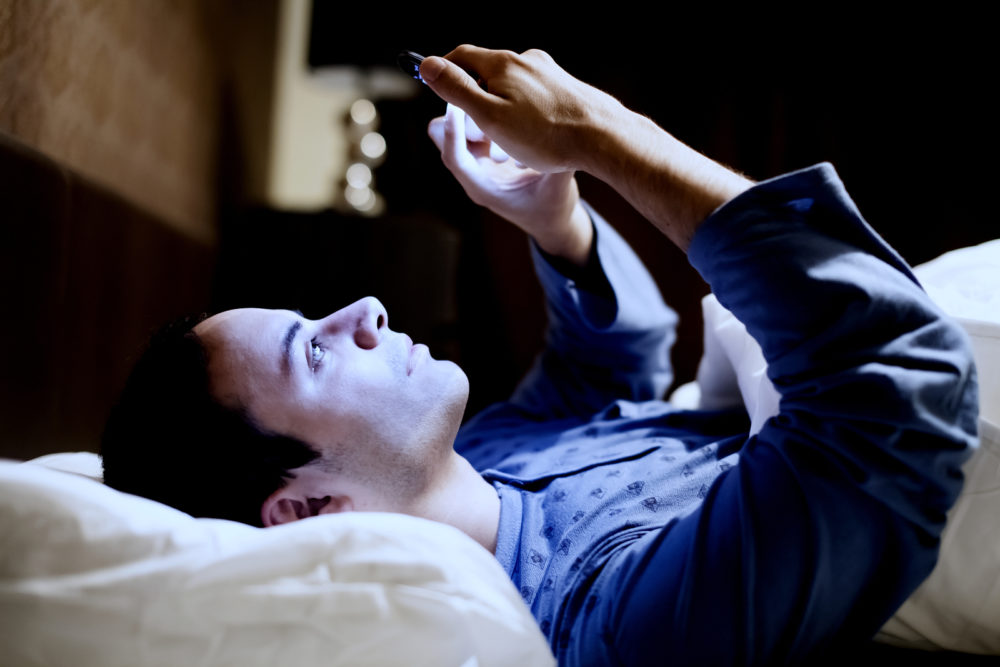
    4. Get an alarm clock – it’s easy to use your phone as an alarm clock, but this encourages you to look at it as soon as you wake. Try a conventional alarm clock and turn your phone off overnight. The blue light used by phones disrupts sleep**, so it may help your sleep quality too by switching it off completely.
    5. Rather than going cold turkey it’s best to start small and build up to something. Why not start by turning off notifications for an hour, then two, building up to a whole day, or even a week at a time? Check out apps designed to block sites at certain times of the day. This helps to avoid that mindless checking and re-checking we all fall victim to!

    Taking the plunge and giving up social media for a week or more can be an incredibly refreshing experience. It lets you live in the present, and remember memories in real-time, instead of via a camera lens. Technology has made it so easy for us to stay connected and to know our friends’ ins and outs, but it shouldn’t replace face-to-face contact as this is not always the healthy or desirable option.

    Experiencing stress and mental health challenges is a normal part of many people’s lives – for additional support, visit AXA PPP healthcare.

  • Are you about to fail Dry January? Here’s 11 things you won’t miss if you stay sober – and keep on track!

    Are you about to fail Dry January? Here’s 11 things you won’t miss if you stay sober – and keep on track!

    When I gave up drinking 5 and half years ago, I thought that life as I knew it would end, the parties, the laughter, the falling over in the ditch… but it hasn’t and in fact, I can still outstay my welcome, be the last to leave a party and fall over at any time as required. It wasn’t the booze after all. Here are the 11 things you won’t miss if you go sober.

    1) White wine guilt.

    You know the feeling when you wake up after a heavy night and you think back to the conversations you had the night before and then it hits you, you started calling everyone a c**t for no particular reason, except for, at the time, you were passionate about particular cause and it seemed like the only word that fully explained the cause – and then you realise that “everybody” included your boss, mother, local vicar and the street cleaner.

    2) Lengthy debates about shit that doesn’t matter

    I like to debate and I’ll happily argue a point, even if I don’t agree with the point that I’m debating. If the person opposite is a good sparring partner I’ll even argue that Trump is the planet’s saviour. Being sober, of course, I’ve realised that I don’t need to take the debate to its natural conclusion of a 5AM-we’ve-drunk-everything-let’s-start-on-the-Archers-cause-there’s-nothing-left, drunken dribbling train wreck. I can just leave it now.

    3) Saying too much.

    I was a bit of an over-sharer – I still am to a certain extent. And it surprises me how much people, especially in business will give away when they’re drinking. Secrets and inside info are traded away for another glass of Blossom Hill. Next time you’re out on a do with a client, just ask a few probing questions, they’ll open up about all sorts of stuff that ultimately, sober, they’d never tell and you know what, it all leads to point 1.

    4) Having spent the best part of a week’s wages on one tragic Saturday night.

    Dear god when I look back at how much money I spent buying rounds over the years, I could have bought a house, a yacht and a reasonably sized pony. Now a Diet Coke (£2) and I’m anyone’s (not really). What did spending all that money get me? Nowhere. And in the morning when I wake and I look into my wallet, I don’t feel point 1. Actually I wrote about how much money I saved here.

    5) Grey saggy skin.

    Honestly, I’ve not really aged. People always assume I’m still 10 years younger than I am… I’m happy about that. I don’t get Champagne face anymore. That look as though you’ve sat with your face against the side of a patio door all night.

    6) Repeating myself, repeating myself.

    Have you ever notice how dumb people who drink sound. First off we’d get irate about something and then we’d bulldoze our beef into any conversation and repeat, repeat and repeat until we pass out. We never listen to advice and we just keep on repeating…

    7) Night buses

    I take my smug (it’s a hybrid, so I feel less guilty about pollution) car everywhere – I never have to endure a chip stinky N91 night bus ever again. Sure I’m missing all the dramz, the light petting, the fights and alcohol breath from other passengers who are just far too close.

    8) Spending a fortune on cabs

    I no longer have to spend a mortgage on a cab to get back home. Are you hating me a little now, I would, I’m sounding really self-righteous.

    9) Piling on the pounds

    Before, when I was drinking, I just couldn’t seem to lose weight. Pounds just seem to be constantly piling on, no matter how much I ran, went to the gym or ate less cheese. I’ve lost over a stone and excitingly the weight hasn’t crept on again. When you consider a bottle of wine has 600+calories in it and you drink maybe 3-4 in a week – you’re looking at 1800-2400 extra calories a week – a full day’s worth of calories extra. Over a year that’s 93600 -124,800 extra calories that you’re probably not burning off.

    10) Apathy

    Come wine o’clock – which could be from 5:30 PM in our office, I just wouldn’t get anything else done. My mind would literally shut off after the first sip and then after a glass, I’d become something of a less evil Jabba the Hut crossed with an average British voter (completely apathetic). When you give up alcohol, you can say goodbye to no energy and goodbye to the excuse monster.

    11) Depression

    For me, the greatest thing about not drinking anymore is less anxiety and general depression. I couldn’t work it out. Every few days, I would get an uncontrollable bout of depression. Really deep and out of nowhere. It wasn’t until I released that it was always two days after a bender of a night that I realised my anxiety and depression was being brought on and exacerbated by alcohol. In the year that I’ve stopped, I have two, manageable down days – as opposed to two a week.

  • Admiting that you have dark feelings is difficult at Christmas

    gracinistudios / Pixabay

    But it’s absolutely okay to do.

    Gerard Barnes, CEO of mental health treatment specialists Smart TMS gives THEGAYUK five tips on how to “safeguard” your mental wellbeing this holiday season.

    Talk about your feelings

    MabelAmber / Pixabay

    Many people will expect you to be in great spirits at Christmas, but don’t necessarily take into account why you may appear to be down. For those of us who experience negative thoughts or feelings at Christmas, it can be hard to admit that at such a festive time of the year that you don’t share in the delight of the holidays. However, more people are struggling than you think. Making the decision to talk about your feelings and share them with those around you can improve your mood and make it easier to deal with the tough times – especially when you discover that many of the people around you may find themselves in the same position!

    Be picky with social engagements – they are not obligations!

    kliempictures / Pixabay

    It’s extremely easy to get burnt out over Christmas and New Year. Between work parties, spending time with friends, the intensity of family gatherings and then the pressure of New Year, many people are sucked into giving away too much of their free time and ending up extremely tired, lethargic and blue. Make time for the people you care most about, but ensure that you take enough time for yourself to recover and relax.

    Give SAD the sack

    Embed from Getty Images

    The weather influences the way in which we behave every day – it dictates the food we eat, the clothes we decide to wear, and to some extent where we decide to go. However, for millions of people in the UK, the short, dark days around Christmas and New Year can have a disastrous impact on health and wellbeing, triggering the onset of a depression known as seasonal affective disorder, or SAD.

    There are, however, plenty of ways to alleviate the symptoms of SAD. Getting regular exercise, eating a balanced diet and exposing yourself to as much sunlight as possible are of course extremely important, but you could also consider other options such as light boxes and dawn simulators to help regulate your circadian rhythms.

    SAD is also closely linked with a lack of vitamin D which your body naturally produces when exposed to sunlight – given that sunlight is in fairly short supply in the UK at Christmas, it may be worth getting your vitamin levels checked – using vitamin D supplements could certainly help to resolve any deficit you may have. 

    Reduce alcohol consumption

    http://gty.im/159602791

    For the heavier drinkers, those trying to cut back, and people who perhaps have a poor relationship with alcohol, my suggestions for remaining sober and in control at Christmas are as follows:

    • Take your favourite non-alcoholic drinks to any parties or gatherings, for example soda water, ginger beers or lemonade. This will help you to blend in with a glass in your hand, you’ll feel less conspicuous, and will likely avoid being asked for a drink every few minutes
    • Plan activities that will get you out of a setting in which you would typically find a drink in your hand – for example, winter walks, going to the cinema, family activities at home, etc.
    • Be assertive: a lot of people will likely question you on your decision not to drink. Some will be genuinely interested; others may just enjoy poking fun. However, if you ensure you come prepared with a short but effective summary or spiel as to why you’re deciding not to drink, this will really help you to avoid peer pressure and take ownership of your decision.

    Stay Active

    Embed from Getty Images

    It’s very easy to become inactive and sedentary at Christmas. The food, the presents and the time spent with close ones can compound with the often poor weather to make the prospect of exercise daunting. However, regular exercise can boost your self-esteem (especially for those who enjoy the chocolate at Christmas), and will also help you to sleep better and get the rest that so many of us look forward to in the run up to Christmas.

    If you’re having difficulty during the fesitve season and have no one to talk to, you can reach out to Samaritans or the LGBT+ helpline, Switchboard

  • The humble wank could save the NHS millions

    The humble wank could save the NHS millions

    Leading sex brand LELO is urging the department of health to open up to the idea of prescribing masturbation to patients as part of a wellness programme over a range of stress-related health problems.

    LELO’s UK sex therapist Kate Moyle commented: “Sexual wellness is a part of all-round wellness, and as a Psychosexual Therapist it is clear to see that when there are challenges in our sex lives and sexuality, that can impact other aspects of our health and wellbeing. 

    There’s a lot of research to show that having a handy shandy can relieve a variety of ailments because it boosts endorphins, reduces stress, improves sleep, improves immune system functioning, and can help with menopausal symptoms.

    Could help patients

    Moyle continues, “The function of pleasure is to make us feel good; and self-pleasure and masturbation can have positive benefits for our health in a variety of ways, including the release of the hormone oxytocin which can lower cortisol levels, getting to know our bodies better, and building sexual self-confidence.

    “Potentially recommended as a part of an integrated wellness programme, masturbation could be of benefit to some patients, when put forward with confidence and educative information.”

    It’s NORMAL

    In addition to the wealth of positive side-effects, masturbation has also been linked to an improved self-esteem and body image – championed by a wave of feminists who helped women discover sex-positivity. And in 1972, the taboo of self-masturbation was finally lifted when the American Medical Association declared it “normal”. 

    An Marcella Zanchi LELO UK Marketing Specialist commented: “We call on the Department of Health to act now and review and refresh the current practices when treating wellness issues, and to include the prescription of “masturbation” and self-pleasure to patients as and where needed as part of a wider wellness programme.”

    So do you feel better after a wank? Let us know in the comments below

    Want a toy that will revolutionise your wank? Read our review of the Satisfyer wand.

  • HIV TESTING WEEK: Do you need to be tested for HIV?

    HIV TESTING WEEK: Do you need to be tested for HIV?

    We invite Dr Julianne Barry, to talk about the importance of testing for HIV this HIV Testing Week.

    Let’s talk about HIV. The topic may trigger unease in many – but it needs to be addressed. There is huge anxiety around the prospect of contracting HIV and many misperceptions in terms of how or who can contract it. The reality is that it can affect anyone, regardless of sexuality, gender or age. It has been reported that approximately one-third of people infected in the UK are not aware of their diagnosis.

    This highlights the importance of getting checked if you perceive any potential exposure risk. HIV is a retrovirus that attacks the T-lymphocyte cell component of the body’s immune system. It is present in an infected person’s blood, semen, vaginal secretions and breast milk.


    How often should people be tested for HIV?

    • If you are having regular unprotected sex you should have regular tests for HIV as well as other sexually transmitted infections, every 3 months. HIV testing is routinely incorporated into general STI screening. The majority of people diagnosed with HIV in the UK in the past ten years, contracted HIV through sexual contact. People with a higher risk of HIV include:
    • Men who have sex with men, or their partners
    • Those from other countries where HIV is endemic, and their sexual partners
    • Injecting drug users and their sexual partners.

    What do the tests involve?

    HIV testing is quick and easy. You can have this done at your local Sexual Health/ GUM clinic, with your NHS GP or other private GP clinics. Your GP may suggest a HIV test if they have concerns in relation to your health that may point to HIV. A health care professional will ask you a few questions to assess your level of risk prior to performing the test. A HIV test involves a simple blood test taken from a vein in the arm.

    Some clinics have results available on the same day.

    Testing can also be carried out via a finger prick test (‘POC’ point of care tests) or at home with a self-sampling kit (finger prick blood test) which can be ordered online from some sexual health clinics. You then post the sample back to the clinic and your result is texted to you. These latter tests are third-generation tests and slightly less sensitive than a blood sample taken from your arm which is a fourth-generation test that can also test for the P24 antigen (part of the HIV virus that is detectable earlier than the antibody) and is preferable for early detection of HIV infection.

    The period between being infected with HIV and developing antibodies is known as the window period. For HIV this is four weeks and most fourth-generation tests will pick up HIV by this stage.

    A repeat test is offered at 3 months for a definitive negative result.


    What are the risks if you aren’t tested?

    CREIT: © garyphoto Depositphotos

    Approximately one-third of people infected in the UK are not aware of their diagnosis. By avoiding getting tested for HIV you run the risk of late HIV diagnosis which can be associated with various serious, potentially life-threatening medical illnesses due to a damaged immune system, compromised quality of life and subsequent untimely death.

    Early medical intervention is far more beneficial. If you are having unprotected sex and are unknowingly HIV positive you also run the risk of unwittingly infecting sexual partners. Pregnant women can transmit HIV to their baby if not tested and their positive HIV status is unknown. In the UK however, antenatal HIV screening is now offered as standard and very effective treatment in pregnancy can minimise this risk in HIV positive women.


    What are the risks if it is identified too late?

    With an earlier diagnosis, as well as anti- HIV medications, patients are offered medical treatment to prevent HIV related infections that can overwhelm the body in the context of a depleted immune system. If diagnosed late, some of these illnesses, also known as AIDS-defining illnesses, such as specific infections, certain cancers and cardiovascular problems may have already set in.

    They can develop swiftly and can even be fatal. There is a higher risk of serious illness and death with a late diagnosis of HIV, particularly in the first year after diagnosis. Undiagnosed HIV can do a lot of damage and hence early detection is vital in preventing hospitalisation and improving length and quality of life. These risks also extend to the person’s sexual partners who are at high infection risk.


    The treatment options that are available for those that test positive.

    It is important to remember that a diagnosis of HIV is no longer a ‘death sentence’. Great advancements in medical treatment and earlier diagnosis have paved the way in this regard. HIV is not curable and there is currently no vaccine against HIV.

    However, nowadays HIV is very treatable and with correct medical treatment from the early stages of infection, people diagnosed with HIV can live very normal lives and would be considered to have a near-normal life expectancy. People who test positive for HIV are usually seen in a specialist clinic within days.

    These clinics are run by highly experienced and compassionate teams of healthcare professionals, which aim to encompass all aspects of the condition from medical, psychological and social points of view. A combination of tablets -Antiretroviral treatment – is prescribed which suppresses the amount of virus in the body (the ‘viral load’) by preventing the HIV virus multiplying.

    These tablets are taken daily, for the rest of the person’s life and it is essential to comply with this treatment plan. Current treatments are thought to have less side effects than earlier regimes. Medication to prevent other HIV related infections may also be prescribed. The degree of viral suppression is monitored regularly by ‘viral load’ blood tests. The aim is to suppress the HIV viral load to an ‘undetectable level’. When HIV is ‘undetectable’ in the body, transmission to someone else is not possible.

    Dr Julianne Barry, General Practitioner at the London and Birmingham walk-in GP clinic, London Doctors Clinic part of the Doctors Clinic Group

  • Don’t want to catch a cold this winter – maybe you need to clean your house more

    Don’t want to catch a cold this winter – maybe you need to clean your house more

    A study of 2,000 UK adults found the nation is labouring over tasks which may clear up dust and dirt visible on the surface, but viruses are being left untouched.

    More than a quarter will clean their homes with the ambition to make sure everything appears clean and tidy, with 27 per cent working to remove all evidence of dust and dirt.

    However, expert insight highlights how this could lead to virus-ridden homes as germs can remain on hard and soft surfaces for up to 48 hours – even after a daily dusting.

    We catch between two and five colds a year

    Embed from Getty Images

    Figures show adults in the UK catch between two and five colds a year on average, while children suffer up to eight bouts.

    In fact, minor illnesses such as coughs and colds were the most common reason for sickness absence in the UK in 2016, accounting for approximately 34 million workdays lost.

    Despite this, the research commissioned by Dettol, found just 17 per cent say their main objective when cleaning is to rid their house of cold and flu viruses.

    Instead, three in 10 confessed to only cleaning when they can see visible dirt.

    Dr Lisa Ackerley, the Hygiene Doctor, said: “The research has gleaned some interesting insights into the cleaning habits of the nation, and how the actions they are taking could mean they are at risk of becoming unwell this winter.

    Just because it looks clean, doesn’t mean it is!

    Embed from Getty Images

    “Although it’s reassuring to see millions of Brits are in the habit of keeping their homes spick and span, it’s the way they are doing it which might mean they aren’t actually as effective at reducing risks of illness as they think because the home may look clean, but it is not hygienic or disinfected at all.

    “Studies have shown that flu viruses can survive on common household sites for extended periods of time, from up to 48 hours on wooden surfaces, eight hours on cloths, and 24-48 hours on non-porous surfaces.

    “People may be surprised to learn that it is in fact hands and hand contact surfaces that can play a very important role in the journey of the germ, and that good hand hygiene together with regular disinfection of commonly touched surfaces can help to reduce transmission of colds and flu.

    “Studies have also found household objects such as door handles, light switches, pens, tap and toilet handles, and television remote controls can become contaminated with viruses which are transmitted by dirty hands.

    “In addition, when people come home from travelling on public transport, or being with crowds, for example when shopping, then it is important to wash hands immediately upon coming into the home to prevent the transfer of viruses onto surfaces.”

    We are spending time cleaning, just not the right type!

    Embed from Getty Images

    The study also found the average adult will clean for an hour a week, but one in six spend less than 20 minutes a week on household chores.

    Of this time spent cleaning, 22 minutes are dedicated to vacuuming or sweeping but just 14 minutes a week is used for wiping down kitchen surfaces with an antibacterial cloth.

    When it comes to the spread of viruses, only half believe this happens in the home.

    This compares to 73 per cent who would put it down to sneezing, and nearly two thirds who think it’s from touching contaminated surfaces in public.

    Just 13 per cent of Brits polled, via OnePoll, believe their home is the place where they or their family are most likely to interact with germs and viruses, compared to 38 per cent who would expect it to be at school.

    And six in 10 think you’re most likely to come in contact with cold and flu viruses on public transport.

    Almost a fifth also don’t believe that catching colds and flu in the colder months can be prevented.

    It also emerged around two fifths reckon the toilet is home to the most cold and flu viruses, compared to 33 per cent who anticipate kitchen surfaces to be the most contaminated.

    As a result, more than half will regularly use an anti-bacterial cleaning spray on their toilet seat, with just two in five doing the same when cleaning the kitchen table.

    Even fewer – one in four – will use an anti-bacterial spray on the door handles between rooms.

    Through the Clean It, Kill It, Stop It campaign launching this week, Dettol aims to educate the British public on how colds and flu are spread via touch where viruses may have been deposited.

    CLEAN IT: Cold and flu viruses can survive on hard and soft surfaces in the home, from worktops and cupboards, to sofas and curtains, but you can help prevent their spread with your daily cleaning routine.

    KILL IT: Cleaning is more than dusting and hoovering. When carrying out your daily cleaning routine it is important to use products which kill 99.9 per cent of those invisible cold and flu viruses.

    STOP IT: Help stop cold and flu at home this winter and keep your family healthy

    1662222 / Pixabay

    Pat Cattini, president of the Infection Prevention Society, added: “Influenza and the common cold can be incredibly debilitating, however it appears that aside from getting a vaccination, the UK public need to be more aware of additional measures that can help prevent catching these illnesses each season.

    “We need to ensure that people understand surfaces and commonly touched items, like door handles and phones, can be contaminated with flu and cold viruses particularly in the colder months when transmission is more likely.

    “When coupled with actions like regular hand washing and annual flu vaccinations, the simple addition of daily cleaning can help prevent the spread of colds and flu.

    “The work Dettol is doing to educate the UK public on this through the Clean It, Kill It, Stop It campaign will go a long way to increase proactive prevention nationwide.

    “By ensuring we hygienically clean surfaces and commonly touched items in our homes and workplaces to reduce exposure to cold and flu viruses, we can all work together to help stop cold and flu before they spread this winter season.”

  • Here’s why you shouldn’t be taking Viagra and poppers together

    Here’s why you shouldn’t be taking Viagra and poppers together

    It could be lethal. So here’s what you need to know.

    CREDIT: TheGayUK

    One doctor told THEGAYUK.com, that taking a Viagra and poppers together, could cause “…a significant drop in the blood pressure that can lead to collapse and death”

    Those are the words of a doctor who is warning users that mixing Viagra and poppers together could cause some real damage to health after a new study revealed that over half (55 per cent) of people who use Viagra have also used poppers alongside them. Over half of those said they had no idea of the dangers of mixing.

    In the survey by AssuredPharmacy over 1400 people were questioned about their popper usage, 80 per cent admitted to using poppers and over half admitted to using poppers regularly.

    Aside from a headache, potential skin burns and fainting, poppers are known to cause a drop in blood pressure, and mixing with Viagra according to one doctor, could be very dangerous.

    Speaking to THEGAYUK.com Dr Roisin McHugh BSc, MBBS, MRCGP, DRCOG, DCH, DGM, DPD said,

    “Alkyl nitrites, commonly known as poppers, if taken in combination with sildenafil (Viagra) can have a dangerous effect. The combination will cause a drop in blood pressure, this can be a significant drop in the blood pressure that can lead to collapse and death”

    Are poppers safe?

    Many gay and bisexual men use poppers and don’t suffer any issues, however, their usage does come with warnings. For instance, they can cause death if swallowed. Also, people who have heart problems should stay away from using them – especially when combined with other medications, such as Viagra. They can cause a person’s blood pressure to drop incredibly low.

    Don’t forget the skin burns!

    Doctor McHugh also warned about skin burns, saying, “Poppers cause chemical burns if you get the liquid on your skin and don’t wash it off with water quickly enough. In rare cases, there are also some reports that poppers can cause impaired vision or sight loss, although this may be reversible if you stop using them. If you abuse them heavily you can experience crusty yellow facial skin lesions around the lips, nose and mouth”.

    Issues with your eyes?

    LhcCoutinho / Pixabay

    In 2014 optometrists warned about vision loss in those who habitually use poppers. There have been reports of temporary and permanent vision loss. It is referred to as “poppers maculopathy”.

    If you experience any issues with your eyesight you should seek medical advice.

  • COMMENT | Is social media a blessing or a curse when it comes to mental health?

    COMMENT | Is social media a blessing or a curse when it comes to mental health?

    CREDIT: Minerva-Studio-bigstock

    Use of social networking sites and the prevalence of anxiety and depression is on the rise worldwide.

    But, is there a connection between social media and mental health concerns? Dr Shazia Bhatti, General Practitioner at the private GP clinic London Doctors Clinic is here to break down the facts.

    How can social media impact mental health?

    With smartphones in the pockets of almost every person in the UK, our lives are now full of; posts, followers, subscribers, likes/dislikes and comments.

    We live in an age where communicating has evolved to far more than just the spoken word. Social media has changed how we talk and share information with one another – ultimately impacting how we live our lives.

    The positive side of social media

    In many cases, this is a blessing. Social networks are breaking boundaries, allowing us to communicate and get information from different countries and communities instantly! We have immediate access to breaking news and the story can go viral within minutes. As the name suggests, social media can be used to socialise. We can keep up to date with both old and new friends, helping us remain in contact with people we may have otherwise lost touch with. We are able to explore the world via the internet, learn new skills and for some people it has even become a full-time career! Aside from this, social media can also provide people with a sense of place, helping people find different communities of like-minded individuals with similar lives or backgrounds. Here people can learn about their health and mental health and seek advice from those who have gone through similar situations via support groups. This can help people to find suitable support, even if they do not feel comfortable expressing their worries or concerns to friends or relatives.

    The negative side of social media

    On the other hand, though, research has also found that social media could be detrimental for mental health. Much of the evidence which suggests that social media could be harmful to mental wellbeing is related to cyber-bullying. This could include online ‘trolling’, name-calling, creating a fake profile to intentionally damage another’s reputation or continuously harassing and threats of physical harm. One of the most common forms of online bullying is posting negative comments on someone’s profile, which can be about any aspect of their life, such as social status, appearance, family or job. What makes this type of bullying so harmful is that the bullies can be anonymous, meaning they rarely receive negative repercussions, but the posts can be seen by the whole world.

    For someone experiencing cyberbullying, it can lead to a whole host of negative implications for their health, in particular, their mental health. They may be left feeling alone, rejected, ashamed, humiliated and afraid which can result in stress and anger. In their personal and professional life, this might be shown through an increase in days off work, increase in mental health issues, reduced self-esteem, suicidal ideation, and poor physical health which may lead to tobacco, alcohol drug and other substance abuse.

    How are social media ‘ideals’ having an impact?

    ©-Maridav-Depositphotos

    In most cases, social media is a highlights reel for many people’s lives, with posts that are shared often being manipulated in order to look perfect and ‘bad’ days rarely (if ever) shared. While these photoshopped images of people with perfect bodies may be aesthetically pleasing, they can be harmful and promote negative messages. This is because they can affect our body confidence and how we perceive our appearance.

    Recent studies have found that there is a link between viewing images of perfect bodies online, on Instagram, Facebook pages and developing personal body dissatisfaction.

    The craze of displaying altered manipulated photographic images via Photoshop and Lightroom program creating a false, unachievable and unrealistic digitally edited body image. This can, intentionally or not, send the message that people should not feel good about their looks unless it matches the images that social media culture promotes. This then lends itself to the rise in trolling, bullying, and body shaming those who do not fit in with that unrealistic image.

    The pressure from social media to have an unrealistic, ideal and perfect body is may lead to the increase in eating disorders, poor self-esteem, relationship issues, negative self-image, anxiety, depression, Body Dysmorphic disorder, self-harm and suicidal ideation.

    It is very important to encourage people to develop Digital Resilience to be able to understand that these perfect body images are often digitally enhanced and only showcasing someone’s best side. It is important to also learn how to be kind to yourself, to find things you like about yourself to create a more positive perception of yourself.

    What should you do if you or someone you know is struggling with their mental health?

    The negative effects of social media have often been associated with various mental health ailments, such as; anxiety, loneliness, fear of missing out (FOMO), low self-esteem, poor self-image, depression and suicidal ideation.

    It is very important to recognise the early signs of social media fatigue or mental health issues and seek help if you are concerned.

    Some of the signs that you should look out for include:

    • Feeling isolated
    • Being bullied and harassed
    • Receiving threats or abuse
    • Security attacks such as hacking, identity theft and viruses
    • If you feel targeted by hate groups
    • Constant low mood and feelings of depression
    • Feelings of anxiety when looking at social media comments
    • Difficulty in sleeping due to the constant need to check social media

    If you have experienced any of the above you should speak to someone that you trust, such as a family member, friends, a helpline or join a support group and ask for help. This will help to give a deeper understanding of how social media can affect your mental wellbeing and health and give advice on how to overcome it.

    Fortunately, awareness is now being bought to these issues and it is very encouraging to see brave people, celebrities, parents and family members who had dealt with negative effects of social media sharing their stories. This raises awareness, helps to form support groups and gives hope and guidance to others who may be experiencing these issues.

    The positive effect of Social media is that support groups and campaigns are helping the users to ignore and report the abusive messages they receive from online trolls as part of a new campaign to stop the spread of hateful content.

    The campaign group ‘Get Safe Online’ and the new charity ‘The Centre for Countering Digital Hate (CCDH)’ has published advice on how to best to deal with abuse. Social media users are encouraged to resist the urge to respond back and instead block the troll’s account immediately. It is also encouraged that messages received if they could be seen as containing criminal content, such serious trolling should also be reported to the police.

    Dr Shazia Bhatti, General Practitioner at the private GP clinic, London Doctors Clinic

  • DRAMA TRIANGLE: Hero, Villain or maybe you’re neither?

    DRAMA TRIANGLE: Hero, Villain or maybe you’re neither?

    One thing you may all of noticed in your lives is that when someone wrongs you (in whatever way) they aren’t shunned by their friends or family, they often carry on with their lives and, depending on the scenario, will continue to have people give testimony to what a ‘good person’ they are.

    This, often but not always, seems to only add fuel to the fire and riles us up further as to how there is no justice in the world. I mean, how can this be so?

    How can someone that has done something so despicable in your eyes that the world can see them still as the ‘good guy’?

    Well, in short, that’s because the world varies rarely deals in absolutes, contrary to what many people today would have you believe. The world is various shades of grey and there isn’t a ‘universally agreed’ rule book on behaviour everyday behaviour. What you see as something despicable others may well not see as that bad. They may even see you as the villain and this other person the ‘hero’.

    Anxiety, depression and general mental health struggles are a big problem in our modern-day society, therefore while this article can’t cure those things, I wanted to share with you a couple of survival tips I have learnt over the years through my experiences and my struggles with Depression.

    Drama Triangle:

    One of the most powerful things I learned was about the drama triangle. It is a model that most soaps and dramas are based on and is pretty much everywhere in social life – especially amongst the gay community!

    The way it works is that in any given scenario there are always at least 3 ‘roles’. Person 1, from their point of view, may be claiming to be the ‘victim’. “This person is giving me a hard time at work” or something like that. Something is happening to them or has happened to them that they feel is ‘wrong’. To validate that belief, they will seek a witness (person 3). Someone who will be told their tale of woe and will be expected to give them sympathy and by doing so, validate their position as the victim and this other person (person 2) as the perpetrator.

    At the very same time, the person being accused of being the perpetrator or ‘attacker’ of the victim (person 2) may also be feeling attacked by the person claiming to be victim, which may be why they have been defensive or stand-offish to the person 1. In their mind, the roles are very different from how person 1 sees it. To them, they are the victim, person 1 is perpetrator and person 3 is the witness given sympathy and validation (someone who could very well be the same exact person that was the witness to person 1).

    This triangle is always chopping and changing as events and the ‘drama’ unfolds. And unfortunately, once you are in it, it is very difficult to get out of it.

    This is why I have found, albeit extremely painful at times, it is best to always be on the lookout for this triangle in effect and to try and put yourself into the ‘adult’ or ‘observer’ category outside of the triangle and able to see each angle and element to draw your own conclusions (or not). It means you are also able to see that what someone may need is not a sympathy validation of being the victim, but instead an opportunity to break the cycle and take control of their own self-awareness and mental state.

    Communication:

    One of the biggest things I have found in all aspects of life is that communication is paramount and can be a tricky thing to master. I’ve witnessed relationships (any relationships not just romantic ones) completely fall apart because of too little communication, too much communication or over-engineered communication.

    Too little communication is one of the biggest causes of issues. Things like “I assumed they wouldn’t mind”, or “I thought they might react badly, so I kept quiet” are just 2 views that you hear every time something goes wrong.

    I’ve seen romantic relationships where they have mutually ‘agreed’ to be open, but that mutual agreement might exist in one person’s head, but not the other. One has one view of what that means and another view. Both come with their own sets of rules and are often worlds apart from each other. Whereas all it takes is a little courage to speak your mind on what the rules could be and mutually agree them have actually talked about them. We make such large decisions on the basis on assumption, are we really surprised when it then comes tumbling down? Assuming really does make an ‘Ass’ out of ‘U’ and ‘Me’.

    On the flip side, of course, too much communication can be just as harmful. One example would be that we all look at the world around us and make unconscious judgments on what we see. We filter as to what is relevant to us at that moment and what isn’t. And seeing a beautiful face while walking and proceeding to spend 5 minutes talking about how that face made you feel may not be what your romantic partner wants to hear. You’ve assumed they would want to hear about it because you would want to and that could be how you communicate or did communicate with friends and previous lovers.

    Cracking the communication nut is difficult but you can’t crack communication if you communicate nothing. So, talk to your loved one, friend, family member etc and see where it takes you. Even talk to someone you consider an enemy; you might find you learn something, and communication is restored (I refer you back to the drama triangle).

    Self-awareness:

    Self-awareness is a great and useful thing, but it is also extremely dangerous and is not to be confused with things like body dysmorphia or a form of anxiety that makes you overly aware and critical of your actions.

    Self-awareness, from my experience, is about being able to not only be aware of yourself but also to be aware of what is going on around you and your influence and impact over it.

    I’ve learnt to ask why someone does what they do. What have you ‘come for me’ or ‘betrayed me’ or whatever it might be? Is it something I have done? could it be something I didn’t do? Is my action or lack of action right now having a positive or negative effect?

    If someone has walked a path I wouldn’t dream of walking, then there is something going on that I don’t know about. Genuinely ‘evil’ people are rare, and certainly not a common as the press and social media would like you to believe. People, instead, do the best they can with what they have around them at the time. The decisions they make, although questionable to outsiders, at that moment and given the choices they had, may have been the most logical or ‘best’ to them, their values and their view of the world.

    That’s something I have struggled to come to terms with and it has taken me a few years to accept it. It is a challenging thing to accept but once you start living it and making part of how you think, you learn to see the world from a far bigger picture.

    I don’t claim to be an expert on social interaction, far from it, I’ve had my fair share of mistakes, attacks and ‘dramas’ and some of that will never change. But what has changed in recent years is how I respond to them. How I chose to take part in the drama triangle or how I chose not to, let the emotion go and try, instead, to do the right thing for me. Which is what any of us can do.

    If you want to learn more about how to communicate and increase your self-awareness, I am a firm believer in Neuro-Linguistic Programming (NLP). You can find details from the Association
    of NLP
    including any local practitioners and local groups that can help you.

    Find UK-Based gay and LGBTQ+ Therapists here

  • Guys with cervixes, don’t forget to book yourself for a smear test

    Guys with cervixes, don’t forget to book yourself for a smear test

    900 of those people don’t survive. It’s time to #EndSmearFear.

    Jo’s Cervical Cancer Trust is partnering with Twitter to launch the #EndSmearFear campaign.

    #EndSmearFear encourages users to feel comfortable discussing topics such as vaginas, cervixes and smear tests on the platform, including sharing tips, support and information on the test.

    Conversation around smear tests, vaginas and sexual health on Twitter have risen 50% since 2017,  demonstrating that people are feeling more comfortable discussing these issues than ever before, but much more can still be done.

    More than 3,200 women, trans men and non-binary people with cervixes are diagnosed with cervical cancer every year in the UK and nearly 900 don’t survive.  As well as this, attendance of smear tests (despite being the most effective protection against the disease) is falling.

    One in three young women and people with cervixes are not choosing to take the test when invited.

    Smear tests can be difficult due to a range of different, and often complex, factors. This can include embarrassment, fear and not understanding what the test is for. According to the LGBT Foundation, 17.8% of LGB women have not been to their smear test with lots of myths and stigma that needs to be overcome.

    The #EndSmearFear campaign, which has already received lots of support from celebrities and politicians, aims to normalise chat about smear tests, cervixes and vaginas on the social media platform through a light-hearted search for the best emoji for female genitalia.

    https://twitter.com/Robinbequiet/status/1173563946487488512

    One Twitter user said, “The idea of getting a smear as a Trans man triggered my dysphoria to the point I almost didn’t go. But the nurse was respectful, understood the challenges, and was kind. #EndSmearFear”

    Celebs backing the campaign include Louise Redknapp, Scarlett Moffatt, Charlotte Crosby, Chloe Delevingne, Vicky Pattinson, Chloe Sims and lots more.

    Kate Sanger, Head of Communications at Jo’s Cervical Cancer Trust said: “We want to help reduce some of the fear and uncertainty around smear tests and have seen first-hand the power of social media in doing this. We’re pleased to be working with Twitter to see smear tests, cervixes and vaginas talked about as normally as using an emoji. By encouraging positive conversations we hope more people will feel comfortable asking questions, know where to find support and feel able to book a test if they choose to do so.”

    Katy Minshall, Head of Public Policy at Twitter UK said, “With a third of women aged 25-29 not attending the test, we want people to feel safe and supported when talking about smear tests on Twitter. Emojis are a core part of Twitter conversation and we want to break down some of the uncertainty and fear about smear tests, and talking about them, with this simple, light-hearted campaign.”

    Anyone with a cervix is eligible for a smear test aged 25 to 49 every three years and aged 50 to 64 every 5 years. The #EndSmearFear campaign is live from 16 September 2019.

    Please see here for more information: https://www.jostrust.org.uk/endsmearfear