Tag: Four Star Car Review

Our four-star reviews for all motor vehicles, petrol, diesel, hybrid and electric

  • CAR REVIEW | Jaguar F-Type

    Jaguar F-Type | ★★★★☆

    This Jaguar F-Type is a welcomed departure from grand slam GT cars available. Its styling takes some elements of the old E-type to give it a romance of a time long forgotten. A time when Jaguar’s sports car was the fastest thing on the road and turned heads.

    The F-type isn’t all that though. It has a problem, and that problem comes from in-house at Jaguar. I was fortunate to test identical powered coupe and convertible models back to back with one being the clear winner.

    Let’s start with the styling. It’s not quite the pin-up poster your father would have had on his bedroom wall back in the day. Forget all about being seduced by this pussycat. It will still fill you with giddy excitement not only because the door handles pop out when you press the remote, but the looks are pure aggression. This femme fatale will scratch your mind and soul with a longing to go out with her again.

    It’s amazing what the Jaguar engineers have done to this engine. The four cylinder Ingenium 2 litre turbo has a broad spectrum of uses and can be found in many of the models offered by Jaguar and sister company Land Rover. In the F-type, it has been tweaked and prodded to suit its new sporting clothes. And it’s all quite good. A 155mph two-seater sports car that can achieve around 40mpg.

    What’s not to like?

    The power outputs sound great on paper. In practice, it is somewhat different. And here is where the F-type either excels or fails. It’s just not that fast. Don’t get me wrong, it’s fast, but for a car dressed to kill in sports car clothing with a 0-60mph dash in 5.4 seconds, it just isn’t fast enough. The problem is those pesky hot hatchbacks. They can be just as quick and for less money. Jaguar does offer more powerful F-types but you will need to pay extra for that, and we are, already up to £50-60k. What the Jaguar has up its sleeve is grand touring luxury.

    Inside you are treated to a snug cockpit. Everything falls to hand. And to the hand, you notice items that are there in other Jaguars and Range Rovers. No bad thing in real world terms as this does keep costings down. The one problem I have with the F-Type is the facia in that it is the same as plenty of others in the JLR range. The car is so different in so many ways that it needs to look different. And so too should the heater controls. At this price, they are just a little on the cheap side. This itself goes against the grain of the luxury feel you get from the seat leather and build to how it all moulds together.

    And so back to those performance figures. One of the problems with the F-type is in its construction. The all aluminium framed car makes it a heavy vehicle. Added to this the fittings that are well engineered to fit without rattling and more weight is added thus giving the illusion of luxury that is as mentioned, there in abundance.

    On the road then and how does it feel? It feels amazing. I’m a sucker for a smooth engine and sweet exhaust note and added to the 8-speed automatic gearbox it feels well suited to everyday use. Here is where it excels. For its few faults and out and out performance, it all adds up to make this a sports car that can be used to pop to the corner shop on a Sunday for a pint of milk and a Sunday paper albeit the long way around. It’s nice and easy to drive, and it looks the business. No one will really know that it’s the slower of the models Jaguar offer.

    Pulling out of junctions in wintry wet roads doesn’t end up with the wheels spinning and you looking like an idiot. It pulls away fast and has no trouble putting its power down. It feels quicker than it actually is. On today’s congested roads with mobile cameras popping up all over the place, perhaps feeling faster than it is, isn’t such a bad thing after all.

    The sound is quite intoxicating which heightens the sense of urgency. You can switch it off if you like unless you opt for the ‘Dynamic’ setting in which case it is there all the time. Normal mode is pleasant enough. The Coventry cruiser then is a pussycat. Select ‘Dynamic’ and its all noisy roar and claws for what it is. The burble and roar from the exhaust will make you smile.

    Handling too will also make you smile. It’s pretty much easy going all the time regardless of the setting you choose. This again adding refinement to a sports car looking package. It’s not bad if I am honest. For everyday use, the F-type is actually rather nice. Unless you are looking for an out and out sports car to do stupid things in, you wouldn’t be too disappointed with the very few shortcomings it has. For what I want in a car like the F-type, it doesn’t fail me, it excels. I want my fast car to be a bit lazy like me and easy going when I want to not think too hard about the road ahead.

    So here comes the problem I mentioned at the beginning. What is it to be? Closed coupe with average boot space or a drop top with even less boot space? That’s easy to answer.

    That accolade goes to the convertible. The £10,000 more of your cash is a lot to ask for straight out of the showroom. Keep the car for three years and that extra cash paid out will vanish with the joy the snug fitting, but mostly missing roof will have given you.

    With my choice made up, I’ll just have to send to the luggage ahead. Hoy hatch performance or not, they don’t quite have what the F Type has. And you remember me telling you about the sound of the exhaust? With that just over your left shoulder, it is pure evocative mechanical magic and I couldn’t get enough of it. Let the wheels roll, the south of France is calling.

    Likes

    Driving dynamics
    Engine sound
    Luxury refinement

    Loathes

    Interior looks a bit dated
    Fascia lacks a sporting identity
    Handling not exploited with this power.

    The Lowdown
    Car – Jaguar F-Type 2.0L RWD
    Price – (from) £49,900 Coupe / £59,085 Convertible
    MPG – 39.2mpg (combined)
    Power – 300 bhp
    0-62mph – 5.4 seconds
    Top Speed – 155 mph
    CO2 – 163 (g/km)
  • CAR REVIEW | Alfa Romeo Giulia Veloce

    CAR REVIEW | Alfa Romeo Giulia Veloce

    Snap-Happy Alfa Romeo

    Alfa Romeo review
    (C) Alfa Romeo

    Alfa Romeo has been missing from the compact executive car market since the axe fell on the 159 in 2011. You’d hope then that over the last six years the Italian manufacturer might have got its new car right. If you have read the hype elsewhere, believe it!

    Thankfully the Giulia isn’t perfect, and there are still some questionable bits here and there. It’s the sort of things you’d not accept from an Audi. If Alfa Romeo had made it perfect, then it wouldn’t be an Alfa Romeo at all. The world would have stopped spinning on its axes and we would all be engulfed by a burning sun.

    Okay so that might be a little dramatic. I for one however do like a bit of drama from my car. In an Alfa Romeo with its rich history of successes and failures you still expect it to be good and bad with a bucket load of enthusiasm. It makes you feel alive when behind the wheel of the new Giulia Veloce.

    I’ll start with the enthusiasm side of the car. It’s a great car to drive. The Veloce model is second to end in a five model line up. Only the ferocious Quadrifoglio (Green Cloverleaf) beats it on all levels of driving dynamics. That said the Veloce, at £22,000 less, is by no means less of a car as a commuter saloon/play thing that will make you happy.

    You will be happy.

    (C) Alfa Romeo

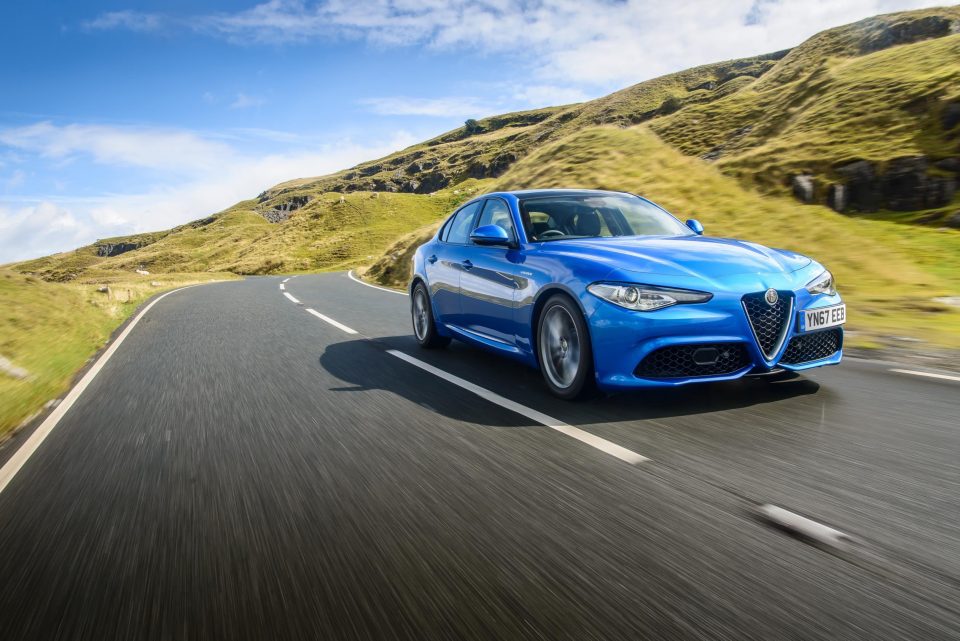
    Before you even get into the Giulia, you’re confronted by a classic design in the making. From the front at least. Its tall grill and side vents add a purposeful look which is then given some Alfa flair with the licence plate mounted to the side. What isn’t so successful is the rear. It’s not like Alfa Romeo don’t have any in-house designs from the past that they can work from. The rear is a bit too BMW for my liking.

    The first thing you notice when you get inside the Giulia is the steering. It’s phenomenally direct. The smallest inputs translate to so much on the tarmac. You’ll notice this within about 200 meters of driving in a car park. It sets up the DNA of the cars sporting character.

    Speaking of DNA (this is the smoothest transition I have come up with yet!) there is the standard DNA switch on the centre console. On the model tested it was the basic switch for Dynamic, Natural and Advance efficiency. You can spec the car for Alfa’s adaptive suspension set up too. As it is, I found it very engaging to use in motion. In basic terminology it alters the parameter workings of the throttle, steering and gearbox responses. In A it is supposed to make it a little more fuel efficient. I’ll put my hand up and say I didn’t notice any difference on the readout because I didn’t try to get green credentials from my week with the Giulia. There simply wasn’t enough time and I was having far too much fun.

    D and N are where you will mostly keep it selected. In D it really does make the throttle responses snap-happy. This will frustrate you in its behaviour while pondering life while stuck in city traffic. Switch the N and normality will ensue. The magic in this switch is that you can select its position when on the move and its responses are pretty much instant. See the opportunity, select it and grasp the enjoyment.

    Another return to form for the Giulia is being rear wheel drive. Perhaps it has something to do with Ferrari technical director Philippe Krief coming to Alfa Romeo’s rescue has made the Giulia a true driver’s car in almost every sense. The driving is where the pleasure is.

    After years of lacklustre attempts at making a fast car with the wheels pulling it forward, Alfa Romeo has put power back to the rear and set the chassis up with a near 50:50 weight transfer balance. Sounds great on paper and on the road it is even better. Where the previous model would scrabble and understeer when pushed, the Giulia will pilot its way around handsomely. Push it and the traction system kicks in sometimes thwarting the fun but not excessively.

    Handling when pushed hard is safe. Having gone pleasure bound for four hours along my favourite road full of all sorts of situations, the A259 from Folkestone to Bognor, and in a mixture of weather, it proved itself to be sure-footed. Push it in the right situation and you could get it into a gentle four-wheeled drift. It doesn’t last long because the grip is phenomenal.

    You would expect a car set for the sportier driver to ride have a harsh ride and sometimes become unpleasant. It’s not the worst I have tried. Not being adaptive means it stays in that sports set up all the time. The only problem with this is it’s too engaging and encourages you to be a tad more naughty whenever you can get away with it.

    With all the goings on in how it rides I almost forgot to talk about the engine. It’s not a lusty Alfa Romeo V6 (that you’ll find in the Quadrifoglio) It’s a 1995cc four-cylinder turbo unit. It makes 280hp and will throw the Giulia down the road from 0-62mph in 5.7 seconds. The way it does it is with little fuss and no turbo lag anywhere within the rev range. The eight-speed automatic gearbox steeps up and down with minimal intrusion. It also has a subdued growl that is more vocal when switched to Dynamic.

    In a time when gearshift paddles are getting smaller, Alfa Romeo has bucked the trend and given you two big cold metal shifters to play with. It all boils down to giving you more places to position your hands on the steering wheel to select the gears. The coldness of their metal construction is quite provocative in a way. Their shaped contours felt pleasant to the touch. It’s just another sensual input that makes it feel like a driver’s car.

    There are a few problems. Remember this is an Alfa Romeo. For a car with aggressive yet civilised credentials in being all things on the road to man and beast it has a slightly fluffy feeling brake pedal. It doesn’t feel as responsive or as sharp as the rest of the car’s snap-happy weighted inputs and temperament. Thankfully they are more than capable of stopping the car quickly on all surfaces. It’s not often you get to try a car on snow-covered tracks. The ABS stops you with minimal fuss.

    The fuel gauge in relation to how much is left never made any sense at all. I lost 140 miles in one 30 mile trip. The battery cover in the boot was poorly fitted and Alfa has decided to redesign the wiper switch with a butterfly design on the stalk. Let’s just say these are the eccentricities of Alfa Romeo and leave it there.

    What I am sad to see missing are the three round gauges pointed towards the driver for oil and water temperature and a clock. With this return to form this good I really would have liked to have seen this little nod to the Alfa Romeo’s I was brought up with.

    There is absolutely no doubting Alfa Romeo’s commitment to return where they should be in the sporty saloon segment. Sadly it is in a market that is packed full of German machines that continued to evolve with each model change getting better and better year after year. Alfa Romeo has a big job ahead of them if they are to entice the saloon driver away from the German marques. For my money I’d take a chance on the Alfa Romeo. The motoring press is not wrong in what has been said about the new cars driving appeal so repeat after me; I own an Alfa Romeo.

    Now doesn’t that make you feel great!

    Loves

    Handling and road manners
    Large gear paddles on the steering wheel
    Engine response

    Loathes

    Some trim fit was poor
    No traction off switch
    Fuel range less than accurate

    Lowdown
    Car – Alfa Romeo Giulia Veloce
    Price – £39,205 (as tested)
    MPG – 46.3 (combined)
    Power – 280 bhp
    0-62mph – 5.7 seconds
    Top Speed – 149mph
    Co2 – 141 (g/km)

  • CAR REVIEW | Jaguar XF R-Sport 250ps AWD

    ★★★★ | Jaguar XF R-Sport 250ps AWD

    CAR REVIEW | Jaguar XF R-Sport 250ps AWD

    House Trained Cat With Trimmed Claws

    With all of its extras, £59,000 worth of Jaguar sits on the drive. It sounds a lot except its starting price is just £42,000.

    Just don’t tell anyone.

    Sat there in its big blackness of black paint, black wheels and privacy glass, it attracts attention. It attracts compliments. It is safe to say that on the road the compliments are equally forthcoming.

    There is something about a Jaguar that you don’t get with any other premium brand car. There is a lot of acknowledgement and a lot of admiration. Perhaps it’s because of its inherent Britishness that does it. Perhaps it’s the drama that has surrounded the Jaguar brand.

    Since being taken over by the Tata Group in 2008 the changes at Jaguar were slow and steady at first. Within 8 years they started getting it together. Add a couple of years on top of that and Jaguar now have a bigger range of cars than ever before and the brand is now as desirable as it was in the 60s.

    It’s not to say that the 80’s and 90’s Jaguars were not desirable, it’s just that they were questionable in terms of reliability, build quality and resale.

    It’s not all good news though. The XF R-Sport I tested failed me in one area. I’m being picky, probably more so than I usually would be but only because I saw it, it annoyed me. The top of the boot area under the parcel shelf lacks a cover. You wouldn’t see it. I can’t quite explain it. It’s just missing. It’s an area that gets missed by many. To me, it’s like the final piece of the boot lining jigsaw.

    What isn’t missing is driver enjoyment. From the outside, the big cat is very attractive. Sleek headlights and integral grill now replace the tired retro look they tried. The looks work. It makes for an elegant design. The lines flow from bonnet to boot. There are no tricks.

    Driving the XF R-Sport AWD is made easy thanks to the parking assist pack with surround cameras. An option worth having. The cameras show the front wheels making parallel parking a breeze. There is now no excuse to scuff the alloys on a curb.

    Adopting a perfect driving position is very easy with almost infinite adjustment available on the memory seats. Handy to have should you wish to car share with a significant other. This then sets you up to enjoy anything you want to throw at the XF R-Sport. I wouldn’t want to be a passenger in the XF. It’s not that you don’t get enough space to stretch out or comfort, it’s just that driving the Jaguar is where you enjoy it the most.

    Together the car flows along. The 250ps turbocharged 2 litre Ingenium engines power delivery is smooth and progressive in its application of power making the XF R-Sport a pleasure to drive. It lacks some out and out slam-you-into-the seat throttle reactions but that would only remove you from the linear feel of the cars flowing progress. If you want that from your XF you can always opt for the S model. Don’t think that this XF won’t get out of the way of its own shadow. With a 0-60 time of 6.2 seconds, it isn’t slow. And all this with a commendable low Co2 output.

    All this power gets transmitted via an 8-speed automatic gearbox. The ratios are nicely spaced. If pushed it will hold on to the gear which can be a minor inconvenience. Pull out hard and fast and then come off the throttle would often result in a sudden jerk in the ride where the gearbox had held onto the low gear. The price you pay for all that power and the 0-60 time.

    The big structure of the shell is in aluminium and this helps make the XF feel light yet being of light construction does not in any way feel like it flexes. It is a taut chassis and good job too. The handling of the all wheel drive system fails to fail you. It holds on with immense grip. Adaptive Surface Response (AdSR) along with adaptive dynamics make split-second changes to the car’s behaviour. It works well. There were times when you could feel it change from soft barge to sports saloon and its job of keeping you on the road was good. I can’t say I went out of my way to provoke it but I tried a couple of times and I can say it sort of left me feeling a little flat.

    It’s not that it is a bad thing in any way. All the gizmos go someway to make the big cat very safe if a little too safe. It keeps the car planted to the road and while it makes you feel like the king of the road, unlike some power saloons, it won’t try and kill you. I can live with that.

    There were a few things that to me didn’t quite work. The cruise control seemed a little finicky to set at first. There are many switches on the steering wheel. What I expected to find was adaptive cruise. For such a big and powerful car I expect to find this standard equipment for anything that comes with cruise control.

    The Jaguar illuminated kick plates were a nice touch. I’m not a fan of blue lighting though. What would have been nice was illuminated steps in the rear. ‘XF’ set in these would have looked quite nice.

    I can forgive it the kick plates and boot trim. However, the XF does go some way in making a luxury barge a great British barge. Driving dynamics aside It’s not quite up there with the Germans in interior tactility. It’s very close though and what would look better on the drive? A Jaguar or a Munich motorway muncher? I’ll tell you this for nothing, I’ll have the Jaguar thanks. For a start, people let you out in traffic.

    Love

    Price
    Smooth progressive engine
    Economy

    Loathe

    Lack of adaptive cruise control
    A bit too safe in the handling department
    Trim tactility

    The Lowdown
    Car – Jaguar XF R-Sport 250ps AWD
    Price – £58,860 (as tested)
    MPG – 40.9 mpg (combined)
    Power – 0-62mph – 6.2 seconds
    Top Speed – 147 mph
    Co2 – 159 (g/km)

  • CAR REVIEW | Dacia Duster Lauréate

    ★★★★ | Dacia Duster Lauréate

    Sometimes the annoying happens. For some time now I’d wanted to try a Duster and when l managed to get hold of one I was told that it was due for replacement in 2018 but would l still like one anyway?

    This got me thinking and with the Duster already being good value for money if you just take its list price as a guide only, I wondered if it would make even better sense to buy one as a run out model or just buy one now?

    If you are looking for an SUV type vehicle but feel you need to steer clear of Dacia’s offerings because it seems ridiculously cheap and looks a bit gawky then more fool you. In the days where cheap cars from the Eastern Bloc really were dreadful except for the price and a warranty, then I’d understand your viewpoint. What you need to do is not only take my word for it but also judge for yourself by the number of awards, praise and accolades the Duster has achieved since its UK launch in 2012.

    The advertising campaign used for the Duster is a good one too. All multitude of people from all walks of life singing “another one buys a Duster” ending with “hay, why don’t we get one too” and you should.

    What you can disregard from the previous models are the engines. The £14,990 Duster Lauréate sitting on my drive came with the 1.2 TCe 125hp engine and not once did l complain. The 205Nm of torque available from 2000rpm was enough if you didn’t mind the occasional cog swap when you wanted to overtake. The little engine was incredibly sweet. Smooth and quiet. It wasn’t what l was expecting if l am honest.

    The range starts from £9500 for the basic 2wd Access model that comes with no radio, through a 5 model range topping at a heady £18,400. We were given the midrange Lauréate model in 2wd. You can’t help but notice where the savings have come from and why these are such good value.

    It’s pretty much a 2010 Renault Clio inside. No such bad thing to be honest. It’s tried and tested and works. You also notice a massive dial to the right on the dashboard for altering the headlight angles. Something very French and I’ve not seen in a car since the 1980s. Crude, sort of, but immensely effective. And that is the key to the Duster’s success. It’s an immensely effective vehicle.

    Renault switchgear aside, the ergonomics are not. The inbuilt satnav and infotainment screen was awkwardly placed and visual information from the screen during a navigated journey would have resulted in eyes coming off the road, adjusting and then back to the road again. The talking part of the satnav works far better in practice and the commands were clear and concise. The 6-speed gearbox was a welcome standard feature if only because in 5th gear, the stick fouled against my lanky resting leg.

    That is annoying for one reason, the Duster gets into its stride quite easily and on the fast roads, it is easy to relax and let the satisfactory engine performance do the rest. Fifth is a gear that isn’t needed often except for the most arduous inclines. This then makes the cruise control easier to use.

    Load space is plentiful. In a car this cheap you wouldn’t be too picky about throwing everything at it. And good job too. I like to see the odd token of body colour here and there except in the boot where the load edge is uncovered and the inner of the tailgate painted. It wouldn’t take long for this to get scratched. It would infuriate me because l like the car and I’d want to look after it. Speaking of looking after it, it is ok in the put together department too. At this price, it isn’t outstanding but there was nothing I’d be too miffed about. It’s another thing the Duster does to you, you start to appreciate its no-nonsense approach to human transport.

    Ride and handling are an odd balance. It’s quite French in its ways. In actuality, it’s quite old-school French. It rides with such a lovely subtle ride that pretty much caresses the irregularities of the road. This also endows it with is a lot of bump steer and corner lurching when you get busy in the S bends. Being slightly jacked up in its SUV format, this exaggerates the motion. For this alone, I would remove the ‘sports’ tag from the SUV. It will carry you great distances in comfort. Used as a load lugger or commuter car is where it is best. A sports car it is not.

    It is a pretty sizeable car inside. I put it to good use in collecting some bits for a project. The rear section swallowed a whole camper van door and there was still space for other items. Folding the rear seat was simple and there are some neat locators in the trim to get the seat belts out of the way. With the seats folded they do not give a flat floor area.

    Look through the options for the Duster and you’ll be surprised at how well you can spec it up. As it is, the model tested would have done me proud. For little over £2000, you can have all the individual extras available. Some of them are available in packages too. Probably the best package is the extended warranty. For £850 you get 7 years or 100,000 miles of peace of mind motoring as long as you adhere to the terms.

    I’d take the Duster as it is, right now, even before the new model arrives. I don’t know about ‘another one buys a Duster’ but I’ve got brass in my pocket and I’m going to use it.

    Love
    Price
    Comfort
    Ease of access to service items including lights

    Loathe
    Exposed paint in the boot area
    Infotainment screen position
    Ergonomics

    The Lowdown
    Car – Dacia Duster Lauréate TCe 125 4×2
    Price – £14,990 (as tested)
    MPG – 46.3 mpg (combined)
    Power – 0-62mph – 10.4 seconds
    Top Speed – 109 mph
    Co2 – 138 (g/km)

  • CAR REVIEW | Peugeot 3008 GT

    ★★★★  | Peugeot 3008 GT

    It’s a bit of a standing joke between a motoring journalist friend of mine and me about how I can wax lyrical about Peugeot products awarding them 5 stars when others don’t. And in truth I do but that makes me more critical because having been brought up with French cars for my first 20 years of motoring I want them to succeed and indeed they can if they only made them better in terms of quality.

    That, I am glad to say is now the case. The 3008 (the first Peugeot to carry over an existing number so don’t confuse it with that one) SUV is what I have been dreaming of from the company in Sochaux-Montbeliard, France.

    I have been excited about visuals shown on the new interior and the design of the cabin. If you are for want of a better word, going to reinvent the wheel, you’d best make sure it’s damn good and the 6 piano buttons that control the 8” infotainment screen work with German fluidity. You then look around the i-cockpit as they call it of this 3008 and you realise that this Peugeot has the potential to challenge VW head on in the quality feel arena for the first time. A car needs to have a tactile feel to remove any deadness about the cabin and certainly from the driver’s seat, the 3008 has it in spades.

    The window switches felt far superior in feel than they looked being not too dissimilar to the generic buttons found across the fleet. The dashboard really is like a massive chunk of contoured rubber and because of this has that tactility that makes it all the more inviting and the solid feel of quality. The design contours flow around the driver with little touches here and there that made it the most inviting Peugeot I have ever been in. The blueish wood grain effect door inserts added to the quality feel of a very upmarket Peugeot.

    And the wax lyrical praise doesn’t stop there. The ambience could then come with changes to the fascia panel in front of the driver and above the small steering wheel. Peugeot says this positioned closer to the road and more in the field of the driver’s vision making it safer for eye glances to be made. It feels very natural.

    The GT model also came with ambience choices within the set up allowing for lights within the dashboard and doors to be dimmed thus allowing you to make a cockpit to suit you. And then I found the massage seats. I could have stayed in it forever. What didn’t work for me was the two choices of amplifying settings available called “boost” and “relax”. While relaxing you could think of as basic settings, boost on the other hand changed throttle response, steering feel and pumps out engine noises through the speakers. To me, it didn’t change it enough for me to really notice other than when flooring it on the M20 and the change in exhaust note from nothing to a nice growl.

    The 3008 GT as tested is the flagship model and apart from the £1300 coupe Franche paintwork you really can’t fault it. Or so I thought. The Franche paint job is a blight on to the otherwise stylized body with an ungainly angled painted block of black colour up the rear door and over the boot. It’s nicely done and the paint edge is smoothed into the rest of the paintwork but your options money would be wisely spent elsewhere. Like the advance grip control unit and Visio 360 degree camera and park assist pack. Added together they come to £710. Two well worth options in my opinion.

    What I really can’t forgive the 3008 GT is its engine. More to the point, the choice of engine units available. There is only one. A diesel. It’s actually a very nice 2-litre diesel engine to use. It makes all its power of 180hp within a useable 3750rpm range and 400Nm of torque at a lowly 2000rpm. That big shove of torque power comes with limited turbo lag enabling rapid acceleration from T junctions a breeze. It runs through a 6-speed automatic gearbox that you couldn’t fault its gear selections though using the paddles and doing it yourself made it quite spirited. If it’s going to wear the GT badge, it best behaves like one even if it is an SUV. It did and l enjoyed the many miles I travelled in it.

    The ride and handling helped this sense of GT spirit. It wasn’t too harsh or too soft and it wasn’t Germanic. After years of wanting Peugeot to return to form and make their own suspension settings instead of copying the market leaders, they have created a suspension system that is compliant for almost every eventuality one could wish for in a drive across Kent. That eventuality was aided by a fantastic sat nav that l have to thank greatly for aiding me in avoiding 3 nasty hold-ups between South London and Folkstone. Tomtom and Peugeot have made a very useable system that doesn’t make you curse at it. It alerts you to any given problem and can navigate you around it.

    I’ve a lot of love for the 3008 and I am not the only one. This Peugeot has won many industry awards in 2017. It’s an easy car to live with and it’s a Peugeot built to last. Press cars are not treated with kid gloves so this one having a tow bar and over 10,000 miles on the clock when l got it still felt solid.

    What I can’t get out of my head is that the GT is only available with that diesel engine. In a time when the UK is uncertain which way to go regarding the derv engine, I am puzzled as to why they only give it this one option on the flagship model. As Peugeot quote in the brochure, the GT ”will leave you wanting for nothing” and it does except I want a petrol engine.

    Likes
    Cockpit
    Driving ability
    Kit as standard on the GT

    Loathes
    Very limited engine options
    Switches below the piano keys look out of place
    Auto close boot resistance very strong

    The Lowdown
    Car Peugeot 3008 GT
    Price £33,695 (as tested)
    MPG 58.9mpg (combined)
    Power 180bhp
    0-62mph 8.9 seconds
    Top speed 131mph
    Co2 124 (g/km)

  • CAR REVIEW | VW Golf SE Nav 1.0 TSi

    ★★★★ |  VW Golf SE Nav 1.0 TSi – Tortoise Powered hare

    REVIEW | VW Golf SE Nav 1.0 TSi

    One of the shocks I had this year was with the smallest engined Golf in their popular petrol SE Nav range.

    It lacked the bells and whistles of the R, GTE and Alltrack estate in a lot of ways. The Golf now comes with a more confusing array of options and dashboards and specs but is the SE Nav with its one whole litre worth of power pack going to leave you left out of the Golf club?

    No is the answer. I wanted to try a lowly model and while not the base model, it still lacks the touches. Or so I thought. By comparison, the S is the base model now at £17,625. The SE Nav comes in at a shade under £19,500. Spec wise you’d be a fool to look at the S when the SE Nav gives you parking sensors, cruise controls, Sat Nav with 8” screen and mirror link to your smartphone along with a host of other options.

    For the extra money, you do get more power from your little engine too. A whole 25 more horses and 1g/km of CO2 worse for the environment. That extra money is worth it for the extra oomph from the engine alone.

    It’s a sweet little unit. It will carry you to 122mph and will do the traffic light Grand Prix in 9.9 seconds. Not quick but not slow. An original Mk1 GTi would only do it a bit faster. There was no hint of turbo lag at all or raging surge. This SE Nav felt very linear in its power supply. And all from 3 cylinders too.

    Living with this little engined big car is quite easy too. It has all the attributes of a Golf. You can’t fault the fit and finish. Again VW has moved the goal posts on quality. There was once a state of play where lower models really did feel like the bread and butter of the range. Not so here. It clunked like a Golf should.

    Easy is probably the key to the 1 litre SE Nav. Combined fuel economy of 58.9 mpg is good. How good that will be with 4 up and some luggage is anyone’s guess. The trouble with a little engine is that it needs to be worked hard. If most of the time you will travel by yourself or with one other, I doubt you will notice much of a difference.

    On the move, it shifted. The 6-speed gearbox was easily matched in ratios to the engine. The course set out comprised of a variety of driving situations you’d encounter in a week’s worth of driving. I expected to do a lot of cog swapping but I didn’t. Admittedly 5th and 6th seemed very high and more suited for when the engine is on the A and M roads.  I found 3rd and 4th more than ample in getting me buzzing along.

    Inside there wasn’t much of a cacophony of sounds. Sound deadening being key to the serine driving ambience and quality feel of the cabin. It’s not an exciting cabin to sit in if I’m honest but at £12k less than the higher spec models I have tested you would expect it. It’s Germanic. At the end of the day, it is a Golf and this is what Golf does. And it does it very well.

    I’ve spent a lot of this review talking about the engine and with good reason too. We in the UK seem to sway away from the smaller engined bigger cars and that is a shame. This engine livens up a normal hatchback. The big selling Golf SE Nav 1.4 just can’t better the thrill of the turbo 3 cylinder engine. That said the quandary VW put you in is that the 1.4 starts at just £1300 more. It has more power and will go faster for 4 miles to the gallon less. It’s a tricky one to now call but I’d go with the little engine. From tortoise expectations to hare ability, it’s a total buzz.

    Likes

    Good value
    Sweet little engine
    Ride quality

    Dislikes

    Bit drab inside
    Plain fascia
    Difficult choice choosing 1.0 or 1.4 engines

    The Lowdown
    Car – VW Golf SE Nav 1.0 TSi
    Price – £ 20,065 (as tested)
    MPG – 58.9 mpg (combined)
    Power – 110 bhp
    0-62mph – 9.9 seconds
    Top Speed – 122 mph
    Co2 – 109 (g/km)

  • CAR REVIEW | Volkswagen Golf R (2017)

    VW Golf R | ★★★★

    It might not be the best GTi out there but the Golf GTi does all things to all men and it is where manufacturers set the benchmark. So when you make the most emulated GTi out there, what do you do?

    What you do is not redeveloped your current GTi and make it the best, instead you make another GTi and call it the R. For £32,110 as tested, you also make it compellingly cheap compared to the current GTi at just £4000 more.

     Golf R review

    Let’s get the basic stuff out of the way first. Inside the Golf R it is all very much as the rest of the Golf range. It’s an ergonomic delight and everything feels built to last. Now though in the relaunched Mk7 we have new larger infotainment screen and adaptive dials too. The quality of fittings, while not all improved have had some VW engineering work carried out on them. It has moved Golf up higher in quality feel over its rivals.

    Everything is to hand. The dials are easy to read and with the new active info display graphics, it’s still as easy to read but this time you are given extras. The ability to allow the sat nav display within the fascia is a keen selling point for me. It allows split second glances and all the information you require is there. This is also true for the speed you are travelling at. In the Golf R it is something you need to keep a keen eye on. The display itself has 4 user settings. I’m not sure if this is a good or bad thing with a shared car. Sometimes you want to keep your driving styles when alone a secret.

    Golf R Review

    In the R model, we are treated to supportive seats with cloth inserts. I find cloth a much better option to have in view of leather being a bit slippery on hard cornering. In the Golf R you don’t want a loss of traction between your bottom and the seat when the cornering G’s are rising fast!

    There are little touches around the cabin to remind you that you are in the R model. Little touches that make it very distinctive. These also stretch outside too with blue being the colour choice instead of the GTi’s red that blends into the headlights.

    Back to the nitty gritty and £4000 of anyone’s money sounds a lot and if truth be told, the Golf range with any street cred isn’t cheap these days. You can get all the fun of having a Golf GTi with the £10,000 cheaper GT. What you don’t get though is a Golf R.

    The Golf R is a serious road warrior. I opted for the longer test route VW had set out during the relaunch of Golf 7. There were a few moments where l had to slow up the fun for the head rush was something else. The magic of the Golf R is that it does all this while also retaining a sense of normality. I’m not sure how Volkswagen has managed this but it is deep within the DNA of Golf.

    The GTi we tested had this ability to be humble to its basic principle and then a savage monster. It’s just that in the Golf R it is, even more savage when you want it to and it sounds it too.

    Now don’t think that being 4 wheel drive makes this an agricultural tractor. Remember the VW group have an enviable developments history with all-wheel drive systems. The 4 motion 4 wheel drive system adds about 119kg in weight and it doesn’t hinder its go fast forward motion. I’d go as far to say that the extra weight in the rear from the differential makes it a far more balanced chassis.

    With this in mind, the Gold R really can handle the power And that power is increased from the GTi’s 230 PS to 310 PS. That’s not just a bit more power but a bloody bucket full of moist making power.

    There is also no penalty either. While all this fun comes in at higher up the rev range, the pulling power of torque comes in much lower and lasts for what feels like it will never end starting from a lowly 2000 to 5400 rpm. It does it quickly but it has almost 1000 rpm more of a power band over the GTi to make it so worth while. 0-60 time is also smashed to just over 5 seconds. Remember then that this is all in a 5 door family hatchback! Or a 3 door hatchback and now in a very practical load-lugging estate!

    So as you can see then I am taken by the Golf R and that extra £4k is making sense. And it does. It’s blisteringly quick. Will put a MASSIVE smile on your face and then it will settle back to do the daily commute and sit in traffic like butter wouldn’t melt in its mouth.

    Would I have one? It’s a difficult six million dollar question but the answer is no. I’ll keep my £4k and go with the GTi. It’s less frenetic when it needs to be but also feels more in keeping with being a hot hatch. Somehow the Golf R with its 4 wheel drive and beautiful weight distribution just feels like I am cheating a bit.

    Likes

    Ability to drive like a bat out of hell or a commuter car
    Practical hatchback or estate
    Ride quality

    Dislikes

    Not enough exterior differences to make it look different to the GTi
    Comes in estate form too. Absurd. (I’m clutching at straws to make a list of 3 here)
    Too many choices of body (That’s actually a good thing too)

    The Lowdown
    Car – VW Golf
    Price – £ 32,110 (as tested)
    MPG – 37.7 mpg (combined)
    Power – 310 bhp
    0-62mph – 5.1 seconds
    Top Speed – 155 mph
    Co2 – 180 (g/km)

  • CAR REVIEW | Toyota Hilux

    ★★★★ | Toyota Hilux

    Toyota Hilux review

    Hi Ho, Hi Ho, it’s off to work I go with Loadsa Unadulterated Xpression.

    OK, that is a crap intro for a vehicle that is anything but. This thing can seriously take a lot of it. This vehicle really is the king of the pick-ups.

    I was in a bit of a quandary when I took delivery of Toyota’s new Hilux. I’d trapped a nerve in my shoulder and the prospect of a harsh ride associated with pick-ups didn’t feel me with much joy.

    I can say that THEGAYUK covered 200 comfortable miles in the Hilux. It’s not luxurious by any stretch of the imagination. In fact, the front and rear behave like Dr Jekyl and Mr Hyde. The front is soft and composed. The rear is a bit jiggly. That’s how it is with a fully functioning pick-up truck.

    I like trucks but in the everyday sense of the word, the Hilux isn’t the best as a poser mobile. The Nissan Navara does that better. The Hilux is a working vehicle. Take a look at any worldwide disaster and you’ll see plenty of Hilux’s new and old on both sides of the law doing what they do best and that is carry whatever is needed to wherever they need to get to. There are many “classless” vehicles out there but non-so-classless as the Hilux.

    You see despite my little moan about it not being the best in cold harsh terms, it is. Toyota has two particular things in this segment of the market that are essential and that is reliability and dependability.

    That reliability just cannot be matched. Think of the original Land Rover. It was simple to put together. It did the job. Sadly it got complicated. A working vehicle needs to be fit for purpose including abuse beyond all limits. Despite not being filled with the latest gadgets for the price, the Hilux isn’t basic. The interior looks and feels purposeful to the job. The stitching on top of the dashboard gives a sense of craftsmanship when in fact it is moulded plastic. The door cards are plastic panels with a token of luxury with a fabric insert on the arm rest. You could put your garden sprinkler on in this to wash it down. It would still work.

    The Hilux also has dependability. That go-any-place skill hasn’t come overnight. It has taken 49 years and now 8 generations to get here. If in those 49 years of being a load lugger, you become too complacent and don’t meet the expected needs, a reputation for failing then spreads quite fast.

    People LOVE the Hilux. A friend has the last generation model. She will not part with it. I’m not sure if that is good news for Toyota or not that she won’t upgrade but it shows the admiration she has for her Hilux. She works with horses and needs to cross some pretty awful terrain and hills. Her previous 4×4 spent more time in the repair shop than on the farm. We now see her once a year for the Hilux yearly service.

    The service intervals are short. 10,000 miles or annual service. Quite short when compared to some in this segment. Servicing on a regular basis as is seen on my friends truck proves dependability of her truck.

    I didn’t get the chance to take the Hilux off-road. I did find a badly rutted path made by a muck spreader. I didn’t realise it was a muck spreader until l got home. The air lingered that night in the Avenue. That still didn’t stop me poking my nose underneath. This press vehicle has seen some action. The belly pan showing sign of doing what it does best and that’s protecting vital mechanical items. It’s a testament to Toyota then that despite this evidence the rest of the undercarriage looks up to the task and despite being a new vehicle showed no signs of damage. Vital items such as prop shaft and electrics are high out of the way. Only the exhaust is vulnerable and having sensors built in for monitoring emissions it’s anyone’s guess how well these items are protected.

    On the road, it was surprisingly easy to drive. Navigating it around the lanes where l live and in town was quite easy. The auto box doing all that was needed. There was a little turbo lag from rest that l wasn’t too keen on. That moment’s hesitation can sometimes be annoying. What it didn’t do however was lift the inside rear wheel when pulling out from junctions. Something l have noticed other pick-ups doing too easily. So on the Hilux, there was no need to select 4 wheel drive. There is something to be said about a limited slip rear differential in an unladen pickup.

    Motorway driving was effortless. Because of the isolation of rear wheels in the cabin, there were only 2 wheels that were able to transmit road sounds inside. I didn’t notice any. And the engine itself, all 2393 of diesel cubic capacity making 148bhp at 3400rpm and 400Nm of torque from 1600 to 2000rpm was subdued unless pushed. Torque is the key figure here and it’s torquey. On the motorway, it will thunder along quietly at legal speeds barely going outside of this range and for overtaking it’ll pick up speed and motor. The in-line 4 will become vocal when pushed during kick-down of the 6-speed auto box and then settle down to a whisper when cruising again.

    It’s a big vehicle. The rear bed of the Hilux has increased making it even longer than the last model. Unlike the cheaper Navara, Toyota doesn’t have 360-degree cameras or reversing sensors fitted to this vehicle. It needs it. The reversing camera fitted is OK. The yellow lines do line up, it’s just that the extremities do get a little lost. It didn’t, however, stop me parking within an 1 inch from the bumper of my bus.

    I’m not in the workman trade so for me, there is little to recommend the Hilux for use as an everyday vehicle unless that is I want something that has a reputation that exceeds that of all the other trucks out there. 18 million Hilux’s have been sold around the world. Yep, that’ll do it. SOLD.

    Love

    Economy
    Reputation
    Ease of driving

    Loathe

    Quite expensive
    Lack of equipment
    Noisy when worked hard

    The Lowdown
    Car – Toyota Hilux Invincible D/C 2.4L
    Price – £32,645 (as tested)
    MPG – 36.2mpg (combined)
    Power – 0-62mph – 12.8 seconds
    Top Speed – 106 mph
    Co2 – 204 (g/km)

  • CAR REVIEW | Vauxhall Cascada

    Vauxhall Cascada… Tonight we can be Glorious

    It’s been a long time coming. Not since the Mk2 Astra GTE of 1986 have I really paid any attention to Vauxhall. I liked the Astra GTE so much that I even drew a picture of one, sent it to Scalextrix and asked them if they would consider putting it in their next lineup. I got a letter and special badge for my efforts.

    Since then, many Vauxhalls have come and gone so it was about time I reacquainted myself with the Griffin and what better than to try the Cascada. You may be wondering what the hell this is? If truth be told so was I when l saw it in the catalogue. It’s a convertible Astra J series. What that means is underneath it is the last generation of Astra but seriously don’t let that put you off. It’s actually quite good and I’ll tell you why.

    I was given the 2 litre 170ps diesel Elite model. For a diesel, it is remarkable for being rattle free. In fact, it made no noise at all which might account for me stalling it on too many occasions to count. Hood up or down, I would say it was as quiet as a Mercedes. I can’t. I tested a Mercedes GLE recently and the Cascada is quieter. Vauxhall has thrown everything they can making the Cascada feel better than it actually is in refinement. Even riding on massive 20-inch rims has done nothing to harm the refinement of the car. It’s quite remarkable.

    Going back to the engine, it is a pleasurable unit to pilot around. According to the spec sheet, it really is the only engine option to go for. The 1.6-litre petrol engines will only better it in top speed and 0-60. That said a 0-60 time of 9.6 seconds isn’t exactly bad. It’s no sports car so these figures are quite on par with the sector.

    It is only when you realise that behind all the glitz, shine, open air motoring and 20-inch rims that this isn’t a sports car you appreciate it even more. It’s a serious cruiser. I only had it for a weekend so on a calm night in March I tootled along some nice roads near me and headed to the coast.

    Through the countryside with the roof down, Sara Cox on the radio, I noticed that the long legs of the gearbox and the reliable torque of the engine made it either essential to change gears or leave it in 4th and enjoy the power surges when needed. Refinement again was very evident here.

    The handling of the Cascada was also better than I thought it would be. Roof down it showed no body flex in fast cornering as is quite acceptable in a car with no roof. Strangely on first acquaintance, it felt like there was more flex with the roof up than down. It covered ground quicker than you’d think.

    I can’t say there were no problems. There were, but these were more annoyances to me. First up was the parking sensors. I’ve never come across a car so paranoid about parking. I was all of 70 cm away from the car in front that the siren alarmed. And it kept alarming. Even when stopped and the handbrake on it still alarmed. Get out, come back and no sooner was the ignition switched on that the alarm about the car in front was screaming. It is utter nonsense for a system to be this hyperactive. Thankfully there is a switch to shut the thing up. Alas, EVERY TIME you step back into the car, the system becomes operable again.

    It’s these private settings as I call them, that annoy me. If I set a system to not alarm I expect it to not alarm until I order it too. This was also evident for the auto lights that tended to be on all the time and the Eco stop-start system.

    What I did like was the roof’s operation. Let’s face it, you buy a soft-top for the open air experience. It was amazingly quick to erect, and could be done so at up to 30mph. You can also do it from the key remote. Step out of the house, lock the door and all while you activate the hoods disappearance. It was cool. In fact, the Cascada got the thumbs up from the yoof of the street. I was even complimented by a teenager and it does attract a lot of attention.

    I don’t mean this in a detrimental way but what makes the Cascada acceptable is that despite its million dollar looks, it’s a Vauxhall. It’s cheap enough not to attract the wrong attention so you can park it up with the roof down. It’s an affordable luxury.

    Roof down and even without the wind deflector it is quite draft free and this remains so up to high speeds. It is strangely a little too noisy for my liking with the roof up.

    The Cascada did have a magic trick up its sleeve. Roofs take up a lot of room. The boots are often useless or no more than a letter box. Push up the box in the boot and it reveals a big boot that also stretches into the cabin with the folding rear seat. It makes it quite a useable car.

    Now here is my real problem with the car. It’s the name. It might mean waterfall in Spanish but it is also the name of the 2013 Eurovision German entrant. Nothing wrong with that. Her song was “Glorious” however, the name of the car isn’t. If I had one, I and I have to say l would, I’d just have to remove the badge from the rear and replace it with Astra.

    Love

    Refined

    Design

    Price

    Loathe

    Paranoid parking sensors

    The name

    Noise with roof up

    The Lowdown

    Car – Vauxhall Cascada Elite 2.0 170ps Blueinjection

    Price – £32,810 (as tested)

    MPG – 57.6mpg (combined)

    Power – 0-62mph – 9.6 seconds

    Top Speed – 135 mph

    Co2 – 129 (g/km)

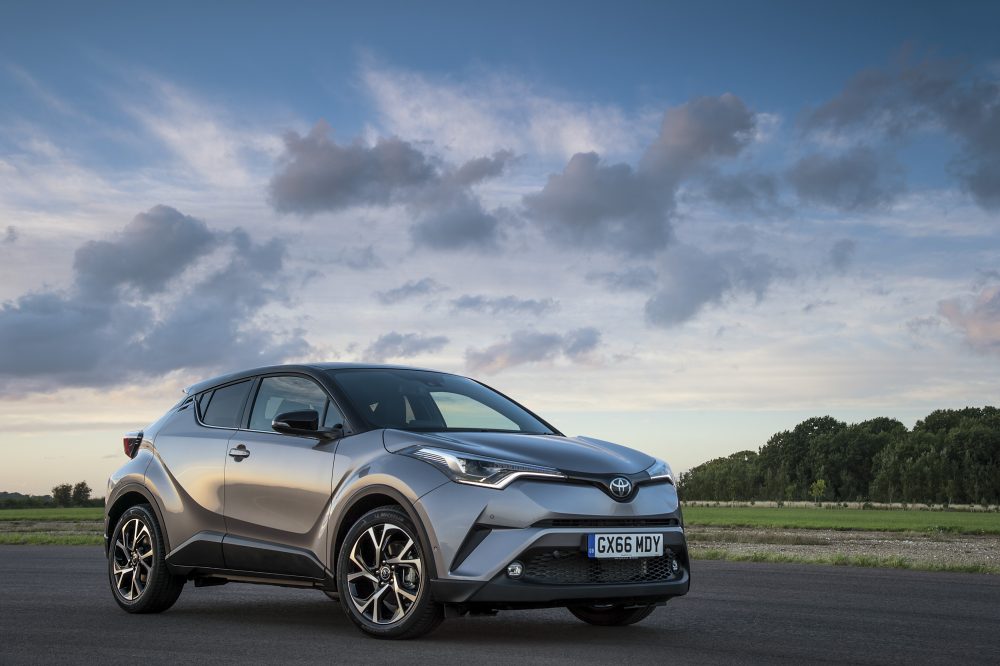
  • CAR REVIEW |  Toyota C-HR Excel Hybrid 1.8 CVT

    CAR REVIEW | Toyota C-HR Excel Hybrid 1.8 CVT

    ★★★★ | Toyota C-HR Excel Hybrid 1.8 CVT

    Never before has a car arrived into the avenue and caused quite a stir like that caused by the new Toyota C-HR.

    Next door has been looking to trade in the BMW 3 series for one while those opposite are also considering one to replace their Nissan Duke. 

    Prepare to see more of them because they are good and I’ll tell you why.

    The C-HR arrived brandishing the ‘Hybrid’ moniker and I had a few grumbles. Mainly that it would have a CVT gearbox and like the Prius, it would be noisy. It’s not a Lexus so I wasn’t expecting Lexus levels of serenity.

    On the first drive home, I ate some humble pie through a closed cake hole. It was surprisingly quiet even down to road noise. With the exception of rough and worn out roads, you would struggle to hear more than a gentle tyre roar.

    That drive home also happened to be on a horrendous Friday night. It was dark, wet and everyone was rushing to get home while trying to avoid the fouled up M25. The C-HR was a safe choice that evening. For your £28,885 it had all the usual pieces of kit that you would want. Adaptive cruise, blind spot alert and lane assist.

    This serenity heightened the enjoyment of driving the C-HR.

    I was summonsed to my sisters over the weekend and the 2 hours drive each way was an enjoyable experience. It’s not the most engaging car to drive. Handling at first is a bit of a puzzler. It plays it too safe. Fundamentally, it understeers first and scrabbles away any excess speed in corners if pushed. At first, it feels a bit lacklustre. That is until you look at the speed you approached the corners in. It travels faster than you think it actually going so you become thankful that the C-HR is a little safe.

    These gemstones and fluid surfaces of the body make a bold statement. Toyota is pinning a lot on this kind of architectural visual, love it or hate it. In the current climate of grey designs of similarities, it visually hits you. To quote Toyota, “C-HR’s combination of faceted, gemstone-like shapes with fluid surfaces and elegantly integrated detailing creates a delicate balance of precision and sensuality”. 

    Now I am perplexed at that description. Cut through all of that and just say the exterior architecture shows it to have muscles, angular poise and function. In the real world, its striking visuals don’t add up. It isn’t sporty despite its coupe-esque looks on top of a crossover.

    I like the door handle position. In a normal position, it would look out of place. What l don’t like though is the rest of the rear door. The large pillar within the door and the handles placement all make for a really small rear door window. Sitting in the spacious rear with surprisingly good headroom that belies the shape, your view of the outside world is somewhat limited. Large C-pillars and black colours make for a claustrophobic environment for those in the rear. What you do notice from the rear seat is the architecture of the headlining. I’ve never paid any attention to it in any car this side of a 70’s Rolls Royce Camargue.

    What I did absolutely love the most about the interior was the large infotainment screen. What made it even better is that it’s angled more towards the driver. It’s only ever-so-slightly done by a few degrees, making the screen very easy to read very quickly. A quick glance at the screen is all that is needed to find what you wanted to look at. The dashboard display is also typical Toyota and made to be easily read at a glance. 

    Most screens are centralised in a position to accommodate left and right-hand drive models. Let’s hope more start to do this.

    The ride is compliant and smooth. It restored my faith in the Toyota brand that they can make a hybrid that is quiet. The stereo is a little quiet too. Even on the loudest settings it wouldn’t blast out a Kylie tune. 

    My real quibble here though falls to the CVT gearbox. I just don’t like how they work. It’s not their working per se because in normal usage it works well. What ruins it is the moment you become the press-on motorist in a hurry. 

    The 1798cc engine does a great job in propulsion. Maximum torque of 142Nm is there at a useful wide range from 3600 to 4000 rpm. It’s just that you don’t really need to hear all of it and its 97 horses galloping at a higher 5200rpm as it spins away. Why Toyota can’t fit a step up or down system as fitted to the Lexus belies me. Or why they couldn’t give it a better automatic is beyond me. Always a better way Toyota say, a 9-speed auto would be better.

    I’m being hyper critical really and for a good reason. I don’t want to award the C-HR well and not warn of this pitfall. Try it and you might think I am talking rubbish. It’s a good car. I’d have one. It’s well thought out in design. It will carry you in the grimmest of weather on the foulest of days. There will be no fuss made. There are cars out there for more money that can’t do what this Toyota did for me on that Friday. It had me won over within the first 10 miles and it will you too.

    Love

    Ergonomics

    Economy

    Design

    Loathe

    CVT gearbox

    Small rear windows

    Stereo isn’t loud enough

    The Lowdown

    Car – Toyota C-HR Excel Hybrid 1.8 CVT

    Price – £28.885 (as tested)

    MPG – 72.4mpg (combined)

    Power – 120bhp @ 5200rpm petrol (bhp 90 for electric motors)

    0-62mph – 11 seconds

    Top Speed – 105 mph

    Co2 – 87(g/km)

  • CAR REVIEW | Tipo MultiJet 120hp Lounge

    ★★★★ | Tipo MultiJet 120hp Lounge

    Finally, Fiat is coming back. The recent launch of the brilliant 124 Spider set the wheels in motion and now we have the Tipo. Admittedly it is a name from the past of a car that did great things for the Italian maker. Above all, though it is NOT a new form of 500.

    Tipo MultiJet 120hp Lounge

    I liked the original Tipo. It looked like nothing else out there. Square and boxy like the box it arrived in. It had some funk too with the top of the range models starting the digital dashboard era of displays that have now become commonplace. Above all, it didn’t fall apart.

    This is the trouble when you resurrect an old name. Some will remember the past product for reasons good or bad. I remember it for the good so naturally, I got excited about the arrival of the new Tipo.

    Visually it doesn’t fail to impress. Front on it looks rather nice. It’s not like the white elephant in the room of the original which some will say is good. The rear, however, does look a little like most hatchbacks out there.

    Since Tipo 88 (Car of the Year 1989, it was that good) Fiat haven’t really been able to keep up in this fierce segment. Bravo/Brava missed the boat by miles and the Stilo, while it looked good at the front, had a fat backside and wasn’t very good. So I am glad to say that on first acquaintance with new Tipo I am a happy chap. There was a time when Tipo 88 could match the build of Volkswagens Golf Mk3. New Tipo can now hold its head up high once again.

    Fiat has rightly or wrongly not aimed Tipo at the Golf driver. There lays the huge problem most manufacturers have come across. Your product needs to be bloody good to entice the Golf driver away. Instead, they have gone for the more lower-priced market segment. With prices ranging from £12,995 to £18,995 Fiat have priced it very competitively.

    The one thing you will notice is how well it is painted. The boot is large and missing a cargo net so I was forced to place some shopping under the boot carpet. It was here that I noticed that Fiat had painted the bits you don’t see or care about. Even the paint around the boot shut area was smooth and glossy. A lot of manufacturers these days tend to miss these areas. To be honest you probably won’t even notice it. To me, it is these little touches that show Fiat are trying hard to win back some of the market it lost. Even the engine bay is painted well.

    I’ve started doing a centre console rub. You’ll be amazed at how well or not this area is put together by manufacturers. The jigsaw pieces used on Tipo were well fitted together. No harsh edges to be felt.

    It has nothing special on it as far as the lighting goes. No expensive HID bulbs or swivelling headlights. Instead, the engineers have relied on making them good in the first place. Driving down country lanes where l live, the Tipo makes easy work of lighting my way.

    A good driving position was easy to obtain with multi adjustments within the seat and steering wheel that cater for rake and reach. What wasn’t so successful was the centre armrest. It fouled the operation of the handbrake. Something that blighted Tipo 88 so it was nice to see another consistency of old meets new.

    The Tipo was easy to live with too. Again nothing special or outlandish like a one-touch keyless entry or starting buttons. A simple key with remote buttons did the trick. A little touch l did like was the angle of the ignition keys entry. More 45 degrees instead of the usual 90. It doesn’t sound much, however, there was no scrabbling to find the key hole.

    It’s these egonomics that really are hit and miss around Tipo. The front window switches on the driver door had the front window switches too far forward. Numerous occasions I kept opening the rear windows. This is something l am sure will annoy those in the spacious rear. Like Tipo 88, new Tipo also has better rear passenger space than you would think.

    One other thing that infuriated me more than anything was the preselected text reply messages. There was no way to by-pass them and she liked to say everything and tell you everything. The software is out there to better this. For the convenience that it offered it was a little too distracting.

    The saving grace of the infotainment system was its ease of use. The DAB pick up was good and station selection impeccable.

    The 120bhp Multijet diesel engine was a strong puller. 320 Nm of torque available at 1750rpm made rapid progress through the gearbox. The useable power band mostly used was within 1750 to 4000rpm. By 3750rpm all the horses had done their bit. One downside to the engine when standing outside and scrapping the ice off the screen was that it seemed a little too clattery from cold. From inside you could be hard pushed to notice it.

    Italian cars are famed for their handling. Tipo 88 spanned the seductively fast Sedicivalvole. The chassis could handle this. In new Tipo, it needs a tweak or two from Abarth. As it is in the 120hp Lounge model it is more than adequate but not the best. A combination of subtle spring choices has taken the edge away from that foot down powerhouse hot hatch feel. It’s a move I am seeing more off as manufacturers revert away from the Teutonic tautness of the Germans and about time too

    I like Tipo. It’s not perfect in every area. It is easy to live with and on the eye, it does have good looks with crisp lines that aren’t fussy. Inside is accommodating and it has a good strong well built feel to it. Something Fiat haven’t had for a long time. With that in mind, the Tipo didn’t fail to impress me over the week I had it.


    Likes

    Build quality particularly attention to detail
    Price
    Big boot

    Loathes

    Engine clattery when cold
    Armrest fouling handbrake operation
    Preset mobile phone reply messages

    The Lowdown
    Car – Fiat Tipo MultiJet 120hp Lounge
    Price – £18,545 (as tested)
    MPG – 76.3mpg (combined)
    Power – bhp 120 @ 3750rpm
    0-62mph – 9.8 seconds
    Top Speed – 124 mph
    Co2 – 98 (g/km)