Tag: Gender

All the latest breaking news on gender. Browse The THEGAYUK’s complete collection of features and commentary on gender and the LGBT+ community.

  • Transgender TV stars: “Terfs are obsessed fans of the trans community”

    Transgender TV stars: “Terfs are obsessed fans of the trans community”

    Producers from the Amazon Prime show, Fish Tank have called out gender critical feminists for being “secretly obsessed fans of the trans community”.

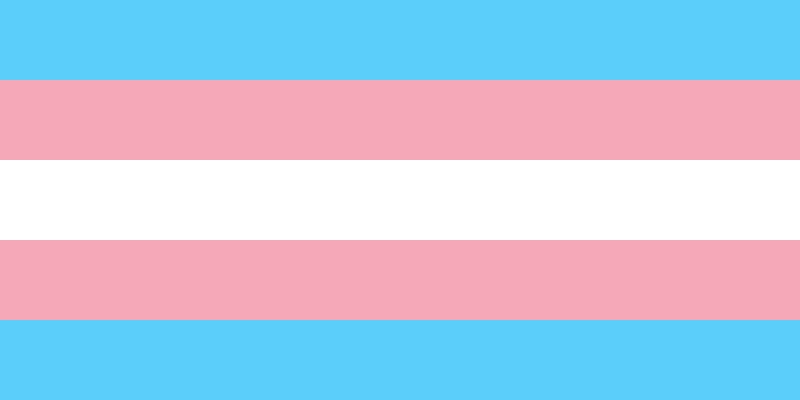
    Transgender Flag

    Recently Katie Hopkins aligned herself with the #StickerWoman campaign. #StickerWoman is a hashtag which has been linked to stickers, which are shaped like a penis, which have been found in various UK cities which state, “Women Don’t Have Penises”. The campaign follows on from Get The L Out which threatened to derail the start of the parade at Pride In London in July.

    Now the producers of the Amazon Prime show, Fish Tank – the first to feature two trans women stars have hit back saying that “TERFs are just secretly obsessed fans of the trans community”.

    Creator, director and producer, Brandon Smithson, and star and producer, Arisce Wanzer believes that the message Katie Hopkins, Trans Exclusionary Radical Feminists and #GetTheLOut are promoting is a “disgusting outright attack on the trans community”.

    Speaking to THEGAYUK.com Brandon Smithson said,“It’s wrong for these groups and for people to reduce trans people to their genitalia”

    “The stickers designed to specifically create a visceral reaction with the hopes to make people associate the disgusted feeling with trans people but instead it is making people see this group in a repulsive light.”

    Arisce Wanzer, a transwoman herself, believes that, “it is really sad that Katie Hopkins and these groups have to put other people down to left themselves up.”

    Not looking at scientific facts

    She continues by noting that “recent studies by the University of Liege found that the brains of transgender people resemble brains of the sex they align with rather than their assigned sex at birth. So these people and groups are clearly not looking at any scientific facts and are instead just trying to get a rise out of people”.

    Both Smithson and Wanzer believe that if more people took the time to get to know those who identify as transgender, many of these false beliefs and ignorant opinions would be dispelled. They hope that their comedy series will open a dialogue for those that do not get the chance to interact with a trans person, and normalise trans people in a light-hearted, fun way.

    Fish Tank follows the dating lives of two trans women in LA as they deal with inattentive boyfriends, dating apps, vulnerability, stereotyping and creeps.

    The series is available in the UK on Amazon Prime and boast a strong cast of transgender actors playing trans and cis-gender roles.

  • Is the Gender Recognition Law ready for change?

    Is the Gender Recognition Law ready for change?

    Two solicitors, Craig Longhurst and Alex Watson from the leading law firm Fieldfisher write about the government’s plans to revisit the relevance of the Gender Recognition Act 2004 and some of the issues facing the transgender community today.

    vjohns1580 / Pixabay

    When it brought the Gender Recognition Act 2004 (GRA) into force on 4 April 2005, the UK became the first country in the world to allow a person to legally alter their gender without having had any surgical treatment.

    However, since coming into force, only 4,910 have been issued the Gender Recognition Certificate – which is required for a trans person’s new legal gender to be recognised. Given these figures and the concerning suicide and self-harm rates amongst the trans community, the issues are now being revisited by Government.

    The Government’s Equality Office is currently consulting on the legal gender recognition process and its effectiveness. The consultation (which commenced on 3 July 2018 and will close on 19 October 2018) is focussing on the possibility of removing an applicant’s need for a medical diagnosis of gender dysphoria before being able to apply for gender recognition.

    In acknowledgement of the complicated and contested nature of some terminology used in discussing matters, the consultation states that:

    “Throughout this consultation we have tried to use terminology that is generally accepted. No offence or omission is intended.”

    That also applies to this article and shall adopt the same definition of ‘Transgender/ Trans’ as adopted in the consultation:

    “Transgender / Trans: Umbrella terms used to describe individuals who have a gender identity that is different to the sex recorded at birth. Non-binary people may or may not consider themselves to be trans. This consultation document primarily uses ‘trans’.”

    The Law

    As it stands, for a person to legally change their gender, the applicant must be over 18 years old and must usually* meet the following “assessment based” requirements of the GRA:

    1. A medical diagnosis of gender dysphoria and a report from a medical professional detailing any medical treatment;
    2. Proof of having lived for at least two years in their acquired gender through, for example, bank statements, payslips and a passport (which can be changed without legally changing gender);
    3. A statutory declaration that they intend to live in the acquired gender until death;
    4. If married, the consent of their spouse;
    5. Payment of a fee of £140 (or proof of low income for reduction/removal of the fee); and
    6. Submission of this documentation to a Gender Recognition Panel, which the applicant does not meet in person.

    * N.B. there is a slightly different process for married/ civil partnered trans people who have socially and medically transitioned for at least 6 years prior to 10 December 2014 and for overseas trans people, which is outside the scope of this note.

    If a person is adjudged by the Gender Recognition Panel to have met the requirements, they will be issued with a Gender Recognition Certificate – which alters their birth certificate and (subject to a number of limitations) changes their birth gender to their newly-recognised gender. That person then assumes the legal rights of that gender, including: age of retirement, pension and marital rights.

    However, if a person is adjudged by the Gender Recognition Panel to have not met the requirements, his/ her birth gender shall continue to be that person’s legal gender and he/ she shall not have the right to appeal the decision, unless on a point of law. It is hard to see how it can be considered fair that an independent panel is able make such fundamental decisions regarding a person’s life without having actually met them and for an applicant to have no recourse if the application is unsuccessful.

    The view from the trans community

    The results of a recent LGBT Government Survey revealed that many trans people want legal recognition but feel that the current process is too bureaucratic, expensive and intrusive. Further, the Government feels that most trans people feel that the “assessment based” requirements detailed above are overly intrusive, humiliating and administratively burdensome and are denying people access to the legal recognition they are entitled to. More specifically arguments have been raised that:

    1. the requirement of the provision of a diagnostic psychiatric report perpetuates the false assumption that being trans is a mental illness – which both the Government and the World Health Organisation recognises is not the case (the latter has declassified ‘Gender Incongruence’ [i.e. dysphoria] as a ‘Mental and Behavioural Disorder’ in its International classification of Diseases);
    2. the trans person has to collect a range of personal documentation, including information about their medical history, finances and identity which they send to people who they do not meet who then make a decision about their gender identity; and
    3. The fee of £140 and associated costs are expensive and there is no right of appeal against the decision unless on a point of law.

    The Consultation

    Given the above, the Government’s consultation is focussing on many aspects of the GRA, including:

    1. The requirement for the trans person to provide two medical reports, one evidencing a diagnosis of gender dysphoria and the other outlining details of any treatment received;
    2. The requirement for the trans person to provide a range of documentation that proves they have lived in their acquired gender for at least two years;
      The requirement for the trans person to submit a statutory declaration of their intention to live in their acquired gender until death;
    3. The requirement for married applicants to obtain the consent of their spouse or end their marriage;
    4. The cost to the trans person of using the GRA process; and
    5. How the Act protects the privacy of individuals who have applied for a GRC.

    Comment

    Whilst we continue to await the results of the consultation, it is positive to see focus being placed revisiting legislation adopted 13 years ago with limited relevance to present day society’s approach to LGBT+ issues and it appears likely that legislative changes will make it easier for trans people to exercise rights to exist in the gender that they identify with.

    The consultation on the Reform of the Gender Recognition Act 2004 is open until 11pm on 19 October 2018 and can be located at https://www.gov.uk/government/consultations/reform-of-the-gender-recognition-act-2004

    Craig Longhurst and Alex Watson are from the leading law firm Fieldfisher

  • Gorgeous book aimed at celebrating diversity is released

    Even RuPaul is a fan


    Julian is on his way home with his Nana when he spots some mermaids, or at least he thinks they’re mermaids. Just a mere glimpse of these joyous women and Julian’s imagination transforms him into a dazzling mermaid. At home, he puts on some make-up, styles his hair, and fashions himself a long mermaid tail. But what will Nana think when she sees him?

    Julian is a Mermaid celebrates self-confidence and diversity in a plethora of ways, from gender stereotypes, to family dynamics and body types. Bursting with individuality and acceptance, Jessica Love has created a picture book glowing with so much beauty and wonder, it’ll mesmerise all those who read it.

    Jessica Love is an illustrator and Broadway actress. She has a BA in studio art from the University of California, as well as a graduate degree from Juilliard. Julian Is A Mermaid is her first picture book. Find her online @jesslovedraws.

    Available from Amazon

  • What the UK Government says its going to do for LGBT+ healthcare in the UK

    What the UK Government says its going to do for LGBT+ healthcare in the UK

    The UK’s Government has launched an LGBT action plan, in which it wants to deal with issues facing the LGBT+ community in the UK, including health.

    “This Government is committed to making the UK a country that works for everyone. We want to strip away the barriers that hold people back so that everyone can go as far as their hard work and talent can take them”.

    Big words, so what exactly are they promising?

    Penny Mordaunt, the Minister for Women and Equality has outlined 75  points she wants her office to push in order to achieve better rights, equality, safety and visibility for gay, lesbian, bisexual, transgender and intersex people of the UK.

    Health was a big part of the government’s action plan, here’s what Ms Mordaunt said she plans to do:

    Put LGBT+ people’s needs “at the heart” of the NHS.

    We will appoint a National Adviser to lead improvements to LGBT healthcare. The National Adviser will focus on reducing the health inequalities that LGBT people face, and advise on ways to improve the care LGBT people receive when accessing the NHS and public health services. They will work across the NHS to ensure that the needs of LGBT people are considered throughout the health system.

    The National Adviser will work to improve healthcare professionals’ awareness of LGBT issues so they can provide better patient care. The National Adviser will work with relevant statutory organisations and professional associations to embed LGBT issues into physical and mental health services.

    We will improve the way gender identity services work for transgender adults. In 2019, NHS England will decide on the future configuration of adult gender identity services in England, and will seek to establish a more modern care model that delivers high-quality outcomes in which clinical capacity can be more flexibly deployed. The Government Equalities Office will produce advice about the Gender Recognition Act for GP surgeries and gender identity clinics.

    We will improve our understanding of the impacts on children and adolescents of changing their gender. The Government Equalities Office will gather evidence on the issues faced by people assigned female at birth who transition in adolescence.

    We will take action to improve mental health care for LGBT people. The Department of Health and Social Care and the Government Equalities Office will jointly develop a plan focussed on reducing suicides amongst the LGBT population. The Department of Health and Social Care will ensure LGBT people’s needs are addressed in the updated Suicide Prevention Strategy, and the new Health Education England suicide prevention competency framework will cover high-risk groups including LGBT people.

    We will enhance fertility services for LGBT people. The Department for Health and Social Care will revise surrogacy legislation so single people (including LGBT individuals) can access legal parenthood after a surrogacy arrangement.

    We will ensure LGBT people’s needs are taken into account in health and social care regulation. The Care Quality Commission will continue to improve how it inspects the experience of LGBT people in adult social care and mental health inpatient wards, and we will begin to inspect all gender identity clinics on a risk basis. The Care Quality Commission will develop guidance for care quality inspectors on the healthcare pathway for people who are transitioning their gender, and embed LGBT equality issues into the methodology used by inspectors.

    We will support improved monitoring of sexual orientation and gender identity in healthcare services to enable better patient care. The Government Equalities Office will develop best practice guidance for monitoring and make this openly available to the public sector, and the National Adviser will work to ensure healthcare professionals understand the benefits of asking patients about their sexual orientation and gender identity. The Care Quality Commission will look at how we can promote the NHS England voluntary sexual orientation monitoring standard for people using health and social care services.

    We will work to tackle body image pressures that LGBT young people face. The Government Equalities Office will consider the specific challenges faced by LGBT people as part of our broader work to build the evidence base on the causes and impacts of body dissatisfaction.

    We will continue to review the blood donation deferral period for men who have sex with men. NHS Blood and Transplant will explore ways that a more personalised risk assessment can be introduced, to allow more people to donate blood without impacting on blood safety; currently, there is very little data on effective ways of carrying out such risk assessments. The initial scoping, evidence gathering and testing may take up to two years to complete.

    We are committed to tackling HIV transmission, AIDS and HIV-related deaths. As part of this, we are currently funding a 3 year trial with 10,000 people to determine how best to deliver ‘PrEP’. NHS England will consider the impact of increasing the PrEP trial further.

    We will take action to improve the support for LGBT people with learning disabilities. The Department of Health and Social Care will review, collate and disseminate existing best practice guidance and advice regarding LGBT issues and learning disability; and will also ensure that training requirements for support staff and advocates who work with people with learning disabilities includes advice regarding LGBT people.

    Here’s what the government plans are in other key areas:

    Education | Healthcare | Representation | Workplace | International | Safety
  • This Instagram post perfectly explains why Instagram’s nipple ban is so wrong

    This Instagram post perfectly explains why Instagram’s nipple ban is so wrong

    In a post entitled “Dear Instagram, This Isn’t Sexual” Rain sets out to explain why the social media giant’s ban of female nipples is wrong. Speaking directly to IG, Rain wrote:


    DEAR INSTAGRAM: THIS ISNT SEXUAL. Sure, I may have my DD Breasts out. Nipples shining in the sun. But this is simply a game of basketball between two humans. One of those humans is actually a Pro Basketball player (@crissa_ace ) – who’s skills on the court are far more worthy of a stare than my swinging sacks of potential food providing flesh. But before You delete my IG POST let me DD-fend myself: #1: Your guidelines say “Female nipples”. I do not identify as “female”. Or “male”. So I am not violating your guidelines. #2 Even if I did identify as “Female”- “Females” can have Pecs. “Males” can have Breasts. And if You argue only people with pecs are considered “Male” bodied- Pecs can be bigger than Breasts and vice versa. Both can also lactate. Both can also be fetishized. What’s so different? #3 What is considered “nudity” or “naked” changes culturally globally. In some places eye contact direct to camera is considered sexual. Showing your shoulders is considered lewd. Hugs are considered worse than kisses. Etc. Aren’t you a globally reaching company? Who’s opinion is controlling what is considered sexual? Can we have a chat one on one? I wouldn’t have had much of a chance at my career without my IG platform. I’m grateful for this app and what it has done to elevate my opportunities in life. I’m coming TO You. Not AT You. Please consider reviewing the language You use in your guidelines. Either make it so NO one can show their nipples or everyone can. You’re creating a division that’s reinforcing the vulnerable feelings people with breasts already feel. Fear, shame, objectification. Stop targeting “females” specifically. Instead might I recommend addressing INTENTIONS- equally. It’s kind of obvious when someone is creating work with specifically salacious intention. A shirt off is not enough for a conviction. You reach around the world IG. Therefore you can change it- simply by hanging your language. LOVE ALWAYS, Rain Dove #IdenTITTY #genderqueer #lovewins #instagram #theboysarebackintown #genderfluid #lgbtq #womensrights #ThingsYouCANChange #Basketball #DDEFENSE ? @connor_landhauser PS of this gets deleted I WILL repost every time. @katyperry

    A post shared by Rain Dove (@raindovemodel) on

    Sure, I may have my DD Breasts out. Nipples shining in the sun. But this is simply a game of basketball between two humans. One of those humans is actually a Pro Basketball player (@crissa_ace ) – who’s skills on the court are far more worthy of a stare than my swinging sacks of potential food providing flesh.
    But before You delete my IG POST let me DD-fend myself:

    #1: Your guidelines say “Female nipples”. I do not identify as “female”. Or “male”. So I am not violating your guidelines.
    #2 Even if I did identify as “Female”- “Females” can have Pecs. “Males” can have Breasts. And if You argue only people with pecs are considered “Male” bodied- Pecs can be bigger than Breasts and vice versa. Both can also lactate. Both can also be fetishized. What’s so different?
    #3 What is considered “nudity” or “naked” changes culturally globally. In some places eye contact direct to camera is considered sexual. Showing your shoulders is considered lewd. Hugs are considered worse than kisses. Etc. Aren’t you a globally reaching company? Who’s opinion is controlling what is considered sexual? Can we have a chat one on one?

    I wouldn’t have had much of a chance at my career without my IG platform. I’m grateful for this app and what it has done to elevate my opportunities in life. I’m coming TO You. Not AT You. Please consider reviewing the language You use in your guidelines. Either make it so NO one can show their nipples or everyone can. You’re creating a division that’s reinforcing the vulnerable feelings people with breasts already feel. Fear, shame, objectification. Stop targeting “females” specifically. Instead might I recommend addressing INTENTIONS- equally. It’s kind of obvious when someone is creating work with specifically salacious intention. A shirt off is not enough for a conviction.
    You reach around the world IG. Therefore you can change it- simply by hanging your language. LOVE ALWAYS, Rain Dove

  • Some people in the UK are really not happy about gender neutral toilets

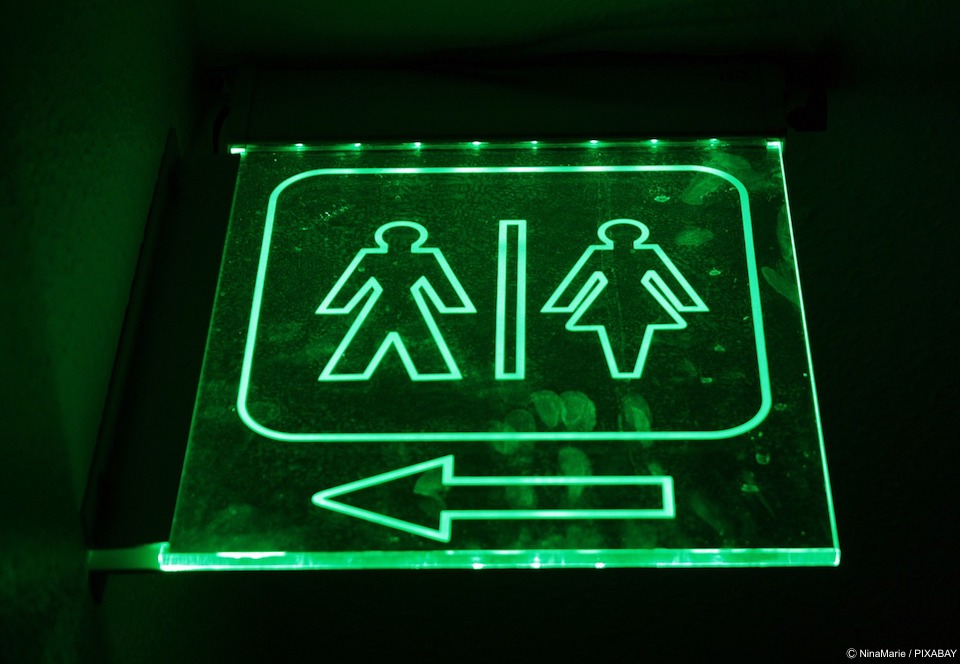
    New research has shown that over half of British people would say “No” to gender-neutral toilets.

    Despite suggestions of turning public toilets to gender-neutral toilets by London’s mayor Sadiq Khan, most people in Britain are still uncomfortable with the idea or all-gender loos. More than half of Brits said that they would avoid them in research recently conducted.

    The Gender Identity Research & Education Society (GIRES) estimates that 1% of the British population are gender non-conforming to some degree.

    London Mayor, Sadiq Khan championed plans to increase the number of shared facilities in the capital last November but it appears the plans are not as popular as originally thought.

    A new survey by Bathroomtakeaway.co.uk reveals that 55% of Brits would avoid using shared facilities.

    Of the 45% of Londoners who said they’d welcome gender-neutral loos, just one in five of those would actually use them.

    Those living in Yorkshire and the Humber are most opposed to the facilities, with 75% saying they’d shun them, followed by 70% from East Anglia and 69% from the North East.

    Despite these figures, the North East also had one of the most receptive groups, with one in ten saying they would rather use shared facilities.

    All-gender toilets are public toilets that can be used by anyone, regardless of their sex. They can provide a welcome space to individuals who don’t identify with the male or female gender binary. Unisex toilets can make it easier for trans people at various stages of transition.

    However, when quizzed, 65% of those that would avoid gender-neutral toilets said they would do so to avoid feeling awkward.

    Just under half of cis females (49%) claimed they would feel unsafe in shared public loos.

    Beatriz Pardo, Marketing Manager at Bathroomtakeaway.co.uk: “We were keen to see how open-minded Britons are when it comes to public loos.

    “The notion of gender-neutral toilets have been in the headlines recently but it is clear most people in the UK feel very uneasy about them.

    “Our research has revealed some surprising statistics and it seems these plans aren’t as popular as originally thought, so we’ll be interested to see how they work out!”

  • Qantas is going non-binary

    Qantas is going non-binary

    Qantas is urging its staff to use non-gendered terms when talking to their customers.

    skeeze / Pixabay

    Qantas is going the way of the London Underground and is encouraging its staff to lose terms like Ladies and Gentlemen, “honey”, “guys” and “love”.

    Instead of using “husband and wife” a booklet given to cabin crew and other staff at the airline have suggested that they start using words like “partner”, “spouse”.  Instead of “mum and dad”, they’ll be using a simple “parents” in a bid to use non-gendered language.

    moerschy / Pixabay Staff were given a booklet outlining the change in language to help make the airline more inclusive.

    People and culture group executive Lesley Grant said, “We have a long and proud history of promoting inclusion among our people, our customers and society, including support of indigenous issues, gender parity in business and marriage equality”.

    The company is also warning against “manterruptions” and “mainsplaining” to stop male workers from talking over their female counterparts.

    The company is drawing a line under gendered terms like “Chairman”.

    The booklet explains, “Language can make groups of people invisible,”

    “For example, the use of the term ‘chairman’ can reinforce the idea that leaders are always men.”

    A Qantas spokeswoman told Yahoo7 News the booklet was created by the Diversity Council of Australia and was supplied to around 150 other companies.

    “We want Qantas to be an inclusive workplace and we shared some factsheets created by the Diversity Council of Australia with some suggestions on more inclusive language, particularly on gender, age and LGBTI issues.”


  • Katie Hopkins just used Peter Rabbit to mock non-binary and trans people

    Right-wing controversialist demands an apology from Sony Pictures saying that Peter Rabbit doesn’t identify as male.

    With the non-binary and trans community squarely in her sights, Katie Hopkins seemingly mocked how some in the trans and non-binary community wish to identify themselves.

    In a tweet, we can only imagine she thought was amusing, she demanded an apology from Sony Pictures, as “Peter does not identify as male. Or a bunny”

    She then used a gender-neutral pronoun, “Zir”, to say that the rabbit actually prefers to identify as “Barbara the Rodent”.

    The Tweet was met with a mix of reactions, with some writing that the former radio presenter, former TV host and former columnist for The Sun and MailOnline, wasn’t funny and just tweeting for the sake of being provactive.


    One user questioned the rise of a “transphobic smear campaign” by the right.

    The tweet comes after the new Peter Rabbit film included a scene where a character who suffers a blackberry allergy is pelted with them by a gang of bunnies.

    The film’s makers apologised for the scene saying that they “should not have made light” of the issue.

  • BIG GAY GLOSSARY | Pansexual

    BIG GAY GLOSSARY | Pansexual

    What does pansexual mean?

    What does pansexual mean?


    Pansexuality is described and identified as a: romantic, sexual and emotional attraction to people of any sex or gender identity.

    The Oxford English Dictionary describes pansexuality as:

    “not limited in sexual choice with regard to biological sex, gender, or gender identity.”

    Pansexual people may describe themselves as gender-blind, meaning that a person’s gender identity isn’t or might not be a deciding factor in their attraction, and some may consider a person’s gender to be irrelevant and may reject the gender binary that exists in society.

    Can you expand this definition? Use the comments below and your answer could be used to expand or define this glossary entry.

    Check out more definitions in our Big Gay Glossary

  • BIG GAY GLOSSARY | Misgendering

    BIG GAY GLOSSARY | Misgendering

    What does Misgendering mean?

    What does UEqualsU mean?


    Misgendering is when someone accidentally or deliberately refers to a person with the wrong gender pronoun. It can happen to cisgender and transgender people.

    Referring to a trans woman as “he” saying “him” or “his” or a trans man as a “she” or “her” is misgendering.

    It is considered deeply offensive to some trans people – especially if the misgendering is done with malice or deliberately.

    Can you expand this definition? Use the comments below and your answer could be used to expand or define this glossary entry.

    Check out more definitions in our Big Gay Glossary

  • BIG GAY GLOSSARY | Agender

    BIG GAY GLOSSARY | Agender

    What does Agender mean?

    Agender refers to someone who does identify themselves as have a particular gender – such as man or woman. Not be confused with biological sex.

    Often gender is considered a societal construct – with many expectations attached to and what it means to be a woman or a man.

    People who identify as agender may wish to use the pronouns they, them or their. If in doubt you can always ask what their preference is.

    Agender people should not be confused with asexuality.

    Can you expand this definition? Use the comments below and your answer could be used to expand or define this glossary entry.

    Check out more definitions in our Big Gay Glossary