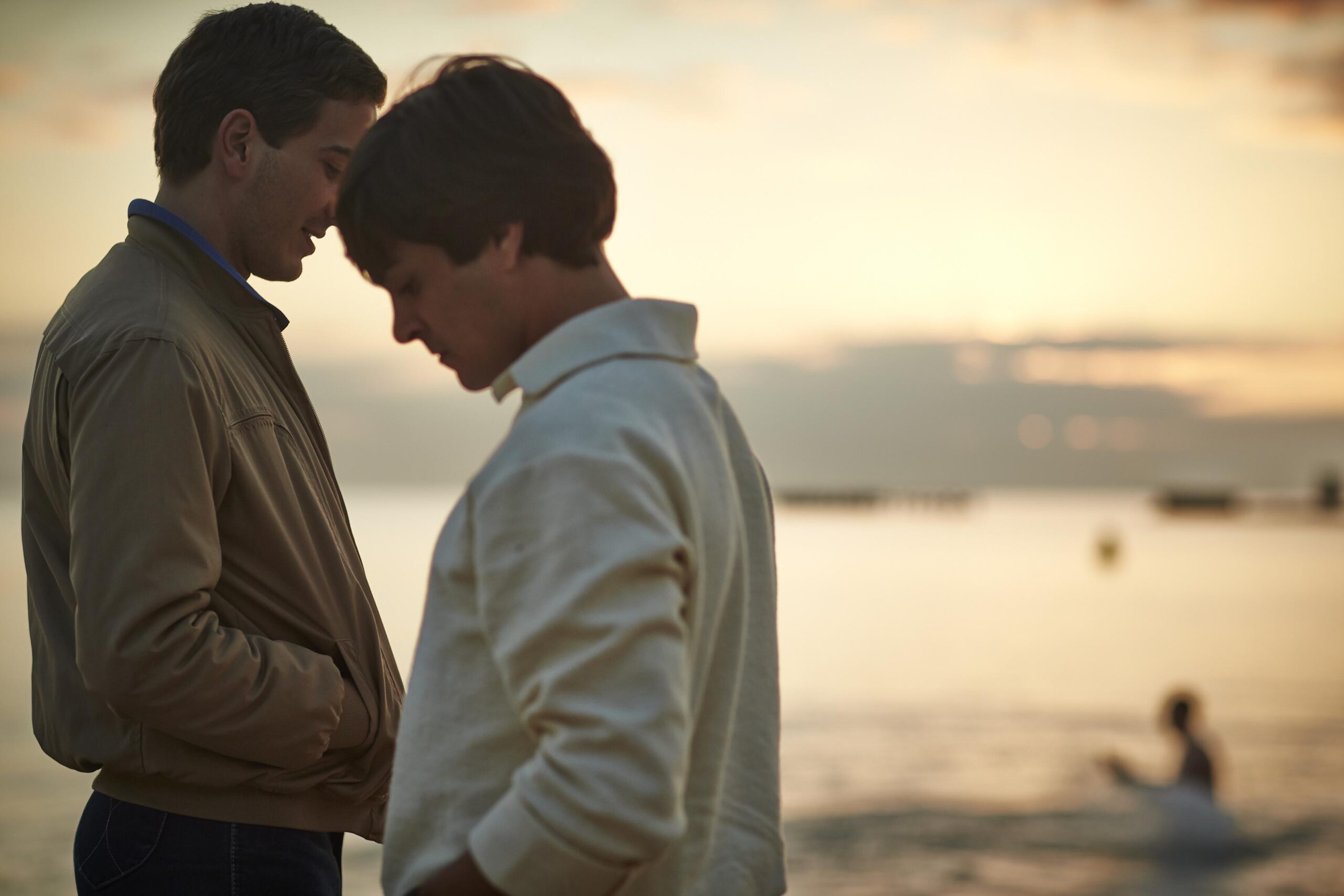
In the 1980s the UK was gripped by the panic of a destructive disease, which, in the beginning seemingly only affected the gay and bisexual male community. Citizens the world over were starting to exhibit numerous illnesses caused by one of the most destructive diseases known to man. It killed its victims ruthlessly, painfully and indiscriminately.
It would take the best part of a decade for the government and health industry of the day to get to grips with just the naming and diagnosis of what we now know today as HIV and AIDS. To put it perspective, PrEP and Truvada were still twenty years in the development.
Epidemic: When Britain Fought AIDS focuses on the main players in a forgotten story, from the landmark moment when Princess Diana publicly held the hand of someone who had AIDS in the UK’s first HIV/AIDS hospital ward to the complete silence on the subject from the UK’s Prime Minister, Margaret Thatcher.
Paul O’Grady, Jean Paul Gaultier, Andy Bell, Lord Michael Cashman, and Margaret Thatcher’s health secretary Norman Fowler, give personal insight into how the battle against AIDS was fought. It delves into how the language that we used today was born and how the fight against AIDS, forced the UK, as a whole, to face its own intolerance and see LGBT+ people as humans rather than sinners and degenerates.
The year was 1981, sexual liberation was in full swing with destinations like Key West being a bimonthly pilgrimage for many gay men who, no doubt drank, joked and dare I say frolicked among the sand dunes of Higgs Beach.
It was an era that can merely be reminisced of, impossible to recapture. Anybody reading the LA Times on June 5th could easily be excused for their oversight in failing to notice one small paragraph telling the public of a new “gay cancer” that had been documented among some doctors mainly in the New York and San Francisco areas.
Over the years, many more articles were published about what we now know as HIV & AIDS. The most recent of them, hailing milestones such as PrEP, a preventative treatment for the condition that society wished for decades ago. There have been amazing advancements in treatment, meaning people living with HIV who have undetectable viral loads, who are consistent with their medication, are unable to pass on the virus but, the fight is in no way over.
To begin we must break down the stigma surrounding PrEP and the naïve insinuation that if someone is using PrEP, they are having an orgy every night of the week, or failing to protect themselves in other ways such as using a condom.
We also need more organisations, government departments and influential voices to get behind the undetectable equals untransmittable campaign, it is a scientific fact backed up by The Swiss Statement (2008) as well as the PARTNER study.
Of course, some people are reluctant to embrace science on this occasion and question the viability of the UequalsU message, however, they do so while failing to question science from the 80s and 90s which led to such heightened fear of HIV and by effect those of us living with it.
Put aside people living with HIV who desperately deserve this message to be endorsed, society deserves it too. For more than 30 years grown men and women have lived in fear of this invisible killer. Generations of children have been raised with a background of AIDS fear, leading in some cases to a severe negative impact on their sex life.
I clearly remember the day being diagnosed, November 27th, 2013. Sitting in that chair I knew death was not coming for me just yet and my biggest obstacle in life from that day forward would be the opinion and perception of others, not necessarily, family or friends, I knew they would be willing to stand by me and if not then they would have been the wrong friends to have chosen.
It was society’s opinion and perception I knew would be the obstacle and one I would have to change. After several weeks of wondering what I should do, I set a goal which was to reach an undetectable viral load, this happened in September of 2014, a day that will remain among the most special of my life. I knew the very thing that had prevented me from doing anything more than kiss a guy for the previous 9 months, was no longer an issue.
People say the day a cure for HIV is found will be like a battle or war ending. My battle ended that day when I became undetectable and untransmittable but my war is still going because nearly ten years after the Swiss Statement was released too few organisations who accept public funding in the name of representing me and people like me have promoted this statement of fact.
On a recent trip to Key West I paid a visit to Higgs Beach where once all that laughter and fun took place, there now lays a memorial as a tribute to those who died from AIDS. This seemingly endless list of names, to me, was a testament to my commitment to promoting the UequalsU message.
So I make this a call to action, by asking the 100,000 of us living with HIV in the UK to embrace the fact that being undetectable means we are untransmittable and ask you to lobby your local organisation, politician or influence maker to embrace it with us, they have nothing to lose in doing so and don’t forget to
#UequalsU.
Opinions expressed in this article may not reflect those of THEGAYUK, it’s management or editorial teams. If you’d like to comment or write a comment, opinion or blog piece, please click here.
Howard Brookner was three days shy of 35 when he died of AIDS in 1989.
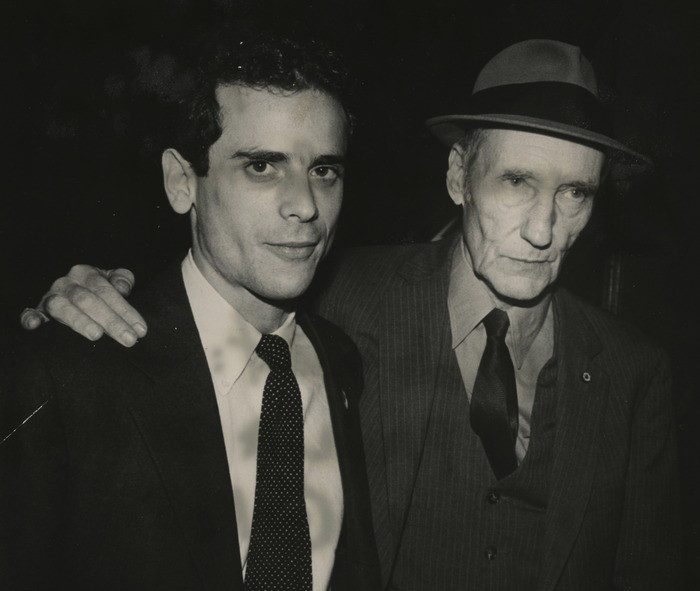
Who was Howard Brookner? He was an American film director and famous for his college thesis documentary on William S. Burroughs – the American novelist who was also a member of the beat generation. Brookner also wrote and directed the feature-length film Bloodhounds of Broadway – a period comedic ensemble that starred several big names including Matt Dillon, Jennifer Grey, Anita Morris, Julie Hagerty, Randy Quaid, and Madonna.
But Brookner was more than just a film director – he was also an uncle, an uncle to Aaron Brookner. And Aaron has made a film about his uncle in a moving documentary simply titled Uncle Howard.
Aaron, 35 years old, was inspired by his uncle to make movies. In the documentary we see home video footage of Howard hanging out with Aaron when he was a kid, with Howard parading Aaron around on his shoulders. These scenes are touching and sentimental because it sets the tone of the short relationship Aaron had with his uncle, an uncle who passed away when Aaron was only 8-years-old, an uncle who made such an impression on him that decades later Aaron would want to make a documentary about him. Aaron’s early memories of Uncle Howard included being on the set of Bloodhounds of Broadway, a film that turned out to be Howards only major studio film, and unfortunately, he passed away before its release.
Aaron wanted to seek out Howard’s original film footage for his Burroughs documentary, and found it in a place called The Bunker in lower Manhattan, the former home of Burroughs. There are scenes of Aaron watching the old tapes which are then inter-spliced with the actual film footage, which gives us, and Aaron, a glimpse of the early work of his uncle, an uncle with high doses of passion and talent. The old footage also includes glimpses of Allen Ginsberg and Andy Warhol, while both new and old footage shows Jim Jarmusch, with Howard in the 1980’s, and then with Aaron in the present day.
The writer Brad Gooch gives us a raw insight into his ten-year relationship with Howard, while discussing the loss of Howard and many friends during the height of the AIDS pandemic, scenes that are emotional, touching and sentimental. But what most pulls at the heartstrings is Aaron’s conversations with Howard’s mother, Elaine, who walks down memory lane with Aaron about the life of Howard and how he was taken from them at such a young age. Uncle Howard is a film with a personal touch, and Aaron has successfully delivered a fitting tribute to an uncle who died way too young.
Decades on since the first recorded cases of what would become known as HIV and AIDS, myths are still circulating about this condition. Here’s 11 of the weirdest that still persist.
1) That only gay men can get HIV
Are you living in the 80s? HIV does not see sexuality, it does not see gender, it does not see race or greed. Anyone who comes into contact with the virus could potential be infected.
2) HIV can be transmitted by kissing
HIV cannot be passed through saliva, so cannot be
3) HIV can be passed on by sharing a toothbrush
HIV cannot survive outside the human body, so it is unlikely you can pass on HIV through this method.
4) People with HIV will die young
There is no reason why someone who is living with HIV will die young because of the virus. Get tested, know your status and get the medication you need.
5) You will get HIV if you sleep with someone that has HIV
Not always the case. A lot depends on their viral load, whether they are on medication and how much exposure you have to their bodily fluids. So if you’re both using condoms, using PrEP and their viral load is low the likelihood of you contradicting HIV is near zero.
6) You can catch HIV?
Nope HIV isn’t a ball or frisbee.
7) You can get infected with HIV by sharing a bath with someone who has it.
Not true. HIV means that a person has the virus in their body. AIDS is when someone’s immune system is compromised so much that they can no longer fight off diseases.
9) HIV is a death sentence.
As long as you test, know your status and get manage your health in the right way, you can live a long, full life.
10) HIV is a bisexual disease
No matter what you heard on TV, there’s nothing to suggest that this is true. HIV doesn’t care if you’re gay, bisexual or straight.
11) Kids are learning about this stuff in Schools.
Sex ed is not compulsory in all schools in the UK.
We sat down with filmmaker, journalist and director David France and gay rights and HIV activist Peter Staley to talk about their brand new documentary film How To Survive A Plague, which chronicles the astounding progress of the modern gay rights movement and how the gay community dealt with the AIDS epidemic in the 80s and 90s.
Why was it important to make a documentary like How To Survive A Plague? David France: I wanted to go back and do a project about the early years of AIDS, which I had covered as a print journalist and it occurred to me that somehow in our collective recollection of what happened in those years, we kind of condensed everything. We thought of the early years as being sad and then better, but what was lost in that recollection was what it took to get to one place to the other. It took this tremendous epic movement of mostly gay men and lesbians,originating in New York but moving around the globe, to change so much about the way, first of all, what we think about the community in the larger media, and then to transform science and medicine and pharmacological research in a way that people have benefitted across the globe.
The idea that this was lost, that this movement that Peter and his colleagues had invented out of thin air and out of a desperation, which produced these tremendous victories, seemed to me to be a burden of responsibility to carry forward.
What do you want How To Survive A Plague to achieve? DF: I want people to remember what happened. I want people to recognise that AIDS in the plague years, before there was effective treatment, wasn’t just a period of tragedy. Although it was marked by these intense tragedies. These deaths were just unstoppable and the loss that we’ve all had to carry since then, but it was also a time of great news.
Before HIV or AIDS activism it gave (gay) people, at least in the United States, perhaps more than in the UK, a real role in public life.
We were isolated. We were living in these geographical ghettos. We were hated – officially and culturally and rejected by everybody across the board including our families.
To go from there in 1981 when AIDS first hit till 1996 when the drugs were finally discovered, promulgated and brought out; and HIV was survivable, that was also this period of amazing cultural integration and this revolution of the way we exist in society.
Peter Staley: I hope it inspires young gay men and lesbians, and really shows them their history and how we got to this point. It shows them the power of our community.
It shows gay people at their best. In one of the worst moments we ever faced we rose above it. We took care of each other. It was extraordinary and beautiful. At the same time, it’s something very important, for my generation, to help us remember and memorialise what we went through and to remember the friends that we lost.
A lot of us didn’t process those years, and this film and others that have come after it, and looking back, is something we need to go through. We need to honour the sacrifice of those that we lost and the extraordinary work they did that allows all of us to live happy long lives these days.
Is the gay community as politically charged today as it was in the 80s and 90s? PS: Yes it is charged up. AIDS forced us out of the closet. Either we laid down and died and got wiped out or we had to stand up and come out of the closet and fight back.
Once we did that, we realised that as a community we had immense power and this film just shows it beautifully.We had this innate power as a community and that launched the modern gay rights movement. Especially in the States with
gays in the military first and nobody ever thought we’d have close to 20 states now in the US with gay marriage.
Gay marriage is now happening in the UK and across Europe and countries in South America. This is just something I would never have dreamed of.
There are massive amounts of activism around, but I wish there was a little bit of it to be brought back to finish
the work on AIDS. I speak out about that a lot these days because obviously, the crisis is not over. It’s liveable but the virus is still infecting way too many gay men and we need to fight that. We need to slowly wind down this epidemic. We have the tools to do it.
With the sharp increase of new HIV infections, particularly amongst young gay men, how does that make you feel, when you see that happening? PS: It’s frustrating, but I don’t feel anger towards younger gay men who are not responding to HIV like my generation responded to it because it was two very different times. My generation changed its behaviours and fought against HIV / AIDS.
It became the issue in the gay rights movement because all my friends were dying in front of me. In the absence of that death, which only happened because of the amazing success of the activism we did, you have a very different challenge, you have apathy.
There’s a lack of fear and without that fear, which is an incredible motivator for behaviour change and activism, it’s a very different battle.
So I’m not casting blame, I think if I was a 22-year-old HIV-negative man now I’d be pretty oblivious myself. I think it’s human nature. We just have to accept that and work around it and use social media and tell the real story about how living with HIV still is something that nobody should want to face a life of.
It’s still quite challenging. You have to take the medication for the rest of your life. You have to remain anally compulsively engaged in the healthcare system in order to not screw that up because, if you mess up on your meds you will eventually get sick. There are still people with HIV who die. I wouldn’t wish this on anyone and we need to give the real picture.
DF: We have to keep on talking about it. That’s what we’re not doing. People are making decisions about their own
lives in a total vacuum thinking, ‘So I’ll take a pill a day’ and if we were talking about it collectively as a community we might be up to convey the information that Peter is talking about. That these pills are really tough pills. It might give you a near normal lifespan but it’s not going to give you, necessarily, a near normal life. We don’t know what people are going to be like 50 years out on this medication.
PS: Plus the stigma is horrible, and you’re going to face a life of that stigma: Dating, finding a boyfriend or a future husband, you’ll find a massive challenge. It is a massive challenge for people who are HIV and that’s horrible but that’s the reality that we’re faced with these days.
NAT (National AIDS Trust) prepares to defend historic win against NHS England on PrEP
The charity has launched a crowdfunding appeal in order to raise vital funds to cover their legal costs for the appeal. NHS England is appealing the ruling that said they unlawfully cut PrEP, the drug which prevents HIV transmission, from their commissioning process.
PrEP could be the beginning of the end for HIV – a condition more than 6,000 people a year are diagnosed with in the UK – but NHS England says it doesn’t have the legal power to pay for it because it’s a prevention drug. However in August, following Judicial Review by NAT, Mr Justice Green ruled that they are wrong and there is no legal impediment to them funding PrEP.
Despite the strength of the ruling against their stance, NHS England is forcing the case to go back to court. NAT is now aiming to raise at least £15,000 by 22 September in order to support the costs of the case. The hearing for the appeal will take place on 15 September at the Royal Courts of Justice.
Deborah Gold, CEO at NAT, said,
“We are very disappointed to be having to go to court again to ensure that the NHS can’t just shut the door on PrEP.
“By unlawfully and suddenly removing PrEP from their commissioning process, NHS England denied the rights of those who need it to have the case for PrEP heard in a fair and impartial way. We can’t stand back and allow poor decisions like this to go unchallenged.
“The truth is that PrEP not only works – it is cost-effective. We will continue to fight for PrEP to be made available on the NHS because it is the right thing to do and it makes financial sense for the country.”
Ian Green, Chief Executive of Terrence Higgins Trust which supported the crowdfunding campaign with a £3,000 donation, said,
“We are extremely grateful to NAT for taking on NHS England in the High Court, as part of the ongoing effort to see PrEP made available to those at risk of HIV.
“PrEP – alongside condom use, treatment and testing – could be the final piece of the jigsaw in stopping HIV transmission in the UK. This is a cause worth fighting for.
“We stand united with NAT and the HIV community in continuing the fight for this game-changing preventative treatment, and have been pleased to be able to provide a donation from Terrence Higgins Trust towards the charity’s legal costs.”
Deborah Gold added,
“We want to thank everyone who has so far contributed to our legal costs throughout this part of the fight for PrEP as well as those who would like to now. You have enabled us to stand up for the rights of people whose voices may otherwise not be heard.”
This article was written by NATIONAL AIDS TRUST, but is not a paid for piece of content.
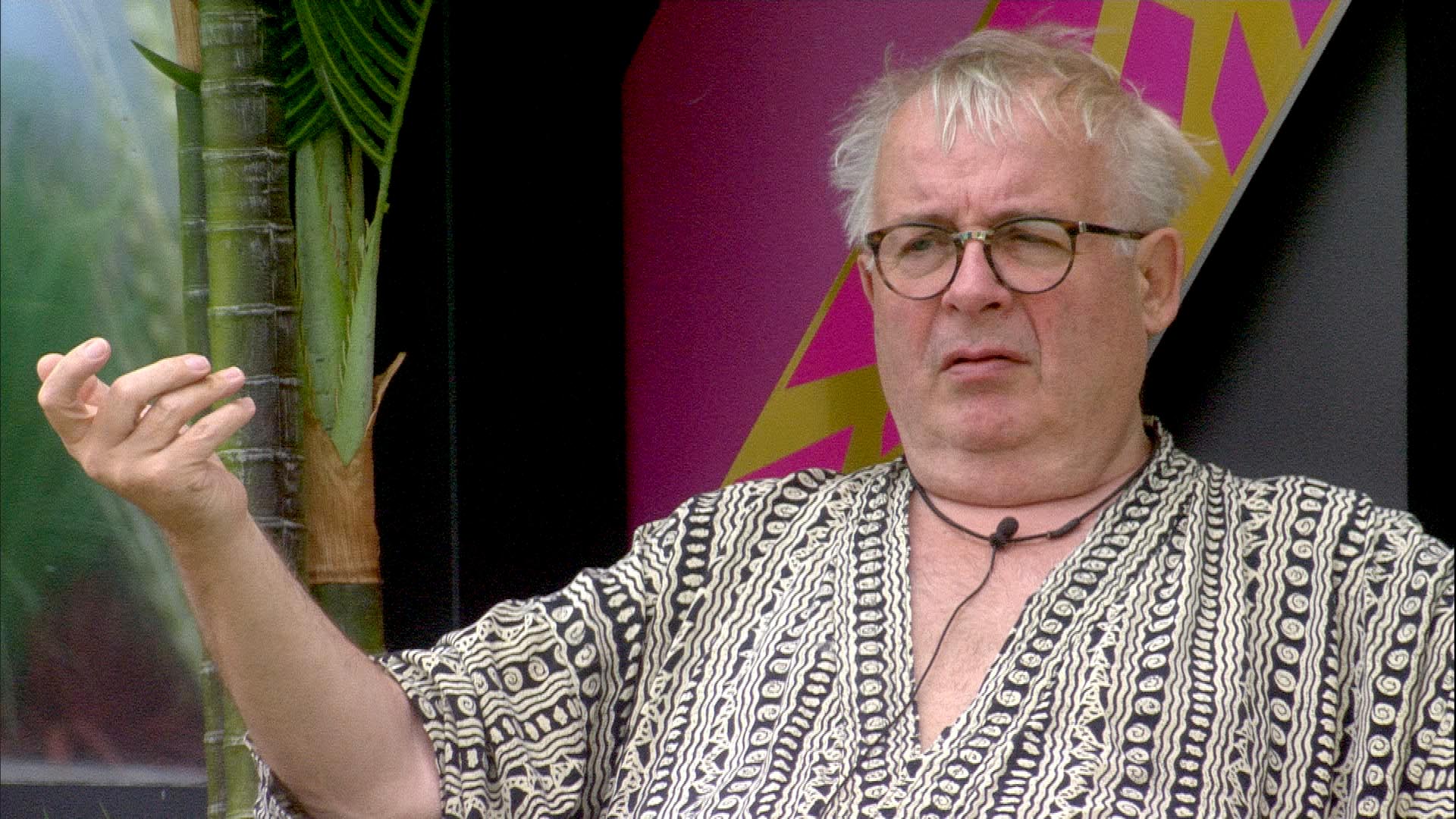
Larger than life TV personality Christopher Biggins was kicked off Celebrity Big Brother after producers said that comments he had made could cause offense to the viewing public and housemates – but what did he actually say?
He told Dan Wootton, the Sun’s Entertainment editor,
“I found Katie and said ‘I am mortified. I would never do anything to upset you. I love you and I’m really sorry’.”
Although Big Brother producers decided against broadcasting some of Mr. Biggin’s comments, during his exit interview with Big Brother,
Big Brother said,
“On Monday you in a conversation with Katie, where she remarked that she was not in the house to represent the Jewish community, your comment was plainly capable of causing offense to Katie and the viewing public. Big Brother spoke to you about your language, when big brother pointed out to you that your language was capable of great offense you apologized and said that you understood the seriousness of the situation, but you’ve continued to use unacceptable language.
“Today in a conversation with Renee and others you again used unacceptable language regarding bisexuality. Talking about AIDS, you said, ‘I think it was a bisexual disease.’ You then went on to say, ‘there were a lot of bisexuals who went to those countries, had sex with those people and then brought it back to their own families in America, so that’s how it became such a worldwide disease.’”
Channel 5 have decided to not broadcast the scene, Mr Biggins said,
“I think Channel 5 were trying to protect me by not screening it.
“I think it’s unfortunate that someone has decided to leak the story. Then they had to do something.
“I was called into the diary room so I went along in a shirt and underwear. They said they’d warned me twice now and I’d broken the rules so they were going to evict me.
Lords And MPs met today to discuss ending AIDS by 2030 and having an AIDS free generation within 15 years.
Parliament hosted a roundtable meeting today (World AIDS Day), bringing together a host of Lords MPs and speakers to talk about how to bring about an AIDS free generation by 2030. The talk was hosted by the All Party Parliamentary Group On Global Health and HIV/AIDS charity StopAIDS.
Speaking at the event were MPs Diane Abbott and Chris Freer along with Baroness Masham, Baroness Liz Barker, Baroness Verma and Lord Cashman.
A packed room heard from three speakers, Alexa, Cristian and Chan Chan who talked about their personal journey with HIV.
Diane Abbott saluted the bravery of LGBT activists in Uganda, singling out the tremendous work achieved by Icebreakers, a support community in Uganda, for their efforts in the country, where politicians are fiercely homophobic and where HIV/AIDS medication is hard for LGBTs to gain access to.
Lord Cashman also put forward questions on how to curve the ever-growing numbers of gay and bisexual men who were being diagnosed with HIV in the UK.
Recent statistics revealed that new infections in gay and bisexual men have risen again – and that record numbers of men who have sex with men are unaware of their statuses.
Baroness Verma said that she was proud that the UK was “significantly funding the Global fund”, for HIV/AIDS awareness and health campaigns, and added that we will continue to “champion key populations”, but was keen to stress that there was a “long way to go”.
Addressing the room she said, “It’s great to hear us talk about ending AIDS but the job is far from over.”
I guess it started from that lazy Sunday afternoon, stretched out with all the Sunday papers when my eye’s were drawn an article about a a gay cancer in San Francisco. I sat bolt upright and started to read it in earnest.
New HIV infections amongst men who identify themselves as gay or bisexual have continued their upward rise.
New infections of HIV in gay and bisexual men in 2014 increased by 110 new cases over the 2013 statistics. In total 3360 gay and bisexual men were diagnosed with HIV during the 2014 period. Despite being a small minority in the UK’s population gay and bisexual men account for 54% of new HIV diagnoses.
New diagnoses are higher in 2014 than they were than at the height of the AIDS crisis during the late 80s and early 90s.
In the period of 2012-2013 new HIV infections increased. The rise of HIV in the gay community has risen from 2450 in 2004 to 3360 in 2014. The National AIDS Trust estimates that there are nearly 110,000 people living with HIV in the UK and around 26,000 living with undiagnosed HIV.
For the 150th issue of FS Magazine, the magazine published by sexual health charity GMFA, a survey found that around a third of gay men did not use a condom the last time they had penetrative sex.
Seventy-one per cent of gay men said they would use PrEP immediately if it were available on the NHS. PrEP is a medicine when taken daily is extremely effective in stopping the transmission of the HIV virus.