Tag: HIV/AIDS

All the latest breaking news on HIV and AIDS Browse The THEGAYUK’s complete collection of features and commentary on HIV and AIDS.

  • REMEMBERING THE AIDS CRISIS: Memories of 1980’s UK

    REMEMBERING THE AIDS CRISIS: Memories of 1980’s UK

    I remember only too well when AIDS first impacted on my world and came into the public eye.

    In 1981 I was 19 and there was talk in the gay clubs and pubs where I lived of a disease originating in monkeys that was killing Americans. I remember there was a lone American visiting for professional reasons and he was considered as guilty by association, just because of his accent. I look back with shame now on how people were afraid to approach him and how the treatment he received was similar to that in the dark ages a leper might have expected, minus the bell to ring and the calling out of the phrase “unclean”.

    Over the next couple of years, probably longer, as it took time for information and knowledge to disseminate. The names of those who had contracted the condition made it appeared to be an illness that blighted the pretty boys and those who had the biggest cocks.

    Of course, that is not true. It’s just where I lived there was a small gay circle and once infected those who were sexually promiscuous and practised unsafe sex were the first to be hit and through them as HIV spread rapidly.

    There was too little information and it was too late, that was part of the problem. The other problem was a NIMBY (Not In My Back Yard) mentality. People thought it wouldn’t happen where they lived or to them as it was affecting other parts of the globe. In the 1980s the world was getting smaller and people travelled for work, holiday and to play in the gay hot-spots.

    For me, it was the indiscriminate nature of the illness. There were personal losses of people I knew.

    In the media, the death of Rock Hudson seemed to have an impact. In the USA I recall a movement quilting and marking the lives of the victims they knew in this way. There were powerful images of the time where over vast areas these quilts were laid out with loved ones present.

    There was a TV program about a man called Terry Madeley. In interviews in 1987, he was the first in the UK to speak openly about his fight with AIDS. A year later a program about his fight for death with dignity was aired on 1st December 1988 World AIDS day. It was titled Remember Terry and 29 years ago today, I still do. He had died in the previous October and I recall an image broadcast at the funeral in a crematorium of a hand through the curtain wearing a diamante glove waving goodbye. He appeared to have such strength of character and good humour for those snippets to stay with me.

    To be in 2017 when there is a more positive outlook  – I can’t help pausing to consider and remember all of those who do not have the opportunity to share today.

    This article was first published in 2017 and has been updated with links.

  • Dave Chappelle jokes about AIDS, Freddie Mercury and COVID-19 in “disgusting” sketch

    Dave Chappelle jokes about AIDS, Freddie Mercury and COVID-19 in “disgusting” sketch

    Comedian Dave Chappelle was filmed telling a joke about Donald Trump’s Coronavirus infection but tied it into the AIDS epidemic of the 80s and 90s along with the death of Freddie Mercury. Freddie Mercury died of AIDS-related illnesses in November 1991.

    Over 238,000 people have died from Coronavirus-related complications in the USA since the beginning of the pandemic. Worldwide over a million people have died and there have been over 10 million reported cases.

    Dave Chappelle made the observation during a piece for a Saturday Night Live broadcast on NBC, and the joke has been panned by many on social media as unfunny and awkward.

    The joke was “Trump getting Coronavirus was like when Freddie Mercury got AIDS. Nobody was like, “well, how did he get it?”

    Matthew Hodson the Executive Director of AIDSMAP and a long time HIV advocate, in response to the clip, wrote, “AIDS jokes. Not funny in the 1980s. Not funny now.”

    Model Theo Ford wrote, “Why the fuck is @NbcSNL airing jokes about AIDS?? David Chappelle was poor choice this week….”

    Hit maker and Pride stalwart Hazell Dean slammed the sketch as “disgusting”.

    https://twitter.com/THE_THEO_FORD/status/1325609933207969792

    Writer, Jack King wrote, “forever exhausting that people will deem it acceptable to exploit queer trauma for laughs”.

    No stranger to LGBT+ controversy

    Chappelle is no stranger to using language and material that critics have slammed as transphobic and homophobic. In the past, he targetted Caitlyn Jenner by saying,

    “I read in the paper that Caitlyn Jenner was contemplating posing nude in an upcoming issue of Sports Illustrated.

    “And I knew it was politically incorrect to say, so I figured I’d just say it for everybody — yuck.

    “F***, man, I just want to read some stats, like why are you cramming man-pussy in the middle of the sports page like that?”

    It seems Chappelle’s go-to voice to portray gay men is “high-pitched, over-enunciated, effete” notes The New Republic. In one joke over deciding which man of a same-sex partner was “the wife” he quipped, “whichever one of you is gayer, that’s the wife.”

    In 2018 he made a joke about Star Trek Discovery actor, Anthony Rapp and his sexual abuse accusation against Kevin Spacey, seemingly suggesting that Rapp was okay as he “grew up to be gay anyway. and “And not to victim-blame, but it seems like the kind of situation that a gay 14-year-old kid would get himself into.”

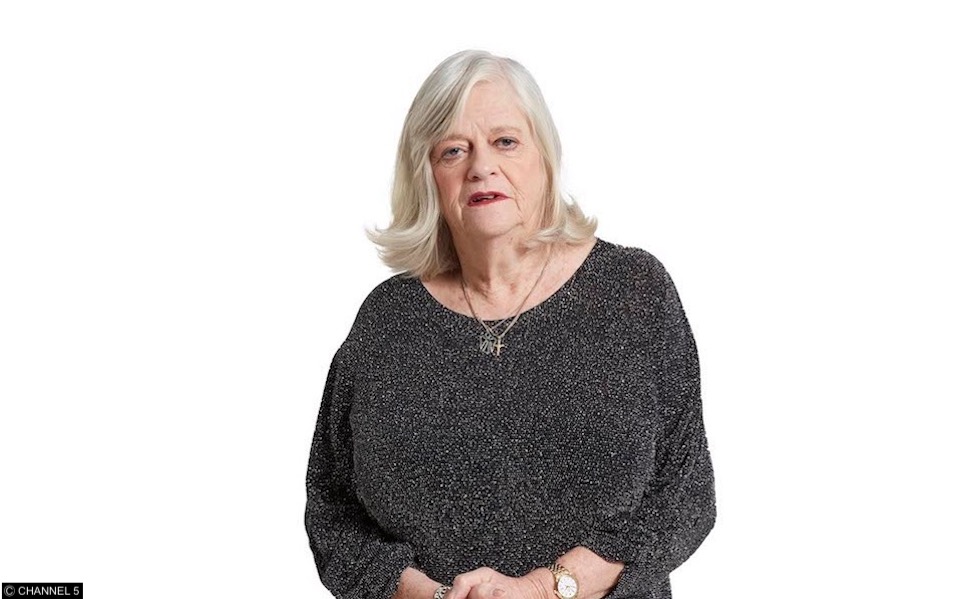
  • Ann Widdecombe: AIDS not as devastating as feared

    Ann Widdecombe: AIDS not as devastating as feared

    “We have had the scare of SARs, bird flu, Ebola and of course AIDS. None proved as devastating as feared.

    Speaking her mind on COVID-19 and the spread of Coronavirus, Ann Widdecombe told her Daily Express readers that the virus may prove not to be “devastating” and called for a “sense of proportion”.

    The former Conservative party Minister grouped AIDS in with bird flu and Ebola. All of which were absolutely devasting for those who died from the spread of viruses.

    It is to be noted that AIDS, which killed thousands of gay and bi men in the 80s and 90s, has caused over 32 million deaths worldwide.

    According to The New European, in her latest column for the tabloid Daily Express she wrote, “I’m all for sensible precautions but I cannot help feeling that we are going mad over coronavirus,” 

    Widdecombe added: “We need a sense of proportion in the face of the financial markets going into meltdown, aeroplanes being grounded and shops shutting their doors.

    “It is nasty but, given the recovery rate, it is not the Black Death.”

    Taking to Twitter to comment on Widdecombe’s column the editor of Beyond Positive, Tom Hayes said, “Oh look, Ann Widdecombe is claiming #COVID19 won’t be a disaster, it’ll just be like AIDS. Over 32,000,000 people have died of AIDS, but it’s OK they’re mostly minorities and you couldn’t give two flying fucks about those sort of people could you, Ann?”

    https://twitter.com/PositiveLad/status/1238503653100662785

    Cancelled

    Last year Widdecombe had one less opportunity to spread her thoughts after a theatre company, Selladoor, scrapped an event at a venue in Ilfracombe, Devon, where the right-wing politician was due to host a one-woman show.

    The decision to cancel the show follows on from an interview on Sky News in which Widdecombe suggested that science may “produce an answer” to homosexuality – a comment which has led to a huge backlash against the Brexit Party politician.

  • Theresa May remembers those who have died from AIDS

    Theresa May remembers those who have died from AIDS

    The British Prime Minister, Theresa May has paid tribute to those lost to AIDS-related illnesses.

    PM Theresa May has taken to Twitter to paid tribute to those who have lost their lives due to AIDS-related illnesses.

    Speaking from the G20 summit in Argentina, the PM said, that it was also important to remember the support needed by those living with HIV today.

    Ms May went on to say that she was “proud” that the UK was one of the first countries in the world to honour the UN’s 90/90/90 target which is related to HIV diagnoses, treatment and viral suppression.

    Ms May also went on to say that globally the UK is helping “millions of people” access much-need antiretroviral therapy and supporting HIV prevention in some of the world’s poorest nations.


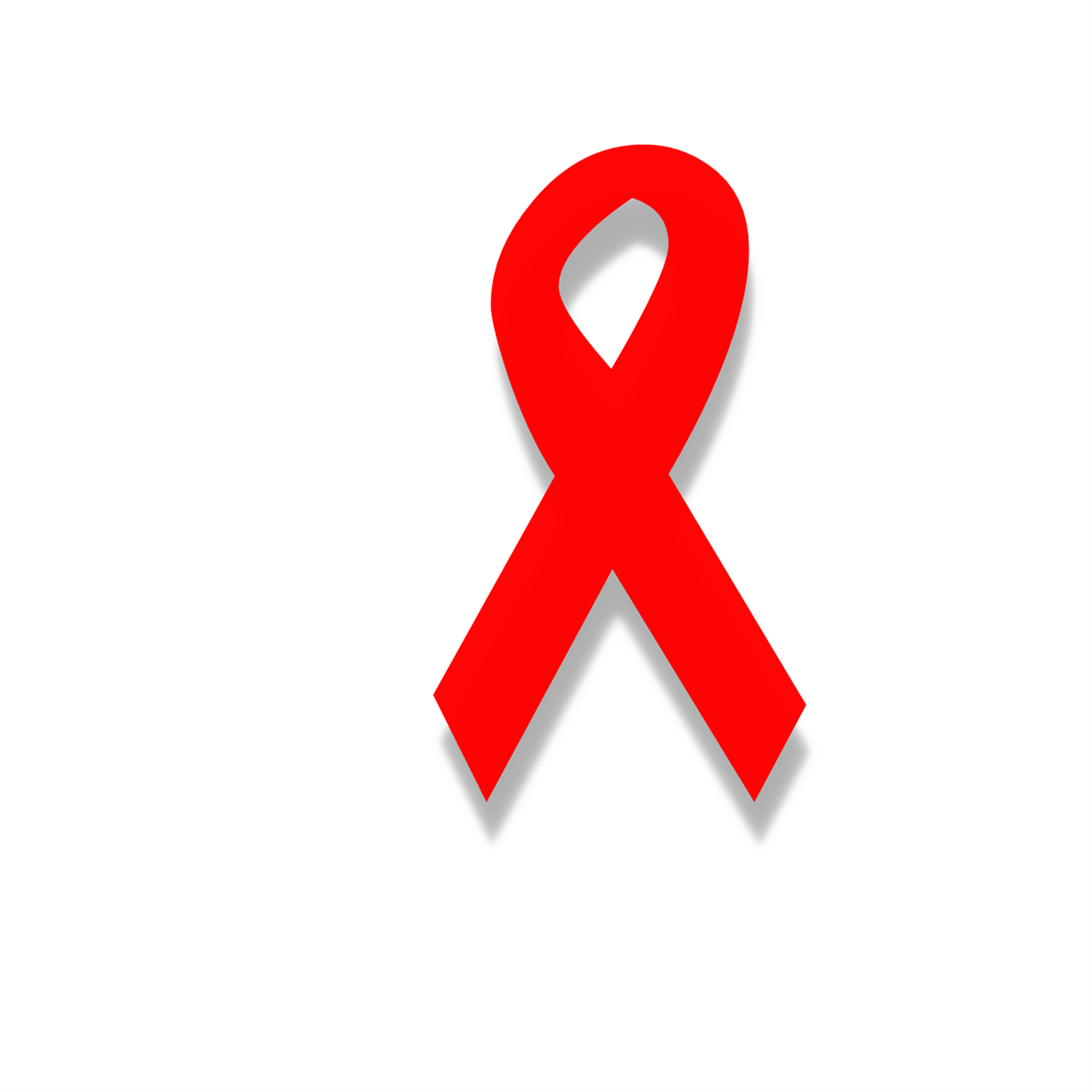
  • What does the Red Ribbon used for World AIDS Day mean?

    What does the Red Ribbon used for World AIDS Day mean?

    Every year on the 1st of December many people start wearing a red ribbon for World AIDS Day, but what does it mean and who designed it?

    Why is the Red Ribbon used for World AIDS Day and who designed it?
    ArtsyBee / Pixabay

    The Red Ribbon symbol has become the defining icon for the awareness, fundraising and determination to beat HIV and AIDS. It is a strong vibrant red symbol that has become synonymous with every 1st December and it was designed in 1991.

    A decade after AIDS began its stranglehold, decimating communities, a coalition of 12 artists gathered to devise a plan to raise awareness for Visual Aids, a New York arts organisation which raises awareness of HIV.

    The 12 people consisted of photographers, painters, filmmakers and costume designers. After a short collaboration they came up with the striking, but the simple idea of the red ribbon, inspired by the yellow ribbons tied on trees at the time, to denote support for US military fighting in the Gulf war.

    Pink and rainbow colours were rejected because of their association with the LGBT+ community, and the designers were keen to show that HIV went beyond gay people and could potentially affect everyone.

    The red ribbon logo became recognisable across the globe.

    Signify Awareness and Support

    OpenClipart-Vectors / Pixabay

    In our interview with David France, director of How to Survive A Plague told us,  “In one of the worst moments we ever faced we rose above it. We took care of each other. It was extraordinary and beautiful”.

    The ribbon is worn to signify awareness and support for people living with HIV.

    According to WorldAIDsDay.org, “When the artists sat down to work on this project, their aim was to get people talking about HIV. This was at a time where HIV was highly stigmatised and people living with HIV were suffering behind closed doors, some too scared to even tell their loved ones they were living with the virus. The artists wanted to create a visual expression of compassion for people living with, and affected by, HIV.”

    At handmade ribbons where distributed in New York

    Back in 1991 a group of artists created the red ribbon. The first batch was handmade and given out on the streets of New York.

    In the very beginning, the artists made the ribbons themselves and distributed them around New York. “Within weeks of the red ribbon idea being born, world-famous actors starting wearing the red ribbon to high-profile award ceremonies such as the Oscars and talking about why it was important. The media also cottoned on, and within a short space of time the red ribbon symbol became universally recognised.” Explains the website.

  • LGBT activism group ACT UP changes “traumatic” AIDs posters

    LGBT activism group ACT UP changes “traumatic” AIDs posters

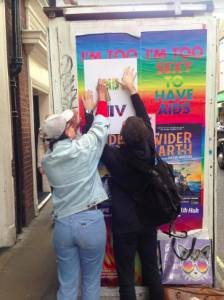
    If you’ve been around Soho or South London recently you may have seen a  multi-colour poster which states “I’m Too Sexy To Have AIDs”, activist group, ACT UP LONDON have defaced the posters to read something different.

    (SUPPLIED BY ACT UP)

    Members of ACT UP LONDON have taken it upon themselves to change bill-posters designed by the late David McDiarmid and exhibited by Studio Voltaire because of the emotional trauma they may cause some people. The poster, is a multicoloured artwork which reads, I’m Too Sexy To Have AIDs”. According to Studio Voltaire, McDiarmid “produced these works in response to his own, and his community’s, experience of the AIDS crisis, and the multiple forms of devastations it manifests –political, emotional, intellectual and medical”.

    McDiarmid died in 1995 from complications brought on by AIDs.

    However some members of ACT UP LONDON have taken to defacing some of the posters because the message “isn’t helpful to the battles people living with HIV fight today”.

    Cé from ACT UP LONDON explained, “Firstly, I would like to say that the main thrust of the action was never intended to censor the artist or to silence queer voices. Expanding on this, it’s important to point out that although the artwork may have been targeted at those that understand where this it comes from and why it exists, in its current state it is used out of context and isn’t helpful to the battles PLHIV fight today. The use of this piece of art taken so out of context not only takes us backwards in a fight that we are already struggling to win, but it also contributes to the stigma surrounding HIV. On the back of this it has the potential to be traumatic for those living with HIV, particularly for those with new diagnoses and especially for those who don’t have sufficient support networks to speak through the emotions conjured by the text in the artwork.”

    (SUPPLIED BY ACT UP)

    Dani Singer from ACT UP LONDON said “We are incredibly supportive of Studio Voltaire and their decision to curate an exhibition of David McDiarmid’s work – as the second silence of HIV rages on, the more voices speaking out representing those affected by HIV and AIDS, the better. We see this action as a collaboration between ACT UP London and McDiarmid, in keeping with the strong tradition of ACT UP working with radical Queer artists throughout its existence to widen its message of ending the HIV pandemic, stigma, and pharmaceutical greed.

    In a statement to THEGAYUK.com ACT UP London said, that the exhibition was counterproductive, with no supporting literature or context.

    Explaining the works, Studio Voltaire explains on their website that they are displaying, “series of public works” which will be shown intermittently across sites in Clapham and Brixton, in partnership with This is Clapham and Art on the Underground. Studio Voltaire say that they will over the course of a year, publish artworks at various locations including neighbouring LGBTQ+ venue Two Brewers, the façade of Studio Voltaire, Brixton Underground station, and other temporary locations.

    David McDiarmid (1952–1995) was an Australian artist, designer and activist, recognised for his prominent and sustained artistic engagement in issues relating to LGBT+ identity and history. Rainbow Aphorisms are a series of printed multiples, produced from 1993 until the artist’s death in 1995 of AIDS–related illnesses. McDiarmid produced these works in response to his own, and his community’s, experience of the AIDS crisis, and the multiple forms of devastations it manifests –political, emotional, intellectual and medical.

    Siobhan Fahey from Rebel Dykes Film said, “The poster I’m Too Sexy to Have AIDS worried me, and I took my concerns to the gallery. When David was making art, in the 1990s, ironic art was much in vogue. It was powerful. But in today’s climate, with Trump and Brexit, we are almost post-irony. Statements like this need careful contextualisation. I support the aim of ACT-UP in repurposing these posters in a way I am sure that David McDiarmid would approve.”

  • What was it like to live through the 80’s AIDS epidemic? Derek Crowe writes a memoir

    What was it like to live through the 80’s AIDS epidemic? Derek Crowe writes a memoir

    While social attitudes towards homosexuality have improved beyond anyone’s expectations in just three decades, it’s important not to forget the fierce oppression and undue criminalisation gay people faced in Britain’s recent history. Part of that story is the AIDS epidemic of the 1980s.

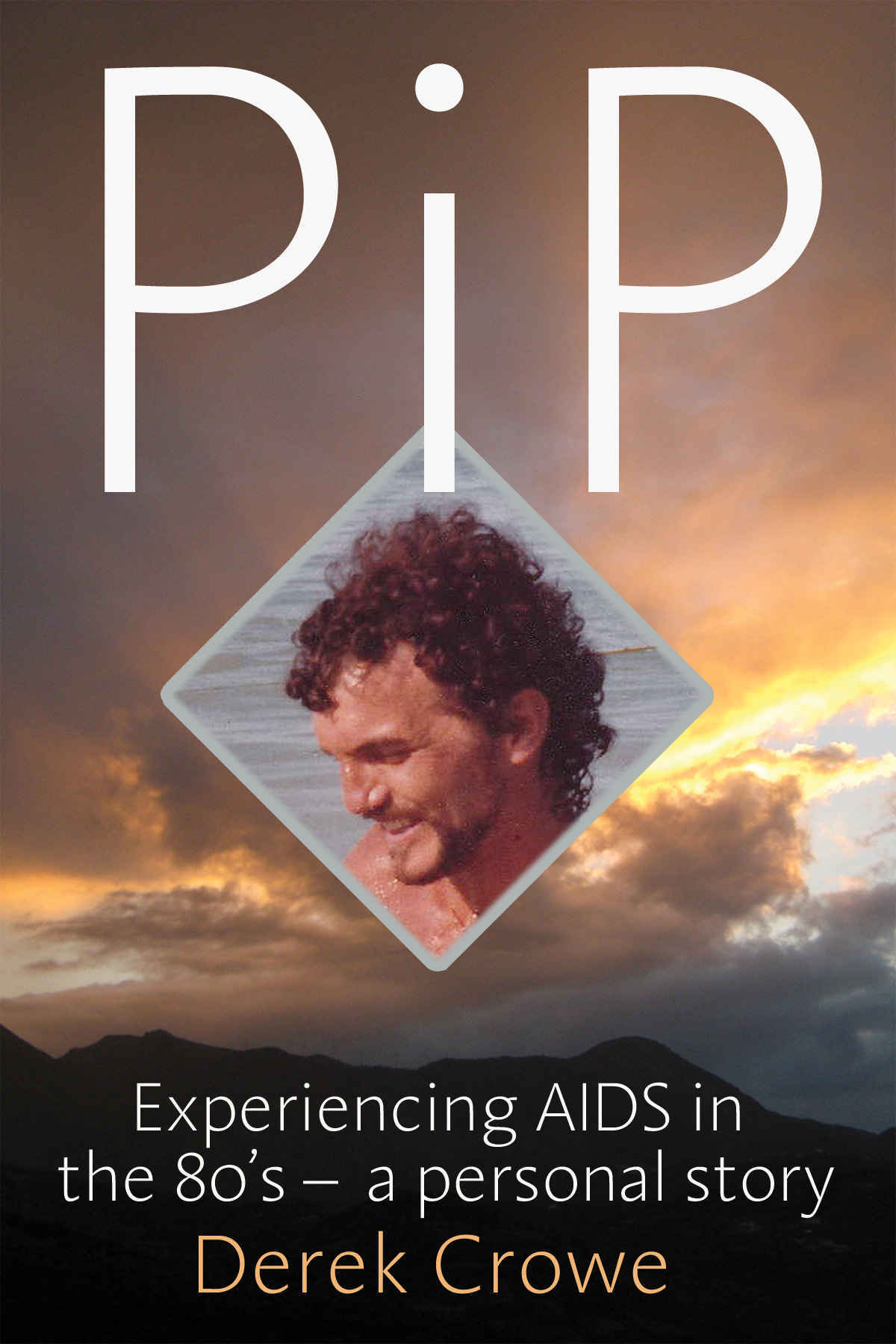
    At that time, Derek Crowe was dealing with the recent diagnosis of his partner, Pip. Little was understood, much of the available help was reluctant and society-at-large had opinions that were a secondary disease in themselves.

    In his poignant and ultimately beautiful new memoir, PiP: Experiencing AIDS in the 80’s – a personal story, Derek tells the story so the attitudes of yesteryear will not only never be forgotten, but never be repeated.

    Synopsis from the author Derek Crowe:

    This story was written 30 years ago and was originally called “Love has no gender”. Initially, it was written as a cathartic exercise after the death of Pip my partner from AIDS.

    Much of the reactions to this illness in the early ’80s is forgotten, the fear, anxieties, the bad press and how the government handled what was subsequently to become a big social problem.

    My story tells of our meeting, our move to Spain where we opened a salon in the fashionable area of Marbella and the discovery that Pip was soon to be diagnosed with this terrible illness. Due to the help of an incredible doctor in Spain, Pip eventually returned to the UK and was hospitalised on a specialist ward at St Mary’s Hospital Paddington.

    In the book I tell of how the illness slowly manifested itself and how the medical teams battled to find treatments for the various illnesses that each patient was confronted with. It was done with care, compassion and was non judgemental. A new drug had arrived from America, AZT, hopefully a step towards a cure. It was a trial drug with no proper knowledge of its side effects or if it would work. Pip was the third person to be administered with it and the side effects were horrific, he was a guinea pig. Sadly it was not to be the cure that we had hoped but thankfully over the years it has progressed and is now part of current AIDS treatment.

    Within the covers I tell of the hatred and bigotry directed towards gay men in those early days and I also expose the love and understanding from so many other people. The heart of this story is the love of two people through one of the most dramatic medical nightmares in recent years, a love of two gay men bound by fear and a hope and desire to conquer the worst nightmare.

    Telling this now is, I feel, part of our social history.

    “When you look at it, very little has actually been written about the onset of AIDS, from a deeply-personal level,” explains the author. “This story may be over three decades old but, with social attitudes continuing to evolve, it’s highly relevant to today’s social fabric. We’re now celebrating pride and diversity rather than condemning it. Still, the harsh stories of our past deserve to be retold and remembered.”

    Continuing, “I’m donating a portion of all proceeds to the Terrence Higgins Trust, who continue their life-changing work as the largest voluntary sector provider of HIV and sexual health services in the UK. They remain underfunded and underappreciated, so I hope my book can be a vehicle of great value to them and their maverick mission.”

    Reviews for the book have been extremely positive. One reader comments, “A story of true love and loss through AIDS in the 1980s. This book details a piece of social history in a deeply personal way, and the associated stigma attached to this diagnosis at that time. A great read that I couldn’t put down.”

    Another adds, “A compelling read, written from the heart, bringing to life the challenges and prejudice at this time in our social history. It is well written, easy to read and very engaging because Derek is sharing such a profoundly personal experience – I found it difficult to put down once started.”

    ‘PiP: Experiencing AIDS in the 80’s – a personal story’ is available now from Amazon.

    About the Author:

    Now retired, Derek lives in a small village within the South Downs National Park where he is surrounded by the beautiful countryside of Hampshire.

    Hairdressing has played a major role for Derek where during his career he owned 3 hair and beauty salons, one being in Marbella where part of this story is set. He also held two executive positions with two of the leading hair cosmetic companies allowing him to travel extensively.

    Pip is a poignant, profound memoir and a dark reminder of oppressive 1980’s attitudes towards homosexuality and AIDS. It is an excellent read, funny, heartwarming, and very sad, but it’s a story that’s so eloquently told. Stories like this should not die with use, they should live through us, and this is exactly what Derek Crowe does with his memoir. A must read!

  • BIG GAY GLOSSARY | AIDS or HIV DENIALISM

    BIG GAY GLOSSARY | AIDS or HIV DENIALISM

    What is AIDS or HIV Denialism?

    There is a small but vocal section of society that believes that HIV or AIDS doesn’t exist or believes that it is all a conspiracy. Some accept that HIV exists but that it does not cause AIDS.

    There are also some who also reject the use of ARV (antiretroviral therapy) to treat HIV, instead, promoting a raft of unproven treatments such as a daily regime of vitamins, or massages and yoga.

    Whilst holistic remedies may have some benefits it is always advised that people living with HIV should talk with their doctors before embarking on any treatment.

    Can you expand this definition? Use the comments below and your answer could be used to expand or define this glossary entry.

    What is AIDS or HIV Denialism?

    Check out more definitions in our Big Gay Glossary

  • BIG GAY GLOSSARY | AIDS

    BIG GAY GLOSSARY | AIDS

    What is AIDS?

    AIDS stands for acquired immune deficiency syndrome. It is a condition where there is a critical loss of the body’s cellular immunity. People who have AIDS have an incredible lack of immunity from infections and disease, which eventually causes their deaths. AIDS was identified in the early 1980s and there began the AIDS epidemic. Millions of people around the globe have been affected by AIDS.

    AIDS itself does not kill people, it’s the complications brought on by AIDS that actually kills a person. Which is why it is correct to say that someone “died due to an AIDS-related illness” or as “a complication of AIDS”, rather than “s/he died from AIDS”.

    The cause of AIDS is a virus called HIV (the human immunodeficiency virus). It is transmitted mainly through blood and sexual fluids such as semen. There is no cure, although the condition can be managed with drugs, extending the lifespan to near normal length.

    There’s also preventative medicine, commonly known as PrEP, which when taken as prescribed by a doctor, is very effective in stopping HIV transmission.

    In the West, AIDS was seen, in the 80s as a homosexual disease. It killed many gay and bisexual men in the early days. It stumped doctors, scientists and politicians. The early response was considered woefully inadequate. Slowly as more information came to light it was discovered that AIDS was not just confined to the gay community. For a more in-depth reading about how HIV/AIDS affected the gay community in the early to mid-80s, read Randy Shilts book, And The Band Played On.

    In Africa, where there are many people living with HIV/AIDS transmission happens mostly between heterosexual people.

    Can you expand this definition? Use the comments below and your answer could be used to expand or define this glossary entry.

    Check out more definitions in our Big Gay Glossary

  • Trump Fires HIV/AIDS Council In Its Entirety

    Due to licensing this article must be read on our website

    President Donald Trump fired the remaining members of the Presidential Advisory Council on HIV/AIDS (PACHA) Wednesday, reportedly informing them without explanation with a letter delivered by FedEx … (more…)

  • Why is the Red Ribbon used for World AIDS Day and who designed it?

    Why is the Red Ribbon used for World AIDS Day and who designed it?

    The Red Ribbon symbol has become the defining icon for the awareness, fundraising and determination to beat HIV and AIDS. It’s strong, vibrant red, a symbol that has become synonymous with every 1st December, was designed in 1991.

    Why is the Red Ribbon used for World AIDS Day and who designed it?
    ArtsyBee / Pixabay

    A decade after AIDS began its stranglehold, decimating communities, a coalition of 12 artists gathered to devise a plan to raise awareness for Visual Aids, a New York arts organisation which raises awareness of HIV.

    The 12 people consisted of photographers, painters, filmmakers and costume designers. After a short collaboration they came up with the striking, but the simple idea of the red ribbon, inspired by the yellow ribbons tied on trees at the time, to denote support for US military fighting in the Gulf war.

    Pink and rainbow colours were rejected because of their association with the LGBT+ community, and the designers were keen to show that HIV went beyond gay people and could potentially affect everyone.

    The red ribbon logo became recognisable across the globe.

    In our interview with David France, director of How to Survive A Plague told us,  “In one of the worst moments we ever faced we rose above it. We took care of each other. It was extraordinary and beautiful”.

    The ribbon is worn to signify awareness and support for people living with HIV.

    According to WorldAIDsDay.org, “When the artists sat down to work on this project, their aim was to get people talking about HIV. This was at a time where HIV was highly stigmatised and people living with HIV were suffering behind closed doors, some too scared to even tell their loved ones they were living with the virus. The artists wanted to create a visual expression of compassion for people living with, and affected by, HIV.”

    At handmade ribbons where distributed in New York

    Back in 1991 a group of artists created the red ribbon. The first batch were handmade and given out on the streets of New York.

    In the very beginning, the artists made the ribbons themselves and distributed them around New York. “Within weeks of the red ribbon idea being born, world-famous actors starting wearing the red ribbon to high-profile award ceremonies such as the Oscars and talking about why it was important. The media also cottoned on, and within a short space of time the red ribbon symbol became universally recognised.” Explains the website.