Tag: Legal

Read the latest news and analysis of legal issues surrounding the LGBT+ community. Browse THEGAYUK’s entire archive on news on legal issues.

  • Adult entertainers are asking the Government to be protected under the Equality Act

    Adult entertainers are asking the Government to be protected under the Equality Act

    A petition has gone live asking for occupations, like adult entertainment to be added to protected characteristics, like sexuality, race and gender identity.

    The petition which has been created by the ManyVids platform which aims to provide “an oasis for sex workers to thrive independently” has been launched to ask the government to make changes to the Equality Act 2010.

    The organisation has said it would like to “challenge the UK government to protect and safeguard the rights of adult entertainers, who make a legal income just like other workers in many industries across the UK”.


    [totalpoll id=”112851″]


    A worker, Epiphany Jones (link NSFW), uses the platform, and said that she is “repulsed by how much hate and discrimination there still is against sex workers, especially in this day in age”.

    Explaining some of the issues she faced working within the adult industry, she wrote,

    “When I first started camming on a few different sites, I offered PayPal as another way for my customers to safely and securely buy content from me. Unfortunately, a customer reported me to PayPal for using their service for sex work and my account was banned, deleted and the money was given back to the purchaser.

    “As I had already delivered the video in question (which was delivered on time and without any issues), I can only assume the customer did this vindictively, knowing they would get a free video out of it. As you can imagine I was furious that this had been allowed to happen, and that I wasn’t given any chance to explain my situation

    She continued, “What upset me most is the fact that prejudices surrounding my occupation stopped a thorough investigation from taking place. If I was selling craft videos on how to make daisy chains and a customer had complained, PayPal would have fairly investigated both sides of the argument and helped to resolve the situation, as opposed to banning the account out of hand and penalizing the creator”.

    Jones says the incident has left her feeling “ostracized and alone”.

    “No right-minded person would ever “lend a stripper money to do better shows.”

    Speaking about her experience of getting a bank loan is even more depressing, she said,

    “A couple of years ago I wanted to improve my business by upgrading my software and equipment. As I’m a registered business I decided to do what anyone else would do and met with the bank to discuss business loans. When I explained to the manager what my business was and why I needed the money I was practically laughed out of the office and told that no right-minded person would ever “lend a stripper money to do better shows.”

    “Putting aside the fact that I earn consistently more via camming than I did in my previous job, this completely demoralized me and belittled my worth. The fact that a bank manager felt justified in demeaning me, just because of my occupation was sickening. All the money I’d earned and the profile I’d worked hard to build up meant nothing, he couldn’t see past my job title.

    Just because I’m in the adult industry doesn’t mean I’m any less of a human being.

    “Just because I’m in the adult industry doesn’t mean I’m any less of a human being. Having my hard-earned money taken from me being banished from sites is so demoralizing, especially since it’s nothing to do with me as a person – it’s just because of the prejudice surrounding my job.

    People say the world will never change, but it can happen, and since I’ve been a ManyVids member I’ve seen such a positive improvement, especially within the LGBTQ community. I’d encourage all sex workers to keep being resilient and to have the courage to speak up and stand for what is right”.

  • Gay marriage now legal in Northern Ireland

    Cake, Gay Marriage, gay wedding
    CREDIT: © ivonnewierink Depositphotos

    Gay and lesbian couples are now able to get married in all four nations of the UK.

    Same-sex marriage is now legal in Northern Ireland – despite repeated attempts by the DUP to thwart legal equality for gay and lesbians in the region.

    The subject of same-sex marriage had been voted on at least five times by the Northern Ireland Assembly.

    Northern Ireland is the last nation in the United Kingdom to legalise marriage between two people of the same sex. England, Scotland and Wales have permitted same-sex marriage since 2014.

    This also means that gay people who are already married will have their marriages recognised in Northern Ireland.

    From today, couples in Northern Ireland can register their intent to marry with the authorities with the first actual marriages expected to take place on the 10th February 2020.

    Legal equality was only possible, after repeated attempts by campaigners to bring same-sex marriage to the table, when, the Stormont assembly collapsed in 2019.

    This meant that in July 2019, MPs backed amendments which required the government to change abortion laws and extend same-sex marriage to Northern Ireland if devolution was not restored by 21 October 2019.

  • What you post online could be wrecking your relationship

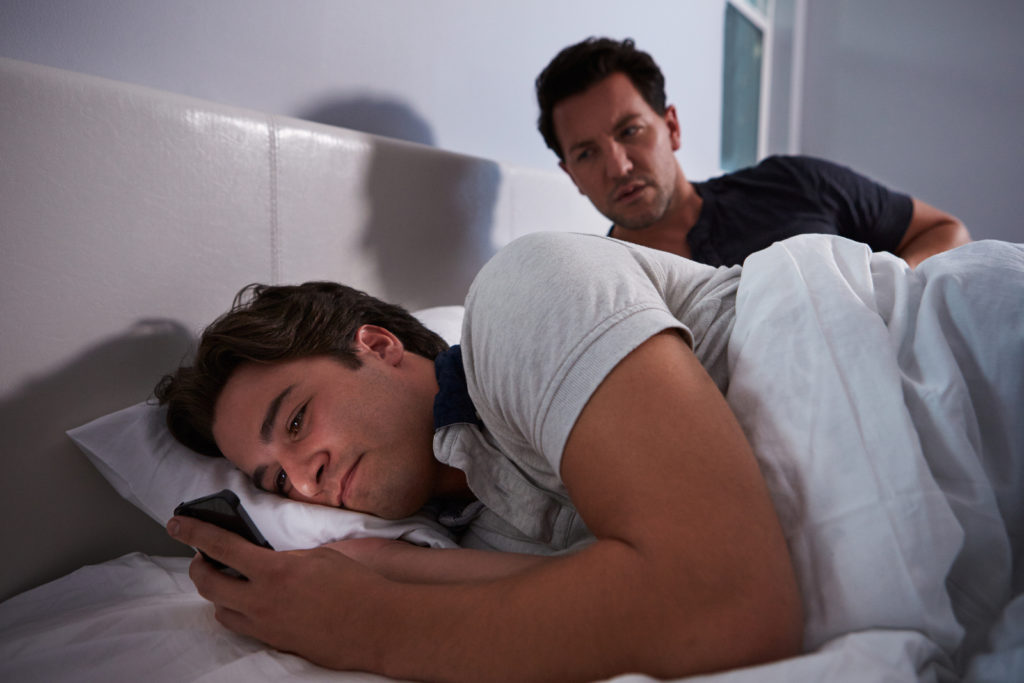
    What you post online could be wrecking your relationship

    CREDIT: Wavebreak Media Ltd bigstock

    Is your relationship on the rocks? Was 2019 a tough year, research has shown that people are rowing about what their other after is posting online!

    Just under half of all Brits admit they have secretly checked their partner’s Facebook account and one in five went on to row about what they discovered, new research has revealed.

    One in seven said they had contemplated divorce because of their other halves activities on Facebook, Skype, Snapchat, Twitter or WhatsApp.

    People are angry at the amount of posting their partners do

    CREDIT: monkeybusinessimages-bigstock

    Nearly a quarter or the 2,000 married Brits asked, said they had at least one argument a week with their partner because of social media use and 17 per cent said they rowed every day because of it.

    The most common reasons for checking their partner’s social media accounts was to find out who their partner was talking to, to keep tabs on them, to check who they were out with and find out if they were telling the truth about their social life.

    While 14 per cent said they looked specifically to identify evidence of infidelity.

    Social media is a rising reason for divorce!

    CREDIT: ©-zimmytws-Depositphotos

    The research was commissioned by family law specialists Slater and Gordon who have seen an increase in the number of people citing social media use as a cause of divorce year on year.

    Andrew Newbury, head of family law at Slater and Gordon said:

    “Social media can be a wonderful way of keeping in touch with family and friends, but it can also put added strain on a relationship.

    “Five years ago Facebook was rarely mentioned in the context of a marriage ending, but now it has become common place for clients to cite social media use, or something they discovered on social media, as a reason for divorce.

    “With more than 556 million people using Facebook each day, the way we live our lives, and our marriages, has drastically changed. We are finding that social media is the new marriage minefield.

    “Social media, specifically pictures and posts on Facebook, are now being routinely raised in the course of divorce proceedings.”

    It wasn’t just what their partner was doing on social media but also how long they spent on it that was likely to cause marital problems with Facebook usage topping the list of reasons couples argued over social media.

    Arguments were also caused because of contact with an ex-partner, sending secret messages and posting inappropriate photos.

    One in twenty even complained that their partner didn’t post any pictures of them together which made them upset.

    Fifteen per cent of Brits considered social media to be dangerous to their marriage, with Facebook considered the most dangerous, followed by WhatsApp, Twitter and Instagram.

    But one in ten admitted they hid images and posts from their partner, while eight per cent admitted to having secret social media accounts.

    A fifth of respondents said they felt uneasy about their relationship after discovering something on their partner’s Facebook. 43 per cent said they confronted their spouse immediately about this, but 40 per cent said it took them some time before they felt comfortable to raise it with their partner.

    While a third said they kept their social media log-in details a secret from their partners, 58 per cent said they knew their partner’s log-in details, even if their spouse wasn’t aware they knew them.

    Andrew Newbury, head of family law at Slater and Gordon said:

    “Social media can also make a divorce more difficult. Divorce is already a stressful time for everyone involved and what is being posted on Facebook can antagonise families and make a speedy resolution more difficult to achieve.

    “We are now actively advising our clients to be cautious when it comes to using Facebook and all forms of social media because of its potential to damage relationships.”

    Five social media tips that could save your relationship.

    1. Don’t post in anger.

    Your post will be seen by all your friends, family and potentially millions of others. Even if you later delete your post, the damage will have been done.

    2. Be respectful.

    Don’t complain about your partner or other family members online.

    3. Be transparent.

    Check with your partner before you post images or information.

    4. Check your privacy settings.

    You might think someone can’t see a post when they actually can.

    5. Take a break and enjoy the moment.

    You don’t need to post everything on Facebook, Instagram or Twitter.

    This article was first published in 2015.

  • The African country of Gabon criminalised gay sex

    Gabon has joined dozens of other African countries in making same-sex sexual relationships illegal.

    Gay sex is now reportedly illegal in the African, predominately Christian country of Gabon. Being found guilty could see you landed with a six-month jail sentence and a fine of 5 million CFA francs (£6,400) reports The Independent.

    According to the report the ban was introduced in July 2019. The minister of justice has apparently declined to comment on the ban.

    Gabon joins 32 other countries on the continent which criminalises sex between men.

    Silence from World Leaders

    The news has had relatively little pick up in the international press and world leaders have remained largely silent in condemning Gabon’s government on criminalising gay people.

    The UK’s own Gov website is out of the date – currently informing potential travellers that “same-sex sexual activity is legal in Gabon”.

    Prime Minister Boris Johnson has yet to speak out over Gabon’s new anti-gay law.

  • Here’s what you can do if your private photos are shared online without your permission

    Here’s what you can do if your private photos are shared online without your permission

    With more and more of us sharing pictures that would make a porn studio exec blush, we asked a leading solictor what you can do if you find your pictures have been leaked online without your permission.

    Phil Gorski at Blacks Solicitors reveals the steps you can take to protect your data and your private pictures if you become a victim of hacked data or revenge porn.

    Be sure before you send…

    CREDIT: ©-Vadymvdrobot-Depositphotos

    “The sort of easy thing to say but rather difficult thing to do is, where these images are taken consensually then you need to be thinking very carefully about whether you actually want to do it or not. Not putting yourself in the position where there are images around in the first place is the easy fix but not necessarily something that someone will always want to do.”

    Get in contact with the publisher of the picture.

    ©-Maridav-Depositphotos

    “If something does get out there, then the first thing that anybody should do is get in touch with the site concerned if it’s an online publication. Because, by-in-large, if a site has a good reputation, if it’s a Facebook or a Google or whatever, they will react very quickly to remove the images.

    “There are systems in place where users can actually click on the right place and say, ‘This is what it is, this is where it is and you need to take it down.’”

    Revenge porn is a crime. Report it.

    “Last year there was a new piece of legislation introduced, which actually set out the specific crime of revenge porn. There is a specific charge that can be brought and so the option is there and should probably be taken if the information has been distributed to a large number of people.

    “What the legislation says is that where you’ve got photographs and the phrasing is, “… of a private or sexual nature …” That doesn’t mean you have to be showing intimate body parts or anything like that. It can be in a sort of context that’s perceived to be sexual.

    “If they are disclosed and it’s done without consent and the purpose of disclosing them was to cause distress or embarrassment, which when you think about it, it would be very difficult to not be the case. Then, there’s a potential crime that’s taken place.”

    An injunction?

    WilliamCho / Pixabay

    “All of these images would be considered to be of a private nature regardless of the criminal side of things. You would, where someone like me might be involved, a civil litigation lawyer would be, think about whether there’s a possibility of an injunction on privacy grounds.

    “That’s something that you would have to be a rich celebrity to afford, unfortunately.”

    Remember the Barbara Streisand effect.

    CREDIT: ©-s_bukley-Depositphotos

    “There’s a really interesting case in relation to privacy law that dates back a while involved Barbara Streisand and … and it’s led to something called the Streisand effect, which basically (means) sometimes you’re much better off not making a fuss because the coverage of your legal proceedings lead to far more attention than there was in the first place.”

  • Parents are permanently banned from protesting LGBT+ lessons outside schools

    Parents are permanently banned from protesting LGBT+ lessons outside schools

    Parents are no longer permitted to protest outside of primary schools over the teaching of subjects such as LGBT+ equality.

    A judge has ruled that parents, mainly from an Islamic background, but included members from other religious backgrounds, will not be able to protest outside a school in Birmingham.

    Parents were angered by the No Outsider lessons which said went against their religious beliefs. This led to reports that hundreds of pupils had been removed from the school by their parents. Parents have also claimed that the No Outsider lessons are not “age-appropriate”.

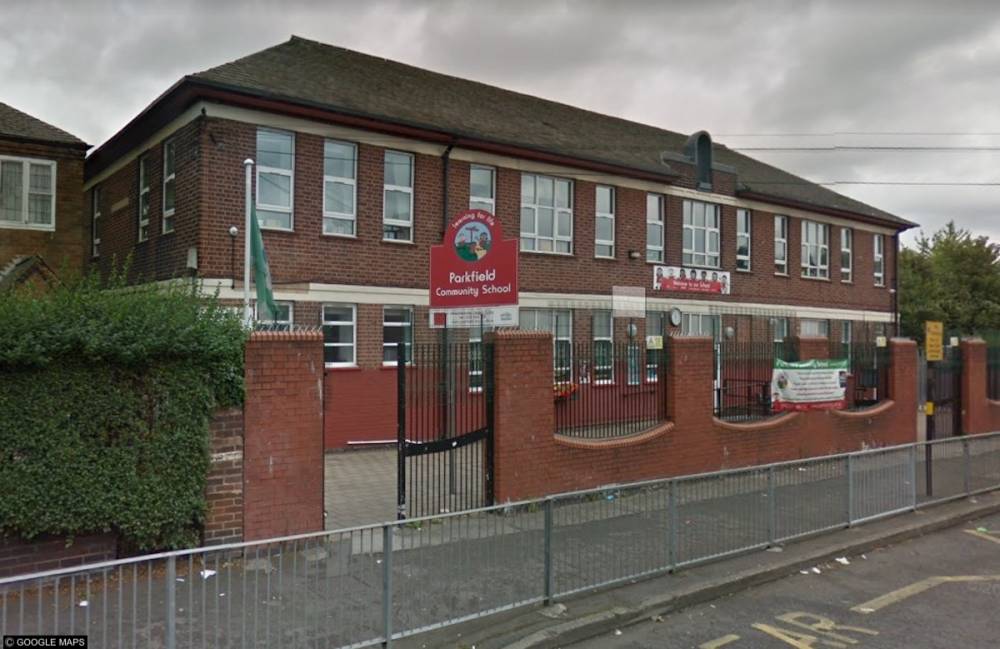
    Anderton Park School and Parkfield Primary School in Birmingham became the focal points for protesters earlier this year after the schools started to deliver lessons to students, which covered LGBT+ families and gender expressions.

    An injunction against the protesters was created back in June – and Birmingham City Council “sought a court order to further protect the school and extend the ban, which has now been granted by High Court judge Mr Justice Warby” according to Sky News.

    Birmingham City Council claimed that the noisy protesters were disrupting lessons and causing stress to students and staff at the school alike. According to sources, 21 staff members were treated for stress relating to the protests.

    The judge ruled that the injunction did not “amount to unlawful discrimination against the protesters” adding, that the protesters had misunderstood and misrepresented that is being taught at the school”

    Founder of the Birmingham South Asians LGBT group, Khakan Qureshi told THEGAYUK,

    “I’m absolutely elated though we do need clarity on several points raised. This includes how to identify people who take part in protests and how to bring them to justice and having tighter regulations in having the power to arrest. 

    “Bear in mind, it wasn’t the content of the lessons which were contested but the nature of the protests. They were anti-social, caused a nuisance, disrupted the teachings of young children and caused potentially psychological harm. 

    “On a practical level, the protestors obstructed the highway and disturbed residents in the neighbourhood. 

    “It’s a really good day for teachers, pupils, the education system, councils and the LGBT+ community when common sense prevails”

  • The UK’s porn block has been cancelled

    ©-lofilolo-Depositphotos

    The government’s plan to block porn UK users who hadn’t signed up to an age verifying database has been scrapped.

    According to the Digital Secretary, Nicky Morgan, the controversial policy will not be commencing.

    The confirmation comes after the policy had been blocked a number of times.

    The original policy would have required users to register on porn sites with official documents such as a driver’s license, passport or an age verification card.

    The policy had raised concerned by privacy activists who warned that any database that contained personal information or that tracked people’s browsing online could be hacked or used by the government to track people’s most private moments.

    Advocates of the policy said that it would protect children from accessing porn online.

    In a written statement to parliament, Morgan said that the government would heighten its focus on its new “online harms” regulation to address issues caused by minors accessing porn sites.

    She wrote, “The government’s commitment to protecting children online is unwavering. Adult content is too easily accessed online and more needs to be done to protect children from harm”.

  • Actor Seyi Omooba to sue theatre and agency after “homophobic” facebook post backlash

    Actor Seyi Omooba to sue theatre and agency after “homophobic” facebook post backlash

    The actor who was dropped from a production of The Color Purple after the discovery of a Facebook post, in which she said she didn’t think homosexuality was correct, is suing the theatre company and her agency.

    Seyi Omooba was dumped from the production of The Color Purple after a Facebook post from 2014 in which she said that she did “not believe homosexuality is right” and that she didn’t people were born gay.

    The Facebook post from 2014, went viral earlier this year when actor Aaron Lee shared a screenshot on Twitter saying Omooba owed an explanation to the gay community for her words.

    She refused to appologise for the post, in which she wrote, that she does not believe people “can be born gay”.

    She added, “I do not believe homosexuality is right, though the law of this land has made it legal doesn’t mean its [sic] right.”

    At the time, Curve and Birmingham Hippodrome released a statement saying that Omooba “will no longer be involved with the production” after admitting that the post had “caused significant and widely expressed concerns”.

    The actor is now suing the Curve Theatre in Leicester and her agency Global Artists saying that her career is in ruins after the backlash against her.

    Christian Concern released a video saying that Seyi had in a “cruel turn of events… found herself in uncharted waters”

    https://twitter.com/CConcern/status/1178214667992420353

    “Because of the backlash from her Facebook post, she was sacked and has been unable to find work.”

  • Pink News apologises to MP and makes a donation to charity as compensation

    Pink News apologises to MP and makes a donation to charity as compensation

    One of the UK’s leading LGBT+ news outlets, PinkNews apologises after publishing a story about Joanna Cherry QC which was later found to be untrue.

    kconcha / Pixabay

    PinkNews has offered an “unreserved” apology to  Joanna Cherry QC the MP for Edinburgh South West after it published a story which was later found to be untrue.

    Taking to Twitter, Ms Cherry wrote, “Last week ⁦⁩ published a defamatory story about me. I’m pleased to have secured a full apology, a donation to a charity of my choice – – & full payment of my legal costs”.

    In a statement, PinkNews wrote,

    “The claim was untrue and we would like to apologise unreservedly to Ms Cherry.

    “It is well known that Ms Cherry is a human rights lawyer. She came out as a lesbian over 30 years ago and campaigned against section 28. She has spent a lifetime marching and campaigning for the rights of the LGBT+ community and as a politician regularly speaks up for their rights in parliament and beyond.

    “It was not our intention nor is it in our interest to alienate any member of the LGBT+ community and we are truly sorry for the harm caused.

    “We are happy also to confirm that we have made a donation to the Lesbian and Gay Immigration Group at Ms Cherry’s request in compensation for the damage done and we have paid Ms Cherry’s legal costs.

    In a statement published by Pink News, Ms Cherry wrote,

    “I am pleased that the PinkNews has withdrawn this damaging and hurtful allegation. I believe in equal rights for all. It is not acceptable for lesbians who speak up for women and girls’ rights and against hateful speech and abuse to be denigrated. I hope the LGBTI+ movement can resume its previous habit of respectful debate over differences of opinion within the community.”

    The amount donated to the UK Lesbian and Gay Immigration Group has not been disclosed nor have the legal costs involved.


  • Botswana decriminalises gay sex

    Botswana decriminalises gay sex

    The High Court in Botswana strikes down discriminatory laws which effectively outlawed homosexuality.

    nancydowd / Pixabay

    Today’s High Court decision in Botswana to strike down antiquated laws criminalising consensual same-sex sexual conduct is a huge win for the human rights of LGBT people in the southern African country and beyond, says the Human Dignity Trust (HDT).

    In a broad and forward-thinking reading of the Botswana Constitution, the three-judge bench unanimously ruled that the criminalising laws were discriminatory against LGBT people and breached their rights to privacy, dignity and liberty.

    Embed from Getty Images

    “We heartily congratulate the Botswanan and southern African LGBT human rights defenders and lawyers who have worked tirelessly on this pivotal case. LGBT people in Botswana have had their constitutional rights confirmed today and can now be more hopeful of a future free from discrimination, harassment and violence,” said Téa Braun, Director of HDT.

    “This judgment, which comes less than three weeks after a deeply regressive decision on the same issue from the Kenya High Court, is legally sound, ground-breaking and courageous, and is a ray of hope for all those LGBT Africans looking to their legal systems for justice and fair treatment,” she added.

    Sections 164, 165 and 167 of Botswana’s British colonial-era Penal Code outlawed ‘carnal knowledge of any person against the order of nature,’ attempts to commit carnal knowledge and acts of ‘gross indecency’ respectively. Those convicted under these laws faced jail sentences of up to seven years. Section 167 was updated in 1998 to apply to same-sex acts between women as well as men.

    A court case from 2003, in which it was argued that these sections of the Penal Code were unconstitutional, was dismissed by the Court of Appeal, so today’s victory is especially welcome as it aligns Botswana’s criminal domestic laws with both the country’s 1966 Constitution and international human rights law, says HDT.

    Botswana has shown increasing tolerance towards LGBT people in recent years.

    In 2016, the Court of Appeal sent a strong and progressive signal that LGBT people have the same human rights as everyone else in the country, whilst in 2018 the President said they are, ‘Just like other citizens (…) and deserve to have their rights protected.’

    The victory at the High Court today was notable given the generally hostile climate towards the human rights of LGBT people across Africa. Of the continent’s 53 countries, 32 continue to criminalise homosexuality.

  • Everything you need to know about the UK’s “porn ban”

    Everything you need to know about the UK’s “porn ban”

    With the UK Tory government pressing ahead with its porn ban, we asked Alastair Graham, Chair of the Age Verification Providers Association and CEO of AgeChecked on what we should know before the ban comes into place in July.

    Kurious / Pixabay

    New rules mean that you will have to prove you are over the age of 18 – and be on a database, in order to view porn from mid-July. Users will need to, from 15th July 2019, prove that they are over the age of 18 with official documents such as a driver’s license, passport or an age verification card. One of the systems in place is called the AgeID system another is called AVSecure. Alastair Graham, Chair of the Age Verification Providers Association and CEO of AgeChecked answers some questions on what you’ll need to do come mid-July.

    How will the porn ban work?

    Whenever a UK IP address attempts to access a website with age-restricted content, the user will have to verify they are over 18. They will not be able to view explicit content until they have proven their age.

    The onus of implementing such checks will fall on individual pornographic websites. Given that the government has not created its own verification system for websites to use, website operators will need to choose from a number of different age-checking software services on the market.

    There are variations between suppliers with regards to how each company will verify customers. AgeChecked, for example, works by allowing customers to confirm their age securely via an anonymous username and password. In order to get the username and password, users must first age verify themselves. They can choose from a range of methods, utilising a mobile app, credit card or driving licence.

    Each time the user logs on to the website in question, they will not have to re-verify themselves in order to access it. Instead, they simply sign in as normal and they will be granted instant access. This way, compliant age checks can be carried out without disrupting the user’s journey.

    Three key myths

    “My data will be hacked or leaked”
    Perhaps unsurprisingly, the incoming legislation has triggered privacy fears. Will porn companies be able to link people’s identities to their porn preferences? This is a very valid concern.

    The only way sure-fire way to avoid highly sensitive data leaking is to make sure that such data is not created in the first place. In this respect, it’s vital that all age verification systems are third-party providers (and not in any way affiliated with the porn sites themselves.)

    AgeChecked never stores personal information on its users and credentials are completely anonymised. When a user tries to access an age-restricted website or service, the website will only receive a simple ‘pass’ or ‘fail’ alert – nothing more.

    “It’s just a censorship tool”
    The whole point of the new age verification regulations is simply to prevent children from stumbling across pornographic content; these measures will not have any control over what content adults can and cannot view.

    “People can bypass the system”
    Online age verification works by implementing barriers that make it as difficult as possible for young children to stumble upon inappropriate or damaging adult content.

    Of course, there will always be a minority that tries to undermine these barriers, which is unfortunate but unavoidable. That’s why it’s so important that age-gating software does not work in silo; but rather plays a role in an overall solution. Underage access to adult content is a problem that needs support from both parents and government to be properly tackled going forward.

    Looking ahead

    Overall, while it is easy to become fixated on the pros and cons of the upcoming porn ban, what people need to remind themselves of is the core purpose of this legislation – to protect and prevent vulnerable youngsters from needlessly stumbling across this graphic, damaging content.


    AgeChecked is just one of the companies which will be able to verify users’ ages.