New rules mean that you will have to prove you are over the age of 18 – and be on a database, in order to view porn from mid-July.
Anyone who is watching porn via a British IP address will have to prove they’re of legal age to watch the content from mid-July. The new legislation has many critics concerned about privacy protection. The House of Commons passed the issue quietly on Monday, 17th December 2018.
Users will need to, from 15th July 2019, register on porn sites with official documents such as a driver’s license, passport or an age verification card. One of the systems in place is called the AgeID system another is called AVSecure.
The law means that you have to prove you are over the age of 18 before you can access porn sites in the UK and is part of the Digital Economy Act. The rules will apply to any website or platform which offers porn on a “commercial basis”.
Sites that do not keep a database of its users and their ages maybe blocked to users in the UK.
Advocates for the new rules hope that the measures will protect children from online porn.
However, despite its intentions to protect children from accessing porn, the new law will not stop minors from being able to view unlawful content on social media.
Plans are being made to make “porn passes” available at local newsagents, which will allow people in the UK who want to watch porn to bypass inputting personal data which proves their age to various porn sites, according to The Independent. It is a way in which people can access porn anonymously once the new law comes into force.
Buying a “porn pass” means that you will have to hand over personal information to your local newsagent, who will be able to issue you with an anonymous pass, which will allow you access to adult sites in the UK.
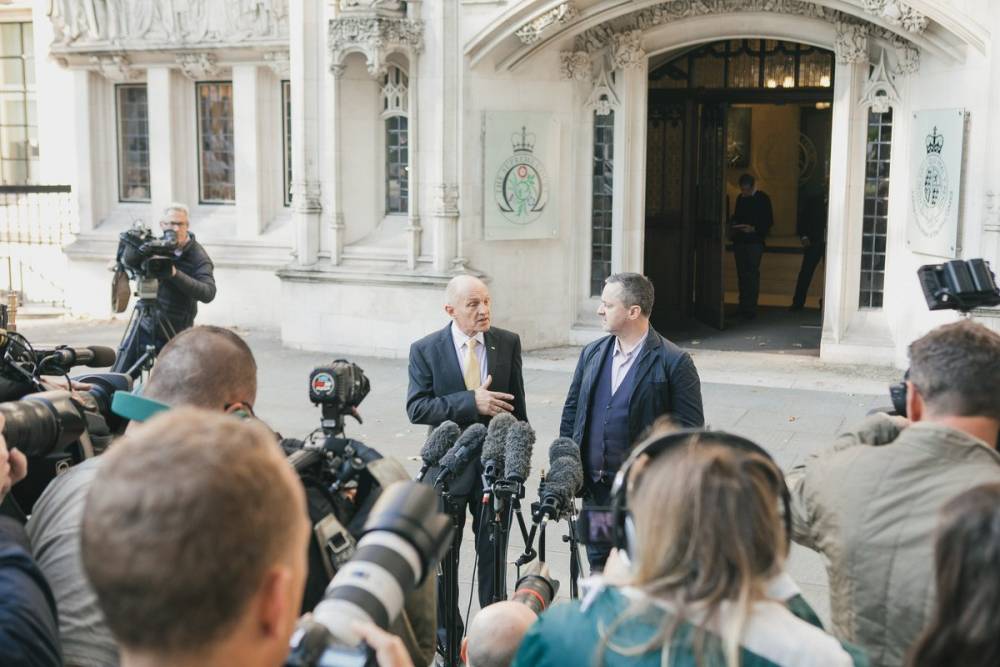
Justice Mwita said the volume of documents, the inability of the three judges to meet and the demands of other cases were behind the delay in their ruling on the lawfulness of Sections 162, 163 and 165 of the Kenyan Penal Code.
The judgment, which had been scheduled for 9am this morning (22 February, 2019) was much anticipated, as indicated by the packed courtroom of Kenyan LGBT activists and community members, lawyers, international and national media.
Tweeting from court today, the National Gay and Lesbian Human Rights Commission (NGLHRC), which has been supporting the case, said, “To say we are disappointed would be an understatement.”
The Human Dignity Trust’s Director, Téa Braun, who was also in the Nairobi court this morning, said, “This is tremendously disappointing, particularly for the committed and tenacious activists and lawyers in Kenya who have been working towards this moment for several years. Nonetheless, we must put our trust in the Kenyan justice system. This is a pivotal case, and ultimately the most important thing is a sound and reasoned judgment that will free LGBT Kenyans from discrimination and persecution.”
Sections 162, 163 and 165 of the Penal Code, which were introduced into Kenyan lawbooks by British colonisers over 100 years ago, made it a crime punishable by up to 14 years in prison to ‘have carnal knowledge against the order of nature,’ and for consenting adult men to engage in ‘gross indecency’ with each other which brought a 5-year prison sentence.
These laws – still on the books across two thirds of the Commonwealth thanks to British colonisation and the failure of decades of independent governments to repeal them – are widely used to stigmatise, harass, discriminate against, arrest and detain LGBT people, and in many countries they have led to violence, including sexual violence, against the LGBT community.
The case was filed in 2016 and argued by Senior Counsel Paul Muite and Advocate Sande Ligunya in February 2018. It was heard alongside a similar petition brought forward subsequently by the Gay and Lesbian Coalition of Kenya and Nyanza Rift Valley and Western Kenya LGBT coalition.
In 2016, the legality of poppers and their use was debated in the UK’s parliament and they nearly became illegal as part of the government’s crackdown on so-called legal highs.
CREDIT: TheGayUK
However, Poppers were proven to not be a psychoactive substance and so the government made a u-turn on their decision to outlaw the liquid, meaning it is legal to buy and consume poppers in the UK.
The psychoactive substance bill which came into affect in April 2018 means that anyone supplying any drugs that provide a psychoactive reaction, unless they’ve been sanctioned, like alcohol and cigarettes by the government, could face some serious jail time – up to 7 years. Poppers were found not to be psychoactive.
Poppers have a long history in the lives of gay men. They are often used during sex and when inhaled can create a head rush, like a “high” and the feeling of muscle relaxation.
I am really concerned after reading about a man in the papers who donated sperm to a lesbian couple some years ago who is now being chased by the CSA who is demanding he pay towards the child’s upbringing, even though he’s not on the child’s birth certificate.
I’m in a similar situation. I donated sperm to a couple 10 years ago – and I’m wondering if they have any rights to make me pay for their child. I’ve never met the child and I’m no longer in the couples’ life as I moved towns a few years back.
My name isn’t on the birth certificate and I’ve not been a part of the child’s life at all. If they wanted to, could they get in contact with the CSA and make me pay?
Are there any legal protections for men like me?
Paul in Leicester
Dear Paul,
The answer to this question is dependent on whether you donated the sperm through a registered Human Fertilisation & Embryology Authority (HFEA)-licensed clinic; if you did then you are not financially liable for the child, nor do you have any parental responsibility for the child, equally you have no say over the upbringing of the child. If this is the case, the birth mother will be the legal mother and her civil partner or wife will be the “second legal parent” (but not “mother” as the law does not allow a person to have two legal mothers).
If you donated the sperm without using a HFEA-licensed clinic as an intermediary (such as an informal agreement between friends or through an internet agency) then you could be deemed to be the child’s legal father (whether or not you are named on the birth certificate) and could be obliged to financially support the child as necessary. Ultimately, the child’s mother may be able to bring a successful claim through the Child Support Agency (CSA).
If you feel that it is likely action will be taken against you, it is best to be proactive. In my experience the worst thing you could do is bury your head in the sand and hope it goes away. Sometimes a simple offer of some contribution towards the maintenance of the child will avoid often lengthy, expensive court proceedings.
I would advise however that you seek the advice of a specialist solicitor in this area who would be much better placed to give you a clearer picture of your obligations.
Have you got a dilemma for our team of experts? Write to us here.
This response is not intended to constitute legal or other professional advice and should not be relied on or treated as a substitute for specific advice relevant to particular circumstances. Individuals should always seek legal advice from a professional which is specific to their unique set of circumstances.
Switzerland is taking a tough stance on homophobia and transphobia after voting to make the crime’s punishment attract up to three years in jail. It means that the punishment for homophobia is now in line with that of racism in the country.
However, the bill still needs to be passed by the Council Of States before it becomes official law.
Mathias Reynard put the law forward and posted on Twitter “A magnificent success for human rights! Final response in December to the Council of States. # LGBT ?️???.”
“Powerful Message”
Speaking to Shortlist Mathias said, “The Swiss Parliament’s decision is great news because it sends the powerful message that homophobia is not an opinion; as for racism, it’s a violation of the law.
“I tabled the motion after speaking to friends of mine who have personally been victims of verbal and physical homophobic violence.
“And working on this law I found out that the Swiss case-law doesn’t punish either hate speech or incitement to hatred towards LGBT+ people. During the last few years, this loophole in the law has been pointed out several times at an international level.”
Switzerland falls short on LGBT+ Rights
However it’s interesting to note that gay marriage is still illegal in the country and full child adoption by gay couples is also banned.
After the tragic death of his boyfriend of 14 years, a reader asks our legal expert Matt Parr if he can, when he dies, be buried next to his partner when the family of the deceased won’t allow it.
Writing to THEGAYUK, MB* from London told us that his partner of 14 years died suddenly in a car crash. Although he and his partner’s family always got on well, when MB told them of his plans to get buried alongside his deceased boyfriend when he eventually dies, the family wrote him a letter telling them that they wouldn’t allow that to happen.
He told us, “I got a letter from his family which said under no circumstances would they allow me to be buried with my partner. We weren’t married, but we did own a house together and the mortgage was paid off a while ago. Is there anything legally I can do to ensure that I can be buried next to my partner”
“Exclusive Rights of Burial”
Matt Parr suggests that MB’s first port of call should be to his local council, saying, “I would contact your local Council office and ask to speak to their bereavement department. You can make enquiries into the possibility of purchasing the Exclusive Rights of Burial for the plot next to your partner if the cemetery is Council-owned.
“While this does not afford you the legal ownership of the land itself, it does give you the right to be buried there and for your family to erect a memorial. It may be a question of moving fast to try and secure the plot as your partner’s family may try to purchase the same as a preventative measure.
Make a Will and specific what you want
“If you do not already have a will in place which stipulates your funeral wishes, I would advise that you speak to a solicitor regarding preparing one. In the will, you would be able to alert your executors to the fact that you have purchased the plot and wish to be buried there. While your funeral wishes are just wishes and unlike the rest of your will aren’t binding, it will ensure that steps are taken for you to be buried there, even if this is not ultimately possible for one reason or another.
This response is not intended to constitute legal or other professional advice and should not be relied on or treated as a substitute for specific advice relevant to particular circumstances. Individuals should always seek legal advice from a professional which is specific to their unique set of circumstances”
A reader asks our legal expert, Matt Parr whether as a gay man, he can donate bone marrow.
(C) DEPOSITPHOTOS
I know that gay men can’t currently give blood – but I was wondering about bone marrow. If someone in my family was to need my bone marrow for surgery can I legally give it? Also if I just wanted to give bone marrow to anyone, regardless of any family connection is this possible or legal?
Dear reader:
Thanks for your question, it’s great that you have thought about the need to donate bone marrow.
However, the main difference between the donation of blood and bone marrow is that to donate bone marrow you would first need to have a thorough medical examination before being permitted to donate.
You’re mistaken in your perception that gay, bisexual or men who have sex with men cannot donate blood full stop. Blood donation in the UK works on the values of kindness and mutual trust. The NHS Blood and Transplant service relies on all potential and existing donors to adhere to the blood donor selection rules by giving completely accurate answers to all the questions asked of them when they visit the donation centres. The questions and answers are given in complete confidence and exist for their own protection and for the health of patients who receive their blood.
The rules around gay and bisexual men giving blood changed in November 2017 following extensive campaigning by organisations such as the Terence Higgins Trust. Subsequently, providing that the donor meets the other donation rules, gay, bisexual or people who have sex with partners in groups at high risk of having an infection that could be passed on during sex will be able to donate after three months have passed since the last sexual activity.
The previous exclusion period extended to 12 months and many argued that this did, therefore, place an unrealistic expectation of celibacy on those who wished to donate and many saw it as, in reality, a blanket ban on donations from gay and bisexual men.
If donating Bone Marrow through the Anthony Nolan charity, however, then you will not be permitted to donate if you (or your partner) are, or think you are HIV positive or you are involved in high-risk sexual practices that may increase your exposure to sexually-transmitted diseases (amongst others). In essence, the decision as to whether you can donate will depend on a number of factors, both sexual and health-related – not sexuality.
There is no strict 12-month time frame of celibacy prior to donating.
The best advice I can give you is to consider contacting the NHS Blood and Transplant service or Anthony Nolan to discuss the process in further detail.
This month legal expert, Matt Parr tells us everything we need to know about wills and inheritance – especially if you’re lesbian, gay, bisexual or transgender.
Members of the gay community face many of the same dilemmas as opposite-sex couples when it comes to estate planning, wills and their potential exposure to inheritance tax.
According to figures recently issued by the Office of National Statistics, there were 190,000 same-sex families in the UK in 2017 and the majority of those were co-habiting couples as opposed to being married or in a civil partnership. In this situation, those couples or family units face the same issues as co-habitants of the opposite sex. Therefore, there are some important points that they should be aware of.
Co-habiting partners do no automatically inherit assets which were held in their partner’s sole name. In the same way that there is no such thing as “common law husband/wife” there is no such thing as a “common law civil partner”. With this in mind, if you aren’t married or in a civil partnership it is extremely important that wills are prepared to ensure that the surviving partner is adequately provided for after your death.
This can prevent family feuds, confusion over your wishes and costly legal action.
If you’re not married or in a civil partnership and you have no children of your own, then the law dictates that your parents will inherit your estate. Unfortunately, rifts are not uncommon amongst families of the gay community and there are many instances of parents being unwilling to accept their son’s same-sex partner into the family.
The thought of a parent inheriting a share in a property you own as tenants in common with your partner may fill you with dread – is there any possibility your parents would wish to co-own a property with your partner? If the answer is no, your parents could insist on selling the property, forcing your partner to move. Preparing wills would prevent this situation from arising. When property is owned as joint tenants as opposed to tenants in common your partner will inherit your interest in the property regardless of whether you have a will or not.
There is no form of inheritance tax relief for co-habiting couples of any sexuality. Consequently, only the first £325,000 of your estate, otherwise known as your Nil Rate Band (NRB) will be tax free – the balance over and above this will be taxed at a rate of 40 per cent. Therefore, even if you did decide to leave your entire estate to your co-habiting partner, they could be left with a hefty inheritance tax liability. Married couples and those in civil partnerships can leave their estates to each other and benefit from a total exemption for inheritance tax purposes, meaning on first death at least, there will be no inheritance tax to pay.
Unlike married couples and those in civil partnerships, cohabiting partners are unable to transfer their unused NRBs between them. Consequently, many gay couples make use of trusts in their wills to try and avoid an inheritance tax liability by giving them access to the funds without necessarily increasing their own inheritance tax exposure. The use of trusts to control the way funds are inherited, by whom and when, is particularly helpful when one or both of you have children from a previous relationship to whom you would wish to leave your estate, without compromising your surviving partner’s rights to live in your joint property after you have died. Advice should be sought as to your options in this scenario in order to ensure the trust is drafted correctly and in accordance with your wishes.
Gay couples who have taken the plunge and married or entered into a civil partnership can benefit from the same legal rights as opposite-sex couples, including the right to receive a statutory legacy together with a certain proportion of the balance of their partner’s estate if their partner dies without making a will (intestate). Ideally, however, the intestacy rules should not be relied on and my advice would always be to prepare a will specifying how you wish for your estate to be distributed.
Members of the gay community enter into polyamorous relationships in the same way as those in the heterosexual community. Whilst still not necessarily subject to a wider understanding by the public, it is impossible to deny that these forms of relationships exist and therefore it is right to encourage those who enter into them to seek advice on their rights and obligations to one another.
According to UK law, it is illegal to enter into more than one marriage or civil partnership. How members of a polyamorous relationship choose to protect each other’s interests is, therefore, more difficult – but not insurmountable. Again, the use of trusts in wills can prove extremely helpful in ensuring a degree of flexibility and afford a level of protection for the assets within the trusts. This is often required when three or more people wish to co-habit or enter into a relationship with each other.
Seeking advice about your options in this regard can be tricky. The fear of judgment and lack of understanding can deter you from gaining an insight into your options, but there are advisers equipped with the knowledge to help and offer a non-judgmental ear in complete confidence.
Transgender dimension
Currently, under UK law it is not possible to self-define your gender without a formal diagnosis of Gender Dysphoria and a successful application to a gender recognition panel for a Gender Recognition Certificate (GRC). This process can be lengthy and painfully intrusive. But once you have a GRC, what are the legal implications for estate planning and inheritance purposes?
It is important to consider the fact that wills prepared post-4 April 2005 which claim to gift assets to, for instance, “my sons” or “my nephews”, will exclude an individual who has obtained a GRC and who now identify as female. The beneficiary would need to apply to court to alter the disposition in order to rectify a failed gift because of a change in their gender means they no longer align the gender stated in the will. This application could become expensive and lengthy if other beneficiaries take objection to the change being made if this will adversely impact their own share of the estate.
Any will prepared before 4 April 2005 which purports to gift assets in this way does, however, continue to be effective despite a GRC having been issued to the beneficiary.
Members of the transgender community should be aware of the fact that family members may need to amend their own wills to take into account this change in the law and to avoid any uncertainty around the wording of such a gift.
With the growing number of gay couples living together, marrying, entering into civil partnerships and starting, fostering and adopting families of all different sorts, the gay community is just beginning to grapple with the same issues that heterosexuals have faced for centuries. Yet, some of these issues are easily overcome with the right advice.
Ultimately, the worst thing you can do is bury your head in the sand when it comes to discussing what can be tricky and sensitive matters with your family and planning ahead, where possible, is always the best course of action.
Laws around homosexuality differ from region to region in the UK meaning that gay people in Scotland and Northern Ireland had to wait a lot longer for equality.
(C) BIGSTOCK
Homosexuality was legalised in England and Wales on the 27th July 1967, a decade after the Wolfenden Report recommended that homosexuality should be decriminalised. The Sexual Offences Act was changed to decriminalise homosexuality, up to a point and only if three conditions were met:
that the act was consensual
that both parties were 21 or over
and the act was done in private.
Up until that point, men who were found to be having sex with other men were often charged with Gross Indecency or Buggery charges.
Thousands of men were criminalised because of this law. They were often sent to prison.
When the law changed being gay still wasn’t equal to being straight. The age of consent was 21 and all sexual acts had to be done in private. it wasn’t until the new millennium, that laws pertaining to gay and straight sexual acts were equalised.
Not all gay people in the UK were equal
But not all of the UK’s men were able to be openly gay. The law wasn’t changed until 1981 for homosexuals in Scotland and 1982 for guys in Northern Ireland.
As it stands today, it is currently legal to be gay, lesbian, bisexual and transgender across the UK, whether you’re in England, Northern Ireland, Scotland or Wales. Laws surrounding discriminating because of sexuality or gender expression are very strict in the UK and include employment and business services.
Gay people are permitted to have civil partnerships (since 2004) and get married (2013/14) except in Northern Ireland – the only region in the UK which does not have full equality for LGBT+ people.
“We appreciate that this looks like tit for tat, and it is”
(C) PERFOCAL
Perfocal, a photographer booking agency just refused service to the Ashers Bakery following on from the UK Supreme Court ruling yesterday which said that the bakery had not discriminated against a customer because of his sexuality, but because of the political message, he had asked the cake, “Support Gay Marriage” to be emblazoned with.
Perfocal enables members of the public to book photographers in major UK cities is, after learning of the details of a job they were booked for, refusing to share the photographs taken with The Christian Institute, a charity and lobby group supporting the owners of a Northern Irish bakery at the centre of a discrimination row.
Charity and lobby group The Christian Institute, paying the legal fees for the family that owned the bakery, used a photographer booking website to capture the moments before and after the case was heard. With estimated legal fees of £450,000 between both parties, the £36.50 cake has been described as ‘the most expensive cake in UK history’.
Private companies can accept bookings and then cancel if it offends their sensibilities.
The founder of the photographer booking website, Perfocal.com, has said in a statement on the company’s blog that the photographer booked on the day has been paid in full for their time by Perfocal, and the Christian Institute has been refunded. The Christian Institute paid for a 3-hour photography session, photo edit, all photos and extra for a 24-hour turnaround as opposed to the company’s usual 48-hour service. The statement made is within that 24-hour period, and the customer has been contacted.
The statement, including details of the £239 (+ £28 for rush delivery) booking, can be read here
In a statement, Tony Xu, the founder of the photographer booking site Perfocal.com said,
“It’s been accepted in the highest court in the UK that private companies can accept bookings and then, if they feel that it goes against their morals, refuse that booking if it offends their sensibilities and it not be counted as discriminatory.
“We appreciate that this looks like tit for tat, and it is. We had no idea what the case was when the booking was made – we simply see the basic information, date, time, location. When our photographer on the ground learned what it was while doing the job, they felt immediately uncomfortable with the situation, as many members of the public are, but remained professional. As soon as I found out though, I realised this was an opportunity to highlight exactly why this kind of result is damaging. This isn’t just about standing up against discrimination, I hope our stance serves as an example of exactly where this kind of judgement could lead us. Where does it end?”
In the blog statement, Xu highlighted that the company is ‘proud to have been booked for many religious ceremonies’, including Christian, Jewish and Muslim celebrations and same-sex weddings, including high-profile individuals, and that they welcome customers from all backgrounds.
The law concerning same-sex marriage and divorce in England and Wales still isn’t equal as statistics show same-sex divorce is on the rise.
CREDIT: dolgachov bigstock
Same-sex marriage may only have been legal for four years but divorces have taken a sharp increase, according to a new report from the Office of National Statistics released this month. James Perrett dives into the data and chats to three law firms to find out what we know so far.
There’s a little-documented fact about divorce that may come as a surprise to the LGBTQ+ community. Despite same-sex marriages being introduced into law in England and Wales in 2014, adultery cannot be used as grounds for divorce of a same-sex couple because the law defines adultery as “sexual intercourse with a person of the opposite sex.”
The latest data from the Office of National Statistics (ONS) shows the number of divorces between same-sex couples in England and Wales last year was 338, more than three times the number in 2016 which was 112.
“Adultery” doesn’t legally count for same-sex divorce
Unreasonable behaviour was the most common reason that same-sex couples gave for divorcing, accounting for 83% of divorces among women and 73% among men. But how many of those divorces cited unreasonable behaviour because adultery was not an option?
Helen Habershon, senior associate at Barlow Robbins in Woking, told me it may not be that simple.
“A key fault in the system is that not only can you not petition for your own adultery, you also have to get the person who committed adultery to admit it.
“They don’t have to name who the other person is, but they do have to admit it on the form that the court sends them.
“Many times, if there’s any worry or risk that the other person won’t admit the adultery, I always advise that they proceed on the grounds of unreasonable behaviour.
“So, although in a same-sex marriage they can’t use adultery as a reason, I’m not sure how significant that actually is.
“Because of everything that has to go with adultery, you’re invariably in some way or another going to submit an unreasonable behaviour petition.”
But she added: “It is ridiculous that it’s limited to what the law says, in that it must be intercourse with the opposite sex, because it’s still the affair, the lack of intimacy, the breach of trust.”
When you petition for divorce, you’re required to prove your marriage has suffered an irretrievable breakdown and then give one of the following reasons: adultery (in heterosexual marriages); unreasonable behaviour; desertion; separation of two years without consent or separation of five years, for which no consent is required. You also have to have been married for more than one year before petitioning for divorce.
According to the ONS statistics, the average (median) number of years of a same-sex marriage before divorce in 2017 was 3.5 years for men and 2.8 years for women.
“It could be that some people have been together a long time and they get married so that they can have children.” Helen suggested. “Things like IVF and adoption can put a strain on a relationship.”
“Law is based on 1973 legislation”
But for Zahra Pabani, partner and family law expert at Shakespeare Martineau, the current law isn’t just discriminatory to same-sex relationships.
“I would say it’s as frustrating for heterosexual couples as it is for homosexual couples,” she said. “Our law is based on 1973 legislation, it has not moved with the times for same-sex or opposite-sex couples.
“It’s frustrating for everybody, not just the gay community – maybe more so because they can never claim for adultery but it’s frustrating for everybody.”
She added that the high numbers for same-sex divorce may be down to the excitement around the law finally coming to pass, after many years of hard campaigning.
“Everybody got terribly excited that they could get married,” she said. “So I think sometimes the relationship might not have been great but you try to salvage it by getting married.
“I see that in opposite-sex couples who have been living together for a really long time then try to refresh the relationship by getting married and the relationship breaks down quickly. It doesn’t matter what sexual orientation you are, lots of people do that.
“There was a flurry of gay marriage but it wasn’t always for the right reasons, not because they’re gay; everybody does it.”
Where the law is discriminatory, she argues, is when it comes to single people trying to become a parent.
“It’s much harder to apply for a parental order if you’re single, gay or straight,” she said. “As a woman, you could try to get yourself pregnant but if you’re a man and you do it by getting a friend pregnant it’s much, much harder for you because the law will always favour the person carrying the child.
“Even harder if you were a gay woman who couldn’t carry a baby so you used a surrogate, because you’re not the person carrying it.”
Zahra is a Resolution lawyer, part of a body that advocates a non-confrontational approach to divorce, and said people petitioning for divorce should first try to reach a settlement out-of-court, either directly through their partner, or through a good solicitor.
*Divorce statistics from ONS are derived from information recorded by Her Majesty’s Courts and Tribunals Service during the divorce process