Tag: Petrol Car Review

Find the best, smoothest, cheapest and most economical petrol cars available in the UK. Citroen, Toyota, Renault and Volvo.

  • CAR REVIEW | Subaru Levorg

    CAR REVIEW | Subaru Levorg

    Rating: 4 out of 5.

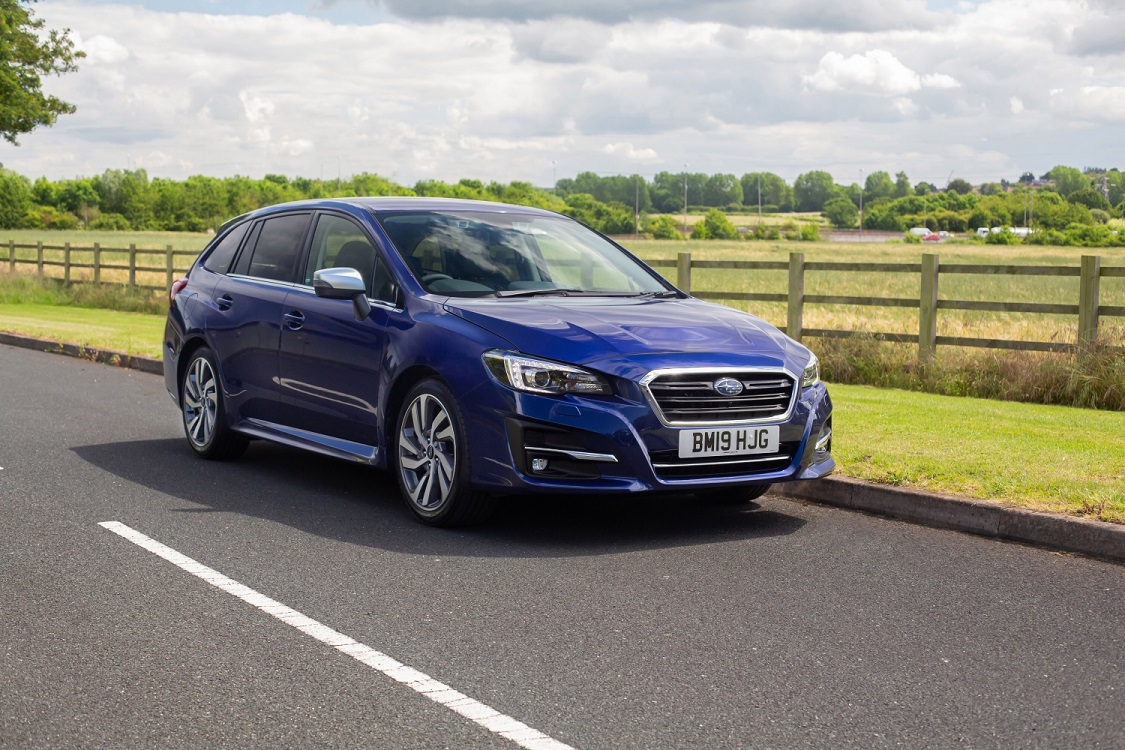
    Subaru has kept things very simple with the Levorg. There is one body style, one engine option, one trim level and one gearbox.

    Actually now there are 2 engine options, but we’ll come to that.

    The body style is estate car, the trim level is GT, the engine is a 2.0 L petrol boxer engine which produces 147bhp and 198Nm torque and the gearbox is a lineartronic CVT (constantly variable transmission). This is basically an automatic gearbox but doesn’t have set gear ratios like a conventional automatic gearbox.

    With the Levorg, Subaru seems to have had a keen eye on active and passive safety. This is a very safe car with a 5 start Ncap rating.

    Literature and advertising around the Levorg point towards the active and passive safety features of the Levorg. To that end, it has just about every safety aid that you can find on modern cars. For example, it has Subaru’s EyeSight which is a form of driver-assist technology, a vision system working through a pair of cameras at the top of the windscreen monitoring the outside world, which feeds into the safety aides in the car adaptive cruise, pre-collision braking, pre-collision throttle management and lane keep assist with saw warning.

    This is a lovely car to drive, very smooth and the suspension is on the comfortable side of sporty. It’s not softly sprung which would bounce you around, but it’s not to stiff so doesn’t jar you or crash over potholes.
    Although the 2.0L boxer engine produces 147bhp, maybe it’s the CVT gearbox, but it isn’t fast. It’s fine around town, with plenty of initial acceleration, but when the road opens up and you want to press on, there’s not a great deal there. Then again, that’s not what the Levorg is about.
    Subaru symmetrical all-wheel drive is standard. On the Levorg it is a road-biased system which means it doesn’t have the off-road electronics like x-mode. Symmetrical all-wheel drive means that the drive shafts are all equal lengths and the engine and gearbox are placed further back for better weight distribution. This means power is transferred to all of the wheels equally, resulting in better road holding. The boxer engine also sits low, keeping the weight low, reducing body roll. It works well and holds the road very well.

    It doesn’t have a great deal of ground clearance, and there is a subtle body kit on the car, so I wouldn’t be keen to take it off-road like the Forrester for example.

    The interior is excellent. Our test car had covered something like 11k miles and was like new. No rattles or squeaks and nothing broken, it really is a quality interior. The seats are full leather front and rear and are electrically adjusted and heated. They really hug you and are quite sporty but are nicely shapes and very comfortable. When you climb in, it feels great.
    You will find leather on the seats as mentioned, on the doors and centre console and some on the dash. Where there isn’t leather, the plastics are a high-quality soft touch.

    Our test car came in dark blue pearl, which I felt really suited the car. Exterior styling is sleek and sporty, but if I had one criticism I would say it’s a little anonymous.

    In summary, the Levorg drives well, is well priced, looks good, it’s not quick and handles well, in fact, it could easily handle more power I’d say. Maybe one day we’ll see an STi version.

    Subaru Levorg prices start at £34,770

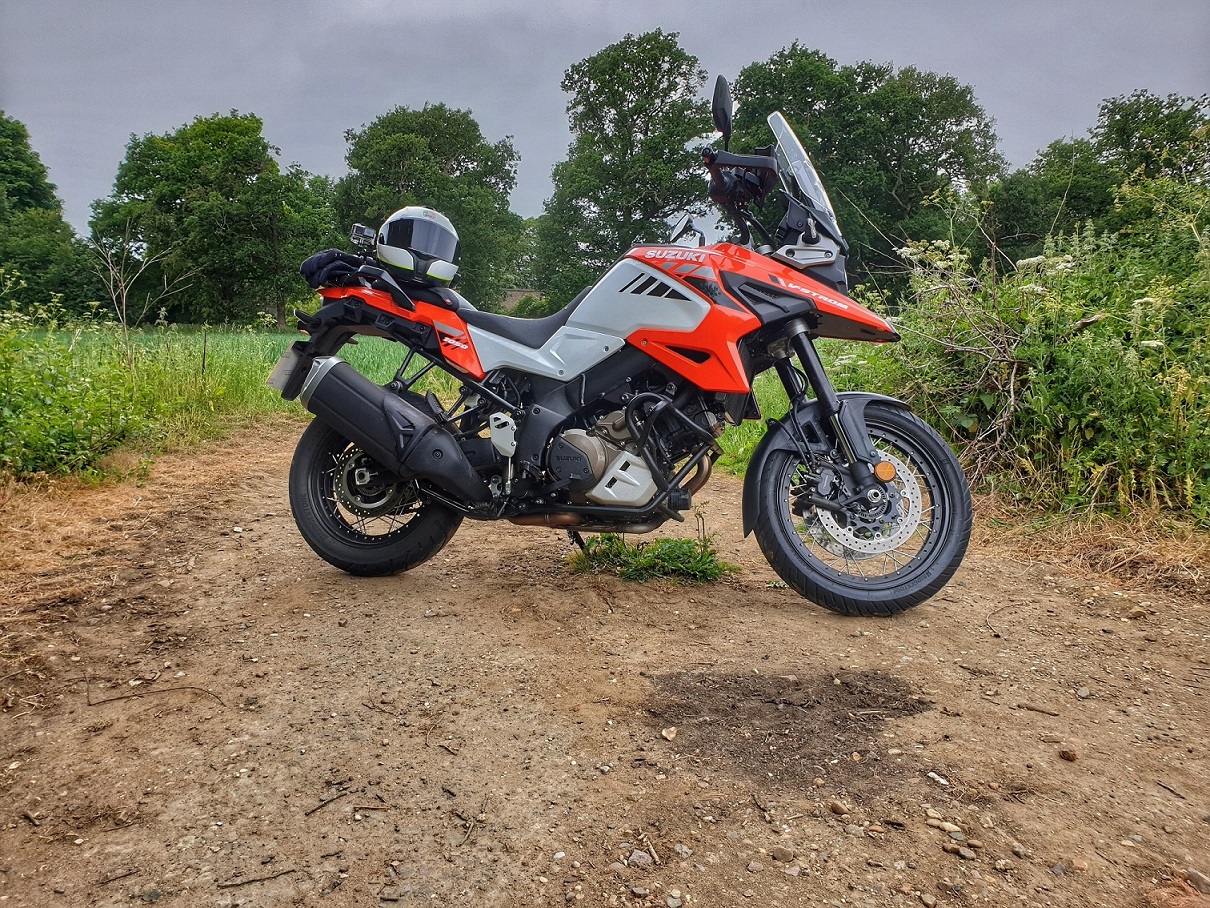
  • MOTORBIKE REVIEW | Suzuki V-Strom 1050 XT

    MOTORBIKE REVIEW | Suzuki V-Strom 1050 XT

    Suzuki’s entry in the adventure bike fraternity is the V-Strom, previously also known as the DL.

    This latest 2020 incarnation is known as the 1050.

    It’s a 1000cc v-twin adventure-tourer although actually, it’s a 1037cc v-twin.
    This is a good engine that has been around for a while now, first making an appearance in the TL1000R in 1997, a legendary bike. It also featured in the SV1000 which was a surprisingly good bike. A friend of mine had an SV1000. He fell off it in front of us all once, wheelying it. His excuse was he had just polished it and the seat was slippery.

    Now, the engine takes pride of place in the V-Strom 1050, making 106bhp and 100Nm torque. This is an increase of around 6bhp on last year. Peak power is now at 8,500 rpm and peak torque is at 6,000 rpm, which is 2,000 rpm higher up the rev range than the previous model.

    Suzuki has played with things like the cam timing and pushed the torque further up the rev range which makes this new incarnation of the V-Strom a lot of fun.

    There’s a 6-speed gearbox but no fancy quick shifter. There is a slipper clutch of sorts thanks to Suzuki Clutch Assist System (SCAS) which also makes the clutch very light in operation. 

    The throttle is fly by wire and is very smooth. I didn’t experience any snatchy or jerky behaviour, it’s very polished, which leads us nicely into the electronics. There are a host of sensors, from lean angle sensors to crank sensors, wheel speed sensors, gear position sensors, gyroscopic sensors and more, which provide information for the various electronic systems on the bike. This information is used by systems such as the ABS and traction control.

    You can choose between 3 rider modes, 3 traction control settings and 2 ABS settings. You can’t actually turn ABS off which may be an issue for more serious off-roading, but honestly, this is probably more of a touring bike than a hardcore adventure bike.

    The suspension is 43mm, USD, fully adjustable KYB forks, and a KYB shock with rebound and preload, which all works very well, the suspension is great. There’s also a remote preload adjuster just behind your left thigh, great for adding some preload if you’re carrying a pillion.

    It’s surprisingly fast when you consider it only has 106bhp, and there’s a satisfying rush of power in the upper rev range. It’s great fun to ride.

    Brakes are excellent with 310mm discs at the front with four-pot radial callipers and outback is a 260mm disc with a single-piston calliper. They offer great feel and really are superb brakes.

    At 247 kg it’s not a featherweight but it carries the weight well. Pushing around the workshop it felt pretty big, but as soon as you are on the move, the weight disappears. On the move, the V-Strom 1050 feels agile and handles really well.

    I’m a fan of the old V-Strom, I remember I had one on test in 2018 and loved it. I even took one around Bruntingthorpe which was fun, scraping the pegs on a V-Strom on track.

    The range is a positive attribute with this bike. Suzuki has fitted it with a 20L tank. When I picked the bike up, it was full and the range was showing as 201 miles. With just under half a tank left, the range was showing as 99 miles.

    Overall, this is a great bike. It’s fun, it’s pretty fast and it handles really well. It’s comfortable enough to be able to ride long distance with no trouble too.
    If there was a criticism, it would only be that the V-Strom lacks some of the toys that some of the heavyweights in the adventure bike sector have; electronic suspension and the like.

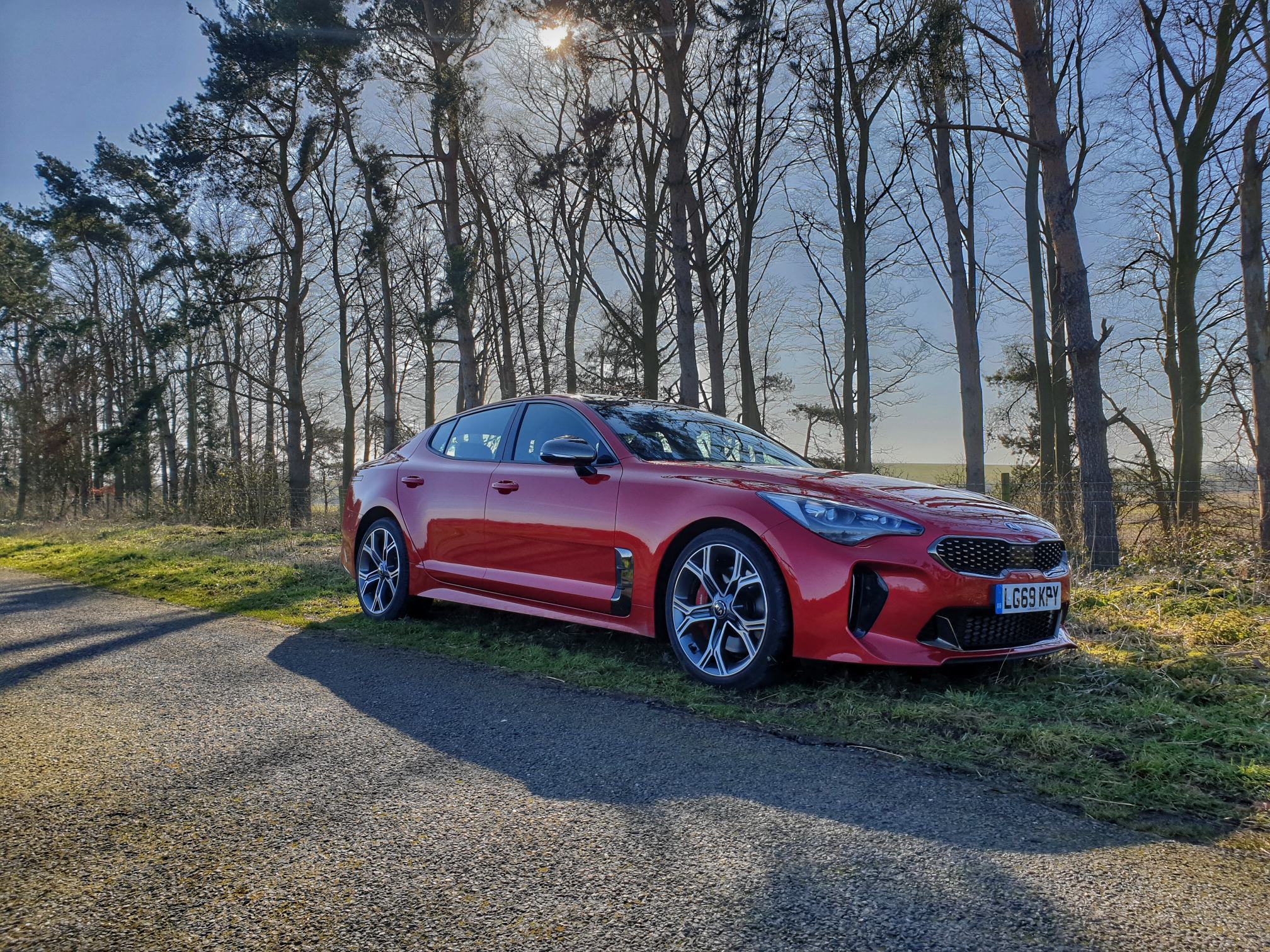
  • CAR REVIEW | Kia Stinger 3.3 GTS

    CAR REVIEW | Kia Stinger 3.3 GTS

    Rating: 5 out of 5.

    This week I have been enjoying the Kia Stinger GT-S.

    Kia describes the Stinger as a halo performance model. They say it is a GT car and not a hard-edged sports car.

    I read a very cool quote from chief designer Gregory Guillaume (Gee-ome) which said: “the Stinger has nothing to do with being first to arrive. This car is all about the journey. it’s about passion.”

    Stinger is a new direction for Kia, taking them into a new market sector. A 5 door, 5 seater fastback style grand Tourer. It is also their first Rear Wheel Drive car in the UK.

    Our Stinger is the GT-S which means it has the all aluminium, 3.3 litre twin-turbo V6 engine, producing 361bhp and 510Nm or torque.

    Interestingly, it makes peak power at 6,000rpm but…..makes its torque between 1500rpm and 4,500pm. 1500rpm! What this means is the engine is very tractable and you don’t need to rev it to get the most out of it, which is how a GT car should be. 0-62mph comes up in just 4.7 seconds and the top speed is 168mph

    The Interior is beautiful. It’s not brash or ostentatious, it’s elegant and dignified. I would describe it as somewhere between a dull Audi interior and an unnecessarily conspicuous Mercedes Interior.

    Seats, armrests, steering wheel, dashboard and gear shifter are all upholstered in plush Nappa leather. The centre console, Interior door handles & pedals have a brushed aluminium finish and there is a beautiful suede headlining.

    Both front seats are electrically adjustable and heated and cooled and the driver’s seat has a huge amount of electric adjustment for lumbar and bolsters.

    I actually found the seats firm but fantastically comfortable over a long distance. There’s plenty of room and they are very supportive.

    Suspension on the Kia is excellent. McPherson struts at the front with multi-link rear suspension. It’s also Blessed with DSDC: Electronically controlled, Dynamic, Stability, Damping, Control

    The car adjusts the suspension on the move, controlled by acceleration, braking and steering sensors. The driver can change the characteristics of the whole car by using the Mode Selector on the centre console.

    There are 5 modes: Smart – Eco – Normal – Sport – Sport+.

    Each position of the drive mode selector noticeably changes the characteristic of the car.

    I’m sure you’ve seen this kind of thing before. Steering, gearbox and throttle become more responsive, suspension firms up and the whole car takes on a more sporty attitude.

    In the Kia Stinger, the modes feel like well spaced gear ratios. They offer a very progressive, increased level of driver involvement by reducing the electronic intervention and increasing the fun factor, culminating in the full fat Sport+ mode.

    However, even Sport+ has some electronic involvement. It will go sideways but the car still has your back.

    If you really want to be a no holes barred hooligan, you can completely turn off traction control and stability control with another button on the centre console.

    Brakes are fantastic. Kia have blessed the Stinger with 350mm discs on the front and 340mm on the rear, both with massive calipers. The braking force is epic and the feel is excellent. When you first press the brake pedal, Initial bite is quite gentle. There is no snatching or jerky braking, it’s nice and gentle. When you apply more pressure, the braking force increases significantly. In short, the brakes are excellent, they are the best of both worlds: easy to use around town, and provide immense stopping power when needed.

    As a GT car, the Stinger really works. You can easily cover hundreds of miles in comfort, cocooned in a beautifully built cockpit, accompanied by the sweet but subtle song of the all aluminium V6. Slip the drive mode selector to ‘comfort’ and enjoy the relaxed, brisk journey.

    Turn the drive mode selector to Sport+ and you can drive it like you stole it. If you turn traction control off, you can pretend you’re a bad guy in a movie being chased by the superhero. It’s fast, poised, you can slide the rear end at will and be a total hooligan if you want.

    The chassis is fantastic. Whether you are cruising in comfort or being a lunatic in sport+, the car is never nervous and always feels predictable and controllable.

    One of the most striking features of the Stinger is the price. This 3.3 GT-S is the top of the range car with all the toys. It is only £41,646.24. There are very few options available, the standard car has all the toys as standard.
    To get something like an Audi S5 with a similar specification, you would be somewhere in the region of £62,000. I would have the Kia in a heartbeat over the Audi.

    If I had a concern, it would be over residual value. I would expect a BMW or Audi to have a stronger residual but, I don’t know.

    This Stinger is very, very good and in my opinion, better than any financially equivalent GT car.

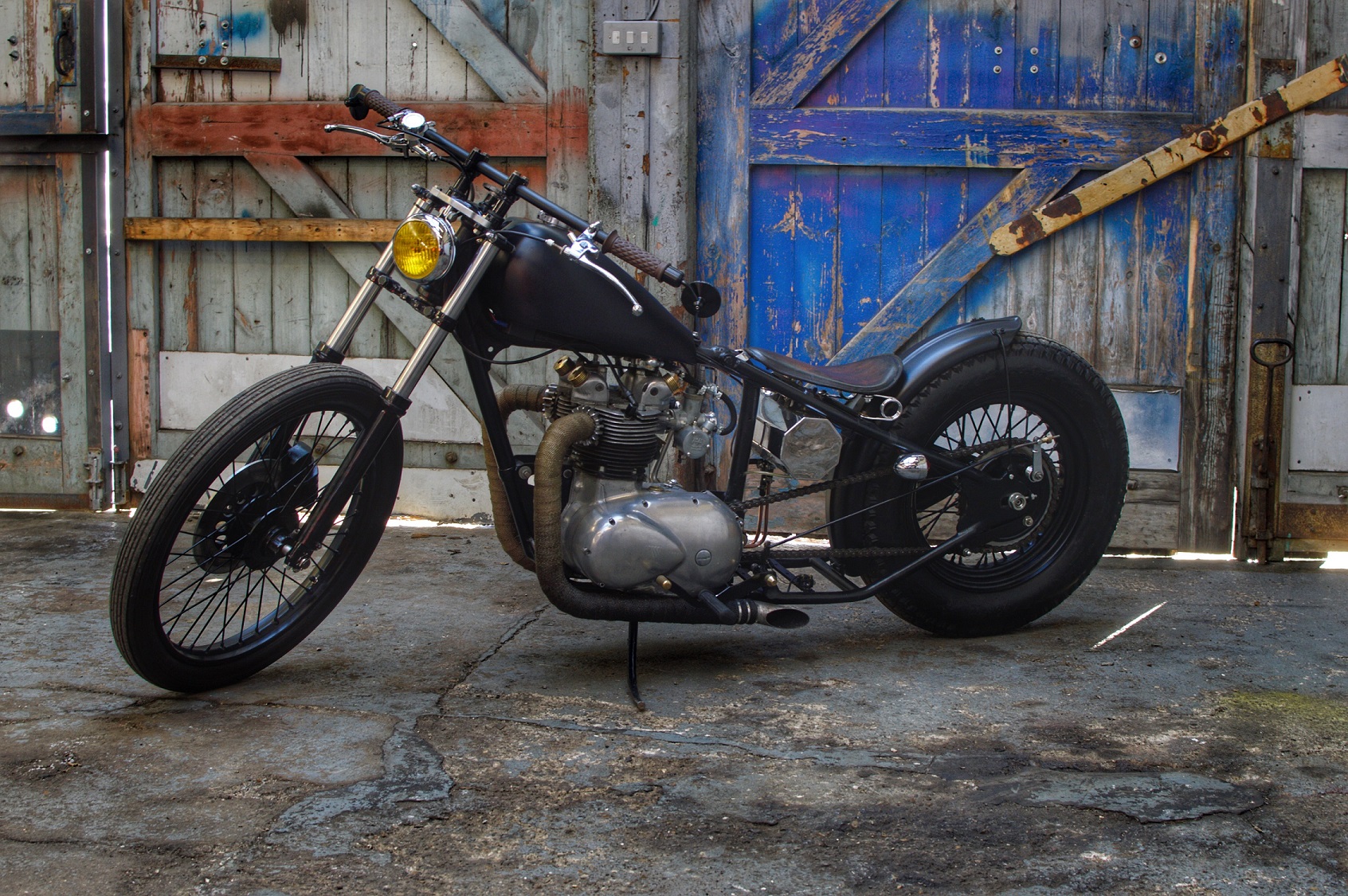
  • MOTORCYCLE REVIEW |Triumph Bobber by Oshe

    MOTORCYCLE REVIEW |Triumph Bobber by Oshe

    1960 was an important year for Triumph.

    They had introduced the new ‘unit’ 500cc engine with the engine and gearbox as a single unit. 1960 also meant the T100 was when the controversial bathtub-esq bodywork was released on the world. This was a semi-enclosed rear end that resembled an old upside-down tin bath. This wasn’t well received and only lasted 2 years.

    This 1960 Triumph T100 bobber was built by David as a bit of fun in his downtime. David is the owner of Oshe & Workshop Seventy7, 2 sides of the same coin, located at Ordnance Depot, Weedon, Northamptonshire. 

    Their business is bespoke restorations and builds of classic cars and motorcycles, tailored to the owners’ requirements. They will build you the car of your dreams, with every detail customised to your requirements. 

    David grew up in South Africa and has been a petrolhead as long as anyone can remember. He’s raced MX and even owned a motorcycle shop over there in 1996/7 that specialised in 2 strokes.

    His life changed when he met a South African girl in LA while he was travelling. She lived in the UK and David spent the next 2 years finding a way to move to the UK to be with her. 

    That was 20 years ago and they now have 11 years of marriage under their belt and a beautiful young son. Quite the fairytale.  

    Front forks are a pair that he found lying around his mates’ garage and were modified and rebuilt by Pitted Forks in Luton, with uprated springs and shortened tubes to stiffen and lower the front end.

    There’s a bolt-on hardtail rear frame section and traditional bobber style, vintage leather, sprung seat. 

    David’s bobber emits a mighty battle cry from the short, slash-cut, straight through pipes. No electric starter here, just an MX style Kickstarter ready to break your shin, with a right side gear change and left-side foot brake to mess with your brain even more. This thing screams attitude.

    Oshes’ nasty little murdered out bobber has a cool, satin black, hand made fuel tank by Olliminium and is dripping with neat touches, like the machined down brass military tank shell, repurposed as the distributor cap, amber front light and cut down satin black rear fender.

    Chopper bars give it a badass stance and David raided his mates’ garage again for a set of wire wheels, which were, of course, painted black then wrapped in period style Avon rubber. Old Triumphs have crap electrics, so an upgraded ignition system was installed. Mirrors, grips and lots of subtle details have been added to create a simple, clean but rebellious ride. 

    Photos courtesy of Daisy Turner. She’s a budding photographer and this was her first shoot. She’s only 13 years old!

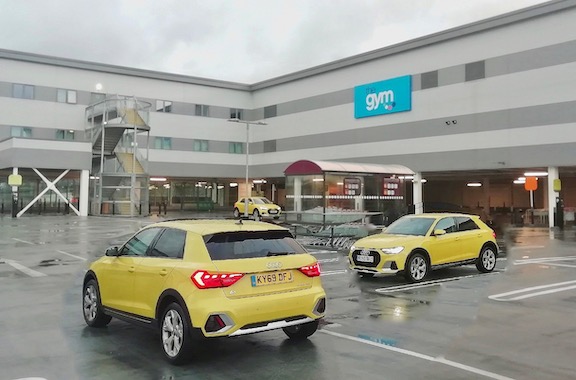
  • CAR REVIEW | Audi A1 Citycarver 30 TFSI 116PS S tronic

    CAR REVIEW | Audi A1 Citycarver 30 TFSI 116PS S tronic

    Driving Out Of The City

    Audi has just revamped their little A1 for the city giving it the “Citycarver” moniker. It sits high up in the A1 range and therefore towers above the Sportback model in the range in more ways than one.

    What we have here is an Audi A1 that has been lifted a huge 50mm. That’s 2 inches in old money. It’s also dressed up with some black wheel arch extensions like those from Audi’s Q range but this is no SUV.

    It’s still Audi’s little hatchback car. 

    For a start, the raise in rode height should, in theory, make for a lofty wallowing ride when compared to the Sportback that we at THEGAYUK liked very much. In some degree, it does but not in a notably loose way that you would expect. It’s rather less Germanic in comfort terms and it seems to be a trend I’m noticing from the ‘normal’ cars from Ingolstadt. The ride remains faithful to the A1 Sportback in being entertaining on A and B roads while also being just that much softer while retaining a semblance of body control.

    This floaty Audi was fitted with the engaging 999cc TFSI 3 cylinder petrol unit mated to a sort of hydraulic dry clutch gearbox. In essence, it’s an automatic with 3 drive modes. Auto, wheel paddles or selected on the gearstick in S mode. All three work well though on the stick shift it always feels wrong when knocking back goes up the gearbox. Many do it the other way around and that feels more natural. This gearbox has come in for some harsh criticisms for its lack of go-go-go when you floor it from a stand-still and I’m happy to report that the hesitation now almost link to this system was well muted. It felt better suited to the city fight for space when pulling out of a side road quickly. 

    It doesn’t try to be hot hatch despite its identical credentials of the other A1 in the range and it makes for the better car. However, it doesn’t all go its own way. For a start, as a car named for the city, it lacks protection. The city can be a brutal thing. Remember all the trouble Carrie and the girls had trying to navigate their way around Manhattan? It’s like that for the A1 Citycarver. It looks great but those looks won’t last long. The absence of door rubbing strips is noticeable. There isn’t even an option for them. It goes a little way in the fitment of black wheel arch extensions but these are hardly the things to preserve the flanks of the doors in a carpark.

    And then there is the interior. It’s just a bit business like inside. You can’t fault the ergonomics and driver comfort but the colours are more suited to a boardroom meeting with a packet of rich tea as the only available snack. Perhaps it was the £575 optional python yellow metallic paint that exaggerated this. The colour was bold and memorable and made a statement wherever it was parked. But the grey inside with the below par for Audi, silver trim across the dashboard just doesn’t cut it, well certainly not in a car that costs just under £23 grand before options. 

    It redeems itself inside with Audi’s 10.25 inch digitally adaptable facia display and 8.8-inch infotainment screen. This is thankfully angled towards the driver. The interface is easy to navigate around and responds to fingering inputs quickly. Annoyingly the lane keep assist system will always reset after you switch off. Its aggressive tugging can be quickly turned off from the end of the wiper stalk. 

    Despite my criticisms, it is a rather nice package let down perhaps by Audi being at the business end of the global company it comes from.

    A smattering of bright colour dotted around wouldn’t go amiss inside. That said, it’s the engaging enthusiasm the chassis affords you when you get out of the city. Kick-off those high heels and slip into those comfy trainers and your A1 becomes a Carver, cutting up the badly maintained back roads of England with aplomb and this time you’re allowed to keep the ESP off all the time!

    It’s just that I wouldn’t want to take it back into the big city without those door rubbing strips. They might be unfashionable but it’s cruel out there! 

    Love

    Engaging drive

    Ride comfort

    Infotainment system

    Loathe

    Price with options

    Business like interior 

    Lack of city parking protection

    The Lowdown

    Car –  Audi A1 Citycarver 30 TFSI 116PS S tronic

    Price – £ 28,035 (as tested)

    MPG – 45.6 – 46.3 mpg (WLTP combined)

    Power – 116PS

    0-62mph –  9.9 seconds

    Top Speed –  123 mph

    Co2 – 115 (g/km)

    ALL PHOTOS Ⓒ Stuart M Bird.

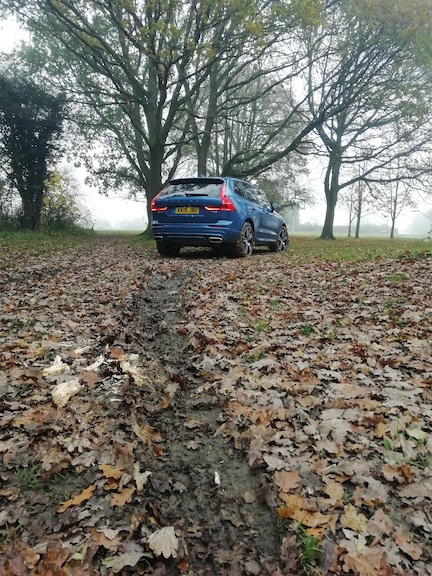
  • CAR REVIEW | Volvo XC 60 T6 R-Design

    CAR REVIEW | Volvo XC 60 T6 R-Design

    Volvo XC 60 T6 R-Design : The Blocky Volvo.

    Rating: 3 out of 5.

    Volvo are on full assault for every market they can reach with their current range of saloons, estates and SUV’s. Their keyword is premium and they arrived here quite quickly. Very soon they are to be joined by their premium Polestar brand that’s above premium with prices to match. 

    In the meantime, I’m here with their XC60 T6 R-Design AWD from their SUV range. It’s a petrol 4 cylinder producing 310bhp mated to an 8-speed automatic gearbox.

    Quite often you’ll find motoring journalists bemoan about the lack of difference, if any, between the drive modes. The XC60 gives you five. Eco, Comfort, Individual, Dynamic and Off Road. All five feel different and the last two offer notable differences in road height. 

    The difference comes at a cost and it isn’t perfect. Comfort is your standard set up though with the plethora of onboard options and set-ups Volvo gives you, any of the drive modes can be set as your preferred reset choice the moment you turn the ignition key. 

    I’ll start with the niceties first and that’s the ride. Body control is controlled well. In Comfort mode, you will have little problem with the serenity it affords you even on its largish alloy wheels. The quietness in the cab is eerily quiet like an electric vehicle. It almost makes a mockery of Volvo’s own hybrid drive systems for silent running. It becomes taught and lower in dynamic and it allows the large bulk of the XC60 to be driven with some serious gusto. And thankfully it does and you’ll discover why next.

    My problem is with its T6 drive train. It kicks you all the time unless you are gentle with the throttle. Its 310bhp comes in from 5700 rpm but this isn’t where we have a problem. It’s the 400Nm of torque. It just doesn’t feel like it’s there when you press the throttle. Considering it’s available from a lowly 2200rpm, its prowess is also thwarted by a hesitant gearbox. It takes the gearbox a noticeable amount of time to respond. Dynamic mode does go some way to eradicate it but it doesn’t totally vanish. Instead, it makes it a little more snappy. The two combined don’t make for a fluidity and serenity that the XC60 gives you in its ride. 

    The inside is all very Volvo. The interior fit and finish are above the expected and there are nice silver accents around to lift the dark R-Design interior. I can’t really enthuse any more than I have previously about the XC60 range so I’ll go straight to another area that Volvo does really well.

    The home screen of the infotainment system is pretty standard stuff. Swipe left and depending on your options, you are greeted with lots of safety equipment to switch on and off. These can be moved around to suit your own preferences for items you need to select quickly like parking assistance. 

    Swipe down and you get another set of options and these allow you to further adapt and personalise the vehicle set up to your requirements. These are then saved and won’t revert unless there is a system reset. 

    That in itself is an area many manufacturers don’t think about. There is nothing worse than setting up a car and then having to do it all again after the ignition has been switched off.

    Volvo set out to make their range feel premium and many little things that further make it a car that feels like a quality product. Puddle lights set in the door handles dim down in sync with the sidelights when you lock it on the remote.

    The XC60 R-Design does a lot of great things in the popular market of the sporty SUV where it seems acceptable to compromise the ride quality. The XC60, however, is more than acceptable in its ride set ups with its differences being noticeable.

    It might come as a surprise that I’ve been quite harsh with handing out my stars to this XC60. Considering we gave the XC60 D4 Momentum Pro 5 stars, I just cannot rave about this XC with the T6 engine and gearbox. It doesn’t do what it says on the box and ruins an otherwise splendid vehicle. 

    Love

    Quiet cabin

    Parking heater system

    Details

    Loathe

    Hesitant gearbox

    Throttle input reaction

    Rear occupant heater fan noisy in the front

    The Lowdown

    Car –  Volvo XC60 T6 AWD R-Design

    Price – £ 59,485 (as tested)

    MPG – 28 – 31.7 mpg (WLTP combined)

    Power – 310hp

    0-62mph –  5.6 seconds

    Top Speed – 140 mph

    Co2 –  181(g/km)

    All Photos (C) Stuart M Bird

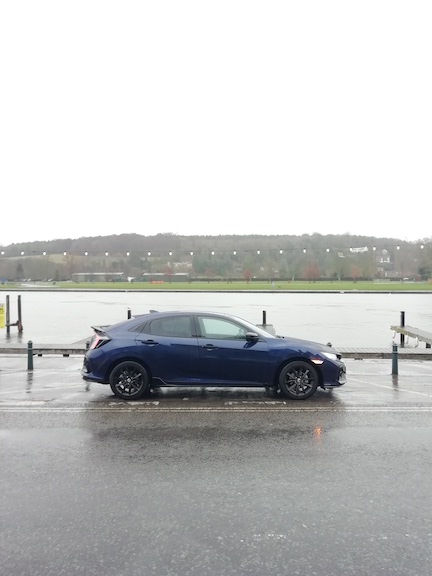
  • CAR REVIEW | Honda Civic EX Sport Line

    CAR REVIEW | Honda Civic EX Sport Line

    Rating: 4 out of 5.

    Civic Update

    What Do We Have?

    Honda has been busy evolving their tenth-generation Civic in an attempt to keep it abreast of the new challenges it faces within the competitive, if sometimes over-looked mid-sized hatchback segment.

    Changes for the new 19MY Civic include smoother front and rear bumpers and changes to the plethora of grills that dress them. The new model we came to try is being called the EX Sport Line. There also comes a new rear spoiler.

    The new car is being marketed as a sort of cheaper alternative to the highly acclaimed Type R. A Civic that is worshipped better than the Sermon on the Mount by Jesus [citation needed] Except with the Type R, it’s more about how immoral it is.

    The EX Sport Lines on offer for testing were fitted with either the slick 6-speed manual or new CVT gearbox. This CVT replaces the conventional automatic with its confusing push button selector. Instead, the new CVT is fitted with a standard stick shift as you’d find in a normal automatic.

    Driving

    Fitted with a plucky 3 cylinder petrol that pushes out a respectable 126 PS from a 1-litre capacity. Now this engine might not be what you would be expecting to see fitted considering the Sport Line is a type of Type R alternative but let us just remember that this is a Civic that mixes everyday drivability without the heart attack.

    Torque outputs alter retrospectively between the 2 transmission types with the manual having 20 Nm more at 200. On paper at least you could say you shouldn’t notice with outright performance figures being so close. That said, it did feel like the CVT was a little lethargic to shift unless you selected |sport| mode and then it would alter.

    Inside

    Inside sees changes to some textured panelling on the dashboard and the supportive seats. Racy red stitching is used to further heighten the racing appeal of the Sport Line.

    Where major changes have been made is within the new climate controls and stereo system. Main changes are the addition of buttons to help navigate the often criticised complicated screens. These now allow the most used sub-menus to be reached with one button.

    It is just a shame that the satnav detailing isn’t up to spec. Thankfully this can be avoided with Apple Car Play and Android Auto. I used Android and it worked very well. 

    Living With It

    It really comes down to what type of driver you are. The Civic is a car that comes highly recommended and you’ll find it has a legion of fans out there no matter what model they drive.

    So if you are a more enthusiastic driver then the manual will whet your curiosity to explore a random B road to its limits. The CVT won’t disappoint that much but you will have to work it that much harder and it’s not that rewarding to do so. As a competent commuter car that will sit in the daily grind of the A-B  traffic, it will be of great comfort that the cog swapping is left to the machine.

    Verdict

    The majority of the changes Honda has carried out haven’t really altered much to the Civic and there really wasn’t any need to do this anyway. The Civic has always been an accomplished car as both a driver’s car and a striking visual.

    We did ask about the change to a CVT gearbox. Honda was quick to point out its economy benefits and value for money in being able to offer an auto system cheaper than the system used previously. That aside, I personally feel it is a step backwards when Honda has progressed the Civic forward with the MY19 model.

    With that in mind, you will find this Civic being recommended, but just think about what type of driver you are before parting with your money.

    Love

    Looks

    Compliant ride

    Useable performance

    Loath

    “Sport Line” moniker

    Satnav graphics

    CVT gearbox

    The Lowdown

    Car – Honda Civic EX Sport Line

    Price (as tested) –  26,035 MANUAL (27,435 CVT )

    MPG – 45.6 MAN (42.2 CVT) WLTP combined

    Power – 126PS

    0-60 – 11.2 MAN (11.0 CVT)        

    Top speed – 126mph MAN (124 CVT)

    Co2 – 110g/km MAN (107g/km CVT) New Civic

    All photos Stuart M. Bird

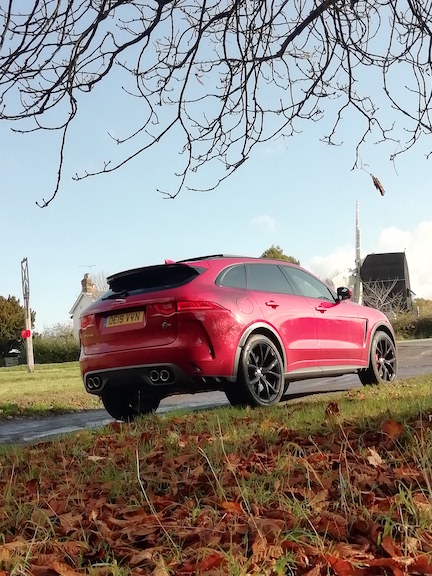
  • CAR REVIEW | Jaguar F-Pace SVR

    CAR REVIEW | Jaguar F-Pace SVR

    Catapult for the Road.

    Jaguar’s Special Vehicle Operations (SVO) has taken their spanners to the all-important and top-selling Jaguar F-Pace. Looking through the model options on the F-Pace, it would seem that the V6 S we tested back in May 2018 has now gone, replaced by this all-new SVR model. 

    On paper alone, it doesn’t sound like much progress has been made from replacing the 375PS supercharged V6 with a 550PS supercharged V8. You might be thinking “hold on Stuart…” because these figures alone are impressive. I’ll grant you that they are. What it lays down on the road doesn’t exactly look like much in terms of the 0-60 second sprint. Just 1 second is knocked off the S models 5.1 second time.

    Where the fun lies is in the top speed that you’ll never achieve on the public road of 176mph and the massive increase in torque delivery you will get when you put your foot down. Now you have 680Nm from 2,500 – 5,500rpm. We don’t need to consider the old model anymore.

    Development

    It feels like SVO has done some work on the iQ-Al (D7a) modular platform that is shared with the enjoyable XE saloon. And that work feels a little more than a mild tweak and a tap with a hammer. Finally, the F-Pace has the handling that enables it to keep up with its greater power outputs. It can still plough on but this time you can encourage the rear end to catch up far quicker than before. There is no doubting that the extra grunt in useable lowdown torque helps to attribute to this vastly and enjoyable improvement.

    What this also means is it can all get a bit messy and a lot of fun. It makes for a big car that feels less nervous. Even on moist roads, the traction is all there and exploitable. Now we have a car that gets a bit twitchy on the rear when confronted with coming out of fast roundabouts if you so wish for it to do so.

    And all of this happens before, and by accidentally, that you select S on the gear stick. I’ll be a little unprofessional here and say I did scream and cry at the same time as it shot down the road like a stone from a catapult. What felt like a fast vehicle suddenly became even faster with more response from throttle inputs and manual inputs with gear changes.   

    Legally you can’t use this outrageous amount of power all the time. There comes a time where you need to be civil to other road users. Sometimes that means shutting off the snarling exhaust sound system controlled by a system of flaps and baffles.

    On a normal kind of drive or commute, the F-Pace SVR is a gentle giant. Its interior on this press model, were rather cosseting and the though the seats didn’t visually lend themselves to look comfortable, did a good job.

    Attention To Details

    Inside the F-Pace, there is an absence of race materials. Instead, Jaguar has opted for leather and soft-touch materials where it is needed. It’s fit and finish are OK though they would struggle to match those from BMW and Mercedes and its looks are a little dated now.

    And this is a shame because this is Jaguar and it’s a premium brand of car. But it fails in a few areas of neglect that niggle a bit if you go looking for them. The glovebox, for instance, has some unrefined sharp edges around it and then we get to my visual dislike in a Jaguar interior. Namely in the ambient illuminations set in the doors. Personally I’ve never liked blue lighting. It’s a harsh light so add this to the black and red leather interior and you do wonder who at Jaguar is in charge of making this decision. Other interior colours are available in black with cream or tobacco or all black.   

    And this is the main problem for the F-Pace. It’s 4 years old in 2020 and dated inside because of this. Thankfully for £210, you can tick a box that gives you a choice of 10 colours. Keep it white as standard and you wouldn’t need this.

    All this extra doesn’t come cheap and that’s before you’ve added your own essentials. You’ll regret not adding such items like the ‘driver assistance pack’ at £3100 so you can kiss the reasonable list price of £75,335 goodbye. Add the options that we have here and it tips the scales at over £83k.

    Can I justify this to you? If motoring is on a budget then no, this F-Pace is not for you but you might find what you want lower down the range. That said, if a fast SUV vehicle with a kick is what you want, you’d find a lot of the competition out there quite lacklustre. There aren’t that many as accomplished and as outrageous as this and that’s why I’m rather taken by it. 

    Love

    Sound

    Civilised driving

    Can be an unruly brute 

    Loathe

    Blue ambient lighting

    Expensive options that you need 

    Interior design showing its age 

    The Lowdown

    Car –  Jaguar F-Pace SVR 

    Price – £83,625 (as tested)

    MPG – 22.1mpg (WLTP combined)

    Power – 550PS @ 6,000 – 6,500rpm

    0-62mph –  4.1 seconds

    Top Speed –  176 mph

    Co2 – 272 (g/km)

    All pictures: Stuart M Bird (C)

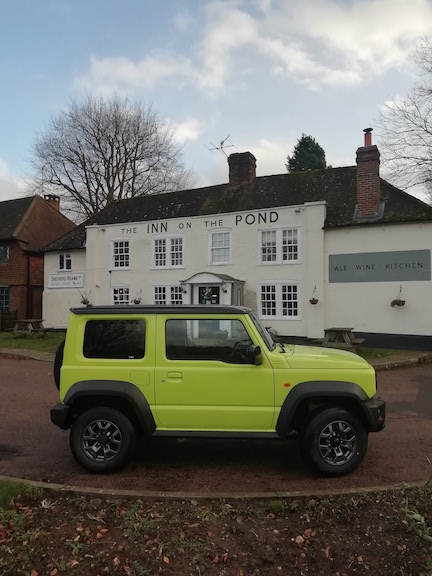
  • CAR  REVIEW | Suzuki Jimny SZ5 Allgrip

    CAR REVIEW | Suzuki Jimny SZ5 Allgrip

    The Mockery Of A Three Star Review

    The 80’s yuppie years were good to Suzuki’s little go-anywhere-carry-cart. Young 20 year olds with red braces and mobile phones the size of a house brick would go off to Majorca for 2 weeks to get some sun. To get around they would hire a car and more often than not, the Suzuki with its allure of open top motoring would be hired. This translated into sales in the UK when they got home and soon the Suzuki SJ was as much a part of the 80’s landscape as a Porsche 911 Turbo and naked girls in a Duran Duran video. 

    Open top jeep type little fashion accessories suddenly popped up in music videos and TV consumer programmes but not always for the right reasons. Bros used Luke’s Jeep in their video ‘I Owe You Nothing” It wasn’t an SJ but a big American Jeep CJ. It was a 1979 model and by 1988 it was old and dated. 5 Star were hustled along in a Citroen Mehari. One-hit wonder Spagna had a Suzuki SJ come to her rescue. Open-top jeeps were a wanted thing for the city dweller and Suzuki had caught the British imagination.

    The SJ had three things in its favour. Relatively cheap to buy, very cheap to run and could, if you wanted to, go almost anywhere. This wasn’t just a vehicle to pose on in the pub carpark. It also had one major failing. It was ruddy awful to drive at anything over city speed limits. The live axles suspended by cart springs did nothing for the handling or day-to-day running. Not that this stopped the public buying them and the subsequent two generations that came afterwards. 

    As a footnote for the history nerd out there, the Suzuki 4×4 has been with us for 50 years and seen only 4 generations of change. Its life has been longer than that of the VW Golf and seen just half the development changes. In fact if you look at the icons of the 20th century, the Jimny has outlived the much loved Mini and 2CV and yet it is hardly mentioned when people talk about the ‘World Car’. And it’s quite significant and only beaten by the VW Beetle if you include the 25 years where it wasn’t officially available in Europe.

    New Jimny by comparison to the old is a revelation. Ride quality isn’t as bad as it once was. Gone are the cart springs and instead it now sits on 4 coil springs. Considering its diminutive wheelbase and angles of articulation afforded to the Jimny because it is a proper little off-roader, it felt quite muted. It didn’t crash in a spleen adjusting kind of way over some of the worst roads I traveled on.

    Suzuki Jimny SZ5 Allgrip review

    Ditch In – Dig Out

    The same applaud can’t be given to the handling. It really isn’t the best. At worst it will oversteer with little effort, at best you can use the capable 4WD system to get yourself out of the ditch. Used appropriately and you won’t have much trouble. The 1.5 petrol engine sort of sees to that anyway. Its maximum powers arrive high up in the rev ranges and because of the Jimny’s agricultural configurations, it voices these well through the chassis and into the cabin. 

    Transmission noise was something I’ve not heard of in a long time but you will need to get used to it. There is much of it should you wish to push on.  And push on you will especially when confronted with a hill when at speed. Above the national speed limit, he 100hp engine runs out of puff in 5th and the change down, through the long throws of the gear lever, are easy. Stick to 70mph and it shouldn’t cause much of a problem.

    The steering is of the muted kind. It doesn’t give a lot of feel though I never found this much of a problem unless I harassed the Jimny into doing something I shouldn’t have. It feels quite low geared and when you do provoke it to kick out, you need to twirl your arms quickly if only to keep the momentum. That is at the extreme because off road, it translates to very little kickback and the one thing you don’t want is thumb breaking kick back from a rapidly correcting steering wheel.

    Acceptable But You’ll Love It Anyway

    Equipment and price feel a little on the high side. There are better cars out there for less but they are less capable of getting rough and dirty. Equipment on this top of the range SZ5 model is generous. Climate control, cruise and limiter are standard. It also includes auto dim/dip headlights and forward collision mitigation alarm. Infotainment is the standard as expected with DAB and in-built Satnav. It’s just a shame the screen isn’t user friendly with its flat universal positioning and not angled towards the driver.   

    Real world usage makes this a 2 seater with luggage or 4  seater and nothing else. The boot really is non existent. 85 litres of luggage at minimum is smaller than you think. Where it plays its ace card is its adaptability of moving, folding and reclining the seats. To fit 6 ft planks of wood inside proves to be rather easy. 2 air mattress on top of the folded seats and you have yourself a large double bed. 

    And there lays a Tardis type of a problem. Shoulder width is huge for such a small car and rear seat leg room, more adequate than many city cars I’ve travelled in. And yet it is totally useless in the rear from most aspects.

    You Can’t Be Harsh To It.

    So to the new Jimny of 2019 and the big question. Is it any good? To answer that we need to remember what this is, what it does and do we care enough and what us motoring journalists have to say about it. Ask any owner of the previous model and they won’t really care what we say.  The Jimny is a cute looking box that does what you expect it to do. 

    With this in mind, the answer is it isn’t very good. But I don’t care enough to pick holes in its faults of which there are plenty. I’d gladly take one and be happy with it and chances are you would too. It has a lot of anthropomorphism in it that combats its failings. It’s just a shame there is a waiting list of over a year and no canvas top model in the pipeline.

    Love

    Cute looks

    Compact and easy to park

    Off-road ability

    Loathe

    Year long waiting list

    wading depth of just 320mm

    No soft top option 

    The Lowdown

    Car –  Suzuki Jimny SZ5 Allgrip

    Price – £ 19,149 (as tested)

    MPG – 34.3mpg (average)

    Power – 101bhp @6000rpm

    0-62mph –  UA 

    Top Speed –  90 mph

    Co2 – 154 (g/km)

    Pictures (C) Stuart M Bird / Suzuki

  • CAR REVIEW | Ford Fiesta Trend 1.1 Ford’s City Fiesta

    CAR REVIEW | Ford Fiesta Trend 1.1 Ford’s City Fiesta

    What Have We Got?

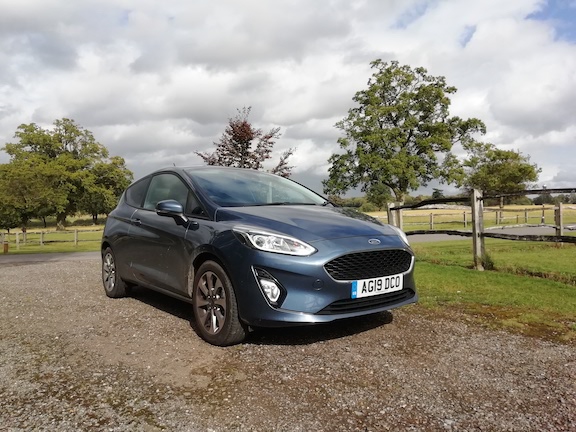
    Cars are complicated pieces of machinery so Ford have selected a Fiesta model with simplicity its main focus point. 

    And this model, the 3 door Fiesta Trend was a hit with the reviewers at the recent SMMT drive it day and I’ll tell you why.

    Driving

    I hadn’t read the spec sheet for this new Fiesta. At times I like to just jump in and go to see if it wows me. And I can say that it did. 

    The simplistic appeal to this Fiesta comes from its 1.1 litre 3 pot engine. Just when every little engine in a biggish car is fitted with a turbo, this little engine leaves that at home on the table. 

    Performance figures are amiable and with just 85PS of power from a free revving engine, it manages to trundle along quite nicely. With no turbo, throttle inputs are met with immediate action except when nearing its peak of performance or when there is a hill to climb.  This will also be why there are only 5 gears. 

    With the chassis being very communicative, making it a fun car to drive, hustle it through the gears to keep the engine at its peak and it’ll reward you with a dash that is both driver licence safe and exciting.

    Inside

    From the drivers point of view, the Fiesta Trend has all that you could want in a nippy city car. The 8” touch screen was easy to use, reasonably quick to function at the touch of the finger and the graphics are easy on the eye.

    Plastics feel good quality and the choice of seat fabrics is both sophisticated and business like. For such a base model, it would in this case, seem out of place. Trend is its name but Trend it does not set. I don’t think a little funk would go a miss in here with a smattering of colours to lift the well fitted cabin. 

    Living With It

    Fords NCAP pack comes as standard. This gives you extras like lane keep assist, speed limiter and tyre pressure monitoring. The electronic stability programme also comes with hill assist. So it all stacks well in its favour as a reasonable specced car for the money. 

    Is being a 3 door a hindrance? Not really. The front seats fold forward enough to allow easy entrance and a 3 door hatch always looks sporty over the 5 door. 

    The Verdict

    The Fiesta Trend was a bit of a runaway hit at the SMMT drive day. There were not many bad words to be said about it. It was universally liked. And you can see why. It’s well put together and for a small car of £15,995, you weren’t left feeling short changed. 

    The drive is both engaging and without sounding detrimental to Ford, so simple and uncomplicated, that it makes it a drivers car without it costing the earth.

    The Lowdown

    Car –  Ford Fiesta Trend 1.1 TI-VCT 5 speed manual

    Price – £16,495 (as tested)

    MPG – 44.8 – 48.7mpg (WLTP lowest-highest)

    Power – 85PS

    0-62mph –  13.8 seconds

    Top Speed –  105 mph

    Co2 – 114(g/km)

    All pictures Stuart M Bird

  • CAR REVIEW | Lexus LC500; big, striking and value for money

    CAR REVIEW | Lexus LC500; big, striking and value for money

    ★★★★ | Lexus LC500, Lexus Coast to Coast Cruiser

    The Car

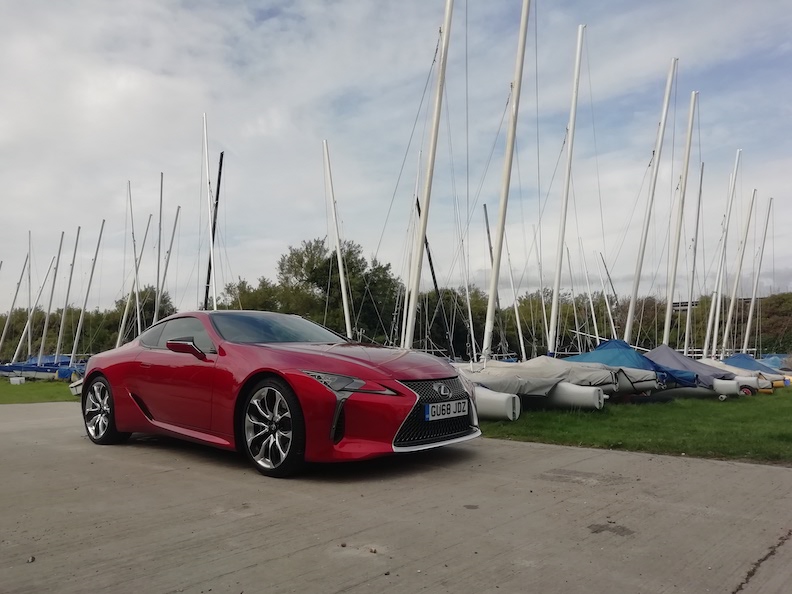
    What’s limited to 168mph, does 0-60 in 4.7 seconds, feels like nothing from its sister company and available at a rather affordable OTR price of £87,885? I’m talking about the Lexus LC500.

    The LC500, a 2+2 coupe, is the flagship model from Lexus. From a company that celebrates its 30th year in 2019, it seems quite a nice way to join the party and be given the keys to this. Lexus, sort of, came from nowhere. A subsidiary company with humble groundings, they set out to take on the finest from Europe. There was talk that they couldn’t do it. There was laughter from the power houses in mainland Europe. The laughter stopped. Now they are back with another attempt at making a luxury grand tourer.

    When I say back I am of course referring to the original 2001-2010 SC300/400 model. A luxury 2+2 with a retractable roof. It had the luxury appointments fit for a Lexus but sadly failed as a grand tourer. Fit for the time, it wasn’t able to take on Europe. The SC was a Boulevard cruiser of American tastes.

    With parent company pioneers in the field of hybrid drive systems, it’s pretty much impossible to find anything on their press fleet that doesn’t have that set up so I was pleasantly surprised and somewhat excited to be pointed into the direction of the all petrol LC500. And what a petrol model it is too. A normally aspirated 5 litre V8 packing 458bhp through a 10 speed automatic gearbox to the rear wheels. This has 4 valves per cylinder, 4 high lifting cams, VVT-i and VVT-ie and a redline at 7300rpm. On paper alone, this has almost super car potential. 

    Add that power to the striking looks that turn as many heads as the super powers from Stuttgart, Ingolstadt and Sant’Agata Bolognese and you’re rubbing shoulders in some high class company. But does the LC500 really have what it takes to mix with this crowd or is it an outsider?

    Playing to the Crowd

    It’s a bit yes and a bit no. I’ll start with the negatives first because there are plenty of positives. The handling is a mix of comfort and grand tourer. With 21” alloys, it’s surprisingly good in the comfort area but as an all-out sports car it isn’t quite good enough and belies its super car looks.

    Its mix of settings from comfort to sport are deceptive and not clearly different. On the one hand, the LC500 and all its power will cosset you on the motorways or entertain you on the fast B roads. Just be careful down those narrower lanes because the LC is wide at almost 2 metres!

    That cosseting comfort comes from the quietness of the V8 up front. Depending on how you feel, it can either be quiet and subdued or vocal but never brash. And that vocalisation doesn’t really alter when you select the drive modes, eco, comfort, normal, sport and sport +.

    Try using it as an all-out gung-ho sports car and until you switch the traction off (it never truly turns off) it will satisfy. Pulling away with a howl from the V8 engine and some kick out from the rear. The limited slip differential curtailing wheel spin from the loosest wheel. But you won’t use it like this all the time, it just doesn’t engage in this kind of behaviour. And that’s down to the many good things Lexus has bestowed upon it in terms of luxury.

    The 10 speed auto box changes gears with frightening smoothness and yet you are never left wondering if the gear selected is the correct one. Easy to use paddles allow quick up and down changes and considering its 399 Ib/ft of torque under 5000rpm, using the paddles allows blasts of power to be released quickly. And thankfully they do come quickly because the gearbox (in most modes) tends to keep the engines relaxed at under 2000. 

    That’s not really a hardship when the power surge is lag free thanks mainly to being normally aspirated. Where the LC500 does excel is being just that little it fun and cheeky. The limited slip differential does its job well in reducing spin from the wheel with the least grip but that doesn’t stop it from spinning the wheels when the throttle is pressed hard. And all this for a car that indicated 18-28mpg. Not bad in my book for such a large engine.

    There Are Some Problems

    If there are niggles to be picked at they are purely aesthetically challenging ones and I’m not talking about the design. While the angular grill looks somewhat a bit too much on the long faced SUV range, on the LC it looks just fine. What throws your eyes are the gaudy textured chrome plastic surrounds on the rear lights. It really doesn’t need to be there. 

    Likewise, carbon fibre and faux carbon fibre used on the door kick plates doesn’t suit the car in its application here. Yes the roof is carbon fibre and I’m OK with that, but not on the inside. Thankfully once you shut the door, you no longer see it. 

    I like the infotainment system. It contains everything you’ll need and responds quickly. Thankfully it does because it’s all controlled via a finger pad in the centre console. Where it falters is even on the less sensitive setting, it’s just too sensitive and wrong things were selected. 

    Paying Attention

    I’m happy to say that the interior is well laid out and the controls ergonomically placed and nicely weighted. There is incredible attention to detail in the fit and finish inside. It’s actually above and beyond anything Lexus has made in the past. The skills and fastidiousness of the Takumi master craftsmen is evident in the cabin even down to the often difficult to cover sharp angles on the door cards. It’s not often apparent unless you go looking for it. Textures and stitch work are seamless.  

    Night time comfort is exceptional. Complimented by footwell illuminations and lighting effects near the clock on the dashboard, the white neons running through a sculptured curve in the doors heighten a sense of luxury for those up front. Those in the rear are less well catered for. The seats, while generous in the ample size of the seat squab, are somewhat hampered by headroom or rather the lack of it for anyone over 5 foot tall. You do feel that the rear seat might have been better removed and the ample 197 litre sized boot space increased.

    There is a lot to like about the LC500. It’s big, it’s striking, it’s expensive but affordable. As a GT it makes such beautiful sense. I’ll leave you with the words of Miki Matsaburu who sums up the car in one of her songs, it’s so creamy.

    Love

    Serenity of the cabin

    Comfortable ride 

    Striking looks

    Loathe

    Rear seat room

    Drive modes difficult to differentiate in normal driving conditions

    Infotainment control pad over sensitive

    The Lowdown

    Car –  Lexus LC500 Sport + Pack

    Price – £87,885 (as tested)

    MPG – From 24.4 mpg

    Power – 458bhp

    0-62mph –  4.7 seconds

    Top Speed –  168 mph

    Co2 – 265 (g/km)

    (C) All Pictures Stuart M Bird