Tag: Politics

The latest news, interviews, and views from the world of LGBT politics in the UK and internationally.

  • BREAKING | UK gets first openly gay Cabinet member

    The UK’s new Prime Minister Theresa May, has appointed the UK’s first openly gay Cabinet member Justine Greening.

    Justine Greening, who came out during Pride In London has been announced by Theresa May as the new Education Secretary making her the first openly gay member of the cabinet. She replaces Nicky Morgan, who tweeted that she was “disappointed” to be leaving the job.

    Nicky Morgan was also the government’s Equalities minister, a position for which garnered a great deal of criticism after she voted against gay marriage in 2013.

    Yesterday Mrs May appointed the pro-LGBT Amber Rudd as the new Home Secretary.

    Ms. Greening has, according TheyWorkForYou.com, generally voted in favour of LGBT equality however was absent for a number of key votes, including a vote on the Equality Act (sexual discrimination) in 2007, which makes it unlawful to discriminate on the basis of sexuality during the provision of goods and services and she was absent on two pieces of legislation which impact the same-sex marriage bill.

  • Theresa May appoints pro-gay equality Amber Rudd in key Parliament position

    Theresa May appoints pro-gay equality Amber Rudd in key Parliament position

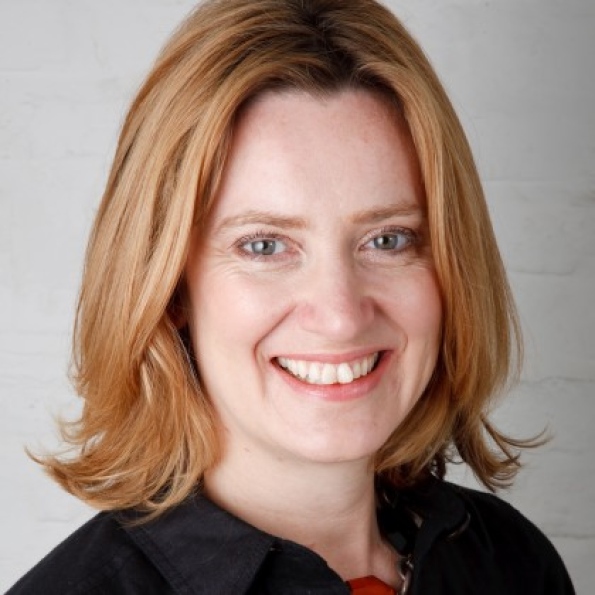
    The new Prime Minister Theresa May has appointed Amber Rudd as the new Home Secretary.

    Embed from Getty Images

    Amber Rudd has been appointed by Prime Minister Theresa May as the new Home Secretary. Ms. Rudd who has been in Parliament since 2010, has “consistently voted for equal gay rights” according to TheyWorkForYou.com

    The MP for Hastings And Rye, who campaigned to remain in the European Union,  entered the House of Commons on 6th May 2010.

    Since the beginning of her Parliamentary career, Ms. Rudd has had to vote on six pieces of legislation pertaining to the rights of gay and lesbians in the United Kingdom. The majority of which were to do with issues surrounding same-sex marriage.

    She voted in favour of all votes, ensuring that Britain’s gay community enjoy marriage equality.

    Home Secretary is an important role for the safety of Britain’s population. It requires close contact with emergency services, such as the police and intelligence services to reduce crime and terrorism. The LGBT community will be looking to Ms Rudd to reduce hate crimes in the UK. This year in London alone homophobic crime soared 20 per cent year on year.

    Mrs May becomes the second female Prime Minister of the UK after David Cameron resigned following Britain’s decision to leave the EU.


  • Andrea Leadsom withdraws from Tory leadership race

    Andrea Leadson has withdrawn from the Conservative leadership race.

    By Policy Exchange (Flickr: Andrea Leadsom MP) [CC BY 2.0 (http://creativecommons.org/licenses/by/2.0)], via Wikimedia Commons

    Gay marriage opponent Andrea Leadsom has withdrawn from the Prime Minister race, meaning that Theresa May will now become Brtain’s next Prime Minister.

    The controversial candidate announced that she was no longer going to go ahead with her campaign to run the country.

    Her withdrawal means that Theresa May, who has been the Home Secretary since 2010, will become the UK’s next Prime Minister.

    The race for a new Prime Minister for the UK was triggered after David Cameron resigned from his position after the European Union referendum last month saw 52 per cent of the country voting to leave the EU.

    Andrea Leadsom was criticised heavily during her campaign because of her views on key equality issues, such as same-sex marriage which she did not vote on in 2013 and said had caused “hurt” to Christians across the UK.


  • Andrea Leadsom | Gay marriage hurts Christians

    Andrea Leadsom says she’s “not happy” about gay marriage laws because of the hurt it has caused Christians.

    By Policy Exchange (Flickr: Andrea Leadsom MP) [CC BY 2.0 (http://creativecommons.org/licenses/by/2.0)], via Wikimedia Commons

    Andrea Leadsom has claimed that she was never happy with the current marriage laws in the UK because of the “hurt caused to many Christians”. The Prime Minister candidate abstained from voting in 2013 when same-sex marriage was being debated in Parliament.


    ALSO READ: OP ED: David Cameron wanted us to believe that the Tories had changed – but it’s bullshit politics as usual.

    ALSO READ: Where do the PM candidates stand on gay issues?


    The candidate, who if successful, will become the unelected leader of the UK, called the laws “divisive” and “absurd” in 2013 and maintained in an interview this morning on ITV that marriage was, “a Christian service that was for men and women who wanted to commit in the eyes of God”.

    During her interview Leadsom said,

    “I believe the love of same-sex couples is as every bit as valuable that of opposite sex couples – absolutely committed to that. But nevertheless, my own view actually, is that marriage in the biblical sense is very clearly from the many many Christians who wrote to me on this subject – in their opinion – can only be between a man and a woman.”

    She said that she would have preferred for civil partnerships to be made available to both gay and heterosexual couples.

    She continued,

    “I think we’ve muddled the terms of marriage, civil partnership, church etc. I would have liked that to have been clarified.I didn’t really like the legislation – that was the problem. But I absolutely support gay marriage.”


  • Donald Trump u-turns on anti gay and trans HB2 bill

    Donald Trump u-turns on anti gay and trans HB2 bill

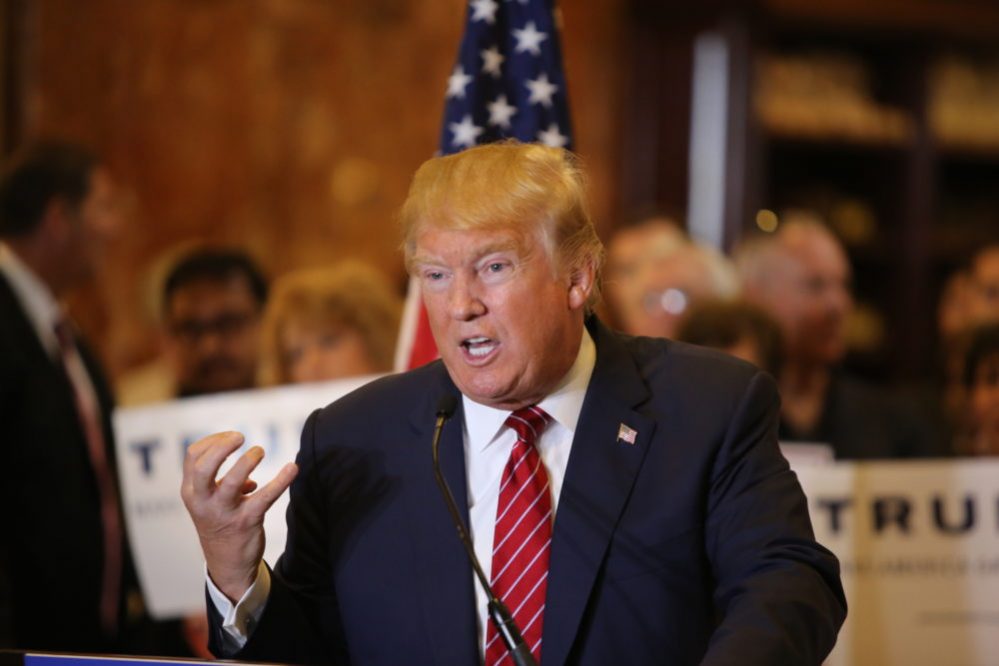
    The presumptive Republican candidate Donald Trump has now flip flopped on his HB2 stance, insinuating to Fox news that White House directives shouldn’t protect tiny parts of the population and that civil protections should be left to individual states.

    Embed from Getty Images

    It’s the bill that’s divided the nation. Musical legends have boycotted the state because of it, cities have lost hundreds of millions in investment and millions in lost revenues – and now Donald Trump has flip-flopped on his stance – saying that he disagrees that federal laws should support, “such a tiny part of our population”.

    HB2 bans all LGBT+ right ordinances in North Carolina.

    In March North Carolina Governor Pat McCrory signed a law which would allow business owners to discriminate against LGBT people on the grounds of religious belief.

    The law also requires trans people to use the public toilet that aligns with the gender that is on their birth certificate.

    Previously Trump had said that the law was unnecessary, but has seemingly u-turned after President Obama recently issued directives which called upon public schools to allow trans students to use the toilets they were most comfortable using.

    Trump told Fox News,

     ‘Well, it’s not fine. ‘I would generally speaking leave it to the states to decide. Obama’s getting into a very tricky territory. We have to protect everybody … but this is such a tiny part of our population. I would really leave it up to the states.

  • Stephen Crabb: Gay cure support “complete fabrication”

    Stephen Crabb: Gay cure support “complete fabrication”

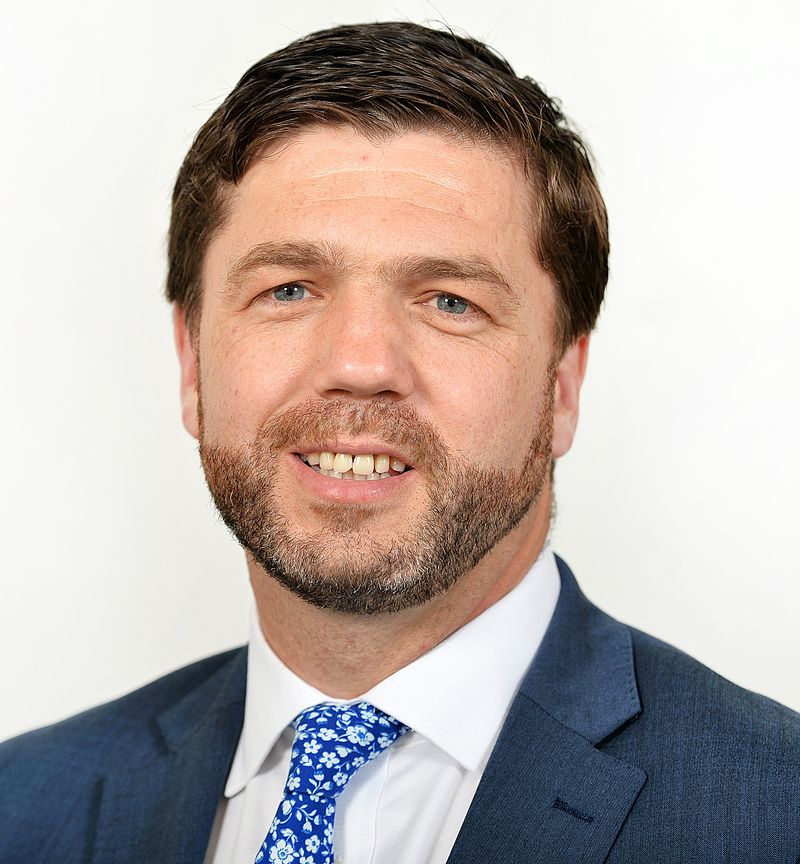
    PM hopeful Stephen Crabb has said that any suggestion of him being homophobic or that he supports so-called gay cures is “complete fabrication”.

    Embed from Getty Images

    MP Stephen Crabb has said that any suggestion that he supports so-called gay cures or that he is homophobic is a “complete fabrication”. He also called the idea of gay cures reprensible.

    Speaking on the Radio 4 show, Today, the MP for Preseli Pembrokeshire said, “I don’t believe that being gay is a sin” and idea of “gay cure” is “reprehensible”

    As a member of Parliament Stephen Crabb has voted against every piece of legalisation that would protect or equalise the rights of gay and lesbians in the UK.

    In 2007 Crabb voted against the Equalities Act (Sexual Orientation) which protects gay people from discrimination in the provision of goods, facilities, services, education and public functions because of their sexuality.

    In 2013 Crabb voted against allowing same-sex couples the ability to marry. He was then absent for all other votes concerning the interests of LGBT people in the UK, including allowing Armed Forces based outside the UK the ability to marry.

    Crabb has stood by his voting decisions by saying, “It wasn’t a clear-cut vote for me, but I don’t regret any vote I’ve taken.”

    Last week THEGAYUK emailed each of the five candidates for assurances that if they got into power that gay rights and LGBT equalities would not be eroded or rolled back.

    Today, four days on, only Michael Gove’s office has responded.

  • Michael Gove “no question of LGBTQ+ rights being reduced”

    As the Conservative leadership battle continues today, Michael Gove became the first candidate to answer calls to allay fears that rights and equalities for the LGBT+ community could be eroded with a new leadership.

    Embed from Getty Images

    David Cameron‘s coalition government with the Liberal Democrats was famed for ushering a new era of acceptance from the Tories. Gay marriage was secured and the Tories’ checkered history was somewhat restored.

    However 136 Tory MP voted against the law – two of them are standing for the top job in Westminster (Stephen Crabb and Dr Liam Fox) – and one abstained from the vote altogether (Andrea Leadsom).

    In fact more Conservative MPs voted against same-sex marriage than for it.

    Only Michael Gove and Theresa May voted positively for the new law.

    On Friday afternoon THEGAYUK emailed each of the five candidates for assurances that if they got into power that gay rights and LGBT equalities would not be eroded or rolled back.

    Today, four days on, only Michael Gove’s office has responded.

    Spokesman for Michael Gove said,

    “There is no question of LGBTQ+ rights being reduced in any way if Michael becomes Conservative leader. He is proud to have voted in favour of equal marriage and will continue to stand up for LGBTQ+ rights at home and abroad.”

    THEGAYUK’s editor Jake Hook said,

    “I’m very pleased that Michael Gove has given his assurance to the community that he’d continue to stand up for our rights. However I’m incredibly concerned that none of the other candidates have responded to a community that has long suffered at the hands of past Conservative governments”

  • Here are the assurances the 5 PM candidates have given the gay community if they get into power

    Here are the assurances the 5 PM candidates have given the gay community if they get into power

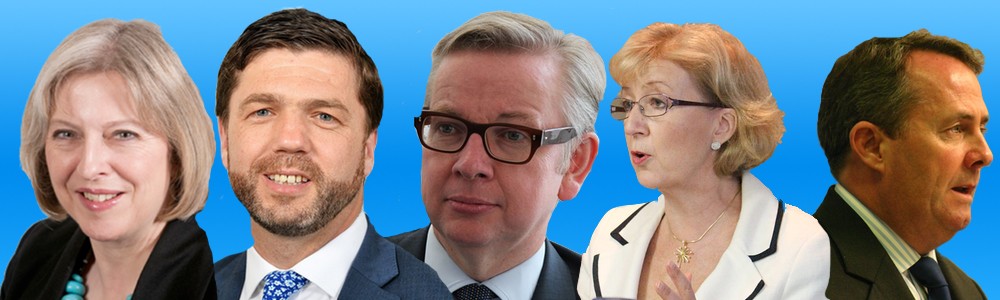
    There are five candidates currently vying for the top job in Westminster, we asked them all about how equality and security for LGBT people in Britain will be protected if they got into power.

    All images (C) Wikipedia / CC


    When David Cameron announced his resignation after the UK voted to leave the EU, five candidates threw their hats into the ring to become Britain’s next Prime Minister.

    All five have a troubling history with LGBT+ rights and equalities – whether through directly voting against legislation offering equality and security or abstaining or being absent from crucial votes altogether.

    This has led many in the LGBT+ community to be anxious about rights and security in the future under another leader of the current Conservative government.

    Yesterday after THEGAYUK wrote to each of the candidates, Theresa May, Stephen Crabb, Liam Fox, Michael Gove and Andrea Leadsom to ask them what reassurances they could offer to the gay community against legislative rollback on laws affecting the LGBT+ community and the current equality we enjoy.

    Here’s what each candidate has said.


    Nothing.

    UPDATE: Monday 8:51AM

    Over two days –  nothing concrete to assure the LGBT+ community that they’ll be safe within a new Conservative government.

  • OP ED: Cameron had us believe that the Tories had changed but in the end… it’s just business as usual

    OP ED: Cameron had us believe that the Tories had changed but in the end… it’s just business as usual

    David Cameron painted a picture at the turn of this decade. The Conservatives were new, brand new and very gay-friendly. But as it stands we have three out of five PM candidates whose voting history on LGBT rights is deplorable (or non-existent) and two who have a fair weather relationship with the gay community.

    Painted as the party that brought in same-sex marriage, David Cameron would have had us believe that the Tories had finally changed.

    But it seems all he had actually created was the almost perfect veneer.

    Modern, forward thinking and accepting, but like all veneers, it’s what’s behind all that shine that really matters and what I’m seeing is rotten.

    With the departure of Cameron, we’re on the edge of having a country run by those who either wouldn’t vote on LGBT issues – so beneath them apparently is our humanity  that they wouldn’t even vote on life changing legislation, or those who, some might say are sheep in a wolf’s clothing, having had a long history of voting consistently against gay rights – and then almost like a light switch, all change, just like that.

    And while voting for equality for the LGBT community is commendable and admirable if it’s just lip service or a ploy to further career prospects – I’d rather not have you on our side. I’d rather deal with one face rather than two, at least you know where you stand.

    It’s becoming patently clear that same-sex marriage, the most historic piece of legislation this decade and one of the cornerstones of Cameron’s progressive Tories, was only won because of the coalition government with the Liberal Democrats.

    It might surprise you to find out that the majority of Conservative MPs voted against marriage equality including two of the current Prime Minister candidates: Stephen Crabb and Liam Fox. Michael Gove voted yes for gay marriage but then was absent for other key elements that would complete that equality.

    In total 136 Conservative MPs voted against the ability for gay and lesbian men and women to be treated equally under the law.

    Andrea Leadsom couldn’t be persuaded either way. She found parts of the new law “unacceptable” and abstained from the vote. In fact, she’s not voted on any LGBT legalisation since her 2010 induction to parliament.

    So here we are, five candidates, all vying for the top spot in Westminster. All of them have dubious voting, three of them clearly aren’t in our corner despite any backtracking they may have done in the past few days – and for this we, as a community, need to be worried.

    If nothing else the vote on the EU has lifted the lid on a Britain that many of us thought we’d left behind in the last century, we’ve had racial and homophobic tensions on the streets – with an increase of hate crime being reported, Brexit it seems, has given some on that side of the argument a feeling that open bigotry is acceptable.

    I’ve written to all five candidates about allaying legitimate fears our readers have put forward about LGBT protections as a new government forms – nearly 24 hours later – nothing.

    Like all veneers, the shine is only skin deep and eventually, it will crack. If we’re not careful it’s wholly possible that our rights, our freedoms could be rolled back.


    The opinions expressed in this comment piece may not reflect those of the management or editorial of THEGAYUK. If you’d like to write a comment or column for THEGAYUK click here.

  • Proposal to fly rainbow flag in English town defeated by town council

    A proposal to fly the internationally renown LGBT symbol, the rainbow flag, in Abingdon near Oxford has been struck down by the town council.

    © chrisbradshaw Depositphotos

    The town council in Abingdon have voted seven to six not to fly the Pride flag next year. Organisers for Oxford Pride say they are “extremely disappointed” and are keen to find out exactly why the opposition to having the internationally recognised symbol for pride being flown in the quaint English town.

    According to a post on Oxford Pride’s page, one person who was involved in the vote was overheard commenting, “what kind of message would it be sending to town”, which some on social media have branded “disgraceful” and “disgusting”.

    A spokesperson for Oxford Pride commented,

    “It’s important to show the community that their town supports them regardless of sexuality and gender, unfortunately some of Abingdon Town Council don’t agree!”

    “For the Town Council to refuse this emblem of inclusion and acceptance, indicates that there are some still in control who do not wish such virtues to be part of an English town.”

    A petition has been launched asking the town council to fly the flag for Abington.

    THEGAYUK has reached out to the leader of the Council, Mr Michael Badcock for comment about the vote and alleged comment.

  • Lord Paddick warns that Snoopers’ Charter could harm LGBT community

    Lord Paddick has warned that the Investigatory Powers Bill (Snoopers’ Charter) could have dire consequences for the LGBT community.

    Credit LD Flickr / CC


    The Liberal Democrat peer, Brian Paddick has warned against the Government backed Snooper’s Charter, which will allow police to seize the online data and communications from anyone suspected of a crime without a court ordered warrant.

    The proposed law would require internet service providers (ISP) to keep records of every website that everyone in the UK visits for 12 months. It would require ISPs to hand over those records to police without a warrant, if they suspect a crime has taken place.

    Speaking in the House of Lords, Lord Paddick said,

    “Homophobia has been encountered in the police service, as has unauthorised disclosure of confidential information. ‘If you have nothing to hide, you have nothing to fear’ is not the same as ‘If you have done nothing wrong, you have nothing to worry about.

    “Even if the police were to be trusted completely, massive pools — oceans — of data in the custody of private companies such as TalkTalk, one of the internet service providers that will be asked to store such data, would be sitting ducks for hackers, criminals, blackmailers and hostile foreign powers.


    © belchonock Depositphotos


    He went on to outline that the proposal would cost an additional £1bn in set up costs. He also suggested that security services such as M15, M16 and GCHQ, for which this law would most likely aid, did not need the Snoopers’ Charter to do their job in protecting the UK, because the data that they collect can be gained by other means.

    “The RUSI panel set up by Nick Clegg when he was Deputy Prime Minister set out 10 tests for the intrusion of privacy. It is those 10 tests on which our opposition to parts of the Bill is based.

    “One of the tests is that there must be transparency: how the law applies to the citizen must be evident. How many people in the UK know that 12 months of their web history—albeit the website that they are looking at rather than any further pages on that website—will be kept in case the police want to see it, as a result of this Bill’s provisions?

    “The intrusion must be necessary in that there are no other practical means of achieving the objective. The security services MI5, MI6 and GCHQ say that they do not need internet connection records because they can get the information they need by other means.

    “The intrusion must be proportionate to the advantages gained, not just in cost and resources but also through a judgment that the degree of intrusion is matched by the seriousness of the harm prevented. Internet service providers reckon that this will cost more than £1 billion in set-up costs alone.

    “The measure may not provide the police with the website someone has visited because it is so easy to conceal it. It will not give the police any information about whether, or with whom, someone was communicating without making further inquiry of other companies such as Facebook, because almost all online communication is encrypted.

    “If a serious crime is involved—the Minister listed a range of serious crimes that the Bill is intended to cover, including child sexual exploitation and terrorism—the security services, which do not need internet connection records, are duty bound to assist the police with their inquiries. We therefore need some convincing that internet connection records are both necessary and proportionate.”

    ALSO READ: Why is the Conservative government so interested in the porn we watch?