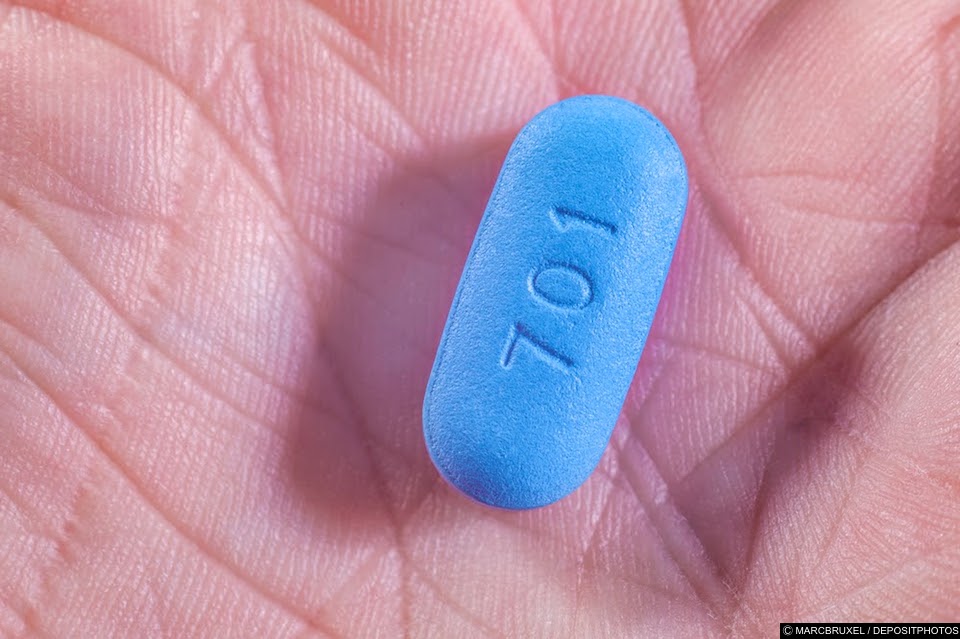
Places for London’s PrEP trial to be boosted by 60 per cent.
(C) marcbruxel Depositphotos
Today (Friday 12 April) London Councils has announced that an agreement has been reached to increase places on the PrEP trial by over 4,000 places.
The news comes as over two-thirds of sites in London are now closed to gay and bisexual men. The boost still leaves the capital lagging behind many other parts of England which have agreed to double places on the trial.
Debbie Laycock, Head of Policy at Terrence Higgins Trust, said, “Finally the stalemate on PrEP has been broken and some leadership is being shown. This is a welcome step in the right direction that will provide some relief to those in the capital who have been denied access to the trial. We welcome the acknowledgement by London Councils that PrEP must be available to everyone at high risk of HIV exposure and as such withholding access is simply not an option.
“However this increase is still far short of the doubling of places we were promised by the Health Secretary Matt Hancock over 70 days ago and it won’t be long before we’re once again seeing gay and bisexual men being unable to access PrEP in the capital.
“‘London continues to outstrip every other part of the UK in the number of new HIV diagnoses each year so it’s critical a sustainable solution for PrEP is found. Today’s news is progress but this remains a job only half complete as places must be doubled to address the high demand seen for PrEP. We need urgent leadership on this from NHS England, the Department for Health & Social Care and councils across the capital because no one at risk of HIV should be turned away.”
A doctor who was instrumental in making PrEP accessible in the UK has died at the age of just 44.
Doctor Mags Portman was just 44 when she died from a rare form of cancer, according to Buzzfeed News. The doctor became a hero of the gay and bisexual community by making access to the HIV-preventative drug, PrEP easier for those who needed it. She was an HIV consultant at London’s Mortimer Market Centre, one of the capital’s busiest sexual health clinics.
She leaves behind a husband and two young children. She died in the early hours of Wednesday morning in her hometown of Leeds, at a hospice. She had been receiving treatment for mesothelioma, a cancer which affects the lining of the lungs.
The Terrence Higgin’s Trust, the UK’s leading HIV charity called the doctor a pioneer, saying “All of us at Terrence Higgins Trust are deeply saddened by the passing of the brilliant Dr Mags Portman.
Before adding that they pledge to “continue the fight for PrEP in her memory”.
All of us at Terrence Higgins Trust are deeply saddened by the passing of the brilliant Dr Mags Portman.
We pledge to continue the fight for PrEP in her memory. Please take some time to read about Mags’ vital role as a #PrEP pioneer.https://t.co/SVHsPfReCi
In October 2018 Mags took to her blog to write about her life with cancer and the treatment she received, in a post she titled, “Dancing With Death and Depression”. In the emotional post, the doctor documented how she lived with anxiety and unbearable pain. About anxiety, she wrote, “It reared it’s ugly head so quickly. I was taken completely unawares until was right in the middle of its grip, smothered by it. Rendered completely incapable. The “I can’t” voice in my head persisted, became louder and more repetitive. I would sit and wring my hands, rub my face and head, stand up and then sit down again over and over.”
She revealed that she managed to get help for her anxiety, writing “Thankfully, one of the GPs rang back within an hour and was absolutely great with me. He suggested starting medication (which I was glad about and ready to accept). He suggested Mirtazepine (which I was glad about too, because it also helps with sleep and appetite, and I was hoping for this). He also referred me to the Young Persons Support Team at St Gemma’s Hospice as a lot of my anxiety was around the boys and how we would get through the summer holidays with my deteriorating health.”
MPs warn of ‘cliff-edge’ in access to HIV prevention pill PrEP in open letter to Public Health Minister calling for ‘urgent action’
(C) marcbruxel Depositphotos
Today (19 December), MPs and peers from across Parliament have published an open letter calling on public health minister Steve Brine MP to urgently expand access to HIV prevention pill pre-exposure prophylaxis (PrEP) in England.
PrEP is currently available in England via a capped 13,000 place trial – but it looks highly likely that all places for gay and bisexual men will be full by early 2019. Despite this group making up more than half (53%) of the 4,363 new HIV diagnoses in 2017.
PrEP is almost 100% effective when taken as prescribed, but some gay and bi men have already been turned away in parts of the country where trial places are full with individuals going on to be diagnosed with HIV.
The 14 MPs and peers include lead signatory Lloyd Russell-Moyle MP, who last month revealed he’s living with HIV in a speech to the Commons, and Brighton Pavilion MP Caroline Lucas, whose constituency has one of the highest prevalences of HIV in the country.
Lord Michael Cashman, a Terrence Higgins Trust patron and Stonewall founder, is a signatory. Lord Guy Black, the first openly gay Conservative peer and patron of Terrence Higgins Trust, has also given his support.
In the letter, the MPs and peers state “We are writing to you to seek urgent action regarding the national PrEP Impact Trial” where “demand for the trial has far outstripped availability of places”. It continues, “This cliff-edge scenario is simply not an option.”
Infection with HIV after PrEP refusal already reported
On the need for urgent and decisive action, the letter says, “There has already been one report in the media concerning an adult becoming infected with HIV after being refused access to PrEP via the Impact Trial due to there being no places available at their local clinic. This is unacceptable and we risk failing other gay and bisexual men if the current situation continues.”
The MPs and peers also criticise the number of trial sites yet to open, despite being 14 months into the trial. It says, “This is perpetuating regional health inequalities, in particular among those living in the north of England.”
The move by MPs and peers has been welcomed by leading HIV and sexual health charity Terrence Higgins Trust, which is urgently calling for an expansion to the trial and then for PrEP to be made routinely available on the NHS in England.
Uncapped in Wales, freely available in Scotland
PrEP is already available on the NHS in Scotland and via an uncapped study in Wales. In the letter, MPs and peers said “England must not lag behind” and “PrEP must be given a long-term home as part of existing HIV prevention services”.
The letter is signed by Lloyd Russell-Moyle MP, William Wragg MP, Dame Caroline Spelman MP, Caroline Lucas MP, Peter Kyle MP, Ben Bradshaw MP, Helen Hayes MP, Paul Williams MP, Catherine West MP, Norman Lamb MP, Sarah Champion MP, Lord Michael Cashman, Baroness Liz Barker and Lord Guy Black.
Ian Green, Chief Executive at Terrence Higgins Trust, said, “We welcome cross-party support from MPs and peers on this hugely important issue. It’s unacceptable that people who have been denied access to PrEP in England have gone on to be diagnosed with HIV. PrEP is highly effective at preventing HIV and we must fully utilise it in England in order to achieve our ambitious aim of ending new HIV transmissions.”
Lloyd Russell-Moyle, Labour MP for Brighton Kemptown, said, “During my speech in Parliament last month, I called on the Government to take immediate action to avoid this cliff-edge scenario. We know of people who have become infected with HIV because they cannot access this HIV game-changer. I want to see PrEP have a long-term home as part of sexual health services, but in the meantime, NHS England and local authorities must act now and agree to increased places on the trial.”
Caroline Lucas, Green Party MP for Brighton Pavilion, said, “It is dangerous and short-sighted of the Government to withhold PrEP from those most at risk of HIV. When taken as prescribed, PrEP is almost 100 per cent effective at stopping HIV – so Steve Brine should urgently ensure NHS England and local authorities add new places to the trial.”
William Wragg, Conservative MP for Hazel Grove, said, “Increasing places on the PrEP Impact Trial immediately is an important and urgent step the Government can take to prevent HIV transmissions. It will bring immediate benefits to those in need of PrEP and who are at risk today, as well as longer-term benefits to both public health and the public purse, by preventing HIV transmissions and the consequential costs of life-time treatment.”
The letter in full:
Dear Minister
We are writing to you to seek urgent action regarding the national Pre-Exposure Prophylaxis (PrEP) Impact Trial. As you will be aware, demand for the trial has far outstripped availability of places. Since the start of the trial in October 2017, nearly 10,000 places have been filled, and despite an increase of 3,000 places for gay and bisexual men, it’s forecast that all those places will be full by early 2019. This cliff-edge scenario is simply not an option.
Last month the UK met the UNAIDS 90-90-90 targets which positions us as a leading nation in the response to HIV. Access to PrEP has ultimately played a crucial role in reducing new infections but artificially restricting this access undermines efforts to reach zero new HIV infections.
There has already been one report in the media concerning an adult becoming infected with HIV after being refused access to PrEP via the Impact Trial due to there being no places available at their local clinic. This is unacceptable and we risk failing other gay and bisexual men if the current situation continues.
There are also a number of trial sites that have yet to open, despite being 14 months since the trial commenced. This is perpetuating regional health inequalities, in particular among those living in the north of England.
When taken correctly, PrEP is 100% effective at stopping HIV. Other UK home nations have taken steps to give PrEP a home on their respective NHS; England must not lag behind.
We are therefore calling for an immediate increase in places on the Trial so no one is turned away from accessing PrEP, and a timetable for getting to routine commissioning of PrEP to be agreed between NHS England and local authorities. PrEP must be given a long-term home as part of existing HIV prevention services.
Over the past few weeks, both you and the Secretary of State for Health & Social Care have made references about the need to reach zero new HIV infections here in the UK, which is welcome. However, PrEP remains a key missing piece of our response to HIV and continues to fundamentally undermine our ability to reach zero new HIV infections.
You said in a recent Adjournment Debate on HIV that you were in listening mode regarding PrEP. We therefore urge you to listen to our concerns with urgency and prevent this impending cliff-edge scenario and ensure there is access to PrEP for all those groups who could benefit from it, including women and BAME communities.
The National AIDS Trust just had to school one Mail Online columnist over a story published in which he peddled “misinformation, myths and stigma” over PrEP usage.
(C) marcbruxel Depositphotos
In the article, Mail Online columnist Ross Clark, reveals that after a recent visit to his GP for a suspected hernia, the doctor was unable to refer him to have an operation or to a specialist due the fact that he wasn’t in pain and didn’t have any heavy lifting in his job, the GP told him he “wasn’t bad enough to qualify for funding under new NHS guidelines”.
He wrote, “There is the £22 million a year being spent on transgender surgery, at a cost of £20,000 per patient. There is £730 million a year being spent pumping drug addicts full of Methadone — a heroin substitute which is supposed to help wean people off that drug, but which is itself addictive.
“The NHS has started, too, to prescribe PrEP — a drug which cuts the risk of HIV transmission in gay men who have sex without a condom.
“It is prescribing the drug —which costs £400 a month for a single patient — in spite of warnings that it will be encouraging risky behaviour, and it could increase other infections such as syphilis and gonorrhea [sic], against which PrEP offers no protection.”
“Not One Thing accurate”
Well, the Twitter team at National AIDS Trust had to put him right – and point out exactly why his article is so wrong.
Interesting column in the @MailOnline arguing that less ‘deserving’ patients are the cause of the NHS’s financial trouble. @Rossjournoclark – we hope you’ll be interested to learn that not *one* thing you said about #PrEP was accurate. pic.twitter.com/rcDs0pJAmr
— National AIDS Trust (@NAT_AIDS_Trust) July 12, 2018
“Trying to create a Twitter storm”
The columnist Ross Clark then accused the National AIDS Trust of trying to start a “Twitter Storm” saying, “You are trying to create a Twitter storm based on something I haven’t written, knowing that most who retweet won’t actually bother to read the piece”.
You have written several statements about PrEP which are factually shaky at best. Apologies if you’d prefer this went unnoticed but as an HIV charity we’re keen that PrEP is represented as the cost-saving success story it is, not the reason people can’t get a hernia op.
— National AIDS Trust (@NAT_AIDS_Trust) July 12, 2018
Losing Advertisers
Recently the MailOnline lost a number of high-profile advertisers when companies started to pull out of contracts with the publication after a successful awareness campaign by pressure group, Stop Funding Hate. Eventually, the newspaper removed advertising from many of its columnists including Richard Littlejohn.
Ooo the sass coming from the Terrence Higgins Trust’s Twitter feed, the UK’s leading HIV charity, was palpable and we love it. In the tweet, they slam the Mail Online for fuelling misinformation, myths and stigma surrounding the use of PrEP.
There’s no place in the media for articles filled with misinformation, myths and stigma-fuelling.@RossJournoClark, we’d love to have a cuppa to explain how your @MailOnline PrEP piece does this, and how you can report more accurately and responsibly next time.
So far the journalist who worked on a story nor the publication itself has replied to have a cuppa with THT.
In the article, Mail Online columnist Ross Clark, reveals that after a recent visit to his GP for a suspected hernia, she was unable to refer him to have an operation or to a specialist due the fact that he wasn’t in pain and didn’t have any heavy lifting in his job, the GP told him he “wasn’t bad enough to qualify for funding under new NHS guidelines”.
However, later on in the article, he draws comparisons between what the NHS could pay for and what they couldn’t. PrEP and transgender surgery was, it seems, central to his argument.
He wrote, “There is the £22 million a year being spent on transgender surgery, at a cost of £20,000 per patient. There is £730 million a year being spent pumping drug addicts full of Methadone — a heroin substitute which is supposed to help wean people off that drug, but which is itself addictive.
“The NHS has started, too, to prescribe PrEP — a drug which cuts the risk of HIV transmission in gay men who have sex without a condom.
“It is prescribing the drug —which costs £400 a month for a single patient — in spite of warnings that it will be encouraging risky behaviour, and it could increase other infections such as syphilis and gonorrhea [sic], against which PrEP offers no protection.”
“Cost-effective”
Speaking to THEGAYUK.com Liam Beattie, PrEP policy lead at Terrence Higgins Trust, said, “There’s no place in the media for articles filled with misinformation, myths and stigma-fuelling. Ross Clark’s piece on PrEP is highly inaccurate and we would love him to come in to Terrence Higgins Trust to find out more about the realities of PrEP. Because there’s nothing controversial about PrEP – it’s highly effective at preventing HIV, cost effective and will ultimately stop many, many people from becoming HIV positive.
“Currently PrEP is available in England via a 10,000 place trial but we want to see a national PrEP programme in England to ensure it’s made available to all who need it”’
There’s been no evidence to suggest that users on PrEP are being any more “risky” than those who currently aren’t on PrEP.
Losing Advertisers
Recently the MailOnline lost a number of high-profile advertisers when companies started to pull out of contracts with the publication after a successful awareness campaign by pressure group, Stop Funding Hate. Eventually, the newspaper removed advertising from many of its columnists including Richard Littlejohn.
The PrEP drug has been a game changer in the field of HIV prevention, but is it available on the NHS for gay and bisexual men?
It all depends is the short answer. PrEP is not freely available on the NHS in most parts of the UK, but you can take part in a trial in which 10,000 gay and bisexual men (and other people at a higher risk of getting HIV) can get the drug for free. The trial began in 2017 and is called the IMPACT trial. You can find out which areas are taking part in the trial and whether they still have availability for men to join.
Many clinics outside London are still looking for participants.
Pre-exposure prophylaxis, or PrEP, it is a drug treatment protocol using a prescription medicine called Truvada and has been shown in a recent trial to be highly effective in preventing HIV in gay and bisexual men, when taken daily and used in combination with other infection prevention measures.
Truvada contains two medicines (tenofovir and emtricitabine) and is already routinely used in combination with other medicines to treat existing HIV infection.
Does PrEP stop other STIs?
Pharmacy2U’s Clinical Governance Pharmacist Phil Day gave this warning however on why sometimes using a condom when having sex is best practice,
“While advances in medicine mean that most people living with HIV are now unlikely to contract AIDS, you should still always wear a condom. They also provide protection against a number of other Sexually Transmitted Diseases, including chlamydia, gonorrhoea, and syphilis.
Meet Jason Domino, gay porn star, charity founder and originator of the Porn4PrEP movement, a campaign to get gay and bisexual men educated on PrEP.
Charity founder Jason Domino has spoken at the United Nations, on primetime BBC News and featured in articles for the New Scientist, Huffington Post, and Dazed. His advocacy in the UK earned him a spot on the “IMPACT” PrEP trial’s advisory board. Jason lives as a public example for sexual health, a VERY public example…
“For a Sexual Health film, I had sex without a condom, with someone who has HIV. They were off medication and had a high Viral Load. I haven’t contracted HIV. I chose to do this to reinforce confidence that PrEP works even in “high risk” events. My scene partner was about to try his new medication and had a high Viral Load at the time. Rather than encouraging people to be irresponsible, our aim was to highlight rigid attitudes and to educate. We wanted to stop people being so reluctant to talk about HIV and missing out on important major updates in HIV information.
“That is the problem in a nutshell; people don’t talk about Sexual Health and yet, think they have the most up to date information about it. A few weeks ago I was taking in an UBER home from a night out, and I told my driver what undetectable meant. He then told me, in floods of tears, he had an aunt with HIV, he rejected years ago. He cast her out of the family in case they caught HIV from her, telling her to pray for healing. We pulled over, and I told him modern medication meant, people living with HIV could have long healthy lives, and once undetectable for six months, they could not pass on HIV. We went through the different ways it could be passed on and what preventions existed. I then sat there, as a grown man I barely knew called his estranged aunt for the first time in five years. There were many sad and happy tears.
“I’d love to say it felt great. It didn’t; it just hurt that people were ever stuck in that situation. It was just a reminder how much people are afraid to talk about things like HIV.
Finding condoms comfortable or not, is an immature attitude to an important conversation
“I work a cabaret a few nights a month. For weeks now I have been suggesting an idea for an act. A sexy act that features a zombie and his distant lover finding a renewed closeness after a fairy/nurse gives them some pills. It then turns into a shocking zombie flesh throwing couple strip. They end up seeing each other as equal partners. The last part is not the part the cabaret disliked; in fact, they loved the gory strip. The cabaret saw right through my plan to integrate a constructive message about sexual health, into a sexual space. I have rewritten it a dozen times, each time rejected. When did sex and sexual health become so distant? In real life, they are unavoidably married. In current culture, sex is only palatable isolated in its own fantasy. Only when permitted to speak transparently about sex we can bridge into sexual health, even if only as a casual detail. Sex is an inevitable part of our lives that is seen daily in advertising, and in cases like my own, in work too. Being squeamish talking about, e.g. finding condoms comfortable or not, is an immature attitude to an important conversation. It is much more common to see sex communicated subtly with images and inferring details, than discussing it directly. Subtly praising sex is socially acceptable, but our windows to talk and listen about sexual health are limited and unattractive. They are however two sides of the same coin.
“The fact that we can’t talk about sex transparently is people sticking to their comfort zones, often embarrassed to revealing their personal sex life.
“Many things are hard to do without practice, but most things that can save someone’s life get the man hours put in. Last year I was a victim of my own assumption. I thought I was completely up to date on my sexual health information, but I wasn’t. I am a man, and like the majority of sexually active adults, I had contracted HPV. Most adults don’t express symptoms, or only do when their immune system is running low. Many men don’t even think they can catch HPV. HPV is a collection of around 100 strains of a virus, some cause genital warts, and some lead to cancer. In the UK girls are vaccinated against the worse and most common strains of HPV on the NHS. Boys are not, but it does work for boys. As I lay on the operating table going under general anaesthetic for surgery, I wondered why no one offered me the vaccination. It existed, but no one was comfortable talking about it. A laser burned 360 degrees inside me, and I spent a number of months on tramadol feeling like I was giving birth every time I went to the loo.
“I am doing ok now; I look healthy down there. But I will always carry HPV, like many. But I’m aware now. I will need regular checks to detect cancerous changes, and I need my partners to either be unaffected or be vaccinated against it.
Abstinence and condoms is an embarrassingly basic prevention lesson.
“I talk about sex a lot. Some say too much, and that it isn’t a subject worth dwelling on. I am then unsure they understand why I talk about it, which challenges me to talk more. Attitudes towards sex are perverted. In other aspects of life, we praise learnt wisdom, but we hide sex behind a veil. Praising virginity as opposed to sexual wisdom. We don’t do this for other elements for good reason; celebrating a naïve state encourages vulnerability and reduces learning motivation. Why should sex be any different? Sex isn’t such a big deal that we can’t chat about it. It can be difficult at first, but by sharing information we can all be wiser. If you care for children you’d want them prepared rather than vulnerable. Abstinence and condoms is an embarrassingly basic prevention lesson. Awareness of treatment options is equally important, along with many other elements like on-going consent and communication.
“Context Dependent Memory is a psychology principle placing value on the situation a learner is in. There is up to a 50% decrease in recollection of the information with changing scenarios, environments and emotional state changes. An example of this is the Divers Study, divers were trained to know how to fix an oil rig. They dived to the repair site, and all divers forgot their training. They remembered it again once surfacing. Eventually, divers were trained in a submerged environment; they had better success. When it comes to teaching about sexual health, principles like this, are completely ignored. A Sex Ed class is often awkward, formal and largely danger-focussed. Sex in real life is about pleasure, excitement, feeling turned on, and sometimes anxiety. If we take the subject seriously, then students deserve a more effective way of educating them. It is the reason I started a unique charity. My charity makes porn, and soon Erotica, both contain seeds of sexual health information. A skilled director or writer can integrate these messages without throwing the piece off topic. Many people can’t even imagine the two being compatible.
“Porn isn’t like real sex, but it reaches people regardless who they may be. Viewing porn is also a closer context to real sex than the current format for sexual health classes. Biological terms like “penis” are less sex-associated than words like “cock”. Even the language we use makes sexual health distant from sex. The language to teach these classes may make us feel more professional, but it might literally be undermining the purpose of teaching it in the first place.
We don’t need to put sex on a mysterious plinth.
“I am a porn actor and a sexual health speaker. I was recently asked to speak at the UN in Geneva about sexual health. I do events like that while maintaining my status as a porn actor because we need sexual experience to become respectable and socially acceptable. We don’t need to put sex on a mysterious plinth. Sex is easily used to sell perfume and products, but what we need most, is people sharing their experiences and being examples for others to learn from. We need this, so the sexually naïve (yes even those who think they have it all covered) can make informed decisions about topics they’ve not been exposed to. We owe it to people to provide them with the most up-to-date information, so they don’t stumble into dangerous ignorance.
Pre-exposure prophylaxis, or PrEP, it is a drug treatment protocol using a prescription medicine called Truvada and has been shown in a recent trial to be highly effective in preventing HIV in gay and bisexual men, when taken daily and used in combination with other infection prevention measures.
In the UK PrEP is available for those at risk of contracting HIV. Each of the devolved nations has a different policy on commissioning. In England, PrEP has been trialled to investigate its effectiveness in bringing new HIV infections to zero. The initial trial onboarded 10,000 volunteers, it was later increased to 20,000 patients, the trial was called IMPACT. In Scotland, it is available to anyone who is in the at-risk group.
Truvada contains two medicines (tenofovir and emtricitabine) and is already routinely used in combination with other medicines to treat existing HIV infection.
The US Food and Drug Administration has approved Truvada’s use by people at very high risk of HIV infection. Despite trials of Truvada in a number of cities, the NHS is not currently planning to make PrEP available on prescription in the UK, leading to anger and frustration among campaigners.
Truvada is available from a small number of private clinics in the UK and is expensive. People should only ever take medicines prescribed by a UK-registered GP and dispensed by a UK-registered pharmacy.
Can you expand this definition? Use the comments below and your answer could be used to expand or define this glossary entry.
As more and more countries work to make PrEP (Pre-Exposure Prophylactic) available for an affordable price, we thought it would be a good time to look at the pros and cons of people taking PrEP. But first, let’s cover the basics for those who don’t already know what PrEP is.
PrEP is a drug that people who are HIV- can take in order to prevent HIV infection. It is important to note that PrEP is not a vaccine against HIV, meaning that if you stop taking the pills they stop protecting your body. It is also not a cure for HIV. People who already have HIV use similar medication in order to keep the virus in check, or at an ‘undetectable’ level.
There is a lot of recent research into the effectiveness of PrEP, mostly because each country’s government that has looked into the drug has run its own tests. In some cases, this has been the cheapest way for people to obtain PrEP, as study participants obtain the drug and associated tests free of charge. Below we’ll look at five things you should know about when using PrEP.
You should get tested for HIV and other medical conditions before starting PrEP.
It is also important to note that the required testing that should take place before and during the administration of PrEP are important. Firstly one should be tested for HIV to make sure that you are HIV negative. Taking PrEP while HIV+ may cause mutations of the virus that become resistant to PrEP. Markus Feser who works with Hamburg-based HIV community action group Hein & Fiete remarks that it is also important to have a general check-up before beginning prep, as it is possible that taking PrEP for extended lengths of time can lower your bone density. Other side effects may also include headache, abdominal pain, decreased weight, nausea, and diarrhea. Less common side effects include lactic acidosis, liver dysfunction, and worsening of Hepatitis B infection. Recent studies have shown that there is no issue taking PrEP in conjunction with Hep B medication, however.
PrEP might not be your best solution.
You might hear things like ‘everyone should be on PrEP’ but this might not actually be the case. Most community action groups, and the doctors at 56 Dean Street, advocate a more measured approach to the uptake of PrEP. While PrEP is the latest defence against the rising number of HIV infections, it is not the only defence. There are of course people who prefer to use condoms as their prophylactic of choice, and decide not to use PrEP. For others who are not yet sexually active, or are only sexually active with one committed partner, there is no need to take PrEP. Likewise, if you are only having sex with someone who already has HIV but is undetectable, there may also be no need for you to take PrEP. If you fall into the category of people who have sex with multiple partners, has sex in high-risk situations (chem-sex, bareback, darkrooms etc.) then you may want to take PrEP regularly.
You don’t have to take it every day.
Purchasing PrEP is often an expensive prospect – which is why participating in a study is the way that many people can afford to be on the drug. But recent studies presented at the European AIDS Clinical Society 2017 Conference in Milan that show that taking PrEP on an as-needed basis, two to twenty-four hours before sexual activity and daily until two days after the last contact, known as the ‘event-based method’, or taking the pill 4 days a week: on Tuesday, Thursday, Saturday and Sunday; known as T’s and S’s are also effective ways to protect yourself against HIV infection. This new information, along with grey-market ways to obtain the drug, have made taking PrEP a more affordable prospect. In the UK up to a 3-month supply can be ordered online without a prescription from various websites, for those in Continental Europe, many of these same websites deliver directly to a few countries. If your country isn’t in the delivery lists, some will deliver to a middle-man delivery company who will then deliver onward to you. These orders will often incur import/VAT duties when arriving in the UK, and middle-man companies will charge a fee to forward the delivery. From my own experience, this makes the pills about 50€ per month, if taken every day. Obviously, this cost can be brought down if using intermittent methods.
There are good reasons to take it.
If you’re like me, you think that sex without condoms feels better. I usually don’t enjoy sex with a condom – if I’m the top – and quickly lose my erection while putting a condom on (though I have other pills to help with that now too). I often have sex in club darkrooms, when I’m heavily under the influence of various things, and not asking about my partner’s sexual history, and I often don’t carry condoms at all, though I use them if I’m asked to by my partner and he has them. In these situations though, knowing that I am on PrEP means that I don’t have to be concerned about what I have done, or what I might have done that I have forgotten about during the party. The official line from most doctors and activists is that PrEP should be used in conjunction with condoms, as a safety-net in case the condom breaks or something else goes wrong. In these cases, PrEP provides a way of knowing for sure that you’ll be safe from HIV infection when having high-risk sex.
It doesn’t protect against other STIs.
An important thing to remember about PrEP is that it is only a preventative against HIV. It doesn’t offer any protection against other transmittable STIs. For this reason, many people choose to use condoms to prevent against other STIs when having sex. Whether you take PrEP as a preventative against HIV or not, if you are having sex in high-risk situations, you should make sure that you are being tested regularly. Since the introduction of PrEP around the world, many areas have reported that HIV infections have fallen, including London, New York, and New South Wales. While HIV tests have remained steady, new HIV infections have dropped in places where PrEP is readily available. This is not only attributable to PrEP, as better HIV medications mean that those living with HIV are undetectable and so cannot pass on the virus to sexual partners. Here’s a side benefit: because PrEP users are encouraged to get STI tests regularly – every three months – rates of other STIs, particularly gonorrhoea, are also falling as people are having them treated more quickly. This may also be due to better health information people who aren’t on PrEP are also getting tested more frequently.
When you’re deciding whether PrEP is right for you, there are plenty of places to find more information. London clinic 56 Dean Street have a helpful series of YouTube videos which outline some of the points made above.
If you want to get PrEP, and you’re in London, you can visit 56 Dean Street clinic, 10 Hammersmith Broadway, or Homerton clinics. The NHS Impact trial has participating clinics all over the UK. Click the link to search for a clinic near you where you can take part. Participating in the trial is free for those who are selected to take part. 10,000 participants are required for the trial, with clinics already open, and others opening intake soon.
For those unable to participate in the trial, or who are able to pay for PrEP themselves, check I Want Prep Now.co.uk to find out where to purchase it online. If you’re in the Republic of Ireland, a website has been set up to help you obtain PrEP online.
If you’re in mainland Europe, Dynamix can also provide tested and proven PrEP, delivered to the UK and Europe. If you live in a country where you cannot get PrEP delivered directly, such as Germany, Dynamix will deliver to a middle-man delivery company such as Borderlinx who will pass the delivery on to you for a fee. This is the process I use, and Dynamix and Borderlinx have not contributed to THEGAYUK.com for this referral.
Readers in Barcelona can now contact the first European community PrEP centre to get advice and support while considering or taking PrEP.
As with any medical treatment, you should always consult with your doctor, and make sure you make the right choices for yourself.
Many opponents of PrEP have claimed that the medication, which is offered to high-risk groups, including gay and bisexual men, at risk of contracting HIV, is too expensive for the NHS to fully embrace.
Doctor Michael Brady, Medical Director at Terrence Higgins Trust has welcomed the report saying,
“One of the key arguments against PrEP has been that it will cost the NHS too much money. This study firmly puts that claim to bed by demonstrating that, when appropriately targeted at those at risk of HIV, it is not only highly cost-effective but, as the price of HIV drugs falls, will actually save the NHS money in the long run. Each HIV infection we prevent saves the NHS £360,000 of a lifetime of treatment and care.
“The study also highlights the importance of cheaper, generic versions of PrEP, which are currently being used in NHS England’s PrEP Impact trial and have been commissioned for PrEP use in Scotland.
“This cost-effectiveness data underlines the importance of PrEP in the fight against HIV. It is not only highly clinically effective it is also cost-effective. The NHS England Impact trial, which will provide access to PrEP for 10,000 people over the next 3 years, is a welcome step in the right direction. However, it is important that all who need PrEP can access it and evidence like this reinforces the need for PrEP to be fully commissioned and given a long-term, sustainable home on the NHS in England.”
New research by GMFA has shown that the majority of gay men asked didn’t use condoms the last time they had sex.
A new report from GMFA has revealed that gay and bisexual men aren’t using condoms when they have sex. Sixty-five percent of those surveyed said that they didn’t use a condom the last time they had anal sex. Eight percent who had bareback sex were on PrEP.
“The results of the survey has shown that sex is complicated and there is no one size fits all safer sex strategy,” says Ian Howley, Chief Executive of GMFA. “First we need to define what is risky sex in this day and age.”
“Safer sex in 2017 is more complicated than it was twenty years ago when your only options were condoms or abstinence as a way to protect yourself from HIV and STIs. The advancement of treatment, the fact that gay men who are on HIV treatment and have an undetectable viral load so can’t pass on HIV, added to the increased number of gay men who are taking PrEP, means that gone are the days when sexual health education was just about telling people to use condoms. We now must do more to increase gay men’s knowledge about all the options open to them.”
“Of course condoms still play an important role in preventing other STIs and should still be a major part of a safer sex strategy, however, it’s not a one size fits all approach anymore. We need to meet gay men where they are in their lives. We need to keep on pushing the message that there is more than one safer sex strategy. We need to increase people’s knowledge about PEP, PrEP and what HIV-undetectable actually means in the real world.”
Just what is “risky sex” in 2017?
PrEP and successful HIV treatment has changed the landscape of what it means to have ‘risky’ sex, particularly when it comes to HIV. FS surveyed 523 gay and bi men and asked them about the last time they had sex, what type of sex it was, when they were last tested and what risky sex means to them.
They discovered,
65% of respondents said that they didn’t use condoms the last time they had anal sex.
32% of those respondents said it was bareback but they knew the other guy was HIV-negative
14% of them said it was bareback but one or both were HIV-undetectable
11% said it was bareback but didn’t think about or worry about the risk.
8% said it was bareback but one or both were on PrEP.
27% of total respondents consider themselves to have a risky sex life
Ian Howley goes on to say,
“We at GMFA recommend the following. If you are someone who is comfortable using condoms then keep on doing that. It’s the best strategy that helps prevent HIV and STIs. If you are someone who is HIV-negative and has condomless sex then we would recommend that you get yourself on PrEP. It won’t stop STIs but it’s been proven to stop people becoming HIV-positive. Also check out PEP. It can help if you’ve put yourself at risk.
“If you are living with HIV and undetectable then keep on taking your medication. HIV-positive men who are undetectable cannot pass on the virus to anyone. If you are living with HIV and are not undetectable yet then we suggest you still use condoms with HIV-negative men, unless they are on PrEP. And all sexually active men, whether HIV-negative or HIV-positive should have regular check-ups at a GUM clinic. We recommend once every six months or more often if you are having condomless sex. Gay men need to learn about the option open to them. It’s the only way we can finally stop HIV transmissions.”