Tag: Russell T Davies

  • When is the first pride of the year in the UK?

    When is the first pride of the year in the UK?

    You won’t have to wait long in order to start celebrating pride in the UK. The first Pride that takes place in the UK is the yearly Student Pride and it takes place annually in February.

    Student Pride is a yearly Pride event that takes place in February to mark LGBTQ+ History Month, which also takes place in February. In the UK, unlike the US and other places in the world, LGBTQ+ History Month takes place in February, and the rest of the world celebrates it in October.

    According to The Pride Shop’s official pride list for the UK, Student Pride is set to take place in London from the 23rd to the 25th of February.

    The official lineup for Student Pride includes Joe Lycett, Tia Kofi and Russell T Davis.

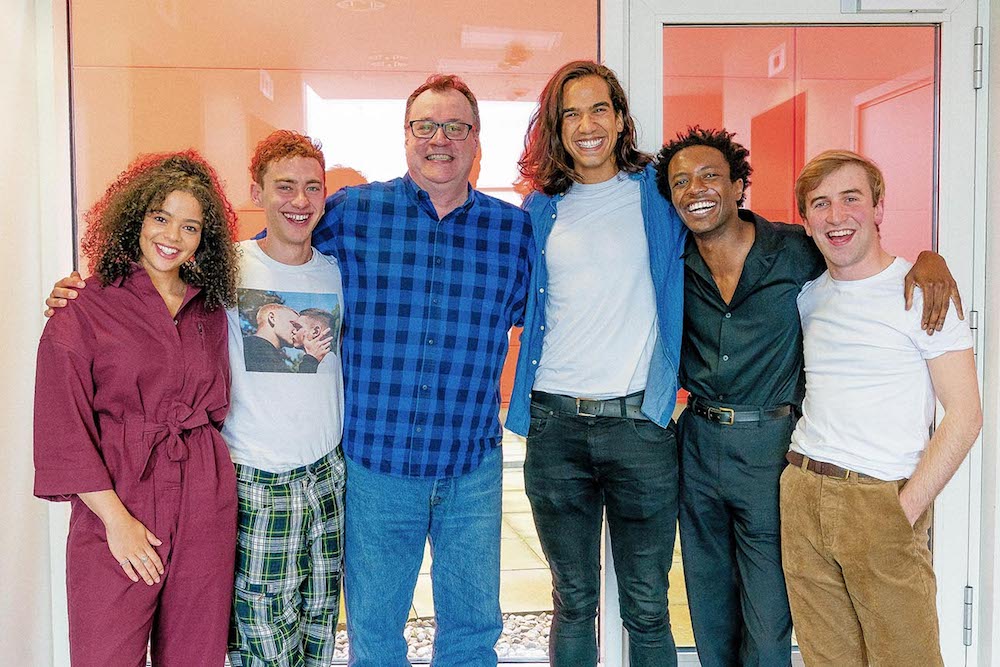
    (C) Love Productions / BBC Photographer: Mark Bourdillon

    Joe Lycett is set to appear at Student Pride 2024, along with Queer as Folk creator Russell T Davies.

    Student Pride is a pioneering event shaping the agenda on LGBTQ+ issues. It was established in 2005 and has consistently led discussions on LGBTQ+ topics, from addressing racism and mental health within the community to advocating for inclusive sex education.

    The next Pride after that will be in March and will be Inverurie Pride in Scotland. Inverurie Pride is due to take place on the 30th of March 2024.

  • Olly Alexander to lead the cast of Russell T Davies’ next TV drama

    Olly Alexander to lead the cast of Russell T Davies’ next TV drama

    The Years and Years singer is set to join a host of other stars for Russell T. Davies’ next TV drama.

    Olly will be joining Keeley Hawes, Stephen Fry, Neil Patrick Harris, Tracy Ann Oberman, Shaun Dooley, Omari Douglas, Callum Scott Howells and Lydia West for a 5-part series charting the joy and heartbreak of four friends during a decade in which everything changed

    Casting has been announced on multi-BAFTA Award-winning writer Russell T Davies’ (Queer As Folk, A Very English Scandal, Years and Years, Doctor Who) brand new 5-part drama for Channel 4, Boys (working title) which will be produced by RED Production Company (a STUDIOCANAL company).

    It’s 1981, the start of a new decade and Ritchie, Roscoe and Colin begin a new life in London. Strangers at first, these young gay lads, and their best friend Jill, find themselves thrown together, and soon share each other’s adventures. But a new virus is on the rise, and soon their lives will be tested in ways they never imagined. As the decade passes, and they grow up in the shadow of AIDS, they’re determined to live and love more fiercely than ever.

    Embed from Getty Images

    Olly Alexander, from the band Years & Years, plays 18-year-old Ritchie Tozer, the family’s golden boy, though he’s determined to keep his secrets from them.

    Newcomer Omari Douglas plays London-born 17-year-old Roscoe Babatunde, a wild, brittle party boy, always on the run.

    Newcomer Callum Scott Howells plays Colin Morris-Jones, a quiet, unassuming, boy from Wales, about to become an apprentice on Savile Row.

    Lydia West (Years and Years) plays Jill Baxter, Ritchie’s friend from college, straight-talking, funny, and the rock on which they rely.

    Nathaniel Curtis plays Ash, a faithful friend through thick and thin.

    The cast also includes Keeley Hawes (Honour, Bodyguard, The Durrells, Line of Duty), who plays Valerie, Ritchie’s mum, Shaun Dooley (Gentleman Jack, Broadchurch, Woman in Black) who plays Clive, his dad, Neil Patrick Harris (How I Met Your Mother, Gone Girl, A Series of Unfortunate Events) as Henry Coltrane, Stephen Fry (Wilde, Gosford Park, Bones) as MP Arthur Garrison, and Tracy Ann Oberman (Friday Night Dinner, Toast of London, After Life) as Carol Carter.

    Olly Alexander says, “I feel like the luckiest boy in the world to be a part of this project, I’ve been a fan of Russell T Davies ever since I watched Queer As Folk in secret at 14 years old. His work helped shape my identity as a gay person so I’m absolutely over the moon we’ll be working together. The script was amazing to read, I laughed and I cried a lot, it’s a privilege to be helping to tell this story and I’m so excited.”

    Embed from Getty Images

    Neil Patrick Harris says: “I’m so pleased, and incredibly proud, to be a part of Russell T Davies’ new series. This drama, Boys, is two things: it is an irresistible, funny, jubilant story of young people discovering their true identities and the unalloyed joy of living life to the fullest, it is also a deeply resonant exploration of a decade when so many of these lives were cut short by the devastating effects of the nascent AIDS pandemic. Russell’s scripts chart the highs and lows of this time so beautifully and deftly, it’s an honour to help tell this story.”

    Filming begins next week and the series will air on Channel 4 in 2020. The series is overseen at Channel 4 by Lee Mason, Commissioning Editor and Caroline Hollick, Head of Drama. The series will be produced by RED Production Company (a STUDIOCANAL company) and executive produced by Nicola Shindler (Years and Years, Safe, Happy Valley, Queer As Folk, Cucumber) and Russell T Davies (Years and Years, Queer As Folk, A Very English Scandal, Doctor Who, Cucumber). Phil Collinson (Gentleman Jack, Good Omens, Doctor Who) is the producer. The series is directed by Peter Hoar (Umbrella Academy, The Last Kingdom, Da Vinci’s Demons).

    Boys is the 10th collaboration between Russell T Davies and RED Production Company. The partnership is known for producing relevant, timely and emotionally charged dramas having previously created hit series including Queer As Folk, Casanova, Cucumber, Banana, Bob & Rose and The Second Coming.

    All3media International are global partner.

  • There’s going to be a reboot of Queer As Folk and we’re ALL IN

    There’s going to be a reboot of Queer As Folk and we’re ALL IN

    Apparently, there’s going to be a reboot of one the most iconic gay shows in history and the creator Russell T. Davies is on board.

    Queer As Folk
    CREDIT: Channel 4

    Queer As Folk shocked and pleasured in equal measure in the late 90s and it seems as though TV company Bravo is looking to reboot the show. The creator Russell T. Davies is said to be serving as an exec producer for the show while Canadian screenwriter and director Stephen Dunn will be writing new episodes.

    It’s unclear at this time whether the original cast will be involved however Variety is suggesting that the show will focus on new characters and in a different setting.

    In the early noughties, there was an American / Canadian version of the show, which saw a staggering 83 episodes produced. It was applauded for tackling a variety of hard-hitting issues facing the LGBT+ community and developed the original characters further.

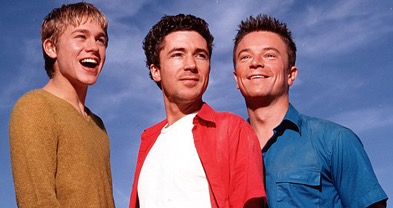
    As Variety notes, “The original Queer as Folk ran for 10 episodes between 1999 and 2000 in the UK. It starred Aidan Gillen, Charlie Hunnam, and Craig Kelly as three gay men living in Manchester. A North American remake was then launched in 2000 on the Canadian cable channel Showcase and the American channel Showtime. That series, set in Pittsburgh, ran for five seasons and starred Gale Harold, Randy Harrison, Hal Sparks, Peter Paige, and Scott Lowell”.

    A new live show for 2019

    The first cast member for the original UK version of QAF has been announced for the 20th-anniversary celebration of the show’s first airing.

    Actor Craig Kelly has been announced as the first Queer as Folk cast member joining the glittering line up for the show’s 20th birthday live music extravaganza.

    Kelly, who played loyal, loveable supermarket manager Vince Tyler in the hit series, will take centre stage at the 2019 anniversary event but is staying tight-lipped about exactly what his role entails.

    Craig said, “I’m delighted to be part of the Queer as Folk live event, I can’t believe it has been 20 years since Vince strutted down Canal street. I’m looking forward to sharing in the music, magical moments and surprises of what promises to be the ultimate birthday party befitting Vince, Stuart, Nathan and ‘mum’ Hazel, as she was always in on the act!”


  • INTERVIEW | Russell T. Davies And Lynn Hunter On Banana

    Russell T. Davies and Lynn Hunter talk about tonight’s episode on Banana at 10PM

    It’s a two-hander, but it’s not a normal one, is it?
    No, it’s not. I like Banana to change and to keep people on their toes and surprise people. And E4 is all about risk – and Banana takes all sorts of risks. Every episode is different – there’s drama, tragedy, romantic comedy, and then this.
    This being a two-hander where one of the characters basically doesn’t speak English!
    Yes, that’s right. Pretty much every word uttered by Zara is in Yoruba [a Nigerian dialect]. She’s not understood, which isn’t unusual for her, because she’s never understood or listened to. She just comes in and cleans and goes away again, unnoticed. She’s part of the underclass that exists, however much we might not like to think about it. I liked the fact that the last episode of Banana, after all of the dramas about the gays and their lives and loves and disappointments, was about the women who clean for them. It got us wondering, on the set, who cleans up after us?

    Did you spend as long on Zara’s dialogue as on Vanessa’s?
    Yes, I did, actually. I wrote the script, and then it was translated into Yoruba. And we thought about whether to have an English translation of the script on set, and decided not to. But for the extremely small minority of viewers who can speak Yoruba, there are lots of jokes in there, because Vanessa’s opening up about her life and her lesbian relationships, and thinks they’re becoming friends, and Zara is actually disgusted by what she’s hearing and really doesn’t approve of it.

    For the viewer, in effect, Vanessa’s just delivering a whole series of soliloquys, isn’t she?
    Yes, it becomes almost a monologue, even though the person who’s crying out for attention is sitting there – which is very true of life, I think. I actually created Vanessa for Lynn [Hunter], because I’d worked with her before, and loved her. She was in a supporting role when I worked with her on an ITV drama called Mine, All Mine. I was always thinking Cucumber was lacking something, and about two years ago I was in a Cardiff café one Sunday morning, and Lynn walked in and I just went “That’s it! That’s the woman! That’s her!” And I went and wrote the part for her. And it’s the first time, in all her acting life, that she’s had a big, strong, leading role in something, and I think she’s magnificent. And I love the fact that Channel 4 is so bold. E4 is meant to be a youth channel, and Zara is young, but Vanessa – well, Lynn would happily tell you herself, she’s 62 years old. And there she is, being absolutely magnificent in this lead role. I love this episode, I think it’s a mad, strange episode, and I’m very proud of it.

    Lynn Hunter on Banana ep 8
    How did you end up landing the role of Vanessa? Had you worked with Russell before?
    Yes. I did a series ten years ago of Russell’s called Mine, All Mine. It was about Swansea, really, which is where Russell’s from. It was an eight or ten part series, and I met him then, and we became friends, in a way. And when I went up for the part of Vanessa in Banana and Cucumber, I went to meet the director, David, and the producer, Matt, and I spoke to Russell afterwards and he said that he’d actually written episode 8 of Banana for me. I was incredibly moved by that, really – it’s a massive, massive honour and privilege to have someone like Russell actually writing an episode for me. I was blown away by that. I didn’t know any of this when I went up for it, but I found out afterwards.

    Explain a little bit about Vanessa. What’s her story?
    On the surface of it she’s a really tough cookie. She’s worked hard, she’s built up her own business, she’s brought up a daughter on her own. She’s always known she’s gay, she had her daughter knowing that. But while she’s a tough cookie on the face of it, she’s a real salt-of-the-earth woman. If Vanessa was your mate, you’d be well-covered. She’s really there for you if she’s your friend. That’s why she can’t turn her back on people who need her help, as we discover in her episode. She’s very much a woman who wants to make people’s lives better. She’s an incredibly caring woman. And she’s also got a secret that’s been eating away at her for many years. And she only tells the girl in the episode because she knows she can’t understand a word of what she’s saying. Vanessa lifts the lid and it all comes pouring out, years and years of this guilt that she’s lived with.

    You mentioned that the other character in the episode doesn’t speak English. That must have been quite a bizarre acting experience.
    Yes, it was. Strangely enough, I made a conscious decision not to find out what it was she was saying. They offered me the chance to have a translation of her script, and I said “No, I don’t.” Vanessa doesn’t understand what she’s saying, so it was good for me to be in the same situation. I had no idea what she was saying. That made it really difficult to learn cues, for example. But it was really helpful not to have the translation. Apparently some of what she is saying makes the scene very funny, because I totally misinterpret what she says. Apparently it’ll be a very funny scene for the tiny minority of people who speak both English and Yoruba. To this day I’ve not read the translation, so I’ve no idea what she said.

    How does it feel to have someone like Russell come along and write a whole episode for you? Where does that stand, for you, in the grand scheme of your career?
    In the 35 years of my career, no-one has ever invested that amount of faith in me, as a performer. I am totally overwhelmed and humbled by that. I don’t have the words to say to Russell what this means to me. I’ve tried to tell him. When I got the script originally, I could not believe it. It’s virtually a monologue. I’ve done a lot of television in my time, but never anything as big as this. Even in the big series’, the very well-known actors rarely get that amount of exposure or airtime. When I got the script, it was totally terrifying. With that level of faith invested in me comes a level of responsibility, though. It’s the most incredible thing that’s happened.

  • TV REVIEW | Cucumber, Banana, Tofu

    ★★★★ | Cucumber, Banana, Tofu

    He’s a clever bugger that Russell T. Bloke – you know the one who is basically is the godfather of Gay TV.

    Forget Kim Kardashian breaking the internet, Russell T Davies’s Queer As Folk broke terrestrial television with many asses back in 1999 and it looks as though he’s about to do it again with a brand new interwoven, multi-platform series that celebrates sexual and gender diversity, like no other writer or broadcaster for that matter, has ever done before.

    The erect penis has been studied, not just in this office, but scientifically, yes money has been spent on measuring how hard penises are – and they (the scientists) came up with a scale of hardest – from Tofu to Cucumber. Meet Henry, the story which Cucumber, the terrestrial offering from Channel 4. He’s a man in his late forties who hates the gay scene. Absolutely loathes it. It doesn’t resonate with him anymore, the young’un with their apps and inability to hold a conversation longer than their ejaculations. He’s been in a sexless, long term relationship for years and is having a bit of crisis of his placement in ‘the community’; fifteen years on is this how Stuart Jones would have turned out?

    But let’s get this straight, as best we can, Cucumber isn’t Queer As Folk 2.0. It’s a different story, a different set of characters. It’s gay-centric, but packs huge laughs, sex and asks the big questions: What do ‘WE’ want? That’s the big ‘WE’ of course – and while Cucumber focuses mainly on a gay man, Banana delves into the world sexuality and gender and rips it open in a way that could break the digital channel.

    Banana is the other side of the story. The young guns with their apps and their multi-sexual and gender identities and how these can collide. If Cucumber is generation gay, Banana is generation ‘Whatever’.

    Boxes and labels are so 1997/2004, so BBC 3… Generation just-get-on-with-it, are about to have their say, and while viewers on e4 probably won’t bat an eyelid, their parents might just be a little confused at the ever changing landscape.

    Then there’s Tofu an on-demand series, this is where the beauty of interwoven, multi-channel programming come into its own. Prepare to see people, yes real people, from all demographics talk about their sex lives. Even legendary Corrie actress Julie Hesmondhalgh talks sex – and as we heard at the press conference, “you heard it here first…”

    Potentially not a groundbreaking as QAF, (times have changed) but certainly just as necessary. It is about time than the LGBT demographic had something more than a storyline here and there. We want our own series dammit and Cucumber, Banana and Tofu deliver this in loads… (wipe the smile off your face, you dirty bugger).

  • INTERVIEW | Russell T Davies

    When the writer Frank Cottrell Boyce was asked to name Russell T Davies’ greatest contribution to British television drama, he replied simply “Saving it from extinction.” Certainly, Davies has been behind some of the most influential and transformative dramas of the last two decades, from Queer as Folk to the rebirth of Doctor Who. Now, 16 years after Queer as Folk shook the foundations of televised drama, he’s back again with two new Channel 4 dramas about 21st century sex and relationships – from gay to straight and everything in between. Here, he gives us a tantalising glimpse into what is destined to be his next classic contribution to the genre.

    Explain, in a handy, bite-sized vignette, what Cucumber and Banana are all about…
    Cucumber is sort of the TV equivalent of a novel, and Banana is a series of short stories relating to some of the more peripheral characters in Cucumber. Cucumber is the story of Henry who’s got a marvellous, wilful, wild streak in him. He wants to live life and get out there and not settle down. And then Banana tells some one-off stories about the people around Henry’s life. People he meets, people he bumps into, even people his sister bumps into in one episode. They’re one-off stories exploring all sorts of different sexualities. Cucumber is very much about the gay middle-aged male experience, in Banana we’ve got younger men, we’ve got women, we’ve got lesbians, we’ve got transsexual stories, we cover the whole gamut, really.

    It seems to be partly a rumination on the staidness of middle age. Is that something that you worry about as you approach that stage?
    You’re very kind – as I approach it – I’m 51, I’m well into it! To be honest, no. I think it’s much more interesting than that, actually. There’s been a lot of fuss, over the generations, about gay equality, and you can argue, to some extent, that we’re there now. That’s not true for everyone, but nonetheless you could say that, in terms of the law and in terms of certain sections of society, we’re in a rather good state of equality. But my point is that’s just the beginning. Being gay is not just about being equal. Once you begin to achieve equality, then you can start to ask “Who are we?” Every other drama about straight people has been doing this for 2000 years. Who are we? Why do we do what we do? How do we react? What does it mean to be who we are? To be man? To be a woman? So gay drama can just start catching up with that now. We’ve got 2000 years to go. It’s not about being midde aged, as such, it’s about who we are, about what we think, how we react, how we blunder through life, how we succeed, the aspirations we have, stuff that actually hasn’t been explored in drama at all.

    Henry, the central character, is brilliant. But do you see him as a heroic figure?
    Absolutely! I love him! Henry can be contentious, certainly, and puts his foot in it, but I love him for saying and doing the things that we all wish we said and did and are all slightly too boring to actually do. We all spend a lot of the time behaving. Henry’s got partly a wilful streak and partly a marvellous self-destruct button. I love that about him. In any given situation he won’t shut up. Even in a happy situation, he has to provoke people until the situation becomes more interesting. He’s a firestarter. He can’t stop himself from starting little fires and challenging things, and challenging himself, in fairness.

    How hands-on are you, once the writing is finished? I get the impression you stay pretty heavily involved throughout.
    Yes, I’ve always done that. When I did Doctor Who, I was the show-runner on that, which means kind of running everything. But even before that, going back to Queer as Folk in 1999, working with Nicola Shindler, she’s always encouraged her writers to become part of the production. I do stay, I get involved in choosing the directors and talking to the directors, and the whole team. And I get involved in casting. I don’t have a dictatorial say in it at all, it’s all between me and the director, and Nicola Shindler, and the producer, there’s four of us pitching in on every decision. But that works, there’s room for four opinions. And then every day I watch the rushes, and there are read-throughs and stuff like that. You are across all the casting, even the people with three lines, working in a coffee shop. Because that’s where dramas go wrong, when those little parts are out of sync with the rest of it. But at the same time I like to think I give them an enormous amount of freedom because really, I’ve done my work on the script. You hand over the script and you say “That’s it! That’s the text! That’s what you work from. Good luck.” But you do need to be there to co-ordinate things. If a script says that a room is red, what sort of red is it? Is it like a brothel red, or a sunset red, or a primary red? What does red mean? And everyone reads the script and has a different opinion on it, so you have to be there to explain that you meant sunset red. Otherwise you can get a very different message. When you see a bad drama on telly, it kind of feels like everything hasn’t been co-ordinated. I think I’m there to help, in the end. You appoint brilliant directors –I’m very lucky to be at the high end of drama, where it’s nicely budgeted, it’s being supported by Channel 4 infinitely, you’ve got great directors, great costume people, great designers, so actually a lot of the time you’re just sitting back and enjoying their work.

    The first episode involves arguably the worst date in history. Have you ever had any really bad dates?
    Do you know what, I’ve been on very few dates, to be honest. Three dates in my whole life. And they were all quite nice!

    No-one wants to hear about your happy dates, Russell!
    I know, I know! I’m not saying they worked, we probably just went clubbing instead. A lot of this stuff comes from a lifetime of listening to friends, and people in general. Particularly gay men. The truth of it is, ever since Queer as Folk came out, gay men literally make a beeline for me and automatically start telling me about their entire lives. They can’t stop doing it. It can be 9 o’clock in the morning, over a cup of coffee, and suddenly they’re telling me something filthy. To be honest, I’ve always been that sort of person. That’s why I ended up writing Queer as Folk. I don’t know why people do it, but they end up telling me things. I’ve got that sort of face or something.

    Do you like the fact that people do that?
    I LOVE it. I’ve made a career out of it. If I have a skill, it’s not stopping them. My skill isn’t attracting them in the first place, because I don’t know how that happens, but I’m very, very careful not to say anything that stops them talking. Both Queer as Folk and Cucumber were very much the result of a decade of listening to stories and experiences, and then exaggerating them a little. These shows aren’t a transcript at all. But I’ve met some remarkable people. I do think Henry’s an extraordinary character, but I’ve met a great number of Henrys. It kind of reaches critical mass. Once you’ve met a character about 15 times you think “This is an archetype. This type of person keeps cropping up in my life, and therefore that’s saying something.” And that’s when I get really interested in exploring why they’re like that.

    Is this a follow-up to Queer as Folk?
    It’s kind of inevitable, and I’m really happy about that. It’s me, writing about gay men in Manchester, so it’s unashamedly connected. It’s a really different show, but then I’m a completely different person now, and a completely different writer. But of course there are similarities, and I’m happy about that. If you’re going to have a legacy, Queer as Folk is a lovely one. I still love that show, I’m still immensely proud of it and still pleased if anyone’s ever seen it and comments on it. I’m happy to embrace that, I just don’t want people to think that they need to remember what happened in a show 16 years ago in order to watch this. In that respect, the two are totally different shows. This is completely freestanding and starts from scratch in episode one. That’s the only thing I want to make clear. But if you remember it, hooray, I hope you remember it with a big smile on your face.

    You alluded to the fact that attitudes have changed a lot in the last 16 years. With the change in attitudes, and also the advent of apps/dating sites etc, do you think it’s a lot easier to be gay nowadays? If so, is there a part of you that resents having missed out on that?
    Well, that’s partly what Cucumber is about, actually – middle aged men looking at the life other people are having that you never could have had, and weighing yourself against that. Also, it’s important not to be too simple about that, in that yes, life has changed, and in many, many ways it’s easier to be gay now. But that doesn’t mean people don’t have problems. There’s this terrific assumption now that if you’re 16 and gay, then you have no problems. Every 16-year-old has problems. 16-year-olds invent problems. 16-year-olds exist in order to carry problems around and moan about them. So it’s ridiculous to assume that young, gay people are fine. No young people are fine, in any setting. Nor is anybody fine – we’re all worrying about stuff. I think the differences are very much superficial. Yes, there are apps now, but apps are just a shorthand for clubbing. You can do in two minutes now what used to take a whole night to do in a club. Nonetheless, it’s the same thing, it’s hooking up with a stranger. Human emotions haven’t changed, love hasn’t changed, men haven’t changed, lust hasn’t changed, sex hasn’t changed.

    But some things have definitely changed. When I wrote Queer as Folk, there was the 15-year-old Nathan Maloney, and back then, to write about a 15-year-old gay boy, he was remarkable. There weren’t any openly gay 15-year-olds in Britain. Now there are hundreds, if not thousands. That is beautiful and wonderful and remarkable. It doesn’t make life easy for them, they’ve still got to go through an awful lot. And it’s also true that there are a million closeted 15-year-old boys still out there. And people who are in their 30s and 40s still in the closet. But life is undoubtedly better in that respect.

    Queer as Folk was utterly ground-breaking. Did you intend it to be a show that tore down barriers and changed the face of TV drama, or were you just trying to write an entertaining show?
    I kind of didn’t assume it would bring down any barriers, because it was a slightly more timid Channel 4 – they showed it at 10:30pm. That was late. Because of that slot, we all assumed it would be invisible. But we made it with a very good heart, and with every intention to be honest and true and to say what I thought were interesting things about gay life. But at 10:30 at night? In the week? We all took a deep breath and thought three people would be watching it. So when it was a success, that was an extraordinary thing. The appetite for that programme, and the joy with which it was welcomed in, which therefore signalled how much we’d been lacking that sort of a programme, that’s what made it a success. We simply worked very hard, and made something I was very proud of, and I’d be very proud of it if no-one had watched it. But it became this big cultural artefact. I’ve got a gold disc. A gold disc! The soundtrack to the show was number one. Of all the awards and things I’ve ever won, that’s the maddest thing of all.

    Is that the piece of work you’re most proud of?
    Well, I’m proud of everything, to be honest. Well, I’m sure there’s one or two things I’m not proud of, but I couldn’t pick out one I’m most proud of. It’s like choosing your favourite child.

    Is it really true that you once presented an episode of Play School?
    I did, I once got a job as a Play School presenter. It was supposed to be a full-time job. I did one, which is on the internet somewhere, I think, and walked out of the studio saying “I’m in the wrong job.” I was on the dole at the time. I actually turned down a full-time job. I knew I was on the wrong side of the camera. I did one, loved it, very nice people, very friendly, great fun, and then I walked out and wrote them a letter saying “Thank you for that, I won’t be coming back.”

    You’ve written a lot of children’s dramas…
    I have! One of my children’s dramas won a BAFTA last night for best pre-school drama. Here I am, talking about a gay sex drama for Channel 4 – I won the pre-school BAFTA last night, for Old Jack’s Boat: The Christmas Quest, which I wrote as a favour for Bernard Cribbins.

    Is there a different approach writing a drama for children to one for adults?
    No. You work as hard, there’s no different approach. It’s as simple as using a different voice. If a three-year-old walked into this room, I’d talk to them in a different voice from the one I’m using to talk to you. And I’d use a different one again if my grandmother walked in. I’d be surprised, I suppose, because she’s dead. I’d also wonder what a three-year-old was doing here, come to that. But you modulate your voice, depending on whoever you’re talking to, and writing is exactly the same as that.

    Which TV writers do you particularly admire?
    I love Sally Wainwright, I loved Happy Valley! I love my old friend Chris Chibnall, and I’m absolutely loving this second series of Broadchurch. My lovely friend Paul Abbott I love. Steven Moffat, my old mate from Doctor Who. And Kay Mellor, of course! That’s enough!

    Lots of people take a very snobbish attitude to TV. Why do you think TV is seen as bad whereas radio/theatre etc is good?
    Why is that? I think it’s because it’s omnipresent, it’s just there, in the corner of the room, on all the time. So it’s kind of taken for granted, really. It annoys me – I get annoyed when people just dismiss television – but it’s probably a better position to be in than being revered, because then you’re just a false god. It is an extra voice in the room. I love TV, I can sit there watching the next Michael Palin drama, or be equally happy watching Bradley Walsh doing The Chase. If you’re going to start a crusade about TV being taken seriously, there are better crusades to be on. We’re still doing alright. It’s always inventive, and it’s always different, and it’s always changing. I love that about television. You can never quite tell where it’s going to go next.

    Cucumber airs on Channel 4 at 9pm on Thursday 22nd January with Banana following at 10pm on E4
  • Cucumbers + Bananas + Tofu = A Recipe For Success

    15 years ago Russell T Davies set our television screens alight with his groundbreaking series Queer As Folk that was so successful that the Americans copied it.

    Now this award-winning openly gay writer is back an about to explode on our screens with not one but three series for three different channels.

    CUCUMBER an original drama series follows 46-year-old Henry and his long-term boyfriend Lance in the aftermath of “the worst date night in history” and will air on Channel 4. BANANAS which will be on E4, will tell standalone stories by up-and-coming talent that cover – wait for it – “fifty shades of gay”.

    TOFU meanwhile, is an online documentary series about sex and sexuality and will be screened on 4oD.

    Here’s the first clip that has just been released and suddenly staying in during January looks a whole lot brighter

  • Cast announced for new Russell T Davies drama series

    VINCENT FRANKLIN, CYRIL NRI, JULIE HESMONDHALGH, FREDDIE FOX, FISAYO AKINADE, CON O`NEILL, JAMES MURRAY and CEALLACH SPELLMAN confirmed to star in CUCUMBER and BANANA on CHANNEL 4 and E4

    Star of The Thick of It and Twenty Twelve, VINCENT FRANKLIN will join Coronation Street’s JULIE HESMONDHALGH in the cast of new Channel 4 drama series Cucumber, from the multi BAFTA award-winning writer of Queer As Folk and Doctor Who, Russell T Davies.

    Filming in Manchester has begun on Cucumber (8 x 60’) for broadcast on Channel 4 in 2015, with E4 series Banana (8 x 30’) to start production next month. The cast also includes; CYRIL NRI (The Bill), FREDDIE FOX (Parade’s End), FISAYO AKINADE (Fresh Meat), CON O`NEILL (Uncle), JAMES MURRAY (Primeval) and CEALLACH SPELLMAN (Waterloo Road).

    Life for 46 year old Henry (Vincent Franklin) and his boyfriend Lance (Cyril Nri) is comfortable and settled. But after the most disastrous date night in history – involving a threesome, two police cars, and Boney M – Henry’s old life shatters, and his new life begins.

    While Lance gets to know the mysterious Daniel (James Murray), Henry soon finds himself with unexpected companions. 24 year old Freddie (Freddie Fox) and 19 year old Dean (Fisayo Akinade) have only been passing strangers, until now. But when they all find themselves under the same roof, they need to work out; are they friends or enemies? Can men from such different generations ever get on?

    Henry’s sister Cleo (Julie Hesmondhalgh) is busy, professional, and a little chaotic. But coping with her three kids is easy compared to helping her brother. And as Henry’s life heads in extraordinary new directions, helped by his nephew Adam (Ceallach Spellman), it becomes clear that Cleo’s hiding one or two secrets of her own…

    With the same ferocious wit, startling honesty and heartfelt warmth that made Queer As Folk a landmark Channel 4 series, Cucumber will explore the passions and pitfalls of 21st century gay life for Henry, Lance and co, while on E4, Banana will follow the individual lives of characters orbiting around Henry’s world. On 4oD, Tofu will be an anarchic and entertaining factual series about sex – from gay to straight, and anything in between – inspired by the dramas each week.

    Cucumber, Banana and Tofu were commissioned by Channel 4 Head of Drama Piers Wenger and will be made by RED Production Company with Executive Producers Nicola Shindler, Julie Gardner and Russell T Davies. Tofu will be made by Benjamin Cook (Becoming YouTube).

    Cucumber is written by Russell T Davies and produced by Matt Strevens, with directors; David Evans, Alice Troughton and Euros Lyn.