It’s heatwave central and let’s face it we’re not coping very well.
They’ll talk about it always, the summer of 2018 – well that is until the next freak weatherwave happens… Anyone looking forward to this winter’s Snowmageddon?
Are you having trouble sleeping during the heatwave? Well, Max Wiseberg of HayMax has come up with these five tips to help you drift off to a restful sleep regardless of the heat outside and the pollen count.
Max comments, “Staying cool is the key to a good night’s sleep and if you’re a hay fever sufferer like me, avoiding the pollen too.
And freeze
Try putting your pillowcase in the fridge so that it’s cool! Some people swear by chilling all of their sheets, but that sounds extreme…
Get wet
Shower before bed. A cool shower will help to cool you down from a day in the sun. And it will help to remove pollen from your hair and body.
Jug it
Keep a jug of cool water next to the bed.
Breezy does it
Opening a window at the front and back of the house can provide a cooling breeze. Be sure not to do this until late evening though, because early evening brings high pollen counts as the atmosphere begins to cool and pollen settles back down to the ground.
The nose have it…
Apply an organic, drug-free allergen barrier balm, such as HayMax, to the nostrils and around the bones of the eyes before you go to bed, to block pollen before it enters the body. HayMax has been proven to trap over one-third of pollen grains before they enter the body.”
This is the prime time of naps. A shorter nap of between 10 and 20 minutes is just long enough to get your alert levels high. Naps this long mean that you stay in the NREM (non-rapid eye movement) stage of sleep. According to the Cleveland Clinic, “During NREM sleep, the body repairs and regenerates tissues, builds bone and muscle, and appears to strengthen the immune system.”
30 Minutes
This is the worst length of time for napping as it causes “sleep inertia“. Research shows that 30 minutes of napping can leave you with hangover-like feelings.
60 Minutes
Sixty minutes is known as the best nap length for fact remembering. Apparently, 60 minutes is the best napping time for getting slow-wave sleep which is brilliant for memory consolidation. Perfect if you have an interview or exam to swat up for.
90 Minutes and more
This would be considered a full cycle nap. You’ll be hitting NREM and REM sleep. This raises your creative juices and apparently your decision making abilities.
So don’t forget if you’re taking a nap to set an alarm…
Sleep is essential to good mental health. You probably already know that when you sleep well you feel and work better.
(C) BIGSTOCK
In general, adults need between seven and nine hours of sleep but the exact amount varies from person to person. Different people need different amounts of sleep, and this depends on your age, your lifestyle, your genes and what you’re used to.
A good night’s sleep won’t rid your life of emotional problems, but it can mean that you’re able to deal with difficult or stressful situations more easily.
If you’re not getting enough sleep you tend to feel moody and irritable and lack focus. Obviously, this problem is likely to affect your relationships with people, your work and your mental wellbeing if ignored.
Getting regular exercise during the day will help you to feel tired at night. Being active increases your metabolism and helps against stress and anxiety, which in turn will improve your sleep. Try to exercise earlier in the day or, if you prefer late night workouts, give yourself time to wind down and relax afterwards.
Watch what you eat and drink, and don’t smoke
Don’t have a heavy or spicy meal just before going to bed, as your body needs time to digest the food before sleep. Don’t go to bed hungry: a light snack before bedtime is ideal. Avoid caffeine – it can stay in your system for up to 6 hours and disrupt your sleep. A glass of wine may help you to fall asleep, but alcohol can affect the quality of your sleep, making you more likely to wake up during the night. Nicotine is a stimulant and studies suggest that non-smokers get better sleep than smokers.
Make your bedroom more sleep-friendly
PR SUPPLIED
Create a calm sleeping environment by turning your bedroom into a dark, quiet, clean and comfortable haven. A good temperature is between 18C and 24C. You may want to try black-out curtains, eye shades or ear plugs. Paint your room a calming colour. Remove any distractions that may keep you awake (including the family pets!) and keep your bedroom free from computers, TVs and phones. Is your mattress old? Is your pillow lumpy? Spoil yourself and invest in some new bedding.
Develop a bedtime ritual
Try to develop a relaxing night-time routine that prepares your body and mind for sleep. It could be taking a hot bath, reading a book, listening to calming music or having a milky drink – but try to stay away from bright lights and heated arguments just before bedtime.
Relax and unwind
CREDIT: MUSICAL FIDELITY EB-50
Whether you need to stretch your muscles with yoga or calming your mind with meditation, there are numerous classes, apps, and books that can show you great methods to do both. Experiment and see what works for you. Some people find using a few drops of aromatherapy oil on the pillow, such as lavender, or a cup of chamomile tea to be soothing before bed time.
Don’t toss and turn – get out of bed instead
If you can’t fall asleep after half an hour, get up and do something else instead – try something relaxing like reading or listening to music. Only go back to bed when you feel tired. Similarly, if you find you’re dozing off on the sofa too early in the evening, get up and do a few jobs so that you save your snoozing for bedtime.
Stop the weekend lie-ins
Keep a regular sleep schedule. If you go to sleep and get up at the same time every day (even if you’re not feeling tired) it can help you get into a good sleep routine. Resist having naps during the day and don’t sleep in at the weekend.
Keep a sleep diary
It can be difficult to work out why you have problems sleeping. Keeping a sleep diary (or using a wearable device that tracks your sleep) can help you monitor when you fall asleep and wake up, how many times you wake up during the night and how rested you feel in the morning. After a week, reflect on your notes and try to work out what helps you sleep and what makes it worse.
Jot down your troubles
Life is often stressful and it can take time and some effort to learn what coping methods work for you. Try using a journal to jot down things that are worrying you and keeping you awake. Make a note of them and deal with them when you are refreshed.
Seek professional help
If your sleep problems persist, don’t suffer in silence, and don’t be tempted to self-medicate with over-the-counter sleep aids. Cognitive behaviour therapy (CBT) can be very effective at helping people who have problems with insomnia.
For more information, please visit AXA PPP healthcare’s sleep hub.
Six million Brits admit they sleep with their mobile phone, a new study has revealed. Research suggests that one fifth of the nation keep their phone in their bed, or even under their pillow, every single night to ensure they don’t miss a single text message or email.
CREDIT: monkeybusinessimages-bigstock
Such is the nation’s obsession with their smartphone that half of the 2,000 adults questioned in 2013 admit that looking at their phone is the very last thing they do in the evening, and the first thing they do when they wake.
The mobile phone has now become such a regular fixture in our bedtime routine that it takes until 10:58pm for the average Brit to relinquish their device.
Mark Fells Director of Digital at Premier Inn, who conducted the survey of 2,000 adults, said,
“In the last five years owning a smartphone has become common place for most adults, and we all love the freedom and accessibility that technology allows us to have.
“However, with almost half of those surveyed struggling to take their mind off what they have read on their mobile, and a huge 69% receiving late night e-mails and text messages from work colleagues and their boss, it appears we need to learn to ‘switch off’ when it comes to our bedtime routines.”
Worryingly, one in five admit to regularly waking in the morning with their smartphone still glued to their hand, and a third claim they have ditched reading books in bed in favour of browsing the internet, social networking and catching up on work emails instead.
A social media savvy 20% bid a virtual ‘goodnight’ to their friends and followers on Facebook and Twitter when tucked up in bed, with a further 8% acknowledging they are more likely to say goodnight to their online pals than their own partners that sleep by their side.
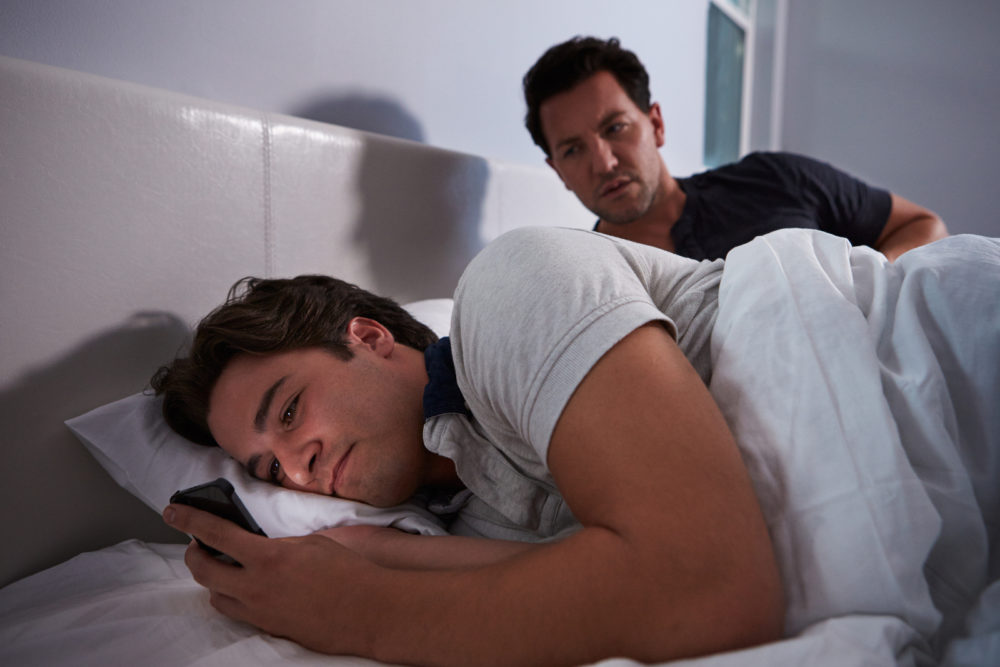
Although the nation may be smitten with their smartphones, the addiction to mobile technology appears to be having an adverse effect on love lives, with one in five Brits admitting they frequently row with their partner over how much time they spend on their phone while in bed.
Almost one in three deemed using a mobile in bed anti-social.
Everybody functions better after a good night’s sleep and the medical profession have long suggested that 8 hours of sleep works best for most people, but what if you’re caught in an insomniac cycle. It can be one of the most frustrating things in the world as the rest of the world sleeps, your mind is working overtime and sleep feels ever so elusive.
Avoid caffeine at all costs. That doesn’t just mean from coffee, there’s caffeine in so many products, including tea and many soft drinks. Even chocolate. Earl suggests foods such as “bananas and Cherries contain tryptophan, potassium and magnesium which are muscle relaxants and thus good for sleep if taken 30 minutes before bedtime”.
Make your bedroom a sanctuary
A peaceful night’s rest comes from an uncluttered mind. So make your surroundings uncluttered. Keep work out of the bedroom, that includes emails. Why not leave your mobile phone out of your room. If you charge it at night, put it in another room. Don’t forget some mood lighting.
Earl says, “One study found that insomniacs who picked up a regular exercise routine slept better, felt less depressed, and had more energy all day. If working out at night interrupts your sleep, squeeze in a morning run instead. Give yourself enough time to cool off before bedtime.”
Make dinner a light meal
Don’t go to bed full of food it can make you feel very uncomfortable and bloated. Do you know how much energy you use to digest heavy meals? A lot and all that energy could disrupt your sleep patterns. If you’re having trouble getting off to sleep and getting up in the morning it could be to do with heavy meals that are taking a toll on your body.
Sex
Earl says, “Good sex can enhance sleep for both male and female. Men and women usually snap off to a sound sleep immediately after sex.” Why? Well, after sex a chemical called oxytocin is released. This helps with and promotes restful sleep. Hurrah.
Lights out
Try and get your room as dark as possible. Light from TVs, phones or even night lights might send your brain signals that it’s time to get up. Earl says, “Note that even a small amount of light from your cell phone or computer can disrupt the production of melatonin (a hormone that helps to regulate sleep cycles) as well as the overall sleep.”