Tag: Today In Gay History

  • TODAY IN LGBT HISTORY | Harvey Milk murdered

    TODAY IN LGBT HISTORY | Harvey Milk murdered

    American politics was filled with a sea of heterosexual faces, sometimes fiercely homophobic, but mostly irreverent towards the gay community, that was until Harvey Milk entered the political arena.
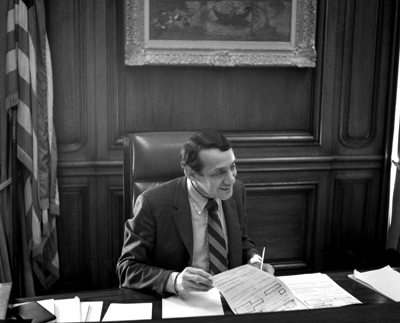
    Daniel Nicoletta – Provided by author, Daniel Nicoletta

    Harvey Bernard Milk was born in the cold and wet winter of 1930, his birthplace was Woodmere, a small, hard-working, middle class, close-knit hamlet in Nassau County in the state of New York. After graduating in 1951, Milk joined the United States’ Navy, during the Korean War, he served aboard a rescue submarine, the USS Kittiwake – and later transferred to San Diego to serve as a diving instructor. He was discharged from the Navy in 1955.

    Harvey Milk could be described as one of life’s wanderers until he moved to San Francisco he was a teacher, an actuarial statistician, a researcher, and a presidential campaigner, he worked in investments and for a theatre company.

    He was a drifter, moving from California to Texas to New York and back again, without a steady job; eventually, Milk with his then-partner Scott Smith opened a camera shop on Castro Street in San Francisco with their last $1,000.

    He moved from New York City to San Francisco in 1972, amid a mass migration of gay men to the Castro District. The gay’s growing political and economic power ensured that people like Milk could take advance to promote their interests.

    Initial political aspirations

    Embed from Getty Images

    Milk ‘s initial reception by the already installed gay political establishment could be described as cold, Jim Foster who had been active in gay politics for ten years resented Milk asking him for endorsement to becoming a City Supervisor, Foster told Milk,

    “There’s an old saying in the Democratic Party. You don’t get to dance unless you put up the chairs. I’ve never seen you put up the chairs.”

    Undeterred Milk won the support and endorsement of local gay bars and business owners, who had become disillusioned by the slow-moving pace of the already visible gay political movement.

    Milk had an inimitable political style; his exuberant speeches and his astute media skills earned him significant press during the 1973 election, however, he failed to win.

    Although Milk was a newcomer he had shown flair for leadership, he was starting to be taken seriously as a candidate and decided to run again as a City Supervisor and started using his camera store as a centre of activity in the Castro neighbour. The community rallied around Milk and voluntarily helped run his campaigns for him.

    This time round Milk came 7th in the election, just one place away from earning a Supervisor seat.

    First openly gay commissioner in the US

    Embed from Getty Images

    Milk became the first openly gay commissioner in the United States after the newly elected Mayor George Moscone appointed him to the Board of Permit Appeals in 1976 where he worked just 5 weeks in the job before running for the California State Assembly.

    Milk was described as a man of mixed temperament and of disorganisation. His campaign volunteer database comprised of just scraps of paper and his campaign manager’s assistant was an 11-year-old girl.

    His accounting was erratic, reportedly grabbing fistfuls of cash from his store’s cash register. He was prone to amazing outburst of momentary temper before shouting excitedly about something else. Described as manic, one could not fault the man for his dedication and general good humour.

    In 1977 his last campaign to become a City Supervisor, Milk’s showboating, handshaking and manic campaigning tactics won him a position, but with his victory came the distinct threat of assassination. He began to record his thoughts for preservation in case he was killed, stating, “If a bullet should enter my brain, let that bullet destroy every closet door”.

    Headliner

    Embed from Getty Images

    As the first openly gay, non-incumbent man in US history his swearing in as City Supervisor made national headlines, giving the gay community a positive visibility that it hadn’t enjoyed before. He started in office sponsoring a civil rights bill that outlawed discrimination based on sexual orientation, it was met with no opposition apart from Dan White, who Milk had increasingly bad relations with after Milk switched his vote in supporting a health facility for troubled adolescents be placed in White’s District.

    His personal life at the time was one filled with sadness; he had long split with Smith and had begun a relationship with a man 18 years his senior; Jack Lira who hanged himself after being consumed with sadness with the anti-gay campaigns of Anita Bryant and John Brigg.

    The John Briggs Initiative known as Proposition 6 would have made the firing of any gay teacher or public school employee who supported gay rights mandatory. Brigg’s stated that gay teachers wanted to recruit and molest children; Milk refuted this with statistics compiled by law enforcement that most paedophiles were identified as heterosexuals.

    Brigg’s campaign came off the back of singer Anita Bryant’s “Save Our Children” campaign in Florida which repealed a law which ended discrimination based on sexual orientation.

    During the summer of 1978, gay pride marches found their attendance level rise, with over 250,000 people attending San Francisco’s Gay Freedom Day Parade. This is where Milk gave an impassioned ‘Hope Speech’

    “On this anniversary of Stonewall, I ask my gay sisters and brothers to make the commitment to fight. For themselves, for their freedom, for their country … We will not win our rights by staying quietly in our closets … We are coming out to fight the lies, the myths, the distortions. We are coming out to tell the truths about gays, for I am tired of the conspiracy of silence, so I’m going to talk about it. And I want you to talk about it. You must come out. Come out to your parents, your relatives.”

    Even though Anita Bryant’s campaign had been successful in Florida, Brigg’s initiative failed by more than a million votes. In San Francisco alone 75% voted against the proposition.

    Who was Dan White?

    Embed from Getty Images

    On 10th November 1978, Dan White resigned stating that the yearly salary of $9600 was not sufficient to support his family, days later he asked Mayor Moscone for his resignation to be withdrawn, although the Mayor initially agreed, after further consideration and consultation with the other city supervisors, Moscone was persuaded to install someone who represented White’s district which was growing in ethnic diversity.

    On 27th November 1978, Harvey Milk would wake for the last time, in his beloved adopted town of Castro.

    Half an hour before the press conference in which Mayor Moscone was to announce White’s replacement, White entered City Hall with a gun undetected and made his way to the Mayor’s office. Witnesses recall hearing shouting, between the two men followed by four gunshots.

    White had shot Moscone once in the shoulder, once in the chest and twice in the head.

    Embed from Getty Images
    Embed from Getty Images

    After reloading his gun, White intercepted Milk – an argument ensued, followed by more gunshots as he emptied 5 hollow-point bullets into Harvey Milk’s head and body.

    The President of the Board of Supervisors, Dianne Feinstein found Harvey Milk and identified both bodies.

    It was Feinstein, who announced to the press,

    ‘Today San Francisco has experienced a double tragedy of immense proportions. As President of the Board of Supervisors, it is my duty to inform you that both Mayor Moscone and Supervisor Harvey Milk have been shot and killed.”

    Milk was 48 and Moscone was 49.

    Milk’s legacy is still felt to this day, in the last year of his life, he empowered gay people to be more visible; to help themselves to end the discrimination and violence against them. In his final statement during the taped prediction of his assassination he said,

    ‘I cannot prevent anyone from getting angry, or mad, or frustrated. I can only hope that they’ll turn that anger and frustration and madness into something positive, so that two, three, four, five hundred will step forward, so the gay doctors will come out, the gay lawyers, the gay judges, gay bankers, gay architects … I hope that every professional gay will say ‘enough’, come forward and tell everybody, wear a sign, let the world know. Maybe that will help.

    Although his time in politics was relatively short, Milk’s untimely death at the hand of Dan White, ensured that Harvey Milk would forever be held up as one of the most powerful and iconic men of politics the world has ever seen.

  • TODAY IN GAY | Section 28 in England and Wales was repealed, 2003

    TODAY IN GAY | Section 28 in England and Wales was repealed, 2003

    Section 28 was introduced by the Conservative government in 1988 and its aim was to forbid authority figures in education, such as teachers, normalising or even talking about the existence of homosexuality.

    Teachers who taught in schools during the late 1980s and 1990s were unable to teach or speak on issues of homosexuality because of the Local Government Act in England – a piece of legislation introduced by the Conservative government under Prime Minister Margaret Thatcher, in 1988 banning the “promotion” of homosexuality in schools.

    It made dealing with homophobic bullying near impossible and sex education for gay, lesbian and bisexual teens was non-existent.

    Critics of the Bill say that it created an environment of fear and exclusion during a time when the AIDS epidemic was raging through the gay community. During the time of its enforcement, many LGBT+ teachers felt it prohibited them being open about their own sexual identity in the workplace, while many school-aged LGBT+ pupils were unable to access information to help them learn about being LGBT

    Religious support

    Section 28 was supported by a number of religious groups including, Salvation Army, the Christian Institute, the African and Caribbean Evangelical Alliance, Christian Action Research and Education, the Muslim Council of Britain, and groups within the Catholic Church and the Church of England.

    It became law in England, Scotland and Wales on the 24th May 1988 under Margaret Thatcher‘s Tory government.

    When was Section 28 repealed?

    Under the leadership of Prime Minister Tony Blair, the Labour government repealed the law in 2003.

    In Scotland, similar legalisation was introduced called Section 2A.

    The Scottish government was able to repeal this bill in 2000 and was, in fact, one of the first pieces of legislation enacted by the new Scottish Parliament.

  • TODAY IN GAY | Arthur Rimbaud And Lover On French Stamps

    TODAY IN GAY | Arthur Rimbaud And Lover On French Stamps

    Today In Gay History French poet Arthur Rimbaud has his love was immortalised by the way of postage stamps issued by the French postal service.

    Arthur Rimbaud was born in Marseille, France in 1854. He died from cancer just after his 37th birthday. Rimbaud was described as a restless soul who travelled on three continents before he died.

    In 1951 many years after his death the French Postal Service issued stamps featuring Rimbaud and his lover Paul Verlaine.

    Rimbaud met Verlaine in the summer of 1870 when he was 16. A friend of Verlaine was less than impressed and described him as, “a tall, gawky young man, very thin, with the look of a rather fierce street Arab”, however, Verlaine was so taken with the younger wayward man, he deserted his wife and child and ran away to London.

    It didn’t go well for the two. Their relationship ended in Brussels and during an argument, Verlaine shot Rimbaud in the arm. Rimbaud, however, did not press charges.

    France decriminalised sodomy in 1791, becoming the first West European country to do so. In 1832 an age of consent of 11 years-old was adopted for both homo and heterosexual relationships before being raised to 13 and then 21 for homosexual relationships and 15 for straight ones.

    It was equalised once again in 1982.

    Edmund White writes and the life and times of Rimbaud in his book Rimbaud: The Double Life of a Rebel

  • TODAY IN GAY: Dan Savage launches Savage Lovecast

    TODAY IN GAY: Dan Savage launches Savage Lovecast

    Back in 2006- Podcasting was a brand new venture. It promised hours and hours of free content. You no longer had to stick to the radio schedules and everybody suddenly had the chance to become an internet radio presenter.

    Dan Savage started the Savage Lovecast in 2006 and it has become one of the most successful independent podcasts in the world. It all started from his column Savage Love at The Stranger.

    Dan and his team have answered thousands of calls about love, life but mostly sex. Nothing is too taboo. No topic is off the table.

    Listeners phone in from all over the world to relay their problems and Dan with his encyclopaedic knowledge endeavours to answer them in the most honest way. It makes for addictive, guilty listening.

    Well worth the listen.

    The show now comes in two formats the micro – which is 40 minutes long and comes with a few adverts, the second is the MAGNUM, ad-free and twice as long – more calls and more guests. You can get the micro version iTunes completely free.

  • TODAY IN GAY | Pete Burns dies in 2016

    TODAY IN GAY | Pete Burns dies in 2016

    Dead or Alive singer Pete Burns died on the 23rd October 2016. He was just 57 when he suffered from a “massive cardiac arrest”.

    Known as much for his aesthetic as his 1985 hit “You Spin Me Round”, Pete Burns had become a reality star stalwart with appearances ranging from Celebrity Big Brother to Celebrity Wife Swap.

    The star had been married to a woman in 1980, but later divorced in 2006. He married his husband Michael Simpson.

    On the morning of 24th October, his management took to Twitter to announce that the singer had suffered a heart attack, the statement from his management said that his family were devastated by the death.

    https://twitter.com/PeteBurnsICON/status/790602340751540224

    Purchase the Pete Burns Autobiography

  • TODAY IN GAY | Justin Fashanu comes out as gay

    TODAY IN GAY | Justin Fashanu comes out as gay

    Back in 1990 Footballing champ, Justin Fashanu became the first ever footballer of a Top Tier team to come out as gay.

    Not only that, but he was the first black player to breach the £1 million price tag for a footballer.

    He came out in an interview with The Sun, under the headline ‘£1m soccer star: I am GAY.’

    Embed from Getty Images

    However, sadly Justin died in 1998 when he killed himself.

    Peter Tatchell, who was a “close personal friend” of Justin between 1981 and 1985 said,

    “Justin was the first black player to be bought by a club for £1 million and the first widely known black person in Britain to come out as LGBT+. Other black personalities had previously come out, but none had Justin’s high profile and national name recognition.

    “Justin came out in The Sun newspaper, under the headline: ‘£1m soccer star: I am GAY.’ He said he wanted to stop ‘living a lie’ and was distressed by the suicide of a 17-year-old who’d been thrown out of his family home by homophobic parents. He wrote in the book, Stonewall 25: ‘I felt angry at the waste of his life and guilty because I had not been able to help him. I wanted to do something positive to stop such deaths happening again, so I decided to set an example and come out in the papers.’

    His brother, fellow footballer John Fashanu, disowned Justin in the black newspaper, The Voice: ‘John Fashanu: My gay brother is an outcast,’ ran the headline. John later admitted to offering Justin £75,000 to stay quiet and keep his sexuality secret. He told the Daily Mirror: ‘I begged him, I threatened him, I did everything I could possibly do to try and stop him coming out…I gave him the money because I didn’t want the embarrassment for me or my family.’

    “Justin told me he was heartbroken by what he described as the ‘terrible’ things John said about him. He never got over what he saw as betrayal by the brother he loved,” said Mr Tatchell.

    The reaction of the wider black community was just as bad. His coming out was condemned by the Voice as “an affront to the black community…damaging…pathetic and unforgiveable.”

    “We heteros”, wrote Voice columnist Tony Sewell, “are sick and tired of tortured queens playing hide and seek around their closets. Homosexuals are the greatest queer-bashers around. No other group of people are so preoccupied with making their own sexuality look dirty.” Sewell only very recently apologised for those comments.

    “Even if (Justin) Fashanu had chosen to come out in The Voice rather than The Sun, I doubt his reception would have been any more sympathetic,” noted Gay Times media columnist, Terry Sanderson, at the time. “Rejection by his own community was profoundly damaging to him.”

    Although Justin later said that he “never once regretted” coming out, the hostile reaction from many in the black community hurt him deeply.

    Mr Tatchell continued, “He told me that since black people knew the pain of racial prejudice and discrimination, he expected they’d be understanding and supportive. Some were, but many denounced him for bringing ‘shame’ on their race. As far as I recall, not a single black public figure supported his coming out or condemned the Voice and others in the community who denounced him. Justin later told the Voice: ‘Those who say that you can’t be black, gay and proud of it are ignorant.’

    “Justin was blindsided by the backlash and the ‘heavy damage’ that coming out inflicted on his football career. He received homophobic abuse from some fans.

    Embed from Getty Images

    “Like many black footballers in those days, he was subjected to racist taunts by fans from rival teams. They would make monkey noises and gestures, and throw bananas onto the pitch. But it was anti-gay prejudice that ultimately dragged him down.

    “’A bloody poof!’ is how his manager at Nottingham Forest, Brian Clough, described his star player. Although Justin laughed this off, Clough’s sneers hurt inside, making it hard for him to concentrate on scoring goals.

    “Justin became erratic and unpredictable, on the pitch and off it. His sometimes bizarre, indefensible behaviour can only be fully understood in the context of a potentially brilliant football career cut short, largely by homophobia.” said Mr Tatchell. 

    READ / BUY: Justin Fashanu’s Biography by Jim Reed

  • TODAY IN GAY | Priest comes out as gay and is fired immediately by the Vatican

    TODAY IN GAY | Priest comes out as gay and is fired immediately by the Vatican

    Monsignor Krzystof Charamsa, who was 43 at the time, was fired by Vatican officials after coming out as gay and as having a partner. He had been a priest who worked in the Vatican’s doctrinal arm since 2003. He announced his sexuality in an interview with the Italian paper Corriere della Sera.

    Charamsa held a press conference with his Spanish partner to announce his partnership and sexuality. Answering on why the Vatican decided to remove Charamsa from his post said that its decision was nothing to do with his coming out, but that giving an interview and planning a news conference was “grave and irresponsible”.

    Speaking about the Church’s views on homosexuality and how the Church treats gay people he said their views were “inhuman”

    Speaking about his treatment Charamsa said, “It’s time for the Church to open its eyes about gay Catholics and to understand that the solution it proposes to them – total abstinence from a life of love – is inhuman.”

    In a statement about Charamsa’s announcement, the Vatican said,

    “Msgr. Charamsa will certainly be unable to continue to carry out his previous work in the Congregation for the Doctrine of the Faith and the Pontifical universities, while the other aspects of his situation shall remain the competence of his diocesan Ordinary [local bishop].”

    For all gay priests

    Embed from Getty Images

    Charamsa “dedicated” his coming out to all gay priests, adding, “I wish them happiness even if I know that most of them will not have the courage to make the gesture I have made today.”

  • TODAY IN GAY | Germany celebrates its first same-sex weddings

    TODAY IN GAY | Germany celebrates its first same-sex weddings

    Bodo Mende, 60, and partner Karl Kreile, 59 tied the knot in south Berlin on the first day where gay marriages were allowed. The law was changed just three months before the first weddings took place.

    Same-sex marriage became legal in Germany after Chancellor Angela Merkel changed her stance on the issue, before that, gay couple were only permitted to be civilly partnered.

    In 2015 Angela Merkel revealed her thoughts on same-sex marriage in an interview posted on YouTube. While she said she supported LGBT equality, it stopped at civil partnerships.

    By extending existing law to gay couples, they would automatically gain the same tax advantages and adoption rights as their straight counterparts.

  • TODAY IN GAY | Historic convictions for consensual gay sex can be removed from criminal records

    TODAY IN GAY | Historic convictions for consensual gay sex can be removed from criminal records

    In 2012, men who had been convicted of having sexual relations with another man or men could apply to have that charge or conviction removed from their criminal records.

    In October 2012, under a David Cameron led Conservative/Liberal Democrat-run government, men with historic convictions for consensual gay sex could apply to have them disregarded, as the Protection of Freedoms Act 2012 came into force.

    Under the Act men who were convicted of “gross indecency” or consensual buggery, that is no longer illegal, can apply to have their convictions disregarded.

    Homosexuality or sex between men was illegal in the UK for most of the 20th century. England and Wales became the first nations with in the UK to decriminalize it in 1967. Scotland followed over a decade later to decriminalise in 1981 with Northern Ireland finally changing the law to allow men to have sex with men in 1982.

    The 2012 Act also includes amendments which enable gay and bisexual men maliciously convicted of ‘loitering with intent’ under Section 4 of the Vagrancy Act 1824 to have those convictions removed from their criminal record too.

  • TODAY IN GAY | Dynasty Star Gordon Thomson comes out

    TODAY IN GAY | Dynasty Star Gordon Thomson comes out

    Best known for his role as Adam Carrington in the camp soap, Dynasty, Gordon Thomas came out as gay in 2017.

    Speaking with the Daily Beast, Thomson spoke openly about his sexuality about while he never “announced” his sexuality – revealing that he assumed people just knew, saying, “I don’t go out of my way because it’s my generation, I think. I’m probably as homophobic as any gay man alive because of my background.”

    He said that his generation’s views of homosexuality helped keep him in the closet, admitting, “When I was growing up it [homosexuality] was a crime, and then classified as a mental illness.

    “It was not until Pierre Trudeau was prime minister of Canada when I was 23, 24 years old, did it cease being a crime, and it was not until I was nearly 30 that it stopped being classified as a mental illness in the US.

    “So you’re dealing with that. And the shame, the breathtaking lack of self-esteem, has only just begun to seep out of my soul,”

  • TODAY IN GAY | Sex between two consenting men becomes legal in Trinidad and Tobago

    TODAY IN GAY | Sex between two consenting men becomes legal in Trinidad and Tobago

    Laws in Trinidad and Tobago were changed in 2018 to allow consenting men to have sex.

    Sodomy laws in Trinidad and Tobago were amended to allow adult men to have sex with each other. 

    Justice Devindra Rampersad gave a final ruling on legal challenges by LGBT+ activist Jason Jones, to amend the wording of certain sections of the Sexual Offences Act.

    Two sections underwent wording change.

    Wording has been amended in section 13, with the words “without consent”. The section now reads,

    “13. (1) A person who commits the offence of buggery is liable on conviction to imprisonment for twenty-five years. (2) In this section “buggery” means sexual intercourse “without consent” per anum by a male person with a male person or by a male person with a female person.”

    In section 16 the words “a male person and a female person” are deleted and replaced with “persons”

    “(1) A person who commits an act of serious indecency on or towards another is liable on conviction to imprisonment for five years.

    (2) Subsection (1) does not apply to an act of serious indecency committed in private between—

    (a) a husband and his wife; (b) “persons” each of whom is sixteen years of age or more, both of 

    whom consent to the commission of the act; or (c) persons to whom section 20(1) and (2) and (3) of the Children Act apply. (3) An act of “serious indecency” is an act, other than

    sexual intercourse (whether natural or unnatural), by a person involving the use of the genital organ for the purpose of arousing or gratifying sexual desire.

    The changes came after judge Devindra Rampersad ruled those two sections of the Sexual Offences Act unconstitutional in April of 2018.

    Other gay rights in Trinidad and Tobago?

    What are gay rights like in Trinidad and Tobago
    Photo by Kenrick Baksh on Pexels.com

    Despite the 2018 move to be more accepting of LGBT+ people, other laws to protect gay people from discrimination do not yet exist. LGBT+ do not enjoy the same rights and privileges as heterosexual individuals and opposite-sex couples.

    LGBT+ people are not permitted to adopt, there is no recognition of same-sex relationships. Gays are not allowed to serve openly in the military and there are zero law protecting LGBT+ folk from discriminations based on sexuality or gender ID.