Tag: Volkswagen

All the latest breaking news on Volkswagen. Browse THEGAYUK’s complete collection of news, articles and commentary on Volkswagen.

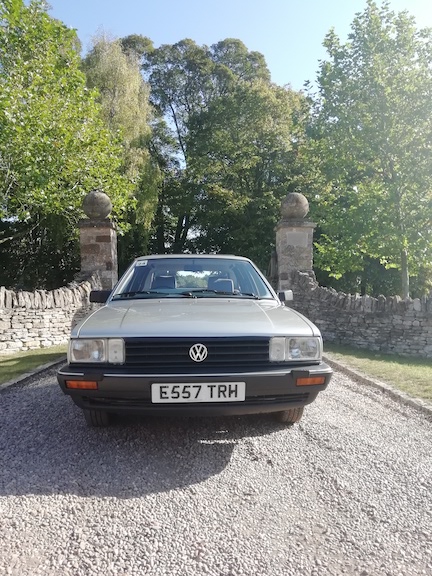
  • MOTORING | The Passat. Volkswagen’s First Proper Car

    MOTORING | The Passat. Volkswagen’s First Proper Car

    VW has just launched Passat 8.5. In a market packed with over-inflated SUV’s, you could be forgiven for thinking the Passat was no longer with us. Truth is, it’s still an important model to VW and has been with us longer than the Golf.

    This mid-sized saloon hasn’t had the greatest starts in life if you include it past DNA and in that I’m talking about the ill-fated 411 and 412. VW couldn’t let go of that rear-engine layout and as a result, made a car that was out of date before it even started back in 1968.

    Europe was changing and it was all about engines at the front and luggage at the back.

    VW fought back with the purchase of NSU and Audi. Soon the Audi 80 was badged as the Passat and in 1973 in an array of models similar to the Audi, the Passat was born. Unlike the Audi, the VW had a fastback look about it in a hatchback configuration.

    In 1981 the B2 MK2 Passat was born. Unlike its stablemate from Audi, the B2 80 had been born much earlier in 1978. What VW was to do was to take the style of the 80’s sporty sibling, the GT coupe and turn it into their new Passat. Somewhat cheeky it has to be said but what this meant for the VW driver was a car that looked like the Audi Quattro rally weapon with all the practicalities of a Golf. The hatchback body remained and was only available as a Volkswagen.

    Fitted into this Passat and here for us to look at today is the 5 cylinder 2-litre engine. This 1988 GL5 model was packed with innovative ideas made it top of the range. The 5 cylinder, fitted with fuel injection meant performance and power. It developed 115bhp at a thundering 5400rpm. Torque was a useful 164Nm at 3200rpm. And this figure would plague you because this all-conquering model was mated to a 4+E gearbox. 

    The Audi That’s A Volkswagen

    This gearbox was Volkswagens attempt at making the car economical on a run. 4th being an overdrive and 5th being even more of an overdrive lowering the engine revs to an all-time low. This really did make 5th a gear a cruising gear. And it worked. On the urban cycle, it would return a normal 25.9 miles per gallon. Absolutely nothing to shout about but at 56mph you could get 47.1mpg and that meant you could travel some great distances on one tank of fuel. 

    Sadly you wouldn’t get close to that figure for one reason with that 5 cylinder engine up front. Forget the screaming sounds of V8’s or the silky feel of a V6. The straight 5 in the VW sounded like a budget Audi Quattro. The same Audi Quattro that you would hear on BBC’s Grandstand rally reports spitting fire. It was a sound that blew you away and in the Passat GL5, it blew you away even if it didn’t go quite as fast or spit fire from the exhaust. You see, it sounded fast. The engine felt amazing and it made you feel great.

    The drive and handling were set more for a luxury liner than a sports car. Spirited driving wouldn’t give you the full point and squirt of the Quattro and this is where your Quattro Passat ends but it’s also where Passat starts. The Passat GL5 was about distance cruising and it managed to do that well. Back to back with German cars of the time, this Passat has a distinctive French feel about it. It floats and cossets you like a Citroën. There is a massive amount of Germanic harshness missing. Its like has never been seen again from Volkswagen. 

    Was it expensive in that way Volkswagens were in the ’80s? Considering its relatively scarcity back then, it really wasn’t any more costly to buy that the top sellers in the market. For your £9356 you could save a grand and buy a Vauxhall Cavalier GLS or for about the same money, buy a loaded up Ford Sierra Ghia. Now, this was the problem for the Passat GL5. CAR magazine told you to buy the Cavalier. They said it was the better car but we all knew the GLS was the tops. It even came with alloy wheels and tinted glass. The Sierra rubbed its horse brass in your face with the badge of Ghia. A badge that stood for the top of the range. 

    Introverted German Style

    VW didn’t really shout out about their conservative Passat. The only car they did shout about was the Golf GTI and even then that didn’t quite get the fanfare it was worthy of. Volkswagen liked to keep it quiet, almost introverted. In the words of a Victoria Wood burger sketch from her one-off show, An Audience with…, “the introverts burger, it’s just a serviette but they don’t like to say anything”

    This was VW’s way. And a shame because despite the lacking of glitz and glamour, the inside of the Passat GL5 was steeped in plush velour everywhere. The carpets had a quality shag about them and it felt solid. And the inside niceties didn’t stop there. You had all-round electric windows with ergonomically challenging switches on the door or centre console. Fitted like an afterthought, the switches were at least taken from the modern VW switchgear. The rest of the switchgear was dated clicky switches from the last generation of Volkswagens. 

    The Passat has continued to shine as a product for VW and all generations have retained some element of DNA from this very model. The one thing, thankfully, they haven’t taken is the awful offset steering wheel. Perhaps that’s why VW didn’t want to shout about the Passat?

    All photos Stuart M. Bird
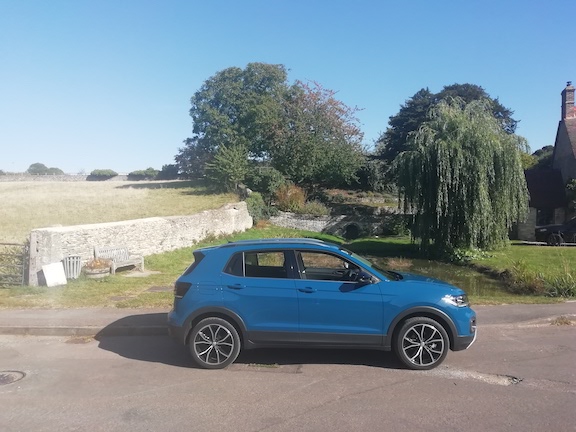
  • Quick Drive. VW T-Cross Diesel reviewed

    Quick Drive. VW T-Cross Diesel reviewed

    What Have We Got?

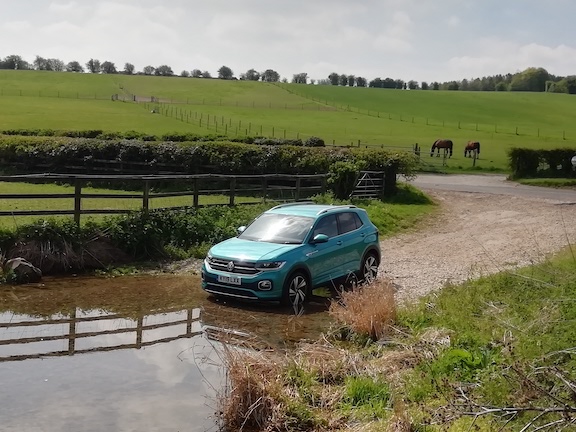
    In May, THEGAYUK was invited to the launch of the new VW T-Cross. A compact SUV corssover based on the Polo’s MQB platform. 

    We were surprised to learn that there was to be no diesel available for this model. So it was a surprise that just 5 months later, a diesel option had been added to the T-Cross.

    Has the addition of a diesel engine been worth the somewhat short wait and the extra £1675 asking price? We took one for a quick drive to find out.

    Driving

    VW have a great back catalogue with their diesel engines so I had high hopes for this T-Cross. Fitted with the 95PS 1.6 litre diesel engine, its lowdown grunt on paper looked appealing. It produces 250Nm of torque between a lowish 1500rpm to 2000rpm.

    Sadly, on the road, it just didn’t transpire in the way I had hoped for. Compared to the similar outputs of the 1 litre petrol, the diesel engine made the youthful looking T-Cross feel a little flat. It had lost its brio of enthusiasm and I couldn’t get over that disappointment.

    The chassis has great ability to carry itself well over various surfaces and the handling is more on the safe and predictable so but nonetheless, it is still worthy of piloting around with gusto. However, in having lost its jolly enthusiasm, there was little encouragement to enjoy the handling of the MQB platform in this guise.  

    Inside

    Inside, the T-Cross is the same as before. You wouldn’t expect any changes to be made this short in its production life and to be fair, there isn’t anything that needs changing. It is all useable stuff with rear sliding seat that alters the size of the boot or rear legroom.

    Depending on spec, the dashboard and fascia can be jazzed up with colour making it a rather pleasant place to be.

    The Verdict

    I’m a fan of the diesel engine. There is still a place in the market for the manufacturing of them. Not so in the T-Cross. It would seem unless outright miles to the gallon are your thing, then this will fit the bill. 

    According to the WLTP combined figures, it’ll manage 52.8. A whole 7 more than the petrol. For those 7 miles you get a great car with lacklustre performance and I can’t see the benefit of that. It’s a saving of around 2 pence per mile. If I’m to be seen as less of a villain for not liking this car, I will say that the DSG gearbox is better suited to the diesel engine than the bigger petrol option. 

    The Lowdown

    Car –  Volkswagen T-Cross 1.6 TDi 95PS DSG

    Price – £23,980 (as tested)

    MPG – 52.8mpg (WLTP combined)

    Power – 95PS

    0-62mph –  11.9seconds

    Top Speed –  112 mph

    Co2 – 140 (WLTP g/km)

  • CAR REVIEW |  Volkswagen T-Cross

    CAR REVIEW | Volkswagen T-Cross

    ★★★★ | Volkswagen T-Cross

    VW Cross the T’s

    The much anticipated VW Polo has, quite quickly, spawned a little SUV model. All using the highly adaptable MQB platform that makes up the current VW range, I was intrigued to see how the risen Polo sized B segment SUV was like at the recent UK launch drive.

    There were noticeable changes for this newcomer. Firstly was the lack of a diesel engine in the range. With diesel becoming a dirty word in Europe, chances are there won’t be one. Also, this is a bit of a pseudo 4×4. It has, as is common in this segment’s top sellers, all the looks without the ability. There’s no 4 wheel drive, and no loss really. It’s not that kind of car.

    Driving

    Driving impressions were good. I’ve moaned about the Golf-sized T-Roc tramping its front wheels from a standing start. I was expecting much the same with the Polo’s platform, risen by 10cm to behave and I came away disappointed. Disappointed because using either the 5-speed manual or DSG gearbox, it didn’t demonstrate anything like that of its larger brother.

    What did become apparent however in the 115PS engine model was the lag in the DSG gearbox. Standing starts took almost 2 seconds for throttle inputs to respond to forward motion within the powertrain. This was not a problem in the manual with the 95PS engine. According to the data, there is 1.3 seconds 0-60 between both these 1-litre petrol engines. The DSG’s lag makes it feel a whole lot more and in favour of the smaller powered unit.

    Interior

    Inside, and it is all useable stuff with rear sliding seat that alters the size of the boot or rear legroom. There is an adjustable rear seat that moves a whole 14cm back or forward. This makes the already large boot for this segment even bigger. Yes, it does take away rear passenger space but only if you are carrying someone in the rear.

    As a small SUV from VW, I was rather taken by the T-Cross. Its size makes it feel more agile and the ride better than you’d think it should be from a small, higher-riding short wheel based car. It rode well and could be driven with gusto. Compared to the competent T-Roc, I’m not sure I’d recommend it over the T-Cross. The littler car is the better car.

    Verdict

    Personally, I do have a clear winner. The 95PS manual SE was the better car and is my recommendation. It’s about £7,000 cheaper than the 115PS R-Line with the DSG and all the more spartan for it. So have fun and add some Volkswagen options. Making the T-Cross your own will endear it more than it already does. Volkswagen has done us proud.

    Like

    Ride

    Engine refinement

    Economy

    Loathe 

    DSG gearbox lag

    SE is spartan

    Infotainment system fiddly

    The Lowdown

    Car –  Volkswagen T-Cross

    Price – SE £ 19,890 / R-Line £26,735 (as tested)

    MPG – SE 48.6 / R-Line 45.6 mpg (combined)

    Power –  SE 95PS – R-Line 115PS

    0-62mph –  SE 11.5 / R-Line 10.2 seconds

    Top Speed –  SE 112 / R-Line 120 mph

    Co2 – 112 (g/km) both models)

  • CAR REVIEW | Volkswagen California Ocean

    CAR REVIEW | Volkswagen California Ocean

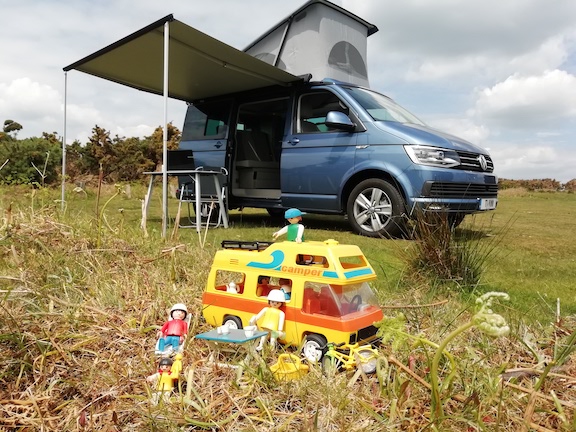
    Welcome to the Mobile California… with options, comes in at £63k OTR! HOW MUCH! I hear you and so many others shrill. £63k

    For a van with a kitchen, it might seem expensive. Houses in the North can cost less. That said, you can’t move your house from location to location and, when all the elements combine, it all comes together really well.

    THEGAYUK was given the VW California Ocean for a week and we put it through its paces as a commuter, day tripper and camper.

    Driving.

    The 150PS diesel engine does a fine job in carrying itself around. Its fuel economy was amazingly accurate to what was projected on the dashboard. Very often we would see high 30s and low 40s.

    While touring around twisty roads with short straights and long corners, what didn’t work was the engine trying to use all of its 340Nm/Ibs of torque from as low as 1200rpm. It didn’t feel particularly comfortable for either the driver or the engine. It was too sluggish to respond and resulted in more of a crawl than a cruise.

    Thankfully the DSG box can be flicked to manual override and it then felt more at ease with itself above 1500rpm. Max torque is from 1500rpm so its reluctance to retain this lower engine rev puzzled me.

    The ride and handling were better than expected with no rattles and the high up driving position with luxury appointments around the cabin made this feel more like a Passat than a van. You can see why the Transporter is the benchmark other van makers strive to beat.

    Back to that asking price. Is it worth it?

    Yes, it is. The California Ocean starts at 55k. Compared to a large SUV, and let’s look in-house at VW and pick the Touareg, it is even better value. The Touareg is priced at £45,000 to £53,765 

    In a game of Top Trumps, the California would only be marked down for engine capacity and speed. What you get for this money is a vehicle that you can use every day as your main vehicle but also one that enables you to go to the tip (many councils will let you in because it’s a van with windows and seats) become a mobile office that offers you views that you can’t get in an office or take you away from it all, house you in heated or aircon comfort and allow you to sleep like a human and not a curled up sausage.

    Try doing all of that in your SUV.

    Is it THAT good?

    There are a few bits that could be improved. As a hardened VW camper enthusiast, I can spot a few areas that the old still does better than the new.

    The raised pop-top bed is a solid bed. Earlier 70’s models had a flip over part at the end. This enabled the roof bed when not in use, to be a useable storage area during the day. Handy when your living space is no more than 6’ x 11’.

    The fixtures and fittings did get some criticism for feeling a little “cheap”. It’s more lightweight than cheap. The home converter might well fit a quality kitchen from Magnet in their van, but they will pay the price at the pumps for the extra weight. There is a fine line and what VW has achieved in-house is commendable. 

    And the grey interior? It grows on you. It’s clean and modern but a touch clinical. It lacks the organic softness associated with wood. That said, after a night in it, the lightness makes for a very relaxed environment. I certainly wasn’t my usual grumpy self before coffee.

    With that gripe out of the way, what then can I tell you about the inside? It will seat 4 in comfort. And if you are wise and call for the swivelling captain’s seats in the front, you’ll be even more comfortable during lunch/social times when inside.

    The bed is easy to make in 3 steps. The worst part being that of sliding the rear bench forward. It’s a heavy solid unit. Pull a lever, lower the backrest and fold over the padded top cover and you’re almost ready to go. Just layout the duvet and pillows.

    If you like a little privacy, there are blinds all round and removable covers for the cab door windows. It all works well, especially the adjustable side blinds allowing partial to a full block of the light outside.

    Lighting is soft and plentiful. Nice touches include those in the roof for upstairs sleepers with easy to reach switches.

    There is plenty of storage around for all that you need and more for the stuff you don’t. Cooking is all done on a 2 burner hob. Sadly there is no grill option. Personally, I couldn’t live without one. There is a huge water tank that houses the water for the sink and external shower unit for washing off mud and sand. Simple and yet very effective. And that is the California’s extra trump card score. It’s very effective at being more than just what you see. 

    Verdict

    Welcome to your Mobile California

    Such a lovely place (such a lovely place)

    Such a lovely face.

    Plenty of room at the Mobile California

    Any time of year (any time of year) you can find it parked here, there or anywhere.

    Including winter. It also comes with a diesel-powered heater that can be set on a timer or via the remote control. 


    Like

    Easy to drive

    Easy to convert from van to camper

    Camper layout

    Loathe

    Swivel front seats awkward to swivel

    Sharp edges on removable shelves

    No heated rear screen

    The Lowdown

    Car –  Volkswagen California Ocean 2.0. TDi 150PS 7speed DSG

    Price – £ 63,155 (as tested)

    MPG – 40.9 mpg (combined)

    Power – 150PS

    0-62mph –  14.5 seconds

    Top Speed –  110 mph

    Co2 – 179 (g/km)

  • The Good, The Bad and the Ugly: Volkswagen Polo 2002 – 2009

    The Good, The Bad and the Ugly: Volkswagen Polo 2002 – 2009

    The Good, The Bad and the Ugly: VW Polo

    An irrelevant look at a certain car.

    Volkswagen Polo 2002 – 2009

    VW’s Polo has just reached its Mk 6 status and the little Polo has gone from strength to strength, once being the smallest and cheapest way into VW. And then Polo became a proper VW and a new smaller car was available, thus pushing Polo to another stratosphere in VW ownership. It’s all gone well for Polo except.

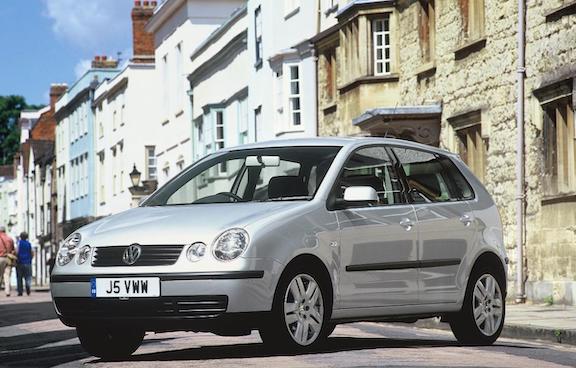
    Back in 2002, the MK 4 Polo arrived. It was ALL NEW, all sparkly and dull as ditch water. Changing the front indicator was probably as exciting as it could get.

    It wasn’t a bad car, it didn’t necessarily achieve great showroom appeal, but it did sell in vast numbers with most being painted silver. The new colour for the millennium so I am lead to believe. And the Polo did what you needed it to be. It was a small car with large dimensions in as much as it just got fat as was typical of VW’s ethos back then. 

    Polo was well built. It carried the VW traditions quite well. Wasn’t know for falling apart, could take some serious bodily abuse and never see a welders torch. It was what Polo customers wanted. A quality car that stood for something even if it was lacking in entertainment on almost every level. You could also fool people by replacing the VW badge with one from Mercedes because it did look a little like the 2000 – 2007 Merc W203. 

    Sadly, the looks of Polo didn’t really change between model to model. To be honest, you’d have to do more than squint to spot the mild fire breathing 100PS 16v over the more humdrum three cylinder 1.2 with about half the power.

    And it’s this 1.2 engine that brings me here. The little 3 pot petrol was quite energetic in its power propulsion method and didn’t leave you with a strange feeling like that of sitting on a washing machine with a brick in it. It was quite smooth and liked revs. However, It was a ruddy awful engine and not one that I would, in its advancing years, recommend. EVER.

    Piston slap and burnt out exhaust valves are the main culprit and not always on engines with high mileages either. To get the good economy it ran weak and lean. The leaner they run, the hotter they get. The hotter they get, the likelihood is burnt broken bits. Find a Polo running rough and chances are it won’t be a coil pack for £20. It’ll be a new head for £700.

    The Polo 1.2, not a good car. Run for the hills, it’s that bad!  

  • CAR REVIEW | Volkswagen Caddy

    CAR REVIEW | Volkswagen Caddy

    Volkswagen Caddy | ★★★★☆

    What Have We Got?

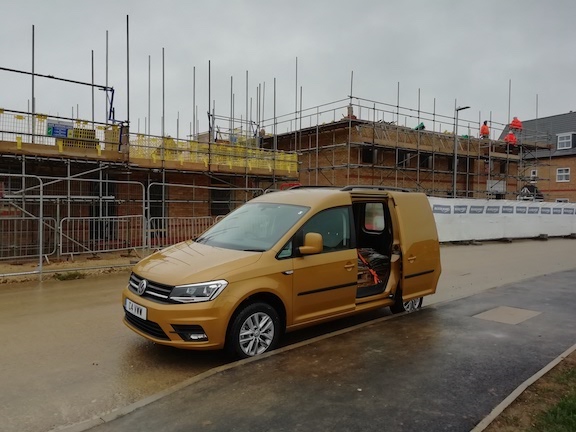
    Here we have VW’s venerable Caddy van. Things in van land run at a slower pace and this Caddy, believe it or not, is the Mk3. The Caddy has been part of the VW catalogue since 1980, so what has it been doing with itself for the past 38 years? 

    Moving, that’s what. That was what it was made to do and that’s what it does. The current Caddy on sale today is 15 years old. Does age really matter or can the Caddy still cut it?

    Driving

    This is your bread and butter van. Power at the front, nothing in the rear except load space. With that in mind, it makes for the rear to become rather happy on uneven road surfaces. Working vans don’t really travel empty and for the demonstration, VW placed a pallet with around 12 bags of sand on it. Even so, it still managed to be compliant in the handling department and for what was effectively an open space with no sound deadening, there were no din or road noises bouncing around the load area. 

    Inside

    Car drivers might not like it and if you play with a lot of Volkswagens, you’ll walk away a bit disheartened. Don’t be. The nice thing about the Caddy is its simplicity. It’s a van. Unless you want a van, you won’t be looking at one of these. There is a Caddy Life, a Caddy with rear windows and seat. That itself is like a Touran for the harder working lifestyles and less about luxury and it costs less too.

    The Caddy insides are all about wipe clean surfaces and hard work. Carpets are an option! What is apparent and perhaps down to age, is the lack of storage compartments. 

    What does show its age is the position of the infotainment screen. It’s a far to low down the dashboard and using the satnav means taking your eyes off the road for what feels like an eternity.

    Living With It

    As small vans go, there is still life left in the now 15-year-old Caddy. The simple layout in the back with minor wheel arch intrusion but still able to take that all important pallet that seems to be the benchmark for small vans. The sliding door aids access too and it’s all pretty neat. It does, however, require a load area liner. That painted area won’t stay showroom glossy for long.

    The Verdict

    It’s a slower pace in the van world and when a new van comes out, the maker needs to get it right first time around. The fact that the Caddy 15 years old, in typical Volkswagen philosophy, has seen some changes to keep it up to date and is still a good seller says more about the van than I can put in words but I’ll try: It’s still competitive.

    Love

    Simplistic inside

    Nice driving position 

    Equipment

    Loathe

    Needs more odds and ends storage places

    Satnav position

    Unprotected paint on the rear bumper

    The Lowdown

    Car –  VW Caddy SWB Highline 2.0 TDi

    Price – £ 24,287(as tested)

    MPG – 60.1 mpg (combined)

    Power – 102ps @2900 – 4000 rpm

    0-62mph –  12 seconds

    Top Speed –  107 mph

    Co2 – 124 (g/km)

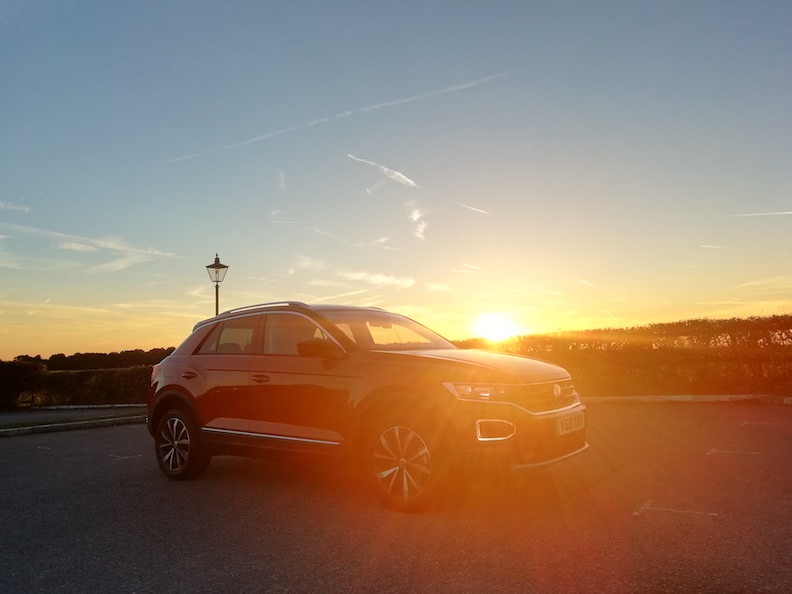
  • MOTORING REVIEW | Volkswagen T-Roc Design 1.5

    MOTORING REVIEW | Volkswagen T-Roc Design 1.5

    ★★★★☆ | Volkswagen T-Roc Design

    My Second Coming With The T-Roc

    What Have We Got?

    Volkswagen’s T-Roc was launched last year and TGUK were there to test some of the first in the country. This time we are giving the Design 1.5 TSi DSG automatic for a week and I reflect if it was fair of me to give it 3 stars.

    Driving

    I complained about the front wheels ‘tramping’ when pulling away from a junction and even with the DSG gearbox, it still does. The 1.5 EVO engine is a joy to have and responds quickly to all inputs from the throttle with no noticeable lag. Even the DSG box responds quickly. 

    And this all helps to make the T-Roc a really nice place to be. The suspension comes with the usual set-ups of Eco to Sport while the ‘Individual’ setting allows you to select the best of the pre-sets to suit your requirements and this is always welcomed by me. 

    The trick up T-Roc’s sleeve is the ability to select sport or manual in the gearbox very quickly. You are not left high and dry when you need to get a move on!

    You do have to be careful though with the throttle pedal. From standstill in traffic, it can propel the T-Roc forward quickly and at neck breaking force. Once you get used to it, it’s not really a problem. It’s just not what you expect from a car that doesn’t wear a GTi badge.

    Inside

    It is as you would expect from Volkswagen and that is well screwed together and functional. The choices of trim on this ‘Design’ model are zesty with a nice touch of body colour on the dashboard and in the seat trims. 

    I have only one real criticism here and it seems to be my usual moan about VW. The rear door cards are dull. On this model, the front doors are treated to colour coded inserts with neon illuminations. The rear passengers are again subjected to nothing but darkness. 

    Living With It

    From almost all angles, it is a good looking vehicle. It’s also very easy to live with. The boot is generous with a split level load floor though heavy items will cause an issue thanks to the high load sill because it is an SUV.

    It’s also not really suitable as a 5 seater. The centre seat occupant has to contend with a big transmission tunnel and a raised seat cushion resulting in reduced headroom.

    The Verdict

    I was wrong. It’s more than a 3-star car. It’s not perfect and there are a few things VW could do to make it even better. If it was my money that was paying for it, I’d pay it. The T-Roc proved to be comfortable, relaxing and fast enough when I needed it to be. 

    I still find it difficult to accept that VW predicts the 1 litre to be the better seller. The 1.5 does it all so much better. It also comes with a host of goodies that you’d expect at this price and for that, I actually can’t complain. Much.


    Love

    Good looks

    Relaxed ride

    Driver conveniences 

    Loathe

    Front wheel tramping

    Lack of illuminations for the rear passengers

    Hard seat cushions

    The Lowdown

    Car –  Volkswagen T-Roc Design 1.5 TSI DSG 

    Price – £29,690 (as tested)

    MPG – 33.5 (combined)

    Power – 150hp

    0-62mph – 8.4 seconds

    Top Speed –  127 mph

    Co2 – 119 (g/km)

    All photos (C) Stuart Bird

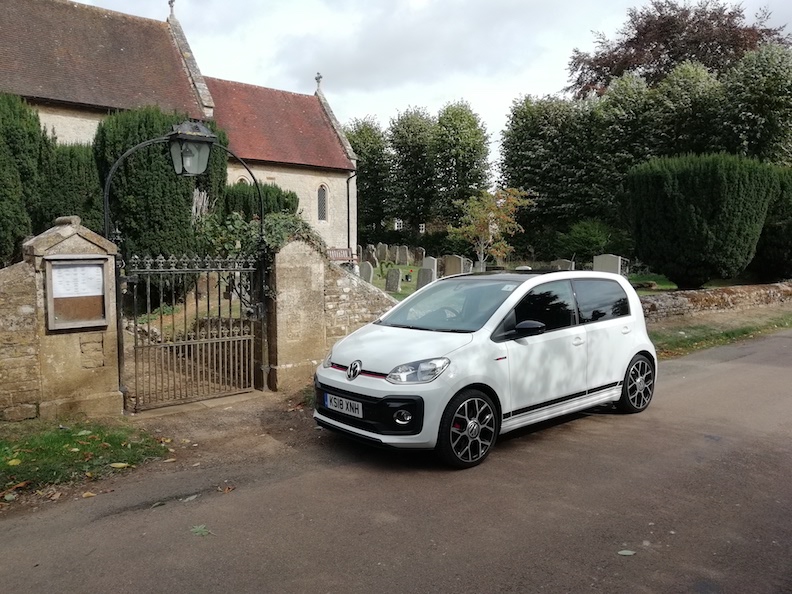
  • CAR REVIEW | Volkswagen Up GTi

    CAR REVIEW | Volkswagen Up GTi

    ★★★★☆Volkswagen Up GTi 

    Up and GTi Away 

    What Have We Got?

    Volkswagen would have you believe that the Up is the successor to the original Golf GTi. In some ways it is. Its dimensions, kerb weight and performance align with those of the original 76 Golf. Golf is now too big to be as delicate as it once was. And Polo is also too big. So the Up now fills the void for a small, buzzy, fun machine to wear the GTi badge. But does this answer the critics who bemoan about the lack of a raw feeling GTi from VW?

    Driving

    There is something about the Up GTi that gets your pulse racing before you turn the key. Delicate red markings on the body and the GTi badges are very evident, likewise so too is the tartan type fabric from the original GTi that is now fitted to all VW GTi models.

    Turn the key and the rorty little 1 litre 3-cylinder engine bursts into life. It contains 115PS. It might not sound a lot, but it sure does know how to use it. The controls are light and precise and the six gears are well spaced even if 6th really is longer legged than necessary for such a small car.  

    What it all makes for is a very engaging car and though it will max out at 122mph, it really is a great back road buzz box. It’ll do 70 in third and that’s rather useful. The only downside is the traction control system can’t be switched off. However, that doesn’t mean you can wheel spin the front wheels from a standstill.

    Inside

    The seat fabric aside, the Up to me is only ruined by the red and black facia panel. I didn’t like this and for a small car with cheap feel, it felt like it cheapened it.

    Now don’t let the cheapness put you off. This is a new VW GTi for £14,000. It’s the lightness that makes it feel the more special in capturing the GTi magic of old. Remember, the original was a trendsetter and well built. The Up betters it but retains some of the raw light elements. That doesn’t, however, mean the doors twang when you shut them. It still sounds like a Golf.

    Living With It

    This Up GTi came in 5 door guise. There is more than enough room for 4 and a reasonable sized boot with a height-adjustable boot floor. 

    The dashboard layout is clear and visible and the ergonomics are perfect. Rear door trims lack the visual joys of those on the front with the absence of body trim.  

    The inability to switch the traction control off does mean it’s always a little bit too safe. Its limits are high and the fun factor even higher, it’s just a shame you can’t fully exploit it to its fullest. 

    The Verdict

    (C) STUART M BIRD

    You can see why many before have raved about it, I love it. It’s quite raw in places and that’s a good thing. That rawness adds to the feel of it being lighter and quicker than it actually is and let us not think this is slow. With a 0-60 time of 8.8, it’ll keep up with an original Mk 1 Golf GTi. In actual fact, there are many areas that this is similar to the original. It’s like VW have resurrected the original from the ashes of yesteryear and I am happy.

    Love

    Rawness

    Lightness

    Entertaining to hurry

    Loathe

    Dashboard facia trim

    6th gear is too tall

    No traction control switch

    The Lowdown

    Car –  Volkswagen Up GTi 115PS

    Price – £16,655 (as tested)

    MPG – 58.9mpg (combined)

    Power – 115PS

    0-62mph –  8.8 seconds

    Top Speed –  122 mph

    Co2 – 110 (g/km)

  • CAR REVIEW | Volkswagen Arteon R-Line

    ★★★★☆ | Volkswagen Arteon R-Line

    The Avant-Garde Fastback With A Name To Match.

    I wrote recently about Volkswagens Passat. I said it was a nice car. Indeed it is. Nothing nasty about it. All quite nice.

    I almost mentioned what Passat had done to offend the UK buyer – delete the hatchback option. Unlike our European cousins, we Brits do love a hatchback. So when it was discontinued in 1988 many suburbs of England tutted loudly with disgust. The result was those who wanted a hatchback for tip runs and garden centre expeditions went over to Ford and Vauxhall to get their fill of the lift back.

    VW now want to rectify that by giving us the Arteon. Is that how you say it? Art-e-on? Ar-Teon? Air-ton? It was said to me in as many different ways as there are languages in the world. However you pronounce it, it is a car to puzzle over.

    NEXT: Inside The Car

    Inside the cockpit, it is pretty much pure Passat. The usual three time clocks to look at in the front, none in the rear. Switchgear and controls etc are all pure Passat. Even on the move, it is Passat with that nice feel about it.

    Thankfully it is a little more than Passat nice. For a start, the designers have given it pillar-less doors. For some reason, a pillar-less door adds some sex appeal. And the front has been given a more purposeful look with both upper and lower grills integrated into one massive mouth. Sadly from some angles, it can look a little Audi-ish.

    All the fun for the British buyer is at the back. Forget the massive amounts of legroom you now get over the Passat sibling for the moment. Your prayers have been answered, you have a boot that lifts up high. High up into the sky to reveal a load capacity of epic size and all in a hatchback style body that VW would rather you refer to as an avant-garde fastback saloon style. It is deceptive. Design wise you do expect it to be another saloon. It was only when l went to lift the boot that l realised something was wrong. It’s a big heavy door to lift. It took me by surprise at first. The ‘nice’ was being eroded.

    NEXT: The Drive

  • CAR REVIEW | Volkswagen Passat GT

    ★★★☆☆ | Volkswagen Passat GT

    REVIEW Volkswagen Passat GT

    The VW Passat is a good car.

    You can’t fault it really. From its rusty ashes as the 1968 411, it has grown and with Audi’s influence, VW’s people’s car for the executive has become a staple for the rep about the motorway service area who wants a quieter life than the four roundel sister cars.

    And that ladies and gentlemen is the Passat’s problem. It’s too quiet and yet its family timeline to start with was anything but.

    Volkswagen CEO Kurt Lotz, from 1968 – 71, had a bit of a task ahead of him. His greatest success was the purchase of NSU along with its water cooling experience. Wheels were in motion for VW’s greatest change. It’s safe to say Lotz would have been proud of the Passat today and as an owner, you would be too.

    The GT we tested, left you wanting for nothing. It had all the toys you could wish for. The meagre money VW charges for it (£29,000 starting price), it is a lot of car for your pound. Add the essentials and it soon adds up but the end result is still a great value car. There wasn’t one moment when I wished for more. Actually, I did and I’ll get to that if I haven’t convinced myself that I don’t want it by the time I am finished.

    For a start, the petrol engine is quite simply an amazing power unit. It’s by far not the most powerful in the Passat range. The 180ps 1.8 was subtle in the way it delivered the power. While the engine gets into its gallop between 5100 – 6200 rpm with the 236 Ibs ft of torque that kicks in across the 1450 – 3500 rpm rev range. It gets going with a lovely subdued growl. Like drinking the smoothest Baileys with a dollop of extra cream followed by an intense espresso.

    The compliant ride adds to this fluid quality feel that you have come to expect from Volkswagen. It smoothed out almost all surfaces and road roar was limited to a mild hum.

    The driving experience of the Passat was always a joy and never a chore. Even with the manual gearbox, it didn’t feel like I was being put out because I had a third pedal to press. Clutch controls were nicely weighted to the other controls. VW spend a lot of time on this and they get it right.

    It all sounds quite lovely. You can though, push Passat if you’re feeling a little asphalt frisky. the handling is safe and visibility is good. It glides around fast S bends and will mildly understeer if you push it beyond the capabilities of the tyres. Traction kicks in and restores your faith. It’s safe fun. Yet look at its performance figures and you’ll see it’s no slow coach.

    A 0-62mph time of 7.7 seconds isn’t too shabby and I’ve no doubt that it will eventually get to the claimed top speed of 144mph.

    It’s just that when it does, you’ll have no idea you are going that fast until you see the blues and twos coming up behind you.

    Interior quality is second to none. As much as Volkswagen is a premium brand, you have to remember that this isn’t the premium brand from VAG. That is Audi’s job and yet apart from a little too much black around the inside and not enough glitz to break it up, it was well and truly above par.

    VW’s sale figures for the Passat astonished me. Despite the Passat being in a small yet aggressive market, there wasn’t as many sold as I thought and yet you see so many on the roads. One wonders if BMW, Mercedes and Audi drivers looked at the values of the Passat that more would be sold. That said for the out and out performance car, it isn’t quite what the Passat image is about despite there being a Passat R.

    The dashboard layout benefits from the new system being adopted by VW that has moved the goal posts yet again. Being adaptive in its information allows you to get the best from the car and its calming qualities that all add up to make Passat a nice place to be in. And to make sure you are never late, VW has included three clocks up front. Why? I do not know. Two digital and an analogue one in the centre of the dashboard. I am surprised they haven’t added one in the rear.

    With regards to the toys, the Passat is packed with them. The adaptive cruise which I like to see and lane assist. Volkswagen’s system doesn’t cut power off immediately when it notices the driver is going autonomous. It does figure out quite quickly that you are not putting in manual inputs. The alarm sounds to alert you to take control. If you insist on ignoring this, it briefly and yet not dangerously life-threatening to those driving behind you, jabs on the brakes for a split second. It’s most unpleasant. You then tend to not do that again

    It all adds up to a nice car. A car for all reasons. You could adorn it with ribbons and use it as a wedding limousine. The bride and groom wouldn’t think you had turned up in a repster mobile. The bride wouldn’t kick off. There would be no drama. And that’s the problem I have. There is simply no drama with the Passat. It’s not like there isn’t room for a drama button on the centre console amongst the blanks on this model.

    For £3k more the 2.0-litre models may well give you this but then you lose the sense of great value for what is a very nice car. And only three stars I know seems harsh. It just needs to kick you in the teeth! Sadly for Passat, when you park it up you can walk away, mind rested and soul intact. You’ve arrived.

    Love

    Nice
    Good specification
    Value

    Loathe

    Not as boring as I might have made it sound
    Drab in the rear
    It’s too nice to add a third thing l don’t like

    The Lowdown
    Car – Volkswagen Passat GT TSI 180ps
    Price – £35,070 (as tested)
    MPG – 47.9mpg (combined)
    Power – 0-62mph – 7.7 seconds
    Top Speed – 144 mph
    Co2 – 136 (g/km)

  • CAR REVIEW | Volkswagen T-Roc Design 1.0 TSI

    ★★★☆☆ | Volkswagen T-Roc Design 1.0 TSI

    Volkswagen has been busy over the past few years. The needs of the motorist are expanding and their demands are greater than ever before. There once was a time when all you had to do was choose between a saloon, a hatchback or an estate.

    Late to the party, VW is now making up for lost time by entering the smaller side of the sports utility vehicle or SUV for short with the recently launched T-Roc.

    They are not quite so new to this segment though, their big Touareg has been on the market for the past 15 years. So have they learned from their past.

    I’ll try and hide my sort of dislike for SUVs. Unless it is four-wheel drive, I find them nothing more than jacked up hatchbacks on which they are based. The T-Roc being the Golf equivalent. If you look at market shares, the SUV is the fastest growing sector and expectations are growing. People want SUVs for several reasons. One of the main advantages is the view. You sit that little bit higher in one – giving a better command of the road. There is also a sort of status with an SUV. It says “we have a lifestyle that demands this go-anywhere-vehicle” in a way the Chelsea tractor did for those yummy mummies in the 90s and 00s

    If truth be told, most SUVs on the road are mainly front wheel drive. VW themselves predict over 75% of sales to be for the FWD platform. They also predict the 1.0TSI SE to be the biggest seller so that’s what we tested first.

    VW have done their homework. The four model choice allows the T-Roc to be made to suit the needs of the individual. There are choices not only for the alloy wheels but SE and Design models also get the choice of wheel colour. There are four choices of roof colour to be had and the Design model also allows you to spec the dashboard trim to contrast with the exterior colour. Exposed bodywork within the cabin, even in the higher spec models breaks up the monotony of blacks and greys.

    Attention has been made to the inside too. It’s all very Volkswagen and well put together. Everything is where you expect it to be. Seats are comfortable and if it wasn’t for the hard plastics on the dashboard and door trims it would be all rather tactile. It isn’t though. The use of hard plastic is something VW has said the market expects at this price, from this brand at least, you don’t.

    It’s fitting for an SUV in that it is rugged but it isn’t the usual VW style I was expecting.

    Thankfully there is joy to be found in the little 3 cylinder 1-litre engine. I said this before when I was swept away by its brilliant ability in the Golf. It gives you all it can in a pretty short spread of torque. 148 Ibs/ft is available from 2000 – 3500rpm. After that, the horses take you up to 5000rpm where a gear change is needed. You will, of course, change much lower down with the amount of power available.

    What will become apparent however is front wheel tramping if it ever tries to put down all that power from a standing start. It’s quite disconcerting at first. I know the torque figure isn’t massively high in numbers yet this wasn’t noticed in the other models we’ve tested before.

    The ride was surprisingly composed for what is a jacked up hatchback. It was a bit floaty in some areas and this added to the urgency of the little 3 cylinder engines excitement. It definitely added an element of ‘sports’ to its SUV title. Care and attention have been given to the T-Roc’s driving dynamics and this is evidenced when you drive it. The T-Roc felt light and spritely on the open country roads around Aynhoe and down fast A roads. Comfortable too from both the driver’s seat and passengers were observed.

    The T-Roc is good but not the best. It carries VW into the small SUV market with another car that they will sell confidently in high number. I’m just not sure I agree with them that the best seller will be the 1.0 TSE SE. For me at least I’d prefer to splash out another £2000 and have the 1.5 TSI Design. Some detail changes made it feel nicer as personal transport goes and the engine is so much the better. For a start, the 1.5 with 185 Ibs ft of torque spread across a far greater rev range was better distributed to the driving wheels with far less tramping.

    The T-Roc is all new and shiny, VW as we know never sit on their laurels. I’m sure changes are afoot already to make the good car even better. It’s what VW do.

    Love

    Boot space with split level floor practicality
    Ride
    Personalisation

    Loathe

    Dashboard plastics
    Front wheel tramping
    Interior not as vibrant as its urban looks suggest

    The Lowdown
    Car – Volkswagen T-Roc Design 1.0 TSI
    Price – £24,385 (as tested)
    MPG – 55.4 (combined)
    Power – 115hp
    0-62mph – 10.1 seconds
    Top Speed – 116 mph
    Co2 – 117 (g/km)

    The Lowdown
    Car – Volkswagen T-Roc Design 1.5 TSI
    Price – £26,430 (as tested)
    MPG – 53.3 (combined)
    Power – 150hp
    0-62mph – 8.3 seconds
    Top Speed – 127 mph
    Co2 – 120 (g/km)