Author: Jake Hook

  • Donald Trump says calling Tim Cook, “Tim Apple” was all about time-saving

    You may have heard that President Donald Trump called Tim Cook, the CEO of Apple – well now the President has said that it was entirely intentional.

    via GIPHY

    The President of the United States, Donald Trump, has taken time out of his busy schedule to assure his electorate that him calling Tim Cook, the CEO of Apple Inc, “Tim Apple” was entirely intentional, explaining that it was all about time-saving.

    Not him losing his marbles.

    CREDIT: By Michael Vadon [CC BY-SA 2.0 (http://creativecommons.org/licenses/by-sa/2.0)], via Wikimedia CommonsTaking to Twitter (of course) he wrote, “At a recent round table meeting of business executives, & long after formally introducing Tim Cook of Apple, I quickly referred to Tim + Apple as Tim/Apple as an easy way to save time & words”.

    As you see, doing this saved literally two words. “Cook” and “From” – a time saving of around a second. But say, if you were say it over and over – like a demented cuckoo on speed, you can see how these seconds would all add up.

    Bravo.

    He then hit out at news organisation that reported that he had referred to Cook as Apple – calling them “Fake News” saying “The Fake News was disparagingly all over this, & it became yet another bad Trump story!”

    There you go people. If you want to save time and prove yourself as a time-saving lord, just refer to people as Firstname followed by the company they work for.

  • INTERVIEW | In deep with BB’s Sam Giffen

    INTERVIEW | In deep with BB’s Sam Giffen

    For those of you who didn’t tune into Big Bro in the summer of 2016, Sam Giffen was one of the four gay guys the producers put into the house, can anyone say drama?

    We caught up with the surprisingly down to earth Northern lad to run our hands through his thick lush hair and talk, thinking deep and Tina Turner – of course.

    JH: What kind of student were you as a kid?
    SG: I must admit I was a little shit at school. I was the kid that was always getting told off in class. Always had to sit at the front in lessons so I didn’t distract anyone else. I was hardworking, I wasn’t the brightest kid, but I definitely made an impact on the rest of my classmates. Bit of class clown.

    JH: What did you want to be when you grew up?
    SG: I was 11 and I wrote down saying I wanted to be a hairdresser, and I am a hairdresser. I was 14. I remember saying, “I want to be on Big Brother!” and ten years later it happened!

    JH: What’s your happiest memory?
    SG: Maybe, getting the Big Brother confirmation call. That was a massive thing for me to achieve at this age. And probably with my ex. Falling in love. The moments like that, that don’t happen very often.

    JH: Have you got a guilty pleasure?
    SG: My guilty pleasure is probably Tina Turner. I’d watch her all day on YouTube.

    JH: What are you most afraid of in life?
    SG: Losing people. I’ve lost people before. Close family and relatives. I think being on my own in the future. I’ve got a very small family, so it’s something I’m not looking forward to.

    JH: What annoys you most about you?
    SG: Probably my lack of motivation for the gym. I am such a food whore, I’d rather sit and eat 10 burgers rather than do ten sit-ups at the gym.

    JH: If you could invite three famous people to dinner, who would you invite?
    SG: Tina Turner, Whitney Houston – I’d bring her back, I think she’s got some good old party stories to tell and also my Nan. A proper diva party.

    JH: How old were you when you first did the deed?
    SG: I have to be honest with you, I actually can’t remember. How bad is that? I honestly don’t remember. I think I must have been about 16… 16 or 17!

    JH: Would you change that experience?
    SG: Yes. I’d want to remember it. I’d like to know when it was and probably who it was with! (Laughs)

    JH: What’re the top 3 things on your bucket list?
    SG: I’ve done one of them – Big Brother, Travel the world, Meeting and greeting with Tina Turner. This might have well be called the Tina Turner interview. (Laughs).

    JH: What keeps you up at night?
    SG: I’m a deep thinker. I think too much at night. I think about the past a lot, which is not the best thing to do. I need to learn to live for the moment.

    JH: What’s your best physical feature?
    SG: My smile. I’ve got quite a moody face when I’m not smiling.

    JH: What’s the most important life lesson you’ve learned?
    SG: Not to take life too seriously and make the most of your loved ones

    This interview was taken from Issue 24, release December 2016

  • This is how you can be a better non-binary ally

    This is how you can be a better non-binary ally

    Six ways we can all become a better ally to our gender non-conforming siblings.

    Not everything is binary… kerplode / Pixabay

    Last year I happened upon this Tweet during Trans Awareness week and it got me thinking…

    Also on twitter, stop assuming people’s pronouns based on their profile pic and your binary stereotypes.

    Read their profile. Check their pronouns. Don’t assume.

    And while you’re there, put your own pronouns in your profile.

    Normalise that shit ✨#TransAwarenessWeek

    — Thal (@thalestral) November 12, 2018

    Let me tell you about my own gender expression before we go on. I don’t think of myself as a “man” because I don’t really fit into what society expects of its men. When I was a child all I wanted to do was be called a girl, wear high heels, my mum’s dresses and sing Petula Clark’s ‘Downtown’ on repeat.

    I was a Grade A queer/trans kid. As an adult I couldn’t admit that to anyone outside my immediate family. I was so shamed by this behaviour – and bullied mercilessly at school when I chose to wear the white, patterned “girls’” socks instead of the regulation grey socks for boys.

    Nowadays, I dress in masculine clothes, I have a boyfriend, I have short hair and people assume that I’m a man and a gay one at that. I enjoy the privileges that, for the most part, that assumed identity affords me. But, it never really feels right when someone refers to me in that way.

    That said, I don’t mind if people use the pronouns him/his or he when they refer to me. Although it does jar me if someone calls me a man. Weird.

    I also don’t mind it if I’m referred to with female pronouns.

    I’m pretty relaxed about the pronouns that are used to describe me.

    But for some, words really matter. So here’s some advice to help us all become better allies to our non-binary, gender non-conforming siblings.

    Open your ears and mind

    via GIPHY

    It seems that we’ve all got our lives set to transmit only. We need more receiving in our lives. So when someone is telling you something about them, listen.

    Leave your assumptions at the door

    via GIPHY

    Someone once wisely told me, “Assumptions are the mother of all fuck-ups” – and they were completely right. How often have you assumed something about a situation only to find that nothing was as you imagined? Pretty often, right?

    Your assumptions are based on your own life experience. It doesn’t take into account other people’s experience. So leave your assumptions at the door and again, open your mind.

    Respect pronouns

    rawpixel / Pixabay

    If a person tells you what their preferred pronoun is, accept it don’t fight it. It’s what they’ve asked you to call them. The decision is effectively out of your hands. It’s the same as when someone tells you their name. You accept it and it becomes part of their identity. Well, pronouns are the same.

    Accept that there are lots of different pronouns

    via GIPHY

    Some non-binary, gender fluid and gender non-conforming folks use a number of different pronouns. Some popular ones are: Zim/Zer and Ze, they/them and theirs or even thon, which was actually added to the dictionary in 1964. They as a singular pronoun has been used for centuries.It’s not particularly new, it’s not trend based, it’s just getting a lot of media attention at the moment.

    Stop normalising gender norms

    via GIPHY

    Blue for boys, Pink for girls… gender stereotyping is all so the 1950s and really doesn’t work for today’s society. No one likes living in a predefined box and we don’t live in a black and white world. There’s a whole rainbow out there.

    Gender norms and stereotypes, when adhered to, just keeps society attached to a patriarchal system that’s almost impossible to climb and doesn’t work for all of us, particularly LGBT+ people. So lets bin it shall we?

    Write your own pronouns

    via GIPHY

    Normalise the conversation surrounding pronouns. Write your preferred pronouns in your social media profiles. As @thalestral says on Twitter, “normalise that shit”.

  • School stops LGBT+ lessons after hundreds of parents withdraw their children from classes

    School stops LGBT+ lessons after hundreds of parents withdraw their children from classes

    Around 600 children were removed by their parents from a school in Birmingham on Friday in protest of a lesson that helped children understand about LGBT+ life.

    Wokandapix / Pixabay

    The Parkfield Community primary school in Birmingham has cancelled lessons aiming to teach primary school-aged children about same-sex relationships and gender after the parents of around 600 students at the school withdrew their children in protest.

    The children are thought to be from predominately Muslim families, according to The Guardian.

    The lesson was the brainchild of Andrew Moffat, who was awarded an MBE for his work in LGBT+ equality through the campaign, No Outsiders, where the ethos was to promote LGBT+ equality and to question transphobia and homophobia in primary schools.

    Students were being taught five No Outsiders lessons each school year.

    In a letter to parents, the school said, “Up to the end of this term, we will not be delivering any No Outsiders lessons in our long term year curriculum plan, as this half term has already been blocked for religious education (RE).

    “Equality assemblies will continue as normal and our welcoming No Outsiders ethos will be there for all.

    The school has now confirmed that they have put the lessons on hold and will, according to The Guardian, “resume only after a full consultation with every parent”.

    The letter continued, “The discussions were a helpful first step and identified the key issues that are concerning parents, including the ethos, the books, the age appropriateness, the lessons and the assemblies. The agreed outcome of the meeting was the need to have a discussion with the school community about the No Outsiders curriculum and how it should be delivered.”

    Some parents have argued that their children are “too young” to be learning about same-sex relationships.

    One mother, Fatima Shah said, “We are not a bunch of homophobic mothers. We just feel that some of these lessons are inappropriate. Some of the themes being discussed are very adult and complex and the children are getting confused.

    “They need to be allowed to be children rather than having to constantly think about equalities and rights.”

  • Drag Race’s Felicia Heal’s daughter, 10, has created an incredible and powerful new equality project

    Drag Race’s Felicia Heal’s daughter, 10, has created an incredible and powerful new equality project

    Drag Queen, Felicia Heals’ daughter, Dasha, who is just 10-years-old and her friends have created a beautiful and powerful project all about equality.

    The ten-year-old daughter of Felicia Heals, who made headlines in January after becoming Drag Race Thailand’s first ever bio drag queen hopeful, has created an incredibly powerful and emotional video project, inspired in part by Drag Race Thailand’s star Pangina Heals and the model Cindy Sirinya, to help fellow students at her school realise there is no need to bully or judge other students.


    Dasha managed to get Drag Race star Pagina Heals into her video and say the powerful lines ” I am equal”

    Speaking about the project, Felicia Heals said, “As some of you know my daughter has been working on a project about equality that was inspired by @panginaheals And @cindysirinya, I was and am in full support of her idea and this was the video she has created with her friends about equality. The thing she said at the end of the video made me think about our perception on people…

    “Thank you all of you for the support and giving her your time , so she can spread such a wonderful message out”

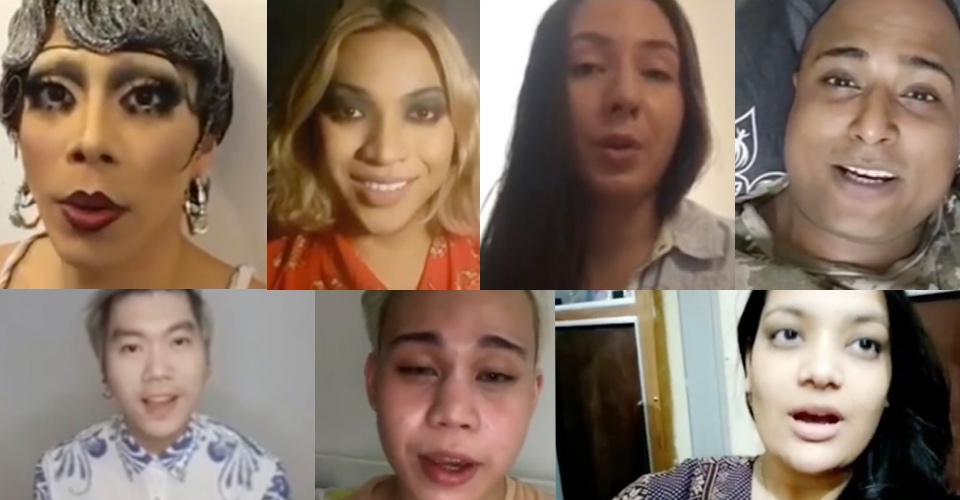
    The video starts by asking the viewer, “Have you ever judged a person by their gender? By their sexuality? Their skin colour? Or what they do? before allowing a number of people, who identify in many ways, including trans, non-binary and gay to introduce themselves before saying the line “I am equal”.

    Speaking to THEGAYUK, Dasha said, “I got inspiration from the global goals and from all the different but equal people I know.

    “I think that my project will inspire all types of people that can encourage people who are afraid of letting other people know about themselves and fight for their own rights and respect.

    “Also I wanted to open eyes to people in my school to see that no matter how different a person is we are all equal and there is no reason to bully and judge them for being who they are.

    “I am really happy to have different people to join my project no matter what is their gender, sexuality , religion and nationality. And thank you so much for the wishes, I hope it makes a difference for someone.

    “We can all learn alot from people with different backgrounds.

  • UNHCR responds to allegations of “neglect, collusion, and inaction” of LGBT+ asylum seekers

    UNHCR responds to allegations of “neglect, collusion, and inaction” of LGBT+ asylum seekers

    “The safety and security of all refugees is of utmost priority to us. “

    Following on from the allegations from The Peter Tatchell Foundation that LGBT+ asylum seekers are being neglected and victimised in Kenya’s refugee camps, the UNHCR responds.

    Yesterday we reported that according to Peter Tatchell, the UN High Commission For Refugees boss Filippo Grandi had failed to respond to concerns raised by the Peter Tatchell Foundation (PTF) over the alleged failure to protect LGBT+ people in Kenya, who have fled homophobic persecution from neighbouring countries like Uganda.

    The UNHCR has responded by telling THEGAYUK, that “The safety and security of all refugees is of utmost priority to us” and that ‘all LGBTI refugees registered and known to UNHCR in Kakuma are promptly relocated to safer places”.

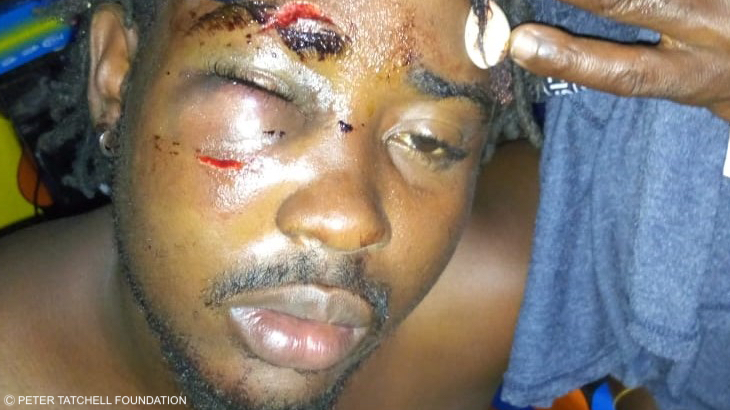
    Speaking THEGAYUK Peter Tatchell said, “Since 2017, I have received persistent reports of neglect, indifference and abuse by UNHCR staff and those they employ, including the failure of the UNHCR to protect LGBT+ refugees from abuse and violence by other refugees and the Kenyan police,

    “The UNHCR in Kenya has a duty of care towards all refugees, including LGBT+ ones. For at least two years, it has failed that duty of care – and sadly it continues to fail now”.

    The Peter Tatchell Foundation has proposed a five-point plan to the UNHCR to end the threats, violence and exclusion, including removing UNHCR staff and contractors who have behaved in a homophobic way.

    “All LGBTI refugees registered and known to UNHCR in Kakuma are promptly relocated to safer places”

    Speaking to THEGAYUK, a spokesperson for the UNHCR said, “The safety and security of all refugees is of utmost priority to us.

    “UNHCR is responding to Mr. Tatchell’s letter to address his stated concerns. Our Assistant High Commissioner for Refugees, Volker Turk, recently wrote to LGBTI activists engaged in this issue and reaffirmed our steadfast commitment to finding a solution to this situation.

    “All LGBTI refugees registered and known to UNHCR in Kakuma are promptly relocated to safer places, where we provide them with shelter, food, water, medical care, legal and psychological counselling and other assistance. We ensure they receive official documentation that legalizes their residence in urban areas, an important measure in light of Kenya’s encampment policy. Assessments are conducted on immediate needs and to identify the best long-term solution.

    “UNHCR is actively advocating with resettlement countries to increase the number of places available for LGBTI refugees. However, the number of resettlement places needed worldwide far outstrips the number of places available. For 2019, just 70,000 places are available for more than 1.4 million refugees UNHCR has identified as in need of resettlement.  Our Nairobi office has been working to secure resettlement for as many LGBTI refugees in Kenya as possible.  In the last part of 2018, we submitted more than 100 LGBTI cases for resettlement from Nairobi and have submitted approximately 150 further cases for consideration so far this year.

    “UNHCR has a zero-tolerance policy towards any acts of misconduct by our staff or partners”

    “UNHCR has a zero-tolerance policy towards any acts of misconduct by our staff or partners, including homophobic abuse. Any allegation we receive is passed on to our Independent Inspector General for investigation. All UNHCR staff and partners are required to sign our Code of Conduct, under which any acts of homophobic abuse leads to disciplinary measures, including dismissal.


  • Years and Years’ Olly: “If more people supported LGBT+ artists they’d get more slots”

    Years and Years’ Olly: “If more people supported LGBT+ artists they’d get more slots”

    Olly Alexander has said if more people listened to and supported LGBT+ artists, they’d get more slots at Pride.

    Years and Years singer Olly Alexander has suggested that if more people supported LGBT+ artists then they’d they get more slots at Pride events across the UK.

    The singer also revealed that he “always donates” his part of the Years and Years fee to perform at any pride they are asked to attend.

    This year, Years and Years will be performing alongside Ariana Grande at Manchester Pride.

    The singer said that although he’d love to see more LGBT+ headliners “the reality is line ups are a mix of artists depending on their availability and the need to sell tickets.”

    Manchester Pride has been at the centre of a row over the announcement of Ariana Grande as its headliner in 2019, with many suggesting that the Pride should have chosen an LGBT+ identified person. The singer released a statement over the backlash.

  • Attitude publisher tells David Lammy to “f**k yourself” after “white saviour” tweet

    Attitude publisher tells David Lammy to “f**k yourself” after “white saviour” tweet

    The publisher of Attitude Magazine, who has raised over £350,000 for an AIDS charity to spend in Africa has lashed out at the MP David Lammy after “White Saviour” tweet.

    The publisher of one of the UK’s biggest LGBT+ Magazines, Darren Styles, has lashed out at the MP, David Lammy after the MP tweeted that the world did not need any more “white saviours”, following on from the publication of a picture showing BBC presenter and journalist, Stacey Dooley holding an African child in her arms, while she was filming a documentary for Comic Relief.

    The MP for Tottenham, wrote, “The world does not need any more white saviours. As I’ve said before, this just perpetuates tired and unhelpful stereotypes. Let’s instead promote voices from across the continent of Africa and have serious debate”

    While the MP admitted that the tweet wasn’t “personal” to Dooley he did blast the charity Comic Relief writing, “My problem with British celebrities being flown out by Comic Relief to make these films is that it sends a distorted image of Africa which perpetuates an old idea from the colonial era”.

    Darren Styles, OBE who publishes Attitude Magazine responded to Lammy’s tweet, calling the MP’s view on colour “poisonous” and stating that he had raised over £350,000 for an AIDS charity to spend in Africa.

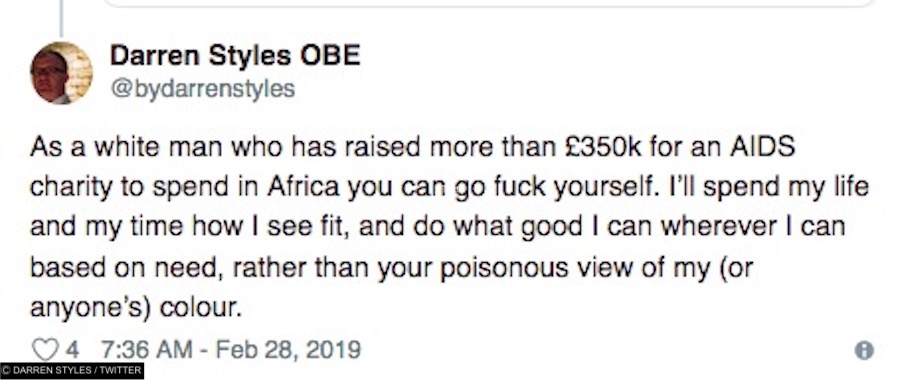
    Taking to Twitter Styles wrote, “As a white man who has raised more than £350k for an AIDS charity to spend in Africa you can go fuck yourself. I’ll spend my life and my time how I see fit, and do what good I can wherever I can based on need, rather than your poisonous view of my (or anyone’s) colour”.

    https://twitter.com/bydarrenstyles/status/1101023340758814721

  • This is what gay men actually notice first about each other

    This is what gay men actually notice first about each other

    Are we all butt and package obsessed? Apparently not.

    (C) BIGSTOCK

    In a recent survey by THEGAYUK, we uncovered that gay and bisexual men are more likely to notice the eyes first of someone they were romantically or sexually interested in, rather than the butt or package.

    Readers were asked to choose out of four body parts, the eyes, the chest, the penis or the butt, which they are most likely to notice first of someone they fancied.

    Eyes were deemed the most important feature of a potential boyfriend, with 43 per cent of us revealing that eyes the key to attraction. CREDIT: ©-nd3000-Depositphotos

    Given the choice out of the eyes, the chest, the package or the butt, perhaps surprisingly most people chose the eyes, with 43 percent of admitting that it was the eyes that attracted them first.

    Next, our eyes travelled southwards to the butt, with 23 per cent of guys claiming that an impressive ass would give cause for a second look. The chest area was next with 19 percent.

    The chest came third in our poll, with just under 20 per cent of us admitting that we found that area appealing. (C) BIGSTOCK


    Lastly, proving that we’re not all bulge obsessed, just 16 per cent of the people who answered the poll on Twitter said that the package was the part of the body they looked at first.

    However, some also suggested that teeth were important as well as hands.

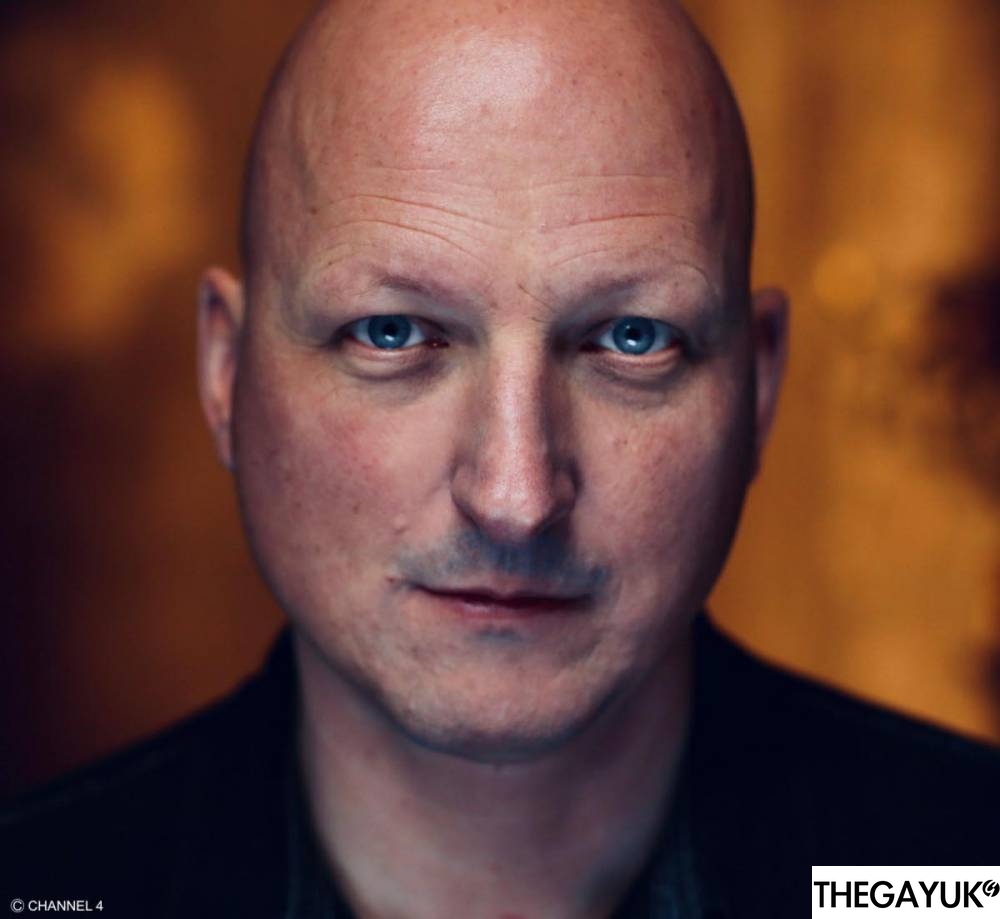
  • LEAVING NEVERLAND: Filmmaker Dan Reed talks about bringing the stories of the abused to life

    LEAVING NEVERLAND: Filmmaker Dan Reed talks about bringing the stories of the abused to life

    Filmmaker Dan Reed talks about his filmmaking and about how he captured the stories of Wade Robson and James Safechuck and their life with Michael Jackson.

    Q: You are no stranger to controversial subjects in your documentaries, as you have made films about child predators, terrorists, and international politics. How did you approach the subject matter of this film, which takes place in the world of pop culture and celebrity?

    A: Well, the first point is, that this is not a film about Michael Jackson. It’s about two very ordinary families whose paths crossed with Jackson’s, and the incredible aspirations that he represented. The families fell in love with those good things, not understanding the long-lasting impact this relationship would have on their children and families.

    In my storytelling, I don’t choose to criticize Jackson directly or comment on his actions, motives, or reasons why. I’ve left it quite neutral, deliberately. But make no mistake, the story is one of a criminal sexual predator.

    I wanted people to understand that when a child is groomed by a predator, it’s a very complex relationship. The parents are manipulated. It’s all very gentle and often manifested as love to the child. The families still hang onto the mentorship, love and attention that Jackson brought into their lives, and find themselves grappling with the contradictions of their relationship. LEAVING NEVERLAND: MICHAEL JACKSON AND ME is about both what Michael Jackson gave to them, and what he took away.

    The focus of the documentary is deliberately narrow. I did interview former detectives and prosecutors from the two principal investigations into Jackson, but I realized that the families’ telling of the story was so complete already. The changes within the family – mothers and sons, sisters and brothers, husbands and wives – become the echo chamber of the story. You feel like you are inside the family, and I felt that interviews from the public sphere would break that spell and place us back on the outside.

    Q: What did you bring from your previous filmmaking experience that helped you find the focus of this documentary?

    A: I come from a world of war zones and crime and undercover work, places where I must show the hidden drama, the inner workings and the realities of the things that people don’t see in the headlines. These are the kinds of events that fill us with horror but are often portrayed in a very simplistic way by the 24/7 news media. Making the documentaries about terrorist attacks for HBO, for instance, I used extraordinary archival material and many months of exhaustive research to create a detailed account, told through intimate personal stories, of world events that people think they already know about.

    In many of my more recent films, these stories are in the past tense, and this is really about the drama of the interview, the human face and voice, which I treat with great care. You get a kind of intimacy in the account and the testimony, and the relationship with the interviewer, and that’s something I’ve fallen in love with – the power of testifying, the power of speaking out. The ability of a subject being able to say, “I’m not just going to repeat the official version, but my version, with all of the rich complexity of my own experience.”

    Q: It’s also quite an ambitious way to tell the tale – really limited to archival footage and a small number of sit-down interviews with family members, told in two 120-minute parts.

    A: It’s four hours long because it’s a story that takes four hours to tell in a way that makes it fully understandable in all its complexity. We’re involving our audience in the lives of these families and trying to get them to understand all the complicated family dynamics that evolved over years. Why was it the mothers never realized? How could this have gone on for so long? Why didn’t Robson or Safechuck tell anyone? And why have they decided to speak about it now, after denying it for so long? The answer to all of that is made plain in the film, but you need to watch the whole thing. So much of it is in the nuance of individual behaviour, relationships, and of the bonds between people. You must go on the journey of these relationships to see how all this went down in detail. We are asking people to dedicate some time to best understand and process this extraordinary testimony.

    Q: What was it like working with Safechuck and Robson, whose stories are incredibly complex as they sort through their contradictory feelings for Michael Jackson?

    A: I interviewed them in February 2017, before I interviewed anyone else. Prior to interviewing them, I was willing to give them the benefit of the doubt, but not ready to accept anything at face value. As a journalist and a filmmaker with 30 years’ experience, I approached them with a degree of skepticism, until I knew I could have some confidence, and that what they said was consistent and entirely credible.

    I interviewed Robson first. He’s been on television many times, and he is a very good storyteller – very sharp. We quickly struck up a comfortable relationship speaking very candidly and emotionally about everything. I interviewed him for three days, and my instinct very early was that he was telling the truth. Still, I challenged every aspect and detail of the story, looking for corroboration, interrogating every detail and looking for internal inconsistencies in his account. Then I began to understand what he had been through. I realized – and this was a shock – that from the age of seven he had been very much in love with Jackson, and that this sincere love for his abuser had shaped much of his future behaviour. Wade was very precise, composed and confident. He had already talked about the abuse once in public in an interview with Matt Lauer, but this was the first time he spoke about it in so much detail. And it’s really the detail that opens the way to understanding his story.

    With Safechuck, however, it was the first time he had ever talked to a journalist in his life. His story was completely unheard, and you could really sense him feeling his way through the two days of interviews. You can see from the tone of his testimony that he’s trying to find words, trying to come to terms with the memories, the conflicting feelings of admiration and horror, and it’s a lot more tentative. You can really feel the inner turmoil. The two subjects complement each other very well, and they’re perhaps the most remarkable interviews I’ve ever done because of that.

    Joy and Stephanie, their mothers, were not initially eager to share their story, but they showed a tremendous amount of courage, willing to open up about the mistakes they made. They provide the most essential context for the story of their sons’ sexual relationship with Jackson, of which they were entirely unaware, although it happened right under their noses. Now that they have seen the film, I think they get a sense of how powerful it is to witness someone speaking the truth. They’ve said that they hope their courage can help others speak up, giving permission to other victims and parents who have been fooled by sexual predators.

    Q: Jackson is so ubiquitous as a cultural icon that despite the detail with which the film supports the stories told by James Safechuck and Wade Robson, there are likely to be those who want to overlook, minimize or even ignore the claims of those who have accused Jackson of predatory behavior.

    A: During my research, I spoke to one veteran California investigator who had been involved in more than 4,000 child sexual abuse cases, including the 1993 LAPD investigation into Jackson. He claimed that the star’s MO “fit the true pattern of a paedophile.” Safechuck and Robson describe the classic, step-by-step playbook: you insert yourself into the family so that you can ultimately isolate and separate the child. You charm the parents, usually flattering the mother while keeping the father at a distance until you can substitute yourself – remember, Robson talks about wanting Jackson to be his “real father.” Privately, with the child, you undermine the parents, particularly the mother, which Jackson did to both boys, encouraging them to blame their mothers as their marriages started to fall apart. You become everything to the child: father, brother, mentor, then sexual abuser. The child is overwhelmed and can’t reach out and connect to the things that had previously formed their identity. The veteran detective also pointed out that it’s not unusual for victims to stay silent until many years after the sexual abuse has ended, once emotional and behavioural problems begin to surface.

    Leaving Neverland: Michael Jackson and Me, 6th & 7th March at 9 pm on Channel 4
  • TV star Ryan Sampson comes out by calling out homophobes

    TV star Ryan Sampson comes out by calling out homophobes

    And showing off his boyfriend…

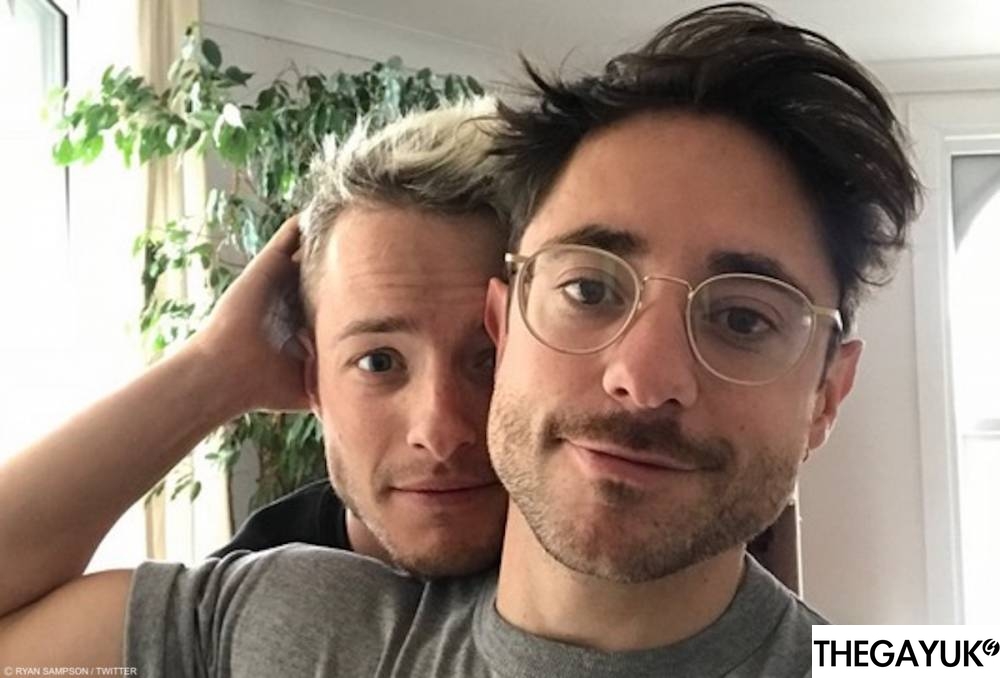
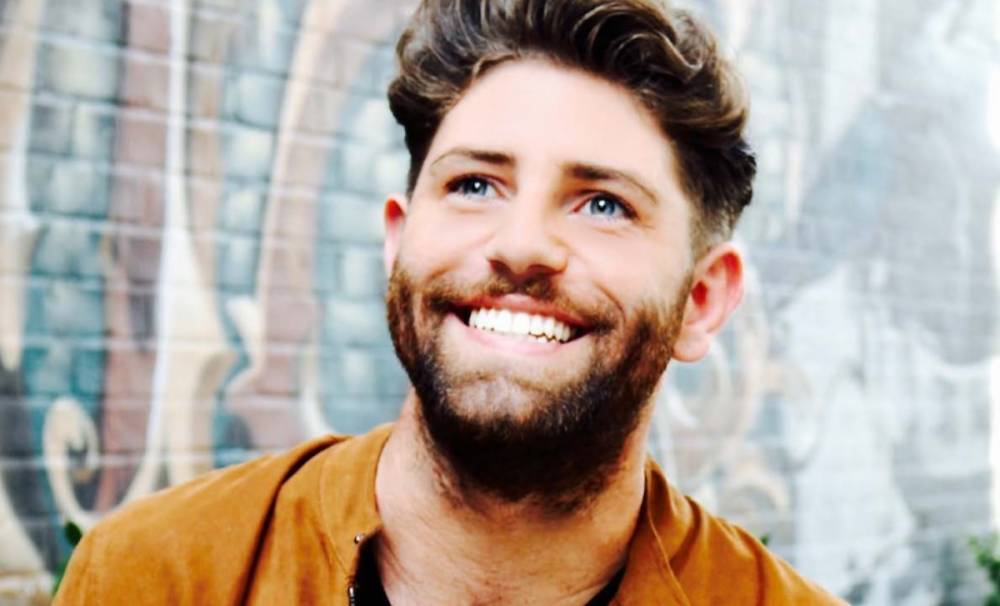
    Boom and boom! TV star Ryan Sampson, best known for his role in the comedy, Plebs has come out in an Instagram post where he revealed that somebody tried to engage him in “homophobic banter”.

    The star decided the best way to deal with the message was to come out and at the same time reveal his boyfriend. He wrote, “Hi y’all. So. I was on Instagram and I looked at my direct messages and it turned out someone was trying to rope me in to some (pretty creaky) homophobic banter. Huh! So, for clarity, here’s a pic of me and the boyf. Just to, y’know… straighten that one out. As it were”.

    Fans were quick so show their appreciation of the couple, One fan wrote, “How gorgeous are you two together! Go, Ryan! As for your reply, I feel sad you’ve had to do this to try and shut someone up. It’s your life, live it love it, enjoy that beautiful boyfriend of yours and forget the bigots with empty lives.”

    Another continued, “How gorgeous you two are! Can I make you matching hats? Taught myself to crochet so they might be ready for next winter. Would defo suit you! Love to you both. Hope you’re long in love.”

    Another person tweeted, “You two look bloody lovely. Now show us the rest of him not hiding behind your huge muscles”.

    Ryan is also known for playing numerous roles in the comedy sketch show Glitchy. He also starred in the Netflix hit The Crown and two episodes of Doctor Who.