Author: News Desk

  • Terrence Higgins Trust Backs PrEP This Pride Season

    Terrence Higgins Trust will leverage its position in the lead section at Pride this year by putting its full support behind the HIV prevention PrEP – (Pre-exposure prophylaxis) – a game changing treatment which prevents HIV transmission.

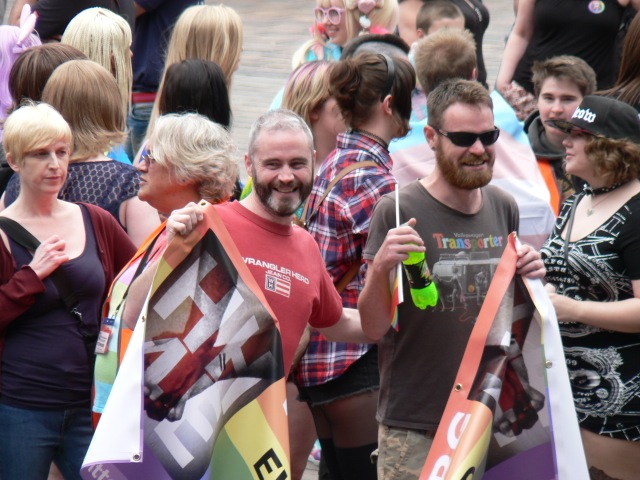
    Over 100 supporters of the UK’s leading sexual health and HIV charity will front London Pride this coming June 27, with placards that simply state ‘Stop HIV. PrEP now’.

    Terrence Higgins Trust CEO Dr Rosemary Gillespie said:
    “It’s a rallying cry. PrEP could be the treatment to stop HIV, and Terrence Higgins Trust will campaign until the Government, NHS England, and local authorities agree to use it to place HIV firmly in the past.”

    In February this year, the PROUD study reported that PrEP reduced the risk of HIV infection by 86 per cent for gay and other men who have sex with men (MSM), when delivered in sexual health clinics in England.

    Speaking today at a Terrence Higgins Lecture ‘HIV prevention, PrEP and the road ahead’ Sheena McCormack, Chief Investigator of the PROUD study, said:

    “The PROUD trial and the proven efficacy of PrEP shows just how much our current standards of prevention are failing some gay men.”
    “I love doing clinical trials because you don’t know what is going to happen, and when the result exceeds expectations as PROUD did – showing how incredibly effective PrEP is in a real-world setting it is especially rewarding.”
    PHE estimates there are over 2,500 new HIV infections annually in gay men in the UK, a number that has not fallen over the past decade.

    Dr Michael Brady, Medical Director, Terrence Higgins Trust said:
    “The 86 per cent reduction in HIV transmission offered by PrEP is staggering. On the basis of the PROUD results we would only need to treat 13 men for a year to prevent one HIV infection.

    “From a cost perspective, it is hard to see how PrEP would not be value for money. Truvada* costs just over £400 a month, and the price will drop significantly when the drug comes off patent.

    “People will not need to take PrEP for ever, nor will they necessarily take it all the time, whereas HIV requires lifetime treatment that currently costs the NHS up to £350,000 per person”

    For more information on marching with Terrence Higgins Trust to ‘Stop HIV. PrEP now’ please see here.
    Follow the action at #prepnow.

  • Thousands Enjoy First Portsmouth Pride In 13 Years

    Thousands Enjoy First Portsmouth Pride In 13 Years

    Portsmouth celebrated its first Pride event in 13 years yesterday, with thousands turning out for its parade and park celebrations.

    (more…)

  • The Smallest Country In The World Legalises Gay Marriage

    The Pitcairn Islands, a British Overseas Territory, in the South Pacific has legalised same-sex marriage in a small but significant victory for gay rights. (more…)

  • Channing Tatum Calls His Penis…

    During a tell-all AMA on Reddit the 35-year-old Hunk and star of Magic Mike revealed what he calls his ding-a-ling…

    Nothing, it seemed, was off limits as Channing Tatum revealed some would say, not us, what he calls his pecker. During the candid interview of sorts, one excited fan asked, “Does your penis have a nickname?” To which the Magic Mike star replied, “Gilbert”.

    There you have it. Channing Tatum calls his Johnson Gilbert. Now we’re trying to image what Gilbert looks like.

    Just so he knows we have an Sullivan over here and we’re happy to get to together and make music.

    Last weekend, Channing joined his co-star Matt Bomer for Pride and showed his dance moves off.

    “Magic Mike XXL” is set for release worldwide beginning Wednesday, July 1, 2015.

  • Two Bar Staff And Customer At Gay Pub Attacked By “Berserk” Man

    A man has been charged and sentenced to 150 hours of community service after going berserk in the New York, New York bar in Manchester.

    Manchester Evening News is reporting that Stuart Jolley, 37, of Nettlebarn Road, Benchill assaulted two members of staff and a customer at the New York, New York drag bar in Manchester after being asked to take his beer glass inside.

    The pub in the city centre had to lock its doors after the man then attacked two bar staff. He also damaged a £1000 window.

    Jolley, pleaded guilty to charges of common assault and criminal damage. The court sentenced him to 150 hours of community service and ordered him to pay £1250 in compensation to the three men he attacked. He was also ordered to pay a £180 criminal court charge and £85 prosecution costs.

    According to his defence, Lindsey Brown said that Jolley had no recollection of his actions and had damaged his hand when he punched the window. She added, “It was totally inappropriate behaviour which he deeply regrets”.

  • Unsung Gay Heroes In History

    We look back into history and highlight other unsung gay men who have made an incredible different to our lives.

    Alan Turing (1912–1954)
    Alan Turing was a British pioneering computer scientist, mathematician, logician, cryptanalyst, philosopher and mathematical biologist. During the Second World War, Turing worked for the Government Code and Cypher School (GC&CS) at Bletchley Park, Britain’s code-breaking centre. For a time he led Hut 8, the section responsible for German naval cryptanalysis and created the Turing Machine which decrypted the “unbreakable” German Enigma code. Turing’s pivotal role in cracking intercepted coded messages enabled the Allies to defeat the Nazis in many crucial engagements, including the Battle of the Atlantic. It is said by some historians that Turing’s work at Bletchley Park shortened the war by two to four years and saved approximately fourteen million to twelve million lives. Nevertheless, Turing led a sheltered and castigated life due to his homosexuality. Whilst he was briefly engaged to fellow Bletchley Park worker Joan Clarke, it was a purely plutonic relationship and they soon divorced. Turing was prosecuted by the police in 1952 for homosexual acts, when such behaviour was still criminalised in the UK. He accepted treatment with oestrogen injections (chemical castration) as an alternative to prison and became incredibly depressed. He committed suicide in 1954. Turing’s wartime heroics were not celebrated until he received an official pardon from Prime Minister Gordon Brown in 2009 following an internet campaign, and then a further royal pardon from Queen Elizabeth II in 2013. From 9th March, 2015, the biopic of Alan Turing’s life and heroics, THE IMITATION GAME, will become available on Blu-ray and DVD courtesy of StudioCanal.

    Bayard Rustin (1912-1987)
    Bayard Rustin was the brain behind Martin Luther King Jr. and the civil rights movement in 1960s America. Rustin was one of the driving forces behind the Congress for Racial Equality and the Southern Christian Leadership Conference (SCLC). Most significantly, Rustin organized the 1963 March on Washington — where King gave his legendary “I have a dream” speech. However, due to his homosexuality and his membership in the Communist Party, he has often received short shrift from historians and his integral role in the civil rights movement is often overlooked. At the time, Rustin selflessly avoided the limelight because he knew that elected officials and politicians would attempt to discredit the civil rights movement by pointing out his sexual and political leanings. Rustin was also heavily involved in the anti­–Vietnam War and gay rights movements before his death in 1987.

    Sergei Diaghilev (1872-1929)
    Sergei “Serge” Diaghilev was a Russian art critic, patron, ballet impresario and founder of the Ballets Russes, but also one of the first outspoken and unapologetically gay men of the early 20th century. Sergei Diaghilev reshaped that epoch’s ideas about art and performance, and was a pioneer in adapting new musical styles to modern ballet. He created the Ballets Russes mainly as a showcase for his lover and protégé Vaslav Nijinsky, who is still considered one of the greatest dancers who ever lived. Diaghilev had exquisite tastes, bringing the work of such artists as Balanchine, Picasso, Pavlova and Cocteau onto the stage in his cutting-edge productions, which were often unabashedly erotic. After the Russian Revolution of 1917, Diaghilev was condemned as an especially insidious example of bourgeois decadence and his contribution to Russian art was written out of history by the Soviets for more than sixty years.

    Larry Kramer (1935-present)
    Every movement needs a voice of anger and righteousness, and when the AIDS pandemic hit, the gay community was lucky to have Larry Kramer, whose editorials and plays (particularly The Normal Heart) demanded that the government take action and that gay men take responsibility for their health. A fascinating author and a rabble-rouser in the best sense, Kramer continues to be a vital and often infuriating presence. Kramer co-founded the Gay Men’s Health Crisis (GMHC), which has become the world’s largest private organization to raise funds for and provide services to people stricken with Acquired Immune Deficiency Syndrome (AIDS).

    Harvey Milk (1930–1978)
    Harvey Milk was an American politician who became the first openly gay person to be elected to public office in California when he won a seat on the San Francisco Board of Supervisor.
    Milk moved from New York City to settle in San Francisco in 1972 amid a migration of gay men to the Castro District. He ran unsuccessfully for political office three times. Nevertheless, his theatrical campaigns earned him increasing popularity, and Milk won a seat as a city supervisor in 1977. Milk served almost 11 months in office and was responsible for passing a stringent gay rights ordinance for the city. On November 27, 1978, Milk and Mayor George Moscone were assassinated by Dan White, another city supervisor who had recently resigned but wanted his job back. Despite his short career in politics, Milk became an icon in San Francisco and a martyr in the gay community. In 2008 a Hollywood biopic Milk, starring Sean Penn, honoured Harvey Milk’s transformation of San Fransisco into a mecca for LGBT Americans and in 2009 Milk was posthumously awarded the Presidential Medal of Freedom.

    The Imitation Game is out on Blu-ray, DVD and digital download platforms now , courtesy of StudioCanal
  • Museum Tries To Turn Moths Gay To Stop Them Ruining The Exhibits

    The National History Museum is trying to confuse male moths into believing that other male moths are female in an attempt to stop them reproducing.

    The Telegraph is reporting that the museum located in Kensington, London, is trying to trick male moths into mating with other each other so they stop reproducing and damaging the ancient art exhibits. The museum has had a moth infestation for four years and cannot use ordinary chemicals to get rid of the moths.

    Speaking to the Telegraph Armando Mendex, quarantine facility manager at the museum, who is heading the project said,

    “It’s called the Pheromone Destruction System and in simplistic terms, it makes male moths attracted to other male moths

    “They only live for a couple of weeks and during that time there is only a small window in which they can reproduce. If they spend this unknowingly attempting to attract and fertilise male moths, then it reduces the offspring we are up against.”

    Using the Pheromone Destruction System, male moths are attracted to traps set about the museum and are covered with female pheromone. When they fly out of the trap the pheromone disruption causes other male moths to think they are chasing females rather than another male.

    A spokesperson from the museum confirmed to THEGAYUK,

    “We do not modify the moths’ behaviour in any way. Part of our programme includes spraying male clothes moths with female pheromones. Other males are attracted to the female pheromone but find a male when they get there – they are not attracted to the males themselves. This makes it harder for the moths to breed, helping to protect our collection of 80 million specimens.”

    Convinced? Is sexuality about pheromones?

  • GAY HISTORY: Unsung Gay Heroes In History

    We look back into history and highlight other unsung gay men who have made an incredible different to our lives.

    Alan Turing (1912–1954)

    Alan Turing was a British pioneering computer scientist, mathematician, logician, cryptanalyst, philosopher and mathematical biologist. During the Second World War, Turing worked for the Government Code and Cypher School (GC&CS) at Bletchley Park, Britain’s code-breaking centre. For a time he led Hut 8, the section responsible for German naval cryptanalysis and created the Turing Machine which decrypted the “unbreakable” German Enigma code. Turing’s pivotal role in cracking intercepted coded messages enabled the Allies to defeat the Nazis in many crucial engagements, including the Battle of the Atlantic. It is said by some historians that Turing’s work at Bletchley Park shortened the war by two to four years and saved approximately fourteen million to twelve million lives. Nevertheless, Turing led a sheltered and castigated life due to his homosexuality. Whilst he was briefly engaged to fellow Bletchley Park worker Joan Clarke, it was a purely plutonic relationship and they soon divorced. Turing was prosecuted by the police in 1952 for homosexual acts, when such behaviour was still criminalised in the UK. He accepted treatment with oestrogen injections (chemical castration) as an alternative to prison and became incredibly depressed. He committed suicide in 1954. Turing’s wartime heroics were not celebrated until he received an official pardon from Prime Minister Gordon Brown in 2009 following an internet campaign, and then a further royal pardon from Queen Elizabeth II in 2013. From 9th March, 2015, the biopic of Alan Turing’s life and heroics, THE IMITATION GAME, will become available on Blu-ray and DVD courtesy of StudioCanal.

    Bayard Rustin (1912-1987)

    Bayard Rustin was the brain behind Martin Luther King Jr. and the civil rights movement in 1960s America. Rustin was one of the driving forces behind the Congress for Racial Equality and the Southern Christian Leadership Conference (SCLC). Most significantly, Rustin organized the 1963 March on Washington — where King gave his legendary “I have a dream” speech. However, due to his homosexuality and his membership in the Communist Party, he has often received short shrift from historians and his integral role in the civil rights movement is often overlooked. At the time, Rustin selflessly avoided the limelight because he knew that elected officials and politicians would attempt to discredit the civil rights movement by pointing out his sexual and political leanings. Rustin was also heavily involved in the anti­–Vietnam War and gay rights movements before his death in 1987.

    Sergei Diaghilev (1872-1929)

    Sergei “Serge” Diaghilev was a Russian art critic, patron, ballet impresario and founder of the Ballets Russes, but also one of the first outspoken and unapologetically gay men of the early 20th century. Sergei Diaghilev reshaped that epoch’s ideas about art and performance, and was a pioneer in adapting new musical styles to modern ballet. He created the Ballets Russes mainly as a showcase for his lover and protégé Vaslav Nijinsky, who is still considered one of the greatest dancers who ever lived. Diaghilev had exquisite tastes, bringing the work of such artists as Balanchine, Picasso, Pavlova and Cocteau onto the stage in his cutting-edge productions, which were often unabashedly erotic. After the Russian Revolution of 1917, Diaghilev was condemned as an especially insidious example of bourgeois decadence and his contribution to Russian art was written out of history by the Soviets for more than sixty years.

    Larry Kramer (1935-present)

    Every movement needs a voice of anger and righteousness, and when the AIDS pandemic hit, the gay community was lucky to have Larry Kramer, whose editorials and plays (particularly The Normal Heart) demanded that the government take action and that gay men take responsibility for their health. A fascinating author and a rabble-rouser in the best sense, Kramer continues to be a vital and often infuriating presence. Kramer co-founded the Gay Men’s Health Crisis (GMHC), which has become the world’s largest private organization to raise funds for and provide services to people stricken with Acquired Immune Deficiency Syndrome (AIDS).

    Harvey Milk (1930–1978)

    Harvey Milk was an American politician who became the first openly gay person to be elected to public office in California when he won a seat on the San Francisco Board of Supervisor.

    Milk moved from New York City to settle in San Francisco in 1972 amid a migration of gay men to the Castro District. He ran unsuccessfully for political office three times. Nevertheless, his theatrical campaigns earned him increasing popularity, and Milk won a seat as a city supervisor in 1977. Milk served almost 11 months in office and was responsible for passing a stringent gay rights ordinance for the city. On November 27, 1978, Milk and Mayor George Moscone were assassinated by Dan White, another city supervisor who had recently resigned but wanted his job back. Despite his short career in politics, Milk became an icon in San Francisco and a martyr in the gay community. In 2008 a Hollywood biopic Milk, starring Sean Penn, honoured Harvey Milk’s transformation of San Fransisco into a mecca for LGBT Americans and in 2009 Milk was posthumously awarded the Presidential Medal of Freedom.

    The Imitation Game is out on Blu-ray, DVD and digital download platforms now , courtesy of StudioCanal

  • Giant Photocall To Protest Nigel Farage HIV Remarks Today

    Activist group ACTUP are hosting a giant selfie-photo call to protest UKIP leader’s HIV remarks during the leaders’ debate, prior to the general election earlier in 2015.

    ACTUP are hosting a giant selfie photocall in protest against Nigel Farage’s HIV-phobic remarks towards migrants in Trafalgar Square. This peaceful photocall pays tribute to the founders of the gay liberation movement and HIV activism. HIV+ and HIV- migrants and leading figures from within the gay liberation movement and HIV activism will speak.

    ACT UP FOR LOVE, will protest today from 6pm in Trafalgar Square, organised by ACT UP London and London Artists Projects.
    Speakers will be:
    620pm Garry Brough, Bloomsbury Patients Clinic
    630pm Jose Resinente, NAZ Project
    640pm Natalie Bennett, Green Party
    650pm Andrew Keates, director of the AIDS play ‘As Is’ at Trafalgar Studios
    7pm Vincent Manning, Catholics for AIDS prevention and Support
    710pm Sophia forum, People Living With HIV
    720pm Precious Lubunda, NAZ Project

    Nigel Farage questioned whether immigrants who live with HIV in the UK should continue to receive treatment. His remarks were widely criticised by the other leaders and the public at large.

    He said: “You can come into Britain, from anywhere in the world, get diagnosed with HIV and get the retro-viral drugs which cost up to £25,000 per year, per patient.

    “We need to put the National Health Service there for British people and families.”

  • George Michael Interrupted During Promo Video

    An unusual guest appearance halted filming on George Michael’s new video promo, this weekend when a Zebra “mesmerised” the crew.

    (more…)

  • Gay European Men In Homophobic Countries At Greater Risk Of HIV

    Europe’s most homophobic countries may be paving the way for a rise in HIV cases among gay and bisexual men, according to new research published in the journal AIDS.

    An international team of researchers from Europe and the US looked at HIV-related service use, need and behaviours among 175,000 gay or bisexual men living in 38 European countries with differing levels of national homophobia.

    They found that men in homophobic countries had fewer sexual partners and were less likely to be diagnosed with HIV. However, they also found those men knew less about HIV, were less likely to use condoms and are at greater potential risk of getting HIV when they do have sex.

    As technological advancements such as mobile sex-seeking apps mean men in the most homophobic countries have increasing opportunities for sexual contact, they are quickly overcoming the relative lack of brick-and-mortar sex venues such as bars and saunas. The researchers warn the effects of homophobia could therefore have a very concerning impact on the spread of HIV.

    Co-author Dr Ford Hickson from the London School of Hygiene & Tropical Medicine, said: “Our findings are surprising as it may appear it’s effectively safer for men to stay in the closet in the most homophobic countries because their HIV-risk is lower there. But the closet is a difficult, shameful place which is particularly harmful to mental health and wellbeing. It’s also a place where men are kept ignorant, under-resourced and poorly skilled when dealing with sex and HIV. As the way people meet changes with technology, the homophobia that may have appeared to be protecting these men will now be exposing them to huge risk.”

    The research was conducted by the Yale School of Public Health, Columbia University, the London School of Hygiene & Tropical Medicine, the Norwegian Knowledge Centre for Health Services, and the German Robert Koch Institute.

    Researchers measured national homophobia across Europe using a combination of the laws of a country and the results of social attitudes surveys. They then analysed data from 175,000 gay or bisexual men in 38 European countries who completed the European MSM Survey (EMIS) in 2010 to compare the level of HIV-related service use, need and behaviours among groups of men living in more homophobic and less homophobic countries.

    The researchers say their findings suggest new approaches need to be considered to reduce oppression without increasing the HIV risk.

    Dr Hickson added: “Previous research on HIV prevention in Europe has shown there are four key interventions in suppressing HIV: condom distribution, peer-led group education, peer-outreach education projects, and universal access to anti-retrovirals for men with HIV. All health authorities could be commissioning these services as well as working to protect the human rights of sexual minorities.”