Category: Comment

  • COMMENT: Could Therapy Save Your Life?

    COMMENT: Could Therapy Save Your Life?

    As a psychotherapist, the current news around suicide, immigration, and HIV transmission, troubles me greatly.

    CREDIT: Ocus Focus / Bigstock

    It is only a matter of months since we heard that Vikki Thompson, despite being known to be at serious risk in custody, was sent to a male prison anyway, resulting in her making the upsetting decision to end her life. The reverberations around the country have been vast – people are now engaging in dialogue about suicide, considering the fate of transgender men and women in the prison estate, alongside considering the wider concerns around the risk of suicide to the LGBTF community. For those of us who are part of this community, the concerns are real, and significant.

    But what are, roughly, the facts?

    In terms of stats, you are all probably aware that the majority of suicides are male (of the 6,233 reported suicides in the UK during 2013, 4,858 of those were men, and 1,375 were women (Samaritans’ Report, 2015). Males – and usually white males – between the ages of 49 and 65 were particularly at risk, especially professionals such as doctors, social workers, and solicitors. In addition, suicide amongst the LGBT youth is notable, with LGBT teens and young adults having one of the highest rates of suicide attempts in comparison with the rest of the population. The situation is truly disturbing for us, our families, and our friends. For those left behind when someone ends their life, recovery can be arduous at best. Even more sadly, the lack of a therapist who shares the same sexual identity can significantly impact the quality of the therapeutic relationship from developing at all. But what can we do about it?

    The statutory services are often less than helpful. Without casting ‘shade’ on my Health colleagues, who work hard under very difficult circumstances, waiting lists remain high, the quick fix agenda is still rampant, and getting a therapy which will actually do what it sets out to do is rarely available, despite promises otherwise. Rather unconventionally, in a country where we expect to be treated for everything for free, my humble suggestion would be for anyone with a need for some emotional support, is to consider paying for the therapy yourself. Here are some things to think about in order to help your decision:

    There are often no waiting lists in private practice.

    Choice actually means something. If your therapeutic alliance is not working, find someone else.
    An hour’s therapy costs the equivalent of a meal out, or a pair of jeans. Your happiness is priceless.
    Therapy can take as long as you need it to, not just six sessions.

    Many therapies are available online, i.e. Skype, meaning you don’t even need to go out of your home.


    Confidentiality is more meaningful, as there will be no trace on your health record. At all.

    The thing is, research supports the idea that therapy can be really helpful. For myself (yes, therapists are required to complete their own therapy) the therapy was life-changing. Therapy can help alleviate difficult feelings to the point where, for example, with depression, the impact can rival anti-depressants, and the effects can be felt for much longer afterwards. Some people report that therapy has been profound, with many people wishing they’d made the decision much earlier. Isn’t it about time you considered trying therapy for yourself?

    About Andrew Smith:

    Andrew is the clinical director of TherAppUK Ltd, an organisation based in Greater Manchester that provides a range of therapeutic solutions to individuals, families, and groups. He is also a doctoral researcher at the University of Huddersfield, and lives in the Calder Valley with his partner, Nigel, their son, a neurotic Chihuahua called Chicky, and two cats. If you have any urgent concerns about your own or someone else’s emotional health, please call 999 or NHS Direct. If this is a matter that can wait until one of our therapists can call you back, please email Andrew on andrew.smith@therapp.org

    Provided Content by Andrew Smith (What does this mean?)

    Opinions expressed in this article may not reflect those of THEGAYUK, its management or editorial teams. If you’d like to comment or write a comment, opinion or blog piece, please click here.

  • COLUMN: Surviving The First Christmas With Your Boyfriend

    They never tell you in the Big Gay Handbook. And frankly they should because I was not expecting it. But it turns out that the first Christmas together is a very interesting relationship test.

    (more…)

  • JOURNEY TO FATHERHOOD 3 | The Reaction

    About five years ago I went on holiday to Benidorm. I met a gay couple from Berkshire, one of whom had been a long term employee at one of the world’s largest banks.

    After a few nights we got very drunk and started one of those deep conversations about life. Recounting his time at the bank and his life since, he said ‘until you’ve really encountered some s**t, you don’t really appreciate life’. His encounter was leaving the bank he had worked for, for 15 years, during the recession. It made me think about what I really appreciate in life, the proverbial that life had thrown at me, if I really appreciated what I had and what sort of person I am. In the last issue I asked, what does £1000 mean to you, and now I ask, what sort of person do you think you are and what’s important to you?

    The first person I spoke to about it was one of my oldest (15 years and counting) best friends. His reaction was a mixture of shock, anger at what he saw was my irresponsibility and disbelief.

    My answer at the time, to myself, was multi-faceted. Firstly I have been through st: from ten years at boarding school from which I will never recover, but which essentially has defined me as the person I am today (it’s hard to deny what you are); through to significant but minor stuff like: being so poor I couldn’t pay for food in the supermarket and being on the verge of bankruptcy and losing everything for several weeks in 2008. On the plus side, I’ve come from a very privileged background: I was one of the 7% that went to boarding school, educated alongside royalty. Growing up I never went without, had plenty of opportunities and a happy childhood until 8. I’ve worked in the profession I wanted to work in, and today I am a Director at both the business I work for and a charity. So, I’d say I’ve been through some st and what’s most important to me is family and friends. Everything else is important, but a nice to have, because when the proverbial hits the fan, what is important? For me my family and friends aren’t just complex, but are probably the most important part of my life.

    This was part of my reasoning behind having family when ‘we’ started to evaluate what we wanted in life (with my now, ex-partner). So, having been to the shows and conferences, I began to explore the topic with friends and family. You would think that the prospect of having children would fill friends and relatives with joy, hope, happiness and good will. But, in some cases, not a bit of it.

    The first person I spoke to about it was one of my oldest (15 years and counting) best friends. His reaction was a mixture of shock, anger at what he saw was my irresponsibility and disbelief. Having been to Tate Britain, we spent an hour perched on a wall where he preached about why I shouldn’t and couldn’t do it. So I knew then that if someone so very close to me, could react in such a way, that I would need careful management of everyone else.

    Indeed as I hadn’t sold the house at the time, this was one of the reasons why I placed everything on hold until last year.

    Based on that experience I have told very few friends and none of my extended family. Thankfully the reactions have been mixed from the positive (good for you, you can do it), to as I said, the negative. So far out of the ten individuals or couples I have told, seven have been supportive and three have been virulently against. My parents for their part swing from good to bad, and my brother is very supportive.

    Understandably I’ve studied the negative reactions in some detail and I’ve come to conclusion that it is a mixture of worries and fear for the future, tied into the respondents own background issues, and worries about my capabilities. It’s also a reflection of the wider gay community. So often we are on the fringes of society and what binds us together can be what makes us different (and quite often cutting edge), but not what is considered ‘normal’. One of my friends who reacted negatively, was abused as a child and you could understand his worries about security for the children I would bring into the world. Another is older and never had the opportunity to have children and you can see his thoughts lined with regret and resentment. The third person of concern is my own mother.

    My mother is the living embodiment of a conventional parent, and a 1950’s housewife. She left a job as a manager at International Computers in the 70s, married my father and life for her became having children, cooking, ironing and keeping the house clean. I have to give credit to my mother as she has a hatred of the last three, but as one of my friends said, entered into and stuck to, an agreement with my father, where they had clearly defined roles. She has raised two decent, productive, contributing members of society; despite the bumps along the way (my homosexuality and my brothers psychological crash with drugs).

    Her reaction has been the most worrying. In part it’s down to the baggage my mother brings.

    When I was young, we were due to have a sister, a child my mother dearly wanted. Unfortunately (now thanks to the genetic testing I have undertaken) we know that I and (therefore most probably) my mother carry a gene which contributes to miscarriages. My mother’s own miscarriage, is never spoken about and amazingly, the sheer pain after all these years is still there. So, one Saturday a mild conversation about choosing gender turned into a fraught conversation based on my mothers pain. (I’ve decided for that reason not to choose the gender.) On top of this my mother goes from highs to lows: “What names should we think about,” to, “I’m too old to raise a child,” and “How will you work with the crying at night”. The last is a decent point, but with the help of hefty pay from my job, I will be able to afford child care and expect to have time off following birth. I wish that my mother, who is usually so practical would offer calm, collected, thoughtful advice. Instead as with three of my friends I quite often have hysterics management. I now avoid the friends, one of whom I have stopped speaking to entirely and the other two rarely. In some ways it has accentuated what is important to me: family and friends.
    Next time I want to take a helicopter view over the ‘legals’ and some of the ethical issues that prospective gay parents have, from: ‘who is mum’, to which jurisdiction, to sexism.

    Please also help me to raise funds, any contribution is gratefully received: www.gofundme.com/simonhill

    by Simon Hill | @SimonXHill

  • OPINION: Why the boycott of Zoolander 2 is wrong

    OPINION: Why the boycott of Zoolander 2 is wrong

    All it took was a few short seconds and two lines of dialogue from Benedict Cumberbatch in a film trailer for several thousand people to scream “boycott”.

    I have written before about being offended, and I shall stick to my thoughts on that, that taking offence achieves absolutely nothing other than you being offended. But first I’ll look at what exactly has got people up in arms.
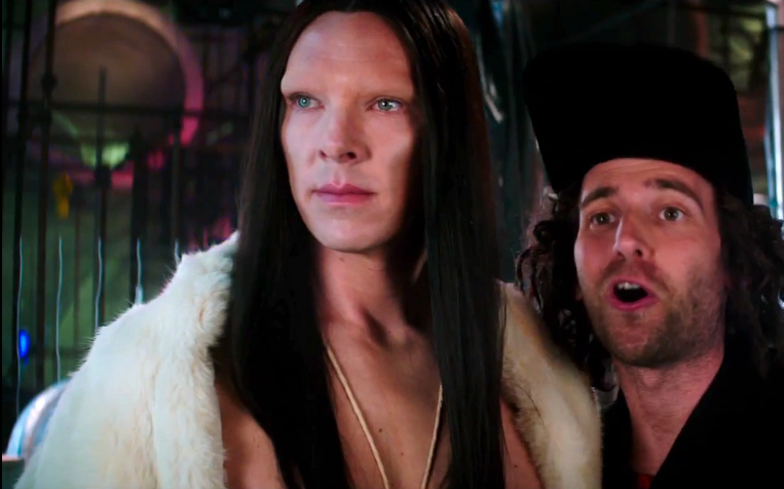
    Benedict Cumberbatch plays a character called All in the film, who appears to be a cartoonish over exaggerated example of the proliferation of androgynous models in the fashion industry. From the trailer, it is nearly impossible to tell exactly how the character is going to be played because we see so little of him. But from the small scene we do see, it actually takes the mickey out of male models and their perceived stupidity rather than someone who is androgynous.
    It basically involves Stiller’s stupid character asking if All is a male model, or a female model and All replying “All is All” while Owen Wilson’s character says Stiller’s character is asking if All has a “hotdog or a bun”. So, two characters who are meant to be parodies, and walking jokes themselves, say something crass that only two idiots would say, and that is all.
    They are not words of hate, they are words of ignorance, yes, but they are ignorant characters who say them. We do not know yet how big this storyline is or how it’s written. But even this complete lack of full storyline or character arc hasn’t stopped the activists from screaming out. But judging a film 2 months before its release off of a few seconds of footage of a character that may only appear in a short scene that has little or no relation to the rest of the film is ridiculous. For all we know the character may be completely sympathetic towards people of non-binary gender identity. None of the viewing public know yet, but if the scene is an obviously gross and deliberately offensive example that has no humour behind it then I would certainly change my stance on the issue. But it’s really far too early to tell yet.
    The first Zoolander and its sequel are comedies and comedy is meant to be a mockery of literally everything, nothing should be sacred in comedy. Comediennes like Lisa Lampanelli will mock the stereotypes of black people, Mexicans, Jews, gays, disabled people and literally any kind of person you can think of, which what makes comedy what it is, it’s that no one is or should be safe or above being lampooned with obviously inaccurate examples of how they are. But what makes the reaction to the Zoolander 2 trailer so telling is that trans or non-binary people are not seen as “punching up” when it comes to comedy. By punching up I mean people seem to be OK with relentlessly taking the piss out of Christians, politicians, Royalty, reality TV stars, sports stars, and the wealthy, people with perceived “lucky breaks” They can take it, they are more fortunate than the rest of us so they deserve to be taken down a peg or two so we can all laugh at them.
    How many of the people who signed the petition have seen an episode of Family Guy, American Dad, The Simpsons or South Park and laughed at the jokes that mock celebrities like Paris Hilton, Britney Spears or Tom Cruise to name but a few. I don’t believe for a second thanks to South Park that any of Paris Hilton’s dogs have committed suicide to get away from her, or that she’d steal child to turn into a pet, but I still laughed at the absurdity of it.
    I am not heartless though, and I appreciate the fact that the trans community is still very far from acceptance, and that every day trans men and women go though hell trying to find their place in the world and to not be scared for their lives, and they fear that misrepresentation of their community damages the image that they want to get across.
    Many trans people have vocally said Caitlyn Jenner doesn’t represent them because she has an easy life, and yes that is true, she really doesn’t have a clue how it feels to be an everyday normal trans person because she has it so relatively easy. That’s fine, she doesn’t represent the trans community, but why should a character in a film who so far hasn’t even been marketed as trans somehow be any different.
    That character doesn’t represent the trans community any more than Derek Zoolander represents male models, but it’s OK to take the piss out of male models because they are rich and pretty, they can take it right? This isn’t me going down the route of saying no one should be mocked because it’s unfair, I say everyone should be mocked humorously to make it fair. Either you pick on everyone or no one, never laugh at anything again, or feel free laugh at everything. Obviously, not everyone is going to appreciate every single joke ever told, so what? If you don’t laugh you don’t laugh. I didn’t find Friends funny, yet there’s several million people who will disagree with me and find it the funniest thing to have ever been on TV, and did Chandler Bing’s drag queen father, played by completely cis-woman Kathleen Turner cause the kind of outrage All has caused because an androgynous character is played by a cis-male actor, not that I can remember. No one seemed that bothered by the fact Chandler’s dad was played by a woman rather than an actual drag queen.
    But comedy in TV and Film land isn’t meant to be an accurate version of people, if that were true, all people who wear glasses would be spotty nerds, all ginger people would have no souls, all sci-fi fans would be lonely virgins and the list goes on of these kind of things. Zoolander is very obviously about mocking the fashion industry and presenting funny yet inaccurate versions of the people who inhabit that world.
    However, if you really are offended or bothered by the character of All, then don’t watch the film, but don’t try and foist your views on others and whip a group of people up into a frenzy. The Twitter/Facebook mentality these days means people can feel like they are part of something as it happens, by signing an online petition based off a knee-jerk reaction to something that has in all probability been taken out of context of the whole film. If the trailer was to be taken at face value, Justin Bieber is not only dead, but also some kind of fighting superhero, both of which are plainly untrue.
    I’m not using my views here to try and change the mind of anyone, or to even make them stop and think for a moment, these are just my views and I don’t expect everyone to agree with me, but nor do I want people lambasting me for allegedly being insensitive towards the trans and gender fluid groups out there. Life is meant to be laughed at and people should stop taking things so seriously. Plainly there is a difference between being outright mean and nasty with no humour behind it, but light-hearted mockery isn’t meant to be taken seriously. A vast majority of people will know that the character of All isn’t a true representation of gender fluid or transsexual individuals and will just see the film as a film lambasting all different types of people. Zoolander 2 will probably be a bit of dumb fun…How about you just enjoy it?

    Opinions expressed in this article may not reflect those of THEGAYUK, its management or editorial teams. If you’d like to comment or write a comment, opinion or blog piece, please click here.
  • COMMENT: Tyson Fury: Be Careful What You Wish For

    Boxing has never been an easy sport to love for many people. It’s a sport that at its heart can be seen as two grown men knocking seven shades of daylight out of each other.

    Of course, there is always the counter argument, that there is a beauty in its brutality, that it is as much a mental contest as a physical one. And certainly as a business, it can draw crowds and money. The richest prizefight of all time was held in Las Vegas in May this year between Floyd Mayweather Jr and Manny Pacquiao, with prize money of an estimated $200 million. And that’s before we even stop to think about the hundreds of millions the TV rights for the big fights went for.

    As a sport it thrives on big characters to bring the big cash in. And controversy. But over the last couple of decades, even die-hard boxing fans have had their patience tested. The confusing and fractured competitive landscape created by having four sanctioning organisations, with no single governing body, allegations of greed and corruption, too few household names, and growing competition from mixed martial arts such as UFC have taken their toll.

    The lack of big names, with a few exceptions, has seen average TV revenues decline. For example, in the UK declining viewing figures versus expensive television rights has meant that boxing has very rarely been shown on terrestrial television in the past few years.

    Plus of course, there are the frequent calls for boxing to be banned due to the risk of severe injury or fatalities during a fight. It is a sport that often finds itself in the spotlight for all the wrong reasons.

    And now we have Tyson Fury. The new heavyweight champion. Certainly, he looks presentable enough on the poster to keep the sponsors happy and won the world title after going in as the underdog against Wladimir Klitschko. So far, so Rocky. But then there is the homophobia and bigotry.

    “There are only three things that need to be accomplished before the devil comes home: one of them is homosexuality being legal in countries, one of them is abortion and the other one’s paedophilia. Who would have thought in the Fifties and Sixties that those first two would be legalised?”

    Here’s the thing that all professional boxers have in common; unshakeable self-belief. So while Fury and his people have retreated into public relations disaster retreat mode and claimed, predictably, he was misquoted, this is a sportsman that has made the leap from the back page to the subject of opinion pieces like this one and dominated social media.

    The petition to remove Tyson Fury from the nominees for this year’s BBC Sports Personality of The Year has been widely publicised in the past few days. And I have the feeling that Fury’s management are secretly delighted. Because guess what? Now everyone knows the name of the new world champion.

    So what if he’s been widely derided as a homophobe? Boxing thrives on controversy and now with his bad boy credentials turned up to the max, Fury can safely go into his next fight as the kind of edgy, divisive figure that boxing has long thrived on. It may be a cynical view but I suspect that Fury and his team will not be too upset if the BBC bow to public pressure and strike his name from he ballot. Because the increased public profile and the new status as a hate figure is exactly what promoters and TV networks will pay the big bucks for.

    He has his views which I’m fairly sure are not shared by the vast majority of boxing fans. The truth is that now his infamy has grown to a point where being a hate figure actually helps his career. Because who doesn’t want to see the villain get taught a lesson by the next challenger that comes along? By tapping into the public desire to see him get what’s coming to him, Fury will potentially be bigger box office and make a hell of a lot more dollars.

    Yes, Tyson Fury should not be considered for the title of Sports Personality of The Year. He is guilty of nothing less than hate speech and the BBC should never be seen to endorse that. The sad thing is that for Fury, the storm will only push his price up. He’s not running for public office. His job is punching people for cash. And to earn the big money for that, political correctness is not in the job description.

  • COLUMN: The Worst Day Of My Life Was… Remembering The Height Of The AIDS Epidemic

    I guess it started from that lazy Sunday afternoon, stretched out with all the Sunday papers when my eye’s were drawn an article about a a gay cancer in San Francisco. I sat bolt upright and started to read it in earnest.

    (more…)

  • COMMENT: Charlie Sheen, HIV and The Press

    I recently wrote an article for THEGAYUK about reports in the Sun newspaper regarding a Hollywood actor that was alleged to have HIV.

    I was quite firm in my opinion of the Sun and their showbiz journalist Dan Wootton, as I believed that the sensationalism was taking us back to the 1980s.

    The reports by the Sun and other outlets left little to the imagination when trying to work out who it could be. Pretty soon Charlie Sheen’s name began appearing all over my Twitter feed as people gossiped about the speculation that he could have HIV. It’s something that genuinely angered me and I am still incredibly uncomfortable with how this whole story has played out.
    On Tuesday 17th October 2015, Charlie Sheen appeared on American television to confirm that he has HIV. It’s a move that I view as being incredibly brave. I can only applaud Sheen for his honesty and the way he is handling the furore. It is my hope that he can now find peace and indeed be free from the prison he’s been living in, as he says.
    Of course it is massively concerning that he has had to announce something so personal in such a public way. Every person on this planet should have a right to confidentiality, particularly when it concerns their medical records. That extends to famous people and celebrities too. Just because somebody is in the public eye, it does not mean that every part of them and their lives belong to the public
    I cannot admit to being much of a Charlie Sheen fan previously, but I now have a new found admiration for him. The way in which he has been treated, and continues to be treated, is simply atrocious. Nobody deserves to have their medical conditions made public and the way in which some of the press have been reporting on this is nothing short of appalling.
    Along with the Sun’s sensationalised headline of “Hollywood HIV Panic”, the Mirror also published an article by Fleet Street Fox, which had “The Hollywood actor with HIV deserves everything he gets – and worse” as a headline. It is the kind of judgemental gutter press reporting that belongs in the dark ages of the 1980s, not in 2015 when we’re apparently more educated and open minded.

    There are two things to come out of all of this. On one hand it is encouraging that there is now somebody so well-known who has HIV. It has got conversations going around what HIV is and what undetectable means. That can only be a good thing which leads to increased education and awareness of HIV.
    However on the other hand there is the sheer scale and sensationalism of the story. I genuinely thought we had progressed beyond the kind of reports that were seen twenty or thirty years ago. The fact that Charlie Sheen having HIV is such a huge worldwide news story shows that we have a very long way to go in terms of destigmatising HIV. It shouldn’t be a headline news story. It shouldn’t be the topic of tabloid gossip. It shouldn’t be the case that a human being has had to go on television to disclose medical information to the world.
    Whilst there are encouraging aspects to take from Charlie Sheen’s story, it also shows just how much more progress, education and awareness there needs to be.

    Opinions expressed in this article may not reflect those of THEGAYUK, its management or editorial teams. If you’d like to comment or write a comment, opinion or blog piece, please click here.

  • COMMENT: 7 Reasons Why X Factor Isn’t As Good As It Used To Be

    Who doesn’t love The X Factor? Well, apparently 8 million less people than 5 years ago.

    This year has seen the worst ratings for the show since it started and ITV are panicking.

    Despite on the surface the show being the same as it’s ever been, a camp festival of fun and frolics with the best and worst singers the UK has to offer, a rot has set in and considerably less people are watching it this year. But why has Simon Cowell’s baby lost so many viewers? What has changed about the show that is putting people off?

    It’s impossible to pin it down to one thing because that could be easily changed. A series of events in the history of the show has meant people aren’t as enamoured with the show. I’m going to take a look at what I believe has gone so terribly wrong.

    1. The personnel factor. The first 3 series were the same judges of Simon Cowell, Louis Walsh and Sharon Osbourne, series 4 added Dannii Minogue then series 5, 6 and 7 kept with the same 4 judges after adding Cheryl Fernandez Versini who was actually relevant at the time after Osbourne left. But series 8 onwards has seen a rotating roster of judges changing year on year and constant changes in format to try and keep the show fresh and people can’t rely on what they know and couldn’t relate any more, and by the sounds of the reception of Nick Grimshaw this year, he won’t be back next year. Rita Ora also hasn’t made much of an impression; she’s just kind of there. The new presenters of the main show, Olly Murs and Caroline Flack, who went down well on the sister show The Xtra Factor, have even been compared to the car crash of a presenting team of Samantha Fox and Mick Fleetwood. The loss of Dermot O’Leary as main presenter and Louis Walsh as a judge has apparently really bothered people.

    2. The contestant factor. In the early years the weird and terrible ones were always kept to the initial auditions and possibly made it through to boot camp, but didn’t make it any further. These were generally hilarious, and in some cases downright scary (Ariel Burdett anyone?) but we were safe in the knowledge that this would be the only time we’d see them ever again. It’s what made the show entertaining, you could cringe along to these poor idiots who had been told by their parents and friends they were amazing, only to be ruthlessly torn apart by Cowell and co. Yes there were the camp and cheesy ones like Chico and Same difference who made it tot the live shows in the first few series, but they actually could sing, and could be entertaining in a slightly cringey way, But in 2009, Irish twins John & Edward Grimes, who everyone could hear couldn’t sing a note between them, made it through to the live shows, and stayed far longer than was thought possible, and after that there had to be a contestant who wasn’t very talented yet the judges kept insisting were “entertaining”. Which leads me to…

    3. The Fix Factor. Despite Dannii Minogue getting increasing annoyed, Jedward managed to survive to come 6th in 2009 and the whispers about foreknowledge by the judges started. Every time the twins ended in the bottom two, it would mysteriously go to deadlock or the judges would vote to save them, and they would get through another week. And year on year the same thing started to happen, contestants who were bad singers would survive much longer than expected and the whispers started to become chatter. The straw that broke the camels back though, was in 2012, when camp as Christmas contestant, Rylan Clark was dramatically saved by the deadlock vote after Louis was seen being talked too by a producer of the show during the save me song of Carolynne Poole. After he said he wanted to save Carolynne, the presenter Dermot O’Leary kept insisting that Louis say whom he wanted to send home, until Louis said he wanted to take it to deadlock. If you watch the video, you can hear a clearly exasperated Gary Barlow ask, “Why deadlock?” To which Louis appears to answer “Apparently I have to Gary” Seriously people go watch it. But it isn’t just the terrible singer contestants who were saved. After ranting on stage at the six chairs challenge this year, Mason Noise didn’t earn a chair, yet he’s on the live shows after Tom Bleasby quit before Judges Houses. There’s also the little issue of a picture of Seann Miley Moore being put up as part Nick Grimshaw’s final 3 before he was even announced. That could’ve been a technical hitch, but it raises questions.

    4. The sustainability factor. Year in and out The X Factor promises to find the next big star, and fill their world with countless millions of fans and albums and money a plenty. But hold on a second, what are the odds actually like to get a sustained career out of The X Factor? Since 2004, 142 contestants (not including this year) have made it through to the live shows. Can you name me 10 of them who are still in the public eye without using Google? Don’t worry I’ll wait…How many did you manage? By my calculations, of that number, less than 15 of them have had a career that lasted over a year, and not always in music. These are not having the odds ever in your favour when it comes to getting a career, and I think the public has cottoned on to that fact and are rebelling against the format of all these types of shows. It remains to be seen if any of the 13 contestants from this year can forge a living out of it, but chances are we’ll have forgotten them by next year or simply not care enough about them.

    5. The predictability factor. Once the live shows start you can usually see who the judges favour. They get given the best set ups, and the best songs and production value, and they are praised week after week, even if the performance is bland and predictable. Then there’s the same old phrases trotted out. When Louis was there, it was always, “You look like a pop star and you sound like a pop star”. But as the show progressed it became painfully obvious who was getting the most attention and who the public were being manipulated to like and vote for. As soon as I heard Mason Noise was coming back, I knew they would sacrifice someone more talented and likeable, like Simon Lynch or Josh Daniel in order to try and create headlines by having the bad boy back and showing his redemption of his past actions.

    6. The manufactured factor. Yes, yes I know, it’s reality TV and there is always going to be a certain amount of manipulation to make good TV, but it’s scary how many of the contestants are scouted by the producers rather than being a nobody who walks in off the street. Filipina girl group 4th Impact, have from the start been made out to be these four sisters who sacrificed everything to make it to the UK version of the X-Factor, but the truth is a little shadier. They have performed on various other talent shows in The Philippines and in South Korea and done reasonably well on them. The other side of it is that the genuine participants who haven’t been selected by the producers beforehand have been through at least 3 auditions already, before they even get to meet the main judges, so the reason why they seem so utterly put out when they are told they are awful is because they have been told 3 times they are good enough to meet the main judges.

    7. The same old format factor. The show has become dull, despite the attempts to inject life into it; there is absolutely nothing new that makes it interesting any more. None of the finalists stand out for the right reasons, none of their voices are unique and even the celebrity duets aren’t anything like they used to be. In the past we’ve had Rihanna, Christina Aguilera, Beyoncé, George Michael and Michael Bublé singing with the final 3. Recently they’ve had to get the judges Nicole Scherzinger, Gary Barlow, Tulisa, and Kelly Rowland (hopefully they won’t let Cheryl do it this year) and previous contestants like Ella Henderson to do the duets. The whole show has become tired, and with one more contracted year to go, maybe 2016 should be the last time we see The X Factor.
    How would you save The X Factor from certain doom? What would you do to breathe some fresh life into it?
    by Andy Elliot Griffiths | @AndyEG1982

    Opinions expressed in this article may not reflect those of THEGAYUK, it’s management or editorial teams. If you’d like to comment or write a comment, opinion or blog piece, please click here.

  • OP ED: Why Dan Wootton And The Sun Should Be Ashamed Of Themselves

    OP ED: Why Dan Wootton And The Sun Should Be Ashamed Of Themselves

    There seems to be a lot of people who are attempting to turn back the clock at the moment

    Whether it’s one of my friends who has recently had her latest round of botox or the Conservative government trying to take us back to 1875, it seems we all want to relive the past. Then came The Sun and its journalist Dan Wootton, who are apparently trying to take us back to the 1980s with sensationalised, scaremongering articles.

    By now I’m sure most of us will have seen The Sun’s recent front page, which claims a top Hollywood star has HIV.
    “Hollywood HIV Panic”, the headline read, as if the article is a trashy Hollywood-made drama in itself. The Sun alleged that the famous man has been living with HIV for a number of years and has had a string of also famous lovers.

    The article insinuates that the actor has been knowingly having sex with a number of women when he’s aware of his HIV status, and therefore could potentially be passing it on. In the article, The Sun also claim they have chosen not to name the star. How wonderfully considerate of them.

    I have to admit that I thought to myself, where do I even begin with my takedown of this article and Dan Wootton?

    The whole thing is so odious, and indeed Dan Wootton an odious creature, that I wanted to throw my laptop out of the window and bang my head on a brick wall. Let’s begin with the fact that regardless of this person’s fame, everybody has a right to privacy and confidentiality, particularly when it comes to something such as medical records. Running this story is an absolute invasion of privacy.
    Then there’s the sensationalist, dated tone of the headline and article. It reverts back to the dark days of the 1980s. An article of this type can only help to reinforce the stigma around HIV. It takes a giant leap backwards in the fight to change attitudes and perceptions regarding HIV.

    What The Sun could have done is ran a very informative piece about HIV, but instead they chose to cheapen it and spread vicious gossip that is hurtful to many people.

    Overall I’m not really shocked that The Sun would run such a piece. I’ve long regarded them as a trash rag. What I am disappointed with, though, is The Sun’s showbiz journalist Dan Wootton putting his name to something so shameful.

    I must admit that I have never been a fan of Dan Wootton. I believe he and his type represent what is wrong with the world. I have zero respect for someone who makes a living out of spreading gossip and rumours about people. However, I had assumed that as a gay man he’d have used his position to help rather than to hate. Clearly I was mistaken.

    Upon seeing the article, I tweeted Dan Wootton to ask him if he thought it’s ok to spread hurtful gossip. I told him that he is contributing to stigmatising HIV and that he should be ashamed of himself. Many other people had also tweeted him, saying similar things to what I had. I didn’t expect him to reply, but I was surprised to discover that he has blocked me. I’m not the only one; many others have also been blocked by Wootton for calling him out on what he has done.

    I can understand blocking trolls, but when people are asking genuine questions and aiming justified criticism at you, the best approach is to face it head on and be man enough to admit that you made a mistake. By blocking people and ignoring all criticism, Dan Wootton is burying his head in the sand and not taking any responsibility for his actions. This just makes him look even worse and gives the impression that he stands by the article.

    What I’d like to see Dan Wootton do is apologise for what he has done and make an effort to do something more beneficial for those living with HIV. As it stands, he’s shown himself to be a truly appalling individual. He has betrayed people living with HIV and should absolutely be ashamed of himself.
    Terrence Higgins Trust does amazing work supporting people living with HIV, campaigning and raising awareness. Please have a look at their website and show them some love.

    by Daniel Browne

    Opinions expressed in this article may not reflect those of THEGAYUK, its management or editorial teams. If you’d like to comment or write a comment, opinion or blog piece, please click here.

  • COMMENT: Is The Gay Community Its Own Worst Enemy?

    Last year I wrote an article for this divine publication about the gay movement eating itself from the inside out.

    It was in response to a comment from RuPaul, in which she made that exact statement after the term ‘she-mail’ was dropped from the Drag Race television show. Almost 18 months later I still agree with RuPaul; perhaps even more so now than I did then. That’s because recently I’ve found myself becoming victim to an increasing amount of abuse… not from homophobes, but from other gay people.

    Locally I do a lot of work with and for the gay community. This has led to a certain level of interest in the work I do and made me the go to person whenever an organisation or the local media wish to discuss a gay-related topic. I’ve never claimed or wanted to be a spokesperson for the gay community, but at the same time whenever I do give an interview or have a meeting, I’m keen to get across points that gay people have made to me rather than simply putting my own point of view across. It’s something that has ran pretty smoothly until the tide appeared to change several months ago.

    There was a bit of controversy surrounding the Coventry Pride festival earlier in the year. I had been organising it, but decided to step down from that position over a disagreement with the venue, who I perceived to be in it for the money and exposure rather than for the community. With money and influence on their side, the venue went on a spin campaign that absolutely trashed my reputation. It was then that negativity from people within the gay community began. I was subjected to threats of violence, death wishes, slurs about my appearance, and general Dan-bashing. It led to me having to log off social media for several days until things started to die down.

    That experience got me thinking again about how the gay community can sometimes be its own worst enemy. There I was doing what I thought was something positive for the community, only to have people jumping on the bandwagon to troll me. I resolved to ignore ‘the haters’ as I thought the truth of the situation was all I needed. Besides, if you start to respond to trolls it just feeds them, right? I anticipated that the trolling wouldn’t last as people would get bored and move on to something else. How wrong I was.

    Back in September, there was a horrific attack on a gay man in Leamington Spa. A number of people from an outraged community asked me to do something about it as we could all see that violent crimes against gay people were becoming more common locally. So I set about an awareness raising campaign and organised the Leamington Spa Equality Rally, which took place at the beginning of October. As part of the campaign, I gave interviews to local press, as well as holding meetings with the Police to discuss increased support for the community. As the press reports began to surface, I started to receive abusive comments again. What shocked me was that it wasn’t from homophobes, but from gay people. I was called all sorts of names, and it was claimed that I was making the violent incidents up as a form of self-promotion. I let it go as frankly I had more important things to think about, but at the same time felt a sense of disappointment that so many gay people appear to turn on each other so easily. Where was the sense of community and togetherness going? Does the hatred come from their own self-loathing or is it jealousy?

    After a couple of weeks free from being trolled, it has flared up again recently. This time it’s due to an article that a local newspaper ran based on one of my tweet sabout the LGBTQ charity I run not doing too badly considering I was told by a local councillor that there are no gay people in Warwickshire. It’s a very old story and I thought it was common knowledge. However after a sensationalised article locally, the story was picked up by national gay publications. They began running the story of how I had made this revelation, despite the fact I hadn’t revealed anything or even spoken to those publications. As the comments from gay people started, they ranged from the amusing to the abusive. For some, it became less about the article and the issues we face as a community, as more comments about my appearance surfaced, with some gay people basically saying I’m a minger.

    Whether I’m a minger or not, the thing that concerns me the most is how the gay community appears to be fracturing. I’ve detailed some of my personal experiences here, but I’m sure we’ve all seen profiles online that state “no fats, no fems, no blacks, no Asians”. There’s even one person on Grindr who states he is looking for “beef, not mince”. The reality is that we are now in a position where it’s seemingly ok to ridicule and discriminate against our own kind rather than stick together. I now find myself questioning whether the ‘gay community’ actually exists or whether it’s a thing of the past.

    With hate crime on the rise and equality still to fight for, particularly in a social context, I don’t see that in-fighting and discrimination within the gay community does anything to further our cause. It worries me that so many gay people would rather abuse and ridicule their own kind than come out in support of the issues that are being highlighted or in support of each other as a minority. We’re no longer the family we once were.

    So what’s the solution? Unfortunately, I don’t have all the answers, but it’s clear to me that trolling, racism, body shaming and ridicule are becoming increasingly prevalent within the gay community. Surely we’re better than that.

    Opinions expressed in this article may not reflect those of THEGAYUK, it’s management or editorial teams. If you’d like to comment or write a comment, opinion or blog piece, please click here.

  • COMMENT | Germaine Greer And The Case Of No-Platforming

    Irony is dead, and Germaine Greer killed it.

    Last week, the legendary radical feminist went on Newsnight, the BBC’s flagship current affairs programme, to complain about being no-platformed. She was meant to give a talk about “Women in Power: The Lessons of the 20th Century” at Cardiff University when the student union’s women’s officer, Rachel Melhuish launched a petition to disinvite Greer because she has “demonstrated time and again her misogynistic views towards trans women….” Greer was indignant, indicating she would not speak at the university before reversing course and agreeing to appear as planned. This hasn’t stopped the chattering classes from fiercely debating the merits of no-platforming, with the consensus being that it’s an unacceptable affront to free speech.

    They’re missing the point, the lot of them. No-platforming doesn’t infringe on anyone’s right to free speech.

    Rather, no platforming is an exercise in free speech. As the feminist blogger Stavvers wrote, no-platforming is a “bottom up” movement where “those who organise events can democratically and transparently decide who to invite, and who not to.” We can choose to whom we listen, which she rightly contends is an oft overlooked exercise of free speech.

    Yet critics of no-platforming argue it “censors” controversial opinions—a baseless claim in light of the fact that we’ve spent much of the last week debating Greer’s position on trans people and her right to espouse it wherever and whenever she likes. That’s partly down to the fact that Germaine Greer already has a massive platform. Hell, simply being protested landed Greer right back on the BBC, where she makes regular appearances. So she has plenty of opportunities to speak her mind.

    But just because someone has a platform doesn’t mean we have to listen. Earlier this year comedian Kate Smurthwaite’s gig at Goldsmiths College was pulled because of low ticket sales and a student protest. Smurthwaite’s views on sex workers and Muslim women, in particular, were singled out by those against her appearance. Opponents of no-platforming rallied to her defence, leading the writer and long-time opponent of no-platforming, Ian Dunt, to write that “the potential for offence is trumping the right to free speech.”

    But this completely ignores the fact that the feminist group which organised the protest was itself exercising its rights. It’s not some Orwellian conspiracy that kept Smurthwaite from performing, but rather the free market. People have a right to choose whom they see, support, or engage with. Even if Smurthwaite wasn’t going to reference sex work or hijab in her performance (the same as Greer wasn’t invited to Cardiff to speak on trans issues), her positions were known and unpalatable enough to spark a backlash—one that worked.

    And this is where opponents of no-platforming miss the mark. Freedom of speech does not actually guarantee you a right to a platform, nor does it guarantee you freedom from the consequences of your speech. It doesn’t mean that you can say something incredibly offensive and then expect it to be forgiven or ignored. It, quite simply, guarantees that the government won’t arrest you for expressing a dissenting opinion.

    Several years ago, I wrote a blog defending Pauline Howe, a Norwich grandmother who was visited by the police for writing a letter to her local council about “sodomites” like me and our “perverted sexual practises.” Six years later, I still stand by Howe. But I sure as hell wouldn’t share a platform with her, because I’m not interested in debating my identity or equality with someone who clearly disparages the former and denies the latter.

    Yet even at 23, I could still recognise that Howe had the right to expressing her opinion without the police knocking round. When I blogged about Howe, I was still a student, a fact that may come as a shock to opponents of no-platforming. Many of them have designated universities as ground zero in the battle over free speech. The ever-enlightened Brendan O’Neill (himself a frequent target of no-platforming) penned a scathing indictment of what he termed “Stepford students” but what I would consider people with better things to do than rehash the previous generation’s culture wars. “Where once students might have allowed their eyes and ears to be bombarded by everything from risqué political propaganda to raunchy rock,” O’Neill whinges, in today’s PC-gone-mad world “the ‘no platform’ policy of various student unions is forever being expanded to keep off campus pretty much anyone whose views don’t chime perfectly with the prevailing groupthink”.

    It’s a gross oversimplification, particularly when it comes with no-platforming those who would deny trans identities. When earlier this month both the radical feminist Julie Bindel and, later, the conservative gay writer Milo Yiannopoulos were effectively no-platformed by the University of Manchester’s Student Union(ironically in debate they were to square off in over free speech and feminism), pundits were outraged, with the Telegraph’s Rod Ardehali writing that “it is not up to unions to start creating their own laws and policing which views are acceptable and which are not.”

    Except, that is exactly the role of student unions, who are meant to represent the concerns of the students who elected them. The University of Manchester’s Student Union were concerned about some particularly vicious comments by Bindel and Yiannopoulos and the climate their presence (and likely comments) would create on campus. They valued the emotional wellbeing of their trans students over allowing a debate between a couple of cis people with a record of pretty terrible comments on trans individuals (Milo has referred to trans folks as suffering a “psychiatric disorder,” even though this is medically inaccurate). They also, likely, didn’t wish to be associated with such prejudice.

    This isn’t an affront to free speech, but rather a democratically elected union doing its job and refusing its platform to speakers it feels do not advance intellectually rigorous or particularly relevant arguments. Universities should be a place for debating ideas, not people, and both Bindel and Yiannopoulos have a history of doing the latter. By no-platforming them, the Student Union are not saying they don’t have a right to speak, but rather that they will not co-sign on oppressive and divisive bigotry by offering them a platform.

    Critics contend that Greer, Smurthwaite, Bindel and Yiannopoulos were all invited to speak on issues apart from those for which they were no-platformed, and this is a valid criticism. After all, we are all problematic in our own ways. We are also the sum total of our ideology, though. Writing at the Guardian, Kate Lyons pointed out that for those who advocated no-platforming Greer “it’s not a matter of weighing up the sum of Greer’s work and deciding that on the balance of things she has done more for women than not,” but rather taking a principled stand for transgender people and letting it be known that “as long as she speaks in certain ways about trans issues, she will not be listened to on anything.” Lyons is decidedly sceptical of this approach, but it’s a perfectly valid response to oppressive rhetoric, as well as an excellent tool at highlighting problematic views and drawing attention to just why they’re so damaging and, well, wrong.

    That’s the great triumph of no-platforming. Rather than limiting the debate, it is opening it up, but with marginalised voices centred. Yes, Greer still went on Newsnight, Bindel still wrote for the Guardian, and Yiannopoulos is still contributing at Breitbart. Their platforms are intact. But the national conversation being had about trans identities and even free speech would not be happening had a few plucky students not stood up and exercised their own right to speak their minds by saying that “no, actually, we won’t tolerate your intolerance.” So cheers, kids. I’ll share a platform with you any day.


    Opinions expressed in this article may not reflect those of THEGAYUK, its management or editorial teams. If you’d like to comment or write a comment, opinion or blog piece, please click here.