Category: Comment

  • 5 Top Reasons It’s Good To Be Gay

    5 Top Reasons It’s Good To Be Gay

    I was thinking about all this nonsense from Russia with the laws that, in part, make sure that people are banned from ‘promoting’ gay lifestyles to juveniles.

    Not dissimilar in parts to the laws that I grew up with, in the 1980s, whereby Section 28 ensured that schoolchildren weren’t allowed to have homosexuality ‘promoted’ for them.

    Well, f**k it all. I’ve decided that it’s time we did promote homosexuality.

    I’m composing an advert right now and here are my top 5 selling points (to be read out in a 1950’s radio announcer style):

    1) Double Your Wardrobe:

    Chaps: Short of clothes? Then why not go gay? Canny homosexuals can ensure that they always have plenty of decent slacks and jaunty shirts, provided they couple up with a man of similar height and waistline. Just beware that he doesn’t have a mean streak and don’t get mayonnaise on his cashmere as this could cause World War III.

    2) Develop Style and Taste

    The world of fashion, theatre and arts is full of those dashing young Gaylords. Why not join them. You too could be decorating your swanky apartment with Designers’ Guild wallpapers and doing quite cunning things with your eclectic collections of crockery that make your men friends green with envy.

    3) Appreciate divas:

    Why limit yourself to Indie pop, thrash metal and gangsta rap? There’s a whole world of undiscovered angst out there and it’s wearing gold sequined frocks. From Dusty to Mariah: you’ll learn a whole new warbling style and be a musical genius in any public house quiz.

    4) Find your G-spot:

    It appears that Mother Nature played a nasty little trick and the male G-spot is in the back passage of most decent law abiding chaps. Naturally one can discover this without the aid of a male chum and with the use of a device of some sort but why not share the experience with a like-minded fellow?

    5) Save time and money:

    Grindr Fails

    Tired of wining and dining a charming young filly only to end up home alone and rather frustrated? Then why not go gay? Save time and money on getting your sexual gratification with a variety of clever methods that these homos have come up with. From cruising grounds to phone apps; there’s no preamble for these innovative young men. One quick type of a few rather Anglo-Saxon words and you can be relieving your manly urges leaving plenty of time for oiling that lawnmower or sorting out your tools in the shed.

    Apologies for the stereotypes: this is totally tongue in cheek. Being gay is no problem for me. I’m lucky, I know, that I work in a place where it’s easily accepted that I’m gay, live in a cosmopolitan big city and have a circle of accepting friends.

    Spare a thought for those places where the laws are draconian and plain evil and stay politically active.

  • COMMENT | What Will The Gay Community Look Like In Ten Years?

    In some ways the past decade has been an incredible decade for the LGBT community in the UK.

    The Marriage (Same Sex Couples) Act 2013, making same-sex marriage legal in the UK, was a momentous landmark.

    The American Supreme Court Decision in favour of same-sex marriage has provided a new impetus to the global push for equality. I can live as I choose. I can love as I choose. I can worship as I choose. I have more options than ever before. Yet there is still much to fight for!

    Over the next decade LGBT will continue to become more accepted than ever before. There will be more gay people in public life. Parliament now has more LGBT MPs than ever before. LGBT characters have emerged in all our favourite soaps, raising the temperature from Albert Square to Weatherfield. I predict that the next decade will also see the emergence of more HIV-positive people in public life. There will also be substantial progress on trans issues. Caitlyn Jenner is a beautiful star who has shattered a thousand stereotypes.  Across the country, in every walk of life, we will find more empowered LGBT people.

    I was bullied at school for being gay. During my mid-to-late teens I felt isolated. I came out to only a few of my contemporaries at school. The atmosphere in my school was homophobic and bullying was not addressed by teaching staff.  It is just over one decade ago that I left for university. I was pleased to escape and flourished as an individual once I was free to express my sexuality. Stonewall are doing great work in schools to combat LGBT bullying. Young LGBT people are coming out in their early teens in environments which are supportive of them. Young LGBT people will be able to develop their identities without fear of abuse due to their sexuality.

    HIV continues to impact gay men. Approximately 1 in 20 gay men in the UK is HIV positive and this statistic increases to 1 in 8 in London. There is an ageing demographic for HIV, a trend which will continue as we live longer. 1 in 6 people accessing care for HIV is now 55 or over.

    Pre-Exposure Prophlaysis (PrEP) will hopefully be made available broadly on the NHS. This is very important for the gay community and it should have a dramatic impact on new diagnoses. We can expect to be safer and healthier. I am co-infected with Hep C, which in a decade should no longer be an issue for gay men. New treatments may mean that Hep C is ultimately eliminated in the UK.

    The next ten years will be important for the Church of England on LGBT issues. Over the last century the relationship between the gay community and faith has often been confrontational. LGBT people have, in the past, been discriminated against by the Church. There are wonderful people within the Church of England, such as Jeffrey John, the openly gay Dean of St Albans and my own priest, Giles Goddard, the former head of Inclusive Church. They are role models for faith, comfortable in their Christianity and their sexuality. The Church of England is making some progress on LGBT issues. It was sad that Justin Welby choose to censure the US Episcopal Church, at the recent Anglican Primates Conference, for their stance on same-sex marriage. I hope that by 2026, same-sex marriage will be recognised by the Church of England and we will have seen the appointment of an openly gay bishop.

    In 10 years time LGBT people will be subject to less stigma. Increased visibility, better medical treatment and changes to core institutions will mean that we have a healthier and happier society. We should celebrate the achievements of the last decade and can look forward to a brighter future.


    by Philip Christopher Baldwin | @PhilipCBaldwin


    Opinions expressed in this article may not reflect those of THEGAYUK, its management or editorial teams. If you’d like to comment or write a comment, opinion or blog piece, please click here.
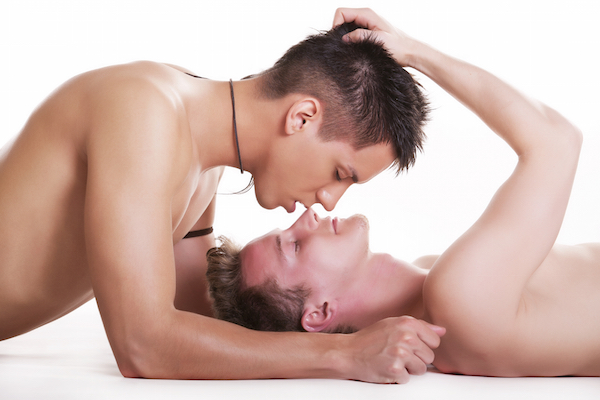
  • COMMENT: Huff Post Queer Voices “Ooo I Do Feel Queer”

    COMMENT: Huff Post Queer Voices “Ooo I Do Feel Queer”

    So in a quest to become more “inclusive” editors at Huff Post’s LGBT news section have decided to call it Queer Voices. (more…)

  • Squares Above The Rest: The Box, Seven Dials

    The London gay scene, much like Wayne Rooney’s hairline, has fluctuated, mutated and diminished since the millennium. A plethora of happening gay drinking holes and night clubs have appeared, done a stint – then poof! Disappeared.

    One bar that stood out, due to her lengthy sentence and touch of the David Bowie’s – her unique edge – is The Box.

    The Box bar was perched on the edge of Covent Garden’s Seven Dials, a good distance away from tempting forbidden fruit trees and tricker-ous serpents of Soho. Faraway enough you didn’t end up attempting a Grey-Goose-infused suspended pirouette on the pole, attached to the plinth in the Shadow Lounge in the wee hours on a school night – we’ve all been there.

    The Box had abundant fundamentals, she was an ever-changing art gallery – local and other UK based artists would cake the walls with their creative wares. She was a relaxed café during the day, somewhere you could pop by for a decaf skinny mocha, Bloody Mary or a cold-as-Sarah-Palin’s-love-organ pint of Stella – even a spot luncheon with chums, or indeed on your Jack, and without feeling as though you were sporting last season’s spring/summer.

    At around 6pm the after-work-dollies would flock into bitch about their colleagues, moan about their boyf’s or simply lift spirits from a hard day’s vaporising from behind the Lancôme counter at Selfridges, or boast about a successful pick-up at the gym.

    During the summer said swarm would spill out on to Monmouth street thus making Seven Dials and its lagoon-life your canvas.

    Thursdays to Saturdays at around 9pm the tables in the centre on the bar were whisked away, the tunes were pumped up and The Box became the first anchor-drop of the night for the beefy-singlet donors, disco-bears and glitter-ball-swinging brigade.

    The Box didn’t fit the stereotypical gay bar box – she was squares above the rest.

    For moi and my compadres from 2000 up until The Box closed in 2009, she was the Rovers Return of our lives.

  • 2016 The Year The UK Has Decided It Is Time To Win Eurovision Again

    2016 The Year The UK Has Decided It Is Time To Win Eurovision Again

    After 6 years of the BBC handpicking a song to represent the UK at Eurovision to ever increasing levels of failure this year it will be chosen by the public vote in a live TV extravaganza.

    Later this month on February 26th the BBC are mounting a live 90 minute show entitled ‘You Decide’ where we will be presented with 6 songs to choose from followed by a live phone vote. The show will be hosted by Bake Off’sMel Giedroyc and the winner will be heading into the charts no doubt and off to Stockholm for the finals on May 14th. Mel said: “I am a huge fan of Eurovision and am honoured to be hosting this fantastic event. It’s very exciting that the great British public will get the chance to choose who will be sent to Sweden and I know it’s going to be an amazing night.”

    This year, the BBC allowed an open submission for songs to get the best possible entrants. Last year there was a lot of complaint about the song chosen by BBC executives that suddenly just appeared one night in video form just before the lottery result show. That was Electro Velvet with Still In Love With You which was only the second song in history that failed to make the UK Top 100 chart – so not popular with the general public. In the finals it gained little extra love as we came 24th out of 27.

    Cassian Harrison, editor of BBC Four, the channel showing the 90 minute live performance from The Kentish Town Forum which will include many special guests from existing chart acts and former Eurovision stars said: “I’m delighted that Eurovision: You Decideand both of the semi-finals are coming to the channel this year. BBC Four is the home of music on TV in the UK and, as any fan will tell you, Eurovision is one of the biggest music events on the planet and is much more than just one night of TV, therefore it is only right that BBC Four is able to showcase Europe’s favourite music TV event right here in the UK.”

    Last year the contest was won by Sweden with the songHeroes by Mans Zelmerlow who has been asked to co-host this year’s finals. There is a joint record number of countries this year 43 in total. Australia Is back after its special invite last year and Bosnia Herzegovina, Croatia, Ukraine and Bulgaria have all come back but Portugal has left as their national broadcaster is not big on music.

    Some songs have already been selected and early interest has been drawn to former Westlife studmuffin Nicky Byrne with his song Sunlight representing Ireland. There is also considerable controversy from Germany. Their entrant was replaced just before Christmas. Xavier Naidoo, a well known star in his homeland was dropped two days after being picked due to heavy criticism. Co -ordinator for ARD broadcasters Thomas Schreiber explained: “Xavier Naidoo is a brilliant singer who is, according to my own opinion, neither racist nor a homophobe. It was clear that his nomination would polarise opinions, but we were surprised about the negative response. The Eurovision Song Contest is a fun event, in which music and the understanding between European people should be the focus. This characteristic must be kept at all costs.”

    The UK has won the contest 5 times since it’s birth in 1957. Namely Sandie Shaw/Puppet On A String; Lulu/Boom Bang A Bang; Brotherhood Of Man/Save Your Kisses For Me; Bucks Fizz/Making Your Mind Upand Katrina with her Waves with Love Shine A Light.

    We are the unluckiest country coming second an incredible 15 times including with Cliff, Michael Ball, Sonia, The Shadows and Mary Hopkin all falling just a point or two short. We have done really badly of late often chalked up to political voting and we have only made the top five once in the last decade and for that Jade Ewen from the Sugababes had to drag Sir Andrew Lloyd Weber onto stage with her to get the vote in. We are trying to forget the Blue, Bonnie Tyler and Englebert entries. As for what happened in 1996 when the superb Ooh Aah Jut A Little Bit by Gina G made it to number one in the UK chart and did great in Euro charts but somehow only came 8th at Eurovision….well we was robbed surely the best Eurovision winner that never was.

    So it Is over to you, watch ‘You Decide’ pick wisely amongst the rumoured 80’s megastars and reality stars we have heard have entered and let’s get a real winner and bring the contest home to blighty.

    At The Gay UK we love everything Eurovision so check back in regularly and we will bring you all the news and gossip first in the European vote this year we all massively care about.


    Opinions expressed in this article may not reflect those of THEGAYUK, its management or editorial teams. If you’d like to comment or write a comment, opinion or blog piece, please click here.
  • COLUMN | Don’t Let The Bastards Get You Down

    Brace yourself everyone. If you think we’ve had to put up with quite a lot of abuse over the last few months, then it’s no doubt going to get worse over the next week.

    (more…)

  • Do We Declare People As Gay Icons Too Easily?

    For some time I have been of the opinion that any old celeb is declared a gay icon these days. It appears that all people have to do now is pander to the gay community, remove their clothes, camp it up and/or say they love the gays in order to be awarded gay icon status.

    Then there are those who declare their interest in being gay icons (yes, I’m talking about you Katie Hopkins). No. Just no.

    The world appears to be saturated with ‘gay icons’ in these modern times. I’ve heard people proclaiming the likes of Nick Jonas, Gemma Collins (who I had to Google because I had no idea who she was) and Dan Osborne as gay icons. While I have great, and purely shallow, admiration for Nick Jonas and Dan Osborne, they are not gay icons. They may frequently take their clothes off to the rabid cheers of gay men, but what have they actually done for the gay community other than cash in on us?

    Then we have our beloved Kylie Minogue. Let me put it out there that I’m a bit of a stereotype in that I’m a huge Kylie fan. However, in my opinion she isn’t a gay icon. As fabulous as Kylie is, what has she actually done to help further gay rights? I can get on board with her campness and her words of wisdom, such as “When in doubt, add more glitter”, but for all Kylie’s fabulousness, she is not a true gay icon. This is because my idea of a gay icon is someone who has contributed significantly to LGBT causes and issues. People who have broken down stereotypes and challenged perception are also gay icons to me. So here is my list of people who I believe are genuinely gay icons.


    1. Madonna

    This is a totally obvious one, but the truth is that Madonna really is a gay icon. She has long stood up for gay rights and was an active champion of our cause in the days when it wasn’t really cool. Even in recent years, Madonna has stood up for gay rights by turning up at a GLAAD event dressed as a boy scout in protest at the scouts in America not allowing gay people to join and protesting against Russia’s treatment of gay people whilst touring in the country. This led to a court summons for Madonna and she was branded an “ex-whore” by someone in the Russian government. What I like about Madonna is that she knows exactly what she is doing. She knows that her profile as one of the most famous people on the planet will draw attention to the issues that she chooses to highlight. Then there’s Madonna’s video for her song Justify My Love, which features man on man action and lesbian cross-dressing sexual games. Nobody else was doing things like that in the early 90s. We have a lot to thank Madonna for.


    1. Skin

    Skin is the lead singer of Skunk Anansie, who are one of my favourite bands. Skin is a bald headed black bisexual female who makes heavy rock music. At the time Skunk Anansie rose to fame, black women were put into boxes as RnB singers and the idea that a black female would make hard rock music was absurd to the music industry. But Skin stuck to who she is and carried on, eventually becoming massively successful with her band. Over twenty years since Skunk Anansie released their first album, Skin remains one of a kind. Never one to flaunt her sexuality or claim to be any kind of gay icon, she has simply remained true to herself throughout an amazing career. So for me Skin is not only a gay icon, but an icon for black people and more simply, an icon full stop.

    1. Stephen Fry

    While being delightfully entertaining, Stephen Fry has also actively campaigned for many years on things such as HIV/AIDS, mental health and gay rights. He also championed a number of LGBT causes, often using Twitter to tell his 11 million followers about the important work of certain LGBT charities.

    1. Lady Gaga

    Although another obvious choice, Gaga has done a lot in terms of raising awareness of LGBT issues and speaking out against discrimination. It’s well documented what Gaga has done for LGBT people, from speaking out about the suicides of gay teens in America to marching on the White House to get the controversial Don’t Ask, Don’t Tell rule abolished. If you forget about the circus act that surrounds Lady Gaga, it’s plain to see that she is an example of an amazing human being.

    1. Sir Ian McKellan

    Not only is Ian McKellan one of the most well-known actors in the world; he is also probably the most high profile out gay actor. With a large pull at the box office, on stage and on television, Ian McKellan has still got it. However, it’s not just being an out actor that’s got him onto this list. He has also been active in the campaign for gay rights since the 1980s and even helped to found Stonewall.

    Other people I view as gay icons include Ben Cohen, Jimmy Somerville, Ellen DeGeneres, Peter Tatchell and Tony Blair. Perhaps my list is predictable and there are not many people on it who differ from the typical roll call of gay icons. However, I see everyone listed as a true gay icon. They have actually done something significant to help further gay rights and break down stereotypes. That’s what a gay icon is, right?


    by Daniel Browe | @MrDanielBrowne


    Opinions expressed in this article may not reflect those of THEGAYUK, its management or editorial teams. If you’d like to comment or write a comment, opinion or blog piece, please click here.

  • COMMENT: Do We Need Gay Sports Clubs In 2016

    COMMENT: Do We Need Gay Sports Clubs In 2016

    As a sportsman (or someone who is not very good, but really enjoys it) I am someone who plays cricket for a ‘normal’ straight team and football for a gay team.

    The question is often asked now if we need to have gay teams, or if the gay community is becoming too inclusive?

    It doesn’t need me to tell people that a number of sports have ‘moved on’ in attitudes such as Rugby and cricket, which now have openly gay professional players. I also don’t need to comment that it’s a shame no British based professional football players feel that they can come out and be open with their sexuality. Of course, there may not be any gay footballers, but then pigs might fly as well.

    At a recent European Gay football tournament that I had the pleasure of playing in for Village Manchester in Hamburg, Thomas Hitzlsperger (ex Aston Villa, West Ham and German International to the uninitiated) attended the closing ceremony and presented the awards. Hitzlsperger came out as gay after his career finished and is now championed by many in the gay sports community, but one of my colleagues felt differently. He asked why if Hitzlsperger is so proud of his sexuality, then why did he wait till his career finished before he revealed it? There may be numerous answers, but I felt it was a poignant question.

    In a small way I can understand this. I personally didn’t come out until I was 31 for fear of being rejected by my cricket team. My fears were extremely ill-founded. I do get a bit of banter now, but it’s all pretty harmless, and I’d rather people feel they can joke about it, rather than be afraid to mention anything.

    The changing rooms for any sports teams are sacred places where all sorts of things (non-sexual for the dirty minded amongst you) go on. So it’s important that all sports people trust and have a respect for each other. Everyone, regardless of their sexual orientation should feel comfortable in what they are doing, and I’ve heard a number of stories from guys at Village Manchester that they have felt uncomfortable in ‘straight’ football teams. I believe that’s why gay teams work. People are free to be themselves, talk freely about who they are and enjoy each others company.

    I joined VMFC in 2014 and I can honestly say that its one of the best things I’ve ever done. That is where gay teams and clubs have a place in society. VMFC also has a number of straight members as well, making it fully inclusive for anyone who loves football. Now there is a perfect world – INCLUSIVE


    by Dan Fish | @rava1979

  • COMMENT: Are We In Union, No More Strikes?

    COMMENT: Are We In Union, No More Strikes?

    A new year in our sprawling, over-populated Old Smoke brings fresh days of small businesses, freelancers and other innocent bystanders losing days of income; months-in-the-planning school balls, saved-up-for pre-bought theatre tickets and the last chance to visit a dying relative or close friend ruined, tarnished or made impossible – unless of course you’re employed by Coutts.

    And in the oh-so-cheery months post-Christmas, the joy of having to prise yourself out of ya pit even earlier than usual to rugby-tackle your way onto a bus, play sardines for the duration of your journey and arrive at work stressed, your regalia stuck to your person as if you’d just attempted all the positions in the Kamasutra, and having to disinfect some stranger’s armpit from off of ya boat-race due to London Underground (LU) striking yet again.

    God bless RMT (The National Union of Rail, Maritime and Transport Workers), Aslef (The Associated Society of Locomotive Engineers and Firemen) and Unite The Union – the three unions that represent LU employees, and the instigators of the 26th January, 15th February and 17th strikes. You’re doing a sterling job chaps.

    Why are LU striking again? For the same reason as last year – pay, and night tubes.


    According to the TFL website, undated 11th January: LU is creating 700 new jobs to run the night tube service – offering total protection of work-life balance – and over 6,000 people have applied for the new roles. Thus the current Thomas-the-tube-engine staff won’t be obliged to work nights.

    What actually crosses the palms of our slave-esque, light-in-the-purse-department underground staff each year: Tube drivers £49,673, plus 43 holibob days. A customer service assistant £30,000, and a station supervisor £50,000; both get 52 vacatiarno days. Tidy.

    The national minimum wage is £6.70 per hour – an average 40-hour week would bring home around £13,500 a year.

    A newly-qualified teacher in England and Wales: annual salary£22,244, or £27,819 if based in the Big Smoke.

    Starting yearly take-home for fully-qualified nurses is £21,692. London-dwelling Florence Nightingales attract a high-cost-area supplement that can bump up their salary by as much as 20 per cent: £26,304.

    Direct from TFL, LU’s four-year pay offer: in year one an average rise of two per cent; years two and three would remain at RPI (retail price index) or rise by one per cent, whichever is greater; year four would be RPI plus a 0.25 per cent rise. Plus, a £500 bonus is up for grabs for all night-crawlers.

    BBC News reported: The union’s London district organiser, Finn Brennan, said:

    “We genuinely regret the inconvenience that will be caused but the behaviour of London Underground’s senior management team have left us with no other choice.”

    Really, Finn? You feel you have the right to disrupt, cause loss of earning and make eight million people’s life hell because you feel LU management didn’t behave in the way you wanted? Just sayin.

    Steve Griffiths, LU’s chief operating officer, responded:

    “The unions’ position is absurd and detached from the real world.” I think we can all agree with that, Mr Griffiths.

    So what else is the union’s beef?


    The RMT press office stated:

    It should be noted that Night Tube Operation will impact on all of our lines and therefore some of our staff will be required to work alternative rosters to enable the business to maintain the infrastructure.”

    A roster jig around – really?

    RMT General Secretary Mick Cash said:

    “Our Tube Lines members have been offered the same deal on pay and Night Tube as their London Underground colleagues and our reps have clearly rejected it as wholly unsatisfactory.”

    Poetic – so you’re not chuffed with the four-year pay plan?


    According to The Guardian, January 2011: 590 to 32 National Grid (NG) staff voted for industrial action over pay, and wanted to strike in protest against below-inflation wages – they were supported by Unite and Unison and two other unions. The strikes didn’t happen and they found a resolution. We don’t hear the word ‘strike’ whenever rich-tea has been mistakenly bought instead of hobnobs by NG employees.

    The gas, electricity and water companies don’t annually threaten, or stop providing us with said utility when disputing pay, shift and employment issues. Transport in London is as essential as the three mentioned above.

    The Gay UK contacted a West-London-based District Line tube driver for his opinion on the strikes:

    “I’m not a lot of help I’m afraid! Being on the District Line means that we are not affected by the night-time work proposals and as such I’ve stayed clear of the debate. As an Aslef member I’ll strike if the union calls for it, but I don’t get involved actively.”

    Not affected, doesn’t get involved, but will still strike.

    Facts: London would be a better city with 24-hour tubes. LU wages aren’t on a par with banker bank balances, but they ain’t bad. LU are employing more staff so they can implement the night tubes with them, thus not forcing current staff to work nights.

    No-one’s work life is perfect; most would say they weren’t happy with their pay, having the rota played with, or changes within the company that might affect them; but the majority still go to work and get on with it – or find alternative employment.

    Opinions expressed in this article may not reflect those of THEGAYUK, its management or editorial teams. If you’d like to comment or write a comment, opinion or blog piece, please click here.

  • What!? You’re in an open relationship??

    What!? You’re in an open relationship??

    Call me “Mr Old Fashioned”, but am I the only one to be surprised by a number of gay relationships that are classed as in an “open” status? Is this really so common? What percentage of relationships are open? And does that figure correspond to heterosexual relationships? Am I behind the times?

    What Is It Exactly?

    An open relationship is defined as “an interpersonal relationship in which the parties want to be together but agree to a form of a non-monogamous relationship”.

    This concept has been recognised since the 1970s, I’m assuming since the ideology of ‘free love’ became so prevalent. In an ever changing world of increasing acceptance towards LGBT, has the presence of open relationships become more apparent? Are you more likely to be involved in an open gay relationship than a heterosexual one? A recent study indicates that around 3% of adults in the US are currently in an open relationship, and 14% would consider being in one if they had the chance. Whereas a similar study also in the US but purely involving gay couples, concluded that 32% were currently engaged in an open relationship.

    Another surprise to my traditionalist views is the variety of open relationships and their labels.

    The obvious scenario seems to be non-monogamy, a type of interpersonal relationship in which sexual exclusivity is not held as the primary fundamental premise of the relationship. So it may be that the sex is required more so by one partner than the other, thus the accepted need to find it elsewhere needs addressing – by hunting further afield.

    Cuckoldry – is where a person has sex with another individual with the consent of their partner.

    Ménage à trois – is a sexual arrangement involving three people. Add any more people and it can be interpreted as an organised social activity more commonly known as swinging.

    Some have even taken it further… group marriage is where more than two people are all considered to be married to one another.

    How Common Is It Now?

    I expected most people’s opinions to relate to this concept as cynical and unrealistic, but the idea seems to be becoming more apparent and accepted.

    It’s surprisingly easy on dating sites, to find a couple, or a single member of an open relationship, browsing for an additional sexual partner. This makes for some interesting conversation. A profile picture of two guys/girls appears at the forefront of your Tindr feed, shows 2 miles away on Grindr, or leads the row of pictures across the bottom of your POF search function. How can we politely ask if he or she is the better looking one of the two? In the past, I’ve not been afraid to ask. However, a reply I experience more and more is “we’re actually a couple”. Sod’s law dictates that it’s never the more attractive one that I’d be talking to anyway. But the act of appearing on dating sites entrusted with a partner is certainly intriguing…

    So I did some digging. There are plenty of websites and apps now dedicated to finding opportunities to participate in an open relationship or sexual endeavours within or without one.

    Kenblackman.com – is a website for couples practising/considering consensual non-monogamy…

    Openminded.com – “Find like-minded individuals that keep an open mind about monogamous relationships” – another online dating site for open relationships.

    Even celebrities are more commonly honest about their open relationships…

    Demi Moore and Ashton Kutcher – their marriage lasted from 2005-2013 and the relationship was defined as open, as long as they were physically together.

    Megan Fox and Brian Austin Green – according to an interview taken by OK magazine, Megan is the one who is permitted to stray. The fact that they built their relationship with such a free understanding of each other and are still together and happily making babies, shows that something must be working.

    So Can It Actually Work?

    Can these relationships be stronger, due to the exceptional amount of trust involved? Can it actually help the relationship become more intimate, and last longer? Or does it open up trust issues and lower the boundaries to a point that a relationship has no real foundations or uniqueness? There are arguments for both.

    One of the main problems identified in an open relationship is that of jealousy. Any human being wouldn’t be complete without this personality trait. Some may be more prone to experiencing it than others.

    But the success of an open relationship would seem to hinge on the need for a laid back personality in both partners, where the ability to turn off the jealousy triggers would be so important. It seems to be more accepted in long distance relationships or in those that involve large amounts of time away from each other.

    Could an open relationship be used as a positive? Would it encourage the two members of that relationship to work harder at it, and become more open within one another? After all, if the jealousy isn’t there, is it a question of whether that person’s feelings are strong enough for his partner, if he feels no amount of remorse letting him or her have intimate relations with someone else. The risk is always there, that they might take a stronger liking to that third wheel and end their current relationship.

    Some couples may see the opportunity to spice up their sex life by inviting a third person into their bedroom. Is it really possible to overcome the jealousy and other emotional barriers to go through with it and still remain completely committed to your partner? Is there not an underlying doubt that one may become attached to another person and end their current relationship? If that concern isn’t there, then is the relationship right in the first place?

    Consider this route for your own partnership. Can you openly ask your ‘significant other’ about it when you’ve finished reading this article? And how would you do that, without risking damaging the relationship because your partner completely disagrees with your way of thinking? To show your hand might be risky. They could be equally open to the idea (don’t come back to me if you get in trouble).

    Why Not?

    Whichever way you look at it, if a couple can make it work what’s the problem really? Friends will have their own opinions on it, but it comes down to what will work for you. Could your best friends, neighbours, or even a relative be in an open relationship but you’re unaware as they don’t want to publish this openly within their social circle?

    Personally, my mind is opening up to the idea, if not in a relationship of my own, but that of friends, colleagues and so on. Thinking about it, I have respected friends that have been honest and proud enough to tell me they share their partner(s) with others and still hold a very committed loving relationship.

    We could be entering an era in which open relationships will be increasingly accepted in the modern world. We could see a shift as much as the LGBT community is more commonly accepted today than it was fifty years ago.


    This could be the next big step in an ever-accepting social revolution.

    Opinions expressed in this article may not reflect those of THEGAYUK, its management or editorial teams. If you’d like to comment or write a comment, opinion or blog piece, please click here.
  • COMMENT: So who is the UK’s new “Homophobe” in chief Winston McKenzie ?

    A couple of days ago we reported on the controversy caused by Winston McKenzie entering the Celebrity Big Brother house.

    In a first for the bi-annual series shown on Channel 5 during August and January now in its 11th series there were 165 complaints to Ofcom before a housemate had even entered the house. This was due to his “I could cope with there being a homosexual in the house. I guess I’ll just have to stand with my back against a brick wall all the time,” comment.
    Complaints have now risen substantially to 350 plus and an investigation will be underway once all complaints have been processed. McKenzie who entered to loud boo’s from the crowd is not making many friends on the inside as within 48 hours of entering he has been nominated for eviction already by his fellow housemates throwing his fate into the hands of the voting public.
    The record number of 16 contestants in the house is causing McKenzie further problems as he has declared on the show repeatedly that he would not share a bed with another man under any circumstances ‘I would not even share a bed with my own Brother’ he said.
    This very popular show with gay viewers, probably only beaten by anything featuring RuPaul, drag queens or pop songs from Boznia-Herzegovena, it prides itself on booking the most outrageous people available such as Janice Dickinson, Spencer ‘Spidey’ and also placing Katie Price in the same building as Katie Hopkins and Perez Hilton for a month. Channel 5 could be in trouble with Ofcom this time though as the original ‘homophobic’ remark was made on a pre-recorded interview which was then edited and they still chose to show the hateful comment rather than take it out. The gay NTA award nominated host of the sister show ‘BB Bit On The Side’ Rylan Clark-Neal (His married name) who will do McKenzie’s first major interview live when he is evicted has according to his social media already had a small wall constructed so that either he or McKenzie can stand with their back to it to conduct the interrogation.
    McKenzie obviously figures that he is a very desirable male and that all gay men are after him for his body – he should be so lucky of course. So who is this latest gay irritant ?.
    This year he is standing for London Mayor on behalf of the English Democratic Party and he cites the main reason for doing Big Brother is to gain publicity for his campaign which currently seems to revolve around getting other female reality stars to jump into bed with him.
    He was a welterweight boxer of middling success but his career was cut short at 23 due to retina problems. He then went on to open The McKenzie Brother Bar and Grill in Thornton Heath with his two boxing siblings. Very shortly afterwards in 2002 it was raided by the police with 25 people arrested on either possession of drugs or firearms charges after losing their license the pub closed, was boarded up and has since been demolished.
    McKenzie who fancies himself as a rapper then tried to audition for the X-Factor but failed to get far enough through the process to make it in front of Louis, Sharon & Simon Cowell.
    He then decided to pursue his political career. After being a Labour Party member he switched to the Liberal Democrat party.
    He then left, stood as an Independent then joined Robin Kilroy-Silks Veritas party, then Independent again and then (are you keeping up ?) back to Veritas. After a very dissapointing campaign to which he wholly lies the blame at Kilroy Silk’s feet rather than his own.
    As an Independent he stood for the 2008 Mayoral election coming last polling fewer votes than a candidate who had actually withdrawn from the process! He then jumped ship to the Conservative Party often stating that you have to join these parties first before you actually find out what they are like. He then started his own Unity Party in 2009 before later that year joining UKIP.
    He has said that he believes Nigel Farage is like ‘Jesus Christ’ and calls him Teflon in his ability to shake off dirt that is thrown his way. UKIP made great use of the fact that McKenzie was a black man in their publicity and allowed him to represent them several times for election in the Croydon area.
    It was at this time that McKenzie made his infamous, “To say to a child, ‘I am having you adopted by two men who kiss regularly but don’t worry about it’ – that is abuse. It is a violation of a child’s human rights because that child has no opportunity to grow up under normal circumstances” remark to the Metro.
    He also stated “some people pretend” to be gay: “They take on being gay as a sort of fashion. Celebrities come out to become more well known, it gets attention. It’s a fact of life that some people actually are gay. They are what they are. They can’t help it but the other bunch take on being gay as a fashion and push it because they have nothing better to do with their lives.”
    He also made a very strange attempt to take over Crystal Palace Football Club. He stood for local Office in Croydon but to little success partly due to calling the borough, ‘Unsafe and a dump and descending into depravity’ before polling day.

    UKIP lost faith with him and his branch for mishandling several thousand pounds worth of branch funds and he was suspended. He was still UKIP spokesman for Commonwealth Affairs but lost that job just before the 2015 election where he lost for UKIP once again.
    In November last year live on ITV News he threw his UKIP badge onto the table and declared he was resigning as he had been overlooked as a Mayoral candidate due to racial issues from senior UKIP members (The race card of which he has played often when explaining why he lost jobs or elections) and was going Independent again.
    A couple of weeks later he joined the English Democrats who made him their Mayoral candidate calling him “the most influential Black English political figure today”. Three weeks later he was in hiding awaiting entry into the Celebrity Big Brother House.
    His most recent remarks have been defended by the spokesperson for the English Democrats, Steve Uncles, who compared the gay community to Nazi’s”when it comes to freedom of speech”.
    Please check online as during your reading of this article McKenzie may have since joined the Green Party Or Ulster Democrats to complete his set of political parties.

    Opinions expressed in this article may not reflect those of THEGAYUK, its management or editorial teams. If you’d like to comment or write a comment, opinion or blog piece, please click here.