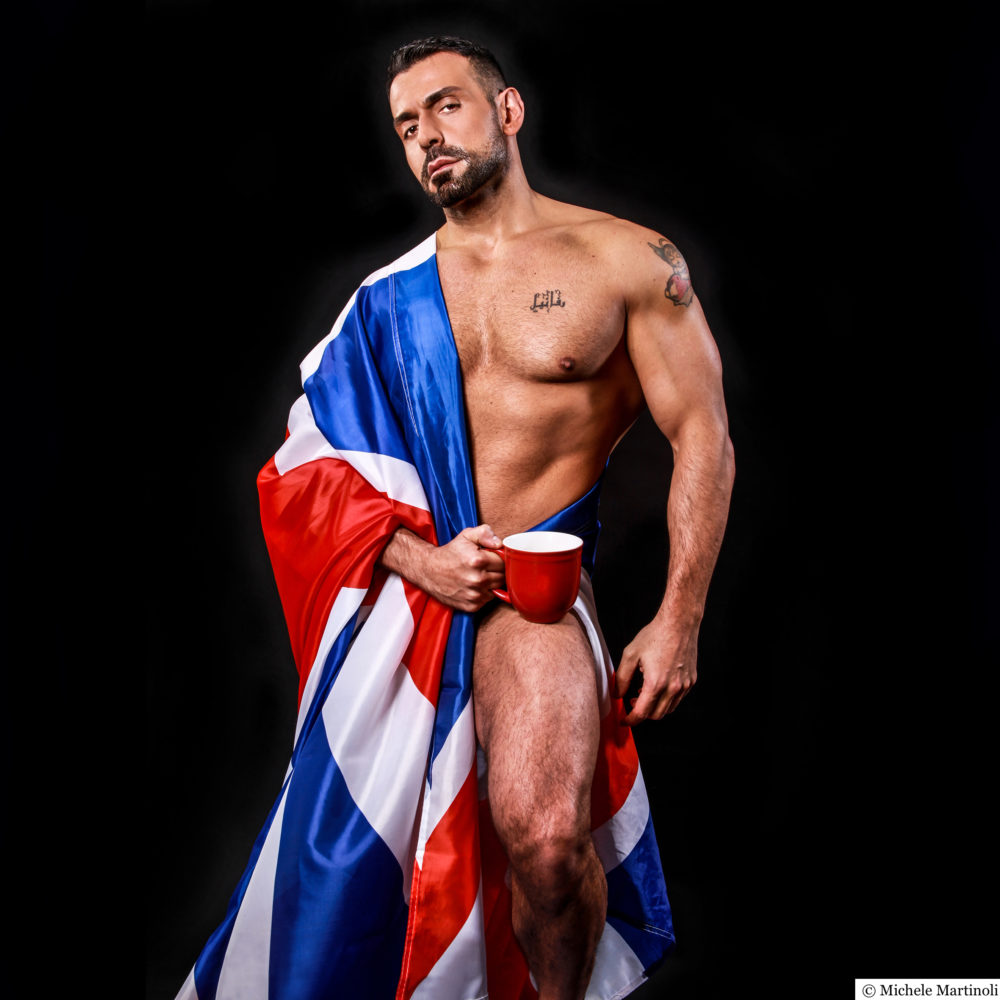
Category: Interview

  • INTERVIEW |  Manuel Blanch

    INTERVIEW | Manuel Blanch

    Manuel Blanch

    Aaron_Holloway-_ADH4068
    CREDIT: Aaron Holloway

    Age: 25
    Lives in: Paris
    Eye colour: Blue
    Favourite drink : A (Double 😉 ) Mojito Bull.
    Favourite food : Alternating between delicious healthy food and super-fattening filling fast food.
    Favourite place to go on holiday : I don’t like to go to places “on holiday”, I like to go to places for work 😀

    Paris, France – I first met Manuel earlier this year in Nice at the Queernaval celebrations. At that party, he was dressed in an impossibly tight t-shirt with a large set of angel wings strapped to his back. He was there to be the poster boy, lead of the parade and to play a few tracks to the crowd. He would later play a full set at one of the local nightclubs. Fast forward a few months and I find out that Manuel is now playing fairly regularly at Paris’ largest gay club Gibus (Jee-boos). I decided to go along, check out the night and explore some of Paris’ nightlife.

    We met Saturday night, before the party at a little cafe restaurant in the Republique square in Paris, along with his very good friend, French singer Angie Be. Blanch began mixing a few years ago in Marseille in the south of France but soon decided that he would need to be in Paris if he was going to go pro and be a full-time DJ. Since making the move he has been featured in France’s largest LGBT magazine Garcon, appeared in Nice at the Queernaval, and had a short residency at Nice nightclub Le Six. He is also a regular DJ at Gibus. The night I visited, he was the final DJ to end the night for their Heros XXL event which was a massive 10 hours of clubbing in Paris’ gay district.

    Blanch’s style is described as Trance – a mixture of solid base beats and remixed dance tracks by performers like Sia and David Guetta. His sound is a happy, upbeat blend of seamlessly mixed tracks that matches his sunny and always enthusiastic personality, and had the crowd at Gibus dancing until nearly 10am. His musical influences include the 2001-2004 period and German and Belgian dance and trance projects.

    CREDIT: Aaron Holloway
    CREDIT: Aaron Holloway

    Strikingly beautiful, Blanch gathers followers whenever people see him or hear his music, which attests to the large groups of screaming fans when he took to the decks in Gibus Sunday morning at 7am – fans who had waited all night to hear him play.

    For those of you in London, you don’t have to travel so far or wait that long to see and hear Manuel for yourselves. He will be appearing at the Mighty Party, an upcoming tea dance in London, this December. Despite the cliché, Blanch hopes to score a gig in Ibiza soon, but in the meantime, I’ll be heading across to Dresden next week to hear him play there on the 20th at the Gaynight Pool Party at Puro, and he’ll also be appearing at the Sinners Party in Munich in October.

    To hear Manuel now check out his soundcloud: https://soundcloud.com/manuelblanch


    Follow Aaron Holloway on Twitter

  • INTERVIEW | Tom Bosworth

    INTERVIEW | Tom Bosworth

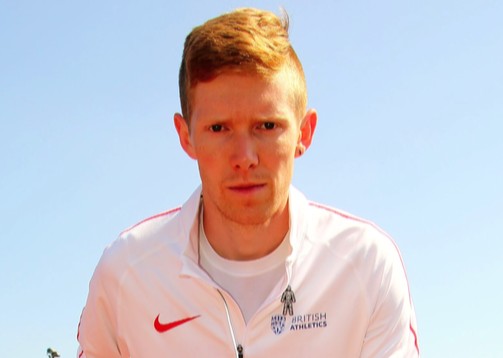
    Meet Tom Bosworth, the UK’s newest out and proud athlete training to take part in this summer’s Rio Olympics. You may never have heard of Race Walking (walking very fast, where at least one of your feet must be in contact with the ground at all times) before but he is determined to ensure that he and his sport is widely recognised this summer. He took the brave move to come out as gay on Victoria Derbyshire’s flagship BBC news show. Speaking exclusively to THEGAYUK Tom talked to us before he left for Rio about his plans to ask the man he loves to marry him, how he battled homophobia in school and we find out if his legs are insured for the same amount as Mariah Carey’s.

    CREDIT: Monty McKinnen for THEGAYUK

    JH: How is training going?
    TB: Well, I’m in a fairly heavy block of work at the moment. That’s basically lot’s of mileage. Talking something like 120km, 140km a week. That sort of thing. Pretty much every day. Sometimes, not every Sunday but I have Sundays off occasionally.

    JH: Are you like Mariah Carey? Are your legs ensured for like 7 million quid or something ridiculous?
    TB: I’ve never been linked to Mariah before but… No. They’re not. We have considered it but at the moment they are not insured. A bit risky.

    JH: You came out on Victoria Derbyshire’s show in October last year. How was that received with your co-workers, with your colleagues on the track? Did it come as a shock for anybody or did they all know?
    TB: Within my inner circle, anybody who kind of knew me personally was aware and it wouldn’t have been a surprise to them. It was a public announcement more than anything and so a few people were shocked to see me on TV. I had such great support in my training team, family, friends, partner, you know, so I was happy in my personal life and able to get that weight off my shoulders really.

    JH: Has it been a weight off your shoulders?
    TB: You know, I kind of didn’t expect it to make that much of a difference. I definitely didn’t expected the fabulous kind of response and the 15 minutes of fame, if you like, that came from it. I didn’t expect that whatsoever. I realise that it’s quite a responsibility but I’ve had the best season of my life. I’ve set records and won races and won international races and it’s just been amazing. I’ve got to put that partly down to that. Perhaps it did have a subconscious effect.

    JH: Were you nervous before speaking with Victoria?
    TB: Of course, I didn’t know how it was going to be taken and suddenly, when I was down in the studios in London that day I realised how real this was. The way they did the story was fantastic, with absolute respect. They didn’t make it anything it wasn’t. It was just a message of me being honest and publicly honest and that was nice. Yeah. It was suddenly like this could possibly change my life forever and in some ways it has.

    JH: Why was it important for you to come out like on TV? Not many people get to come out on TV nowadays now do they? Why was it important for you to do that?
    TB: It wasn’t a decision we took lightly. It was a lot of planning and talking with my family, partner and most importantly my managers. We wanted it to be done correctly. I wanted to find something that pretty much was as unbiased as possible and Victoria’s show is very neutral. It tries to cover every type of story going.

    She never comes from any angle to try to trip you up or anything like that. It’s not the aim of the show whatsoever. My manager had other clients on the show as well, and only had good things to say about them. I said ‘okay, this wasn’t what I was planning. National television on a breakfast news show but okay if they want to run this story, let’s do it at the end of the season when there’s no pressure of competing and move on’.

    JH: Obviously, it made quite a bit of a splash. I know you must have been asked this a million times, will there be a day when a sport-star’s sexuality isn’t news?
    TB: Sports is still behind on it but there will be a day. Other industries have somehow managed to not make it a big thing. In sport, it still is news and that’s just because there aren’t many out players or athletes. As soon as that starts to change, which it is – every year a few more come out and it becomes less and less and less of a story. That’s kind of going to take time and we just have to be patient with that.

    JH: Does it surprise you out of the thousands of athletes taking part in the Olympic games that there’s still only a handful of out, visible gay sport-stars?
    TB: It doesn’t, because sport is such a macho, strong, have- your-guard-up-environment and I guess a lot of people see it as a weakness or something like that. That’s the image I kind of get. I’ve never felt like that myself because I’ve always been so open. Nine out of ten people have always embraced it and let me be me. We’re in 2016 and thankfully we do have a handful of athletes that are open at the Olympic games.

    In a way we almost need to look at it like that, that in four years’ time we can look back and laugh and say, “Oh, there’s only ten open athletes at the Olympic games. Actually, four years prior in London or eight years prior in Beijing, there was only one or there were none.” Actually, that number is increasing and again it will come around probably in four years’ time and they’ll say, “Oh, there’s only 25 athletes that are open.”

    It’s all about giving it time. I think that we need to just let those athletes that are out to show how normal a life they can live being an athlete and that’s, at the end of the day, what they’re trying to be. The best athlete that they can be, it doesn’t matter about the sexuality or background, religion, whatever.


    JH: Along with Tom Daley, I mean, two Toms, it couldn’t be better could it really? You’re the most visible, out people right now. Does that add pressure?
    TB: Not at all. It’s kind of something that I’ve learned to respect because there’s that kind of responsibility that falls on my shoulders. It adds no pressure whatsoever. It’s just nice, actually… I’ve got this new fan-base and new support. I always have everyday messages and just people always sending me support on social media now, which I never used to have.

    JH: Have you spoken to the other Tom, since your coming out. Has there been like a little club?
    TB: No, no. I haven’t felt the need to. I haven’t spoken to any other athlete that are gay or straight about it. I didn’t feel the need to because of the support that I had and I felt like it wasn’t going to change too much in my day-to-day life or competing for the national team. That just shows how accepting the sports world can be because absolutely nothing changed. I think that speaks volumes really.

    JH: Talking about your teammates, how did they react when you told them?
    TB: That’s interesting. Everybody’s different really. No teammate on the national team or my training group has ever reacted negatively. Anybody comes into the training group nowadays obviously is aware. It’s just that that typical word, ‘normal’, whatever normal is. Nobody cares. I don’t care that you’re straight and they don’t care that I’m gay. It’s brilliant.

    JH: When we talk about sexuality, especially in sports, I feel like sometimes we’ve gone back 20 years. Does it feel weird that your sexuality comes a bit before your own sporting achievements now?
    TB: Yes. That’s my own fault I guess. I didn’t want it to define me and I didn’t want it to be the only thing that got me on television. I felt even more pressure to actually achieve and show that I wasn’t just trying to look for a claim to fame. That was quite the opposite of what I was claiming and the whole point of it. It was to hopefully allow me to be the best athlete I could be and show the world that I could be really successful and also live openly. I think in some way, of course, now it always is going to be mentioned throughout my career. Now I can be classed as an Olympian as well, most for British record holder and hopefully some international medals to come as well. There’s lots to me than just that.

    CREDIT: Monty Mckinnen

    JH: Has coming out so publicly allowed you to focus more on your training because there’s less of a distraction and you can live more honestly.
    TB: I think it’s the latter. I live without any worry whatsoever. On social media, I absolutely adore social media. Sometimes, everybody, especially in an Olympic year wants to know everything about you. I always had that worry that it would have to be something I would have to deal with. I never saw it as it was going to be a negative thing. As we’ve seen it is a story still and I didn’t want to deal with that right now. That’s why we did it in September, not seven weeks before the Olympic games.
    It definitely allowed me to be proud about me and my partner and to speak freely and not to have anything on social media or hugging him after a race or anything like that.

    JH: Oh, that would be nice. Are you going to do that? Is he going to be in Rio with you?
    TB: He is going to be travelling out to Rio. If Tiffany’s in Heathrow has the ring that I want, I might even make it official when I’m out there.

    JH: Make him an honest man?
    TB: Absolutely.

    JH: How did coming out with your family go? Have they always kind of known? Did they receive it well?
    TB: Part of me hoped that they knew. You know my parents are very old-school and so I always knew it was going to be something that we’d have to deal with together. My family always supported me even if they disagreed with some of my life choices over the years. They’ve always supported me and backed me. I knew no matter how difficult or easy the coming out to my family would be, eventually they would always have my back and understand and support me, that’s exactly where we are today. I was 21 when I decided to tell them. I spoke to my dad and he was very understanding. I live in Leeds and they live in Kent.

    I’m sure they took some time, a few weeks probably to process it. I don’t know how he privately dealt with it but to me, he never batted an eyelid and was just, “okay. That’s fine. Have you found somebody who you love and care for?” That was the main reason for doing it because I had found that kind of person.

    My mum took a little bit longer but she never tried to fight it or tell me that I need to change in any way whatsoever. She just took a bit longer to process it.

    Tom Bosworth
    CREDIT: Monty McKinnen / THEGAYUK

    JH: Did you do it over the phone then?
    TB: I did, yes. I did because I didn’t think I would have the guts to do it to their face.

    JH: Oh gosh. I thought it’d be more nerve-wracking doing it over the phone. Did you dial the number many times and then hang up?
    TB: No. I just kind of got to that point where I was like, “Right. It needs to happen and so let’s not beat around the bush anymore.”

    JH: Were you with your partner at the time?
    TB: I wanted to bring him home for Christmas and things like that. I think actually for my Mum it gave her some time and gave her some space to just process it and try and understand it all. Actually me being a bit of a wimp helped the situation I think and meant now we’re all a kind of a happy family. He’s going out with them to Rio as one family which is really lovely.

    JH: Okay. Where did you meet him? Is there a cute story behind it? Please tell me there is.
    TB: I met him in York, so a very romantic city. He’s from Liverpool. He was the best man on a stag do.

    Me and a couple of my friends, we were just out for a very quiet, sociable drink sort of think and we weren’t planning on having a night out or anything along the lines of getting with anyone, that’s for sure. My female friend decided to hit on him. She quite liked the look of him. She didn’t notice or she just chose to ignore the big love-heart straw he had in his drink and his quite flamboyant nature. Me and my other friend were sat there trying not to laugh as we quite clearly could see that he perhaps didn’t bat for that team (laughs).

    She got very offended when he said, “You’re not my type.”

    He was trying to be polite. She couldn’t understand why and it was at that point that I walked up to my friend and said, “I think he’s probably more my type, than your type.” We got talking from there. The rest is history.

    JH: Aw. One woman’s loss is another man’s gain. That’s the way it goes I guess. Do you live together?
    TB: No, but we plan to. We’ve planned to live together for a while now, but not until the Olympic games are out of the way.

    JH: Were you out at school?
    TB: I was kind of half out at school, you know, a few of my friends knew. I spoke to them at quite a young age, probably about 14 or so. It got leaked. One of my friends wasn’t too tactful, I’m afraid. I decided to deal with it head on and not just deny it and admit it because I knew one day that I would just have to admit it again anyway. That certainly put me off speaking to my parents about it or anything like that because teenagers and kids, you know, they can be nasty, whatever it is. Had a bit of trouble at school and suffered quite a bit of bullying for a long period of time. I guess for about a year, it was just non-stop. It meant I spent a lot of time on my own and kind of hiding from people but I stand by it now. I don’t hold anything against anybody. Everybody’s looking for a weakness in somebody else at that age because they’ve got their own concerns about themselves. It certainly made me stronger and it made me a better person I think.

    JH: Did you have athletic dreams when you were at school. Where did your athleticism come to you?
    TB: For that reason really, because some people found out that I was gay at school. I hated, hated PE and always tried to get out of it. Never did any sport in school because it was a very easy time to be targeted by bullies and so that was something I avoided greatly. The good thing was my parents took me to a number of sports clubs outside of school because I liked doing sport, I liked being active, I had a lot of energy so I’m really glad they did that. I did some running and tried the race walking. My sister did it a little bit. I just kept doing it and I wasn’t any good at anything, the running or the race walking… Just purely doing it for fun and keeping fit and it was a different world from school. I could just be myself and nobody knew much about me, I just made some friends and almost felt like I had another life, an escape route really from school. I loved going training. I guess that enjoyment is why I did it for so long. Then it helps when you start winning.

    JH: Just going back to begin Olympian and begin gay or LGBT. Do you think that there’s a pressure on gay people to remain in the closet? If there is, who is it by? Is it themselves? Is it managers, sponsors?
    TB: I hope to God there isn’t any pressure. In today’s world, I don’t think any sponsors or anybody like that could get away with saying, “Look. If you’re going to come out, then we’re going to cut ties with you.” I don’t think anybody could get away with that nowadays.

    People might not be as lucky as I am in this situation where my family knows and support me. I’ve got a loving partner who has been with me for a long, long time. They might be single, they might not have told their family and so on and so coming out in public wouldn’t be possible, or even just living openly, let alone announcing it, just wouldn’t be possible.

    I’m sure there are some places in the world where if you were to come out, you may not be able to continue on.

    JH: Is it odd to be in an arena where for instance, in the UK being LGBT is very accepted and we champion everybody in our Olympics that there will be other gay people from other countries where homosexuality is illegal or societally unacceptable?
    TB: It’s a sad one because I’ve got so many friends from places that being LGBT is not accepted and I thought, “Oh. I’m really good friends with them but if I tell them, or when they find out, are they going to no longer be my friend?” Thankfully that hasn’t happened once which shows how every human being can be understanding and accepting, it’s just a very small handful that force these ideas upon people. I spoke, again, to some other athletes who I’m not specifically friends with, but I was at a competition and they were talking to me and I told them that I had a male partner and they were from a country again where it’s pretty much not accepted to be out. They said, “We don’t care. It doesn’t matter. In our country, it will never be accepted.” Personally, they just said, “I don’t care.” We carried on talking.

    JH: Are there Olympians, people taking part, that you know of who can’t come out?
    TB: It’s too big for there just to be a handful of gay athletes, you know. I believe there has to be. The numbers can’t lie like that. A few people outside the sport, have opened up to me which has been very touching and I’m honoured that I could help them in any way.

    I believe there will be and as I said earlier it’s just about time and patience. I never expect anybody to do what I did because that’s a very in your face way to come out on television. I was happy to do that and put it out there but I just love to see people live openly. That’s kind of my main aim.


    This interview was taken from Issue 21. Download now for Free or Subscribe to never miss another issue.

  • LOOK AT ME | Cheryl Baker – Doing sunbeds, poppers and giving Madonna Velcro tips

    LOOK AT ME | Cheryl Baker – Doing sunbeds, poppers and giving Madonna Velcro tips

    National treasure Cheryl Baker talks to us about sunbeds in the 80s, doing Poppers for the first time and why Madonna should have used Velcro just like Bucks Fizz.

    Formerly of Buck Fizz, with Cheryl Baker
    PR Supplied


    JH: Let’s face it, Bucks Fizz has had more line up changes than Sugababes, there’s been 16 at last count! What’s happening?
    CB: Well, you know what is crazy is those 16 changes can still call themselves Bucks Fizz. It’s not even Bobby G who owns the name, and he was one of the original members. It’s his wife, and she was 11 when we ran the European Song Contest. The law is the law, but it needs to change because it’s very unfair. You can’t say something is black and white. We go onstage, we are, as far as the audience is concerned, Bucks Fizz.

    JH: Ooo errr. So are people like adopts Nikki Grahame style stance WHO IS SHE????
    CB: She owns the name. It’s just… it’s wrong. The law is a mess, as they said in ‘Oliver Twist.’

    JH: Don’t you want to change the letters around. There’s a kind of an “up yours.”
    CB: What’s that called, a spoonerism?

    JH: We’ve spoken before about what makes a great gay icon and you said that you had lots of lovely gay fans who called you Dame. We were thinking about it; wouldn’t you rather be a Lady? Lady Cheryl.
    CB: They don’t call me Lady. They call me Dame. Everybody does. Gay or not gay, everybody calls me Dame Cheryl.

    JH: How did that start, do you know?
    CB: I have no idea! I’ve absolutely no idea. It certainly wasn’t because I asked for it.

    JH: But you wouldn’t turn down a Damehood right?
    CB: I’d like anything.

    JH: Let’s keep it real! So Eurovision… Are we doomed forever?
    CB: The one thing that really stands out is the camaraderie and the fact that everyone there is rooting for everyone. If Israel is on stage, you still see Greek flags and Spanish flags. They’re all just there because it’s such a joyous occasion. It just unites everybody.

    JH: It seems as though it could be getting even bigger because obviously, we’ve got Australia performing in it now, and they’re broadcasting for the first time in the States. What’d you reckon if the States got involved? Could we have Worldvision?
    CB: I think it’s long overdue to be perfectly honest. I mean, it is already the biggest musical event in the world. There is nothing bigger. So, yes, America… I should think they’re broadcasting it because they think, “Hang on, I think I see a trick here.”

    JH: Globalvision?
    CB: Yeah. Globalvision. That’s a good name.

    JH: Just imagine the politics! We think it’s bad now. What happens when North Korea gets involved?
    CB: Or maybe one day, there’ll be an Intergalacticalvision.

    JH: Are you a fan of drag?
    CB: Yes.

    JH: Do you know what your drag name is?
    CB: No. Do I have one?

    JH: Okay, well I’ve got a little machine here that does it. I’ve put in your name, so we’ve got Cheryl Baker, and then what was the name of your first pet?
    CB: Oh I see. Okay. It was a bird. It was a budgie called Billie.

    JH: Now you’ve got to pick a favourite karaoke power ballad. There are seven choices. We’ve got: “Believe” by Cher, “I’m Coming Out” by Diana Ross, “It’s Raining Men,” “R.E.S.P.E.C.T.”, “Vogue,” “I Will Survive,” or “I Want to Dance With Somebody.”
    CB: Oh, it’s gotta be Aretha.

    JH: Oh god, love that. Right, so then you press the button called “Queen Me,” and your drag name is, I think we might actually get trademark on this, is “Venus Galore”, and it tells you what you’re famous for. You’re famous for giving gorgeous face. What’d you reckon?
    CB: I think that’s me to a T! I’m changing my name.

    JH: Speaking about a gorgeous face? Your Wikipedia page says you’re 62…
    CB: It’s nothing I’m ashamed of.

    Formerly of Buck Fizz, with Cheryl Baker
    PR Supplied

    JH: You’re looking fabulous for it. What’s the key?
    CB: Nothing. There’s no key. I don’t do anything. I don’t ever use soap and haven’t done since I can remember, on my face but who does? I moisturise well. I buy everything that says, “Good for baggy skin.” That’s about it. I don’t do anything else. I certainly don’t have any treatments done. I mean, my Mum had good skin, and the one thing that I probably do, I am aware of, is the sun. I don’t sunbathe. I know the sun is very aging to your skin.

    JH: Yeah, but that’s kind of a recent development in skincare. In the 80s, it was all like tan beds wasn’t it?
    CB: I had a tanning bed.

    JH: Did you use it often?
    CB: Yeah. Of course, when I was young. You’d put olive oil on your skin and lemon juice. I mean, you literally put French dressing on your body to tan. I used to think, and most people of my age used to think, ‘what you need to do is burn the first layer off so it all peels off’, and then you get a really nice colour underneath. I mean, it’s ridiculous. How I’m left with any skin at all. I don’t know.

    Embed from Getty Images

    JH: Okay. We’ve got a Marry, Snog, and Avoid situation here.
    a) Katie Hopkins,
    b) Katie Price,
    c) Katy Perry.
    CB: I’m marrying Katy Perry.

    JH: Are you going to snog Katie Price?
    CB: Yes.

    JH: And avoiding Katie Hopkins?
    CB: Avoid, of course. Yeah.

    JH: Not a fan, then?
    CB: No. No. I wouldn’t really like to snog Katie Price to be honest. How about just marry and avoid and avoid.

    JH: Do you know what amyl nitrate is?
    CB: Yes, I do.

    JH: Have you ever done it?
    CB: Once.

    JH: What happened?
    CB: I thought my head was going to explode. Mike Nolan gave it to me. We were sitting at a table in Germany with our record company, our German record company, and he said, “Drop your napkin on the floor, and let me go under the table. I’ll give it to you and then you sniff it, a real good sniff.” I was like, “What is it?” He said, “You’ll love it. It’s really good.” So I did, and I really sniffed in deep. I thought, “Oh god, my head’s going to explode!” Then, he put it back in his pocket, got in a taxi, and didn’t screw the lid on properly!! That was my one and only time.

    JH: Are you a fan of Cher?
    CB: Um, there’s people I admire. I won’t say I’m a fan. I do really admire her like I admire Kylie and Madonna, but I’m not a fan. I think that what they’ve done with their career is superb. I am a fan of her acting. I think she’s a brilliant actress, but I’m not much of a fan of her voice, and the way she’s kept her figure and her face… although it’s changed shape over the years.

    JH: She’s had a bit of work done. I don’t know if she’s actually fessed up to that…
    CB: Oh, she’s had loads done. Didn’t she have a bum lift? She’s had all sorts done.

    JH: Would you have your bum lifted?
    CB: If you saw my bum, you’d know the answer to that.

    JH: What songs should go into Room 101?
    CB: Songs like “The Birdy Song” and “Mr. Blobby” I hate novelty songs. All novelty songs.

    JH: And what moment of Rock and Rock history should go into Room 101?
    1) Madonna’s cape;
    2) Miley’s tongue;
    3) Kanye West’s stage invasion.
    CB: Oh, Kanye West. (But Madonna’s) cape was unfortunate. What she needed, she needed Velcro. She needed a rip-off skirt moment.

    JH: You’ve got your very own Velcro moment, probably one of the most famous Eurovision moments of all time – where did it come from?
    CB: It came by chance. It’s because we wanted… I wanted a long skirt because I’ve got footballer’s thighs, and Jay wanted a short skirt. Because she’s tiny and always been tiny. We were having this discussion about the outfits, the colour, the style, and length of our skirts. I was exasperated in the end, and I said, “You know what, let’s have both.” The choreographer said, “Well that’s it! If you want to see some more, we rip the skirt off and the short one’s underneath.” Without it, we wouldn’t have won.

    It opened the floodgates, ‘the Eurovision Gimmick Contest’.

    Cheryl, Mike and Jay, formerly of Bucks Fizz, will be performing dates in August, September and October across the UK. Visit: www.formerlyofbucksfizz.co.uk

    This interview was taken from Issue 21 of THEGAYUK – download for free today.

  • INTERVIEW | Kelly Mantle

    Kelly Mantle is probably one of the most famous of all the Drag Race queens, because before her time in the Race, she was a bonafide TV star in her own right, having appeared in countless shows and films.

    It’s the eve of Thanksgiving and Kelly and Jake Hook settle in to talk about Drag, Bacon and talking on those pesky keyboard hating warriors.

    JH: Are you going out or are you cooking? Are you putting on a big spread?
    KM: Well, I don’t cook. I like to keep it strictly alcohol and weed. It’s 80 degrees, so we’re going to literally just spend Thanksgiving around the pool.

    JH: I saw you were on Feast of Fools Cooking With Drag Queens? How was it?
    KM: Milk and I were both on it together. Yeah, we actually were in their kitchen making toast, different kinds of toast, so I didn’t have to actually cook anything. I just got to put things on toast and feed it to Milk. Some of it was very good. We ended up making use of most of it just by putting it on Milk’s face and calling it makeup, as she does.

    JH: We know that bacon and you might be a sore point, because of what Michelle Visage said your dress looked like on the show… But tell me, have you heard they’ve started selling bacon-smelling underwear?
    KM: Now, that’s a new one. I think I’ve heard everything bacon under the sun since my appearance on Drag Race, but no, that is a new one. Bacon-smelling underwear?

    JH: I got the press release today. I was like, “Who the f*ck wants their underwear to smell like bacon, really?”
    KM: No, like bacon? Wow. You’ve got to be a real pig to wear those.

    JH: You should get onto their marketing team. You could be the face of bacon underwear.
    KM: Well, let me tell you, I think I’ve been the face of bacon for the past two years. I think I’ve helped them more than they know. We’re in the middle of November right now where no one wants to shave their pubes anymore, so we’re talking a hairy bacon bush, is really what we’re talking about here. I might have to try those.

    JH: I’ll send you the link. I’ll put it on your Facebook later.
    KM: Thank you for that. I love when people pollute my Facebook with things about bacon. Wonderful. The gift that never stops giving, really.

    JH: Did you ever think that your name would be synonymous with pork products?
    KM: Never in a million years. I told Michelle Visage, and they cut this part out of the show, but when she said it looked like bacon, I looked down and I said, “Well, I actually thought they looked more like dirty maxi pads, quite frankly.” My name could have been synonymous with dirty maxi pads instead of bacon, I guess.

    JH: I thought it was like lilies, like lilies of the valley or something. We see what we want to see in these things, don’t we sometimes? Tell me what you’re up to at the moment?
    KM: Well, at the very moment, I am sitting here lounging by my pool on this gorgeous day with a little mimosa in hand, but I guess you mean in the bigger picture. I’m recording music. I just released a single, as you know, Keyboard Courage, with the video. Now I’m in the studio working on what will be technically my forth studio album to release.

    JH: Will it be a full album or will it be an EP?
    KM: It’s looking more like an EP at this point. I just don’t … I think we’re going to keep it EP at this point, about 6-8 numbers on it.

    JH: Will all be in this anti-bullying message or will you go back to being sassy and comic?
    KM: What do you mean, “going back to being sassy and a comic?” I thought that Keyboard Courage was being sassy and being a comic. See, a lot of people are taking it too literal. Everything I do is tongue in cheek. I mean everything. I don’t take myself seriously at all. This is about a serious epidemic, mind you, which I never even knew existed before I got on Drag Race, but obviously it does exist. Anything I do over a heavy topic I like to keep it light and fun. It’s not to be taken literal by any means.

    JH: Oh! I thought you were really sticking up for Madonna.
    KM: Well, you know. I do love her. She was my childhood idol, absolutely, She’ll post a picture on Instagram and you’ll read the comments. Ageism is something I’ve just never understood. I can wrap my head around racism. I can wrap my head around homophobia because it comes out of fear, of not knowing whatever. People don’t like something that’s different than them and chances are, they may never become that thing that they’re not liking. Ageism is so strange to me because we’re all going to get old.

    PR Supplied

    JH: Are you more geared to the up tempo number or is there a torch singer there inside you somewhere?
    KM: Definitely my heart lies in the dark, haunting torch songs. I love a good ballad, yes. I always laugh and say that I’m like the Tori Amos of drag when it comes to music, when it comes to my real music. That’s where my soul lives. I love that. I realize that there’s a time and place for that music to live and be performed, especially in the drag world. I’m certainly not going to show up to a drag nightclub for a midnight performance and sing some sad, gloomy song. I like to keep my reper-twat full of all types of material.

    JH: Did you just say reper-twat for Repetoire?
    KM: I did.

    JH: Love it. Amazing.
    KM: I like to dig deep down into my repe-twat and pull out what’s ever necessary for the gig, whether it be a song about my pussy that’s funny or whether it be a funeral dirge on my piano. It depends on the gig. The wig depends upon the gig, I should say.

    JH: What inspired you to write about online bullying, then?
    KM: It’s something I wasn’t even really aware of until I got on Drag Race and then all the sudden, I started getting all these tweets saying, “I hate you, I can’t stand you, I wish you would go kill yourself.” I’m like, “Oh, my goodness. Wow. These people feel really strongly about this.”

    JH: You actually had people tweeting that they wanted you to die?
    KM: Oh, yeah. After they saw me on Drag Race, most certainly. I had lots of tweets like that. I had a lot of great ones, too. I have a lot of fans and supporters that just send wonderful, beautiful, gorgeous tweets about they think I was robbed, “You should have stayed on longer, I love your style of drag, I love your music.” I have a really thick skin so I can laugh it off and to me it’s funny. In meeting a lot of the younger fans out on the road and at meet and greets a lot of them would send me messages online, they started telling me these stories about how they have to deal with it and it’s like some of them, even suicidal. I thought, “This is a really big epidemic that’s going on right now that I would love to address in a song.” That’s really why I wrote it, was more for them, just to give them an anthem to sing to, to dance to, to be able to shrug it off and not take it that serious.

    JH: The look in the video, you were really channeling Julia Roberts in Pretty Woman there, with the straight hair. You’ve got quite a number of wigs. Why do you have so many different looks? Some drag queens, they just choose the one hairpiece and then that’s it. Is there any particular reason for that?
    KM: Well, because I’m a glutton for punishment, really. That’s really what it comes down to. One of my dearest friends is Coco, Coco Peru.

    JH: Exactly what I had in mind. She’s very famous with just having that one look.
    KM: Exactly, and I laugh with her about that all the time. I’m like, “Why did I not go down this route? Why did I not think of that? That was so genius of you.” I just love to just … It’s like what I just said; actually, “The wig depends upon the gig.” I grew up on Madonna and one of the things I loved so much about her was that her look was constantly evolving. It was ever-changing. I even do that with my own out-of-drag, personal look. One minute I’ll have black hair and the next minute I’ll bleach it out. I love changing my look all the time.

    JH: When you were growing up, did you have experience of real life bullying, or were you one of the crowd?
    KM: I was very fortunate. I did not deal with it at all. I grew up in a really small town in Oklahoma and my daddy was the high school football coach and my brother was the all-star athlete. Then there was me. My uncle is Mickey Mantle, the New York Yankees legend; so I think that helped, in some way, protect me in my own school. When you’re the football coach’s family in a small Oklahoma town, you’re treated like royalty.

    JH: He could literally make or break the careers of jocks in your school?
    KM: Well, exactly. (Laughs) I wish I would have known the power that I held at the time, because I would have been utilizing that a lot more in the locker room. They actually embraced me for my differences and the fact that I was so different than everyone else around me rather than punish me for it. I had two best friends in high school. One was the head cheerleader. The other was the quarterback of the football team. We’re still friends to this day.

    JH: Not much is known about you in your personal life. Is that done on purpose? Do you like to keep your private life very separate from Kelly?
    KM: Yes. Very much so.

    JH: Is it difficult to let people in, and do people in your real life know about “Kelly Mantle”?
    KM: People in my… You mean, “about Kelly?”

    JH: For instance, picking up someone in a bar or something like that, do they know that it’s you?
    KM: Oh, well, I don’t pick up people in bars anymore, none of that. I’m assuming that they would know it’s me. I don’t know. Yeah. I have a very small, close-knit type group of very close personal friends and all of them are in the business. I think we’re all very … I think it’s not a conscious thing, really, but I just think we’re all just very private about our personal lives.

    JH: Before Drag Race, you were on TV and you were doing films in your own right, which is why, I suppose, you can have that level of privacy.
    KM: Exactly.

    JH: When it’s a wrap, it’s a wrap, and it’s done. When you’re going on something like a reality show like Drag Race, was it a bit of a shock to have that privacy taken away from you?
    KM: It was, and I won’t say “shock” because of course, I knew that that was going to be part of it. But you can’t imagine going through it until you’re actually there. I’ll just put it this way, I think that I could tell very early, and that they could tell very early, the minute I got there, that this isn’t going to work out.

    JH: Really?
    KM: Yeah, and I think it was a mutual, unspoken agreement between us both. When you’re as private as I am, you are certainly not a good candidate for reality television. You have this camera on you 24/7. I think that was a big, I won’t say shock, but it was certainly a big component in, “Oh, wow, this is not for me.”

    JH: Would you do more reality TV?
    KM: No, never ever. When they say, “Don’t ever say ‘never,’” I can say “never.”

    JH: You can’t confirm or deny the rumors of All-Stars, then?
    KM: I cannot confirm nor deny any rumors about All-Stars, no.

    JH: Would you like to do it? I suppose that’s just more reality TV.
    KM: I love to be in more control. I love being an actor; I’ll just put it that way. That’s when I’m good on camera, is when I am in doing my craft of acting.

    JH: How did your name come about?
    KM: Well, Kelly Mantle is my birth given name.

    JH: Oh, is it? Okay…
    KM: There’s a few of us, there’s me, there’s Charles Bush, there’s RuPaul. RuPaul uses his real name. Willem’s another one. Yeah, there’s a few of us that stayed true to our real names. For me, early on when I got out of college and moved to Chicago and was acting and especially when I moved to LA and started doing film and TV, I was doing so many roles both in and out of drag that it was easier just to keep it.
    I had a drag name for a hot minute when I first moved here. I was in a band called Sex With Lurch and I went by Brandy Warhol. That was fun, but it just never stuck because I’d be out and people would be like, “Brandy, Brandy,” and I’m like, “Who is that person yelling at?”

    JH: In all the films and TV that you have appeared in before Drag Race, did you appear as yourself or did you appear as Kelly Mantle, the drag queen?
    KM: It was a mixture. I’d get cast. I do both. I’ve performed in male roles. I’ve performed in drag roles. I’ve performed in transgender roles. I’ve even performed in a few projects, which are always my favorite, where I get to actually be portrayed as both. You get to see the character in and out of drag or something like that. Those are always the best because then you get to see both.

    JH:Does it confuse people, the fact that your name is your boy name and also your girl name? Do people sometimes go, “Who are? What? How are you?” Is that ever an issue?
    KM: When you have the same name as both in and out of drag, sometimes it’s harder for people to see the difference between the two. They can’t really say, “Oh, well she’s being Kelly now,” because they’re like, “But he is also being Kelly over here.”

    Before Drag Race, I pretty much was only doing acting on TV and film and theatre and performing music and doing stand-up comedy. A lot of times I would do that in my female form because I consider myself a two-spirited individual. I travel and live between both genders and that’s where I feel comfortable. A lot of times, when I show up to do a music gig, which is me and my guitar or piano, or I show up and do a stand-up comedy gig, I might be showing up in my female form, but I’m serving more just a girl showing up and doing her gig. I’m not trying to give you drag queen. I think there’s a lot of confusion there because a lot of times, you’ll hear, “Well, Honey, she’s just not giving me drag.”

    A lot of times I’ll read that comment and my response to myself will be, “Well, I wasn’t really trying to at that moment. I was just trying to give you more ‘female doing a song’”. Yeah, it can be very confusing, especially when you’re using the same name for all of these different journeys, because if I had, let’s say the Brandy Warhol, if I were giving Brandy Warhol, then people would be able to specifically say, “Okay, now she’s giving us this drag character because she’s doing it as Brandy.”

    JH: How do you describe, then, your gender? Do you have a particular identity that you like to be referred to, any pronoun that you like?
    KM: I always jokingly say I’m a gay bisexual transgender lesbian. As much of a joke as that is, there’s a lot of truth to it because I have been one of those things at one moment in my life or another. I think that the easiest way for me to describe it, and it’s interesting because I actually am Native American, I’m from a heritage of Cherokee tribe, which is based in Oklahoma. There’s a Native American term that many have used, it’s called two-spirited, and it’s someone who possesses both genders. It’s someone who lives and travels and journeys between all
    the spectrums of male and female. For me, when it comes to pronouns, if I am presenting as male at that very moment and I look like a boy to you, then call me “he.” If I’m presenting as female and I look like a girl to you, call me “she.” It’s pretty easy.

    JH: Paint a picture.
    KM: Since I’m a feminist, I always prefer “she” over “he,” any day. That just comes from me being a feminist, a hardcore feminist. I always encourage any writer who doesn’t know for sure to just use “she” because that’s what I usually use when I’m talking about myself. I say, “Oh, well she thinks she’s pretty, doesn’t she?”

    JH: Tell me about the first time you did drag. Where were you? What happened?
    KM: I grew up dressing up in my grandma’s clothes all the time, but I guess that really can’t be considered drag. The first time I ever did it, it was a high school talent competition and I dressed up as Cyndi Lauper. Everyone freaking loved it. They were like, “Oh, my God. This is so f**king fun.” That was my first time, and I just won people over.

    JH: Did you sing “Time After Time”? You must have done.
    KM: Was it “Time After Time”? No, I want to say it was later than that. It was “True Colors”.

    JH: Ooh. Well, there you go. You LGBT activist, you.
    KM: I was an activist before I even knew what an activist was.

    JH: When you did that were your school, your town very accepting of that? There was no fall out from that, as there were?
    KM: Oh, absolutely. They all loved it. I got a standing ovation. When you really embody your power and you don’t try to hide it or question it, I think it’s automatically going to be contagious to people. They can’t help but love it. At least, I guess, in my simple mind, that’s what I thought at the time and I still think that.

    JH: How did your parents react? Were they quite supportive?
    KM: My parents are like my best friends. They have been so supportive and are so amazing. That was the great thing about it, is people assume. They say, “Well, growing up in this small Oklahoma town, with this masculine football coach as your dad, he must have pressured you to play football.” Then, “Honey, he took me out on a football field once and threw the ball at me and I’m playing with my hair and just completely missed the ball.

    JH: Do you think you got your sense of humour from your parents?
    KM: Absolutely. Them and my Grandma, my Mom’s Mom. If you get a chance, go on YouTube and I think you can type in “Kelly Mantle playing his mother,” there’s a whole monologue from a one-person show that I did a couple of years ago where I play my mom and it’s her to a T. She’s hilarious and she has no idea she’s hilarious.

    JH: What is your favorite colour?
    KM: My favorite colour is chrome, actually.

    JH: I love that.
    KM: I love anything chrome, yes. It makes me feel very rich, which I am, but you know. It makes me feel richer than I really am. I do have to tell you.

    Find out more about Kelly Mantle at her website http://www.kellymantle.com

    This interview was taken from Issue 18 – download for free or subscribe now to never miss an issue.

  • INTERVIEW | Kasha Davis

    INTERVIEW | Kasha Davis

    It’s early evening when my call is connected with Mrs. Kasha Davis. She is in balmy Palm Springs, I am, in contrast, sat in my office on a grey Sunday evening – and it’s raining. For 40 minutes we talk – and just like that the storm clouds above London part and make way for the most perfect spring evening.

    Meet Mrs. Kasha Davis, one of Ru’s gals. She was in series seven and is one of drag’s more, say I shall, old school drag ladies. She is Joan Collins head to toe, a natural singer and has a razor wit that could handle any heckler  – it’s just how I take my drag. She’s currently touring the US, but she’s about to bring her show, There’s Always Time For A Cocktail to the UK.

    We settle down to talk ex-wives, the power of RuPaul and being locked in a hotel room for two days.

    Where is the craziest place you’ve been so far? Where have you been most well received?
    Oh, my gosh, well, you know, I’ll never forget. Bianca Del Rio told a bunch of us, those of us that would listen, early on, during the crowning of Season 7, that you’re going  to be surprised at how gracious everybody is and how kind and how they really want to make sure you have a good time, and that is absolutely been the truth. It’s been wonderful everywhere. One of the craziest and the most well received and a funny place was, honestly, back in my hometown in Scranton, Pennsylvania. For the first time, I felt like, ‘wow, I’ve made it’. I was on the front page, and people from my childhood and grade school all the way through college came out to see it. I was just like, ‘god, this is hysterical’. My mom’s friends were like, “Do you have real boobs?”

    Are people coming out of the woodwork from your past? Are they kind of loving it because you’re famous right now?
    Well, you’re very kind, saying that I’m famous. I’m one of these characters who comes on when the lead needs a break. It’s been fantastic, and you know, a lot of Facebook connections with your friends from high school that maybe you didn’t, you weren’t sure you wanted to be friends with again. It’s funny how some of the bullies who called me fairy or this that and the other, are like, “Oh, you’re doing a good job.”

    Or my dad seeing me on the front page, I said, “Are you coming to the show?” He said, “No, Eddie, but you look good, you look good.”

    Is that good enough for you?
    That is praise enough, that is just fine.

    Tell me, what’s the best thing about being Mrs. Kasha Davis?
    Oh, well, so what I’m so fortunate to be able to do is to take my life story and bring it out to the cabarets. I get to sing and fancy myself this cabaret star, because I went to school for theatre, and I get to portray people who really made an influence on my life. There’s a bit of my mother, my grandmother, and some of my old Italian aunts’ humour, and I get to share that with the world. But most importantly, I get to give just a little bit of somebody who they can look to that is married, making a home and a life for themselves, has kids, and give another example of a life that you can lead in our gay world.

    Do you have kids?
    I do, well, I have two gorgeous stepdaughters. They’re now twenty-one and twenty-four, so I wouldn’t call them kids anymore.

    When my husband and I got together, he didn’t tell me for a while when we were dating that he had children. For me, when I found out, I was jumping for joy, because my ex-wife and I didn’t have kids, and we got divorced simply because, I mean, let’s face it, she was a size 12, I was more a 16, it just wouldn’t work. At that point, it was a dream come true. Now I get to get this little hiatus from the kiddies and look forward to the future when they’re going to be little grandkids around. I mean, could you imagine? I get to be Mrs. Kasha Davis with grandchildren.

    It’s going to be amazing, especially if you can incorporate them into your tour or something.
    I know, I just think …

    Their delicate little fingers can sew up all your things.
    That’s right. There are so many sequins around the house, I’ll have a whole new gown. They’ll be picking them up, and we’ll make it a game. My mother used to put me out into the yard and say, “Okay, now Eddie, go around and pick up all the sticks.” I used to think, ‘oh, this is such a fun game’. Now I realise, she used her children as slavery. So I can’t wait with the grandkids.

    So you had a wife and your now husband had a wife as well?
    Correct.

    You were both in straight relationships, and then what happened? Did you kind of just burst out of the closet? It’s amazing that you’ve ended up together, isn’t it?
    It really is, and you know, what’s so wonderful about the entire experience is that we both grew up around the same time frames in, you know, the seventies and eighties, where in the US, it was very much so, you lived a closeted life. There were no gay people, and if you were, you were just kind of like in the closet. It just wasn’t very accepted, especially in the small towns that we grew up in. Both of us really essentially married our high-school sweethearts, and then tortured, we were tortured. Ended up realising in time that this obviously wasn’t fair to ourselves, but certainly not to our wives.

    So really we were both sitting and dreaming of this life that we wanted to have, like we had with our ex-wives, with a home and the kids, but with a man. It was time to be honest with ourselves. I prayed for this Prince Charming, and there he was silently praying for the same thing, and there we were. Now it’s ironic how many similar situations we’ve had growing up, but it’s nice to have some similarities there that we really were both dreaming of the same thing.

    Was there quite an adjustment period from living with a woman to living with another man? Or did you take to it like duck to water?
    Well, it’s funny you should say that, because watch what you put out there. I have been walking around as Mrs. Kasha Davis saying, “I’m a celebrity housewife,” and I am a housewife now. I’m very fortunate, you know, my husband has a fabulous job in technology and stuff that’s above my head, and I take care of the home and worry about what we’re getting the kids for their birthdays and stuff. I actually am very close with their mom, and we would shop for prom gowns together, or this that and the other, and I go and do a drag show on the weekends.

    I’m so fortunate that I can kind of emulate the same lifestyle that I portray as Mrs. Kasha Davis, where I’m cleaning the house and working on that damn woodwork and cleaning up after the kids and the dog, and then on the weekends, I’m on stage, sharing my favourite divas with the world.

    Am I getting this right, you auditioned a lot for RuPaul’s Drag Race, is that right? Every season, up until the seventh?
    Every single season, correct. All seven. You know, I’m relentless, I don’t give up. You could put anything in my way, and I’m not going to give up. That’s just the way I was brought up. I knew, especially when I saw my sisters from home, Pandora Boxx and Darien Lake, getting cast on the show, I thought, ‘of course you’re going to have me at some point’.

    At the first season, it wasn’t to audition as a solo, you were to be a duo. I was auditioning as Aggy’s (Dune) assistant. We sent in our tape, and we sent in the envelope with the information, like all the forms you had to fill out. We filled it full of feathers and sequins and glitter, because we wanted them to remember us.

    Can I just say as someone who’s worked in an office who’s had those kind of things, it is possibly the most annoying thing ever.
    Oh, it’s terrible.

    It explodes in your face, and you’re like, what the fck am I doing now? My desk is ruined for the day.
    Not only is the desk ruined, probably any chance of them watching our video is ruined, because they’re like, ‘f
    ck them, they’re not going to get in the show, put it in the garbage’.

    So, That was Season 1 out of the way. Season 2..
    Of course, every time you do drag, hopefully you’re learning something new and you’re getting better and you’re working on your craft. It is an art. I was desperate for trying to give them what they wanted, you know, what I thought they wanted. It’s not as easy as you think to just be yourself.

    And that’s ultimately what they want, isn’t it, just you to be you?
    Yes, and then what they truly want to do is help you make that even better, whether it’s through some of their suggestions or just through the experience itself.

    So was there that point where you ever thought, oh, sod this, screw these bitches, or could you see yourself on that show?
    I definitely am one who, I like to think I’m intuitive, and in my mind I was like, you have to kind of envision your success. If there’s something that you want, you put your mind around it.

    Here I was, forty-four years old at the time, faced with, “you’re going to lose your job, if you keep taking time off” – and I had a great career; or you can go live your dream. So I dove in the pool and did it.

    Was it everything that you imagined it to be? In reality, how many days were you actually filming? Were you there for weeks, or days? I mean, how does it actually pan out?
    I was there for a couple of weeks, and you film twelve to fifteen hour days. It’s gruelling. There really is so much that they need to get from you in order to make that episode. You can’t imagine, so as a kid, I had this dream of Hollywood and what I wanted to experience someday. I had planned, I was going to be on the “I Love Lucy” show. Lo and behold, during the audition process, I had mentioned to the producers, that was my dream. They said, “You know, Kasha, we’re not exactly sure, but ironically enough, I think that we’re filming on the set, on the studio where the original ‘I Love Lucy’ pilot was filmed.”

    We get there, and not only is the Hollywood sign in plain view up in the mountains, but right there is this giant plaque that says, “This is where the original set of the episodes of ‘I Love Lucy’ were filmed.” As I was standing on the sound stage, doing some of the promo stuff, I was just this surreal moment of like, ‘oh, my god, I don’t even necessarily care what happens, this is such a dream come true’. I’m on the set with this giant light that’s the size of a vehicle that’s facing me, and I’m being directed by somebody in a chair that looks like the regular director’s chair. I’m like, oh, my gosh, this is really happening.

    Is it true they lock you in your hotel rooms at night?
    Oh, absolutely. You just are not allowed to interact until you are on set altogether. They keep you separate, so for two days, I was in a hotel room, duct-taped in and unable to come and go. I couldn’t go on the balcony.

    You can’t go on the balcony?
    No, so when I did one time, because they said to me, oh, TMZ is going to be out in the bushes or across the street, and they’re going to want to see so they can spill. I’m like, ‘nobody knows who I am. I said, screw this, I’m going on the balcony’. I got yelled at. Somebody from somewhere was like, “Kasha Davis, get back in your room.”

    There were spies!
    They were spying on us. I thought, okay, well, fine, you know, we signed all this stuff saying they can film at any time, but I thought, I’m going to search this room. There’s got to be a camera in here somewhere. Because the night before, I thought, I’m a fancy lady, I better shave my legs and ass because you never know, what if they do a naked thing. I’m standing in the mirror, like bent over, naked, in the hotel room, thinking, nobody can see me. Of course, I don’t think anybody did, but I went home, and it was like, what if somebody saw that?

    That is definitely for untucked… That’s kind of like a RuPaulXXX.com thing!
    Right. Nobody wants to see that, Kasha shaving her hairy ass.

    You’re famous, for your catchphrase, “there’s always time for a cock—tail.” But you are sober, right?
    I am. Some people are like, well, now what? It really became too much, so it was time for that to really make some changes in my life, and really, I’m so glad that I did make the change.

    How long have you been sober for?
    We’re coming up on just ten months, so still under a year.

    Were you sober on the show?
    No, no. Oh, no. I did not deny myself a good time, and I certainly encourage it. I mean, a big part of my job is to come to a nightclub and make sure people are enjoying themselves. I just made sure that I didn’t just enjoy myself at the club. I did so every chance I got. It got in the way. Let’s just say that.

    Often times addicts jump from one thing to another, so I go right to caffeine and shopping.

    I got a lot of new things

    Okay, so let’s talk about the look. I’ve got to say, it’s very Dame Joan Collins. Is there an eighties diva in you?
    Well, I mean, listen, my mother was obsessed with Joan Collins. That’s like the biggest compliment that you can give me. My mother had the Dynasty suits with the big shoulder pads and the beading on it. I thought that was so glamorous. We would sit and watch Dynasty together as a child, and I remember watching Joan Collins, my mother was like, “That’s a lady.”

    It’s definitely that eighties kind of thing. I still follow Joan now, to this day, just to see what type of things she’s doing and she’s pushing with regard to her beauty products and staying young and fit, and I love her little work-out videos that she does, where she’s glamorously made up, but she’s out on the lawn, and she’s stretching, and she’s of course got some husky fellows around her, which is fantastic.

    Were you a fan of RuPaul before RuPaul’s Drag Race? Were you aware of RuPaul like in the eighties and the nineties?
    So my first experience with Ru Paul was, and this is an absolute true story, I’m in my kitchen, and my uncle is extremely, straight- off-the-boat Italian. He is, he’s my great-uncle. He’s an older gentleman, and he’s teaching my mother how to make chicken wings in the oven. “It’s just the greatest thing.” He’s making these chicken wings. Secretly, I have this CD of Supermodel, and I secretly listen to it, No one else knows that I have this CD.

    My uncle takes this tray of chicken wings out of the oven, and he’s like, “You just shake them up, Ellen. Shante, shante, shante.” Just doing that over and over. My sister looked at me, and she winks her eye, like, they know. I had no idea, how did they know? I’m like, “What are you singing, what are you singing?” He’s like, “It’s that RuPaul guy, he’s kind of, he looks pretty good!”

    Also, RuPaul has had quite a number of looks over the years, and the RuPaul from the nineties to the RuPaul now. What do you reckon to the change of the look?
    Well, it’s just that it’s truly like she is this Barbie doll that can be dressed and changed. One of my favourite things to share about RuPaul is not only (is he) very gracious and supportive, but beautiful, as a man or a woman. He’s just this being, this tall, beautiful person, as a man and as a woman. You’re like, ‘whoa!’ You’re sort of in awe when you’re in his presence, because you just don’t know, it’s such a strong energy as he’s standing there.

    Just one more question, which is, I mean, how do you keep your dresses so crease-free when you’re on tour?
    You are spying on me, I just finished ironing my dress for tonight. How ironic. I have to iron this gown, because I’m doing this Carol Channing number tonight. We’re going to be in Palm Springs, and I do a version of “Hello, Dolly,” and it’s got layers of costuming, and the satin of the dress was all wrinkled, and I was like, I have to iron this. So, good old ironing boards.

    Follow Mrs. Kasha Davis on Twitter

  • Rotterdam: A Gender-Comedy Interview

    Alice wants to come out as a lesbian. Her girlfriend Fiona wants to start living as a man. It’s New Year in Rotterdam, and Alice has finally plucked up the courage to email her parents and tell them she’s gay. But before she can hit send, Fiona reveals that he has always identified as a man and now wants to start living as one named Adrian. Now, as Adrian begins his transition, Alice must face a question she never thought she’d ask… does this mean she’s straight?


    But how a non-trans writer and actress approach portraying the trans experience for mainstream audiences? Transsexual writer and performer Sasha de Suinn interviews director Jon Brittain and actress Anna Martine in an informative, ground-breaking discussion.

    SASHA: Is Rotterdam primarily aimed at mainstream audiences unacquainted with gender fluidity? If so, is the show’s sub-text entry-level in terms of that subject, or is presuming some awareness of gender questions from an audience?

    Jon: I guess the answer to the first question is yes and no. It’s certainly accessible for audiences who are less informed and I made a conscious effort to make sure that was the case. However, at the same time I didn’t want to write something that had nothing in it for people who had first-hand experience of the subject matter. A lot of the writers and artists I admire find a way of unpacking complicated issues in a way that is satisfying for those in the know, but that brings the less knowledgeable along with them, and that was my aim too. I don’t want to be as trite as to say Rotterdam is for everyone, but I certainly hope that it doesn’t alienate anyone by presuming too much prior knowledge or, on the other hand, by presenting something that is too simplistic and familiar. I think we get into some interesting conversations throughout the play about gender, sexuality and the clash between our sense of personal identity and how others perceive us, but I think different people will get different things out of them.

    Anna: The response we had when we premiered at Theatre503 was incredible. I had people coming up to me after the show from across the board telling me how moved and connected they were to the play, this included people within the queer community, as well as people who were less acquainted with these worlds. Because although it deals with complex issues about gender and sexuality, its inclusive, there are different access points into the play through the four very different characters and with its humour it reaches out beyond these labels and specific identities and connects with the audience on a human level.

    SASHA:What is your artistic background and focus of interests as a writer / director? When did you first become interested in the notion of gender as a performative inquiry? What sparked the initial idea of Rotterdam?

    Jon: I actually only wrote Rotterdam, Donnacadh O’Briain directed it (and did a fantastic job, too). I’ve been working as a writer and director now in some capacity for the last seven years and have quite an eclectic body of work. I’ve written plays, sketches and cartoons, and I’ve worked as a director on my own shows and other people’s, as well as with comedians such as Tom Allen and John Kearns. As a result, I can’t really claim to have a focus, although I am always attracted to stories in which characters are their own worst enemies – I like to see people struggle against themselves as much as against other people. In terms of when I first became interested in gender and gender fluidity as a subject to write about, I’ve been interested in it for a while and I tried to write a few things about it when I was younger which were all well-intentioned but also quite bad! I had the idea for Rotterdam about six years ago after a couple of my friends had come out as transgender. I was struck by how few well-rounded (or indeed any) transgender characters there were in drama and comedy. At the same time, I had started to think about sexual identity and how it changes or stays the same over a lifetime. These two ideas sort of merged into one and Alice and Adrian popped into my head. The story of Rotterdam is about these two characters, their relationship and how they reconcile their sense of their own identities with their love for each other.

    SASHA:How are the actors involved approaching the notions of gender fluidity, and how does that shape and affect their performing process?

    Jon: Over to you Anna!

    Anna: I have a deep empathy and connection to my character – I identify as queer and so this play resonates with me on a personal level – the issues are aligned with what I care about personally and so I’m really excited to be exploring gender, identity and sexuality in this way. What’s brilliant is that throughout the development of the play the creative team had an open dialogue with people and organisations within the trans community, so when it came to approaching my character and his journey I felt confident and excited!

    There’s such a strong supportive online transgender community, so as well as talking to trans people within my community and researching online, I’ve also been exploring and observing gender expression out in the world: What it’s like to step inside the body and experience of a man compared with a woman and then these glorious, complex and interesting places in between and around these binary ideas of gender.

    SASHA:How do you feel about the debate, which is hotly contested in some quarters, that trans characters on stage, screen and television should only be played by genuine trans actors, as they’re hugely still hugely under-represented in terms of media visibility, and non-trans actors have a huge range of acting options available to them by comparison? For example, why, except for box-office reasons – was Eddie Redmayne cast in The Danish Girl? Trans actresses like Adele Anderson would, arguably, have brought a greater emotional weight to the role.

    Anna: It is definitely a debate that needs to be had. I feel we should also look towards an industry where gender doesn’t come into play at all, where roles are just as open to trans actors etc. I’m really passionate about gender neutral casting – i.e. removing gender as a divide or indicator of how best to play a character or tell a story – and look to more diverse casting choices across gender, race and class, like Phyllida Lloyds powerful all female production of Julius Caesar or Regent’s Park Open Air Theatres recent production of Henry V with Michelle Terry as the title role and her bride to be played by the male actor Ben Wiggins.

    Jon: It’s a difficult one for me personally because I was very passionate about trying to cast a trans actor in Rotterdam but although the people we saw were of a very high quality none of them quite fit the character. When Anna walked into the room, she did. I feel confident saying that we made the right decision because I know how fantastic and truthful the performance she gives is, but I can also appreciate how frustrating it must be to be a trans actor who’s seeing yet another trans role going to a non-trans person. I do think there needs to be a proactive campaign throughout theatre and TV to be more inclusive – both in front of and behind the scenes. I’ve met quite a few trans actors through doing Rotterdam and through the Gendered Intelligence trans acting course and I know how talented many of them are, but more opportunities need to be made available to them. As Anna says, an ideal world would be one where gender doesn’t come into it at all, I don’t know how realistic a possibility that is, but there are definitely things we can do in the here and now to make things better.

    SASHA: Do you think Rotterdam is artistically advancing theatrical notions of gender-variance on stage or simply trivialising genuinely ground-breaking issues? There’s a world of difference between the transgressive works of Nina Arsenault and Amanda Lepore and the awful, cosy and one-dimensional treatment of trans characters in soap-operas, where they’re often served up as exotic tokenism, or presented as arbitrary life-style choices with little real weight or consequence.

    Jon: I certainly hope I’m not trivialising anything. I became very aware, very early on, of the danger of creating something that did a disservice to trans people. I felt a keen sense of duty not to screw it up and to try not to fall into the traps that people who went before me, often with noble intentions, sometimes fell. The notion of the ‘cosy’ character is something I was very keen to avoid. Sometimes trans characters can be portrayed as faultless angels with no personality flaws – but who is like that in real life? Being trans does not mean that someone cannot be flawed, or funny, or difficult, or sarcastic, or inappropriate, or silly. With Adrian, as with all the characters, I strove to create a well-rounded, three-dimensional person whose gender identity is only one aspect of him. He’s not perfect – he sometimes gets things wrong or makes mistakes or pushes people away, but for me, that’s more interesting than seeing someone who has no lessons to learn and whose sole function is to teach other people tolerance. I can’t claim Rotterdam is as subversive or provocative as the work of Nina Arsenault or Amanda Lepore, but I certainly think there’s more than one dimension to it.


    SASHA: It’s evident that Rotterdam will be a comic and thought-provoking delight for mainstream audiences for whom it might be an eye-opener, but what do you think the show’s bringing to gay and trans audiences deeply acquainted with gender-fluid theatre? It’s quite sad that arguably the biggest, so-called gender-fluid theatrical show ever is the deeply reactionary Rocky Horror Show, which actually advocates sexual irresponsibility, blanket promiscuity and sexual predation without any sense or consideration of the emotional consequences for those involved.

    Anna: As part of the queer community I’m genuinely proud of this play; it’s funny and moving where the queer characters don’t die, go straight or end up crazy. It’s so refreshing to move away from these awful clichés that the queer community are used to seeing on stage and screen. We get used to cringing, not identifying with the narrative or saying “it’s good for a lesbian film’ or “yeah it’s not bad for a gay play” and we keep seeing a similar narrative play out on screen and stage that is often tragic. This play joyfully connects to people because and despite it being a ‘queer play’! It is both enjoyable and welcoming to new-comers but also joyfully familiar and better connected to the LGBTQIA+ community than I’ve experienced on stage before.

    Jon: Well, one thing I can say about Rotterdam is that it is very concerned with the emotional consequences of the characters’ actions (and inactions) as that is what drives most of the play. As for what it brings, I hope I’m not giving too banal an answer by saying it brings these characters and this story. There is a huge amount of diversity in the LGBTQIA+ community and the number of plays, performance pieces, comedy shows and one-person shows that could be created is infinite. With this play, I wanted to honestly, humorously and sensitively tell the story of the relationship between Adrian and Alice. As with any piece of theatre, you have a limited amount of time, and there are loads of interesting discussions to be had about gender-fluidity, the sexuality spectrum, and identity that I wasn’t able to get into in this show because they didn’t apply to these characters. But I think it’s good that there is a plurality of work being created, and that each piece can occupy its own space and talk about its own things. Rotterdam is a big hearted comedy-drama about a relationship between two people who are their own worst enemies. It won’t be for everyone, but I do hope that it will be as funny and emotionally involving for people well acquainted with the themes as it is for those new to them!

    Rotterdam is a new, gender-fluid comedy directed by Donnacadh O’ Brian running at Trafalgar Studios, Whitehall, London from Tuesday, 26th July to Saturday, August 27th. Box Office Ticket number: 0844-871-7632.


    Follow Sasha DeSuinn on Twitter

  • WHAT WE LEARNT | #AskYearsAndYears

    WHAT WE LEARNT | #AskYearsAndYears

    The Kings were under our control and had just twenty minutes to answer the fans questions with #AskYearsAndYears.

    CREDIT: PR Supplied
    CREDIT: PR Supplied

    Olly, Mikey and Emre certainly didn’t hold back from answering the most difficult of your questions…

    Eggs hard boiled or soft boiled? Chinese or Pizza? Dog or Cat?… If you’re still reading it was, “Poached”, “Chinese” and “Otter”.

    Fear not though, it wasn’t all food and animal questions… apart from the Dinosaur or Unicorn question where strangely “Dinosaurs” won out.

    There was some talk of the music industry greats where they preferred “Beyoncé to marry and Ri Ri to party with”.

    They’d give Harry Styles an “11” out of 10, whilst judging their own fame at around a “7.3”.

    Knowing if someone likes it crusty or not is a very important question in any relationship and YearsAndYears are certainly a fan of “Crusts”.We’re talking sandwiches dear!

    On top of this they’re also a fan of the “unibrow”.

    Ageing could be a problem for the boys as when asked about the return of Twin Peaks they were, “mixed about it. Love Twin Peaks but don’t want to see the cast looking old.” Then again if they could be anyone for a day it would be “Bruce Willis” and he has to be about 180 by now right?

    Seeking advice on gym tips for their larger fans, the lads said to, “screw exercise and pass the potato chips”. Words we all like to hear, but, when talking about hot beverages they also say to “forget about the sugar, take a spoonful of me.” Not quite sure they’d t in the mug but maybe we could spoon elsewhere?

    Finally the best and slightly disturbing question of the #Ask session enquired as to the cute Disney nickname they gave their dick. (Turns out, it was a slightly couldn’t be bothered to get up “Dopey”.)

    BUY Years and Year music from iTunesAmazon

    This What We Learnt #ASK was taken from issue 20 – download our magazine app now for FREE and never miss another issue.

  • COMMUNITY FOCUS: Tina Haynes – Trans Businesswoman Club Launch

    COMMUNITY FOCUS: Tina Haynes – Trans Businesswoman Club Launch

    “There’s been a tectonic shift in attitudes, but I’d like to help stop even just one more kid going through the mental and physical trauma that I had to”

    Tina
    Tina Haynes


    Transgender businesswoman Tina Haynes tells her personal story and why she is opening a cabaret bar with the support of Muslim drag queen Asifa Lahore, drag king Adam All and transgender singer of The Voice Jordan Gray.

    From a young age Tina knew she was different but was too young to understand why and what it was and despite her parents sending her to a string of psychiatrists, she knew that was never going to be the solution.

    School was a living nightmare as other kids picked up on her differences and bullied, then physically abused her. She was then publicly ‘outed’ there.

    “Going through puberty felt like hell. Looking in the mirror and seeing myself becoming a man was pure misery. I burnt my face with hair remover constantly trying to get rid of it.

    “But back in the 70s there was no help or support for transgender people, it was very much taboo, under the radar,” she said.

    Asifa Lahore Magazine Cover
    CREDIT: Monty McKinnen / THEGAYUK


    So conforming, she left school as soon as she could and went into electrical engineering and surveying – very much a man’s world.

    ‘Normal’ relationships followed, she got married and had a son.

    “I knew I was living a lie and I knew I would have to leave, but I fumbled along burying myself in work, not wanting to go home or take time off. In the end the conclusion was obvious.”

    After the split she then met another woman with whom she fell in love. Because of this she couldn’t hide who she was and the woman couldn’t cope with it and broke her heart.

    “That was when the genie was well and truly out of the bottle,” Tina explained.

    “I couldn’t go back, I had to move forward and deal with who I really was. The stress – mainly mental – also made me seriously ill and depressed so I decided to go through transition.”

    Realising that NHS treatment back then could take many years, she went private and began hormone treatment which affected her emotional issues even more.

    That was when she hit rock bottom.

    Credit: Adam All


    “I’d distanced myself from my friends and was in a vacuous state – both physically and mentally. I ran the bath, had a few drinks and put a plugged in electric fire next to it and got in. The next thing I remember is being dragged out by a close friend’s partner who she had alerted after I didn’t answer her calls,” Tina said.

    The whole process, with all the surgery and electrolysis sessions took four years and left her about £30k out of pocket. So she started managing a contact’s property portfolio and then worked for a large leisure firm near Preston, eventually becoming the director of operations.

    Her mother then suffered from COPD, a pulmonary illness, so she came back home to look after her, working in the pub and club industry and in property development.

    After her mother died, Tina felt she could truly be herself without upsetting her parents who were no longer with her and now she feels happy and healthy in her own skin.

     The Voice - Episode 12 (No. 12) - Picture Shows: THE VOICE - LIVE - QUARTER FINAL Jordan Gray - (C) WALL TO WALL - Photographer: GUY LEVY
    Jordan Gray – (C) WALL TO WALL – Photographer: GUY LEVY – PR Supplied


    She was then approached to help manage a local Pride event and became aware of a little known gay bar in Luton which was up for sale. She has just bought it, securing Muslim drag queen, Asifa Lahore, Drag King Adam and Jordan Gray, a transgender singer from The Voice to perform at the launch in July.

    She will be promoting the venue as a cabaret bar for all, reflecting her journey with the décor being like Alice Thought the Looking Glass where nothing in life is black and white.

    Which it isn’t for most of us.

    She will also be supporting Mermaids, a charity which offers support to children, young people and their families in the face of great adversity and works to raise awareness of gender issues and gender dysphoria.

    The launch party for The California Inn is on the 15th July 2016. See website for details


  • INTERVIEW | Philip Ridley

    INTERVIEW | Philip Ridley

    East London born Philip Ridley has had a varied and prolific career. Trained at St Martin’s College, he’s won multiple awards for writing and or directing both plays and films. He’s also written for children and is a successful photographer, songwriter and artist. Since his first play, The Pitchfork Disney launched twenty-five years ago, his work has at times been considered shocking and controversial by some and has divided critics. Chris Bridges spoke to him just prior to the debut of his new play, Karagula.

    PR Supplied
    PR Supplied

    CB: I’ve seen quite a few of your plays over the years and this feels like a departure from the previous urban dramas. What inspired the genre of this play?
    PR: Well it’s always tricky to know where something starts. I don’t think there’s a big eureka moment. You never know what you’re doing in the process of doing it. Sometimes I’m half way or two thirds through something before I realize “oh I’m involved in a new project” That’s what it is I’m working on. So I suppose lots of bit and pieces were flying around and it might just be the fact that for the past few plays things have been fairly minimalist. They’ve been fairly stripped back. There’s been one of two actors or a few actors on a bare stage with no props, no sound effects, no lighting cues, no music, nothing. It’s all been stripped back to the minimum, so perhaps there was something brewing that I was unaware of that was going to throw me into a different direction and boy, have I… this is a different direction! This is over 70 speaking parts.

    CB: I’ve read articles that label you as an experimentalist in theatre form and this sounds like a big experiment with the gender mix, the ethnicity, and the secret location.
    PR: I always want to scare myself a little and do new things. I don’t want to feel that I’m repeating myself or going down a path that I’ve been down before so I deliberately throw myself out of my comfort zone as soon as I feel safe anywhere I get out of it.
    What can I say about the secret location? Well the decision to do that evolved. It wasn’t a masterpaln that we had. By mutual consent of all of us concerned we knew that we wanted to find a different kind of space for this and most of the theaters with before wasn’t going to work for this. We needed somewhere that gave us a different space. It wasn’t going to work is a proscenium arch space. The play is too wild for that. We needed more entrance and exit points for people to come on and surprise people. The longer we were deciding where to do it, the more the idea grew. The play is a bit of mystery thriller in itself, so why don’t we make the whole experience a bit of a mystery thriller and say it’s going to be done in a secret location. Everyone got quite excited by that idea.

    I’ve always been pretty passionate about the idea of when you go to see a stage play the whole evening, the whole process of going should be theatrical, the moment you leave your front door you should be on a journey towards something. I think this helps contribute to that.


    CB: You wrote about a homophobic murder in 2000 in Vincent River. Do you think that we’ve become too complacent about where we are in society now?
    PR: I say this to young people the whole time. Don’t be complacent about where we are because it can all snap back in our face very quickly. I still get little homophobic comments that people don’t even register as being homophobic.

    You find it a lot in the lexicon. The words people use to describe certain things. We’re suppose to be living in these liberal times but I saw on the internet, this thing came up, “15 Famous Celebrities that still haven’t admitted to being gay…” The choice of the word “admitted” you know it’s a hair’s breath away from “confess”.

    That kind of lingers on. It’s still there. I agree there’s certain areas where that if you’re with your boyfriend perhaps you’re not now that intimidated about or scared or that worried about holding hands or kissing as you walk down the street, but believe me there’s still lots of areas where you are… You kind of instinctively find yourself unlocking your hands with your lover, without even knowing it. There’s still a long way we’ve got to go and we’ve got to be fighting it at every level. I used to go on gay pride marches where people on the pavement used to spit in your face as you walked past – yes we’ve moved on from that, but it’s by no means a battle won. It’s a battle in progress.

    CB: In the past critics have sometimes counted the number of walkouts from the audiences in your plays…
    PR: I’ve never written anything with the aim of shocking anyone. As if I sit down at my desk and think, well it’s about time that I wrote something that’s going to make people walk out of my stage play. All I’ve done right from the beginning is be honest with the journey that I’m on with a play. I haven’t censored it. I’ve tried to get rid of the policeman in my head and be completely honest about how I see life and how I see the world and what I think human nature is. Now if that ends, when it’s presented to an audience with disturbing them or shocking them, I can’t help that. I’ve just been honest.

    Karagula is running now at Styx. Read our review here

    Read more in Issue 21 out next week. Download our Magazine for FREE to read the interview for free when it hits the newsstand.

  • MYSTYLE | Raph Solo

    MYSTYLE | Raph Solo

    We catch up with out singer-songwriter Raph Solo to find out what his style is all about

    Raph Solo

    WATCH: I don’t wear a watch, I don’t like to wear much jewelry but if I had to, Cartier would my choice.

    FRAGRANCE: Fahrenheit by Dior the original, very musky and sexy! I like that!

    CLOTHING BRAND(S):
    UPTOWN: I don’t do much designer stuff, for stage and / or performances and videos – most of my
    out ts / costumes are custom made especially for me.
    DOWNTOWN: For every day – I like to keep it simple. Black is my favourite color and I am more into sporty/ athletic gear. When I dress up I like to keep it slick and classic.

    MYTOWN: I like house parties with people I know playing music drinking champagne and cocktails and talking about fun and silly things and catching up with friends. London is so busy it’s nice to get a chance to do that. Otherwise I like beach parties when I wanna do the clubbing circuit thing.

    FAVOURITE DRINK: I like tequila and Champagne and of course a sweet Rosé wine.

    FAVOURITE RESTAURANT: Pierre Victoire on Dean Street in Soho, London is great for food and good value for money.

    FAVOURITE PLACE TO GO ON A FIRST DATE: any low-key restaurant or a straight British pub to have a pint of lager (beer). Dinner can be cool but if it’s too fancy it doesn’t feel sexy for me. I like to slum it with a guy a little at rst and I am attracted to non- materialistic types.

    FAVOURITE TRAVEL DESTINATION: I like Spain. Miami.Greek Islands. Anywhere sunny.

    FAVOURITE BOOK: Friendship With God – still my favourite book and of course I am gonna plug my own book – The Memoirs of Angel King.

    THREE TOP SONGS ON MY PLAYLIST:
    “Say A Little Prayer” by Aretha,
    “Only Girl” by Rihanna
    “Sorry” (Pet Shop Boys Remix) by Madonna.

    FAVOURITE GADGET: My iPad.

    QUOTE TO LIVE BY: “Do unto others as you would have done unto you”.

    FINISH THIS SENTENCE: “What’s yours is yours and what’s not will never be…” I believe you do your best and the rest you  need to trust in some sort of predestined order. I still do my best to make things happen if I feel I can’t give up on it I
    follow my heart.


  • INTERVIEW | Neil Bartlett

    Alone in a silent room, a man waits for a knock on his door. As the minutes tick by, he remembers a life filled with daring and laughter, with parties and heartbreak – a life spent searching for the courage to be himself.

    Inspired by the true story of the strange life and lonely death of Mr. Ernest Boulton – one half of the infamous Victorian cross-dressing duo Fanny and Stella – Stella is an intimate meditation on the fine art of keeping one’s nerve as the lights go out. Performed amidst the newly restored splendours of one of London’s oldest surviving music-hall interiors, it is a theatrical love-letter to a truly remarkable person.

    Neil Bartlett has been one of Britain’s most individual writers and theatre-makers for over thirty years. His early work included the now-legendary Sarrasine and A Vision of Love Revealed in Sleep; from 1994 to 2005 he was Artistic Director of the Lyric Hammersmith. Since leaving the Lyric he has made controversial new work for the National, the Manchester International Festival, the Edinburgh Festival – and the Royal Vauxhall Tavern. Stella is his first original theatre piece in London for over three years.

    I first became aware of Stella (Ernest Boulton) when I read Neil McKenna’s 2013 book Fanny and Stella. The story is both titillating, hilariously funny and devastatingly sad and I was instantly fascinated to learn more. I was excited to hear that Neil Bartlett has written a play based on the life of Stella and that this is being shown as part of the London International Theatre Festival in the beautiful setting of Hoxton hall in London’s East End.

    CHRIS BRIDGES: For those who don’t know anything about Ernest Boulton can you tell us a little more about him?
    NEIL BARTLETT: The real Stella was called Ernest Boulton, and he was born in Tottenham in 1848. His parents tried to get him to settle down to a career as a bank clerk, but by the age of twenty he was living a very different kind of life than the one they had planned for him. When he wasn’t trolling the West End in tight trousers and full slap , he was working as a drag performer under the name of Stella. On stage he was billed as a female impersonator, but offstage he could also pass as a woman. His lover – an aristocrat Tory MP, no less, one Lord Arthur Pelham-Clinton – rented Stella a flat just off the Strand, and there the two of them slept in a double bed and told the servants that they were  man and wife. As if that wasn’t enough of an outrage, Stella also went out on the town without Arthur, trolling the pavements of the Strand for trade while dressed as a far less respectable kind of lady.

    In the spring of 1870, this glamorous lifestyle all went disastrously wrong; Stella was arrested in full drag after having been spotted using the ladies’ toilet in a West End theatre. Remarkably, she got off. The charge was conspiracy to commit a felony – i.e, sodomy – and though there was ample evidence that Stella was an outrage, there was no evidence of actual buggery on the night in question. What is even more remarkable is what happened next. Instead of hanging her head in shame, Stella immediately went back out on tour with her drag act; less than a year later, indeed, she had changed her name, dyed her hair blonde and was playing in New York, just off Broadway. So much for the idea that all Victorian homosexuals were unhappy victims! The work in New York dried up as she lost her looks, and Stella eventually came back to Britain to tour in the lower rungs of the provincial variety circuit, sticking it out until shortly before her death in London in 1904.

    Ernest had some hideous experiences and his story is a sad indictment on how the Victorians treated gay and transgender men. Would you describe ‘Stella’ as a tragedy?
    When I first discovered Stella’s story – which was way back in the dark ages of the 1980s, when I was researching my first book, Who Was That Man? about queer life in Victorian London – it was the young Stella who I identified with – the young fearless queen, sticking two fingers up at the world with her frocks and shamelessness. I was, after all, a young queen myself, and knew quite a bit about the pleasures and perils of trolling the West End in drag. Now I’m the same age that Stella was when she died, it is her courage as an older queen that intrigues me most. What kind of nerve did it take to play all those games with gender and identity in a century where no vocabulary existed to describe what you dreamt of being?

    What kind of nerve did it take to tour for all of those years, way past the time when her looks had started to go? Most of all, what kind of nerve did it take to make her final journey – we know that Stella died in the National Hospital, on Queen Square in Holborn, so having lived all her life in frocks, her final identity must have been that of an anonymous patient in a man’s jacket and trousers.

    I think Stella has a lot to teach us about courage, about keeping your nerve – so I suppose by bringing her back to life in this show I’m trying to give her a chance to pass on some of the lessons her life taught her. The show is dark, and funny – and uplifting.

    Picture shows: Richard Cant

    You’ve previously written about life for gay men in 1890 and compared this with your own life in 1980 in your novel Who Was That Man? Do you think there are parallels between the time of Ernest’s trial in 1871 and life in 2016?
    Now is a great time to be telling Stella’s story. Sometimes she was a drag queen, sometimes a flaming fairy, sometimes she was a passing “lady”, sometimes she looked and behaved exactly like a pre-surgery, pre-hormones cross-dressed MTF (Male to Female) sex-worker. She challenges all ideas that “identity” is a destination; she was on a journey until the day she died. I think that’s an idea we’re very open to right now, now that trans and non-binary people are doing all this amazing work to open our eyes and hearts and minds. Stella really asks to think about what matters more; who you are, or how you are. For me, Stella’s true “identity” was her courage.

    How did you approach researching and writing the play?
    I read everything that has survived – all of the letters and bits and pieces that were preserved in the trial transcripts – and I also spent a lot of time in the British Library tracking down the scripts of the plays that Stella acted in when she was on tour (there are some lines from some of them tucked away in my script)– and I looked at all the photos of her that have survived. That girl did like a photographer’s studio! Just as importantly, I talked to the friends of mine who – like Stella – live and/or work in bodies and gender identities different to the one they were assigned at birth. Fabulous people – Justin V Bond , Scottee, Rebecca Root, Jo Clifford….and some of the things they told have found their way into my Stella’s mouth.

    Picture shows: Oscar Batterham

    One of the things I loved reading about was Fanny and Stella’s language. The Victorian phrases slang terms were colourful in the extreme. Do we get hear much of this in the play?
    There are fragments of Stella’s original voice in the play – but it’s not a history lesson. I’m really trying to put the audience in the same room as her and just let her talk… though I must say, she does have a sharp turn of phrase at times, like every queen I’ve ever known.

    Hoxton hall is a stunning place. Quite a coup to show the play in such a pertinent place. Can you tell us more about the venue?
    Hoxton Hall one of London’s best kept secrets – a jewel, hidden away half way up Hoxton High Street. Stella is a very intimate show, all about being in the same room as this extraordinary creature, and so it felt right to find somewhere small and secret – also, of course, Hoxton Hall is very much the kind of place that Stella would have played – it’s an actual Victorian musical hall, complete with cast iron balconies and red velvet curtains.

    For this piece I wanted to go back to the way of making queer theatre that I used when I first started back in the 1980s, with shows like A Vision Of Love or Sarrasine – find somewhere fabulous and then lure the audience there after dark with the promise of a touch of naked flesh, a bit of cheap costume jewellery and a truly haunting story from our queer past. Since the 19080s my career has taken me to big theatres, the National and the RSC and all that, but I think I’m happiest  in the dark with an audience of queers and a truly magical space.

    Finally, if Ernest were alive today what do you think he’d be doing?
    Misbehaving at the Shadow Lounge wearing a fabulous outfit that somebody else had paid for.

    Stella plays at Hoxton Hall from 1 – 18 June 2016, 2.30pm and 7.30pm

    Post show events:
    Panel discussion post-show on the 7th of June with Neil Bartlett, Jonny Woo, Jo Clifford and more
    Dialogue Theatre Club on the 9th of June hosted by Maddy Costa and Jake Orr

    Follow Chris Bridges on Twitter