Category: Motoring

  • CAR REVIEW | Volkswagen Caddy

    CAR REVIEW | Volkswagen Caddy

    Volkswagen Caddy | ★★★★☆

    What Have We Got?

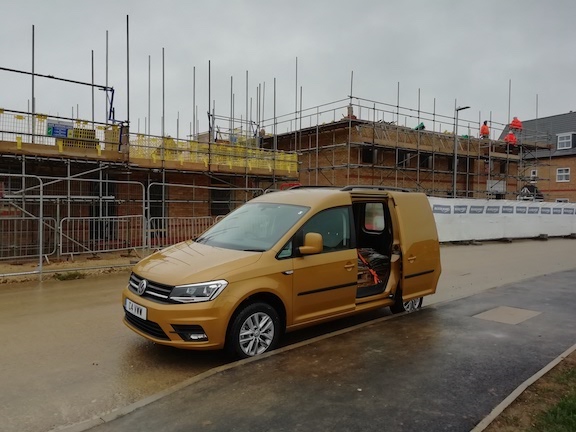
    Here we have VW’s venerable Caddy van. Things in van land run at a slower pace and this Caddy, believe it or not, is the Mk3. The Caddy has been part of the VW catalogue since 1980, so what has it been doing with itself for the past 38 years? 

    Moving, that’s what. That was what it was made to do and that’s what it does. The current Caddy on sale today is 15 years old. Does age really matter or can the Caddy still cut it?

    Driving

    This is your bread and butter van. Power at the front, nothing in the rear except load space. With that in mind, it makes for the rear to become rather happy on uneven road surfaces. Working vans don’t really travel empty and for the demonstration, VW placed a pallet with around 12 bags of sand on it. Even so, it still managed to be compliant in the handling department and for what was effectively an open space with no sound deadening, there were no din or road noises bouncing around the load area. 

    Inside

    Car drivers might not like it and if you play with a lot of Volkswagens, you’ll walk away a bit disheartened. Don’t be. The nice thing about the Caddy is its simplicity. It’s a van. Unless you want a van, you won’t be looking at one of these. There is a Caddy Life, a Caddy with rear windows and seat. That itself is like a Touran for the harder working lifestyles and less about luxury and it costs less too.

    The Caddy insides are all about wipe clean surfaces and hard work. Carpets are an option! What is apparent and perhaps down to age, is the lack of storage compartments. 

    What does show its age is the position of the infotainment screen. It’s a far to low down the dashboard and using the satnav means taking your eyes off the road for what feels like an eternity.

    Living With It

    As small vans go, there is still life left in the now 15-year-old Caddy. The simple layout in the back with minor wheel arch intrusion but still able to take that all important pallet that seems to be the benchmark for small vans. The sliding door aids access too and it’s all pretty neat. It does, however, require a load area liner. That painted area won’t stay showroom glossy for long.

    The Verdict

    It’s a slower pace in the van world and when a new van comes out, the maker needs to get it right first time around. The fact that the Caddy 15 years old, in typical Volkswagen philosophy, has seen some changes to keep it up to date and is still a good seller says more about the van than I can put in words but I’ll try: It’s still competitive.

    Love

    Simplistic inside

    Nice driving position 

    Equipment

    Loathe

    Needs more odds and ends storage places

    Satnav position

    Unprotected paint on the rear bumper

    The Lowdown

    Car –  VW Caddy SWB Highline 2.0 TDi

    Price – £ 24,287(as tested)

    MPG – 60.1 mpg (combined)

    Power – 102ps @2900 – 4000 rpm

    0-62mph –  12 seconds

    Top Speed –  107 mph

    Co2 – 124 (g/km)
  • The Good, The Bad and the Ugly: Citroën Berlingo

    The Good, The Bad and the Ugly: Citroën Berlingo

    The Good, The Bad and the Ugly.

    An irreverent look at a certain car.

    The Citroen Berlingo Multispace

    The 1998 – 2013 model was a step in the right direction when the Berlingo came out as a van. It raised the game in the CDV (car derived van) market. Instead of taking a humble hatchback, this was a purpose-built van on a hatchback chassis. In this case, the Citroën ZX.

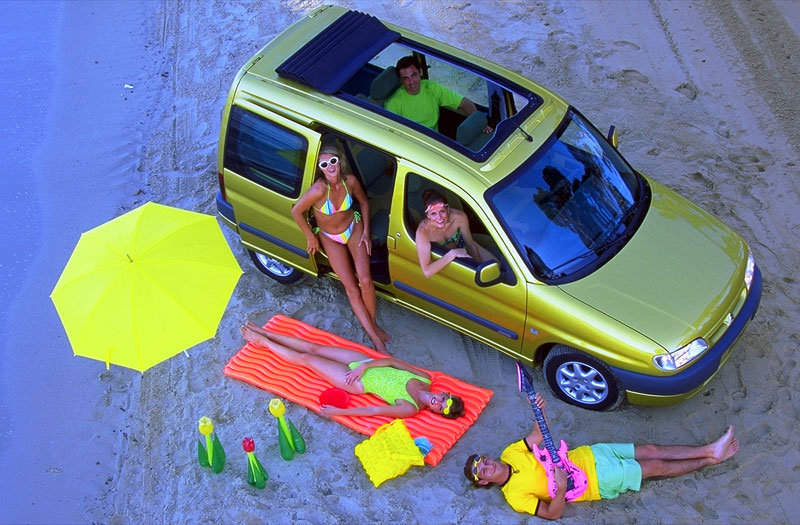
    This meant it had van like space in the cabin and storage appropriate for its van moniker. And then Citroën added windows and seats to it and sold it as a cheap lifestyle vehicle and judging by their sales literature, it was aimed at the young get-up-and-goers. Truth is, it’s easy access and comfortable seats sold it to the silver surfers who bought it in their droves.

    They even fitted it was an optional electric folding sunroof that went almost the entire length of the vehicle. A sunroof, in a van! an ELECTRIC folding roof IN A VAN!! That’s the French for you.

    And it sold in big numbers. Nothing could match it for small road space and huge interior dimensions.  

    It’s not that bad to drive either and when it was launched, even Jeremy Clarkson had a soft spot for it. In fact, it was almost universally liked by every road tester.

    The Berlingo has one thing that it lacks and that is street cred. Despite being seen as a young active lifestyle persons transport for five, it was a box on wheels. It was easy for old people with arthritic hips to get in and out of and its floor pan was easily adaptable for wheelchair ramps. If ever there was a truly multipurpose vehicle, the Berlingo was it.

    Buying one is easy. Oil leaks are the main culprit and some will have seen the welding torch, though rust isn’t really the killer for the Berlingo. Lack of maintenance and collapsing rear trailing arm bearings are.

    About £600 to have that fixed. Also, driver seat foams collapse. It’s about £130 to replace that and this I know because I bought one for mine. I own one. And remember the old people that bought them? Safe to say they wouldn’t have thrashed them. To be fair, there is little to be gained from thrashing the 1.4 petrol or 1.9 diesel. The 1.8 petrol was far more spirited, it’s harder to find one.

    It does what it does very well. It will carry you over great distances comfortably and swallow huge amounts of cargo. It’s just that it’s not very attractive and that’s why it’s an “ugly car”


  • The Good, The bad and the Ugly: The Renault Clio

    The Good, The bad and the Ugly: The Renault Clio

    The Good, The Bad and the Ugly.

    An irreverent look at a certain car.

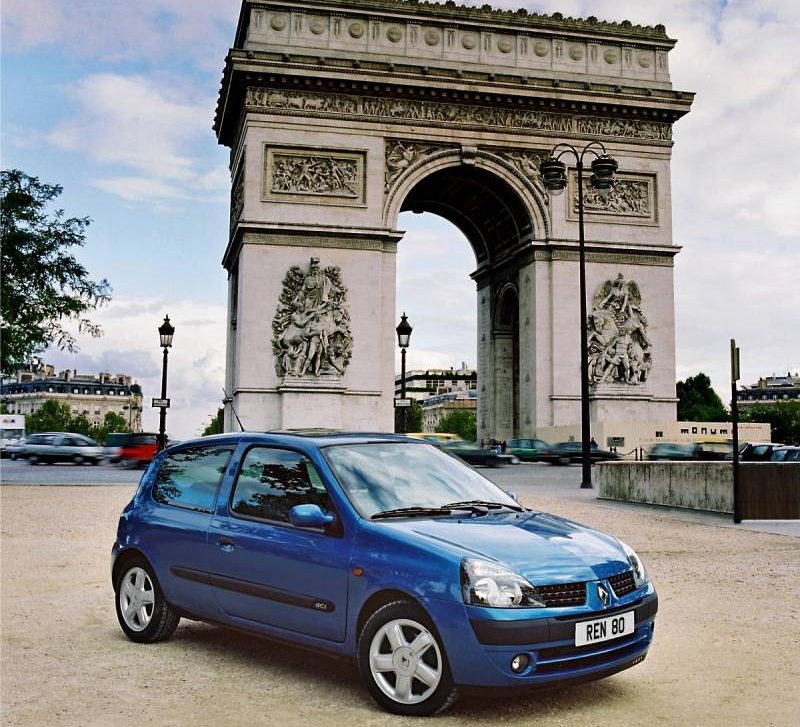
    The Renault Clio 2.

    The 1998 – 2005 Clio in almost all of its guises was a sensational little car. Even now, some 20 years later, they are still fun to drive.

    Nicole and her Papa were onto something with the pretty Clio 1. Clio 2 changed a few things like the fitment of plastic front wings and the use of materials inside to make it lighter and cheaper to repair.

    I’ll grant you that Clio 2 wasn’t as pretty as Clio 1 but then again it was still far better to look at than Clio 3.

    Borne out of Clio 2 was the crazy and short-lived, three litre V6 mid-engined monster using a modified V6 from the Laguna that was a part development engine with Peugeot/Citroën. Two seats and no luggage space in a widened shopping cart from France. Just 2822 road going versions were made.

    So I’m taking the 1.2 16 valve as the Clio 2 to get. It’s not a fireball to drive with just 74bhp but this enables you to be enthusiastic in your approach to where you point Clio 2 at and plough on. It’s still a fun car to drive.

    Admittedly, the clutch on a high mileage car will become heavy and city traffic will kill your left leg. Or it’ll encourage you to take up the gym membership and work on that right leg that in comparison would have become lazy and weak.

    And then there are the mechanical failures that are the Clio 2 Achilles heels. Ignition coils will fail and rocker cover gaskets leak. Simple fixes in the big schemes of things. My niece has one as her first car. I said it would breakdown. It broke down. It was a coil pack.

    Interior trim, made light to save weight, will by now, be rattling around with some, if not all, clips broken. You learn to live with it. What you won’t though is the rattle from the optional sunroof. Opening it usually solves the problem.

    And who could forget the “bonnets up” controversy where the bonnets would flip up at high speed! Lack of maintenance on the bonnet catch was the culprit here. So lubrication once again saves the day.

    So should you buy one? Yes. They are cheap cars, cheap to run, fun to boot around and are still pretty to look at.

    And that is why the Clio is a “good car”


    YOUR SUPPORT MEANS EVERYTHING

    Help us deliver unique, usable and reliable journalism that supports the gay, bisexual and curious community of the United Kingdom. Can you help protect LGBT+ media? Publishers like us have come under severe threat by the likes of Google and Facebook. The problem is that advertisers are choosing to put their money with them, rather than with niche publishers like us. Our goal is to eliminate banner ads altogether on site and we can do that if you could pledge us a tiny amount each month.

    We’re asking our readers to pledge just £1 per month, more if you’re feeling swanky. You can stop payment at any time.

    It’s quick and easy to sign up and you’ll only have to do it once.

    Click to start the journey and support THEGAYUK!

  • COLUMN  | Back to models… I love the Tamiya’s Hilux Little Bruiser

    COLUMN | Back to models… I love the Tamiya’s Hilux Little Bruiser

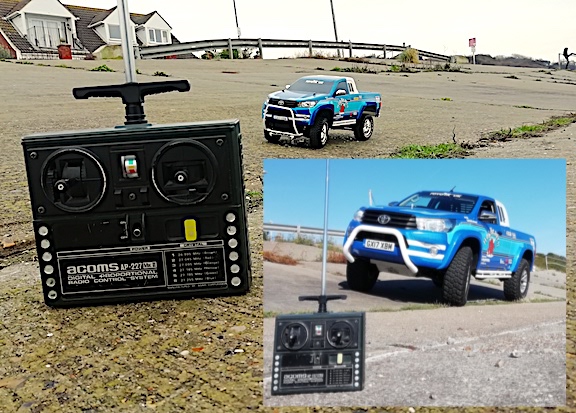
    During the summer of 2018, THEGAYUK was fortunate enough to be given the keys to Toyota GB’s homage to Tamiya’s Hilux Bruiser for a week. It was a sad day when they came to collect it.

    Shortly afterwards there was word on the street that model giant, Tamiya, was going to release a new radio controlled model based on that very Hilux Extra Cab model. And to really get the excitement up, they displayed it with stickers identical to the one Toyota GB had made.

    This new model wasn’t to be based on the original Hilux Bruiser 3 speed chassis and as a result, it has made it more affordable to every enthusiast by basing it on the tried and tested CC-01 chassis.

    Tried and tested, this chassis certainly is. It has been around for 25 years! That in itself sounds insane and yet there is still plenty of life in this chassis. It has seen 28 changes in body shell though some have been re-released. 

    Sometimes, if it’s not broken, don’t fix it and that really is something you won’t be doing with the CC-01 chassis. They don’t break. I used to run one year ago with the Subaru Brat body on it. So without further ado let’s quickly look at the chassis and its build.

    It’s simple with a few surprises. Not all the screws are the same and within the first few instructions, you’ll notice that the front diff has smaller screws. Here is a useful tip for you. If you plan on using it off road, try stuffing the front diff with blu-tac. It will lock the diff up but allow some movement, sort of like a very limited slip diff. It helps when off-roading.

    The rear diff comes with the option of locking it with 2 useful inserts. The rest of the chassis is pure off-roader in design. The rear has the ability to carry out to scale articulation with a live rear axle while the front is suspended by wishbones and all is damped by oil filled shock absorbers.

    With a proper off-roader like this old faithful, it isn’t about speed. The CC-01 was never about speed. It’s all about torque with power to climb and crawl along. With that in mind, you will want to make sure you waterproof the radio gear.

    The chassis is tough, rugged and never goes wrong. Even cleaning and maintenance are quick and easy. I could go on about what to do with the chassis for maximum off-road fun, but I’ll leave that up to you to discover. It’s truly will sort of go where you point it. 

    And now to the best part. The body shell. For years, Tamiya shells were intricate pieces of craftsmanship. Suddenly they started issuing stickers in place of paints for lights and door handles on their polycarbonate shells. It made bodybuilding quicker without the painstaking wait for bits to dry. Even the stickers were pre-cut. To me, that always felt a shame. 

    Thankfully, the shell for the Hilux Bruiser does have light inserts for the front and rears and the kit comes with a basic front and rear light kit. And there is more too. Masking. The extra cab needs masking up for the application of pearl white so this shell is turning into an intricate one after all that is worthy of extra attention. 

    What I choose to do however was paint it metallic blue. Tamiya recommends a solid blue colour. Having been up close and personal with the real thing, I can tell you that it is a sparkling metallic blue in colour. So there was no way I was going to paint it solid blue.

    As for the stickers, they look daunting. There are plenty of them and all have to be cut out. This was a joy for me and should be for you too. It’s intricate and makes building the model more intricate while developing those modelling skills. I must add that I did get sticker fatigue with this but that only extended the joy of the body to another day. Saying that it took over a week to build the body. A WEEK! The chassis was built within hours! 

    There is the need to also buy some black paint too for the load bed area and radiator grill. None of this comes in a sticker. The rear light units need to be painted along with the mirrors. So this shell really did turn into a feast for the modeller like a gift that kept giving. And for that, I’d like to thank Tamiya. 

  • THEGAYUK Motoring Honours List for 2019

    THEGAYUK Motoring Honours List for 2019

    2019 Motoring New Years Honours List

    2018 was quite a year for THEGAYUK motoring section. Two new contributors, Mark and Damien have joined and car choice from us, I hope, managed to whet your motoring appetites and curiosities. I think it is safe to say that 2019 will be an even bigger year so thanks for sticking with us.

    And so to my top three with an extra and that extra is my “almost ran”. That accolade goes to the Volvo XC60 Momentum Pro. It really was a car that did everything and impressed, was a great place to navigate the world from and what’s more, it’s a Volvo. There are no pretensions to the brand. It is Volvo.

    Now what I have noticed over the past years of doing my New Years Honours list is that this section seems to be the car that I would spend my own money on. So this is it, if it was my money, this is what I would buy. Well done Volvo.

    And so to my top 3 for 2019

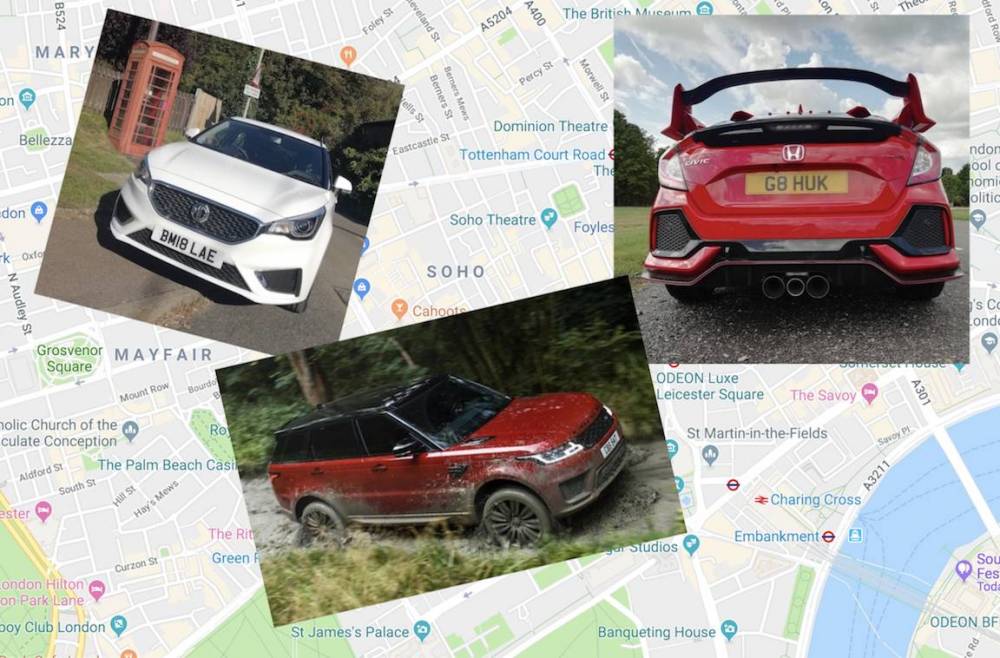
    3) MG3.

    This might come as a bit of a shock to you, considering I wasn’t overly kind and awarded the little hopeful only 2 stars.

    I still stand by those two stars but only because of the engine. Take it outside of its comfort zone and it shows up as quite a rough unit with lacklustre performance. That said, use the MG3 with its 7-year warranty as a daily commute with a sporting look and in the stop-start traffic you’ll be stuck in, you’ll appreciate it as a device to keep you dry. And to be fair, it’s not an uncomfortable place to be in.

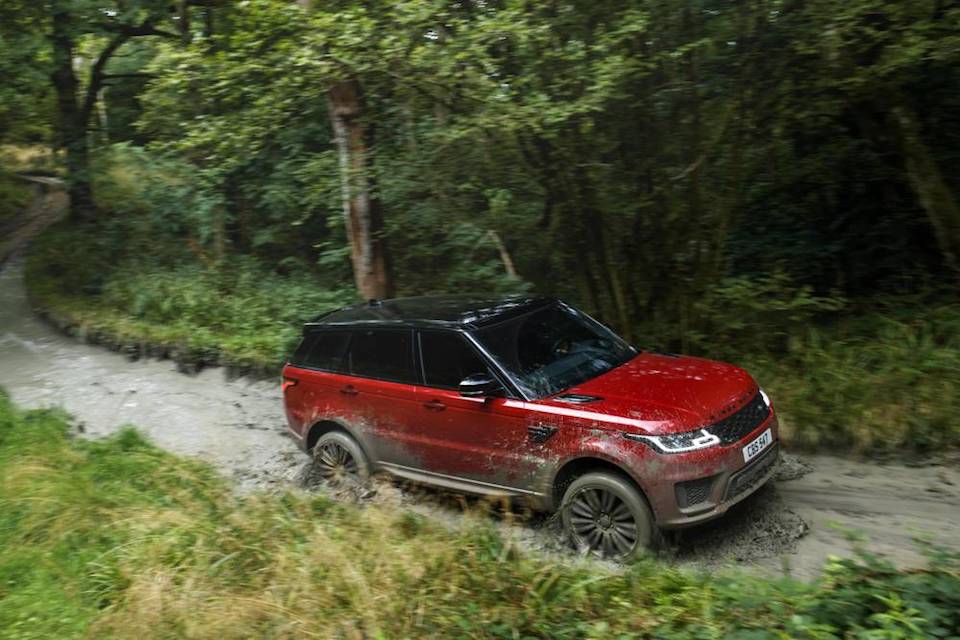
    2) Range Rover Sport

    This one shocked me. I wasn’t going to gush over the £75k Chelsea tractor but here it is, number two on my list. And why? Because it made you feel great. Land Rover has a following and despite the various quality issues they have from time to time, their followers are loyal to the core of the product. They feel good. A bit “not quite German” but with a passion built into the product.

    And it’s that passion that comes across in the way they make you feel. Add to that the confidence it has to go anywhere in the world, with 4 of your best mates, in luxury and comfort and you can see why I fell for it, hook, line and sinker.

    1) Honda Civic Type R

    What can I say about Honda’s road rocket that hasn’t already been said in my review and all the others who have also given the Civic Type R their accolade of the best hot hatch, best fast car, best all-around fast family car, phenomenal shopping shuttle, Practical hatchback. You get the gist. It is a great all-rounder.

    Speaking of rounder, you will eventually curb one of the black alloys that sit on band thin 20 walled tyres. And you will only want to put good tyres on it. That might detract from its running costs because chances are, if you are not respectful to its performance, you’ll go through those tyres pretty darn quick.

    But what a car. It has the performance to match supercars and pop you to the local curry house for take away.

    And there we go, that’s my top three. Don’t forget to comment in the box below or e mail me via the site. And above all, happy motoring into the new year of 2019. Let’s see what else is out there.

  • CAR REVIEW | Audi A7 Sportback 2018

    CAR REVIEW | Audi A7 Sportback 2018

    ★★★★☆ | Audi A7 Sportback

    What Have We Got?

    Here we have Audi’s large spacious and practical Sportback. It’s a cross between a hatchback and saloon in a fastback design. Does the fear of a luxury saloon with a lifting rear door distract from its market competitors or does the fact it is practical, give it the edge?

    Driving

    For such a big car, it is rather nice to drive, just as long as you don’t use multi-storey carparks. It’s a tight fit in those. 

    As with Audi, you get a selection of driving modes from comfort to dynamic and here Audi buck the trend. This A7 comes with standard sports suspension and from past experience, it has always been found to be too firm. A pleasant surprise was that it’s compliant on most surfaces while retaining a degree of Teutonic tightness. 

    The engine was the bigger 286ps V6 diesel that had a nice growl to it when you pressed on. When it opened up that is. Throttle lag is quite marked, from a slow rolling being the worst like that when creeping up to a roundabout. 

    It doesn’t get much better when on the move unless you override the system and put the Tiptronic system in manual. Once into 6th gear and you press on, the gearbox delays the pick up by selecting 2 to 3 gears down and then hurtling the car forward with a good dose of shove.

    Inside

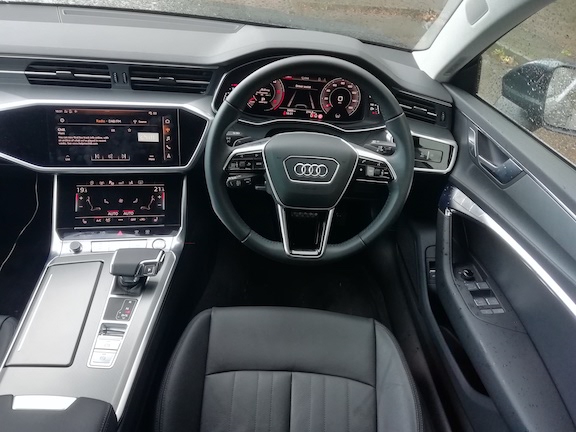
    As you would expect, the cockpit is a nice place to be in if you are 4 up. It’s not really comfortable as a 5 seater express due to the intrusion from the transmission tunnel. 4 up, and there is plenty of room within the 2926mm wheelbase.

    Fittings were on par with this segment and the split touchscreen got my thumbs up. For those who like buttons and not touch screens, there is the option of ‘Haptic control’. This requires a bit of force on the item you want to select on the screen and in return, it vibrates on your finger. Personally, I preferred the touchscreen. For once, this was a touch screen system that worked quickly to inputs.

    What I didn’t like was the wind noise from around the driver’s door at over 50mph possibly caused by a wayward door seal though it all looked well put together. 


    Living With It

    Let’s get one thing out of the way first, that lifting rear door makes this an incredibly practical car. Luggage space is a whopping 535 litres with the seats up. There is minimal intrusion too, meaning the car can carry estate car type loads up to the window line at least. Loading and unloading is not a problem.

    The Verdict

    The A7 is a fine car from Audi with understated good looks. The fact it lacks aggression in its looks is a good thing. From all angles, the A7 is a handsome car that will not cause offence to anyone. If you are looking for a car to carry you great distances with minimal fuss, then this is your car. It’s subtle good looks make this Audi surprisingly calm. It can be hurried, It’s a Quattro after all, but that delay in the throttle responses is what really lets it down as a press on car. Keep it calm and cruise. It’s good at that. 

    Love

    Interior styling

    Handling

    Practical

    Loathe

    Transmission tunnel intrusion in the rear

    Lethargic throttle from standing start/low speeds

    Indecisive automatic

    The Lowdown

    Car –  Audi A7 Sportback 50 TDI Quattro 286ps Sport Tiptronic

    Price – £ 60,290 (as tested)

    MPG – 48.7 mpg (combined)

    Power – 286PS @ 3500-4000 rpm

    0-62mph –  5.7 seconds

    Top Speed –  155 mph

    Co2 –  150 (g/km)

  • CAR REVIEW | Alfa Romeo Stelvio

    CAR REVIEW | Alfa Romeo Stelvio

    ★★★★☆ | Alfa Romeo Stelvio – Alfa Romeo’s Power House

    What Have We Got?

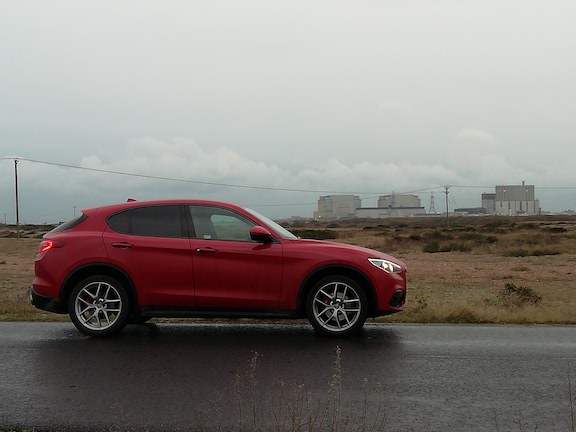
    Alfa Romeo has buckled to the trend and launched a very sporty SUV into the ever popular SUV market. It’s big and rather good looking but can it wow you and win you over, away from the competition?

    Driving

    The downside for me was the steering lacked some feedback. You could tell when it was ploughing on in an enthusiastically taken corner but this was probably more to do with its sheer size than through the steering wheel.

    That said, the overall driving experience wasn’t a bad one. Quite the opposite. The 2-litre 280hp  petrol engine would hurtle towards 60mph in 5.7 seconds. Now for a car that can manage that and develop its maximum of 400 Nm of torque at just 2250rpm, it seemed to be rather more refined than you’d think. It wasn’t really throwing you back into your seat on hard acceleration and yet it never hesitated in response to throttle inputs from stand-still or when on the move.

    In actual fact, you’d be wise to select the MPH display on the fascia panel at all times. The Stelvio gathers pace quicker than it feels. 


    Inside

    Inside is below par for the class and the money. What was nice to see was that nothing rattled. That might sound premature when a new car is being reviewed but this Stelvio was delivered with almost 24,000 miles on the clock at the time of the test. It is just over a year old. That’s almost the equivalent or 2-3 years of motoring. Alfa Romeo hasn’t been known, in the past, for rattle free insides, well they have now. And this is a press car. They pass from journalist to journalist and they are driven hard. This is a great testament to Alfa Romeo. 

    Living With It

    It’s rapid and great fun to drive and deserves to wear that Alfa Romeo badge. As SUV’s go, the Stelvio cuts it in the market for being different. It might not do things as well as a Mercedes GLC but then again, for the money, the GLC isn’t going to do things that the Stelvio can do. 

    For drivers alike, the Stelvio is a great car to drive. It’s comfortable and despite its size and somewhat lack of steering feel, it does give the impression it is far nimbler that on first acquaintance. 

    The Verdict

    It’s not the best. Then again you’re not going to regret having it parked on your driveway and an Alfa Romeo key in your pocket. There are things I’d like to see changed in line with the market leaders but then again, if it did, it wouldn’t be an Alfa Romeo! 


    Love

    Linear throttle reactions

    Infotainment system

    Auto box changes

    Loathe

    Interior quality

    Fuel consumption

    Steering feedback

    The Lowdown

    Car –  Alfa Romeo Stelvio 2.0 Turbo 280hp Q4 Milano Edizione

    Price – £ 46,865(as tested)

    MPG – 40.4mpg (combined)

    Power – 280hp @ 5250 rpm

    0-62mph –  5.7 seconds

    Top Speed –  143 mph

    Co2 – 161 (g/km)

  • Die-cast Dreams 

    Die-cast Dreams 

    I had some fun thinking about this article. Motoring writer and author, Richard Gooding recently posted up on Twitter pictures from his visit to the Hornby toy museum in Kent. This got me thinking about the toy cars that I longed to own as the real thing. Namely those from Corgi and Matchbox.

    There is no sense of occasion with die-cast toys anymore. In the ’80s, a new Matchbox or Corgi release was AMAZING. Imagine the rush for the latest iPhone, to a young boy, it was exactly like that.

    I can still remember certain releases with fondness. Even a rehash of an old model in new colours was a worthy occasion. 1985 was a particularly hot year for releases and first to get the new Golf GTi, BMW 325i cab, Escort cab or Lamborghini Countach was frantic.

    I would save my £1 a week pocket money and once I had got to the usual £4.99 (I think), I’d treat myself to a large Corgi or for about a quid, I’d buy one of the 75 small Matchbox cars available, choosing it from the rotating Matchbox stand in our local toy shop, Chapmans. The nostalgia I am feeling right now is unbelievable.    

    The small Matchbox and larger corgis were the ones I loved. I wasn’t so keen on the larger Matchbox or the smaller Corgi’s. Matchbox Superkings lacked details and the small corgis were just cheap. That said, I still had some because, well because I wanted that car like the Peugeot 305 saloon from Matchbox, so don’t judge me. 

    The die-cast toy was a gateway to driving and car ownership. It taught you about keeping the paint pristine or what would happen in the real world when a brick was dropped onto say, a Rolls Royce. I did end up with a fair number of convertibles and a scrapyard worthy of a lot of money had it been real.

    There were also adventures to be had with a die-cast and dream garages could be built from new or exchanging with friends. In some ways, it really is little different to car ownership. So without further ado, let us look at my dream garage of die-cast.

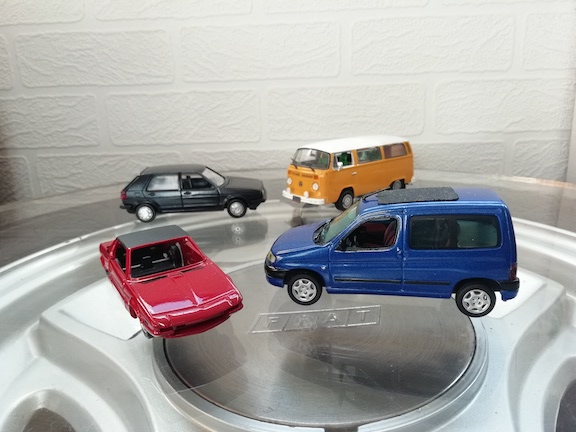
    One particular model jumps out. The Corgi Fiat X1/9. It was blue with some racing decals. It looked the nuts. Sleek and wedge-like. There was nothing else like it in my toy box. What’s more, this came with a tow hook. What a stupid option. 

    That’s what I thought until I was given the Carlsberg X1/9 with the boat on a trailer. Forget the silly little boat you could win on Bullseye, this was a real speedboat with a Cosworth engine. Both of these models I still have and to that, I also have to add a real Fiat X1/9.  

    Another model was given to me second hand. A small matchbox VW camper van. It was wicked at rolling down the hill. Sadly by the time it got to me, it had lost its pop-up roof. That didn’t stop me from prizing it apart and painting it white over orange. That was always the dream. 

    Didn’t quite work out that way in the end because I ended up with a yellow VW camper van instead.

    Another die-cast hero of mine was made by Solido, the French die-cast manufacture. Always a little more expensive. They made an Alfasud racer. Not quite the Alfasud I wanted but that never stopped the hankering for one. And again I would eventually own the real car. Sadly, like the Solido model that came apart quite easily for restoration, my Alfasud came apart too.

    I’ve since managed to make die-cast replicas of practically all the cars I have owned. Sadly Corgi and Matchbox aren’t really the same anymore and what they sell aren’t really what I aspire to own. Instead, I have to turn to the many other makers of die-cast out there for my dreams or more importantly, to remake into my current garage. Thankfully Vitesse made some truly unusual models so I have been able to make the last addition to the fleet, the Berlingo. 

    Where it goes from here, why knows. I’m hankering for a Lancia Beta coupe, Solido made one of those. I also want another Citroën Dyane and I know Corgi made that because I’ve already got one.

  • This is how you put a classic car to bed for winter

    This is how you put a classic car to bed for winter

    Any car lover hates this time of year, especially those with old classics or cars known for being a tad “delicate” in winter. For me, I am talking about my Fiat X1/9.

    This year, the summer was cruel. It was hot. Too hot to get the little open-top Italian out. Yes, I know there is a lot of irony there but this Fiat just doesn’t like getting too hot and documented problems of fuel evaporation are not stories of make-believe. With the X1/9 it happens and it has done so on numerous occasions.

    And so the hot summer went and having had a number of press cars for TGUK, I went on a press car break so I could use my own and enter stage right, the X1/9. I managed to do 303 miles this year. And I can tell you every single journey it took including one to an Italian car breakfast morning on a Saturday that I attended on Sunday! 

    So you can see, winters arrival is cruel because of 2 things; This is an 80’s Fiat and not know for longevity in wet salty English conditions, and the thing is ruddy awful in the wet. That said it can be fun but the concentration needed to drive it in the dry needs to be ramped up to 11! And the wipers are set for Italy, so not very good.

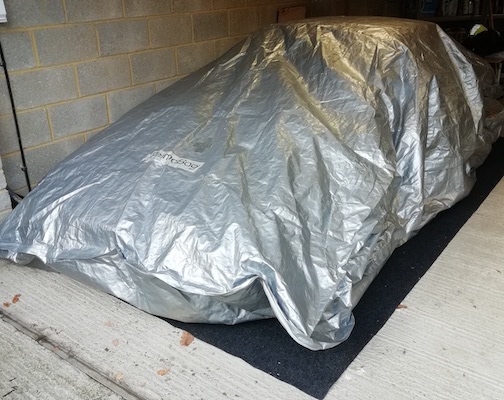
    Preparing a car for winter hibernation isn’t that straightforward. It could be I suppose but if you like to tinker and fanny around, then it isn’t. I use a system called a “Permabag”.

    It’s a massive bag of tarpaulin fitted with a divers zip. In it go 2 desiccators that absorb moisture within the bag and from the car and it keeps it all dry and the humidity within it controlled. 

    I’m fortunate to be able to park up the X1/9 and leave it there, undisturbed for great lengths of time. The makers of Permabag also recommend that it is best left. Opening and closing the bag are not what this system is about. The idea is to reduce the humidity and leave it in its current state. This system doesn’t require any power either, so it is ideal for any garage, anywhere. If you need to move the vehicle regularly and have power, I can recommend the Carcoon system that I know many use. Check out the differences in the links below.

    So it would seem strange when I tell you that what I did next was to wash the car. Ideally, you should clean any car you put away. After washing, a good polish is a great idea. It’s also a time to make a note of any areas of the body that will require attention next year. I spotted 2 areas of rust and then added another by pulling a drain pipe off from the engine bay. That is going to be fun trying to reattach that!

    Now is a good time to attend to 1 or 2 of those small annoying jobs. One in particular for me was the moss and grime around the rear light seals. Quick wash and scrub with an old toothbrush and a poke with a cotton bud, and now all clean.

    So this is something to do next year. It’s not recommended to do paint work and then store away with the system that I use.

    I would normally recommend an oil change too. Reasons being are that old oil contains contaminants that can attack things like bearing surfaces. The oil has done just 1400 miles and still comes out clean on the dipstick so this time I’ve left it. I will do an oil change this time next year. Also, check the concentration of antifreeze and add any if needed. 

    Now, this part might be a bit OTT but screen wash bottles, remove, empty, clean and leave empty. Several reasons why I do this. Firstly is stagnant water can breed legionnaires disease. You don’t want this. You’ll be horrified by how old the water is in your screen wash bottle if you don’t empty regularly. So bottles are very big, the X1/9’s is about 7 litres in capacity. I don’t use 7 litres of screen wash. 

    Secondly, the system I use removes moisture. A washer bottle is not sealed. So you can see where that is heading. It’s also a good idea to wash it out every so often because it’s an excuse to fanny around and tinker.

    If you are lucky to have a spare set of wheel, now is a good time to fit them. It doesn’t do a tyre any favours sitting in one place for any length of time. Even my Tamiya shelf queens models are on raises to stop the tyres from getting flat spots! 

    I don’t have a set of storage wheels for the Fiat, so I tend to over-inflate them by about 8-10psi. Doesn’t sound a lot I know but over time the car can lose tyre pressure and as the X1/9 can’t be seen inside the bag, I have no idea what it is doing so this offers me some piece of mind.      

    Now you may just be about to stop me from putting the X1/9 away in the bag having only washed it and you would be right. I leave it in the garage for another week or so to dry out as best it can.

    Then I’ll put it away, under a cover, zipped up in its bag and leave it. Leave it dead of power because whatever you do, don’t forget to disconnect the battery. And then count down those days. One Hundred and Seventy-Five I said and if April looks promising, it’ll be less. 

    Opening it up will bring its own problems so I’ll let you know how that goes after 175 days time.

    https://www.autopyjama.com/permabag-engl/

    https://www.carcoon.com

  • COMMENT | These were cars we really wanted to drive growing up

    COMMENT | These were cars we really wanted to drive growing up

    There was a time not so long ago when models within a model range varied according to affluence. There was also a bit of what the decade dictated in there too. If you are as old as me, we are not talking that long ago either. Less than 50 years in fact. 

    Ok so 50 years is perhaps a lifetime away for some of our readers but long ago in the motoring world far far away from where gloss and add-ons were essential in demonstrating your wheeled wealth, there were motoring gems to be had. From poverty to racing and somewhere in-between specs, it all added up and made the Jones’s at 69 twitch the lacy nets in either disgust or envy.

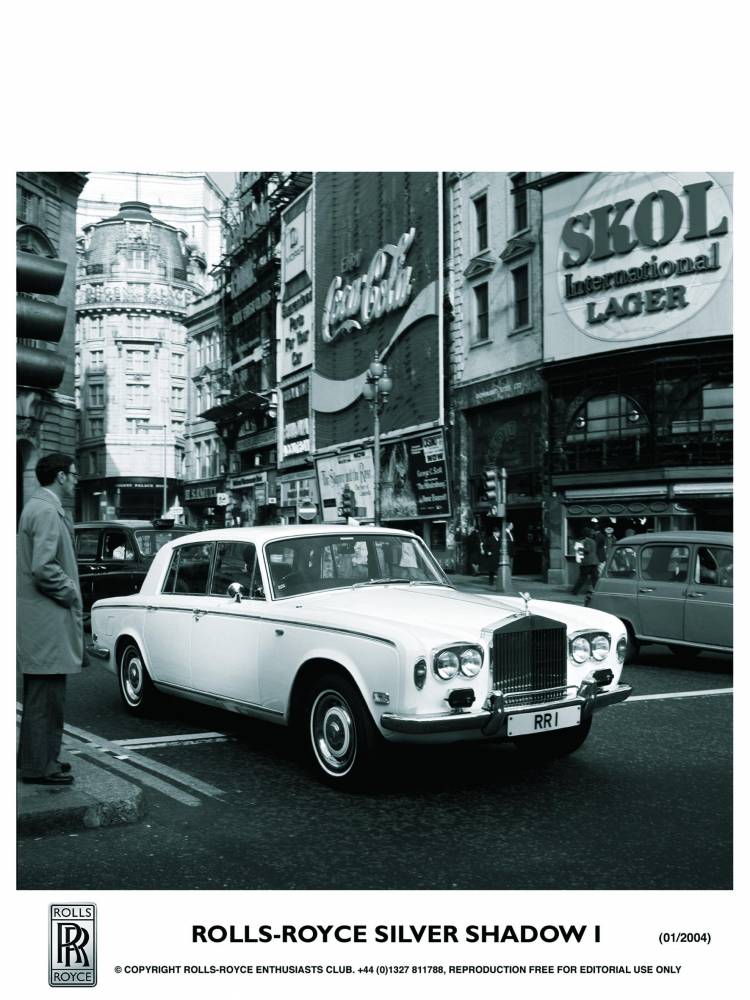
    Sadly these days you can’t tell the difference between a poverty or a luxury model from the visual aesthetics. Alloy wheels and glitz are pretty much the same available across the ranges. And chrome and elaborate badges seem passé these days. So l am going to take you back to 5 decades of motoring and pick out one of my favourites that were stand out models within a range of specific models and you didn’t need a Rolls Royce to show off your motoring wealth either.

    1970 

    Mk2 Escort Ghia

    The Ford Escort was a top seller in the UK. The Mk2 had form and looks. Its model range catered for every walking person in the world. It was available for not a lot of money to quite a huge sum. It was a car you could aspire to. And that’s why I am choosing the Mk2 Escort Ghia. 

    The Escort range had circular headlights on its lowest and sportiest models. Not so on the Ghia. It had square lights and silver edging around the grill. And if that wasn’t enough it also had added brightwork to cause sparkling glare through the nets of the neighbours. Not only was there side mouldings and a vinyl roof but sports wheels with chrome beauty rings. Best of all was the metallic paint that was at one time only available for the Ghia model. It also had splashings of wood trim and an internally adjustable door mirror. This was stuff that wowed the crowds and made lesser men cry. All of this was then given the kiss of a Ghia badge. 

    1980

    Austin Rover Maestro Vanden Plas 

    Be it the humble Metro, the great white whale that was the Maestro or the Sierra nibbling Montego, Austin Rover added the ‘Vanden Plas’ moniker to these 3 models. However, the Maestro is my worthy winner. It was like nothing else on the market. For a start, it had wood where others were going for plastic and it was given a chrome grill and embellished wheel trims. Little VP decals on the rear wings along with a coach line, all complimenting the chosen metallic paint choice were subtle in showing off your wealth over a lesser HL or Mayfair model. 

    It got even better inside too. Along with the wood trim, there was shoulder to shoulder leather-covered seats. Then to drive your senses crazy, you were presented with a digital dashboard that could give out over 30 voice commands usually at will and for reasons, only the car knew, for seat belt, petrol and anything else you could think off wanting a car to tell you in 1982.

    Remember this was also the year of Knight Rider and the talking car. This was seriously cool. All the fun the Maestro had to offer was narrated by New Zealander Nicolette McKenzie.

    1990

    Jaguar Sovereign (XJ40 model)

    Somewhere in between the base Jaguar XJ-6 and top of the range, Daimler sat the very British named Sovereign. It stood out from the lesser model sister due to more brightwork and alloy wheels. And then there were the headlights. Rectangular units instead of the two separate lights of the lesser model. The added bonus of these lights was that the Daimler also had them. To distinguish itself from the higher model it still kept with the Jaguar grill instead of the convoluted trim of the Daimler.

    Inside it was treated to standard features like air conditioning and leather everywhere. 

    Ford took control of Jaguar and following a facelift, the kings of giving took away the visual impact of the affluent range and all models then looked the same    

    2000

    Ford Focus Ghia saloon

    The millennium decade gets difficult. Cars all pretty much looked alike. One car does stand out to me from the crowd and ironically, it was from where we started, back at Ford. The Ford Focus. Not just any Focus for it has to be the saloon purely because the shape looked better than the dumpy fat arse hatchback. The fact you could also get a Ghia in estate form showed that times had changed and affluent luxury was now available even for the universal man who had loads to carry.

    Focus Ghia had the usual items that we had now come to expect like the chrome on the front bumper and a dollop of wood in the centre of the facia. By now that wood was beginning to look more like the wood was harvested from a Lego land forest of plastic. That said it wasn’t the worst faux wood you could get. The French were even worse at it. There was also an option for leather seats but sadly the alloy wheels were no longer exclusive to this model. The lesser LX could often be seen parading around in them like some irksome oik in knocked off £700 Manolo Blahnik cum fuck-me heels. 

    And beyond…

    It’s hard to tell where or how it will go. From the list above you can see that the top of the class at this was the British. For some reason, we Brits liked an add-on which probably accounts for the sheer amount of money we spend on our cars after purchase. We are good at adding a touch of luxury to a car and probably why the British are good at modifying them. That is if you don’t look at Barry Boys on the internet.

    http://www.barryboys.co.uk/phpBB2/portal.php

  • CAR REVIEW | Volvo XC60 Momentum Pro

    CAR REVIEW | Volvo XC60 Momentum Pro

    ★★★★★ | Volvo XC60 Momentum Pro

    What Have We Got?

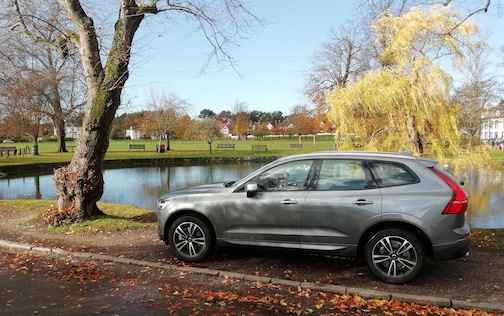
    Here we have Volvo’s mid-sized SUV, the XC60. By all accounts, it’s a popular car. Judging by the number of them on the road, you would be right. But is it any good? Does it cover ground better than others in its class and is the Momentum Pro worth the £42,105 asking price?  

    Driving

    When the XC60 arrived, I was a bit disappointed for it not being an automatic. Manuals in city driving aren’t much fun. That said, the diesel D4 engine works well with the manual box, better in many ways than the auto. It has a fluidity in its workings. Just keep an eye on the rev counter though. Unless really pushed, the engine is subdued in noise suppression.

    What then helped living with the manual was the spread of low down torque of 400 Nm from 1750rpm. That sounds quite high, but I can assure you that it will pull cleanly in 4th from below 1500rpm. And then come the problems, sort of. Because of the way it works and the gearing, 5th and 6th really are very redundant gears. They were not used on my 40-mile daily commute. Only on Sunday when the roads were clearer, was I actually able to use 5th.  

    The XC60 with its all-wheel-drive system is sure-footed and secure even when hustling it around. Its ride balance in “comfort” was just right. Aided no doubt by its generous 50 profile tyres giving it a good soft sidewall.    

    Inside

    Here is were Volvo really do exceed in excellence. Their interiors are probably the nicest places to navigate the great outdoors from. In the Momentum, you are treated to bright cream leather coverings and silver accent trim around the cabin. This isn’t the best from Volvo; they also offer wood that adds even more to the exceptional expensive feel of the cabin space.

    And that’s just what the driver feels. There is room for four others to enjoy the ambience of the car. Admittedly, for what looks like a large vehicle, it doesn’t exactly translate into masses of cabin space, but you’re not left feeling squeezed. It’s just right.  


    Living With It

    My week with the XC60 was one full of various driving conditions. From sunny days to torrential rain at night, it carried my passengers and me in safety and comfort.

    On the move, the XC60 has a calmness surrounding it. There were a couple of incidences where people pulled out in front of me, and the usual words were said. And then calmness. Remember that scene from Spaced where Brian is painting manically, and then he receives a call from Twist, and he is then unable to paint due to being calm and content? It’s like that.  

    The Verdict

    I could work for Volvo and sell these, day in, day out. The XC60 is a great vehicle. It’s calming, competent and exceptionally well put together which does belie the asking price. £42k is not a lot really when it comes like this and with this level of spec.

    If I am to nitpick, and I have to, I’d say there are a few areas it needs to be improved on. For a start, it needs a left footrest. It’s not like there isn’t any space there for it either. You can stretch out your left leg with ease, it’d just sometimes you need a place to rest that foot that isn’t on the clutch pedal. And the stop/start button. Its razzmatazz looks a little out of place and a bit too blingy. 

    And you see, I’m nitpicking and because of that, I’m giving this five stars. 

    Love

    Quiet and relaxed

    Ambience

    Price

    Loathe

    Lack of footrest

    Gaudy stop/start switch

    Both of the above again.

    The Lowdown

    Car –  Volvo XC60 Momentum Pro

    Price – £42,105 (as tested)

    MPG – 31.5mpg (during test)

    Power – 190 bhp @ 4250

    0-62mph –  8.3 seconds

    Top Speed –  127 mph

    Co2 – 139 (g/km)