Category: Motoring

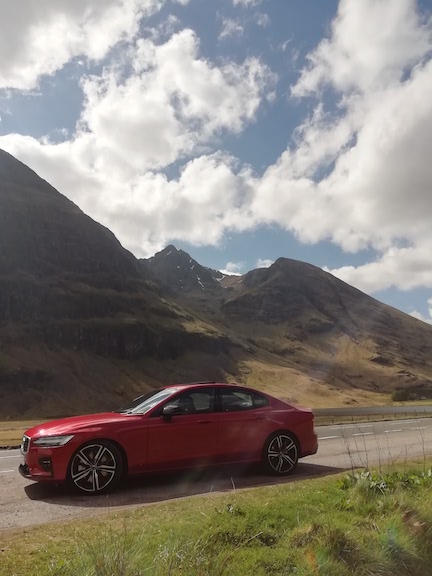
  • CAR REVIEW | Volvo S60/V60 R-Design

    CAR REVIEW | Volvo S60/V60 R-Design

    ★★★★ | Volvo S60/V60 R-Design

    R-Designed Volvo. How do you want it?

    What Have We Got

    Hot on the wheels of the recent Volvo resurgence in their 60 series of cars, V60, V60 Cross Country, R-Design estates, comes the much-anticipated saloon version.

    THEGAYUK were invited to try both models in R-Design trim, and, depending on your motoring needs, both were clear winners. One more than the other.

    Driving

    The all 250hp petrol engine option (no diesel) mated to an 8 speed automatic, work well. The drive is linear and it feels very fluid in its forward motion. 350Nm of torque come from a lowly 1800 to 4800rpm. And this fits in nicely with where the gearbox will try to keep the engine running. Go beyond it, and the good news is, you’ll still enjoy it. There is very little engine cacophony.

    The ride is silent and all composed. It’s a touch hard but fitting for the R-Designs purpose as a sporting drivers car. I rather liked it. It felt muted to road surface discrepancies that blight our roads. However, the S60 trumps the V60 when it comes to handling. The 30kg lighter and yet stiffer shell feels it. Saloon shell makes the car feel somewhat more surefooted.

    You could argue that the rear suspension might have been altered to compensate for what the V60 could be used for and I wouldn’t disagree with you. As a drivers car, the V60 is good, the S60 is better.


    Inside

    I’ll be honest, I’m not a big fan of the R-Design set up. When you get to try the others in the 60 range, you discover that dark interiors are not what you want. Everyone does dark, so when you get behind the wheel of a V60 Inscription with blond leather and wood, it feels special and fresh.

    That said, it is not like you are sitting in a rat infested dungeons with hard chairs and little enjoyment. The R-Design gives you bespoke bucket style seats. There is very little to complain about in the ergonomics and comfort. And a good job too because when you want to get the R-Designs shifting, they really grip onto you like a leather strapped chair in a BDSM dungeon.

    Living with it

    Style over function or the other way round? It’s a difficult one for me to suggest for you. As style goes, both body shapes ooze elegance not seen on a Volvo before. It’s a head turner. 

    It all comes down to what you, as a driver, want. Practical and it’s the V60 with its 529 to 1441 litres off luggage space over the saloons 442 litres. Well composed with a touch more sporting to take on the likes of that pesky Audi that loses you down that twisty road, and it’s the S60. 

    Neither will disappoint. They are easy to live with and they will fit your needs with a touch of premium class.

    Fast driving and they both do well, with the S60 doing it so much better. So much so that it really feels quicker to and more responsive. And to top it off, the smaller cabin design of the saloon really makes those Bowers and Wilkins speakers come alive.

    The Verdict

    For what it does, and if you want your saloon and estate to have the sporty potential that you crave, then these are for you.

    As for me, I might have been swayed by the R-Design. I’m getting old but I’m feeling kinky and used. I’ve been abused by the R-Design and I can’t say I didn’t LOVE IT!

    The Lowdown

    Car –  Volvo S60/V60 R-Design 

    Price (from) – S60 £37,935 / £40,210 (as tested)

    MPG – 35.3 – 39.8 / 34.0 – 39.7 (WLTP combined)

    Power – 250hp

    0-62mph –  6.5 / 6.7 seconds

    Top Speed –  145 mph

    Co2 – 155 / 157 (g/km)
  • MOTORCYCLE REVIEW | Ducati Monster 797

    MOTORCYCLE REVIEW | Ducati Monster 797

    ★★★★ | Ducati Monster 797

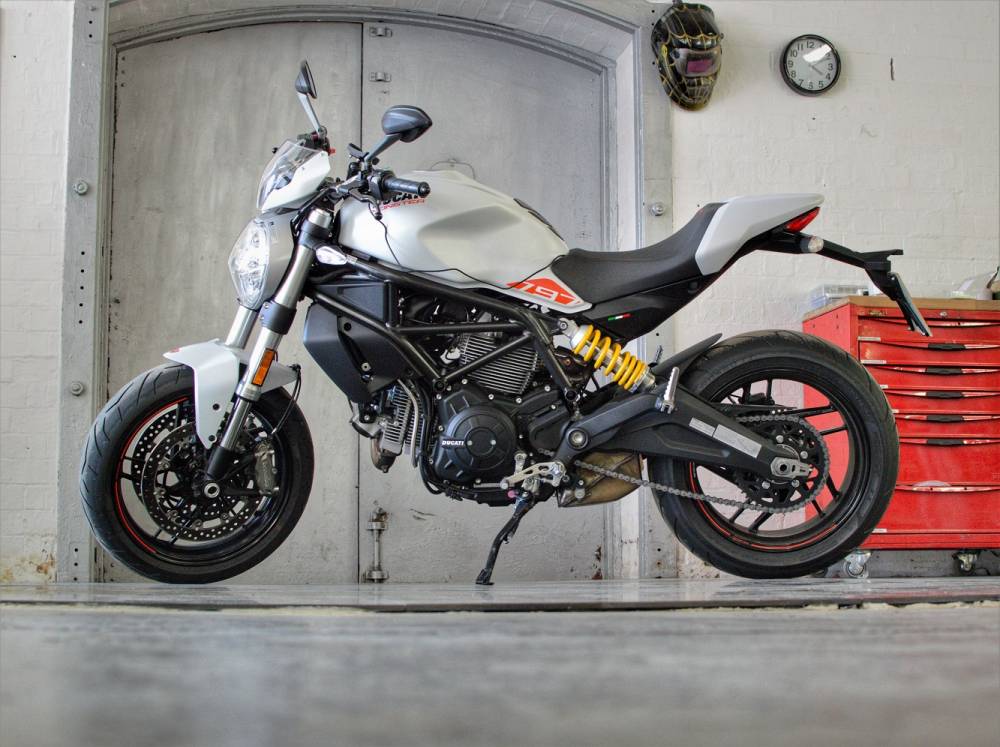
    Ducati’s Monster has been credited as the genesis of the naked bike niche. The bike that started the street bike revolution.

    Ducati introduced the Monster in 1993, designed by Miguel Angel Galluzzi.

    Famed motorcycle designer, Glynn Kerr, described the Monster design as having “all it needs and no more.”

    With Monster sales eventually accounting for two-thirds or more of Ducati’s output, the bike became the company’s best selling and most profitable model line, essential to the company’s success.

    The Monster has gone down in folklore as the bike that saved Ducati. You simply can’t underestimate the significance of the Monster to Ducati.

    The Monster 797 is the most accessible Ducati with a starting price of just £7,995. This is often considered the entry point to Ducati ownership, the Ferrari of motorcycles.

    Of all the motorcycles I’ve ridden, I’ve never ridden a Ducati. Often admired, always revered, but never had the opportunity to experience it for myself.

    On the way to collect the Monster 797 press bike, I felt the weight of expectation bearing down on me. I was on my way to one of the most illustrious and celebrated motorcycle manufacturers of all time, to collect arguably one of the most significant models in their long and distinguished history, a Monster.

    Thumbing the start button brings the 73 bhp and the 803 cc 90 degree (L) twin-engine to life. Ducati L twins have a very distinctive sound and feel. They sit somewhere between a smooth Japanese V twin like the SV650 and the irregular, lumpy idle of a Harley. The Ducati has an uneasy but alluring murmur.

    Our press bike only had 250 miles under its belt when I collected it, so mechanically was still very tight. 1st gear engaged with a clunk and my journey began with a ride into the sunny, Northamptonshire afternoon.

    Bars are wide which help the bike turn very well. Immediately you feel at home with the little Monster. It’s such a pretty motorcycle, elegant and muscular, with those wide bars, sculpted, flowing tank, exquisite trellis frame, graceful seat unit and curvaceous double-sided swingarm.

    I found myself looking for reflections at every opportunity, just to see the Monster from someone else’s eyes.

    The heart of the Monster 797 is the 90-degree twin cylinder, 803cc air-cooled engine, with 2 desmodromically actuated valves per cylinder.

    Electronic fuel injection delivers its elixir through 50mm throttle bodies.

    Front forks are 43mm Kayaba USD non-adjustable units, complemented by a rear Sachs monoshock, adjustable for preload and rebound.

    Tyres are Pirelli Diablo Rosso II and worked very well in all conditions.

    Overall I thought the bike was fairly softly sprung, with a bit of dive on the front end under initial braking. This isn’t entirely fair though as I’m a 47-year-old overweight guy, not exactly representative of the typical Monster 797 owner.

    Front brakes are 320mm semi-floating discs with radially mounted, 4 piston Brembo Monobloc callipers. ABS is standard of course.

    The rear brake is a 245 mm disc with single piston calliper. Brake feel is excellent and the front Brembo’s are superb.

    Instrumentation is basic. There is no gear position indicator or fuel gauge. I missed the fuel gauge but the gear position indicator is more of a luxury that we have come to expect, rather than a necessity. Having no fuel gauge, I opted to refuel every 100 miles. The fuel tank capacity is 16.5 litres and after 100 miles of spirit riding, the fuel light wasn’t ever on, I was just being cautious.

    I’ve covered around 1,000 miles on the Monster 797 on all kind of roads from motorways to A roads, from sprawling urban streets too narrow, winding country lanes and everything in between.

    There are bikes that are better suited to long motorway journeys, but it handled them with ease.

    Where the little Ducati did excel was everywhere else. Wide bars, a nimble and refined chassis and that torquey engine make it a great urban bike. Cutting through the city streets with ease, carving through the winding country lanes and revelling in the flowing A roads, and all with an abundance of character and style.

    My lasting memory of the Monster 797 is how easy it is to ride. This is a very friendly and familiar bike but with passion and vigour.

    The clutch is easy to use, it’s has a seat height of just 805mm, it looks fantastic and is an ownership experience that offers more than most. Placing the keys of a Ducati on the table feels special.

    The Monster 797 is also available for those with a restricted licence, as a version with 35 kW of regulated power.


  • MOTORBIKE REVIEW | Suzuki Katana 2019

    MOTORBIKE REVIEW | Suzuki Katana 2019

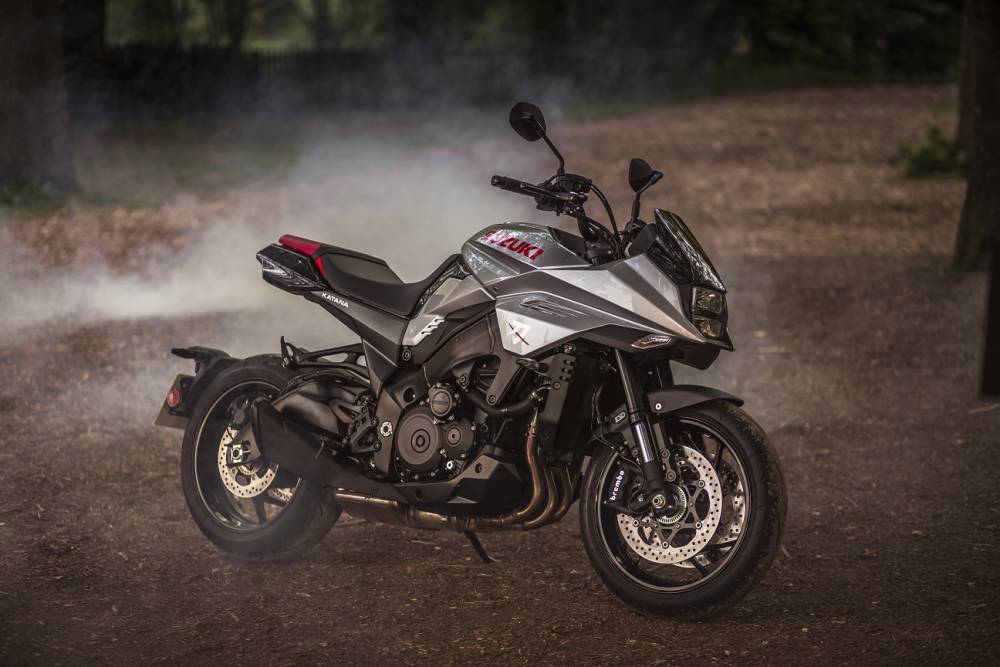
    If you were around in the ’80’s you’ll remember that Rocky fought Ivan Drago in Russia and won the hearts of the Soviets, despite the cold war raging on around them. Doc brown made a time machine out of a Delorean, ET phoned home, the Russian nuclear plant Chernobyl blew up and so did a space shuttle, the world discovered crack but most significantly, Suzuki unveiled the fastest production motorcycle ever. The GSX1100S Katana.

    The Katana was a sign of virility and masculinity. You just couldn’t buy anything faster, end of.

    Katana has been around in various guises for a long time. Introduced in ‘80 in 1100 trim (Aircooled 1075cc 16v), (they had a 750cc version in Japan only), but was gone in Europe by ‘85.

    Fast forward to 2019 and the beast is back.

    Suzuki have resurrected the Katana name. In the same way the original Katana was based on the GSX1100, Suzuki have based the Katana on the GSX-S1000 a very competent bike in it’s own right.

    This means the Katana is powered by the street-tuned version of the four-stroke, liquid-cooled, DOHC, 999cc, inline-four engine that became a legend in the 2005 GSX-R1000. This engine is a masterpiece. 150ps (148bhp) and 108 Nm torque means this is a very strong engine, with a wealth of torque low down and a strong rush of power higher up the rev range.

    Suzuki’s new Katana is equipped with some of the most advanced rider technology available, including an Advanced Traction Control System², Low RPM Assist, Suzuki Easy Start System and Suzuki Clutch Assist System (SCAS) (slipper clutch) and ABS.

    Front brakes are superb 4 piston radial mount monobloc Brembo calipers, working on 310mm floating discs. Forks are 43mm KYB inverted and are fully adjustable for damping, rebound, compression and spring preload. Rear suspension has adjustable rebound damping and spring preload.

    We were fortunate enough to be invited along to the UK press launch of Katana.

    Unfortunately, the weather wasn’t kind to us, it poured with rain all day.

    After a short presentation and some breakfast, we were allocated our bike (mine was no.7) and set off in convoy.

    Our day was spent touring the cotswolds, getting to know the Katana on a variety of roads, with some cool people. The rain was relentless but didn’t dampen the mood. By lunch we were all soaked through. Even my boxers were wet.

    Arguably the rain was a good way to test the manners of the Katana. She’s a big bike with a lot of power, on wet roads. Katana’s engine and power delivery is sublime. Tiptoeing around, looking for trouble, the throttle response proved to be excellent. There was no snatchy, jerky throttle openings and the bike proved to be very user friendly. For the last half hour of the day, the rain stopped, the roads dried and the pace picked up.

    The Brembo brakes are excellent and the front end is very confidence inspiring. It turns quickly and is easy to throw around.

    The Katana is such a great package. It’s fast, very well balanced, well equipped, brakes are excellent, the engine is a masterpiece and those looks!

    Echoes of a legend, a reflection of a icon or maybe a tribute to an infamous motorcycle from bygone era. Whatever you call it, the 2019 Katana is unforgettable.

    The styling is as individual and as unique as you will find on a modern motorcycle. Everywhere you go, people stop and look. Some have no knowledge of the legend that is the Katana, they simply notice the futuristic looks. Some remember the original Katana and stand and stare as memories come flooding back.

    If you’re in the market for a naked retro that radiates charisma like no other, i strongly urge you to arrange a test ride at your local dealer. You won’t be disappointed.

  • Great Escape Cars – Classic car hire

    Great Escape Cars – Classic car hire

    An invitation dropped on the mat recently from an awesome company called Great Escape Cars, based in Redditch.

    It was an invitation to join them on one of their classic car road trips.

    Let me explain; Great Escape Cars are basically a classic car hire company with a twist.

    They offer a range of services, from a one hour classic car taster, to a full day road trip where you get the chance to experience 5 different cars from their £300,000 fleet of classic cars, with lunch included. There are many other options too, something for everyone you might say.

    The day started with a meet and greet at the Great Escape Cars premises in Redditch. Coffee and a chat with the other attendees and a look around the fleet.

    There are something like 20 cars on the fleet, there something for all tastes.

    If you’re a Jaguar fan, you’re in good company. On the day we had a plenty of choice in the Jaguar stable; XKR convertible, Mk2 3.4, Mk2 3.8, XJS convertible 4 litre, XJS coupe V12, XJS coupe 4 litre and XK150.

    Fancy something a bit newer, they have; a Porsche 911 (996), Ford Capri 280, Saab 900 T16S or even a Mondeo ST200. If you prefer something more traditional, how about; a Morris Minor Traveller, MGB GT, HMC Healey or Alfa Romeo GTV V6 (916). Whatever your taste, these guys pretty much have you covered.

    5 cars were allocated to us randomly.

    Our day started in the Jaguar XJS coupe V12, series 2. Slip in to the stylish, leather and wood trimmed, unmistakably Jaguar cabin, and you immediately feel special. There’s a touch of the old film star to it. It feels like we should be cruising to Monaco for my latest premiere.

    This is a lesson in how GT cars should be. It’s not modern car fast but it’s chic, dignified and relaxing. The V12 is silky smooth and the car drives very well.

    Next up was the MGB GT. Ours was a 1971 chrome bumper model. This is such an alluring, pretty car, you can’t help but like it. Driven by such names as Margaret Thatcher, Sting, John Voight and many more, the MGB GT is arguably THE iconic, archetypal british sports car.

    With 97bhp when new from the 1798cc engine, it’s not fast by modern standards, but is a lovely way to pass some time driving through the Cotswolds.

    After a spot of lunch at the incredible Caffeine and Machine in Warwickshire, we were off in our next ride.

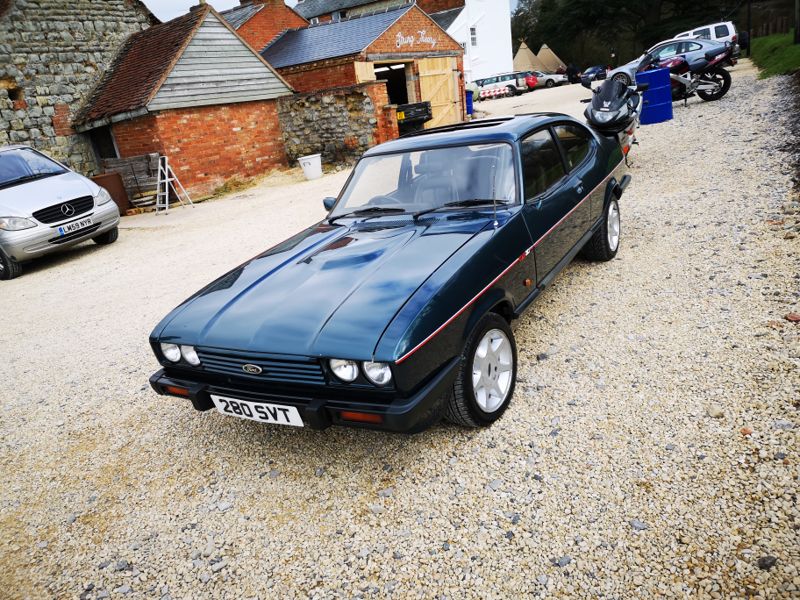
    Mine was in an iconic british muscle car that I have always admired from afar but never manager to win her heart. The charismatic, rarefied and brutish 1986 Ford Capri Brooklands 280.

    The Capri was the British Mustang, a muscle car for Europe.

    Leather Recarros and that 3 spoke leather trimmed steering wheel are unmistakably Capri. Fire up the V6 and you’re met with a menacing, deep rumble.

    Hopefully I’ll get another chance to drive one one day, but if not, that’s ok, I’ve had my moment in the sun and it was worth the wait.

    Next up was the 1988 SAAB 900 turbo. There used to be a SAAB garage near me when I was a lad and I remember swooning over the 900 turbo. Now here I was, sat in the leather driving seat of one.

    As you would expect, it wears it’s miles very well. It’s no match for the modern crop of 250+bhp hot hatchbacks but the SAAB turbo makes a very healthy 175bhp from it’s 2.0L intercooled 16-valve. It’s old school laggy but goes really well when you press on. You can’t help but giggle when it comes on boosts and heads for the horizon.

    Last was the Jaguar XKR convertible. What can you say about this car. It’s a brute. The 370bhp supercharged V8 has all the power you need. The interior is typical Jaguar. Soft leather seats and burl walnut trim and the torque from that supercharged V8 is intoxicating. This is a true continent crushing GT car.

    I would strongly urge anyone who wants to try one of these classic cars to give Great Escape Cars a call.

    Maybe you haven’t had the opportunity to drive one before, or perhaps relive your youth and drive something you reminisce about.

    It’s an experience you won’t forget or regret.

  • CAR REVIEW | Citroën Berlingo Flair, We Go Berlin’Go’

    CAR REVIEW | Citroën Berlingo Flair, We Go Berlin’Go’

    ★★★★ | Citroën Berlingo Flair

    What Have We Got?

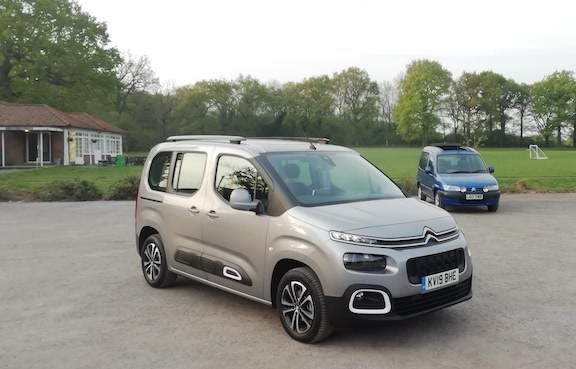
    Here we have Citroën’s third incarnation of the 23-year-old Berlingo. In 23 years there have been just 3 generations of Berlingo. People keep coming back for more and it doesn’t seem that its van derived origins are putting people off.

    So has the Berlingo 3 (B3) got what it took Berlingo 1 (B1) to make it a success? It moved car derived vans up a notch in the UK and the Multispace people carrier became an acceptable mode of transport for us English.

    Driving

    B1 was a soft lolloping cruiser. Never managed to do anything wrong because its engines were never known as rapid units of propulsion. Cruise and comfort was the name of the game. 

    B3 has retained the echos of B1. It rides softly and it will cruise you and 4 others with plenty of space and comfort. Despite the soft ride, it is devoid of excessive body roll. The only roll you seem to get is you in the seats. They cater for all types of body and as a result, they do lack side support for most shapes and sizes.

    The 110PS 1.2 3 cylinder petrol engine manages to carry the boxy body well. The gear change is easy and 3rd 4th are mostly used through town. On the open road, it will reach a comfortable cruising speed easily. Only when a level of urgency is required, does it need a few gears dropped but it will never break your neck in outright performance? 


    Inside

    The Berlingo is known for its space. Here B3 demonstrates more luxury over B1 with little exposed paintwork and far better fitments of trim. There are some coloured smatterings around the door cards and the seats are brightly covered. Sound deadening stretches over the boot floor.

    B3 doesn’t improve on the uncovered window trim on the front door. This time it gets bigger with 2 types of weatherstrip mould into one. Like the rear doors, this needs a cover. B1 suffered from this thought on a smaller scale.

    As before, there is the ever useful ‘modutop’ storage facility and panoramic glass roof option. At £750, it is expensive but worth having. 

    Living With It

    If you need to carry people, or boxes or people in boxes, there is very little that can beat the Berlingo. Space requirements will be essential if a Berlingo is to be on your shopping list. And it does this better than almost anything this price and more. It has also managed to retain the original B1 dimensions, give or take a few inches.

    Low boot low lip, rear sliding doors and high driving position make getting in and out of the Berlingo easy. You are making very little compromise with a Berlingo just as long as driving dynamics are not your number one priority.  

    The Verdict

    Now this might come as a surprise, it’s a well-kept secret, I really like Berlingo’s. I’ve nothing but praise for B3. There are a few things it doesn’t do well. These are however down to your driving style over functionality. And if it’s performance and on the edge handling you want, buy a sports car. Berlingo 3 has remained faithful to its original concept. It just got better at it. 

    Berlingo has become more competitive to those ever-popular but space compromised SUV’s. B3 can now come with a host of safety equipment like the active brake, collision alert, park assist and adaptive cruise to name a but a few. It’s everything you’d expect in a car and not a van. The spacious CDV market has evolved.  

    Would I have one? That’s not really a question, is it? Would I bring it indoors on a cold winters night and wrap it under a blanket? What do you think!

    Love

    Ride comfort

    Space

    Standard/available equipment

    Loathe

    Comfortable seats lack side support

    Uncovered front window trim

    Awkward rear door internal handle

    The Lowdown

    Car –  Citroën Berlingo Flair 110PS

    Price – £ 24,295 (as tested)

    MPG – 37.5 – 42.4 mpg (WLTP low/high combined)

    Power –  110PS

    0-62mph –  11.5 seconds

    Top Speed – 109 mph

    Co2 – 119 – 132 (WLTP g/km)

  • CAR REVIEW | Seat Tarraco

    CAR REVIEW | Seat Tarraco

    ★★★★  | Seat Tarraco – Seat’s Mover For The People

    What Have We Got?

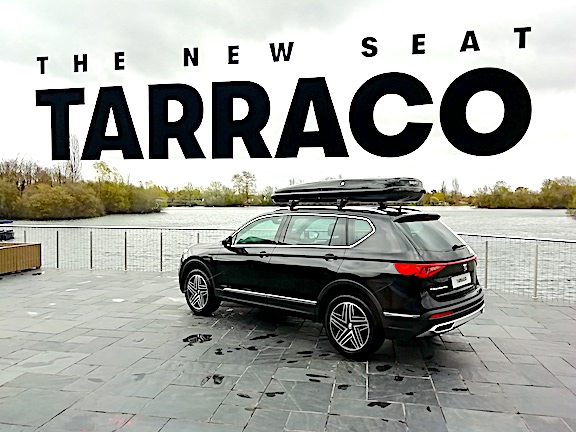
    We have seen Seat grow in recent years and to here we have Seat’s new 7 seater SUV, the Tarraco, to finish the 3 SUV line up. THEGAYUK were invited to the UK launch to find out more about this newcomer from Seat.

    Built on the multi-talented MQB platform, the Tarraco shares a lot of architecture from the wheels down with the likes of the Audi TT and VW Arteon. So it has sporty and luxury on its side but does this translate in the Spaniard? Above that, and it is all (almost) Seat. THEGAYUK opted for the Xcellence trim 2.0 TSI petrol 4WD to review.

    Driving

    The sheer size of the Tarraco means you need a good strong engine to propel it forward. Thankfully that is what you get with the 2.0 TSI petrol. 320 Ib/ft of torque from lowly 1500rpm makes good progress through the 7 speed DSG gearbox.

    And the figures get better. Considering this is some 29kg lighter than the comparable diesel model and it gives you a 0-60 time of almost 2 seconds quicker and a highly illegal top speed of 131mph.

    You won’t use that performance all the time. The Tarraco rides reasonable hard, giving it a sporty feel but this is somewhat lost because it does do a reasonable job of smoothing out the ruts and bumps in the road. It belies its big 19”

    Inside

    It’s a step up in quality from the Spanish side of the Volkswagen family. And about time, even if it is perhaps just a little ‘too Volkswagen group’ inside. The layout for all the controls follows the VAG ethos of simplicity and that’s no bad thing. Unlike the Spanish Eurovision entries of the past 58 years, so much is played out with Seat’s Mediterranean roots that you feel a slight lack of spice is missing.

    Thankfully what we do get in the Tarraco are rather nicely finished door cards. The architecture gives you fabric inserts, hard and soft plastics and illuminations. And this also stretches to the rear doors, pushing this new SUV from Seat further up quality.

    Living With It

    The Tarraco is being sold as a 7 seater in the UK. They aren’t the worst 3rd row rear seats I’ve climbed into but they certainly aren’t really for adults unless on the pub run. The main problem is the under thigh support that is firmly lacking for those with long adult legs. Thankfully they rear seats are comfortable and supportive in places. 

    Overall the Tarraco offers space and versatility that is part and parcel of larger SUV. And with the all-wheel-drive system, offers the ability to venture further off the beaten track. 

    The Verdict

    Despite what I have said, Seat has taken the MQB-A LWB platform and made it their own. In doing so they have made a quality product that should satisfy most buyers in the large SUV market. And they have all bases covered with 2 and 4 wheel drives, diesels and petrols of varying sizes and their simple and effective line-up. OTR prices start from £28,335 for SE 1.5 petrol to £38,055 for Xcellence Lux 2.0 diesel. There should be a Tarraco for everyone here. 

    Love

    Door architecture

    Range options

    Versatility

    Loathe

    Cramped third row seats

    Harsh ride

    Top models pricey

    The Lowdown

    Car –  Seat Tarraco Xcellence 2.0 TSI 4Drive 190PS DSG

    Price – £ 34,845 (OTR)

    MPG –  38.7 mpg (combined)

    Power – 190ps

    0-62mph –  8 seconds

    Top Speed –  131 mph

    Co2 – 166 (g/km)
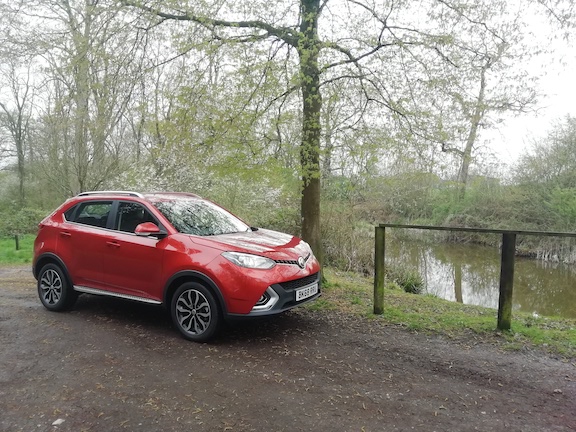
  • CAR REVIEW | MG GS Exclusive DCT

    CAR REVIEW | MG GS Exclusive DCT

    ★★★☆☆ | MG GS Exclusive DCT, MG’s Not So Sporting SUV

    What Have We Got?

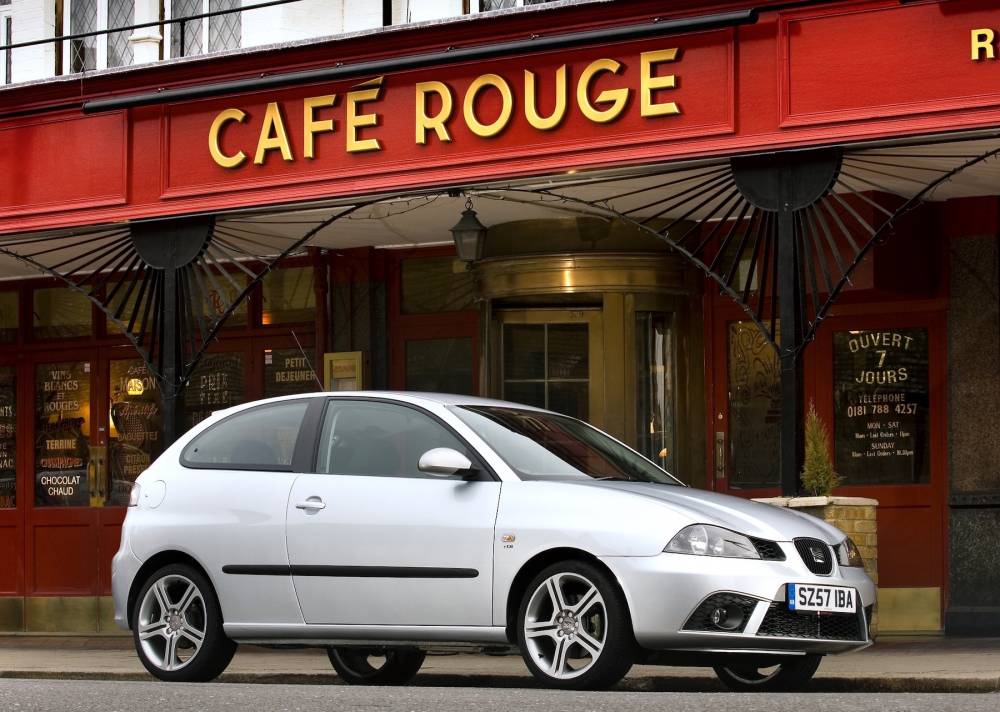
    Here we have MG’s first SUV offering, the GS, with a 1.5 petrol engine mated to a 7 speed twin-clutch sportronic automatic gearbox. This top of the range MG GS ‘Exclusive’ DCT 5 seater comes in at a reasonable £21,095.

    Does being reasonable mean cheap, and does cheap make it cheerful?

    Driving

    The 166PS 1.5 petrol turbo (the only engine available) does ok, just as long as you don’t rev it too high. It doesn’t encourage high revving. And you shouldn’t have to with maximum torque of 250NM from 1600-4300rpm. That’s a nice spread of power over a relatively wide range. Credit then to the linear surge of power from the turbo.

    What isn’t so good then is the twin clutch gearbox. There are 3 main problems. Firstly, throttle pedal travel is quite short so it makes it jerky to inputs. Secondly, in auto mode, the box likes to change quite high up at around 3000rpm. Thirdly, its kick down changes are met with a surge of around 700 revs and then a kick down. It doesn’t blend very well if you are feeling enthusiastic. 

    That does, however, all change when you select ‘sport’ with the gearstick and use the steering wheel paddles. Up and down changes are immediate and it’s very easy to enjoy the way it drives.

    Inside

    Developed in 2015 and launched in the UK in 2017, it is showing its age in this fast paced market sector. However, it’s not at a total loss, certainly not at this price. The first thing to hit you are the 23 buttons under the 8” infotainment screen that deal with heating and ventilation, volume and home screen. 

    That’s quite a lot, but it is easy to navigate. What isn’t is the air distribution. Press for screen and it goes into full blast for no reason other than that is how it is designed.  In this ‘Exclusive’ trim it also comes with DAB, satnav and all the other things you expect including mirror link for your phone.

    The seats are comfortable if a little too wide and unsupportive in fast corners. The inside is quite nicely put together. It is all a bit cheap with hard plastics throughout but it is also quite sturdy in construction so you shouldn’t be finding anything falling off.

    Living With It

    Despite its relatively compact dimensions, it really is large on the inside. Rear leg room is overly generous even with a tall driver. Boot space does however slightly suffer. The price you pay for that passenger leg room! Loading the boot is also rather easy and worry free thanks mainly to the unpainted load lip.  

    The ride is a little choppy and it likes to roll in the corners. The steering isn’t as communicative as you would hope for but there is plenty of grip and it hangs on well. It just feels a little unconnected.

    The Verdict

    You get a lot for your money with the MG GS and it’s quite easy on the eye. I like its looks. There is an abundance of space for 5.

    One of my biggest bugbears is poorly painted door shuts. Not so with the MG GS. It is surprisingly well painted and put together very well. At this price, the competition needs to take note.

    Would I have one? If I was on a 20-minute dealer test drive, no. You need time to understand that gearbox. After a week, yes I would. It’s cheap and now I’ve mastered it, it is rather cheerful.

    Love

    Price

    Fit and finish

    Looks

    Loathe

    Wind noise

    Engine trashy at high revs

    Jerky in auto

    The Lowdown

    Car –  MG GS Exclusive DCT 

    Price – £ (as tested)

    MPG – 45.5 mpg (combined)

    Power – 166PS at 5600rpm

    0-62mph –  9.9 seconds

    Top Speed –  112 mph

    Co2 – 141 (g/km)

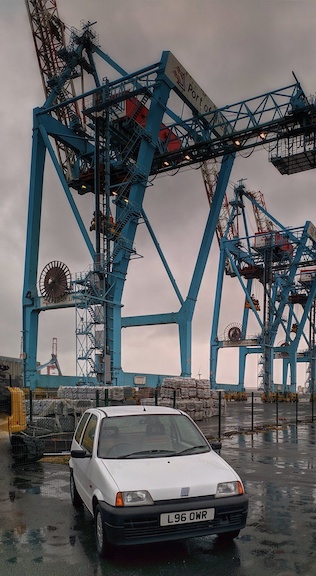
  • The Good, The Bad and The Ugly. Fiat Cinquecento 1991 -1998

    The Good, The Bad and The Ugly. Fiat Cinquecento 1991 -1998

    The Good, The bad and the Ugly.

    (C) Jim Magill: Twitter: @thealso

    An irrelevant look at a certain car.

    Fiat Cinquecento 1991 – 1998

    Fiat has always been good at making small cars. Big cars, not so much so. Think of a large successful Fiat and you won’t. Think small and you have plenty to choose from.

    Fiats smallest offering was the 126. This wasn’t really to British tastes and it eventually died. Actually, it didn’t die. It soldiered on until the turn of the millennium but for us in Blighty, we got the new replacement. And the replacement was a step in the right direction for a bold new Europe hell-bent on the love of the city car.

    Cinqueceto or Sinkeychento or BLOODY HELL, how stupid is this cars name to spell? Cinq for short, was a great little design. Short of overhangs and large on space, it was the embodiment of using as little steel as possible. Even in places like crumple zones. And essential places around the passenger carry space. What I’m trying to say is don’t crash one. 

    This lack of steel was good news for those who had been around Fiats for a long time. Until a few years ago back in 1988, Fiat had what can only be described as hydroscopic steel, in as much as the hard metallic surface would retain moisture. Now as we know, water and thin grade steel don’t mix, so using as little as possible was good. And Fiat also used some galvanising during construction too. 

    Fiat Cink was going to be a Fiat that was going to be around for a long time. Aided by its rather cute looks, it gained a legion of fans. And for the fans that wanted their Sink with a bit of a kick, they were rewarded with the Sinq Sporting. A hotter version fitted with a FIRE engine. Not one that went ‘nee-naw nee-naw’ but one that was a Fully Integrated Robotised Engine. It sounded grand. It was just built by robots. Depressing really when you think the heart of any Italian car is its engine, built by Italians with motoring in their blood. Anyway, Robert the Robot built the engines in the Sporting. 

    The Sporting was a bit shit. Unlike today’s Abarth models that are quite crazy, Sporting was not deserving of the sporting title. But I’m here to tell you about the more popular and run-of-the-mill Synk 900. A marvel of modern tranquillity this overhead valve engine wasn’t. A throwback to a bygone era it was having its origins date back to 1955. Don’t let the ageing mechanicals and modern body put you off. It’s not uncommon for older bits to be put into younger models. Look at Cher. She’s simply marvellous at 103. 

    And it was this ageing old cast iron lump with an alloy head in the Senk that made it a hoot to drive. There had been some changes to the 1955 original engine and it now came with injection and distributor-less ignition. Grabbing hold of those 40 horses was made all the more fun with added hydraulic tappets. It really could scream in an unburstable manner.

    And this crazy, drive it like a nun being chased by Lucifer on roller skates makes the Cenk all the more fun and a good car too because you just can’t really do anything wrong in it. Just don’t crash though. It’s not so good at that!

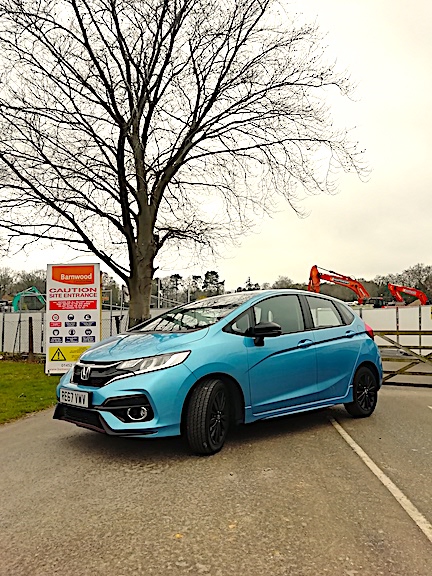
  • CAR REVIEW | Honda Jazz 1.5 i-VTEC Sport Navi

    CAR REVIEW | Honda Jazz 1.5 i-VTEC Sport Navi

    ★★★★☆ | Honda Jazz 1.5 i-VTEC Sport Navi

    What Have We Got?

    Honda’s Jazz has been a major seller for Honda globally. They are everywhere and here in its third generation, it gets better. Honda thankfully kept with the boxy estate car looks for the Jazz. It sets it out a little different in the small hatch crowd and yet it isn’t too off-the-wall different to alienate. 

    However, this new 1.5 i-VTEC Sport might just alienate the clientele of the Jazz. Does this sport-less badged Jazz ‘Sport’ have what it takes to wear the badge it is missing?

    Driving

    The best thing about the Sport is its gravelly voiced normally aspirated engine. The new 1.5 i-VTEC is a hoot and likes revs. This engine has 2 behaviours spread over 3 bands of power. Up to 3000rpm, it potters around. Responds to inputs. All good. 3000-4000rpm and it feels a little punchier. Still not enough to startle you. 4000-7000 redline and it screams along. 

    0-60 sprint feels quicker than its claimed 8.7 seconds and 3rd gear is good for over 70mph. 

    It’s no Jazz Type-R though. Its handling is way too safe. That said, you can exploit it quite nicely, and it will entertain once it has gone past its limits. Its limits are due to the compliant ride. It’s a good mix of firm and soft. It never crashes over ruts but is too soft and susceptible to a bit of a twitch at the rear to be an all-out GTi.

    Inside

    Heater controls in this model are simple twisting dials. Very simple and very easy to use. It all falls to hand well and the controls are weighted for ease of use. There is a downside and that’s cheap plastic. The door cards flex when the windows reach to the top.  

    You can’t deny that Honda are geniuses with space utilisation. The magic seat in the rear is versatile you wonder why it hasn’t been adopted by others? Flip the squabs and you get a deep narrow void to carry a small upright piano for a Mrs Mills sing-a-long. Fold it all flat and it’s a spacious 1314 litre carrying estate. There is more space in here than most larger SUV’s.

    Living With It

    The key to the Jazz’s success is easy to live with. Its mini estate car looks and versatility is endless. Its size is perfect.  

    The power from the 1.5 engine is startling. Considering its 7000rpm redline and its maximum torque at 4600rpm, the engine pulls itself along with little fuss from much lower down the rev range. It’s also a Honda Jazz so no one will try and burn you off at the traffic light grand prix. With its stealth looks, you can burn them off instead!


    The Verdict

    The Jazz Sport goes some way to shake off the image it has gained as transport for an elderly audience though I can’t help thinking that a few more sporting visuals would tip it into a different demographic.

    The A-Team’s Hannibal Smith was “on the jazz” when the going got good and I’m inclined to think you will too when behind the wheel of this Jazz Sport.

    Love

    Flexible engine

    Space utilisation 

    Short precise gear stick action 

    Loathe

    Cheap feeling cabin

    Lack of sports visuals

    Infotainment graphics look dated

    The Lowdown

    Car –  Honda Jazz 1.5 i-VTEC Sport Navi

    Price – £18,265 (as tested)

    MPG – 47.9mpg (combined)

    Power – 130PS @ 6600rpm

    0-62mph –  8.7 seconds

    Top Speed –  118 mph

    Co2 – 134(g/km)
  • The Good, The Bad and the Ugly. Seat Ibiza 2002 – 2008

    The Good, The Bad and the Ugly. Seat Ibiza 2002 – 2008

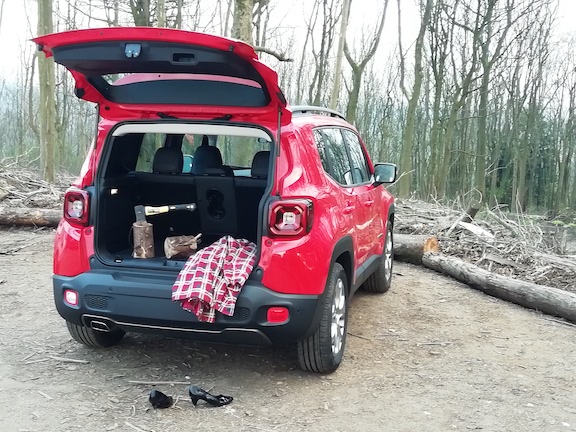
    The Good, The Bad and the Ugly : The Seat Ibiza Mk3. Type 6L. 2002-2008

    An irrelevant look at a certain car.

    This Ibiza was a bit of a revelation from Seat. Finally, they had a car on the British shores that you actually wanted.

    This was VW’s second attempt with the Ibiza. Compared to the rest of the family from VAG, It had a design flair all of its own. Ibiza 1 was sharp. That was designed by Ital. Ibiza 2 looked like a ripe butternut squash. And due to its shape, meant you couldn’t, sadly, lose it up your rectum!

    Ibiza 3 looked as aggressive as a Spanish taxi driver drove. I would have said a Matador but have you seen the embroidery work in their costumes? Quite exquisite and so delicate. Anyway, gone were those fat dumpy looks, the Polo dashboard and the general dead feel of the car. Look at it from underneath and you’d think this was a VW Polo. Or a Skoda Fabia. From the top, it was all Spanish, all Seat and all very Mediterranean.

    And that Mediterranean feel could also be felt through the ventilation system. Any car without a sunroof was incredibly hopeless in its ability to draw in fresh air. Aircon helped but what you really wanted was something that allowed the rush of air to pass through the cabin.

    Opening a window wasn’t always an option. Closed windows give better miles per gallon and the thing could fly. You see, if you were wise and a bit ‘tight’ with the pennies, you’d have opted for the 1.4 3 cylinder diesel engine.

    That’s right, a 3 cylinder diesel. Now VAG doesn’t have a good record with ageing 3 cylinders. The 3 pot petrol engines are crap. Remember the Polo? RUN! In diesel, it was great. 79 bhp felt like 179 and but that 195Ib ft of torque was most useful. These were diesels that didn’t sound too diesely and sipped the fuel like an introvert drinking a Babycham at a swingers party.

    It was that magic 195Ib ft of torque that made the Ibiza 3 fun. They came with big alloys and low profile tyres so handling was always fun. It was all slick and it all worked in the way VW, sorry, Seat made them work. The 5-speed gearbox snicked in and out of the ratios with reassurance. And come night time, the dashboard was ALL red and ALL sporty and ALL racy and, well not blue like a VW.

    Parked the right way, Ibiza 3 is a good car to look at with its big S as a nose. Park it so you can see those rear lights and your eyes are insulted by these ugly 4 pots in a baguette style slither of plastic like those from the dodgems of a 70’s Torremolinos funfair ride.

    Thankfully, in 1.4 diesel form, it’s pretty quick so those behind you don’t have to endure that visual fright and for that one thing alone, I am saying the Ibiza 3 is a good car.

    BUT ONLY IN DIESEL! with a sunroof. And aircon.

  • CAR REVIEW | Jeep Renegade Limited 1.6 120hp TD

    CAR REVIEW | Jeep Renegade Limited 1.6 120hp TD

    ★★★☆☆ | Jeep Renegade Limited 1.6 120hp TD

    What Have We Got?

    I’m a lumberjack… and I’m OK, I cut down trees, I skip and jump”. We have the Jeep Renegade and these make me smile. There have been a few revisions carried out recently, most notably being the bumpers and change in headlights that add new aggression to the chunky monkey. New engines have also been added and for this, we have the 1.6 120hp turbo diesel. We tested the top of the range 4WD Trial hawk model in 2017 and it made my top 3 list. Does the new 2WD Limited model cut it? 


    Driving

    The first thing that strikes you with this 1.6-litre turbo diesel engine is the throttle lag when pulling away. It might have become the industry ‘norm’ for this type of engine to respond this way, but it doesn’t make it right. It isn’t a problem once you are moving in traffic. Pulling into traffic is when you really feel it. You then have to adapt your driving style. In that, I mean rev the engine to around 1600 rpm and then when you can, let out the clutch and pull away. 

    That’s a lot of effort and ruins an otherwise enjoyable vehicle. The ride is soft if a little floaty and road noise is quite subdued. The engine is vocal when really pushed and doesn’t encourage all-out performance. 


    Inside

    There haven’t been any major changes inside. The Jeep face and logos are still there in places around the windows and interior trim. It’s still put together well with no rattles. One thing that is noticeable was the appalling paint finish within the boot shut to an almost unacceptable finish. 

    As before with the inside, it is rather spacious and wide for what is a small SUV though still dark. The seats are comfortable and wide and the view out is good. Big screen pillars don’t obscure your forward view because they are so far forward. What isn’t, is the centre armrest. It’s too far back to be of any use to anyone.

    Living With It

    Throttle lag aside, it’s still a nice SUV that manages to break to visual mould in the crowded SUV market. It doesn’t bring anything new to the market or do anything different but what it does is do is make others think that you are in a car more capable of going anywhere when in actual fact, it’s 2WD so it won’t. Like wearing ladies high heels in secret, those outside won’t need to know this.

    The Verdict

    I still like the Jeep Renegade. There is just something about it that makes you pat it as a member of the family. Just when “retro” seems done, the Jeep still manages to invigorate this genre with it with cuddly looks.

    It’s got a full personality all of its own x2, like being a 2×2 instead of a 4×4. It’s now Dr Jekyll and Mr Hyde in its cuddly looks and annoying engine. The throttle lag is my biggest gripe. If it was my money, I’d buy it with a petrol engine.  

    Love

    Looks

    Comfort

    Space

    Loathe

    Throttle lag

    Infotainment screen too low

    Alarm/door opening beep

    The Lowdown

    Car –  Jeep Renegade Limited 1.6 120hp TD

    Price – £29,350 (as tested)

    MPG – 57.6mpg (combined)

    Power – 120HP

    0-62mph –  10.2 seconds

    Top Speed – 110 mph

    Co2 – 129 (g/km)