Set primarily in a hotel room as Judy Garland embarks on a set of comeback shows in a six week residency in London, End Of The Rainbow examines the on and off stage crumbling of an iconic figure and her ongoing battles with her personal demons
Photo Credit – Pamela Raith Photography
As Judy succumbs to a cocktail of drink and drugs. Garland tries to hold things together as she is pushed to the brink by her fiancé, who is torn between his desire for them to share a private life and successfully reviving her career and fighting off her financial difficulties.
Starring in the role of Judy is Lisa Maxwell (Loose Women), who gives a simply superb performance, capturing not only the mannerisms and melodic intonation of Garland but effectively portraying the contrasts between her brashness and her vulnerabilities and offering genuine raw emotion in numerous scenes showing just how tragic many of the aspects of Garland’s private life was. Alongside her was Gary Wilmot, who offers a gentile and steady portrayal of Anthony Chapman, Garland’s gay pianist and confidant; and Simon Pontin as Micky Deans, her fiancé.
Peter Quilters play is lovingly written, juxtaposing the wit, bravado and sheer brashness of Garland with her heart-breaking vulnerabilities and desperation. The play shows Garland at her best and worst and provides scenes which really do gut punch you. As a drunken Judy, a quivering mess, lays on the floor begging for pills and to be loved, you can’t help but feel sorry for her. Aspects of Garland’s life are sensitively handled; yet don’t lose any of their power, in particular as she talks about being force-fed pills from a very young age by both the movie studios and her mother. But it isn’t all downbeat, as Judy’s legendary rapier sharp wit cuts through the drama and the scenes in the hotel are interspersed with a smattering of some of her classic hits, which are belted out with aplomb by a vocally impressive Maxwell, all of which is sufficient to lighten the mood.
End of the Rainbow avoids being a saccharine coated tribute by a country mile, and instead is a warts and all portrayal of Garland as she descends back into the pill taking and drinking that would soon consume her; and which examines the person she had become as a result of the years of the pressures of fame and the treatment of her by those around her. Yet despite all of that, Garland never really comes across as a victim in all of this, but instead remains an unstoppable, headstrong force of nature whose confidence and bravado no doubt masked a fragile and helpless woman.
End of the Rainbow is currently at Sheffield Theatres (www.sheffieldtheatres.co.uk) until Saturday 15th May 2016, before continuing on its national tour. See the show’s official website at www.endoftherainbowtour.co.uk for details.
I can’t believe I am going to say this, however despite its relative absence on the road, the Pulsar isn’t that bad a car. Manufactures don’t really make dreadful cars anymore, they just make them indifferent to others that supposedly set the benchmark.
There were some perceived flaws with the Pulsar that I had from the start. It’s not as well thought out in terms of toys as in the Qashqai. I was expecting more. That said what I was given satisfied my needs.
Ok so it doesn’t sound great from the start but stick with it and the Pulsar will get better. For passengers, there is an abundance of room. The rear seat leg room with me behind the wheel cannot be matched in this class. Even cars in the next class up will struggle to match it. If I were given the chance of shotgun with the driver or lounging in the back I’d opt for the rear seat.
Up front as a driver you are offered a few touches of norm for this kind of car. The displays can be altered according to what information you require. The econograph was quite fun to play with. At one point I had the 1.5 DCI 110 humming along to an estimated 74mpg which I think is quite impressive for a car this size. Admittedly that was at a leisurely 62mph with the cruise control on. The average managed over the 200 mile test was 54mpg with my best being 67. I can’t however credit that to the nonintrusive stop start system that saved me 0.20gm of CO2. If you spend more time in traffic you could save more.
Another nice touch is the easy to use satnav that actually gives you the option to use daytime colours at night and adjusted brightness to suit. I could kiss Nissan’s engineers for this. And this is the thing with the Pulsar, it is some of the little things that make it a better car.
Sadly the Pulsar suffers two of my pet hates which are poor switch gear illuminations on the doors and pointless carbon fibre trim. This time the trim that gets a mention in the spec sheet is below the rear bumper. Park the car in such a way that you don’t have to look at this and all is good in the world. Goodness also comes in the padding on the door armrest. It’s as soft as a pillow. Boney elbows will not complain. In fact I doubt anyone will moan about the driving position in the Pulsar. It’s all very Nissan and all very matter of fact to the job it has to do.
Take to the controls and you will see why Nissan has always been easy to drive. In the past they have been a bit woolly, a bit learner driver and tended to appeal to the beige brigade. The gear change is wrist flicking quick and the clutch, while not being the lightest, has a very short pedal travel that further quickens changes both up and down the 6-speed box. If I have one criticism here is that the gate is very close together and until I had learnt to gauge its feel I was slipping it into the wrong gear. 4th became 6th and at one point 5th being 3rd. Thankfully the engine tolerates a lot of revs.
The steering was nicely weighted. It felt heavier than a lot I have tried but this wasn’t a problem. Again for me, it is these little differences that made the Pulsar likeable.
What was puzzling was the handling. The traction control system thwarted any kind of fun but pushed hard it could get a little crazy at times, yet switching it off and its road manners improved. It went from a disco bunny on poppers to Kylie to meeting your mother at church on Sunday when switched off. It would kick in when it felt it was at its set limits but the improvements in handling were noted for the better.
Another nice touch was the stereo increasing in volume as the speed increased and instead of a little, it was noticeable and I liked that. And then there was the 360-degree parking cameras. If you are from the Grand Theft Auto generation that played it from the over the top view you’ll appreciate this. Why more cars don’t have this I do not know. It takes some time to get used to it and what it is interpreting, though once mastered it made for ease of parking without really having to look in the mirrors.
The nice to use Pulsar is a difficult one to sum up and here lies the problem. It does nothing that makes it stand out from the crowd. It doesn’t annoy you in any way. It’s like a faithful friend who listens to your problems, rubs your shoulders, soothes your elbows and then drives you to get cheesecake. It will never leave you standing alone at the disco. If only it could have some drama to excite it, it might just start to be a major player in this sector of the market.
Likes
Price
360-degree camera
Rear seat space
Loathes
Lacks excitement
Rear cargo area doesn’t flatten
Bit austere inside
The Lowdown
Car – Nissan Pulsar Tekna DCi 110
Price – £ 22,245.(as tested)
MPG – 78.5 mpg (combined)
Power – 110 bhp
0-62mph – 11.5 seconds
Top Speed – 118 mph
Co2 – 94 (g/km)
Meryl Streep shines in this touching tribute to the eccentricities of an ageing heiress.
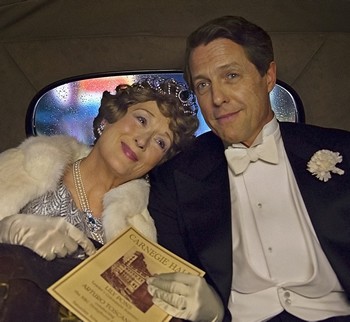
Meryl Streep once again proves that she is one of the world’s greatest actors. This time Streep takes on the role of Florence Foster Jenkins, the ‘world’s worst opera singer’, who was a rich New York heiress who lived from 1868 to 1944.
Florence Foster Jenkins was an incredibly successful performer within her own Vaudeville circuit, owning the audience with her incredible tableaux’s. However she feels that her musicality (she was a child prodigy piano player, until illness robbed her of her ability to use her left hand) is being stymied. The larger than life character of Foster Jenkins decides that she wants to take up opera again, the problem is that she can’t sing, well at least to the ears that are around her. Whether she didn’t know this or refused to accept it is lost in the annals of history, but Foster-Jenkins was a force to be reckoned with, who once made a decision stuck to it doggedly, right to its conclusion.
After hearing a young Soprano, she sets about making her life-long dream to play at Carnegie Hall in Manhattan, a reality. She hires a pianist, expertly portrayed by Simon Helberg (The Big Band Theory) and one of the world’s greatest vocal coaches (David Haig) and along with her Yes Man husband/manager played by a doting Hugh Grant, who pays off critics and audience members to enjoy Foster-Jenkins’ performances, Foster-Jenkins sets herself up for a mighty fall.
Once again Meryl Streep proves that her acting is all in the eyes. She plays the ageing Foster-Jenkins with a delicacy that is truly touching and shows how poignant an actor she is. Streep manages to bring hilarity and tragedy into one role. As she flings herself into one of opera’s most demanding arias, the Queen Of The Night, she takes on a Patricia Routledge (Keeping Up Appearances) form, yet is able to truly showcase the depth of Foster Jenkins musings and sheer love of life and ‘anything is possible’ attitude. We could all learn a thing or two from Foster-Jenkins. Hugh Grant perfectly plays his usual suave, English highly impotent secondary character allowing Streep’s magnificent talent to shine through.
Directed by Stephen Frears and written by Nicholas Martin, this faithful retelling of the famous opera singer that never was, is a laugh out loud, poignant look back at a forgotten era.
It’s a show that’s older than you and me. It’s a show that has stood the test of time. It’s ‘Showboat‘ and its back in London.
Credit – Johan Persson
Now playing at London’s New London Theatre on Drury Lane, it’s a spectacular recreation of the show that had its first performance in 1927 in New York, staged by Oscar Hammerstein II. Yes, that’s how old this show is, almost a century, and it’s new production shows that ‘Showboat’ has got sea legs.
If you don’t know the story, ‘Showboat’ is a show that is made of two parts. The first part is where we get introduced to the boat (called ‘Cotton Blossom’ which is spectacularly recreated on stage), it’s a boat that’s used to put on shows. It’s captained by Andy Hawks (Malcolm Sinclair) with a cast of whites and a crew of blacks. Captain Hawks’ single and carefree daughter Magnolia (Gina Beck) works on the boat, and it’s there where she meets and falls for the handsome yet mysterious Gaylord Ravenal (Chris Peluso). They get married and eventually have a daughter, but it’s the second act that gets dark. You see, Gaylord’s a gambling addict, can’t control his addiction, and can’t support his family, especially after they move to Chicago and have a baby girl. The lifestyle they knew and loved on the boat becomes a distant memory. As the years roll on, she and Gaylord split, and he disappears. But eventually her family and friends rally around her. It’s all told in great musical style with a cast that has loads of talent.
The original London production opened in May, 1928 at the Theatre Royal on Drury Lane. It came back in 1971, and then again in 1998 at the Prince Edward Theatre. There was a short-lived production in 2006 at the Royal Albert Hall, and now it’s back for a new generation to see and it has not lost its life.
Classic songs such as ‘Ol’ Man River’ (sung by Emmanuel Kojo) to ‘Can’t Help Lovin’ Dat Man’ (sung by an ensemble of the woman) are given new life by the singers. It’s the very talented cast, chief among them Beck, Peluso, and Danny Collins as a fellow performer, and Sinclair, who stand out.
Masterfully directed by Daniel Evens, with lots of great musical numbers including entire ensemble dance routines, this ‘Showboat’ is a must see, especially in the New London Theatre where every seat in the house is a good seat.
Young boys and their mothers are the only inhabitants in a seaside town in the highly unusual film ‘Evolution.’
CREDIT: Metrodome
It’s a world without men, a world where each woman has one son, where they all live in similar white-washed yet minimalistic homes, right off the coastal rocks of an unnamed country.
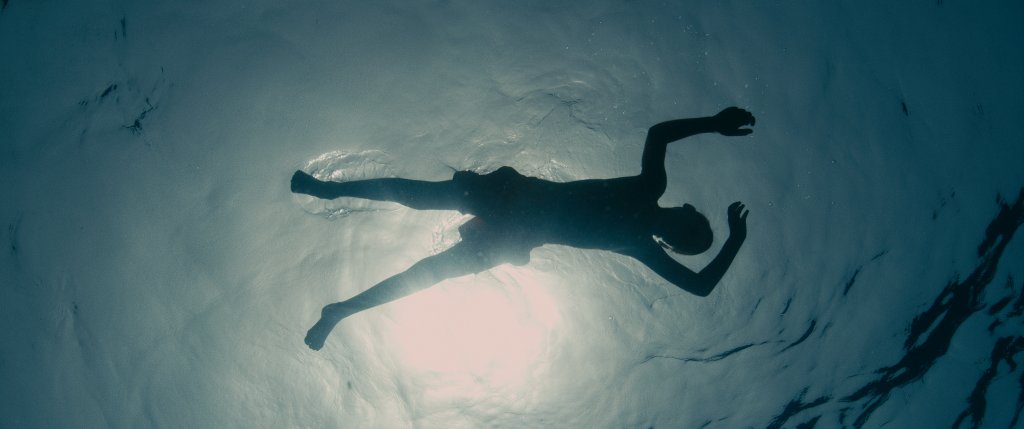
It’s here where Nicholas (Max Brebant) lives with his mom (Julie-Marie Parmentier). She feeds him a greenish-like goulash soup at every meal, and also makes sure he takes his medication. She takes Nicholas to play along the rocks of the ocean with the other boys in town, each with their mothers close at hand. But at the heart of soul of this community is a hospital, staffed entirely by women, where all the boys are eventually hospitalized. It’s here at this hospital where the boys are subject to strange medical treatments that perhaps undermine the role of evolution. They are given shots in their stomach, administered to them while they lie strapped to a bed, females nurses surrounding them, with no emotion, all white, and wearing white. What does it all mean? What are the boys being given? And why does Nicholas’ mother, along with the other mothers, venture late at night next to the ocean and writhe naked with each other in the rocks?
French with English subtitles, ‘Evolution’ messes with our head with the idea that evolution (the beginning of life) is created by women, and that perhaps God is woman. Its imagery, tone and darkness reveals too much yet not enough. It’s a film that leaves the viewer attempting to interpret what they’ve just seen, what they’ve just witnessed.
‘Evolution’, directed by Lucille Hadzihalilovic, is a film that she says is steeped in elements from her childhood. The barren landscapes, a faceless hospital, and the rough seas gives us a dreamlike haze into a world of innocence, beauty and cruelty.
It’s film that’s not easy to watch – there are big gaps of silence, and the ending may be a bit confusing, but upon watching it you’ll get the idea of what message the film is attempting to deliver.
Opening a burger/foodfest restaurant and bar with a sizeable backroom complete with stage for live music in a space joined onto a Novotel hotel might not seem like the most conventional of pairings. But Jamboree on Blackfriars Road SE1 is a breath of rainbow-bunting fresh air for the borough of Southwark.
Don’t be put off by the French, mid-range hotel brand’s corporate exterior. The building is accessorised with a fun red neon Jamboree sign and their colourful interior can be seen from across the traffic-magnet main road.
Once inside you’ll feel as though you’ve walked into a London take on a barn dance bar. High ceilings laden with multicoloured bunting and exposed vintage bulbs, bare wood beams, walls, floor and tables. A clean spit-without-the-sawdust gaff. We approve.
To wet our whistles we were pointed towards these two bad-boys:
Fire Apple: Fireball cinnamon whisky, cloudy apple juice, bitters and ginger beer. It was like pouring an energetic San Francisco Stomp down the gullet where all the participants were hot-footing it in cinnamon-laced cowboy boots. Not too sweet and plenty of yeehaw from the bitters and ginger.
Knees Up: Blackwoods gin, basil, lemon, apple and ginger. A few defuser reeds and this imbibe could easily freshen up the mustiest of rooms. If TheGayUK owned a five-star luxury spa, the Knees Up would replace the complimentary cucumber water. An abundance of herby, floral and citrus notes.
We sampled three burgers, all of which were sandwiched in white, spongy, slightly sweet buns.
Maryland soft shell crab burger: a sugar-paper texture followed by light fishy candy-esque meat. Claw-icious.
Racing Bull Argentina beef burger with chimichurri: succulent, gamey and moreish beef elevated by the parsley, garlic and punches of vinegar from the chimichurri – a burger worth saddling up for.
The Yucatan veggie burger: a smooth sombrero-sporting falafeley filling with a hint of oregano. My pulse-and-prune-eating pal polished off the lot, but it’s not for everyone.
Thursday evenings, Jamboree will be filling their stage with live music. The bar has been set high after hearing the five-piece band Gatsby – http://www.gatsbyband.co.uk – performing their own takes on Bieber, Bruno Mars and Coldplay – we almost buckaroo-ed out of our chairs and threw our stetsons in the air.
With cocktails at only £7.95 and a decent burger for £13.95, we suggest you jump on the bandwagon.
It’s Henry Gambles’ birthday and we’re all invited to the party!
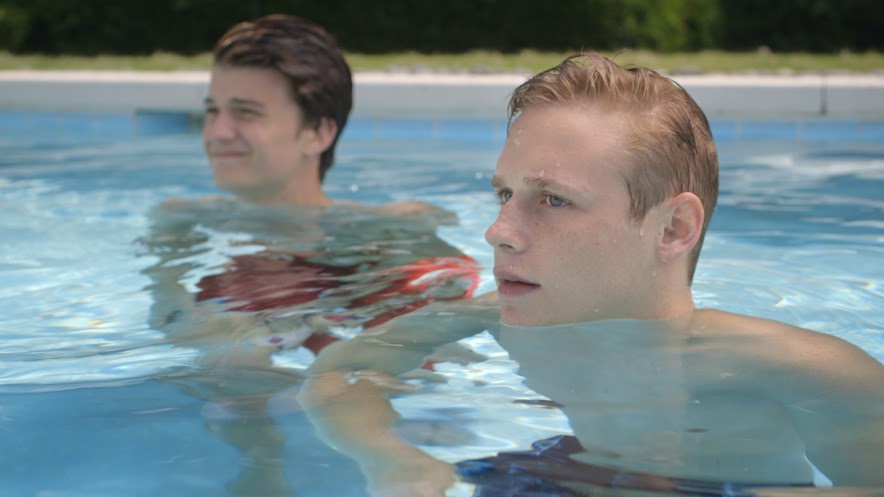
It’s the new DVD/VOD release called ‘Henry Gamble’s Birthday Party’ where the viewer is an attendee at Henry’s birthday party – or at least that’s what it feels like while watching the film. Henry Gamble (an excellent Cole Doman) it turning 17 years old and his family is throwing him a barbecue pool party at their very nice home. Gamble’s family, including his mother Kat (Elizabeth Laidlaw), father Bob (Pat Healy) and collegiate sister Autumn (Nina Ganet), are a religious Christian family where Bob is a pastor and their circle of friends are mostly from the church community, including Henry’s friends.
But it’s Henry’s big day, and lots of people come to the party. But each member of the Gamble family are struggling with issues that may go against their belief in the church. Kat confesses to Nina that she had an affair with a close family friend who was terminally ill, Nina, meanwhile, is having trouble with a guy she likes (and whom she slept with – a no no in her religions’ beliefs), but she’s angry at him for not being in contact. And Henry is not struggling with but accepting the fact that he is gay. So theirs, and lots of other friends’ issues come to the fray during the party. It’s lots of splashing around the pool, with the young lithe teenagers in their skimpy bathing suits offending one of the older female attendees, while the son of the wife of the husband who Kat had an affair with is having a hard time coming to grips with the death of his father. But all these people come together for Henry, he’s the nicest guy around, goodlooking enough so that the girls fancy him and the young men want to be his friend, including closeted young Logan (Daniel Kyri), who likes Logan but has a hard time penetrating into his circle of friends. It makes for a lot of celebration and drama in this 86-minute movie.
‘Henry Gamble’s Birthday Party’ is a coming out story that’s not, forgive the pun, all preachy about being accepted for being gay. It’s a celebration and a masterfully directed film not just about a young man who happens to be coming out of the closet but also about the Evangelical Christian community. And Director Stephen Cone masterfully interweaves several stories going on at the same time that’s not a bit confusing but provides an element of actually being there and eavesdropping on everybody’s conversations. Doman is a true find at Henry Gamble. His face (and smile) practically lights up the screen – he’s a natural and hopefully will have a very successful acting career in his future. But credit goes to award-winning filmmaker Cone (who also wrote the script) for creating a film that makes it a fun experience to be a part of. Bring your swimsuit.
HENRY GAMBLE’S BIRTHDAY PARTY debuts May 3, 2016 across all digital platforms including iTunes, Vimeo On Demand, and WolfeOnDemand.com.
Saucy Jack and the Space Vixens is billed as an inter-galactic disco extravaganza that explodes all around you. Well something exploded, or backfired. Think all-singing, trying-to-dance Battlestar Galactica meets Mad Max, throw in some glitter, silver lamé and a few other odds and sods from another solar-system’s secondhand dressing-up box.
In amongst magnetosphere-of-madness is a wannabe poet cosmic Cyclops, a zodiac German doctor impersonator, a metallic-headed basque-sporting Medusa with two klingons in tow – the vixen trio. And thrust into the starlight as if she just landed from another planet, Chesty Prospects (Sophie Cordwell James): imagine Cheryl Fernandez-Versini trying to pull-off ‘fierce’, with a live vocal performance wearing a studded bra and stardust. Light years from close.
Confused? So were we. There’s a serial killer, and these super-fashion crime-fighters from a groovier galaxy with a mission to fight crime and liberate the universe harnessing the Power of Disco. Or, a dark-matter Rocky-Horror-esque disco blended with a whole sphere of amateur cabaret.
The production lifted off quite well but gravity kicked in and it landed flat on Uranus. The concept is fun but the stage time could have been halved, and for some, more rehearsal time added.
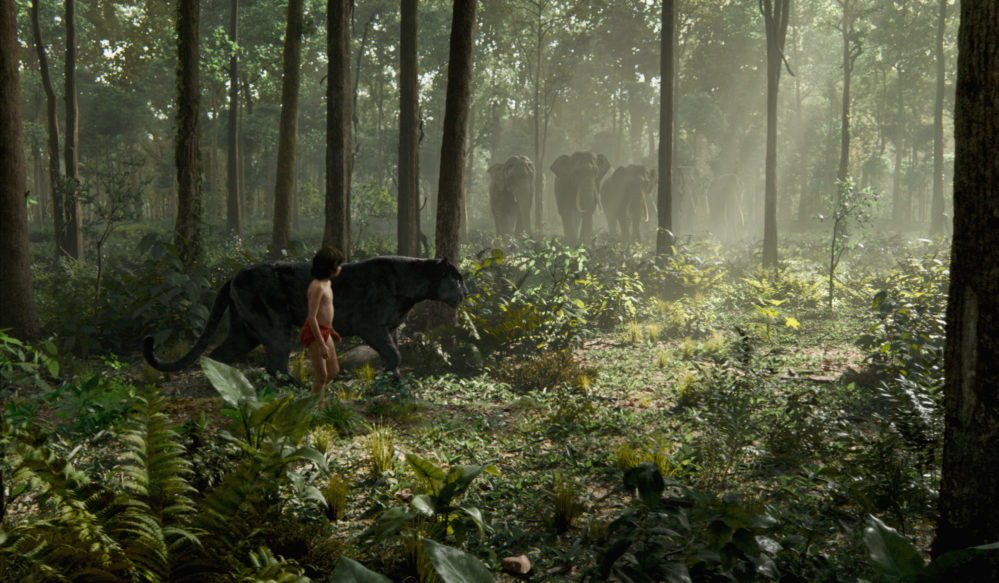
Nutshell – Rudyard Kipling’s book was adapted into the 1967 cartoon movie classic which was Walt Disney’s last film before he died. It turned into a perennial favourite thanks to its great jazz tunes tastefully reprised here and superb story and entertainment value. Here we have just one actor Mowgli and an array of computer generated characters, phenomenal backgrounds enlivened by the obligatory list of superstar voices. There is a lot of action here throughout the film to appeal to the modern audience coupled with some great comedy and boy does it work on every front big time. A movie for kids, big kids and everyone else that just wants a good honest fun commercial thrill ride with a heart of gold.
Time – 106 mins and man is it crammed from opening chase to closing showdown;
Certificate – PG it’s a family movie of course – it will become a TV holiday staple.
Tagline – ‘The Legend Will Never Be The Same’ – This follows Disney’s successful run of reproducing its animated standards in live action format. We have had Alice In wonderland, Cinderella, Snow White & last month’s The Huntsman and Maleficent (Sleeping Beauty) and every one has been massively more successful than the original so expect the same here.
THE GAY UK FACTOR – Don’t be silly, there is nothing here for your willy or libido, yes there are bears, giant phallic stakes and mano on mano action but get your head out of the gutter this is pure clean fun. Just switch your Scruff off and put your Grindr on mute and relive your childhood you can visit the gay bar on your way home for your jollies.
Cast – Debutant Neel Sethi as boycub Mowgli, then the stars step in – Bill Murray as Baloo, Scarlett Johansson as Kaa the snake, Idris Elba as villainous tiger Sheer Khan, Ben Kingsley as Panther Bagheera, Christopher Walken singing as ape supremo King Louie and so on through Gary Shandling, Lupita Nyong’o, Sam Raimi and even the director himself Jon Favreau.
Key Player –‘Trust in me’ everyone is superb with one exception see below but the movie is dominated by Bill Murray’s Baloo. He is funny, sad, heroic and just what you want him to be. He was allowed to ad lib through his scenes and unusually for an effectively computer generated cartoon he was able to do voices acting alongside the other characters in particular Mowgli and it so works probably only been bettered by Robin William’s Genie in Aladdin.
Budget – We are in big bollocks territory here with a mega budget of $175 million. No worries though – after 2 weeks it had made over $300 million and it still needs to open in many territories so a lot more moolah to come for this one – it will make a big stack of Rupees and it could surpass Batman v Superman to become the biggest hit of 2016 so far.
Best Bit – 0.51 mins; There are so many great set pieces and they get everyone just right. Therefore you could pick the exciting first chase by Sheer Khan through the grasslands involving a ‘tribute’ stampede or you could pick the sad moment when Baloo has to lie or the excellent moment when Mowgli becomes the hero of the Elephants. All superb but you will really feel the true magic when you see a little boy floating down a stream banging out the beat to a very familiar tune on a big bears chest where you will be heading straight back to your childhood with the biggest of smiles on your face as if Tom Daley’s Speedos have just fallen off mid dive.
Worst Bit – 0.02 mins; The very live looking animals take some getting used to when they start speaking – it just seems weird but you soon accept it and then along comes Bagheera the panther. Ben Kingsley is a great actor and has a very distinctive voice but it is so posh and Oxbridge that coming out of a wild animal or a big cat just seems as wrong as Donald Trump’s haircut.
Little Secret – There were two Jungle Books in production at the same time with this and the forthcoming Jungle Book Origins (plus a Tarzan film too). Disney won the race and is raking in the cash but as we have seen with two asteroid movies at the same time, two volcano movies, two Truman Capote movies or two Terrorists taking the White House films etc it does not mean that the film that comes out second suffers it just has to make sure it is damn good. This was Gary Shandling’s last movie he finished – one month before he died.
Movie Mistake – So so many but in a kid’s film does it matter. The animals are all over the place as the film is set in the Indian jungle but we seem to have species from around the globe. African Elephants ? Sumatran orangutans ? Chinese Wolves ? Himalayan Bears ? Peccary’s and Red Eyed Frog’s from whole Continents away and so it goes on. The snake Kaa is 5 times larger than any Indian species ever found and King Louie is even more out of proportion roughly 10 times bigger than any monkey ever. The scars, wounds and bee stings on Mowgli appear and disappear so often that we lost count.
Awards – Nobody has ever won for voice work alone so it won’t happen for individuals and it won’t get nominated in animated categories as it doesn’t fit the criteria so just prizes for the excellent technical team possibly.
Further Viewing –The Jungle Book (1967), Babe, Scrooges, Alice In Wonderland, The Lion King, The Jungle Book (1994), The Jungle Book 2, next years Jungle Book Origins, Greystoke : Lord Of The Apes, Disney’s Tarzan, The Legend Of Tarzan (Out this Summer), Tarzan Of The Apes...
Any Good – Of course it is. Disney is getting really good at delivering these live versions of animated classics and this was probably the most sacred cow and the hardest to do as the cast are almost all animals. Jon Favreau the director delivers big time with every minute put to good use and so much great action and suspense. It looks so damn good too and kids will watch the DVD over and over again and with so much going on that adults will like that won’t drive you as crazy as multi repeats of say Frozen or The Lego Movie.
Rating – 15/100 (15th out of the last 100 films reviewed with 1 being Gay UK filmatic ejaculatery heaven and 100 being as much fun as a Tottenham Hotspur Premiership Victory party)
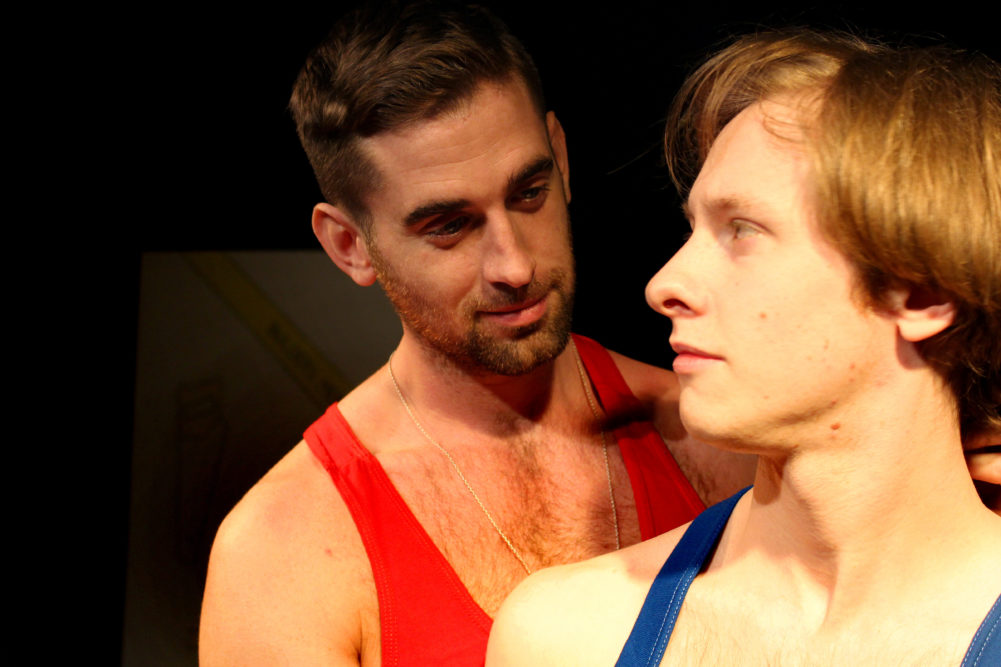
Jeff is a married man with a fetish for wrestling. He’s walked out on his religious but shrewish wife and is hiding out in his hometown in southern England where he’s having a fumble with grieving youngster Malcolm. By coincidence, Malcolm’s boss is Jeff’s Biblical claptrap spouting father.
Is a play about a secretly gay married man still relevant in 2016? Sadly it is. It’d be naïve to think that being gay in contemporary British society was accepted by everyone and that gay men weren’t still suppressing their sexuality and trying to hide in plain sight. Any foray into gay life will tell you that the phenomenon of the closeted gay man is still very much present. You can’t spend more than five minutes on a hook-up app, the Internet or in a sauna without tripping over a married man or two. The issues in the play are still prevalent. Gay men might be able to marry and public opinion might have moved on but people are still prejudiced and still spout obscure parts of religious tracts to justify this. Some people are still so affected by the prejudices of others that they suppress their natures and try to be things that they aren’t.
In spite of this there’s something dated feeling about “Abominations”.
The problem with the play isn’t the subject matter but the dialogue and characterisation. Whilst Jeff feels generally convincingly drawn and credible, his wife feels like a two-dimensional throwback to a dated sit-com. Malcolm is an earnest ukulele-playing buffoon who reveals few other character traits than naivety and rather than endearing, is more of an irritant. The dialogue is stilted and quaint at times. Scenes are short with awkward shuffling pauses. In spite of some well-drawn sections the sum of the play is much less than its parts and fails to gel. The comedy often falls flat and sits awkwardly with the more intense and better-written scenes.
The saving grace of the piece has to be the stunning central performance from Alexander Hulme as Jeff. He handles the part with style, imbuing the character with credibility and hinting at the shifting emotional landscape of a man unravelling. He’s all swagger and brittle chav charm but manages to give glimpses of something deeper and darker with a softer core. He’s also very easy on the eye and displays a lot of flesh that distracts the viewer. In the midst of the play there are some genuinely moving scenes between Jeff and his father and Gary Heron displays some fine acting that ably supports Hulme in his role.
This is definitely a play that had potential and there are glimpses of unrealised style and impact. The well-written lines stand out and there are scenes that have real power. Sadly, the finished overall product felt almost as tired and lacklustre as the location of the theatre: Camden High Street.
Abominations plays at the Etcetera Theatre Until the 29th of May 2016