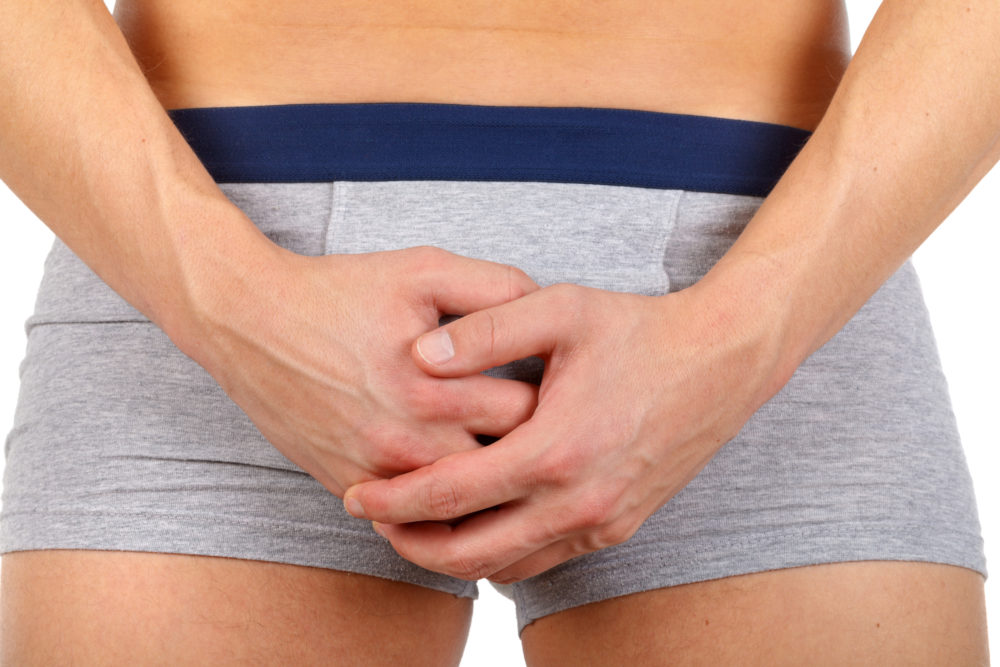
Like any physical activity, sex is going to take a toll on your body, and whether you’re a top, a bottom, or a flip-flopping vers, there’s going to be a certain amount of work involved.
This is why it’s important to be as limber and flexible beforehand in order to be ready for action. And so that you don’t cramp up halfway through your all-night-fuck-fest, here are seven of the best stretches before sex:
Note: Be sure to warm up.
It’s important that you’re not stretching cold muscles, as they’re more likely to cramp, or worse, snap. If you’re boning at the end of the day, your muscles will have had some activity and are probably fairly warm. Power walking home from work or running up and down the stairs will be enough to get your muscles switched on.
1. Rag Doll
You’ll probably notice that you’re especially stiff first thing in the morning… and not in a good way. So start with a simple forward fold to wake up your lower back and your hamstrings. Start with soft knees, not straight, and simply fold down as far as you can go. First thing in the morning that’s not likely to be far.
Support your weight by placing your hands on your thighs or shins if you can’t reach the floor. Round and soften your back and just let yourself hang there like a ragdoll (hence the name). Roll the spine up and repeat a few times.
You could even use this one during your boning session ?
Downward dog is the king of all stretches as it works multiple muscle groups and requires you to be active while you stretch. From a forward fold, place your hands on the ground and step both feet back a comfortable distance.
Think about sending your tailbone up to the sky, sticking your butt out like a slut dog. Again, keep the knees soft, and spread your fingers and press your hands into the ground. The guy above is super flexible, so don’t worry about getting your heels on the ground straight away.
Step out into a lunge, drop your back knee down to the ground and untuck your back toes. This will really help to open your hip flexors, vastly increasing your ability to thrust. Think about sending the front hip backwards, and the back hip forwards, keeping your hips nice and square to the front.
Sink down into the stretch as much as you can without collapsing onto the front hip, and make sure your front knee doesn’t extend past your toes.
It’s as simple as squatting down like you were taking a poop in the desert. Legs nice and wide (giggity), sink your bum down as far as it can go. Put your arms out in front of you for balance if you need it. If that’s easy, bring your hands together into prayer and press your elbows into your knees to open the hips further and deepen the stretch.
5. Lying deep gluteal stretch
If you’ve ever had a butt cramp during sex, then you’ll know it’s a real mood killer. So be sure to wake up and stretch those glutes before you get into it. Lying down on your back, bend your knees and rest your feet on the ground. Cross your right leg over your left knee, then grab the back of your left thigh and gently pull your legs towards you.
Keep your legs bent as your focus should be feeling the stretch in your butt rather than your hamstrings. Repeat on the other side.
6. Frog stretch
This one is a killer, but great if you really want to up your game in the bedroom. Not just for power bottoms, the frog stretch is an intensive hip opener. Improved flexibility there will mean you’re able to open your legs wider, but you’ll also have greater range of motion and stability when topping. Hard work, but worth it.
Start on hands and knees, bringing your knees as far apart as is comfortable. Rock back and forth in that position. Keep the balls of your feet on the ground, with toes pointed outward. Don’t feel like you should be flat on the ground, even ballet dancers can’t always get that deep.
7. Straddle stretch
I love a good straddle ?
This one feels like a throwback to 1980s aerobics classes (for those of you who are old enough to remember the golden age of Lycra and leg-warmers).
Sit on the floor with your legs spread apart as wide as possible without hurting yourself. Lean forward toward the floor with your arms extended, dropping your head and neck slightly. Don’t hunch over in order to reach the floor, keep your back fairly straight (pointing your toes makes it easier and a little gayer… in a good way). Try not to tense up and keep your body as relaxed as possible. Hold for 15-30 seconds, increasing each time.
Eczema can happen all over the body, but what if you get it on your penis?
We asked the health experts at AXA PPP healthcare to shed some light on the issue and find out what you can do about it.
There are a number of skin conditions that can affect the penis, including atopic eczema (or atopic dermatitis) – the most common form of eczema. Unfortunately, there is no cure for eczema. It is a matter of discovering and avoiding allergens and preventing the skin from becoming dry by using medical moisturisers.
During a flare-up of eczema, the skin becomes red, inflamed and itchy, which can lead to swelling of the skin and tiny blisters which can then rupture. Infected skin can ooze clear or yellowish pus. Sometimes inflamed skin can become infected especially if it is around the penis, where there are more folds and creases.
In addition, there is increased exposure to bacteria from urine and faeces which can thrive in a warm environment. Eczema can be aggravated by temperature, irritants such as sweat and soap, stress, allergens and friction from tight clothing so it’s important to work out if any of these are aggravating your condition.
Make sure that you clean and wash your penis every day -instead of using soap, use an emulsifying ointment. efes / Pixabay
The penis needs to be washed once or twice a day, after fully retracting the foreskin. Instead of using soap, washing with a cream such as an emulsifying ointment, sometimes with the addition of an antiseptic ingredient, can be helpful. Ironically, after washing it is important to dry yourself thoroughly before applying any medical moisturizer. These emollients, together with applying creams on the normal skin areas, will help to repair damage to the skin’s natural barrier and reduce redness, swelling and itching.
Taking an antihistamine tablet will also help to stop the itching and reduce the urge to scratch. When you scratch the skin it becomes irritated, increasing your risk of infection and making the eczema worse.
Steroid creams, such as Hydrocortisone or Eumovate can also help during a flare-up to reduce the inflammation. As with all health problems, it’s important to see your GP for a detailed assessment.
Sadly most people these days wake up as stressed as they went to bed. This means that we often wake up dreading the day instead of being ready to take it on. It is easy to change this by doing a few simple things in your early morning routine, but a lot of people think this might take too much time.
This is a misconception as in fact: taking a few minutes in the morning to get ready for the day will boost your energy levels and will make you work faster: leaving you with more time by the end of the day to do things you really want to do: like hobbies.
1. Avoid screens (1). Waking up clear headed begins with going to bed clear headed. Stop turning on your computer late at night thinking “I’ll just do that one last thing …” as we all know you’ll still be doing that one last thing at 3.00PM. Instead of pulling all-nighters you’ll be far more productive during the day if you avoid flashing screens altogether for at least half an hour before you go to sleep. Rest your mind with a book or listening to some soft music or a radio play.
Your brain needs to recover from the glare of the computer, followed by the glare of the TV. An overload of images right before going to bed is detrimental to a good nights rest.
CREDIT: Minerva-Studio-bigstock
2. Get things ready before going to bed. Choose what you’re going to wear the next day early the evening before. After this think about what else you might need and put it out. Getting details in order the evening before saves you precious time and stress in the morning.
3. Wake up at-least half an hour before you have to. It’s a myth to think that it’s that extra half hour of sleep that would help you to wake up feeling refreshed. You’d be surprised to know that this is not the case. Waking up a little earlier means you can start your day slow and relaxed, as you have some time for yourself instead of; jumping out of bed, rushing into the shower, wolfing down your breakfast and dashing out.
4. Do NOT set an alarm. This might sound odd, but there is a very good reason for this: when you use an alarm to stir you in the morning you do not wake up naturally. The sudden beeps of the alarm disrupt your sleep and you jolt awake abruptly, stressed out before you’ve even opened your eyes. Hitting the snooze button after this makes things even worse as dozing off means you will be waking up again ten minutes later at the beginning of the sleep cycle. The worst point to be woken up.
Instead of using your alarm try and exercise mind and body into resetting your biological clock so you’ll wake naturally. I do not advise to start training this during a working week as you may run into trouble.
5. Avoid screens (2). Do not reach out for your phone or laptop the second you wake up. Those e-mails, messages and Tweets can wait. Immediately going for the phone means you’re starting work the moment you wake up causing stress levels to rise abruptly. Reading Twitter does not equal time for yourself. The internet late at night you’ll be on that phone/tablet for the next 40+ minutes, losing precious time and will stressed for the rest of the day.
6. Begin the day with positive affirmations: Find a motivational meditation that speaks to you and play it the moment you wake up. Early in the morning, your mind is very susceptible and the affirmations will remain with you throughout the day.
Alternatively, if you do not like to play recordings early in the morning: reading positive affirmations instead will do just as well.
7. Go over your daily goals: What was it you had planned for the day? What is essential? Remember it and think about how you want to do it.
8. Do some exercise: Some people swear by exercising first thing in the morning: it is easy to see why: it gets done and sets you up for the rest of the day. It is also obvious why many more people feel quite queasy at the thought of doing strenuous exercise first thing in the morning.
Still, even if you don’t like working out first thing in the morning, it is a good idea to at least do something to wake up your body, your metabolism and your mind. Try ten minutes of easy exercise that suit you. A bit of yoga, for example, a few sit-ups a little cardio or pilates, even going up and down the stairs a few times. (Always, always stretch before anything you do though!!) Doing some moves early in the morning is like physical coffee that gets you going.
9. Practice Mindfulness: Take your breakfast and relax. Eat slowly and try to truly taste what you are eating. After you have finished don’t jump up immediately but slowly close your eyes and do a brief body scan. Take a few breaths and pay attention to what you feel and hear around you. This should take no more than two or three minutes: a mini meditation.
10. Talk to your loved ones: Take some time out to talk to your partner/family or live in friend. Give a kiss and a cuddle. The best way to start the day is with love.
Willies come in all shapes and sizes – and not just length and girth, some of them have curves.
CREDIT: Depositphotos
Let’s start this whole conversation off by saying, every penis is precious and beautiful. This is a safe space for dicks – no matter what you’re packing. What you have is normal and if you think about it, pretty darn incredible, what with the erections that happen all by themselves and morning glories, what are they all about? So, if your penis starts to curve or perhaps you’ve always had one – is there anything you can do about it?
We asked the experts at AXA PPP healthcare what a curving penis meant and whether it was normal, here’s what they told us,
“About 5 percent of men over the age of 50 will develop a condition of the penis called Peyronie’s disease. This is a benign but potentially emotionally upsetting condition in which scar tissue develops on the shaft of the penis sometimes resulting in a penile bend noticeable with erections.
“This can lead to sexual dysfunction with in some cases the affected man avoiding a sexual relationship altogether”.
So is it dangerous?
Apparently, some men will find erections and sex painful if Peyronie’s disease happens to them. Some those will simply notice a lump of their shaft.
Unfortunately, there’s no real cure for Peyronie. However, you should go and see your doctor for a full assessment.
The NHS’s website notes: “Various non-surgical treatments are available, including medicines and injections of steroids into the affected area. But there’s limited evidence of their effectiveness”.
Surgery could also be an option, the NHS suggests, “In severe cases, it may be possible to treat Peyronie’s disease with surgery. But doctors recommend waiting at least 12 months before considering surgery, as the condition can improve without treatment in some men”.
To see what Peyronie’s disease can look like, click here.
There are certain things not to say if your friend comes to you with and says that they are suffering with their mental health. Your reaction could really help or hinder their progress.
The lines that I would suggest avoiding in this situation are:
‘’Get yourself together.’’
Depression, for example, is not something you can simply put a cast on and a few weeks later it has healed. Mental conditions are not someone’s fault, and this statement implies that it is self-induced. It may also deepen the shame that they have if they’re struggling to come to terms with the fact they might have a mental illness.
‘’I get it, I have bad days too.”
While this seems like an attempt to build a connection and make how they’re feeling more relatable, this type of statement actually minimises the pain that they’re suffering and makes it sound as though their current mental state is trivial.
‘’You need to stop feeling sorry for yourself.’’
If someone is struggling to verbalise any negative or hard to deal with feelings, then this kind of statement will make them feel as though they are complaining and a burden to you. Throw away comments like this suggest that you’re not taking their emotions seriously – as though it is something that they can simply ‘get over’.
“What have you got to be down about, you have everything a person could want, a family, a wife, a job, a home.’’
What’s important to remember here is that mental illness is not a choice. A person can have everything that would make someone else happy, but that’s irregardless – they are still feeling mentally unwell, and this statement is unsupportive. A person may be successful on the outside, but no one knows what is happening on the inside.
“Everything is going to be fine.”
How do you know it is? Aside from the fact that this statement isn’t based on anything tangible, someone who is suffering from a mental health condition may struggle to see past the next hour. Asking them to look ahead is something that they may struggle to perceive.
“We should catch up sometime.”
Connection and consistency are important to someone who is struggling. These throwaway statements should not be used as they suggest that you may not mean it. Instead plan a time and a date and something definitive instead.
The Best Things To Say
“Are you okay?”
Simple but effective. It may be that no one has asked that simple question for a while and if you follow this up with “is there anything I can do to help?”, they may feel safe enough to begin the conversation.
“Let’s have a night in.”
By not suggesting that they need to get out more, it will allow them to approach their mental health in a step-by-step way. Instead, suggest staying in with them and do something that they will enjoy. It’s also a good opportunity to start a conversation and be there to listen while they share their feelings.
“Tell me about how you’re feeling.”
Be empathetic but not patronising. They don’t want to feel like they’re in a therapy session but by encouraging communication, they’ll hopefully feel like you’re a trustworthy ear.
“Give me a call if you ever need to chat – day or night.”
Finish your chat with them by reasserting the fact that you are there to chat whenever they need to. Then, make sure that you are actually available to talk when they do reach out. It will take them a lot of courage to pick up the phone and say that they’re struggling.
“Can I cook you dinner tonight?”
Little things go a long way. A simple gesture such as making them dinner will mean a lot to them and reassure them that you are looking out for their wellbeing.
“You are not in this alone.”
Instead of saying that “there is always someone who is worse off” which will make them feel inferior, try comforting them by saying that you will get through this together. A strong support network is key.
Keep Things Normal
Try not to treat them any differently. Ask them normal things such as “Do you want to go for a coffee?” or “Did you see that show last night?”. That way, they feel that their mental illness has not pushed people away and even if they say no, don’t give up on them, he may just need time.
“What Can I Do?”
Most of the time they will not need anything tangible, just someone to listen and not judge.
“How are you feeling today?”
Ask about how they truly feel instead of the generic “how are you?”. Try, “I have noticed you are not yourself and I want to know how you are feeling”, then be prepared to listen to them after without judgement.
“Do you need to talk? I’m here if so.”
Sometimes venting or talking about how and what they are feeling can make it a little bit better, even if just temporarily. However, the long-term positive effects from this question will be that they will know you are there for them and that they will feel supported.
Make sure that your check-ins are genuine and regular. Make sure that you don’t push them too hard, too soon but also don’t let them off the hook when they reply “I am fine”. There’s a fine balance between pushing someone too far, too soon and giving up too easily.
“What was the best part of your day?”
May sound like an odd thing to ask, but by asking them this, you’re essentially asking them to find a positive in each day. It will make them feel like they have achieved something and that they are successful.
“Chat to me about how you’re feeling.”
You can try open-ended questions. Try to keep language neutral and casual and give them plenty of time to answer and to find the right words to truly express their emotions. Likewise, when they do respond, try not to grill them with lots of questions.
“Do you want some space?”
While it’s important to show support by being present in someone’s life and ensure them that they are not alone and also making sure that they are not isolating themselves, often some time alone can be helpful to digest how they are feeling or to simply recharge their batteries.
What Answers Should You Be Worried About
Free-Photos / Pixabay
“I can’t do this anymore” or “I can’t go on.”
If you suspect they are thinking of taking their own life, it is very important to encourage them to get help such as contacting their GP or NHS on 111.
“I really need to have a few drinks.”
We’re not saying that having a few drinks is always going to be a warning sign, but if your friend doesn’t usually suggest alcohol as a coping mechanism or you’ve noticed that they are drinking more than normal, then this could be an early indicator of misuse disorders.
“I’ve always got a headache at the moment.”
Headaches, while they are never pleasant, could actually be a sign of stress in this case. Built up stress can cause headaches, migraines and chronic headaches and research has also found they are strongly linked to many anxiety disorders.
“I’m really struggling to sleep at the moment.”
Sleep is closely linked with many mental health conditions and actually sometimes has a chicken and egg effect. A lack of sleep can cause the onset of many conditions whereas restless nights, tossing and turning and even sleeping too much can be a warning sign of insomnia and depression. There’s also a strong link between sleep and some anxiety disorders.
How And When You Should Encourage Them To Seek Further Help
Warning signs such as the above are key things to look out for – many of them are early indicators that their mental health is affecting their physical wellbeing. It is crucial that you try to encourage them to seek help from professionals.
A subtle but equally dangerous warning sign of mental illness is hopelessness. Studies have found that hopelessness is a strong predictor of suicide with some people struggling to talk about unbearable feelings, predicting a bleak future for themselves and stating they have nothing to look forward too.
Do everything you can to help them get the help they need. As a friend, you yourself can call a crisis line for advice about the best way to support your friend or loved one, and you can inquire about referrals. You can try and get help from local charities, such as counselling organisations and support groups. On top of that, encourage them to see a mental health professional or go along to the doctor’s appointment.
Small things like encouraging positive lifestyle changes such as plenty of sleep and going out for a walk on their lunch break. Exercise is extremely important as it releases endorphins, relieves stress and promotes emotional well-being.
Also, there is an innovative, medication-free treatment which is now available which can treat the symptoms of mental health issues. This treatment is called Transcranial Magnetic Stimulation (TMS), this treatment stimulates specific areas of the brain which are affected by mental illnesses (such as depression, anxiety and OCD) using magnetic pulses. The depression treatment has been approved by NICE as being safe and effective. An intensive course of the treatment could potentially reverse the symptoms of depression in two to three weeks.
Chloe Ward is Technician at Smart TMS, the UK’s leading mental health clinic specialising in Transcranial Magnetic Stimulation.
Research from Public Health England has revealed that there were nearly half a million (422,000) new sexually transmitted infections recorded in 2017. Although this number has been described as “stable” from the previous year, cases of syphilis have rocketed by 20 percent, from 5955 in 2016 to 7137 in 2017.
Worryingly, the highest rates of STIs are occurring in 16 to 24 year-olds, showing that the current sex ed situation in our schooling system is woefully inadequate.
There has been a fall in genital warts reported, which the report says reflects the widespread uptake of the HPV vaccine which is given to girls aged 12-13.
The HPV vaccine is not offered to boys of the same age.
Drops in chlamydia rise in gonorrhoea
The humble condom remains the best way to protect yourself from sexually transmitted infections. FILE PHOTO / depositphotos.com
The report also shows that there’s been an eight percent decline in chlamydia testing and a two percent drop in chlamydia diagnoses in 15-24-year-olds. However, there was a 22% rise in cases of gonorrhoea in 2017 compared to 2016 (from 36,577 in 2016 to 44,676 in 2017).
Dr Gwenda Hughes, Consultant Scientist and Head of Sexually Transmitted Infection (STI) Section at PHE, said, “Sexually transmitted infections pose serious consequences to health – both your own and that of your current and future sexual partners.
“Consistent and correct condom use with new and casual partners is the best defence against STIs, and if you are at risk, regular check-ups are essential to enable early diagnosis and treatment.”
PHE has recommended, “Those at risk of STIs can access services through sexual health or genitourinary medicine clinics. PHE recommend regular HIV and STI testing for those with new or casual partners. Men who have sex with men who are having condomless sex with new or casual partners should seek testing every three months. Local STI services can be located online via NHS Choices.
*A previous version of this article stated that the research was from NHS England, when in fact it was Public Health England. It has been corrected to reflect this.
It seems the safer-sex message isn’t getting through to the under 25s as over 63 percent have admitted to having unprotected sex – leading to a whopping number of new sexually transmitted infections.
According to a recent survey, 15% of under 25s have also admitted to having unsafe sex with two or more partners since arriving at university.
The Student Room recently performed a study on sexual activity among students and found that more than half of sexually active students have never been tested for sexually transmitted infections despite 63% admitting to engaging in unprotected sex.
When asked about sex education received, 40% of students felt it was ‘just average’ while 27% said it was ‘poor’. When it comes to advice and information about sex, the majority of students revealed they found the internet the most helpful.
CREDIT: Janeb13 / Pixaby /CC
So what are the infections students are most likely to get?
According to the latest figures by the NHS, cases of STIs, including HIV, are increasing, with the highest increase seen among young people aged 16-24. This age group accounted for: 63 percent contracted chlamydia, 52 percent got genital warts and 42 percent got herpes.
Even scarier is that not all STIs come with symptoms, so you may not even know you have one. In fact, according to the NHS, around a quarter of people with HIV are oblivious to the fact that they are carrying the disease. If left undiagnosed, the risk of not receiving the proper treatment as well as potentially passing it on to another sexual partner is high.
If you suspect that you or your partner might have an STI, you can get tested at your nearest sexual health centre, GUM centre or even some family planning clinics. That said, going to a clinic to get an STI test can be seen as embarrassing or awkward, especially among young people. A good idea would be to go with a friend for moral support or, even better, your partner, as they will also likely need to get tested.
With 25% of university first years infected with an STI every year, Fresh Student Living provides an insight on how to protect yourself and your partner from the grim reality of STI’s while at university and beyond.
Can You Get Tested For STIs Online?
Due to the perceived stigma attached to being tested for an STI, online testing kits are becoming a popular alternative. According to research by YouGov, demand for STI testing kits over the internet almost doubled in 2016, with more than 417,000 diagnoses of STIs in England that year. But why? There are a few reasons:
– It’s safer
– There’s less drama, and most crucially,
– It’s more private
Known as e-STI testing kits, this new service has been developed to boost testing for gonorrhoea, syphilis, chlamydia and HIV. Kits are ordered over the internet, with sexual health information also made available, then posted out, allowing people to do the test at home and return it by post. The results will then be given either over the phone or via text message. These testing kits make getting tested all the more convenient and private, which is a major concern for all age groups.
Where Can You Get Checked for an STI?
Services and advice about STIs and sexual health are readily available throughout the country. If you need to get yourself tested, you can visit:
· GPs
· Family planning clinics
· Sexual health clinics
· GUM Clinics
· Pharmacies
· University organisations
Free Helplines
· National Sexual Health Helpline – 0300 123 7123
· Childline – 0800 1111
· NHS – 111
There are so many questions that people have, especially when their information comes through the grapevine. So rather than letting myth turn to fact, we’ll answer them for you.
Do gay men need to wear tampons or adult diapers? Where to begin. Do you mean receptive gay men? I.e. Bottoms? Because you know it’s not just gay men who bottom. Ever heard of pegging?
So the question is more likely to be: “Do people who have anal sex need to wear tampons?” And the answer is nope. Not if you’re doing it right. Yes, there is a right and a wrong way of having anal sex. Misinformation and myths like this can lead to the idea that you can tell if a guy is straight or gay by giving him an anal examination. This sometimes happens in countries where homosexuality is illegal.
We’ve all heard the story of the guy that had anal sex so much that he couldn’t control his bowels and so he needed to wear a tampon to stop the poop. Whether this guy actually existed we’ll never know, maybe he did. But guys who are having regular receptive sex shouldn’t have any issues in controlling their bodily functions.
What is regular anal sex?
So what is “regular anal sex”, well it’s important to know two things about up-the-butt sex. Time and Lube are your friends. In fact, they’re best buds.
One of the most important muscles is your external sphincter. It like the main ring. It’s a powerful muscle that stops stuff from getting out (and in) but like any muscle, it can be damaged (and even better strengthened).
This and the lining of the rectum are delicate and if you’re too rough or haven’t prepared yourself properly, well you can cause yourself damage, which is why it’s important to communicate how you’re feeling with your “top”.
Doctor Rick Viney, a consultant urological surgeon at BMI The Priory and BMI Edgbaston hospitals in Birmingham, told us that “Rapidly and forcefully overstretching the anus can tear the anal sphincter which can result in the need for surgical repair. The sphincter can be gently dilated over a short period of time using devices like a plug or a gradual increase in the number of fingers inserted.”
The butt, will after dilation return to its normal size shortly after sex. If you’ve done something more extreme, like fisting, it may take a longer time to go back to normal.
But what if you have lots and lots of anal sex.
Well, regularly having anal sex isn’t really enough for you to need you to wear a tampon. Naturally, if you’re having a lot of sex, you might find your hole does become looser, but you shouldn’t lose control altogether.
If you do find yourself or feel that you’ve become looser, there are exercises that can help you retain a tight ring. The NHS recommends a series of exercises. In one they suggest engaging your muscles like you are trying to stop a fart. They write,
“Try squeezing and lifting that muscle as tightly as you can, as if you are worried that you are about to leak. Your buttocks, tummy and legs should not move much at all. You should be aware of the skin around the back passage tightening and being pulled up and away from the chair. Really try to feel this. You are now exercising your anal sphincter”.
There’s a way of holding that feeling for as long as you can. Like imaging that your sphincter muscle is a lift and that you’re taking it to the fourth floor and holding it while the passengers get out and then back down again.
If you can’t go to the fourth, try the 2nd!
You get the idea.
The best thing about exercising these muscles is that you don’t need an expensive gym membership or even proper work out clothes. You can do them in your car at the traffic lights or on your way to work on the train. No one will know. Unless you turn to your fellow passenger and tell them. We suggest you don’t do this. It might freak them the F out.
We spent days researching this topic. It’s important to know whether it’s ok to masturbate before going to the gym, or if this is something that’s best left til you’ve showered off. Unfortunately, the results of our research look very inconclusive. There are countless articles, forums, and feeds about each individual lifter’s opinions on the topic.
Does spanking the money before a workout effect your workout?
When asking the question, does masturbation affect your workout, the answer seems to be a resounding… maybe, kinda, yeah no.
Continuing our longstanding obsession with the male hormone, there appears to be a belief across the world wide web that beating one off will somehow drain the testosterone right out of your bloodstream and into oblivion.
Higher t-levels are associated with better athletic performance, whether that’s increased muscle growth or high levels of aggression and intensity. Achieving orgasm, either on your own or with the help of another, will increase your prolactin levels, and temporarily decrease your dopamine. However, while both of these hormones are often associated with testosterone, they don’t decrease the hormone itself.
Having sex on a semi-consistent basis (whatever that means) has shown to increase testosterone levels. And while a study in the World Journal of Urology found that men had higher T levels after abstaining for three weeks, other studies have shown that t-levels peak after a week without ‘release’, and tend to drop dramatically after day 7.
For those that choose to ignore the science, there’s plenty of anecdotal evidence that shows a temporary drop in performance in the gym after a performance between the sheets.
Other hormones that affect your training
While there may not be a drop in testosterone after orgasm, plenty of other hormones are still in play that could affect your next gym session. The release of oxytocin and prolactin into your body after orgasm could significantly decrease your immediate desire to go to the gym and train at all.
Known as the “cuddle hormone” by the more cutesy scientists, oxytocin combined with prolactin will make you feel good and want to sleep after you jizz; not ideal when you need to go and pick up heavy things or sprint uphill on a treadmill.
Does masturbation affect your gym performance?
Short answer, yes it can. Slightly longer answer, not so much that you shouldn’t do it. Just don’t masturbate for about 3-4 hours before you head to the gym and you should be fine.
Maybe wait until afterwards. Plus, that way you get to take full advantage of the post-gym horn.
Sharing is caring
If you found this article even slightly interesting, informative, funny, or ridiculous, then please give us a like, share, tweet, tumble, stumble, flip, or follow. Buttons are floating all over.
A recent study has found that men are more concerned about their physical appearance than they are about their mental health.
In a week that highlights mental health issues in the population, suicide prevention charity, Samaritans, have discovered that 41 per cent of men spend less than an hour a week looking after their mental health. 16 per cent of men are unconcerned with their physical appearance.
The survey was carried out with male grooming company, The Bluebeards Revenge.
The survey also found that 66 percent of men spend 1-4 hours a week looking after their physical appearance, whilst only 44 percent of men dedicate time to their mental health.
It is a stark reminder that whilst more people are being encouraged to talk about their problems, men still find it hard to speak up. A recent campaign launched by This Morning and Project 84 brought to light that 84 men a week take their own lives.
But how are us men meant to de-stress and focus on our feelings, when society still tells us to simply ‘man up’, to not ‘be a pansy’, and continuously disparages any emotional feelings we dare to show?
The research by Samaritans found that reading was the most popular de-stressing activity, followed by walking and running.
The frightening research has prompted Samaritans to work closely with The Bluebeards Revenge to encourage more men to speak up on the issue. Now, if you open up cartons supplied by The Bluebeards Revenge, a life saving message from The Lions Barber Collective and Samaritans can be read.
Nick Gibbens, a spokesperson for The Bluebeards Revenge said:
Men are much less likely to seek support for mental health issues than women and this needs to change. Suicide is also the single biggest killer of men under the age of 50 in the UK and, in 2016, 76% of people who died by suicide in the UK were male.
Our research shows men are still much more interested in their physical appearance than their mental wellbeing, and we are in a unique position to change this and get more guys to open up and talk about their feelings.
Upon opening one of our product cartons, men are presented with the vital information they need to actively improve their mental health, allowing them to find the right support to help them improve their lives and fight stigma.
Meanwhile, Paul McDonald, Samaritan’s Director of External Affairs said:
Looking after your emotional wellbeing as well as your physical health is fundamental. Three times as many men kill themselves as women, so it is crucial that men find ways of looking after themselves emotionally, and get into the habit of looking after each other. It is as important as learning to read and write.
Common problems that affect mental health:
The survey looked into what causes the mental health worries for the men, and discovered that financial worries were at the top of the list. That was then followed by relationship problems, family concerns, work pressures and finally poor physical health. Twenty-nine per cent of the participants said social media was a big factor in their mental health.
The survey was conducted with 18 to 65 year old men, and the number of participants were 2,124.
When a friend is in need, it can be hard to know how to react, here are some tips to help you listen and help a friend in need.
MabelAmber / Pixabay 11 ways you can help a friend struggling to cope
1) Ask if everything is okay
“How are you feeling?” Sometimes someone just needs to be asked if they are okay. Asking a simple, “how do you feel?” will let the other person know you are open to chat.
2) Just listen
If your friend starts to talk, let them speak. Don’t interrupt in the first few minutes. If you’re confused about the timeline or the people involved, circle back round to it in your repeat back.
3) Repeat back
Let your friend know that you’ve been listening by repeating back some of what they’ve said to you. In a way, it can help you summarise what you’ve heard. If you’re unclear on something here is where you can explore.
4) Ask open questions
Don’t shut the conversation down by asking a closed question. These are questions that can be answered with a “Yes” or a “No”. Instead look for open questions which will allow someone to open up and talk. They usually begin with “How”, “Why”, “What”. Closed questions begin with: “Is…”, “Can…”, “Did…” and “Are…”
5) Verbal nods
When someone is talking and sharing with you, you’ll want to show that you’re actively listening. You can do this with verbal nods, which are affirmative sounds, like “yes”, “okay” or “I hear you”.
6) Use their language
Sometimes people struggle with the right terminology or words to express themselves. Echo some of the words that stick out to you. It can act as a way of letting someone explain the way they feel more fully.
7) Don’t judge
It can be difficult not to judge someone and their actions based on what you think you’d do in the same situation. But you’re not in their situation so your judgement is pretty irrelevant here. Just listen. This is a really good moment to check how you’re sounding and talking. How is your tone of voice?
8) Don’t make it about you
Be there for your friend, so let them have this moment. Let them get everything they need to off their chest.
9) Don’t tell someone that you “get it” or “I know you feel”.
The likelihood is that you don’t or won’t. Unless you’ve been in exactly the same situation you won’t know what they’re going through. Even if you have been through something similar to your friend, you are both very different people and will deal with situations differently. It’s best to say something like, “I hear you”, “I understand what you’re saying”.
10) Don’t try and fix it
This can be really tough because you might feel like you’ve got the answer, but it’s always best to let people work out their own answers that will work with their circumstances. Also, how often do people really take advice – especially when it isn’t asked for… never. So ask your friend what they think the solution is and then repeat steps 3 to 9.
11) Speak to a stranger
Suggest that they call the Samaritans or Switchboard LGBT+ Helpline. Speaking to a stranger or someone on the end of a phone, who isn’t connected to them in any way can be a way in which your friend might feel more comfortable sharing their problems with. Samaritan’s phone number is: 116 123 or Switchboard is: 0330 330 0630.