Category: Wellness

  • Will having anal sex cause anal cancer?

    Nothing makes us happier than healthy bottoms… So here’s what you need to know about anal sex and what might cause it.

    does anal sex cause anal cancer?
    Healthy bottoms are happy bottoms

    Anal cancer, although rare, is still a killer disease if it’s not caught in time, but the act of anal sex will not cause cancer, Dr Rick Viney, consultant urological surgeon at BMI The Priory and BMI Edgbaston hospitals in Birmingham told us.

    In fact, less than 1200 people are diagnosed with anal cancer in the UK every year.

    Apparently what you need to look out for is for the transmission of HPV, the virus responsible for genital warts. “The virus responsible for genital warts (HPV) can ultimately lead to the development of a type of anal, penile, cervical and oral cancers called squamous cancer, Rick warns.

    HPV is the name for a group of viruses that affect the skin and moist membranes lining the body such as the cervix, anus, mouth and throat. HPV infections are highly contagious when transmitted sexually.

    Some strains of the HPV virus can cause genital warts, and cancers of the anus, penis, mouth and throat. In some cases, it can also cause head and neck cancer.

    In the UK, teenage girls are offered the HPV vaccine to prevent cervical cancer. There is no plan to vaccinate teenage boys. However, in 2016, 40,000 gay and bisexual men were offered the HPV vaccine to ward against contracting HPV.

    What else can cause anal cancer? Well the NHS website suggests that smoking can be a cause and having a weakened immune system, for example, if you have HIV could also be a cause. For women, cancer history also plays a part. If you’ve had cervical, vaginal or vulval cancer could be cause for concern.

    What are the symptoms of anal cancer?

    What are the symptoms of anal cancer?
    Symptoms for anal cancer are very similar to other, less serious conditions. If you’re worried about your bottom’s health, go see a doctor.

    Anal cancer can be symptomless and the symptoms that can occur can be similar to less serious conditions like piles and anal fissures.

    According to the NHS website, these include: bleeding from the anus, an itchy or painful bottom, small lumps around the anus, a mucus discharge or loss of bowel control.

    If you have any concerns, as always, we suggest you consult your doctor.

  • This is why you probably shouldn’t be wearing jockstraps at the gym

    Should I wear a jockstrap at the gym?

    That’s the eternal question. I swear I spend 90% of my time in the gym adjusting my junk, and that’s not intended as a boast. Wedgies, front wedgies, nut smashing; all are potentially dangerous distractions when I should be focusing on my next rep.

    Add to that the desire to have your assets looking their best when you’re squatting, lifting, and thrusting; deciding what to wear under your shorts is a crucial decision when planning your gym-wardrobe. So should I be wearing jockstraps at the gym, and are they really better for my … performance?

    Is it safe to wear a jockstrap when working out?
    Let the jockstrap be the window to your ass…

    Pros and cons of jockstraps?

    Despite being used mainly for fetish websites and bubble-butt tumblr feeds, jockstraps were originally conceived as a purely functional form of underwear to improve athletic performance. Invented for cyclists back in 1874, the purpose of a jockstrap is to hold your boys in place and reduce any excessive movement down there while exercising.

    It has the added advantage of being able to add a protective cup for those of you taking part in sports or other events where your testicles might sustain some heavy impact.

    The major downside of the jockstrap is the stigma that surrounds them. Having your ass hanging out of the back of your shorts is not as socially acceptable as it once was (although that may be part of their appeal). Its bulky front might not be as comfortable as you’d imagine when you’re sprinting on a treadmill or swinging a kettlebell.

    Alternative: Compression shorts/leggings

    In addition to keeping your package in place, compression shorts and leggings support the whole upper leg, your butt, and can help to reduce friction/chafing all over. They keep things in their place and “out of harm’s way” so to speak.

    A study published in the “Journal of Sports Science” in 2003 indicated that compression shorts might also increase performance and help prevent injury to the upper leg muscles.

    However, if you do decide to opt for these, it’s only really socially acceptable to wear them under a pair of shorts. Despite what the afore-mentioned tumblr feeds might suggest, the regular gym-going public will not enjoy seeing your sweaty compressed bulge looking them right in the eye while you’re stretching.

    Do you wear jockstraps at the gym?

    So now we need to know, do you wear jockstraps at the gym? Or compression shorts, short shorts, leggings, joggers, or something we haven’t thought of?

    Need some compression pants? Check out the huge selection on Amazon.

    Let us know in the comments below, or better yet, show us by tagging us @gayfitnessuk on Instagram!

  • Why do poppers cause a headache?

    Why do poppers cause a headache?

    If you inhale poppers you might have suffered a headache afterwards, here’s why that happens.

    geralt / Pixabay

    Poppers are known to enhance sexual experiences and some believe they make anal sex easier as they can help a person relax their sphincter muscles, but when you inhale, most people find that they get a headache… but why?

    When you inhale, the chemicals in poppers dilate your blood vessels, which allows more blood to flow to your heart and your brain. This is why your face may turn red and your heart thumps a little harder when you take poppers. Many people talk about a warm rush sensation. This is the blood flowing through your body.

    The effects are short-term, although the headache might last a little longer!

    So what causes the headache when your inhale poppers?

    Why do poppers cause a headache?
    Why do poppers cause a headache?

    It’s all to do with how the chemicals react to your own physiology. When you snort or inhale your blood vessels dilate, meaning they get bigger, which means your blood has the chance to rush through your system. It also means your blood pressure becomes very low. Headaches can be one of the symptoms of low blood pressure.

    All that fresh blood pumping around can get the heart pumping quicker. But soon after the blood vessels start to restrict again. The dilation and constricting of blood vessels in the brain can trigger the pain centres of the brain, which might cause the headache you feel after using poppers.

    Drinking alcohol while taking poppers might also exacerbate the issue.

    The thing to remember is this, if you’re not enjoying it or are worried stop using them. The rush will end after two to four minutes, but your headache might last for an hour. Take an aspirin and a glass of water.

  • Is it safe to bottom after prostate surgery?

    Is it safe to bottom after prostate surgery?

    One of the major concerns for gay men who have had prostate surgery to remove the prostate gland is whether they can ever bottom again.

    Is is safe to have gay sex after prostate surgery?

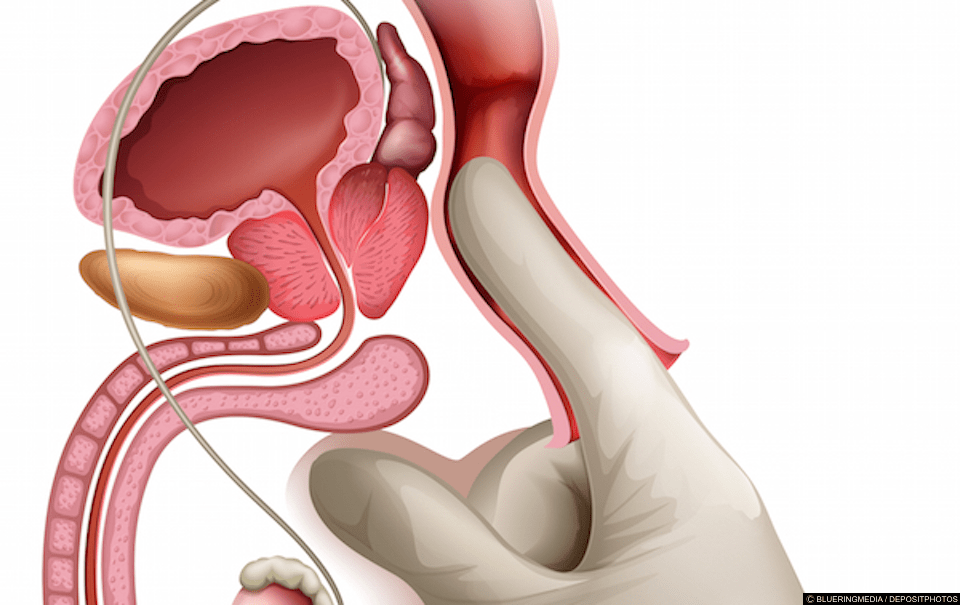
    The prostate is often referred to as the G Spot for men, or indeed, trans women. It has tonnes of nerve endings and when manipulated, it can cause huge amounts of pleasure for the recipient. Due to its placement in the body, the only way to access the prostate is either through fingering, anal sex or sounding.

    What and where is the prostate?

    The Prostate is a satsuma sized gland, located between the penis and bladder. Its function is to help in the production of semen. It produces the white fluid which is mixed with sperm created in the testicles.

    What happens when the prostate is removed?

    Removing the prostate is an operation which will be done under general anaesthetic, and it’s called a prostatectomy. This is where the entire or part of the prostate gland is removed. Usually due to cancer, but it might be removed for other reasons.

    The operation does carry risks, including erectile dysfunction, urinary incontinence and loss of ejaculation, however, it doesn’t mean that sex for gay men has to stop.

    In order to check the health of your prostate, you might receive a rectal examination.

    Can you have gay sex after prostate surgery?

    One reader recently asked whether it was safe for him to bottom again after surgery. We asked Doctor Rick Viney, a consultant urological surgeon at BMI The Priory and BMI Edgbaston hospitals in Birmingham, whether it was possible to bottom, or be the receptive partner in anal sex after a prostatectomy, he told us,

    “With plenty of lube and going very gently at first there should be no problems.

    “Now the prostate has gone the sensations may be diminished.

    “Probably best done on an empty bladder as there may be a risk of some urinary incontinence unless you are ok with that – you might want to warn a potential partner of this possibility, beforehand.”

    ALSO READ 10 things you probably didn’t know that happens if you’re diagnosed with prostate cancer.

    How long should you wait after prostate surgery to have gay sex?

    Prostate charity, Prostate Cancer UK, suggests waiting at least 6 weeks after surgery or treatment before attempting anal sex and say that you should be a little more cautious.

    In our podcast with Prostate Cancer survivor Martin Wells he told us, depending on your treatment, you could lose your ability to get a self-maintained erection, but said, that even though he couldn’t have sex in the same way as he had before his treatment, he learned a brand new way of being intimate with his partner. He now enjoys a more tantric approach to sex.

    As always, it’s always best to ask your own physician or GP after surgery to see if there might be any other complications.

  • Don’t Let Mental Health Be The Elephant In The Room

    Ford Shows It Really Is Good To Talk.

    “Everything we do is driven by you” was once Ford’s advertising slogan. Now Ford UK have gone a step further and by joining forces with mental health charities’ Mind and Rethink Mental Illness, they are aiming to reduce the stigma associated with mental health

    One in four people in the UK experiences mental health problems. Young men have been identified as a vulnerable demographic. The statistics are worrying. Around a third of men would talk freely about their feelings while less than a third said they were too embarrassed to seek help with half saying that isolation is worse than the condition itself. It’s clearly time to talk.

    “One in four of us go through mental health issues at some point in our lives, so it really affects us all, be it through personal experience or through the people we know,” said Ford of Britain Chairman and Managing Director, Andy Barratt. “As the market-leading car and van brand in the UK, Ford is an important part of society and we want to use that relationship to reach as many people as possible and encourage them to ask one simple question – ‘is everything OK?’.”

    So what has this got to do with a car manufacturer? Research carried out by Ford UK concluded that 67% of people said they were far more comfortable talking about their problems within a vehicle.

    Ford engineer and employee champion, Matt Loynes, who came through the lowest point of his mental health issues with the support of a friend says “A vehicle is a great place to start talking because it’s like your own private bubble, where you’re on a journey together and you’re shoulder to shoulder,”

    And their research is not wrong. Think of Peter Kay’s “Car Share” in as much as two people, in a car sharing experiences. It’s more than listening to music, going for a drive and talking to yourself. By talking to someone else you can open up. The vehicle is a safe environment to be in. No one else is there with you except you and a mate and if it helps, those moments of silence can be broken up with a song.

    “We’re delighted that Ford is committed to improving attitudes towards mental health,” said Director of Time to Change, Sue Baker OBE. “Their support will help hit home the message that we all have a role to play in looking out for one another’s mental health. As Ford’s public awareness film highlights, talking about mental health doesn’t have to be the elephant in the room.”

    Follow the link to Ford’s simple yet effective national public awareness video:

    Ford and Time to Change have also come together to create five ‘top tips’ as a starting point to help people across Britain to spot the signs and offer the necessary support:
    • Text/Call Reach out – start small
    • Find a good time and place
    • Go for a coffee
    • Ask how they are – listen without judging
    • Treat them the same

    For more information, visit www.ford.co.uk and www.time-to-change.org.uk

  • Can I get Herpes from oral sex?

    Can I get Herpes from oral sex?

    Is herpes only transmittable with penetrative sex or can you get from oral sex as well?

    There are two main types of herpes, HSV1 and HSV2. HSV stands for Herpes Simplex Virus. HSV1 tends to affect the mouth. HSV2 tends to affect the anus or vagina, both, however, are transmitted by direct touch contact.

    So yes, you can get herpes (on your genitals) from someone who has a cold sore.

    HSV1 tends to show itself as cold sores, HSV2 tends to show itself as genital herpes. There is no known cure for herpes, but its symptoms can be controlled. Medications like CompeedZovirax or Bonjela can help with cold sores, or genital herpes can be controlled with Aciclovir Tablets.

    The problem is that herpes is often unknowingly spread amongst people, meaning people either don’t know they have it – or it’s still contagious even when there are no visible symptoms.

    How can you protect yourself from Herpes?

    Protection, such as condoms, during sex – whether it is oral or anal, is the only real way of making sure that you don’t contract herpes.

    Most people have at least one of the strains…

    What’s more many people have at least one of the strains. It’s estimated that between 50 and 80 per cent of adults have oral herpes, according to the World Health Organization. That means your risk of getting herpes is actually quite high.

    Speaking to THEGAYUK.com Doctor Rick Viney a urology surgeon from the BMI The Priory said, “The two principal strains of herpes are hsv1 and hsv2. Hsv1 classically affects the mouth and hsv2 the vagina and anus. These are transmitted by direct contact, so it is entirely possible for the two strains to end up in the wrong place during oral sex. “

    So HSV1 can cause genital herpes, and HSV2 can cause cold sores. The only way to stop transferal is by using condoms or a dental dam.

  • There’s a new fitness craze and if you’re an environmentalist you should be excited

    Have you heard of plogging?

    There’s a new fitness craze that is firing up the fitness and environmentalist lobby. Plogging it’s a mix of jogging and picking up litter, as you go, according to Men’s Health. So when you mix jogging and the Swedish phrase “plocka upp,” or “pick up”. Ta Da!

    It has its roots in Sweden, where people who are interesting in saving the planet as well as themselves pick up litter as they go about their jogging.

    So what are the fitness benefits? Well as you jog you are going to be bending, squatting and lifting. And as you continue on your run and the more trash you pick up the heavier you’ll become, which adds to the calorie burn count.

    Plus you’ll be saving the planet from litter. Win-win.

    There’s a Swedish fitness app, Lifesum which includes plogging as a fitness activity and it reportedly burns 288 calories per 30 minutes.

  • How to check your balls for lumps and bumps

    Take the matter into your own hand…

    How to check your balls for lumps and bumps

    Finding lumps on your balls can be worrying, but there’s lots of stuff going on down there. Jackie Hall, Health at Hand operations manager at AXA PPP healthcare gives us some insight on how to check our balls for cancer.

    Testicular cancer is a male cancer which should be checked for regularly, and just like other cancers, it can be easier to treat if detected early. By regularly examining yourself, you are more likely to notice if anything changes or feels unusual so it is best to make this a part of your usual daily routine.

    The best time to check your testicles is after a warm shower, as this is when the skin is most relaxed, by following the below guide:


    Contrast and compare

    Rest your testicles in the palms of your hands and compare one testicle with the other for equal heaviness. A lot of men have one testicle which is larger than the other, or one that hangs lower than the other, so don’t worry if this is the case

    Roll them balls

    Place your fingers behind the scrotum and gently roll your testicle between your thumb and fingers

    Hard lumps?

    You are looking out for any hard lump or swelling – or any particular changes in shape. Make sure you check each testicle individually

    Does it seem normal?

    A normal testicle is oval shaped and feels firm, but not hard

    Heavy balls?

    Most cases of testicular cancer start with a painless lump in the testicle; though sometimes there can be pain or discomfort or a heavy feeling in the scrotum. Make sure you consult your GP as soon as possible if you experience any of these sensations, or if you find a lump


    If you experience any of the above symptoms for testicular cancer, make an appointment with your GP.

  • 10 things you probably didn’t know that happens if you’re diagnosed with prostate cancer

    In our latest podcast, prostate cancer survivor and information campaigner, Martin Wells revealed what happens after you are diagnosed with prostate cancer.

    1) You might not even have any symptoms.

    In our interview with him, Martin told us that he didn’t have any symptoms before he was diagnosed with prostate cancer. He actually went to his GP for a totally unrelated matter. His doctor decided to check out his prostate. Two days later Martin was called by his surgery to come in to discuss the results, which is where found out that he had prostate cancer.

    2) You don’t have to be a cis-gender man to get prostate cancer.

    Transgender Flag

    Anyone who still has their prostate gland can get prostate cancer. Trans women can be diagnosed with this type of disease. It is completely nondiscriminatory in who it affects, gay, straight, bisexual or transgender.

    3) One in 8 men will be diagnosed with prostate cancer in their lifetime.

    There are 40,000 new cases diagnosed every year. Most people who are diagnosed are over the age of 50 – but more and more men younger than this are being diagnosed each year.

    4) Black men are twice as likely to be diagnosed. 

    One in 4 men with African-Caribbean or African descent will be diagnosed with prostate cancer. It is not known why prostate cancer affects this demographic of people more.

    5) Depending on your treatment, you could lose your ability to get self-maintained erections, but you can still have sex.

    What happens when you get prostate cancer

    Martin told us, that even though he couldn’t have sex in the same way as he had before his treatment, he learned a brand new way of being intimate with his partner. He now enjoys a more tantric approach to sex.

    6) Sex can last up to three hours.

    No more WHAM BANG THANK YOU MAN. Martin says he found that he could still have a sex life, but now lasts much longer.

    7) Depending on your treatment, you might not be able to ejaculate…

    but you can still cum. No mess… no fuss.

    8) As good as the NHS is dealing with cancer patients, it’s not perfect

    Will the NHS help me if I get prostate cancer

    You could be misgendered if you’re transgender and those who are treating you might assume that you have a wife if you’re gay. However, once told that you’re not married or heterosexual, healthcare professionals are pretty good at making sure they don’t say it again.

    9) There’s no one to talk about the sexual repercussions of prostate cancer treatment.

    Martin found that there was no one able (or willing) to talk about getting erections or how he could have sex again after the removal of his prostate. That’s one of the reasons why he started his support group, Out With Prostate Cancer.

    10) The Prostate is a satsuma sized gland, located between the penis and bladder.

    Its function is to help in the production of semen. It produces the white fluid which is mixed with sperm created in the testicles.

    Listen to our chat with Martin Well on iTunes.

  • Many LGBT+ people hit out over plans to raise rainbow flags in doctors’ surgeries

    After it announced that there are plans to bring the rainbow flag to doctor surgeries, many in the LGBT+ community slammed the idea, calling for more focus on what really matters – saving people.

    The British Journal of General Practice released guidelines on how to make surgery waiting rooms more visually inclusive by adding rainbow flags or LGBT+ posters. The news was met with a mixed reaction, however many suggested that the move was a waste of money when resources should be spent on actually helping patients.

    The aimed of displaying the rainbow flag is to encourage many in the LGBT+ community feel more comfortable talking to their doctor about their health.

    The move comes just short of a year when it was announced that GPs are to start asking about patients’ sexuality, regardless of whether it is pertinent to the reason for their visit.

    THEGAYUK.com asked readers their thoughts on the proposal and the reaction was overwhelmingly negative.

    One user, Jane, spoke about how she had been stuck on a waiting list for a GIC (Gender Identity Clinic) for over a year, whilst others suggested that the long waiting lists for the specialised clinic could endanger the lives of transgender people. Adam on Twitter slammed the idea saying “Doctors can legally refuse me treatment because I’m trans but your big solution to ending discrimination is some fabric”.

    Daniel Browne, the chairman of Warwickshire Pride said that more literature was needed in the UK’s surgeries. Browne told us, “I do think that LGBT+ literature is required. All GP surgery staff should have LGBT+ awareness training too. Little changes can make a massive difference.”

  • 6 Facts You Should Know About Gonorrhoea

    Gonorrhoea is one of the most common STIs in the UK – but many people are still misinformed about how the infection is contracted and what the symptoms are. The team at the STI Clinic gave us six key facts about gonorrhoea we should all know.

    6 Facts You Should Know About Gonorrhoea

    5 percent of men will have the infection and show no symptoms.

    Around 95 percent of men will develop the symptoms of gonorrhoea within 2-7 days. It can take up to 30 days for symptoms to appear, but it is unusual for the infection to take this long to show. Five percent of men do not show any symptoms at all when infected with gonorrhoea.

    There are many different symptoms

    Symptoms of gonorrhoea vary hugely – and some people don’t develop any symptoms at all. Men who are infected can have some or all of these symptoms, depending on which area of the body contains the infection:

    • Conjunctivitis
    • Sore throat
    • White, yellow or green discharge from the penis
    • Inflammation of the foreskin
    • Swollen testicles
    • Discharge from the urethra
    • Pain during urination
    • A burning sensation in the urethra.

    Gonorrhoea can infect the genitals, eyes, throat and rectum

    The genitals are the most common area to be infected – but it’s not the only place that the disease can be found. The infection can also reach your eyes, throat and anus. Some of the symptoms of these areas will include discharge and itching, a sore throat, or red and painful eyes.

    Gonorrhoea is spread through genital, oral and anal sex

    The gonorrhoea bacteria can grow in the urethra, mouth, throat and anus. It cannot be spread through normal contact, contrary to popular belief. The bacteria cannot live outside the body for very long – so it can’t be contracted through toilet seats, sharing eating utensils or swimming pools.

    It can be treated

    The usual treatment for gonorrhoea is an intramuscular injection of Cefraxone accompanied by a single oral 1000mg dose of Azithromycin. If an intramuscular injection is not possible, then an oral medication can be prescribed.

    If you find out that you are infected, any sexual partners should be treated at the same time and any past sexual partners should be notified. If you are avoiding doing this because you don’t want to have an awkward conversation with a past sexual partner – remember that many clinics have a service that can let you notify your past partners anonymously.

    A drug-resistant strain of “super gonorrhoea,” has emerged

    The number of cases of this rare, new strain of gonorrhoea is slowly increasing. This is very alarming, and doctors are concerned that this new strain might soon become untreatable. This new strain is resistant to antibiotics and drugs, which is why if you are infected it’s important to finish your course of prescribed drugs, get tested again 2 weeks after treatment, and avoid sex for at least 7 days after treatment.

    If you are in doubt as to whether you have gonorrhoea – visit a GP or GUM clinic to get tested. Alternatively, if you are busy and want to avoid having to go anywhere to get tested, it is now possible to be sent out a test package discreetly in the mail. Simply supply a sample and send it back to get quick and easy results – it’s never been easier to ensure you are STI free.

    Advice by Ajay Jadhav from The STI Clinic.