Search results for: “ ”

  • What the UK Government says its going to do for LGBT+ people internationally and in the Commonwealth

    What the UK Government says its going to do for LGBT+ people internationally and in the Commonwealth

    The UK’s Government has launched an LGBT action plan, in which it wants to deal with issues facing the LGBT+ community, including how it will work with international governments and the Commonwealth on LGBT+ issues.

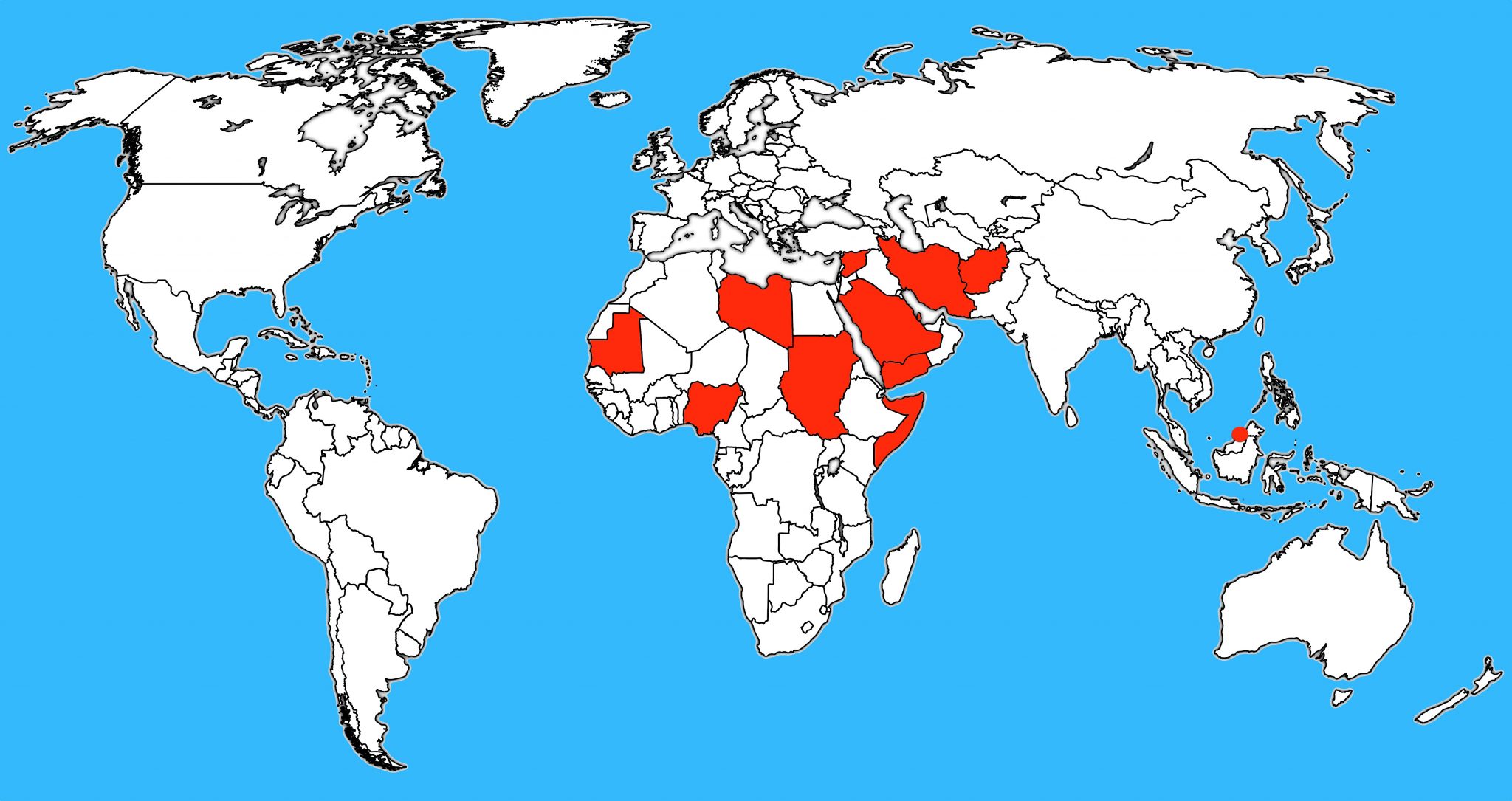
    Where In The World Is Homosexuality Pubishable By Death
    CREDIT: TheGayUK

    “This Government is committed to making the UK a country that works for everyone. We want to strip away the barriers that hold people back so that everyone can go as far as their hard work and talent can take them”.

    Big words, so what exactly are they promising?

    Penny Mordaunt, the Minister for Women and Equality has outlined 75  points she wants her office to push in order to achieve better rights, equality, safety and visibility for gay, lesbian, bisexual, transgender and intersex people of the UK.

    The LGBT action plan offered the following for LGBT+ people internationally and in the commonwealth.

    We believe LGBT people around the world deserve at least the same rights and respect that we enjoy in the UK and that the UK has a special responsibility to address laws discriminating against LGBT people in the Commonwealth.

    We will support countries that want help to repeal laws discriminating against LGBT people. The Prime Minister has offered support to Commonwealth countries wishing to reform discriminatory legislation. A £5.6 million programme delivered through civil society organisations will advance the legal equality and rights of all Commonwealth citizens, regardless of gender, sex, sexual orientation or gender identity.

    We will deliver an international conference focusing on the issues LGBT people face around the world. The conference will highlight a range of issues with governments, civil society and other key stakeholders on how best to progress LGBT equality.

    We will provide better travel advice for LGBT people. The Foreign and Commonwealth Office will continue to update and regularly review our travel advice for LGBT people. In particular, we will work with partners to ensure that our advice to trans travellers going abroad for medical treatment is as informative and up-to-date as possible. The Foreign and Commonwealth Office will ensure that issues specific to LGBT travellers are addressed in travel advice communications.

    We will promote LGBT rights through multilateral organisations, the private sector and international civil society organisations. The Foreign and Commonwealth Office will continue to work through UK embassies, high commissions and through international organisations, including the United Nations, European institution and the Commonwealth, to protect and promote LGBT rights and to address laws discriminating against LGBT people. The UK will consider putting in a bid to co-chair the Equal Rights Coalition in 2019.

    We will provide funding to promote LGBT equality worldwide. The Foreign and Commonwealth Office Magna Carta Fund for Human Rights and Democracy has committed £1.1 million to support LGBT rights projects worldwide in 2018 and 2019. The Government Equalities Office will provide match funding to the Organisation for Economic Co-operation and Development work on reviewing LGBT inclusiveness. As part of the Department for International Development’s new funding mechanism – UK Aid Connect – and in recognition of the importance of global LGBT inclusion, the Department for International Development will provide up to £12 million over 4 years, from 2018 to 2022, for a consortium of organisations to work together to promote LGBT inclusion.

    Here’s what the government plans are in other key areas:

    Education | Healthcare | Representation | Workplace | International | Safety

  • What the UK Government says its going to do for LGBT+ representation in the UK

    The UK’s Government has launched an LGBT action plan, in which it wants to deal with issues facing the LGBT+ community, including how it will better the representation of LGBT+ people.

    ©-yanlev-Depositphotos

    “This Government is committed to making the UK a country that works for everyone. We want to strip away the barriers that hold people back so that everyone can go as far as their hard work and talent can take them”.

    Big words, so what exactly are they promising?

    Penny Mordaunt, the Minister for Women and Equality has outlined 75  points she wants her office to push in order to achieve better rights, equality, safety and visibility for gay, lesbian, bisexual, transgender and intersex people of the UK.

    The LGBT action plan offered the following for LGBT+ representation.

    We want to build a society that accepts everyone, regardless of their sexual orientation or gender identity.

    We will trial innovative ways of tackling deep-seated prejudices in our communities. The Government Equalities Office will work across the public, private and voluntary sectors to improve the representation of LGBT people in public life, championing role models and giving people the confidence to be themselves in public. The Government Equalities Office will also look at how behavioural insights can be used to help improve people’s attitudes toward LGBT people more quickly.

    We will support the important role of local pride events across the UK. The Government Equalities Office will continue to have a presence at Pride events across the country, allowing us to hear directly from LGBT people. The Civil Service will demonstrate its own commitment to becoming the UK’s most inclusive employer by having a presence at Pride events each year and by supporting departmental staff networks and all staff across gender, ethnicity, faith and belief, age and disability to engage with these events.

    We will work to address harmful gender stereotypes and gender norms. The Government Equalities Office will work with the media and with schools to challenge gender stereotypes, and will also develop the evidence on the cause and impact of gender norms.

    We will continue our work to increase LGBT inclusion in sport and physical activity. Following the publication of the Department for Digital, Culture, Media and Sport’s ‘Sporting Future’ strategy for sport and physical activity, Sport England are providing expert help to sporting organisations to increase the participation of LGBT people in sport and physical activity. Sport England are also working to improve LGBT access to sport and physical activity as spectators, as volunteers and in the workforce. It is working alongside National Governing Bodies of sport and LGBT-focused sports organisations on a number of equality initiatives aimed at LGBT inclusion, and it is also working with a number of partners across the leisure industry, including the Chartered Institute for the Management of Sport and Physical Activity, to develop guidance on trans inclusion for frontline leisure industry staff. Sport England will also monitor the representation of LGBT people in senior leadership alongside other elements of diversity, following the launch of the Code for Sport Governance in October 2016. Following Sport England’s investment in a study by Pride Sports to identify how to better support LGBT inclusion in sport, Sport England will consider the recommendations of the research.

    Here’s what the government plans are in other key areas:

    Education | Healthcare | Representation | Workplace | International | Safety

  • What the UK Government says its going to do for LGBT+ data protection in the UK

    What the UK Government says its going to do for LGBT+ data protection in the UK

    The UK’s Government has launched an LGBT action plan, in which it wants to deal with issues facing the LGBT+ community, including how this government will collect, maintain and protect the data of LGBT people.

    6689062 / Pixabay

    “This Government is committed to making the UK a country that works for everyone. We want to strip away the barriers that hold people back so that everyone can go as far as their hard work and talent can take them”.

    Big words, so what exactly are they promising?

    Penny Mordaunt, the Minister for Women and Equality has outlined 75  points she wants her office to push in order to achieve better rights, equality, safety and visibility for gay, lesbian, bisexual, transgender and intersex people of the UK.

    The LGBT action plan offered the following for LGBT+ data protection and collection.

    We want to ensure that government services monitor these protected characteristics in a consistent, respectful and proportionate way.

    We will enable government services to appropriately monitor sexual orientation and gender identity. The Government Equalities Office, the Office for National Statistics and the Government Statistical Service will work together on a cross-government project to develop monitoring standards for sexual orientation and gender identity across central government. These standards will be freely available to the wider public and private sectors. The Government Equalities Office and Office for National Statistics will provide guidance and support to departments looking to implement monitoring in their services to ensure that it is consistent, proportionate and safe.

    We will ensure the Civil Service is an exemplary employer for collecting data on sexual orientation and gender identity in a sensitive, respectful and proportionate way. Civil Service HR, the Office for National Statistics and the Government Equalities Office will work to develop standardised questions for inclusion in internal departmental systems such as human resources systems for government employees. Civil Service HR will continue to include questions on sexual orientation and gender identity in the annual Civil Service People Survey so that the diverse workplace experiences of civil servants can be better understood.

    We will provide guidance on protecting private data concerning the characteristics and history of transgender people. The Government Equalities Office will work with the Department for Digital, Culture, Media and Sport and other agencies to agree guidance for public and private sector organisations explaining how they can protect these data and ensure the privacy of trans people. The guidance will help organisations to comply with relevant legislation such as the General Data Protection Regulation and the Gender Recognition Act 2004.

    In line with the Government’s approach to open data8, we will explore how best to make as much of the national LGBT survey data available as possible. We realise that the data we have collected is rich and comprehensive. We will not share or publish any data from which individuals can be identified, but the Government Equalities Office will look to publish more aggregate-level, anonymous data which will be of use to researchers, academics, stakeholders, the media, policymakers and the public at large.

    We will undertake further work to improve our understanding of the needs of specific groups within the LGBT population. The Government Equalities Office will look to improve the evidence base relating to the experiences of groups including older people, people in care, people with disabilities and long-term conditions, and black and minority ethnic people.


    Here’s what the government plans are in other key areas:

    Education | Healthcare | Representation | Workplace | International | Safety

  • What the UK Government says its going to do for LGBT+ workplace protections in the UK

    The UK’s Government has launched an LGBT action plan, in which it wants to deal with issues facing the LGBT+ community in the UK, including how people can self-identify, ensuring LGBT people know their employment rights.

    people at work
    CREDIT: ©-monkeybusiness-Depositphotos

    “This Government is committed to making the UK a country that works for everyone. We want to strip away the barriers that hold people back so that everyone can go as far as their hard work and talent can take them”.

    Big words, so what exactly are they promising?

    Penny Mordaunt, the Minister for Women and Equality has outlined 75  points she wants her office to push in order to achieve better rights, equality, safety and visibility for gay, lesbian, bisexual, transgender and intersex people of the UK.

    The LGBT action plan offered the following for LGBT+ policing and safety.

    We also want to ensure that LGBT people are aware of the rights they do have already.

    We will consult on how best to reform the gender recognition process. Last year, the Government Equalities Office announced the intention to consult on the Gender Recognition Act 2004 to see how the legal gender recognition process can be made less bureaucratic and intrusive. The consultation will be published alongside this action plan, and we will use the results of the national LGBT survey and the consultation to bring forward proposals for reforming this public service.

    We will consider ways to make it easier to tell the government if you have changed your gender. The Government Equalities Office will investigate whether the ‘Tell Us Once’ service – which is currently used to notify government departments of bereavements – can be learned from so that transgender people who are transitioning and want to update their name and gender across multiple departments only have to do so once.

    We will improve our understanding of issues facing non-binary people. The Government Equalities Office will launch a Call for Evidence on the issues faced by non-binary people, building on the findings from the national LGBT survey.

    We will also improve our understanding of the issues facing people who are intersex. The Government Equalities Office will launch a separate Call for Evidence to improve the evidence relating to intersex people’s experiences.

    We will ensure that LGBT people can easily access information they need about their rights. The Government Digital Service will review the existing content on GOV.UK aimed at LGBT people, and improve the content to ensure that it fully meets their needs.

    Here’s what the government plans are in other key areas:

    Education | Healthcare | Representation | Workplace | International | Safety

  • What the UK Government says its going to do for LGBT+ safety in the UK

    The UK’s Government has launched an LGBT action plan, in which it wants to deal with issues facing the LGBT+ community in the UK, including tackling conversion therapy, LGBT homelessness and domestic violence.

    “This Government is committed to making the UK a country that works for everyone. We want to strip away the barriers that hold people back so that everyone can go as far as their hard work and talent can take them”.

    Big words, so what exactly are they promising?

    Penny Mordaunt, the Minister for Women and Equality has outlined 75  points she wants her office to push in order to achieve better rights, equality, safety and visibility for gay, lesbian, bisexual, transgender and intersex people of the UK.

    The LGBT action plan offered the following for LGBT+ policing and safety.

    “We want LGBT people to feel comfortable reporting incidents they experience, and we are not prepared to stand idly by as harmful practices such as conversion therapy happen in our country”

    We will bring forward proposals to end the practice of conversion therapy in the UK. These activities are wrong, and we are not willing to let them continue. Led by the Government Equalities Office, we will fully consider all legislative and non-legislative options to prohibit promoting, offering or conducting conversion therapy. Our intent is to protect people who are vulnerable to harm or violence, whether that occurs in a medical, commercial or faith-based context. We are not trying to prevent LGBT people from seeking legitimate medical support or spiritual support from their faith leader in the exploration of their sexual orientation or gender identity.

    We will improve the police response to hate crime and raise awareness of local support agencies for LGBT victims. The Home Office and Ministry of Housing, Communities and Local Government will refresh the 2016 Hate Crime Action Plan later this year. The refreshed Hate Crime Action Plan will include measures to improve the awareness and skills of police officers and staff to respond to the needs of hate crime victims – including LGBT victims. The Home Office and Ministry of Housing, Communities and Local Government will also fund a bespoke training package available to all police call handlers to help ensure victims are correctly identified and supported at this critical first point of contact. The refreshed plan will also set out action to support local agencies, particularly the police, to ensure they are well placed to direct victims of hate crime to appropriate support services. The refreshed plan will aim to support partners to review and assess the coverage and awareness of local services in their areas. This summer, Her Majesty’s Inspectorate of Constabulary and Fire & Rescue Services will publish the findings of its inspection of English and Welsh police forces’ effectiveness at identifying, recording, and responding to reports of hate crime. The Government is also looking at the responses to the National LGBT survey about hate crime legislation and will consider this and other evidence as part of the Hate Crime Action Plan refresh.

    We will improve recording and reporting for victims of hate crime and domestic abuse. The Crown Prosecution Service will work with the LGBT stakeholders and specialist press to raise awareness of successfully prosecuted cases involving LGBT victims to increase confidence in reporting crimes. The Crown Prosecution Service will work with partners to improve the recording and monitoring of equalities data for LGBT victims of domestic abuse, rape and hate crime.

    We will address domestic abuse of LGBT people with multiple and complex needs. The Ministry of Housing, Communities and Local Government has a Violence Against Women and Girls Strategy commitment to improve services for victims of domestic abuse with complex needs, which can include mental ill-health and substance misuse, and is working across government to ensure the needs of LGBT victims are represented. The Ministry of Housing, Communities and Local Government will also announce further significant funding for domestic abuse services across England, including refugees, as early as possible this financial year. In addition, the Ministry of Housing, Communities and Local Government are carrying out a comprehensive review of the funding and commissioning of domestic abuse services across England. The review will be informed by an audit, which will give us a picture of provision across England, including support for LGBT victims of domestic abuse, enabling government to assess what impact services are having and to identify any gaps in provision.

    We have collected evidence on the barriers faced by LGBT victims of domestic abuse when seeking support and we will consider how to address them as part of the Government’s wider work on Domestic Abuse. The Government’s consultation on ‘Transforming the Response to Domestic Abuse’ sought views on what steps can be taken forward through our landmark draft Domestic Abuse Bill and supporting non-legislative package. The consultation sought views on what government can do to better support victims who face multiple barriers to accessing support including, LGBT victims of domestic abuse. The Home Office will work with the Government Equalities Office to ensure the non-legislative package fully considers the needs of LGBT victims.

    We will increase awareness of support services for LGBT victims of sexual assault and abuse. NHS England will work with the police to increase awareness of services provided by Sexual Assault Referral Centres for LGBT victims and survivors who face additional barriers to reporting sexual assault and abuse. In April 2018, NHS England published the ‘Strategic Direction for Sexual Assault and Abuse Services – Lifelong care for Victims and Survivors: 2018-2023’. This strategy outlines how NHS England and agencies will improve the whole care pathway for victims and survivors of sexual assault and abuse over a lifetime. NHS England are also committed to having LGBT representation on the National Patient Participation Group for Sexual Assault Referral Centres.

    We will work to understand the causes of LGBT homelessness and how we can better support LGBT homeless people’s needs. From April 2018, local authorities have started collecting case-level data, through the Homelessness Case Level Information Collection data system, on the sexual orientation and gender identity of homeless people. We will analyse this data in order to better understand the nature and scale of the problem of LGBT homelessness, as well as how well frontline staff support individuals. The Government Equalities Office and the Ministry of Housing, Communities and Local Government will undertake qualitative research into the experiences of LGBT homeless people as well as conducting an audit of existing service provision. Non-statutory guidance for local authorities will be produced, raising awareness of the needs of LGBT homelessness people and ways to better support them. The Ministry of Housing, Communities and Local Government will ensure that LGBT homeless people’s needs are reflected across the Government’s forthcoming rough sleeping strategy.

    We will make sure that victims of crime continue to have access to support services, to help them cope with and, as far as possible, recover from the effects of crime. This year, the Ministry of Justice is providing around £96 million to support victims of crime; around £68 million of this will be allocated to 42 Police and Crime Commissioners to locally .commission or provide support services for victims of crime, including LGBT victims. In previous years, some Police and Crime Commissioners spent some of their grant funding on specific projects for LGBT victims. In 2018 to 2019 LGBT-specific providers will continue to deliver a range of services, including counselling, advocacy and befriending services to LGBT victims of hate crime, sexual violence and domestic violence.

    We will continue our work to ensure that the needs of all LGBT claimants are met in the asylum process, regardless of whether their claim was lodged on this basis. While the national LGBT survey did not ask questions about the asylum process, we remain committed to granting protection to all claimants who are found to be at risk of persecution or serious harm in their country of origin because of their sexual orientation or gender identity. The Home Office guidance for caseworkers on processing asylum claims on the basis of sexual orientation will be reviewed shortly. The Home Office will also publish guidance on asylum claims based on gender identity and expression in the summer. The Home Office published data on asylum claims made on the basis of sexual orientation for the first time in November 2017 and is committed to re-publishing annually. The Home Office will continue to review the training of immigration detention estate and healthcare staff to ensure that the specific needs of LGBT detainees are consistently met.

    We will ensure that the UK is the safest place in the world for all users, including LGBT people, to be online. The Government response to the Internet Safety Strategy, published in May 2018, set out details of our new code of practice with guidance for social media providers. The code will help ensure that clear and transparent reporting processes are in place so that users can report abuse targeting LGBT people. We are also introducing transparency reporting for social media providers. These reports will help us understand the amount of LGBT-related abuse reported and how providers deal with these reports. The Government response also announced that the Department for Digital, Culture, Media and Sport and Home Office would jointly work on a White Paper, to be published later this year. The White Paper will set out our proposals for future legislation that will cover the full range of online harms, including both harmful and illegal content. Potential areas where the Government will legislate include the social media code of practice, transparency reporting and online advertising.

    We will ensure LGBT young people have access to educational online safety interventions that address their needs and are informed by their experiences. The National Crime Agency’s ‘Digital Romance’ report showed that higher proportions of LGBT young people meet partners online. It also found that significantly more lesbian and gay young people had met up with an online contact who was not who they said they were. The National Crime Agency will develop effective and appropriate education interventions to ensure LGBT young people can be full, equal and safe participants in online activity and communities, and benefit from the full potential of digital technologies. This will include identifying areas of intervention to ensure young people develop the knowledge, skills and attitudes to stay safe online. They will work with LGBT young people, professionals and parents to develop the interventions and resources.

    We will ensure that transgender prisoners are treated fairly, decently, lawfully with their rights respected. Her Majesty’s Prison and Probation Service will continue to work with its advisory board to further review its Agency Instruction on the care and management of transgender offenders. Her Majesty’s Prison and Probation Service will commission research and will work collaboratively with partner organisations to better understand the transgender prison population and those serving sentences in the community, which will inform our ongoing work. We will consider the recommendations of the ‘Inside Gender Identity’ report into the health and social care needs of transgender offenders.

    Here’s what the government plans are in other key areas:

    Education | Healthcare | Representation | Workplace | International | Safety
  • What the UK Government says its going to do for LGBT+ education in the UK

    The UK’s Government has launched an LGBT action plan, in which it wants to deal with issues facing the LGBT+ community in the UK, including in the education system.

    CREDIT: © tomwang Depositphotos

    “This Government is committed to making the UK a country that works for everyone. We want to strip away the barriers that hold people back so that everyone can go as far as their hard work and talent can take them”.

    Big words, so what exactly are they promising?

    Penny Mordaunt, the Minister for Women and Equality has outlined 75  points she wants her office to push in order to achieve better rights, equality, safety and visibility for gay, lesbian, bisexual, transgender and intersex people of the UK.

    Education was a big part of the government’s action plan, here’s what Ms Mordaunt said she plans to do:

    “We will take action so that our education system supports every LGBT child or young person”

    We will continue to tackle homophobic, biphobic and transphobic bullying in schools and the wider education system. The Government Equalities Office will complete its anti-homophobic, biphobic and transphobic bullying programme. This £3 million programme will reach more than 1,200 schools in England by March 2019. From March 2019 to March 2020, the Government Equalities Office will provide further funding for interventions in schools, and consider further projects to tackle bullying in further and higher education institutions. The Department for Education will work with the Government Equalities Office to understand how best to support schools to tackle homophobic, biphobic and transphobic bullying and how to continue this programme of work in a sustainable way through the school curriculum and policies in the medium and to long term. The Crown Prosecution Service will review and update their LGBT Hate Crime Schools Pack in partnership with young LGBT people and identity-based bullying professionals to tackle bullying in schools.

    We will update Sex and Relationships Education guidance to support the Government’s reforms to this subject. As we have previously announced, the Department for Education will update the statutory guidance on Relationships Education in primary schools, and Relationships and Sex Education in secondary schools. These updates will ensure that the guidance supports teaching that is age appropriate and relevant to all pupils, whatever their developing sexual orientation or gender identity.

    We will ensure that schools have access to the guidance they need to support LGBT pupils. The Department for Education will publish an update to its guidance for schools about how to apply the Equality Act 2010. In addition, the Government Equalities Office will work with the Equality and Human Rights Commission to publish comprehensive guidance for schools on how to support trans pupils.

    We will support LGBT teachers to be themselves at work and improve the diversity of the teaching profession. The Department for Education is investing £2 million to establish regional hubs to support teachers from underrepresented groups, including those teachers who are LGBT, to progress into leadership. The Department for Education has also already supported the launch of ‘LGBTEd’ – a network for LGBT teachers and allies – and will continue to engage with stakeholders on making the teaching profession more LGBT inclusive.

    We will ensure that support is available for LGBT students who are victims of hate crime and online harassment. The Government has asked the Office for Students to take steps to ensure that higher education providers are places of tolerance for all students. This includes working with higher education providers, for example, by supporting work to ensure that students who have been a victim of homophobic, biphobic and transphobic incidents have the support in place that they need, through access to appropriately trained staff and signposting to local specialist organisations. The Office for Students will investigate and tackle gaps in participation, experience, safeguarding and success for LGBT students in higher education.

    Here’s what the government plans are in other key areas:

    Education | Healthcare | Representation | Workplace | International | Safety

  • What the UK Government says its going to do for LGBT+ healthcare in the UK

    What the UK Government says its going to do for LGBT+ healthcare in the UK

    The UK’s Government has launched an LGBT action plan, in which it wants to deal with issues facing the LGBT+ community in the UK, including health.

    “This Government is committed to making the UK a country that works for everyone. We want to strip away the barriers that hold people back so that everyone can go as far as their hard work and talent can take them”.

    Big words, so what exactly are they promising?

    Penny Mordaunt, the Minister for Women and Equality has outlined 75  points she wants her office to push in order to achieve better rights, equality, safety and visibility for gay, lesbian, bisexual, transgender and intersex people of the UK.

    Health was a big part of the government’s action plan, here’s what Ms Mordaunt said she plans to do:

    Put LGBT+ people’s needs “at the heart” of the NHS.

    We will appoint a National Adviser to lead improvements to LGBT healthcare. The National Adviser will focus on reducing the health inequalities that LGBT people face, and advise on ways to improve the care LGBT people receive when accessing the NHS and public health services. They will work across the NHS to ensure that the needs of LGBT people are considered throughout the health system.

    The National Adviser will work to improve healthcare professionals’ awareness of LGBT issues so they can provide better patient care. The National Adviser will work with relevant statutory organisations and professional associations to embed LGBT issues into physical and mental health services.

    We will improve the way gender identity services work for transgender adults. In 2019, NHS England will decide on the future configuration of adult gender identity services in England, and will seek to establish a more modern care model that delivers high-quality outcomes in which clinical capacity can be more flexibly deployed. The Government Equalities Office will produce advice about the Gender Recognition Act for GP surgeries and gender identity clinics.

    We will improve our understanding of the impacts on children and adolescents of changing their gender. The Government Equalities Office will gather evidence on the issues faced by people assigned female at birth who transition in adolescence.

    We will take action to improve mental health care for LGBT people. The Department of Health and Social Care and the Government Equalities Office will jointly develop a plan focussed on reducing suicides amongst the LGBT population. The Department of Health and Social Care will ensure LGBT people’s needs are addressed in the updated Suicide Prevention Strategy, and the new Health Education England suicide prevention competency framework will cover high-risk groups including LGBT people.

    We will enhance fertility services for LGBT people. The Department for Health and Social Care will revise surrogacy legislation so single people (including LGBT individuals) can access legal parenthood after a surrogacy arrangement.

    We will ensure LGBT people’s needs are taken into account in health and social care regulation. The Care Quality Commission will continue to improve how it inspects the experience of LGBT people in adult social care and mental health inpatient wards, and we will begin to inspect all gender identity clinics on a risk basis. The Care Quality Commission will develop guidance for care quality inspectors on the healthcare pathway for people who are transitioning their gender, and embed LGBT equality issues into the methodology used by inspectors.

    We will support improved monitoring of sexual orientation and gender identity in healthcare services to enable better patient care. The Government Equalities Office will develop best practice guidance for monitoring and make this openly available to the public sector, and the National Adviser will work to ensure healthcare professionals understand the benefits of asking patients about their sexual orientation and gender identity. The Care Quality Commission will look at how we can promote the NHS England voluntary sexual orientation monitoring standard for people using health and social care services.

    We will work to tackle body image pressures that LGBT young people face. The Government Equalities Office will consider the specific challenges faced by LGBT people as part of our broader work to build the evidence base on the causes and impacts of body dissatisfaction.

    We will continue to review the blood donation deferral period for men who have sex with men. NHS Blood and Transplant will explore ways that a more personalised risk assessment can be introduced, to allow more people to donate blood without impacting on blood safety; currently, there is very little data on effective ways of carrying out such risk assessments. The initial scoping, evidence gathering and testing may take up to two years to complete.

    We are committed to tackling HIV transmission, AIDS and HIV-related deaths. As part of this, we are currently funding a 3 year trial with 10,000 people to determine how best to deliver ‘PrEP’. NHS England will consider the impact of increasing the PrEP trial further.

    We will take action to improve the support for LGBT people with learning disabilities. The Department of Health and Social Care will review, collate and disseminate existing best practice guidance and advice regarding LGBT issues and learning disability; and will also ensure that training requirements for support staff and advocates who work with people with learning disabilities includes advice regarding LGBT people.

    Here’s what the government plans are in other key areas:

    Education | Healthcare | Representation | Workplace | International | Safety

  • THEATRE REVIEW | An Officer and a Gentleman – Edinburgh Playhouse

    ★★★☆☆ | An Officer and a Gentleman

    Officer and a Gentleman review Edinburgh Playhouse

    Based on the classic film of the same name, An Officer and A Gentleman tells the story of Zack Mayo, a trainee fighter pilot who is from the wrong side of the tracks and is trying to make his way through the Naval Academy. Paula is a local girl working in a factory where she and her colleagues see the only way of escaping their humdrum lives is by being swept off their feet by a pilot and whisked away. But what starts off as a little bit of fun between the two of them becomes something more, but will either of them admit their true feelings?

    The show, and the first act in particular, thunders across the stage with dizzying speed and a relentless energy, in a production which is noisy, loud, bold and incredibly unsubtle; where a collision of lighting, sound, projected images, live music and a barrage of costume changes combine to be the absolute antithesis of the “less is more” school of thought.

    Jonny Fines makes for an appealing enough lead as Zack Mayo, with his ridiculously ripped form and a wry smile, nestling in nicely alongside his fellow recruits who appeared to have been hand-picked primarily for their pecs and ‘ceps appeal.  But despite the testosterone-fuelled world depicted in the story, the stage belonged firmly to the female ensemble, bringing some decent vocal performances to lift the broadly functional performances of the cast.

    Nikolai Foster’s direction takes the scattergun approach of throwing sufficient tricks, bells and whistles at the audience in the hope that some of them will stick, with a roughly even split of hits and misses. The show is set to an eclectic mix of 80’s classics, the musical numbers varied in terms of quality and performance, with a belting rendition of Alone by Emma Williams only serving to highlight the pub circuit stylings of some of the other musical numbers. There is a mix of soft rock classics (“I Want to Know what Love is”, “The Final Countdown”), some bubble-gum pop (“Girls Just Wanna Have Fun”, “Material Girl”) and some of the lesser celebrated 80’s staples (“Hearts on Fire”, “Working for the Weekend”) compounding the scattergun feel of the show, but not necessarily in a bad way.

    But that is where the show really hits its stride. It never pretends to be anything other than what it is intended to be, namely a fun, cheesy and fairly corny slice of entertaining escapism. By the time the show draws to a conclusion with its iconic ending set to a sweeping rendition of ‘Up Where We Belong’, you can’t help but be suckered in by the feel-good factor of this slice of 80’s cheese.

    *This review was taken from the Sheffield production of the same tour*

    BOOK TICKETS TO SEE AN OFFICER AND A GENTLEMAN HERE

  • Deliveroo just changed its name for pride

    YASSS queens. Delieveroo has just become DELOVEROO for Pride season.

    Teaming up with RuPaul’s Drag Race star Charlie Hides and Absurd Bird restaurants Deliveroo has changed its name for Pride season to De-love-roo and they’ve launched a special menu just for us queens.

    All the profits are going to LGBT+ homeless charity, Albert Kennedy Trust.

    The menu will be available to order exclusively through Deliveroo in the run up to Pride in London (July 7th).

    The Charlie Sliders:

    The Valentina (I’d like to leaves it on please)
    Veggie burger with double lettuce and extra spinach leaves (and a double wrapper)
    The Chicken Latrice Royale
    Large and in charge with a double dose of southern fried chicken
    The Vanessa Vanjie Wit’mayo
    Classic fried chicken burger with mayo and extra hot BAM sauce

    The Charlie Sliders all cost ten, ten, tens across the board (£10) with all profits going to support the incredible work of the Albert Kennedy Trust.

    The menu created with season nine sensation Charlie Hides is available to order exclusively through Deliveroo in the run up to Pride in London (July 7th).

    Joe Groves at Deloveroo said, “Celebrating love in all its forms is at the core of the Deliveroo brand and we are proud to play our part in PRIDE once again. The Drag community is pivotal to the story-telling of the LGBTQ+ community, so honouring some of these icons seemed like the perfect way to help us spread the word and raise money for a great charity. Creating this menu to raise funds for The Albert Kennedy Trust and re-branding as Deloveroo are part of our continued efforts to create visibility around LGBTQ+ causes”

    Season 9 Queen Charlie Hides said, “the Deliver-Ru restaurant is the only place you should be ordering lunch and dinner from this pride because the food is almost as delicious as me and the profits go to a brilliant cause…So sashay your way onto Deliveroo right now and let’s raise some money folks!”

    Tim Sigsworth, CEO of Albert Kennedy Trust said, “What a delicious way to raise funds and prevent LGBTQ+ youth homeless. It takes just £25 to keep a young person safe for one night after facing homelessness or abuse just for being who they are. No young person should have to choose between a safe home and being who they are.”

    24% of young people facing homelessness in the UK identify as Lesbian, Gay, Bisexual or Transgender, with 77% citing abuse and rejection by their families after coming out as the primary reason. The Albert Kennedy Trust provides safe homes, mentoring and support to ensure that no young person has to choose between a safe home and being who they are.

  • Where are the cast of Priscilla Queen Of The Desert now?

    It’s 25 years since cult classic, The Adventures Of Priscilla Queen Of The Desert was released. So what has happened with the cast since 1994?

    Where are the cast of Priscilla Queen Of The Dessert now?

    Priscilla is the 38th most successful LGBT film on record, although its reach is arguably much bigger than this. It’s one of the few LGBT films that has been made into a successful worldwide smash musical. Not even The Birdcage can claim that.

    Terence Stamp (Bernadette Bassenger)

    English actor Terence Stamp, who turns 80 this year, has had a highly successful acting career having appeared in countless hits such as Miss Peregrine’s Home for Peculiar Children, Valkyrie and even a Star Wars film. He’s been married just once. In 2002 at the age of 64 to a 29-year-old woman who he met in a pharmacy. The couple divorced in 2008 – and he’s not married since.

    Hugo Weaving (Mitzi Del Bra)

    Most famously Hugo played the evil and ever-present Agent Smith in The Matrix just a few years after taking the lead role in Priscilla. He is still making films, his most recent are Mortal Engines and Black 47. He has been in a relationship with his longtime girlfriend, Katrina Greenwood since 1984 and they have two children together.

    Guy Pearce (Felicia Jollygoodfellow)

    English born Guy Pearce made his name in the soap Neighbours in which he appeared in from 1986 to 1989. He starred in 496 episodes. After leaving Neighbours he appeared in 12 episodes of competitor soap, Home and Away. Priscilla remains one of Guy’s most successful films where he is the lead, although Iron Man 3 is by far the most lucrative film he’s made, followed by The King’s Speech. Guy is still making films and music. Guy is also a passionate songwriter and has released an album, Broken Bones which dropped in 2014. He is planning a second to be released in 2018.

    Bill Hunter (Bob Spart)

    Unfortunately, Bill Hunter died in 2011 from liver cancer. He was married three times all ending in divorce. He appeared in more than 60 films, with Priscilla being one of the most successful. His most notable role though maybe the 1995 smash Muriel’s Wedding where he played Muriel’s father, Bill Heslop. His final film as in 2011, called The Cup.

    Julia Cortez (Cynthia Campos)

    Julia has just two film credits to her name, Priscilla and Mighty Morphin Power Rangers: The Movie. She now owns a Financial Services business in Sydney having retired from showbiz in 1994.

    Sarah Chadwick (Marion Barber)

    Sarah is most famous in her native Austraila as Dr Rowie Lang in the long-running soap, The Flying Doctors. Since Priscilla, she has continued her work in TV and starred in Home And Away in 2011 and 2017.

    Mark Holmes (Benjamin Barber)

    He was just 10 when he starred in Priscilla, but it wasn’t his first acting credit. He was in the 1992 film The Leaving Of Liverpool, which also starred Priscilla co-star Bill Hunter. After 1998 he seemingly dropped his acting career as he has not appeared in any other films or TV shows since, according to IMDB.

  • FILM REVIEW | The Death And Life of Marsha P. Johnson

    ★★★★★ | The Death And Life of Marsha P. Johnson

    review the death and life of MArsha P Johnson

    “There’s a massive number of trans women who have been murdered, and they’re yelling out from their graves for justice”.

    Director David France makes stunning a return with The Death And Life Of Marsha P Johnson, and it’s devastatingly relevant as dozens of trans women, particularly of colour, are murdered every year across the globe.

    In 1992 Marsha went missing she was last seen on the 4th July, two days later her body turned up in the Hudson River, New York. Police and an autopsy ruled her death a suicide, but friends and relatives believe that she would never end her own life.

    Was her death an accident, suicide or something more sinister? This is the question that activist and crime victim advocate Victoria Cruz from the New York Anti-Violence Project has set out to determine as she launches her own investigation into the death of one of New York‘s most prominent LGBT figures.

    Marsha was and is, without a doubt, one of the leading activists who created the modern LGBT+ rights movement in the USA. The film also pays kind tribute to another unsung hero of the movement, Sylvia Rivera who died in 2002. Previously unseen, fascinating footage of Rivera shows her to be a formidable character and unrelenting trans and gay rights advocate. Her life was cut short at the age of just 50 of complications from liver cancer.

    Documentary maker David France, whose other notable work includes, How To Survive A Plague, uses stock and archive footage and touching interviews with those who knew Marsha to haunting effect, bringing alive the formative years of the burgeoning gay rights movement in New York, following the Stonewall Riots in the summer of 1969.