Tag: TerrenceHigginsTrust

All the latest breaking news on the HIV charity Terrence Higgins Trust. Browse The THEGAYUK’s complete collection of features and commentary on the Terrence Higgins Trust and the LGBT+ community.

  • If you’re on PrEP medication can you just stop taking it?

    If you’re on PrEP medication can you just stop taking it?

    If you’re on PrEP but you’ve decided that you’re no longer hooking up with other guys during the COVID-19 lockdown, we answer whether it is safe to just stop taking the meds.

    It’s official, well actually doctor’s orders, you really shouldn’t be having sex with anyone new to you and outside of your current living arrangement during the coronavirus outbreak.

    The medical director of Terrence Higgins Trust, Doctor Michael Brady, warned yesterday that people have to stop hooking up during the Government-mandated Covid-19 lockdown.

    But if you’re currently on a course of PrEP medication and you’ve decided to heed his words, is it safe to just stop taking them?

    Can you just stop taking PrEP?

    According to THT, many people will be choosing not to take PrEP during lockdown, which is okay, providing you don’t have a specific need like you’re having sex with a partner who has a detectable viral load.

    Guidance from THT states, if you’re a gay / bi cis-male “it’s safe to stop taking PrEP as long as you stop after two full days after you last had sex”.

    If you’re a trans woman, a cis-female, trans man or someone who identifies as non-binary it is advised you wait until seven full days, after you last had sex, before stopping PrEP.

    How can I start on PrEP again?

    Is it safe to just stop taking PrEP medication?

    According to THT advice, “When you’re ready to re-start PrEP, cis gay and bisexual men can re-start with a double dose taken two to 24 hours before sex. For everyone else, you need to re-start with a daily dose for seven days before having sex again”.

    Of course, if you’re concerned about your medication and want further guidance, you should speak to your GP or sexual health advisors.

    Need a HIV at home test?

    Where can I get a free HIV test from?

    The Saving Lives charity has given the readers of THEGAYUK.com a free offer – when you use GAYUK20 you can get an HIV Self Test sent to your home. Just click here to order your HIV Self Test Kit today.

  • Doctor warns: Stop hooking up during Covid-19 lockdown

    Doctor warns: Stop hooking up during Covid-19 lockdown

    The medical director at the UK’s leading HIV charity, Terrence Higgins Trust has said people need to stop hooking up during the COVID-19 lockdown.

    Doctor Michael Brady, the medical director at THT has warned that people need to stop meeting for sex and look for other ways to “find sexual pleasure in other ways”.

    In a post published on the THT website, the Doctor said,

    “I’ve never been an advocate of promoting abstinence, but this message is not about protecting your sexual health: it’s about protecting your general health and those around you from a virus that can be deadly. This is extraordinary and unprecedented advice for us to be giving out, but these are extraordinary and unprecedented times.”

    Lockdown and Hooking Up

    (C) BIGSTOCK

    Earlier this week, Prime Minister Boris Johnson outlined new, stricter rules about leaving our homes during the Covid-19 outbreak. These were:

    • Only go outside for food, health reasons or work (where this absolutely cannot be done from home)
    • Stay 2 metres (6ft) away from other people
    • Wash your hands as soon as you get home

    With the country under stricter rules surrounding lockdown, Dr Brady says we shouldn’t be having sex with anyone outside our current households.

    He added,

    “This advice means that, unless you have sex with someone within your household, it’s important to find sexual pleasure in other ways. Despite the situation with COVID-19, we need to remember that sex is an important part of life, but right now we have to find other ways to achieve sexual pleasure and satisfaction.

    He continued,

    “It’s only natural that we look to sex for pleasure, to relieve stress and anxiety or simply to pass the time – whether that’s with a regular partner or using hook-up apps. But our ‘new normal’ is that we have to find ways to do this while sticking to the advice to stay at home. This isn’t just to protect ourselves against the coronavirus but also to protect the most vulnerable in our society.

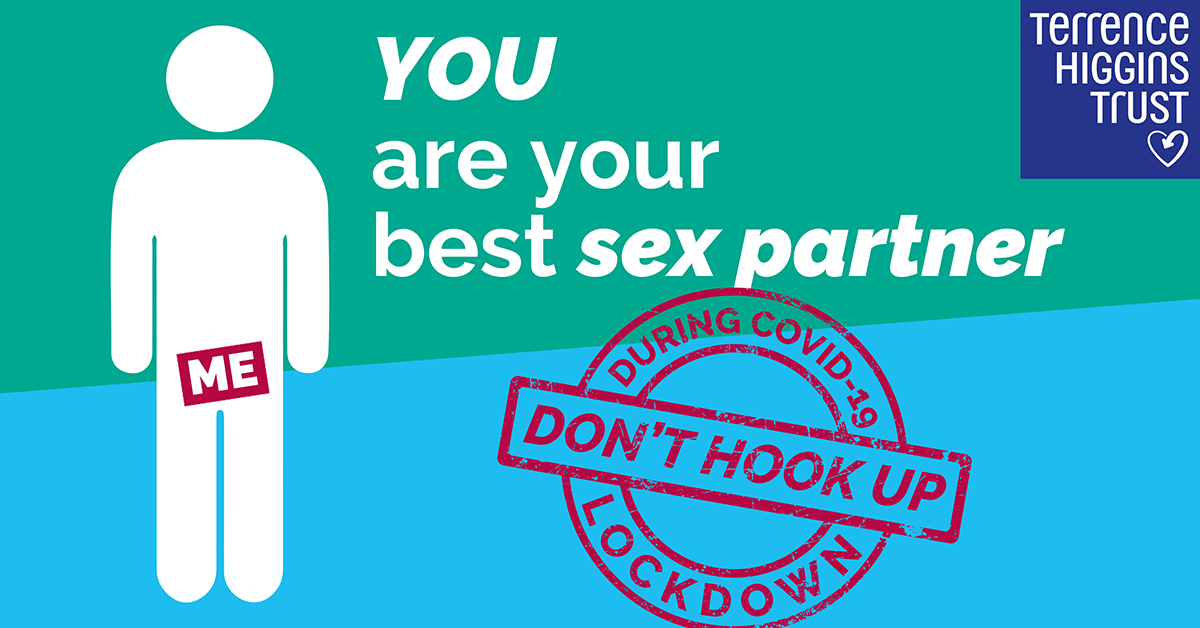
    “You are your safest sexual partner”

    Dr Brady finished up by adding that during this time, that instead of seeking sexual contact with other people, take we take matters in our own hands.

    He said,

    “I never thought I’d say this but the reality is that, for the time being, you are your safest sexual partner. It’s time to stay at home, stop close contact with people outside our household and to be creative about how we manage our sex lives”.

  • PrEP is now available across England for those who need it

    PrEP is now available across England for those who need it

    It’s taken a long time and a trial that limited the number of people who could access the revolutionary drug that halts the spread of HIV, but PrEP is finally available to those who need it in England.

    The PrEP trial originally allowed for 10,000 patients to take PrEP, it was extended to 26,000, but it still wasn’t enough meaning that there were long waiting lists and some clinics paused the trial for gay and bisexual men.

    In August 2019 we reported that up to a quarter of gay and bisexual men were unable to access the HIV prevention drug.

    The Department of Health will be providing funds to make PrEP available via sexual health clinics. The Government will make £16m available to local authorities to deliver PrEP to those “who need it most” according to a statement released by DoH.

    Matt Hancock, the UK’s Health Secretary said,

    “I remember when HIV was a death sentence – and still today, it has a devastating impact on so many lives across the country.

    While it is encouraging to see HIV transmissions continue to fall across the UK, I am determined to do more, and end HIV transmission.

    So we are rolling out PrEP and making it available across the country – with evidence showing it almost completely eradicates the chances of getting HIV. This will benefit tens of thousands of people’s lives, and drive us towards our ambition of zero HIV transmissions in this decade”.


    [totalpoll id=”112650″]


    Speaking about the announcement, Ian Green, the Chief Executive of the Terrence Higgins Trust, the UK’s biggest HIV charity, said that it was an “important day” and that it came “after years of fighting, campaigning and lobbying to secure a guarantee of proper access to this game-changer for HIV prevention in England”.

    He continued, “We know PrEP is highly effective at stopping HIV and now it can be properly utilised to make good on the Government’s commitment to ending HIV transmissions by 2030”.

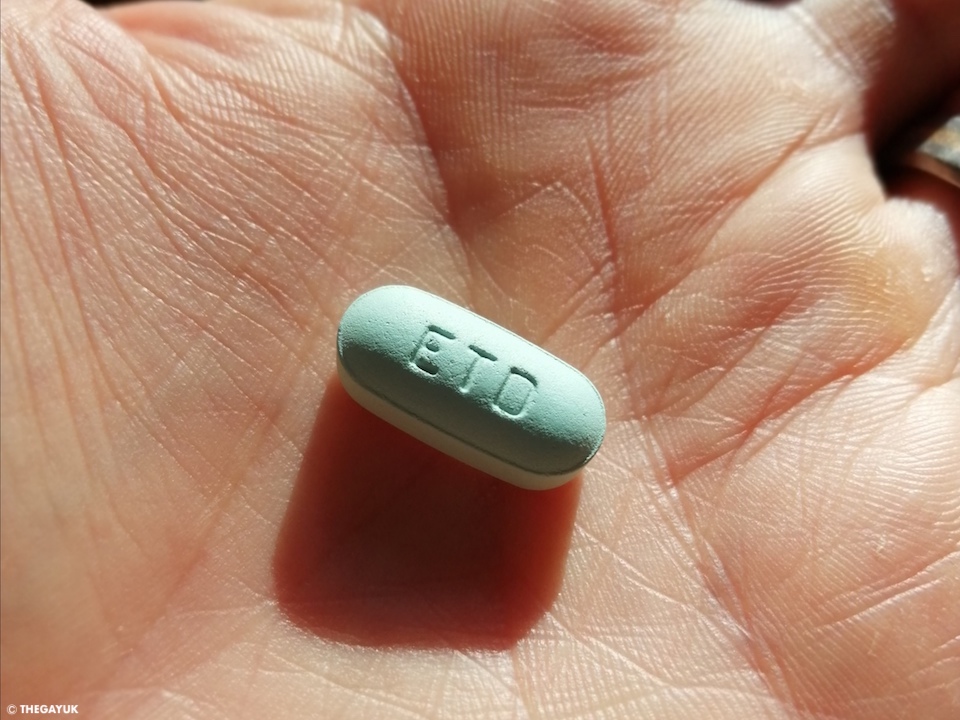
    PrEP comes in the form of a single pill to be taken as prescribed by a doctor.

    Green added,

    “We understand that COVID-19 is putting pressure on all parts of our health service. However, despite today’s announcement, we are facing an imminent and unacceptable gap on PrEP access in England. We know of instances where people waiting for PrEP have contracted HIV, which unacceptable and cannot continue. Immediate work needs to take place with clinics which are currently at capacity for gay and bisexual men and a timetable must be set out for when uncapped access will be made available across all parts of England.

    “Like everything that’s been achieved since the start of the HIV epidemic this commitment on uncapped PrEP access has been hard fought for. We would like to pay tribute to everyone who has raised a placard, written to their MP, campaigned on social media and helped to move us to where we are today. It’s amazing what can be achieved by HIV organisations and activists working together.

    ’Today’s announcement also underlines the urgency for the Government to release details for local authority public health budget for the delivery of vital sexual health services from April – which is now a matter of weeks away. These sexual health services will be the bedrock for fair and equitable access to PrEP.”

    There must be a ‘seamless transition from trial to full provision’

    On the challenges ahead, Green added,

    ‘This isn’t the end of what’s already been a very bumpy road and we will continue to strongly hold the Government to account on its promises and timetable to ensure consistency of access for PrEP users. That’s because there must be a seamless transition from the trial and no gap in PrEP provision for those who are accessing it.

    ‘There is also a lot of work to do to ensure PrEP isn’t just seen as something for gay and bisexual men and that its clear benefits reach other groups affected by HIV, including women, trans people and BAME communities. As the country’s leading HIV and sexual health charity, we’re fully committed to playing our role to ensure no-one is left behind when it comes to PrEP because we’re not making real progress if it’s not felt by everyone.’

  • Limiting PrEP is holding us back in the fight to end new HIV transmissions

    Limiting PrEP is holding us back in the fight to end new HIV transmissions

    edf

    The fight to end new HIV transmissions in England and Wales is being severely limited according to the Head of Policy, Debbie Laycock, at the Terrence Higgins Trust.

    Although there are plans to make PrEP more widely available from April, Laycock says that the “continued lack of detail from Ministers about what a national programme will look like” gives the charity, “serious concerns”.

    In a statement, Debbie Laycock, said,

    “PrEP stops HIV and limiting access is holding us back in the fight to end new HIV transmissions by 2030. News that the Government plans to make PrEP routinely available by April is long overdue but we have serious concerns about the continued lack of detail from Ministers about what a national programme will look like.”

    As it stands, there is a limited medical trial in England and Wales for those at risk of contracting HIV. These trial places are very limited and many people, particularly gay and bisexual men have been denied placement or have had to wait on a list until a placement becomes available.

    In Scotland PrEP is available on the NHS.

    The Terrace Higgins Trust is concerned, as local councils, who will most likely be responsible for the drug’s distribution, are under enormous financial pressures since having their budgets slashed by the Conservative government by 25% since 2014.

    The government needs to “put his money where its mouth is”

    Debbie Laycock said,

    “If the Health Secretary, Matt Hancock is serious about championing public health, he needs to put his money where his mouth is and provide councils with the resources they need to make PrEP available.’

    “We’ve seen delay after delay on PrEP and we simply cannot wait any longer. The countdown to ending new HIV transmissions by 2030 has started and it’s time PrEP had a proper home so no one is turned away from this HIV game-changer.’

    What is PrEP?

    CREDIT: © rbhavana Depositphotos

    Pre-exposure prophylaxis, or PrEP, it is a drug treatment protocol using prescription medicine and has been shown in clinical trials to be highly effective in preventing HIV, when taken daily and used in combination with other infection prevention measures.

    The once-a-day pill contains two main drugs (tenofovir and emtricitabine) and is already routinely used in combination with other medicines to treat existing HIV infection, helping those living with HIV to lower their viral load and effectively becoming undetectable.

    Find out about the PrEP trial, click here

  • Homophobes vandalise anti-stigma HIV adverts

    Homophobes vandalise anti-stigma HIV adverts

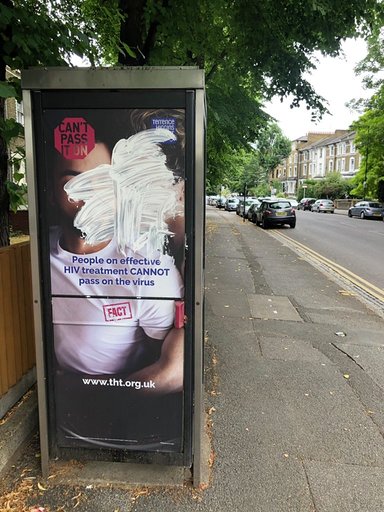
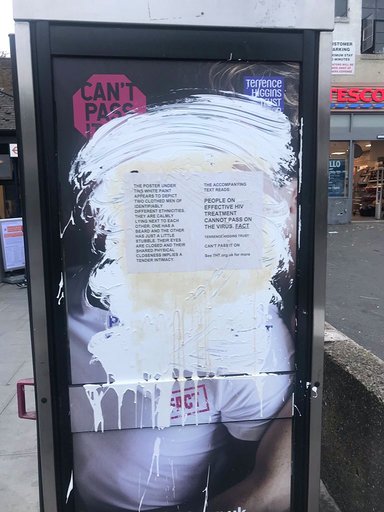
    An advert which depicts two men in a romantic embrace has been vandalised in London, the campaign aims to reduce the stigma faced by men who live with HIV.

    The HIV charity, Terrence Higgins Trust has revealed that an advert it has placed on a phone box in the nation’s capital has been targeted by vandals and defaced. The campaign is promoting the message that people living with HIV and on effective treatment can’t pass it on, if they are on medically prescribed treatment.

    The targeted phoneboxes were located in the London borough of Hackney.

    The poster campaign comes off the back of a nationwide survey commissioned by the charity which revealed that knowledge of HIV remains stuck in the 1980s. It found that just under one in five (19%) Brits are aware that people on effective HIV treatment can’t pass it on – which is the focus of the vandalised posters.

    The charity’s YouGov survey also revealed almost half (48%) of Brits would feel uncomfortable kissing someone living with HIV – even though there is zero risk of transmission through kissing or other day-to-day contact.

    For the past 20 years, evidence has been building to show that the likelihood of passing on HIV is linked to the amount of virus in the blood, also known as viral load. Treatment is deemed effective when it reduces this to undetectable levels. This can take up to six months from starting treatment.

    The landmark PARTNER and PARTNER 2 studies provide the medical evidence that people with an undetectable viral load definitively cannot pass on HIV.

    Can’t Pass It On has been the focus of Terrence Higgins Trust’s messaging during Pride season, including at Pride in London and Black Pride earlier this month.

    Ian Green, Chief Executive at Terrence Higgins Trust, said, “This vandalism is so sad to see. Whether our posters have been targeted because it features two men in an affectionate embrace or because it’s about HIV, we will not be silenced. In fact, it makes us even more determined to get the message out there that people on effective HIV treatment can’t pass it on.

    “Despite this medical progress, public attitudes towards HIV are firmly stuck in the past. That’s exactly why it’s so important to remove the fear and misinformation about HIV by celebrating the fact that thanks to effective treatment people like Sadiq who is featured in our poster, are living normal and healthy lives and cannot pass the virus on.

    “We have been heartened to see supporters offsetting the damage caused to the posters by sharing information about our Can’t Pass It On campaign. If everyone knew the facts on HIV we could not only end HIV stigma, we could end new HIV transmissions.’

  • London’s PrEP trial to be boosted by 60 per cent

     Places for London’s PrEP trial to be boosted by 60 per cent.

    PrEP pills
    (C) marcbruxel Depositphotos

    Today (Friday 12 April) London Councils has announced that an agreement has been reached to increase places on the PrEP trial by over 4,000 places.

    The news comes as over two-thirds of sites in London are now closed to gay and bisexual men. The boost still leaves the capital lagging behind many other parts of England which have agreed to double places on the trial.

    “Withholding access is simply not an option”

    Embed from Getty Images

    Debbie Laycock, Head of Policy at Terrence Higgins Trust, said, “Finally the stalemate on PrEP has been broken and some leadership is being shown. This is a welcome step in the right direction that will provide some relief to those in the capital who have been denied access to the trial. We welcome the acknowledgement by London Councils that PrEP must be available to everyone at high risk of HIV exposure and as such withholding access is simply not an option.

    “However this increase is still far short of the doubling of places we were promised by the Health Secretary Matt Hancock over 70 days ago and it won’t be long before we’re once again seeing gay and bisexual men being unable to access PrEP in the capital.

    “‘London continues to outstrip every other part of the UK in the number of new HIV diagnoses each year so it’s critical a sustainable solution for PrEP is found. Today’s news is progress but this remains a job only half complete as places must be doubled to address the high demand seen for PrEP. We need urgent leadership on this from NHS England, the Department for Health & Social Care and councils across the capital because no one at risk of HIV should be turned away.”


  • The Government want to end new HIV transmission in England by 2030

    The Government want to end new HIV transmission in England by 2030

    The Government says it is committed to seeing the end of new HIV Infections in England by 2030.

    CREDIT: tashatuvango-bigstock

    The UK’s government will today say it is committed to ending new HIV transmissions in England by the year 2030. Speaking at the HIV/AIDS Summit in London, Secretary of State for Health & Social Care, Matt Hancock MP is expected to say,  “So today we’re setting a new goal: eradicating HIV transmission in England by 2030. No new infections within the next decade. Becoming one of the first countries to reach the UN zero infections target by 2030.”

    The Department for Health & Social Care has confirmed that an expert group will now be established to develop an action plan over the course of this year. They have said that prevention will be at the heart of this commitment, alongside measurable action points for each group who are at risk of infection, including gay and bisexual men, Black African and minority ethnic (BAME) groups and for all other heterosexuals, and extensive monitoring of progress.

    This news follows the UK meeting the UNAIDS 90-90-90 targets in November 2018, ahead of the 2020 deadline, with 92% of people living with HIV diagnosed; 98% of those on treatment; and 97% of those have an undetectable viral load, which means they can’t pass on HIV.

    “Government has shown decisive leadership on HIV”

    Ian Green, Chief Executive of Terrence Higgins Trust said, “Today’s commitment is a seminal moment in the fight to end new HIV transmissions in England. In becoming one of the first nations to make such a commitment, the Government has shown decisive leadership on HIV and we applaud them for making this pledge.

    “We now have the tools to end HIV transmissions. Through regular HIV testing, condom use, access to Pre-Exposure Prophylaxis (PrEP), prevention information and advice, and effective treatment which means people living with HIV cannot pass on the virus, we can stop HIV in its tracks. That’s why Terrence Higgins Trust has been vocal in our call for this ambitious but achievable commitment.

    “For England to reach zero new HIV transmissions, the Department for Health & Social Care, Public Health England, alongside local authorities, must now urgently work in collaboration to address some of the most pressing HIV issues. These include stepping up HIV testing to ensure the 8,000 people who remain undiagnosed can get onto treatment, immediately adding more places to the PrEP trial and ensuring sexual health services are properly funded. Without these actions, this commitment simply won’t be achievable.

    “The clock has now started ticking towards the end of HIV transmissions in England. Today’s commitment demonstrates that the Government has listened to our demand for a bold vision on HIV. Now it must act upon our call to ensure services and interventions are urgently put in place to ensure that by 2030 this pledge is made a reality.

  • HIV Infections in gay and bi men plummet by 31 percent since 2015

    HIV Infections in gay and bi men plummet by 31 percent since 2015

    New figures, published by Public Health England (PHE), show a 17% decrease in HIV diagnoses in the UK in 2017 and a drop of more than a quarter in the last two years (28%).

    CREDIT: tashatuvango-bigstock

    However, the new statistics also show that 42% of people with HIV were still being diagnosed late; with heterosexual men and individuals aged 65 and over the most likely to experience late diagnosis.

    HIV diagnoses in gay and bisexual men have dropped by 31% since 2015 and this decline is particularly focused in parts of London. This represents one of the most significant advances in HIV prevention since the beginning of the epidemic, but now we need to ensure we see the same declines in other groups.

    Ian Green, Chief Executive at Terrence Higgins Trust, said, “Today’s drop in new HIV diagnoses among some communities in the UK clearly shows we have the tools to end the HIV epidemic in this country. But, rather than patting ourselves on the back, we need to redouble our efforts, work harder and get to zero HIV transmissions.

    “There is continued progress among some gay and bisexual men, particularly in London, with a 31% fall since 2015. This follows on from last year’s numbers where we saw the first ever decline in new diagnoses among gay and bisexual men.

    “This turnaround in one of the groups most affected by HIV shows what can be achieved by utilising everything we’ve got in the fight against HIV. That includes the widespread availability of condoms, a range of ways and places to test for HIV, early diagnosis and access to treatment, and increasing the availability of HIV prevention pill PrEP. It also shows that initiatives like National HIV Testing Week are working.

    “But we need to work harder and look more broadly to make sure the decline in new diagnoses reaches other groups affected by HIV in all corners of the UK – not just in London and the South East.

    “For example, rates of late diagnosis remain worryingly high with 42% of all those diagnosed being diagnosed late, which is after the immune system has already been damaged. Among black African heterosexual men rates of late diagnosis are now 72% while in those 65 and over it’s 60%, which is unacceptably high.

    “For the first time, there has been a drop in the number of diagnoses reported among heterosexuals not from black African or black Caribbean communities with a fall of 20%. This is welcome news but more needs to be done to understand what’s behind this decline and lessons learned to ensure the number of new diagnoses continues to fall.

    “We welcome the inclusion of women only data tables for the very first time. But while around a quarter of new diagnoses continue to be among women, more needs to be done to ensure women are invisible no longer when it comes to HIV and properly included in HIV prevention campaigns. Similarly, this year we also have trans-specific data for the first time, which is so important in ensuring we have an accurate picture of how this group is impacted by HIV.

    “We must also ensure Relationships and Sex Education has a strong emphasis on sexual health and HIV when it becomes compulsory in schools in England from 2020. Currently, more than one young person a day is diagnosed with HIV in the UK and that’s one too many. We have the tools to prevent HIV but we need to ensure our young people know what they are and how to access them.”

    On the reason for this continued decline, Ian Green added, “HIV treatment has undoubtedly played a significant role in this decline. Now, when someone is diagnosed, they are encouraged to start treatment as soon as possible. This enables them to more quickly achieve an undetectable viral load, which means HIV can’t be passed on.

    “Testing options have also improved in recent years and now HIV self test kits, where you test at home and get a result within 15 minutes, are sold on the high street. We’re also offering these tests for free to people from the communities most affected by HIV. But testing at home isn’t for everyone and it is vital we have fully funded and easily accessible sexual health services for those who want or need a face to face service.

    “PrEP is a game changer for HIV prevention and almost 100 per cent effective when taken as prescribed. PrEP’s portrayal in the media means it is all too often seen as something only for gay men – but that certainly isn’t the case and we need to ensure it is fully utilised by all groups affected by HIV, including both black African people and trans communities.

    “Although PrEP is available on the NHS in Scotland and via an uncapped pilot in Wales, it is only available in England as part of a 10,000 place trial and we know that many sites have filled all their places for gay men and are having to turn people at risk of HIV away. In light of today’s data, we’re continuing to strongly call on NHS England to play its part in getting to zero HIV transmissions by making PrEP available to all who need it on the NHS in England.”
  • Terrence Higgins Trust slams the Daily Mail for misinformation, myths and stigma around PrEP

    “we’d love to have a cuppa to explain”

    PrEP pills
    (C) marcbruxel Depositphotos

    Ooo the sass coming from the Terrence Higgins Trust’s Twitter feed, the UK’s leading HIV charity, was palpable and we love it. In the tweet, they slam the Mail Online for fuelling misinformation, myths and stigma surrounding the use of PrEP.

    So far the journalist who worked on a story nor the publication itself has replied to have a cuppa with THT.

    In the article, Mail Online columnist Ross Clark, reveals that after a recent visit to his GP for a suspected hernia, she was unable to refer him to have an operation or to a specialist due the fact that he wasn’t in pain and didn’t have any heavy lifting in his job, the GP told him he “wasn’t bad enough to qualify for funding under new NHS guidelines”.

    However, later on in the article, he draws comparisons between what the NHS could pay for and what they couldn’t. PrEP and transgender surgery was, it seems, central to his argument.

    He wrote, “There is the £22 million a year being spent on transgender surgery, at a cost of £20,000 per patient. There is £730 million a year being spent pumping drug addicts full of Methadone — a heroin substitute which is supposed to help wean people off that drug, but which is itself addictive.

    “The NHS has started, too, to prescribe PrEP — a drug which cuts the risk of HIV transmission in gay men who have sex without a condom.

    “It is prescribing the drug —which costs £400 a month for a single patient — in spite of warnings that it will be encouraging risky behaviour, and it could increase other infections such as syphilis and gonorrhea [sic], against which PrEP offers no protection.”

    “Cost-effective”

    Speaking to THEGAYUK.com Liam Beattie, PrEP policy lead at Terrence Higgins Trust, said, “There’s no place in the media for articles filled with misinformation, myths and stigma-fuelling. Ross Clark’s piece on PrEP is highly inaccurate and we would love him to come in to Terrence Higgins Trust to find out more about the realities of PrEP. Because there’s nothing controversial about PrEP – it’s highly effective at preventing HIV, cost effective and will ultimately stop many, many people from becoming HIV positive.

    “Currently PrEP is available in England via a 10,000 place trial but we want to see a national PrEP programme in England to ensure it’s made available to all who need it”’

    There’s been no evidence to suggest that users on PrEP are being any more “risky” than those who currently aren’t on PrEP.

    Losing Advertisers

    Recently the MailOnline lost a number of high-profile advertisers when companies started to pull out of contracts with the publication after a successful awareness campaign by pressure group, Stop Funding Hate. Eventually, the newspaper removed advertising from many of its columnists including Richard Littlejohn.


  • Prince Harry awareness campaign boosts HIV self tests

    Prince Harry awareness campaign boosts HIV self tests

    Prince Harry’s HIV awareness campaign has led to a spike in ordering at-home HIV self tests.

    CREDIT: Facebook Live


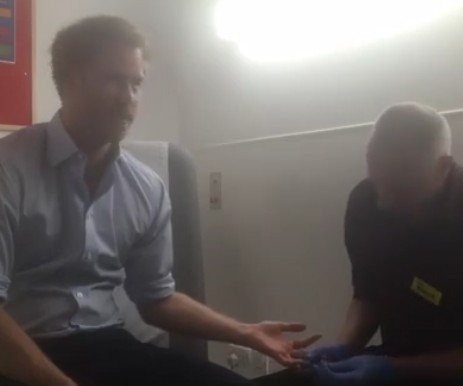
    Prince Harry‘s campaign to create awareness on the importance of HIV testing has led to a dramatic increase in at-home HIV self test kits ordered from one of the UK’s leading HIV charities, Terrence Higgins Trust (THT).

    The Prince made global news when he took a HIV test live on Facebook’s Live Platform.

    THT launched an innovative pilot offering people the chance to find out their HIV status privately – in their own space, in their own time, on their terms – by taking a HIV self test and getting their results in just 15 minutes.

    Over 4750 BioSure kits were sent out by THT before the pilot ended.


    Making HIV Tests Accessible

    Dr Michael Brady, Medical Director for Terrence Higgins Trust, said,

    “We know that one in six people living with HIV do not know that they have it. Testing puts you in control and, thanks to treatment, will stop you from getting seriously ill, enable you to live a normal lifespan and prevent you from passing the virus on to anyone else.

    “That’s why it’s so important that we continue looking for new ways to make HIV testing more accessible to those most at risk, and why it’s fantastic to see the very tangible and immediate impact of Prince Harry’s support for HIV testing.”


    Orders for the kits came in from across the UK, including Guernsey,  Northern Ireland and the Isle of Man, with the average age of those ordering coming in at 31-years-old.


    BioSure Self HIV Test


    ALSO READ: At home HIV test reviewed by our Editor


    Sharing Results.

    Half of those who ordered kits from the pilot scheme shared their results with THT, twenty-six of those who order the kits told the charity that they had a positive result. Each of these respondents got a personal call from Terrence Higgins Trust to discuss their result, provide support and ensure that they know how to access HIV care.

    Chris, who ordered a kit said,

    “The HIV home tests came within a few days and I had my results no longer than 30 minutes after opening the package. The instructions were clear and understandable, with the online step-by-step video explaining even further. Nothing at all could be misunderstood.”

    The tests, which are normally £29.95 to buy from BioSure, were provided free of charge during the pilot and funded by Terrence Higgins Trust, but people receiving a test were given the option of making a voluntary donation to fund a test for someone else.

    The scheme was made possible thanks to funding from the Terrence Higgins Trust Lighthouse Fund and BioSure.

    You can now order self testing kits from Amazon.

  • Service helping people living with HIV get back into work relaunched

    The Terrence Higgins Trust has relaunched its Work Positive campaign which aims to help people living with HIV back into work.

    CREDIT: ©-monkeybusiness-Depositphotos
    CREDIT: ©-monkeybusiness-Depositphotos


    The UK’s biggest HIV charity Terrence Higgins Trust has relaunched a service that aims to help people living with HIV in London, Essex, Brighton, Shrewsbury and Cambridge to get back to work.

    According to the charity, 25 per cent of people with HIV are out of work, and the Positive programme aims to provide work experience, mentoring, peer support, employment coaching and training for people with HIV who have been unemployed for two years.

    With funding from the Big Lottery Fund the service will relaunch for the sixth year. It is accepting application until 7th August

    Micael, who completed Work Positive last year, said,

    “I’d tried other back to work schemes before but I wasn’t getting anywhere and when I left for the day the support stopped, but with Work Positive I was made to feel like a real person, who could contribute to society.

    “Ruth gave me the opportunity to get out and get work, but the programme also gave me the wider support I needed to live a happy and healthy life, like helping me eat well – and on the morning of my graduation I was offered a paid job!”

    Ruth Burns, Work Positive co-ordinator at Terrence Higgins Trust, says,

    “The Work Positive Programme has gone from strength to strength over the last six years. Every year we see our participants transform into confident professionals who are a real asset to the workplace.

    “We want this year’s scheme to be just as successful, and we encourage anyone with HIV who feels they need a boost onto the career ladder to apply.”