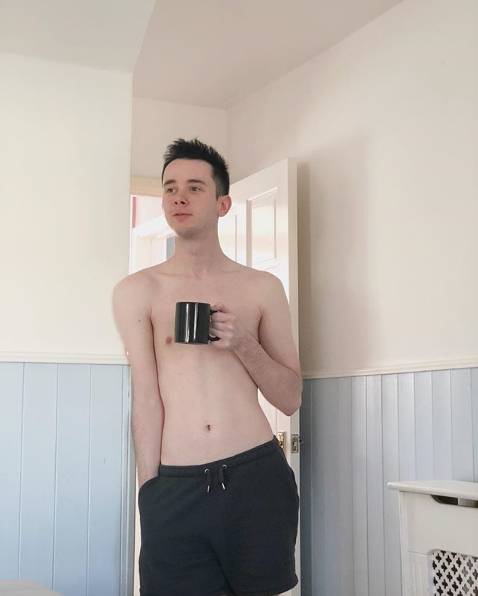
Multiple factors can contribute to the development of the body image, but the biggest influence seems to come from the advertising industry, which unapologetically creates the need on the consumer to look like the ideal men or women portrayed in the media. Smoothing skin, erasing wrinkles, enlarging muscles, slimming waists… All this has become the norm in advertising. These images don’t reflect reality. This is just a convenient strategy designed to sell a product. Yet, from a younger and younger age, people are aspiring to these biologically impossible ideals. And I was no exception! Looking at these distortions of reality, I felt ugly and had the same desire as everybody else to look just as perfect as these models. But I eventually realized that this way of thinking can lead to serious body image problems. People who are unhappy about their bodies can develop eating disorders, turn to diet pills or steroids, or try cosmetic surgery and Botox injections. And I fear that, until the public responds more favourably to images of real people with real bodies, very little is going to change. This is why I decided to stand up and share my belief that everyone has the right, whatever their size or shape, to feel happy about their looks. I defend that a diversity of body shapes and sizes needs to be included in magazines, advertising and on the catwalk URGENTLY!
A while ago, I discovered Elska Magazine. Created by Liam Campbell, Elska is a bi-monthly male photography publication, whose first edition was released in September 2015.
Its name means “love” in Icelandic.
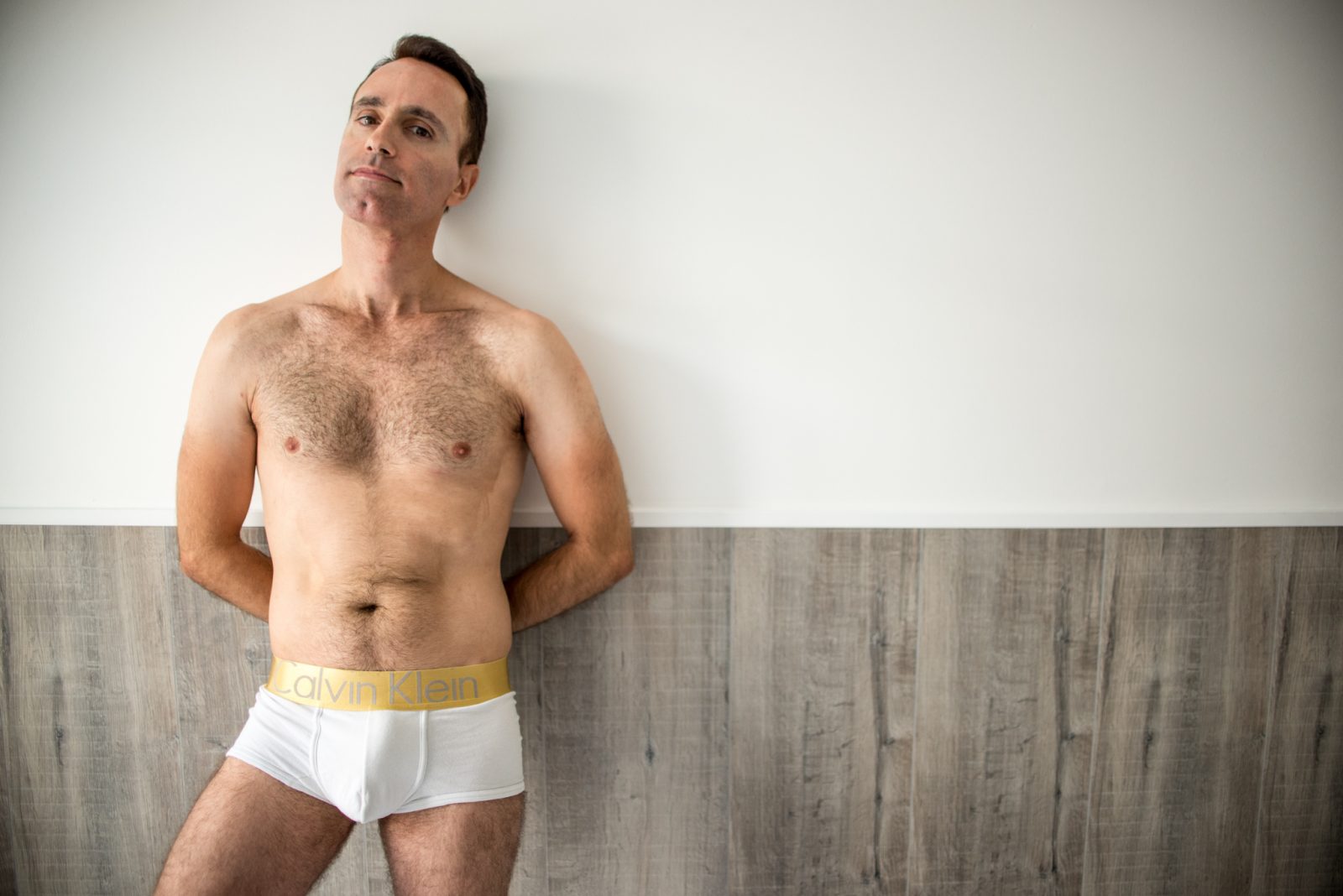
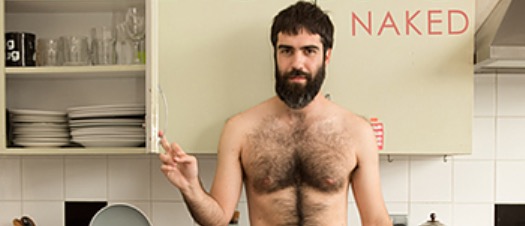
One of the main aspects which differentiate Elska from other (gay) photography-related publications is that it does not feature perfect models, but instead focuses on real people with their “imperfections,” presenting real-life people and their stories, and providing a glimpse at queer men and community around the globe. Each issue is shot in a different city. When I saw an ad looking for real people to model for the Amsterdam issue, I knew immediately that this was an initiative I needed to support. And this why, with no shame or fears, I undressed and posed for Elska. I might not have the perfect body (at least according to the advertising industry), but this is me, I am real, and I learned to love myself and to feel comfortable in my own body. And now I am sharing it with you!
Elska Amsterdam, the latest issue of Elska magazine, is out now and includes a nice selection of ordinary gay locals and their stories. Sadly, my photos didn’t make the cut for the main magazine, but they are featured in Elska Ekstra, Elska’s companion magazine with behind the scenes tales, outtakes, extra stories, and extra boys. Enjoy it!
As a famous drag queen would say: “If you can’t love yourself, how in the hell are you going to love somebody else?”
Now, we all know no body is a wrong body. Body positivity is hot, and knowing what you’ve got and flaunting it is the best way forward in any case. Still, if there is one thing big-mama Eureka O’Hara has taught us it is the importance of proportionising.
So, if you’re looking to “Proportionise (TM)” properly for your body type then listen up, as here are five tips to a slimming style for any guy.
1 – There’s Truth To The Stripes
Okay, it’s something we have heard forever – like, I literally remember being a closeted tween and hearing Trinny & Susanna discussing this. Despite their sometimes bad hype, vertical stripes can still do a lot to slim down a figure and elongate the torso. (It’s pretty simple stuff when you think about it, really – anything you wear that will pull the eye up and down is going to make you look taller and slimmer compared to something that will force the eye side to side.) Even better, stripes are still in trend and you won’t struggle to find an option to suit any mood, season, or occasion. #trustthestripe
It’s another simple one – I bet you can see where this list is going now – but just try to match the colour and tone of your footwear to your trousers as much as you can. Sure, this gets more difficult (if not impossible) as the warmer weather hits and the short shorts reemerge. So, just keep it in mind for when you do indeed have no choice but to wear trousers – or even for those days when there is just a bit of a cold snap in the air. Brilliant options here are Chelsea boots or hi-tops, basically, any footwear that can slide under the bottom of your trousers instead of leaving an unsightly slither of pale ankle in between the trou and the shoe. The “Science” here works in the same way as the striped shirts, and by creating a constant block of colour from the waist down your legs are elongated and as a result, also appear slimmed down to boot.
Now, this is a bit of a difficult one, as I know how tempting it is to opt for the comfy, oversized, hide-all option that is an oversized Tee or Sweatshirt. But trust me, that Moomoo won’t do you no good, Mama. While it might seem counterintuitive when dealing with slimming down a larger framed physique you need to opt for the more fitted options – and this is the case whether choosing jeans, tees, sweatshirts or jackets. Just think – extra bulk will cause extra bulk, and that’s the last thing you want to do, right?
Go for Big and Tall sections if you struggle to find a decent fit, but stick with their versions of slim fits to taper everything in as much as possible.
I know, I know, we were just talking about how working the matchy-matchy look can slim you out, but this is different, so give me a chance. Matching tops to bottoms, and trousers to shoes sure can work to slim out a figure, but if you’re wanting to push the boundaries and work on that adventurous nature of yours then there are always options. If you can opt for a light jacket or shirt be sure to leave it open with a contrasting colour or print layered beneath – imagine a black jacket with a white tee, it’s pretty simple (again) but that strip of white down the centre is really going to stretch out the torso and do all the work for you. (Just remember, don’t add bulk – stay fitted and light and all should be okay.)
5 – Finally, The French Tuck, It’s Not For Everyone.
While Queer Eye may be an obvious fan favourite for all (and rightly so IMHO) the French Tuck is not. It’s as simple as that, really. It’s a style choice made in almost every episode that quite often makes me want to tear my own hair out. The thing is, yes The French Tuck is a great option to add borders and dimension to a look – and it can honestly completely transform the appearance of a plain white Tee. However, if you have even the slightest tummy this may not be the way forward for you. On a plumper torso, something like the French Tuck can just work to define the problem area even more. That being said don’t rule it out just yet, as obviously the great Tan France does know his stuff. Instead, try it out before you leave the house, then stop, stare in the mirror and really assess whether it works for you and your body type or not: it will work for some, but it’s definitely no magic fix-all. Take a look and trust your gut … You’ll know.
Former Boybander, Ben Adams from late 90’s band, A1, just revealed that for one particular photo shoot he was apparently “too chubby” to take off his vest top, while the rest of his band were photographed without their tops on. This, despite Ben looking as hunky as the rest of his bandmates.
Taking to social media, Ben shared a throwback picture of him and his A1 bandmates, with him the only one photographed with a top on. The singer was posed with a white vest top on and placed slightly behind Christian.
Ben Adams was one of the lead singers of the popular British/Norwegian boyband who had huge hits with a remake of 80’s classic “Take On Me” and “Same Old Brand New You”.
Speaking about the throwback picture Ben wrote how he wasn’t allowed to take off his top because he was “too chubby” writing, “Guess who was too ‘chubby’ to be allowed to go without a vest”.
I’ve always had a tough relationship with my body. Being disabled meant that I have always looked different to everyone else.
For example, we are born with 7 muscles in our necks. I was born with 3 which are all fused together in a ball. This means my head is slightly wonky. Other than neck pain, this doesn’t directly affect my life (with the exception of the canvases in my flat looking wonky). That knowing of being different, not looking ‘normal’, immediately creates an imbalance with you, like you’re never quite on a level playing field with everyone else.
For me, this manifested into thinking I was ugly. I remember from being a young kid and every time I would throw a penny in a fountain, blow out my birthday candles or have a loose eyelash; my wish would be the same. I would wish I looked like everyone else.
Now, don’t get me wrong, I have amazing parents and family who would always tell me how beautiful I am. I never felt like I wasn’t loved. I was loved by everyone… just not myself.
I then took these feelings and ate them. I would buy multiple packets of cookies and scoff them all at night when everyone was asleep. They would be hidden under my bed, behind my wardrobe, in my school bag. And so, naturally, I gained more and more weight. This was never a problem for me until I had to move school aged 13. On my first day, I walked into a classroom and saw the most beautiful person I’d ever seen. I remember he had these big blue eyes and I still recall feeling like I was going to throw up. I quickly became obsessed and made it my mission to be his friend.
It worked. We became close friends and eventually lovers. Privately, he was always really sweet. We’d have sex, kiss, cuddle and he’d tell me how much he liked me. Publicly, he’d point out if I got sweaty, mock me loudly if I was eating chocolate and I was always the butt of his jokes.
I took it all with a smile because I loved him.
I went on my first diet aged 14. I told my parents I would be cooking for myself and would make small meals full of vegetables.
I began following workout DVDs. I’d do everything I could to lose weight, fast.
My relationship with him lasted 3 years and I spent the entire time willing to do anything for him to love me.
It was never going to happen, he was confused about his sexuality and didn’t know what he wanted. This made him both physically and mentally abusive towards me. He would text me if I posted a photograph online saying I looked huge or, if I changed my profile picture on MSN, he’d tell me how ugly I looked in it.
I allowed this because I felt grateful he even paid any attention to me. He and I were always off and on and, in-between our off times, I got attention from other people in my year group. I had lots of sex in High School (sorry, Mum!) but this never boosted my body confidence because I believed everything my boyfriend was telling me, that I was ugly and fat and that nobody really wanted me. I was only good for sex.
We broke up at 16 when I decided to stay in Sixth Form and he went to a different college. Free from his clutches, I started to feel good about myself again. I also ate like crazy and gained my weight back.
Then I fell in love for a second time.
He was a nerdy guy that I struck up a friendship with when I noticed he sat alone. He was funny, sarcastic and he had a beautiful smile. I was smitten but it was somewhat unrequited. I decided the only way to make him like me was if I lost weight. Yet again, I went on a diet. This guy was always very kind to me. He never commented on my body or my weight. He never made me feel ugly. Yet, I still took it upon myself to assume I was.
This pattern has carried on throughout my life. My confidence in myself and my body has always been based on men. If men paid me attention, that meant I was attractive.
At University, I found myself in a long distance relationship with someone I’d spoken with online since I was young. He was funny and interesting. Unfortunately, he was also a heavy drinker. When he’d drink, he’d become abusive to me. He’d go on a drunken Skype rages about how fat I’d gotten since I started University. He wasn’t wrong, I had gained the typical Freshers 15 and then some. This time, I didn’t diet. I just carried on eating. And eating. I would binge on takeaways and booze and cakes. Once he and I broke up, I poured my affection into food instead. I would go on websites like FitLads but it’d break my heart when people didn’t message me first. I always felt I knew why: I’m too fat and ugly to be loved.
This feeling, like I wasn’t enough like I didn’t even deserve to be loved carried on right through my 20s. Until last year. I met someone. It wasn’t a love affair, we only kissed once, but I never felt self-conscious the entire time I was in his presence. He was more interested in me, as a person. We’d talk about our favourite TV shows, we’d laugh at stupid jokes and I never once felt I should be grateful he paid attention to me (even though he was SO gorgeous). I felt on top of the world that maybe, just maybe, someone would like me for me. Could it be possible? Am I actually deserving of being loved? I came to the realisation that I was locked up in a jail cell whilst holding the key the entire time. This boy hadn’t done anything special to make me feel this way. It was how I thought about myself. At the same time, I also realised that I had become extremely unhealthy. I was tipping the scales at 20 stone, I was eating 3 takeaways a week. I was struggling to breathe, I was sweating constantly. I wasn’t just overweight but morbidly obese.
I have since lost over 5 stone and what has been interesting is how much of my lack of confidence is still to be shifted too. I feel more confident in how I look on the whole but I still carry those same fears. I may be thinner but am I actually pretty? Is my hair too thin? I’ve got stretch marks from losing weight, will anybody want to look at me? I now realise that I still have a long way to go truly loving myself and my body. But it’s happening bit by bit. With every selfie, I post where I actually smile because who cares if my teeth look a bit weird? With every crazy outfit, I wear because I’m still working out my style. I do things for me, I dress how I want to dress because I like it. And when I look in the mirror, I feel pride. I have moments of weakness, sure. And there are definitely still issues I have to face in that I still attach some of my self worth to the approval of men. But I’m working on it. Self-confidence is a matter of both mind and body. All I need is time.
So, here’s my advice. Tell the guy you like, you like him. Compliment someone on their outfit. And compliment yourself. It’s so easy in today’s gay culture to idolise “traditional” beauty but most of us don’t have the six pack and the thick hair and the flawless skin.
The first step to accepting yourself is accepting we’re all different. And damn it, being different isn’t a flaw… it’s a beautiful gift.
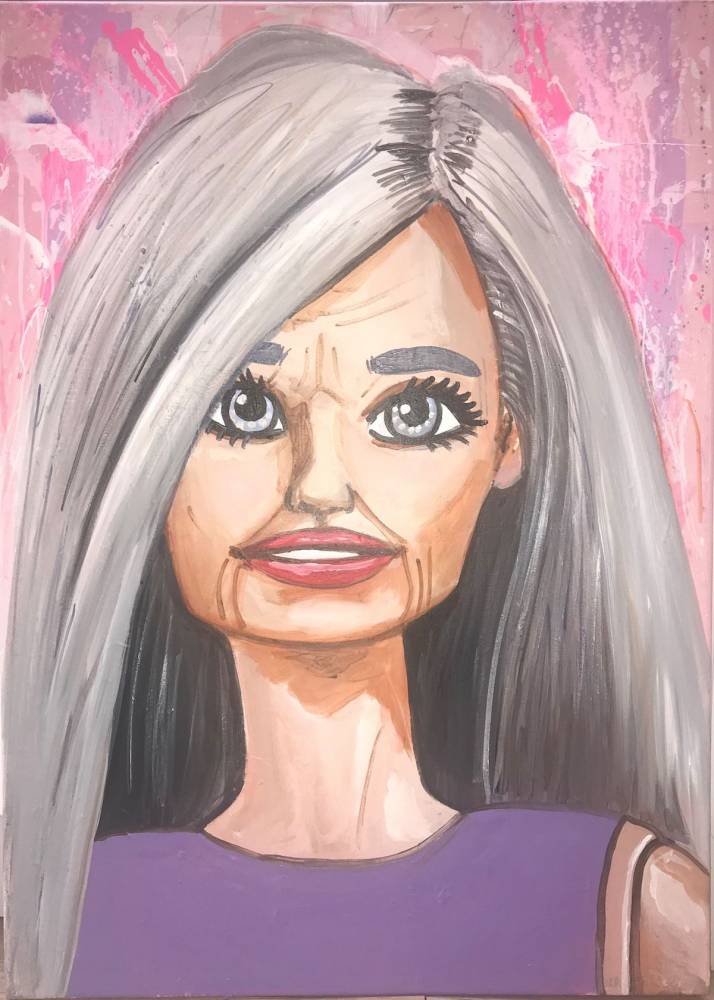
It’s Barbie Bi**h!: With Barbie’s 60th birthday approaching on the 9th of March. London based artist and illustrator Phaedra Peer has captured what Barbie would like today if she was a real woman.
(C) Phaedra Peer
Phaedra has created this painting as a way of dispelling the myths of celebrity and model perfection. She highlights with this piece the fake and unrealistic representation of perfection within our society. A representation that has become more prevalent with the rise of social media platforms such as Instagram. Let’s face it who hasn’t used Face Tune to iron out last night’s mistakes in Heaven…
We all now seem obsessed with the concept of being “perfect” but this concept isn’t realistic. “Perfection” is unattainable and that isn’t a bad thing. Phaedra emphasises that we should celebrate natural beauty and diversity, not just the blonde, tanned and blue-eyed doll.
Now you may be thinking what has Barbie got to do with the predominantly male readership of THEGAYUK?
“…increasingly men are being put under the same pressure of being “perfect”, as our female counterparts. Whether you’re gay, straight, bi or anything in between, this pressure applies.
Well to put it bluntly for every Barbie, there is a Ken and increasingly men are being put under the same pressure of being “perfect”, as our female counterparts. Whether you’re gay, straight, bi or anything in between, this pressure applies. If I scroll down my Instagram feed now, I will be swamped with pictures of fitness models and influencers with Adonis-like bodies and flawless skin.
Now the fact is, these people don’t look like this in real life. By no means am I bashing fitness models or influences and I’m not saying they are not attractive people. What I am saying though, is that the perception of these people given through social media is highly edited. Working in this industry, I know that these photos are edited and the images are composed in a specific way, with specific lighting. This is all done to create the desired effect for the shot and portray a specific and often unrealistic representation of reality.
So, what should we take away from this representation of Barbie?
We should remember that beauty comes in all shapes and forms. That there is no such thing as “perfection” and we should all really aspire to be people not because of their looks but for their actions.
Internet gossip and Celebrity Big Brother star Perez Hilton stuns fans with body transformation pic.
The Celebrity Big Brother star, Perez Hilton has bravely showcased his body on Instagram after embarking on a healthy living routine.
The dad of three, told fans that he had second thoughts about positing the picture because in his mind he had “made no progress” but when he looked back at last week’s photo, he recognised that he had made an improvement.
He wrote, “I almost didn’t post this today because in my mind I’ve made no progress this past week, but then I compares this photo with last Sunday’s and I’m so glad I took this! Even the smallest bit of improvement is a big win!!!!”
https://www.instagram.com/p/Bujn24pHu5u/
Last week, the world’s most famous Internet gossip, who has recently gone through a hair transplant procedure took a photo of his efforts last week, but admit because of the transplant and family vacays that he had taken two weeks off from the gym.
https://www.instagram.com/p/BuRT2tbngGd/
Fans were quick to congratulate Perez on his health-kick, with one saying that they love his attitude, while another wrote, “Looking masterful Daddy!!!”
Another fan added, “You look great Perez! And I always say the older you get the harder it is to get back into shape and at least you are trying! So good for you!”
Another remembered, “U’ve done it before! U can do it again!”
In 2015, Perez revealed a huge weight loss, where he lost an incredible 70 pounds.
The Good Place star called out cosmetics company Avon for a “gross abuse of the body positive movement” and they listened and apologised.
Well known for her campaigning on body positivity issues, Jameela Jamil recently took cosmetic giant Avon to task over what she called “gross abuse” with some of their advertising.
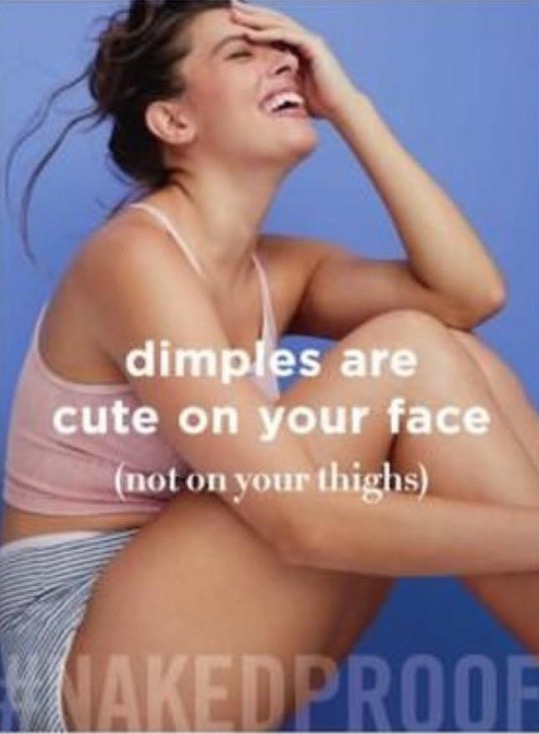
Jameela was criticising the Avon #NakedProof campaign which focussed on cellulite on women’s thighs. One of the main images had the caption, “dimples are cute on your face, not on your thighs”.
Railing against the campaign, Jameela wrote, “And yet EVERYONE has dimples on their thighs, I do, you do, and the CLOWNS at @Avon_UK certainly do.
She then called upon the cosmetics giant to “Stop shaming women about age, gravity and cellulite” adding, “they’re inevitable, completely normal things. To make us fear them and try to “fix” them, is to literally set us up for failure”
She said that Avon, or indeed any other publication should be ashamed to run this sort of “abusive advertising” adding, “My timeline is full of women saying adverts like these are why they are afraid to be naked in front of lovers, or to wear a swimsuit. You are being robbed of your money and self-esteem.”
Avon UK wiped their hands clean of the campaign saying, “Naked Proof is not an Avon UK Campaign and will not be featured in any of our materials.”
However, AvonInsider, the official account for the US arm of the company did eventually come back to star saying it had “missed the mark” with its messaging, saying, “We have removed this messaging from all future marketing materials. We fully support our community in loving their bodies and feel confident in their own skin.”
The actor, thanked the company, calling their reply “progress” before saying, “But also @AvonInsider please don’t promote a brand that markets itself as “Naked Proof” again. None of us need to be told that anything should stop us from feeling good naked.
“It’s the most natural thing. There is nothing wrong with scars and marks and bumps. We are human.”
Help us deliver unique, usable and reliable journalism that supports the gay, bisexual and curious community of the United Kingdom. Can you help protect LGBT+ media? Publishers like us have come under severe threat by the likes of Google and Facebook. The problem is that advertisers are choosing to put their money with them, rather than with niche publishers like us. Our goal is to eliminate banner ads altogether on site and we can do that if you could pledge us a tiny amount each month.
We’re asking our readers to pledge just £1 per month, more if you’re feeling swanky. You can stop payment at any time.
It’s quick and easy to sign up and you’ll only have to do it once.
Once again Instagram deletes another account which depicts the nude male body.
Yesterday it was reported that the world’s biggest picture sharing site, Instagram, had banned Meat‘s latest account – which at the last count had garnered 5000 fans, the previous one, (yes they’ve had two banned) had 15,000 fans. What was their crime? Allegedly falling foul to that cardinal sin… displaying naked men. Okay, you say, it’s right there in the community guidelines, “no nudity” however these pictures had a whopping great modesty circle in front of anything that might be even slightly racy.
This isn’t the first time that the Facebook-owned company has deleted pictures of the male form. In the past, it has deleted the Warwick Rowers and in August it deleted Greeks Come True. There was not one penis on show. These are beautifully crafted pictures of men, who yes, are naked, but where you cannot see anything that would give you tingles downstairs. Pornographic? No. Homoerotics, hell yes, but there’s a huge difference between porn and eroticism.
Meat is different though. It’s a breath of fresh air – the guys portrayed are unphotoshopped, average bodies. It shows that even when you don’t have a six-pack you can still appear on the front of a magazine or calendar.
Recently THEGAYUK.com polled over 300 of its Twitter readers about whether they were comfortable being naked in the presence of other people. Over half of us answered in the negative. Over a half of us are awkward about our natural state why is that?
And I’m not hating on you six-packers. Hey, the true is I’m jealous. Aren’t we all a bit envious of those who can obtain and maintain a single digit body fat percentage? But I will just never be that guy.
“The thought that I was fat kept me in a perpetual state of eat, feel guilty, purge and workout”
I have always struggled with my own perception of my weight. The thought that I was fat kept me in a perpetual state of eat, feel guilty, purge and workout. At one point, in my attempt to have what I thought was a “good body” I would throw up everything I ate and go to the gym twice a day. Needless to say, despite being, what I now see as thin I could only see body rolls. Even now, over a decade on, I still find myself with fingers down my throat with “WTF are you doing” going round and round in my head.
What was / is the cause of my insecurity and clearly a huge majority of us?
I’m not going to sit here and solely blame the media because I’m part of it (there’s my disclosure). I’m very aware of the pressures upon us in the media to get clicks, to shift copies, to adhere to the old adage that sex sell, or at the very least the notion of what sexy is – sells. We’ve been accused in the past of posting only certain types of male images – but let me tell you, I see the analytics and despite the protestations from some audience members, pictures of different bodies just don’t fly. Why is that?
For the record, I’m not audience blaming either.
Have we all been programmed so hard to only see slim, white, blonde boys as sexy? Perhaps it’s time for all of us to shift the view of what is sexy.
That’s why I love the idea behind Meat and the Naked Rugby Players and even Channel 4’s controversial dating show, Naked Attraction. They are showing that the typical body is beautiful. Bellies, love handles and hair here and there is normal and wonderful.
The likes of Meat and Naked Rugby Players (above) are changing the game.
“We’re bombarded with images that prod at the subconscious saying “you’re not thin enough” and we’ve got to change the narrative.”
Body positivity is a hot topic right now and it should be. If over half of us aren’t happy with our naked bodies there’s something not right. There is a strong link between our bodies and our mental health. Many of us are on endless diets and we aren’t just yo-yoing on weight. We’re playing games with our mental health each and everytime we step on those scales.
We’re bombarded with images that prod at the subconscious saying “you’re not thin enough” and we’ve got to change the narrative. We’ve got to expose ourselves to different standards of beauty. We’ve got to relearn that our normal, unretouched, imperfect bodies are actually perfect – and platforms like Instagram have to start playing their part.
As a twenty-three-year-old twink, you might think life in gay culture is bliss. But the rise of popularity on Instagram has given rise to topless men with muscle, unabashedly showing off their abs, pecks and gorgeous tans.
CREDIT: Adam Rickitt / Instagram
I’m a young man that likes what he likes, and unfortunately, I’m a sucker for a handsome man with a six-pack. I follow a lot of men on my feed, and whilst I know they’re unattainable, it’s still fun to look.
But in the wake of the #MeToo movement, bringing awareness to sexual assault and harassment to women, I begin to wonder if objectifying these men is going to become problematic. Aren’t we just as bad for lusting over images of topless men? Of course, the main difference here on Instagram is these men are living their best lives, and they’re uploading photos for the endless stream of attention they receive from their thousands of followers, or so we’re led to believe.
The constant stream of cocktails on the sandy beaches of a faraway country, of sunglasses and shorts whilst I, watch a snow storm, ignites not jealousy, but instead a sense of longing. According to a recent survey, Instagram was rated the top social media app that is bad for one’s mental health. Is it any wonder that a discovery like that has been found?
We so desperately want to quit our mundane, often dead-end jobs, for a life that seems so much better. So desperate are we that we forget that social media shows us only the good. Who uploads a photograph of them with a massive spot, dribble down their chin and from a bad angle?
Instead, we plump for Valencia filters, with airbrushed skin and cleverly crafted digital tans. The social media culture we live in has given us the best of the best, forever making us feel like we have to keep up. When we can’t, we sink lower, finding the ebb of sadness.
Goodness, we’ve got a bit sad here, haven’t we? For a first article, you’d think I’d show you my best side! But then I’d be playing up to the picture-perfect lifestyle you see plastered all over Instagram.
For men, it’s hard to discuss body confidence issues. It’s not talked about often, and so we tend not to mention it. I’m one to say I have body confidence issues, and I’m sure there would be others out there that say I have no right to be self-conscious about the way I look. But I do, and it’s common for people of all shapes and sizes to have those issues.
A common problem for men is the fear that their size is just not good enough. Straight men know their girlfriends or potential partners will discuss a ‘perfect size’, and in the gay community, we also discuss men’s sizes. The myth of the penis size is a strange one. On one hand, many people simply don’t mind. On the other, it’s preference. Body confident Instagram men show off everything, and leave very little to the imagination. With strict Instagram guidelines on nudity, the toned gods have found ways around this, showing blurs and imprints in the tightest fabrics you could ever see. It’s very unlikely to see anything other than a hand full in images like this.
It’s easy to believe that the hot men we see on Instagram don’t think like this. We imagine them earning money for every post, spending a second in the gym and getting a killer body, and spending hour after hour taking in culture, relaxing by pools, and drinking refreshing drinks. It’s easy because that is all we see of these complete strangers.
We don’t know their lifestyle, not really. We see what they want us to see. It’s hard to remember that when we’re sat in a dilapidated house, wondering how we’re going to afford rent at the end of the month.
If you ever feel like you are comparing yourself to others, it’s time to find that unfollow button, and click unfollow. Take some time away from the glossy too busy to model men, and instead focus on what’s around you.
Recently you may have seen me talking more and more about the culture of body shaming in the media and the wider gay community.
Are a hairless body and a six pack the route to happiness?
I started talking about it because I have suffered from body confidence issues and these have started to affect my personality. We all get our confidence (large or small amounts) from somewhere and mine have definitely been harder to muster since I started comparing my own body shape to that of the ‘picture perfect’ man. Some of the engagement I have had with people has been quite useful and has led me to some conclusions.
Firstly, there is a lot of confusion out there as to what exactly ‘body shaming’ is and what harm it can bring. And secondly a surprisingly high number people I’ve seen will state one moment they are against it, but the next moment share content they have just said they were against. Both seem to stem from that lack of understanding as to what exactly body shaming is and how it can fuel negative thoughts in people, like those associated with body dysmorphia. I, therefore, wanted to share some of my own personal thoughts and experiences on this and encourage you to find out exactly what body shaming is and how it could be negatively influencing you without you even realising it.
I’ll start by saying that if you are perfectly happy in your body shape, regardless of what this might be, then most of this will pass you by. And this is by no means saying what you are doing and how you live your life is wrong, far from it. If you have found body confidence regardless of your body shape then treasure it. I for one will never try to take that from you as I know how precious that can be.
However, put simply, body shaming is the promotion (usually in the media but not always) of one particular body shape over another by saying that you can only really be happy, content and ‘a good gay’ if you are toned, slim, hairless and what is otherwise referred to as ‘body perfect’. If you speak to most experienced health professionals they will tell you there is no ‘perfect’ body shape but there are ideals based on your health, exact body makeup and metabolism. Everyone is different, with different capabilities, biologies, restrictions and environments to say a six pack is the best thing for every living soul is ludicrous.
Can we ever be truly comfortable in our own skin?
Therefore, if you are someone (a young teenager for example) that often gets their ‘injection’ of gay life from the media and all you are told is how wonderful the body beautiful people are you are going to naturally compare yourself to them and automatically feel bad that you are not one of them. That is basic human psychology that we all do in one form or another. If someone has something that I believe I want, I will compare it to what I have and judge the gap.
Many of us spot this and have taught ourselves to either not accept that this is what we want or we have come to believe that a six pack is not the ideal body shape. Therefore, when we see these articles we just dismiss them. But if you are someone with strong body confidence issues to the point of body dysmorphia, these messages just add fuel to the fire.
One gay magazine which I can’t really name, did a survey this year on body confidence and of those who responded 84% said that they felt under intense pressure to have a ‘perfect body’. There was a really good article by Nick Arnold from BBC3 on “How being a gay man can make your body issues worse”. I recommend reading!
But is the ‘gay media’ solely to blame for it, or are we as a community also responsible? We’ve all done it, I will be one of the first people to go and buy a magazine if it has a half-naked Harry Judd on it. But that is just me adding fuel to the flame as that purchase adds to the value of what is traditionally called “sex sells”. Fact is we, currently, just don’t rush out to buy magazines that have articles on things that remind us of ourselves. Instead, we buy and promote these ‘dream boys’ and dribble over them.
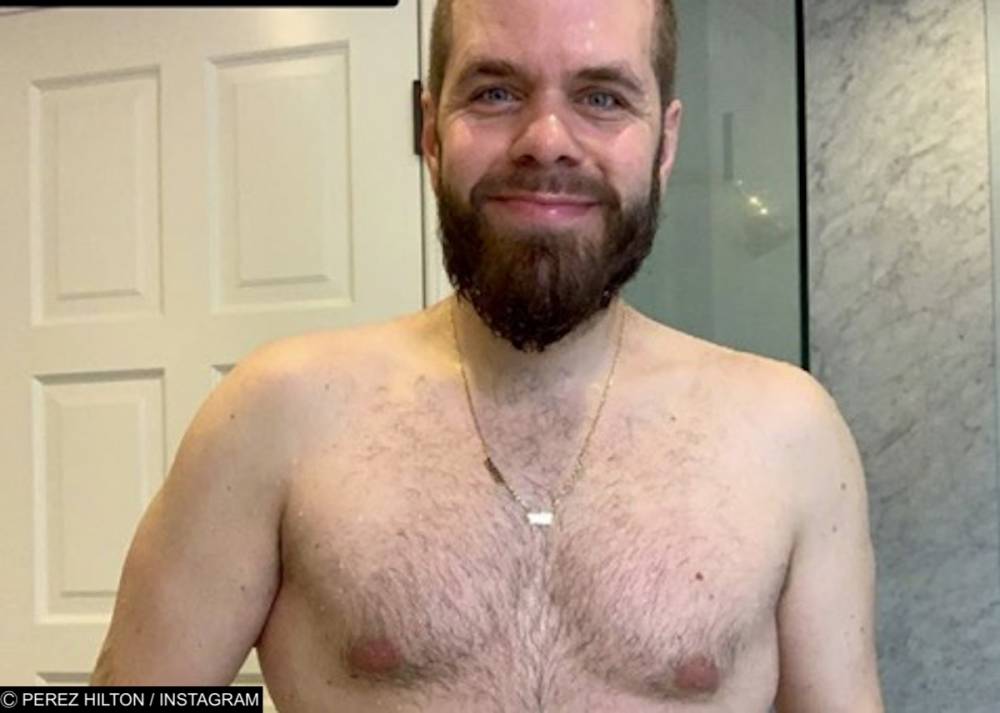
I’m not saying we need fewer images of Harry Judd (good heavens no) but what I am saying is that in order for people to find their body confidence we do need to expose ourselves to a wider range of body shapes and change our language from ‘happiness = six pack’ to ‘happiness = comfortable in your own skin’. I recently put a picture of my own body out on my twitter (against the wishes of my body confidence inner voice) in order to educate myself and others about this issue. I am not an ‘ideal body shape’ as mentioned above, I carry extra weight, things wobble that probably shouldn’t and the chest hair is currently in need of local council attention. But I did it, and I received some amazing feedback both positive, and indeed some negative.
My advice to you if you are suffering from any form of body dysmorphia or lack of body confidence is to speak to someone about it and remember that the voice in your head is not the leading authority on everything. You can be wrong, so maybe the voice is wrong about this too.
Opinions expressed in this article may not reflect those of THEGAYUK, its management or editorial teams. If you’d like to comment or write a comment, opinion or blog piece, please click here.
So we’ve all been there – looking through Instagram’s hottest men and we enter the dreaded shame spiral.
In a world of superhero movies and perfectly washboard abs plastered on billboards and in magazines, men are suffering from body image issues almost as much as women these days. But amidst the endless #gympics, #thirstythursdays and #flexfridays, there are a few brave and bold body positive men showing social media how it’s done. Men can struggle with body image just as much as women can, and so we need body-positive role models for men now more than ever.
Tituss Burgess
Titus Burgess is best known for his roles on 30 Rock and Unbreakable Kimmy Schmidt, and the cabaret star is using every ounce of flair and fame to give body positivity a fabulous new face. His Instagram is brimming with hilarious videos and celebrity selfies, not the least of which is this group shot with Tess Holliday herself.
Matt Diaz became an important – and loud – voice for the body positivity movement when he posted a very vulnerable shirtless video of himself in 2015. In it Matt explained how he had lost 270 pounds over 6 years, leaving him with a significant amount of excess skin. Now with 22.5k followers on Instagram, Matt remains a prominent male voice for body positivity, claiming to be equal parts cheerfulness and “f^&k you haters”.
Less of a gym-rat these days, Steven is carving out a nice modelling career in Germany, the UK and France, and doing his part to promote body positivity and body confidence for men as well as women.
Founded by Bruce Sturgell, Chubstr is a website that is dedicated to plus size men who are looking for fashion that fits. Bruce also believes that fashion is a great way to introduce the ideas of body positivity to men, proclaiming that even those who don’t feel comfortable talking about body image issues can find support in the fashion community.
Michael-Anthony Spearman describes himself as a “Detroit gent”, and believes that fashion is a “safe” way for men to gain visibility and work on issues around body image. His blog The Big Fashion Guy looks to inspire gentlemen of all sizes, and his Instagram is chock full of photos of him just being incredibly stylish and owning it.