Tag: Family

All the latest breaking news on family. Browse The THEGAYUK’s complete collection of features and commentary on family and the LGBT+ community.

  • What you post online could be wrecking your relationship

    What you post online could be wrecking your relationship

    CREDIT: Wavebreak Media Ltd bigstock

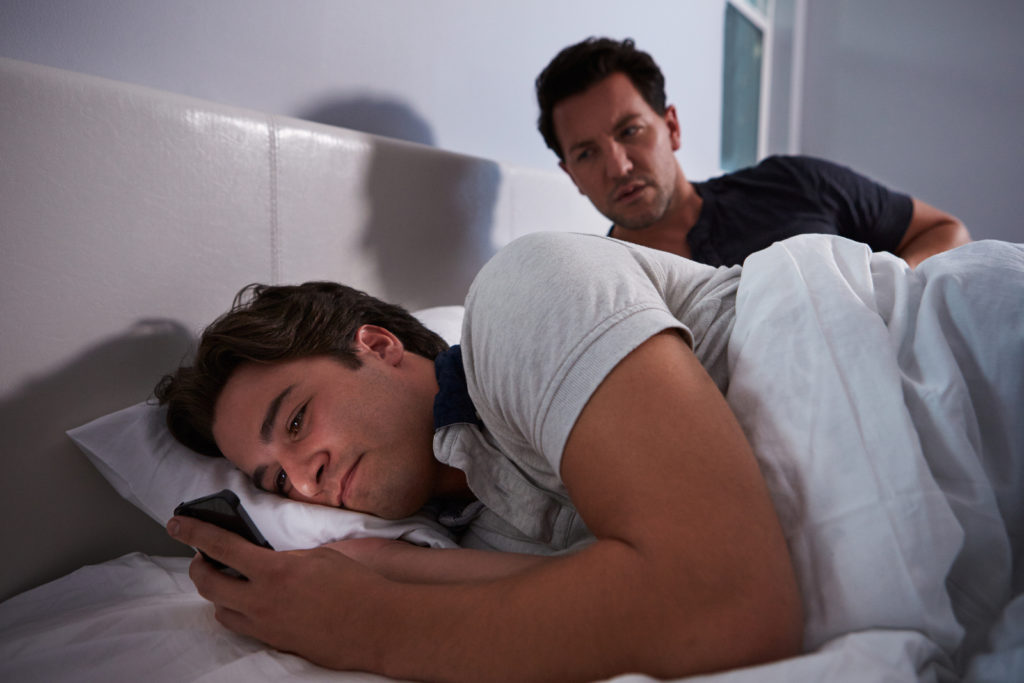
    Is your relationship on the rocks? Was 2019 a tough year, research has shown that people are rowing about what their other after is posting online!

    Just under half of all Brits admit they have secretly checked their partner’s Facebook account and one in five went on to row about what they discovered, new research has revealed.

    One in seven said they had contemplated divorce because of their other halves activities on Facebook, Skype, Snapchat, Twitter or WhatsApp.

    People are angry at the amount of posting their partners do
    CREDIT: monkeybusinessimages-bigstock

    Nearly a quarter or the 2,000 married Brits asked, said they had at least one argument a week with their partner because of social media use and 17 per cent said they rowed every day because of it.

    The most common reasons for checking their partner’s social media accounts was to find out who their partner was talking to, to keep tabs on them, to check who they were out with and find out if they were telling the truth about their social life.

    While 14 per cent said they looked specifically to identify evidence of infidelity.

    Social media is a rising reason for divorce!

    CREDIT: ©-zimmytws-Depositphotos

    The research was commissioned by family law specialists Slater and Gordon who have seen an increase in the number of people citing social media use as a cause of divorce year on year.

    Andrew Newbury, head of family law at Slater and Gordon said:

    “Social media can be a wonderful way of keeping in touch with family and friends, but it can also put added strain on a relationship.

    “Five years ago Facebook was rarely mentioned in the context of a marriage ending, but now it has become common place for clients to cite social media use, or something they discovered on social media, as a reason for divorce.

    “With more than 556 million people using Facebook each day, the way we live our lives, and our marriages, has drastically changed. We are finding that social media is the new marriage minefield.

    “Social media, specifically pictures and posts on Facebook, are now being routinely raised in the course of divorce proceedings.”

    It wasn’t just what their partner was doing on social media but also how long they spent on it that was likely to cause marital problems with Facebook usage topping the list of reasons couples argued over social media.

    Arguments were also caused because of contact with an ex-partner, sending secret messages and posting inappropriate photos.

    One in twenty even complained that their partner didn’t post any pictures of them together which made them upset.

    Fifteen per cent of Brits considered social media to be dangerous to their marriage, with Facebook considered the most dangerous, followed by WhatsApp, Twitter and Instagram.

    But one in ten admitted they hid images and posts from their partner, while eight per cent admitted to having secret social media accounts.

    A fifth of respondents said they felt uneasy about their relationship after discovering something on their partner’s Facebook. 43 per cent said they confronted their spouse immediately about this, but 40 per cent said it took them some time before they felt comfortable to raise it with their partner.

    While a third said they kept their social media log-in details a secret from their partners, 58 per cent said they knew their partner’s log-in details, even if their spouse wasn’t aware they knew them.

    Andrew Newbury, head of family law at Slater and Gordon said:

    “Social media can also make a divorce more difficult. Divorce is already a stressful time for everyone involved and what is being posted on Facebook can antagonise families and make a speedy resolution more difficult to achieve.

    “We are now actively advising our clients to be cautious when it comes to using Facebook and all forms of social media because of its potential to damage relationships.”

    Five social media tips that could save your relationship.

    1. Don’t post in anger.

    Your post will be seen by all your friends, family and potentially millions of others. Even if you later delete your post, the damage will have been done.

    2. Be respectful.

    Don’t complain about your partner or other family members online.

    3. Be transparent.

    Check with your partner before you post images or information.

    4. Check your privacy settings.

    You might think someone can’t see a post when they actually can.

    5. Take a break and enjoy the moment.

    You don’t need to post everything on Facebook, Instagram or Twitter.

    This article was first published in 2015.

  • Here’s what your family are likely to fall out over this Christmas

    Millions of families will be feuding this Christmas – over what to watch on the TV, it has emerged.

    RobinHiggins / Pixabay

    A study of 2,000 families revealed tempers are most likely to run high over which TV special or film to watch after Christmas dinner.

    Similarly, who does the washing up after the feast is another topic likely to cause rifts on December 25th.

    Other arguments will which blow up over the Christmas period will involve who gets which bedroom to stay in, who gets to host the family and who sits where around the table on the big day.

    Steve Reid CEO of sleep technology company Simba, which commissioned the research, said: “Lots of factors can raise tensions at Christmas time.”

    “Whether it’s the pandemonium of having everyone under one roof, packed social calendars, losing the amount of quality sleep we get, or stress about the big day fraying our nerves, each can keep us from being our usual calm, well-rested selves.”

    The study also found three in 10 Brits believe they will have an argument with their loved ones at least once a day over their Christmas stay.

    Thankfully a Christmas argument is rarely a long-standing affair with 44 per cent of the bust-ups fizzling out in less than 10 minutes.

    And over a third think Christmas wouldn’t be the same without a festive feud between friends and family.

    Tempers are likely to be frayed for two in five Brits, who regularly spend their Christmas away from home at someone else’s house.

    Of these, 40 per cent said their sleeping arrangement was usually uncertain, and only 48 per cent thought they were guaranteed a comfy bed on their stay.

    Two-thirds of Brits spending Christmas away from home said their sleep suffers over this period, and 36 per cent thinks this leads them to become more irritable.

    Despite this extra discomfort, a third of Brits would much rather be an invited guest over Christmas – rather than overseeing the festivities as the host of their own gathering.

    One in seven think having to appear to be in a good mood all the time is the worst thing about Christmas, and one in eight believe the season is marred by the lack of sleep they are able to get.

    The average Brit will get just six hours of sleep on Christmas Eve when anticipation is at its height, and one in 10 manage just three or four hours of slumber.

    Reid added: “These findings show that it’s natural to feel both ecstatic and exhausted at the prospect of Christmas.


    THE 12 FEUDS OF CHRISTMAS

    1. What film or TV show to watch

    2. Who washes up

    3. The temperature of the heating

    4. What time to open presents

    5. How much alcohol to drink

    6. How long to spend at each relatives house

    7. People arriving late

    8. How much to spend on each person

    9. What time to eat Christmas dinner

    10. Staying off phones at the dinner table

    11. Who won the board game

    12. Political conversations, such as Brexit


    TOP 10 CAUSES OF A SLEEPLESS NIGHT AT CHRISTMAS

    1. Overindulgence

    2. Stressing about preparation

    3. Drinking too much

    4. Excitement causing me to stay awake

    5. Wrapping presents late

    6. Waiting for children to sleep in order to put presents out

    7. Staying at a relative’s house

    8. Heartburn and indigestion

    9. Children waking up throughout the night

    10. Having guests stay over


    HOPE BASTINE’S TOP FIVE TIPS FOR KEEPING THE PEACE THIS CHRISTMAS

    PublicDomainPictures / Pixabay

    1. Be prepared: Reduce tension on the big day by getting yourself organised ahead of the time. Christmas Day is loaded with expectation, from the presents to the food to the company, and you can do yourself a favour by ensuring you are calm and organised, whatever role you aim to play in the festivities.

    2. Everything in moderation: Christmas is a time to unwind and let go of some of the pressures which have built up over the year. It’s a time to catch up with others and fill our social calendars, but this can come at a cost to our health. Rich food and drink can be enjoyable in the short-term, but over an entire season of goodwill all that excess can have an effect on our health, our mood, and our sleep.

    3. Consider your wellbeing: Christmas is a disruption of routine. Gym sessions are replaced with staff parties, salads are swapped for roast dinners and a sensible bedtime is traded for late-night movies. It’s important in this hectic time to remember the essentials, to make time for yourself and to ensure you get good rest.

    4. Set realistic expectations of others: Everyone wants their Christmas to be perfect, but the faults and foibles of your family are never more apparent than when gathered around a table together. Grumbles are likely to rise when all those personalities, who might not see each other for the rest of the year, are forced into close proximity, stuffed with turkey and marinated in Bucks Fizz. In moments like this it’s important to take a breather and, keep some perspective, and remember that Christmas is supposed to be fun!

    5. Be proactive in tough spots: Just as the festive season is a great time to catch up, it is also an equally good time for prying relatives to have a nosy in your business. Expect and pre-empt these questions. Changed jobs? Moved homes? Broken up with a partner? Try to identify subjects of conversation which are likely to come up which might be mishandled and lead to tension, and consider ways to limit the damage they could do ahead of time. Be proactive, not reactive to tough or uncomfortable conversations.

  • MONEY | In a changing world, gay couples plan for their financial future

    50 years since the decriminalisation of male homosexuality, Britain has come a long way in equality for same-sex couples.

    As the law and society have become more accepting of gay and lesbian families, more and more of our community are opting to start families of their own. A 2015 report from the Department of Education found a record number of children are being adopted by LGBT parents, and within 18 months of marriage equality taking effect in England and Wales, over 15,000 same-sex couples had wed. Still, there are unique challenges and prejudices facing gay and lesbian families. The most recent British Social Attitudes survey found that only 48 percent of respondents felt that same-sex couples should be able to adopt as freely as straight couples. It was only this year that gay couples won full equality in pensions, when the Supreme Court ruled that same-sex widows and widowers are entitled to the full pension as opposed to simply the amount placed into the pension after the Civil Partnership Act took effect in 2005. This represents a massive step forward in financial stability and equality for gay and lesbian families.

    Increasing financial stability and equality for gay and lesbian families is something Liverpool Victoria is trying to do. The largest insurer of individual incomes in the UK, LV= (as they’re styled) offers an array of products including car insurance and life insurance policies. The largest friendly society in the country, LV= is owned by its policyholders who number 1.1 million out of over 5 million customers throughout the United Kingdom. LV= recently profiled four shareholders who are in same-sex relationships as part of their examination of what the “traditional” British family looks like today – and what that family’s financial needs may be. Iain and David, from Sussex, have been together for 23 years and are raising their two adopted children, biological brothers Christopher and Anthony. Over the course of their nearly quarter-century together, Iain and David have faced discrimination in financial services.

    “When I applied for my first mortgage with my previous partner in the late 1980s, we weren’t allowed to have an endowment mortgage because we were a gay couple,” Iain said. “There were concerns about AIDS and at the time we were asked to have an HIV test.”

    Still, things are improving, according to Sarah and Laura, another same-sex couple insured through LV=. “Society is increasingly inclusive as more individuals are finding the courage to be themselves openly,” Sarah said. “It has led to an increasing presence of families like us in daily life and in the media. The progress is slow but it’s heading in the right direction…”

    Sarah, from Reading, married Laura, from Idaho in the USA, three years ago. Civil partnerships and marriage equality have made it easier for same-sex couples to traverse the difficult immigration process, but there are still financial concerns these couples have to consider. “Our experience of life insurance was that it wasn’t as straightforward as expected,” Sarah said. “We took independent advice when looking as there were a lot of questions we wanted clarification on, and a lot of future-focused parts that we weren’t sure how to answer.” Not being from “traditional families” can present unique challenges at work and when applying for insurance and other financial products, as Iain explained. “I have experienced people at work thinking that David and I fill traditional roles most of the time, I’ve earnt slightly more than David and there’s been an assumption that he’s the primary carer and I’m not.”

    Same-sex couples also have more typical financial concerns, especially in our tumultuous world. “Things are moving so fast, with Brexit, with what’s happening America,” Iain explained. Planning to use the equity in their home for their own future, they’re unsure they’ll be able to give their children enough to get on the housing ladder. “[I]f we have to rely on the equity in this house, their inheritance will be less – and there’s a worry about the housing market.”

    Sarah and Laura don’t have children, but plan to in the future. “We have a checklist that is a mixture of practical and financial factors we want in place before trying, which includes priorities such as buying a home, paying back any loans (excluding mortgage), finishing our travel wish list (for now), and having enough in savings for fertility treatment.” Fertility treatments could become even more expensive as the NHS has considered cutting funding amidst an ongoing budget crisis. This uncertainty about the future is why Sarah and Laura are planning ahead. “Our plan is to take as much control as we can as early as possible, rather than relying on government pensions when we get to retirement age,” Sarah said. “We both contribute to private pensions and are focusing on building up savings.” They say they worry about unexpected expenses, preferring to pay for insurance on their home and car “so that we don’t have to find large sums if something goes wrong.”

    50 years since decriminalisation, gay and lesbian British families have come a long way. But while we look at the past, it’s also important we look towards the future and plan ahead. Getting a sound financial footing now can help gay and lesbian families achieve even greater personal happiness as we continue to benefit from and enjoy the fruits of equality.

  • DILEMMA | How do I get my homophobic family to accept my partner?

    DILEMMA | How do I get my homophobic family to accept my partner?

    What happens when you finally meet, fall in love and marry the love of your life and your family just won’t accept?

    Dr Dannii Cohen reveals how you can make even the most stubborn of a homophobic family turn to acceptance.

    Having the approval of your parents means a lot to (almost) every child.

    So wanting them to approve of the other most important person in your life is natural.
 The story of parents not approving of their children’s partner (whether in straight or LGBT relationships) is as old as time and there truly is no quick fix solution.

    Dr Dannii Cohen suggests that you include your partner in as much as possible, including putting your family into situations where they are forced to interact with your partner… but not too often.

    Do not: feel you have to take sides, force your parents or stir arguments.

    Do: Insist your partner needs to be included and stand up for him/her.

    Find ways to try and get conversations going, take some cues and advice from this article: http://yourzengrowth.com/asking-giving-opinion/
    For the rest, only time can heal this one. Human emotions cannot be forced.

    Have you got a dilemma you’d like us to answer? Click here to visit our dilemmas page.

  • COMMENT | What about straight victims of homophobia?

    Why is it so often the case that the struggle for equality can feel like one step forward and three back?

    In the UK, equalities minister Justine Greening has announced plans to allow trans people to change their gender more easily, with less intrusive medical assessments, as part of a welcome shake up of equalities legislation. It’ll also be easier for gay men to give blood. This is good news, and updates to the Gender Recognition Act have to be welcomed.

    On the other side of the Atlantic, our American friends have taken a few steps back, after President Trump’s ban on transgender people serving in the military, proving that pointless and nasty political tokenism is alive and well in the west. In-keeping with Trump’s consistency as a president thus far, the legislation is poorly thought-through, with no obvious route to implementation. Hopefully, it will be quickly struck down.We can’t afford to be sanguine about gay rights in the UK, and although most of us agree there is still some way to go, there are areas of disagreement over what to prioritise in moving towards equality. Because of my own experiences, one area I am passionate about is addressing the reality that homophobia affects more than just gay people. Bear with me on this if it’s not something you’ve previously considered. It’s great and right that we can report homophobic abuse to the police and have it taken very seriously (speaking from experience), but the story doesn’t begin and end there. Homophobia isn’t self-contained.

    “…My parents received an ultimatum from one of my siblings:

    boycott the wedding and disown me,

    or have their grandchildren removed from their lives.

    When my husband and I announced our engagement and intention to marry, my parents received an ultimatum from one of my siblings: boycott the wedding and disown me, or have their grandchildren removed from their lives. My parents attended my wedding and are no longer a part of those grandchildren’s lives. Yet my father’s thriving business was taken over by his homophobic child, and their wedding and a deposit for their first home was lovingly paid for out of my parents’ pockets. Prior to my husband and me tying the knot, my parents played a full and active role in that child’s life, and even more so once the grandchildren arrived, who adored their grandparents.

    At first, they tried mediation. Their requests were ignored. They were so desperate to be reunited with their grandchildren that they used their life savings and pursued their last legal option, taking their case to the family courts. There, they found that the organisation Cafcass (Children and Family Court Advisory and Support Service) doesn’t take matters like homophobia into account in assessing what is best for children. As long as children are being looked after at home, then matters like their parents’ homophobic views and actions hold no weight. Similarly, grandparents have few, if any, access rights to their grandchildren. Most cases like this are as a result of acrimonious divorce, and grandparents on one side or the other invariably lose. Ultimately, in this instance, the judge repeatedly commented that she considered it a profoundly sad case and was aware of the gross injustice my parents were fighting, but was powerless even under these circumstances, with homophobic motivations on the other side, to grant my parents direct access, offering indirect access instead.

    Believe it or not, the consolation prize was a better outcome than my parents had been briefed to expect. A different judge may have dismissed it outright.

    Parents get to decide who can and cannot see their children, and bring them up in a homophobic household if they wish.

    One major concern here though: what if a child in such a household is gay? There is a reason suicide rates in gay people is higher than average, and family hostility almost always plays a major part in such tragic cases.

    It is clear to me that my parents are the victims of homophobia which has, in their old age, destroyed their happiness. They have reached the end of the road and now have to accept the outcome. This strikes me as a grievous wrong, and I hope many readers feel the same.

    So what of the indirect victims of homophobia? I would be interested to hear others’ views, especially if anyone has known a remotely comparable situation. Whilst the homophobia my husband and I have suffered from within my family has been hurtful, it has been easy, painless and for the best to simply sever contact with the sources.

    My parents’ suffering goes on. They are the real victims of homophobia here, not me.

    For fear of further reprisals, the author wishes to remain anonymous, but please post your comments below.


    Opinions expressed in this article may not reflect those of THEGAYUK, its management or editorial teams. If you’d like to comment or write a comment, opinion or blog piece, please click here.

  • ADVICE | I don’t have a will, does this affect my partner should I die?

    A reader asks whether not having a will, will affect his partner of 6 years will inherit should he die unexpectedly.

    Is my partner at risk if I don't have a will?


    Dear Matt,

    My partner and I have been together for 6 years and although we’re not civilly married, I was wondering what our rights were in case of an accident or death. We currently rent and don’t own our house, but we do have various other assets such as stocks and savings. Neither of us have made a will. What would happen to the surviving partner if the worst was to happen? Would my assets go directly to him?

    Thank you for your time

    Steve N.


    Dear Steve,

    The simple answer is no. Currently, co-habiting partners have no (automatic) legal right to inherit assets from their partner’s estate unless provision is made for them in their partner’s will.

    Only assets that are held in joint names (such as joint bank accounts) will pass to the surviving partner automatically by ‘survivorship’ and simply require the removal of the deceased partner’s name from the account; such assets are not affected by the presence (nor contents) of any Will.

    In cases where the deceased partner left no will (or a defective/invalid will) all assets held in the deceased partner’s sole name will pass according to the Intestacy Rules. These rules stipulate who will inherit the estate in a strict order of priority of relatives – spouse/civil partner, children, parents, siblings and so on and so forth. Co-habiting partners do not feature in this list!

    My advice would be to always seek professional advice from a solicitor to create appropriate wills to ensure that your loved ones left behind are not unwittingly disinherited through your inaction.

    You should also be conscious of the inheritance tax implications of remaining unmarried or not in a civil partnership. The transfer of assets after death may trigger an inheritance tax liability, as executors would be unable to claim valuable exemptions, such as the spouse exemption.

    This response is not intended to constitute legal or other professional advice, and should not be relied on or treated as a substitute for specific advice relevant to particular circumstances. Individuals should always seek legal advice from a professional which is specific to their unique set of circumstances.

    This article was updated on the 16th November 2018

    Have you got a legal question? Ask it here

  • Column | The Burden Of Survival

    When you hear of somebody surviving an accident, recovering from an illness or defeating odds there are always the same buzzwords. We say we are blessed or thankful or grateful. Those who enquire get regaled with the story of our hurdles as people earnestly hold our hands and thank God for your still being on Earth. The one word you never hear mentioned is ‘burden’.

    When I was born, the doctors immediately knew something was wrong. My body was contorted, my ear was deformed, my foot was clubbed to the extent where they had to immediately cut my hamstring to loosen the tightness. I was operated on as they battled to save me. This deformed boy and his twin sister. My sister recovered quickly from the harshness of a caesarian section but for me, it was just the beginning. My parents sat, solemn, as they were told the boy they dreamed of would not be long on this Earth. He would never walk, talk or crawl. They sat frozen, as they were told I had a two year life expectancy.

    Then my third birthday came. And I could crawl, I began to walk and I could talk. My parents, like others, believed it was a miracle. They believed that God had shined a light on their son. They sat, operation after operation, wondering if the miracle would finally run out. Like they were in a pay and display parking bay and the metre was near empty. But I would return. Scarred, sure, but alive. The miracle kept on being a miracle. And so the baby became a child, whose parents were told would never be able to feed himself, began getting good grades in school. My parents looked on in proud amazement with each examination certificate, each award, each monumental step they thought they’d never see. And with this came the burden. To always do more and be more. Their child, their miracle.

    My parents never put this pressure on me. Nor did anyone else. But boy do I feel the expectation. You begin to feel invincible. I have been through operations where I have flatlined on the table, where they once intubated me with such force it pushed my teeth forward requiring braces. I have felt the grip of asthma, cruelly squeezing my lungs of their last breath. I have overcome so many hurdles, and it’s hard not to think there’s a reason. I don’t believe in God but how many times does one person get to cheat Death? To defy the odds? But with each time, the burden got greater. The burden to be something that makes a difference in the world.

    This ambition has led me down so many paths, has forced so many mistakes. It has seen me desperate for affection and make some poor decisions, just to be noticed. I want to believe that me being alive makes a difference in the world so that, if the miracle runs out, it was all worthwhile. So every misstep hurts that little bit more. Coming out as gay hurt a little bit more because it felt like I was disappointing others. It makes me give things up way too soon because I constantly feel like I’m running the clock. That I have to get to some sort of finish line.

    I believe that I have met the true love of my life. He felt like the missing piece, my true second half. But he came with his demons and I tried to stand by him but when it looked like our relationship wasn’t going to be PERFECT, I backed off. I began to grow tired of his low moments, I grew angry that he didn’t have the same ambition I did. He wanted to be happy but he had his own battles to face, so he wasn’t. My need to both be the best boyfriend and HAVE the best boyfriend added pressure. It pushed him away. And now I struggle to even date because I don’t believe anybody could match him in my mind or my heart.

    Then, in March, I almost died. It was discovered that I was a insulin dependant Diabetic. My Doctors had confused the symptoms for a stomach virus and my body began shutting down. I was told I was around two days away from death. This has added a whole new aspect to my life. My body is black and blue with the bruises from injections. My fingertips glow red with the endless pricking and drawing of blood I have to do. And I’m exhausted. Mentally and physically. This has broken me. People keep telling me that I’ll get used to it, that it’ll become normal but I implore them to try injecting themselves five times a day and feel normal. I am tired of having to be careful, frightened of what might happen. And then, there’s the burden. That I have been given the freedom to live, as long as I take my medication. Years ago, when Diabetes was unknown, people just died. It killed them fast. Now I have the responsibility of being grateful for the power of modern medicine. So when I feel down and exhausted, I feel ungrateful and selfish too.

    Nobody ever talks about the burden of surviving. But I’ve experienced operations and rehab, pain and heartbreak and near-death and recovery. And as I get older, the burden of survival somehow lessens. Because with each new day, life teaches me that I have no control over what’s going to happen. So the burden slowly chips away to reveal that, deep down, the only thing I need to feel is lucky. And all I can do is my best to remember that. To breathe in and feel the air in my lungs because no matter how I feel when I wake up, I must always try to take a moment to feel blessed, to be grateful and to give thanks. Because, the crux of it all is: I’ve survived.

    Opinions expressed in this article may not reflect those of THEGAYUK, its management or editorial teams. If you’d like to comment or write a comment, opinion or blog piece, please click here.

  • Reader’s Tips For Coming Out

    It’s National Coming Out Day so we asked you to give us your top tips for going through what is often a life changing event in a person’s life.

    I am not gay

    1) Don’t apologise.

    2) Only come out if it is what you want to do. If you feel pressured    into coming out, remember that it has to be your decision. It is a big decision to make in your life and the most important thing is that you feel comfortable with what you are doing.

    3) Do it the way you most feel comfortable! I told my Dad by letter, but my friends mainly face to face… it just got easier the more I did it.

    4) Treat it like a band-aid and just tear it off. Quick and almost painless. Just tell them, quickly, confidently and get it over with.

    5) Don’t approach the situation like you’re about to announce you’re terminally ill. Body language and the tone of your voice will play a massive role in how people react to what you’re saying.

    6) If you don’t get the reaction you expect, don’t be put off. You will get some negative reactions, but that is their problem not yours. The amount of positive reactions will far outweigh the negative ones.

    7) Speaking to a helpline, like Switchboard – first, if you’re not sure what to say. Talking with a counsellor or helpline can help you find the words you need to describe what you’re feeling.

    8) If you’re not sure how to bring it up, casually talk about a celebrity’s recent coming out like Tom Daley or Charlie King and gauge the reaction before going any further.

    9) It’s not an all or nothing deal. You don’t HAVE to tell everyone all at once. Start off with one person and let it grow organically from there.

    10) There is no right or wrong way to come out. It should be a tailor-made experience, as individual as you are.

  • COLUMN | I’m like Trump… When people probe me… I Lie

    In Gay We Trust: The Vulnerability Of Living Proud

    Lao Tzu once said that “he who doesn’t trust enough will not be trusted”. He focussed on the importance of a mutual trust, an understanding, that for people to be open to you, you must equally be as open to them. But when you spend your life lying, and eventually get burnt, how can you ever open up again?

    Being “in the closet” is how every not-out gay man is referred to. This metaphor that says you’re hiding secretly away, watching through the gap in the doors, waiting to see when it’s safe to come out. The reality is much more different. Not being out is like being trapped in your own mind. I remember it clearly; the fear that you’ll let slip, that you’ll say the wrong thing or something will give you away. I remember going shopping with my family, fearing the self-checkout will scream out “unexpected homo in the bagging area”. It was a lonely time, a time of isolation. I was out to all my friends in school but I lived in fear of word getting back to my parents. I’d place trust in “friends” who eventually would spread word until everyone knew I was gay.

    My parents would ask me leading questions. I think they’d always known I was gay. Instead, I learned to lie. I would tell people I wasn’t gay and, selfishly, would get girlfriends to prove I wasn’t. The problem is, the more often you have to lie, the better you get at it. The lies were helpful to me when I broke up with my first boyfriend. My entire world had torn apart. I would cry every night, I couldn’t concentrate in school. Seeing his face every day as he sat opposite me was like a dagger inside. I had nowhere to place my hurt, my aggression or my confusion. But I couldn’t turn to my parents because then they’d know the truth about it all. They’d know I was gay, they’d know I had a boyfriend and that I hid it from them.

    When I eventually came out to my parents, things weren’t easy at first. Although I believe they knew, they struggled with the revelation and what it meant for my future or at least, the future they’d always imaged for me. Eventually, they got over their hang ups and are now incredibly supportive. They now want me to be open to them, to tell them about my life but I’ve spent so many years hiding it from them, even now I struggle to open up. I’m constantly asked about my love life, who I’m dating or what I get up to but I find myself shrugging it off out of a reflex action. I grew up in a society where being gay was negative and that you should tell no-one. You don’t just get over that. The problem is, when you can’t tell your parents what is happening, you end up raising yourself when it comes to certainly subjects. I taught myself about flirting, falling in love, break-ups, sex and safety. The difficulty being I had to learn from my mistakes. It hardens you, it makes you closed off and invulnerable. So, when you’re 26 and people tell you to open up more, it’s difficult.

    I am honest about superficial things. I talk openly and, somewhat graphically, about sex. I joke on Facebook about my ‘sad’ life. But I’m very rarely vulnerable. At 26, I have had 3 real relationships. My trust and my heart has been broken each time. I’ve had friends betray me, even recently. With every betrayal I face, the higher I build my wall. I’m like an emotional Donald Trump. Instead, when people probe me about how I am, I lie. In March, I discovered I was a type 1 diabetic. I discovered this by being rushed to hospital and told I was two days away from dying. I have spent months learning to deal with injections and appointments, risks and dangers. Yet, if you ask me how I am, I’ll probably tell you I’m fine. I’ll smile, make a joke and let you get on with your day. Because that’s what I do. Because if I tell you the truth, if I make myself vulnerable, it’ll just be a case of ‘when’ and not ‘if’ you betray me.

    The close friends in my life have had to give so much of themselves to me before I could let them in. They’ve had to be patient and kind and so vulnerable themselves. I know everything about my close friends and sometimes it can seem like I’m trying to get ammunition on them. When I feel ready to get close to someone, I ask to hear their secrets. I probe them about their lives. Because the truth they speak and the vulnerability they show is the only thing that can thaw the ice inside me. For months, they are very patient and slowly, I can allow myself to be vulnerable.

    I want to think it’s not too late for me to learn to trust more but I fear ever being considered naive or to place my trust in people who don’t deserve it. My first boyfriend got himself a girlfriend. My second boyfriend told everyone I had made the whole relationship up and the third one ran away with the circus (a whole other article, I assure you). Each of these moments, so pivotal in my life, added another brick to the wall. I just hope that some day, as the scars of my past fade, I’ll learn to trust again.

    I am no longer the closeted gay boy fearing being outed. I am a grown man who needs to learn to open up. I believe that pride comes before the thaw, that to be vulnerable and honest, to be truly myself is not proof of my naivety nor any emotional stupidity but is simply what it is to be human.

    Opinions expressed in this article may not reflect those of THEGAYUK, its management or editorial teams. If you’d like to comment or write a comment, opinion or blog piece, please click here.

  • YouTuber Georgie tells mum “stop living in the dark ages”

    YouTuber Georgie tells mum “stop living in the dark ages”

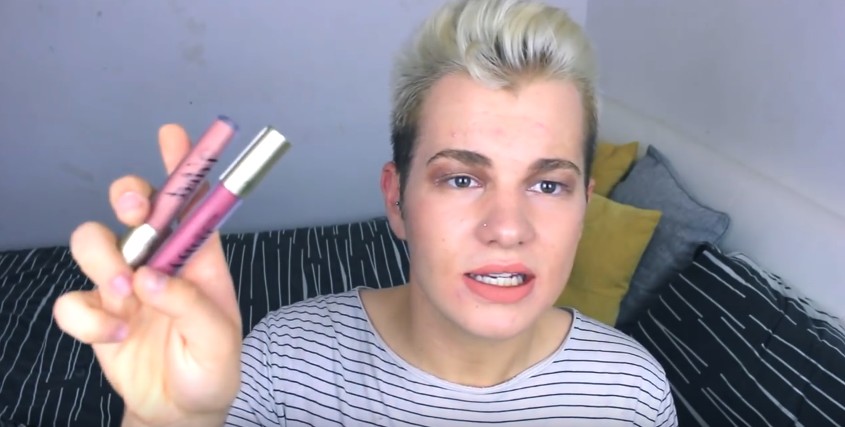
    YouTuber Georgie Aldous has hit out at people, including his mum, who criticize men who wear makeup.

    CREDIT: Georgie Aldous/YouTube


    “Please tell me why it’s an issue for men to wear makeup in 2016” asks Georgie Aldous in his new vlog.

    Vegan YouTuber Georgie has made a video about why no one should be batting an eyelid if men wear makeup – especially in 2016.

    Recalling a conversation where his mum questioned if he wanted to be a transvestite because of selfie he posted to Facebook, in which he wore false nails and makeup, he hit back saying, “Stop living in the dark ages.”

    He argued,

    “Makeup isn’t gendered in my opinion. I can wear makeup if I want to, doesn’t mean I want to be woman, I’m happy being a man. I just love to express myself through makeup.

    “Makeup is art at the end of the day.”

    CREDIT: Georgie Aldous/YouTube


    Well said…


    ALSO READ: Adam Lambert proves that men wearing make up is totally hot

  • BREAKING: Lesbian Couple Are Found Guilty Of The Murder Of Two-Year-Old Son

    BREAKING: Lesbian Couple Are Found Guilty Of The Murder Of Two-Year-Old Son

    A same-sex couple have been found guilty of two-year-old Liam Fee’s murder in Fife.

    Two women from Ryton in Tyne And Wear, have been found guilty of the murder of Liam Fee, Rachel Fee’s two-year-old son who was found dead at their home in Glenrothes in Fife March 2014.

    The toddler died from blunt force trauma which caused his heart to rupture. The court heard that he also suffered numerous injuries including bone fractures.

    Rachel Fee, 31 and Nyomi Fee, 29 denied that they had murdered Liam, but were found guilty after a seven week trial at the High Court in Livingston.

    They were convicted of all eight charges that were brought against them by the Crown Prosecution Service in Scotland.

    They were also convicted of assaults against two other boys in their care.

    The couple maintained that Liam had received the injuries from another child – one of the boys they falsely accused of Liam’s murder.  He cannot be named for legal reasons.

    A jury found the two women guilty after 10 hours of deliberations.

    Detective Inspector Rory Hamilton, MIT East,  who led the investigation said,

    “This was a complex, challenging and sensitive investigation which involved interviewing two young children to establish the level of abuse and neglect both they and Liam Fee had been subjected to.

    “It was because of their courage that detectives were able to identify Rachel and Nyomi Fee as being responsible for a wide range of serious offences against three children.”

    Assistant Chief Constable Malcolm Graham, lead officer for Major Crime and Public Protection, said,

    “Liam’s murder has had a profound effect on everyone involved in the investigation and our thoughts are with his wider family.

    “The death of a child is always traumatic but the murder of a child has a terrible and lasting impact on the family, on the wider community and on the carers and professionals involved.

    “Police Scotland places the highest priority on protecting the most vulnerable, most at risk people in our communities and in investigating criminality when it does take place.