Two men in Indonesia are facing 100 lashes after they were found naked together in their own bed.
The Couple were found naked in bed with each other.
They were forced out of their bed by a vigilante group, who forced their way into their bedroom.
Homosexuality is illegal in the city of Banda Aceh where Sharia law is upheld.
A gay couple, in their 20s, has been found guilty of homosexual acts in Banda Aceh, in Indonesia after vigilantes stormed their room. The men were arrested at the end of March. They were taken to Wilayatul Hisbah, a Sharia police station. They both now face 100 lashes as punishment. The entire siege was filmed on a mobile phone.
Being gay is not illegal in Indonesia except in the province of Aceh and the city of Palembang in South Sumatra, where elements of Sharia law has been introduced since 1999. These rule could also be applied to non-Muslims in the region.
In 1999 the Province’s Governor moved to issue limited Sharia-based regulations. Sharia law expressly forbids homosexuality. In 2014 a law was introduced which punished anybody engaging and caught having gay sex with 100 lashes, 100 months in jail or a heavy fine.
The law also includes punishments for other sex crimes including adultery and underage sex. The rules also criminalise non-hijab-wearing women, drinking alcohol and gambling.
Human Rights Watch has urged the Country’s President Jokowi, to scrap the barbaric punishment.
Phelim Kine, deputy Asia division director at Human Right Watch said,
“The arrest and detention of these two men underscores the abuse embedded in Aceh’s discriminatory, anti-LGBT ordinances,
“These men had their privacy invaded in a frightening and humiliating manner and now face public torture for the ‘crime’ of their alleged sexual orientation.”
“President Jokowi should urgently intervene is this case to demonstrate his stated commitment to ending discrimination against LGBT people,
“Jokowi then needs to act to eliminate Aceh’s discriminatory ordinances so these outrageous arrests don’t happen again.”
Britain’s leading LGBT charity for Muslims has condemned the reported actions of Chechen officials rounding up gay men and placing them into “concentration camps”.
Imaan LGBTQ has strongly condemned the actions of officials in Chechnya after it was revealed that 100 men suspected of being gay were rounded up, tortured and placed in camps in the Muslim-majority Republic.
Taking to Twitter the group said that they, “condemn the reported actions of the Chechen authorities against its LGBT population”.
The group then called upon fellow Muslims everywhere to do the same.
Some are linking the recent alleged actions undertaken by government officials with having a religious undertone.
According to Wikipedia,
“Chechnya under Moscow-backed authoritarian rule of Ramzan Kadyrov has undergone its own controversial counter-campaign of Islamization of the republic, with the local government actively promoting and enforcing their own version of a so-called “traditional Islam”, including introducing elements of Sharia that replaced Russian official laws”.
As of the 2010 Census, Muslim Chechens, at 1,206,551 people make up 95.3% of the republic’s population.
Sick photos have emerged showing the horrific final moments of a man who was accused of being gay.
Warning contained graphic images.
SPECTATORS: A crowd of men surround the area where the victim will land. A sickening sight of rocks laid out ready to pelt the victim lay in the foreground of the photo.
Yet another man is thrown to his death and pelted with rocks because ISIS claims he was gay. Photos released by TerrorMonitor show how Islamic State officials lined up a pile of stones and rocks ready to pelt the young man after he was pushed from a tall building in Mosul, in Iraq. Islamic State’s largest stronghold in Iraq.
Despite homosexuality not being illegal in Irag, gay men live in fear of execution if they are caught by Islamic State who adopts a strict legal system based on Sharia Law, which prohibits same-sex relations.
JUSTICE? A man reads out the alleged crimes of the man from his vehicle.
The photos, released by Islamic State, show that a crowd of people gathered for the public execution, which happened in the Iraqi city of Mosul. His body is seen lying lifeless at the bottom of the building as spectators begin to hurl rocks at the victim’s head and body.
LAST MOMENTS: The youth, who is wearing yellow, breathes his last few breaths before being thrown off the building.
PELTED: The lifeless body of the man is pelted with rocks from a pile of rocks placed at the base of the building.
The unnamed man was taken to the top of a tall building and blindfolded. According to IraqiNews.com one of the Islamic State fighters read out his death sentence, from within a car. The young man was then tossed off the building.
In this article, we look at the history of marriage in the UK. Our history starts at 410AD, as before this time there were no written records of the history of marriage. Before written records, history was passed down orally from the older generation to the younger one, unfortunately, over time this oral history has been lost.
410AD – The Anglo-Saxons and Other Tribal Groups
For many people, marriage is strongly associated with religion, but this wasn’t always the case. Straight marriages at this time were about peace and prosperity rather than religion. Marriages encouraged good diplomatic relations and the development of trade between two (or more) tribal groups.
It was the fathers who decided who their daughters married and the wishes of the couple were seen as irrelevant.
12th Century – Consent
In 1140 Decretum Grantiani wrote a canon textbook where he introduced the concept of verbal consent to straight marriage and the requirement for a couple to consummate their union to validate their marriage.
In the 12th century, the Roman Catholic Church made verbal consent and consummation necessary for the church to view the straight marriage as legitimate. Some Roman Catholic writers at the time also describe marriage as a spiritual experience tied to God’s presence. While this is not surprising, prior to this very little mention of marriage as a spiritual experience.
1549 – The Vows
The tradition of vows came from Thomas Cranmer’s Book of Common Prayer. Although the book was updated, later on, many of Thomas Cranmer’s words are still used in religious ceremonies today.
These vows laid the foundation for how the Roman Catholic & Protestant churches viewed straight marriage at the time as a partnership.
Thomas Cranmer must have reflected the views of the mainstream population about marriage at the time; otherwise, it would have been unlikely that the church institutions would have accepted and taken on these views.
Roman Catholic Priests at this time were still delivering marriage ceremonies (as all other religious services) in Latin.
However, the Protestant’s began delivering their services in the English language. This is significant as English was the common language and this change made marriage ceremonies (as well as all other religious services) accessible to all.
Today, Protestantism is one the most popular religions practised in the UK. Many historians believe that changing the ceremonies to English played a huge part in making Protestantism a dominant religion.
1563 – Sacramental Marriage
The Roman Catholic Church officially declared that straight marriage was one of the seven sacraments in this year; meaning that it was something undertaken in the presence of god. The other sacraments are: Baptism, Confirmation, Holy Communion, Confession, Ordination and Last Rites.
The Protestant Church didn’t see straight marriage as a sacrament at this time.
1753 – State Involvement
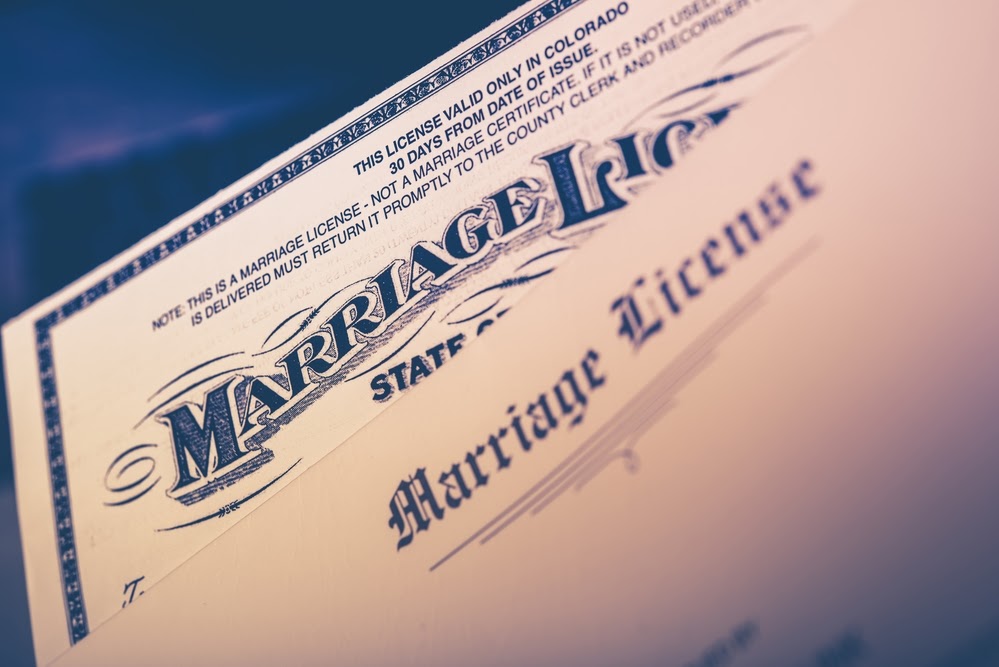
The Clandestine Marriage Act (1753) set out what the state expected in order for a straight marriage to be seen as legal. It required the couple to get married in a church by a minister and issue a formal marriage announcement or to obtain a marriage license.
1836 – Civil Marriages
In 1836 it became legal for straight couples to get civil marriages, which were generally held in Register Offices. This was to accommodate both the religious and nonreligious.
For the religious, it meant that they could get married in a neutral place if for some reason they couldn’t get married in their church. For the nonreligious, it gave them a place void of religion. Prior to this, nonreligious straight couples had to go through a ceremony in a church and undertake practices & traditions that they didn’t believe in.
In 1837 the civil registration of straight marriages started.
1837 – It’s All About Straight Love
Between 1837-1901 it was the Victorian Era. It is said by contemporary historians that the Victorian Era is when marriage became about love, but still only the love between a man and a woman. Gay people weren’t treated well in the Victorian Era in the UK, with laws against sexual acts.
Oscar Wilde – widely regarded as one of the most talented writers of all time; was accused of sodomy by the father of his male lover. He lost the trial and was sent to prison. It was rumoured that he could have escaped to France, but he didn’t. Once he’d served his sentence, he moved to France.
1858 – Divorce
Between the 17th – 19th Centuries there were 300 cases of people wanting to end their marriages. The only way to do this was for an Act of Parliament for each marriage, as there was no accommodation for divorce in marriage law. So in 1858 the government of the time finally made divorce a legal process.
The legal process that meant those who wanted or needed a divorce could have one. But it also signified a shift in the focus of marriage from being a lifetime commitment – for better or worse, to a commitment that could be changed if life’s circumstances changed.
19th Century – Birth Control
By the 19th Century, both the Roman Catholic and Protestant Church’s had promoted procreation as the main reason for straight marriage. But as more children survived childhood, families got bigger and there was a need to use some form of contraception.
In the 1930s the Protestant Church accepted contraception, viewing it as necessary and not a sin or something God would be unhappy with. But the Roman Catholic Church has remained against any form of contraception, as they continue to see the procreation of children as a fundamental aspect of straight marriage.
2005 – Civil Partnerships
In 2005 the first gay civil partnerships took place, a year after The Civil Partnership Act came into law.
It allowed gay people to have legally recognised relationships, which granted them the same rights, protections and benefits of a married straight couple. This included legal rights, such as being one another’s Next of Kin; rights related to their partner’s children and the benefits including those of taxation reductions.
In terms of the actual act, the gay couple could have a civil partnership ceremony that could consist of anything they wanted (within the law). This could be vows, the exchange of rings, their choice in music, etc.
The Civil Partnership Act included a legal process for those gay people who may want to end their civil partnership. It is called ‘dissolution’ and works on similar legal principles to divorce.
This was the first time that the state in the UK legally recognised gay relationships. In the first five, there were 42,778 gay civil partnerships.
Peter Tatchell (Gay Rights Activist), as well as others, criticised The Civil Partnership Act, saying that it wasn’t complete equality as it excluded straight people from being able to be civil partners.
2013 – Gay Marriage
Last year The Marriage (Same Sex Couples) Act has been passed in England and Wales. The first gay marriages are expected in March 2014.
Stonewall said of The Marriage (Same Sex Couples) Act:
‘This is an historic moment for lesbian, gay and bisexual people, their families and their friends. This Act will mean that, for the first time, children growing up to be gay in England and Wales will have full equality in law. We can now proudly claim to be a beacon to the world for gay equality.’
In ancient history, marriage had nothing to do with religion but helped tribes to live and thrive together. Then Christian institutions (both Roman Catholic & Protestant Churches) influenced the definition and meaning of marriage. In the last century, the state has got involved for marriage, allowing marriage to be more flexible and much more inclusive.
Marriage as a concept has evolved to meet the needs and desires of society. Currently, there is some debate as to what role the churches and state play within marriage. It is likely that over the next century the Churches will continue to reside over the spiritual aspect of marriage, whereas the state will continue to be involved with the legal and administrative side of marriage.
Antony Simpson, Writer of this article would like to acknowledge the following sources that supported putting together this article based on fact:
BBC – Ten key moments in the history of marriage
http://www.bbc.co.uk/news/magazine-17351133
Office for National Statistics – Civil Partnerships Five Years On
http://www.ons.gov.uk/ons/rel/…rd/…/ard-pt145-civil-partnerships.pdf
Office for National Statistics – Video Summary: What does the Census tell us about religion in 2011?
http://www.ons.gov.uk/ons/rel/census/2011-census/detailed-characteristics-for-local-authorities-in-england-and-wales/video-summary-religion.html
Peter Tatchell – A setback for equality
http://www.petertatchell.net/lgbt_rights/partnerships/Straight-civil-partnerships-defeated.htm
Stonewall – Equal Marriage to become law – Thank You!
https://www.stonewall.org.uk/what_we_do/parliamentary/5714.asp
Stonewall – Get Hitched! A Guide to Civil Partnership
A British court has ruled that the children of a Jewish transgender woman may not see their parent due to the likelihood that they will be “marginalised or excluded by the ultra-Orthodox community”.
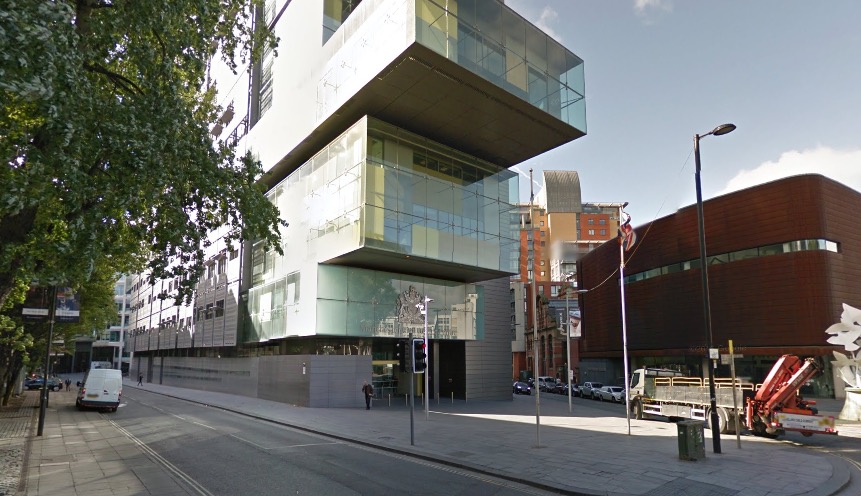
CREDIT: Google Maps 2016
The Independent reports that a transgender parent has had access to her children denied by a family court in Manchester. The ruling, the first of its kind, found that the children and the biological mother could be “marginalised or excluded by the ultra-Orthodox community”. The family is part of the ultra-orthodox Jewish Charedis.
The trans parent, who is living as a woman is only allowed “indirect” contact to her children four times a year. The ruling comes despite Orthodox Jewish rabbis suggesting that Judaism should not punish transgender people in this way.
Justice Jackson concluded that there was a “risk” that the mother and her children could be rejected by their community, if they had direct, “face to face contact with their father”. He express regret before his ruling saying, that the “father’s” application for contact would be refushed.
He said,
“I therefore conclude with real regret, knowing the pain that it must cause, that the father’s application for direct contact must be refused.”
A man has been thrown to his death and then stoned in the streets of Aleppo after ISIS (Islamic State) accused him and found him guilty on charges of homosexuality. ISIS follow an interpretation of Sharia law, which forbids homosexuality and finds that it is a crime with a death penalty. ISIS hand out harsh sentences for men who are found guilty of having same-sex relationships and often throw them to their deaths from tall buildings in front of huge crowds.
Photos released by the terrorist organisation show a man, dressed in black, blindfolded being thrown off a tall building in the Syrian city of Aleppo. It’s not known whether the man survived the fall, but pictures show that the man was then stoned by members of the crowd that witnessed the execution.
Hundreds of people stood and watched as the man plunged to the street below. A number of the crowd are then seen to hurling rocks at the lifeless body of the man.
In the past, we have reported that ISIS have killed another of men accused of homosexuality, but this is the first reported execution of man in Aleppo.
In an unconfirmed report, ISIS has thrown a man to his death for being gay in north-west Iraq.
WARNING: There are images in this article which some readers may find distressing.
A “gay” man has been executed by ISIS fighters by throwing him face first from a grain silo in Iraq. TerrorMonitor and the Jihad Threat Monitor have released pictures which show a man, with his hands bound behind his back falling from the top of a silo.
In the first picture, the victim is seen surrounded by a number of men, with one standing to the right, filming the whole ordeal. In the second sickening picture, the man is seen with his hands tied behind his back, plummeting towards the ground.
It is not clear from the pictures when the execution was undertaken, however executing men accused of being gay is a somewhat common occurrence in ISIS strongholds.
The usual method of execution preferred by ISIS fighters, for the crime of homosexuality, is to be thrown from a high building or being stoned to death.
Under Sharia law homosexuality is a crime punishable by death.
So the McArthurs of the Ashers Baking Company in Northern Ireland have lost another appeal against their conviction. They remain guilty of discrimination after refusing to bake a cake with a message in support of gay marriage and were justifiably sued.
Good. It’s high time governments stopped offering up LGBTQ people as sacrifices to appease the wrath of the faith communities (sorry – to appease the religionists’ angry deities). Enough is enough.
Shouldn’t court rooms be hearing more important cases than that of a bakery refusing business to a customer? Shouldn’t gay people just shrug their shoulders, say “Live and let live,” and whistle their way to the next bakery in town to try their luck there?
No, and no. I’ll explain why.
It’s vaguely amusing but also disconcerting that many people commenting on media websites running with this story keep asking (as if to indicate an equivalence) if Jewish bakers should be forced to make cakes with pro-Hitler messages on them. Whilst we can all agree that Jews make the best-baked goods, what these apologists for bigotry are truthfully pointing out is that it is as offensive to some religious people to provide a service to gay people as it is for a Jew to be goaded about the Holocaust. Do these woolly-minded accommodationists (who includes Peter Tatchell amongst their ranks) think all bigots should be appeased? Can racist B&B owners dust down their 1960’s “no blacks, no Irish, no Jews” signs and pin them in their windows? No, as usual, it’s only the gays that are fair game.
There is a wider issue in identifying this problem too, because as good, progressive pluralists, we’re all supposed to ‘respect’ religious traditions, even though very little respect is usually forthcoming the other way. Gay people should not lose sight of how big a threat religion is to our liberties, and, in many countries in the world, even our lives.
It’s no accident that Italy was the last western European country to recognise gay relationships in law for property and inheritance rights, and even then with the manipulative Catholic Church breathing its unedifying signatures of fire, brimstone and hellfire in the background.
This is no minor quibble about pastry. The Church of England – our state religion – voted unanimously against marriage equality: their fear was, as always, concerned with not causing a rift in the Anglican Communion; far better to throw gays under the bus than to stand up for common human decency. In Northern Ireland, where religion holds more sway, in order to appease the greater number of bigots, gay marriage remains illegal. In more religious places still, such as many Commonwealth and all Islamic countries, homosexuality is illegal, and often punishable by death. The more religious a country, the worse things are for LGBT people. That’s why this is no small fight, and the stakes in cases like this are high.
The arguments in favour of the McArthurs’ discrimination are pretty poor. The McArthurs suggest that to make a cake with a pro-gay message would indicate their endorsement of it. What rubbish. Do executives of all commercial channels personally endorse every advertiser and their associated products they run with? Does every publisher endorse the point of view of every author they publish? Of course not.
Not only that, but how on earth in modern pluralistic societies would we ever get anywhere if every crazy belief from every religionist had to be accommodated by the rest of the human population? So much of this is excuse-mongering. The gays are an easy target of religionists because we remain their favourite bogeyman: I wonder if the McArthurs previously refused cakes to divorcees, or to members of other faiths, or even other denominations? I’m guessing not. The hypocrisy of being fussy over your own faith’s regulations is the speciality of zealots everywhere.
How have we arrived at this ridiculous state of affairs? Appeasement has a lot to do with it. Religious lobbies are loud and well-organised, and governments are always keen to throw them a bone to win a few votes. They are used to being able to treat LGBT people as sub-human. They’ve gotten away with it for so long. Look at the comments threads of any news story about this, and you’ll see that homophobia is one of three remaining socially acceptable bigotries amongst centrists and leftists (sexism and anti-Semitism being the others).
The problem, too, is that you can’t reason with extremist religionists. When you have a situation where a partially-educated adult can reject the obvious facts of evolution and cosmology in favour of a view of the world that says it was formed a few thousand years ago, and that humans were divinely created (Zac Efron, maybe, but most of the time, give me a break), then they’ll choose to quote Leviticus rather than see the humanity of LGBT people.
Hence the presence of the McArthurs outside the court room today, expressing their bewilderment at having lost the case (in fact, only Mr McArthur spoke. The little wife kept entirely silent by his side, presumably knowing her place, whilst her husband tub-thumped and pointed to the sky, to help the casual viewer determine the alleged location of his angry celestial overlord), and suggesting that to have baked the cake would have been a ‘sin’.
A sin.
We’ve arrived at this verdict today because religious fundamentalists choose to whittle down the entirely of our lives and our relationships to one word – sin. It matters that we fight for the small rights like not to be discriminated against in the provision of goods and services because we have the right to be treated as human, and we should not have to apologise for our very presence. When religious people can look at a loving gay couple and see only sin, then that is a dark and dangerous societal problem and one that responsible governments should seek to address, and intervene where necessary. When religious people can think that the best thing a gay couple can do is to break up, throw away their love in favour of celibate lives, or lives of horrible deceit, entering into faux straight relationships, before they are willing to accept us, then we can know that there is no point in attempting reason, because they will never accept us.
That’s why equality legislation exists, and why individual human rights should always be favoured over and above ideologies. People are more important than ideas. Whatever the religious think, sexuality isn’t chosen. Crazy beliefs are.
I wear the battle scars from this. Simply marrying the love of my life tore my family in two, and the devastating consequences rumble on. So often there is no accommodation where religion is concerned. So let’s not be sanguine that the Irish voted for marriage equality – it doesn’t mean that gay people from Catholic families are now free from bigotry, abuse and rejection. I’m living testament against that fantasy. There are battles remaining to be fought and won.
We should have no quarrel with progressive faith leaders like Dave Tomlinson, who opposes the actions of his community’s leaders and wants to change hearts and minds. Gay charities should seek dialogue with faith communities, and gay people less cynical and less hurt by religion than me might be able to make some progress into reaching a place where our existence is not an affront to the faithful and our relationships and marriages are not reduced to notions of ‘sin’.
Don’t fool yourself though, there will be plenty of other casualties along the way.
But let’s celebrate the verdict today. The McArthurs failed, which indicates that their side is losing the larger argument, and people are more swayed by reason than by superstition (either that, or their deity is on our side too).
So yes, the cake matters. Taking ordinary human interactions for granted is a hallmark of a civilised, tolerant, accepting society. It’s time the religious grew out of their sulk and joined the adult table. If they can stop being offended by the existence of gay people, they may actually learn something about human compassion they won’t find in their holy books.
Opinions expressed in this article may not reflect those of THEGAYUK, it’s management or editorial teams. If you’d like to comment or write a comment, opinion or blog piece, please click here.
When you hear of somebody surviving an accident, recovering from an illness or defeating odds there are always the same buzzwords. We say we are blessed or thankful or grateful. Those who enquire get regaled with the story of our hurdles as people earnestly hold our hands and thank God for your still being on Earth. The one word you never hear mentioned is ‘burden’.
When I was born, the doctors immediately knew something was wrong. My body was contorted, my ear was deformed, my foot was clubbed to the extent where they had to immediately cut my hamstring to loosen the tightness. I was operated on as they battled to save me. This deformed boy and his twin sister. My sister recovered quickly from the harshness of a caesarian section but for me, it was just the beginning. My parents sat, solemn, as they were told the boy they dreamed of would not be long on this Earth. He would never walk, talk or crawl. They sat frozen, as they were told I had a two year life expectancy.
Then my third birthday came. And I could crawl, I began to walk and I could talk. My parents, like others, believed it was a miracle. They believed that God had shined a light on their son. They sat, operation after operation, wondering if the miracle would finally run out. Like they were in a pay and display parking bay and the metre was near empty. But I would return. Scarred, sure, but alive. The miracle kept on being a miracle. And so the baby became a child, whose parents were told would never be able to feed himself, began getting good grades in school. My parents looked on in proud amazement with each examination certificate, each award, each monumental step they thought they’d never see. And with this came the burden. To always do more and be more. Their child, their miracle.
My parents never put this pressure on me. Nor did anyone else. But boy do I feel the expectation. You begin to feel invincible. I have been through operations where I have flatlined on the table, where they once intubated me with such force it pushed my teeth forward requiring braces. I have felt the grip of asthma, cruelly squeezing my lungs of their last breath. I have overcome so many hurdles, and it’s hard not to think there’s a reason. I don’t believe in God but how many times does one person get to cheat Death? To defy the odds? But with each time, the burden got greater. The burden to be something that makes a difference in the world.
This ambition has led me down so many paths, has forced so many mistakes. It has seen me desperate for affection and make some poor decisions, just to be noticed. I want to believe that me being alive makes a difference in the world so that, if the miracle runs out, it was all worthwhile. So every misstep hurts that little bit more. Coming out as gay hurt a little bit more because it felt like I was disappointing others. It makes me give things up way too soon because I constantly feel like I’m running the clock. That I have to get to some sort of finish line.
I believe that I have met the true love of my life. He felt like the missing piece, my true second half. But he came with his demons and I tried to stand by him but when it looked like our relationship wasn’t going to be PERFECT, I backed off. I began to grow tired of his low moments, I grew angry that he didn’t have the same ambition I did. He wanted to be happy but he had his own battles to face, so he wasn’t. My need to both be the best boyfriend and HAVE the best boyfriend added pressure. It pushed him away. And now I struggle to even date because I don’t believe anybody could match him in my mind or my heart.
Then, in March, I almost died. It was discovered that I was a insulin dependant Diabetic. My Doctors had confused the symptoms for a stomach virus and my body began shutting down. I was told I was around two days away from death. This has added a whole new aspect to my life. My body is black and blue with the bruises from injections. My fingertips glow red with the endless pricking and drawing of blood I have to do. And I’m exhausted. Mentally and physically. This has broken me. People keep telling me that I’ll get used to it, that it’ll become normal but I implore them to try injecting themselves five times a day and feel normal. I am tired of having to be careful, frightened of what might happen. And then, there’s the burden. That I have been given the freedom to live, as long as I take my medication. Years ago, when Diabetes was unknown, people just died. It killed them fast. Now I have the responsibility of being grateful for the power of modern medicine. So when I feel down and exhausted, I feel ungrateful and selfish too.
Nobody ever talks about the burden of surviving. But I’ve experienced operations and rehab, pain and heartbreak and near-death and recovery. And as I get older, the burden of survival somehow lessens. Because with each new day, life teaches me that I have no control over what’s going to happen. So the burden slowly chips away to reveal that, deep down, the only thing I need to feel is lucky. And all I can do is my best to remember that. To breathe in and feel the air in my lungs because no matter how I feel when I wake up, I must always try to take a moment to feel blessed, to be grateful and to give thanks. Because, the crux of it all is: I’ve survived.
Opinions expressed in this article may not reflect those of THEGAYUK, its management or editorial teams. If you’d like to comment or write a comment, opinion or blog piece, please click here.
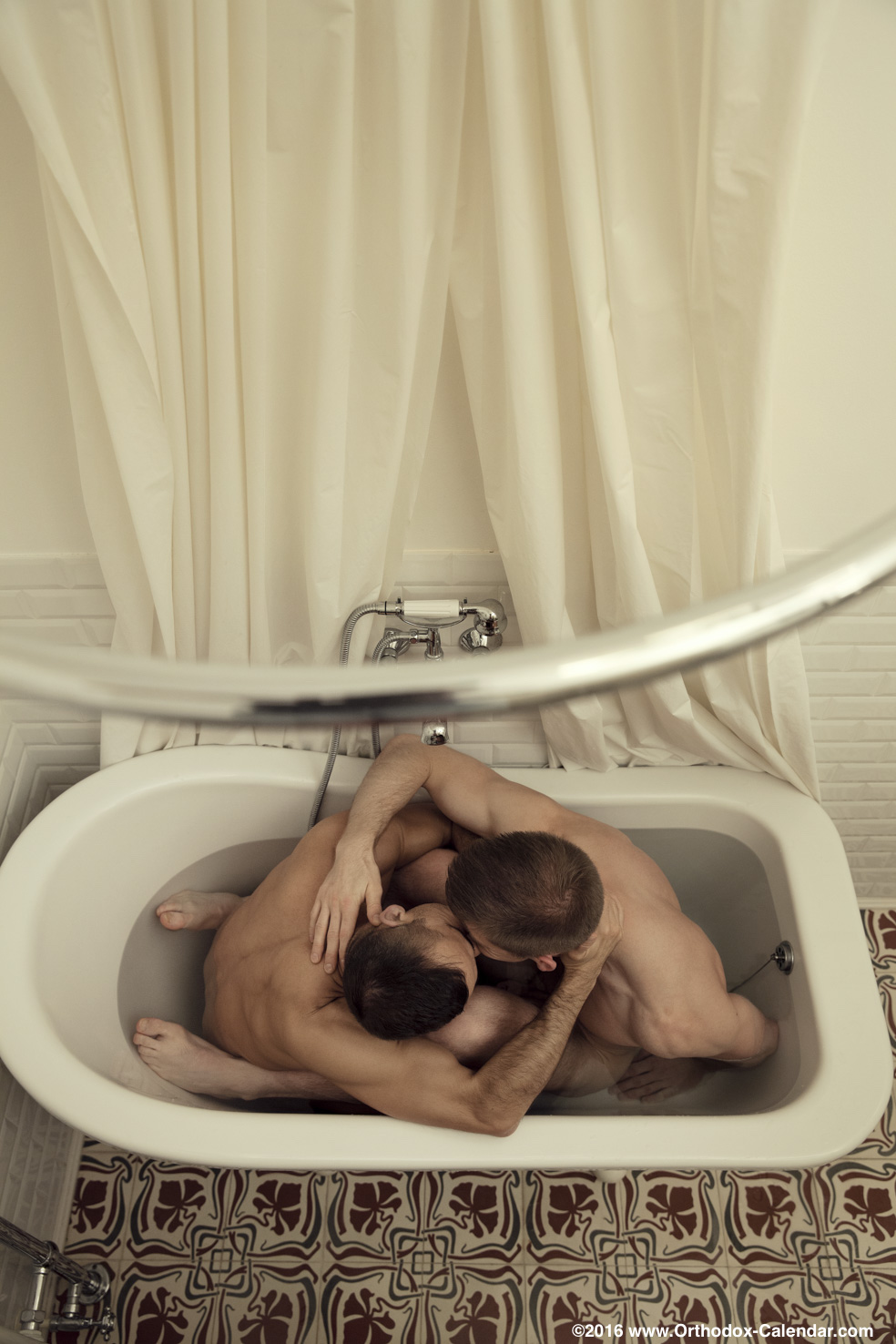
Up until today we were completely unaware of what a PILF was, but thanks to these rather naked and well, frankly, delicious Orthodox Priests we are now completely on board with the PLIF phenomenon.
So here’s some gay-friendly Orthodox Priests that are dissatisfied and want to protest Church hypocrisy – so they’ve released a rather naughty calendar for 2017.
So have you guessed what PILF stands for yet? It’s Priests I Like To f**K!
Proceeds from the calender’s sale will go to supporting disadvantaged children living with HIV across Eastern Europe.
A statement from the priests read,
“Through the #OC2017 charity wall calendar, we wish to raise awareness of homophobia inside the Church. Years after its creation, the OC Art Project is still the only organised global effort against homophobia in the Orthodox region.”
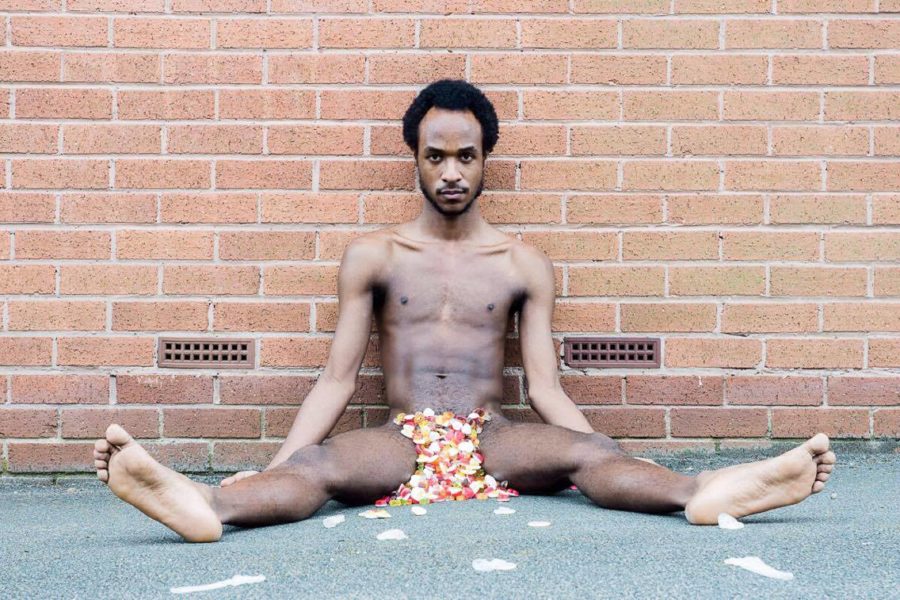
Confrontation of prejudice is not always easy, but is essential in breaking down barriers. At 22 years old, Jamal Gerald, a black, gay, performance artist is embarking on his first UK tour with the provocatively named show “FADoubleGOT”.
Picture Credit – Mark West
Using his one man show to tell his own personal story of the highs, lows and in-betweens of growing up as a black gay man, Jamal draws on his experiences to confront the use of prejudicial language and anecdotally tells tales of sex parties, hook-up’s, relationships and Grindr dates; mixed in with candid accounts of surviving periods of self-loathing, experiences of racism and homophobia and of his internalised conflict between his religion and his sexuality. Following opening his tour at Doncaster CAST Theatre, Jamal spoke exclusively to TheGayUK about the themes of the show, why provocative theatre remains relevant and how Freddie Mercury changed his life.
TGUK – You have chosen quite a provocative title for the piece
JG – Yes, and it was very deliberate for a number of reasons. It stems from a friend of mine who I met at a festival who texted the word to me during an argument. I was astounded that someone would not only use that word towards someone who was a friend to them, but that they had typed it; they had spelt it out letter by letter – F-A-double G-O-T – and just how hurtful a word it was. But then it’s also about seizing ownership of the word for the LGBT community; about taking possession and disempowering the word by taking it back. Queer was used as an insult historically, but in recent years it has been taken back by the LGBT community and turned into a positive label. I wanted a title to reflect one of the aims of the show, which is about confronting and challenging the audience to look at issues of prejudice, racism and homophobia.
TGUK – Why do you think pieces of theatre like this are still important?
JG – Things have changed a lot, but there is still a way to go before prejudice is eradicated. Theatre is an art which has the power to do many things, and it is not just about being entertained. Of course, I want audiences to be entertained when they come to the show, but also I want them to be challenged; to look into themselves and to look at their own experiences, regardless of where their experiences lie. For the LGBT community, I hope that they will see glimpses of themselves reflected in my experiences. For straight audiences, I would hope that they either see some of the experiences that members of the LGBT community have to go through, which they themselves may not have experienced first-hand; or for them to see the impact of prejudice upon the victim. I also want younger people who may be struggling with their sexuality to come to the show and see that they are not alone; that their feelings are not unique; that they are not isolated. There are a lot of us out there, and despite the confidence that some people exude, for the vast majority of gay men and women, there has been that fear, that self-loathing and ultimately that transition into acceptance of their sexuality.
TGUK – You owe a lot to Freddie Mercury, don’t you?
JG – Freddie was the catalyst for my self-acceptance; the flamboyance and confidence he exudes made me realise that I could be the person who I wanted to be. I think most people have “a Freddie” – whether it is a person in the public eye, a friend, a family member or even an experience or moment where everything seems to suddenly fall into place.
TGUK – You have a real mix of influences in your life, your mother is from the Caribbean, you were born in Boston, Massachusetts, and you moved to Leeds when you were 11. How did you find your voice with such a varied influence of cultures?
JG – My mother is a very traditional Caribbean woman; religious, larger than life, joyous and uplifting. My experiences in America helped to shape a lot of my perceptions about myself and those around me and being brought up in Leeds, I do have a lot of “Northern mentality”. I am, in many ways, still finding my voice, and I think that every day brings something new to shape you as a person and as an artist. I am fortunate to have so many different influences from my family, friends and those around me.
TGUK – How did you reconcile your religious upbringing with your sexuality?
JG – Religion told me I was a sinner, an abomination. I was told by people in my school that I was going to go to hell. I used to pray to God to pray the gay away. But as I grew older, I was able to balance myself and my religion. I believe in the concept of a god, but I am of the view that I can believe in God; but because my race is so important to me I find it hard to believe in the bible, primarily because of the history of colonialism and the use of the bible in that process. When I look at the link between colonialism and the Bible, it is not something that I want to embrace or accept. My black heritage and my identity as a black man is something that is more important to me than my sexuality is; and the way in which the bible was used during that period of time was wholly unacceptable. For me, it remains a symbol of repression in many ways. It was used to repress the black community many years ago and, in my experiences as a younger person, it was used to repress my sexuality – but despite that, it doesn’t prevent me from embracing the idea of a higher power.
TGUK – One of the themes of your show is about your experiences as a black gay man. How has your ethnicity and your sexuality shaped your experiences of life?
JG – I have received so much acceptance and positivity about both of those things that it is hard to express some of my experiences without sounding like a cynic. The positive experiences do outweigh the negative ones, but during the show, I talk about my experience at a sex party, where a guy I was with only wanted to sleep with me because I was black and made a mood spoiling comment (when we were in the moment) about my ethnicity; and I do a section in the show about my experiences on Grindr, where the fact that I was black was often the predominant issue. It’s the usual stereotypes and prejudices; I’d get messages saying “Is it true what they say about black men?” or “I’ve always wanted to be with a black guy”; it made me realise that they didn’t necessarily want to be with me as a person, but that being black was just fulfilling a fetish for these men. It brought home to me the way in which black men can be perceived at times by others, almost as a commodity rather than a person. Racial fetishism is a subject which is not often talked about and it is another wall I want to break down with the show.
TGUK – Have you experienced more racism or more homophobia?
JG – It’s difficult to say; there have been times in my life when things have gone through phases. When I was at school, it was more about homophobia, as I went to a school in Leeds which was quite diverse, so ethnicity was not a particular problem. But as I went into higher education; it became less about my sexuality and more about my race. I have experienced both at the same time – when I was at school, someone wrote “Go home to Jamaica, Batty Boi” on our dustbin . That hurt – a lot. Given that my family is from Montserrat, it was an attack on my heritage and on my sexuality. I am naturally quite a flamboyant person, but I can hide my sexuality; I can’t hide the colour of my skin, so I would guess that would perhaps identify my ethnicity as the most obvious target. That said, I still identify myself as a black man first and a gay man second. When you look at the news about what is happening in America at the moment, with the rising racial tensions both politically and on the streets; and you look at the terrible tragic events in Orlando only a few months ago, both racism and homophobia are very much alive and predominant in society.
TGUK – When you are on stage performing this piece, you lay yourself bare, both metaphorically and literally. How does it feel to relive highs and lows of your life night after night on stage?
JG – It can be emotionally draining and it can be cathartic. Despite its simplistic presentation, it is quite a deep piece. I talk about things which are really difficult for me; such as my internalised homophobia as a younger man; the moment I came out, my experience in the church and about relationships which have hurt me in one way or another; but that is counteracted by the fact that I also talk about the positivity I have experienced. It’s not just about reliving the hard times; it is also about constantly remembering and reinforcing the positive steps on the journey which have led me to where I am today. By performing the majority of the piece in just a pair of short, black, tight trunks, it shows that I am hiding nothing, that I am open and honest. There is nothing to hide behind on the stage, not even clothes, and it is about reflecting that I am quite literally exposing my life, my thoughts, my experiences to the audience.
TGUK – You use a lot of symbolism to tell your story
JG – There is a section where I eat a raw onion in the show. On a simplistic interpretation, it may look like the usual analogy of an onion having layers and about how that is reflective of me as a person, which may look almost cliché. But it is deeper than that; the symbolism behind it is that, as anyone who sees the show will tell, I hate onion and consuming it is symbolic of ingesting something that I hated, of my repressed sexuality as a youngster and of my internalised hatred of who I was as a result of my cultural experiences growing up. The piece has a lot of aspects which have multiple meanings and it is for the audience to draw out their own conclusions about what the piece is saying. My show is, in some ways, a gift to the audience. They can take it and use it how they want. They can accept the gift and enjoy it, they can appreciate it, pass it on, re-gift it or put it in the cupboard – but it is something I offer to them with a genuine intention; what they then do with that is up to them.
TGUK – You end the show painting yourself in the colours of the rainbow flag. Why chose that piece of symbolism to round off the show?
JG – I wrote a poem some years ago where I used the line “ripping rainbows apart” and I wanted to bring that line to life. But also because the rainbow flag is a symbol reflecting both sexuality and colour, which is what this piece is about. It felt a natural way to bring the piece full circle. Ending the show embraced in the colours of the rainbow flag feels comfortable and is about how, despite their differences, the LGBT community do embrace each other. The flag gives us protection and a sense of togetherness. How else could I end the show except for showing the unity and the positivity of the LGBT community as a whole?
FADoubleGOT is currently on tour, calling at The Hive in Shrewsbury (30.09.16); Hackney Showroom in London (04.10.16), as part of the And What? Queer Arts Festival; Live Art Bistro in Leeds (14.10.16); Camden People’s Theatre in London (18.10.16 and 19.10.16) and Theatre Deli in Sheffield (17.11.16). You can follow Jamal on Twitter at @JamiBoii and on Tumblr at http://jamalgerald.tumblr.com/ . Many thanks to Doncaster CAST Theatre (www.castindoncaster.com) for facilitating this article.